Zanzibar, Tanzania (Day 1) 2022
We anchored across from the ferry terminal in Zanzibar early in the morning of November 12 for an overnight stay. Zanzibar City sits on the island of Unguja some 22 miles across the water from Bagamoyo and maybe 50 miles from Dar es Salaam. Originally occupied by Bantu speaking people about 2,000 years ago it was controlled by the Portuguese for 200 years starting in the 15th century. They were expelled in the 17th century and the Sultan of Oman was invited to take power to protect Zanzibar from them. In the 1890’s the British established a protectorate that lasted until 1964 when a revolution that cost some 20,000 lives ousted the British and established a socialist government, which then merged with Tanganyika to form Tanzania.
We tendered ashore to join our expedition at the port. From there we had a fairly long ride in a large van to the Jozani National Park, a rainforest that is the only national park on Zanzibar.


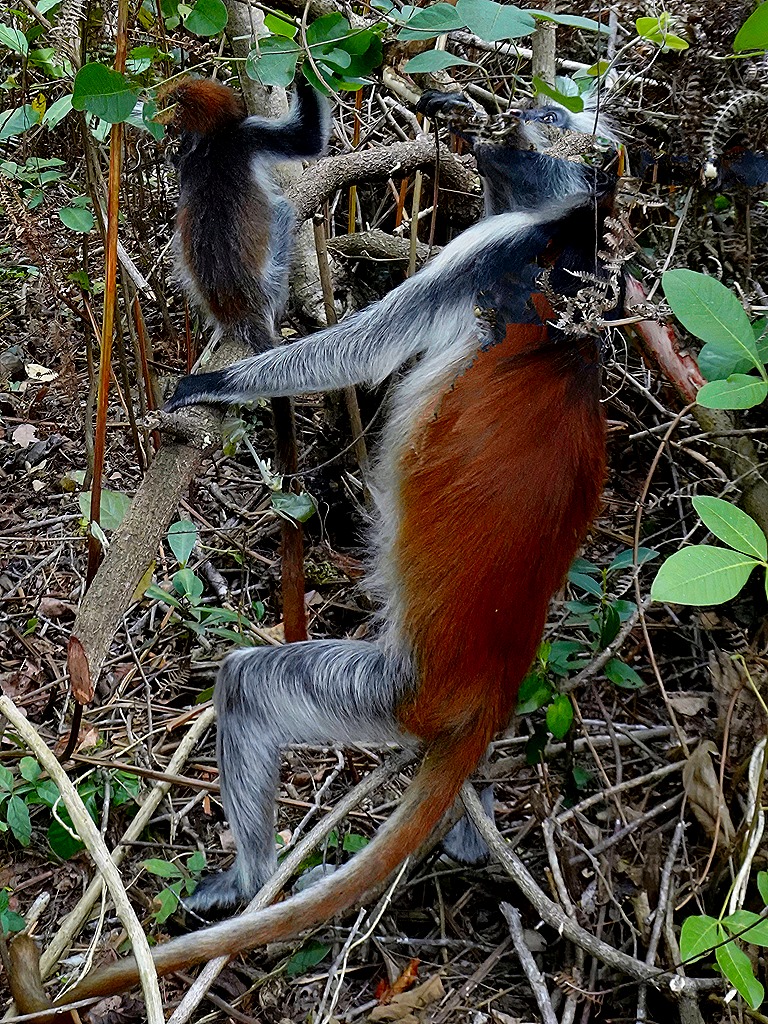
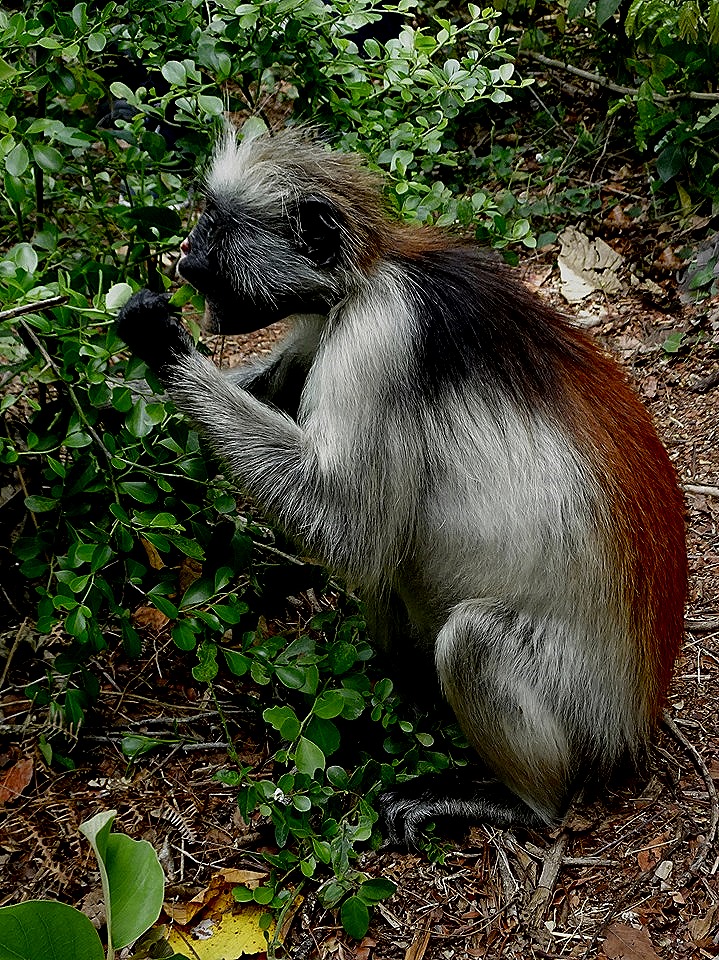
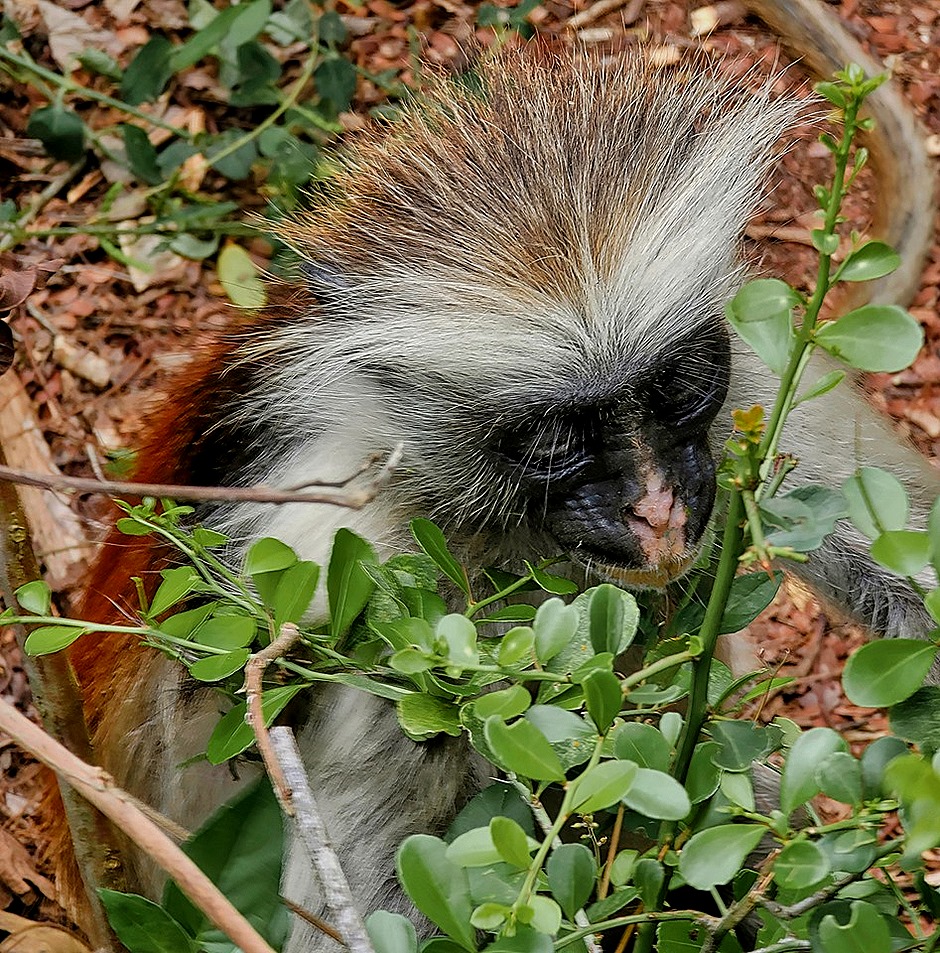
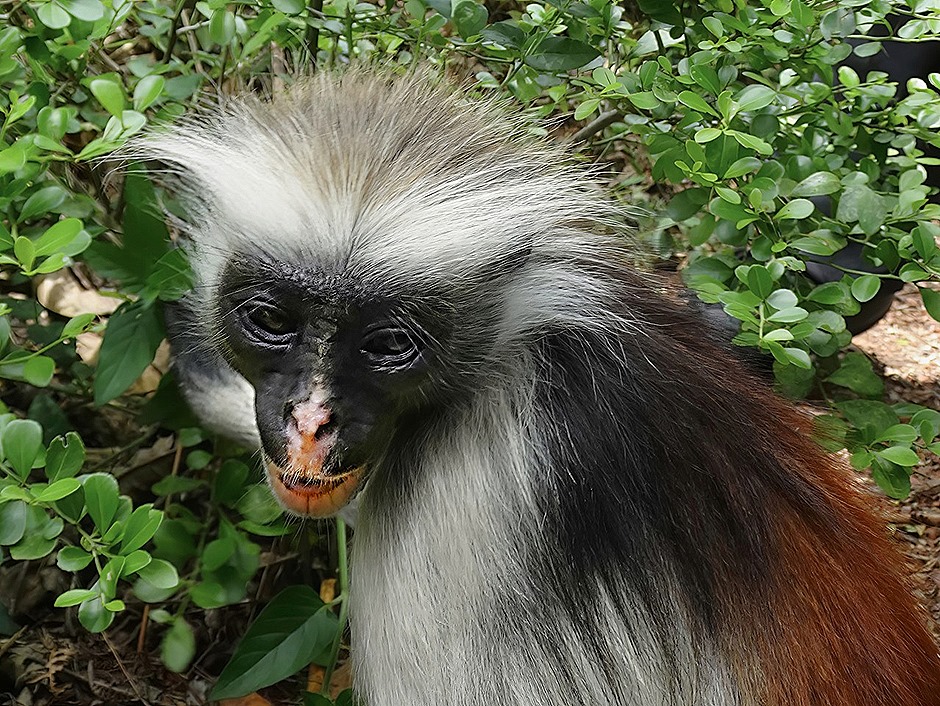
The Zanzibar Red Colobus Monkey is a species endemic to the Zanzibar archipelago. While there are other species of Red Colobus elsewhere in Africa the one living only in Zanzibar is considered the most endangered primate species in Africa. We have seen estimates of its total population between 1,000 and 3,000, but the first number seems closer. They live in trees and eat young leaves, flowers and unripe fruit. About half of them live in the Jozani forest. Apparently this species separated from others about 10,000 to 15,000 years ago when a rise in sea levels isolated them on these islands. Their name derives from the reddish brown color that covers most of their backs and the back of their heads.
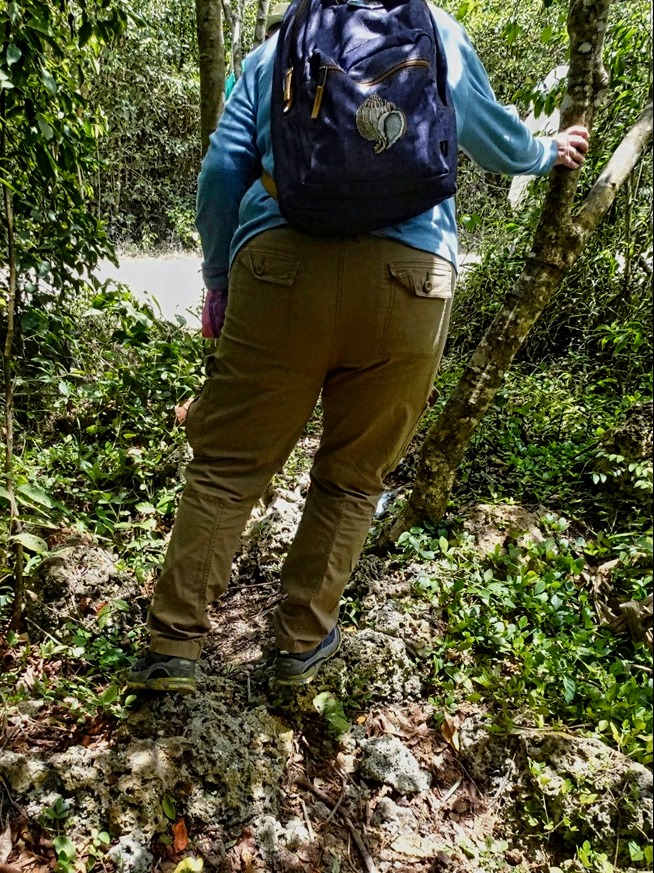
We drove in the vans to an area of the forest where the guides said the monkeys would be for lunchtime. We had to hike into the woods over very uneven paths but not too far before they pointed out the first monkeys.

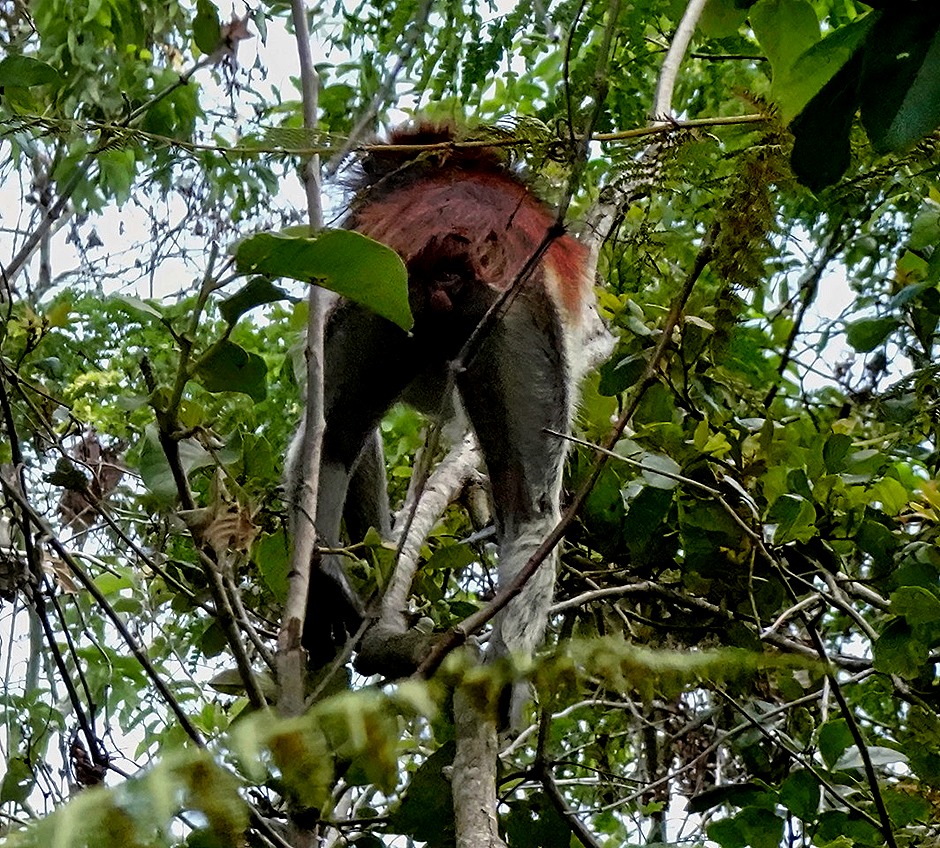
You can see below the monkeys’ stylish reddish brown backs. In case you are wondering why they are often looking away, think about how you would feel if a horde of camera wielding tourists crowded around you. I think I would face the other way too. Most of the ones who didn’t face completely away were obscured behind leaves and branches. We visited during mating season, so there were babies with their mothers.

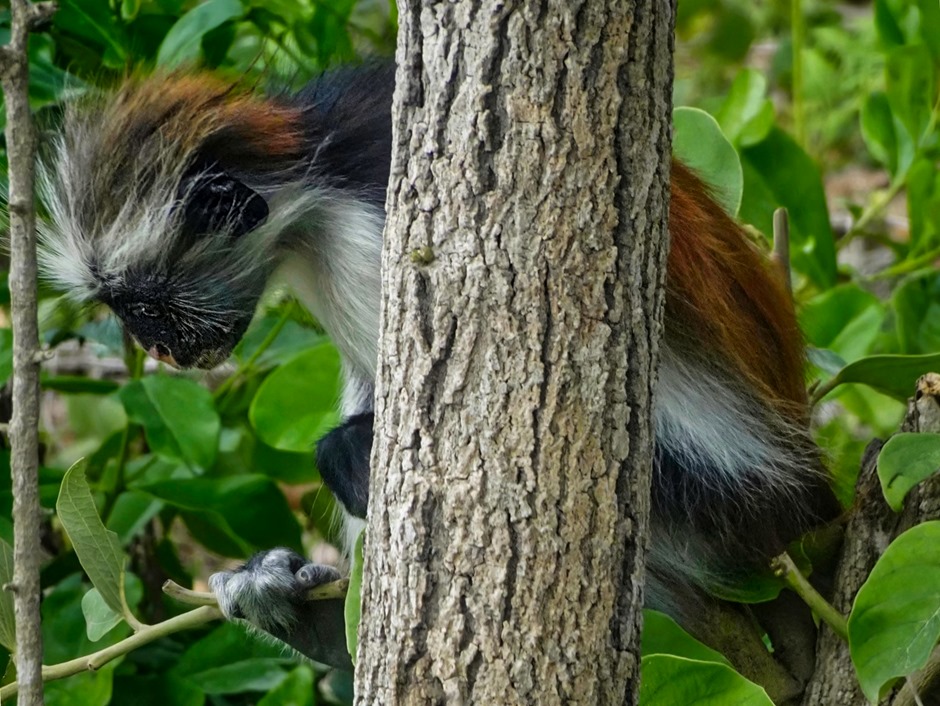

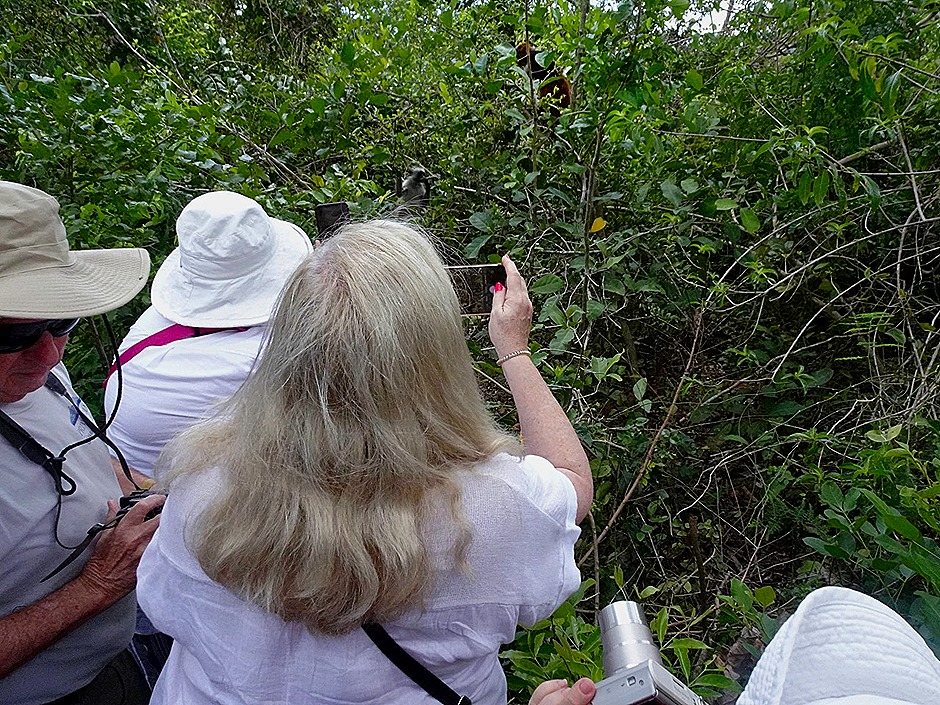
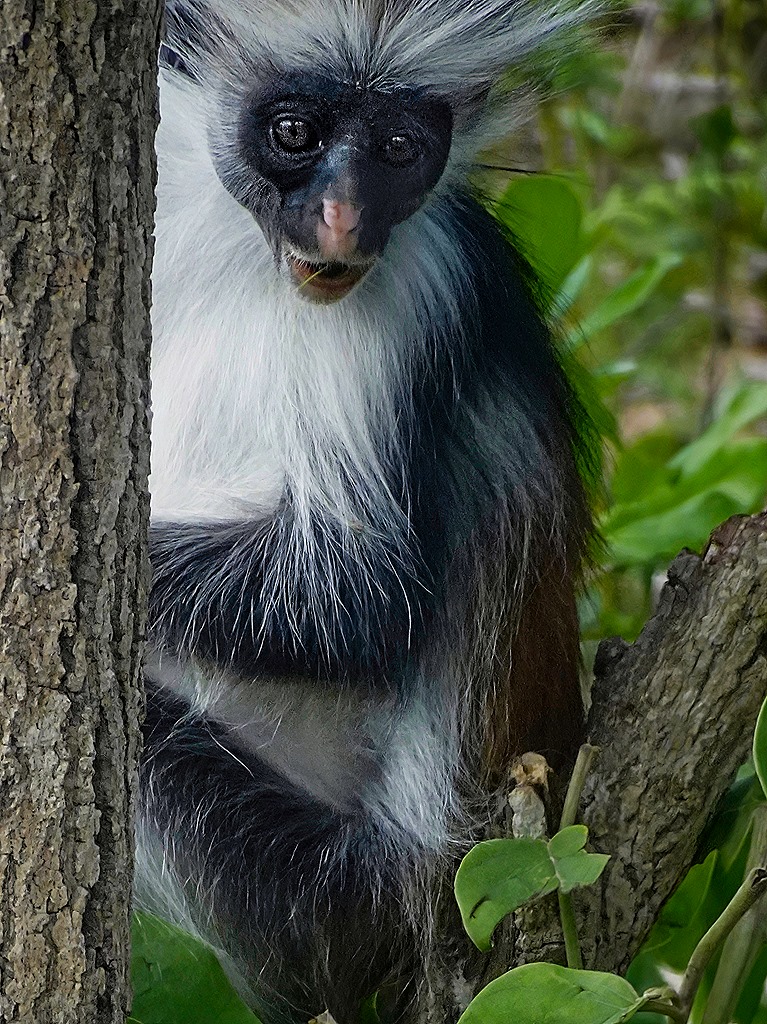
Yes, we were part of that crowd of visitors; what else could we do? Fortunately the monkeys didn’t really seem to mind, since they are undoubtedly used to these visits. We did manage to get some pictures of monkeys looking our way. You will notice that from the front there is no indication they have any reddish fur. Instead, they are black and white with pretty wild punk like hair shooting out of their heads.

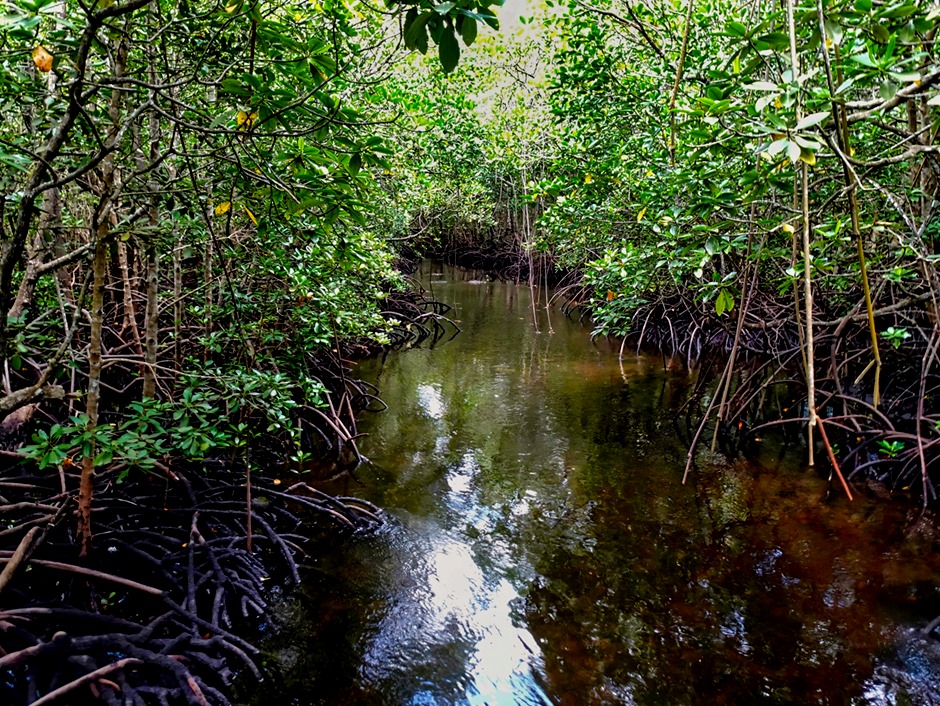
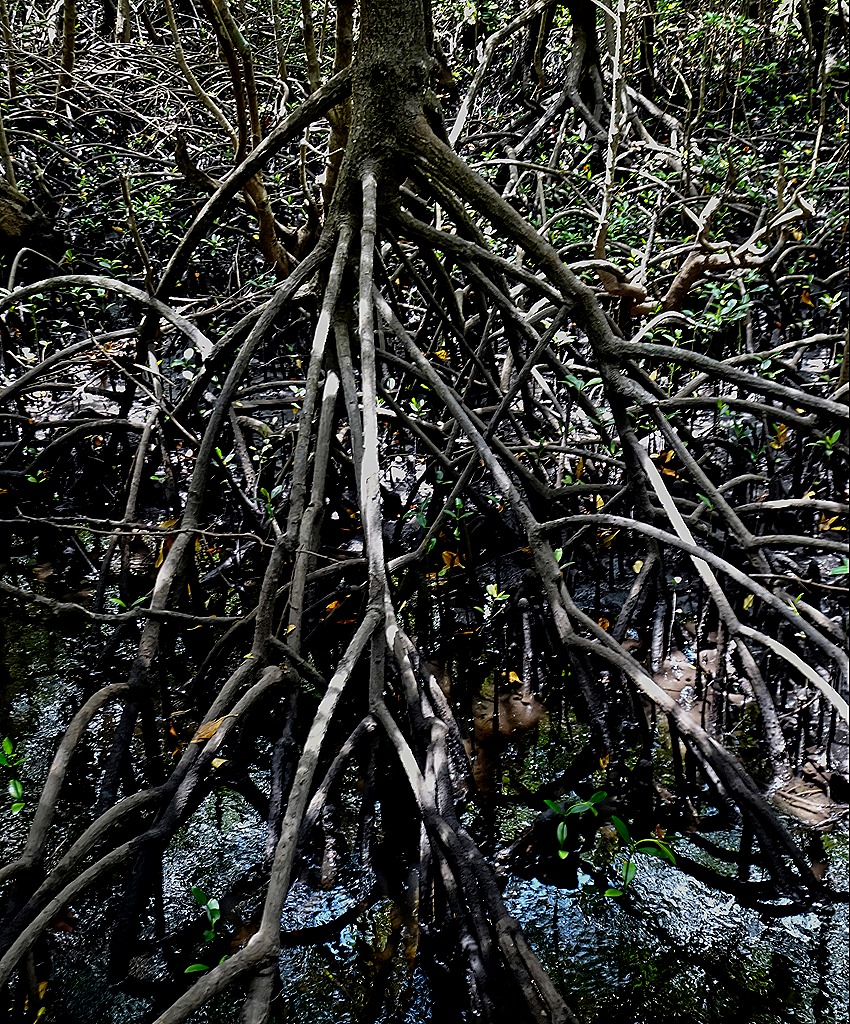
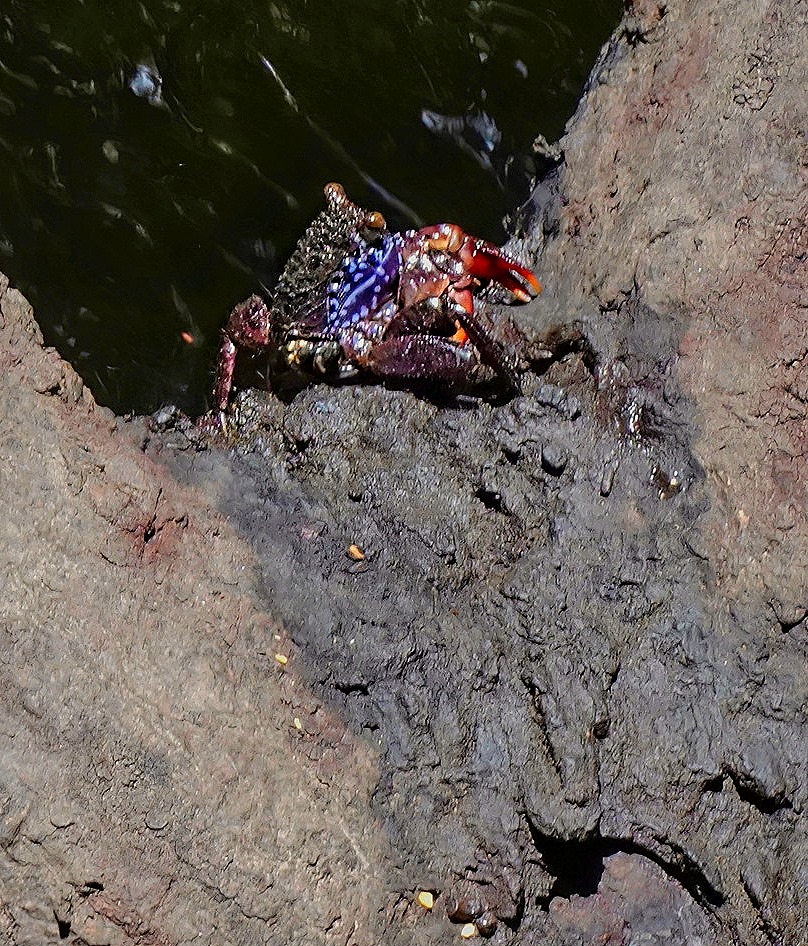
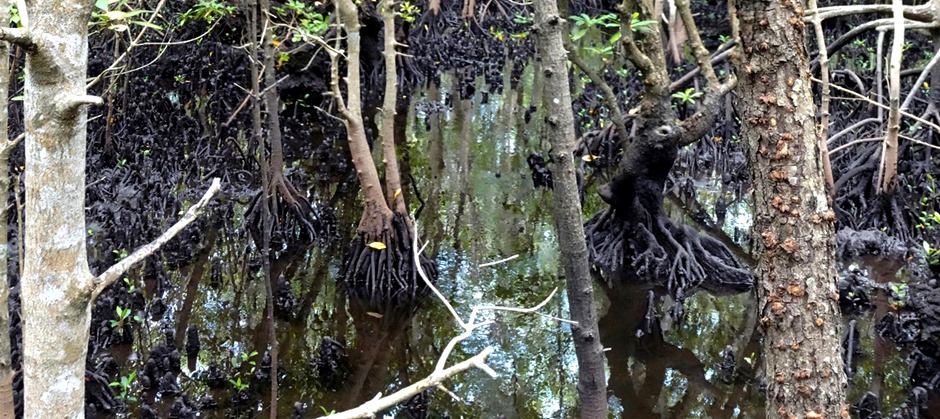
Jozani also features a mangrove forest. It’s kind of swampy and dark but the root patterns are interesting, particularly when there are so many of them. Mangroves are valuable along the water’s edge where they help keep the banks from eroding and provide habitat for fish and small animals. I saw a red crab on a forked log in the water when I stepped onto a small wooden bridge but by the time I got the camera raised into position (maybe a second) it had scurried into the fork. Still visible, but less so, and it was so fast.
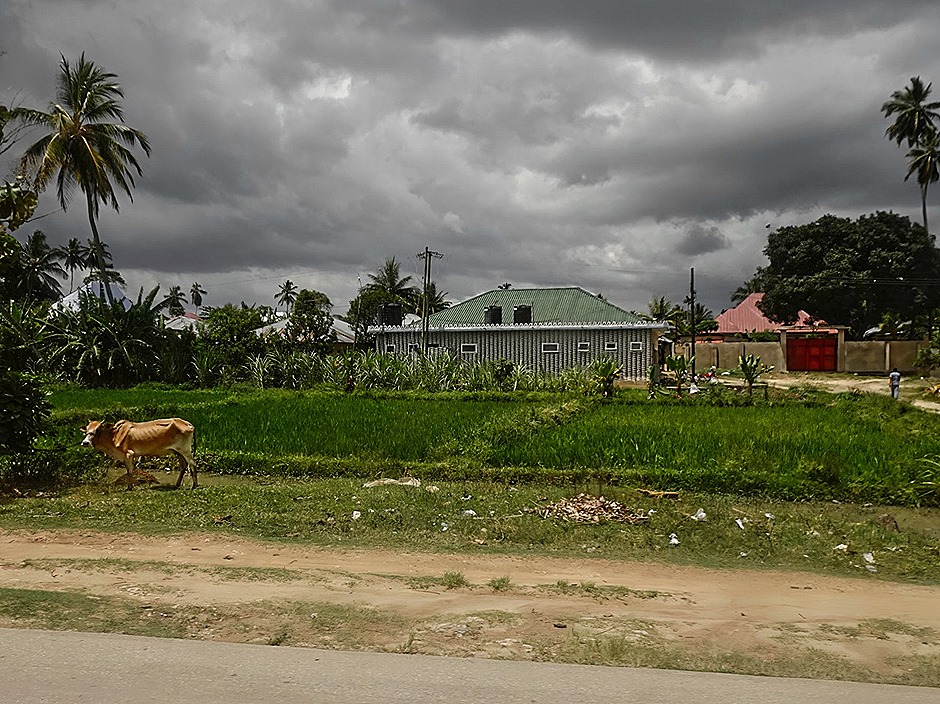
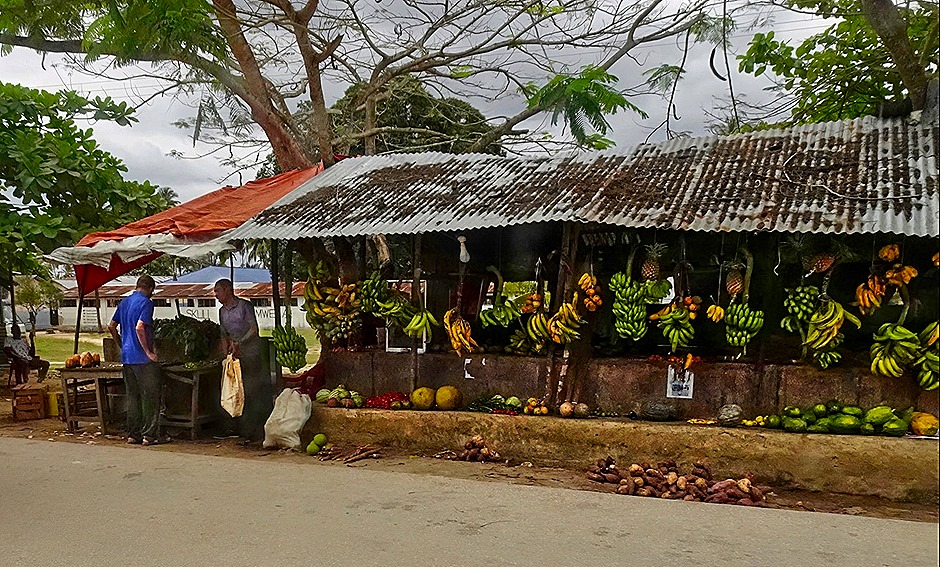
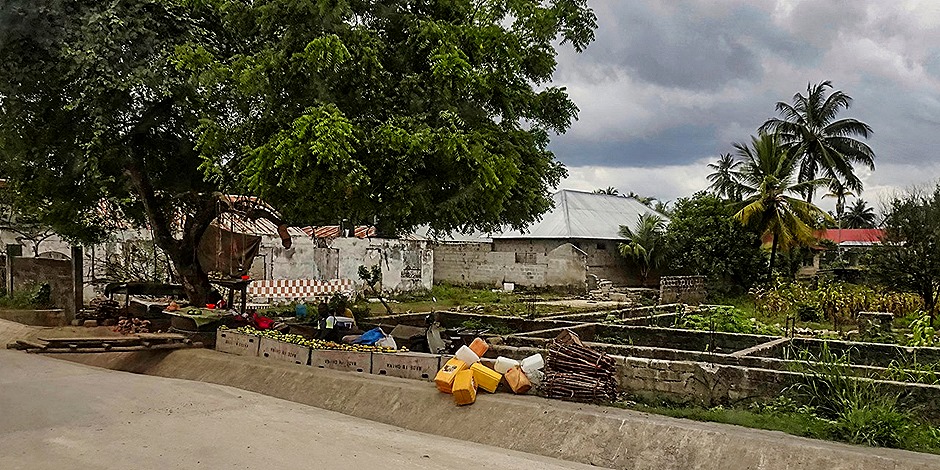
Our next destination was a spice farm, but it was a long drive enabling us to see something of the countryside as we passed. Among other things, there was a small neighborhood mosque (we think), several produce markets and a cow in somebody’s front yard. There was plenty of poverty to be seen but what looked like nice places as well.



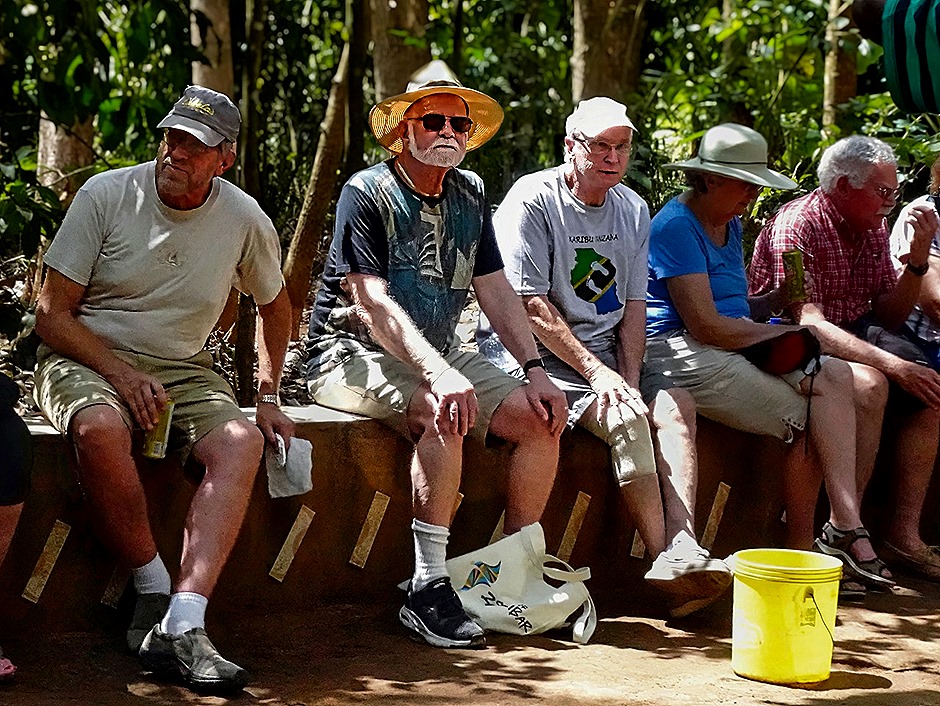
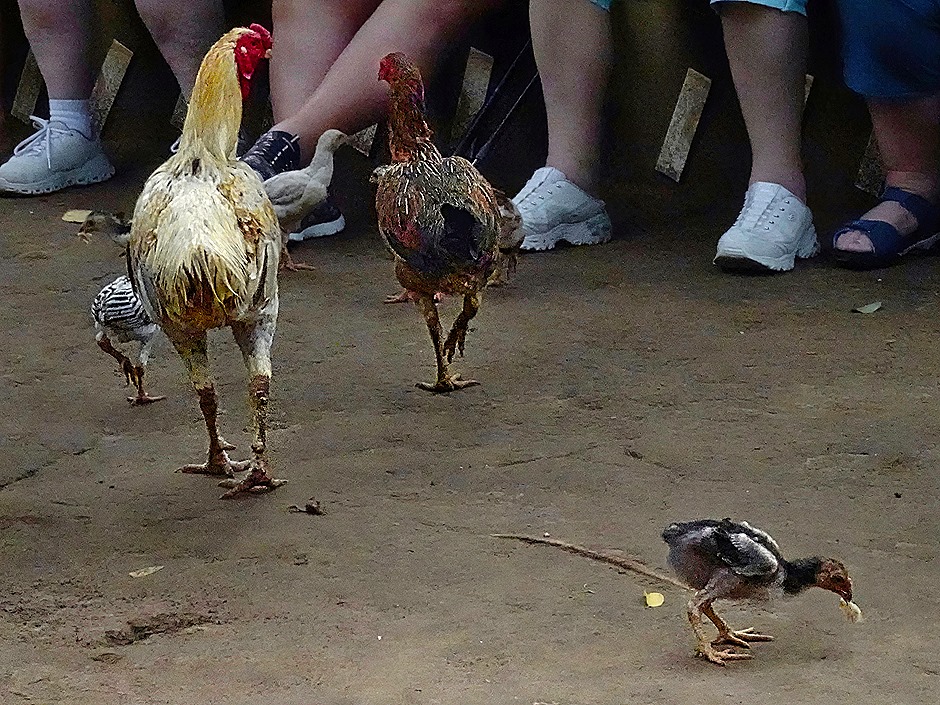
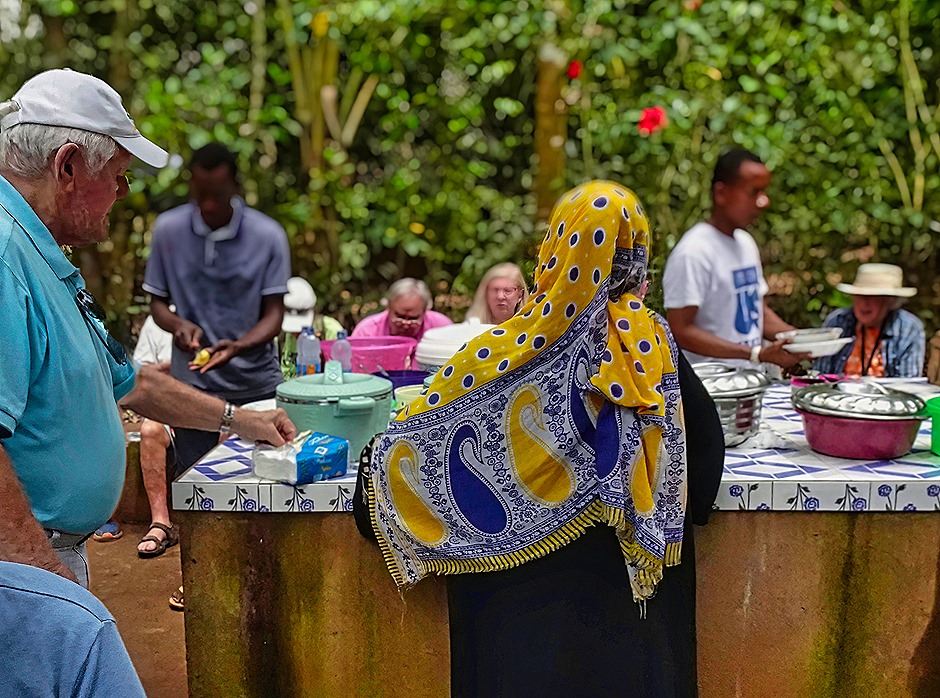
Zanzibar has long been known as a source of spices, especially cloves. At the Maganga Spice Farm we were given a tour of a number of different kinds of spice trees and also a lunch. We sat out in the open on long benches while the food was piled on tables, then brought to us by the farm’s personnel. We filled our plates with several kinds of local food, then discovered after eating all of it that there was much more to come, distributed in waves. The food was very good, particularly the ripe local fruit like mangoes and pineapple. In the yard where we were eating some chickens were looking for scraps (they undoubtedly have a lot of experience with groups like ours).




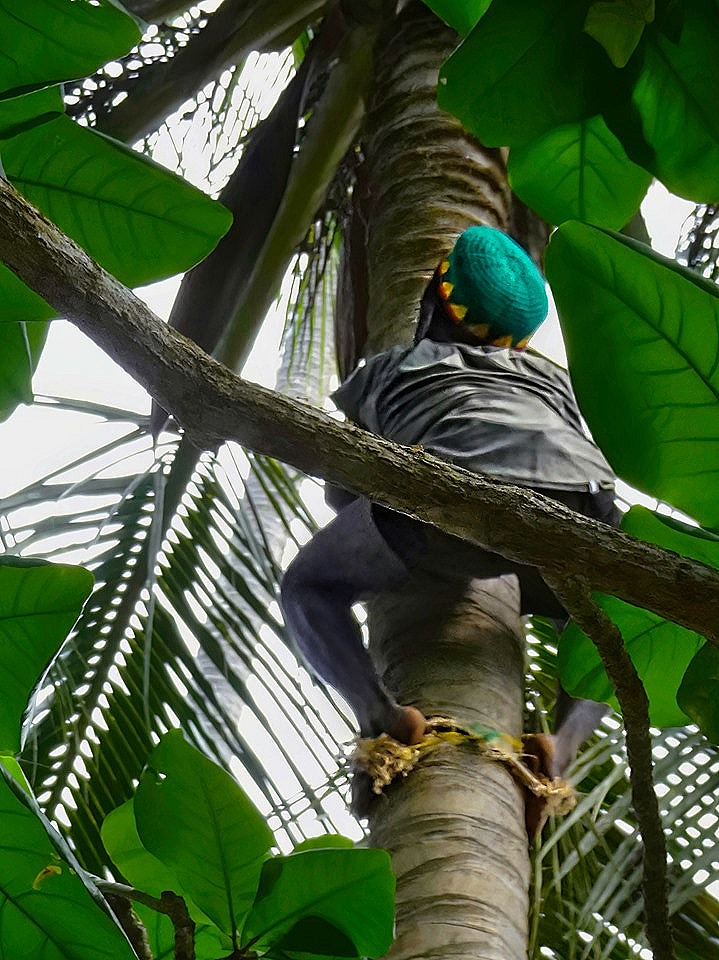
After lunch we were treated to a demonstration of cocoanut harvesting. A fellow tied his feet together and shimmied up a palm trunk, singing all the way. He was very good & very fast . . . I’m pretty certain we couldn’t do that.

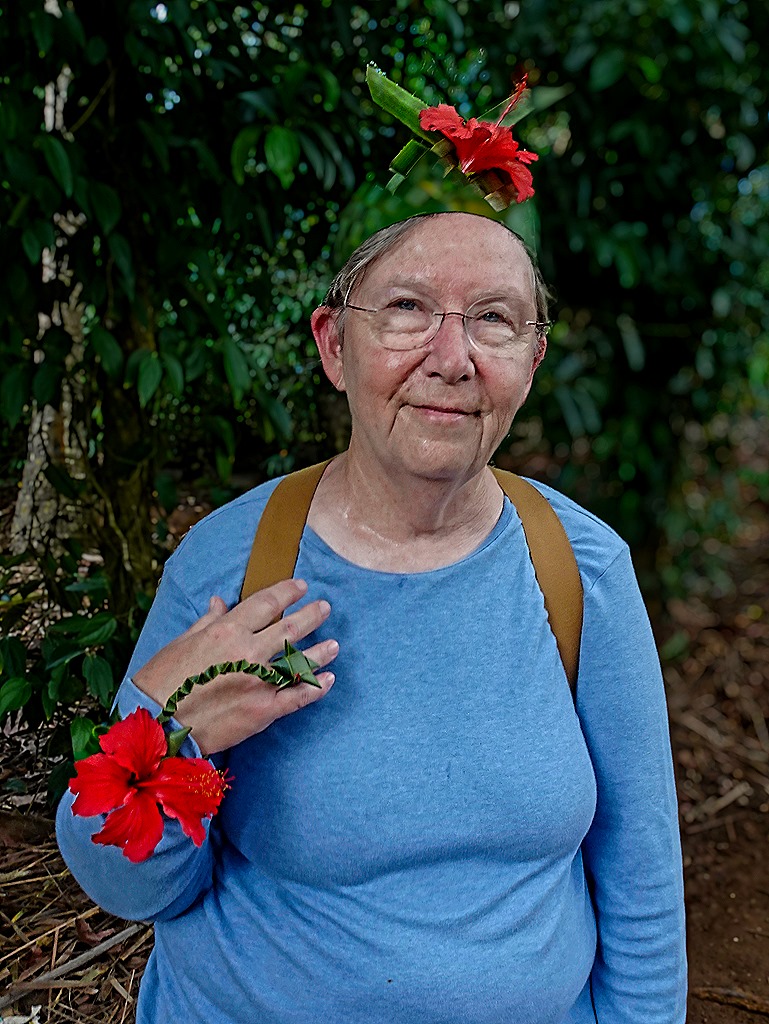
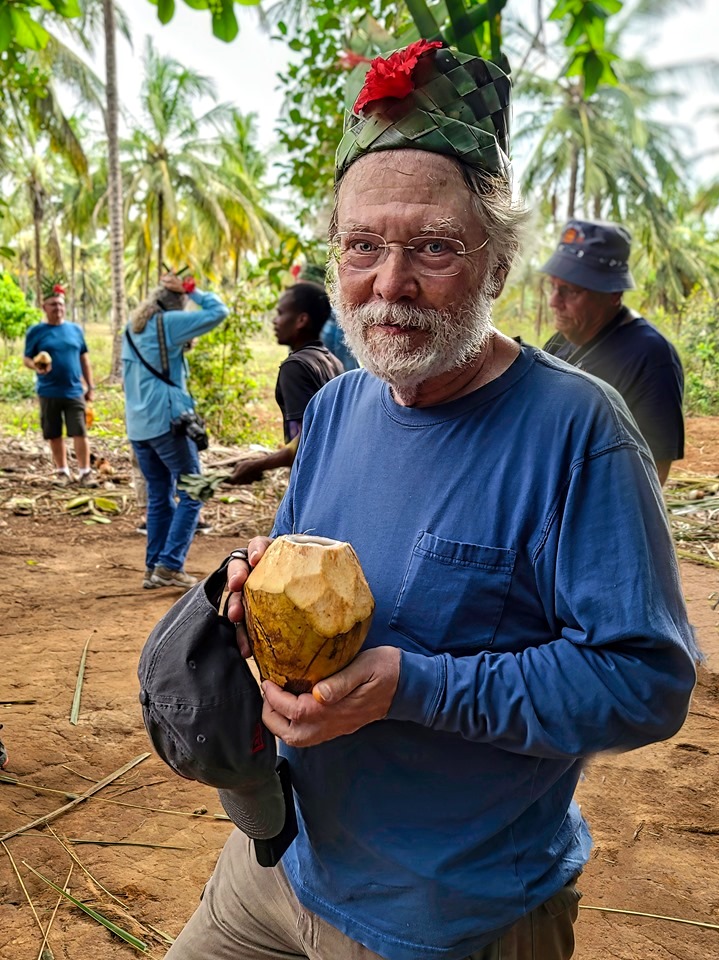
After the demonstration we were all given hats woven from palm leaves with red flowers in them, different styles for men and women. Men were also given woven palm ties and women combination rings and bracelets. Very silly looking but fun anyway.

After all this we headed back to town. The excursion agenda included a guided walking tour of Stone Town, the old town of Zanzibar City. The guides in each bus encouraged us to agree to skip this as everyone (including them) was tired. We were told that most of the buses settled for a drive by (the streets of Stone Town are too narrow for a bus). But most of the folks on our bus were up for a walking tour and our guide, Aziza, agreed to do it. We dropped a few people off at the ferry dock then we all left the bus for our tour. Although she was as tired as the others and probably would have preferred to skip it, Aziza led us through Stone Town for an hour and a half, skillfully explaining what we were seeing. She was a trouper who deserved (and received) a very good tip.
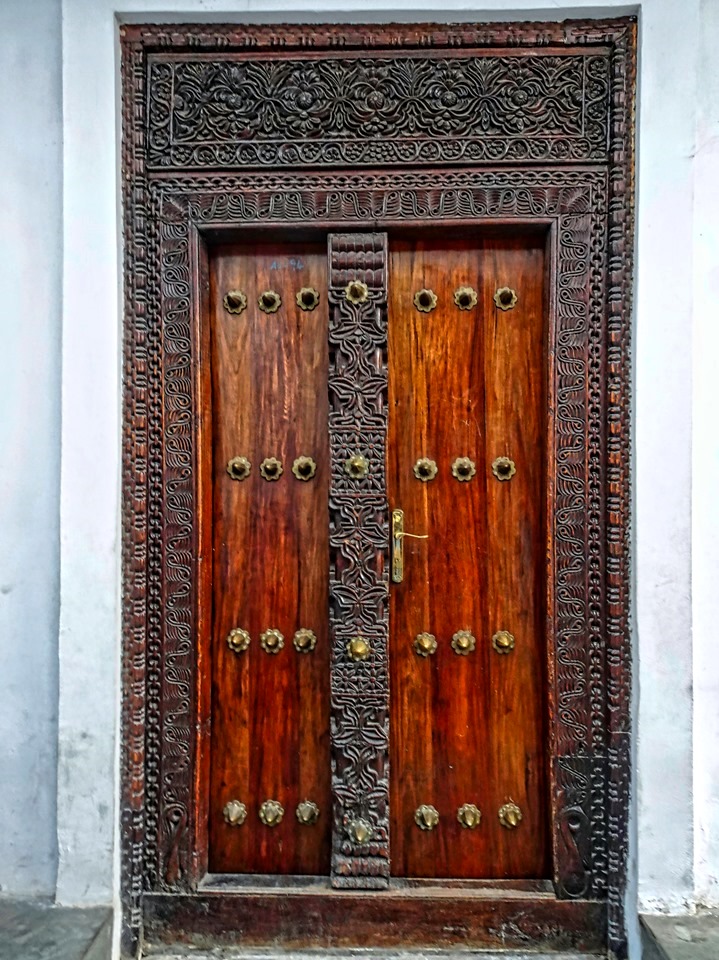
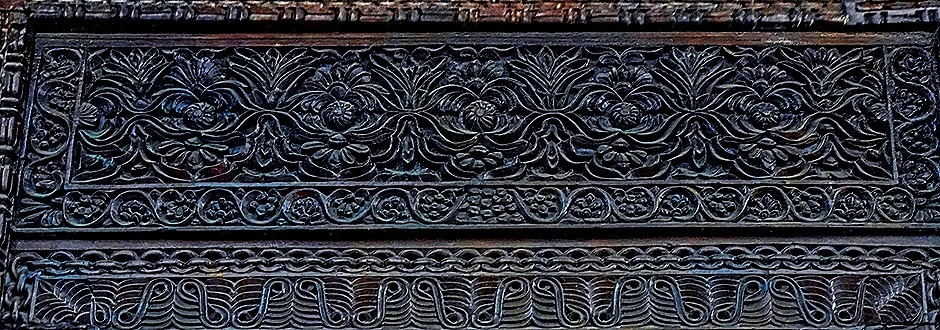
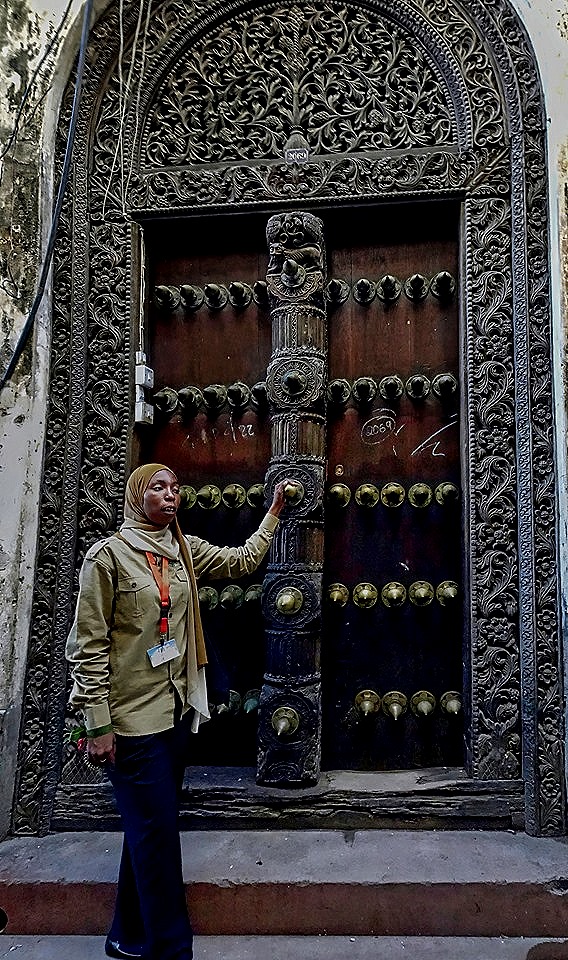
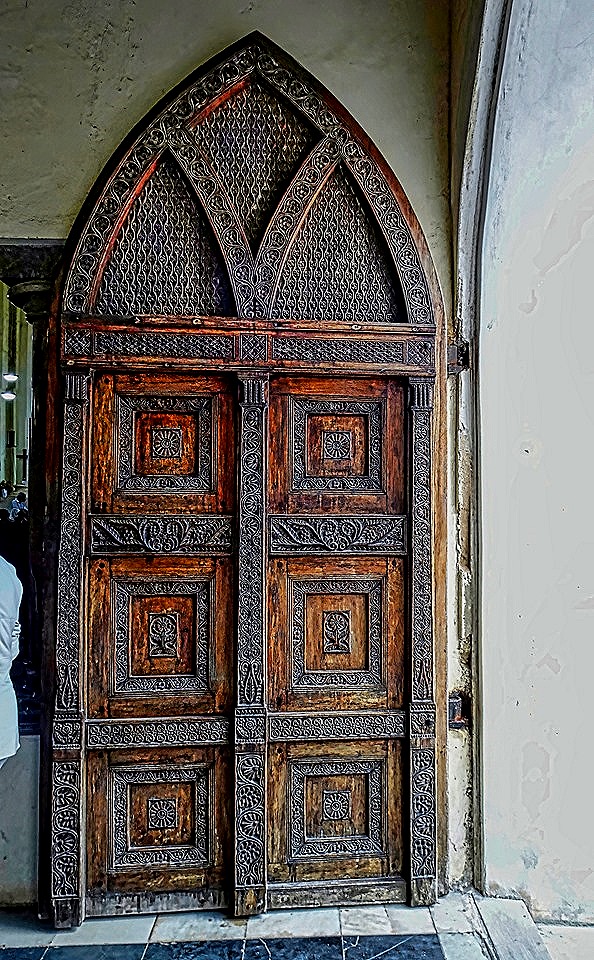
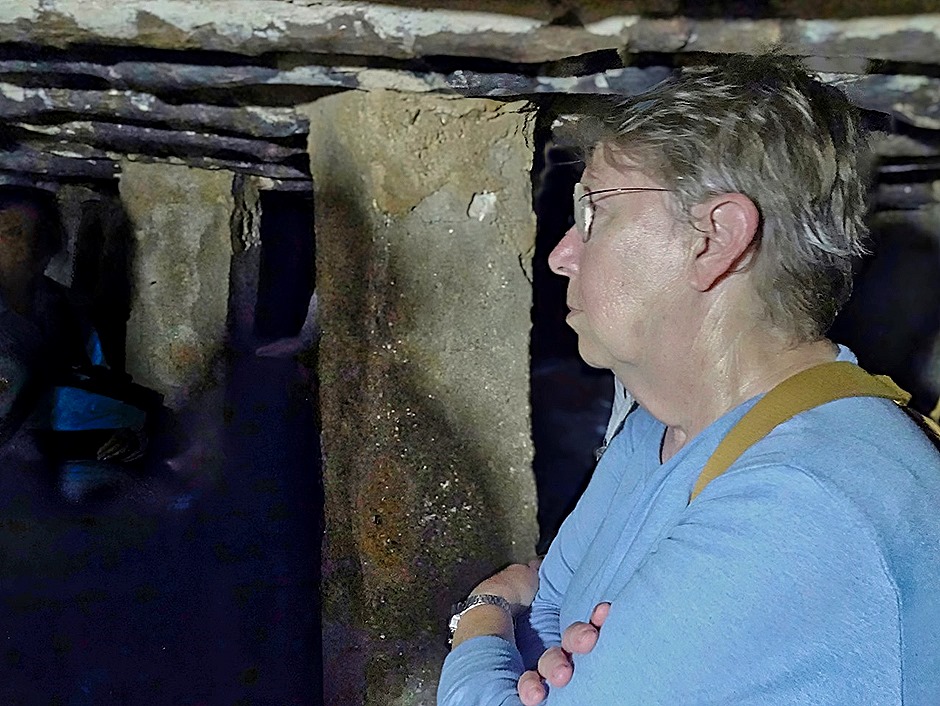
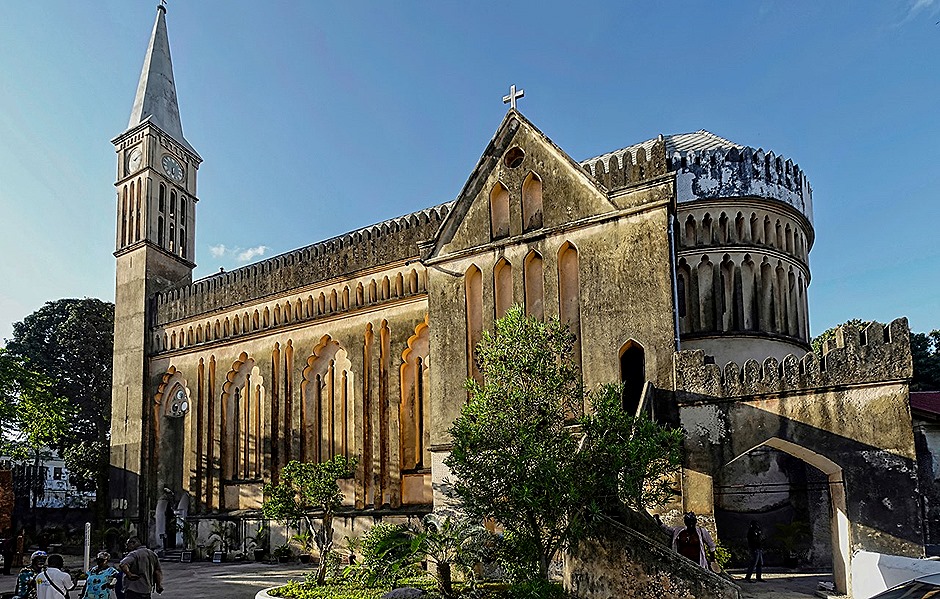
Since we spent the entire second day in Zanzibar exploring Stone Town I will save most of that discussion for the next episode. We walked through the Old Fort, originally built by the Portuguese and the oldest building in town. We saw a number of elaborately carved doors, somewhat similar to what we had seen in Bagamoyo, which can be seen throughout Stone Town. And we stopped into an Anglican church built on the spot where the slave market had been in order to commemorate the abolition of slavery. In its basement we visited the cells where new slaves were crowded into an area too cramped to permit standing up.



We tendered back to the ship after a rewarding day, looking forward to returning to Stone Town in the morning to explore it in more depth.
Dar es Salaam, Tanzania (Day 2) – Bagamoyo 2022
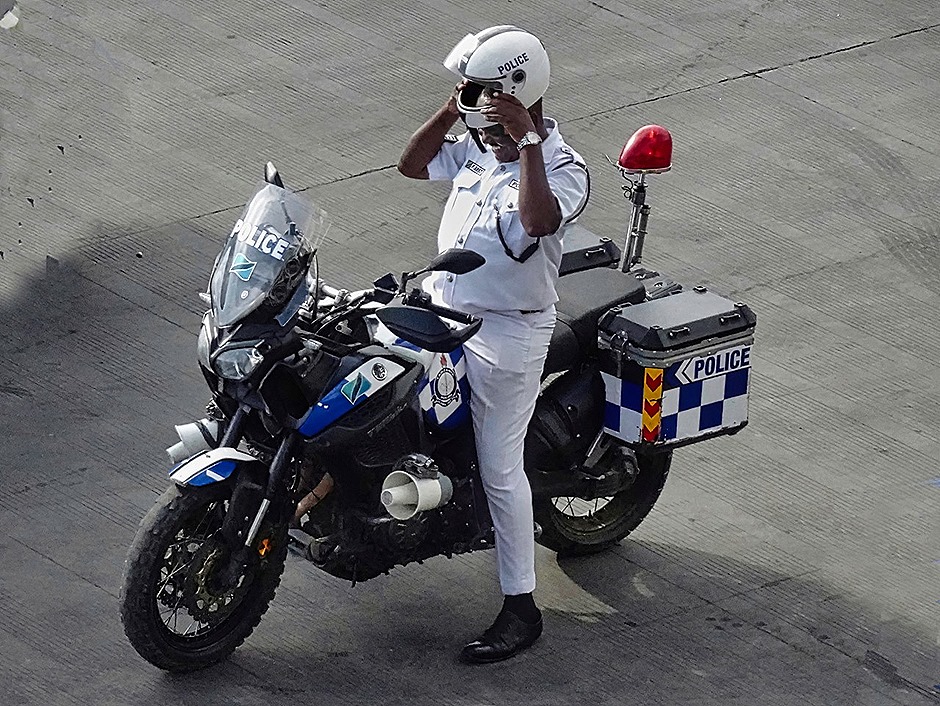
It’s always nice, when you have the opportunity, to see something of a new country outside of the port city. So having seen the sights of Dar es Salaam yesterday, for November 11 we booked an excursion that would take us north to the historic town of Bagamoyo. We had been advised that, although only about 47 miles away, the drive to and from Bagamoyo would take a long time because of heavy traffic on the coast road. But our guides were able to book a police escort that included police stationed ahead of us to move other traffic to the sides so we could drive the route mostly at speed. This was the same tour company that had been so disorganized the day before, but they made up for that on today’s trip.
With a population in excess of 80,000, Bagamoyo (“Lay down your heart” in Swahili) sits on the coast of the Indian Ocean. While the area was probably first settled in the 8th century the modern town was founded in the late 18th century. Situated just across the strait from the island of Zanzibar, Bagamoyo was an important terminus for caravans from the interior who then transported their slaves and ivory to Zanzibar for sale to many countries. Bagamoyo was the first capital of German East Africa from 1886 until 1891 when the capital was moved to Dar es Salaam. Bagamoyo was captured by the British in August, 1916, during World War I and remained in British hands until independence was achieved in 1961.
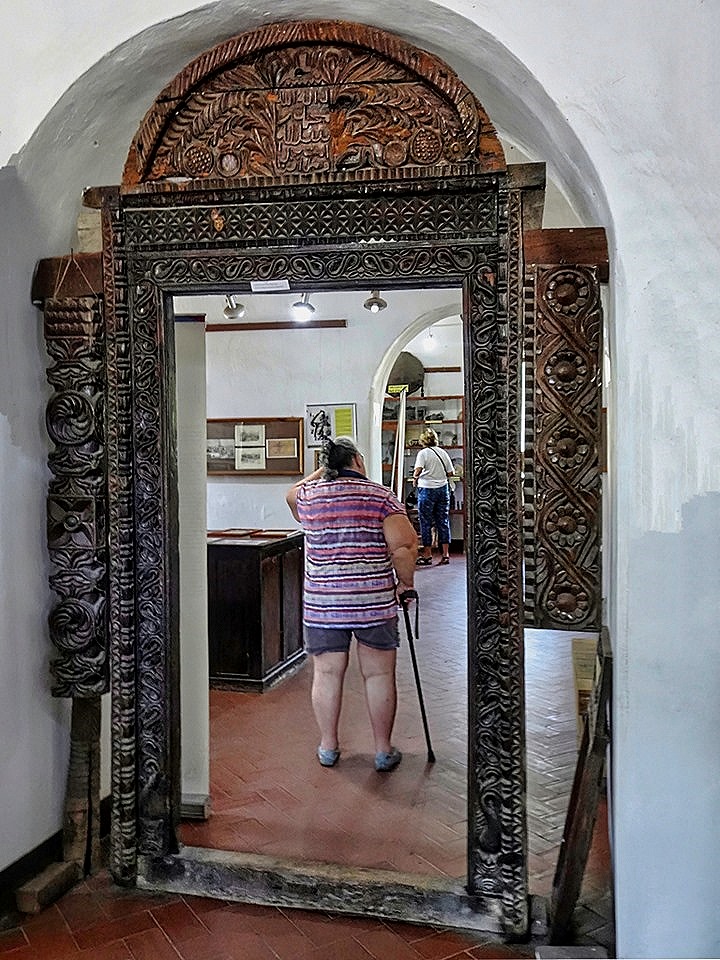
Our first stop upon arriving in Bagamoyo was the Old Fort, the oldest stone building in town. Originally built as a house in the 1850’s, this became a military installation in the 1890’s when the Germans added barracks and a wall. Later it served as a prison for many years, both before and after independence. It seems to be badly in need of restoration. One notable item here was an old carved wood Swahili door (this part of Africa is sometimes called the Swahili Coast), quite beautiful and of a type we would also see in Zanzibar.
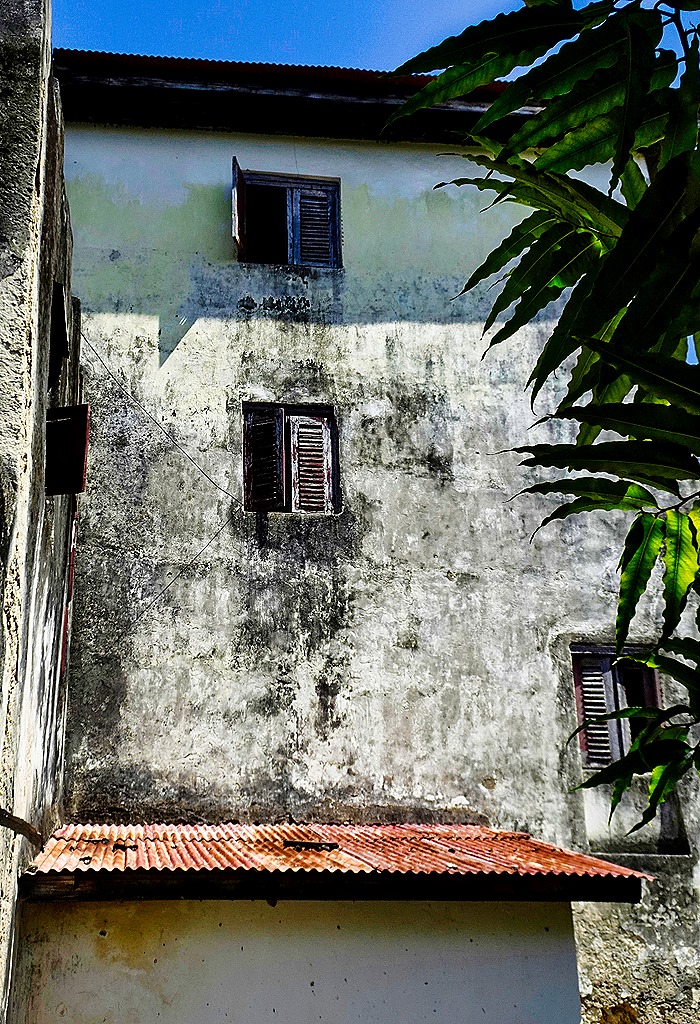
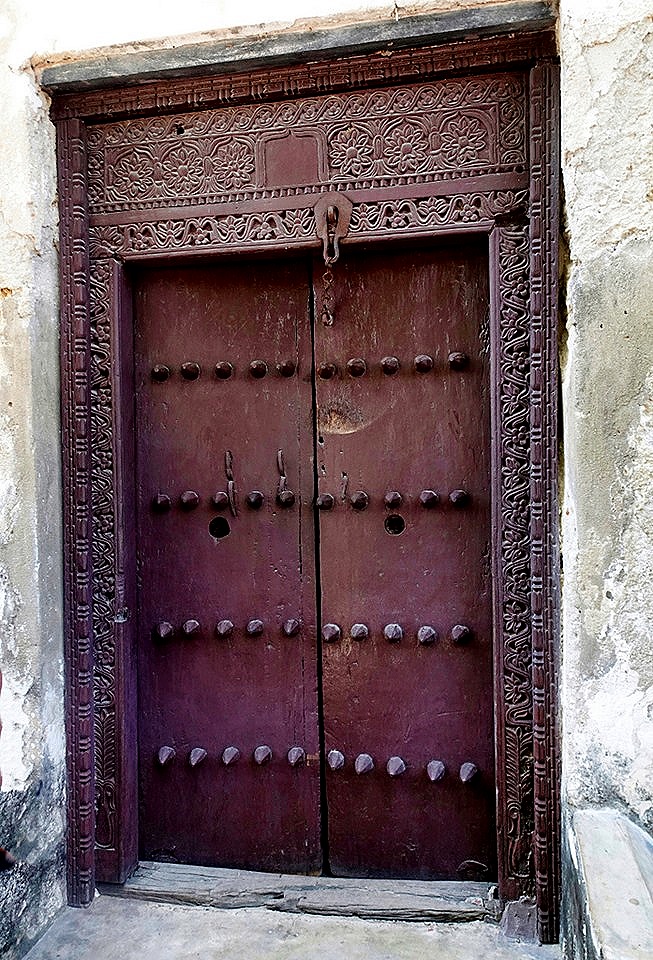
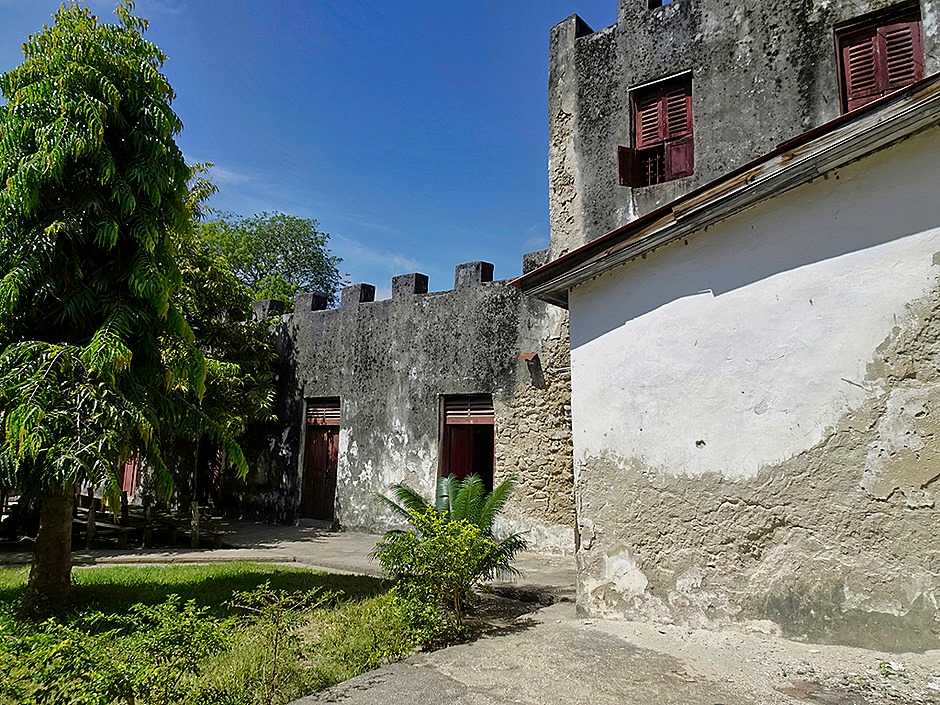
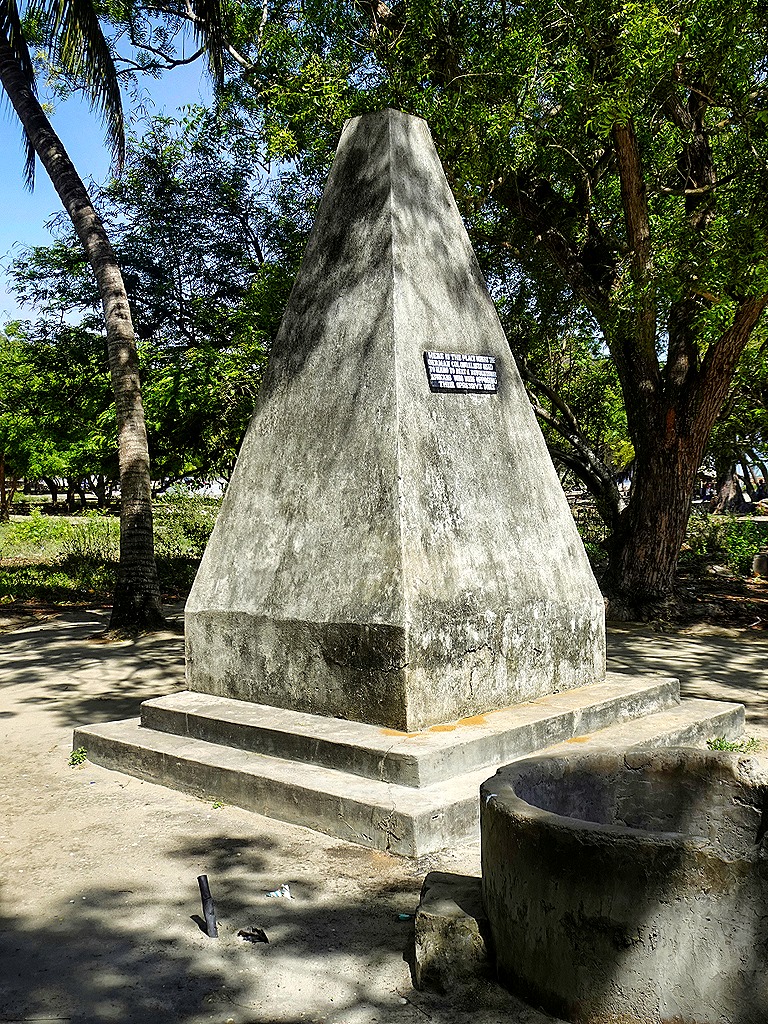
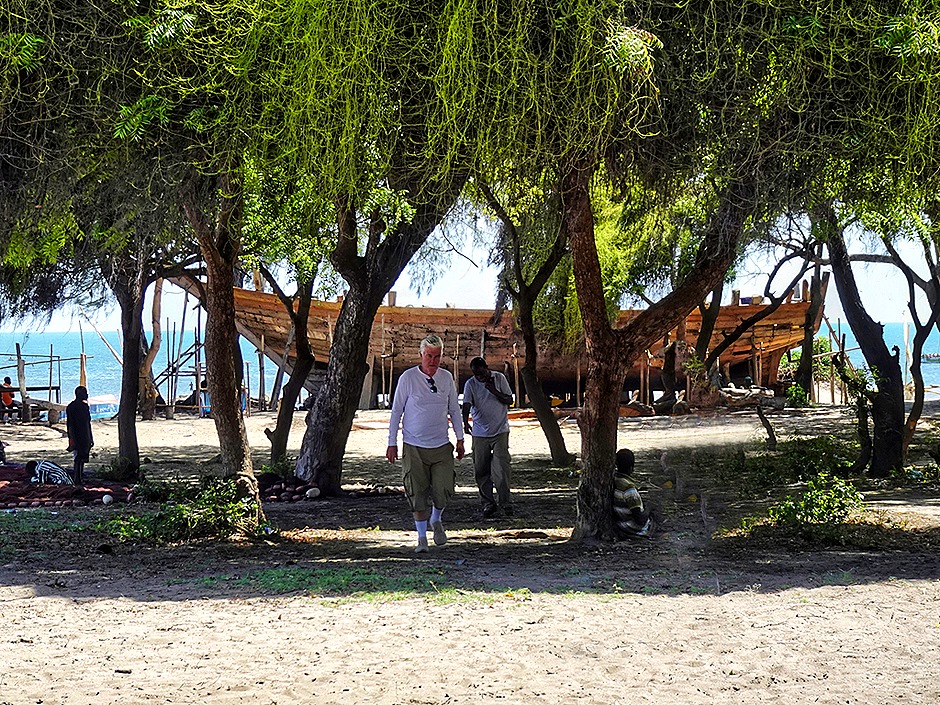
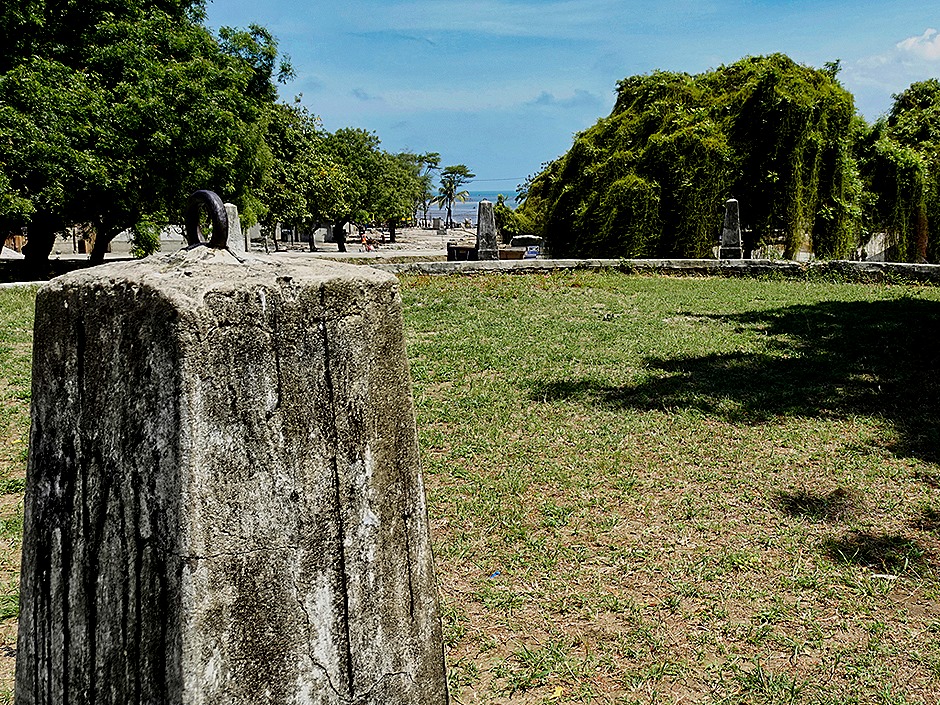
From the Old Fort we walked down to the nearby sea coast. On the way was a monument memorializing the spot where resisters to German rule were publicly hung. Bagamoyo is to this day a center for the construction of dhows, which are sailboats traditional to this part of Africa. We saw dhows being built and being used by local fishermen.


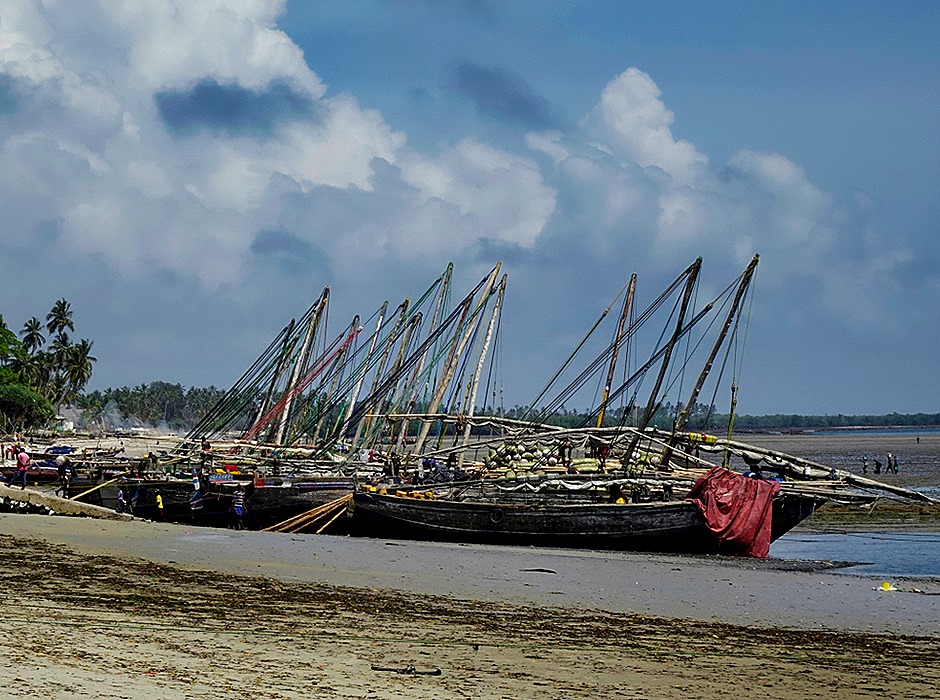
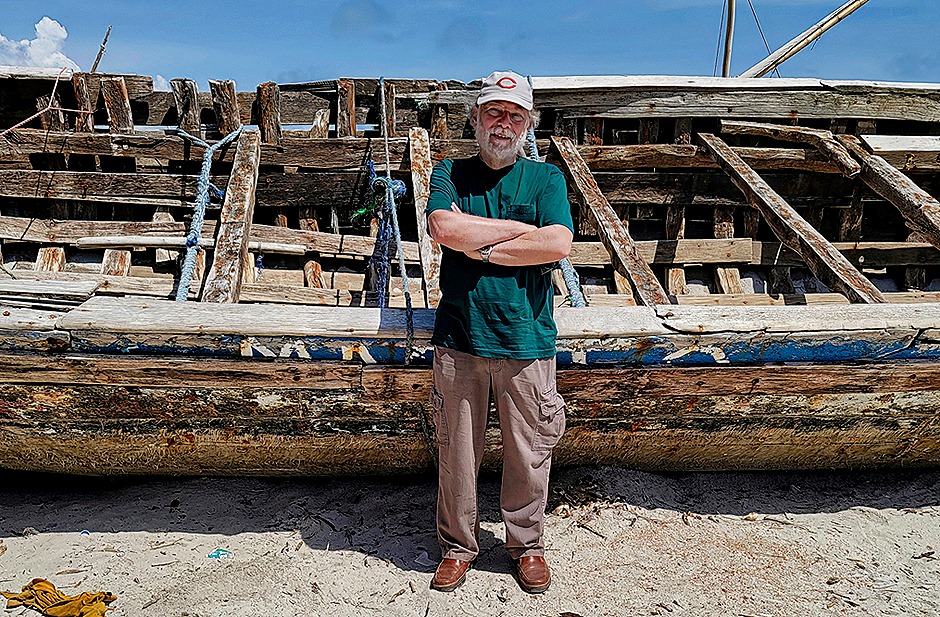
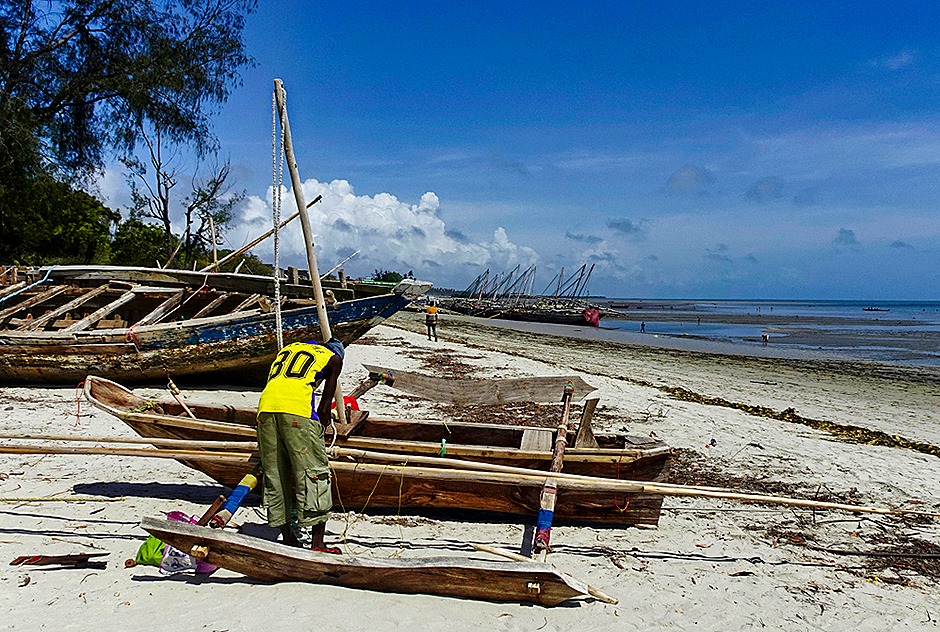
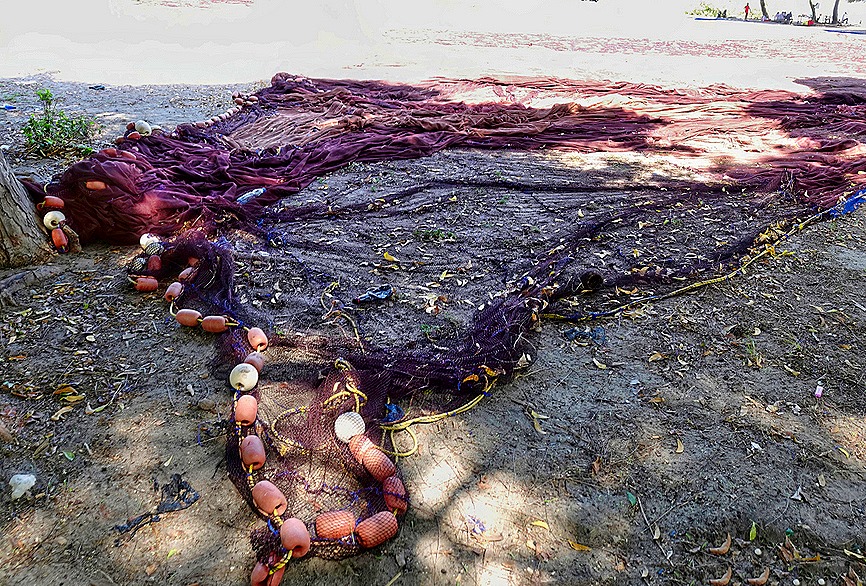
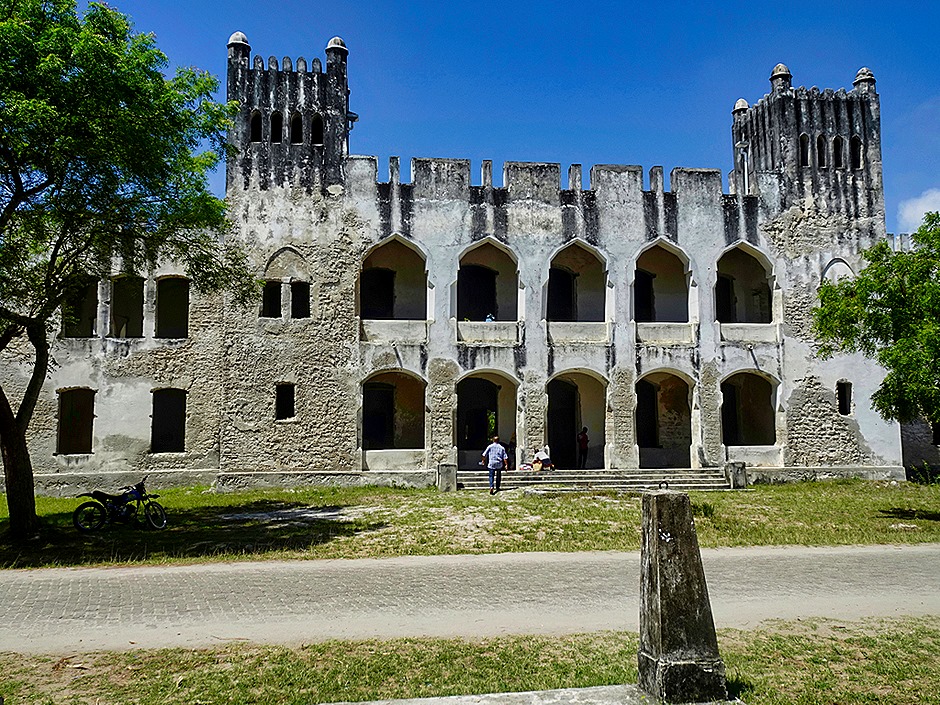
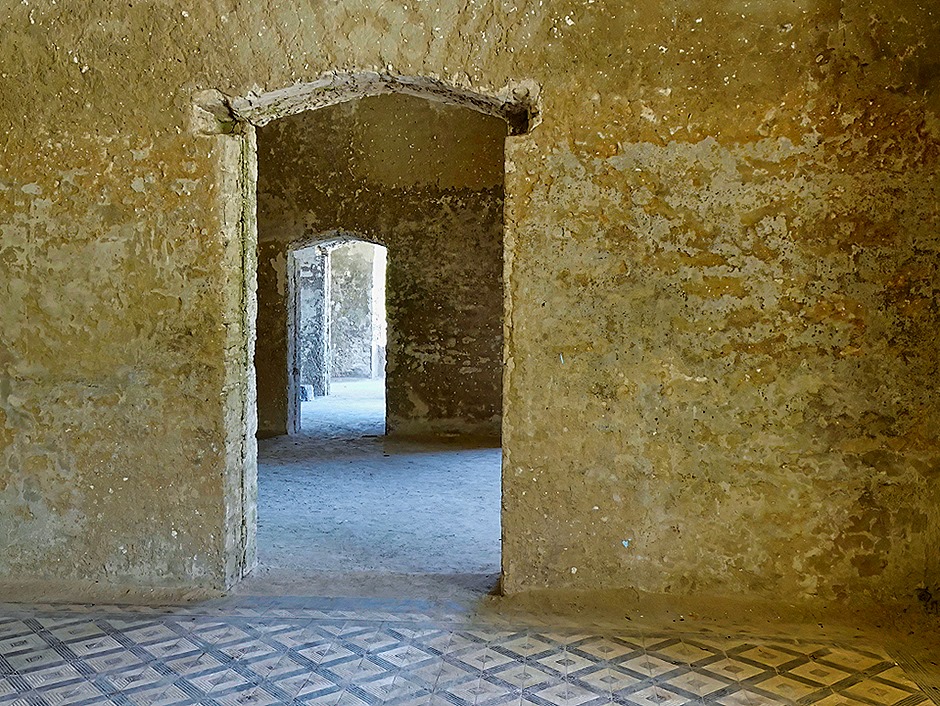
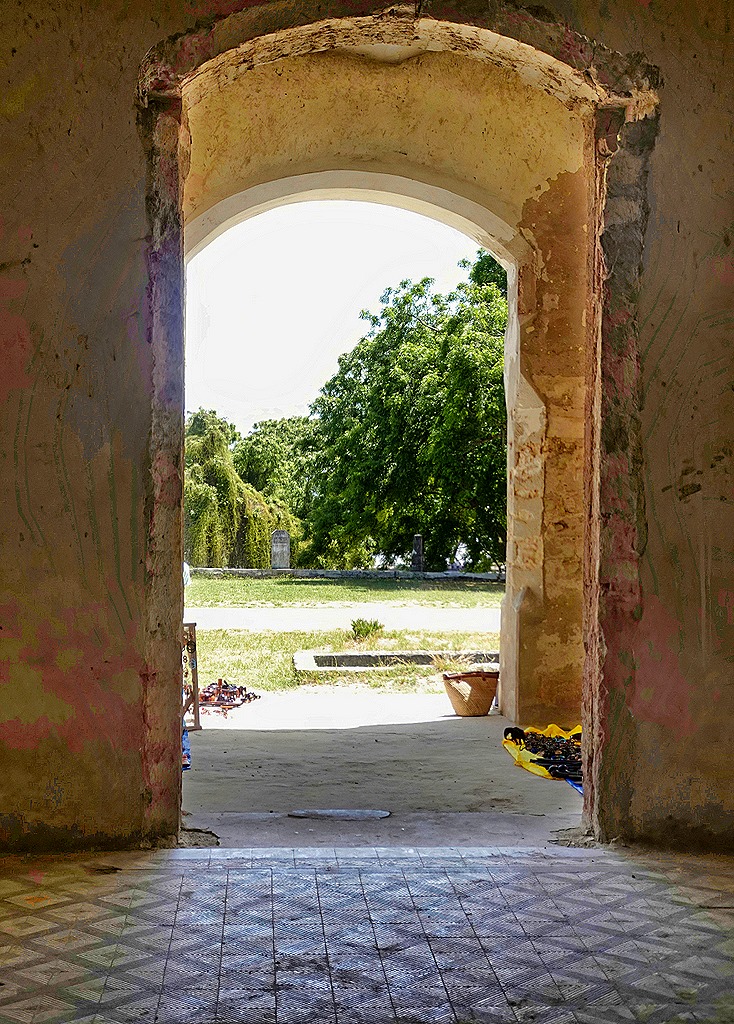
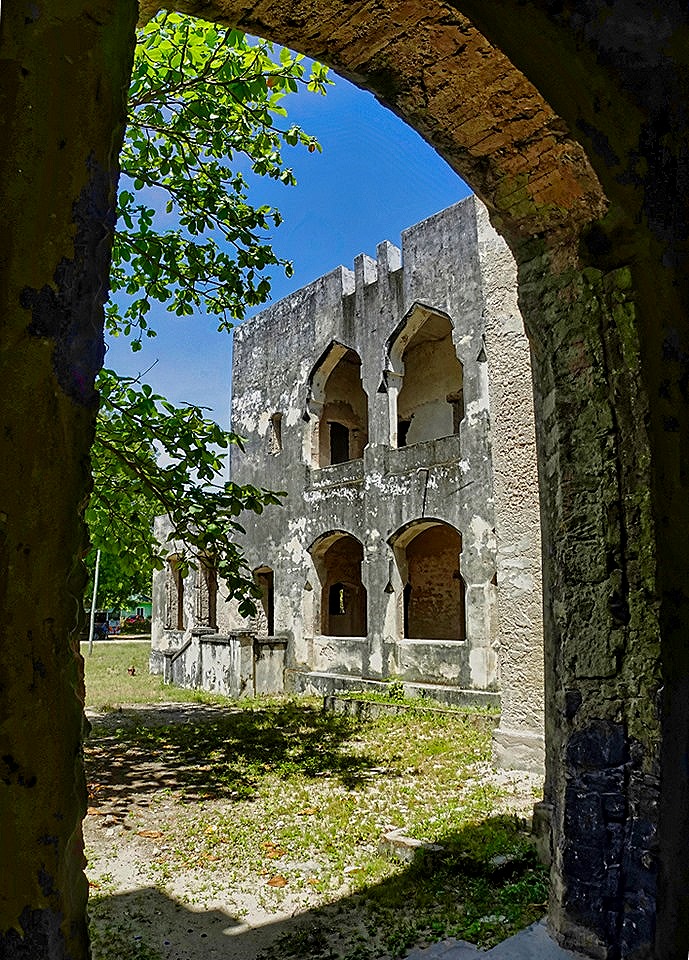
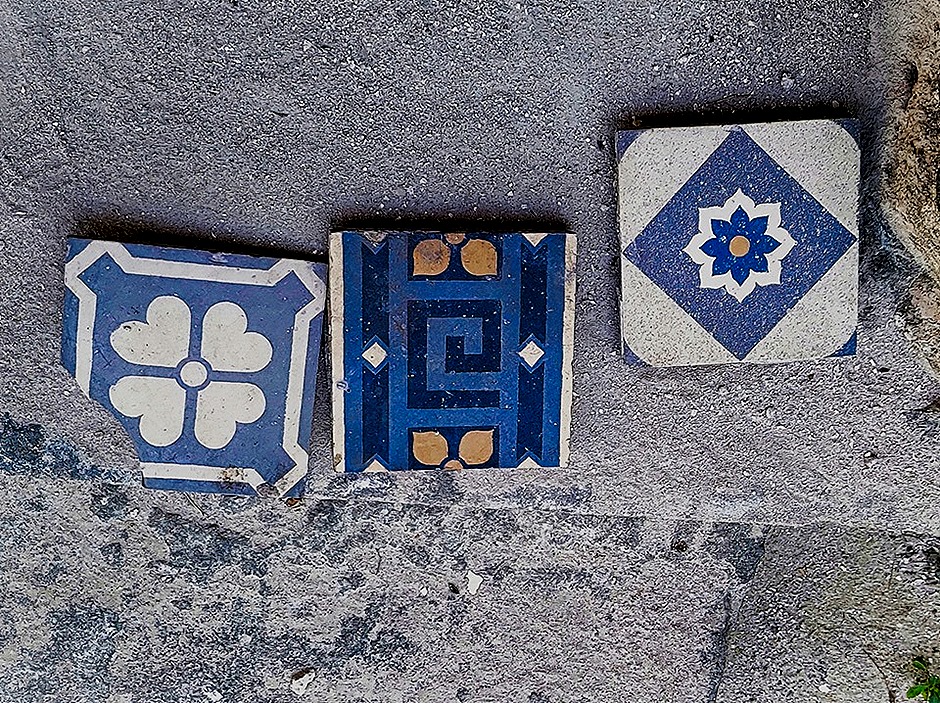
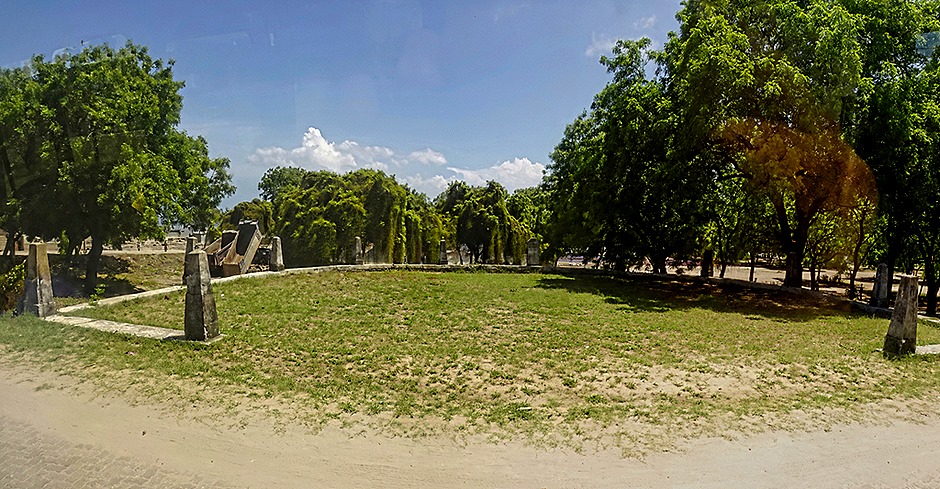
Walking back up from the beach we came to the old Boma. Built by the Germans in 1897, this was the administrative center for this part of the colony and continued in this role after the British took over. The name was applied by the British. We are not sure whether this was the actual derivation, but “Boma” means enclosure in Swahili, as for corralling domestic animals. The building has been under restoration for some time and, while it was once undoubtedly a bustling place, today the rooms inside are completely empty. Samples of the original tiles used in the Boma were displayed on a step outside. There used to be a monument in the space between the Boma and the beach called the Wissmann Monument. Built by the Germans in 1894, it was a memorial to German soldiers killed fighting Arabs and Africans in the colony. It was demolished by the British in the late 1940’s.
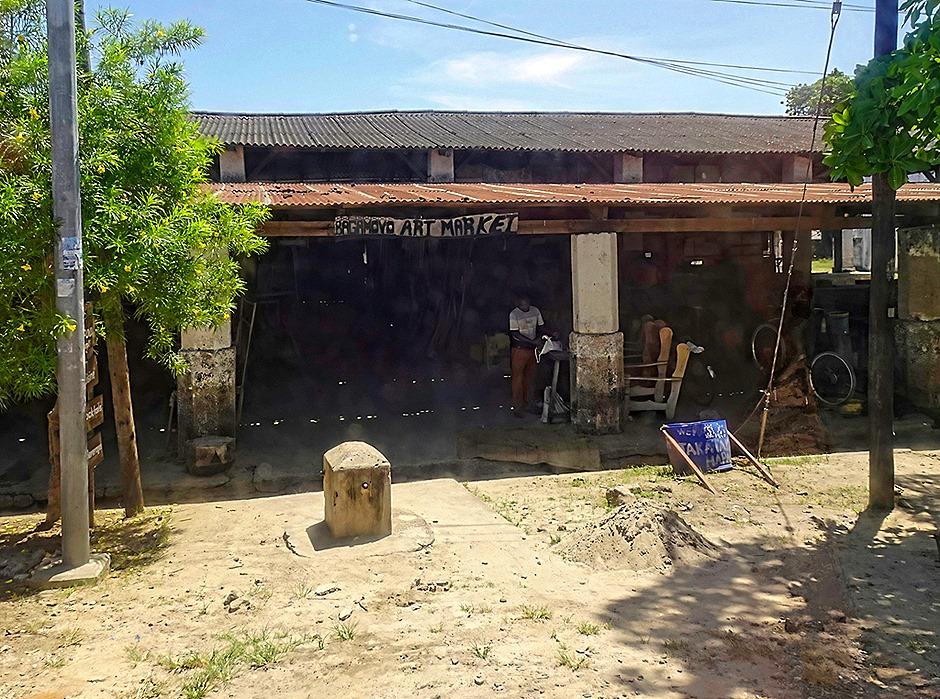
Reboarding the bus, we drove through the streets of the town to our next stop. The bus was moving kind of jerkily through the uneven streets and there was no commentary. We passed an unidentified ruin of an old building and an entrance to the Bagamoyo Art Market, which seems to be an artist cooperative store located in what was once the slave market.


Christianity came to the area in 1868 when some French Catholic clergymen established a mission on land donated by Muslims. As mentioned, Bagamoyo was at that time an important terminal for new slaves brought from the interior, where they were interred pending transport to Zanzibar and then onward to other countries in the East (ie not to America). The primary aim of the new mission was the ransom and freeing of slaves. Close to 400 were freed in this manner (out of an estimated 1.5 million transported during the 19th century), and a freedman’s village was established for and by them near the mission. The Holy Ghost Church, reputedly the first church in mainland East Africa, was built in 1872.
Bagamoyo was not only the terminus for slave caravans coming from the interior but also the starting point for some early European explorers mounting expeditions to the interior. Perhaps the most famous was the Burton/Speke expedition to discover the source of the Nile. They gathered supplies in Zanzibar then transferred to nearby Bagamoyo by ship, hired porters and set out to the interior. Dr. David Livingstone, a doctor, missionary and abolitionist as well as probably the most famous European explorer in Africa at the time, never visited Bagamoyo during his lifetime. However, when he died in 1873 Livingstone’s servants carried his body (or most of it; on his instructions his heart was first buried in what is now Zambia) some 700 miles to Bagamoyo, where it lay in state in the Holy Ghost Church from February 24 until . . . February 25. Some 700 slaves came to see the body before it was shipped to Zanzibar and on to London, where it is interred in Westminster Abbey. Today only the tower of the Holy Ghost Church remains, renamed the Livingstone Tower in honor of the Doctor’s posthumous night there.

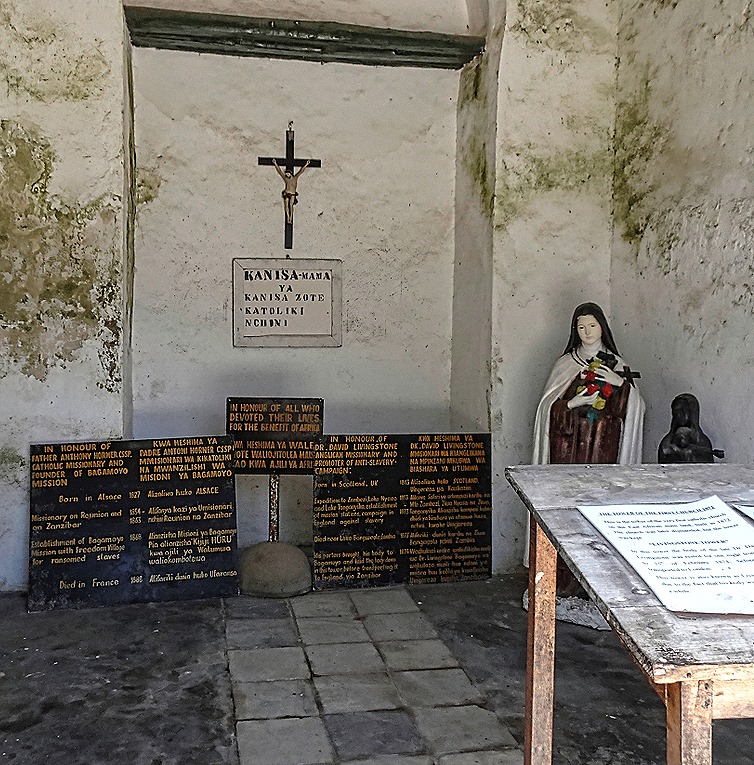
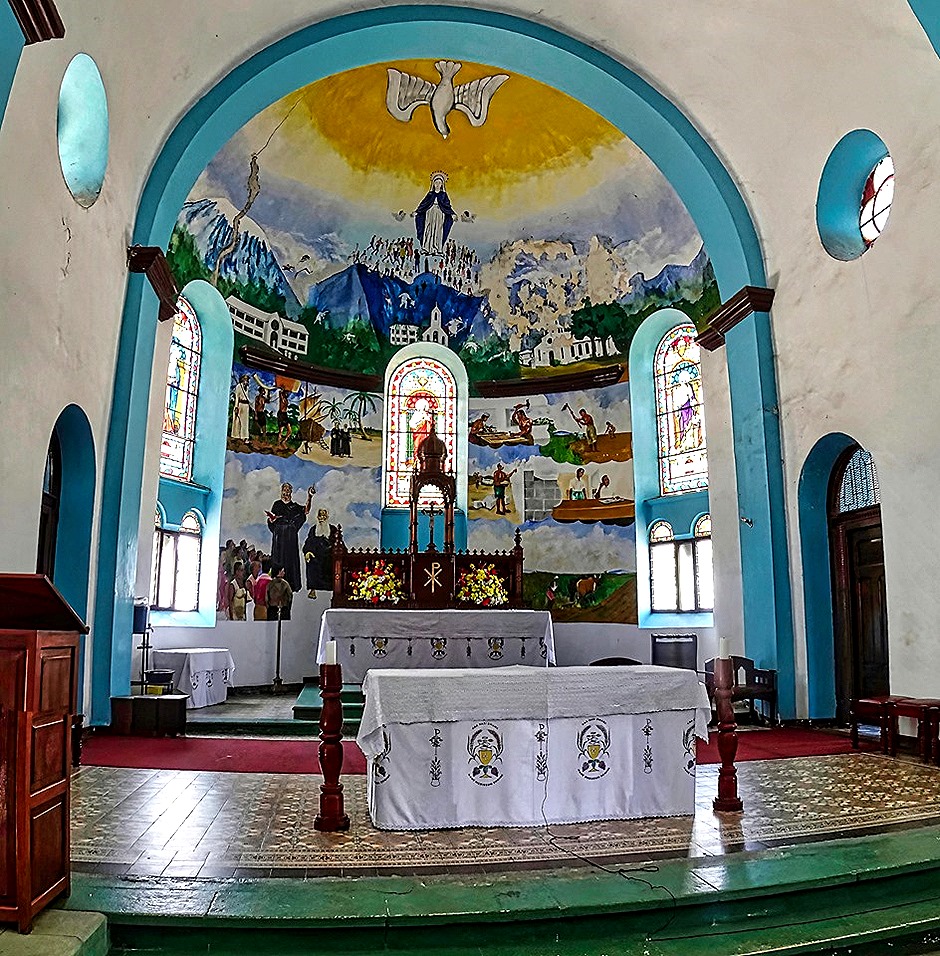
The New Holy Ghost Church was opened in 1914 on the eve of the First World War. Scenes from the history of slavery in the area are painted on the wall behind the apse.
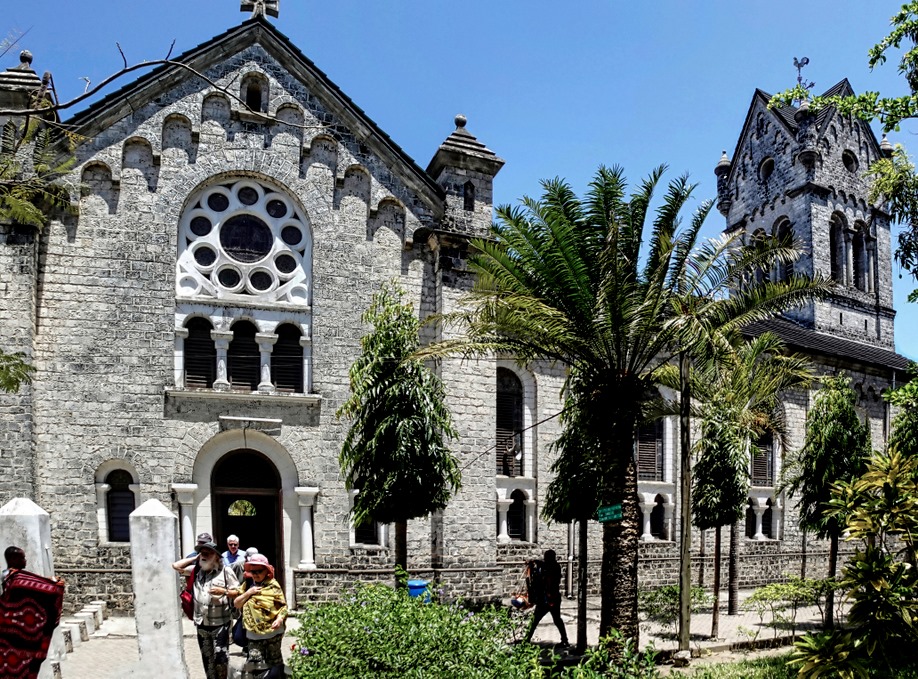
A museum sits near the church in what was originally the Sisters’ House, built in 1876. Much of it is devoted to church history but it also contains such artifacts as chains and a neck manacle for restraining slaves and a wooden xylophone (an instrument that originated in Africa).
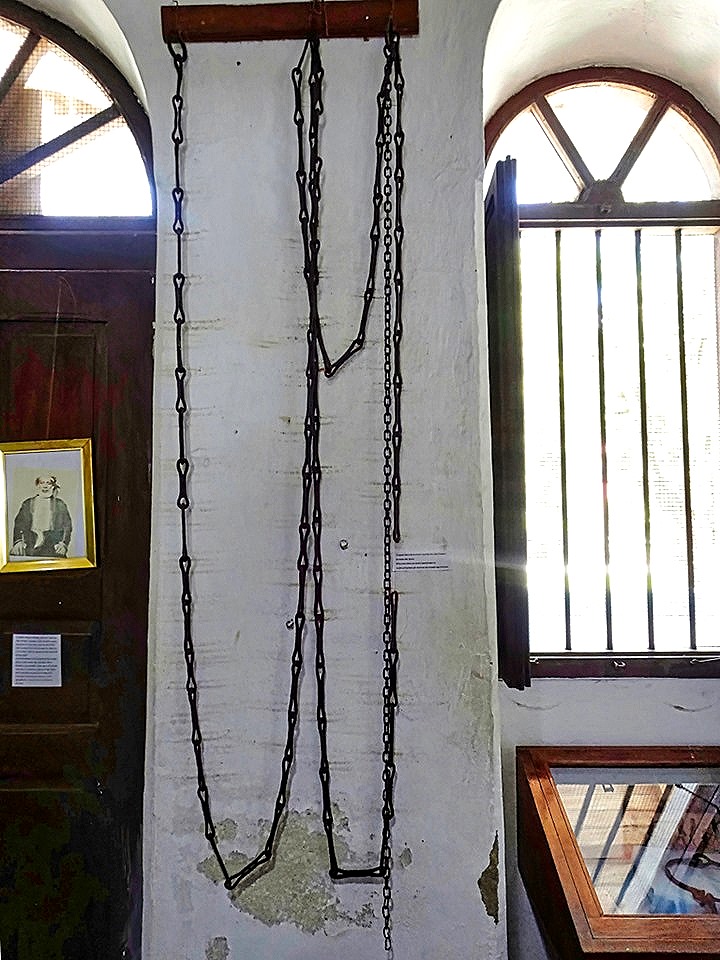
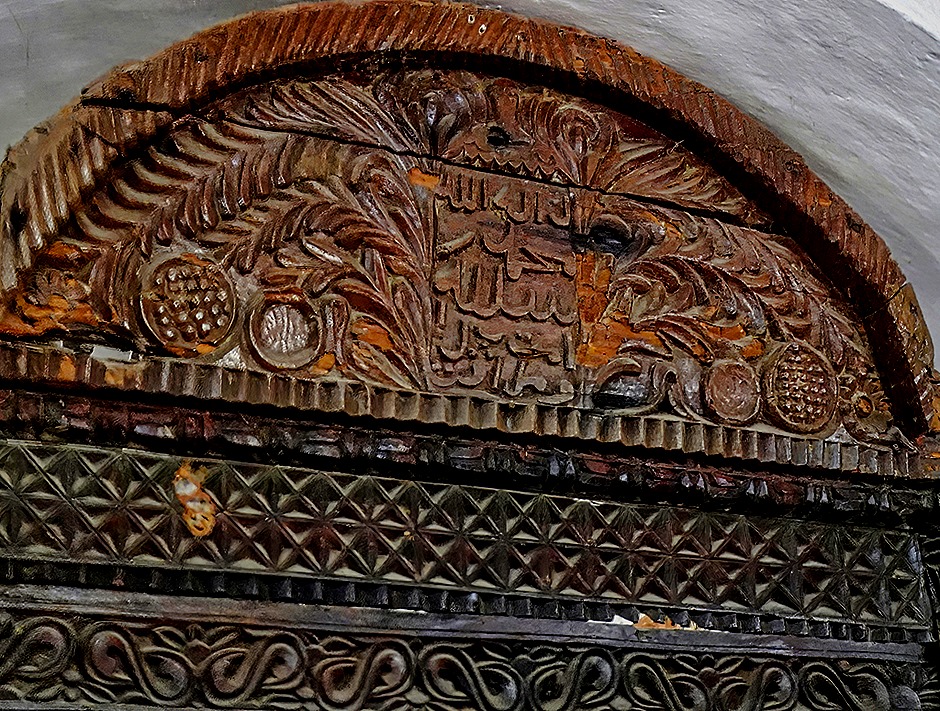
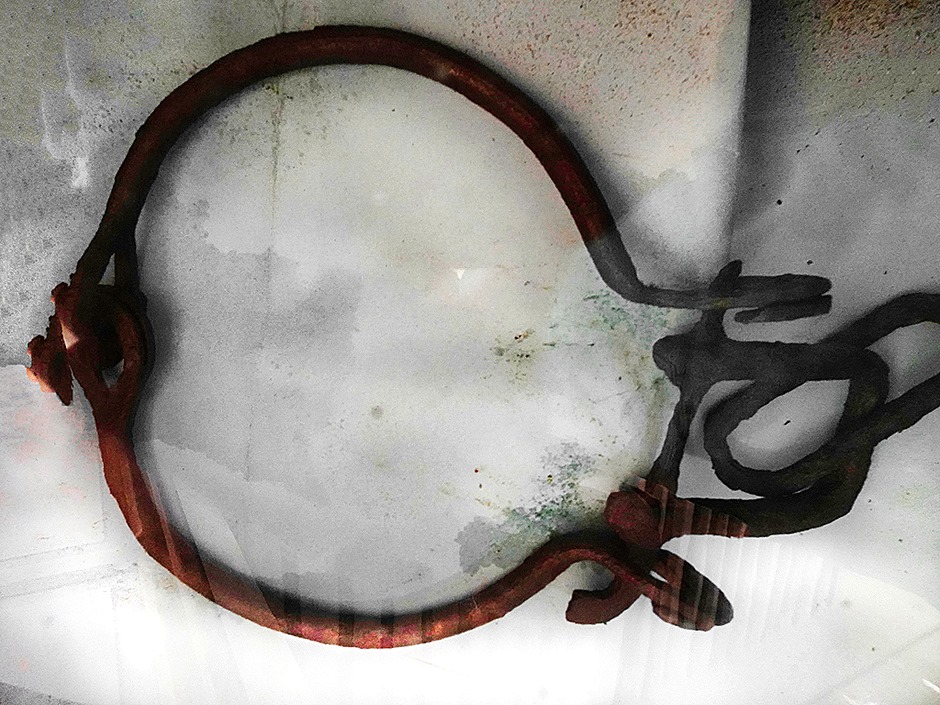
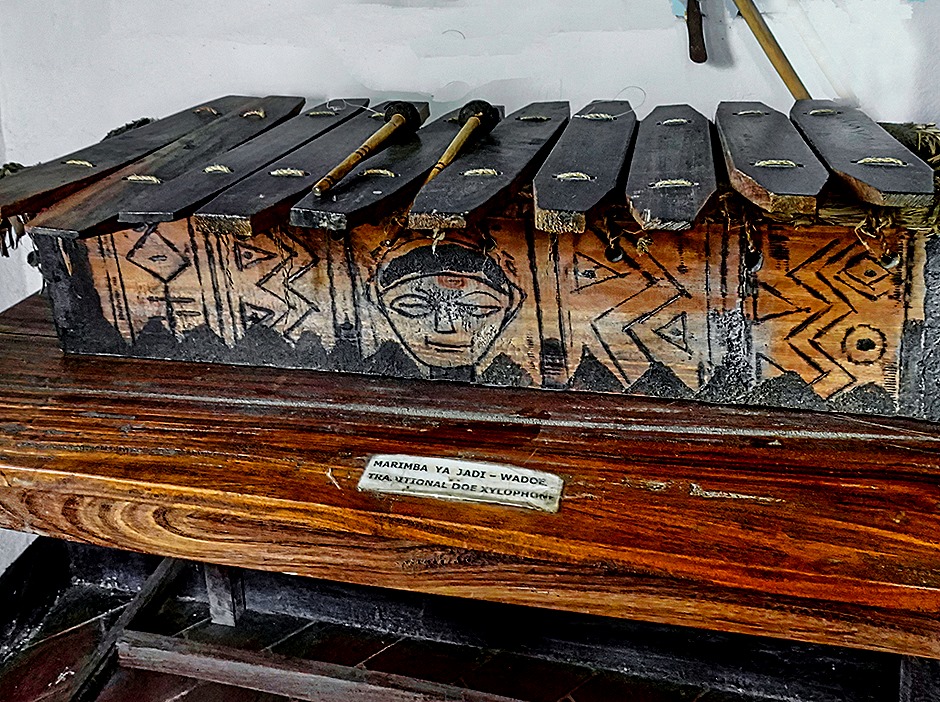
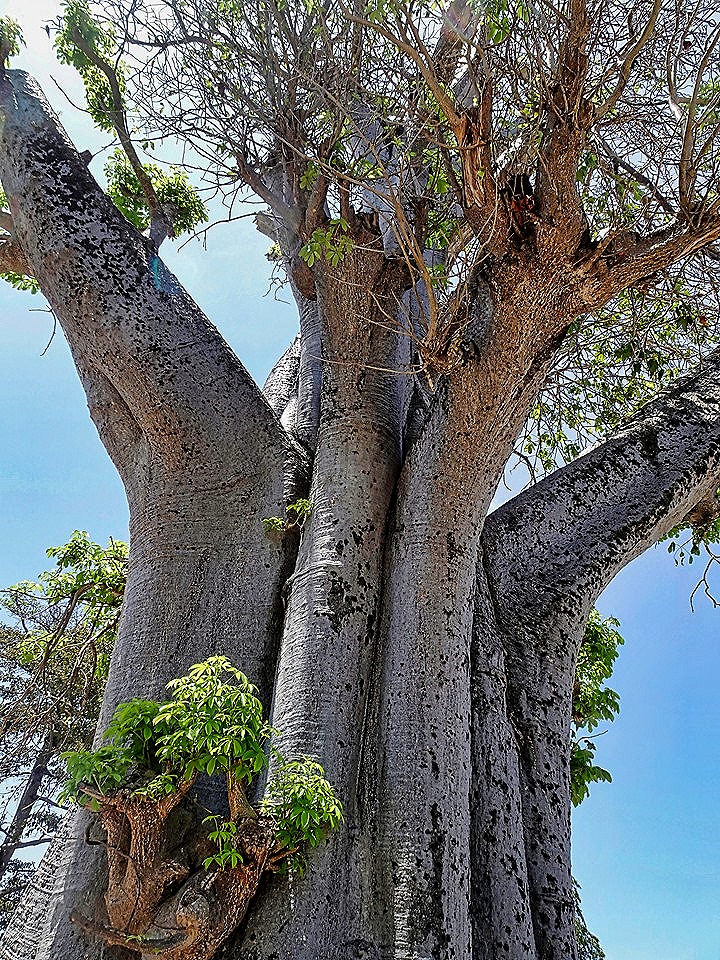
In the yard by the buildings was a large Baobab tree planted in 1868 when the mission began. According to a sign it was about 27 feet in circumference in 2000, so it is probably 40 or 50 feet today. A French nurse who worked here in the 1890’s attached a chain to the tree to hold her donkey while she worked. It was forgotten and by 2012 the tree had expanded to swallow up all but one link of the chain. A new chain was attached to that to keep it from disappearing completely and it can still be seen today. The tree is healthy and still produces fruit every year.


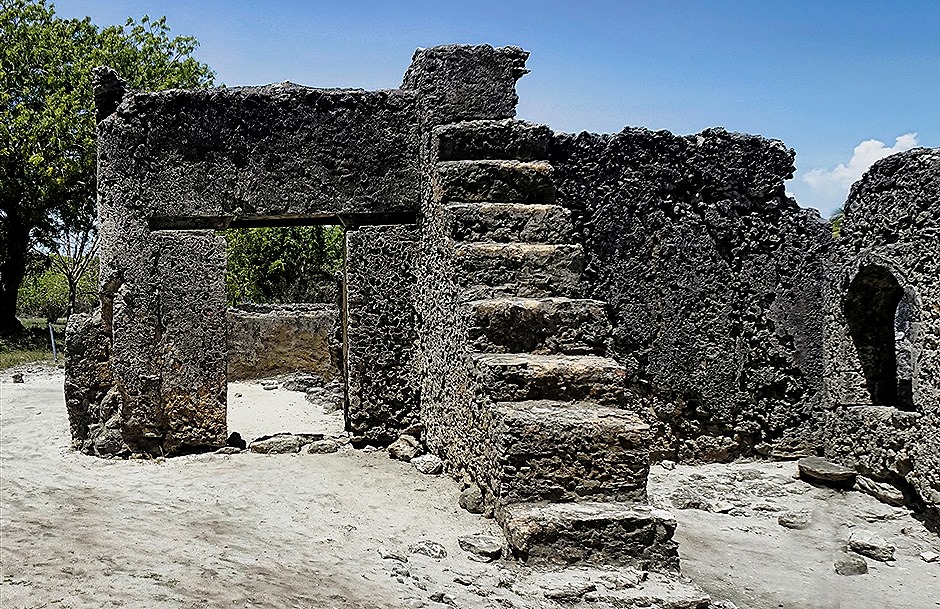
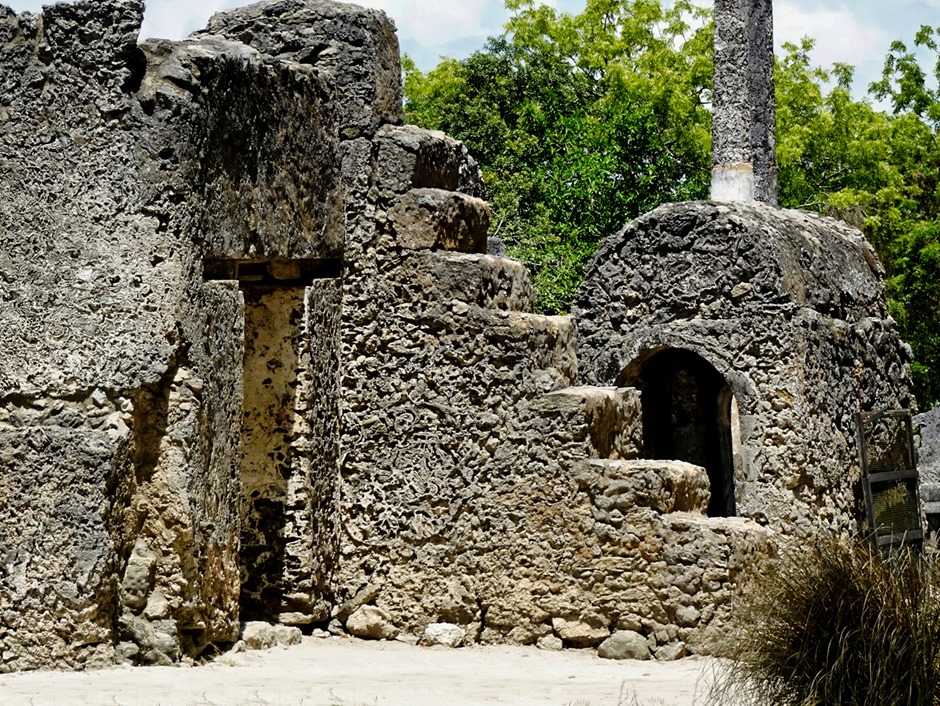
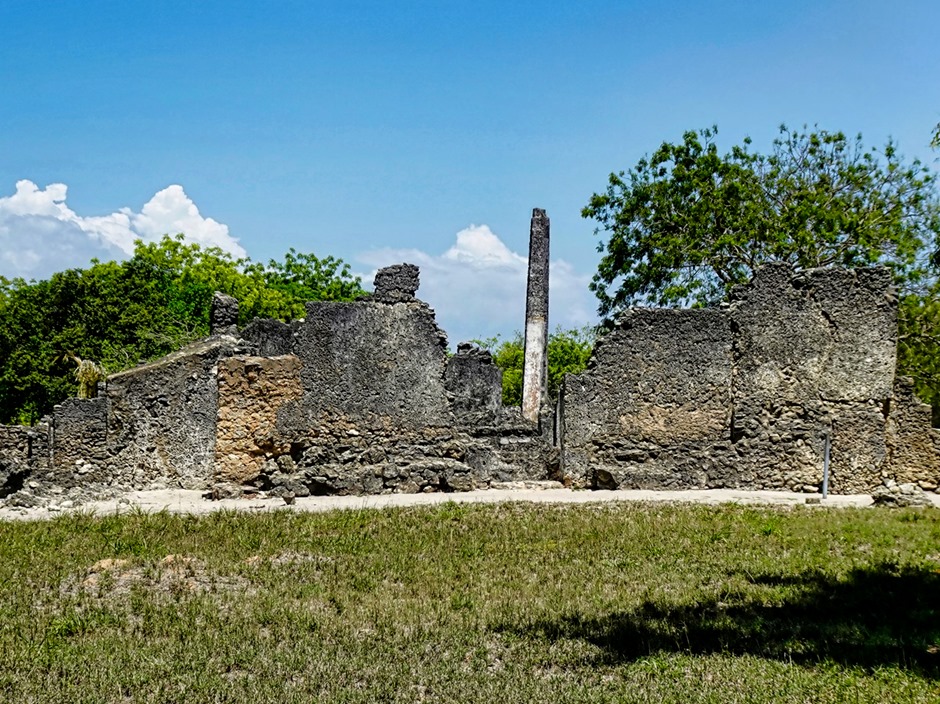
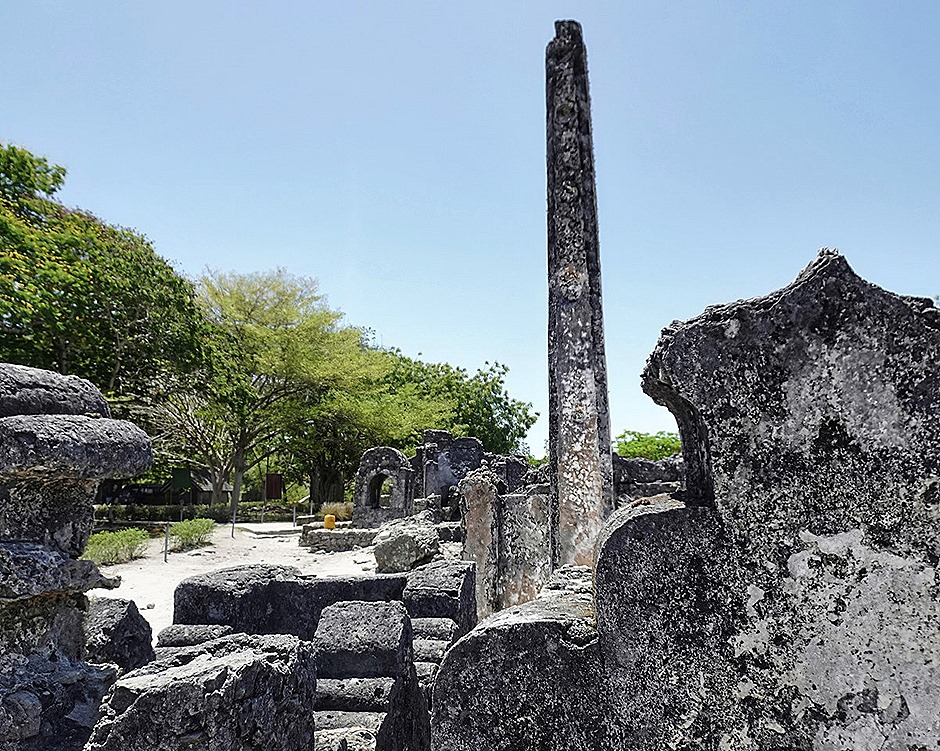
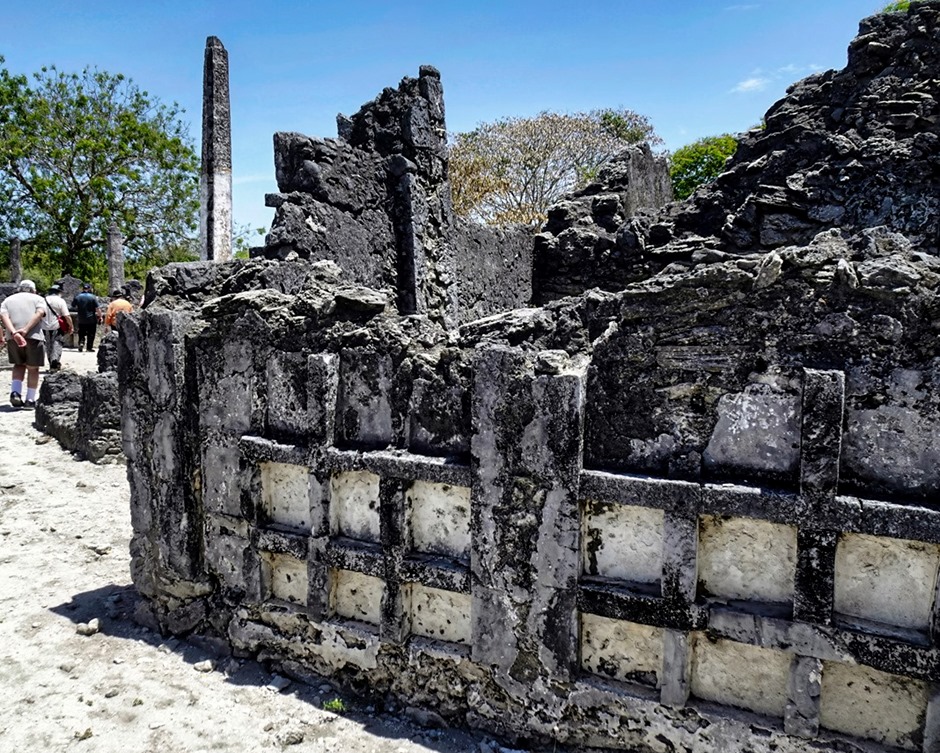
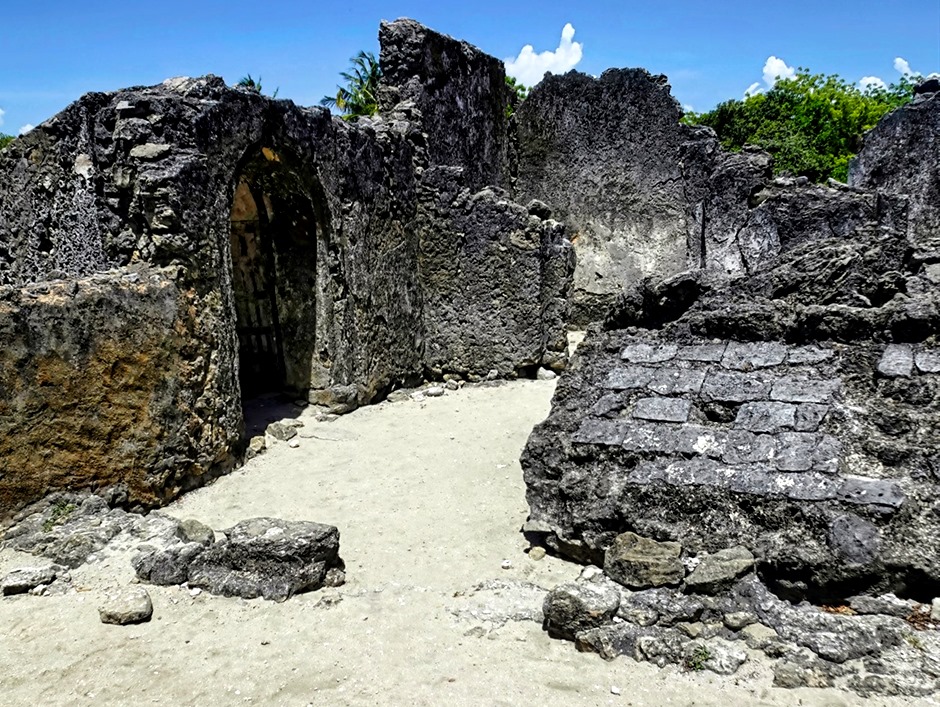
Last stop was the Kaole ruins. This is what is left of a 13th to 14th century village, probably originally settled by Persian refugees from the Mongols. We visited the remains of a 13th century mosque, thought to be the oldest in East Africa. It was notable for the external steps for the muezzin to climb to the roof for the call to prayer which, we are told, are seen only in this part of Africa. Near the mosque are the remains of some two dozen tombs, several with tall pillars (once covered in Chinese porcelain) probably marking the graves of local rulers or notables. No houses or other buildings are to be seen here, probably because they were built of impermanent materials.
 .
.
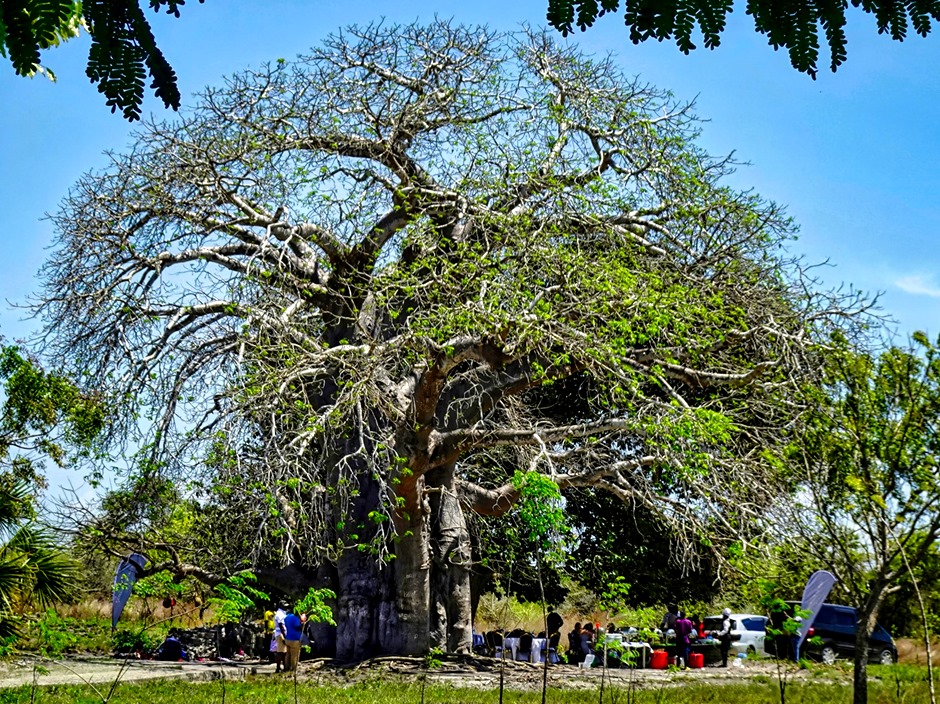
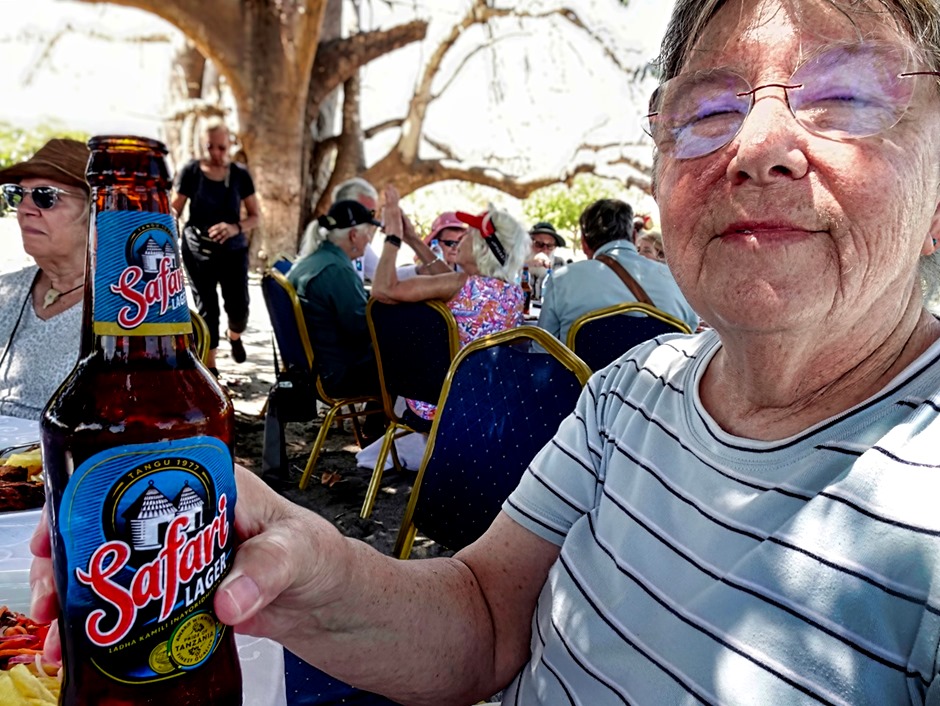
We ate lunch outside at tables under a large baobab tree. The local beer was pretty good.
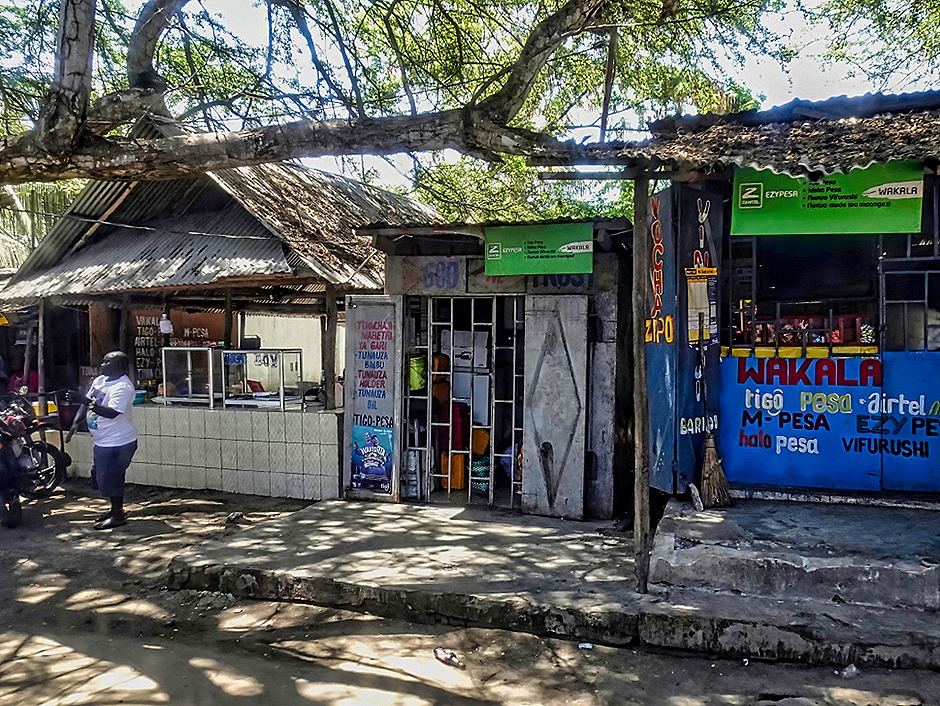
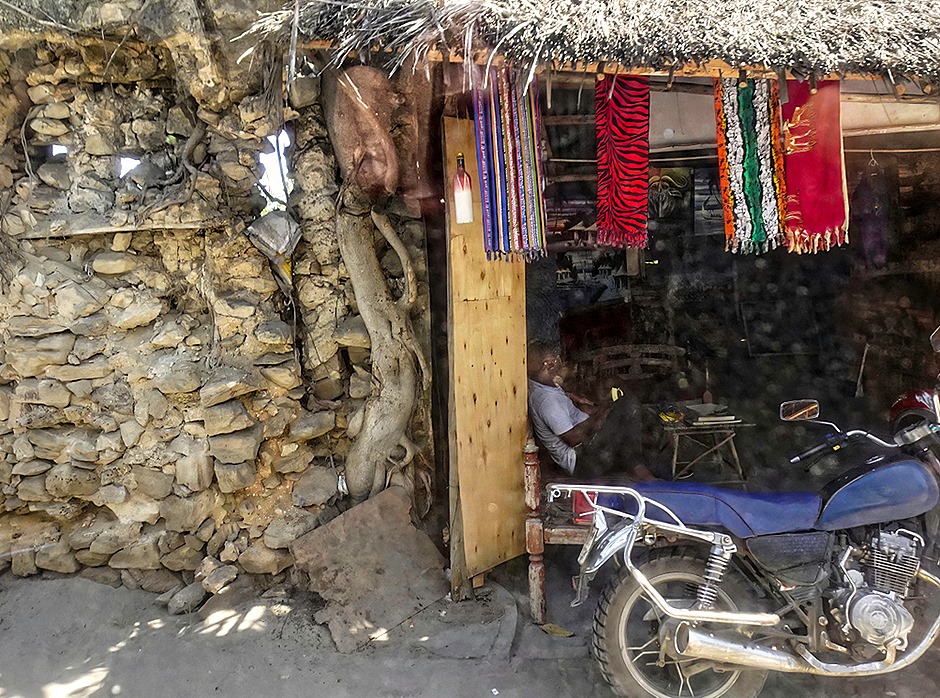
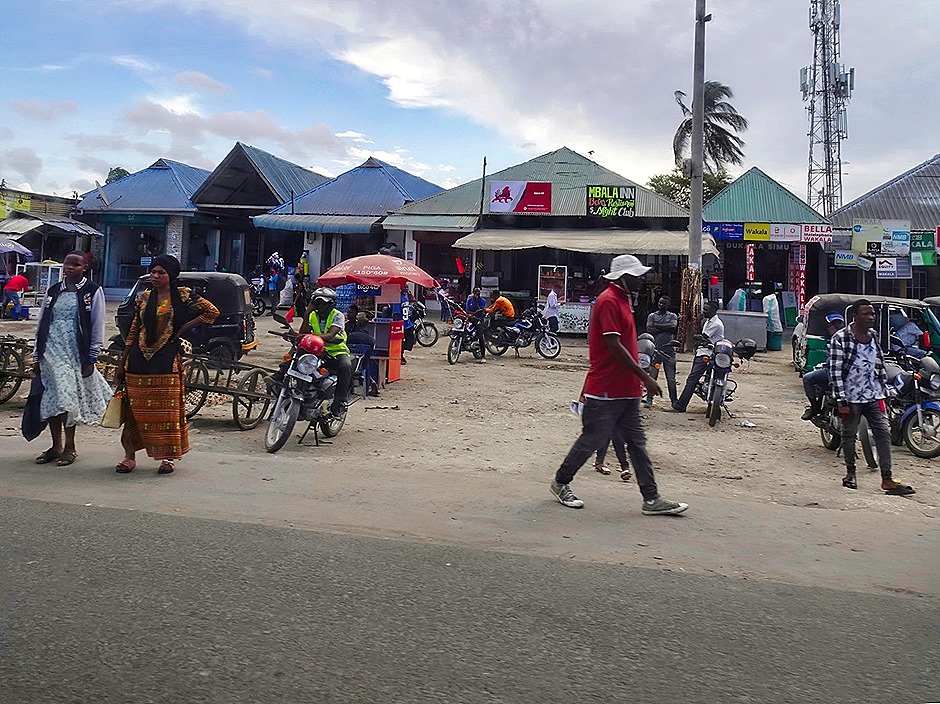
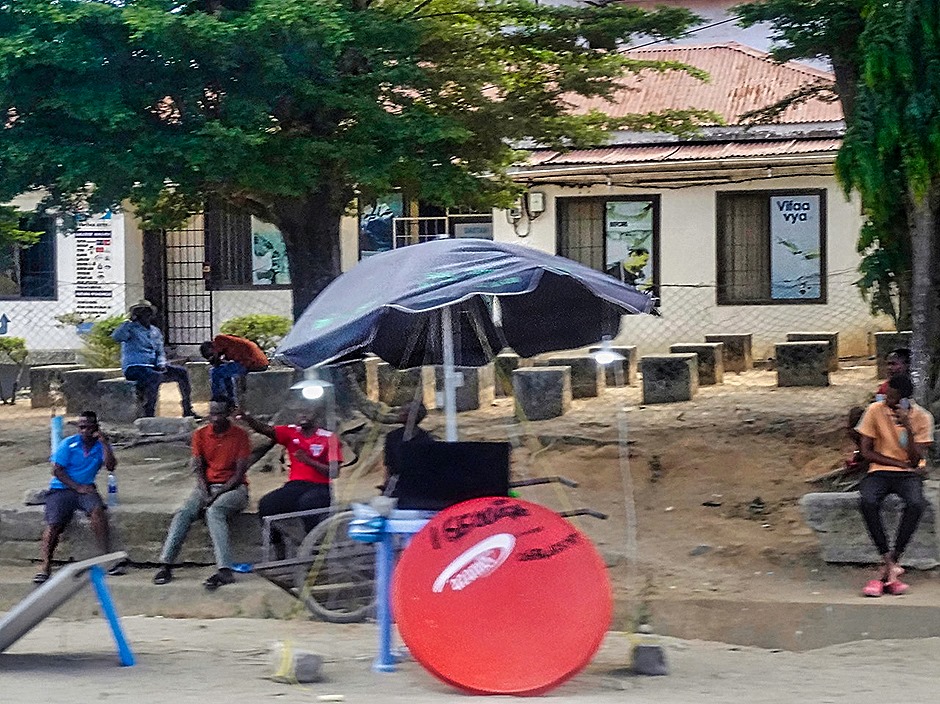
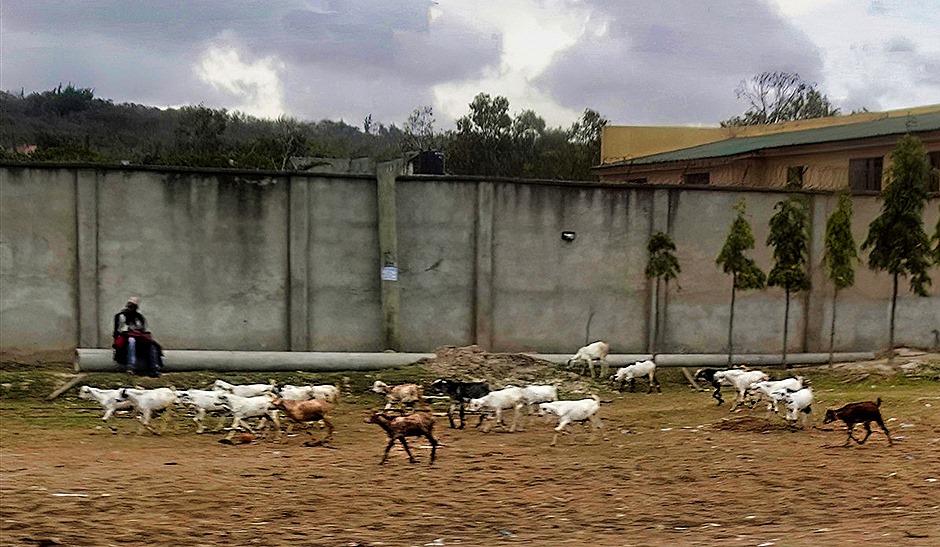
After lunch we boarded the vans for the trip back to the ship. Once we reached the main road we were joined by another police escort and drove back at high speed, switching lanes and even using the lanes going the other way. It was a pretty wild ride. If I were a local commuter I think I would resent being shunted aside like this for the convenience of foreign tourists. We noticed many people sitting under trees along the roadway to get out of the heat, though others were going about their business. A lot of trees in front of houses and shops had chairs or benches to accommodate this, so it is probably a daily practice (and pretty smart since it was quite hot). There were a lot of stray dogs wandering around as well.
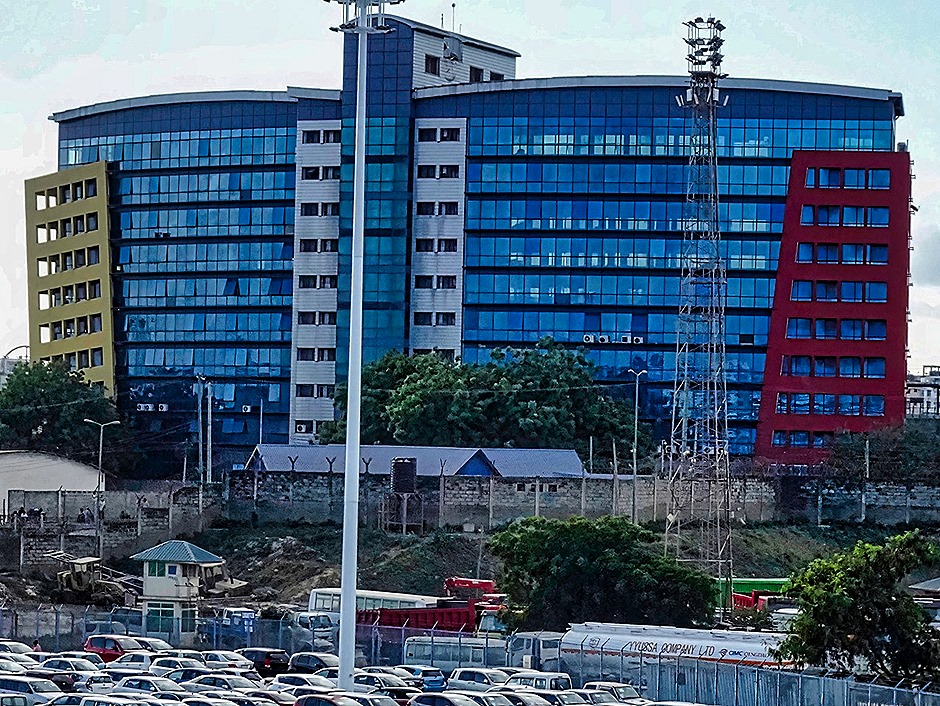
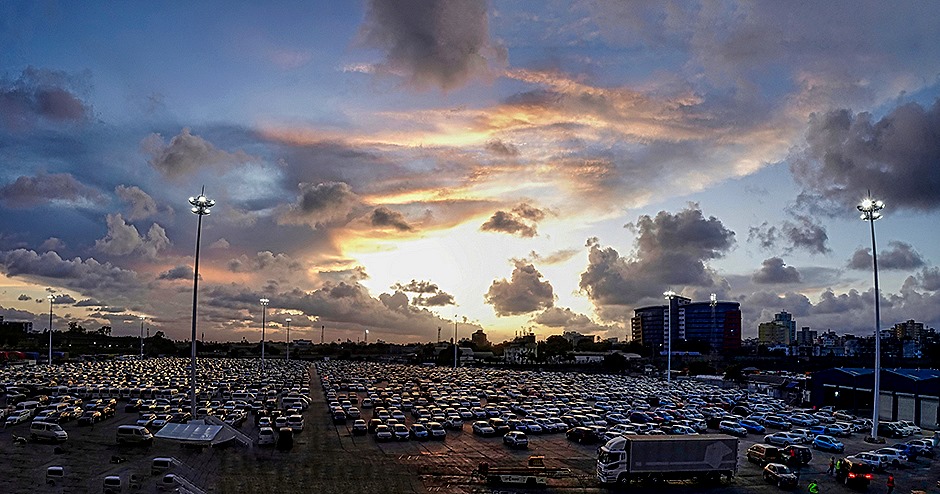
As the day ended and we prepared to leave Dar es Salaam, who would think there could be such a dramatic sunset over . . . a huge parking lot.

 BADER JOURNAL