Kobe, Japan (Day 2) – Osaka (2024)
As always seems to happen when we have an overnight stay, we woke up on the morning of March 3 still in Kobe harbor. Today we had scheduled an excursion to Osaka, a lengthy bus ride away, on which we left early in the morning. With a population of about 2.7 million, Osaka is the third largest city in Japan and is a major commercial and financial center for the country. It is home to important international electronics companies like Panasonic and Sharp. People have lived here for at least 2,000 years, one of the earliest settlements in Japan. Like other Japanese cities, Osaka was subject to extensive Allied bombing near the end of World War II but was successfully rebuilt after the war.
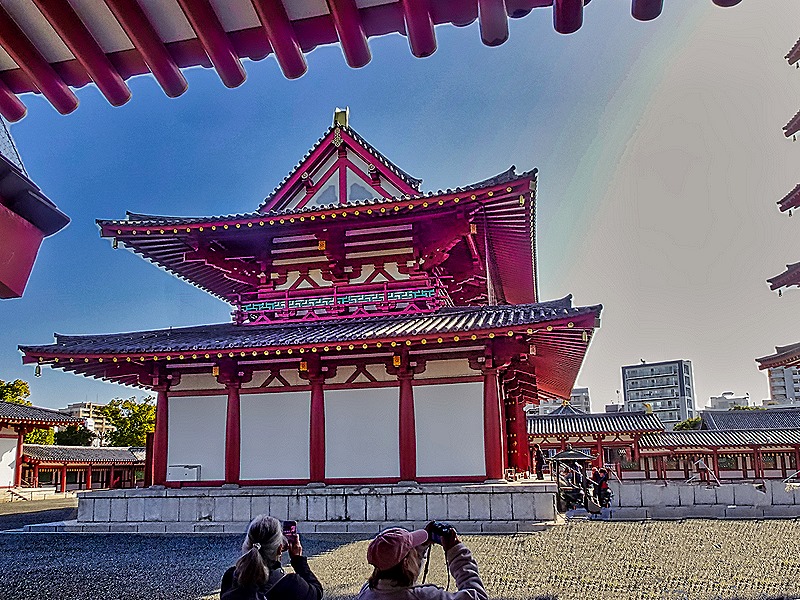
It would be difficult to plan a visit to Japan without including visits to temples and shrines. Our first visit today was to Shitenno-ji Temple, considered by many the oldest Buddhist temple in Japan. It was first built in 593 by Prince Shotoku, one of the first to promote the spread of Buddhism here. Its buildings have been destroyed many times, by both war and natural calamities, most recently by the bombing in World War II. The current reconstruction, based on archeological excavations as well as old records, was completed in 1963 and is considered to be as true as possible to its original appearance.
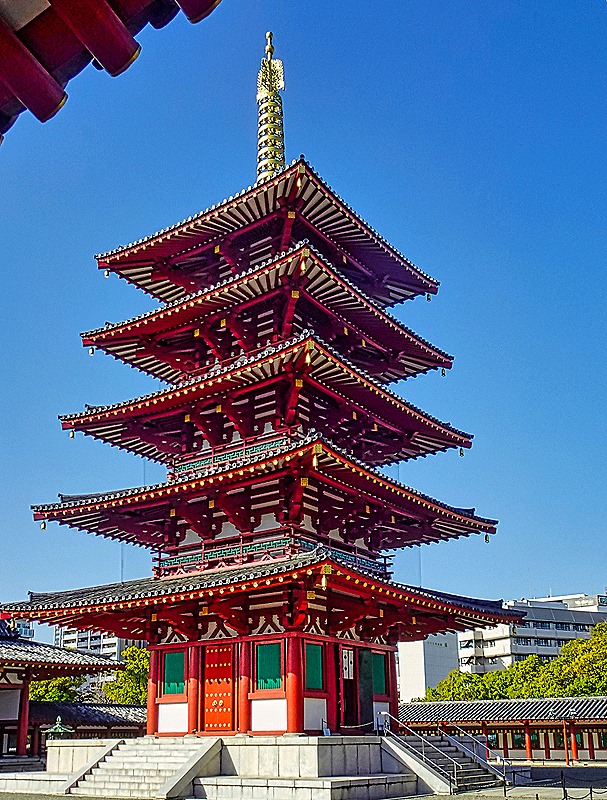
The temple’s core consists of a covered walkway around the main courtyard, with a gate on one side and a lecture hall (Kodo) on the other. In the courtyard are the Kondo (the main hall) and a five story pagoda. The predominant colors of the buildings are red and white. The buildings are aligned in a straight line – Chumon gate, pogoda, kondo, Kodo – an arrangement that came to be known as Shitennoji-style and was widely copied.
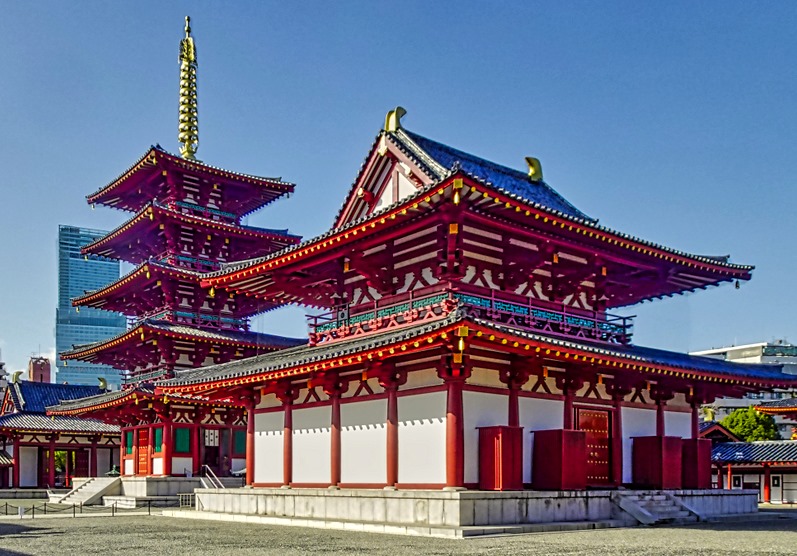

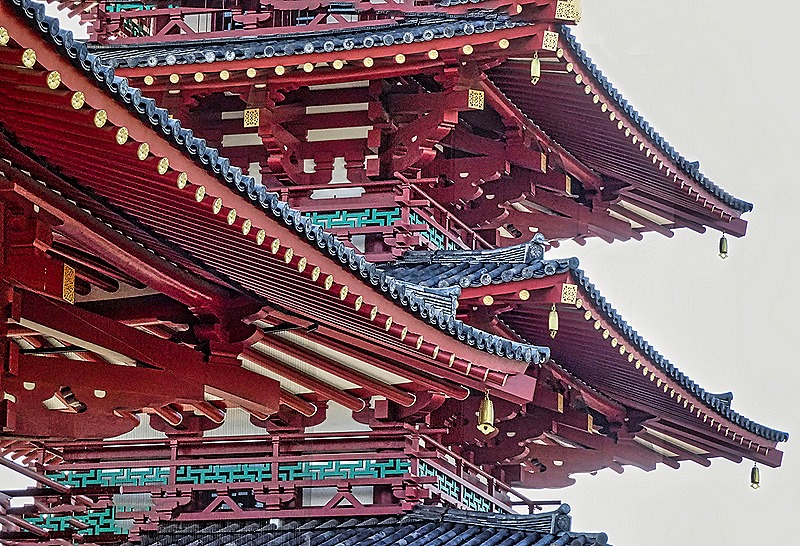
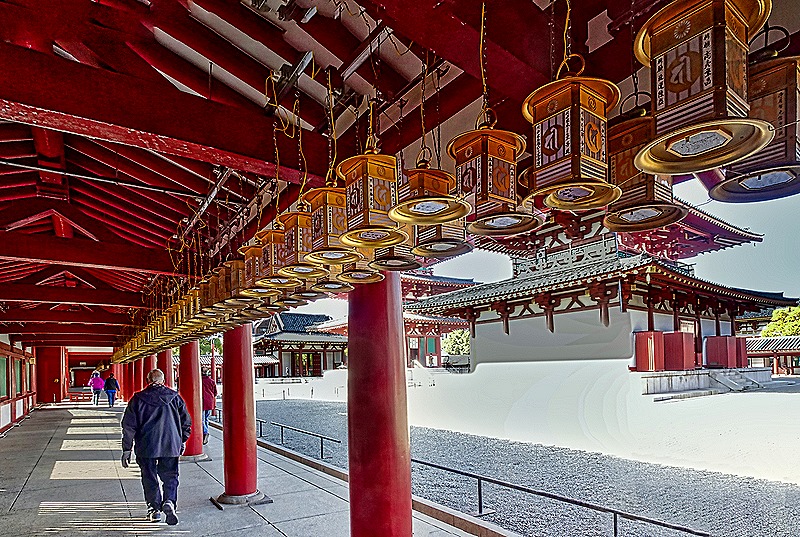
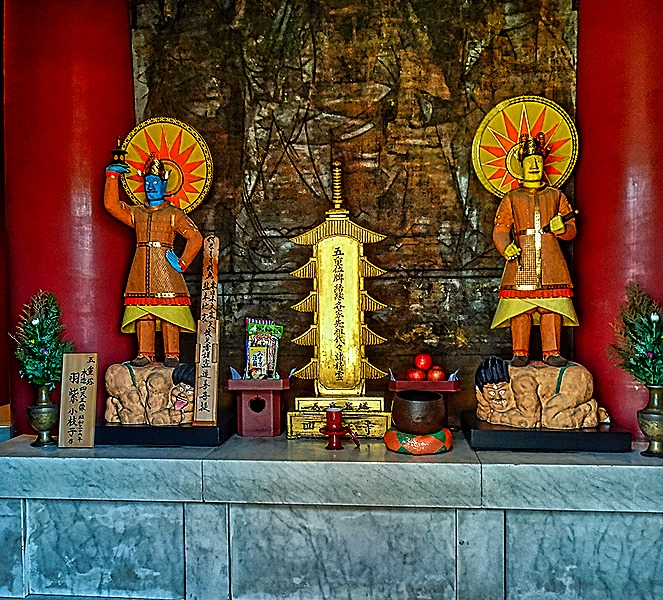
The five story pagoda is easily the most prominent building in the temple complex. Each floor reputedly contains a different set of religious artifacts. I say reputedly because, although entry was permitted if you removed your shoes, we did not climb the stairs here. Really not enough time. But Rick walked up the concrete stairs and took a photograph of the interior through the door.

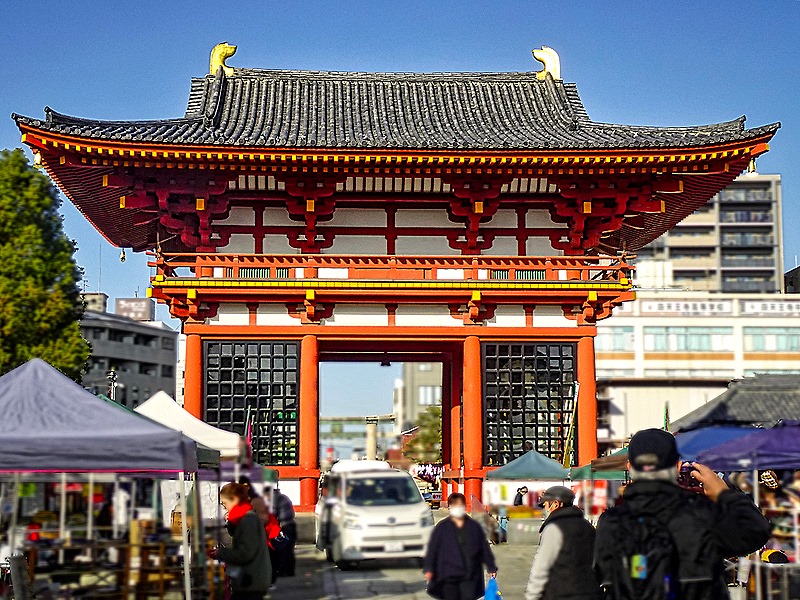
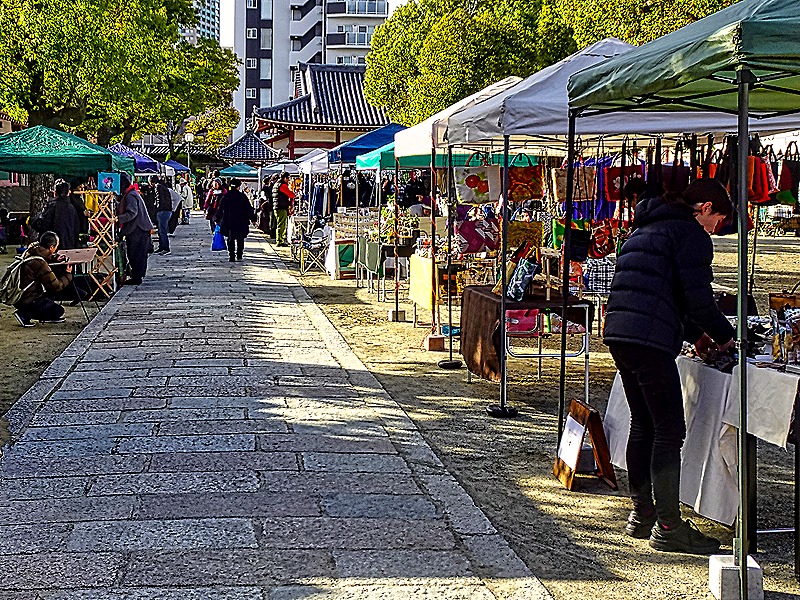
We have read that there is a market at this temple every month on the second or third weekend. But we were there on March 3 and there definitely was a lively market inside the gates, with many people selling crafts, clothing and other things from temporary looking cloth roofed kiosks held up by poles. Our guide said this occurs every Sunday. So maybe this isn’t the official big time market scheduled once a month, but it certainly occurs on Sundays (at least the Sunday when we were there).
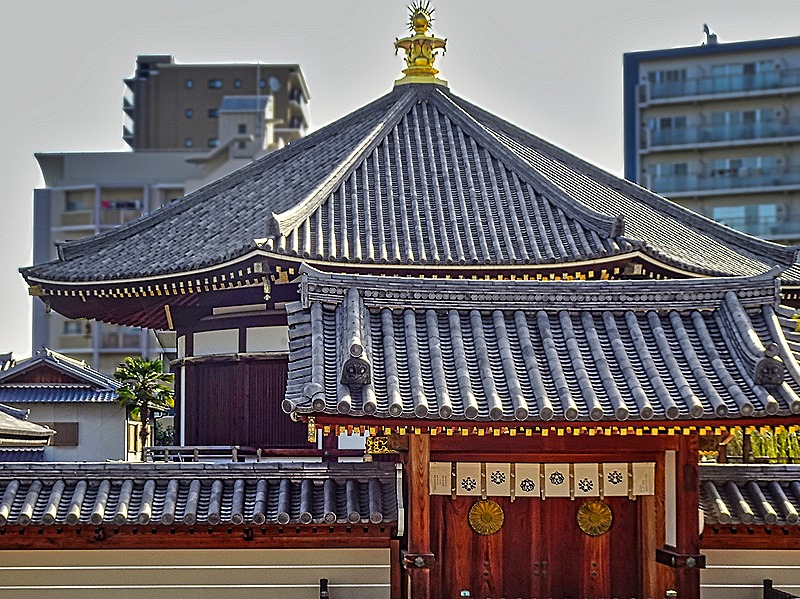
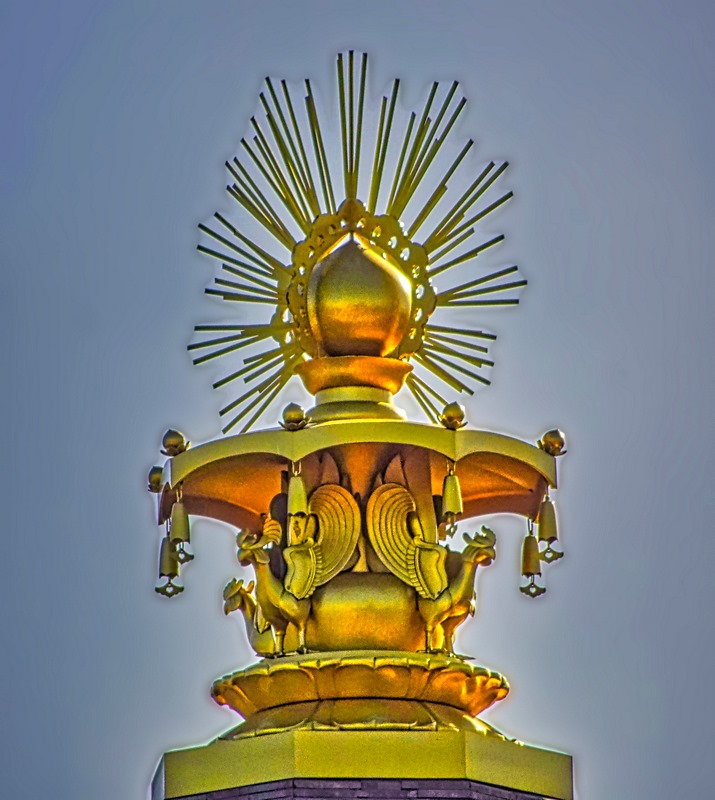
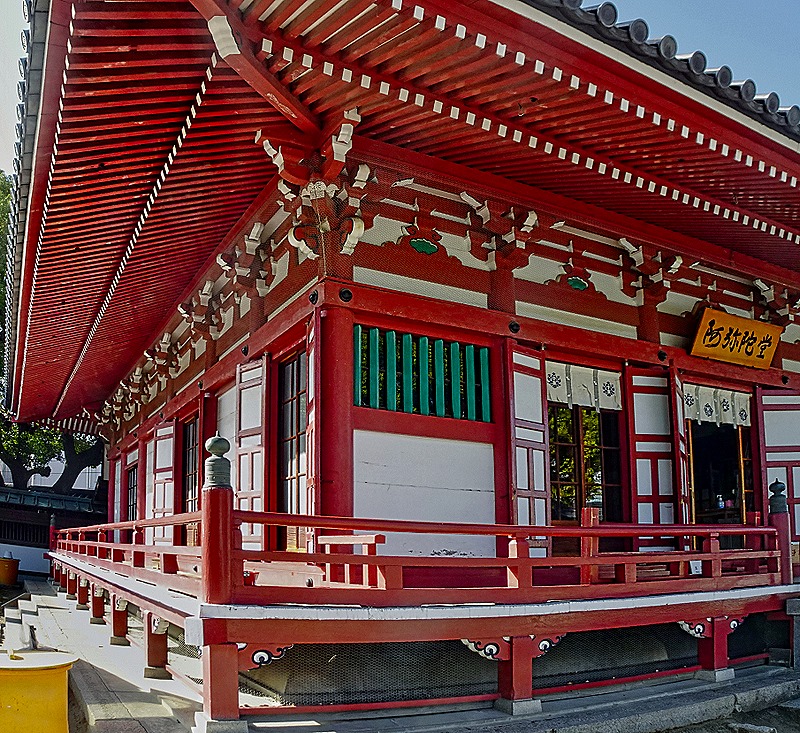
The Kondo is the main sanctuary sitting in the middle of the courtyard, but it was closed the day we were there so we didn’t see the inside. We also have pictures of two interesting buildings we can’t identify, one with a hexagon shape and a gold looking figure on the apex of the roof and another that is mostly red and white, with a surrounding porch sitting on short pillars.
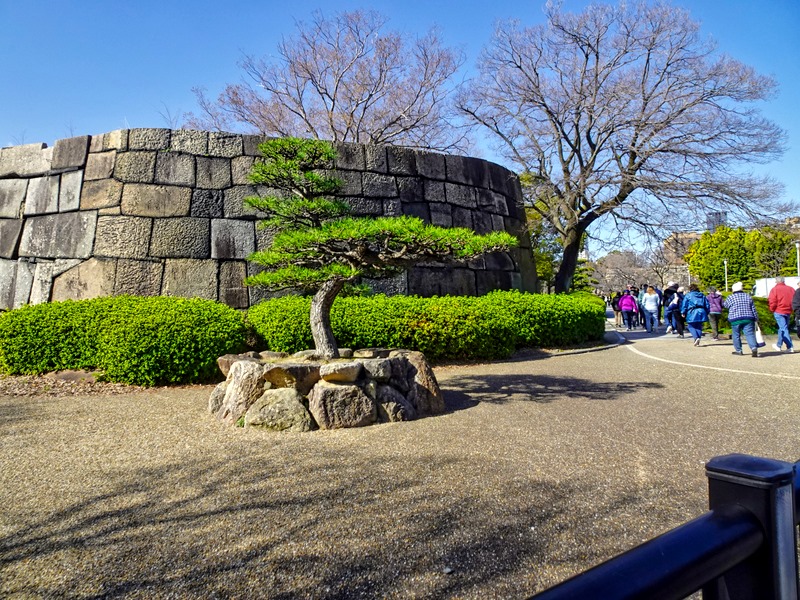
Our next stop was Osaka Castle. On our way there we passed a couple in a park teaching their son how to wield a baseball bat (baseball is, of course, very big in Japan). We parked in a lot a good bit away from the castle and had a long walk, through woods and along moat walls, to get there.


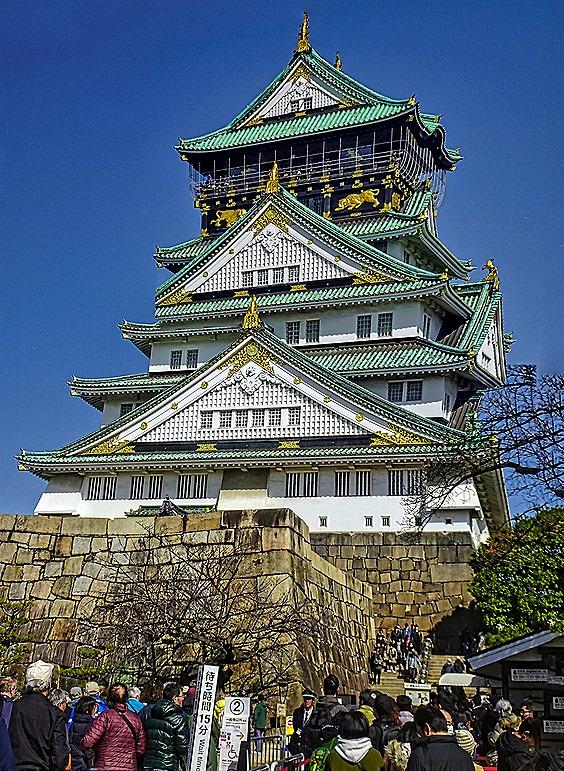
Osaka Castle was originally built in the 1580’s and 90’s by Toyotomi Hideyoshi. The Toyotomi clan were the primary rivals to the Tokugawas for the office of shogun, the military leader and actual political ruler of Japan. If you have read or watched James Clavell’s historical novel Shogun, you will recall that much of the action takes place in Osaka Castle and Toyotami is an important character (under a fictional name). In 1600 Tokugawa Ieyasu became shogun. In 1614-15, after a siege, the castle fell to the Tokugawas and while Hideyoshi had already died, both his son and his widow committed suicide, ending the Toyotomi clan. The castle was burned to the ground.
In the 1620’s the Tokugawas rebuilt the castle, burying what was left of Toyotomi’s castle and building new stone walls (still standing) and a new tower on a different spot near where the old one stood. Most of the castle’s buildings were destroyed and rebuilt several times over the centuries, most recently by Allied bombing near the end of World War II. The current version, restoring the castle largely to its Tokugawa era appearance, but with more reliable modern materials, was completed in 1997.
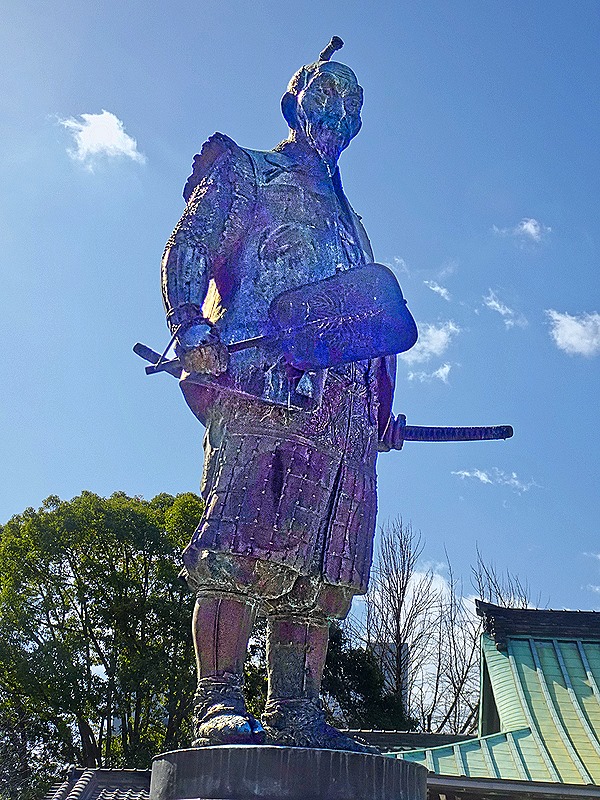
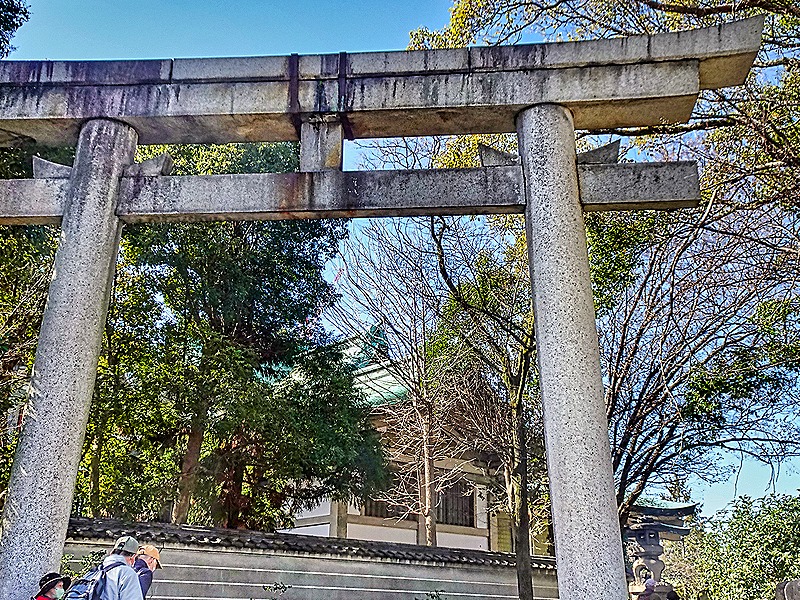
On our way to the castle we passed a small Shinto shrine called Hokoku-jinja. It was built by the Meiji emperor in 1879 to honor the Toyotomi clan. We did not go into the shrine, but we did see the torii gate at its entry and a statue of Toyotomi Hideyoshi erected in 2007, which faces the castle. He does not look warm and cuddly.
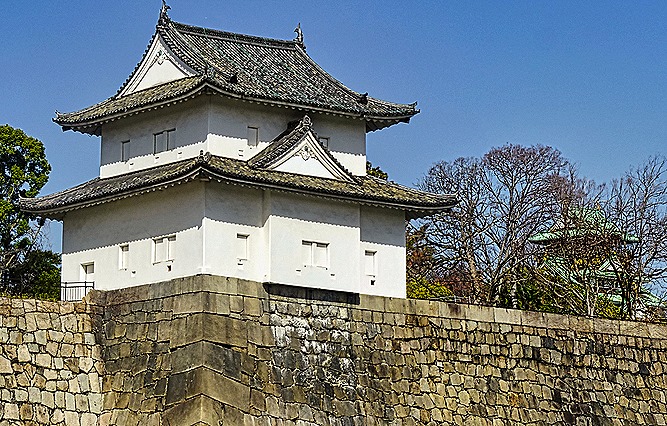
Walking around the moat we saw a white watchtower above the stone wall on the opposite side. We didn’t notice it at the time, but through the bare trees behind the watchtower the green roofs of the castle tower were just visible in the distance.

This was a weekend and it was early afternoon when we reached the castle, so the area was quite crowded. The castle is white with green roofs and decorated in gold. It is five stories tall from the outside, but 8 stories on the inside. We had to wait in a long line for quite a while to gain admittance.

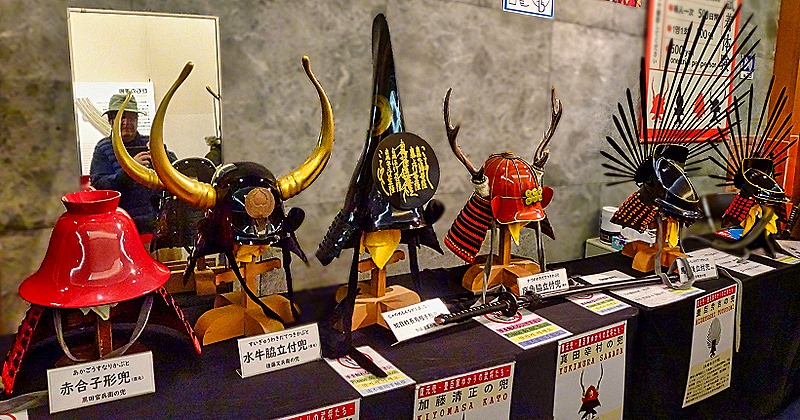
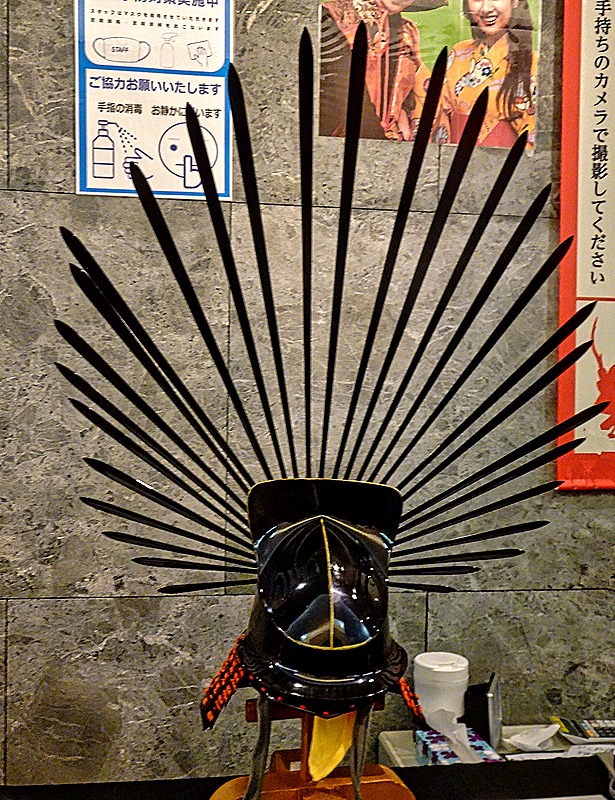
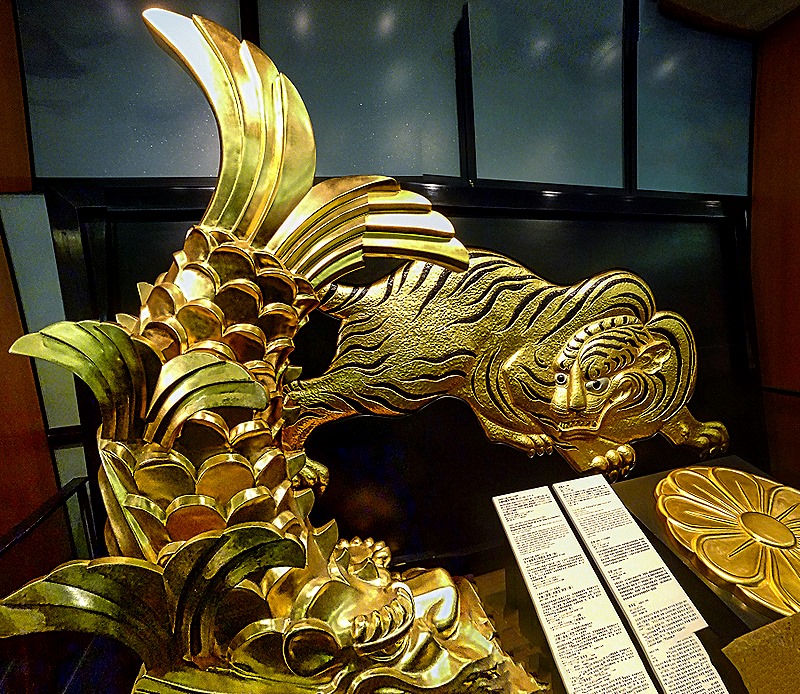
There is an elevator inside (as mentioned, this is a modern concrete replica, not the original wooden castle), and the easiest way to see the castle inside would be to take the elevator to the top and walk down the 8 flights of stairs. But the elevator is slow and so many people want (or need) to use it that the wait is substantial and we didn’t really have extra time to waste standing in line. So we walked up the 8 flights of stairs. The castle today is really a museum with exhibits on each floor. Here is an exhibit of ancient Japanese war helmets on one floor, one of which was marked as having belonged to Toyotomi Hideyoshi. For a fee you could don one of these helmets along with some armor to have your picture taken. Also on exhibit was a life size example of the golden dolphin and crouching tigers that adorn the outside of the castle. There were many more interesting exhibits, including large paintings, that were difficult to examine because of the crowds in front of them.
In the end we reached the top floor, which had viewing windows all around with fabulous views of the surrounding area and the gold dolphins adorning the the top of the roof just below. The entire area was screened in and you could see the screens from the ground outside. We looked down on the moat where visitors could ride in a boat (a moat boat?). In one direction was a cityscape of skyscrapers and in front of the castle we looked down on the grounds of the entry area. The view was worth the walk up the stairs.

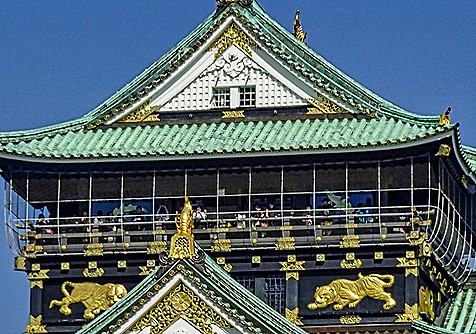
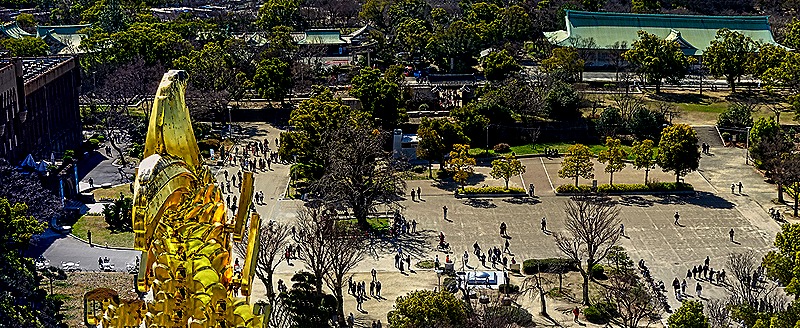
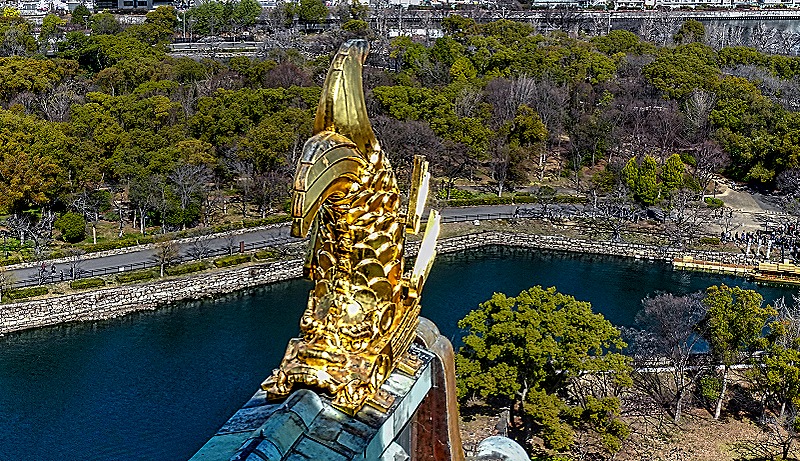
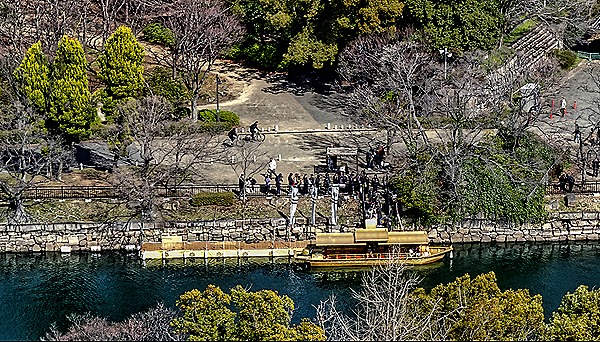
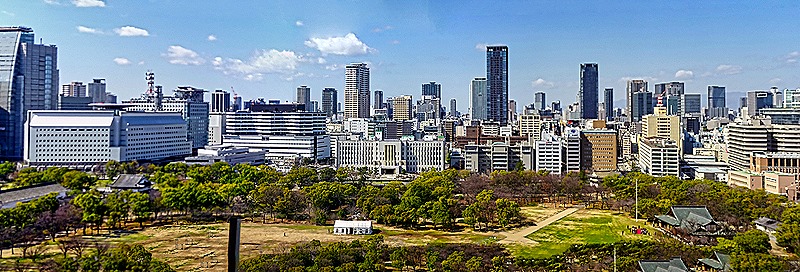
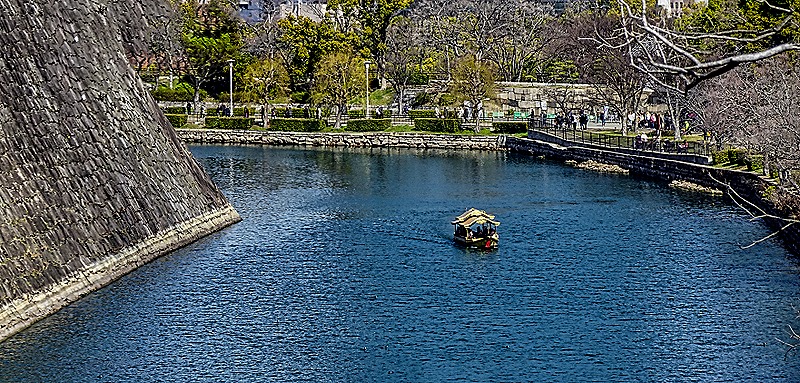
We returned to the ground floor down the stairway (there are separate up and down stairwells, which undoubtedly helps the traffic flow). As we walked back to the bus we had a last view of the castle with its nicely landscaped grounds and also another view of the moat boat, this time sailing down the moat. We ate lunch at a nice hotel, happily a sit down meal rather than a buffet line, where the Japanese food was interesting, tasty and beautifully presented.


After lunch we were dropped off at the beginning of a district called Dotonbori (or Doutonbori) and told to meet back there in an hour or so. This neighborhood began in 1612 with the building of a canal on what was then the southern edge of Osaka. The canal was completed in 1615, after a delay caused by the Siege of Osaka. It was named after one of its designers, Nariyasu Doton, who had died fighting for the Toyotomis during the siege. The Tokugawas designated this as Osaka’s entertainment district and by 1662 it had 11 theaters and a mechanical puppet show, along with restaurants and cafes built to serve the entertainment crowds. However, over the centuries the district declined and during World War II all but one of the remaining theaters were destroyed by bombing. In the 1960’s the canal was renovated and in the early 2000’s the streets lining the canal were redeveloped.
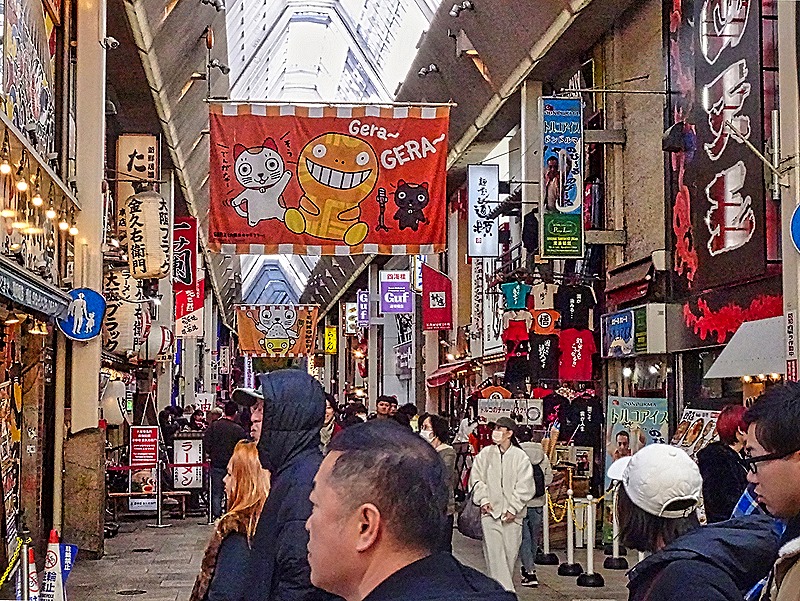
Today this is a bustling area with large crowds patronizing cafes, restaurants and commercial stores, many located inside a large covered mall. We walked along the canal looking, but not stopping in, a large variety of stores and restaurants.
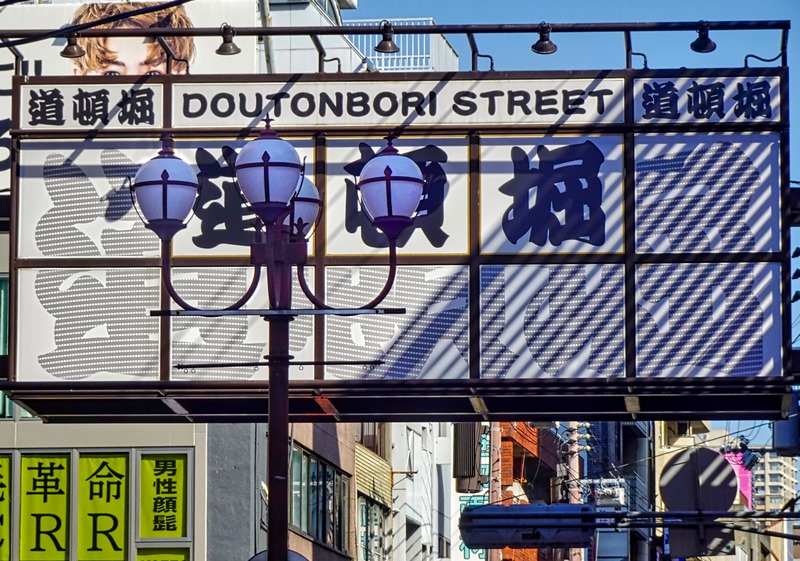
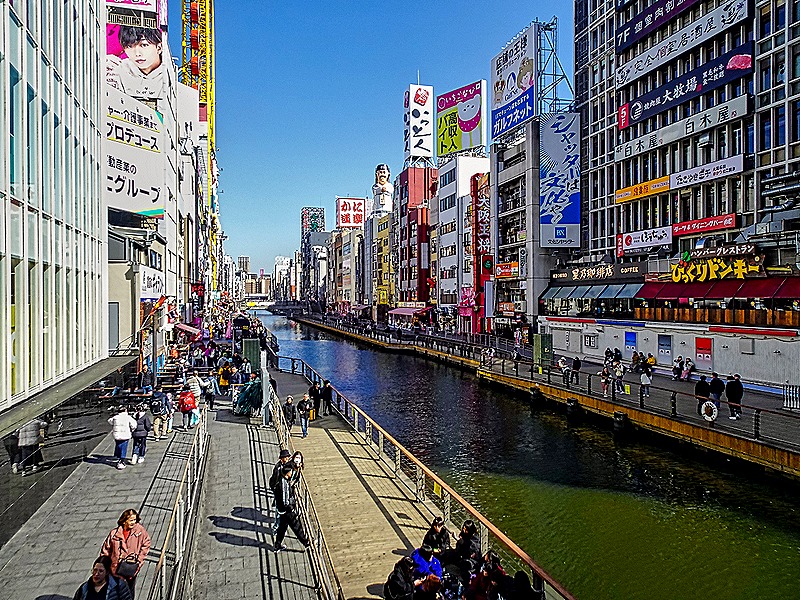

As you can see, the canal is lined with rows of commercial buildings of all types. Most notable are the colorful signs, many outsized, eye catching and even mechanical. For example the giant crab above the Kani Doraku restaurant moves all of its arms.
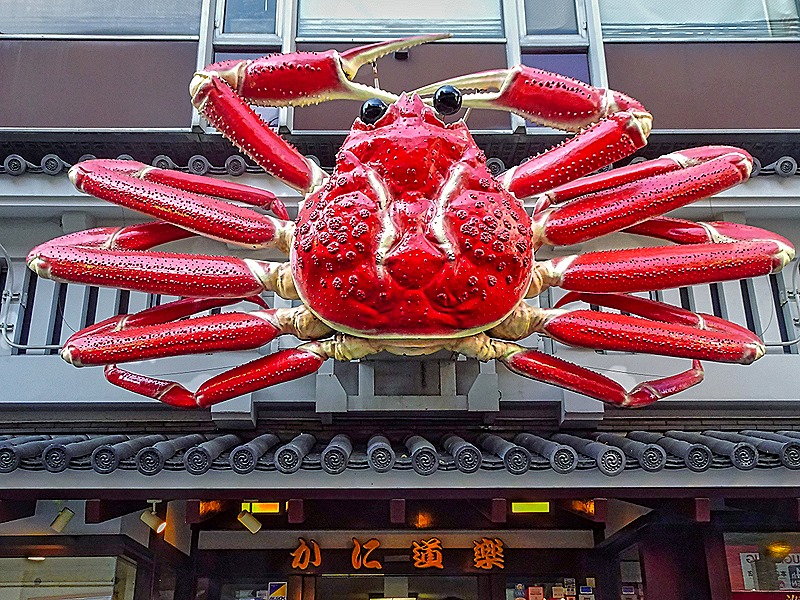
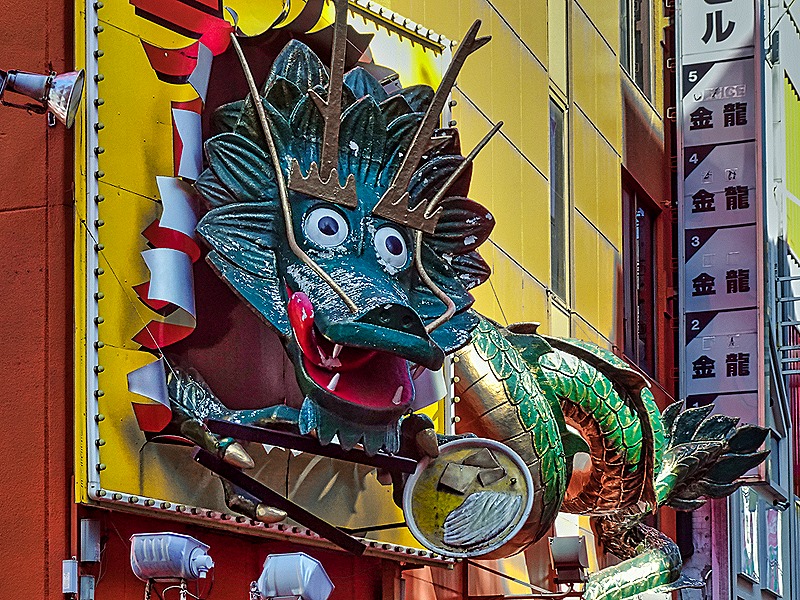


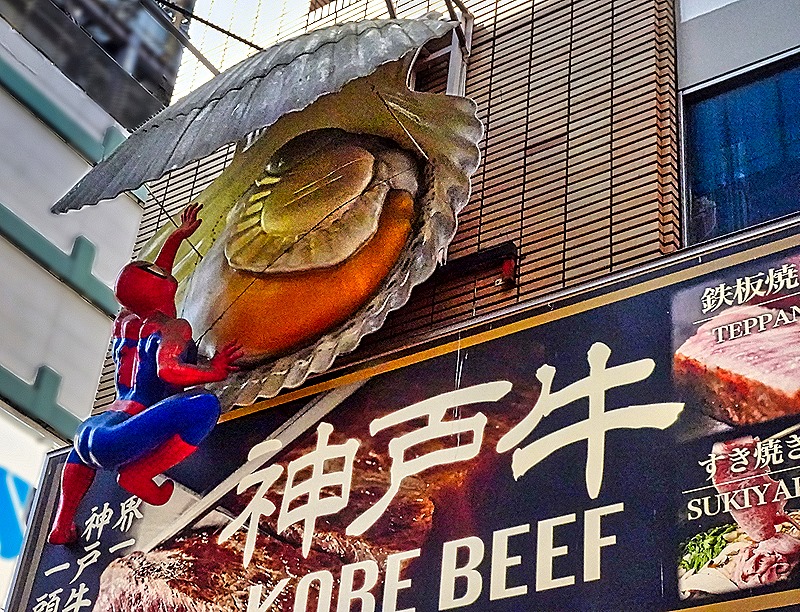
We came to a covered shopping mall, which we spent some time walking through. Lots of stores and restaurants in here too and it was really crowded.


Walking back down along the canal we saw more unusual commercial signs, some very large and surely quite expensive. We also walked past street decorations, one of which was a manhole cover with the Osaka castle and cherry blossoms on it.
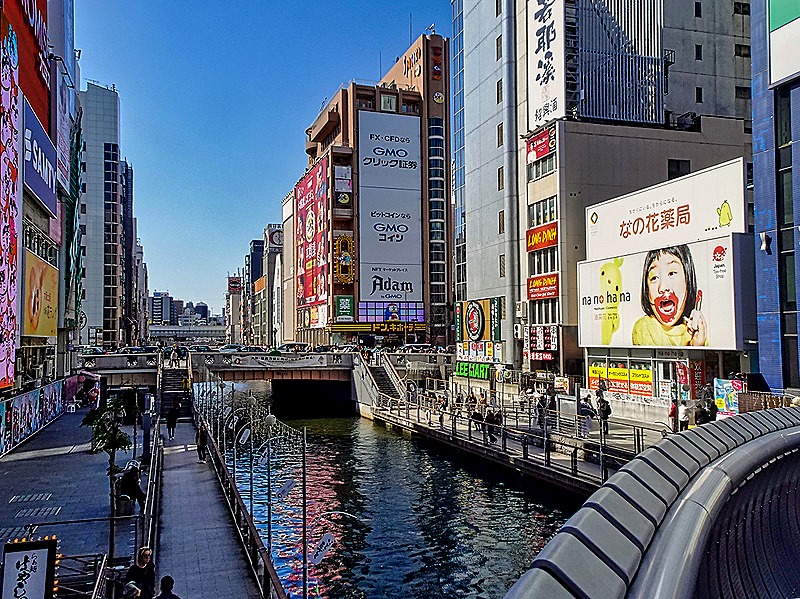
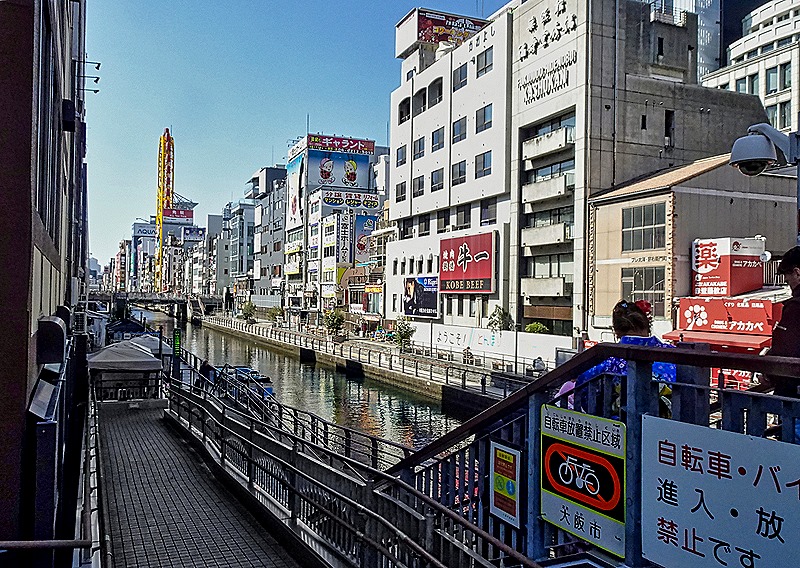
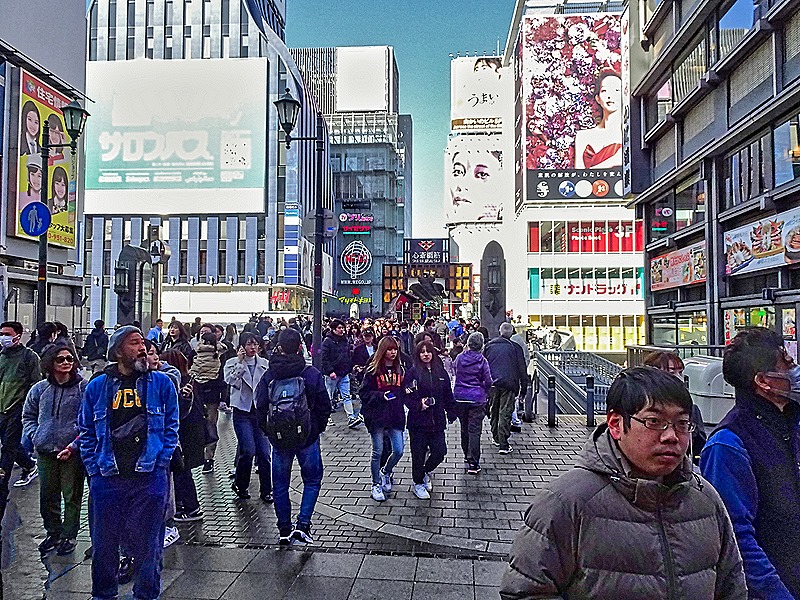
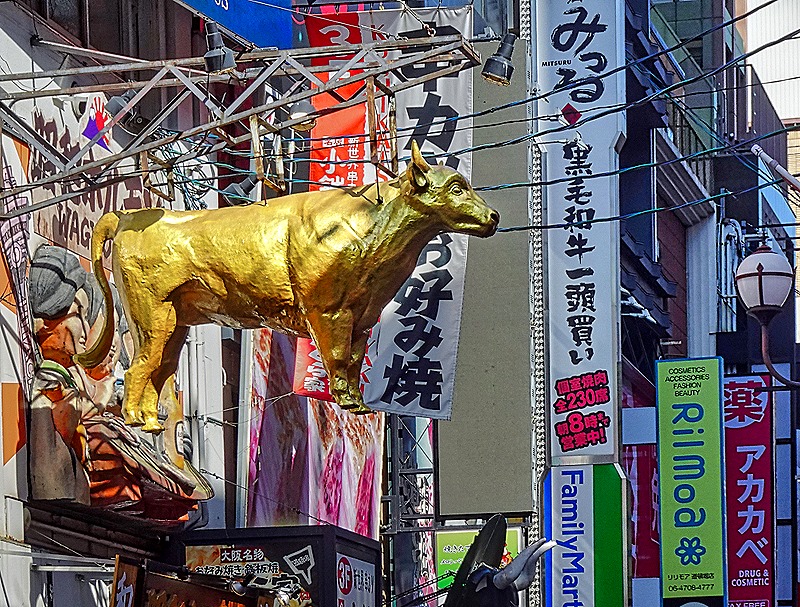
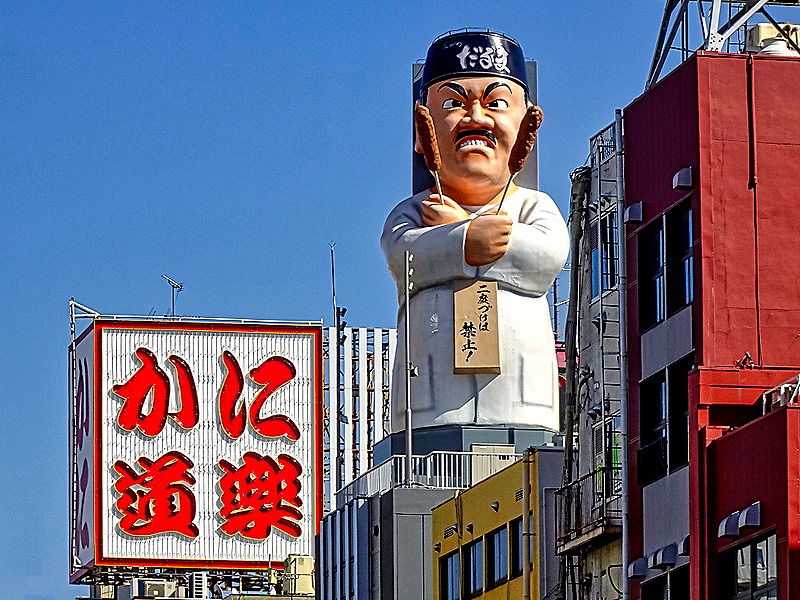
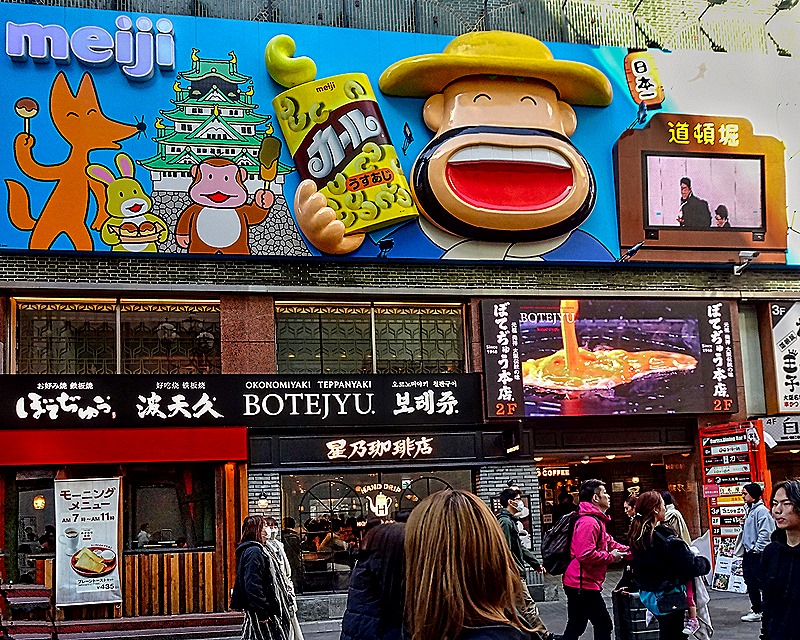
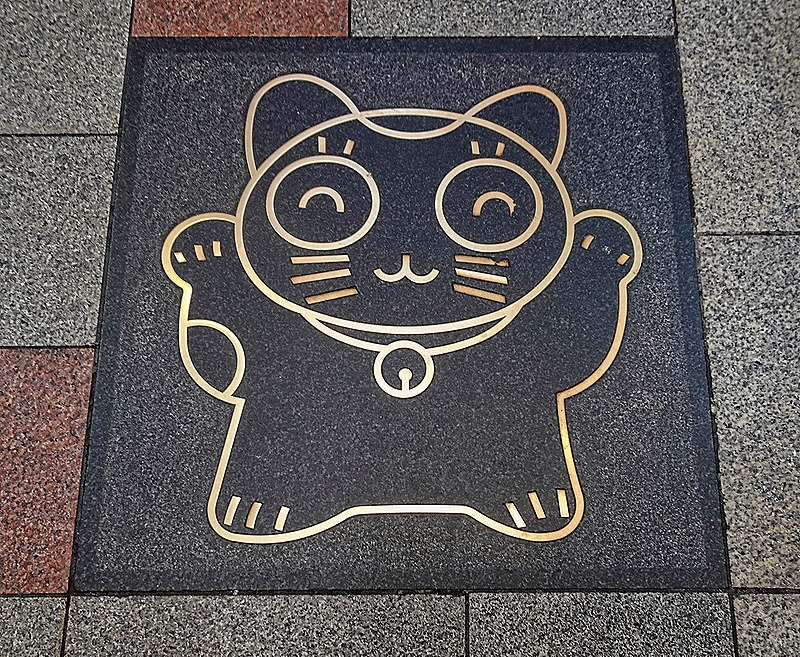
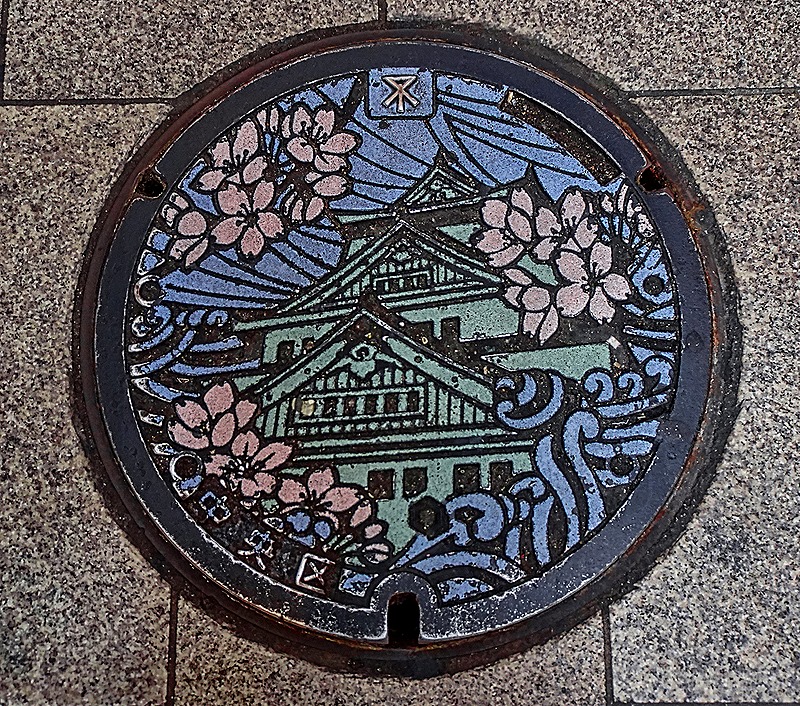
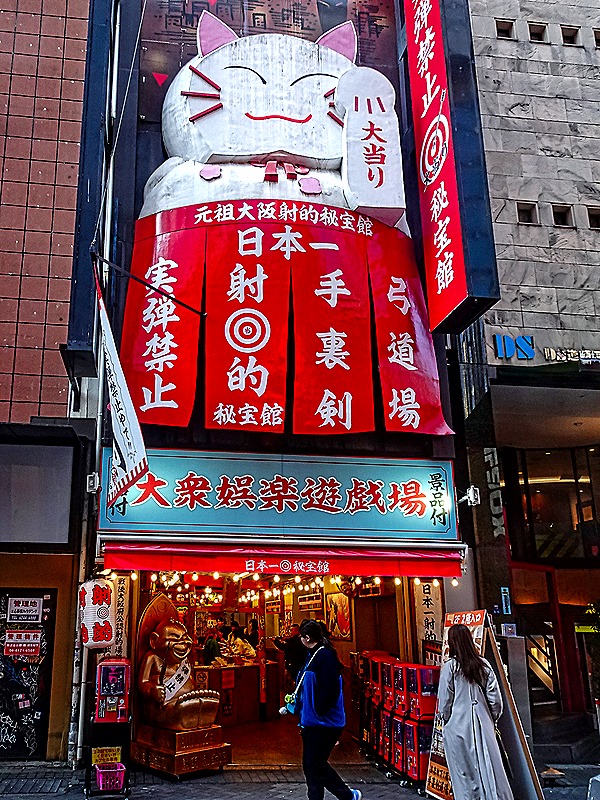
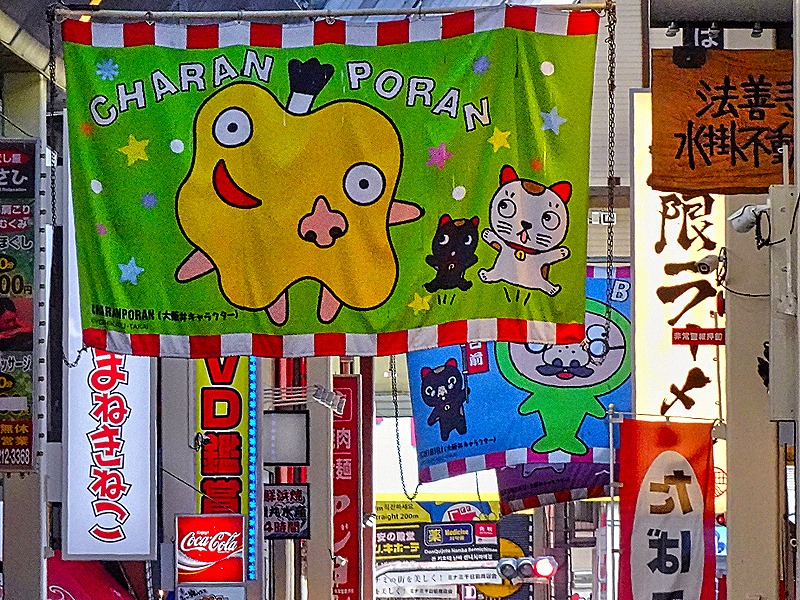
Well, this was all quite interesting in an over-the-top sort of way. We have seen this neighborhood likened to the street scenes in the movie Blade Runner and there is certainly that kind of flavor to it (although we understand that those movie scenes were actually inspired by a district in Tokyo). It must be quite exciting at night when all the neon lights are on, but of course by night time we would be at sea. Still, pretty impressive that this area attracts such crowds even in the early afternoon, although it was a weekend.
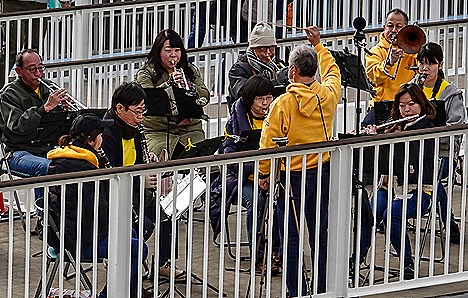
We met our bus and drove back to the port. Our veranda was perfectly situated to watch the farewell festivities mounted by Kobe on the roof of the terminal right by the ship. We were serenaded by the Kobe Hardi Wind Ensemble (which we know because it was printed on the white tuba), although only about half the musicians were actually playing wind instruments. They were a “hardi” group indeed who were bundled up against the cold but were still there playing when we left the dock. At one point pink, white and green balloons were released into the air and there was a fellow nearby waving what looked like naval signal flags, whose meaning we do not know (but we would guess something like “farewell”). Families and children were there as well, many carrying balloons. As we pulled away from the dock they struck up “Anchors Aweigh.” Much fun and a great send off.


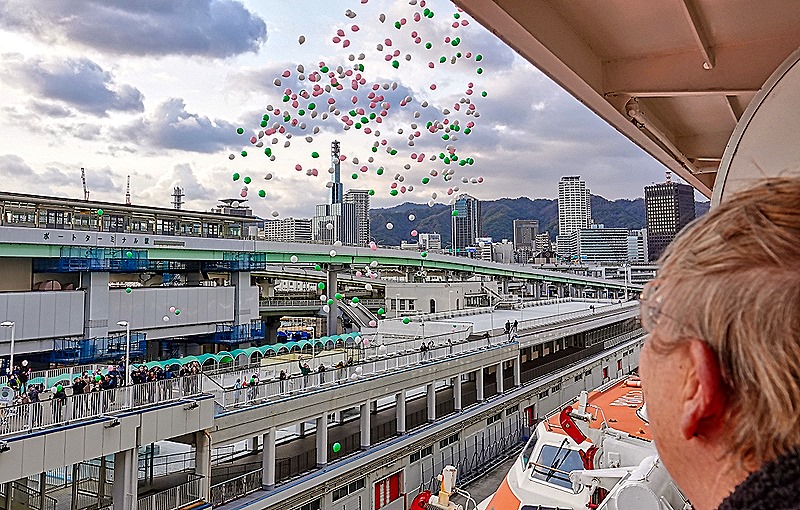
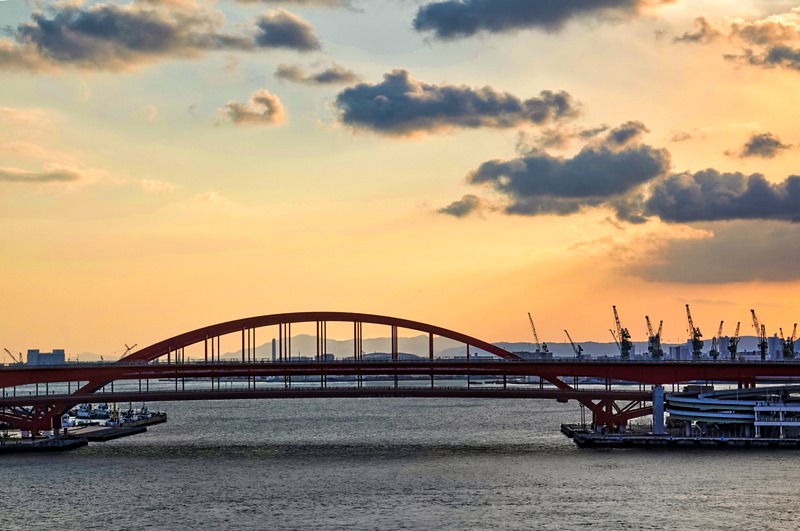
We sailed out of Kobe harbor as the sun was setting, getting a last look at the city skyline in the harbor area and passing two nice bridges before seeing a nice sunset as we reached the ocean. It had certainly been quite a full and rewarding couple of days.




 BADER JOURNAL