
College Fjord, Alaska 2025
In 1899 railroad tycoon Edward Harriman, on doctor’s orders to get away from business pressures, put together an epic sea voyage to Alaska. He bought a ship and set out to hunt bears, but he also filled it with eminent writers, artists and scientists of his day to explore this remote land. The voyage was much celebrated, garnering headlines throughout the world. Among their other adventures and accomplishments, on June 25th they sailed up the 20 mile long waterway they christened College Fjord. We spent the morning of June 14 there.
College Fjord contains five tidewater glaciers (ie. terminating in the sea water), five valley glaciers, and a number of smaller ones back from the water. We sailed past the tidewater glaciers and didn’t see the others. Even if they would otherwise have been viewable, there was a heavy cloud cover that came down to the tops of the tidewater glaciers so we couldn’t see anything above or beyond them.
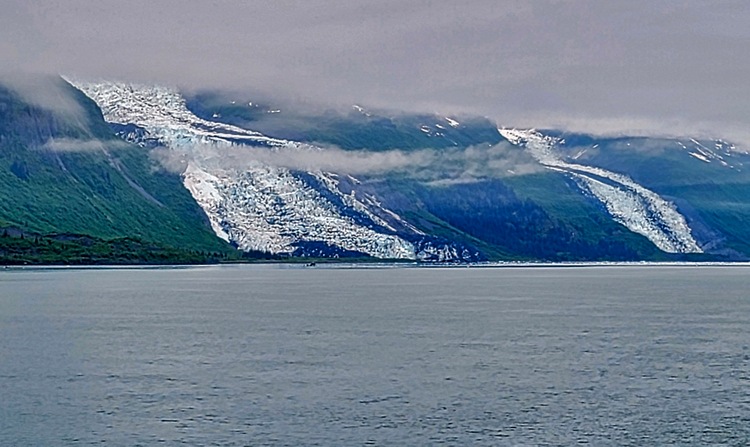

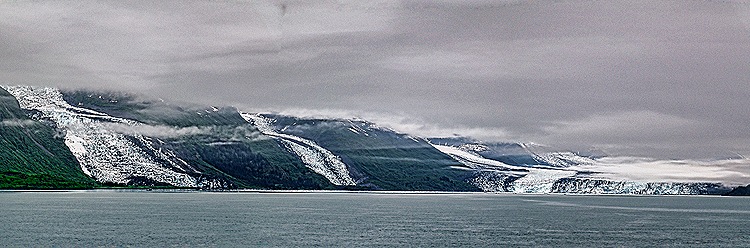
You may have noticed that these glaciers are all named after eastern colleges and universities. They were named by a couple of professors on board who taught at Harvard and Amherst and they named most of the glaciers in the College Fjord area after eastern colleges, reportedly taking some pleasure in pointedly leaving Princeton out. We are not positive we have all the names right, but we think we saw Wellesley, Vassar, Bryn Mawr, and Smith Glaciers on the side as we sailed up the fjord.
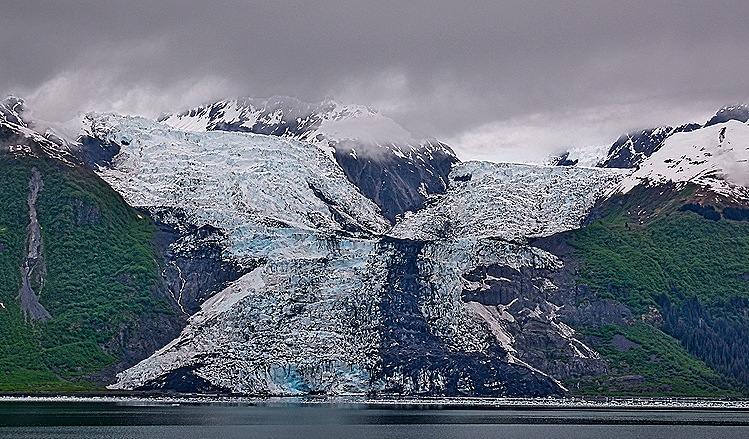

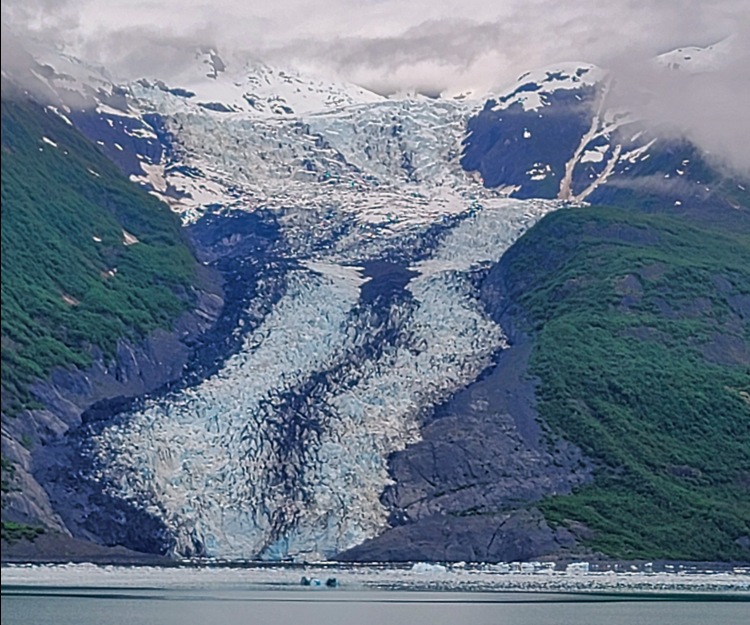
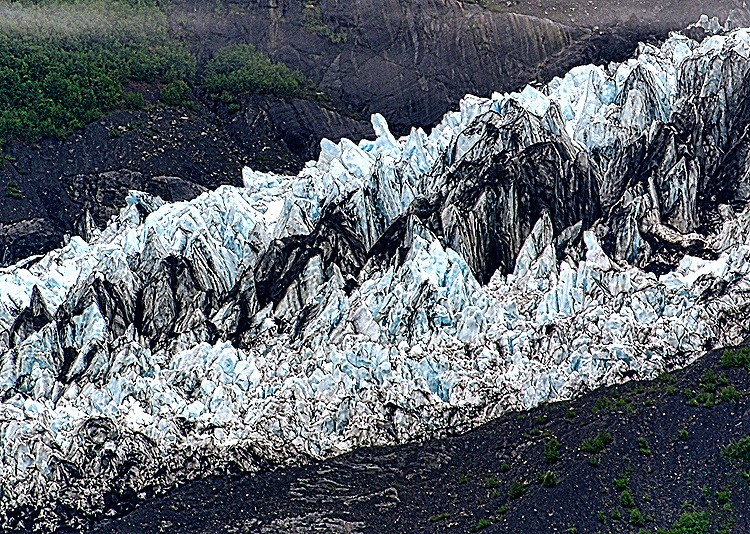
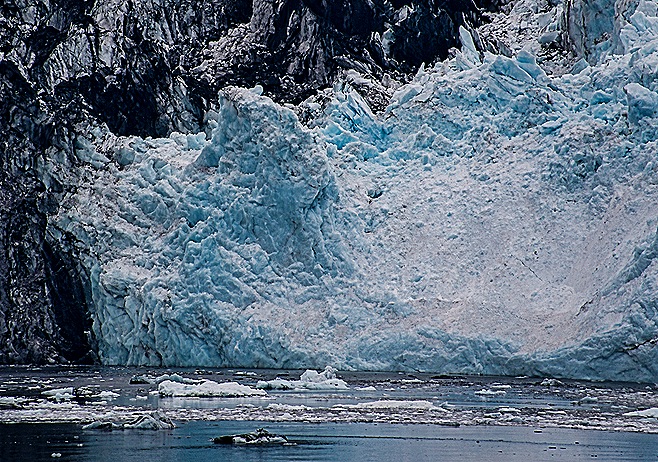
At the end of the fjord was Harvard Glacier, the largest of the bunch. Its face sitting over the water is about 1.5 miles wide and the ice is some 300 feet thick. We were told that Downer Glacier (named for a college in Wisconsin) flows in on the right end of the Harvard Glacier, but its ice is black (presumably from dirt) so its hard to make out in the picture (and in person too). Apparently the folks on the Harriman expedition missed it too, since it wasn’t named until 1910.
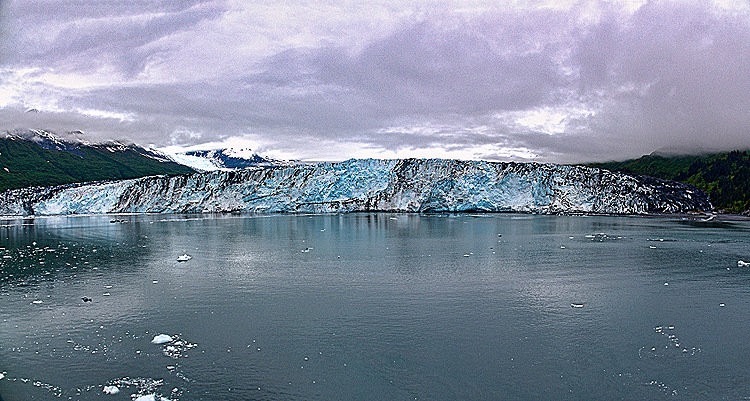
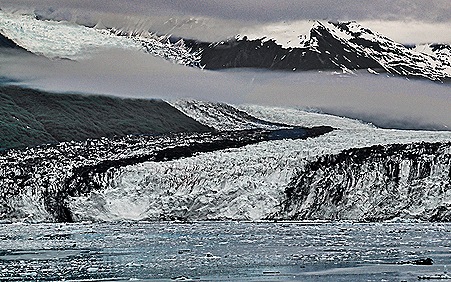

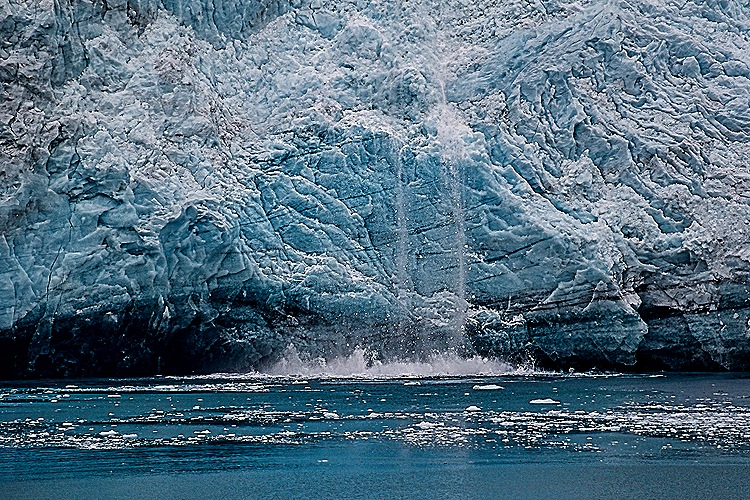
Glaciers are often blue, as in the pictures above, because as the snow compacts into very dense ice it squeezes out air bubbles, with the result that the ice reflects blue wavelengths and absorbs other colored light. Often the most interesting views of glacier ice are in close ups, showing clearly the varied patterns the ice displays. It is exciting when a glacier “calves,” meaning that part of the ice breaks off and falls in the water as it is pushed toward the sea. But this is very hard to capture in a photograph because the loud noise of the ice breaking off does not seem directional and the calving is over very quickly, so by the time you are able to point you camera toward it the calving is over and all that is left is the splash. Just what happened in the last picture below.
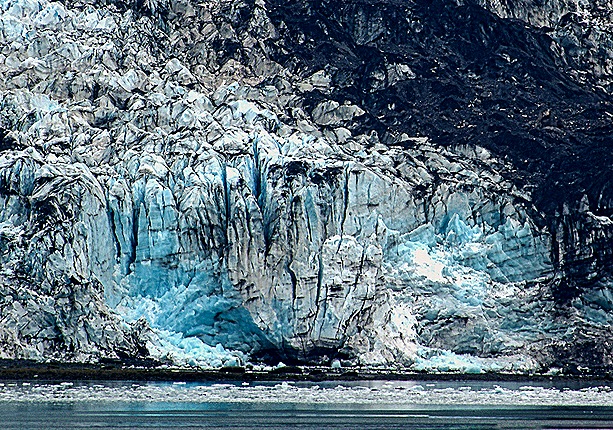

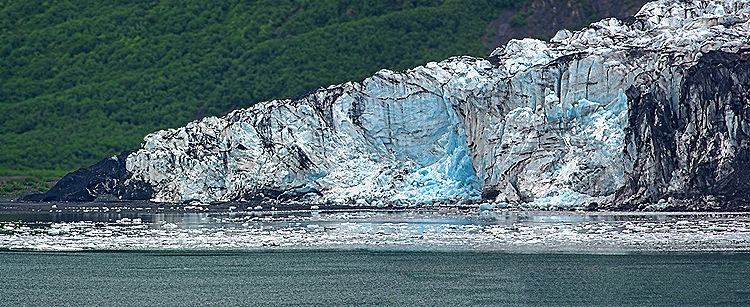
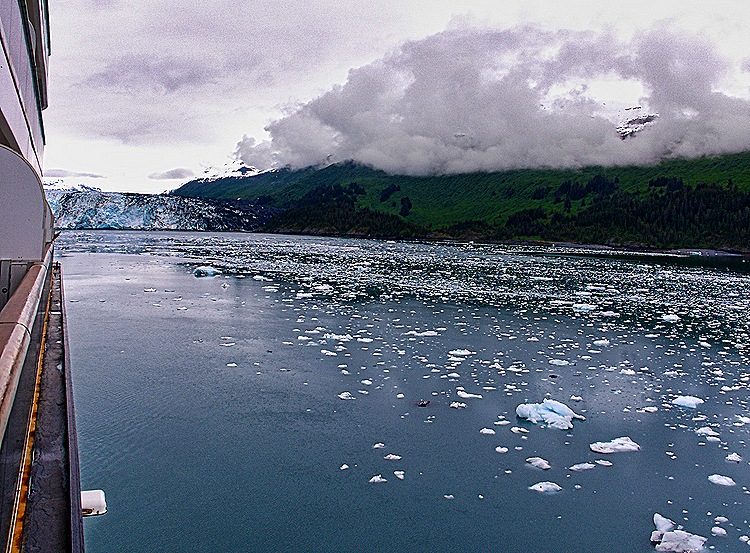
After a long time with the ship turning in front of Harvard Glacier so everyone could see it we sailed down the fjord, back the way we came. Of course, the ship was facing the opposite way from the earlier passage so our veranda looked out on the other side of the fjord. There was quite a bit of ice in the water in this area that had dropped off the glacier and floated away, but none big enough to be called an iceberg. It seems odd that the floating ice tends to stay in one area, often near the shore, rather than floating out across the whole fjord.
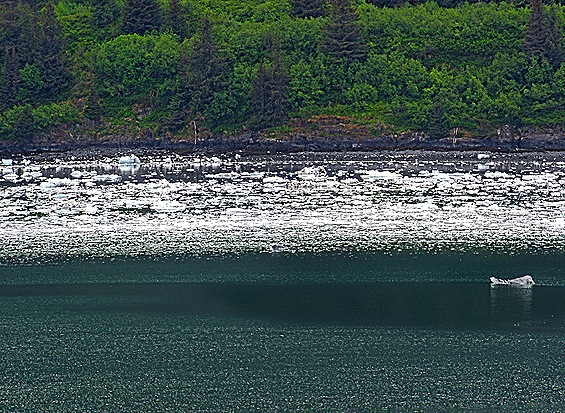
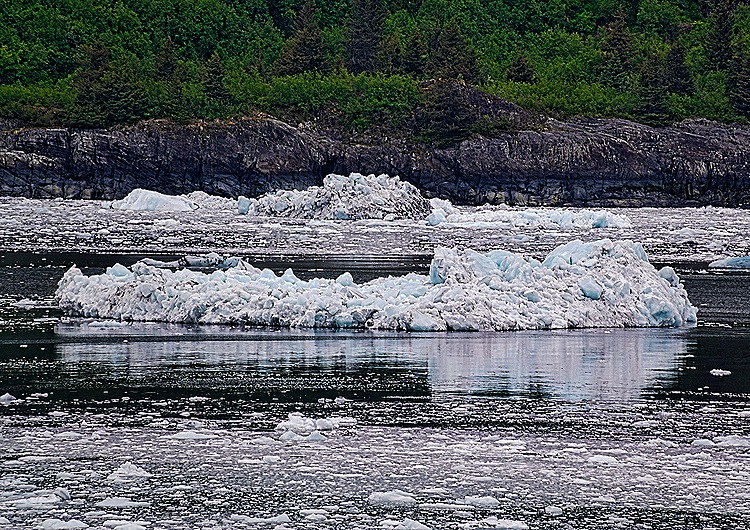

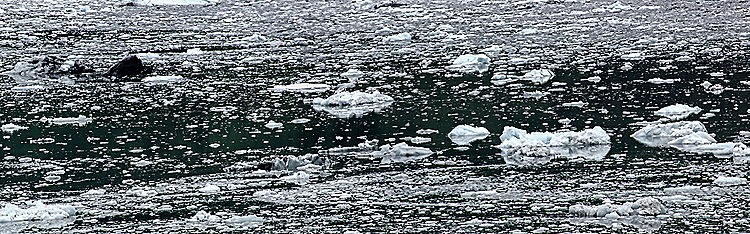
So that was it for our morning at college fjord, and we settled down for two & a half sea days until our next port. But don’t worry, there will be plenty more glaciers in upcoming episodes. This is Alaska, after all.

 BADER JOURNAL