Haines, Alaska 2025
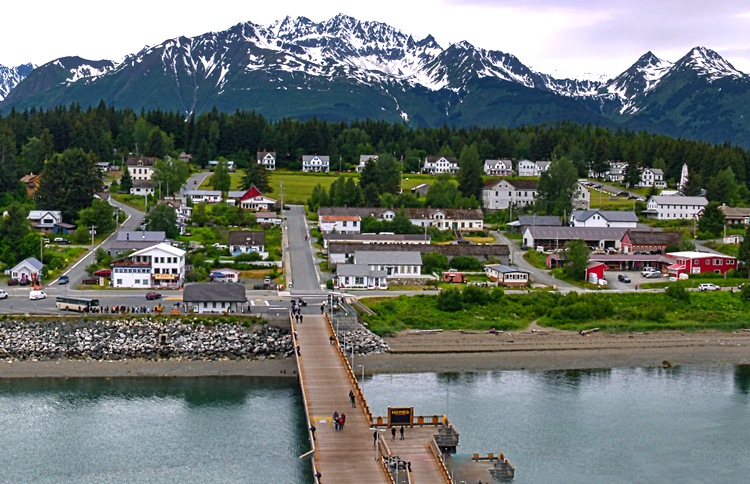
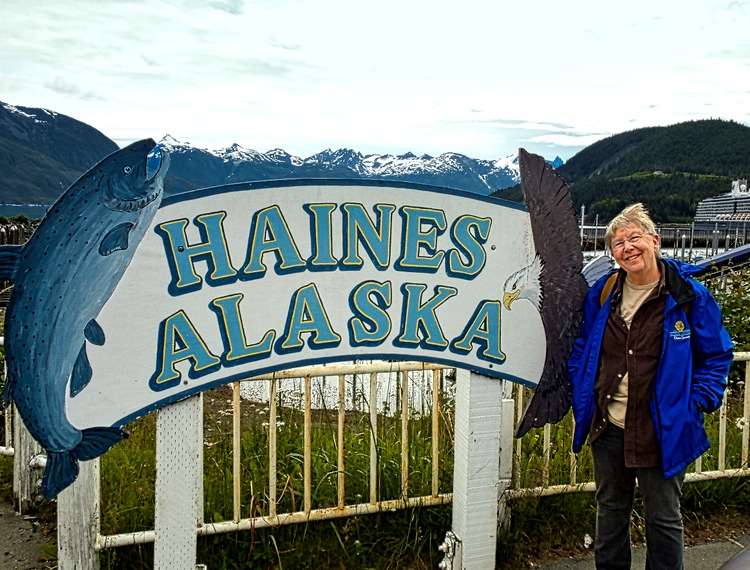
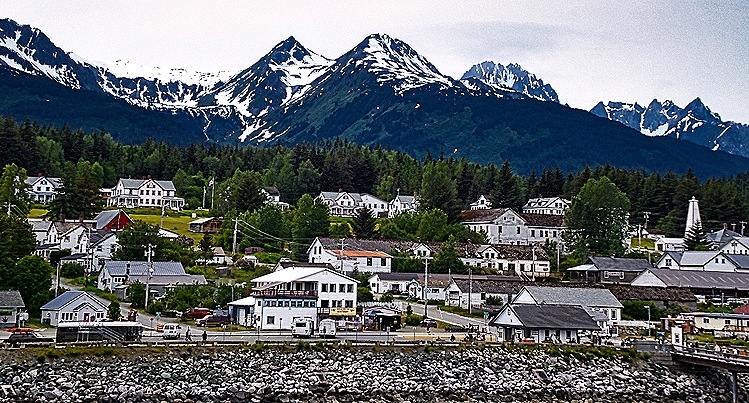
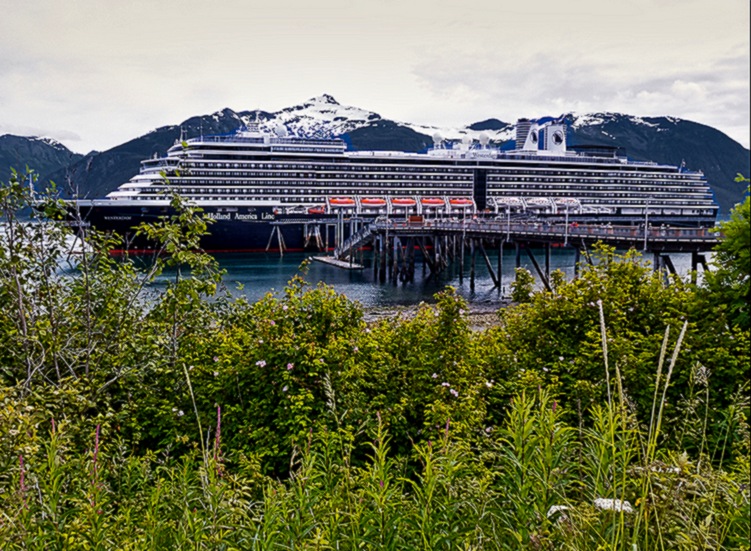
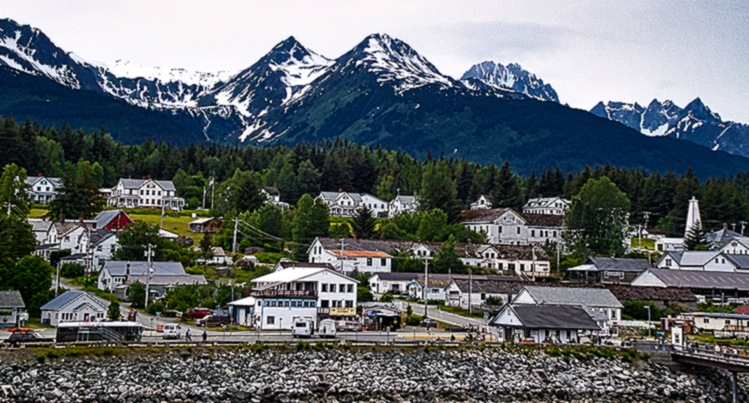
The morning of June 25 found us moored at the end of a long dock in Haines, Alaska, a very small town (pop. less than 1700) on the shore of the Lynn Canal (actually a fjord) and surrounded by the snowy Chilkat mountains.
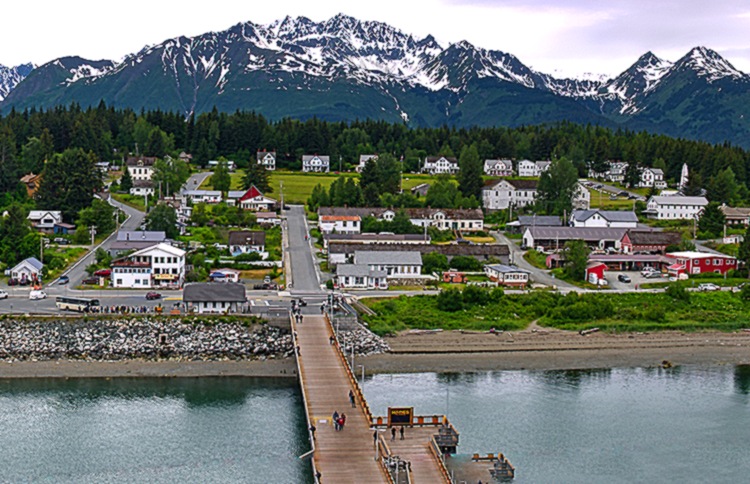
The Chilkat people had lived here for hundreds, if not thousands, of years before the first European settler arrived in 1879, followed a couple of years later by an invited group of missionaries (one of whom was John Muir). In the late 19th century Haines (named for the woman who spearheaded fundraising for the missionaries) became a notable supply port for miners heading to the gold fields over the Dalton Trail.
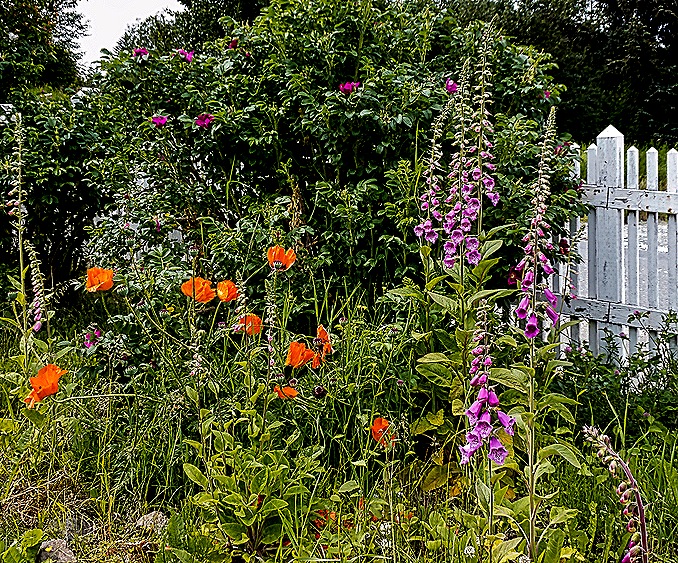
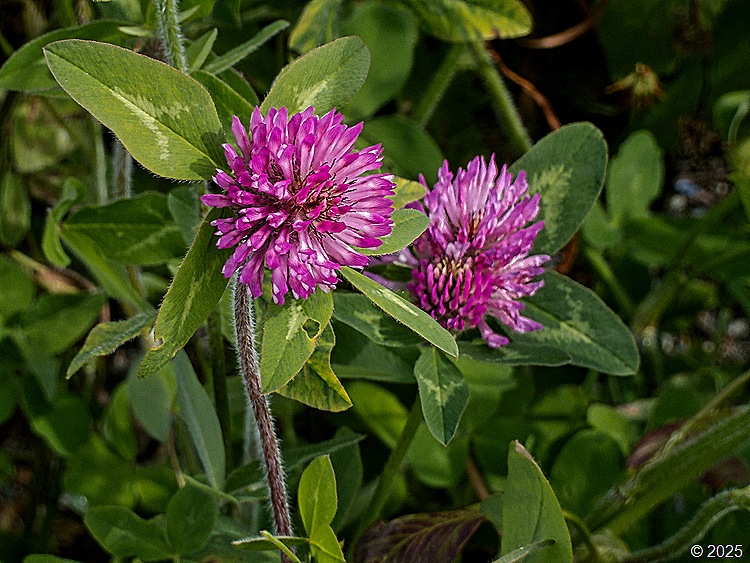
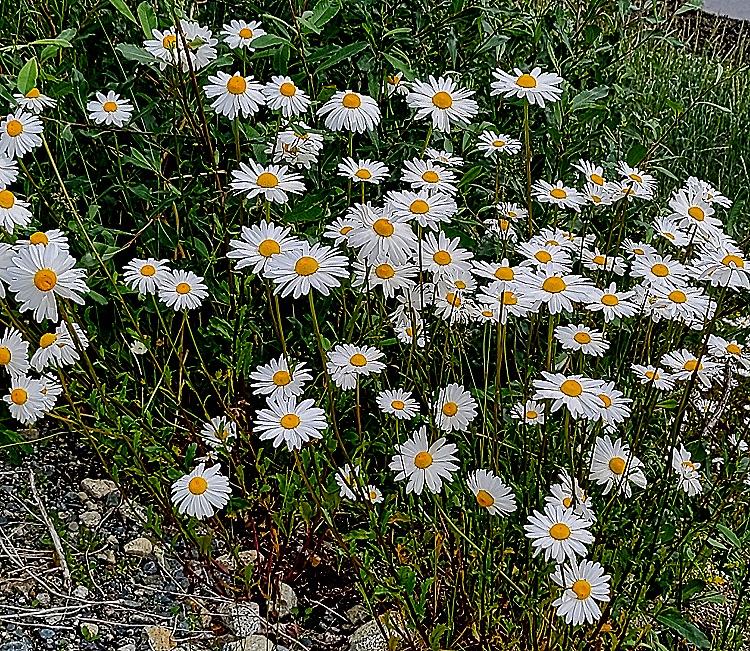
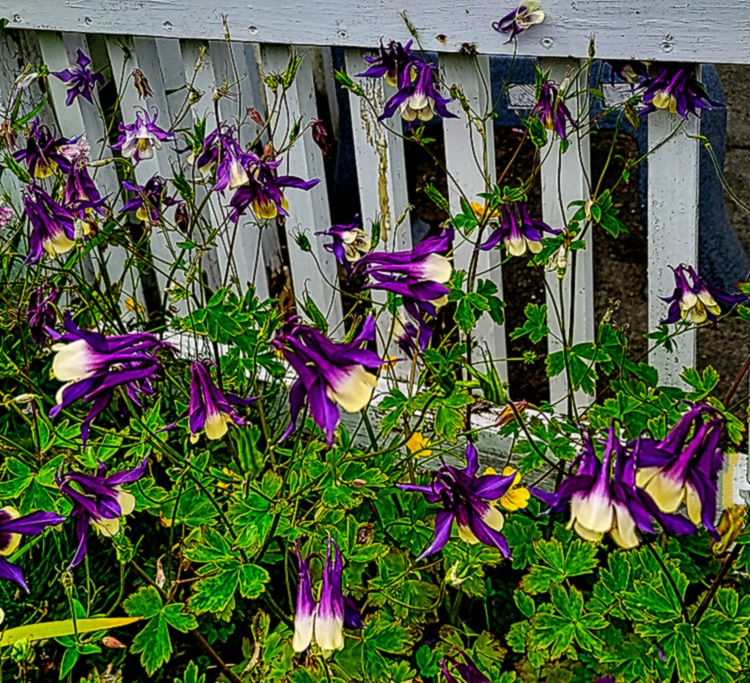
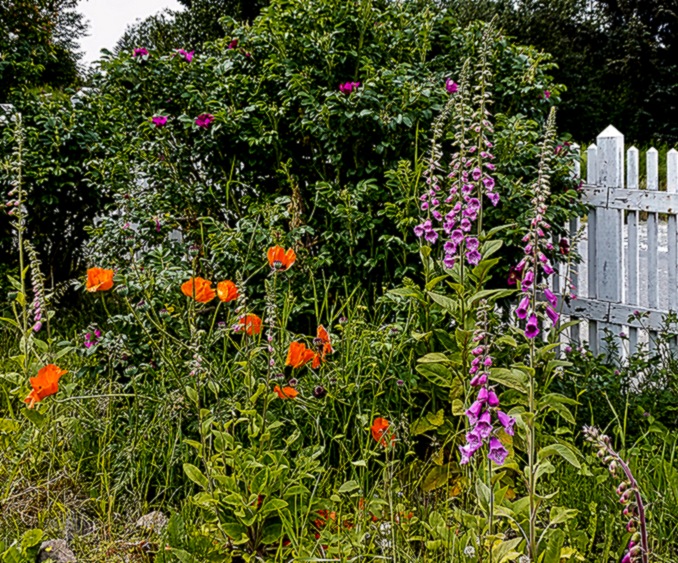
We were docked in front of the Fort Seward section of Haines. The fort was built at the beginning of the 20th century during a border dispute with Canada and was the only military base in Alaska before WWII. After the war it was decommissioned and eventually merged with Haines, to which it was adjacent. After breakfast we walked down the long dock and turned right to walk along the waterfront to the town. It was a pleasant walk through parks, with a lot of Spring-like flowers. We stopped at an information booth where we were given a map of the town showing the location of their many totem poles. As you will see, we put it to good use.



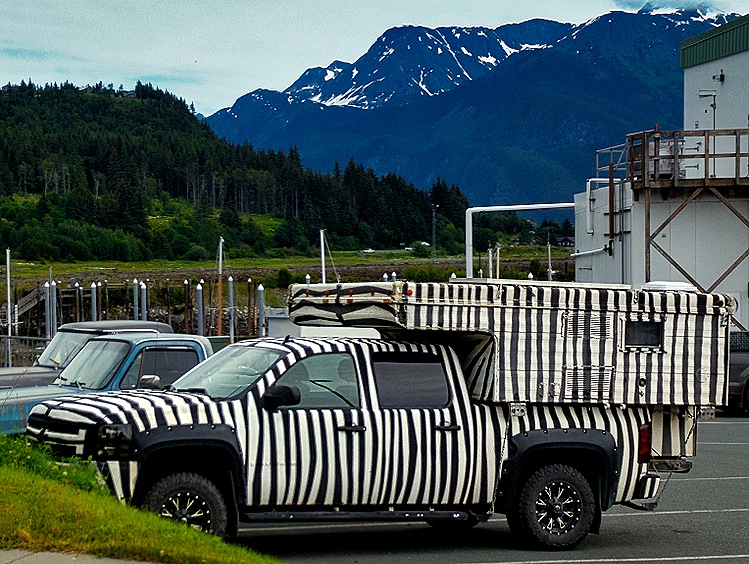

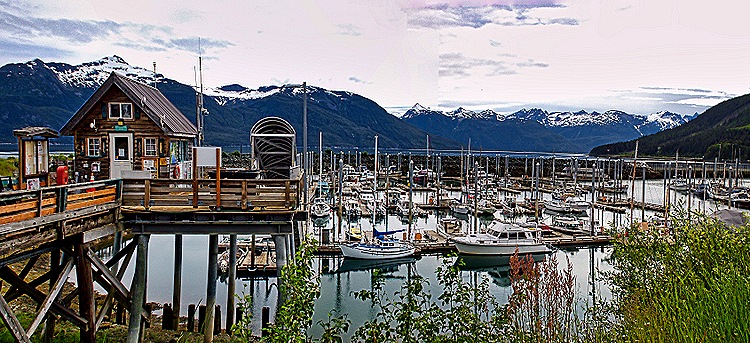
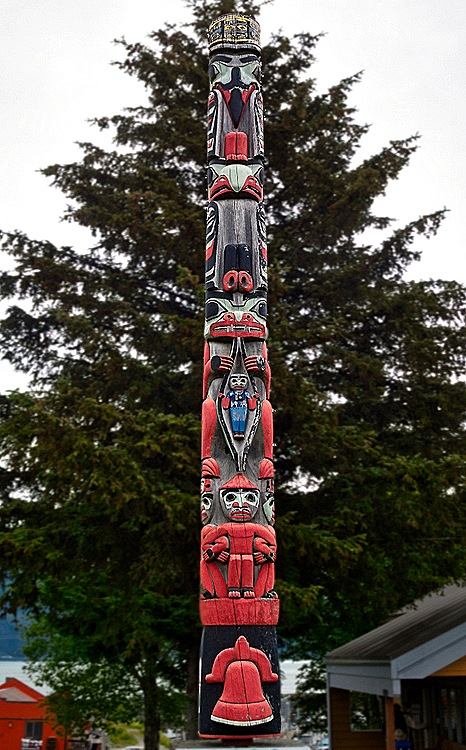
When we reached the town (not very far) we turned and walked uphill into the center of Haines. We stopped first at the Haines Sheldon Museum where we spent some enjoyable and educational time perusing the museum’s collection. Opened in 1980, the museum grew from the collection of artifacts gathered over the years by Steve Sheldon, who moved here from Ohio in 1912. The museum sits on the site of the original mission and has a totem pole and several interesting stone sculptures outside facing the street.


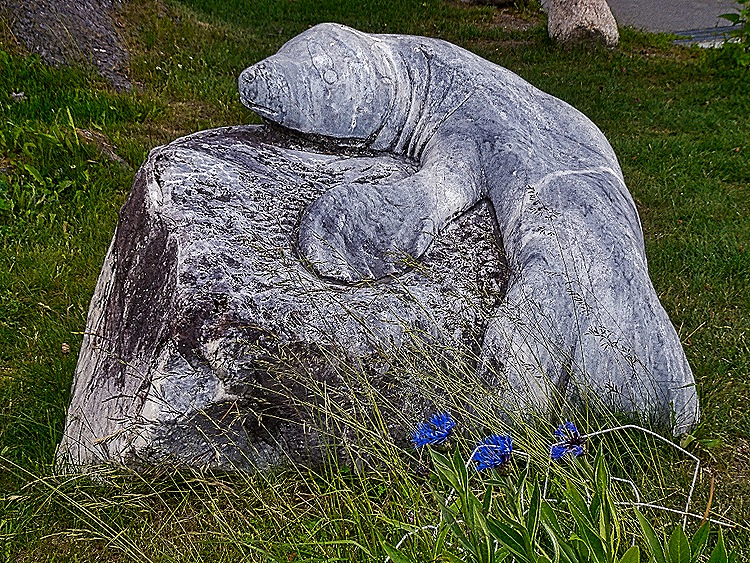
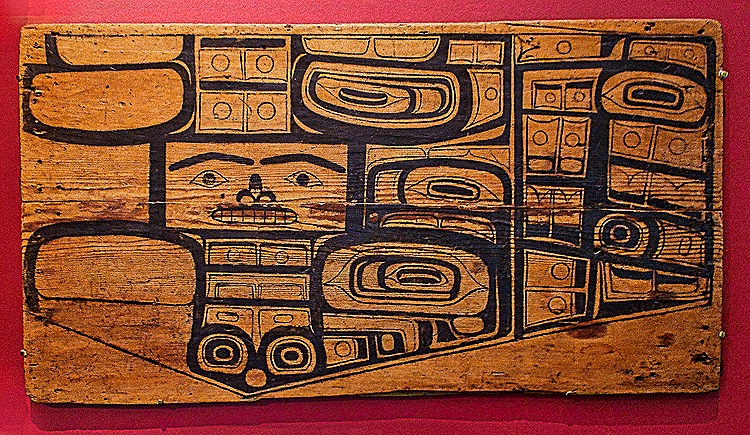
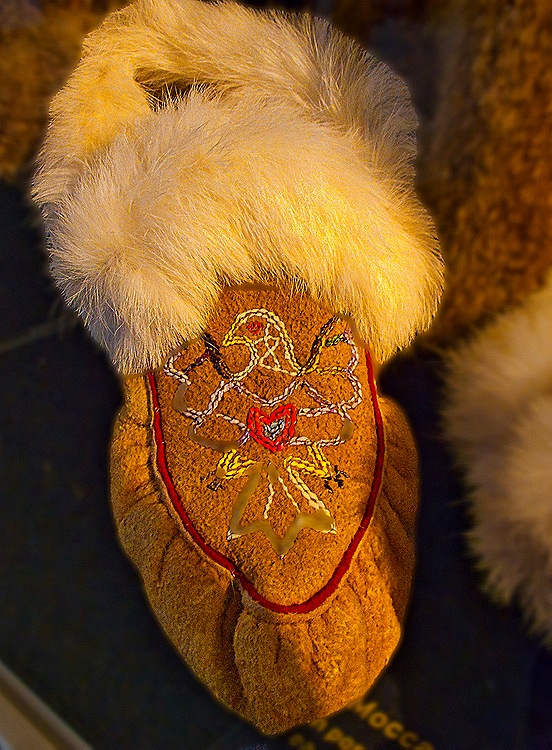
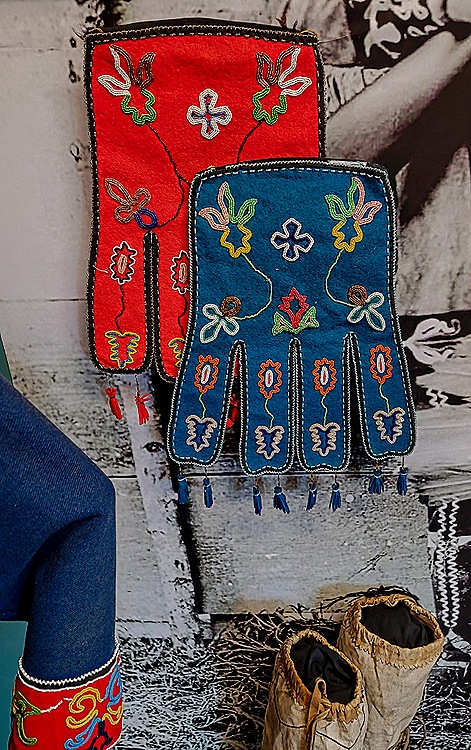
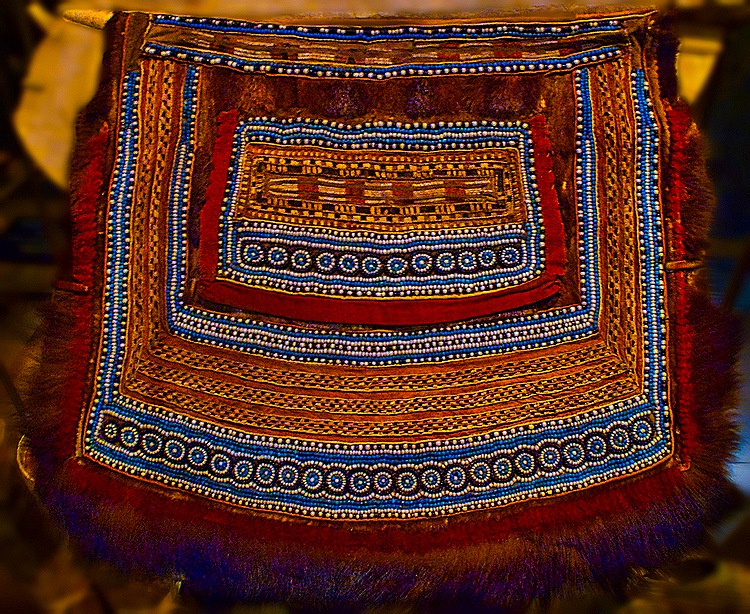
The small museum was filled with colorful Tlinget art and artifacts and quite a lot of informative signage. Among the items that caught our eyes were a pattern board, containing a design to be executed on a dance apron; a pair of moccasins with rabbit fur ruff and a porcupine quilled eagle design; a bear house clan hat carved in 1740; a raven post for a house carved by a renowned wood carver in the 18th century; and some colorfully embroidered octopus bags (named for the eight tassels at the bottom).


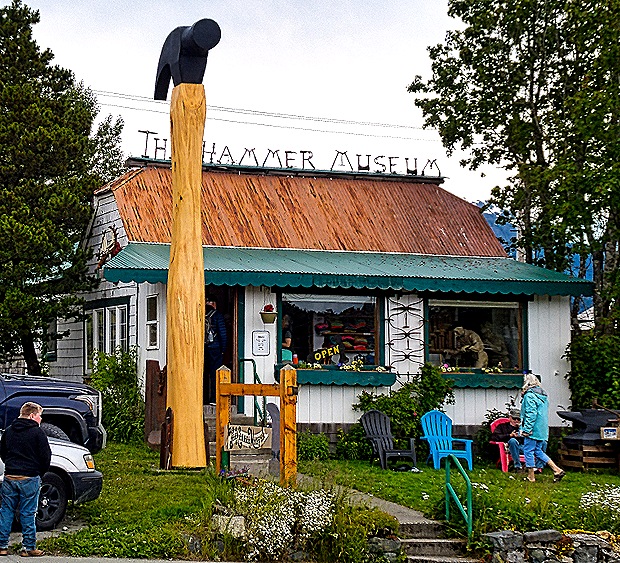
Across the street was another museum, the Hammer Museum. If you google “The Hammer Museum” you will be directed to the Los Angeles art museum founded by Armand Hammer. But the real hammer museum is right here in tiny, out of the way Haines, the world’s foremost museum devoted to collecting and displaying hammers. Opened in 2002, it has a collection of thousands of hammers dating from ancient to modern times. We didn’t go inside, but it is impossible to miss when walking up this street. At the top of the street is the health clinic, the town’s medical center, which we understand is the only such facility in town. The nearest hospital is in Whitehorse, Yukon, a 4.5 hour drive away, so this is probably not the best place to live for people needing extensive medical care. The sign for the clinic is eye catching, with totem poles supporting it on each side and a totem style design on the sign itself. There was a nice view of the mountains from this area.


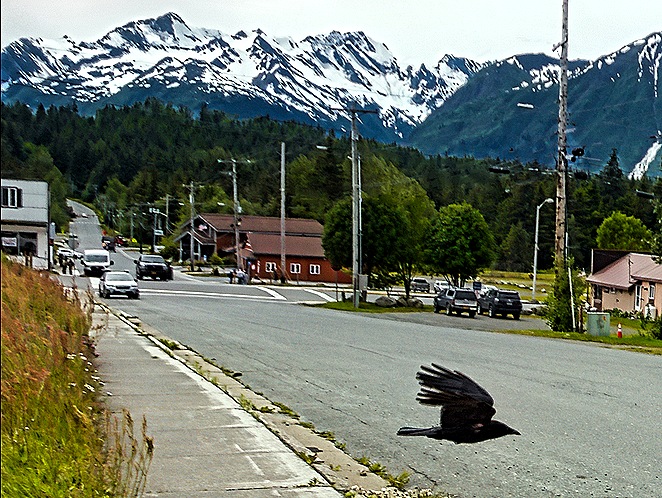
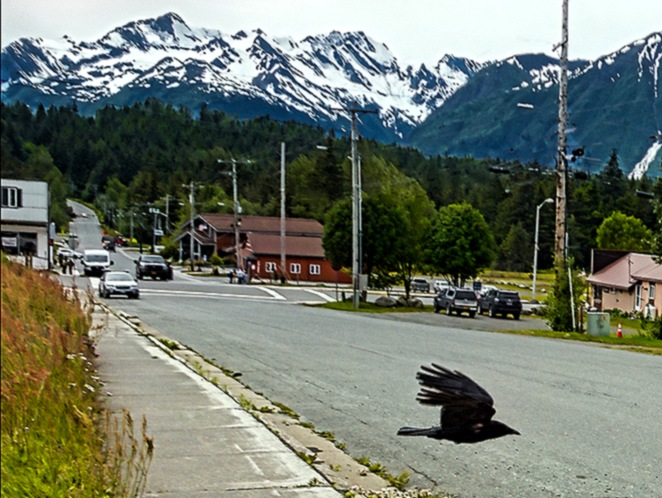
Our next visit was to the public library, which is very impressive for such a small town. Originating in 1931 the library moved to its present building in 2003. Funds and labor for the project were contributed by locals; in 2005 it was recognized by Library Journal as the “Best Small Library in America.” As we walked down a hill toward the library a raven suddenly flew across the street in front of us.

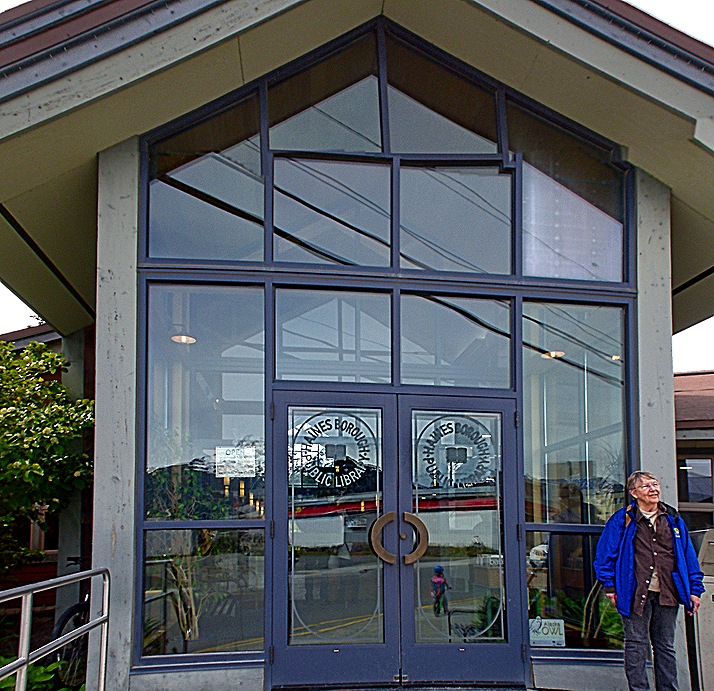


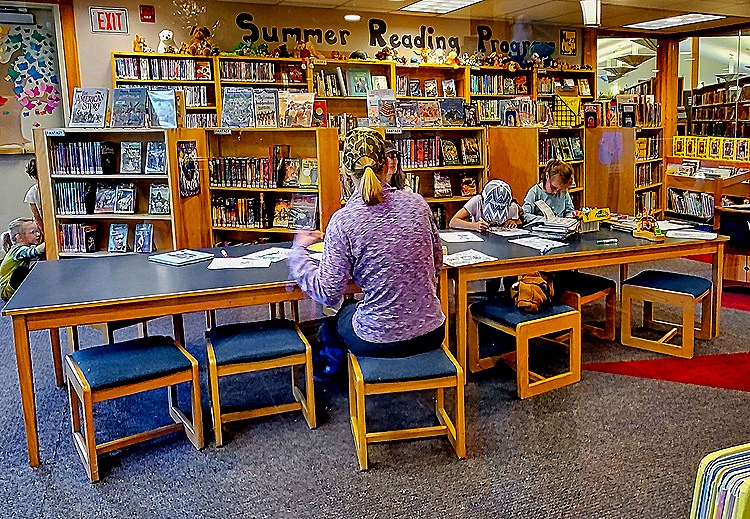
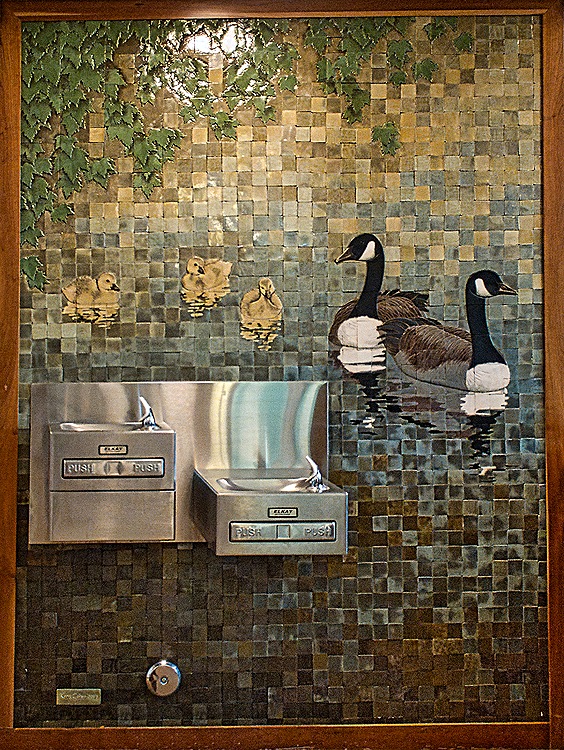
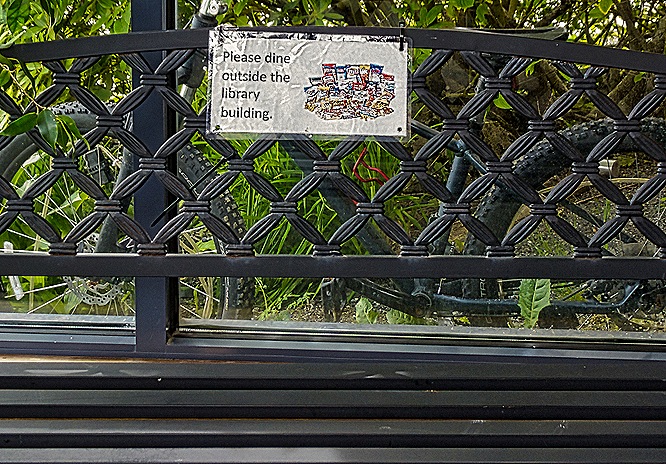
There was a good deal of local art on display inside the library. Among other things was a tile water fountain mounted on a large mosaic of a family of geese and a bench whose back is carved and painted in totem style. Another bench in the foyer just inside the entrance displays a sign suggesting a problem with people using it as a dining room. The front door itself is etched with the library’s logo.


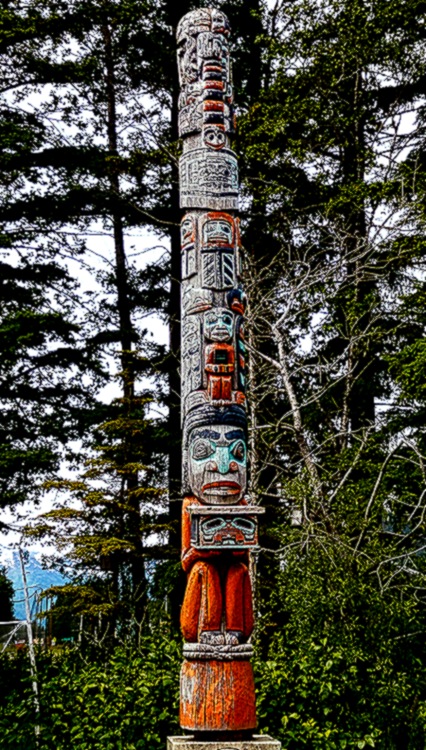
Leaving the library, we walked around the back through a lush flower garden. There we found our favorite totem pole, created specially for the library by a group led by carver Jim Heaton in 2009. Twenty feet tall, it tells the story of the library, beginning at the bottom with a woman holding a box of knowledge representing the original founders of the library. The pole is carved from an 800 year old cedar log and is named, in the Tlinget language, “Where they go to learn by themselves.” The second figure from the bottom represents a library patron holding a black book. As we were photographing the pole a local woman walked by and urged us to go close enough to read the title of the black book; “You won’t regret it” she said. She was right.




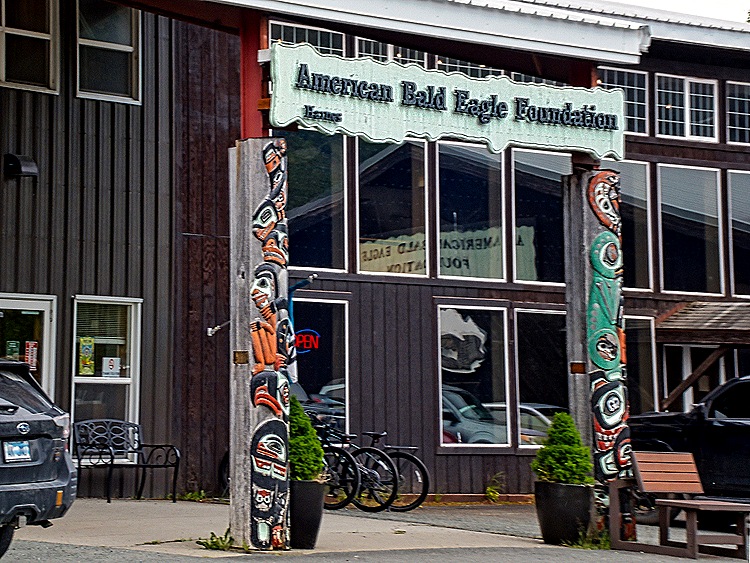
Turning back down toward the shore we walked past the American Bald Eagle Foundation, a wildlife museum (we didn’t go inside). Back at the waterfront where the ship was docked we walked uphill to explore what was once Fort William H. Seward. This was the last of 11 military bases built in this part of Alaska by the US at the end of the 19th century to keep peace during the gold rush era and to assert American claims during a border dispute with Canada. Authorized in 1898 the fort formally opened in 1904. All the other forts were closed during the 1920’s so that during the period leading to World War II this was the only one left. The fort closed in 1945 at the end of the war and was sold to private developers. Today it houses shops, art galleries, restaurants and a hotel. It was merged into the city of Haines in 1970,
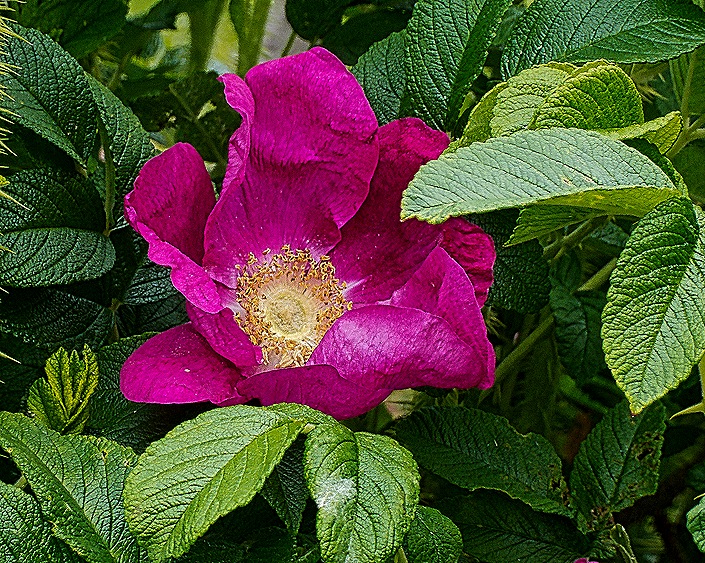
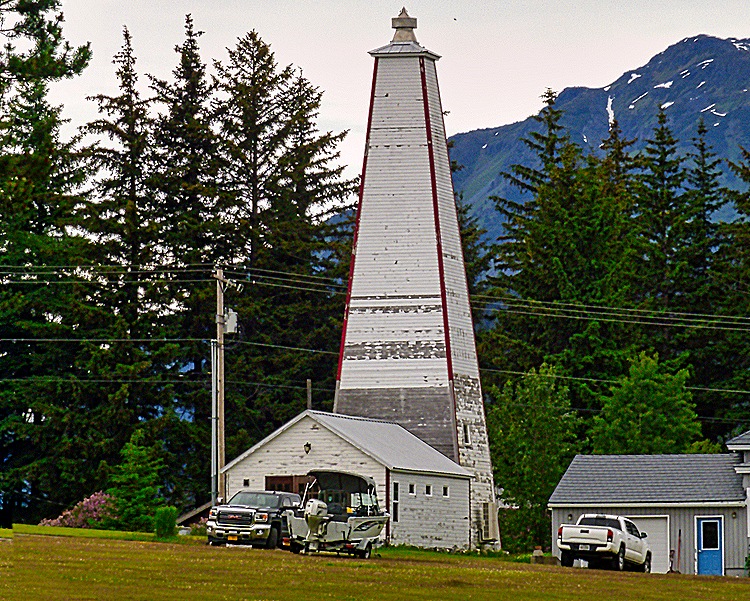

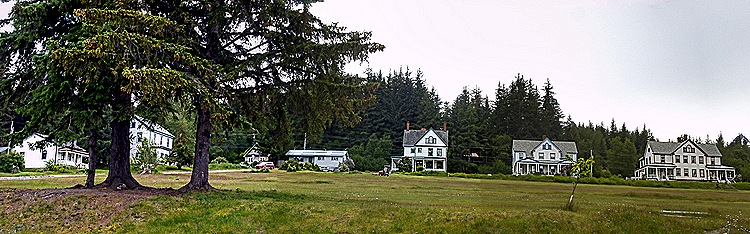
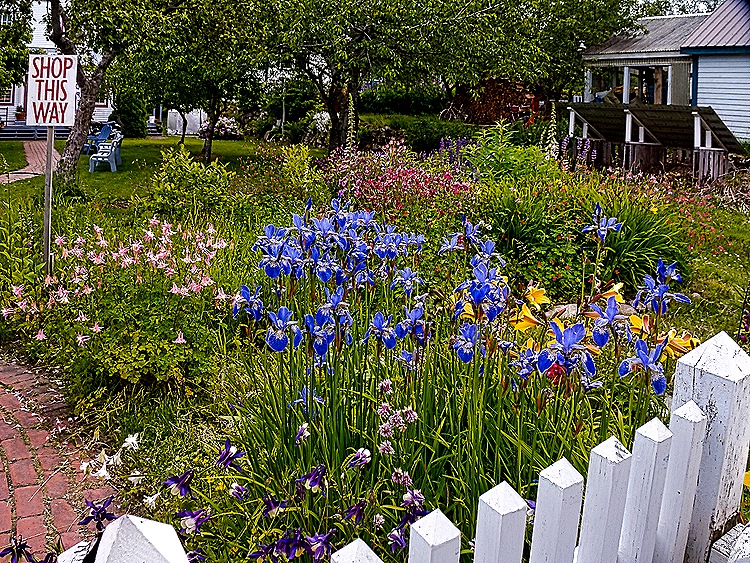
This was a nice walk, and we stopped in a shop surrounded by colorful gardens and bought some jewelry.

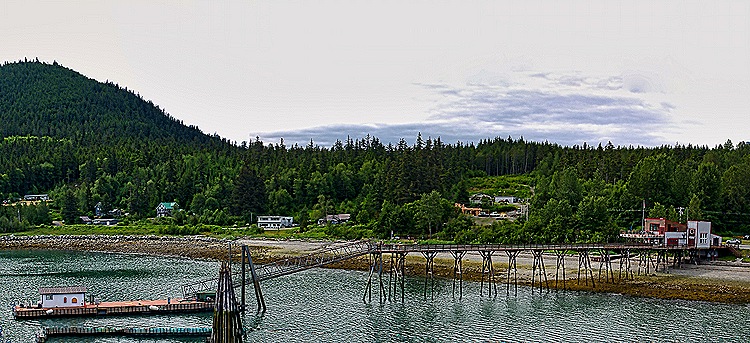
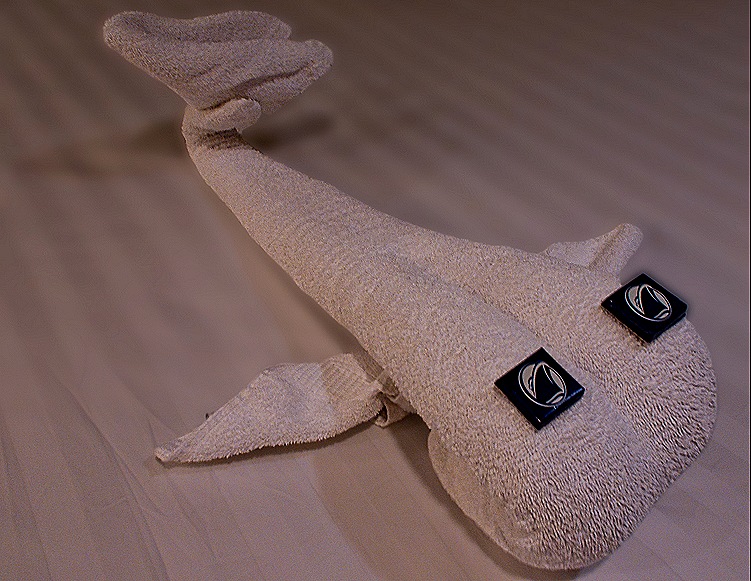
We returned to the ship, which sailed away late in the evening. But it was still light out so we have some pictures, including one of what we think is the dock for the ferry to Skagway. And after dinner a towel whale with chocolate eyes joined us in our room as we rested up for what would be another long day tomorrow.

Glacier Bay & Hubbard Glacier, Alaska 2025
Glacier Bay
By the time we got up on June 28 we were already in Glacier Bay. People have lived here for thousands of years but had to move away when the Little Ice Age caused ice to advance until it covered this entire area by the 18th century. When Captain Vancouver visited here in 1794 he did not see this bay because it was completely covered by a glacier wall 20 miles wide and 4000 feet tall, but by the time John Muir visited in 1879 the glacier had already retreated some 48 miles. Glacier Bay was designated a national monument in 1925 and became a national park in 1980. Today the Glacier Bay Park and Preserve encompasses more than 5,000 square miles and the bay itself is about 65 miles long. Since the original glacier retreated there are now more than 1,000 smaller glaciers within the park, seven of which are tidewater glaciers (meaning they terminate in the water). Most people visit Glacier Bay on a cruise ship but these ships are tightly regulated, only two permitted per day and only a handful of cruise lines permitted at all.
We had visited Glacier Bay once before, about 8 years ago. https://baderjournal.com/2017/08/14/glacier-bay-alaska/ As in 2017 the weather was chilly and overcast, with clouds often covering everything but the faces of the glaciers. Park rangers boarded the ship after we entered the bay and they would provide commentary during our visit over the ship’s speaker system.


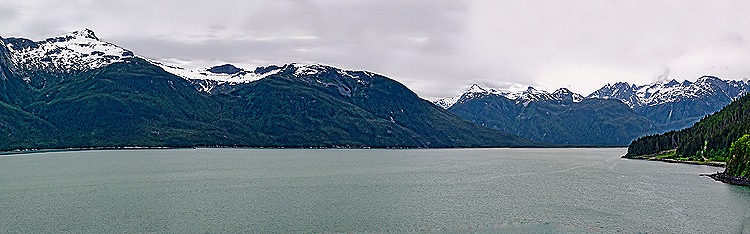
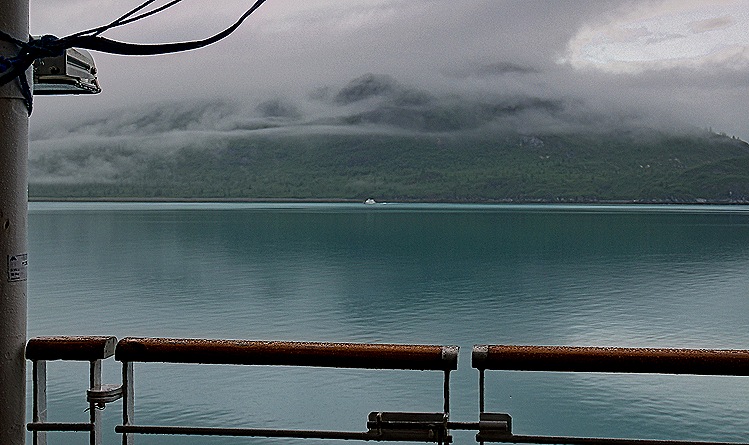
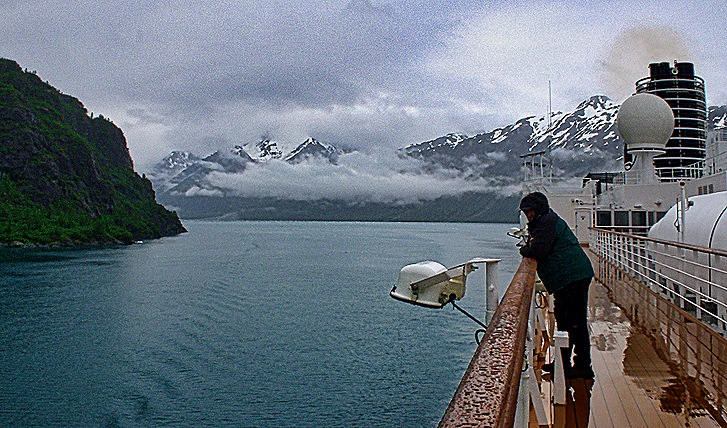
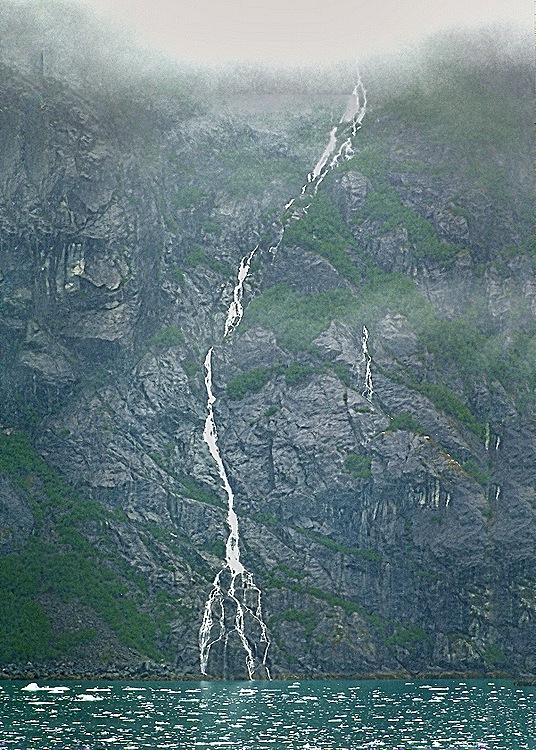
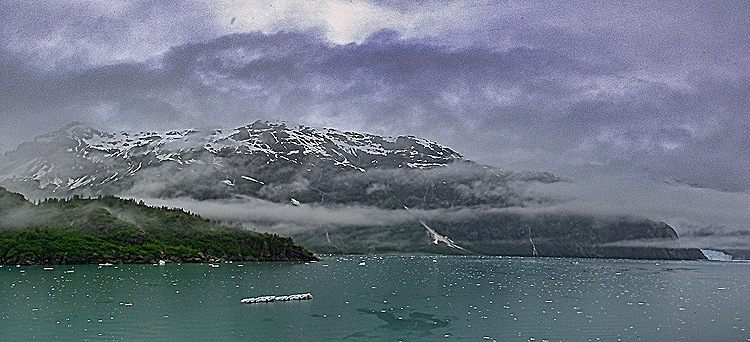
The main things to see in this area, of course, are the glaciers. But there is a lot of time spent sailing along the lengthy bay between glaciers and there is a lot of beautiful scenery to look for during that time. As mentioned, the clouds were pretty low and heavy much of the time but that just added an interesting air of mystery to the view.


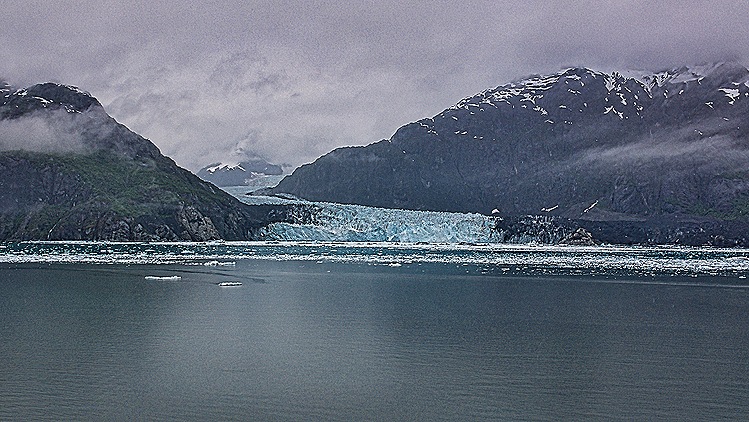
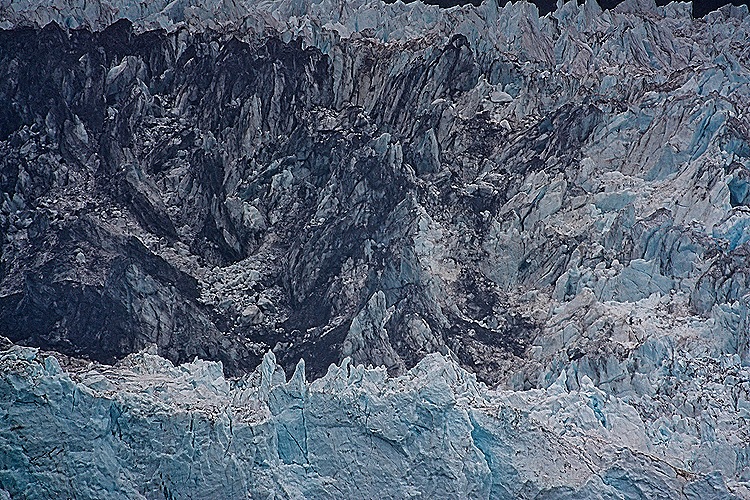
Margery Glacier is the most visited glacier in the bay. It is 21 miles long, about a mile wide at its water terminus and 250 feet tall above the water (and another 100 feet below). It is one of the most active glaciers here, known for relatively frequent calving (although we didn’t see any on this trip) and, unlike most of the glaciers in this area, it is stable and not currently receding. We sailed up Tarr Inlet to visit this glacier. We spent a good deal of time here as the captain slowly rotated the ship to give everyone a good look. In the pictures of the entire glacier face you can see a long portion on the right that is mostly black. This may be a part of the Grand Pacific Glacier which reaches the water just next to the Margery, but it is hard to tell because it is so dark, covered in dirt. The Grand Pacific Glacier is the one that covered the entire bay in the 18th century, but has since receded some 65 miles.



Another feature of this park is the wildlife. There is a large variety here, including whales, mountain goats, sea lions and brown bears. Sadly, we didn’t see any of those today. We found it difficult to pick out animals on shore, particularly in the gloomy weather. But we did see harbor seals relaxing on the ice floes we passed as we sailed along. Harbor seals are plentiful in Alaska. They can grow up to 6 feet long and weigh up to 350 pounds. And their lifespans extend to 25 years for males and 35 for females. We also saw a moose swimming across the bay. It was quite far away, looking almost like a dot to the naked eye, but extensive enlargement of the photo made clear that it was a moose. Like the one we saw near Anchorage, this appears to be a male moose whose horns are just starting to grow. We were told that this is a pretty rare sight for a visit to Glacier Bay.


There were a lot of seagulls flying around and sitting in the water. Best of all, there were sea otters floating by on ice floes, looking like they were curious about the ship. Sea otters were once plentiful in Alaska, all the way north into the Bering Sea. But their fur became highly prized, mainly because it is the thickest fur of any animal with about a million hairs per square inch. This pelt insulates them well from the cold water, and also traps air near the skin to provide further insulation. But in the 18th and 19th centuries the Russians, and later others, hunted them almost to extinction (about 1,000 or 2,000 remained). The Russians enslaved native people and held their families hostage to force them to hunt otters for them. But sea otters are now back in Glacier Bay in large numbers and are considered one of the great success stories of conservation efforts (although apparently their numbers have fallen a good bit again in the Aleutian area). Sea otters are very interesting and attractive animals, particularly because they generally swim on their backs with their big feet sticking up out of the water and with their young (if they have any) lying on their bellies. We only saw sea otters here sitting on ice floes, but we are including here a picture taken by our friend Susie when we were near the Arctic Circle that shows several sea otters floating on their backs.
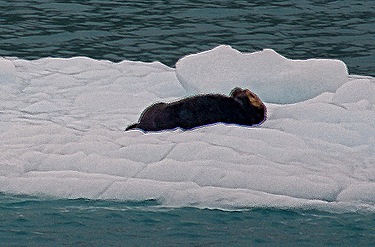
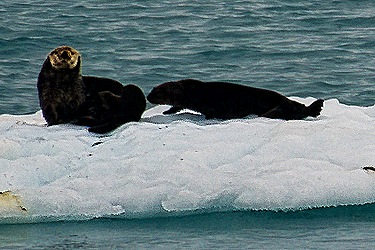

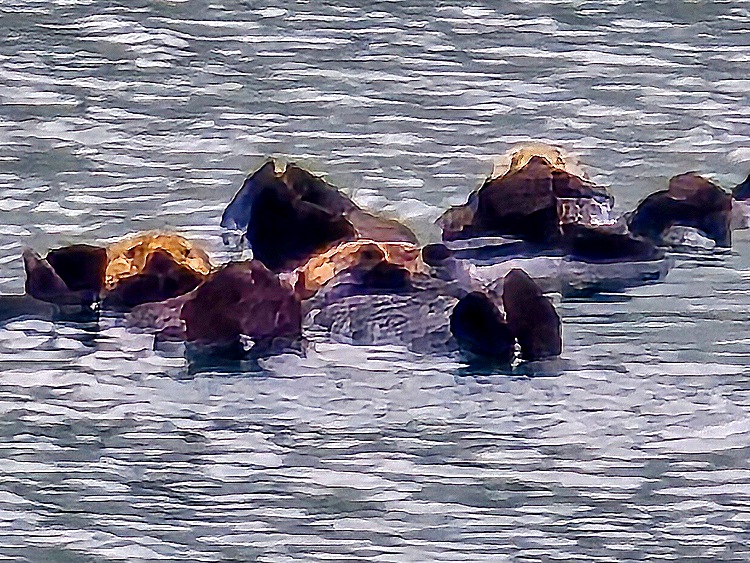

Sailing back from Tarr inlet we came upon Lamplugh Glacier at the mouth of Johns Hopkins inlet in mid afternoon. This glacier is about 19 miles long and its face is about 9 tenths of a mile wide and 165 feet high. It is known for its blue color (caused by tightly packed ice that absorbs all light colors other than blue), which looks brighter the closer you get. Much (if not all) of the dirt and debris on the ice comes from a mountainside that collapsed onto the glacier in 2016. The Johns Hopkins inlet leads further to Johns Hopkins Glacier but it was not accessible the day we were here. Lumplugh was the last glacier we visited. On our first visit to Glacier Bay we had seen an island full of sea lions on our way out of the bay, but not today.


Hubbard Glacier
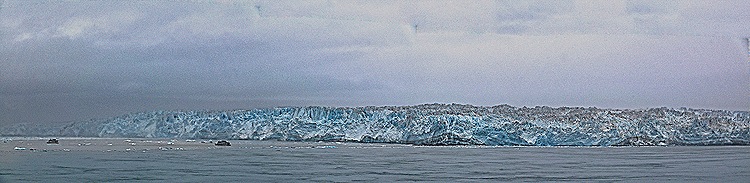
On June 29 we visited Hubbard Glacier, the largest glacier in North America. It is more than 75 miles long, 7 miles wide at its face, and rises 350 feet above the water (and another 250 below). Hubbard is an advancing glacier and often calves off icebergs as big as a 4 story building but we didn’t see that today. It is located at the end of Disenchantment Bay, a 9 mile extension of the larger Yakutat Bay. The tiny town of Yakutat is known as the surfing capital of Alaska but we sure wouldn’t want to get in the water in the kind of weather we had here.

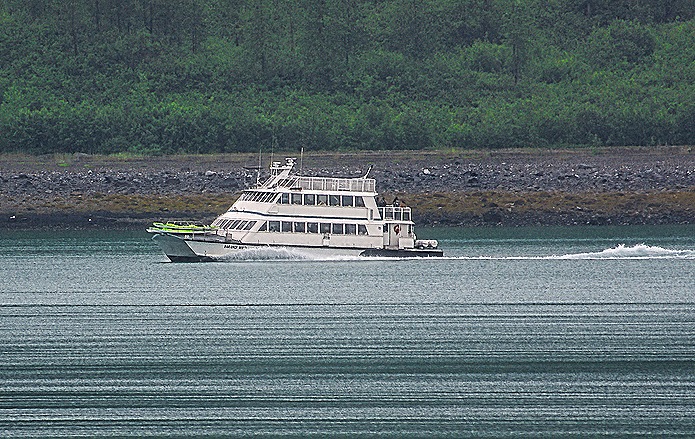
We had pretty bad weather for this visit, with clouds, choppy water and a good bit of ice floating in front of the glacier. The captain made heroic efforts to get us a good view of the glacier, approaching from the right and again from the left, and we were able to see it even though the photographs are not so great. As usual the ice patterns on the face of the glacier were most interesting thing, and a couple of small excursion boats were in the water much closer to the glacier than we could get.


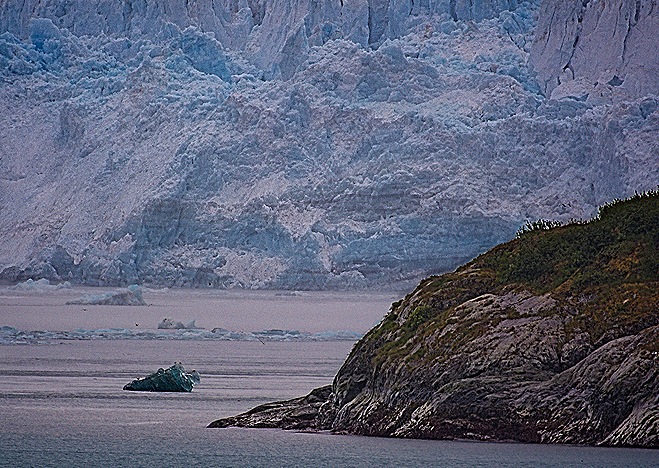
So that was it for two days of glacier gazing. These glaciers are all pretty interesting and quite beautiful, but two days of them in a row was plenty. As we sailed out of Yakutat Bay and heading for an actual port we enjoyed our dinner and went to bed, with only a towel animal for company.


Anchorage, Alaska (overnight) 2025
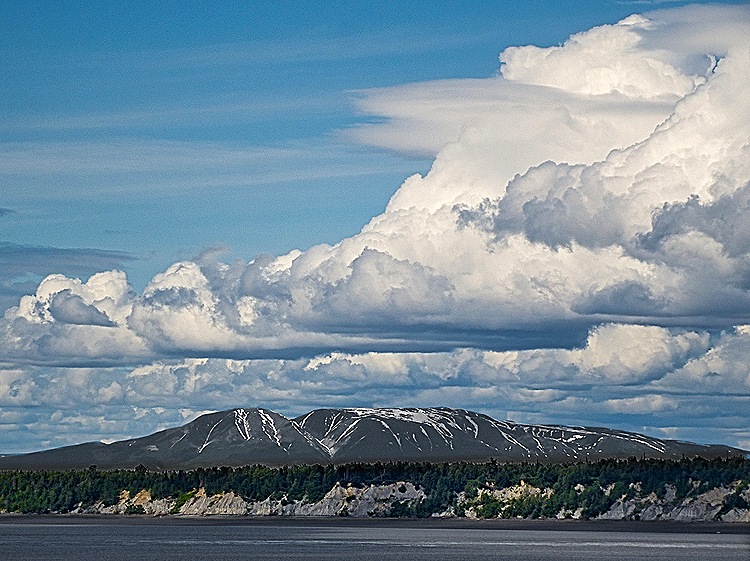
We docked late on the morning of June 25 at Anchorage for a two day stay. The dock was part of a military base called Joint Base Elmendorf-Richardson, which is where the Trump-Putin summit was held less than two months later. Our side of the ship faced the land and in the distance, well beyond the rather uninteresting buildings in the area, was a beautiful mountain range glowing in the sun along with the clouds above it.

Anchorage is by far the largest city in Alaska with a population of close to 300,000. It was named (sort of) by Captain Cook, who visited here in 1778. He called this area Anchor Point because he anchored his ship here; it was later changed to Anchorage because there was already an Anchor Point near Homer, Alaska. Cook Inlet, through which we sailed to get here, was named for Captain Cook. The area has been inhabited by Native people for at least 5,000 years. The city began as a tent city housing American railway workers in 1914 and was incorporated in 1920.
DAY 1
We were not permitted to walk through the military base toward Anchorage for security reasons so we took the shuttle bus that was provided into downtown Anchorage. (We were told that this was one of the most secure bases in the country, but they let us ride through it several times requesting, but not checking, that we not take pictures on the way, so that doesn’t seem especially secure.) We were cautioned that if we were not on time to catch the last shuttle to the ship we would have to find somewhere else to sleep because unauthorized vehicles (like taxi’s) were not permitted to enter the base.
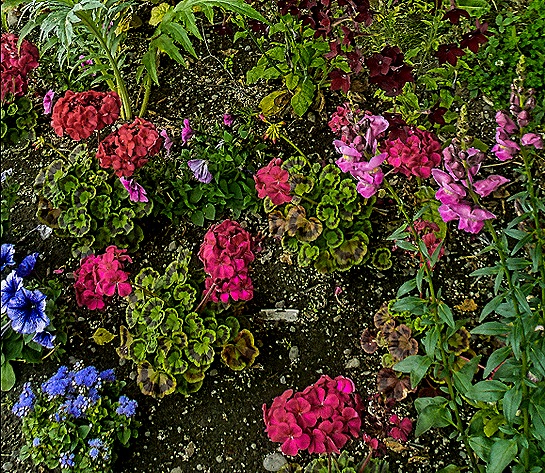
The shuttle bus dropped us off at the Egan Center, a convention center in the middle of town, and we spent the day walking around. Across the street was a park with some very colorful flowers.


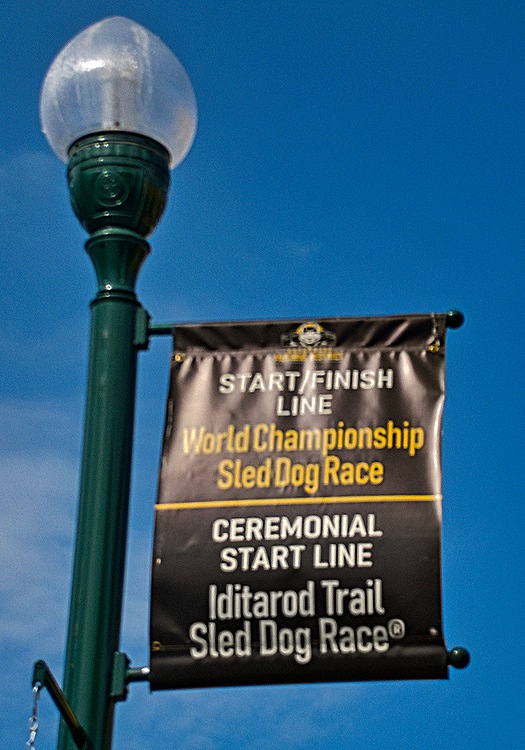
We visited the ceremonial starting line for the annual 1,000 mile Iditerod sled dog race, the finish line for which we had seen in Nome. There was a statue of a sled dog nearby. Interestingly, we read that the mushers put booties on their dogs to help them withstand the wear and tear on their paws, typically using between 1500 and 3000 of them during the race.

We discussed the 1964 Anchorage earthquake in the Valdez episode. This was the largest earthquake ever recorded in North America (9.2 on the Richter scale) and the second largest in the world. Tsunamis reached as far as Antarctica and Anchorage was devastated. We walked past the JC Penney Building, which was constructed after their original 5 story building on that site (which had just opened in 1962) was destroyed by the earthquake. We also walked past the United States Courthouse, which may be famous for other reasons but is notable to us because Rick argued (and won) a case here about 30 years ago.


The Anchorage Museum is a sizeable museum in downtown Anchorage devoted to all aspects of Alaska. Its glass facade faces a lovely green park full of flowers and surrounded by trees. It also has an interesting gift shop.


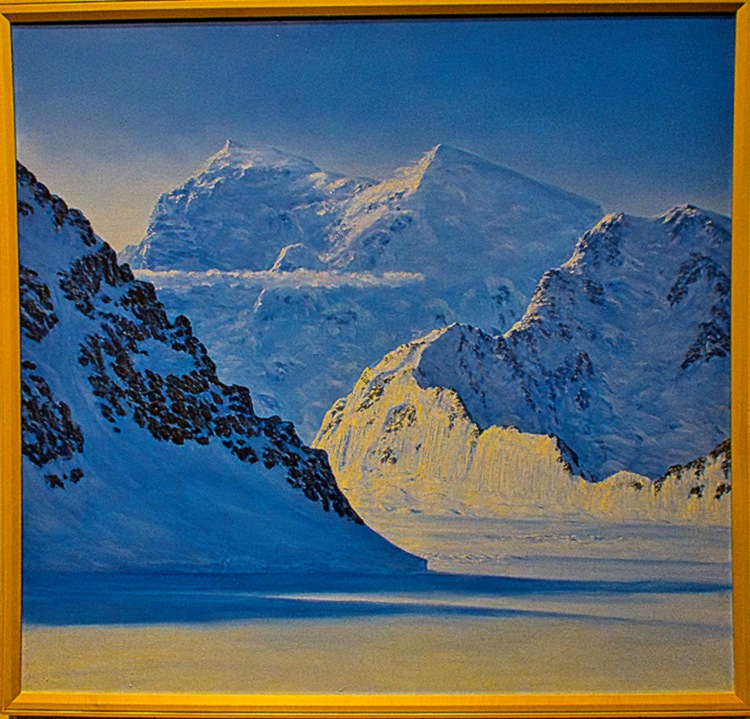
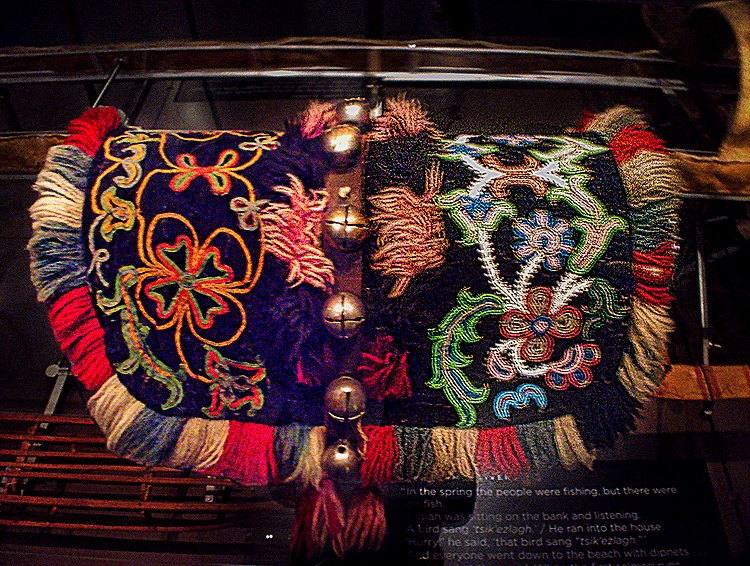
We spent a good amount of time perusing the exhibit halls in the museum. There were some rooms devoted to sled dogs and an exhibit of striking blue and white paintings of Alaskan landscapes (the photo does not do them justice). The Smithsonian’s Arctic Studies Center has a large gallery here of Alaska native artifacts on long term loan. We found this quite interesting.




We intended to have a late lunch at a famous pizza restaurant we thought was nearby, but after walking several blocks uphill we found that it was still pretty far away. So we found another restaurant downtown called Tent City (the original name for Anchorage when folks were still living in tents). It turned out to be quite interesting with very good food (and beer). We sat at a long dining bar in the front window and across the street was a colorful mountainous wall mural. Rick had halibut fish & chips & Mary had a hamburger with the restaurant’s name and logo burned into the bun. There were some interesting old photos of Anchorage inside from when it actually was a tent city.


After lunch we walked back to the Egan Center and waited in a long line to board a shuttle back to the ship. Still another day to go in Anchorage.
DAY 2
We had booked an excursion offered by our travel agents for this day that would take us out of town, but it started out pretty badly. There were supposed to be two vans that would be about half full but at the last minute one of the drivers called in sick. Instead of finding another driver the local tour company just sent us one van and it was too small to hold the full complement of excursioners. So Keith and Susie, our travel agent’s hosts on this voyage who were supposed to lead this excursion, had to stay at the ship and miss the tour. While our driver/guide did a fine job we hope our travel agents find a different company next time.
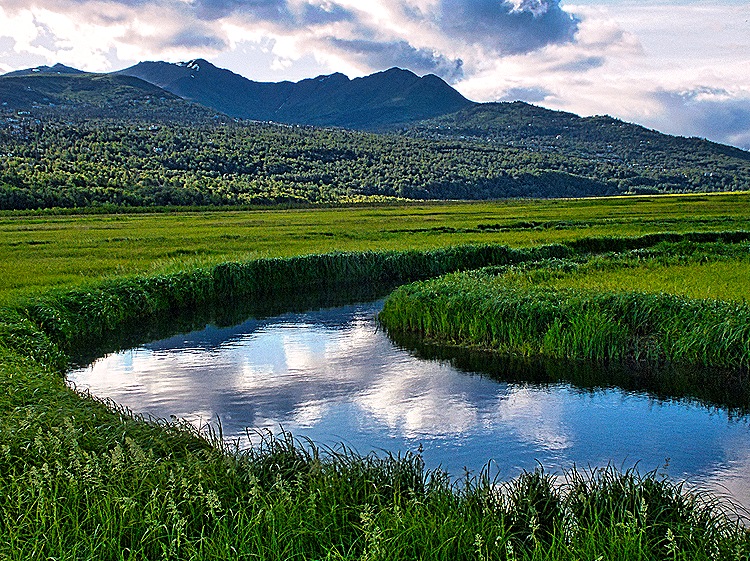
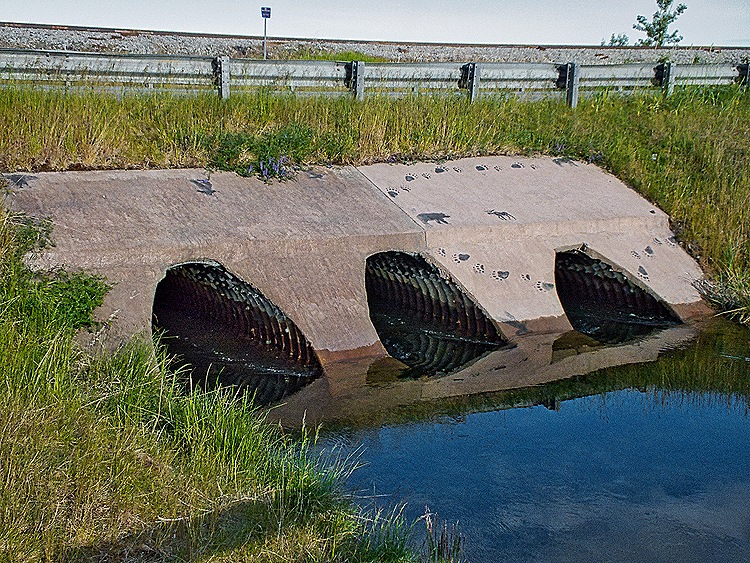
We visited two locations on this tour. First was Potter Marsh, at the southern end of the Anchorage Coastal Wildlife Refuge that borders the Turnagain Arm of the Cook Inlet. The area was originally quite turbulent from the tides of Turnagain Arm but in 1917 railroad construction cut it off from the tides and created the calm water lands we visited today. The marsh sits between the Seward Highway running along the seashore and the Chugach Mountains, quite visible beyond the marsh. We walked along a 1500 foot long raised boardwalk through the marshland. Among other things, there was a culvert built under the highway to enable salmon to enter the marsh and Rabbit Creek to spawn. Unfortunately no salmon were there when we visited.


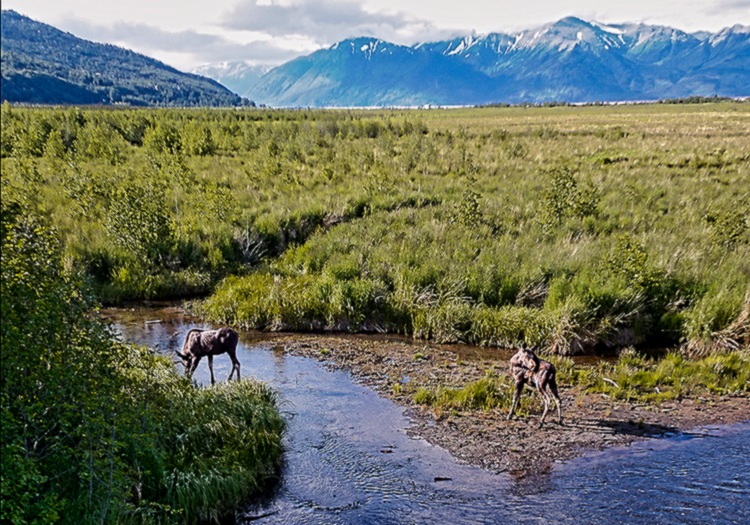
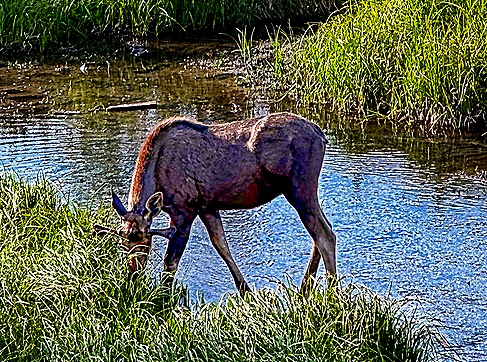
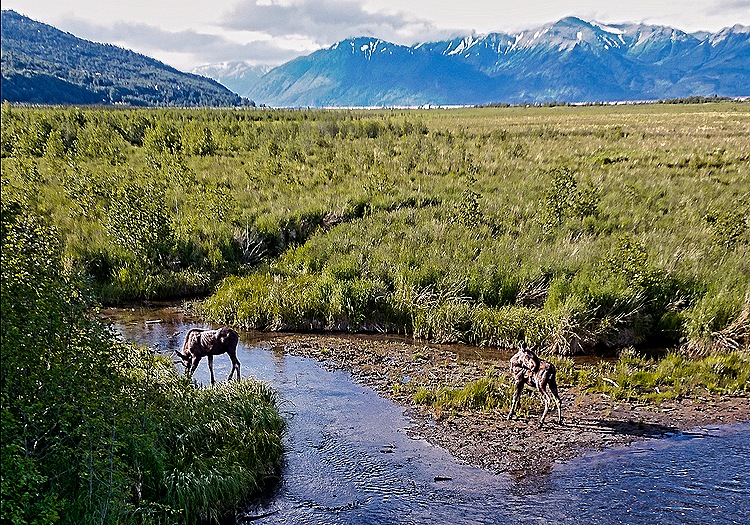
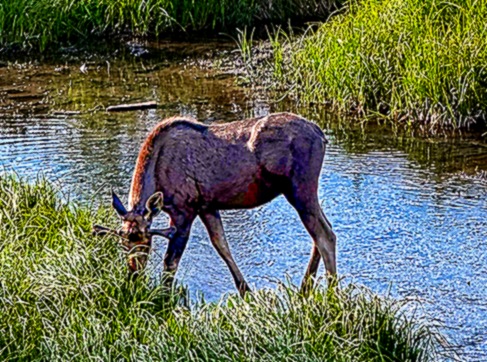
We saw very little wildlife this morning, at least not sitting still where they could be seen and photographed. The big exception was moose. We saw a moose couple grazing and drinking in a creek. It was early enough in the year that the male’s horns were just beginning, extending maybe 6 inches from his head under his ears (hard to see because his face was obscured by the grass he was eating).

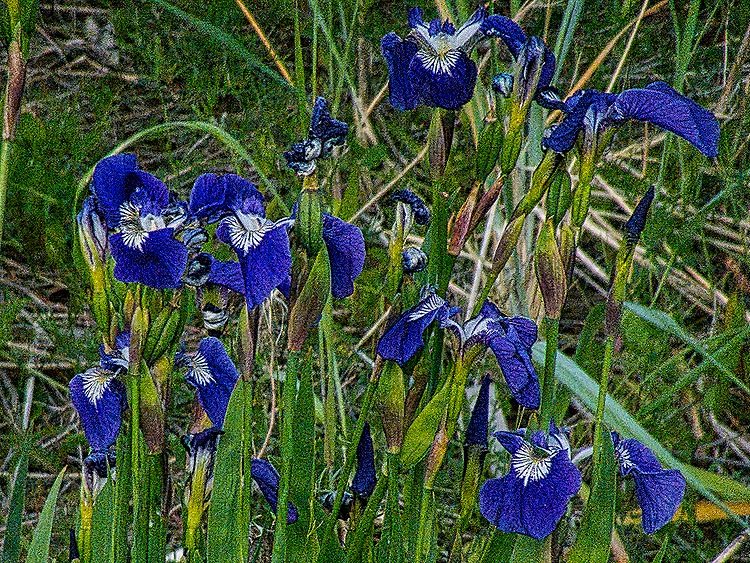
Among the flowers near this place was a bed of Cow Parsnips, large white flowers we saw in many places while in Alaska. Nice to look at, but don’t touch! Touching them makes your skin hypersensitive to light, causing painful sunburn, and its effect can last for months. Ani, our guide in Kodiak, told us she once picked one because she was wearing gloves, but when she later lightly pushed her hair back from her forehead the damage was done. Driving back along the Seward Highway there was spectacular scenery yet again.


The Alaska Native Heritage Center, which opened in 1999, sits in 26 acres of lush green surroundings near the edge of Lake Tiulana about 10 miles south of central Anchorage.

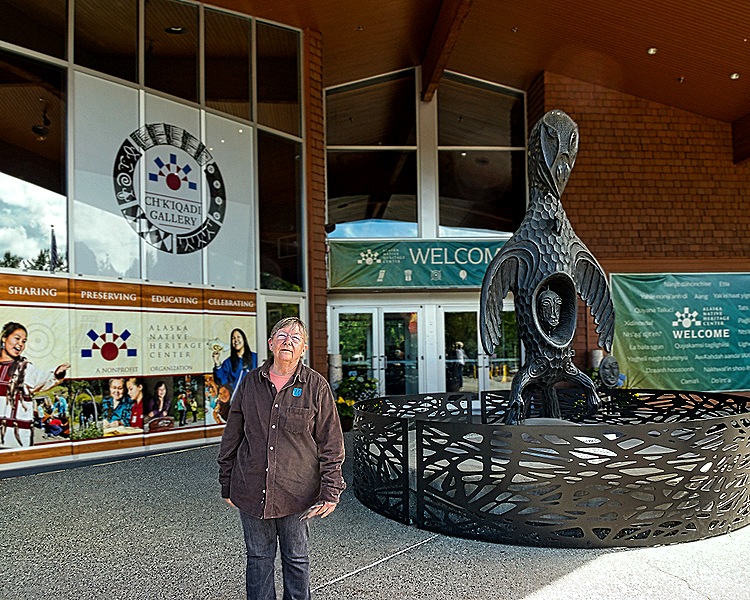
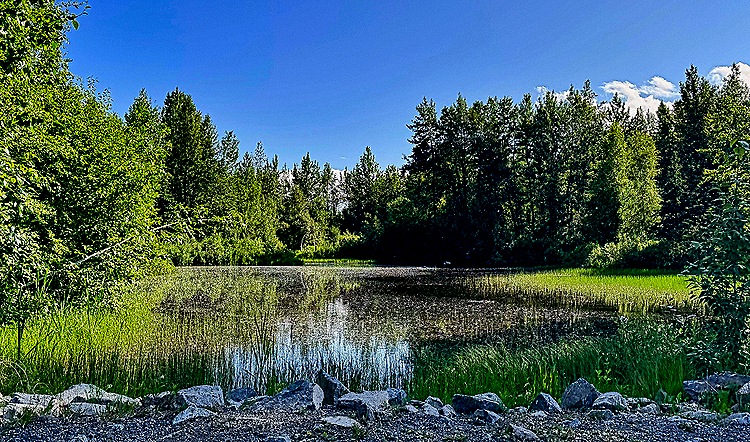
The Center’s main building contains exhibition space and a large performance venue, as well as an interesting gift shop and space for individual vendors. Around the lake are six areas displaying traditional dwellings of six native cultures, along with some totem poles and young people explaining each site. We visited several of these interesting dwellings, which included some beautiful artwork inside in addition to the totem poles outside.
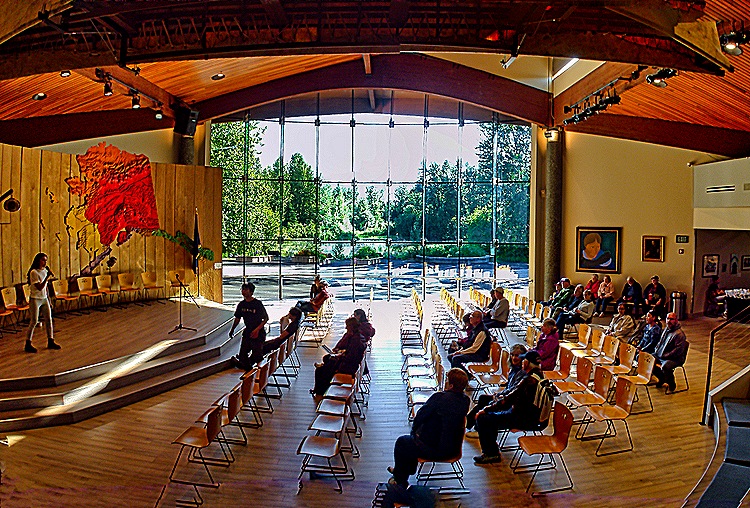


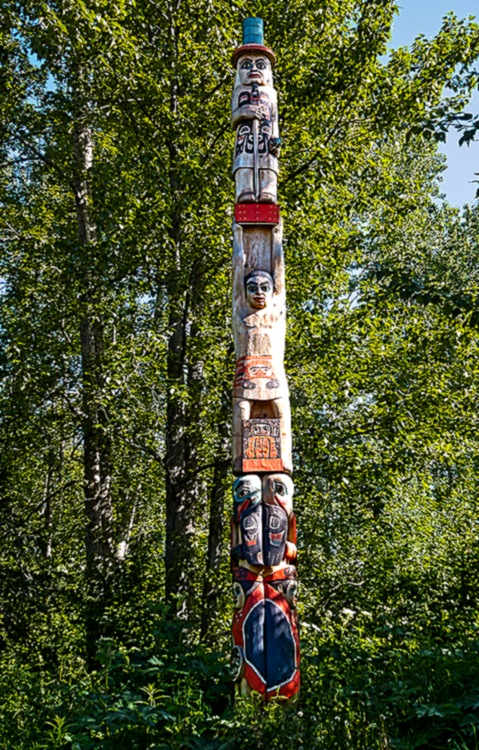


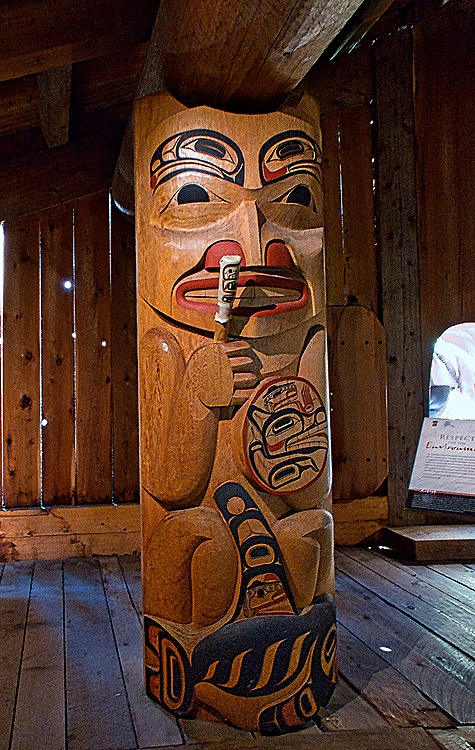

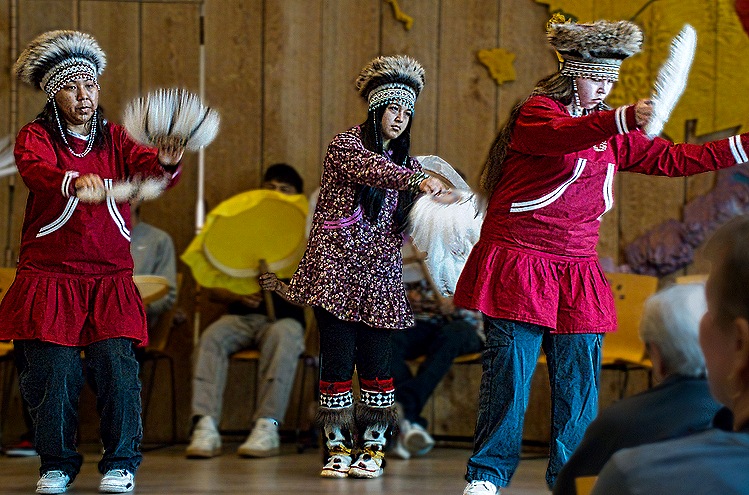
We saw two performances on the stage in the performance hall, both by groups that looked to be high school and/or college age. First was a group of several fellows demonstrating competitions conducted by the indigenous people. One of them was a high kick, in which he tried to kick a ball suspended well above his head. The second group consisted of female dancers in native attire and some males playing drums made of cloth or skin stretched on a wood hoop. These performances were interesting and fun.


We returned to the ship, passing more vivid scenery across Cook Inlet, and after lunch spent the rest of the day relaxing. We watched several groups of military jets passing over our balcony.
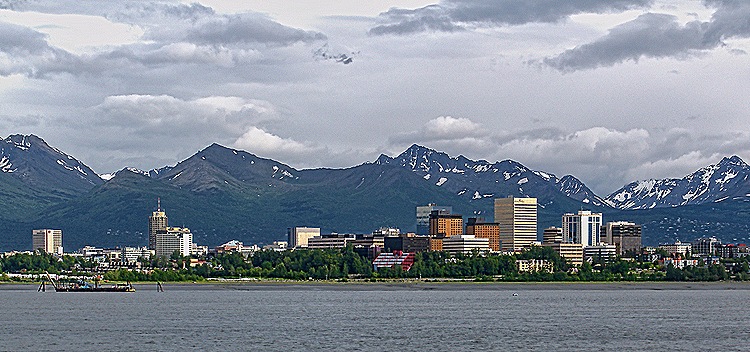
We departed Anchorage shortly before dinner and watched the city skyline grow smaller as we sailed away. The yellow building in this picture is the ConocoPhillips Building, the tallest in Alaska.
Kodiak, Alaska 2025
After three days at sea we found ourselves on the morning of June 24 anchored outside the port of Kodiak, Alaska. Those tired of reading about all the good weather we have had so far will be reassured to learn that this day had typical Kodiak weather . . . chilly, heavily overcast and damp. Here is what it looked like from our veranda.
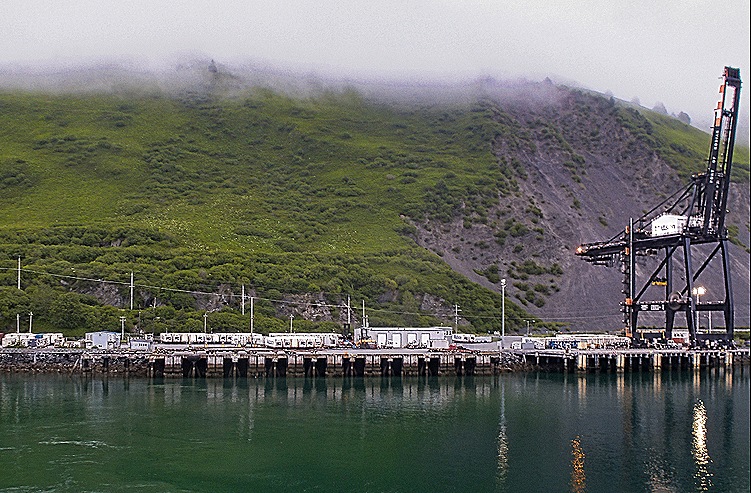
Kodiak is a small city of about 5,700 people but still the primary city on Kodiak Island. Its name is an adaptation of the native word for “island.” Kodiak Island had been populated for at least 7,000 years by the Alutiiq people before the Russians established a settlement here in 1792. It was the capital of Russian America until 1804, when the capital was moved to what is now Sitka. This was also a center for Russia’s booming fur trade which led to the enslavement of many indigenous people to hunt sea otters for them throughout the Bering Sea area, causing the near extinction of sea otters during the 19th century. With the sale of Alaska to the US in 1867 Kodiak became an important American fishing center (as it remains today).
We were booked on a private walking tour of Kodiak, so we tendered into the central port to meet our guide.

Ani was a wonderful guide, leading us on a thorough exploration of the port and the town beyond and regaling us with many entertaining and often hair raising stories from the town’s history. Her experience on local fishing boats contributed to her extensive knowledge of the area.
The town is on ground a good bit higher than the port itself and is reached by walking up very steep and fairly long covered ramps. We met Ani at the top and then spent a good bit of time walking around the edge of the harbor and out onto the wooden docks to see the fishing boats (which required a trip down, then later back up, one of the covered ramps). A lot of fishing boats were docked here.


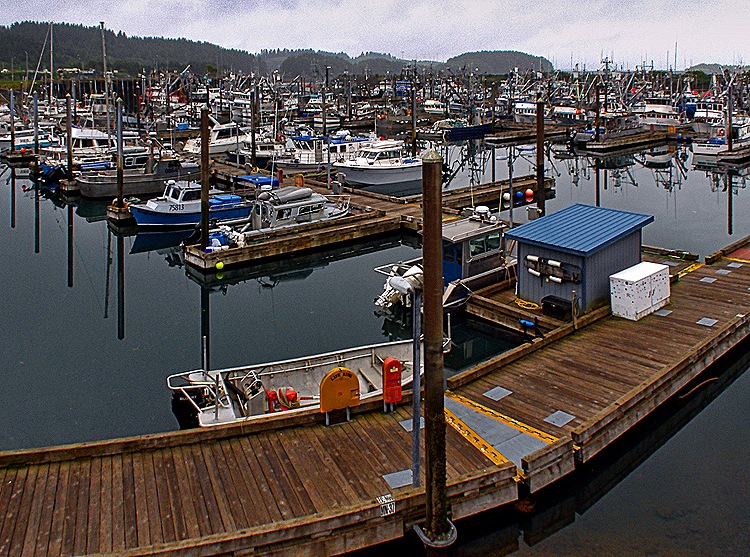
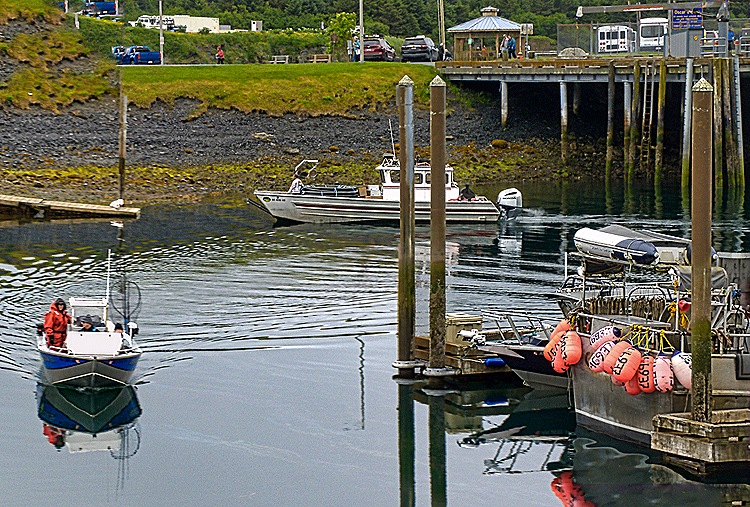
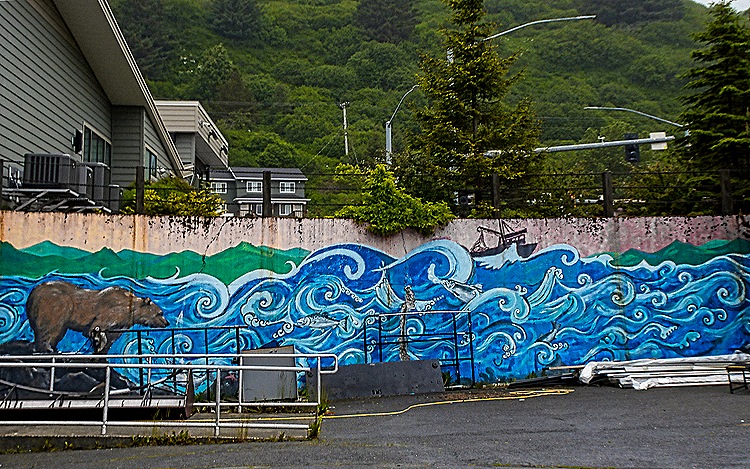
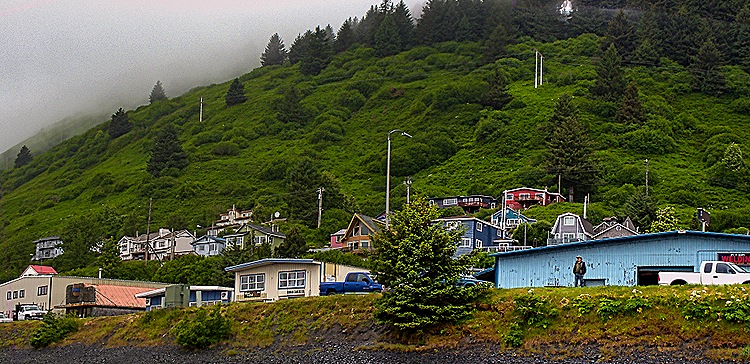
As we walked around the docks Ani told us about the fishing operations. Sailors are usually paid a percentage of the profits for a sailing, so it can be quite lucrative if the catch is good and the prices are high that year. But if the catch fails, because of a scarcity of fish or too much competition or because the catch spoils, they may get little or nothing. And the work is extremely hazardous, with one of the highest fatality rates in the United States, especially for crab fishermen. Most of the boats seemed to be in the harbor rather than out fishing on the day we visited, which might have to do with the weather or with fishing season limits or quotas. Among other things we saw many boats piled high with fishing nets (which are expensive and require constant maintenance) and a vat of bait consisting of pieces of halibut. Near the port we saw an interestingly painted wall and a hillside neighborhood, in which the building second from left in the front row is claimed to be the oldest bar in Alaska (B&B Bar, which we are told has its 1906 liquor license hanging on a wall).


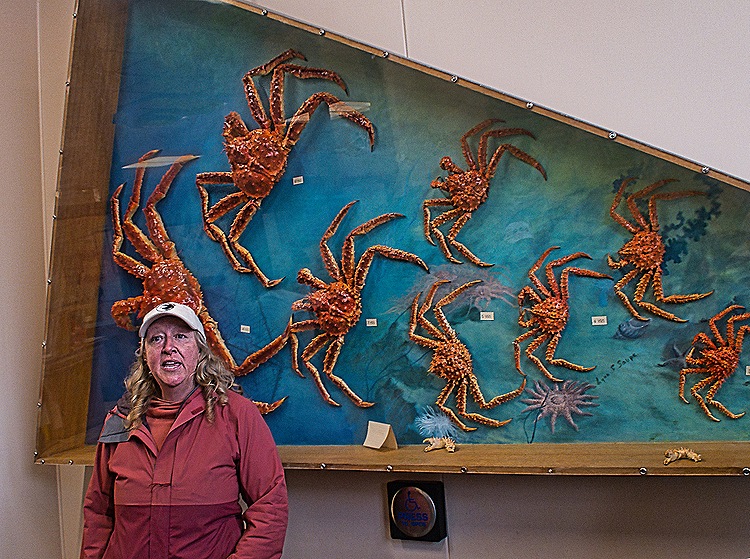
Kodiak is the center of King Crab fishing, by far the most hazardous occupation in the United States. Crab boats drop very large steel & net cages to the floor of the ocean by a winch and cable, attach their cables to a buoy, then return a few days later to haul the cages back onto the ship. The cages (called pots) weigh at least 600 pounds and when retrieved may weigh a ton with the water inside. These are swung on board by hand and it is all too easy to get caught in the cable when doing this. In 1980 Alaska crab boats produced some 200 million pounds of crab but by 1983 the catch had dropped by two-thirds, up to 90 % in some areas. Since then the crab industry has been more and more regulated to protect the crab population, with the crabbing season now measured in weeks instead of months (sometimes even in days). The going price for King Crabs varies considerably from year to year, as does the fishing workers’ income. The price seems pretty high to us right now; we ate in one restaurant in Alaska where a single King Crab leg was on the menu for $80 and a whole crab was around $300 (we didn’t order it). Ani showed us a display in a local bank that had king crabs of various sizes, with only the two or three largest sizes permitted to be taken (females must also be thrown back).
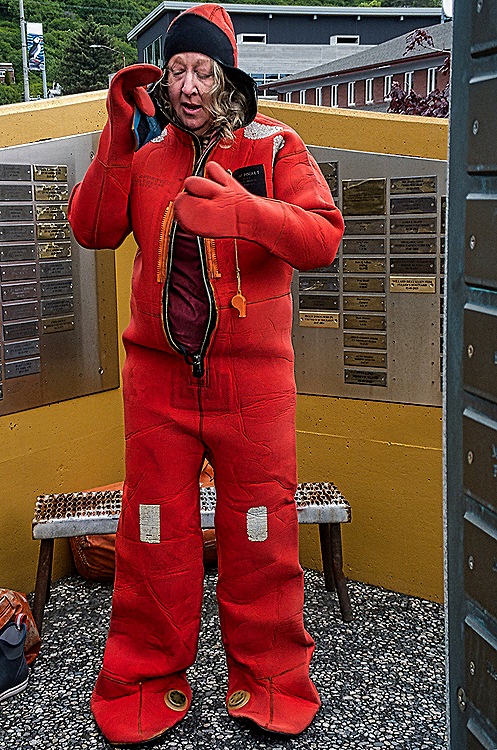
One of the precautions to protect fishermen these days is a survival suit, since most of the fatalities are by drowning and hypothermia. This is a waterproof onesie that is insulated to protect from freezing in the water. All fishing boats in this area (we understand) are now required to have these suits on board for their crews, and many people working on boats buy their own. These have to be put on when a boat appears to be sinking. Ani demonstrated one for us and it is a bit complicated to do correctly (and takes some time, while the ship is about to go down, remember). She told us about at least one fellow who died because he made a mistake while donning his suit and there was no time to correct it before he found himself in the water. As a result, training in the use of these suits is now much more uniform and intensive. When fully deployed the suit is very bright orange (so you can be seen and rescued in the water) and also puffy, with an orange hood over the head, so they are colloquially called Gumby Suits. The place where Ani demonstrated the suit is a yellow memorial to people who have died on Kodiak fishing boats; there are many small name plaques on the wall, just a few of which you can see behind her in the picture below.
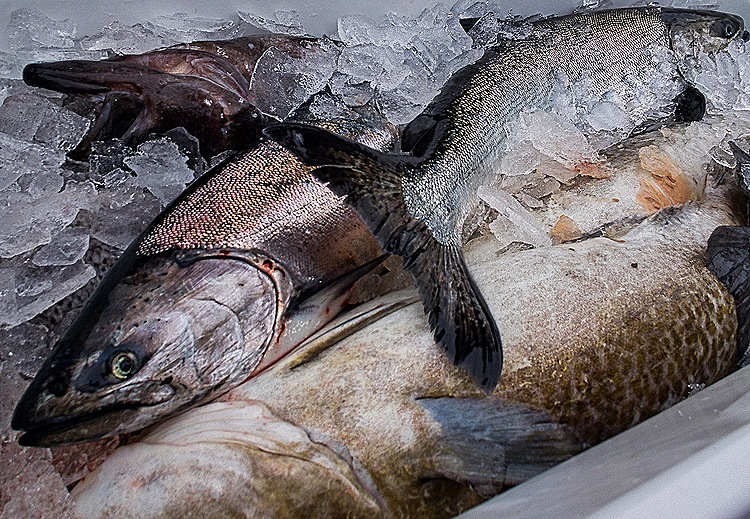
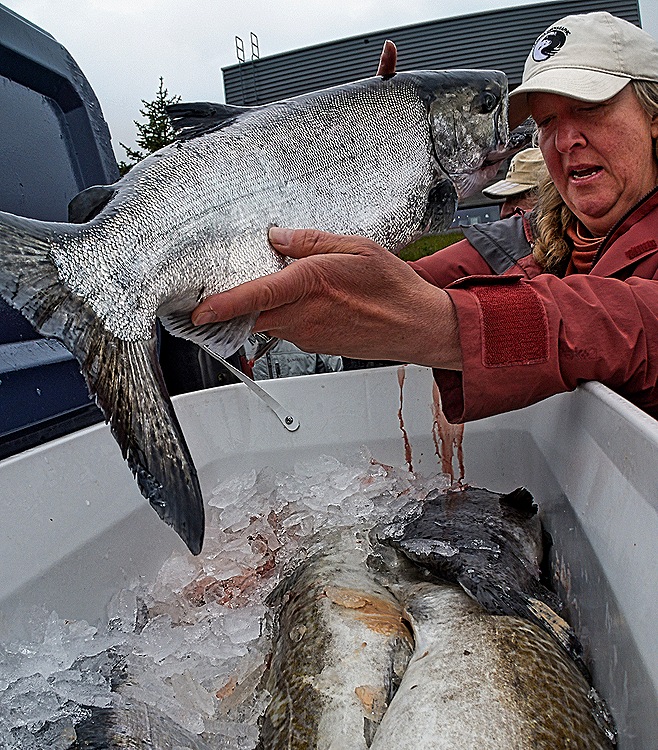
Walking through the downtown area we saw a number of stores and restaurants, many together in shopping centers. We passed the visitor center of the Kodiak National Wildlife Refuge, an almost 2 million acre wildlife reserve that covers about two thirds of Kodiak Island and several other islands as well. We didn’t stop to see the visitor center’s wildlife displays. Kodiak Bears are large and well known but are not near the city so the only one we saw was the large sculpture in front of the visitor center. We also walked past the Star Of Kodiak, the last liberty ship completed during World War II. It was designed to carry aircraft as cargo but was brought here in the 1960’s to serve as a fish cannery and is still in service, though it doesn’t go anywhere. As we passed through a parking lot a small truck pulled up and the driver and passenger got out and invited us over. They had just returned from a fishing boat and wanted to show us their catch, contained in a vat in the back of the truck. Ani picked up one of the salmon to show us & talked a little about salmon fishing.
The Kodiak History Museum (formerly the Baranov Museum) sits on a hill well above the water. We didn’t go in but the building is historic in itself, a log building covered in siding that was built by the Russians in 1810, one of the oldest buildings in Alaska. It was originally a storage building, converted to a residence in 1911 and operated as a museum and offices since 1967. Ani told us that when Kodiak was seriously damaged by a tsunami after the 1964 Good Friday earthquake in Anchorage the water came within a few feet of this building. Near here Ani also told us about the 1912 Novarupta volcano eruption, the largest in the world during the 20th century, that produced about 30 times the amount of magma and ash as Mt St Helens. Although the eruption was about 100 miles away in what is now Katmai National Park, Kodiak was covered in ash over the three days the eruption lasted. Even today strong winds sometimes lift remaining ash from the mountain and blow it toward Kodiak.



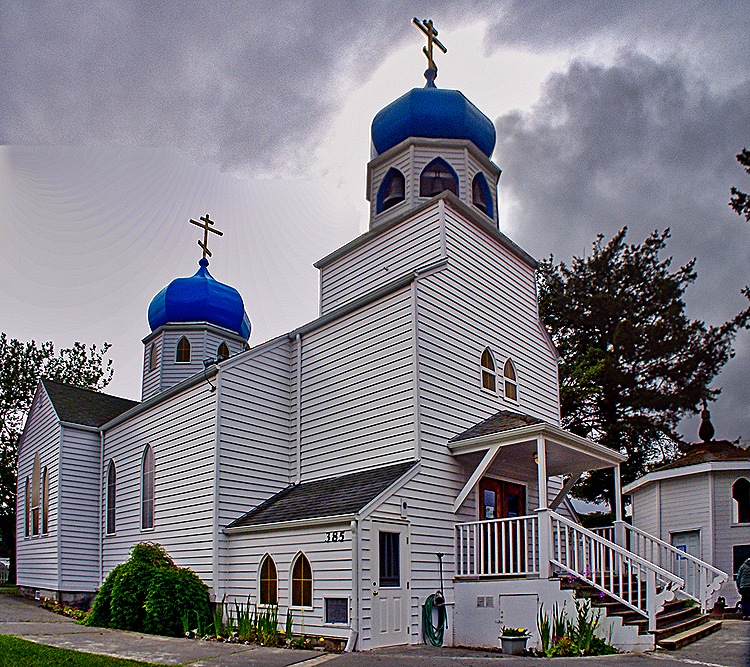
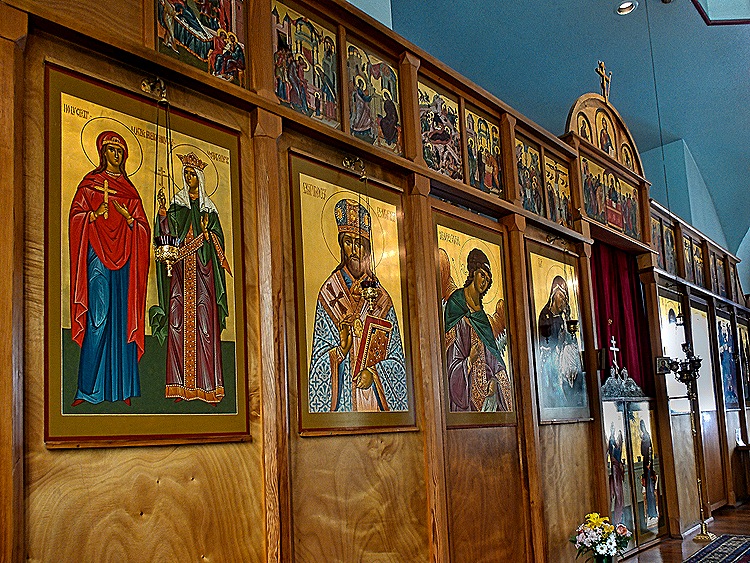
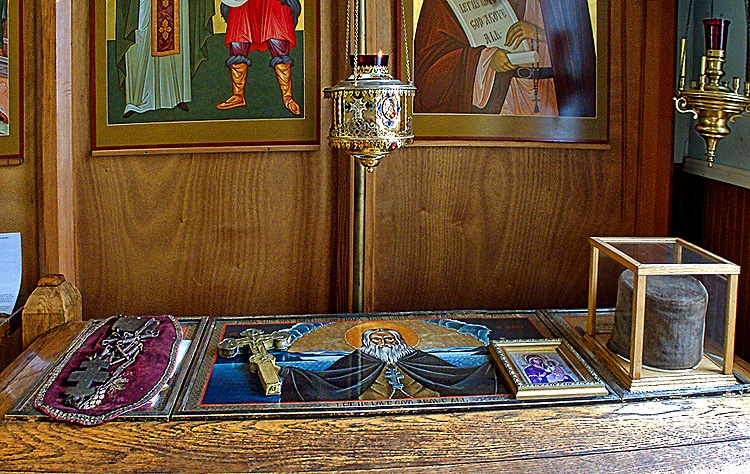
Our walking tour ended at the Russian Orthodox Holy Resurrection Cathedral, a white wooden building with two blue onion domes topped with gold colored Orthodox crosses. It was first built in 1794, then rebuilt in 1945 after most of it burned down. Inside are relics of two Russian Orthodox saints. St Herman of Alaska presided in this church for a few years in the early 19th century and was known for his support of the native people in the face of the Russian fur trading company, and St Olga of Alaska was canonized just 5 days before our visit, the first North American woman to become an Orthodox saint. The main hall has a number of old icons and a lot of gold colored decoration. A visit to Kodiak would not be complete without seeing this distinctive and historic building.




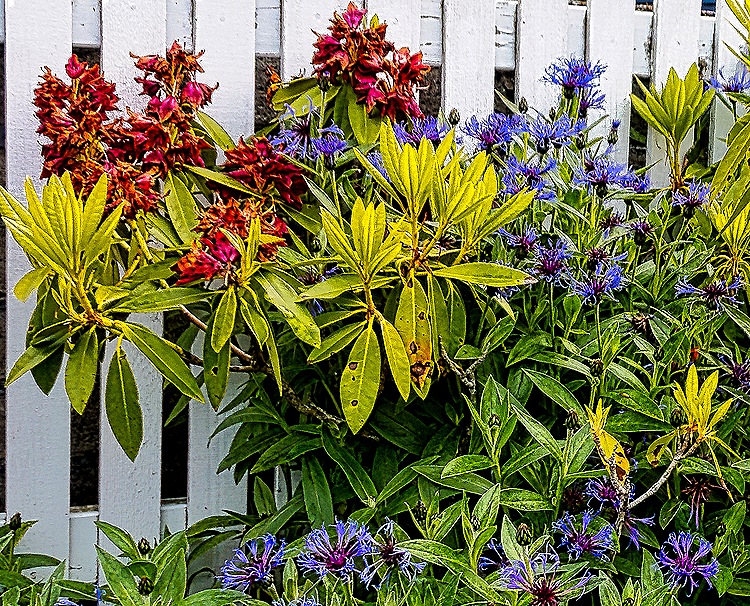
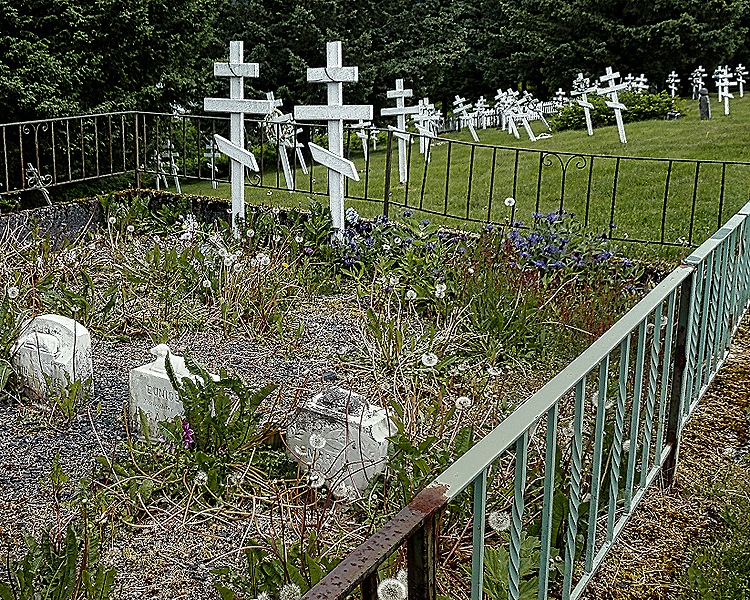
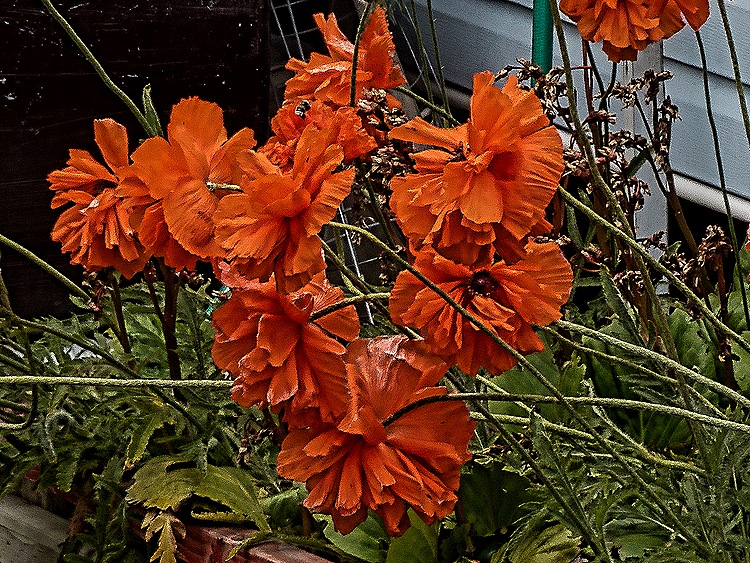
Leaving the church and our walking tour, we headed uphill to find the library. This was an uphill walk through a residential neighborhood that included colorful flowers and, we think, the old Russian cemetery.

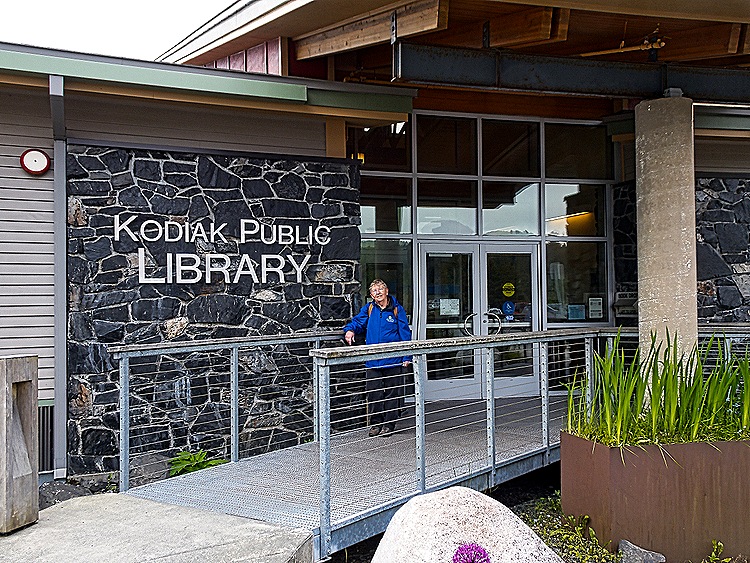
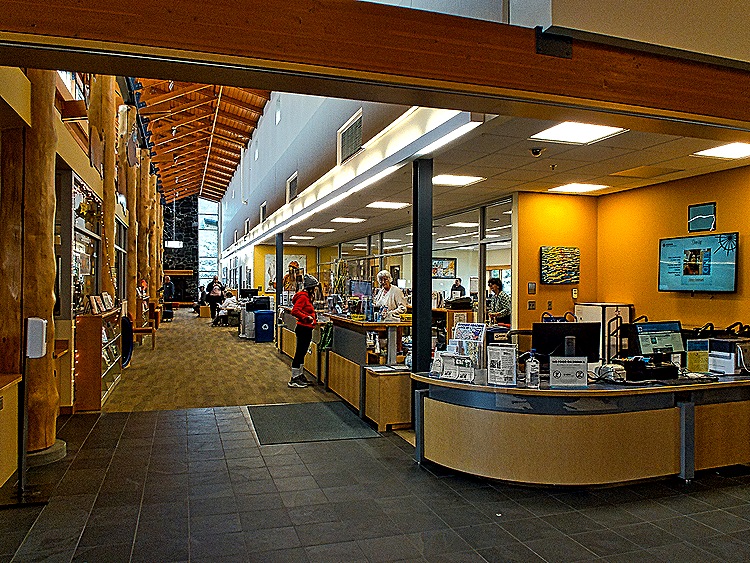
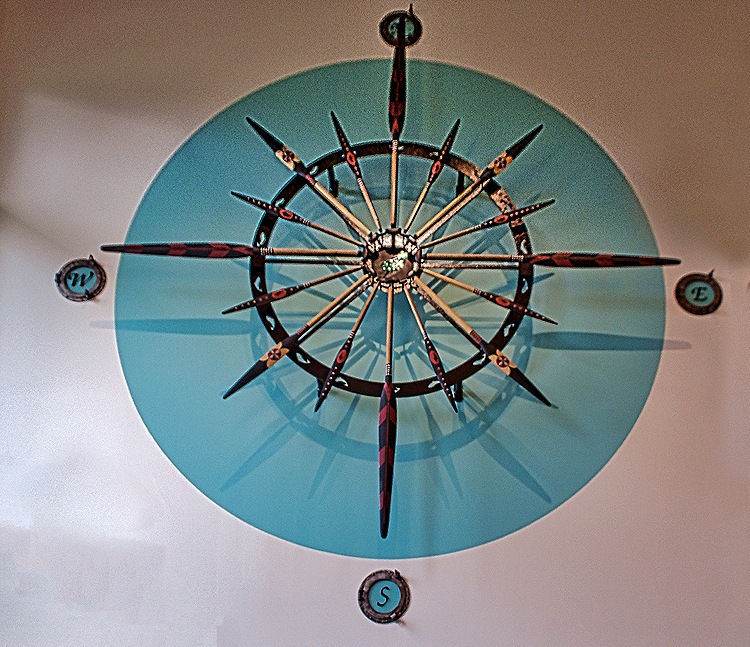
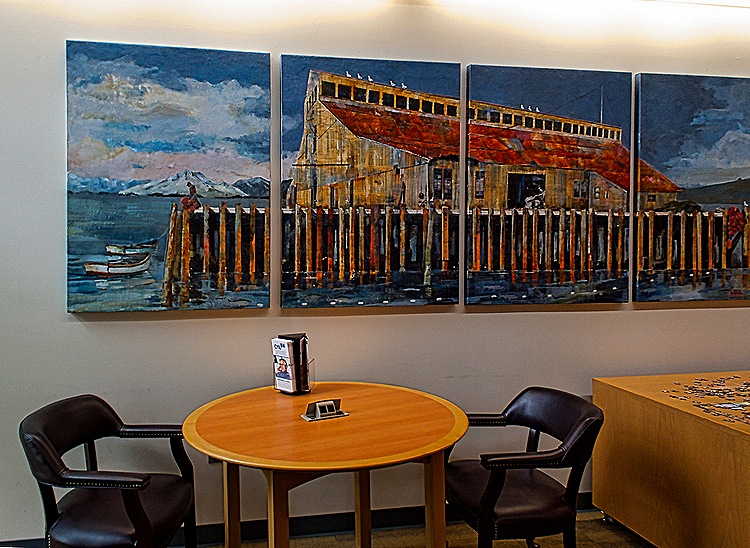
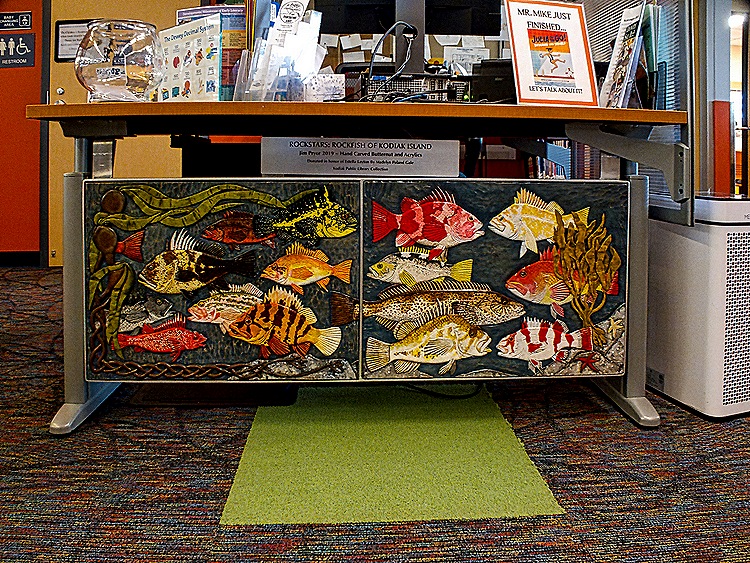
After a lengthy walk we reached the library. It is one story but spread out with an imposingly high vaulted ceiling inside supported by pillars that were once local tree trunks. Interesting decorations hang on the walls and elsewhere and the librarians were very friendly to us outlanders.




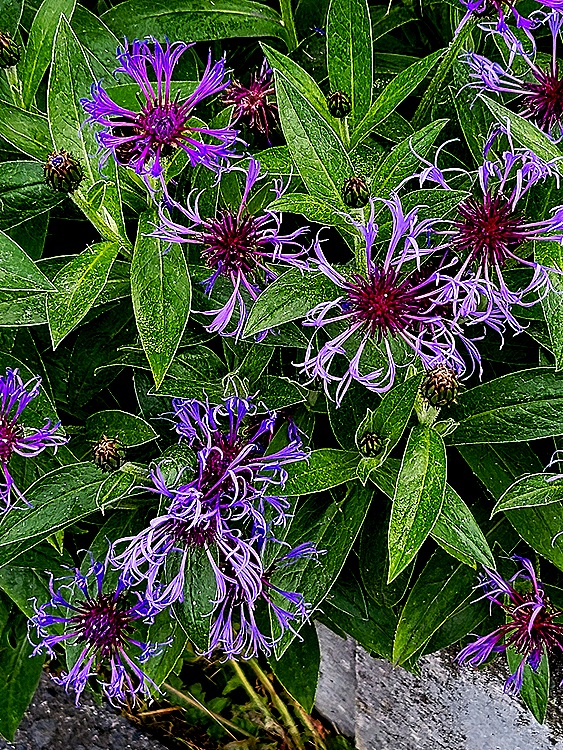
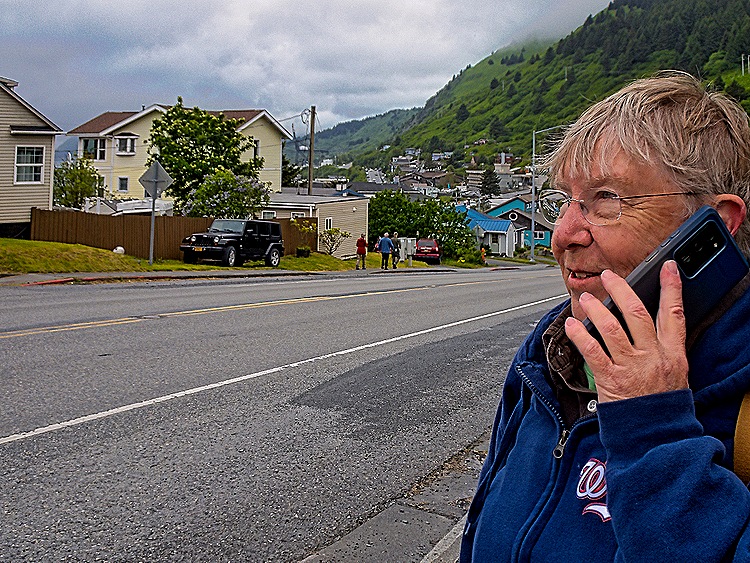
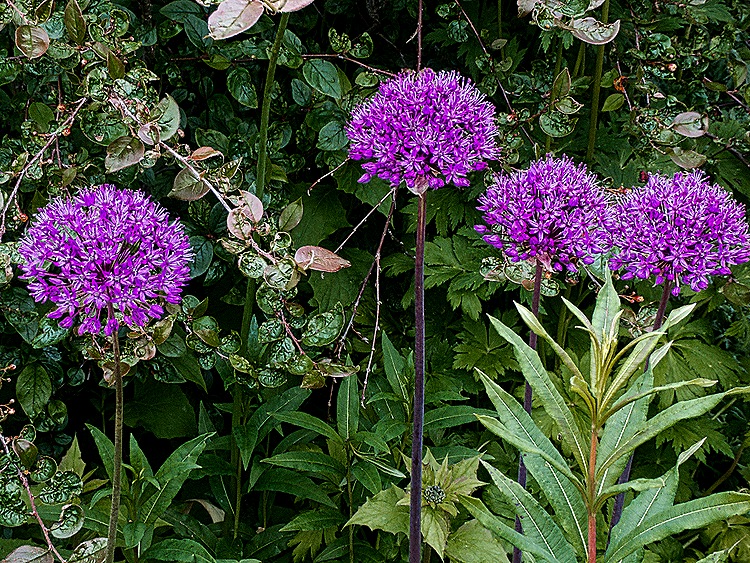
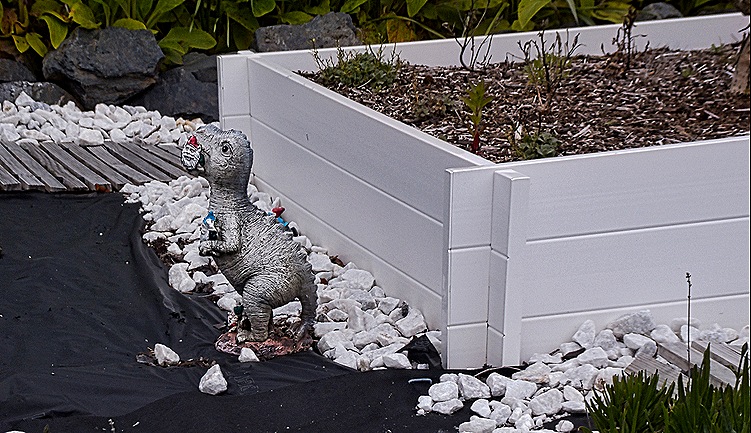
Walking back down the hill gave us a view of the bay and of other lower parts of the town. Again we passed many colorful flowers in front yards in this neighborhood and Mary called our daughter Carrie from pretty high on the slope. One yard had what looked like a tiny Godzilla devouring an even tinier troll on display near its flower box. You just never know what you are going to see when you wander.


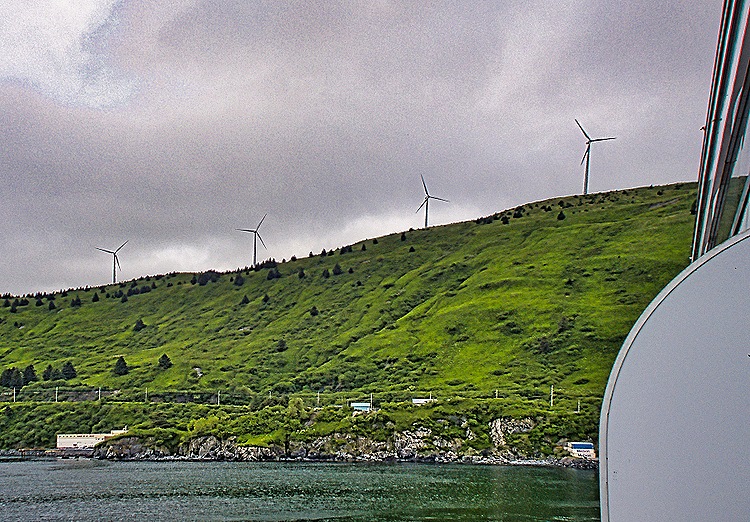
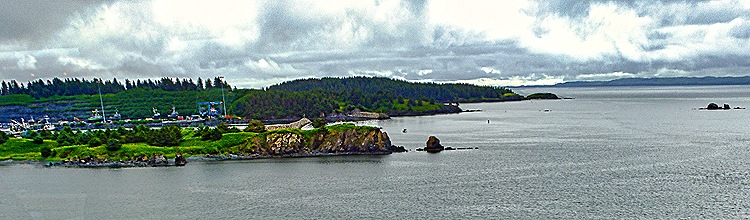
We looked through some of the stores back in the port area then boarded the tender to return to the ship. The clouds had lifted just enough to see a row of electricity windmills on top of the hill near the ship, which had been hidden by the clouds in the morning. We sailed away in late afternoon watching the nice scenery in this area as we headed for our next port tomorrow morning.


 BADER JOURNAL