Anchorage, Alaska (overnight) 2025
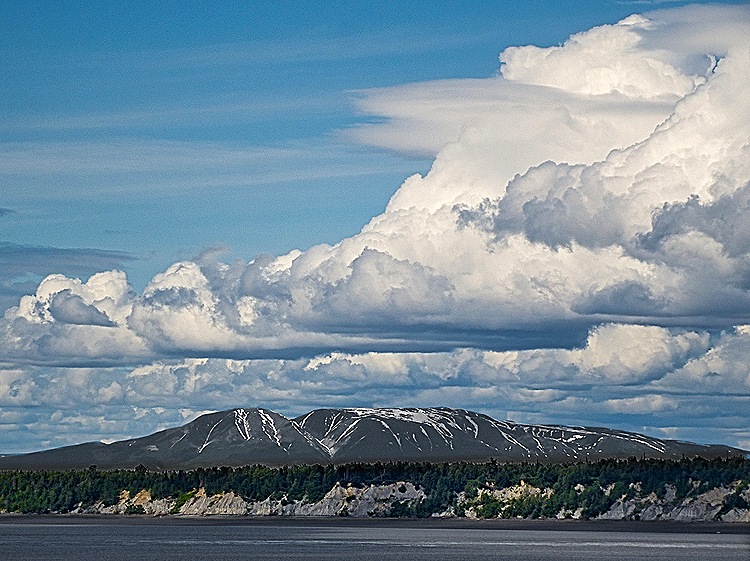
We docked late on the morning of June 25 at Anchorage for a two day stay. The dock was part of a military base called Joint Base Elmendorf-Richardson, which is where the Trump-Putin summit was held less than two months later. Our side of the ship faced the land and in the distance, well beyond the rather uninteresting buildings in the area, was a beautiful mountain range glowing in the sun along with the clouds above it.

Anchorage is by far the largest city in Alaska with a population of close to 300,000. It was named (sort of) by Captain Cook, who visited here in 1778. He called this area Anchor Point because he anchored his ship here; it was later changed to Anchorage because there was already an Anchor Point near Homer, Alaska. Cook Inlet, through which we sailed to get here, was named for Captain Cook. The area has been inhabited by Native people for at least 5,000 years. The city began as a tent city housing American railway workers in 1914 and was incorporated in 1920.
DAY 1
We were not permitted to walk through the military base toward Anchorage for security reasons so we took the shuttle bus that was provided into downtown Anchorage. (We were told that this was one of the most secure bases in the country, but they let us ride through it several times requesting, but not checking, that we not take pictures on the way, so that doesn’t seem especially secure.) We were cautioned that if we were not on time to catch the last shuttle to the ship we would have to find somewhere else to sleep because unauthorized vehicles (like taxi’s) were not permitted to enter the base.
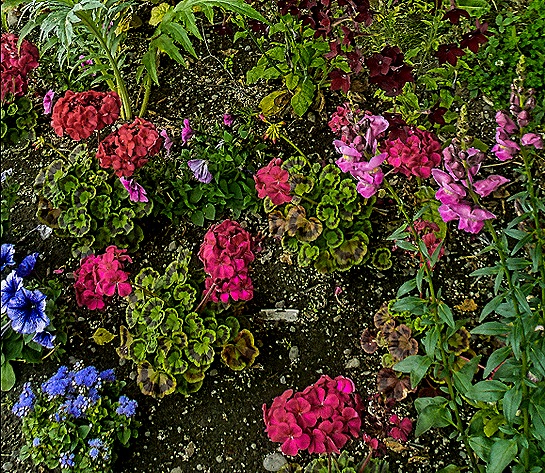
The shuttle bus dropped us off at the Egan Center, a convention center in the middle of town, and we spent the day walking around. Across the street was a park with some very colorful flowers.


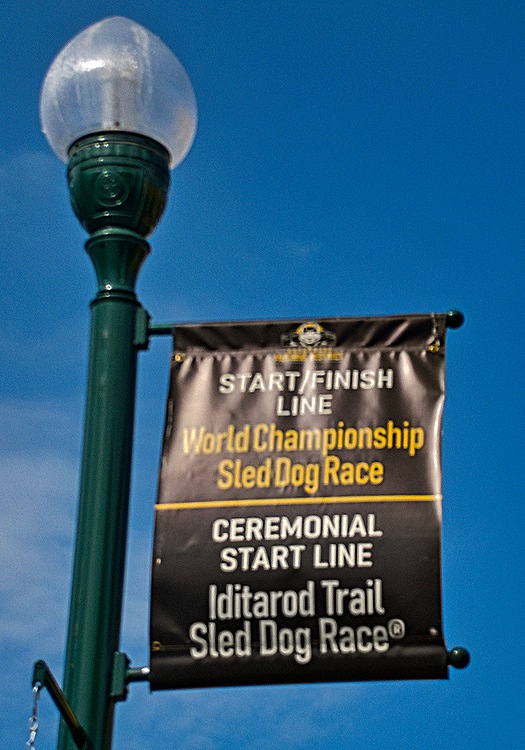
We visited the ceremonial starting line for the annual 1,000 mile Iditerod sled dog race, the finish line for which we had seen in Nome. There was a statue of a sled dog nearby. Interestingly, we read that the mushers put booties on their dogs to help them withstand the wear and tear on their paws, typically using between 1500 and 3000 of them during the race.

We discussed the 1964 Anchorage earthquake in the Valdez episode. This was the largest earthquake ever recorded in North America (9.2 on the Richter scale) and the second largest in the world. Tsunamis reached as far as Antarctica and Anchorage was devastated. We walked past the JC Penney Building, which was constructed after their original 5 story building on that site (which had just opened in 1962) was destroyed by the earthquake. We also walked past the United States Courthouse, which may be famous for other reasons but is notable to us because Rick argued (and won) a case here about 30 years ago.


The Anchorage Museum is a sizeable museum in downtown Anchorage devoted to all aspects of Alaska. Its glass facade faces a lovely green park full of flowers and surrounded by trees. It also has an interesting gift shop.


We spent a good amount of time perusing the exhibit halls in the museum. There were some rooms devoted to sled dogs and an exhibit of striking blue and white paintings of Alaskan landscapes (the photo does not do them justice). The Smithsonian’s Arctic Studies Center has a large gallery here of Alaska native artifacts on long term loan. We found this quite interesting.
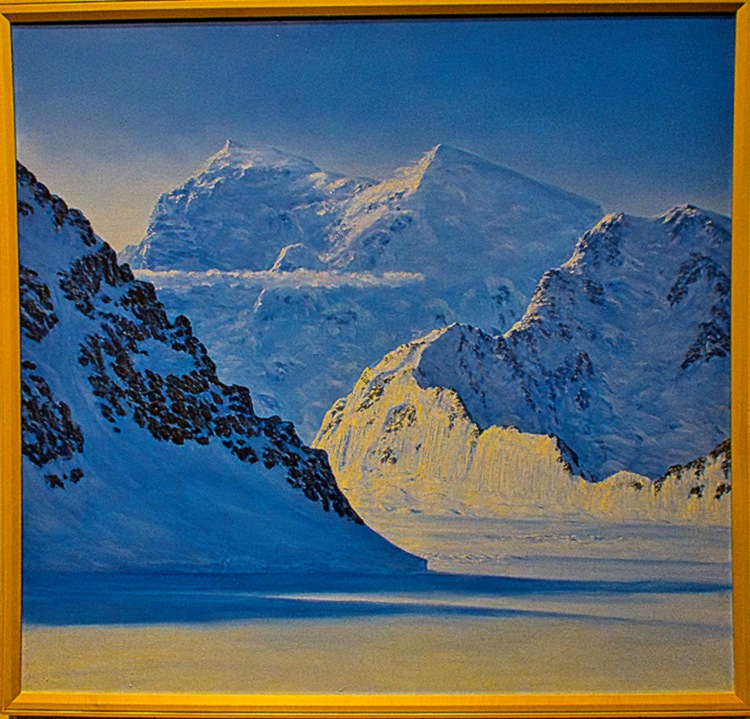


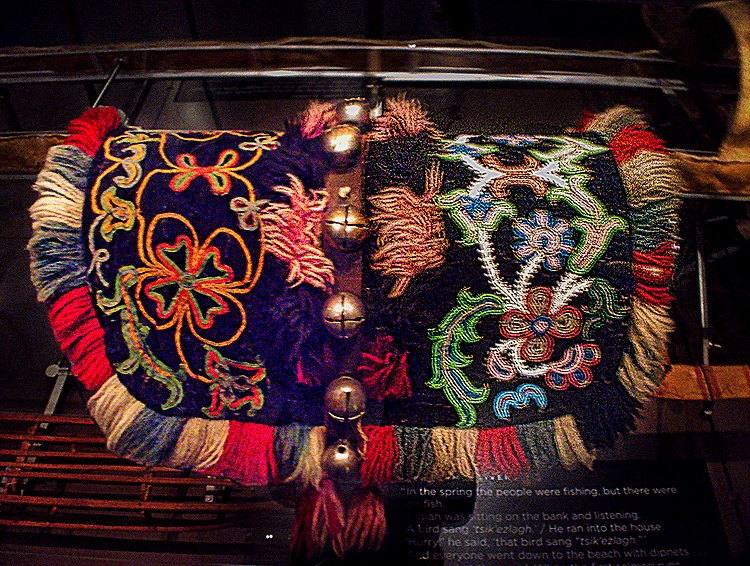
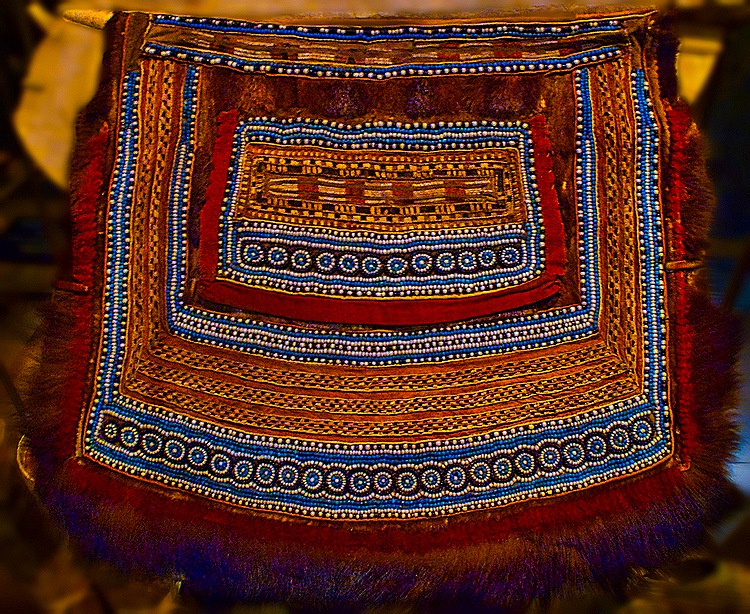


We intended to have a late lunch at a famous pizza restaurant we thought was nearby, but after walking several blocks uphill we found that it was still pretty far away. So we found another restaurant downtown called Tent City (the original name for Anchorage when folks were still living in tents). It turned out to be quite interesting with very good food (and beer). We sat at a long dining bar in the front window and across the street was a colorful mountainous wall mural. Rick had halibut fish & chips & Mary had a hamburger with the restaurant’s name and logo burned into the bun. There were some interesting old photos of Anchorage inside from when it actually was a tent city.


After lunch we walked back to the Egan Center and waited in a long line to board a shuttle back to the ship. Still another day to go in Anchorage.
DAY 2
We had booked an excursion offered by our travel agents for this day that would take us out of town, but it started out pretty badly. There were supposed to be two vans that would be about half full but at the last minute one of the drivers called in sick. Instead of finding another driver the local tour company just sent us one van and it was too small to hold the full complement of excursioners. So Keith and Susie, our travel agent’s hosts on this voyage who were supposed to lead this excursion, had to stay at the ship and miss the tour. While our driver/guide did a fine job we hope our travel agents find a different company next time.
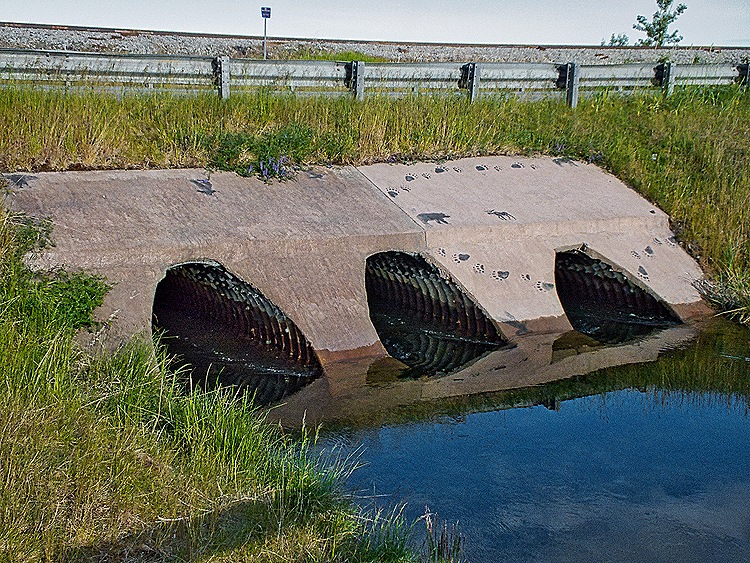
We visited two locations on this tour. First was Potter Marsh, at the southern end of the Anchorage Coastal Wildlife Refuge that borders the Turnagain Arm of the Cook Inlet. The area was originally quite turbulent from the tides of Turnagain Arm but in 1917 railroad construction cut it off from the tides and created the calm water lands we visited today. The marsh sits between the Seward Highway running along the seashore and the Chugach Mountains, quite visible beyond the marsh. We walked along a 1500 foot long raised boardwalk through the marshland. Among other things, there was a culvert built under the highway to enable salmon to enter the marsh and Rabbit Creek to spawn. Unfortunately no salmon were there when we visited.

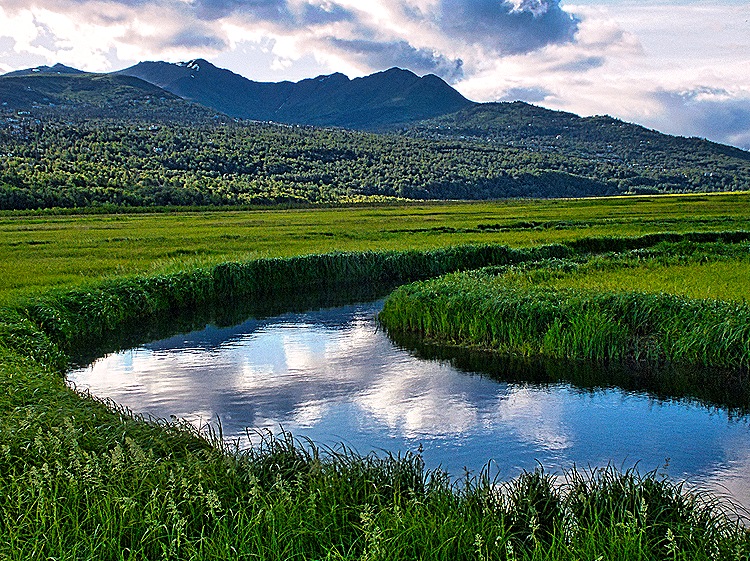

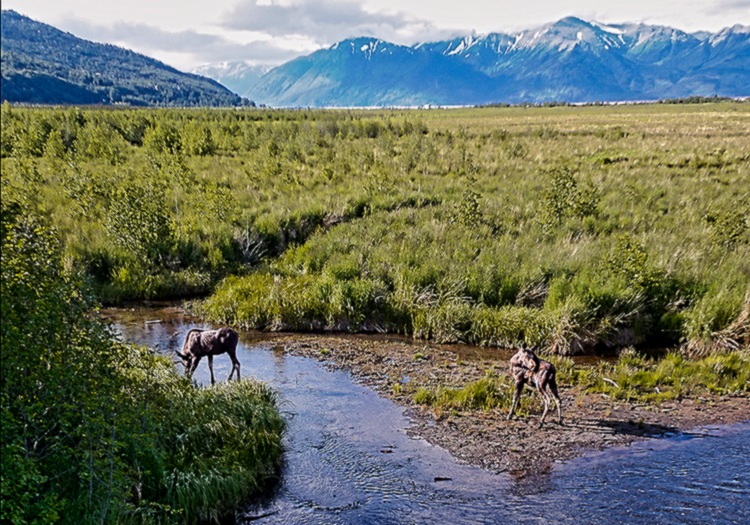
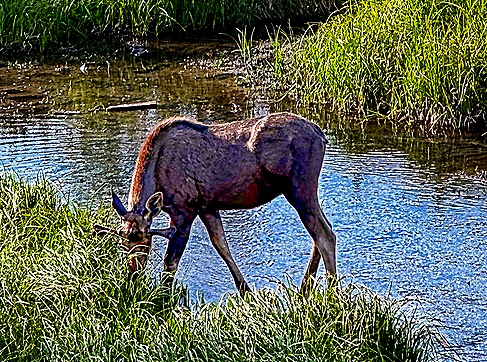
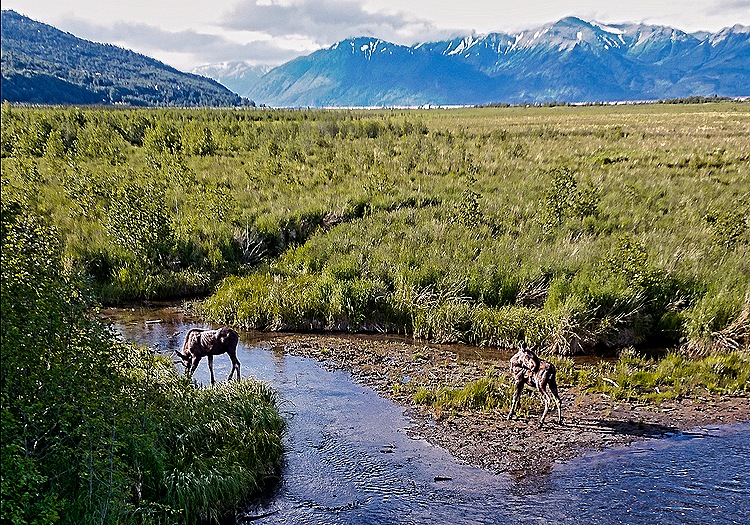
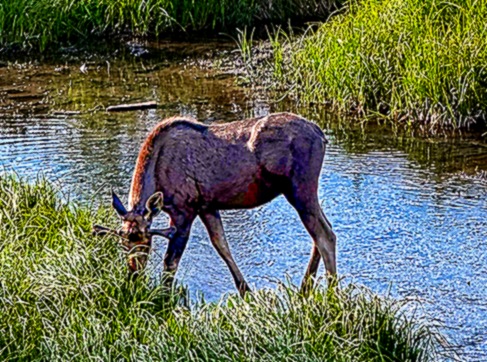
We saw very little wildlife this morning, at least not sitting still where they could be seen and photographed. The big exception was moose. We saw a moose couple grazing and drinking in a creek. It was early enough in the year that the male’s horns were just beginning, extending maybe 6 inches from his head under his ears (hard to see because his face was obscured by the grass he was eating).

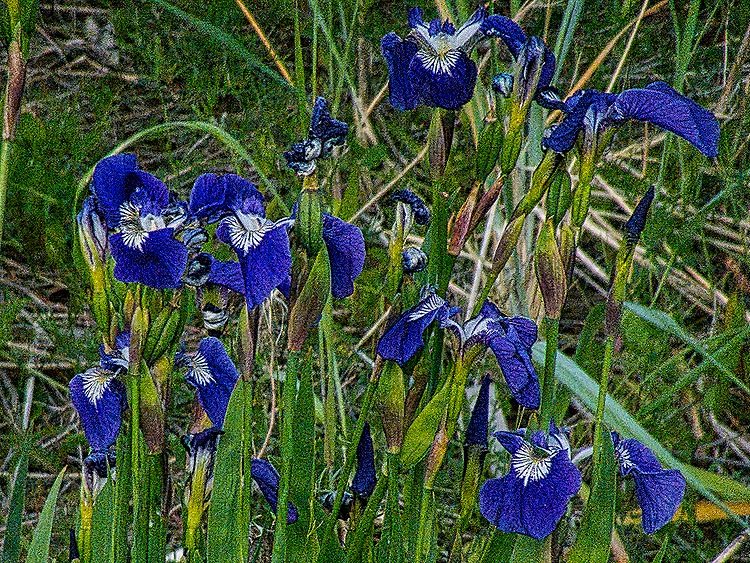
Among the flowers near this place was a bed of Cow Parsnips, large white flowers we saw in many places while in Alaska. Nice to look at, but don’t touch! Touching them makes your skin hypersensitive to light, causing painful sunburn, and its effect can last for months. Ani, our guide in Kodiak, told us she once picked one because she was wearing gloves, but when she later lightly pushed her hair back from her forehead the damage was done. Driving back along the Seward Highway there was spectacular scenery yet again.


The Alaska Native Heritage Center, which opened in 1999, sits in 26 acres of lush green surroundings near the edge of Lake Tiulana about 10 miles south of central Anchorage.

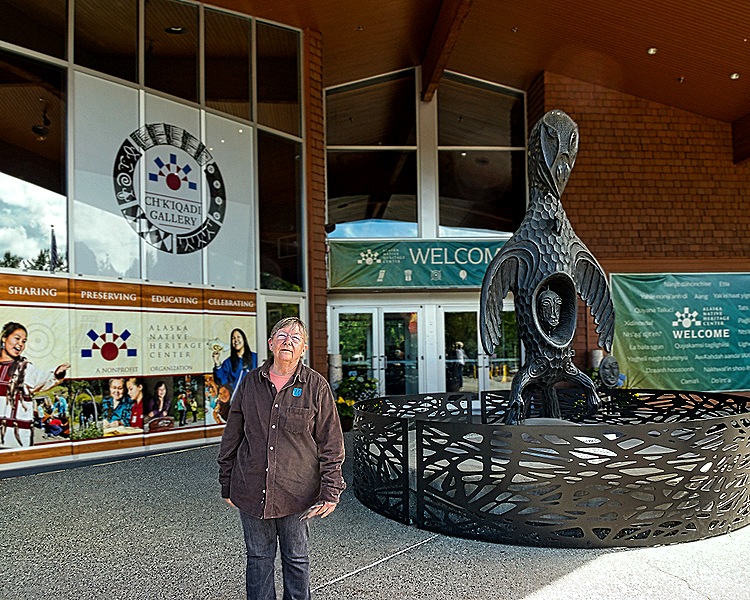
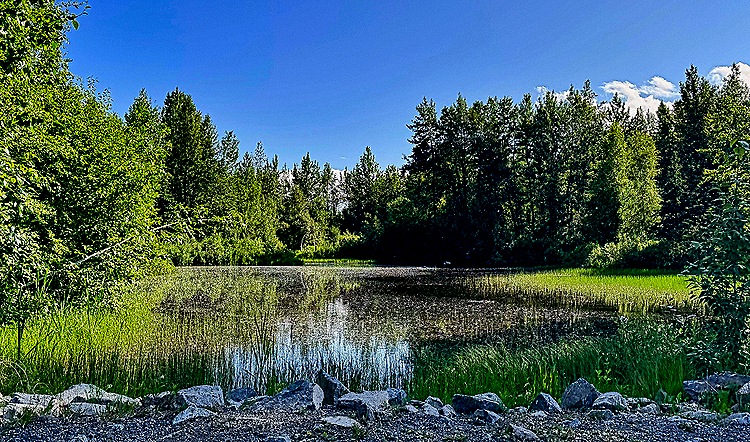
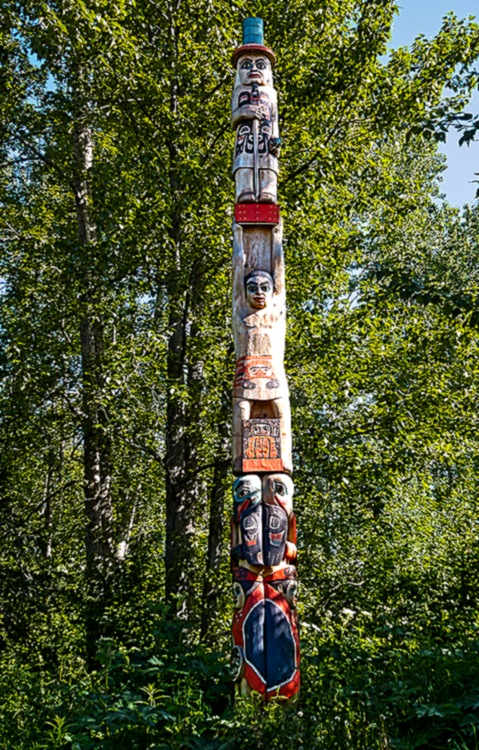
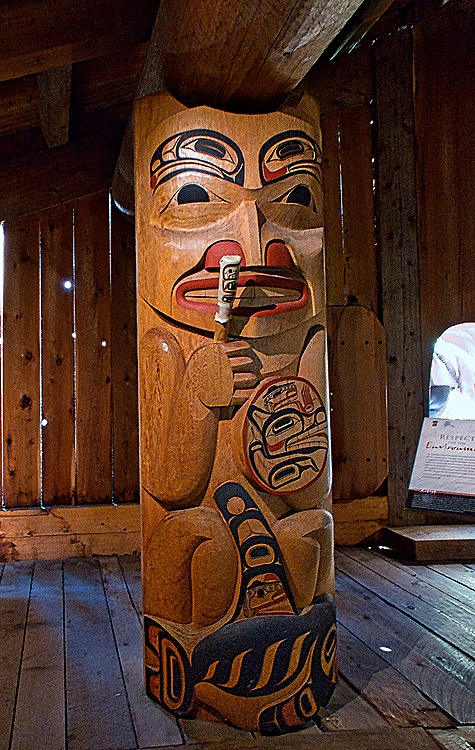
The Center’s main building contains exhibition space and a large performance venue, as well as an interesting gift shop and space for individual vendors. Around the lake are six areas displaying traditional dwellings of six native cultures, along with some totem poles and young people explaining each site. We visited several of these interesting dwellings, which included some beautiful artwork inside in addition to the totem poles outside.
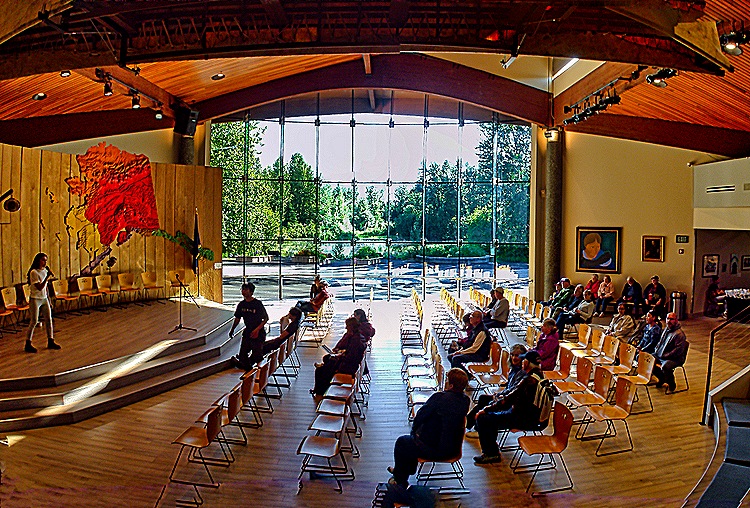





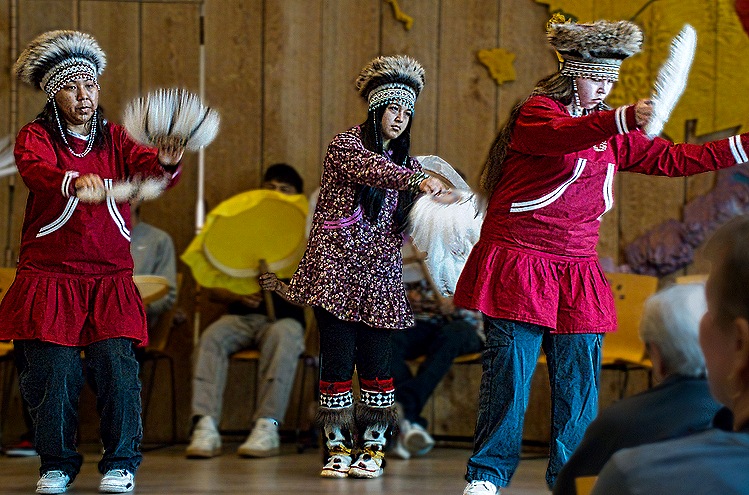
We saw two performances on the stage in the performance hall, both by groups that looked to be high school and/or college age. First was a group of several fellows demonstrating competitions conducted by the indigenous people. One of them was a high kick, in which he tried to kick a ball suspended well above his head. The second group consisted of female dancers in native attire and some males playing drums made of cloth or skin stretched on a wood hoop. These performances were interesting and fun.


We returned to the ship, passing more vivid scenery across Cook Inlet, and after lunch spent the rest of the day relaxing. We watched several groups of military jets passing over our balcony.
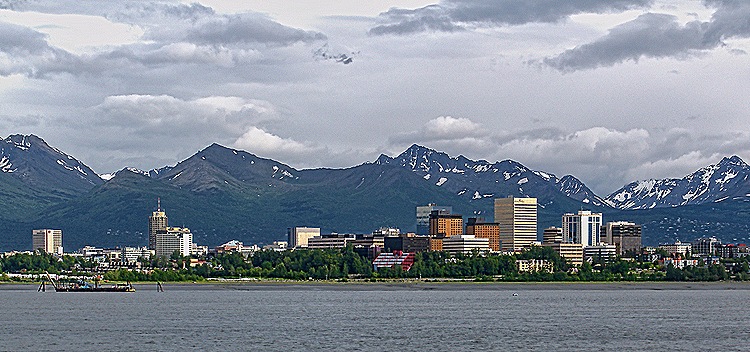
We departed Anchorage shortly before dinner and watched the city skyline grow smaller as we sailed away. The yellow building in this picture is the ConocoPhillips Building, the tallest in Alaska.

 BADER JOURNAL