Prince Rupert, British Columbia, Canada 2025
We spent July 4, the holiday celebrating US independence, in our only non-USA port on this trip, Prince Rupert, British Columbia. Probably a good idea since the Jones Act required the ship to visit at least one foreign port and last year’s scheduled July 4 stop in Wrangel had to be cancelled because of local festivities.

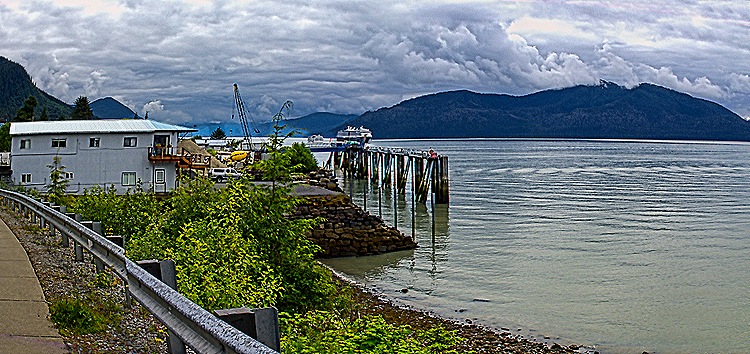
A city of a little more than 12,000 people located on Kaien Island, Prince Rupert has the third deepest ice free harbor in the world. The Tsimshian people have lived in this area for thousands of years. It was incorporated as a city in 1910 after its growth was fed by its designation as the western terminus of the Grand Trunk Pacific Railway, a transcontinental railroad. The city was named after Prince Rupert of the Rhine, a nephew of King Charles I of England; Rupert was a leading (and brutal) Cavalier general during the English civil war and the first governor of the Hudson’s Bay Company. Fishing is a major industry here, and for most of the 20th century Prince Rupert was considered the halibut capital of the world. As the wettest city in Canada Prince Rupert is nicknamed “City of Rainbows.” Westerdam was docked at the city’s waterfront in what is known as Cow Bay. It seems that in 1908 a dairy farmer brought a herd of cows here on a barge. The dock wasn’t prepared to receive cows at that time so he herded them into the water to swim ashore. Ever since this has been Cow Bay.
We had scheduled an excursion with our travel agency, Cruise Specialists, that would take us around town on the Olde Time Trolley Company. They just started business in 2023 and took us on an engagingly narrated tour that included a great luncheon. Their trolleys are really red buses and we boarded one after walking ashore from the ship.


Our first stop was at the Kwinitsa Station Railway Museum. Built in 1911, this was one of many identical stations built along the Grand Trunk Pacific Railway (which was taken over by the government in 1919). This is one of only four still in existence and it now houses a railway museum (we saw it only from the bus window). It was moved about 40 miles from Kwinitsa to Prince Rupert in the 1980’s on a barge. Nearby is an interesting sculpture of a whale with a calf.


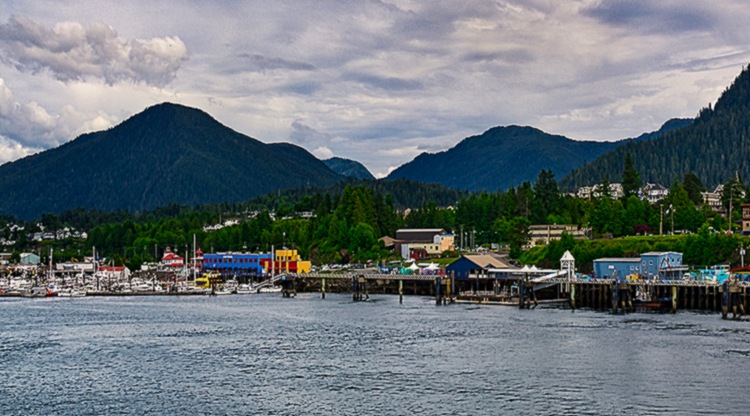
You can see in the first picture at the top that the city rises fairly steeply from the waterfront onto a hill. We drove up there and through Roosevelt Park, an area named for President Franklin Roosevelt because of all the aid the Americans provided here during World War II, when Prince Rupert was an important transportation hub for the defense of Alaska. The park was on the edge of a hill overlooking Prince Rupert. Its centerpiece was a totem pole that we understand is a replica of one that came from an old Haida village called Yan on Queen Charlotte Islands. It is called the Grizzly Bear Pole. It is quite tall . . . we were not as tall at the bottom figure’s eyes. A large sculpture in this park was called “The Survival of the Fittest.”
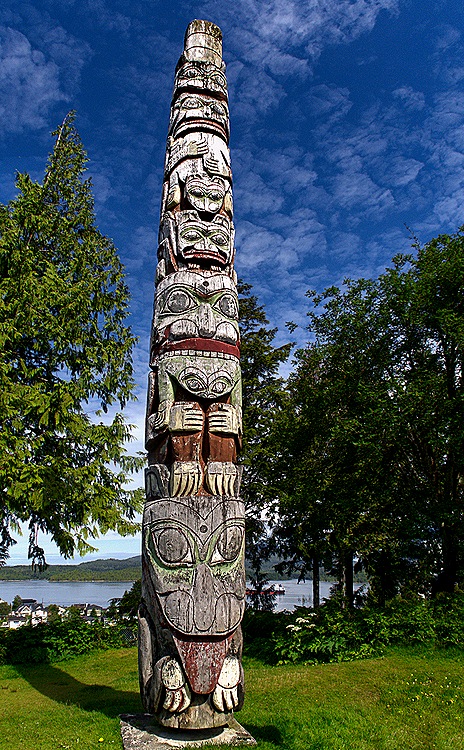
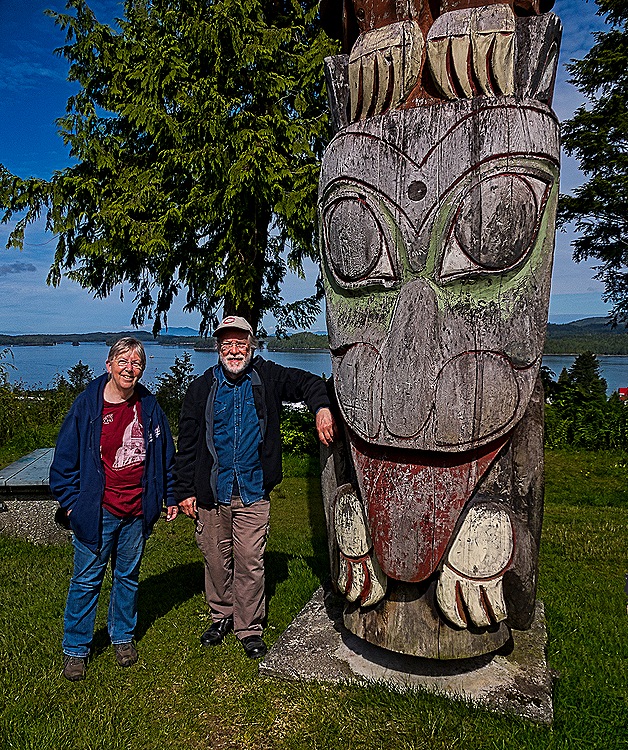
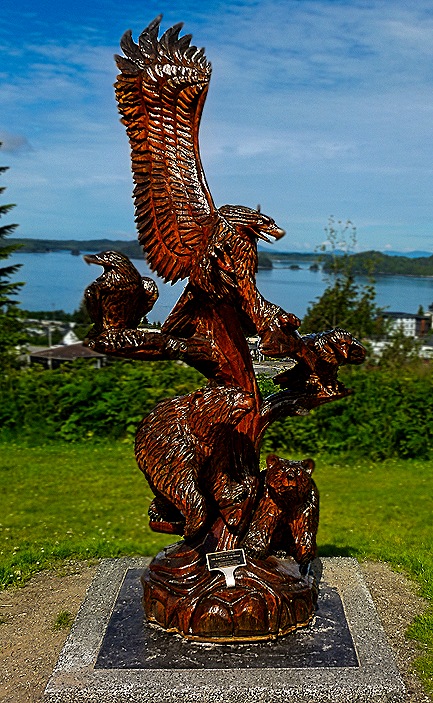

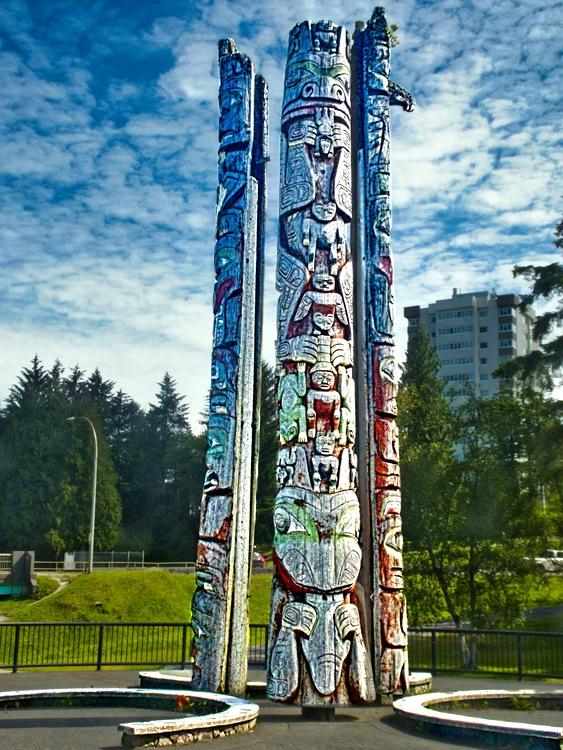
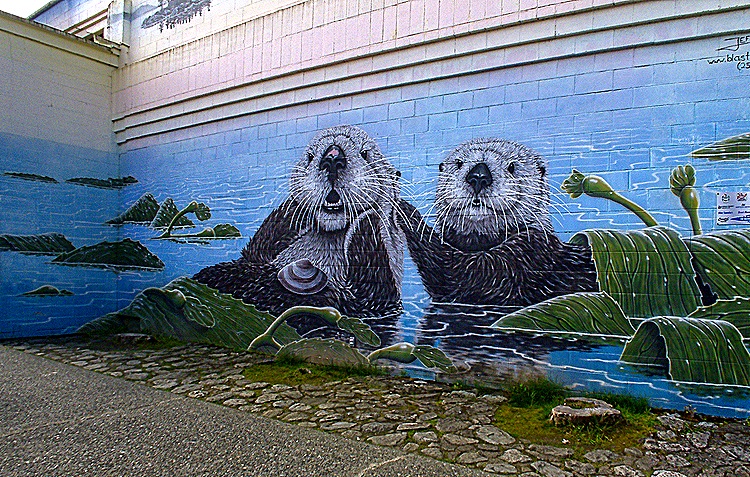
We descended the hill and drove to the Jim Ciccone Civic Centre, a sports and recreation center that opened in 1971. Its outside walls are decorated with murals, including a couple showing very large (and cuddly, of course) sea otters, which were painted around 2014. In front of the building was a group of three Haida style totem poles placed back to back to back (actually copies of older poles). Apparently there is resentment about Haida totem poles being displayed in what is traditional Tsimshian territory, and a couple of months after our visit an agreement was reached to replace these totem poles with a single Tsimshian pole. On our way to the civic center we drove by the all white art deco City Hall, built in 1938. A park next to the city hall contained two totem poles and a statue of Charles Melville Hays, a railroad magnate who was a founder of the city and died in 1912 aboard the Titanic.


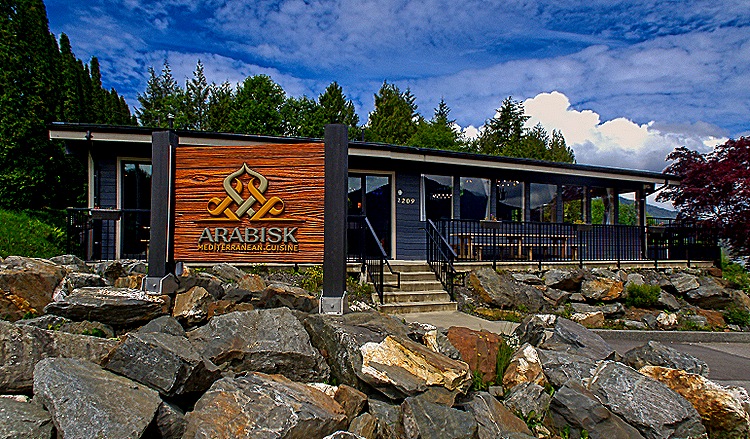
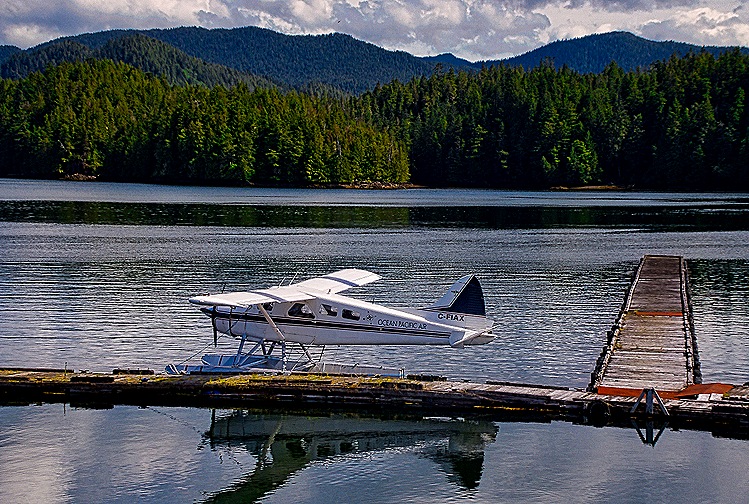
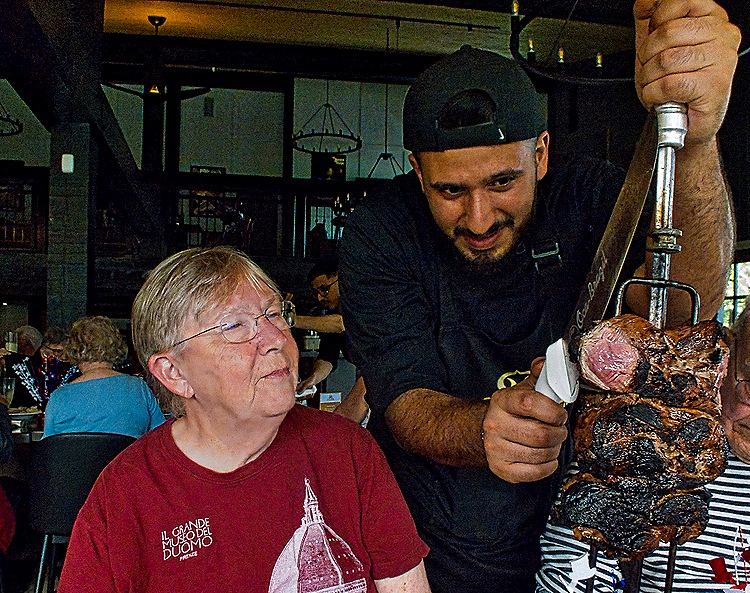
We visited Seal Cove, a smaller harbor around the corner of the island from where our ship was docked. There is a sea aerodrome located there and a seaplane was parked by its dock. We walked to the Arabisk Mediterranean Restaurant, where we had lunch. It was quite a restaurant, owned and operated by a family of Lebanese origin. If you have been to a Brazilian steakhouse you know how this works. There was a long table with salads and mezze, then after you sat down the waiters came around with a variety of meats (beef, lamb, pork, chicken) skewered on swords, from which they would slice some for you. And they keep coming back until you say “No more!” One of the best meals we have had on a cruise ship excursion.


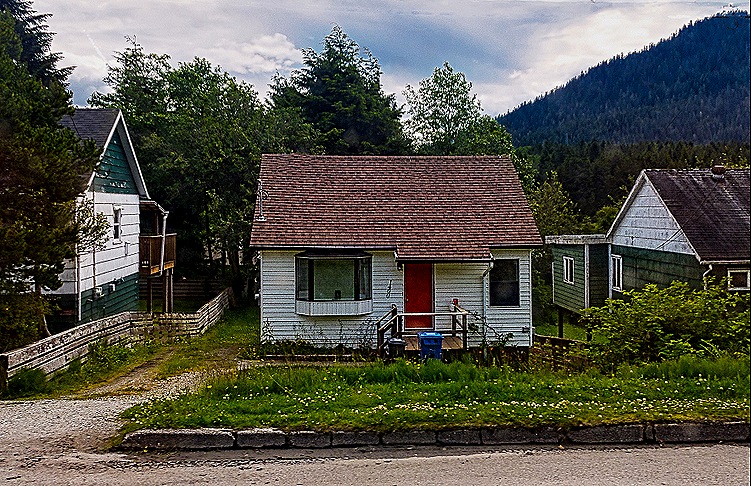
After lunch we drove through a neighborhood of tiny houses built during World War II for the influx of soldiers and war workers. Some 73,000 US soldiers were stationed here during the war years. We doubt they expected at that time that this emergency housing would still be in use more than 80 years later.

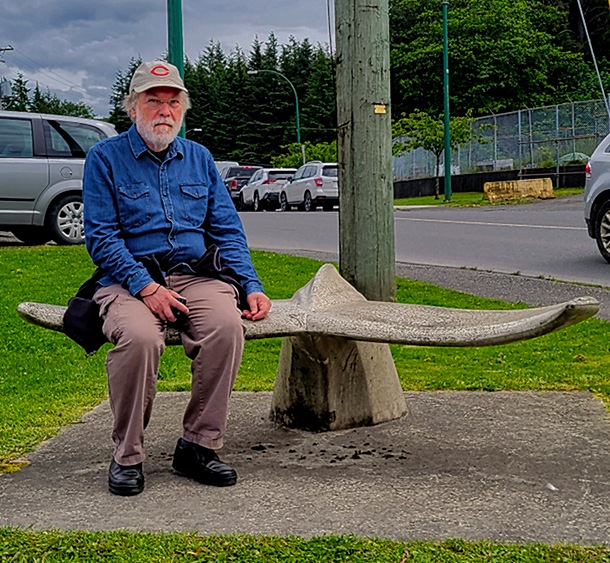
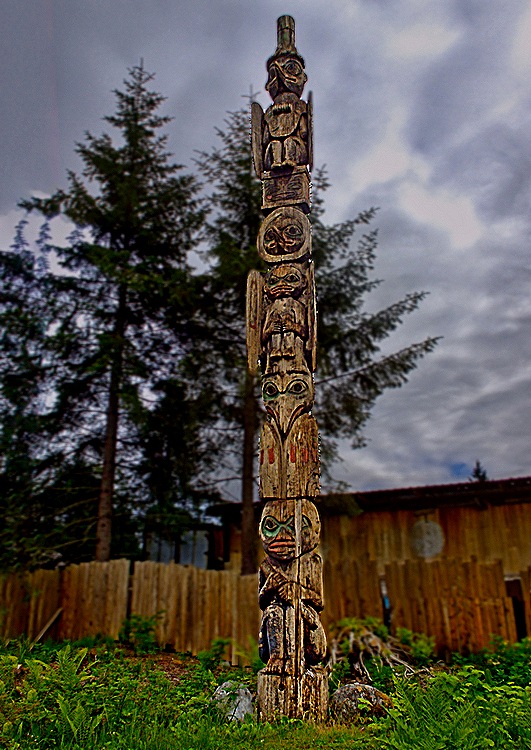
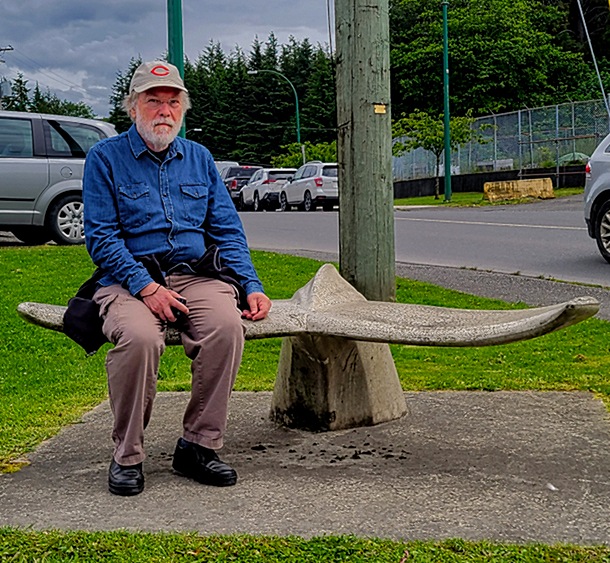
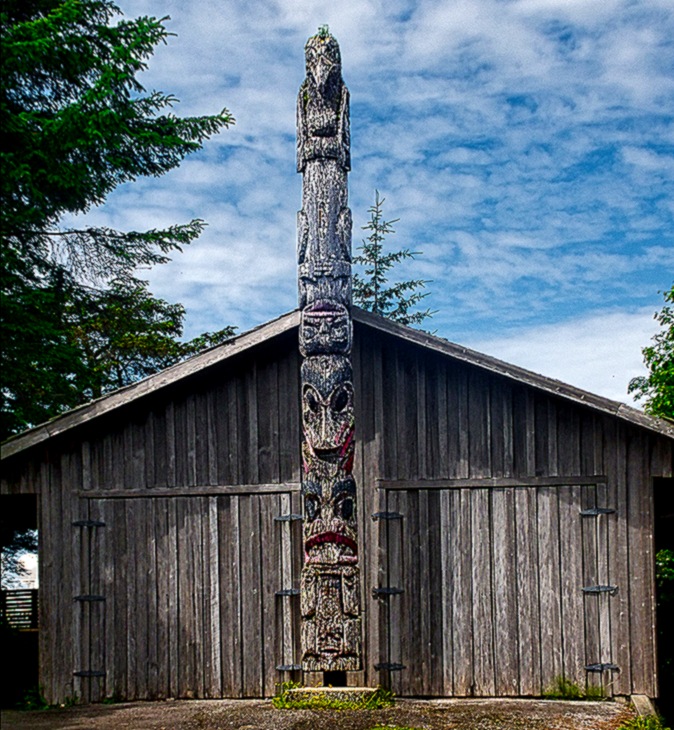
The excursion ended back at the dock but it was early yet so we decided to continue on foot. It turned out that most of the walking was uphill and there was quite a bit of construction to circumvent. Combined with our unusually large lunch, this made the going a bit challenging. But we persevered. Walking up the hill we visited the Icehouse Cooperative Gallery selling local arts and crafts. In a small park next to it was a concrete bench sculpted in the shape of a whale’s tail, one of several such benches in the waterfront area. We also walked past what looked like a weather beaten wood garage with an apparently old totem pole in front.
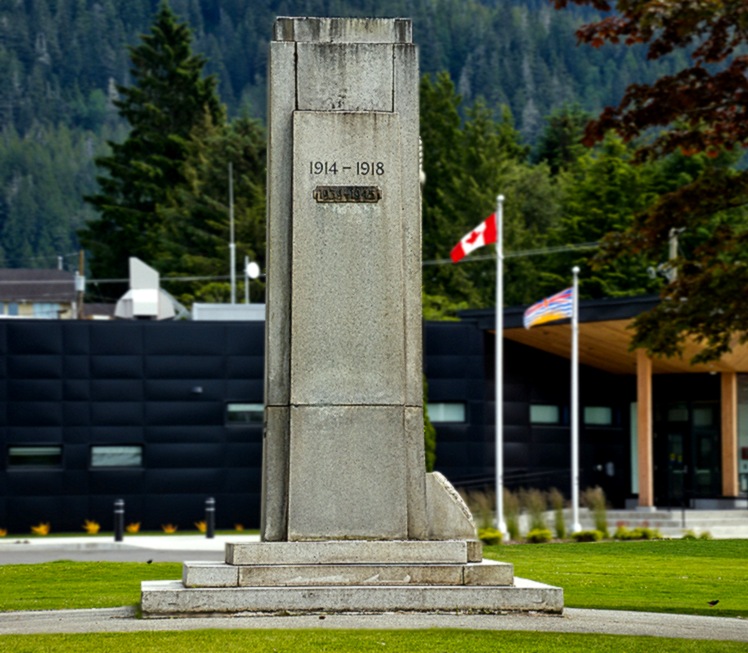
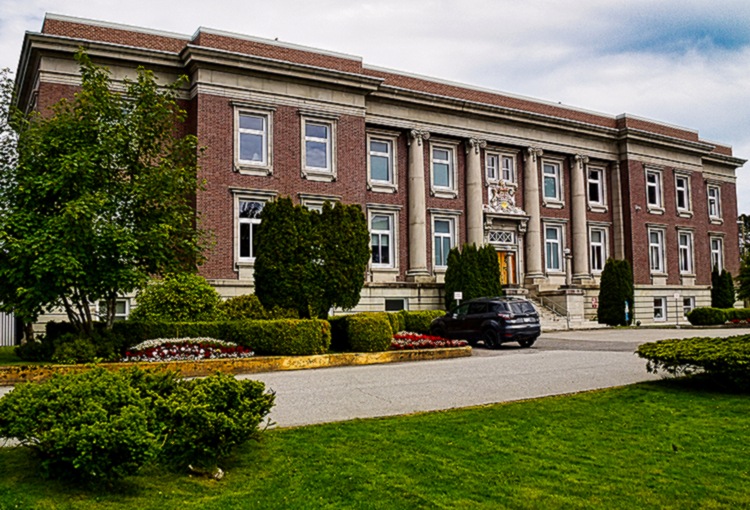
The Prince Rupert courthouse, built in 1922, is a red brick neo-classical building with four tall decorative pillars in front. Not too far away is the Cenotaph, a war memorial. It was put up in 1929 to memorialize those who died in World War I and after World War II a dark plaque was added with the dates of that war. This picture is of the back, as seen from the courthouse, but on the front is a relief of a sword and a wreath. We have seen similar cenotaphs in other countries in the British Commonwealth, such as Australia and New Zealand.

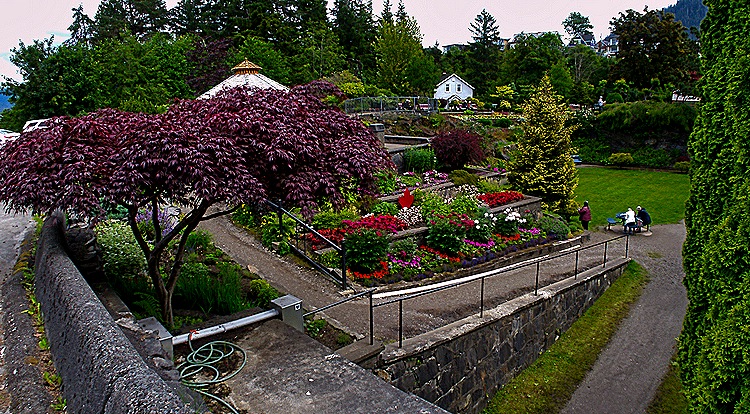
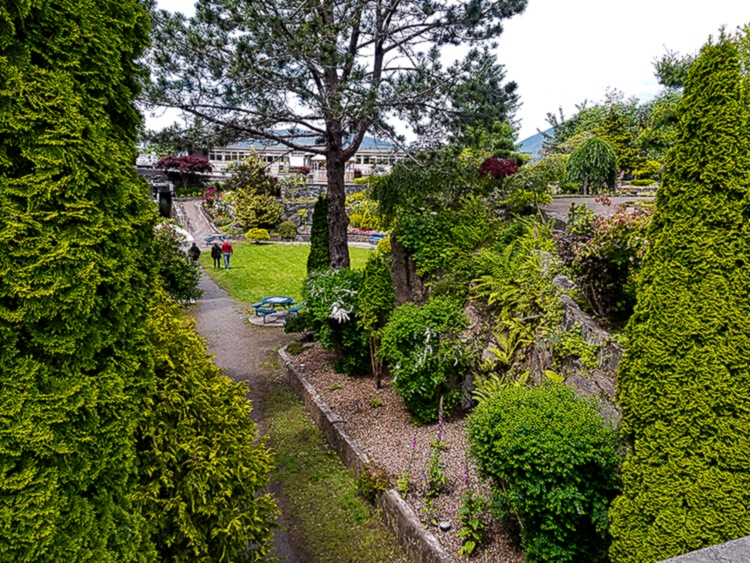
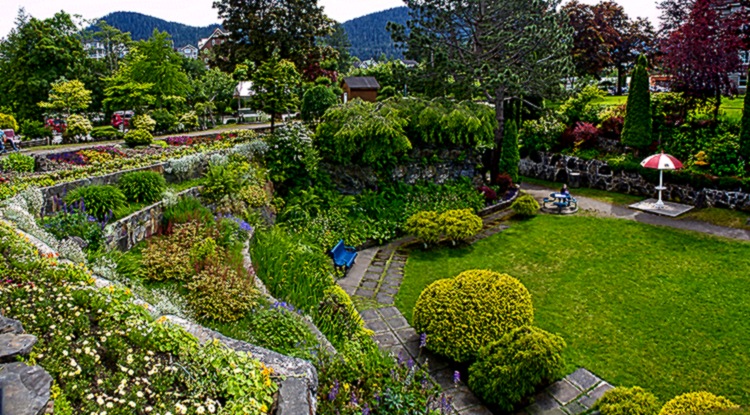
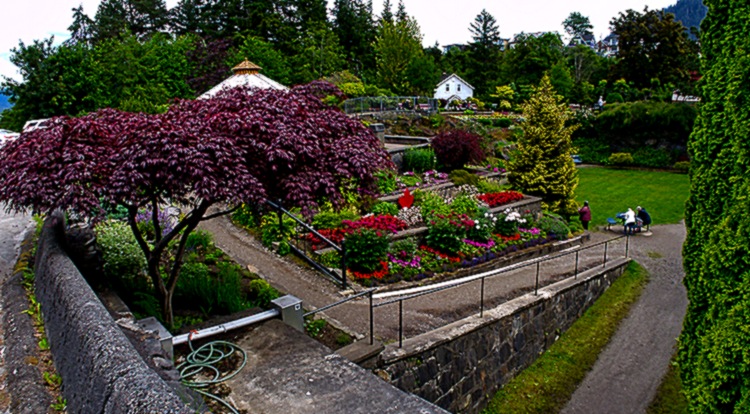
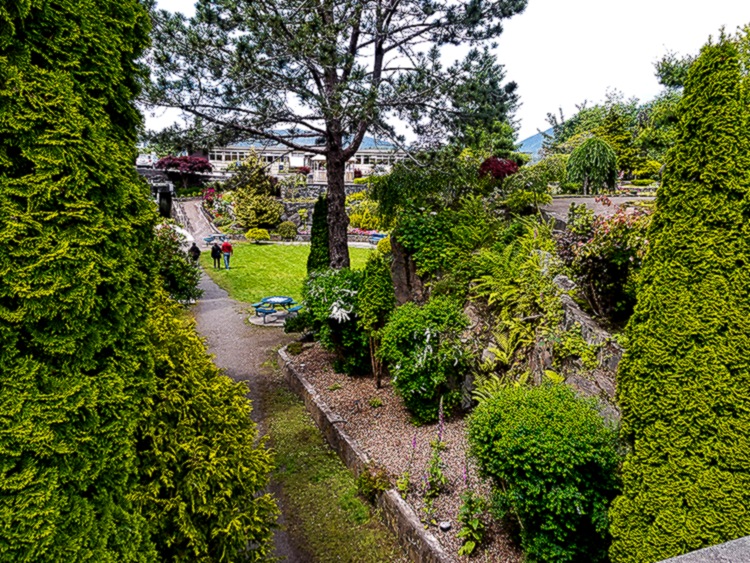
Near the courthouse is the Prince Rupert Sunken Gardens, built down the sides of a large gully-like space. This space originated in the 1920’s as the intended location of the courthouse, which was ultimately built nearby, and during World War II it was used as an ammunition bunker. For at least the last 20 years the gardens have been maintained by community volunteers who plant new flowers every spring. The bottom layer includes benches, chess tables and electrical outlets to help people enjoy this bright and attractive area.



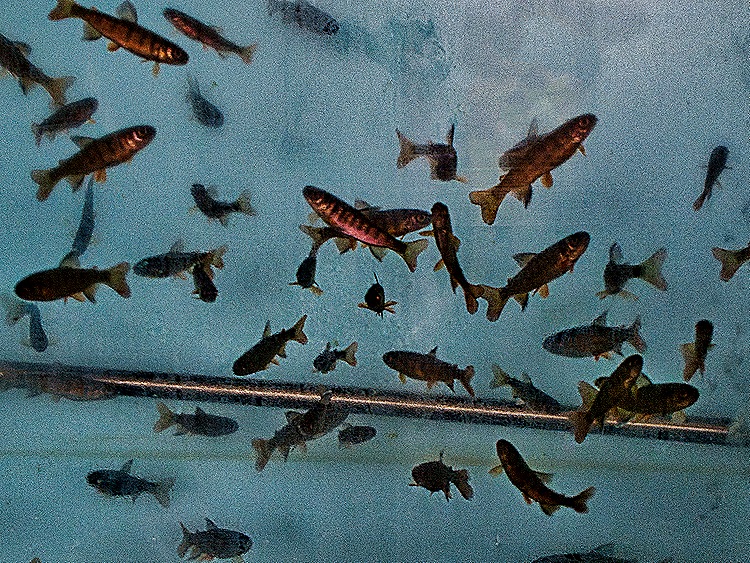
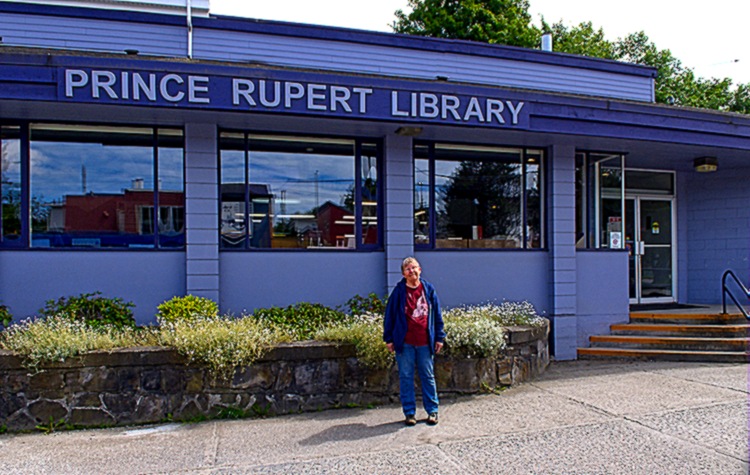
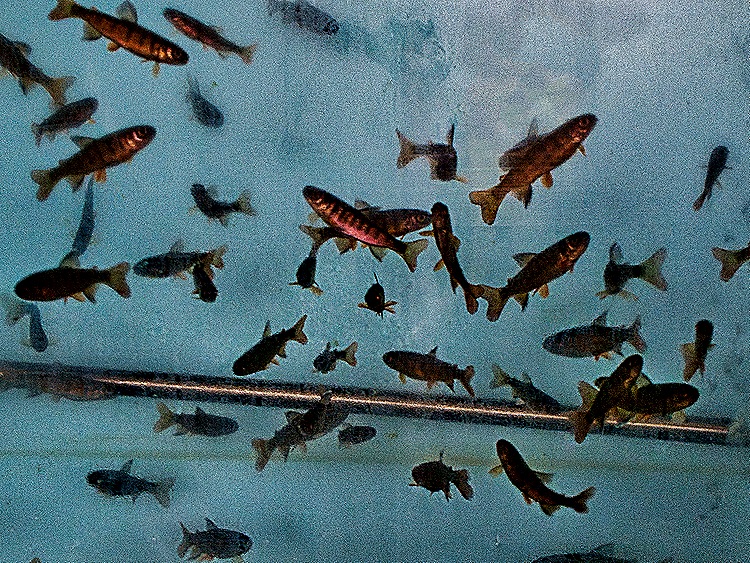
It was several blocks from here to the library. The Prince Rupert Library was founded in 1913 in a small wooden building heated by a wood stove. It moved several times but was destroyed by fire in 1968. The present library building opened in 1971. It is a nice roomy library with many displays including quilts showing local scenes and the skull of an orca calf that died near here in 2018. There was also a salmon nursery (an aquarium with many baby salmons) that was a school project and a Pride Month display (quite appropriate for the “City of Rainbows”).




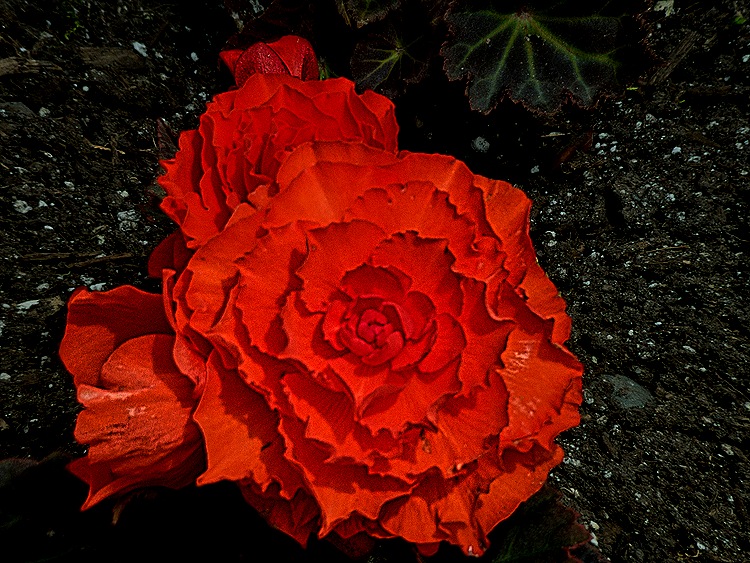
Walking back toward the port we passed the Mountie headquarters. Then we visited Pacific Mariners Memorial Park, located just uphill and across the street from the port. Among other things we saw a statue honoring Prince Rupert fishermen and nice flower gardens.
Perhaps most interesting here was the Kazu Maru Memorial, consisting of a green and white boat inside a Japanese style housing. The story is that in 1985 a Japanese fisherman left for a day of fishing on the Kazu Maru and never returned, but a year and a half later the boat was found adrift near Prince Rupert. It turned out to be from Prince Rupert’s sister city Owase, Japan. Local people restored the boat and placed it in its current home; the Japanese fisherman’s family attended the opening and dedicated the memorial to all those who have lost their lives in the Pacific Ocean.



So that was it for this last port of call on our Alaska voyage. We had seen quite a lot and visited many far flung places in just under a month as we left Prince Rupert and headed back to Seattle. We visited with family in Seattle, spent a few more days with Barb & Brian in Portland, spent a couple of nights with our friend Peggy in eastern Washington State, then drove back across the continent, stopping for barbecue in Kansas City and visiting Rick’s oldest friend Jim & his wife Kathy in Dayton, Ohio. Somehow the driving trip home seemed longer than the trip west at the beginning of this adventure, perhaps because of the sense of anticipation at the beginning and the weariness at the end. Well worth the effort for all we saw and did on this voyage though.
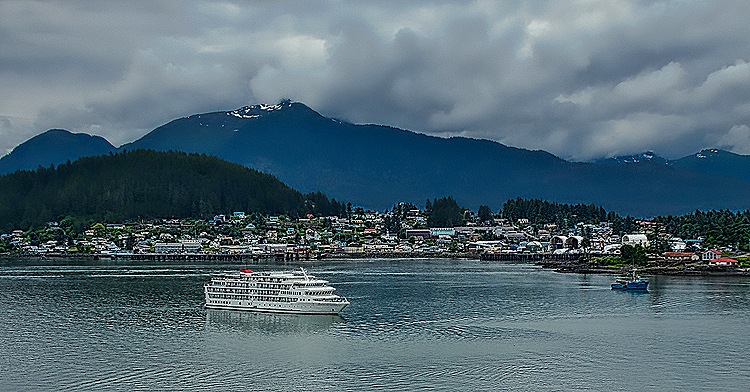
As we sail away from port for the last time we will leave you with a final view of Prince Rupert from the water, nestled among the mountains.

Endicott Arm & Wrangell, Alaska 2025
Endicott Arm & Dawes Glacier
Our itinerary said that we would spend the morning of July 2 viewing the Sawyer glaciers in Tracy Arm. But there was too much ice to sail into Tracy Arm so the Captain took us instead to neighboring Endicott Arm, home of Dawes Glacier. It was a smart move because these two spots are not very different and Endicott Arm is much less visited, we understand.
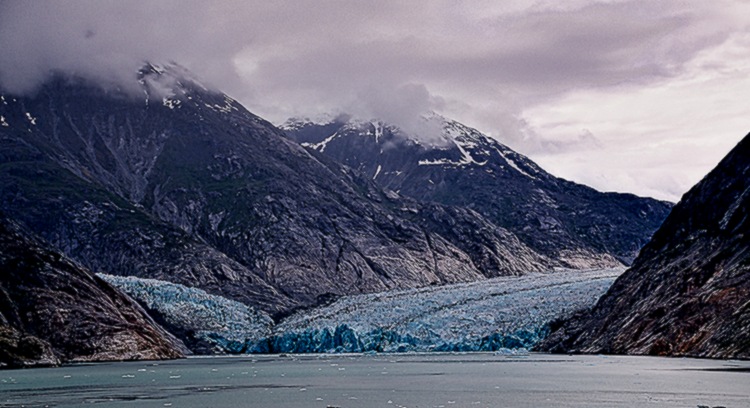
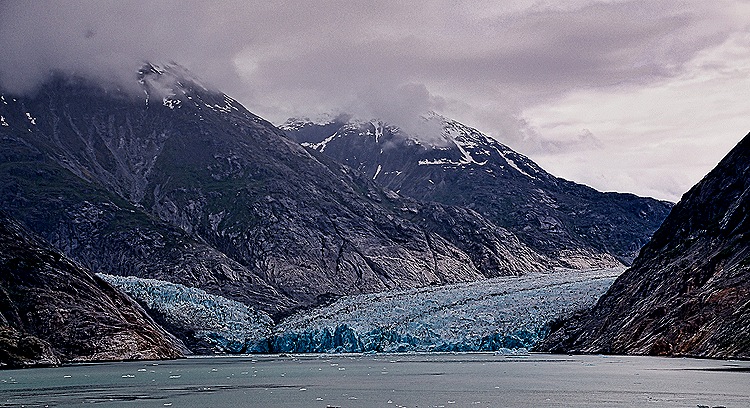
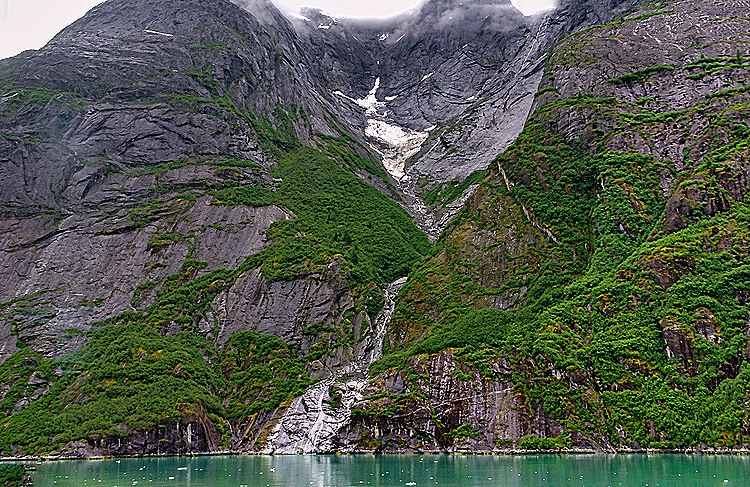
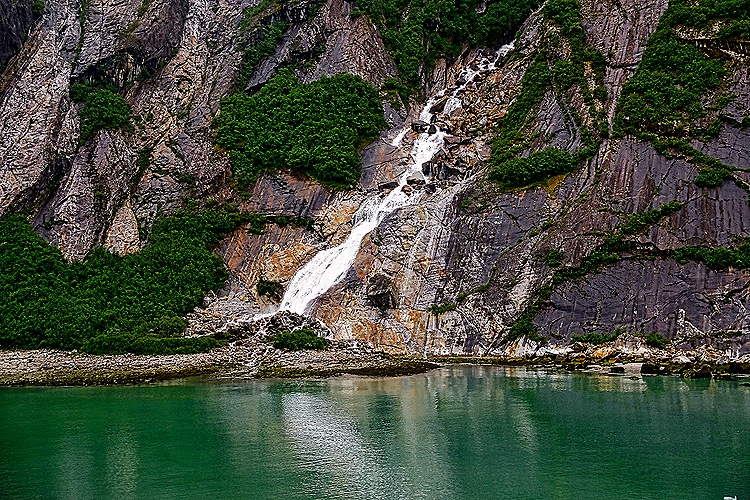
Tracy Arm and Endicott Arm are lengthy fjords branching out from Holkham Bay some 45 miles south of Juneau. Both were carved by glaciers. As we sailed up Endicott Arm we passed nice waterfalls descending from impressive mountains under a low and heavy cloud cover. But no serious ice blockage.


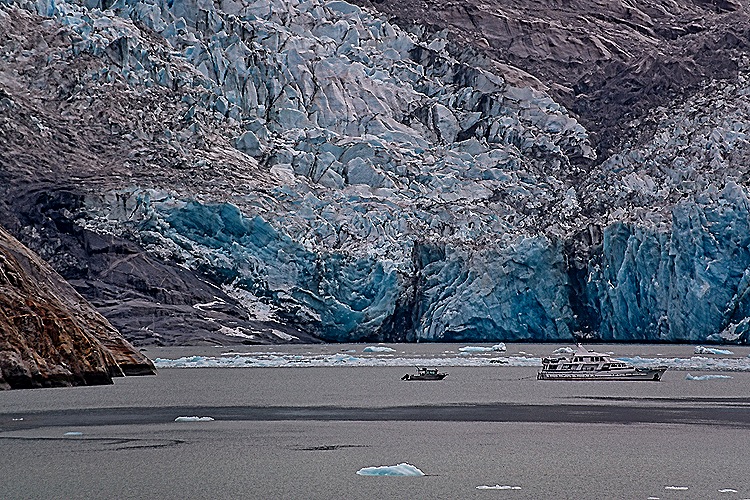
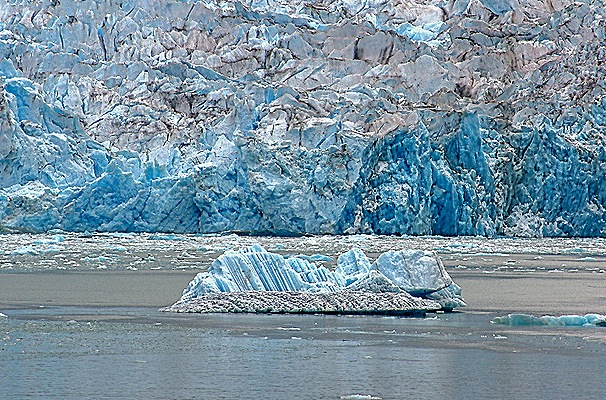
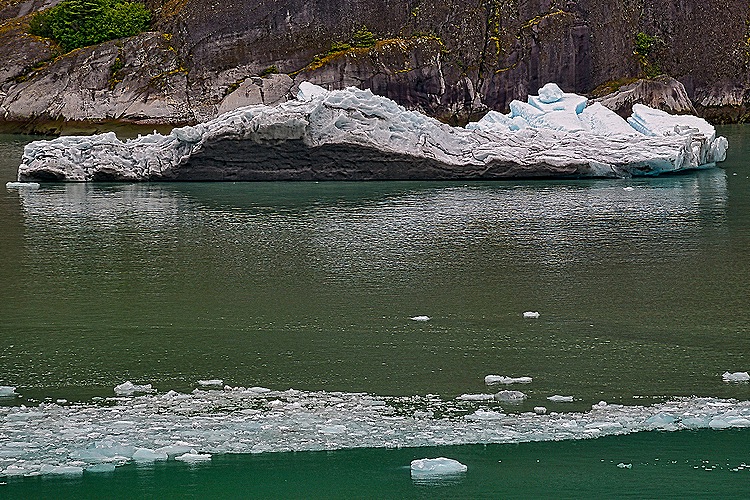
The face of Dawes Glacier is a bit more than half a mile wide and about 600 feet tall (with another 300 feet or so below water). Two glaciers join to form the tidewater terminus. It is known for active calving (it flows toward the water at about 15 feet per day) but we didn’t see any. This glacier is retreating, so at some point in the near future the two flows seen together at its face will likely separate. Harbor seals live and mate on floating ice in this area but we didn’t see them. The face of the glacier is a nice blue color.


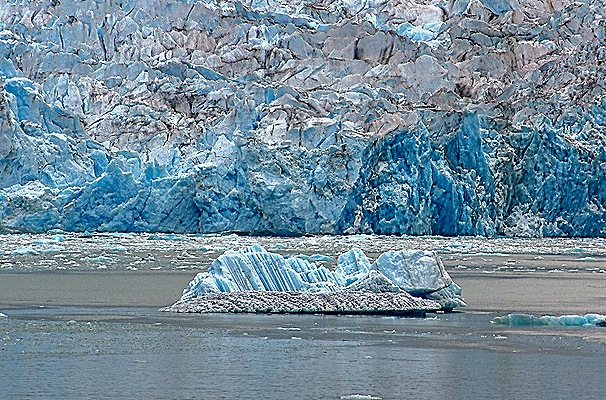
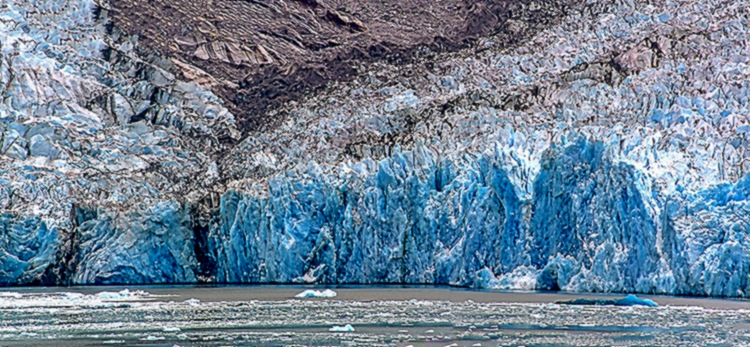
We spent some time in front of the glacier so the Captain could fully rotate the ship and give everyone a good view. We passed floating ice and misty mountains again as we sailed back down Endicott Arm, then headed out into the bay and south to Wrangell.


Wrangell, Alaska
Last year’s cruise had to skip Wrangell because it was the Fourth of July and there was a parade amid other celebrations. This year we were scheduled to arrive on July 3 and, although we weren’t turned away, we had to tender into a small boat harbor well south of town because they would be practicing for a Fourth of July boat race. So we didn’t feel all that welcome as we took the tender ashore, but we were glad to be able to visit here.

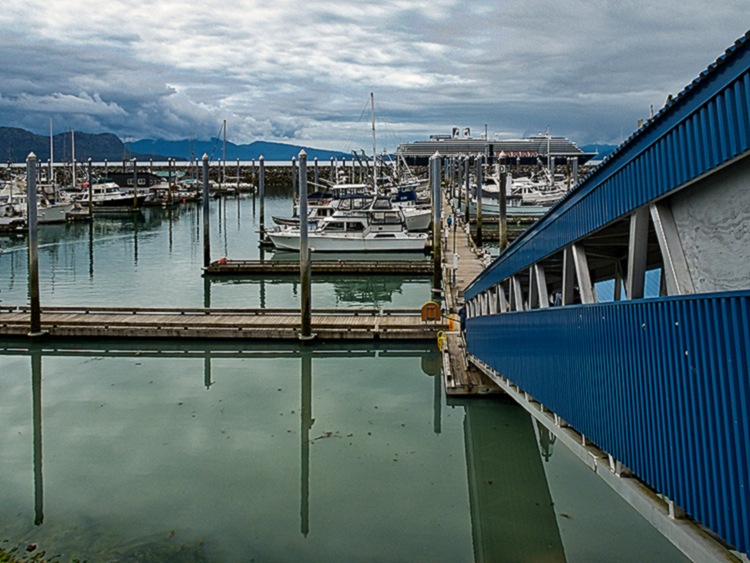
Wrangell is on one end of Wrangell Island, one of the 30 largest islands in the United States, about 155 miles south of Juneau. Tlingit people had been living in this area for thousands of years when Russian fur traders built a fort called Redoubt St Dionysus here in 1834. The first European visitor, however, was George Vancouver during his 1793 expedition. The British took possession in 1840, renaming it Fort Stikine (after a nearby river). When the Americans acquired Alaska in 1867 they built a new fort here, called Fort Wrangell, named after Baron von Wrangel (not a typo, different spelling) who had been manager of the Russian-American Company (and effectively governor of Alaska) during the early 1830’s. Wrangell was incorporated as a city in 1903.
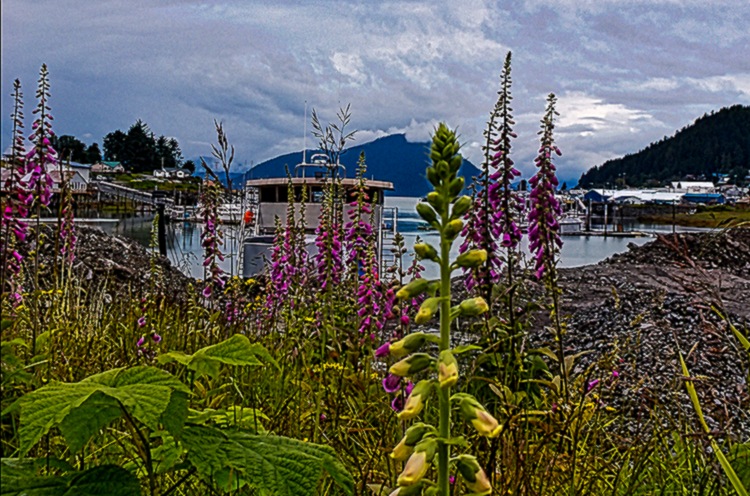
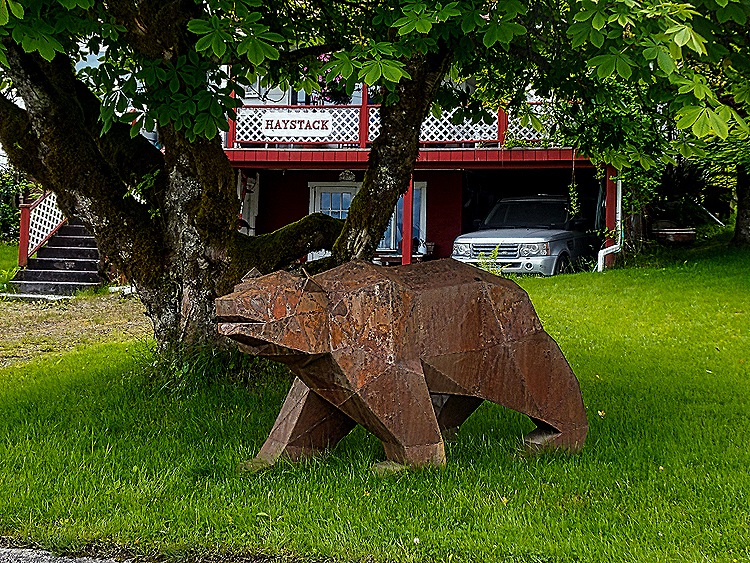
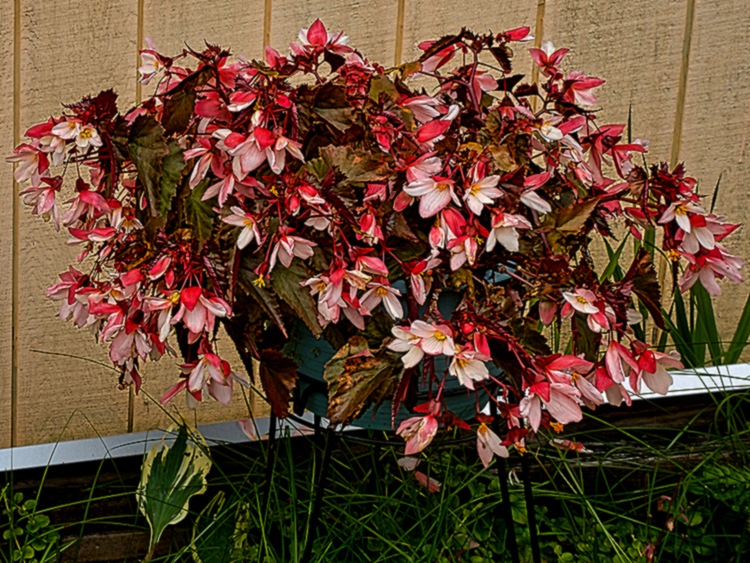
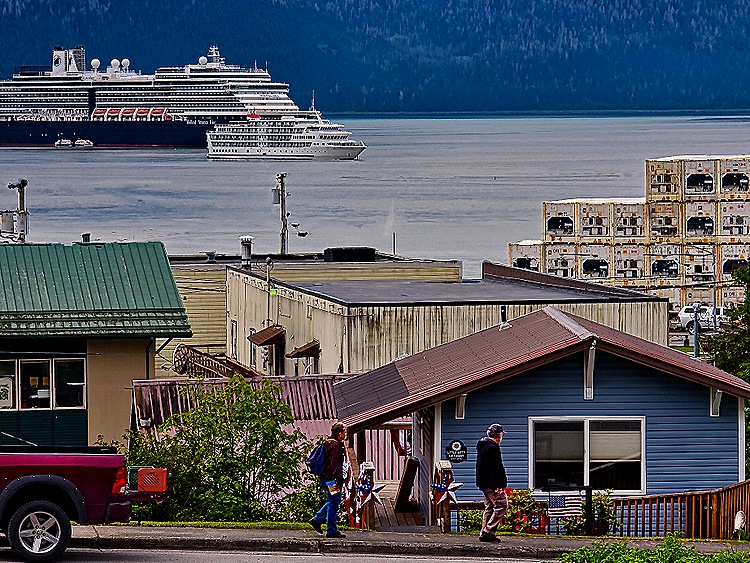
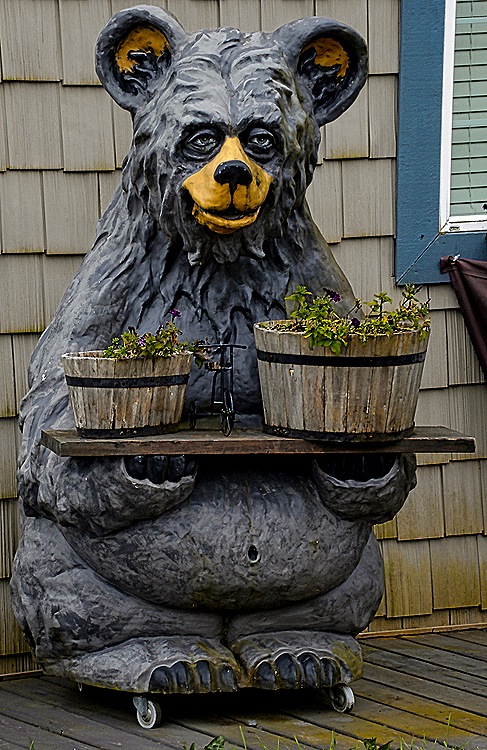
It was a long walk, more than a mile, into town. Just outside the port we saw what appeared to be some kind of fish traps piled high, presumably waiting to be used. We also passed several houses decorated for Fourth of July, a bear sculpture in someone’s front yard, an old car and a lot of flowers. This is a small and remote American town with a population just over 2,000 and that is what it looked like, especially today when it was decked out for a patriotic holiday.





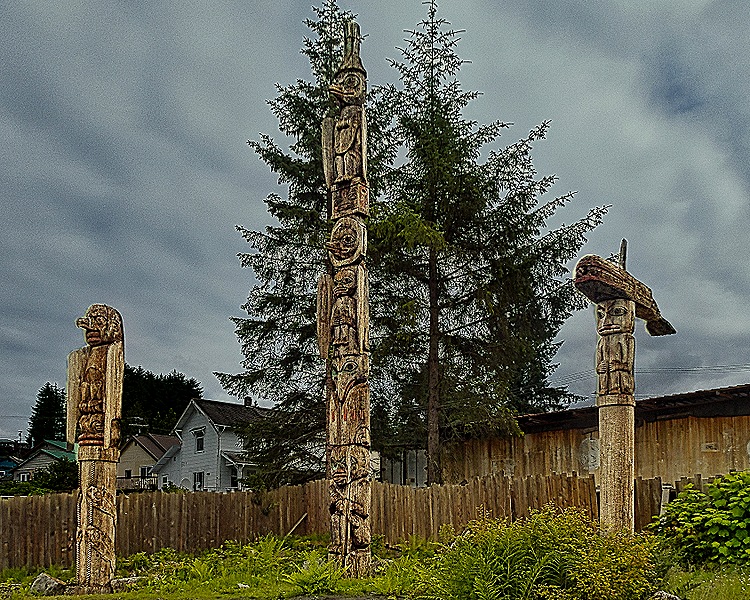
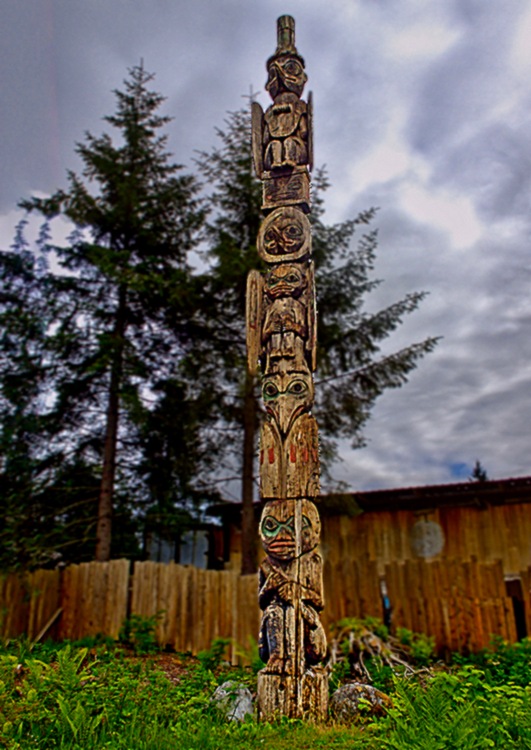
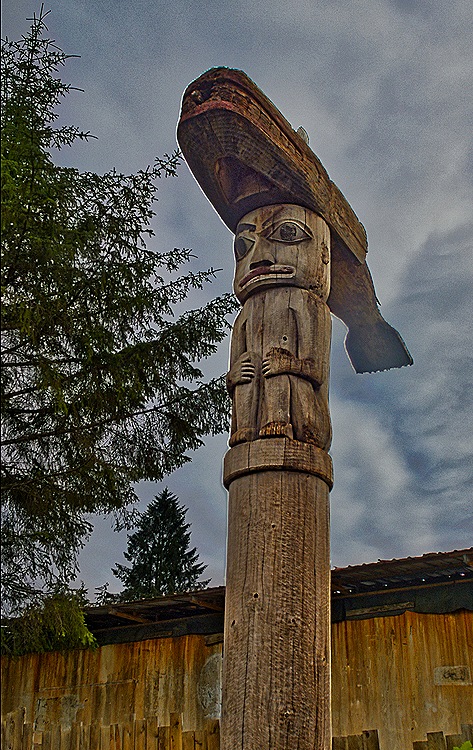
In town we first came to Kiks.ádi Totem Park. Originally opened in 1895 on the site of a clan house, the park now belongs to the local native corporation. The tradition among Native Alaskans is that totem poles are left to deteriorate naturally after they are erected. We saw three poles in the part of the park we visited, all of which appear to be rather aged,mostly brown and gray with some faded colors. While we can’t identify all of the symbols, we understand the pole on the right has a killer whale on top and the one in the center dates from 1987. We understand there is at least one other pole elsewhere in the park but we didn’t see it. About three weeks after our visit a newly carved totem pole was erected in front of the three we saw. Taller than these and weighing quite a lot, the new pole was erected by hand by the local native community. This was the first pole raising in Wrangell in almost four decades. Obviously, no pictures here of that since it happened after our visit.



We continued walking into town, passing many more Fourth of July decorations. Our friend Susi was, unbeknownst to us, about a block up the hill and took a picture of us on this walk.


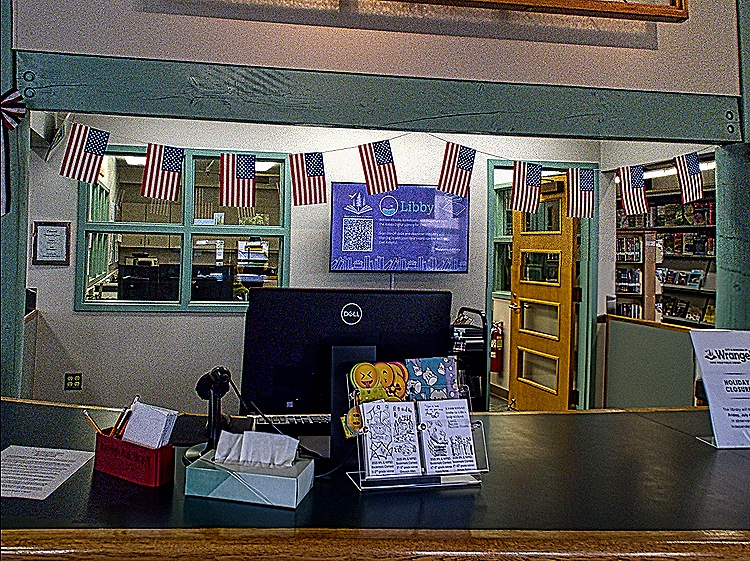
The Irene Ingle Public Library in Wrangell was opened (originally in the city hall) in 1921 on Halloween. The community pitched in with donations, labor and volunteer services to get it done. One vehement supporter wrote to the Wrangell Sentinel in 1921 that he would paint, varnish, subscribe to a magazine for the library shelves and “if it becomes absolutely and unavoidably necessary, I agree to go over to the library one day each week and make ardent love to the librarian in order to keep her on the job.” That’s commitment! Irene Ingle was the head librarian from 1951 (when it had no heat or running water) until 1981.
We visited the library (of course) and it was a very nice, modern space with soaring ceilings. Above the front desk was a fetching glass triptych of a fireweed, a plentiful and popular flower in Alaska.




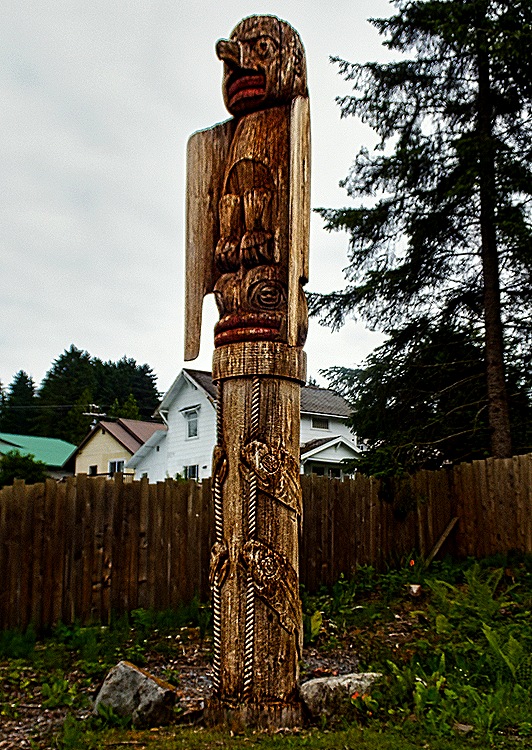
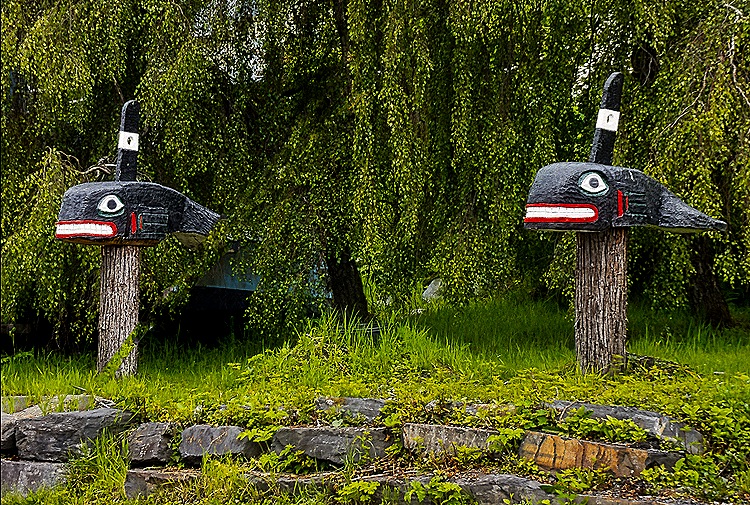
We wanted to visit Petroglyph Beach, which was a mile or more away on the outskirts of town, so we walked in that direction. Passing the post office, which we understand is on the site of the old Fort Wrangell, we encountered a totem pole called a raven pole, which was carved in the 1960’s. In front of a store was an interesting wooden moose.


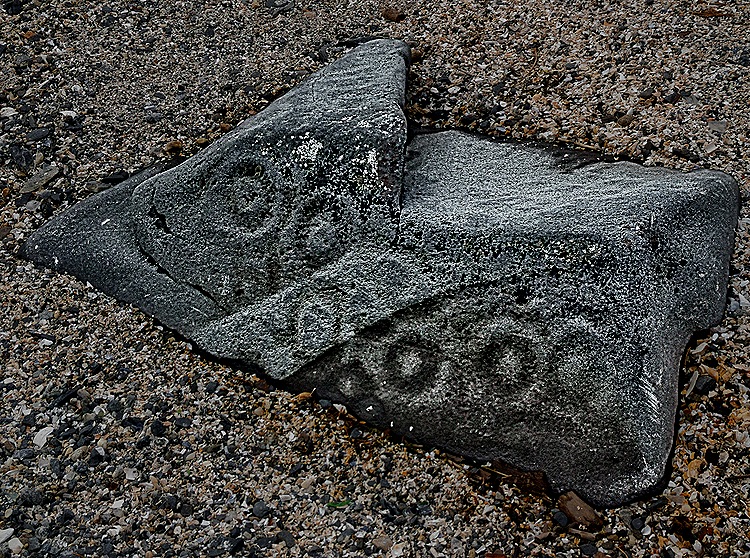
We took the long (mostly uphill) walk to Petroglyph Beach. It is a fairly large and very rocky area next to the water. This is designated a state historical area and they have built wooden stairs down to a platform just above the beach which contains explanatory signs and replicas of some of the petroglyphs. There are several dozen petroglyphs, designs carved in stone, scattered throughout the beach which are said to date from as long as 8,000 years ago. They are not easy to spot because the stones are rather dark and many of the carvings are monotone. But we did find a few. We understand that some of the better ones are in the local museum, but we didn’t make it there.


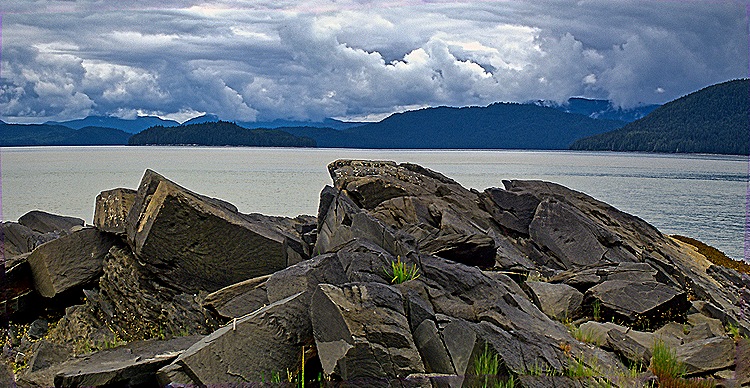
The view across the water from the beach was pretty stark, at least on this rather gray day. Across the water is uninhabited Woronkovski Island, named for a Russian explorer, which is separated from Wrangell Island by the Zimovia Strait. The northern tip of Woronkovski Island is called Elephant’s Nose Point because it resembles an elephant’s head with a long trunk extending along the water. It was named in 1878.

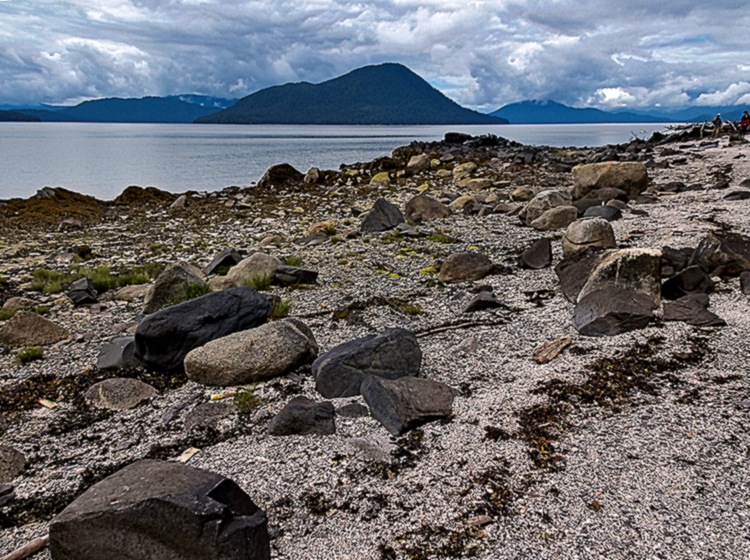
We walked back on the road along the water into the center of town. A pretty long walk & a good bit of holiday decoration.


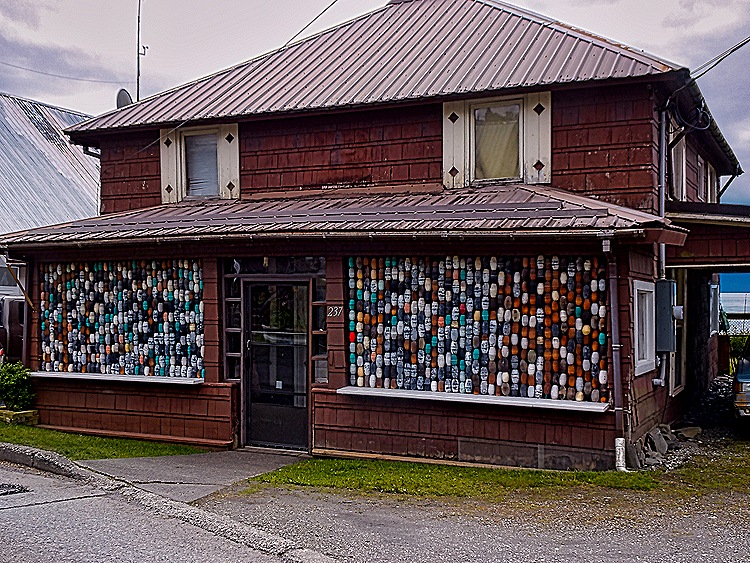
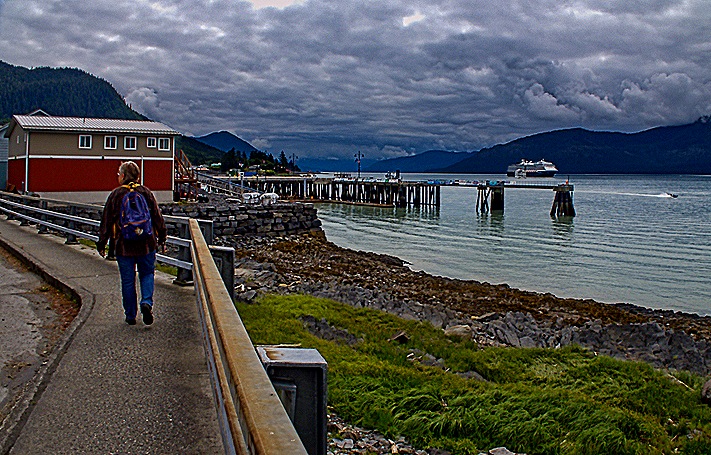

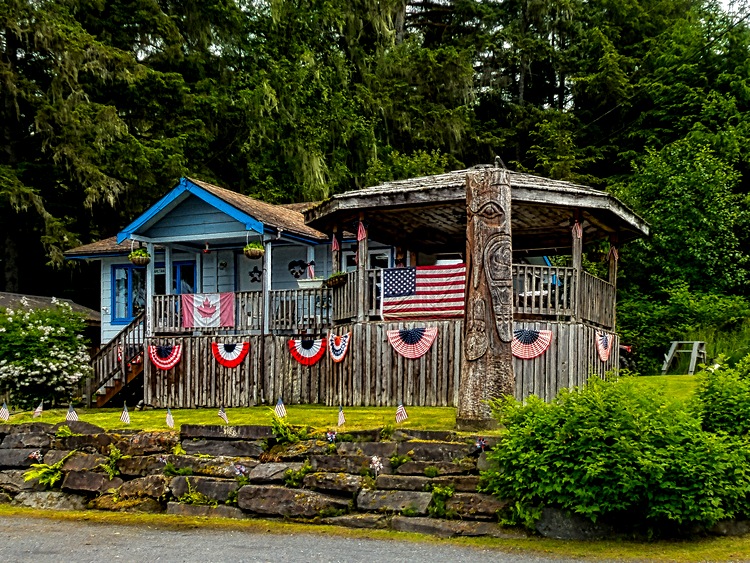
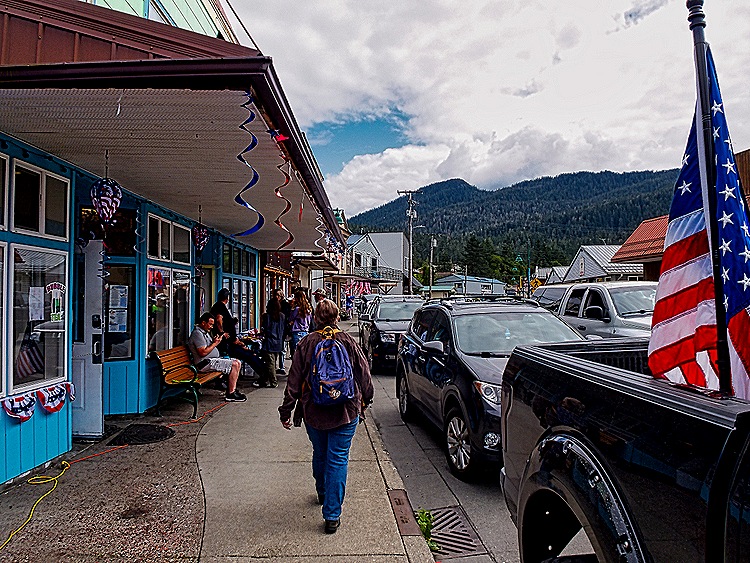
We walked up the main street in downtown Wrangell, stopping in a few stores on the way. Few really old buildings remain because a large fire in the 1950’s destroyed much of the town. Then we headed back to the tender dock, passing on the way an interesting house fixed up for Fourth of July, but with a Canadian flag tucked into the display.



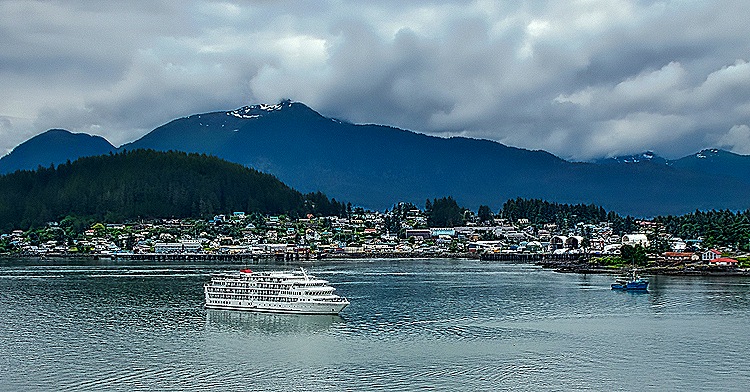
There were still things to see but we had done quite a lot of walking and were pretty tired, so we walked back to the tender port and returned to the ship. We had a nice view of the town as we sailed away toward our last port visit.
Juneau, Alaska 2025
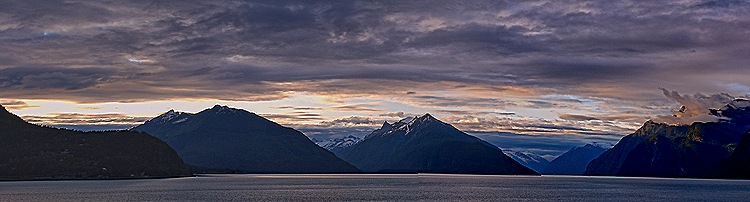
July 1 found us docked in Juneau, the capital of Alaska since 1906. The mountains along the Gastineau channel as we sailed toward Juneau under a heavy cloud cover very early in the morning were quite dramatic.
This is our second visit to Juneau; you can see our first visit (with more background information) here:
https://baderjournal.com/2017/08/08/juneau-alaska/
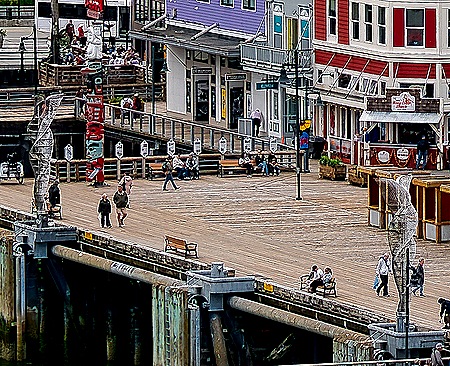
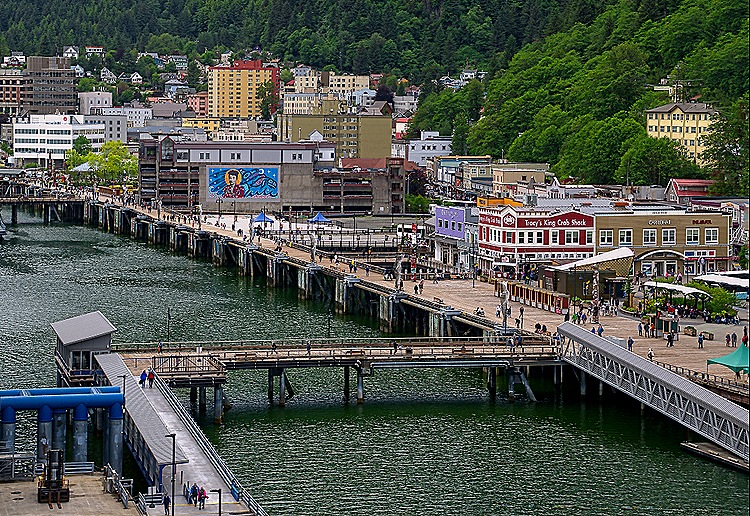
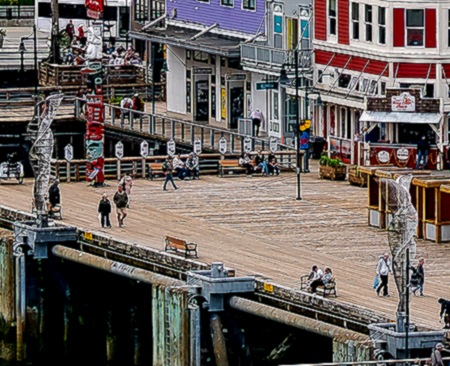
Since we had already been to the Mendenhall glacier and the top of Mt Roberts we decided to walk around the town today for the most part. The morning was pretty chilly with rain on and off and a continual cloud cover but we persevered. Exiting the ship along a lengthy pier took us to the cruise dock, a large open plaza. Tourism, especially from cruise ships, is a major part of Juneau’s economy so it was no surprise to see this area surrounded by restaurants and shops selling tee shirts, baseball caps and other mementoes of Alaska. Along the edge by the water was a series of ten abstract metal sculptures, 20 feet tall. Installed in 2017 they are called Aquileans, a mash-up of the Latin words for whale and eagle, which they are designed to represent. They are lit up at night with color changing lights.

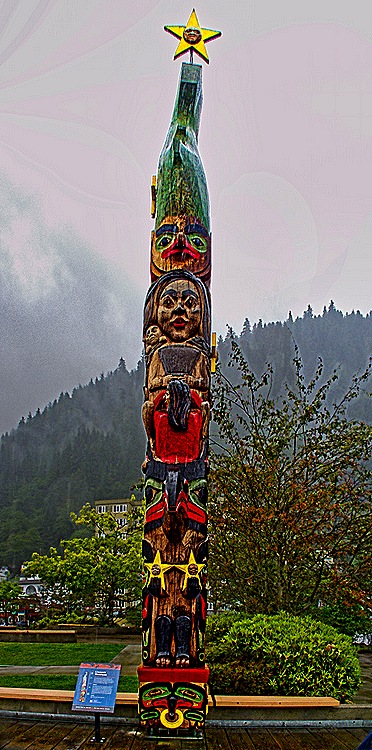
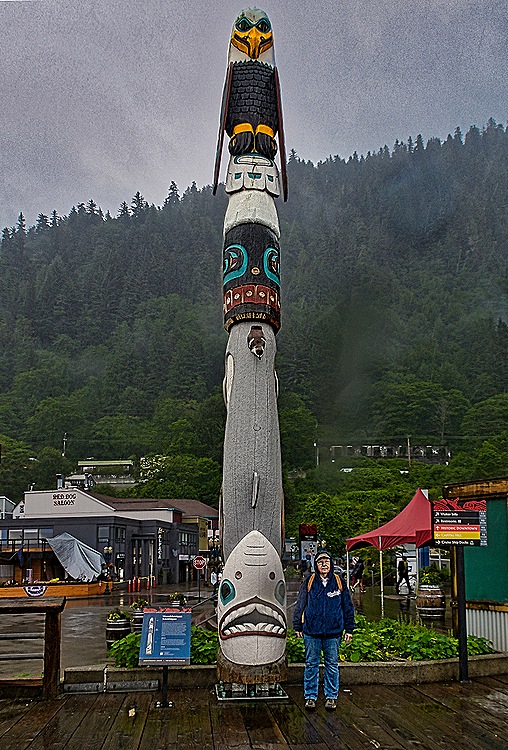
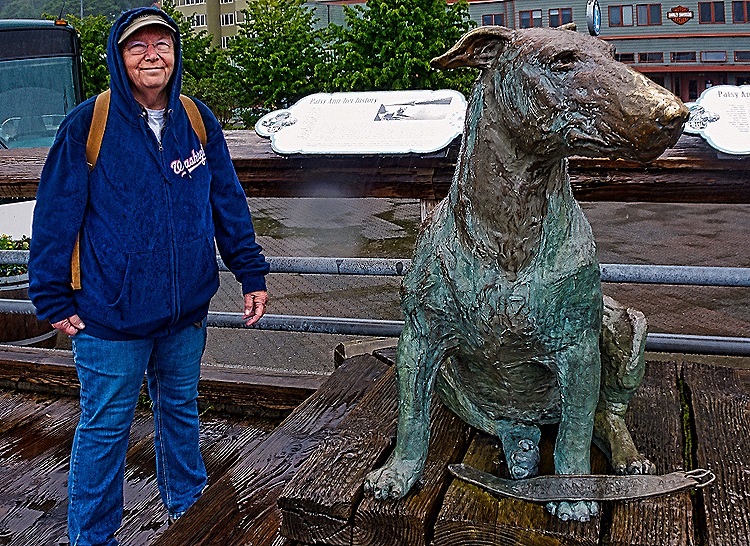
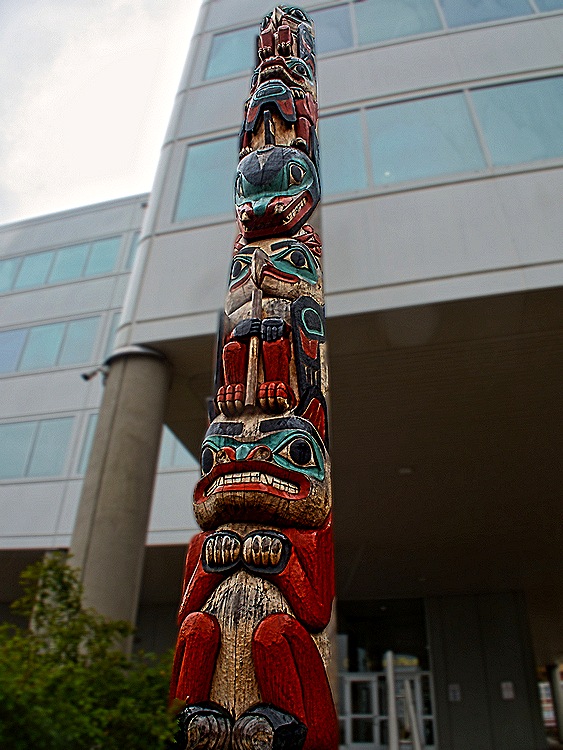
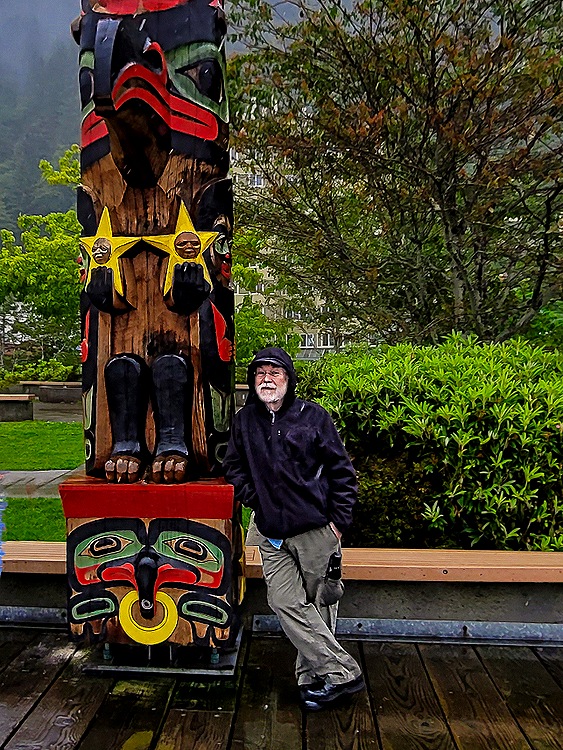
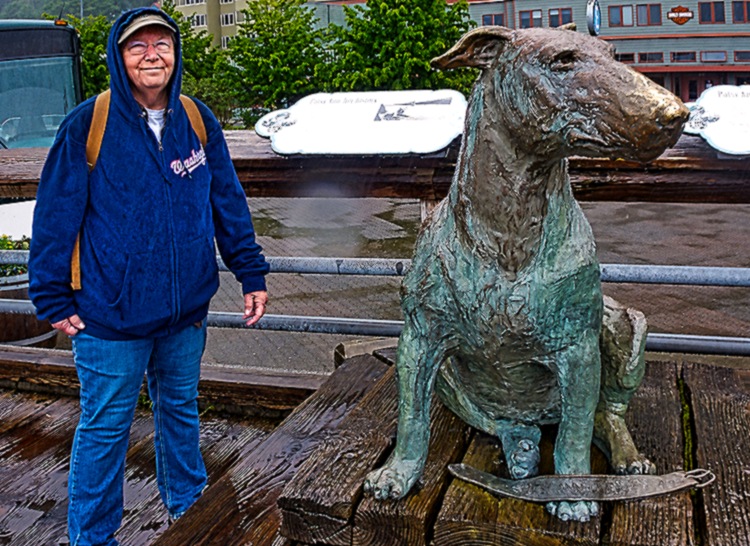
Juneau is colorfully festooned with totem poles, some of which are in this area as well. Most are of recent vintage (the last two or three decades) and carving them appears to be a thriving profession here. Most of these contain symbols representing particular clans that are indigenous to the area. One of the poles we encountered in this area is unusual in having a star on top, kind of like a Christmas tree, representing the Little Dipper, above a dog salmon, and at the bottom a raven with a box of daylight that he released to bring light to the world. Another distinctive pole had a large bald eagle at the top and a shark at the bottom. Also in the dock area was a statue of Patsy Ann, a dog who lived in Juneau from 1929 to 1942. She was deaf all her life but had an unerring ability to sense an approaching ship from half a mile away. At that time shipping schedules and communications were less exact, so often the first indication a ship was arriving was when Patsy Ann suddenly headed for the dock. And she also knew where the ship would dock; on at least one occasion she went to a different pier from where the crowd was waiting and the ship docked where she stood. This resonated with us because we had a dog named Addie who always knew when one of us was approaching even when the car was a few blocks away.



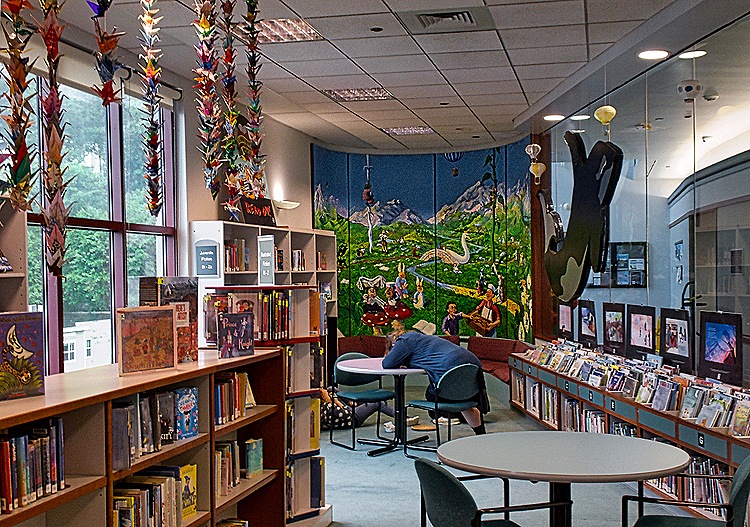
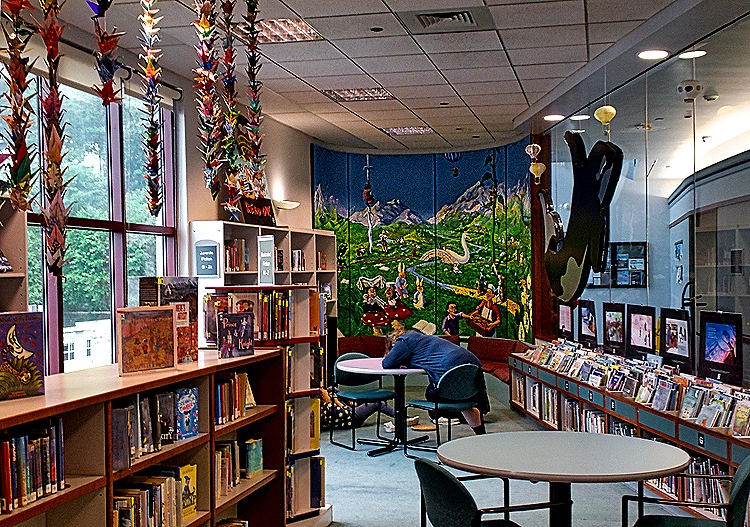
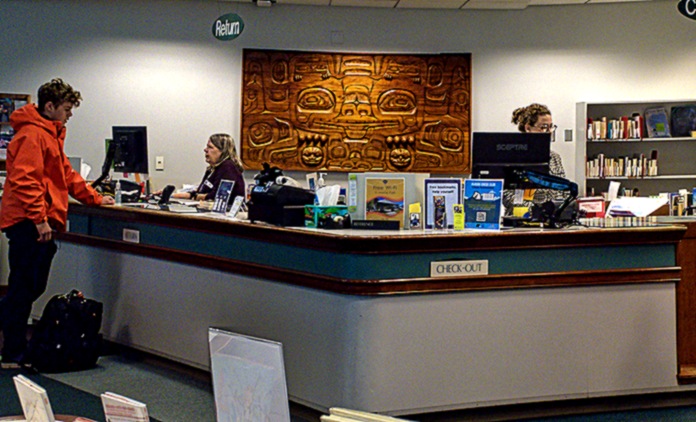
We visited the Juneau Public Library, housed in an upper floor of a modern building that seems mostly filled by a parking garage. The last time we were here, in 2017, it was closed but this time we went inside. It had some nice artwork, pictured below over the check out desk and in the children’s room, and a wire relief of two birds (raven and eagle perhaps?) above a restroom on one side of the building outside. One large window had a panoramic view of another part of the dock area, with Mt Juneau covered in spooky clouds.




Sealaska Heritage Institute is an organization dedicated primarily to education and promotion of the culture of the Tlingit, Haida and Tsimshian cultures of Southeast Alaska whose ancestors have lived here for more than 10,000 years. We visited its central facility in Juneau, including a museum displaying native art inside and outside, and its administrative headquarters across the street.
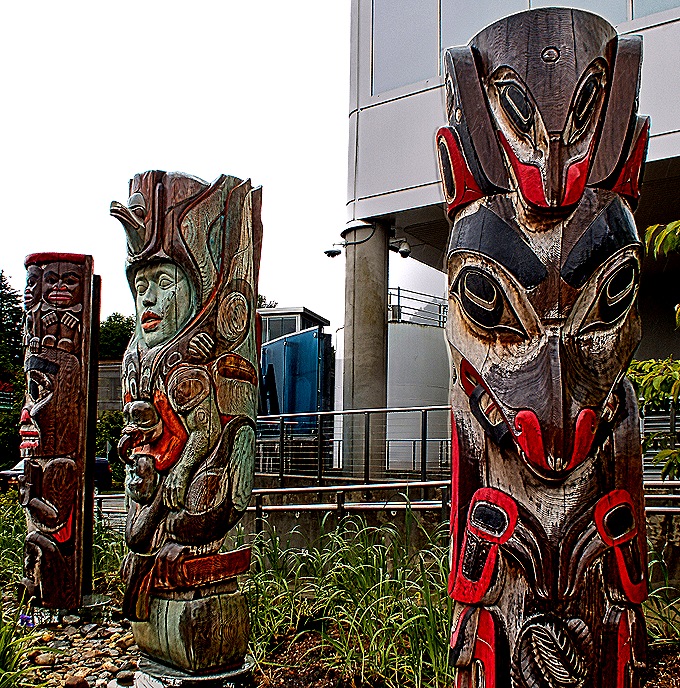
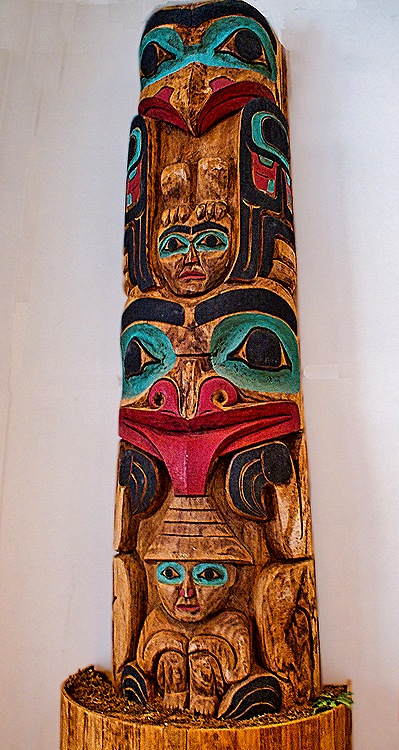
As we approached the museum we passed a set of three totem poles in a row, then a taller one around the corner of the building (which had an eagle on top and a bear on the bottom.

We were glad to get inside the building since it was raining again. On display were a number of examples of native artwork, most of which appeared to be from the late 20th century.


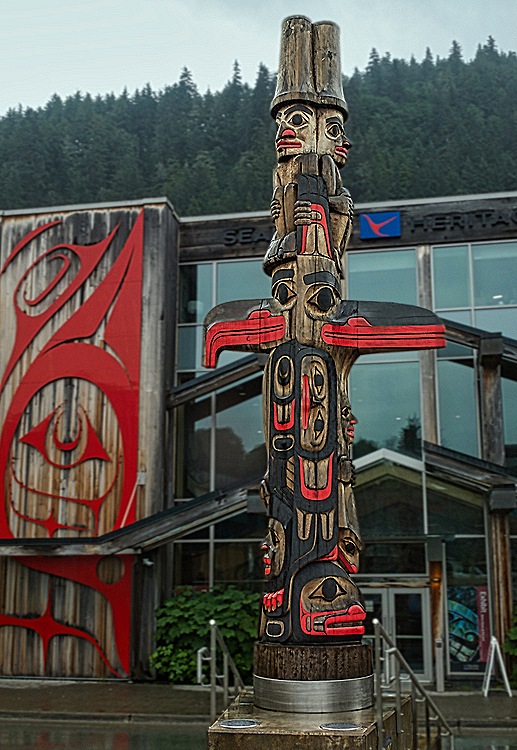
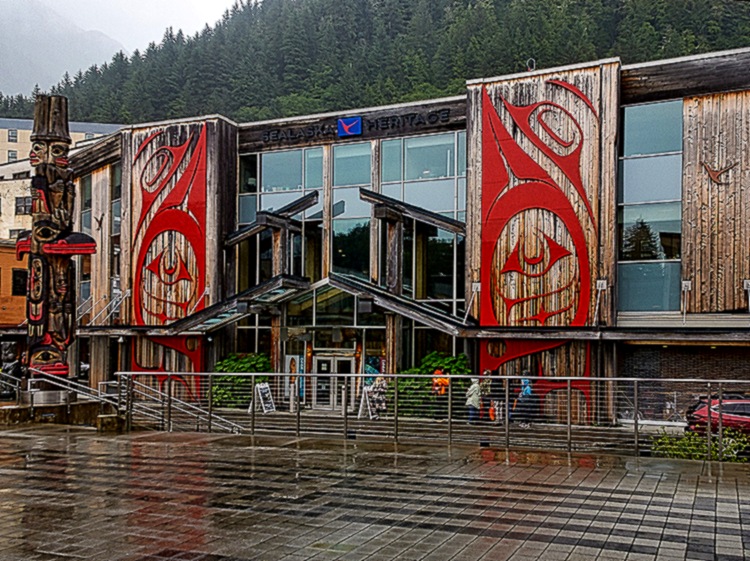
A raised plaza outside the museum had a number of sculptures on display and yet another totem pole on the edge facing the street. The pole was topped by what looked like back to back men in top hats and had a salmon at the bottom. This was a 360 degree totem pole, with carvings facing in all directions. Across the street, beyond this totem, was the Institute’s headquarters building, very distinctive with floor to roof glass and wooden panels with red reliefs on them. The main thing we saw inside was a carved and painted wall of what we think was a native style building. We were out of time to explore this building further, but near the entrance was a fabulous gift store selling mainly very impressive indigenous art.



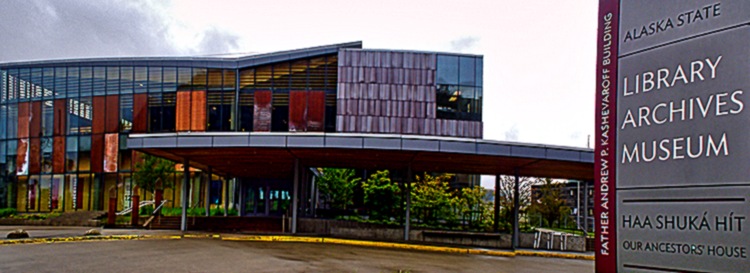
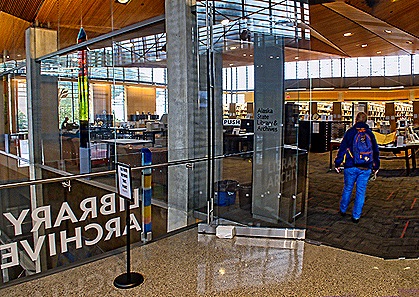
If you have read this blog before you know that we seek out libraries in the places we visit. But today was a bonus visit because we were able to visit two libraries. The public library was discussed above, but after leaving Sealaska we walked on to find the Alaska State Library. Opened in 2016, this library is on the second floor of a building that also houses the archives and a museum. Known locally as SLAM (State Library And Museum), it is an open and modern feeling facility with many displays of historic documents and pictures. Behind the front desk is a long set of beautiful stained glass panels with a wilderness theme.


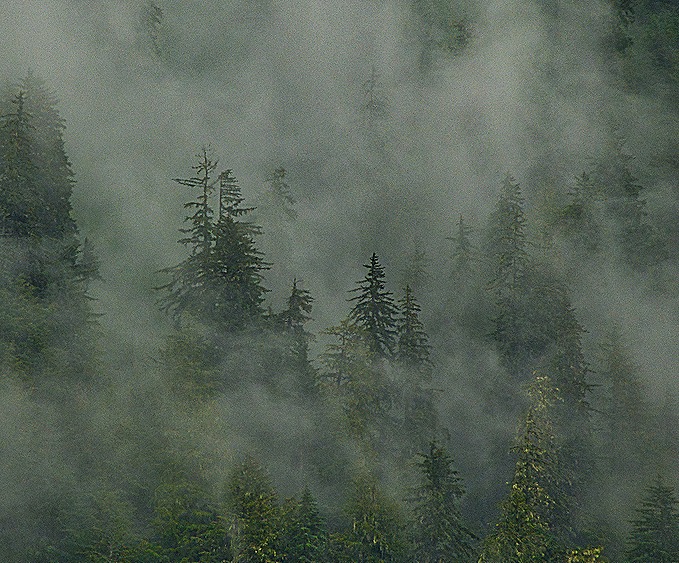
We walked back to the ship, past yet another totem pole and a view of the trees on the mountain slope wrapped in a swirl of cloud and fog.

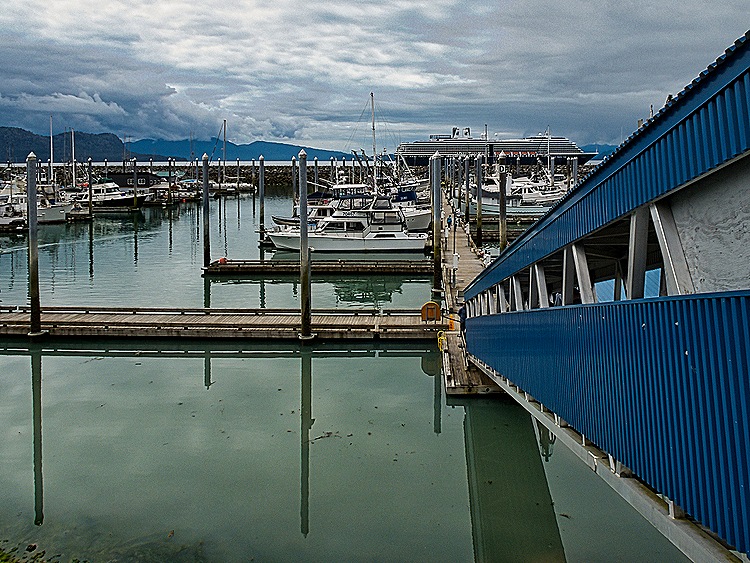
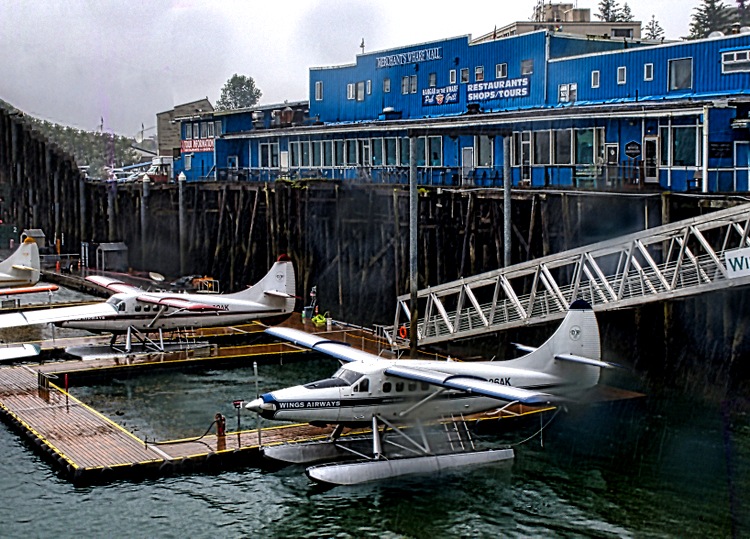
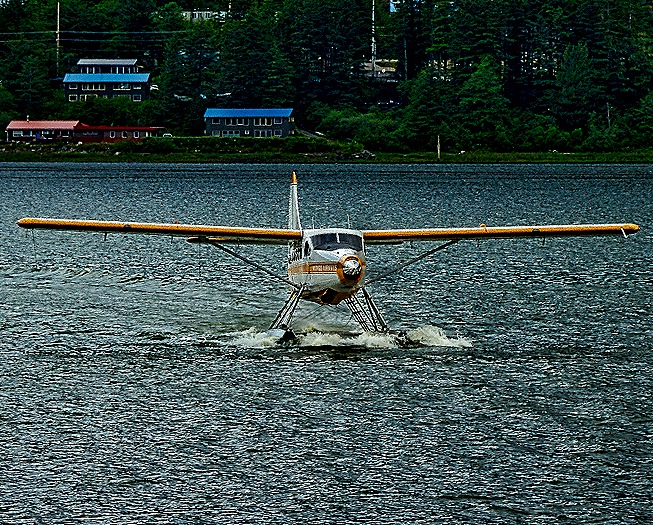
Today was our wedding anniversary and the ship was in port late so we went out to dinner. We ate at a restaurant on the dock within easy walking distance of the ship called The Hangar On The Wharf. More than 25 years old, this is Juneau’s only waterfront restaurant. More of a pub than a fancy restaurant (purportedly offering more than 100 varieties of beer), we found the food here to be really excellent. In particular, we shared a bowl of the best chowder we had ever had (made with halibut, not clams) and one bowl was enough for two meals. We also shared a huge slice of delicious Grasshopper Pie; when it came we were very glad we decided to share one slice. This is called The Hangar because in the 1930’s this was the location of a hangar for sea planes, which still land and park in the water outside the building. The restaurant is located inside the blue mall building in the picture below.


Having eaten way too much good food, we strolled back to the ship to rest up since we had a date the next morning with (what else?) a glacier.

 BADER JOURNAL