Juneau, Alaska 2025
July 1 found us docked in Juneau, the capital of Alaska since 1906. The mountains along the Gastineau channel as we sailed toward Juneau under a heavy cloud cover very early in the morning were quite dramatic.
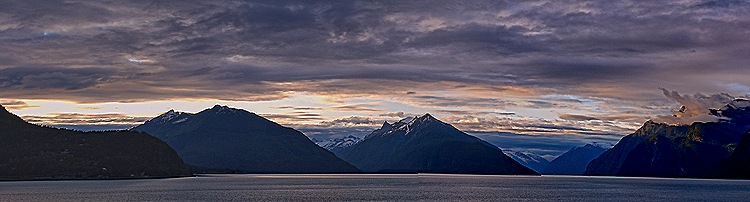
This is our second visit to Juneau; you can see our first visit (with more background information) here:
https://baderjournal.com/2017/08/08/juneau-alaska/
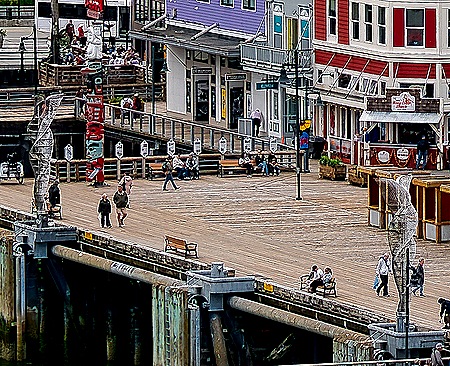
Since we had already been to the Mendenhall glacier and the top of Mt Roberts we decided to walk around the town today for the most part. The morning was pretty chilly with rain on and off and a continual cloud cover but we persevered. Exiting the ship along a lengthy pier took us to the cruise dock, a large open plaza. Tourism, especially from cruise ships, is a major part of Juneau’s economy so it was no surprise to see this area surrounded by restaurants and shops selling tee shirts, baseball caps and other mementoes of Alaska. Along the edge by the water was a series of ten abstract metal sculptures, 20 feet tall. Installed in 2017 they are called Aquileans, a mash-up of the Latin words for whale and eagle, which they are designed to represent. They are lit up at night with color changing lights.
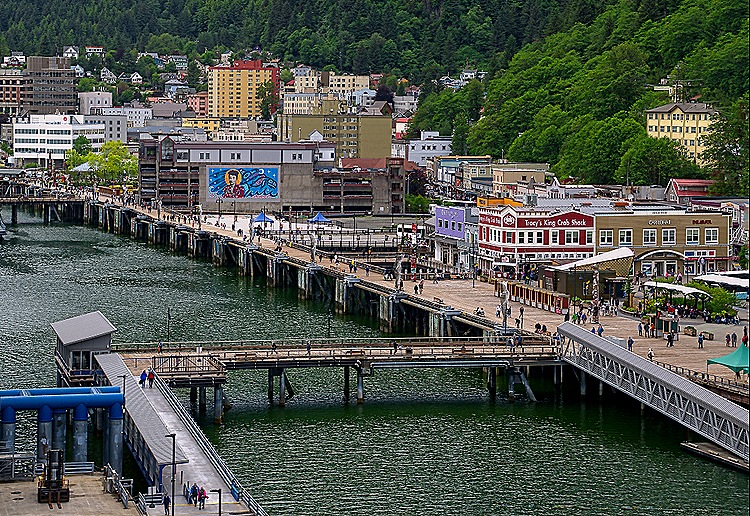
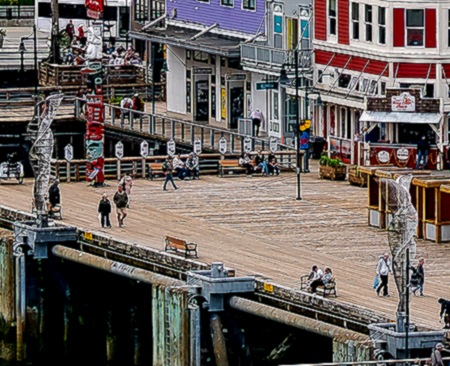

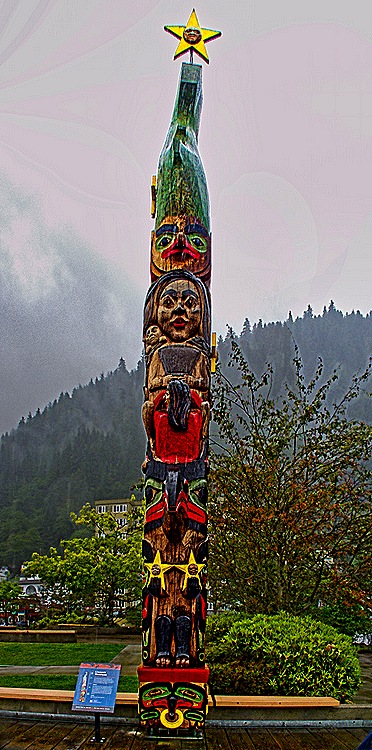
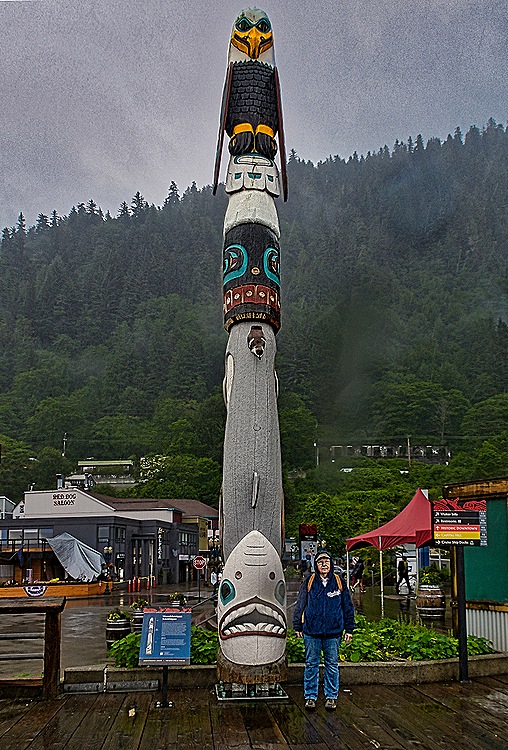
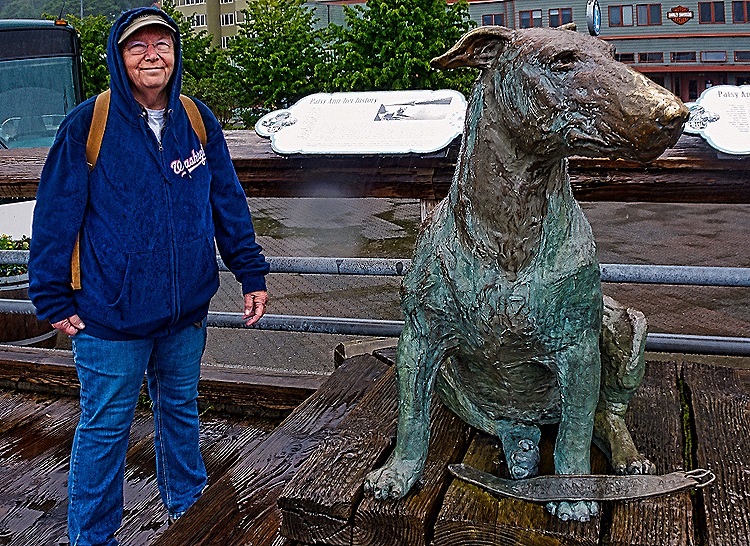
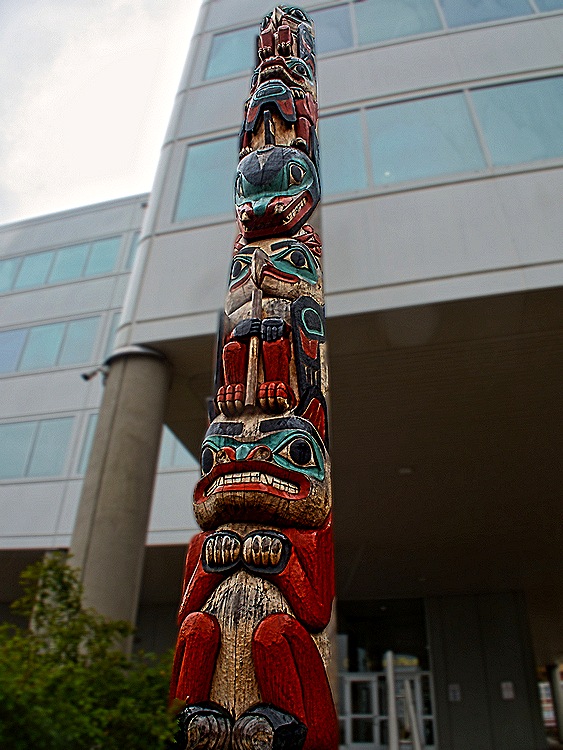
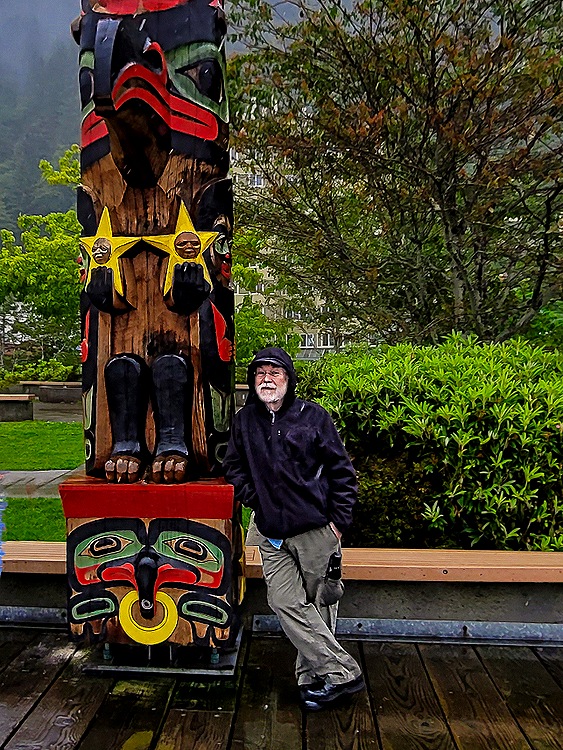
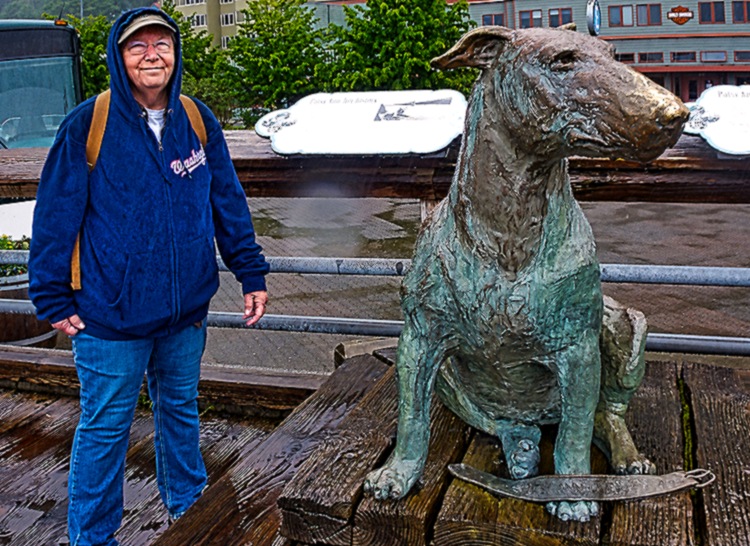
Juneau is colorfully festooned with totem poles, some of which are in this area as well. Most are of recent vintage (the last two or three decades) and carving them appears to be a thriving profession here. Most of these contain symbols representing particular clans that are indigenous to the area. One of the poles we encountered in this area is unusual in having a star on top, kind of like a Christmas tree, representing the Little Dipper, above a dog salmon, and at the bottom a raven with a box of daylight that he released to bring light to the world. Another distinctive pole had a large bald eagle at the top and a shark at the bottom. Also in the dock area was a statue of Patsy Ann, a dog who lived in Juneau from 1929 to 1942. She was deaf all her life but had an unerring ability to sense an approaching ship from half a mile away. At that time shipping schedules and communications were less exact, so often the first indication a ship was arriving was when Patsy Ann suddenly headed for the dock. And she also knew where the ship would dock; on at least one occasion she went to a different pier from where the crowd was waiting and the ship docked where she stood. This resonated with us because we had a dog named Addie who always knew when one of us was approaching even when the car was a few blocks away.



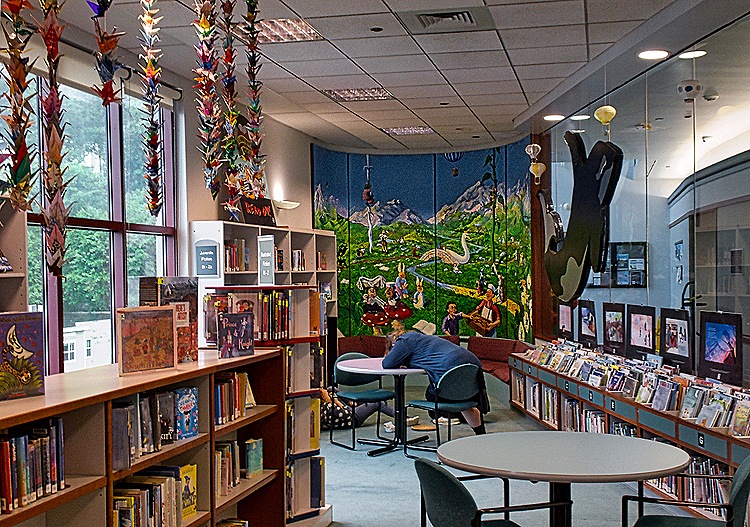
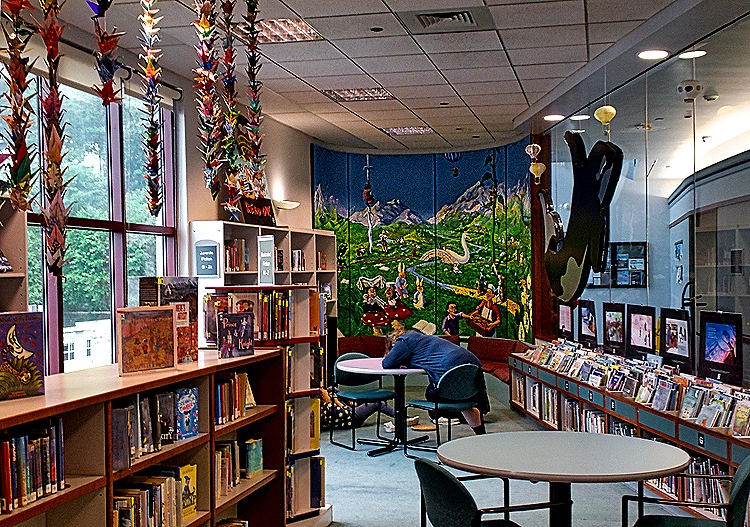
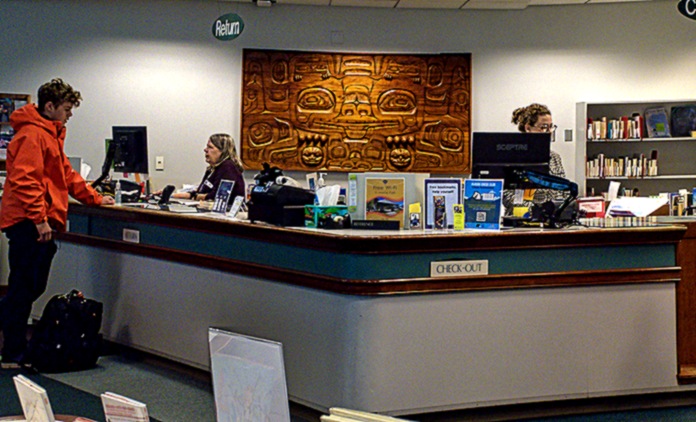
We visited the Juneau Public Library, housed in an upper floor of a modern building that seems mostly filled by a parking garage. The last time we were here, in 2017, it was closed but this time we went inside. It had some nice artwork, pictured below over the check out desk and in the children’s room, and a wire relief of two birds (raven and eagle perhaps?) above a restroom on one side of the building outside. One large window had a panoramic view of another part of the dock area, with Mt Juneau covered in spooky clouds.




Sealaska Heritage Institute is an organization dedicated primarily to education and promotion of the culture of the Tlingit, Haida and Tsimshian cultures of Southeast Alaska whose ancestors have lived here for more than 10,000 years. We visited its central facility in Juneau, including a museum displaying native art inside and outside, and its administrative headquarters across the street.
As we approached the museum we passed a set of three totem poles in a row, then a taller one around the corner of the building (which had an eagle on top and a bear on the bottom.
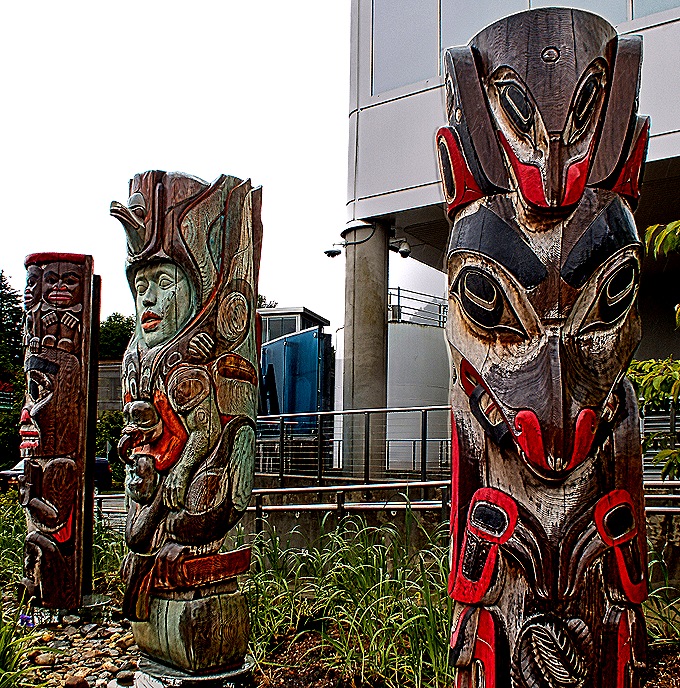

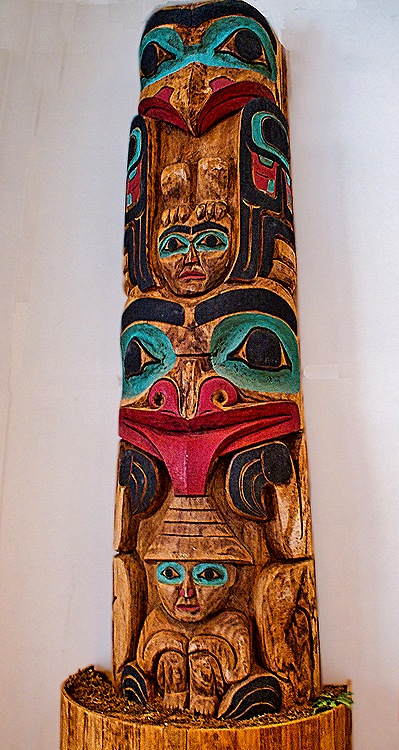
We were glad to get inside the building since it was raining again. On display were a number of examples of native artwork, most of which appeared to be from the late 20th century.


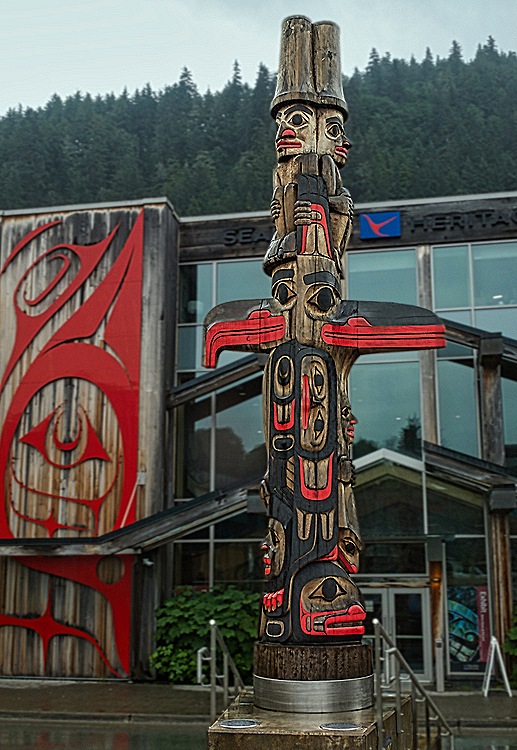
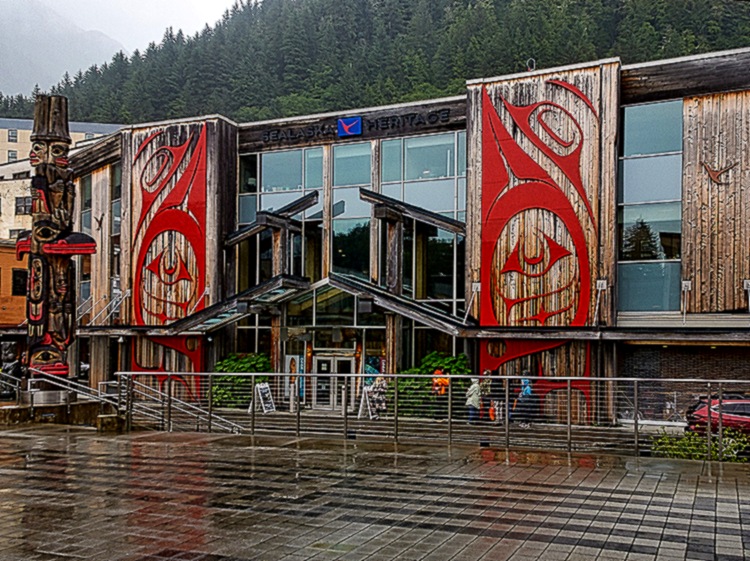
A raised plaza outside the museum had a number of sculptures on display and yet another totem pole on the edge facing the street. The pole was topped by what looked like back to back men in top hats and had a salmon at the bottom. This was a 360 degree totem pole, with carvings facing in all directions. Across the street, beyond this totem, was the Institute’s headquarters building, very distinctive with floor to roof glass and wooden panels with red reliefs on them. The main thing we saw inside was a carved and painted wall of what we think was a native style building. We were out of time to explore this building further, but near the entrance was a fabulous gift store selling mainly very impressive indigenous art.



If you have read this blog before you know that we seek out libraries in the places we visit. But today was a bonus visit because we were able to visit two libraries. The public library was discussed above, but after leaving Sealaska we walked on to find the Alaska State Library. Opened in 2016, this library is on the second floor of a building that also houses the archives and a museum. Known locally as SLAM (State Library And Museum), it is an open and modern feeling facility with many displays of historic documents and pictures. Behind the front desk is a long set of beautiful stained glass panels with a wilderness theme.
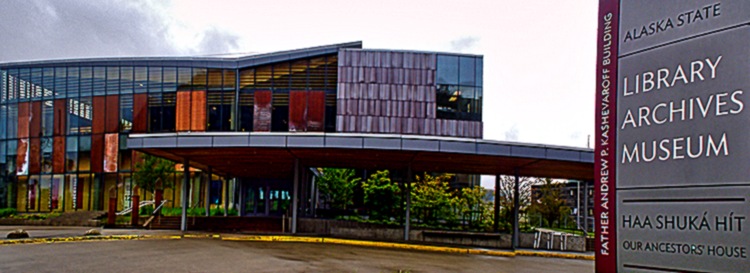

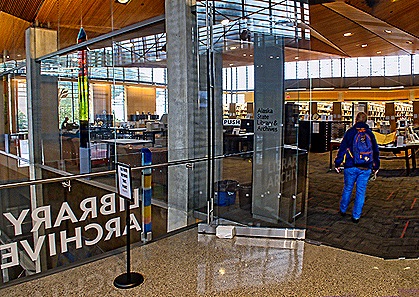

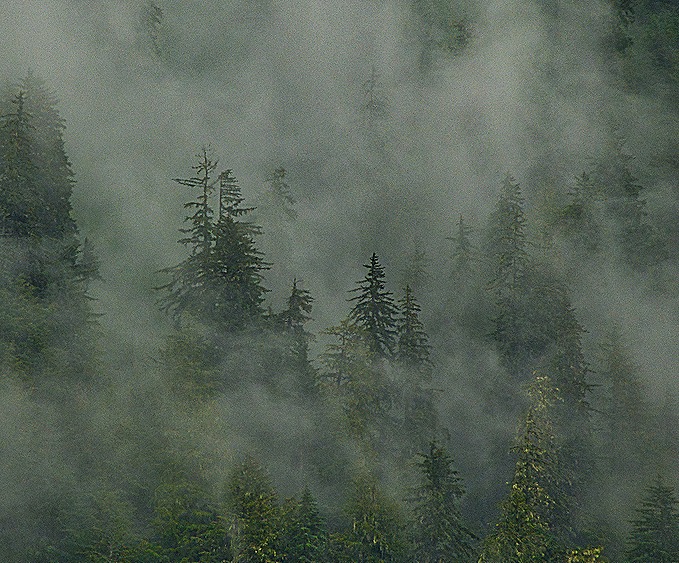
We walked back to the ship, past yet another totem pole and a view of the trees on the mountain slope wrapped in a swirl of cloud and fog.

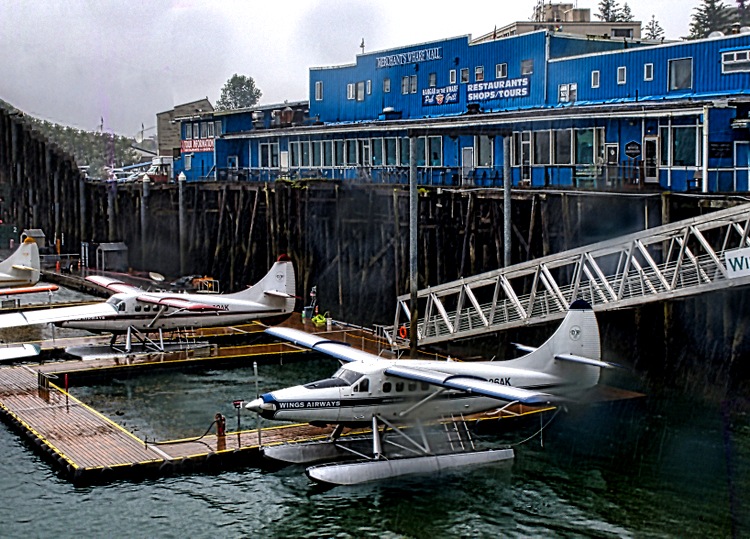
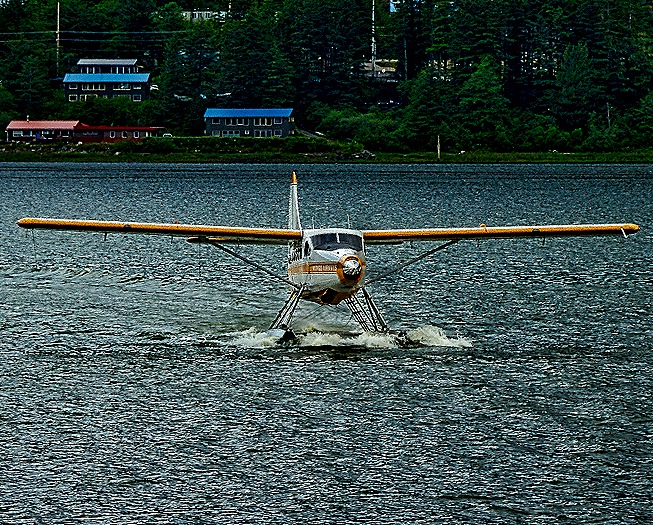
Today was our wedding anniversary and the ship was in port late so we went out to dinner. We ate at a restaurant on the dock within easy walking distance of the ship called The Hangar On The Wharf. More than 25 years old, this is Juneau’s only waterfront restaurant. More of a pub than a fancy restaurant (purportedly offering more than 100 varieties of beer), we found the food here to be really excellent. In particular, we shared a bowl of the best chowder we had ever had (made with halibut, not clams) and one bowl was enough for two meals. We also shared a huge slice of delicious Grasshopper Pie; when it came we were very glad we decided to share one slice. This is called The Hangar because in the 1930’s this was the location of a hangar for sea planes, which still land and park in the water outside the building. The restaurant is located inside the blue mall building in the picture below.


Having eaten way too much good food, we strolled back to the ship to rest up since we had a date the next morning with (what else?) a glacier.

 BADER JOURNAL