Zanzibar, Tanzania (Day 1) — 2024
We anchored off shore in Zanzibar early in the morning of April 8. Zanzibar is a fascinating place to visit, but today was gray and rainy or drizzly. That wasn’t so when we visited here for two days in 2022. Then we took a tour to see the Red Colobus Monkeys in Jozani National Forest on the first day and explored Stone Town on the second day:
https://baderjournal.com/2023/03/08/zanzibar-tanzania-day-1-2022/
https://baderjournal.com/2023/03/13/zanzibar-tanzania-day-2-2022/
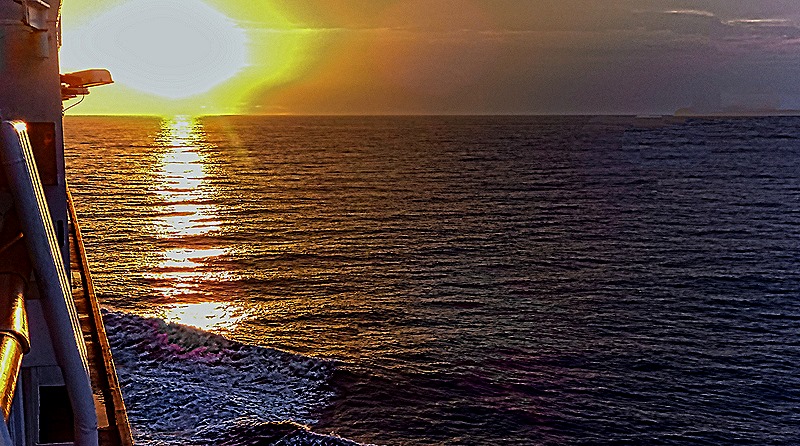
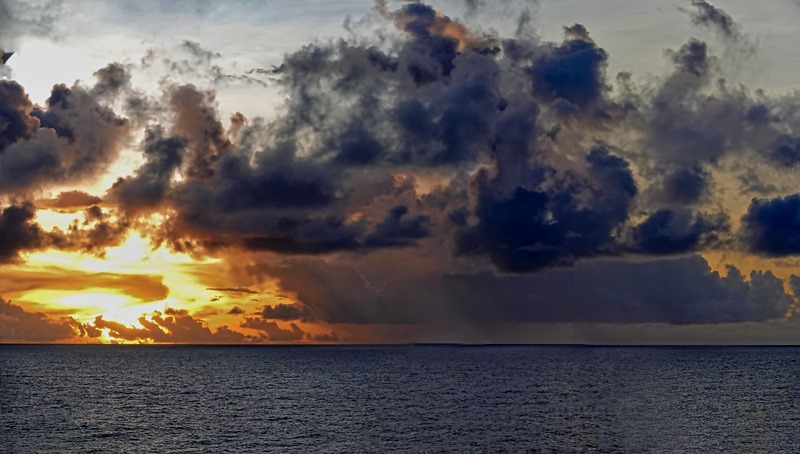
But before we begin today’s visit, we had another great sunset the night before our arrival.
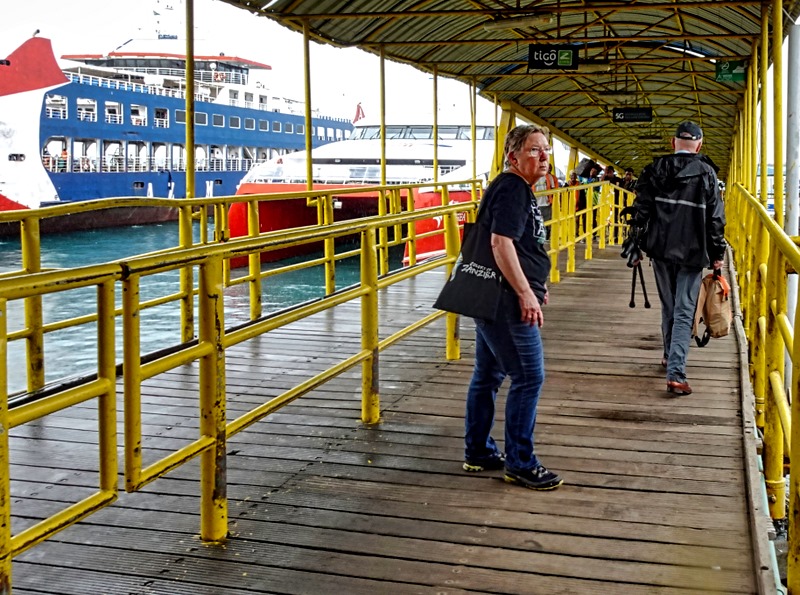
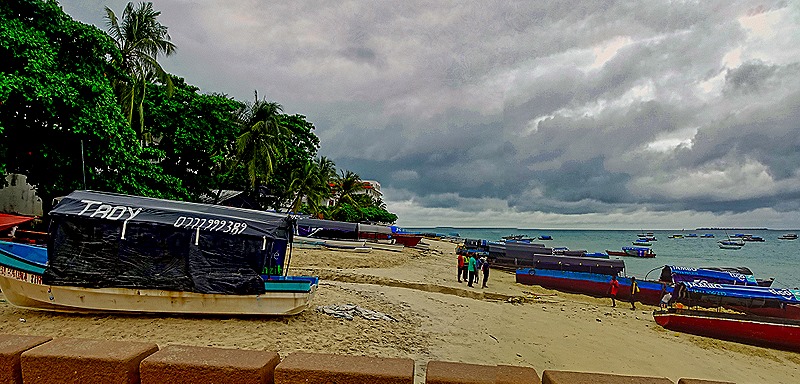
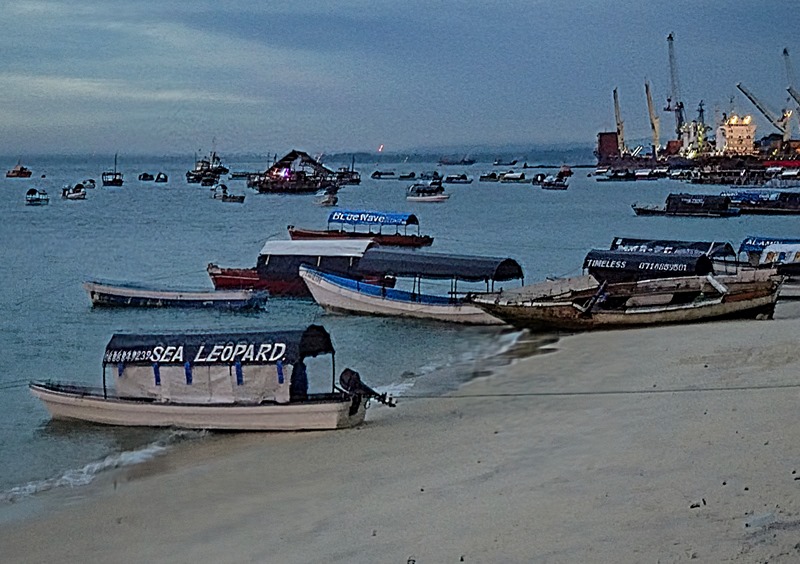
Hoping for the rain to stop we waited until after breakfast to tender ashore. The rain diminished some but didn’t stop so we went ahead to the tender. The tender was almost empty, thanks to other passengers sensibly avoiding the rain. We came ashore at the tender dock, not far from a beach with boats pulled up from the water.


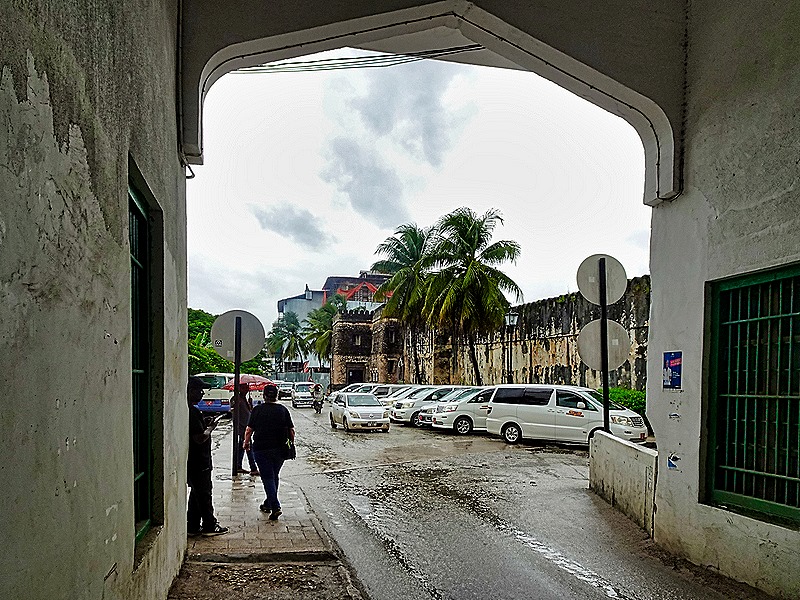
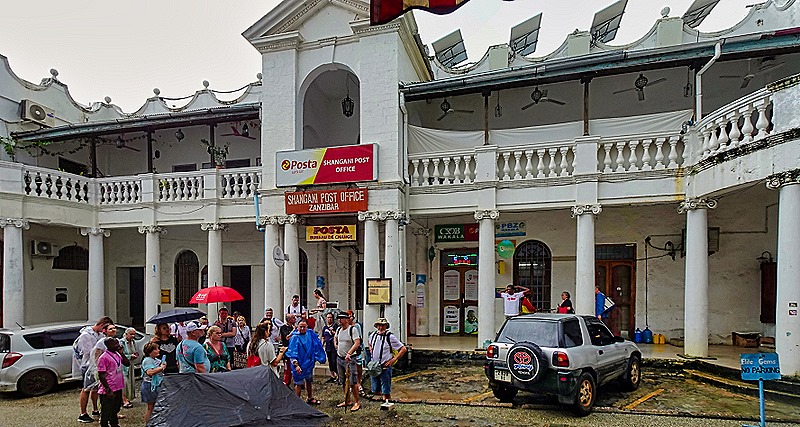
On a rainy day like this we didn’t want to spend too much time wandering around town; after all we could still hope for better conditions tomorrow. One place we did want to visit, though, was Memories Of Zanzibar, a large store across the street from the Freddy Mercury museum where we had good luck on our previous visit finding some gifts and mementoes. It wasn’t too long a walk and the streets were not at all crowded. We passed some people offering private tours, but we weren’t interested in that today. We sympathized though, because on a day like this they probably don’t get much, if any business. Among other things, we walked by the Shangani Post Office. Built in 1906 it served as Zanzibar’s main post office until 1964; not sure what it houses today, perhaps still a neighborhood post office. A HAL tour group was gathered outside.

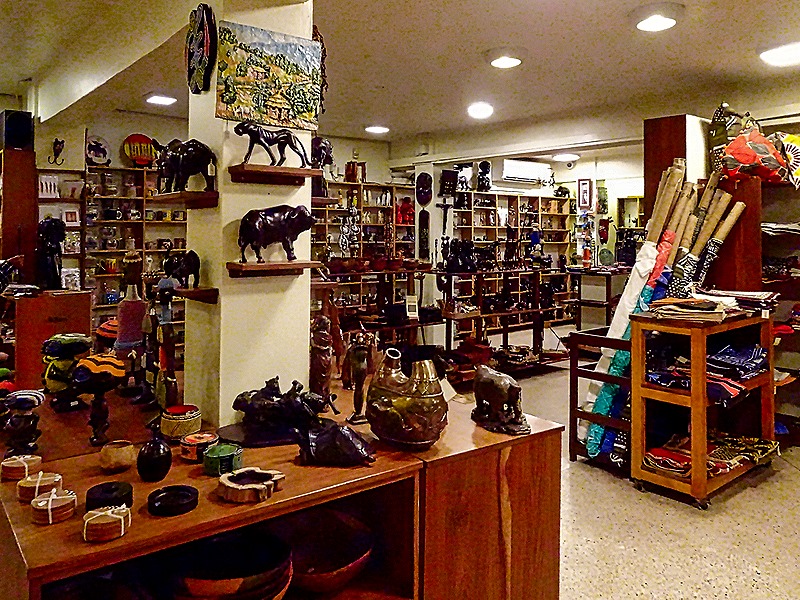
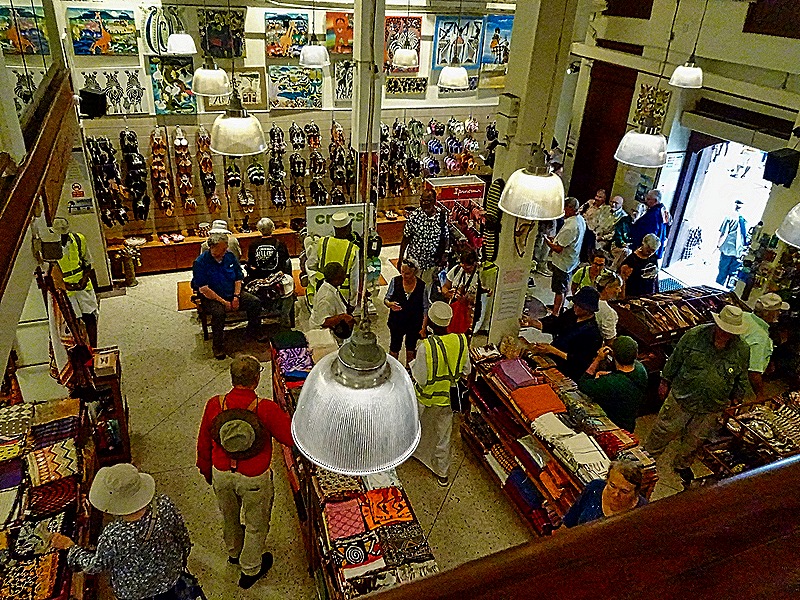
Memories Of Zanzibar is packed with jewelry, clothing, books, and African arts and crafts, in all price ranges. We picked up a few things that didn’t break the budget (and were small enough to take home in our ship cabin). Even if you don’t buy anything, this is a fun place to visit.
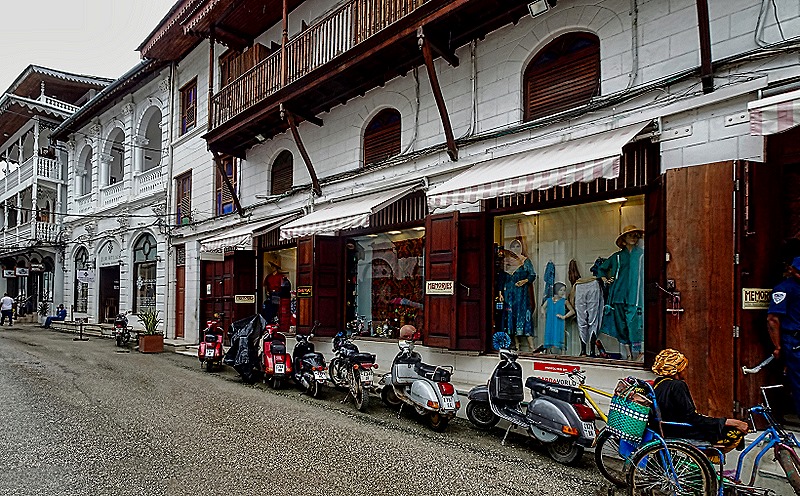
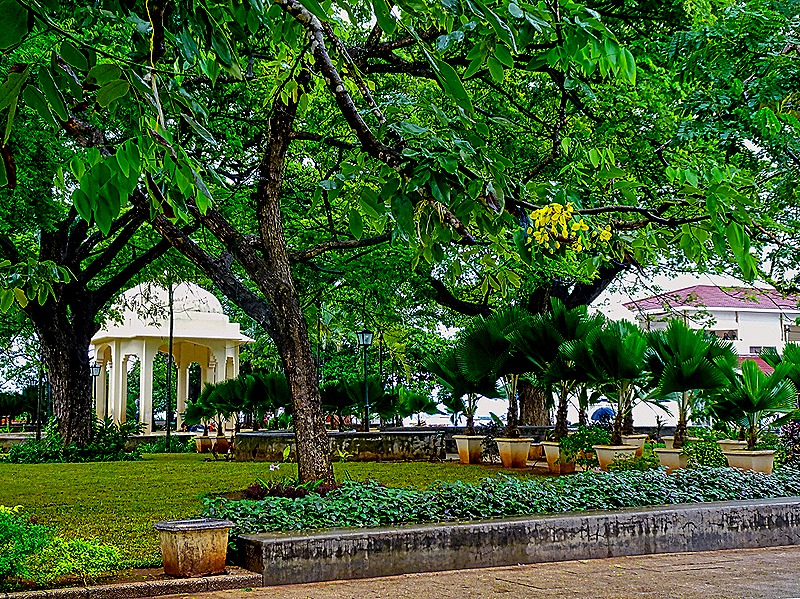
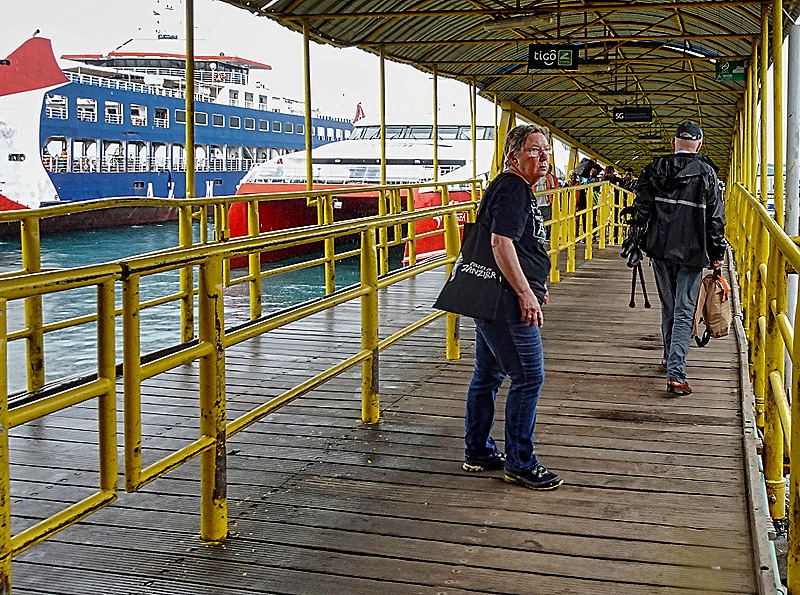
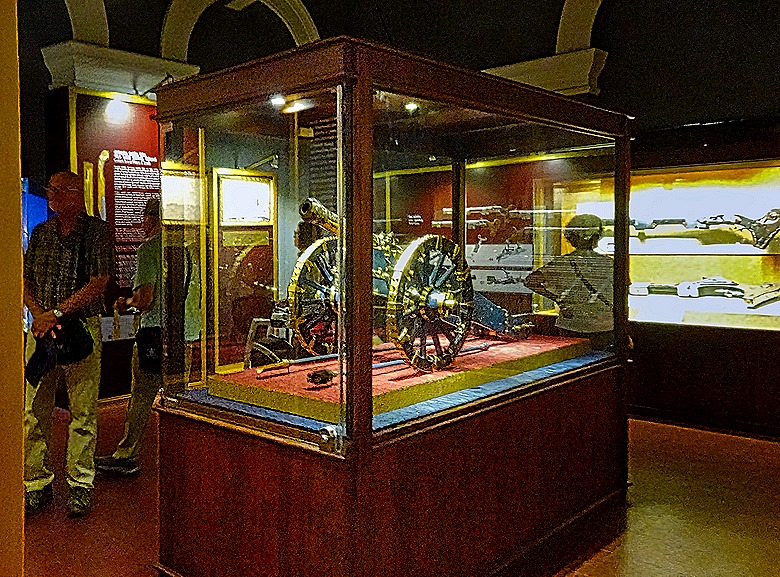
We headed back to the tender dock, passing the lovely Forodhani Gardens along the water front, with a row of old cannon facing any threat that might come by sea. At night this park is often occupied by food vendors. Walking up the boardwalk to the tender dock we boarded a tender and returned to the ship.

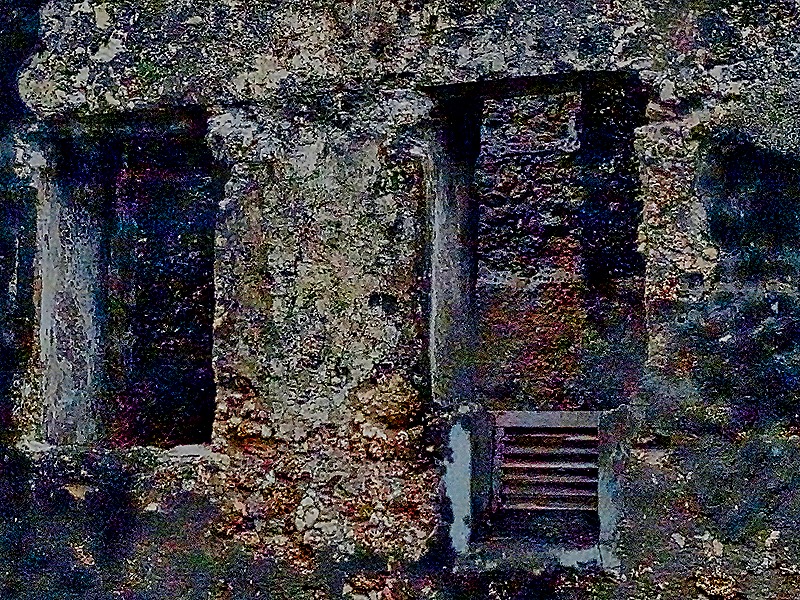
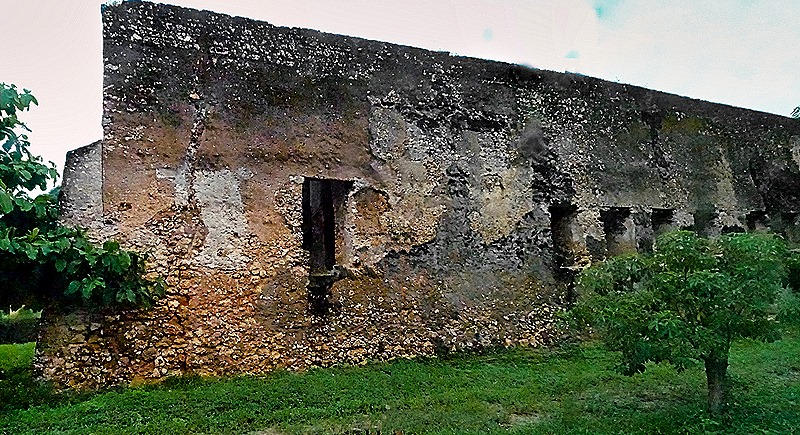
But wait, that’s not all! We had booked a HAL excursion for some sightseeing and dinner near the water. This was very expensive for a four hour excursion; you may recall in a previous episode I mentioned that most of the excursions were about twice what they cost on the 2022 Grand Africa and this one was no exception at a cost of more than $400. We never would have done it except we had a free excursion coming because we were in a veranda stateroom. We had chosen one in the Mediterranean, but when that part of the trip was cancelled they posted a new list of excursions for the free tour amenity and we picked this one. So along with Bill & Robert we tendered ashore again around 4:00 and boarded the inevitable bus at the port. Our first stop was the ruins of the Mtoni Palace, built in 1828. It was the residence of the Sultan’s wives and many children and was quite elaborate and beautiful, according to contemporary accounts. Today it is roofless, but still has rooms, staircases and arches, to explore. We didn’t get to see any of this, however. For some reason those leading the tour decided it was unsafe and wouldn’t allow anyone to leave the bus. So we just pulled up near one wall, looked at it for a few minutes, then turned around and drove off. Quite disappointing, especially after a substantial bus ride out of town to get here.
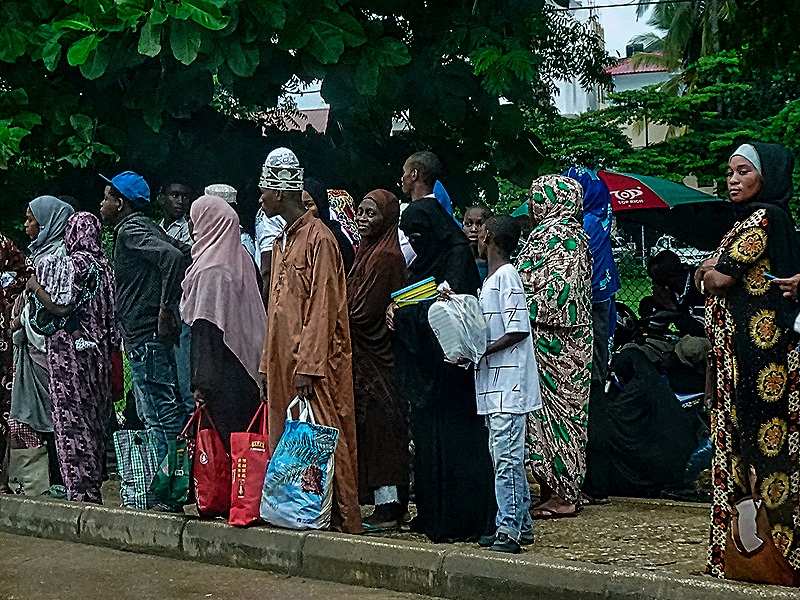
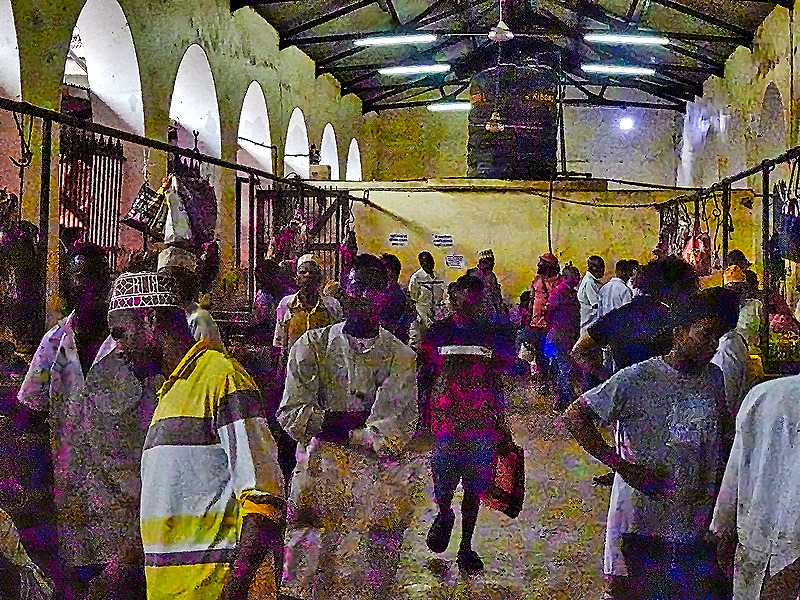
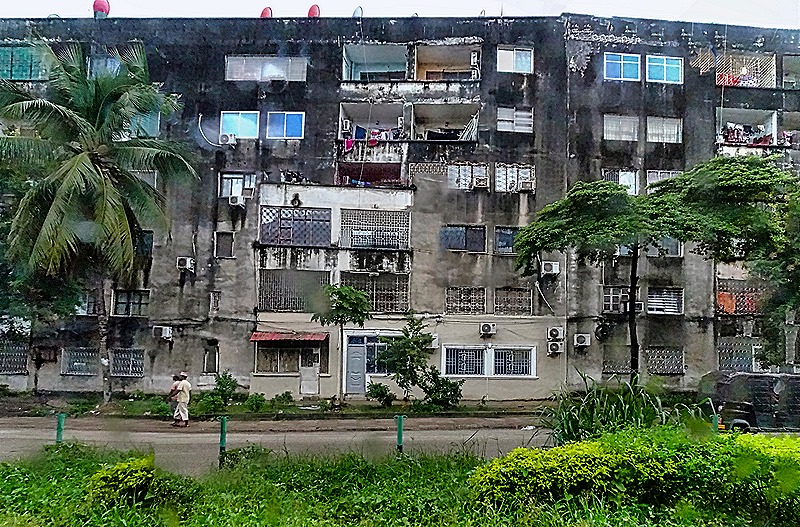
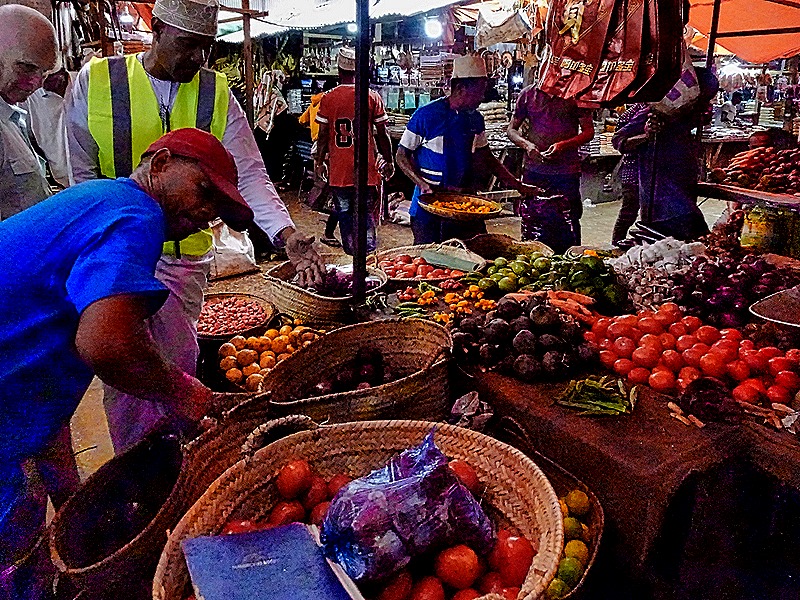
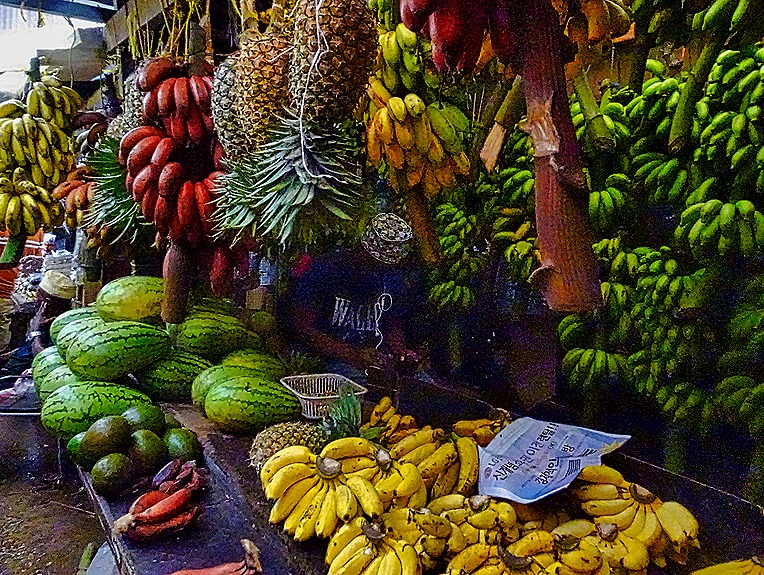
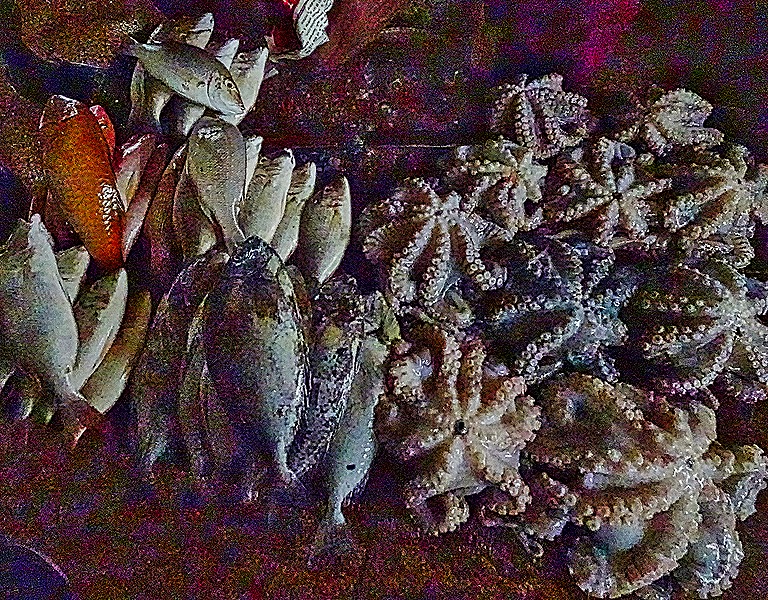
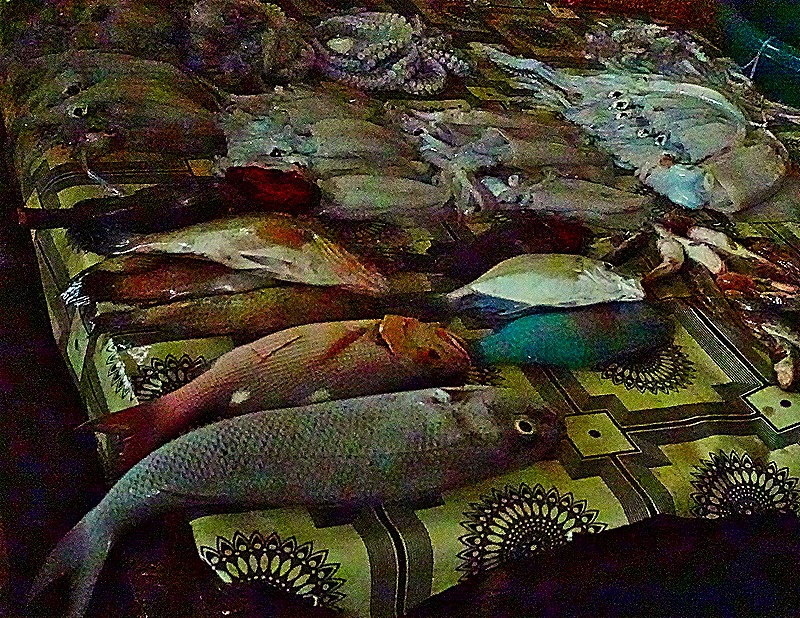
We returned to town, driving past a large apartment building with laundry drying on the balconies, then stopped for a visit at the Darjani Market, the city’s central market. Built in 1904, this is mainly a food market but also includes vendors of cloth, clothing, souvenirs and even electronics. We walked through the market, seeing many varieties of fresh seafood and colorful produce.






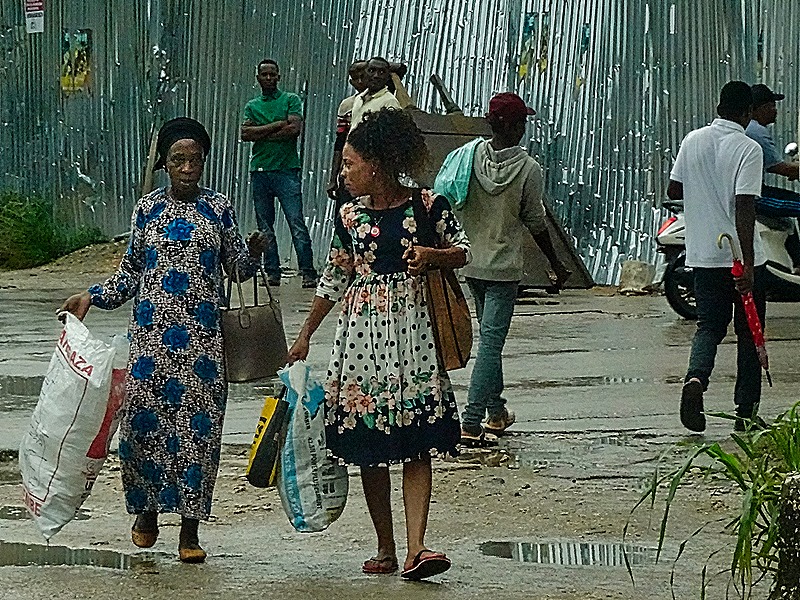

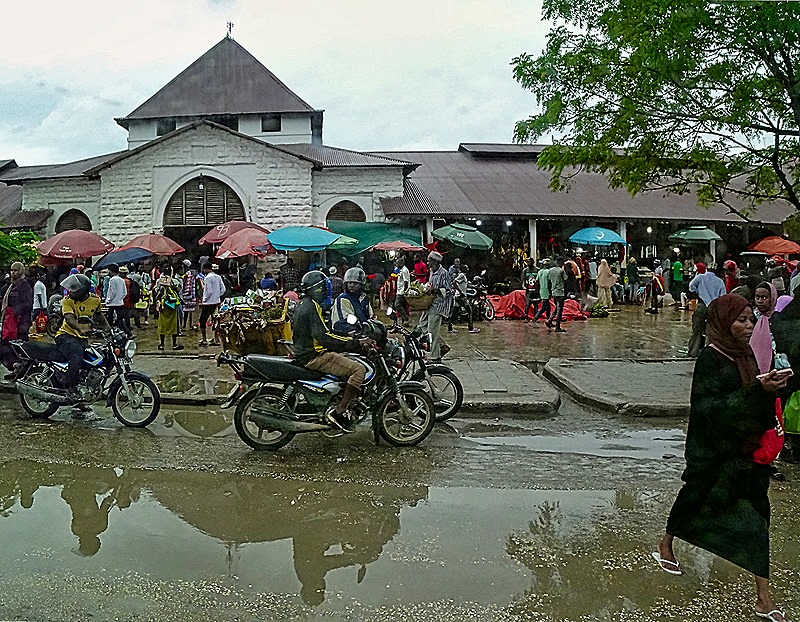
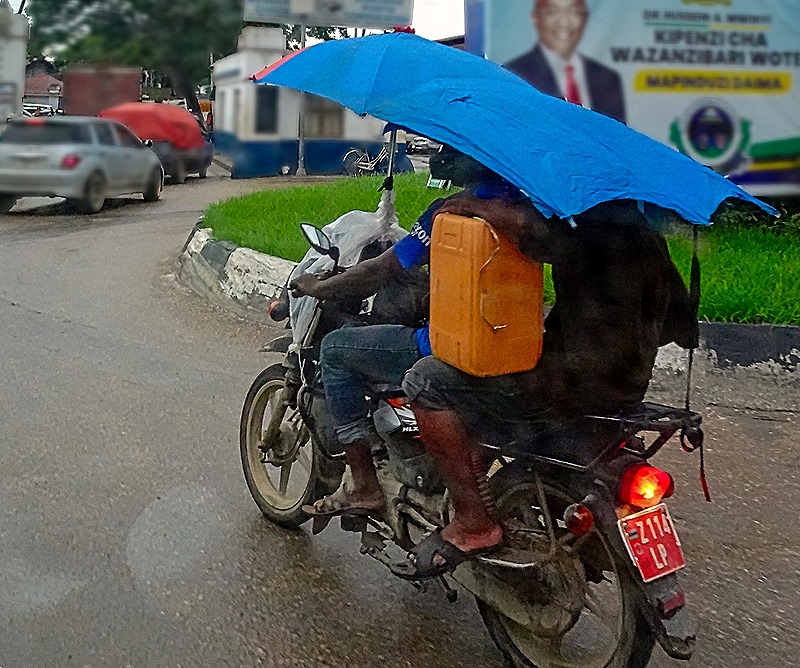
We drove next to the Peace Museum, which opened on Armistice Day in 1925 as a memorial to those who lost their lives in the war. It was closed when we were there, so we were only able to view it from the outside. We have mentioned that it was a drizzly day and a number of the many motorcycles on the street with us were outfitted with improvised cloth roofs.
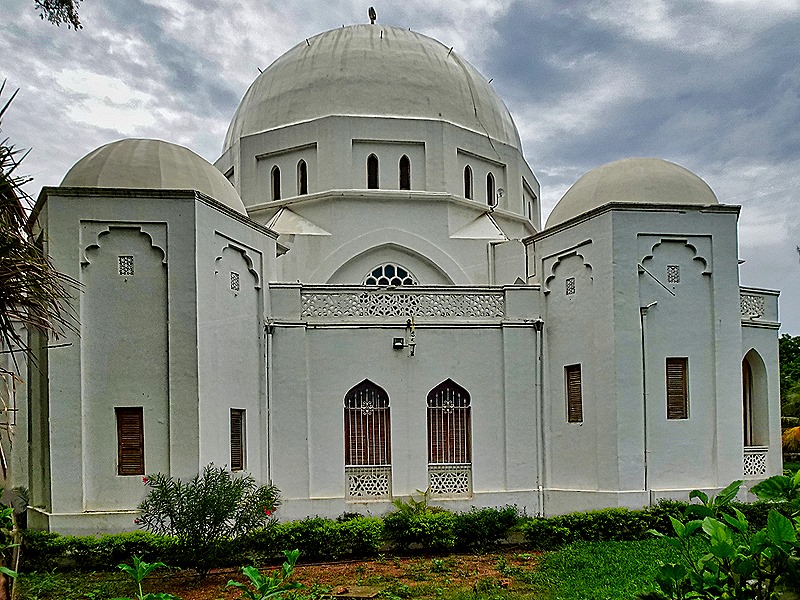

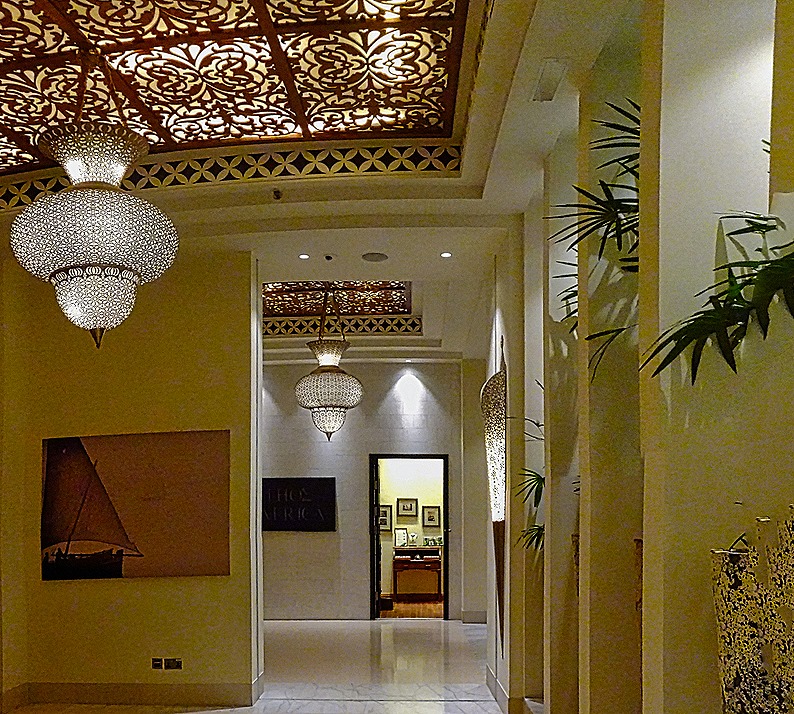
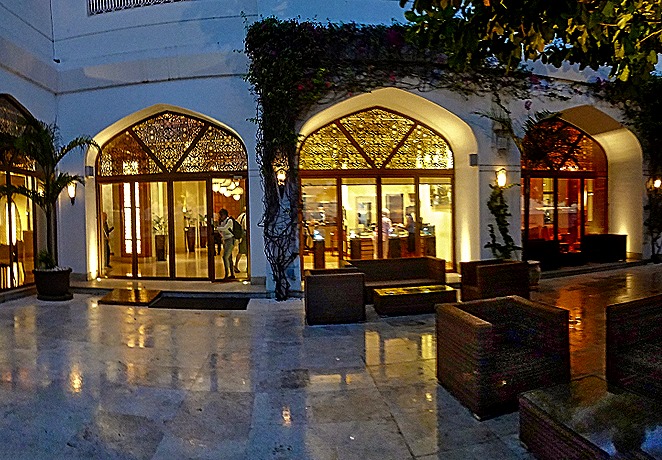
We were originally supposed to have dinner under the stars at the Serena hotel, but for reasons that were not disclosed to us this was moved to an inside room at the Park Hyatt (perhaps because of the possibility of more rain). It was a nice upscale hotel with African decor where we had a good buffet dinner.
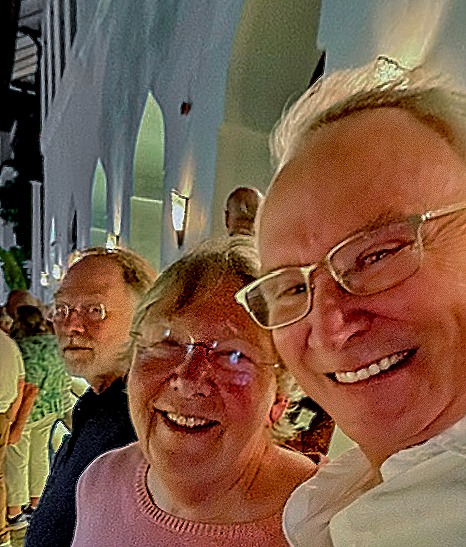



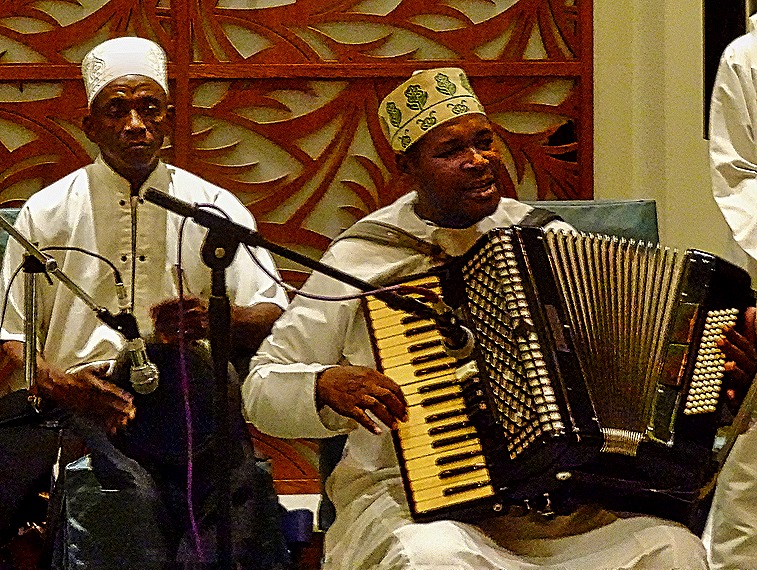
A local band played African music during part of the meal. There was a singer for a few songs, but we didn’t get a usable picture of her.


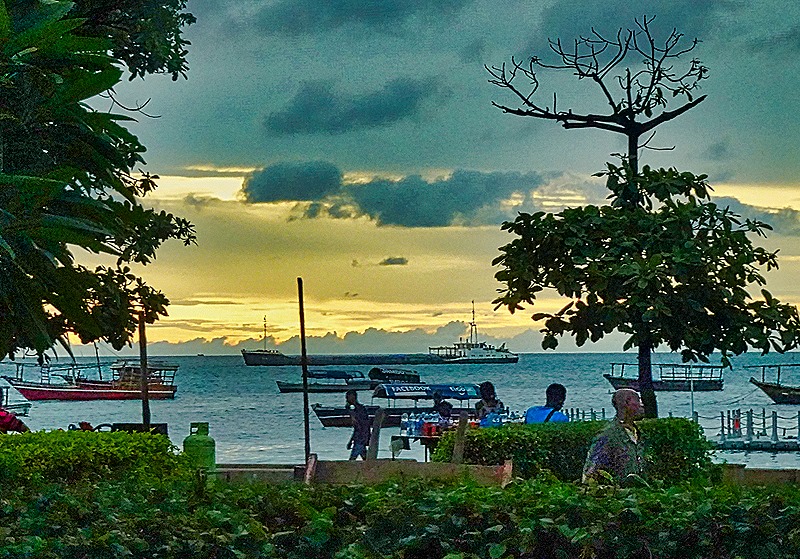
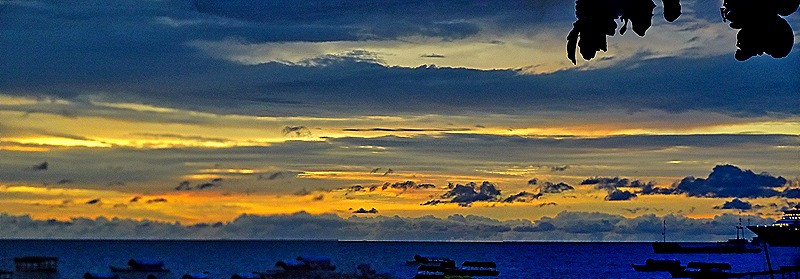
But the best thing here was the view from the hotel’s waterfront veranda. We saw a working beach nearby and the Zuiderdam out in the blue water. And at its height the sunset looked like something from a science fiction movie.


Victoria, Mahe, Seychelles (overnight) — 2024
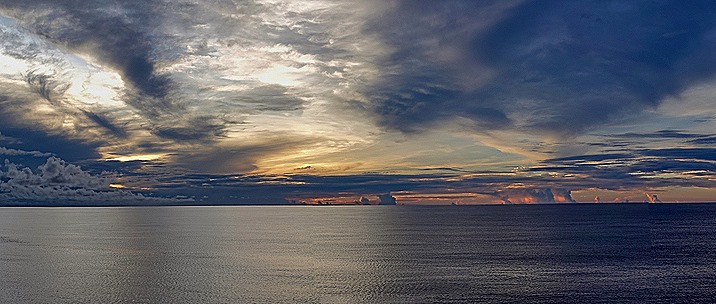
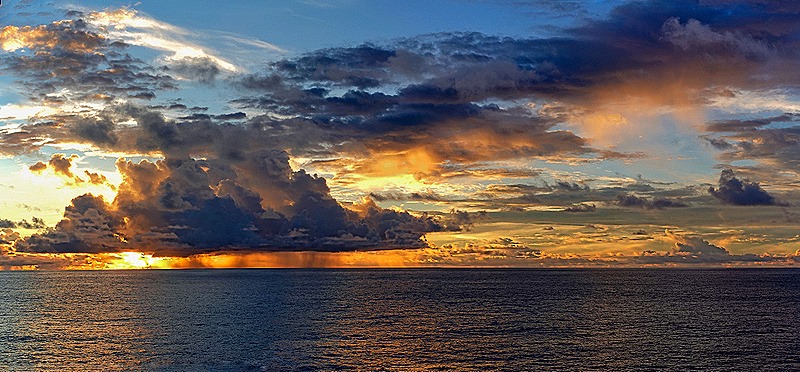
On the morning of April 4 we docked in Victoria, the capital of the Seychelles, which is located on the island of Mahe. With a population in excess of 25,000 it is not, as sometimes claimed, the smallest national capital in the world (that would be in Palau). We had two sea days on the way to the Seychelles, though, and on both evenings we had sunsets worth looking at.
We have visited the Seychelles once before, in 2018, and at that time participated in a private excursion throughout this beautiful island: https://baderjournal.com/2018/08/08/victoria-mahe-seychelles-islands/. So this time we decided to just walk into town, only about an hour’s walk but rather taxing in the high heat and humidity.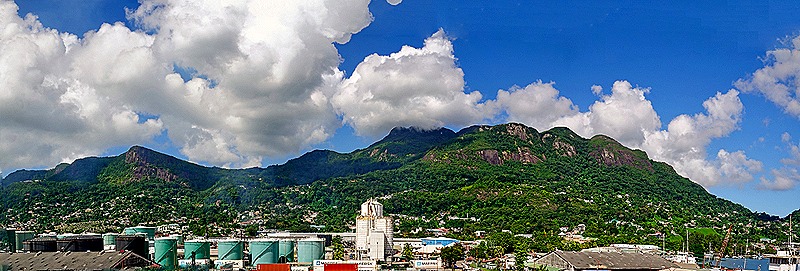
We set out after breakfast, walking down the dock toward the bay, then through the covered walk that we think has been built since our last visit. The covered walk not only provides welcome protection from the sun but is lined with engaging wall paintings.


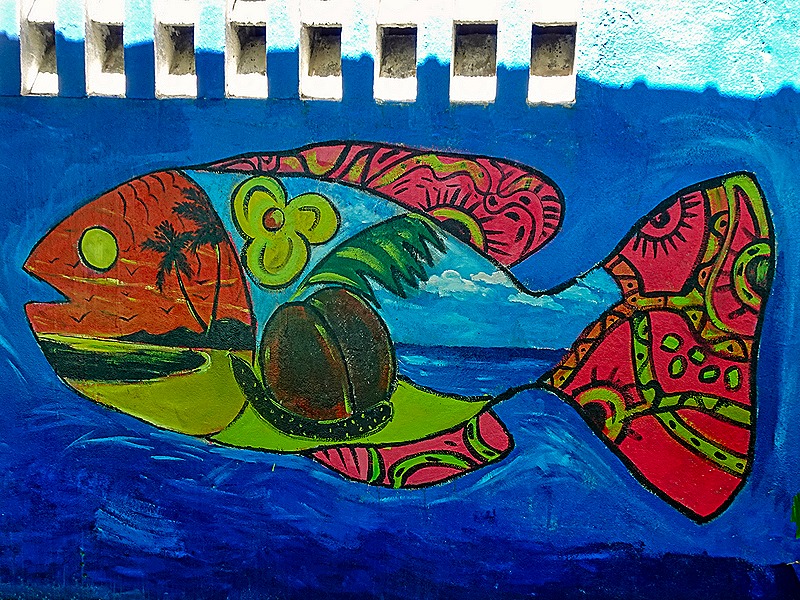

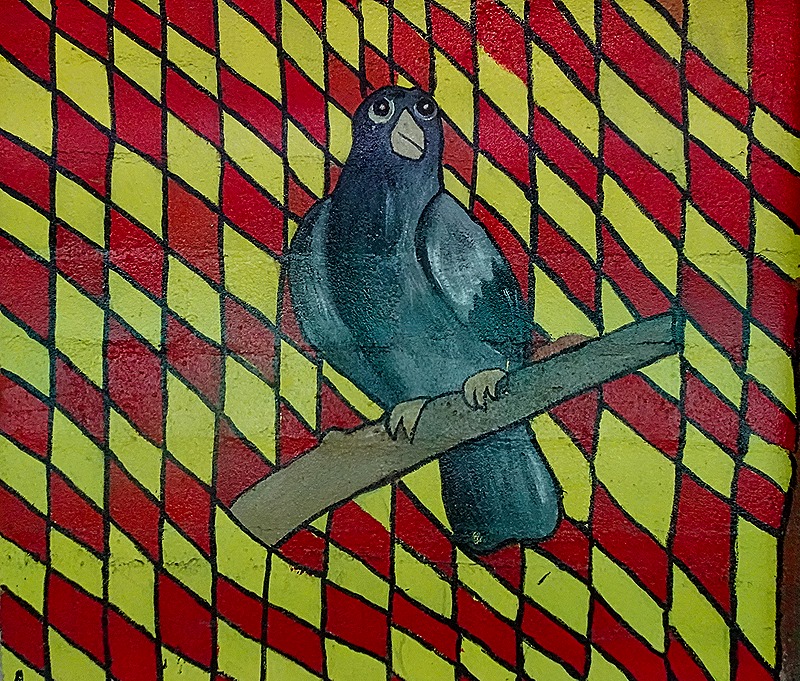

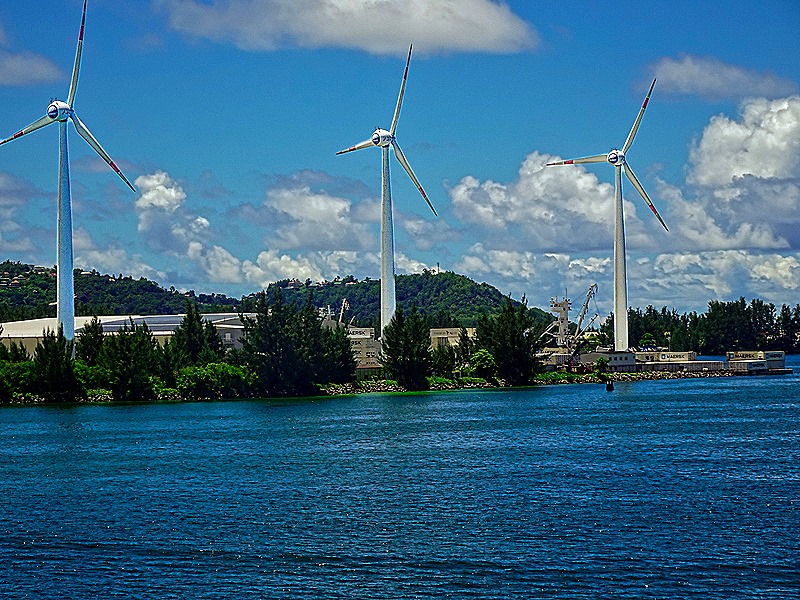
Victoria has a number of prominent wind turbines that can be seen from the port, although not all of them seemed to be working. Near the walkway were some colorful flowers as well, something that can be seen all over town.

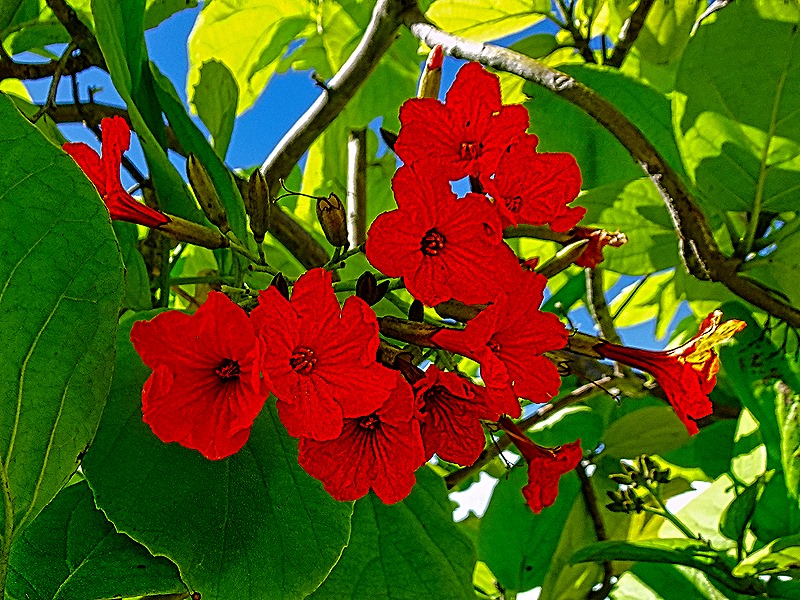

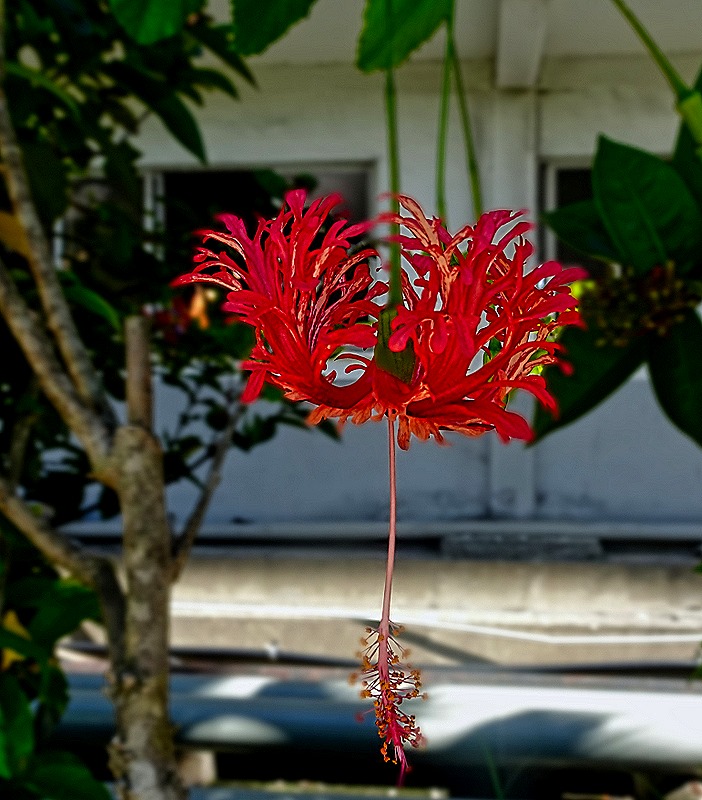
At the end of the walkway was an information table where we were given a nice map of the city, and some people with a metal detector checking ID’s (and ship cards, we think, on the way back to the port). We emerged from the walkway into a large parking lot where several taxi drivers were offering tours but we wanted to walk through the city on our own. They accepted our “No thank you” politely and didn’t pursue us further (this is not always the case elsewhere).
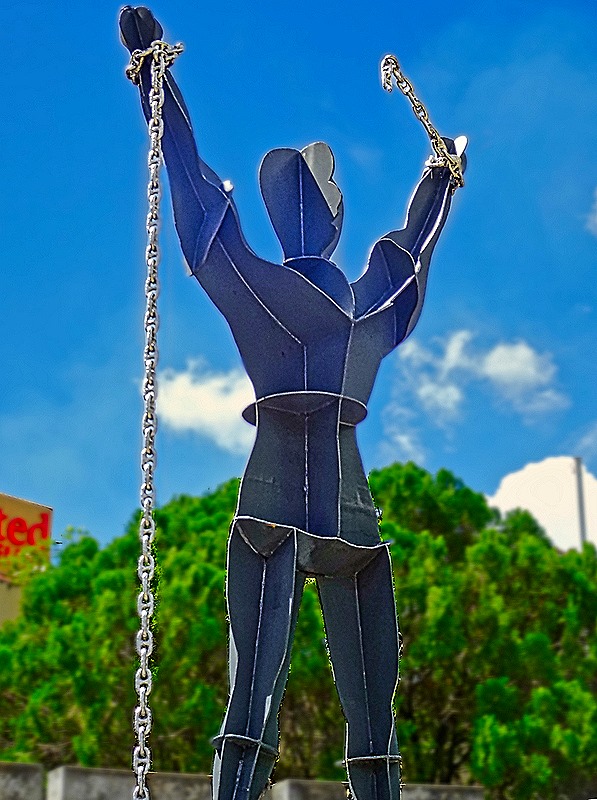
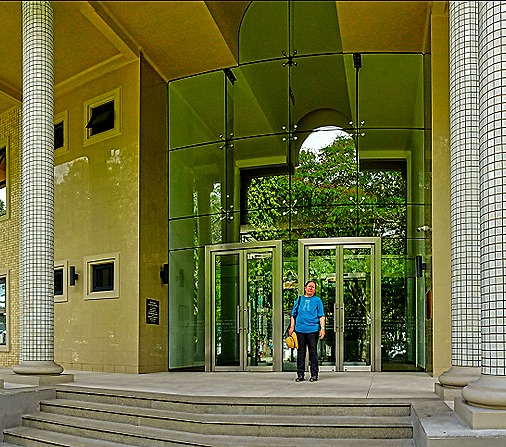
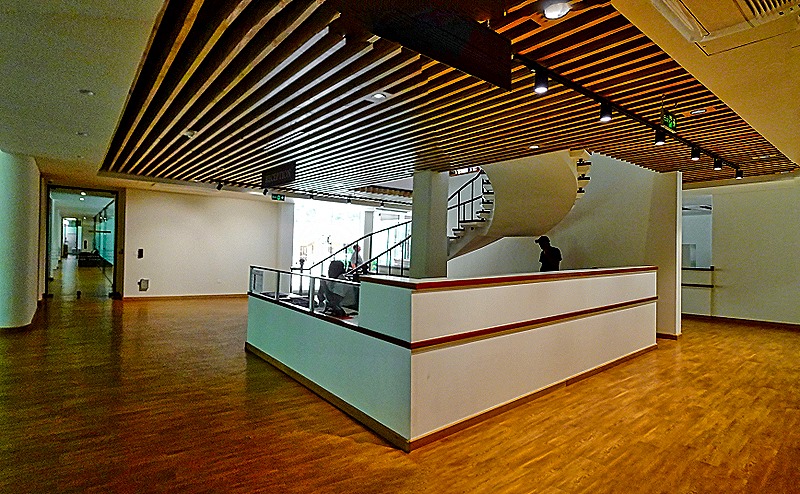
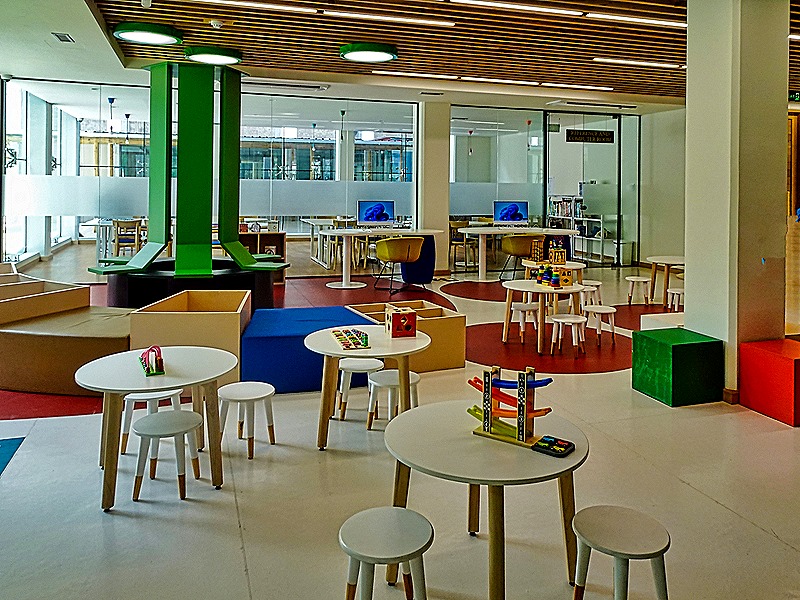
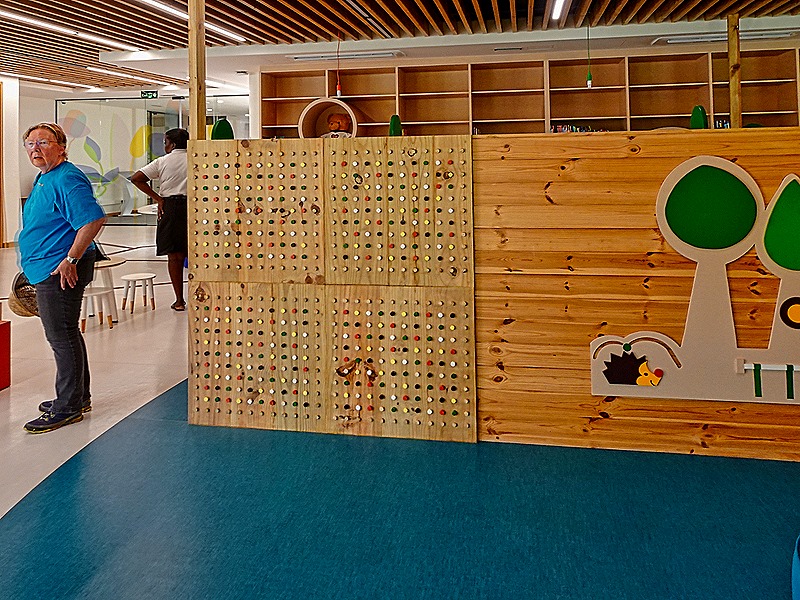
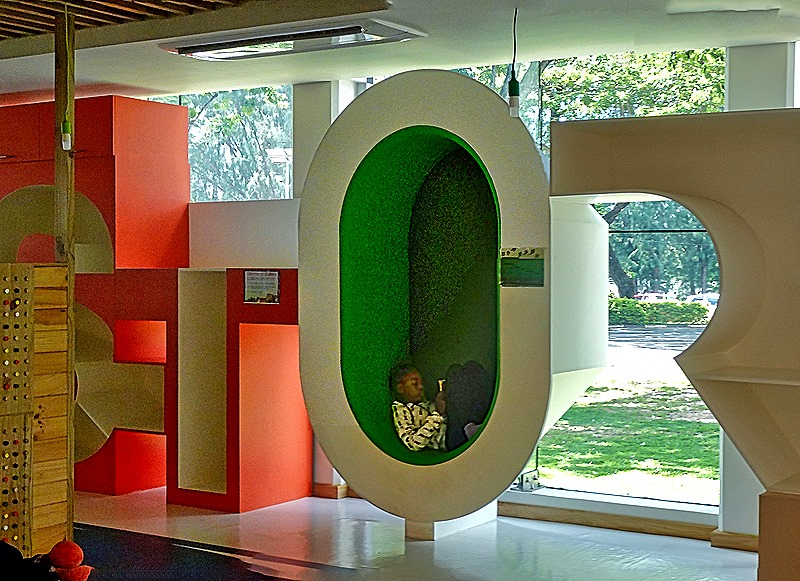
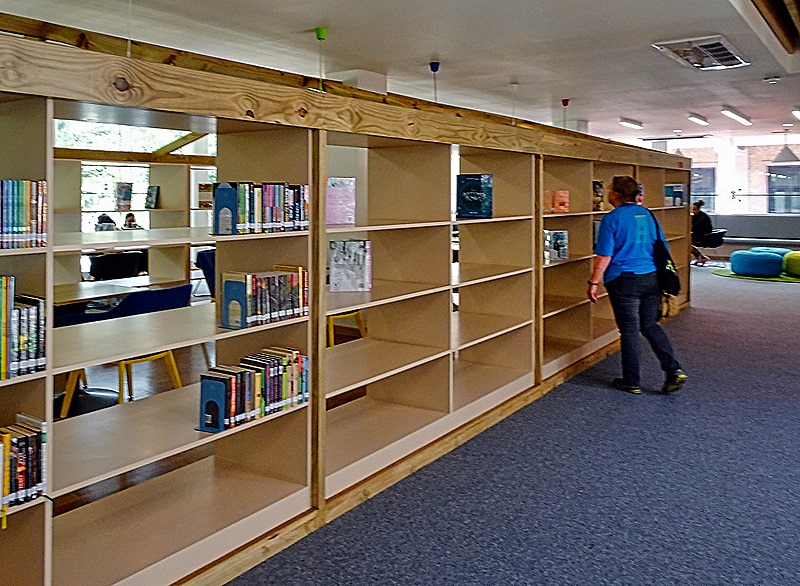
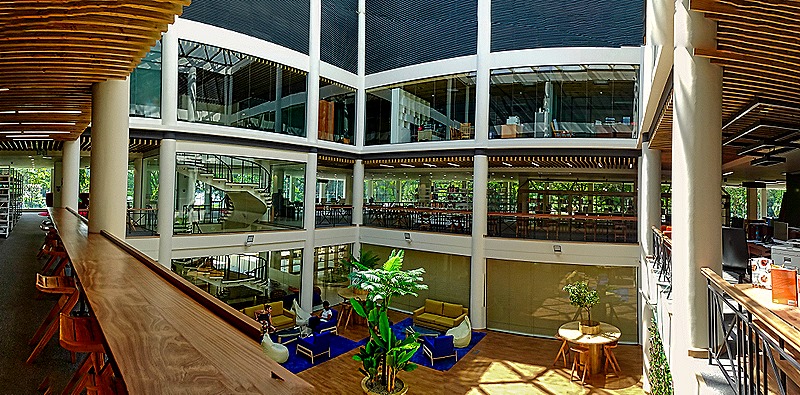
We walked on toward town, seeing the Liberation Monument, erected in 1978 and moved in 2014 to the front of the ruling party’s headquarters. Known as “Zonm Lib” (Free Man), it does not commemorate the demise of slavery, as we thought looking at it, but a coup in 1977 that removed the Seychelles’ first president, causing three deaths. Apparently it is still pretty controversial. We also visited the National Library nearby. Its roots date back to a grant from the Carnegie foundation in 1910 and it became the National Library in 1978. It moved into this new building in 1979. The building was closed for several years because of a fungus infestation and apparently reopened less than 6 months before our visit. The library is large and spacious with a nice children’s room and a lot of room for its collection to grow, judging from the many empty shelves we saw.



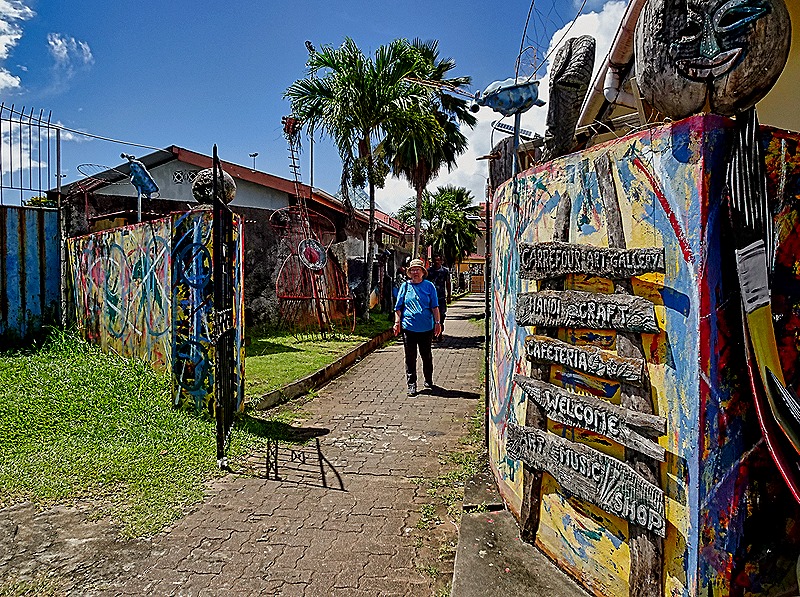
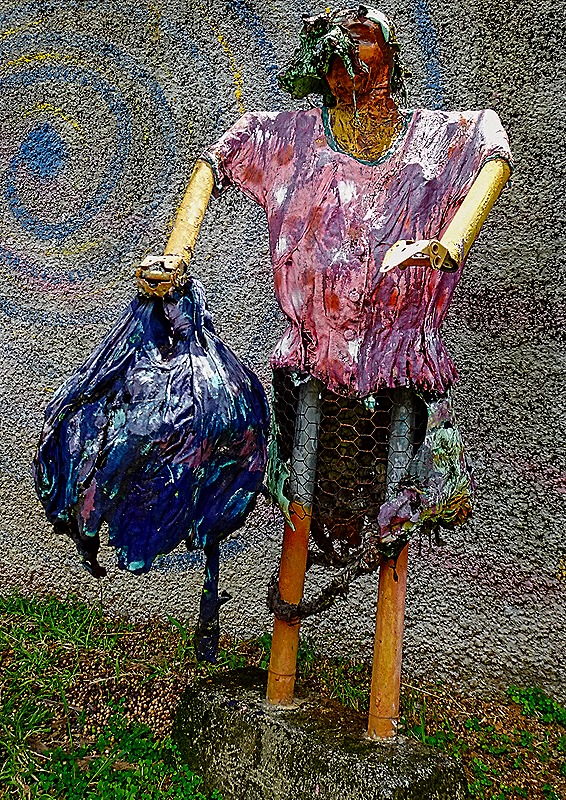
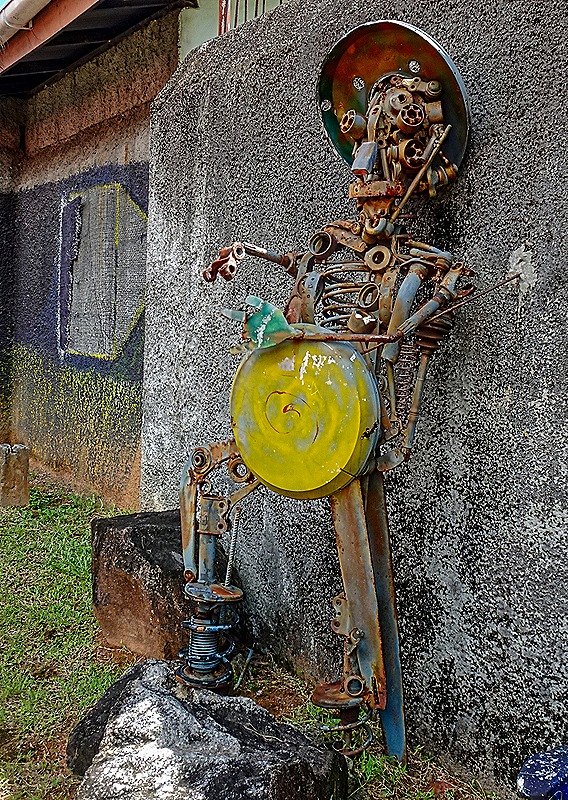
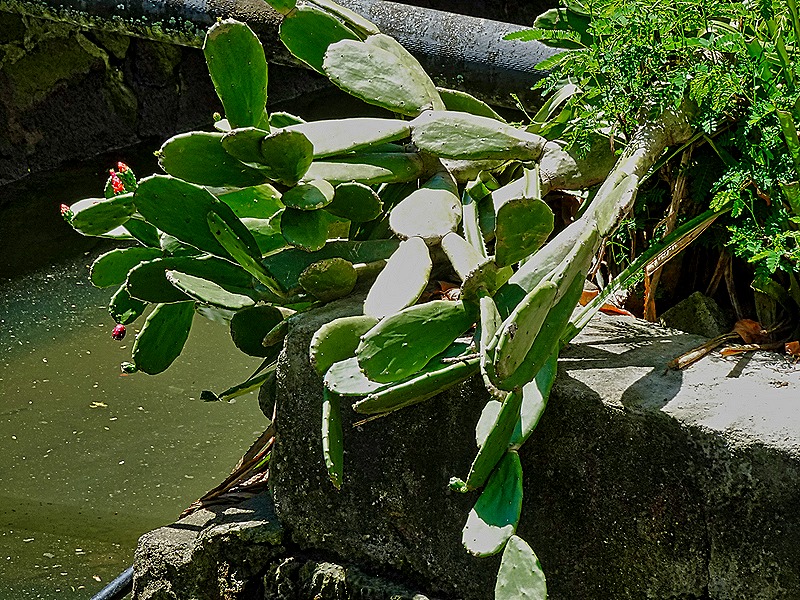
Just beyond the library in an area away from the street and bordered by a rock walled canal we came upon the Carrefour des Arts, a gallery for Seychellois artists opened in 2005. This complex also included some art and craft stores. But the best thing was a walk outside the building displaying sculptures reflecting local traditions made of found materials (such as wire, wood, metal, plastic bags, etc). It was small but quite interesting and the canal was lined with nice flora.
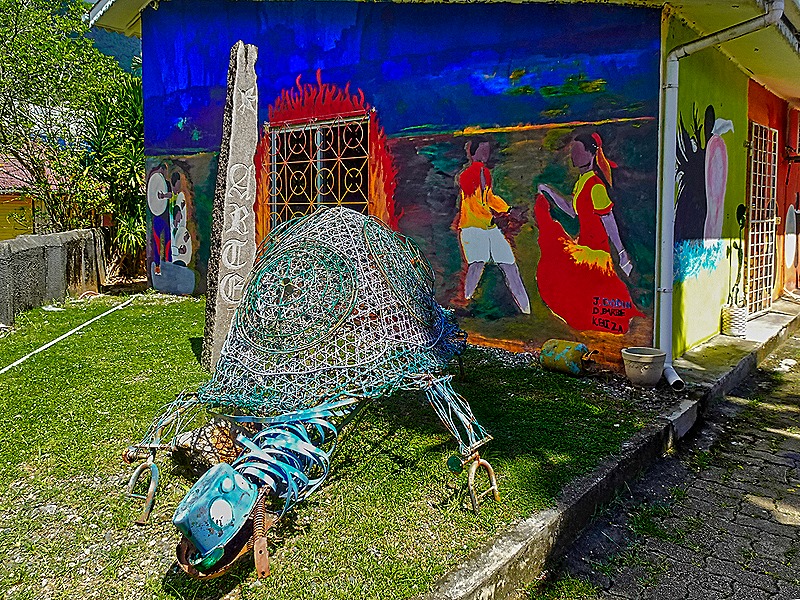
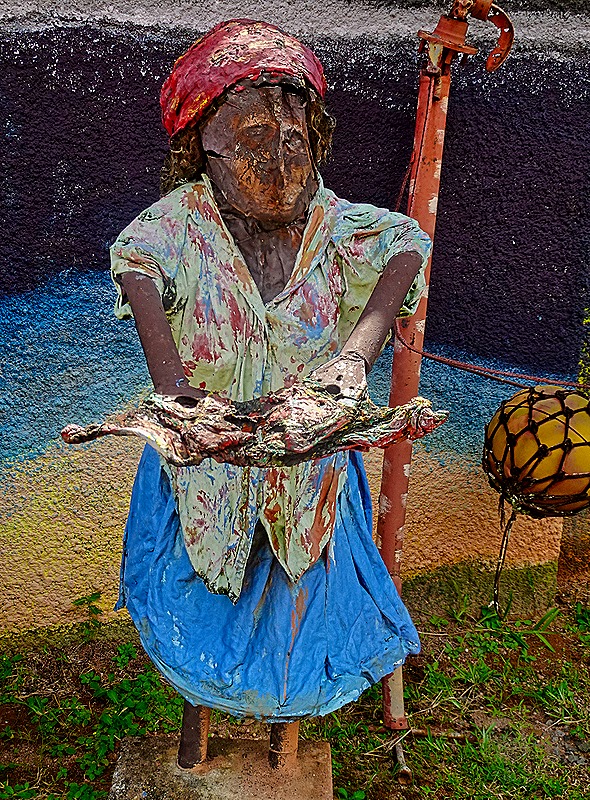


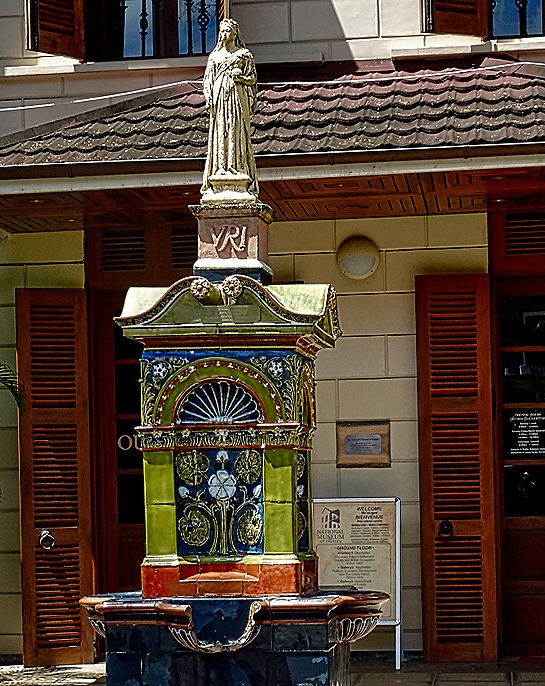
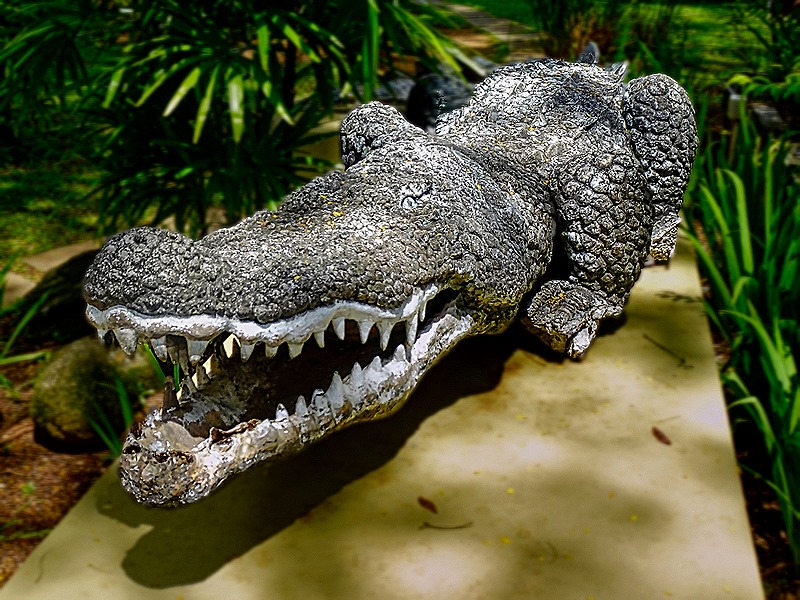
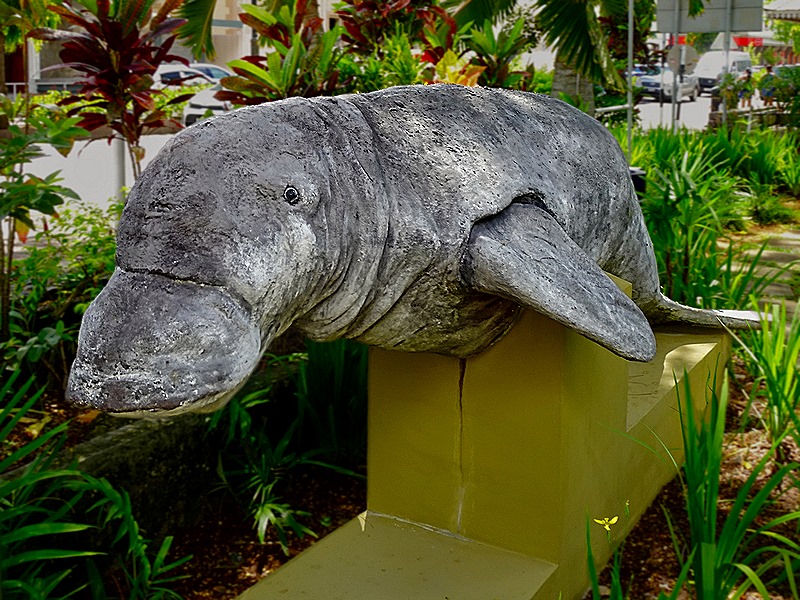
As we continued toward the center of town we spotted down an alley the golden dome of the Sheikh Mohamed bin Khalifa Mosque. It was built in 1982 by the family of the head of the United Arab Emirates, who also owns a mansion on the side of a mountain overlooking Victoria. We encountered the Jubilee Drinking Fountain sitting in front of the National History Museum. Created of porcelain by the Royal Daulton company of London, it was unveiled in 1900, three years after Queen Victoria’s actual Diamond Jubilee. It features a foot tall sculpture of Queen Victoria, which was moved for preservation purposes inside the museum in 1977. The fountain was restored and the statuette replaced with a replica donated by the British government in 1993. On the museum grounds we also came across sculptures of a crocodile and what looks like a manatee

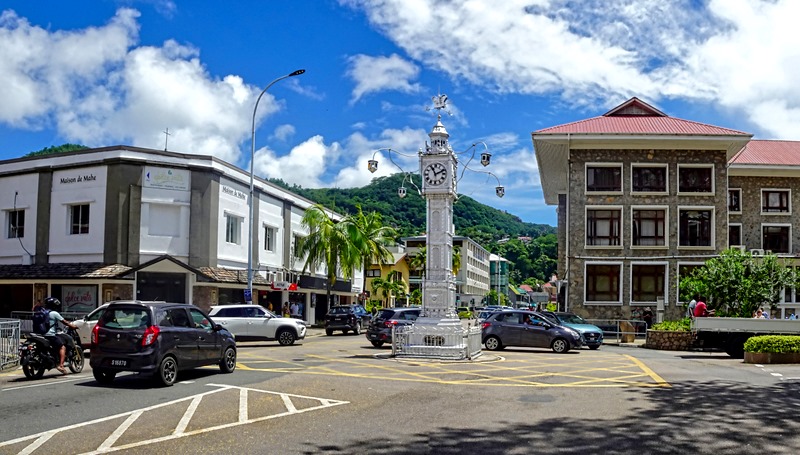
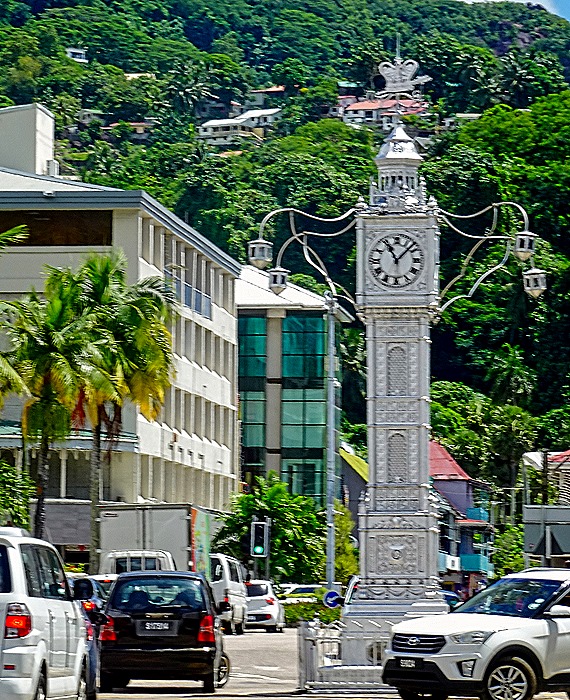
In the middle of one of the central intersections in town sits the 25 foot tall Victoria Clock Tower. It was erected in 1903 in memory of Queen Victoria, after whom the city was named, who had died in 1901. Made of cast iron, the clock tower was painted silver in 1935. It is a model of Big Ben in London (actually it is a model of a model of Big Ben that sits near Victoria Station in London) and was originally supposed to chime. But the chime never worked until in 1999 its mechanism was replaced with a modern electronic one . . . by the same company that had manufactured the clock tower itself almost a century before.

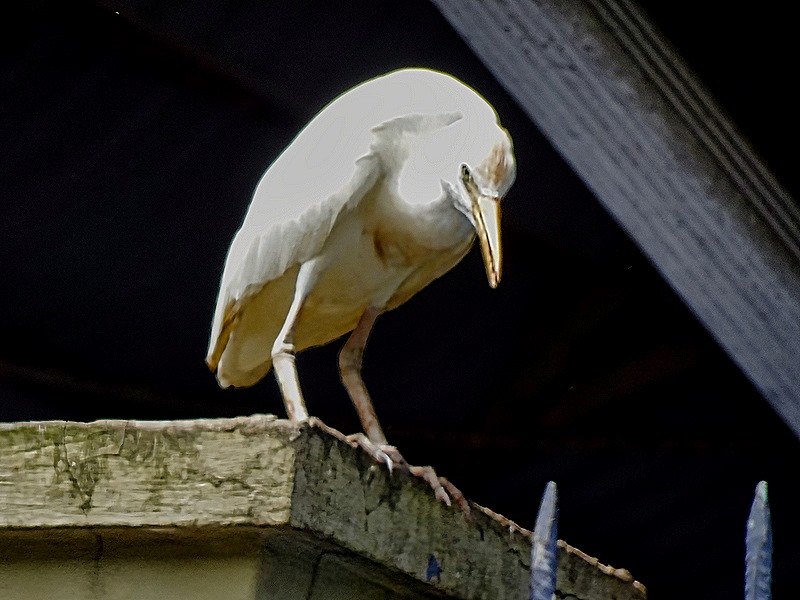
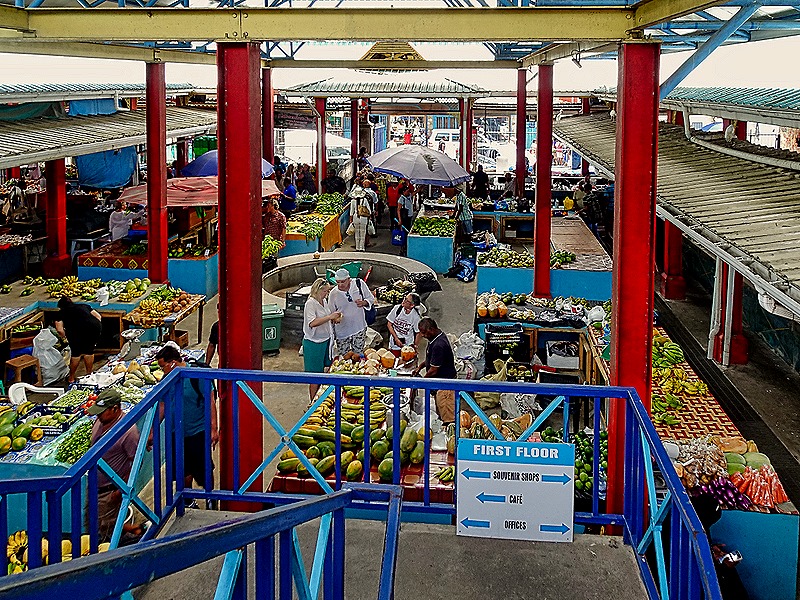
We walked on to the Sir Selwyn Selwyn-Clarke Market, a large covered produce market housing many individual vendors. This is the central market of the city where you can buy not only produce, but also colorful spices, freshly caught fish, clothing, crafts and souvenirs. The market dates back to 1840 but it is named after the English governor of the Seychelles who served for 4 years after World War II. It has two stories with a roof covering many of the vendors and others in a courtyard with individual umbrellas to protect from the sun. The sides are open and this is a regular hangout for white egrets (on both of our visits an egret was sitting on top of a pillar by the entrance reviewing the visitors as they arrived). When we visited here in 2018 we had a very nice view from the market of the Hindu temple a few blocks away, but since then a blocky gray building has gone up right next to the market that entirely eliminates the view in that direction.




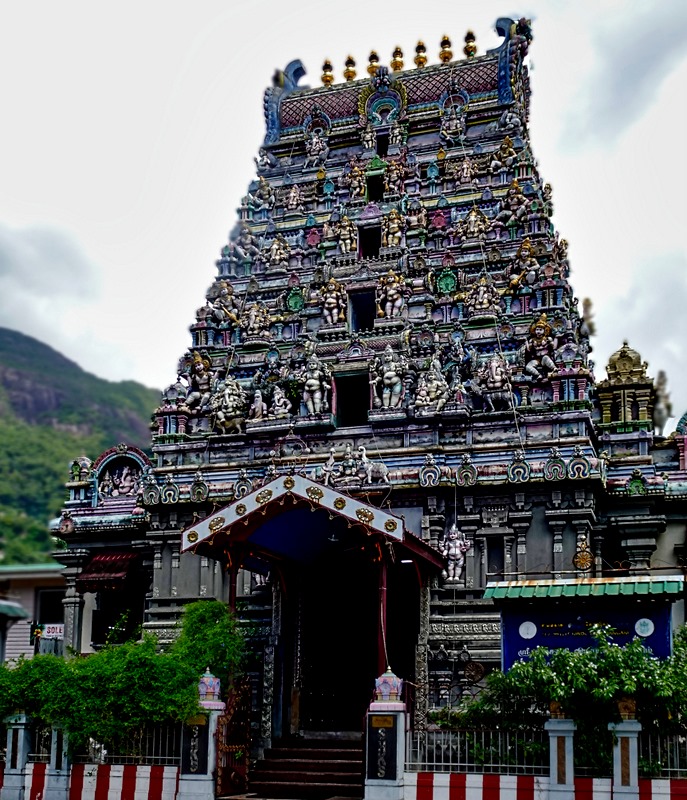
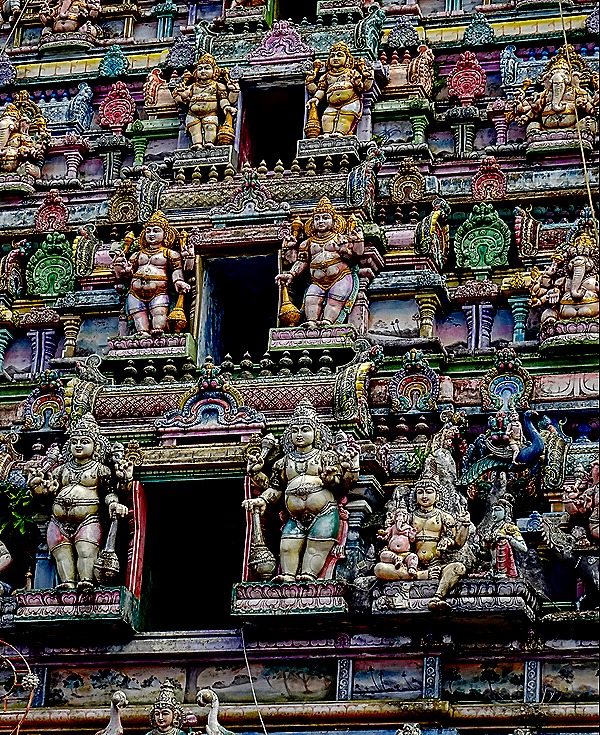
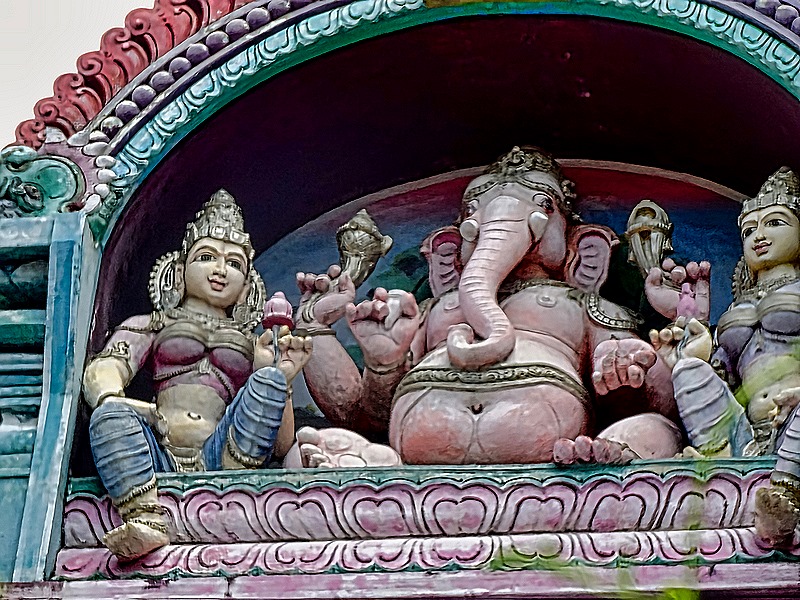
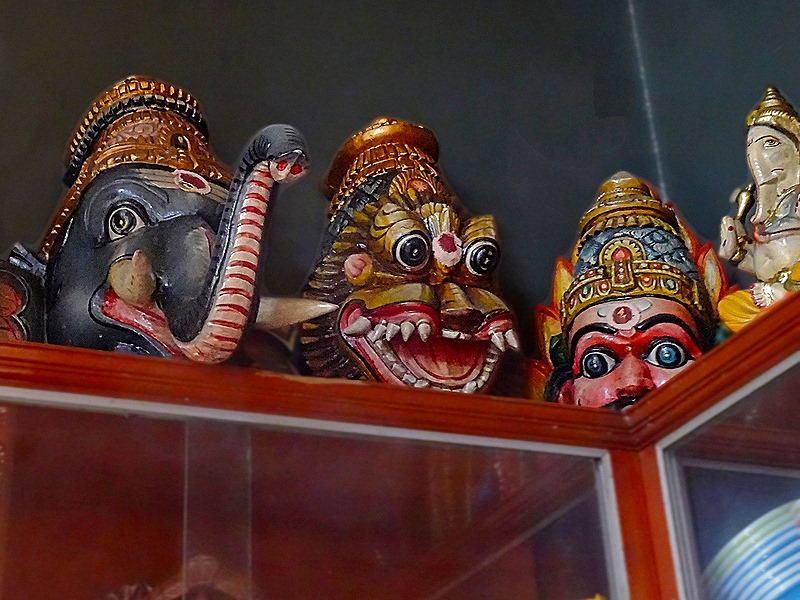
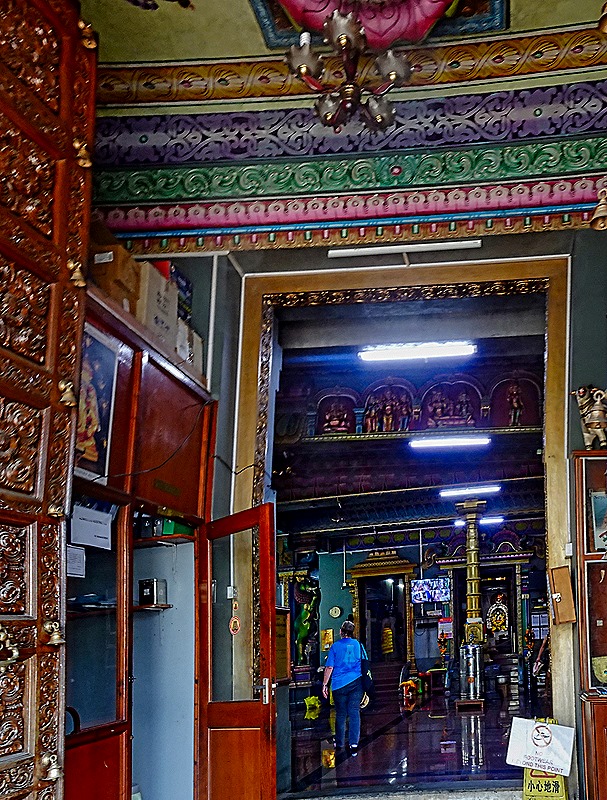
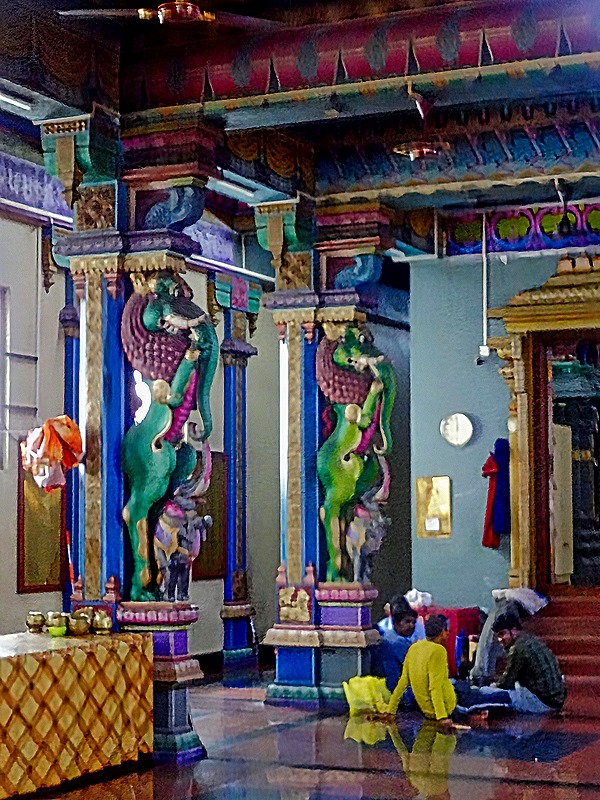
It was only a few blocks further to reach the Hindu temple, called Arul Mihu Mavasakthi Vinayagar. Constructed in 1992, it is the only HIndu temple in the Seychelles. It is dedicated to the Hindu deity Ganesh, who is also sometimes called Lord Vinayagar. Hindus account for about 2% of the population of the Seychelles. You have to remove your shoes to enter the temple; Mary did but Rick waited outside and took some pictures through the door. The temple looked similar to other Hindu temples we have visited (most recently in Colombo, Sri Lanka, less than a week earlier), but rather smaller. Still, with its multi-colored tower full of sculptures it made for a nice view with the green mountains behind it.

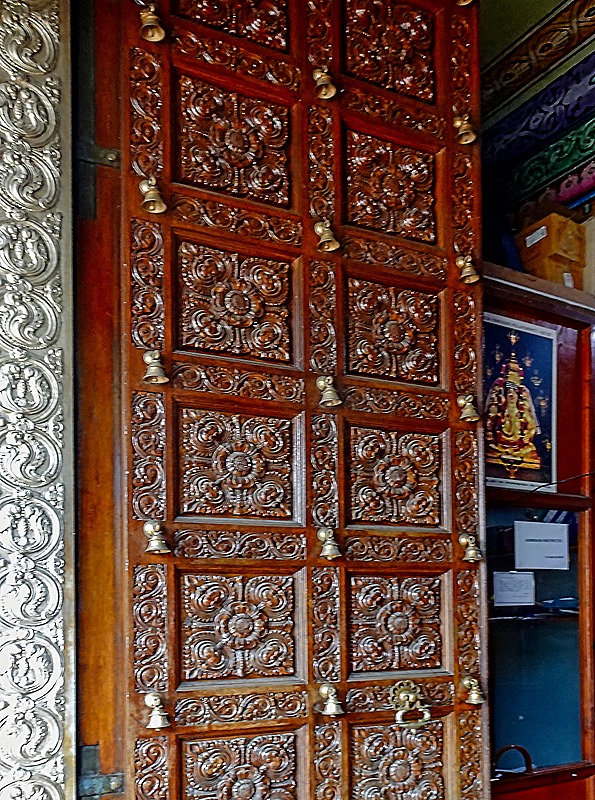
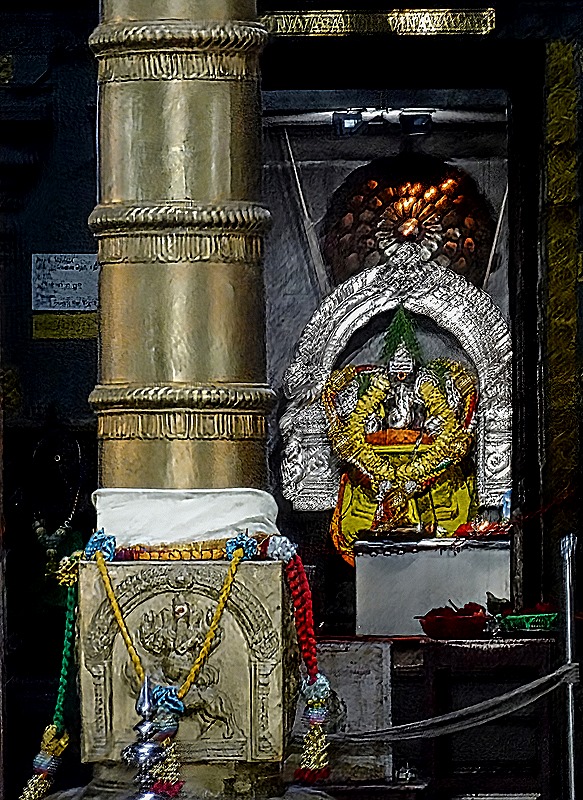
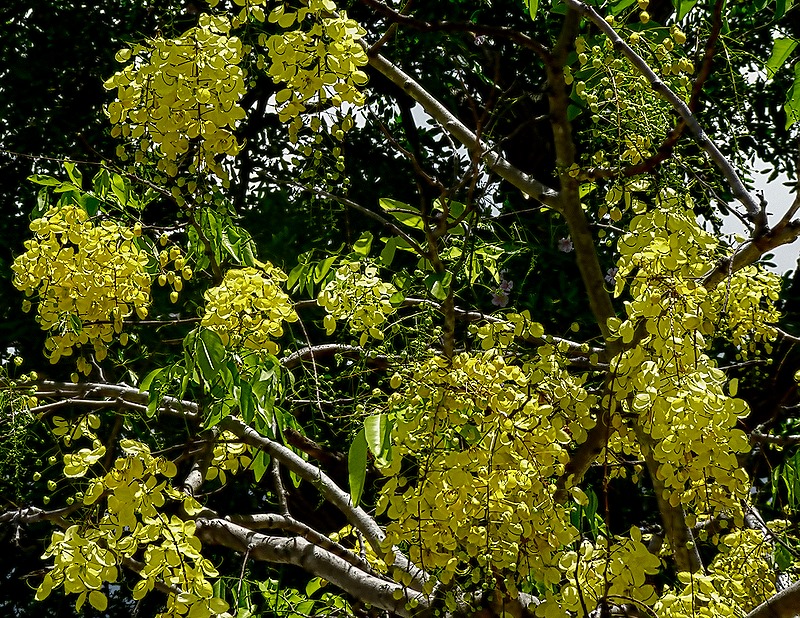
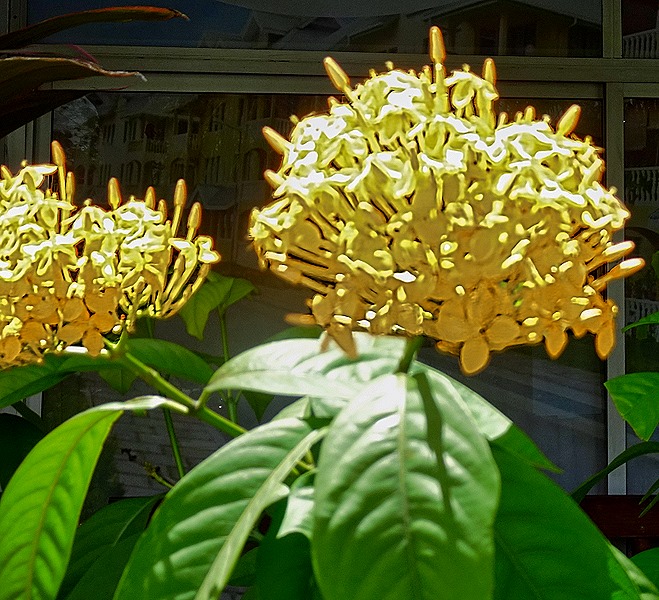
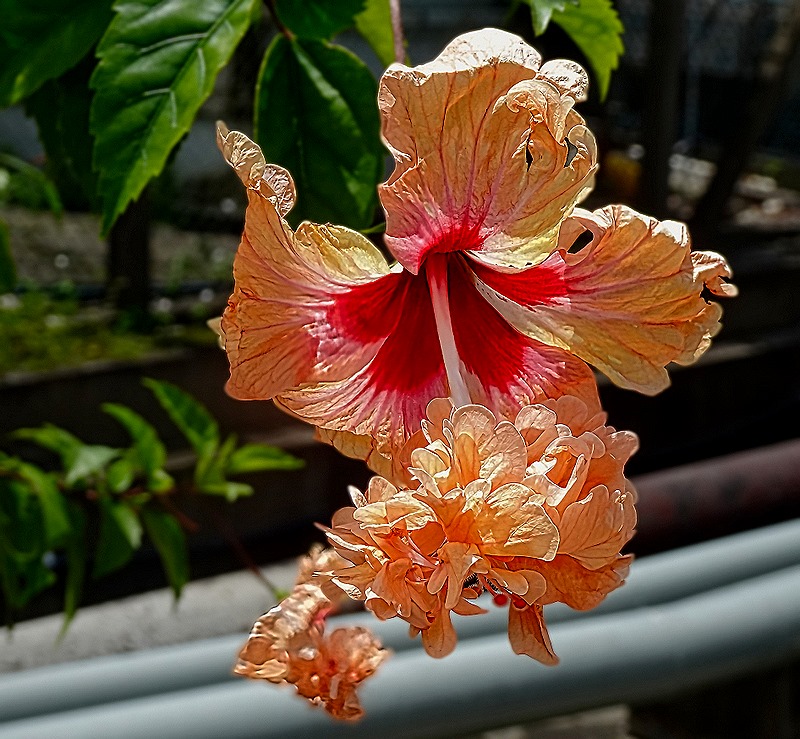
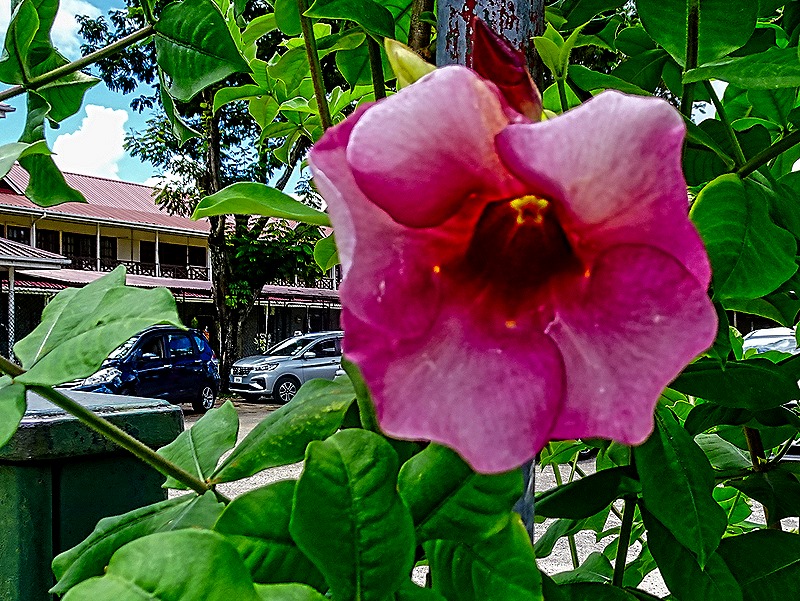
The walk back to the port seemed longer in the hot sun, but there were many nice flowers to enjoy on the way.
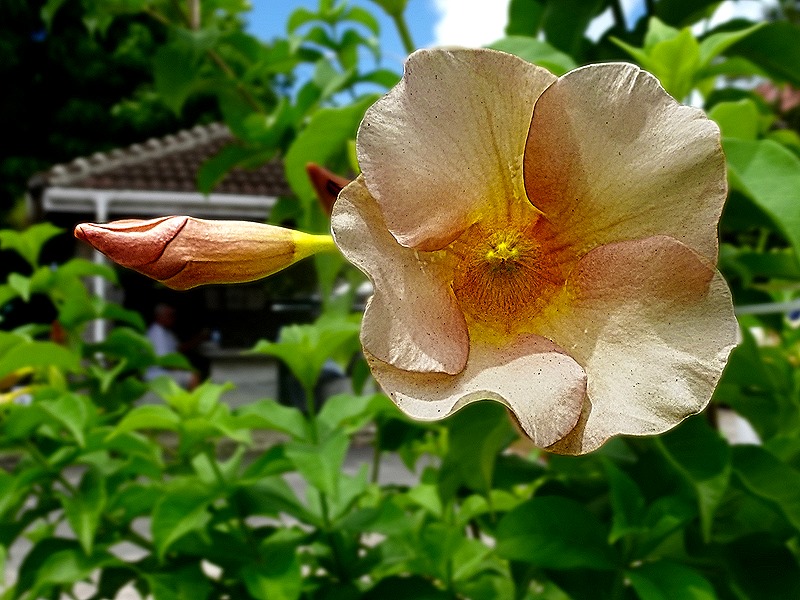
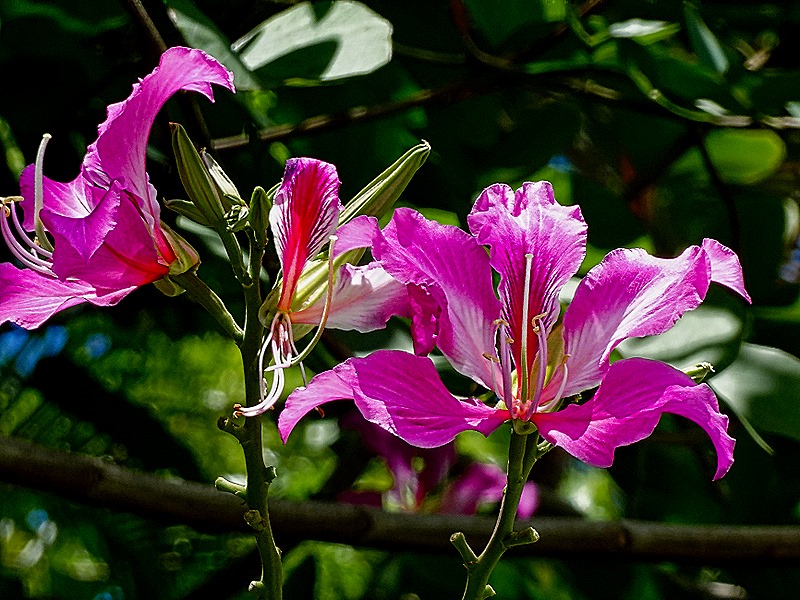

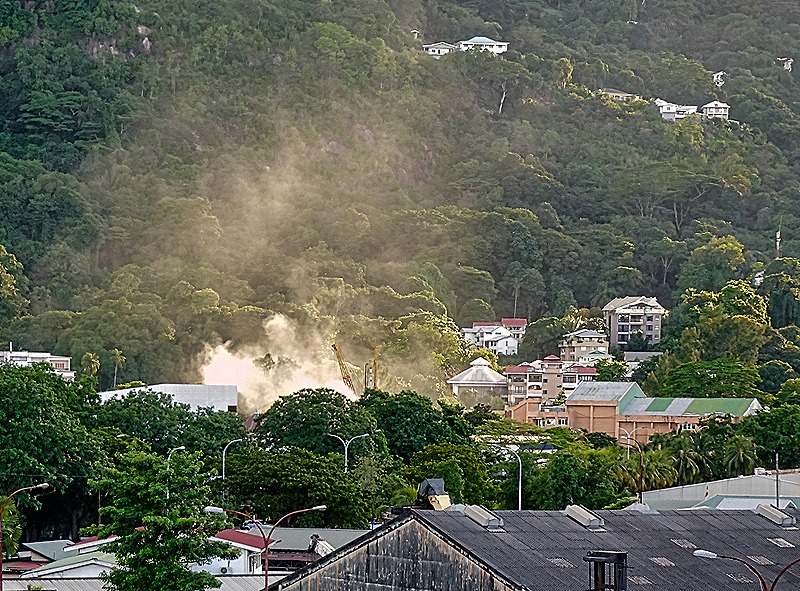
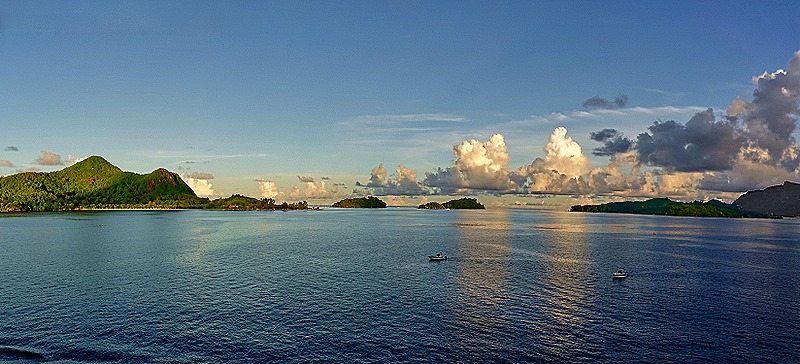
On April 9 we were still docked in Victoria. But it had been so hot the day before and we had seen and done what we most wanted to here. So we decided to spend the day on the ship. We did see what looked like a big fire not too far from the port, but perhaps it was something purposeful because we never saw any fire trucks. On the way out of the port we also saw the pilot boat. If you have never seen one, this boat pulls up alongside the ship, both moving at speed, after it leaves the harbor and the pilot jumps(!) from a doorway in the ship’s hull to the boat, which is outfitted with bars for him to grab so he won’t fall off the boat. Quite a show, but brief and not always visible from the deck. The seascapes were beautiful as the sun dropped lower while we put out to sea.


Male, The Maldives (overnight) — 2024
The morning of March 30 found us anchored well off the coast of Male, the capital and largest city of the Maldives. The Maldives is an archipelago nation situated in the Indian Ocean about 450 miles southwest of India, comprising some 1,200 islands, about 200 of which are inhabited. With a population a little over 200,000, Male has about 40% of the population of the entire nation, all crowded together on less than 4.5 square miles of land. It is the most densely populated island in the world. The Maldives is the smallest country in Asia by land area, with a total of about 115 square miles, and the second smallest by population, with a little more than 500,000 people. Male is also one of the world’s lowest lying countries, with an average elevation above sea level of just 5 feet and the highest point less than 8 feet. It has been projected that expected sea level rise will submerge about 80% of the country by the end of the century, and perhaps much sooner than that.
If anyone has been following this blog since this voyage sailed from Florida at the beginning of January you may recall that the Maldives was not on our original itinerary. We were then scheduled to go through the Suez Canal and spend the last part of the voyage in the Mediterranean before sailing back to Ft Lauderdale. If you haven’t seen that original itinerary (or have forgotten it), you can view it here: https://baderjournal.com/2024/01/08/third-voyage-around-the-world-in-2024/. But less than three months before we sailed war broke out in the Middle East and soon the Houthis in Yemen were firing missiles and drones at ships sailing through the Red Sea. While we don’t think they attacked any cruise ships, the situation was dire enough that all the world cruises scheduled to sail through there were rerouted and ours was no exception. There is really only one way for a cruise ship on a world voyage to get back to Ft Lauderdale without going through the Red Sea (and without going back the way it came) and that is to go around Africa.
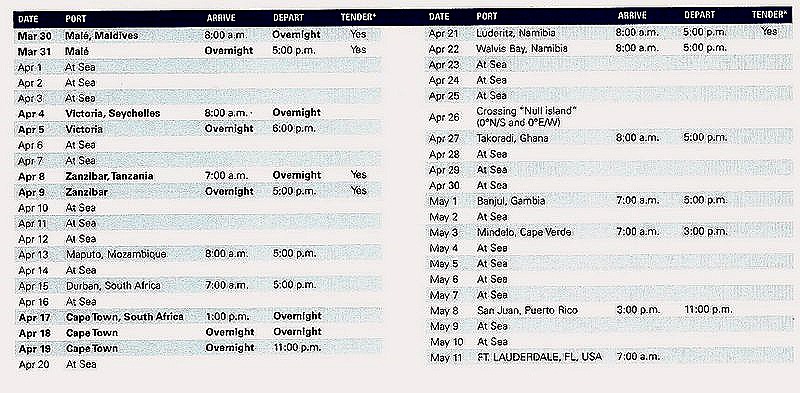
So we can’t really argue with HAL’s decision (undoubtedly mandated as well by its insurer) to divert this voyage around Africa. We have quibbles about the ports and schedules they adopted, but not with the basic decision to redirect rather than follow the original itinerary. Still, we have been on cruises before that had to bypass a port or two because of weather or political conditions, but never a full month of scheduled ports! The new schedule actually might have been very interesting to us if not for the fact that just 16 months previously we had visited most of these ports on the Grand Africa voyage. Many of them are well worth visiting once, but many of them we wouldn’t have chosen to visit again so soon. And to make matters worse, the cost of most of the excursions had gone up 2 or 3 times what we paid in 2022 (perhaps because HAL had to schedule them much later than usual, because several cruise companies were suddenly competing for mostly the same ports at about the same time, or because some tour companies got greedy, who knows?). But the bottom line is that the rest of this voyage, starting in the Maldives, was entirely different from the itinerary for which we had signed up (and we were really looking forward to many of the planned stops in the Mediterranean area). Although the revision of the itinerary really HAL’s fault they did give us a fairly large refund and some other benefits to make up for the disappointment, but we were still quite disappointed. Here is the new itinerary, which had been disclosed to us on January 30 while we were in Puerto Vallarta, Mexico:
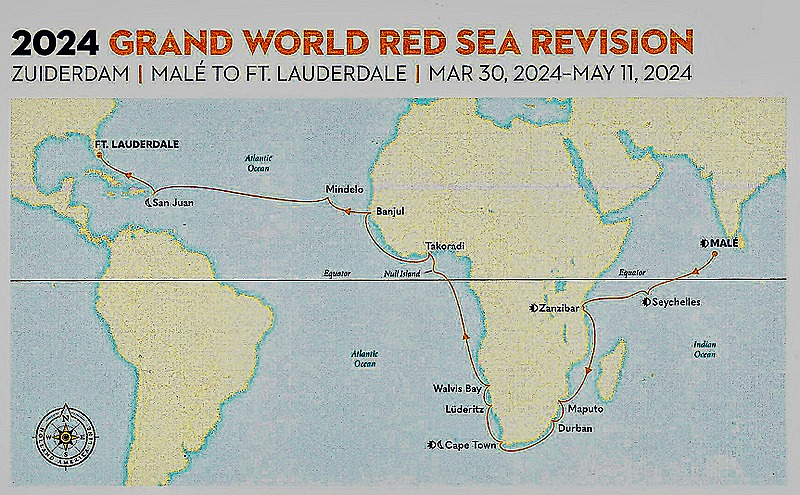
So after that lengthy digression, we are still where we were in the first sentence of this episode, anchored off the coast of the city and island of Male.
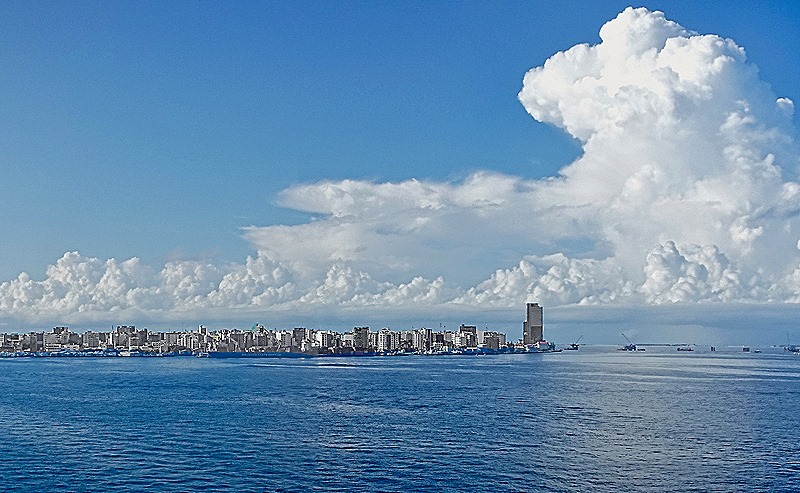
The Maldives are well known as a destination for people looking for romantic beaches, snorkeling and scuba diving, or deep water fishing. We could see from the ship that these waters are a beautiful blue and the weather here is nice (at least when it isn’t the rainy season). But those beach resorts are on outlying islands, not the very urbanized island of Male. And we are on a world cruise to explore the world, not looking for extended visits to beaches or water sports. We had never been to the Maldives before, so we took the (long) tender ride in the morning to spend our day with Bill and Robert exploring the city.

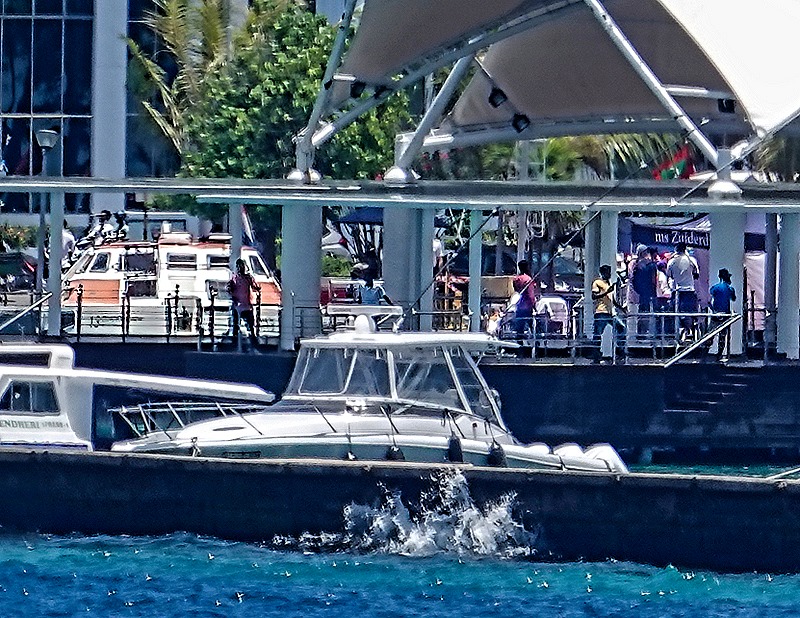
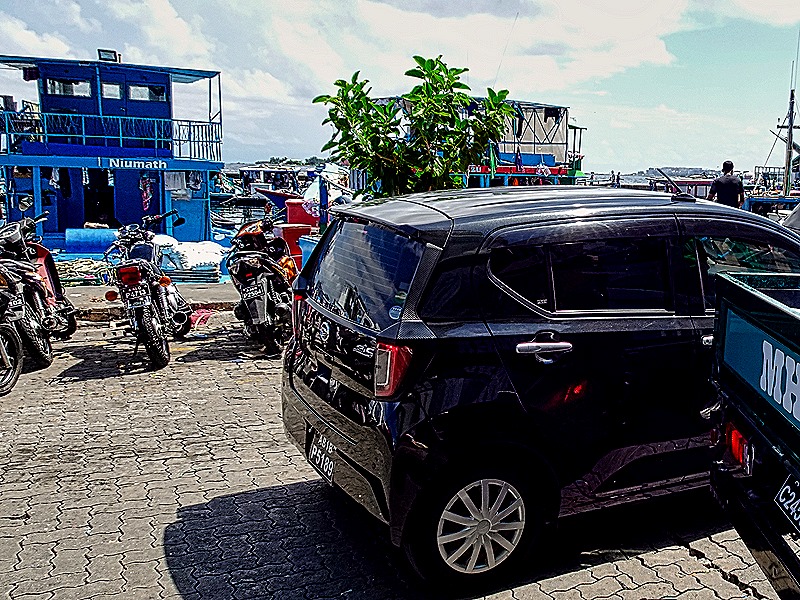
The streets near the ocean front were narrow and very busy, with lots of motorcycles. We visited the produce market and the fish market, where men were busy butchering today’s catch.

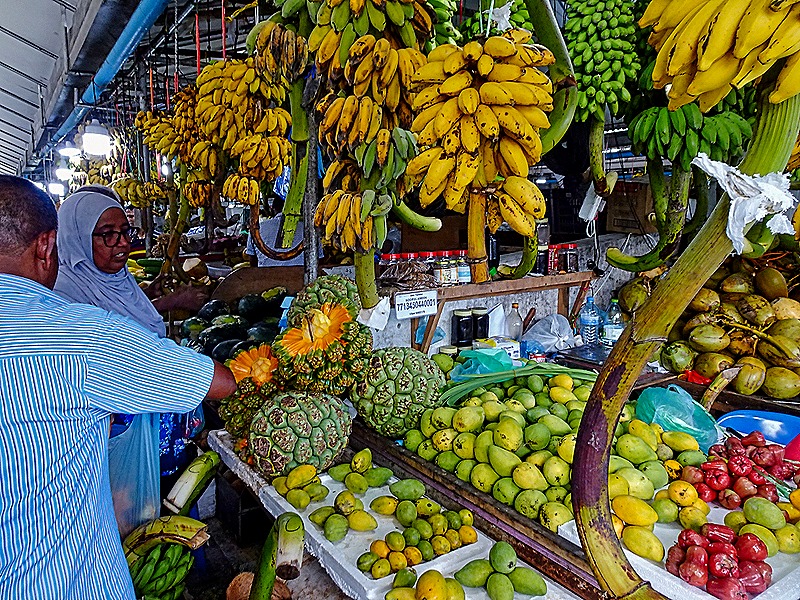
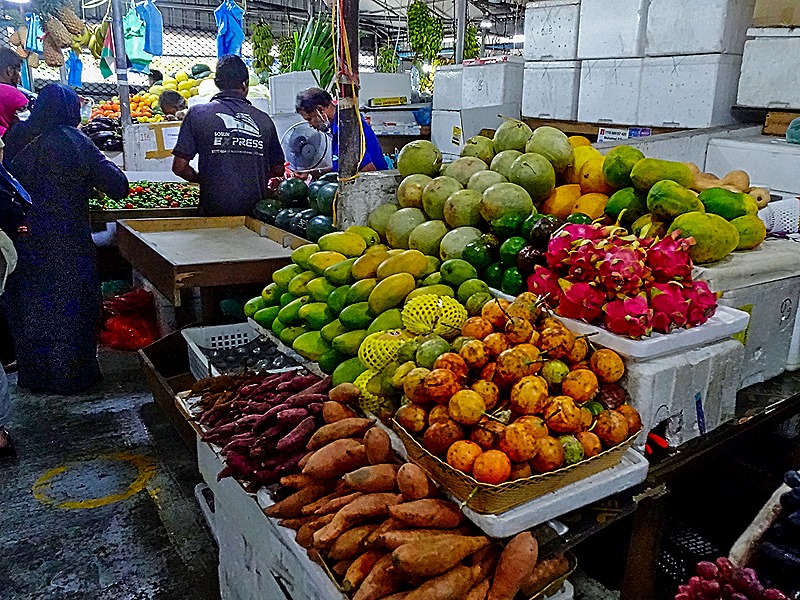

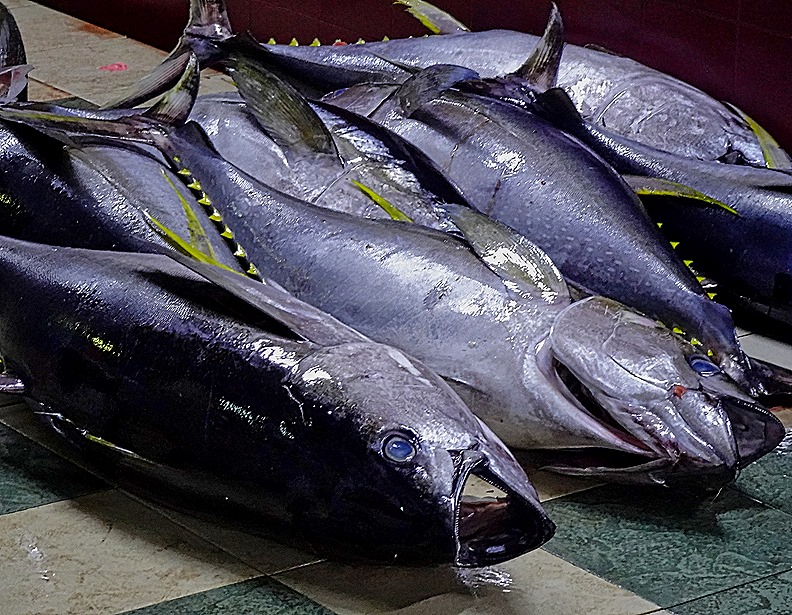

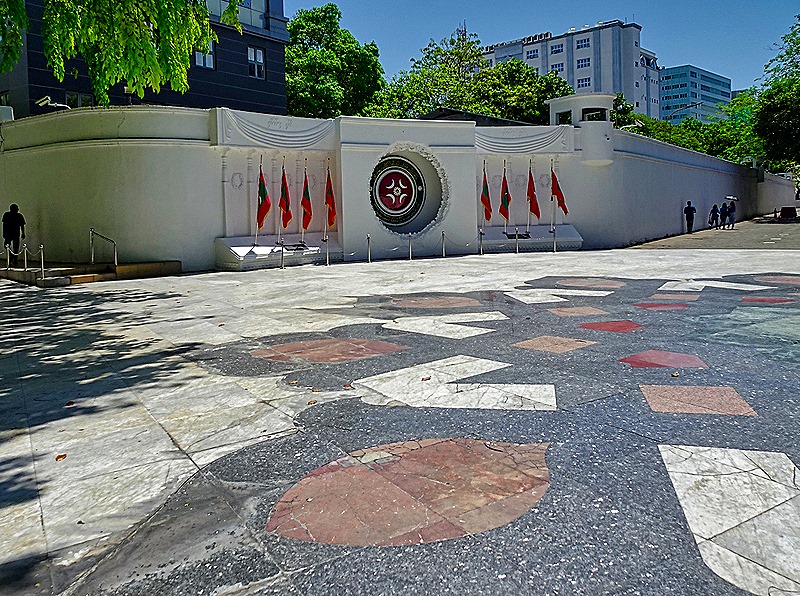
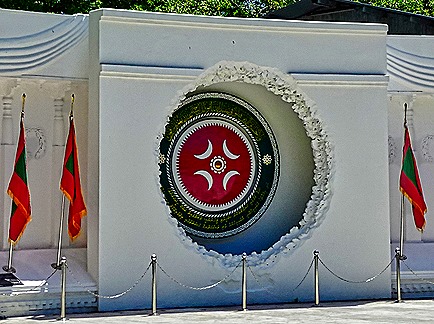
We walked further away from the shoreline, stopping at some shops selling mostly disappointing souvenirs similar to what you might see in any beach community. We came to the large Islamic Centre, mostly a mosque called the Grand Friday Mosque, that opened in 1984. This is one of the largest mosques in South Asia with a capacity of more than 5,000 worshipers. It is impressive from the outside and the inside is supposed to be beautiful as well. But this is a strictly Muslim country and it was Ramadan when we visited. So the mosque was closed to non-Muslims outside of a small window during the morning . . . which we just missed. Its golden topped minaret is 142 feet high. In an open square near the mosque is the Victory Monument, dedicated to those who lost their lives resisting a terrorist attack by Sri Lankan Tamil Tigers in 1988. The round red white and green tablet is displayed inside an opening in the marble representing a hole that was blown in the wall by the terrorists that day.


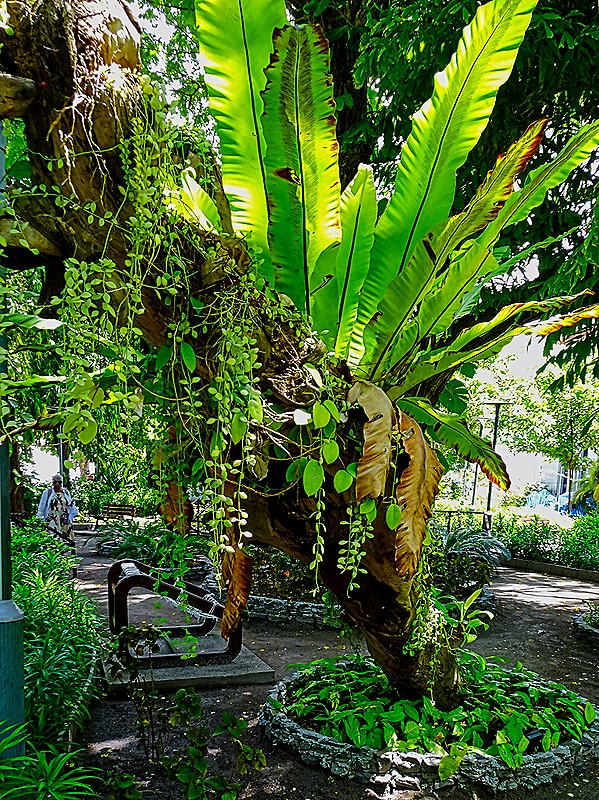
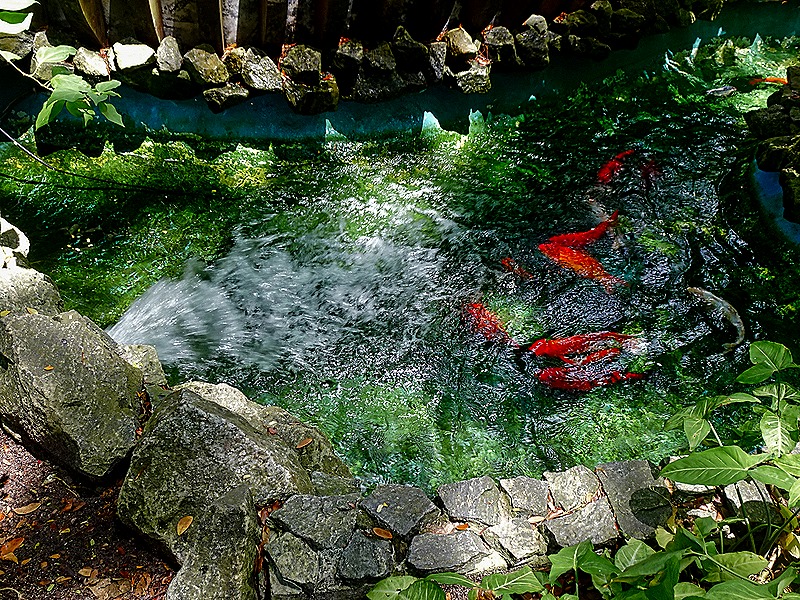
Before it became a republic in 1968 the Maldives had been a sultanate for more than 850 years. After the sultanate was abolished most of the 16th century sultan’s palace was demolished and the grounds were converted into a public park, situated across the street from the Victory monument. It was a very nice respite on a very hot day in an urban area. One side of the park had buildings that were undergoing renovation and we think they housed the National Library and National Art Gallery, a joint entrance to which we found later nearby (closed).



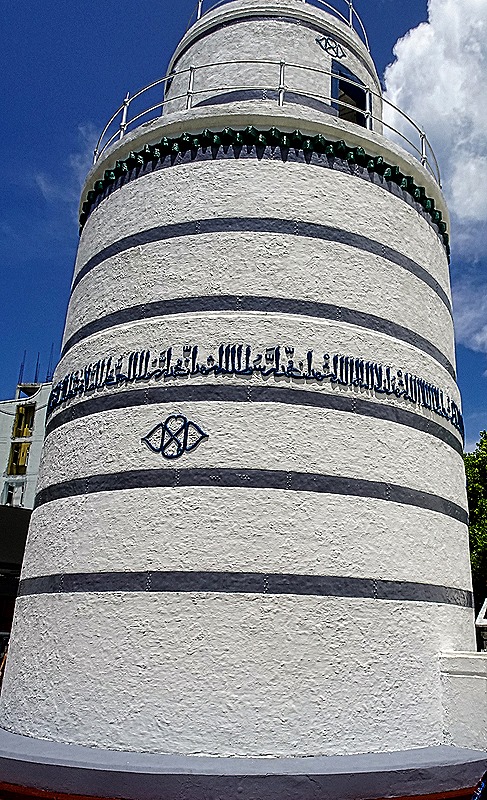
For us, the main attraction in Male was the Old Friday Mosque (Male Hukuru Miskiy), still in the same part of town with the other spots visited. Islam came to the Maldives in the 12th century and this mosque was built in the middle of the 17th century over the foundations of one that had been built in the 12th. It is made of interlocking coral blocks, many with intricate relief carvings that fit together perfectly when spanning more than one block. Next to it is an unusual minaret (called the Munnaaru) built a few years after the mosque, also of coral blocks. It looks like two large and one smaller hatboxes piled on top of each other. Copper belts around the minaret were added in 1906 for greater stability and the inscriptions on its outside walls were painted dark blue. These are the oldest structures in Male. Of course it was Ramadan so we didn’t go inside, but the views on the outside were great.
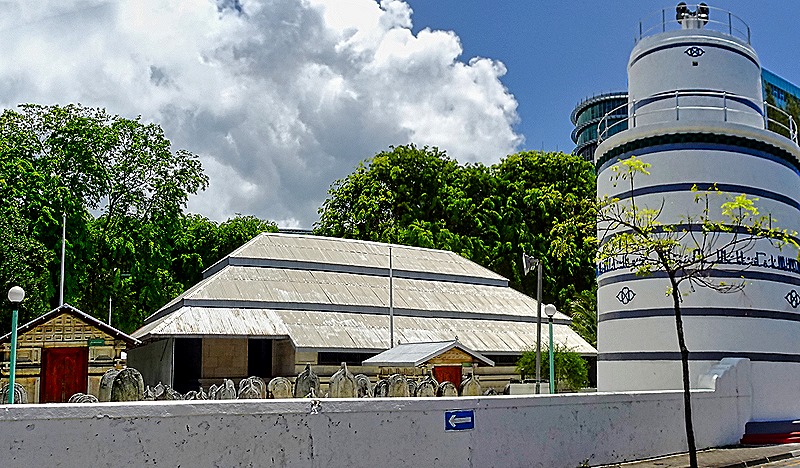
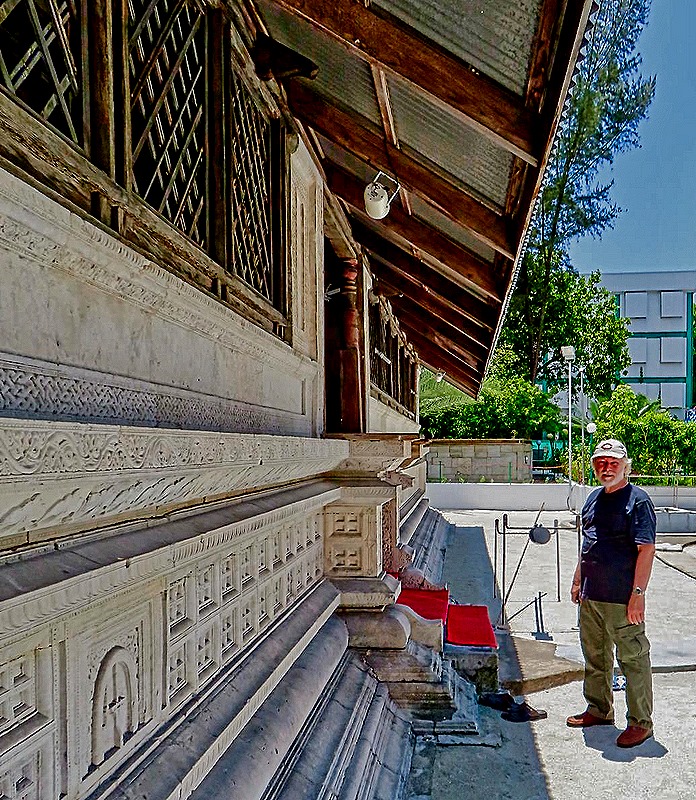
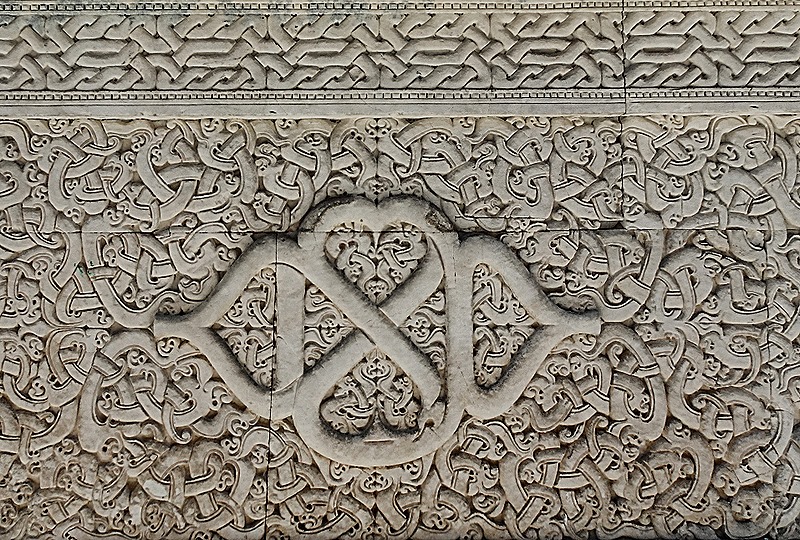
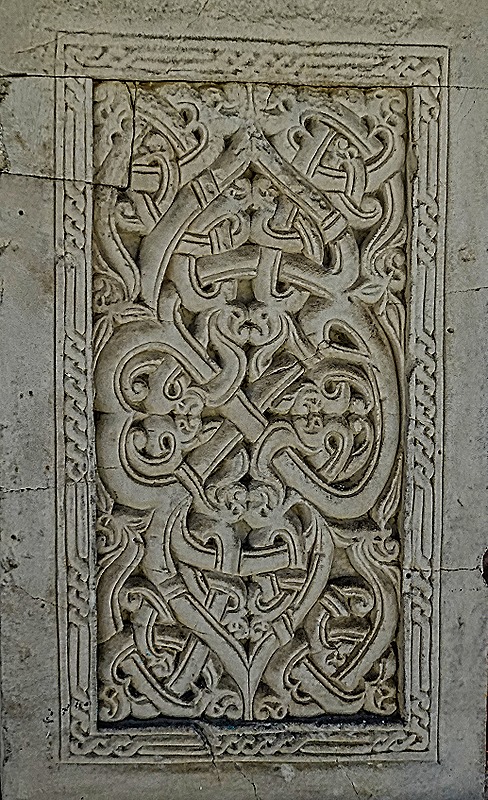
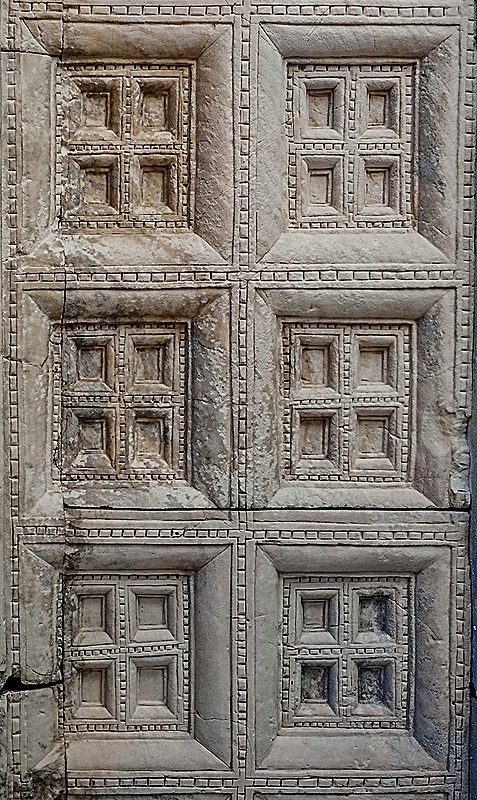


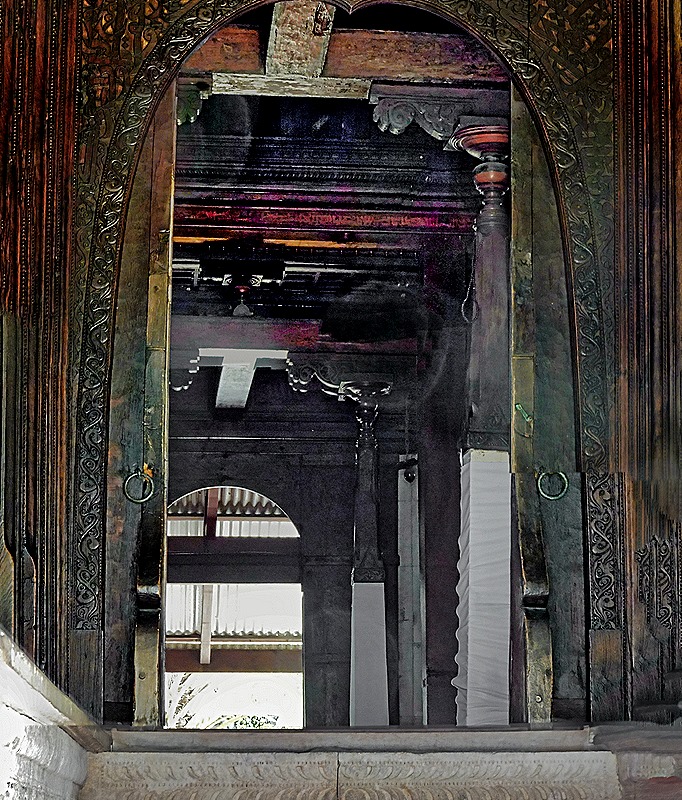
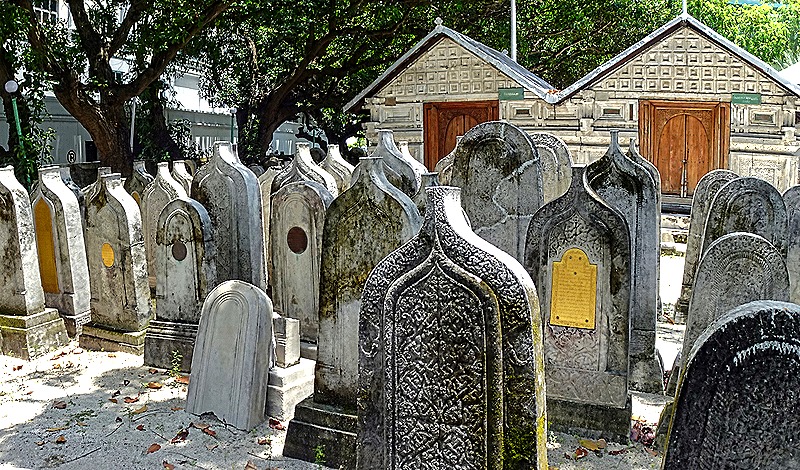
Arrayed around the mosque inside the surrounding wall, is a 17th century graveyard. The tombstones are made of carved coral. Women’s tombstones have rounded tops, men’s have pointed tops, and the sultans and their families are in small mausoleums resembling one room houses.

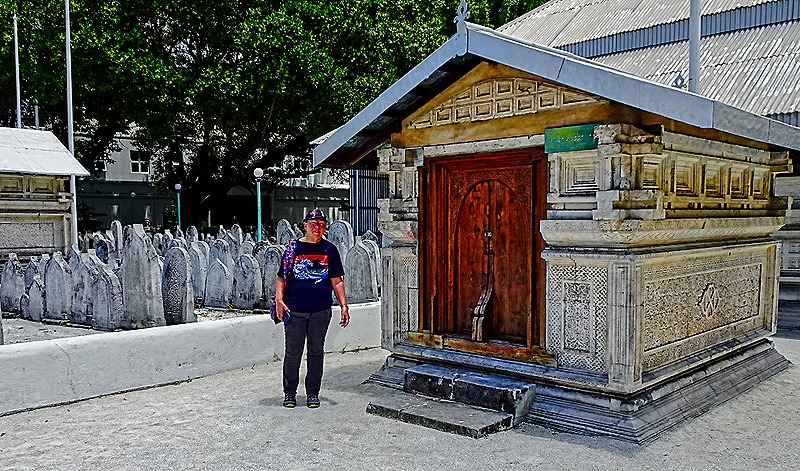
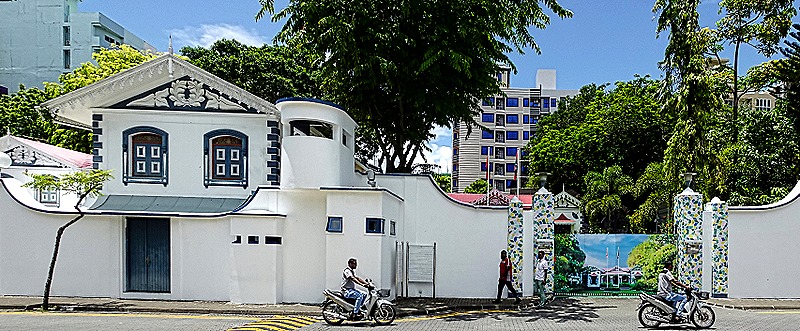
About a block away was a complex with two buildings. The Medhu Ziyaaraiy (Central Tomb) was built in 1906 and is the tomb of Abdul Barakaath Yoosuf Al Barbary, who converted the king of the Maldives to Islam in 1153. Next to it is the Muliaage, a colorful bungalow style house completed in 1919 that was a home for several royals and some other dignitaries. It has served as the official Presidential Palace for 30 years from 1968 to 1998, and again since 2009. In the first picture below the roof and a bit of the facade of the Muliaage can be seen over the gate to the right. The painting on the gate is of the Muliaage.
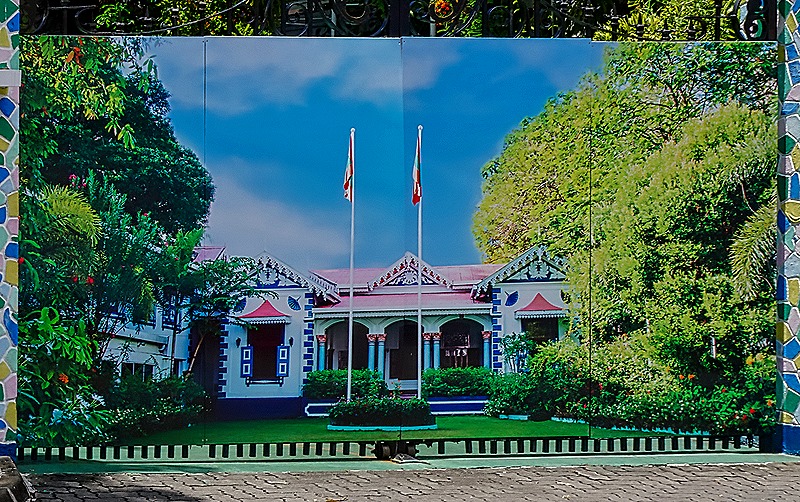
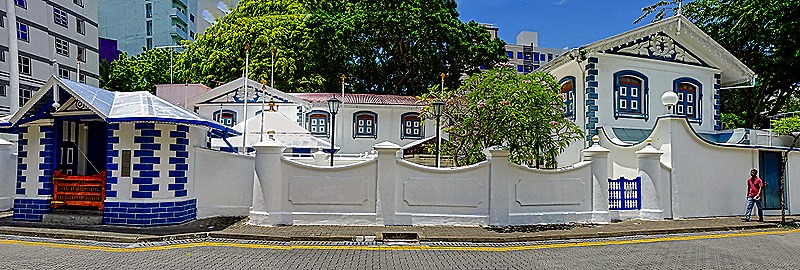
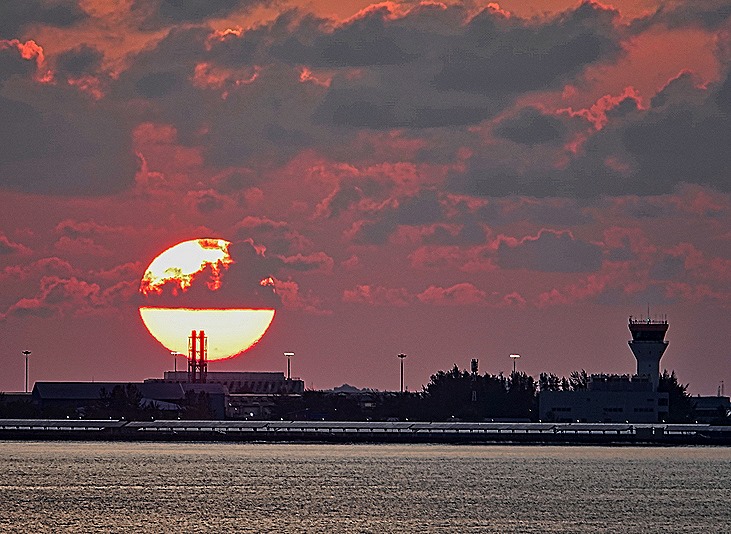
So that was enough for us since we were pretty done in by the muggy heat. We walked back to the dock and tendered back to the ship. Of course we were here overnight and there was a dramatic sunset.
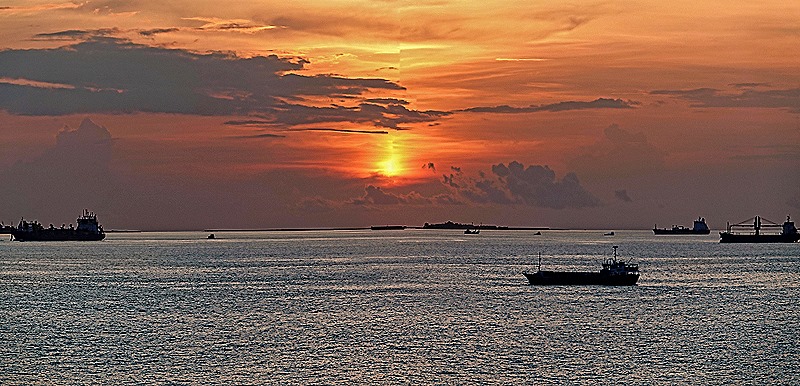

On March 31 we were still anchored near Male, but we decided to spend the day on the ship. There was nothing left to see in Male that was worth the long tender ride and the heat and humidity; even having lunch in the city would be problematic because of Ramadan. So this became a sea day for us. We did take a few pictures from our veranda on what was another bright and sunny day. The airport for Male is on a larger nearby island called Hulhule which since 2018 has been linked to Male by the Sinamale Bridge, a little under a mile in length. From the ship we could see planes landing at the airport.
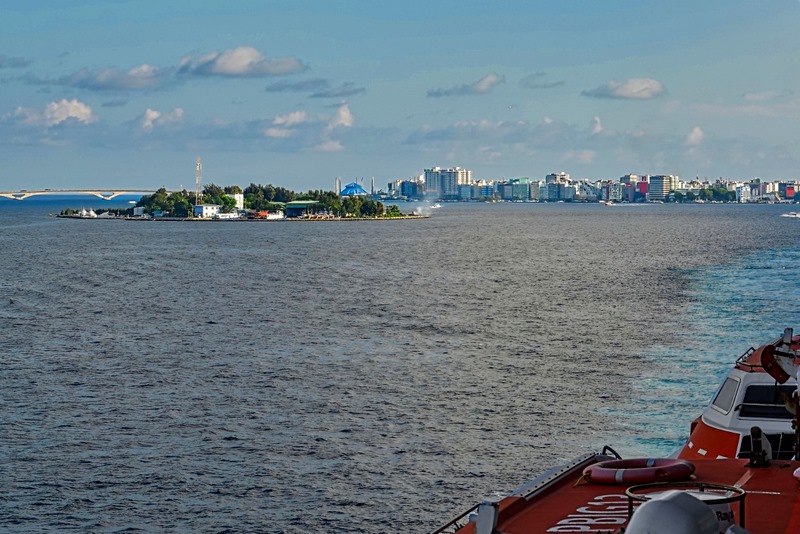
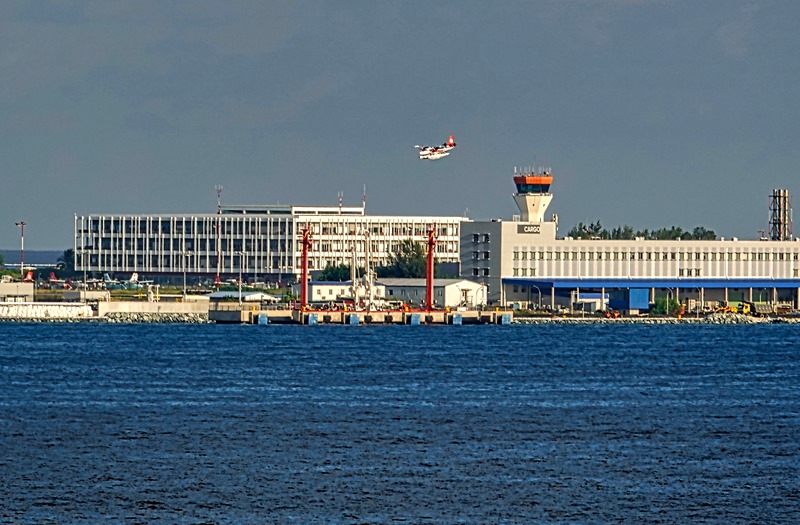

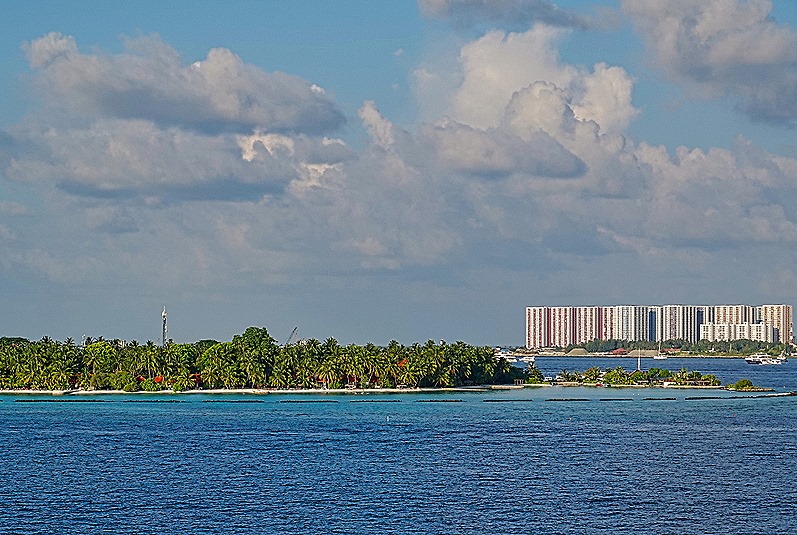
Smaller, very green islands sat in front of both Hulhule and Male.

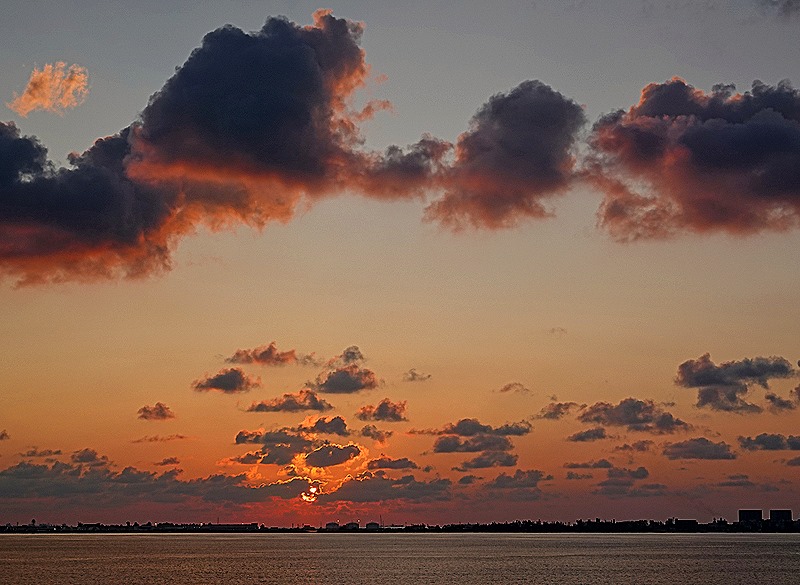
Not long after we sailed away we had yet another fine Indian Ocean sunset.
Colombo, Sri Lanka — 2024
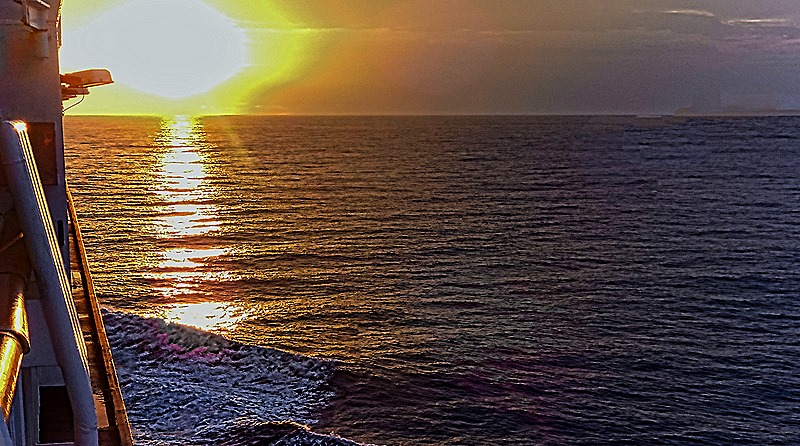
We reached Colombo on the morning of March 28. The previous evening we had a very bright sunset.
Before independence Sri Lanka was for a long time a British colony called Ceylon. It is an island nation off the southern coast of India. We have been here twice before, walking a long distance around the city in 2016 then visiting the city of Galle in 2018, so if you want to read background information and/or see a lot more pictures you can do so here:
2016: https://baderjournal.com/2016/05/07/colombo-sri-lanka/
2018: https://baderjournal.com/2018/08/06/colombo-sri-lanka-2/
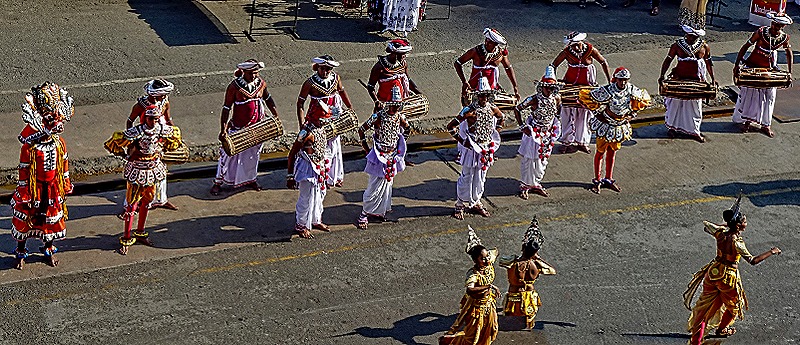
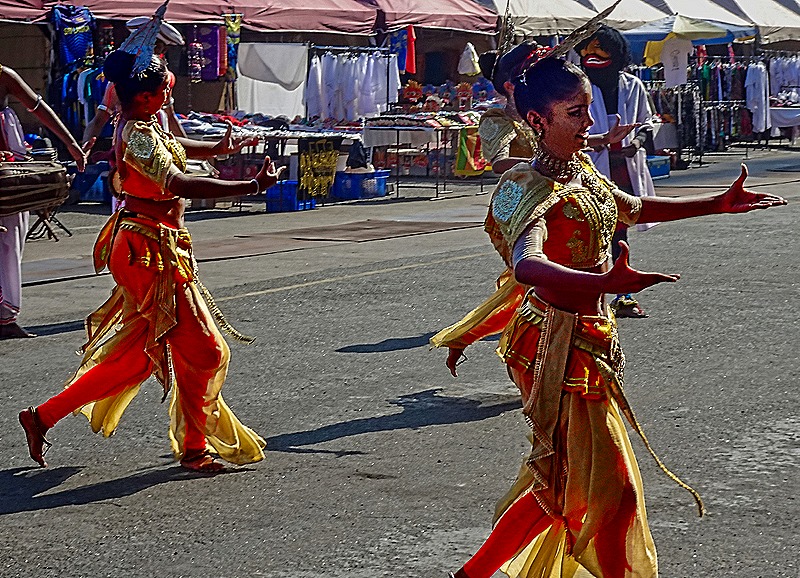
For this visit we booked an excursion with our travel agency that would take us to some places in Colombo we hadn’t seen (and passing by a few we had seen before). As on our previous visits there was a colorful troop of dancers and musicians (mostly drummers) to greet us on the dock. We watched them from our veranda, then again when we left the ship to start our excursion.
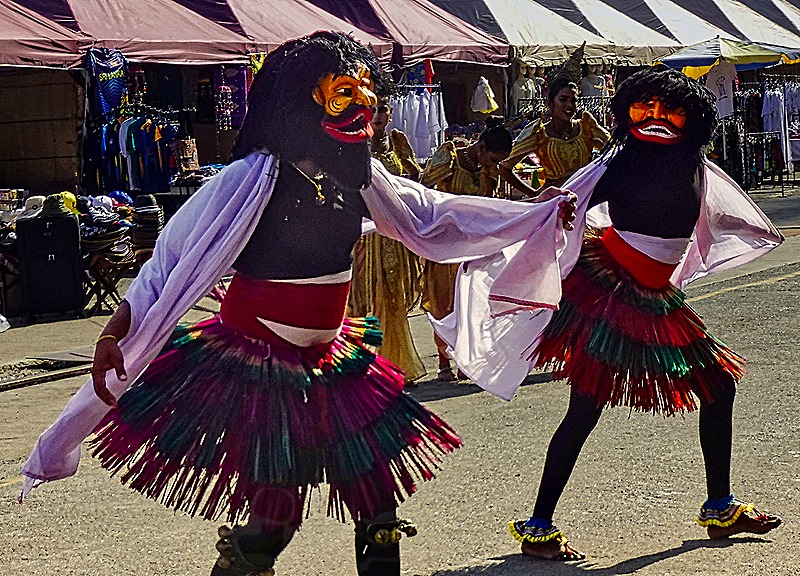

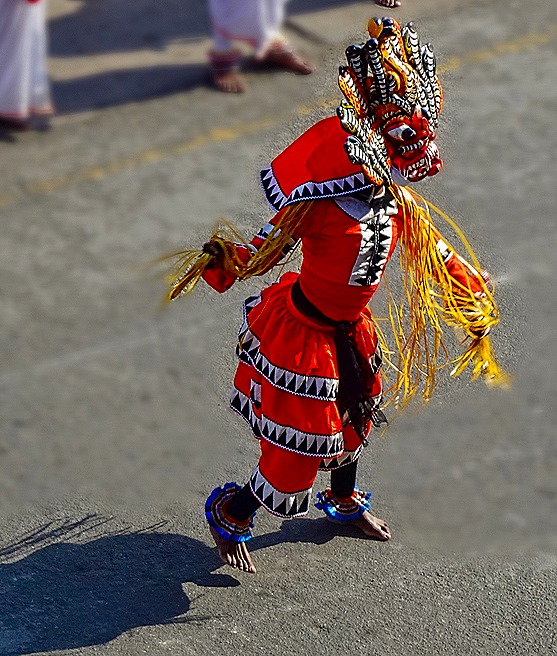

We left early in the morning after the ship had been cleared by the local authorities. The harbor facilities were much more extensive than the last time we were here 6 years ago and a lot of construction activity was still under way. In the past we had docked fairly near the port exit (close enough to walk), but we were docked much further away from town this time. So the bus trip was surprisingly long just to get to the port exit.
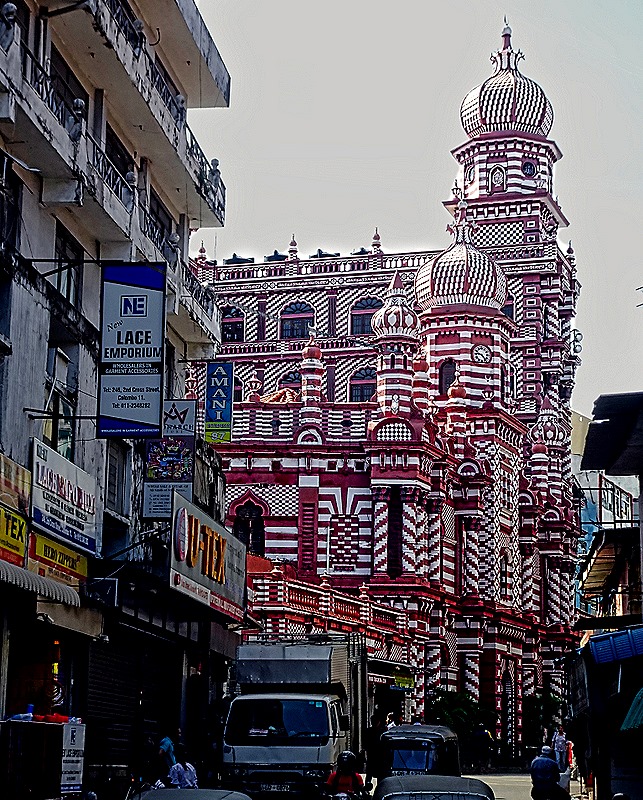
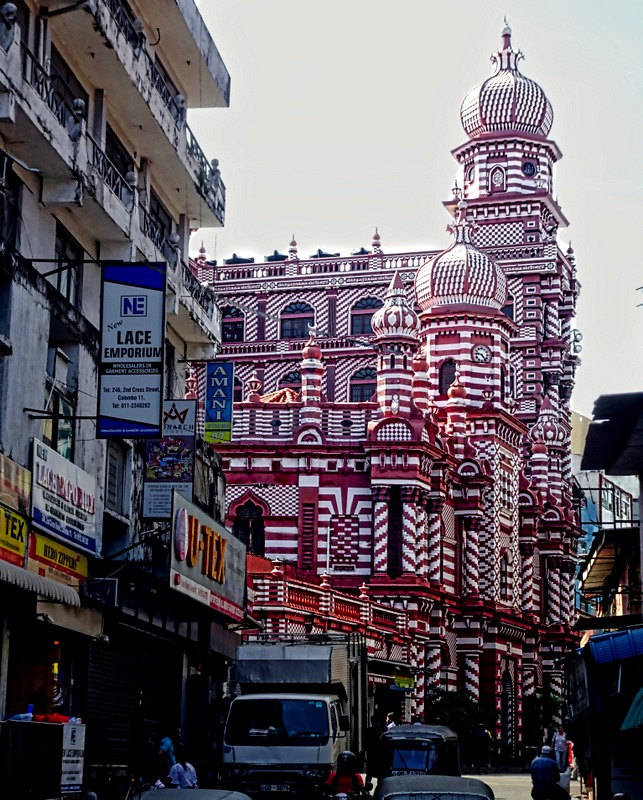
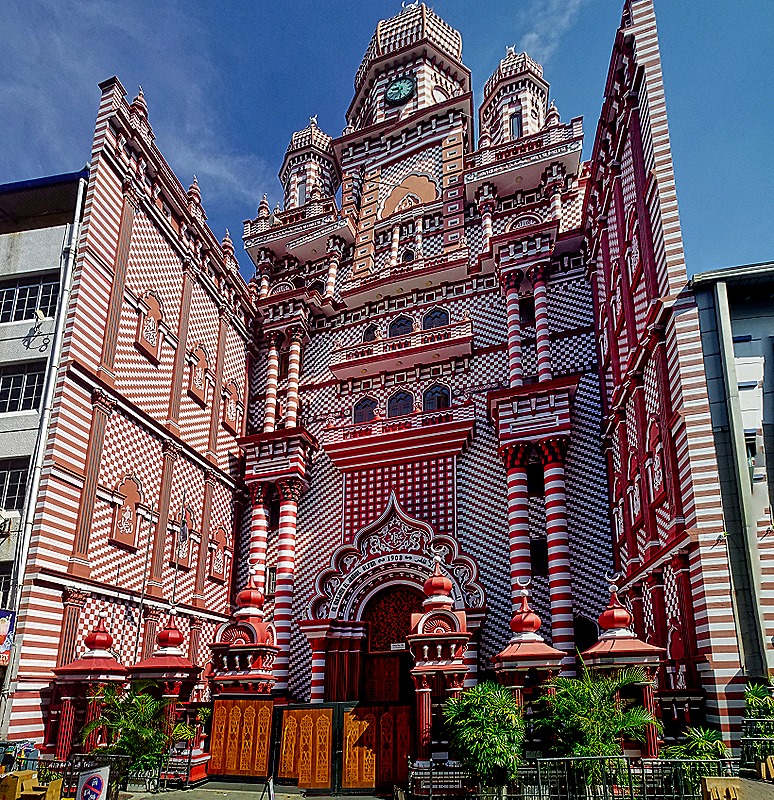
On the way to our first stop through the streets of Colombo, we passed several notable landmarks (shown here in no particular order). First was the Jami-Ul-Alfar Mosque, an unmissable large red and white candy striped building not far from the port. It opened in 1909 and was expanded in 1975.
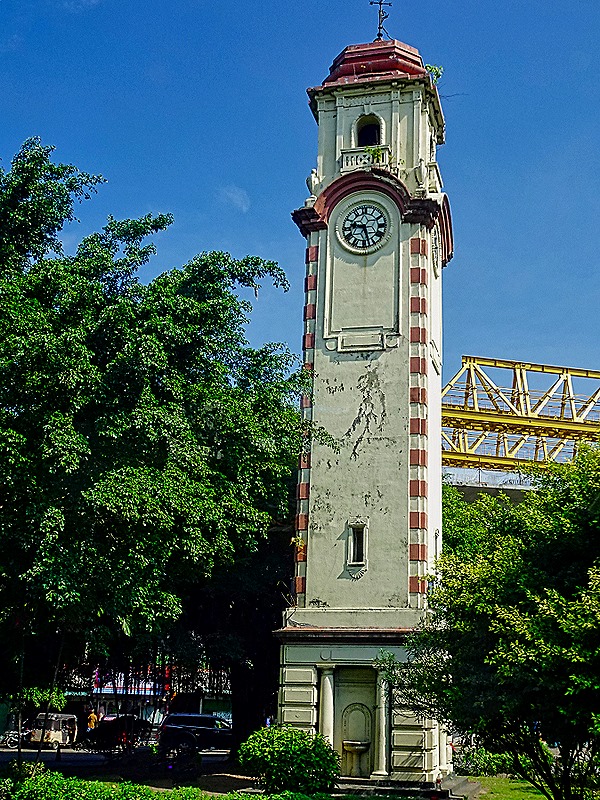
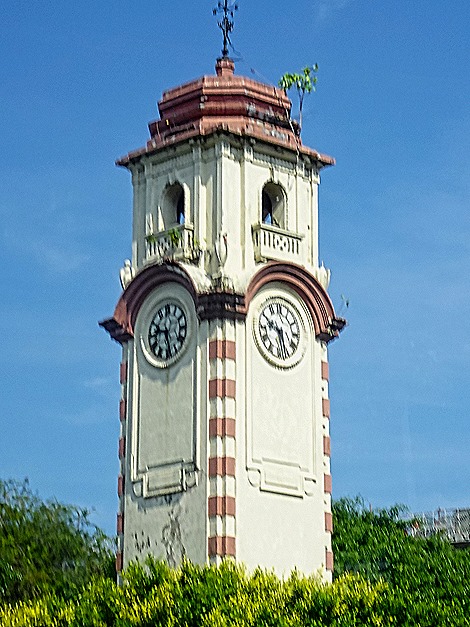
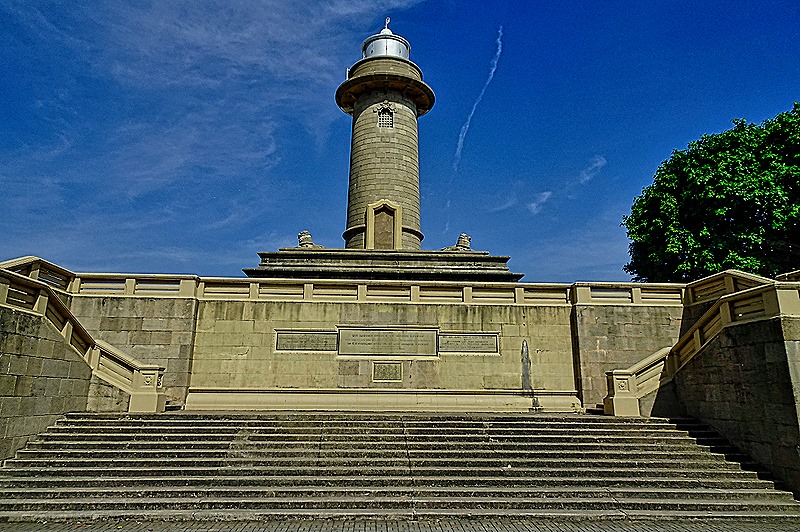
We drove past both of the old lighthouses of Colombo. The Colombo Clock Tower was built in 1857. It was the tallest building in Colombo at the time and the light from an old wooden tower was moved to its roof in 1867. As time passed taller buildings nearer the ocean front obstructed the light and it was decommissioned in 1952. The light was moved to a new 95 foot tall lighthouse built just outside the port. It is painted black and white on the ocean side but is plain stone on the land side, as you can see in the picture below (and note the lions at the base of the tower). We also drove past the Australia Building, which dates to 1900 and sports a distinctive Victorian facade with stripes of red and white brick.

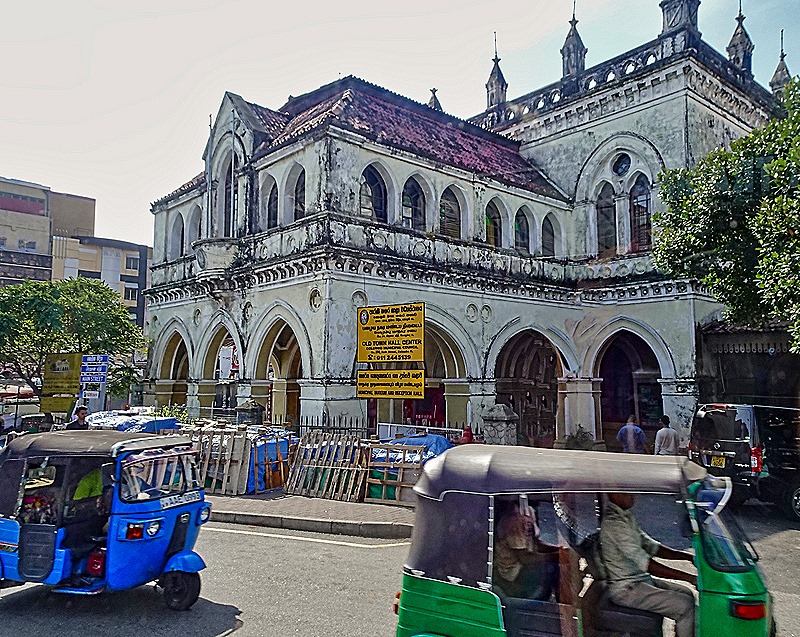
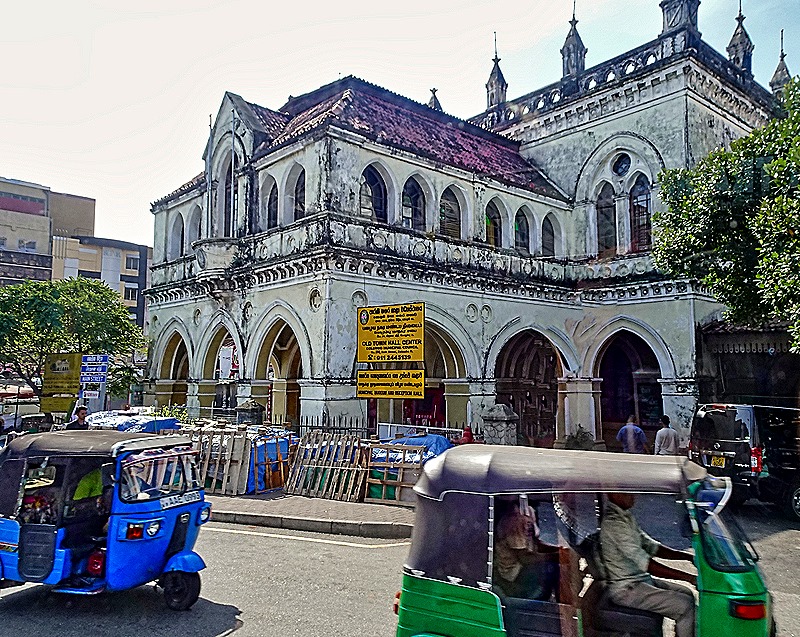
We passed through several busy intersections in this bustling city and we saw both the original old town hall and the current town hall. The old town hall was built in 1873, the first government building in Colombo. The governmental operations were moved in 1925 to the new town hall and the old one fell into disrepair until it was renovated as a museum in the 1980’s. You can tell from looking at it that the gleaming white new town hall was modeled on the US Capitol in Washington, on a smaller scale.


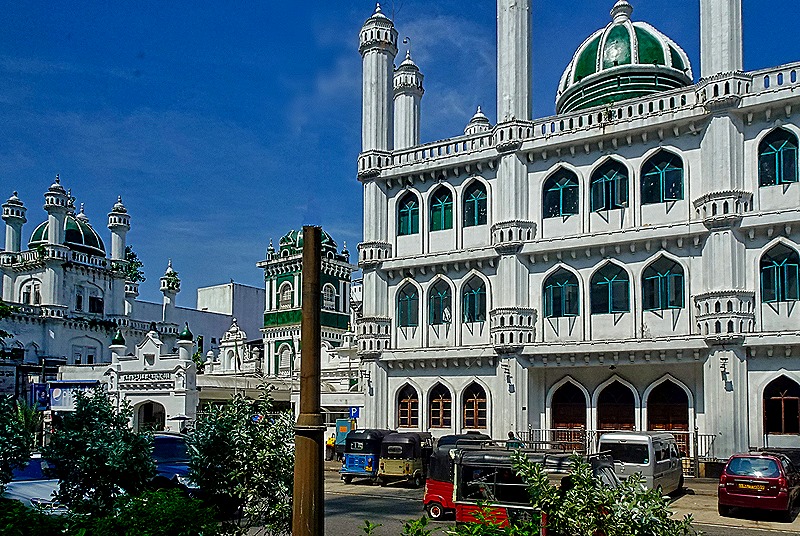
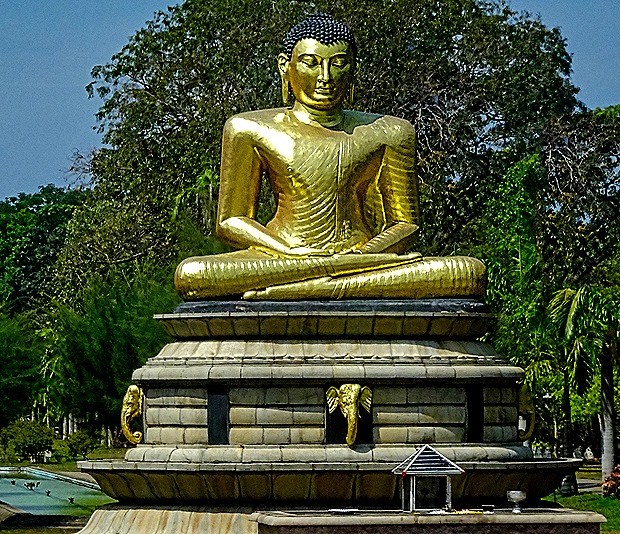
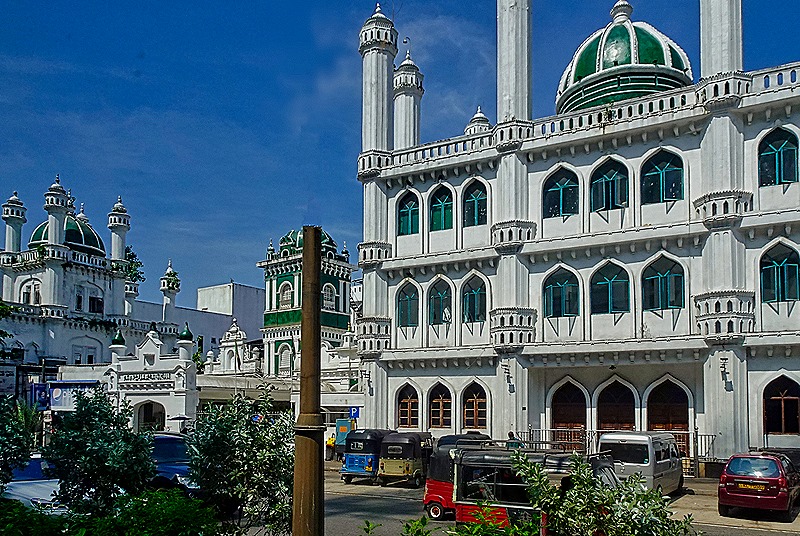
Near the current town hall were two other landmarks. The Dewatagaha Mosque, built in 1820, contains the remains of a Muslim saint. We think this is a picture of this mosque, but we have been unable to find another picture of it with green paint highlights, so the green may be very new. We also saw a very large golden sitting Buddha at the entrance to Vihara Maha Devi Park. Before the 1950’s this was called Victoria Park and we understand there was a statue of Queen Victoria here.

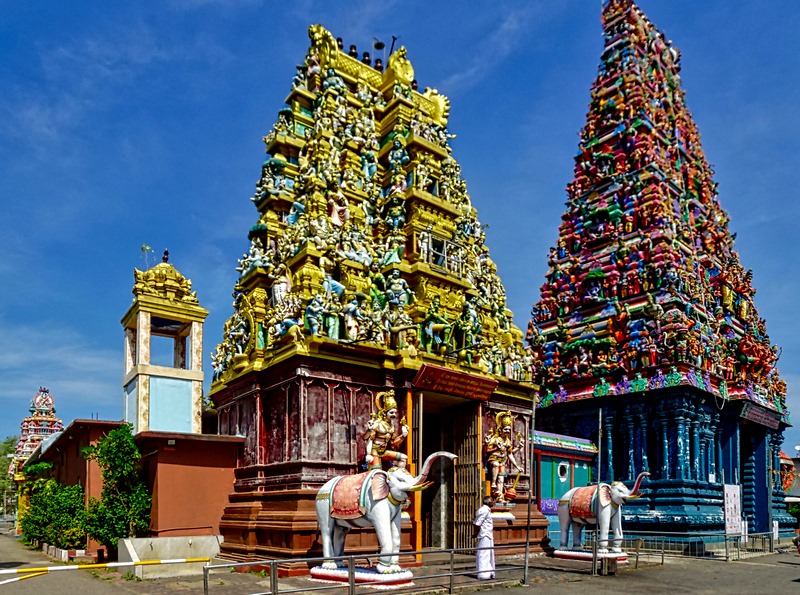
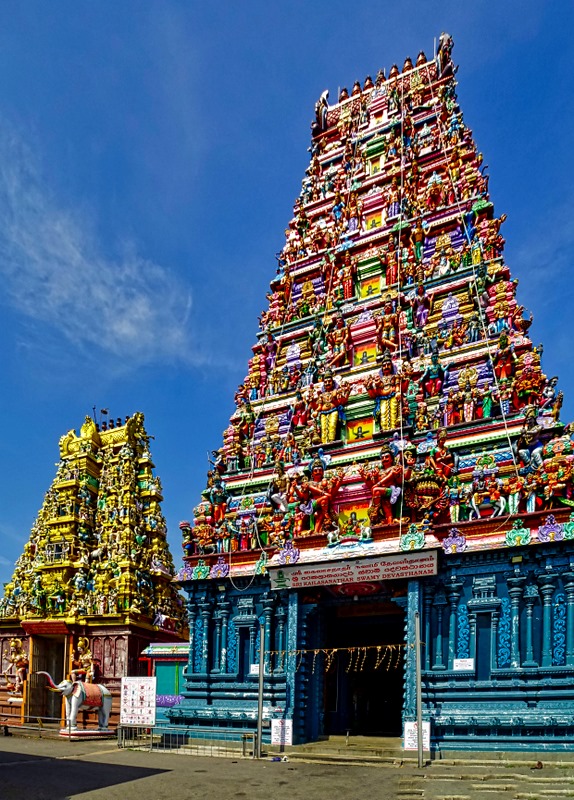
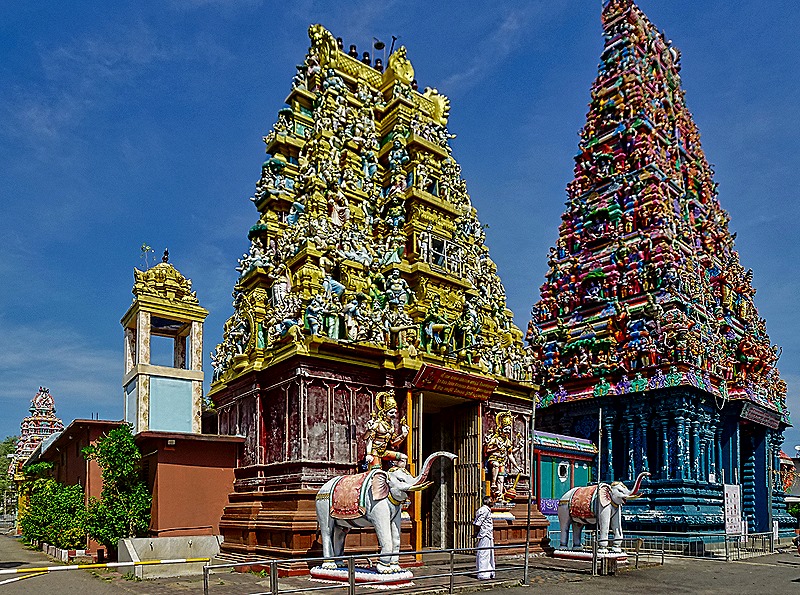
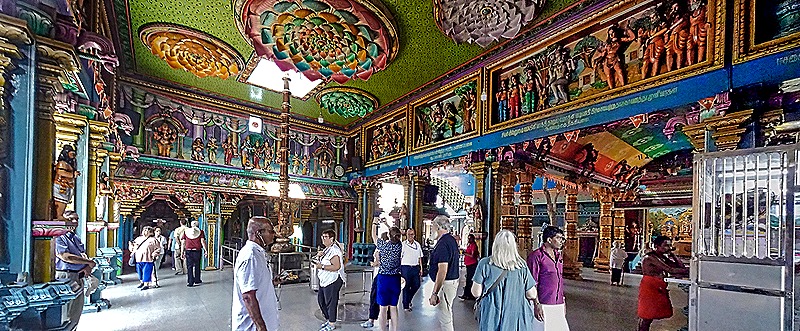
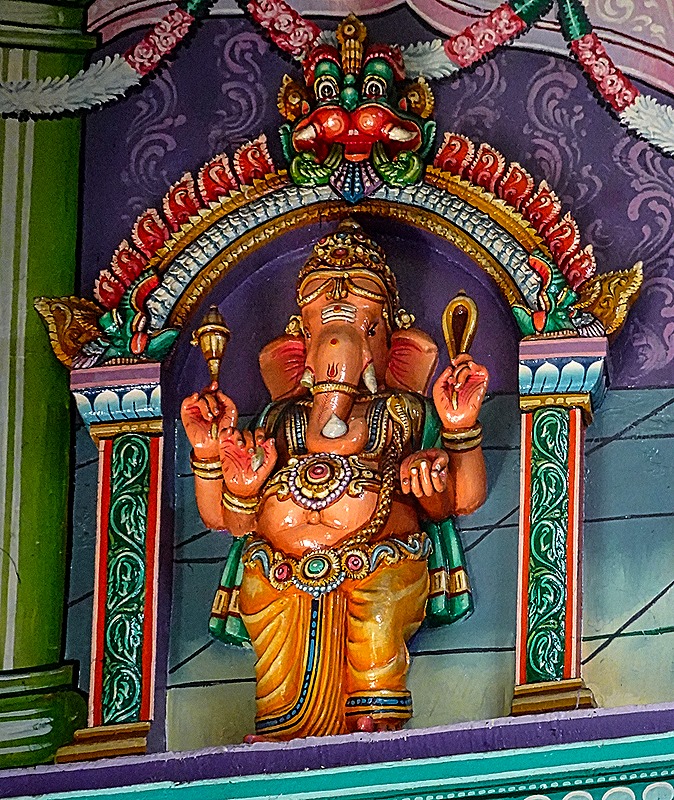
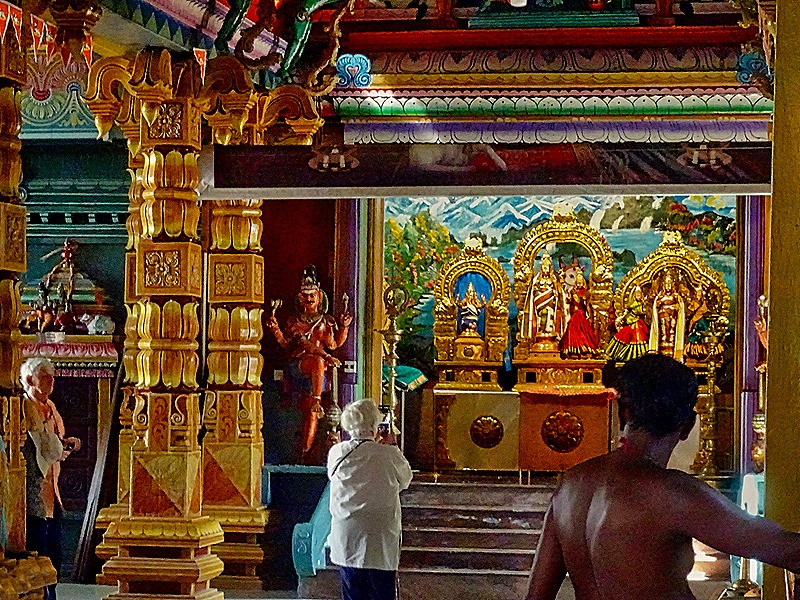
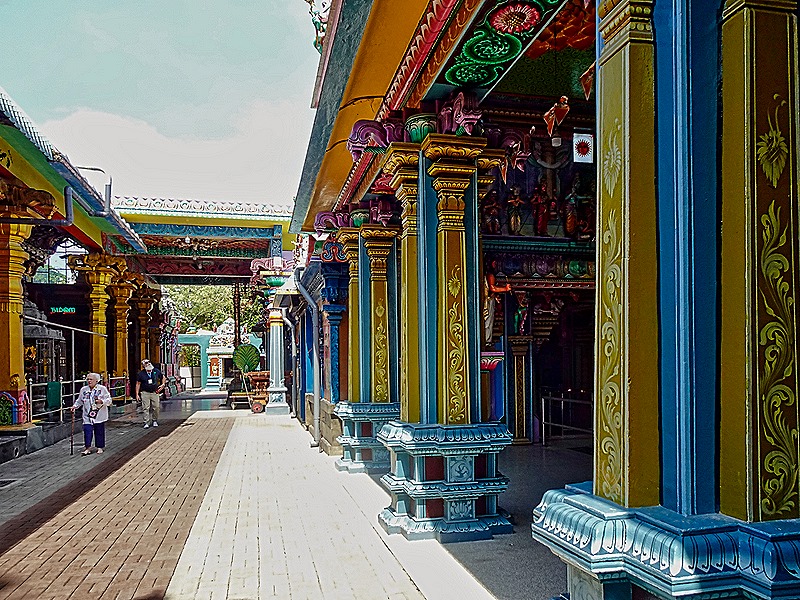
Our first visit of the day was to Sri Kailawasanathan Swami Devasthanam Kovil, a Hindu temple complex. Said to be the oldest Hindu temples in Sri Lanka, construction began in 1783. The two main temples connected by a pass through are dedicated to Shiva and Ganesa (aka Ganesh), and there are smaller shrines to other deities on the grounds as well. Like the other Hindu temples we have visited, the front has a tall roof over the entrance that is covered with colorful sculptures of Hindu deities.


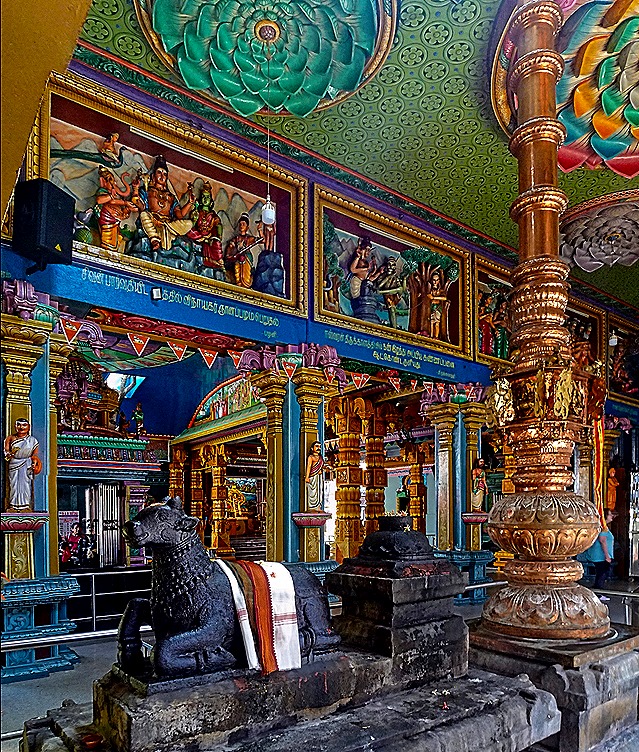
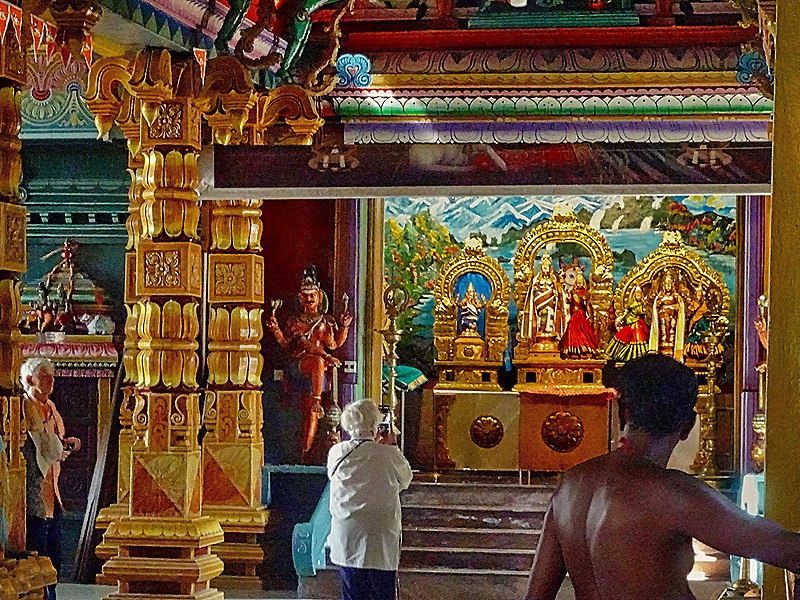
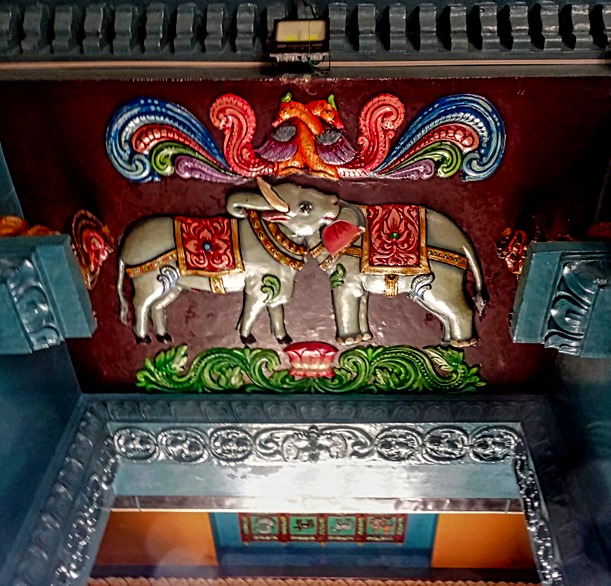
The rooms inside and the passageway were really very colorful, including the ceilings (always look up). We can’t identify many of the items in these pictures, but the elephant god is certainly Ganesa.


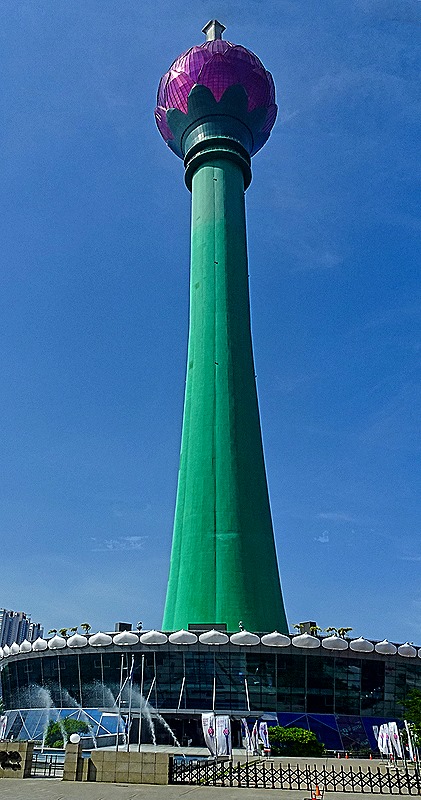
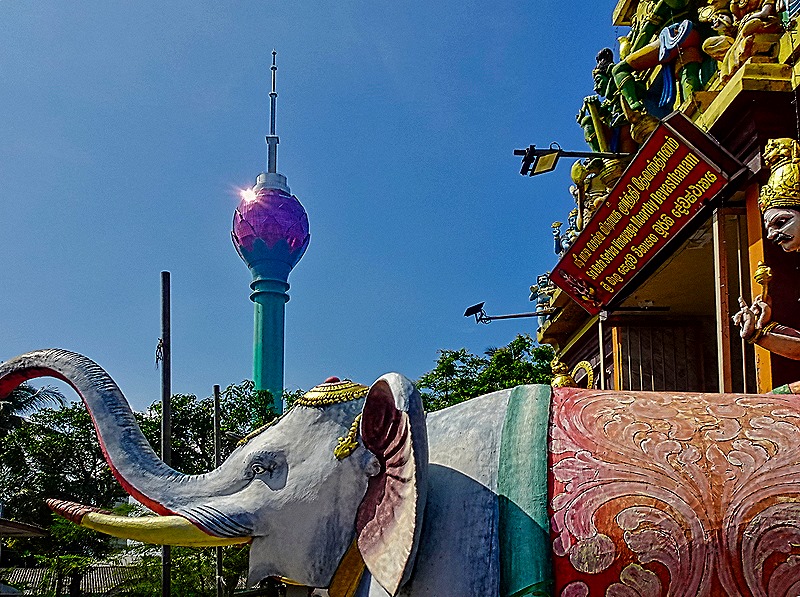
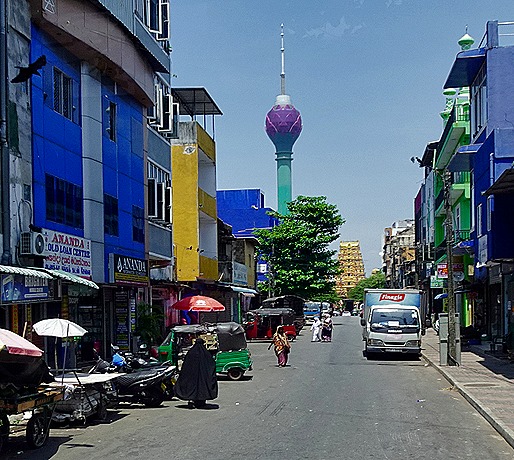
From these temples we could see the Lotus Tower; indeed at 1150 feet tall you can see this from many parts of town. This tower, which also can be seen from the port, was under construction during our first two visits. It was completed in 2019, financed by China we have been told. Its design is based on the Lotus flower bud, a symbol of purity in Sri Lanka.
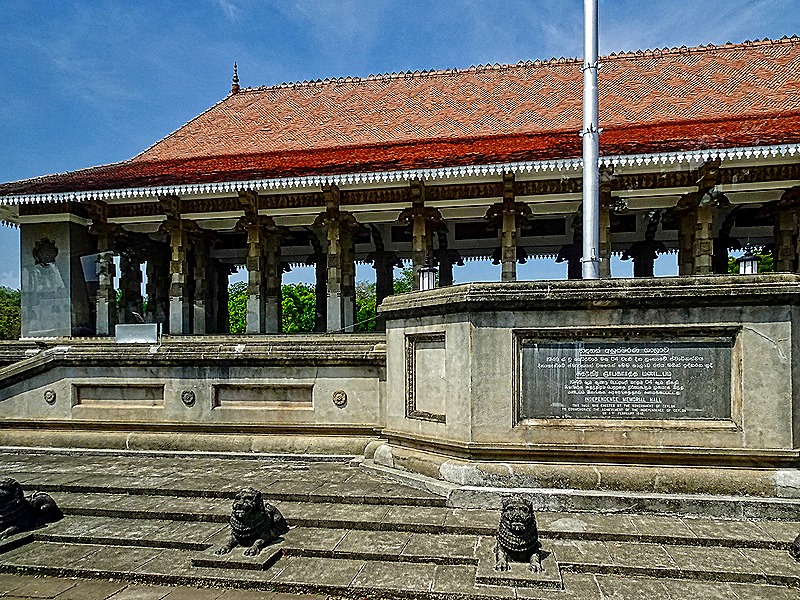
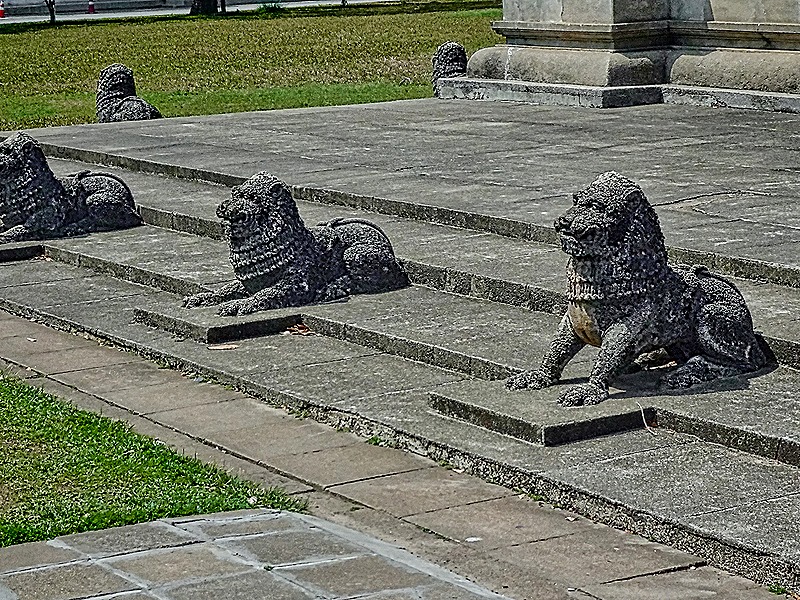
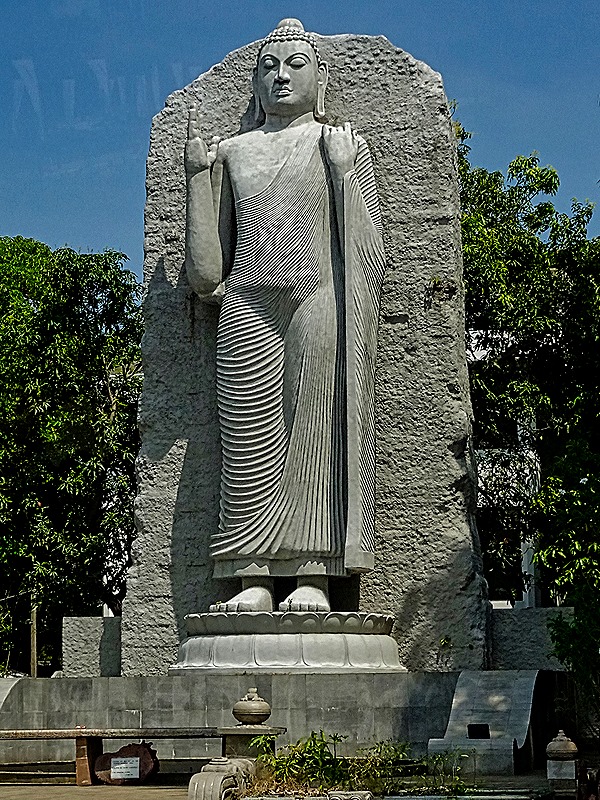
We drove past the Independence Memorial Hall in Independence Square. This is the spot where the first elected parliament convened on February 4, 1948 to mark the independence of the country. The Memorial Hall was later built to commemorate that day. We did not stop here but drove by it, leaving us with hurried pictures of the Hall and some of the stone lions that surround it. In a park nearby we saw a large standing Buddha sculpture.
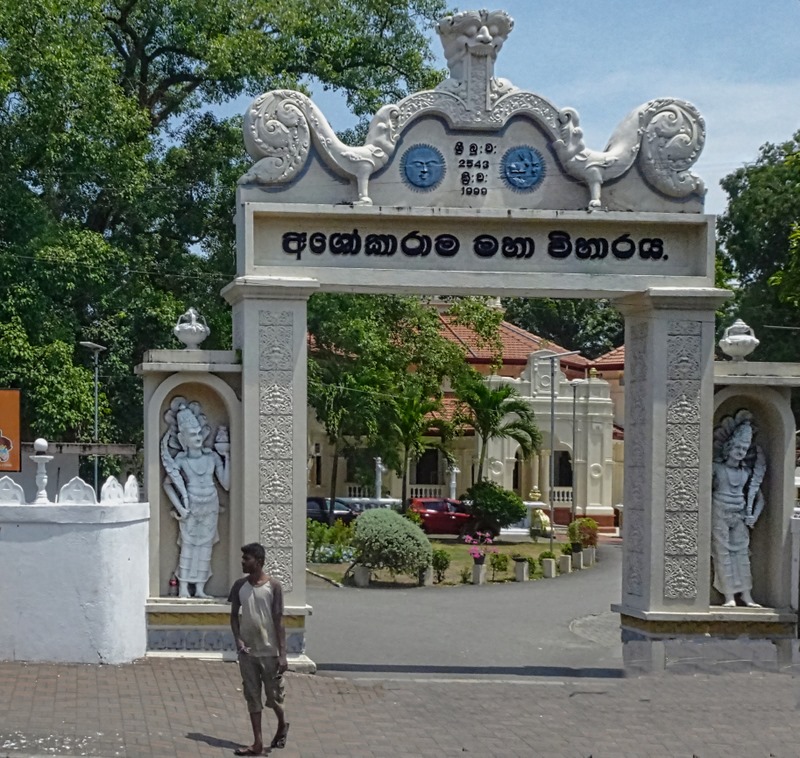
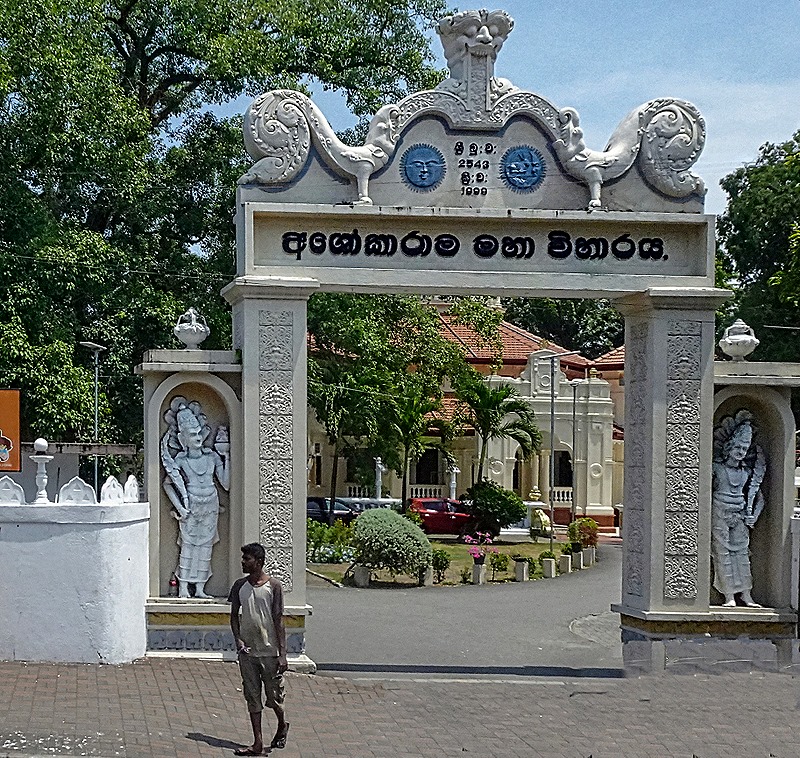
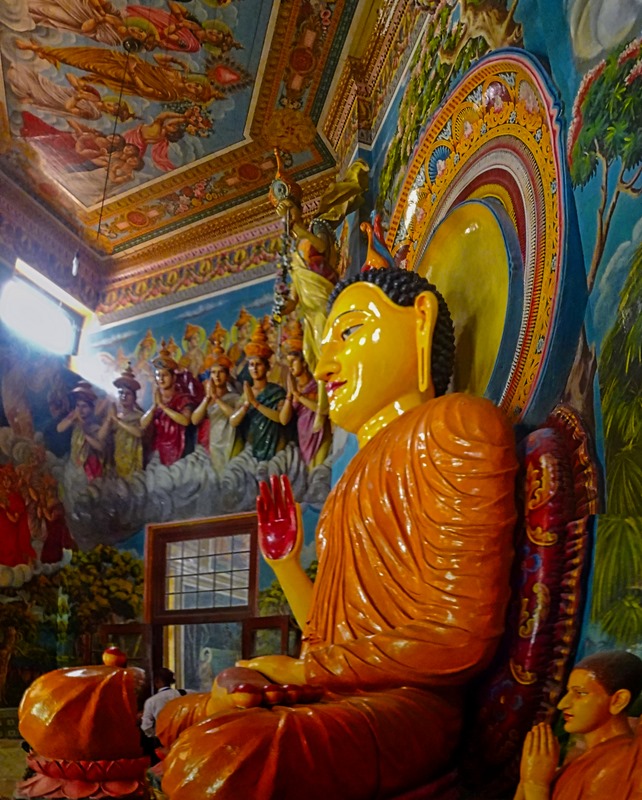
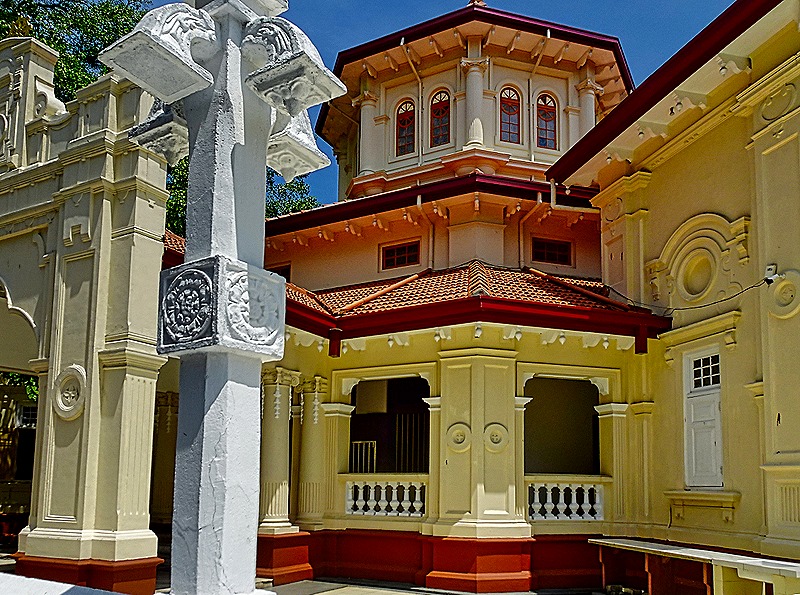
Our next stop was to visit the Asokaramaya Buddhist Temple, built in the 1870’s and expanded several times since. It is fairly plain on the outside, painted mostly white or muted yellow with none of the riot of color of the Hindu temples we saw this morning. But the inside is full of colorful statues of Buddha and other deities with well regarded Buddhist paintings on the wall, mostly about the life of Buddha.


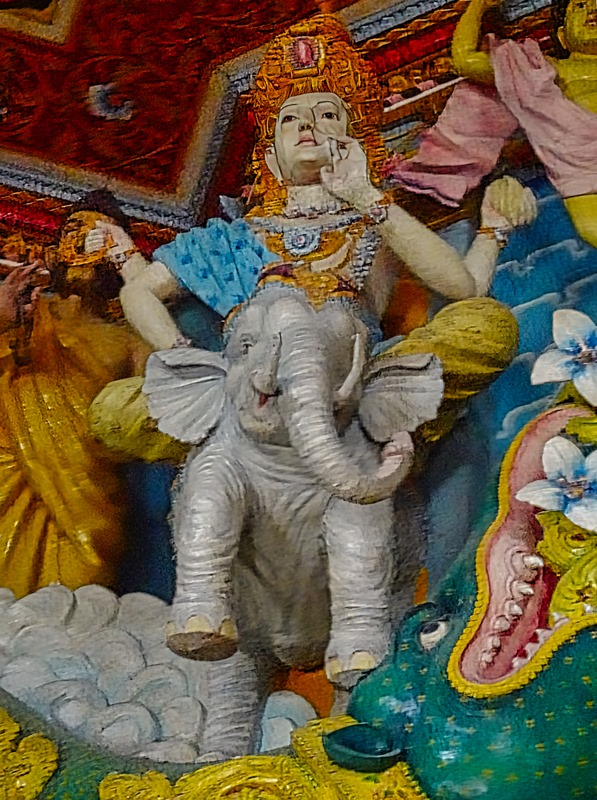
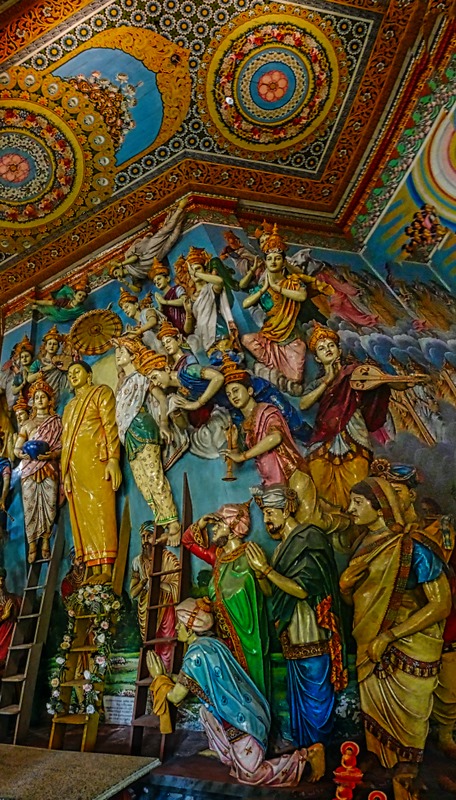
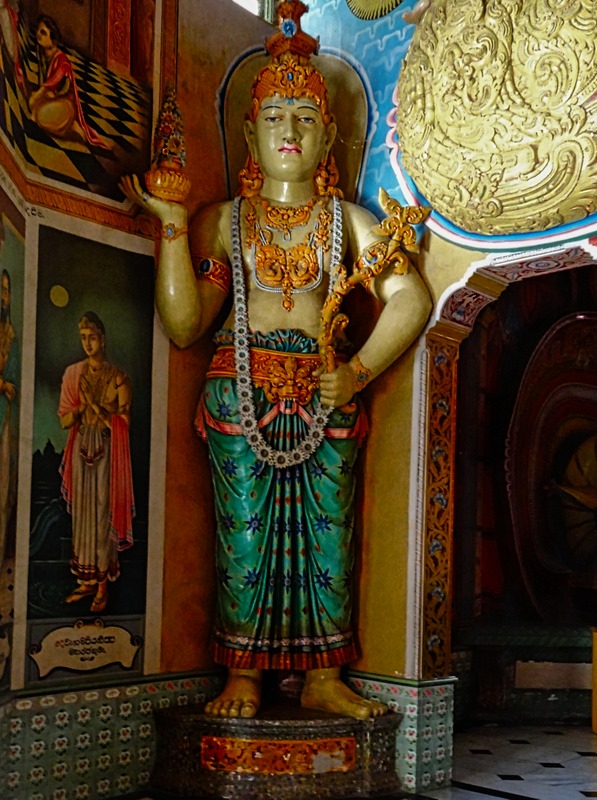
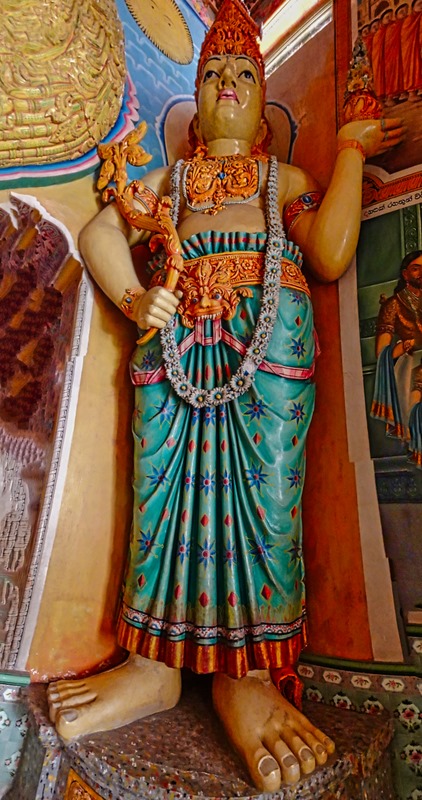
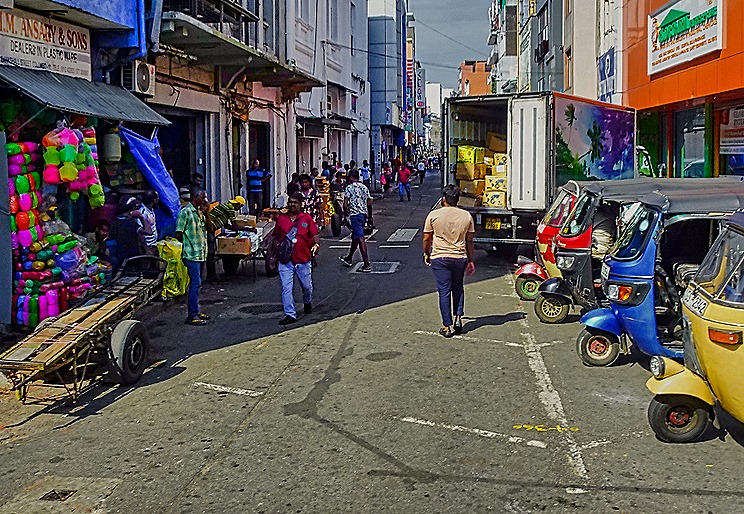
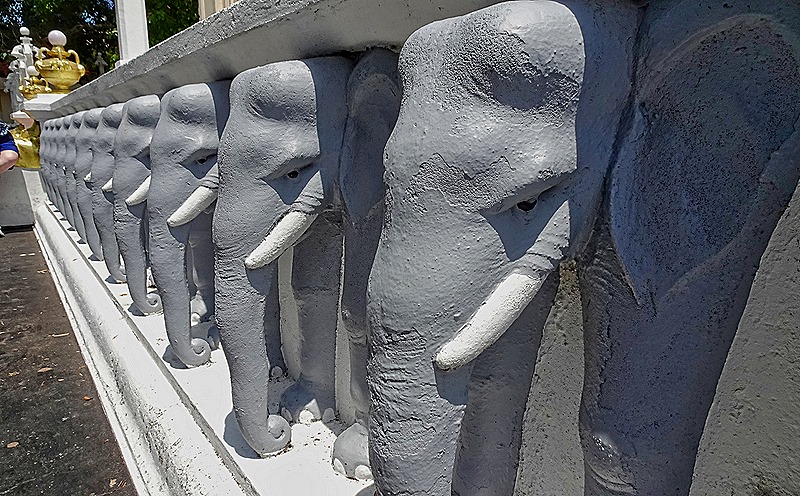
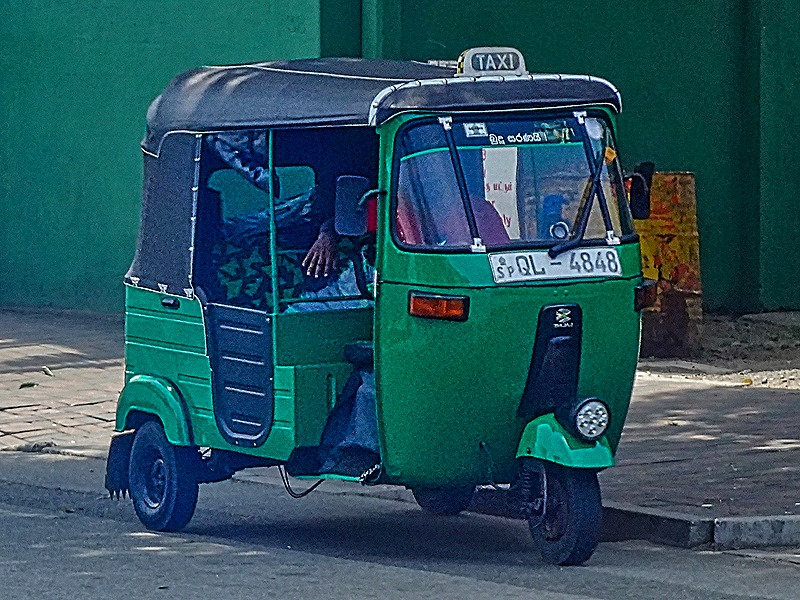
Outside in a rear courtyard of the temple is a Bo tree, rising from a low protective structure ringed with small Buddhas in niches. This species of ficus is the type of tree under which the Buddha sat when he attained nirvana. There are several stupas on the temple grounds that are said to contain relics meaningful to this temple, and we saw a delightful low wall shaped into a row of elephants. On the street outside we saw tuk-tuks, three wheeled vehicles used as taxis. Their drivers can be very aggressive in trying to recruit you for a tour; on past visits we have been followed down streets quite a way before they gave up.


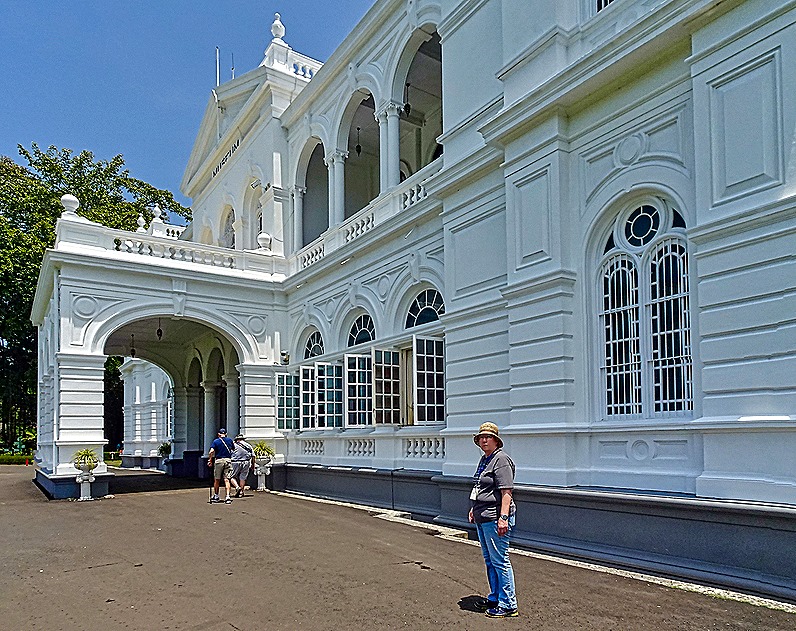
The National Museum of Sri Lanka opened in 1877. Today it has more than 100,000 artifacts and branches in nine other cities. As usual, we didn’t have enough time to really get to know and understand the museum, but we wandered through a number of galleries on its first floor that were crowded with antiquities. In fact, it was so crowded with display cases that the two of us lost each other for a while & it took some time to find each other again. Happily, there were informative explanations in English throughout (although we wished we had time to read more of them).

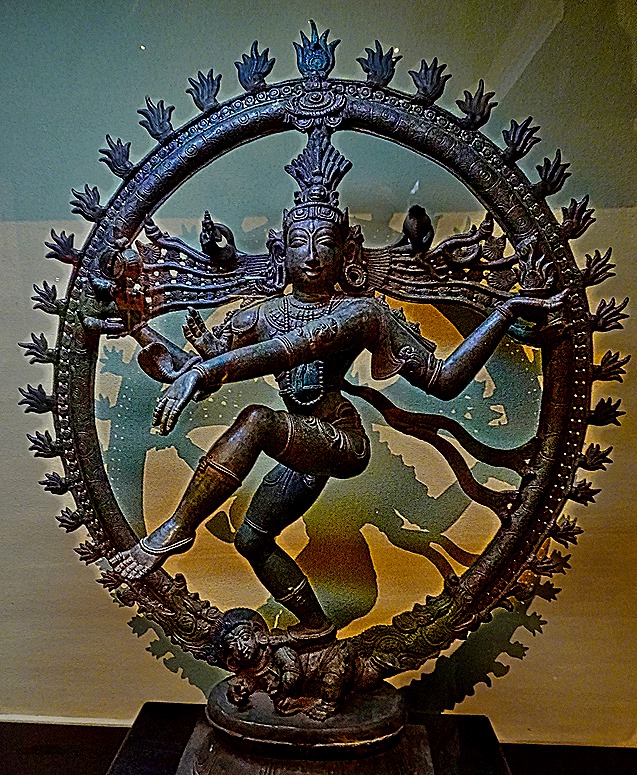
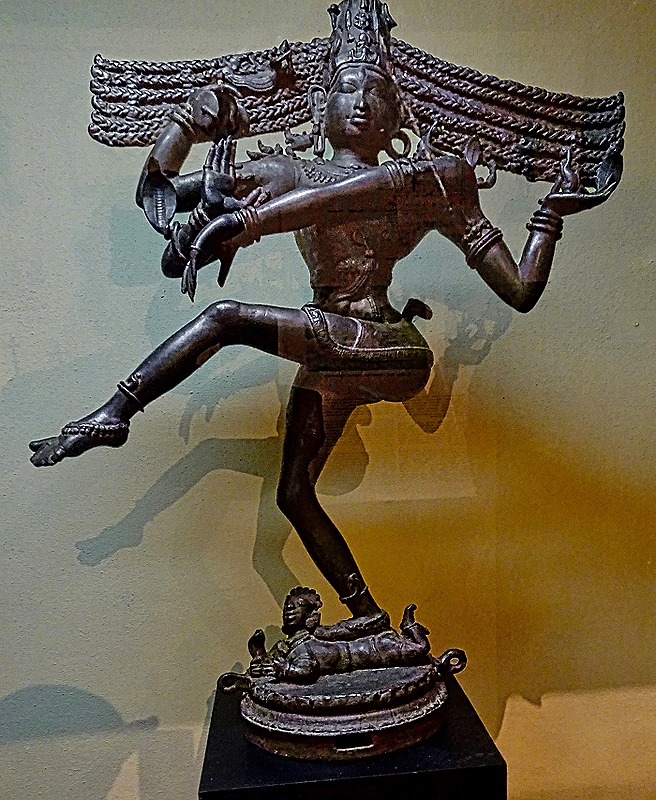
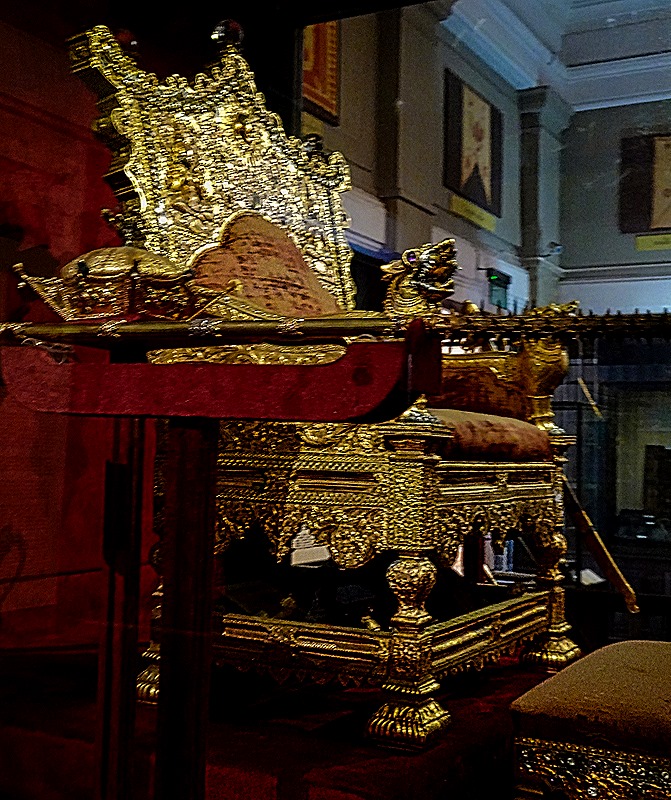
Here are pictures of just a handful of the exhibits we saw. The first two are 12th century table size bronze sculptures of Shiva dancing. The next two are front and side views of the royal seat given by the Dutch to the king of Kandy in 1693 and used by his successors until 1815 when it was captured by the English (returned in 1934). The third pair of pictures show a 12th century sculpture of the god Ganesa and a king’s silver dragon head sword. Last is a relief sculpture of a man with elephants on each side of him.
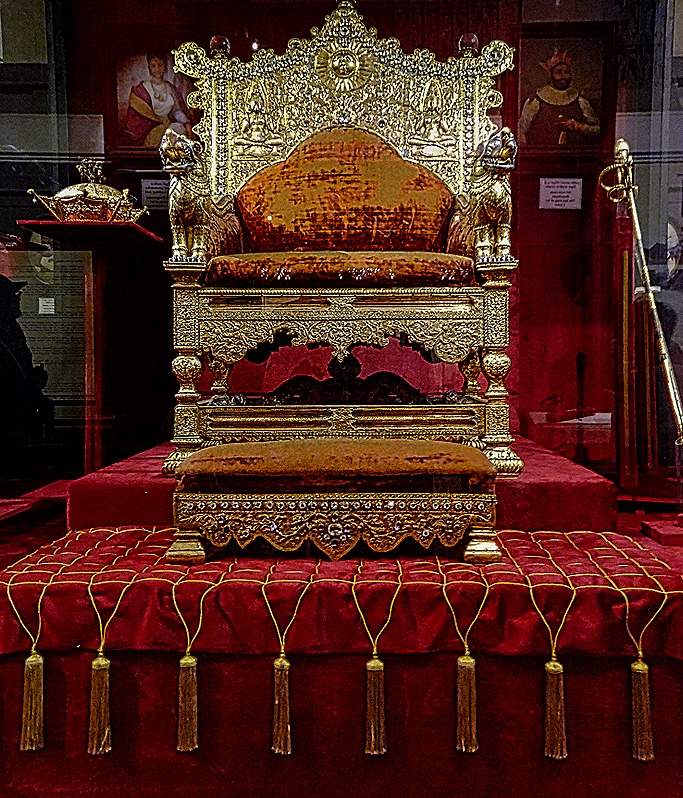

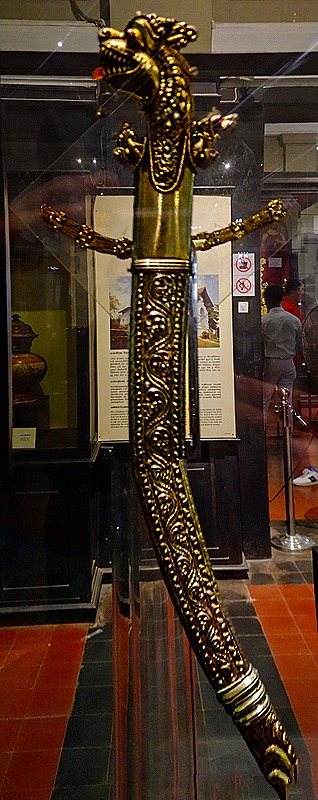

As we left the museum we encountered some interesting looking birds. We don’t know what they are called.


Before going to the Galle Face Hotel for lunch we stopped for an unreasonably long time at an upscale store selling Sri Lankan art and crafts. A lot of nice stuff, but nothing cheap. We generally prefer to shop on our own rather than have a tour company select a store for us (especially since tour companies often get kickbacks for bringing their captive audiences to a particular store).
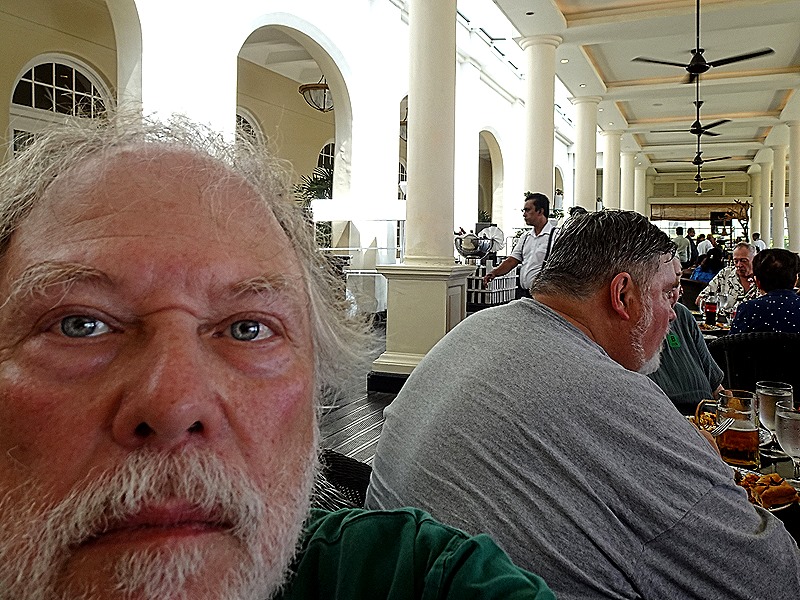
Opened in 1864, the Galle Face Hotel is one of the oldest hotels in Asia. It was expanded a couple of times during the 19th century and was last refurbished in 2015 (a few months before our first visit to Colombo). The hotel has hosted many celebrities, and Arthur C. Clarke, Mark Twain, Anton Chekhov and Sir Arthur Conan Doyle are prominent among the authors who have written here. The hotel forms the southern boundary of the large seaside park called Galle Face Green, from which its name derives. We had lunch here once before inside a hotel restaurant but this time we ate at their grand buffet outside on a very large porch called The Verandah. The buffet line was long, confusing and crowded and there was too much food on offer, but the food was pretty good. After lunch we walked down to the ocean’s edge, past a sitting area called The Checquerboard. I suppose you could take your buffet lunch to eat there, but unlike the Verandah it is out in the very hot sun, so it was no surprise that no one was sitting there when we saw it. As we were leaving the front of the hotel we saw what we think was the white gloved doorman who had been helping someone with their luggage.



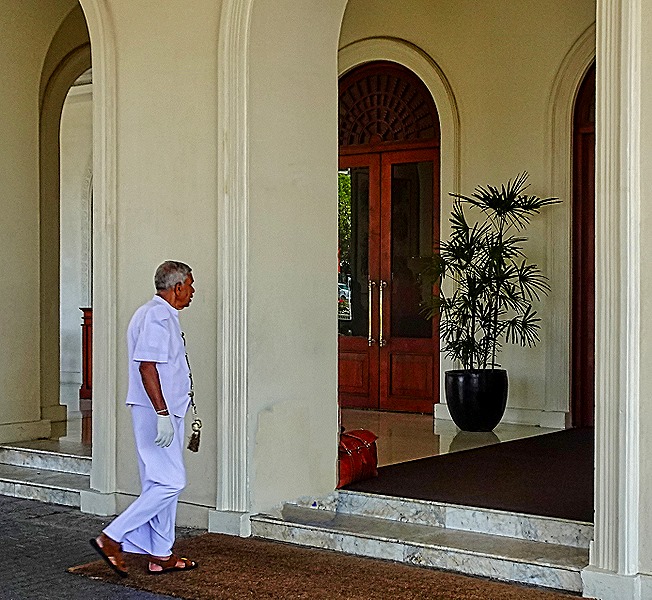
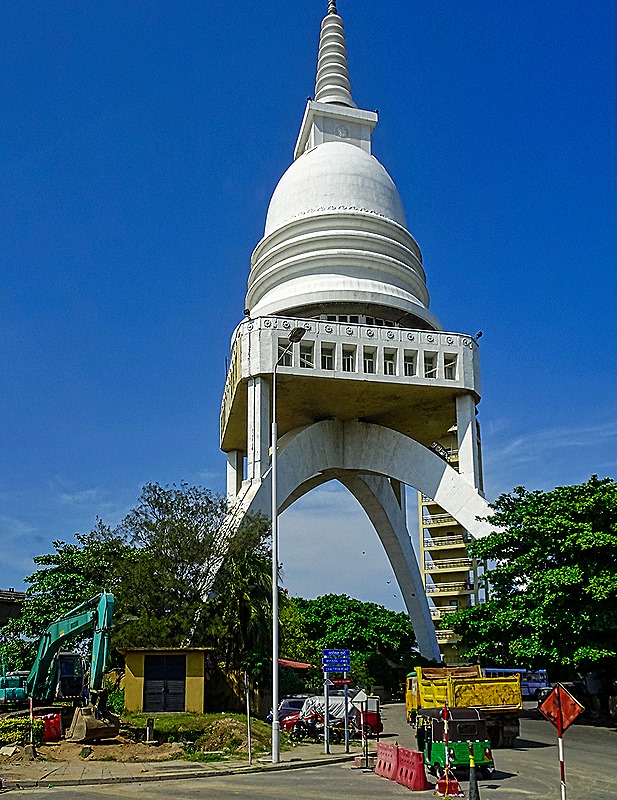
We boarded the bus one last time and headed back to the port. We passed one side street that gave us a view of the Lotus Tower and a yellow Hindu temple that resembled the smaller one we had seen in the morning. At the port gate we passed under the Sambodhi Chaithya, a large stupa on top of a platform made by two arches over the road into the port. It was built in the 1950’s and we understand that it may hold the offices of the port authorities. As in the morning, of course, there was a lengthy drive through the ongoing port construction to reach our ship.
The next day, March 29, was a sea day and a special Indian dinner was held in the Pinnacle Grill. We love Indian food so we went, along with Robert and Bill. We had a nice window table and they had fashioned the different colored napkins into elephants. Robert was dressed in his Indian suit, complete with red dot on his forehead. We had a good time and enjoyed the good eating, but would have preferred that the emphasis be on fine dining rather than on the large number of different Indian foods they could fit on a plate. On our original itinerary this would have led into our visit to Mumbai, India. But because of the troubles in the Red Sea we were no longer going there. More on that in the next episode.


Singapore (overnight) — 2024
We spent March 23 and 24 in Singapore, an island nation whose city has the same name as the country. This was our third visit to Singapore. In 2016 we spent three days (more accurately, about 2 and a half) here. You can read all about that (and see a lot more pictures) here:
https://baderjournal.com/2016/04/22/singapore-day-1/
https://baderjournal.com/2016/04/25/singapore-day-2/
https://baderjournal.com/2016/04/28/singapore-day-3/
In 2018 we had two days here:
https://baderjournal.com/2018/07/30/singapore-day-1-2/
https://baderjournal.com/2018/08/01/singapore-day-2-2/
Day 1 (March 23)
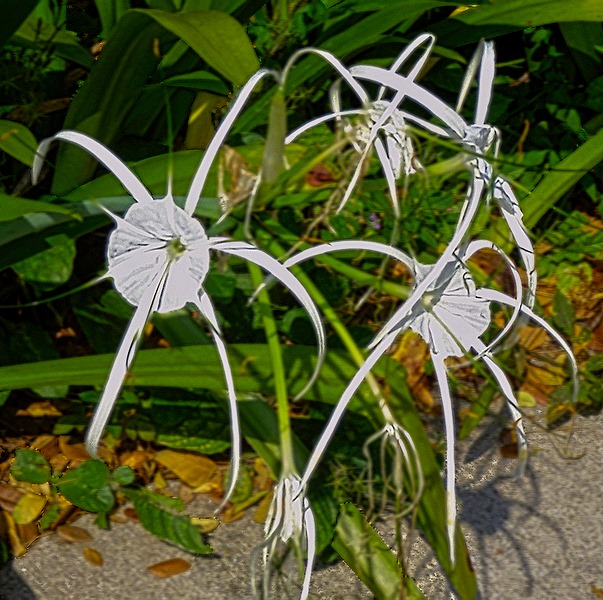
We decided to spend our first day walking around Singapore on our own, since we were already pretty familiar with the town. We set out Just after breakfast. The day was very sunny but also very hot and humid. On our way to the Sands hotel, an icon in Singapore, we walked past the Gardens by the Bay, which we had visited on our last visit. While we only walked along the edge this time there were many colorful flowers to see.

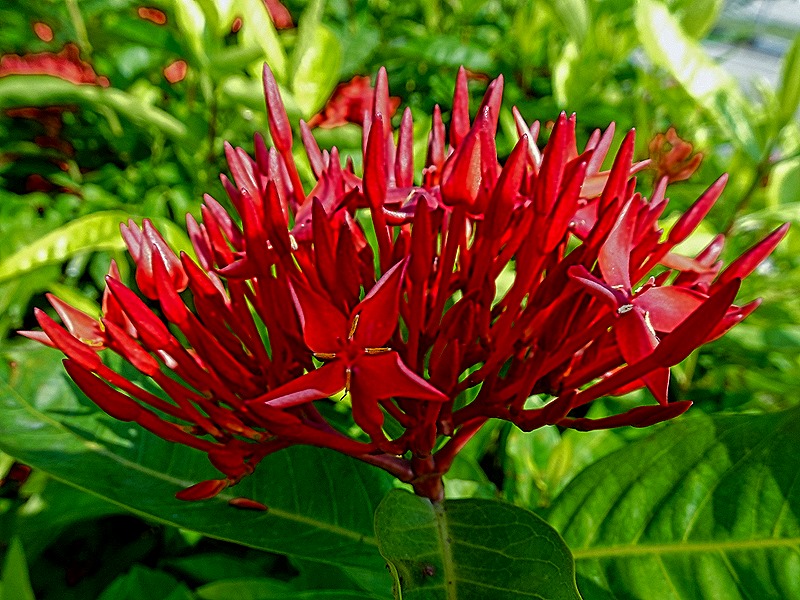
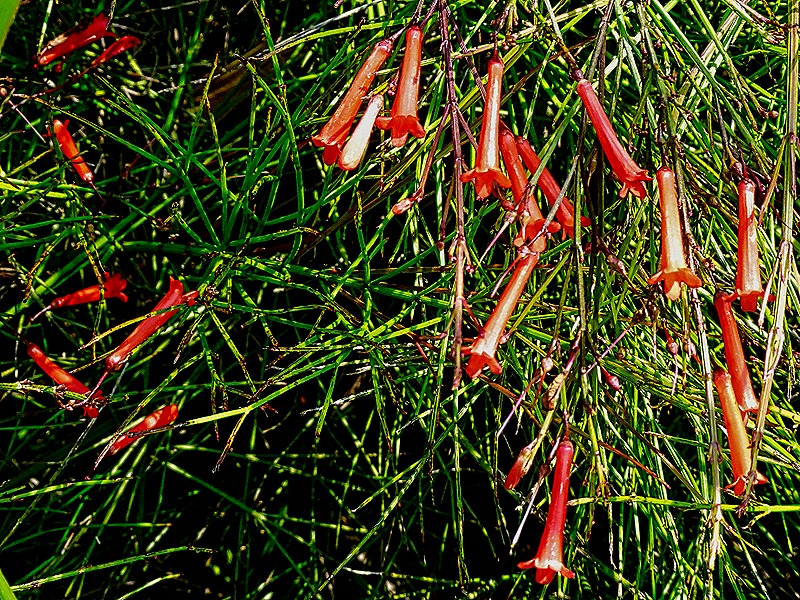


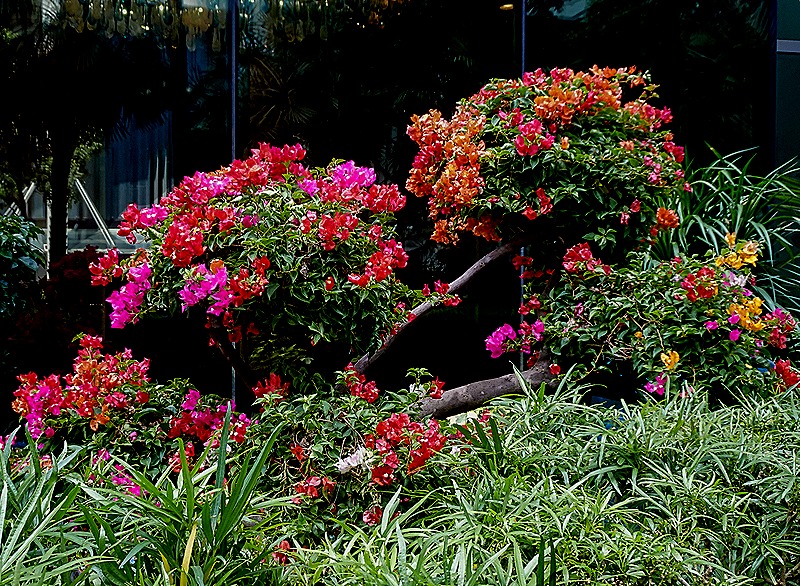
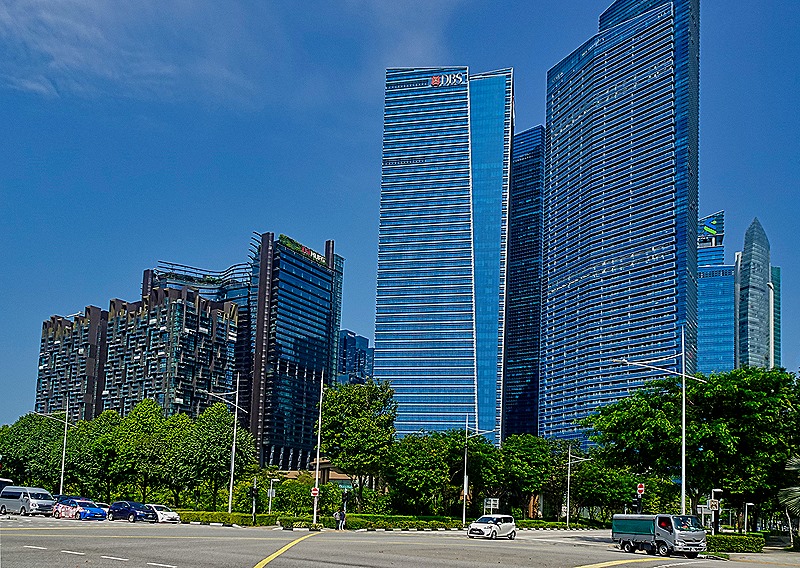
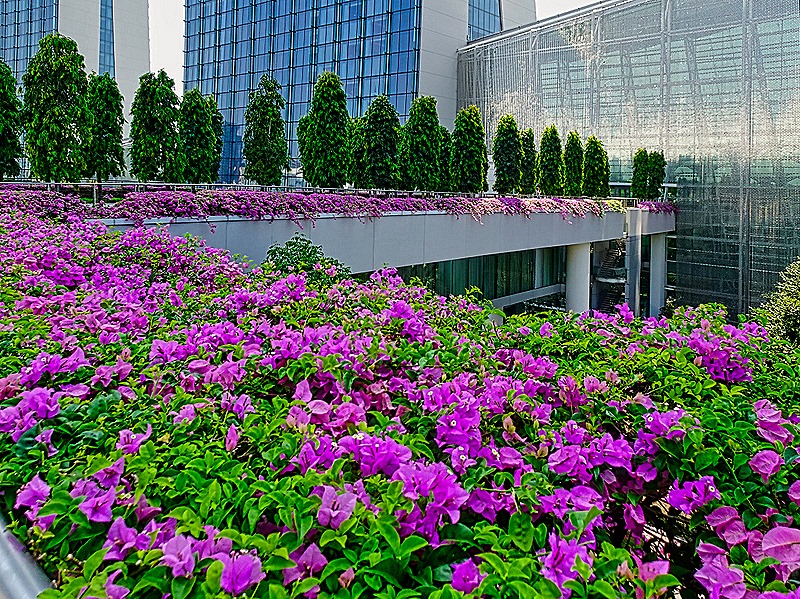
As we passed the gardens we had nice views of the three-tower, one-roof Sands hotel and the Singapore Flyer Ferris wheel, and also of the downtown clump of high rises. And as we approached the hotel there were (as always, it seems, in Singapore) more nice flowers.



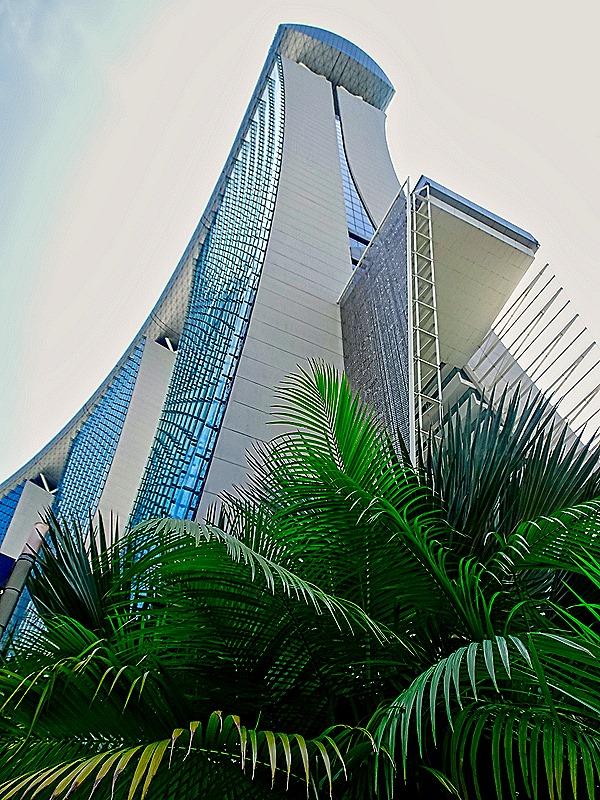

The Sands has a famous infinity pool on its roof with a spectacular view but we were told that it is now limited to hotel guests, so we didn’t go up into the hotel. There were a lot of people crowding the sidewalks in front of the hotel. We took an elevator up a couple of floors to an overpass to a convention center across the street (which we couldn’t enter). The overpass was laid out kind of like a park, with benches and many flowers.

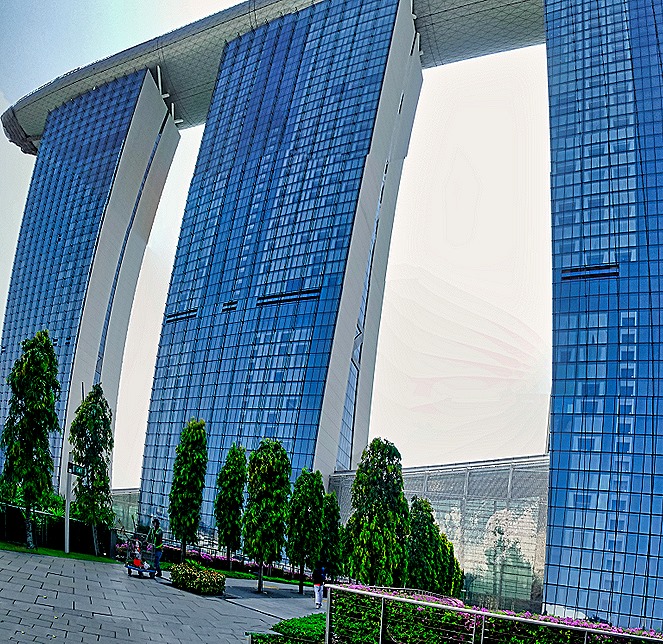
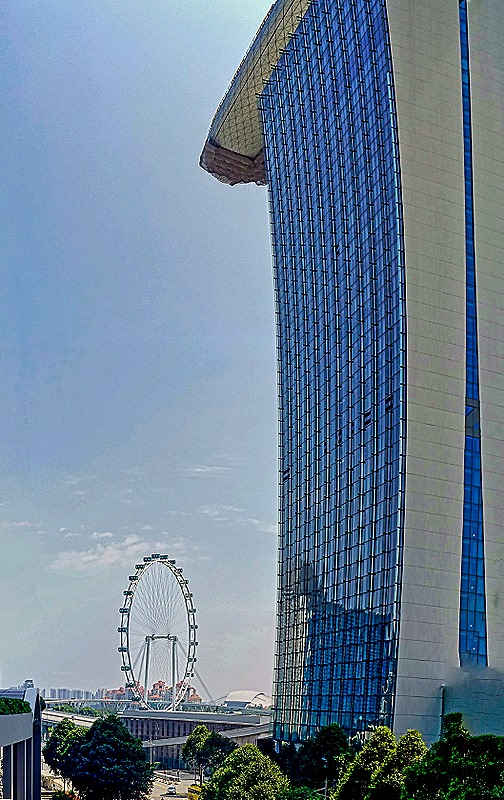


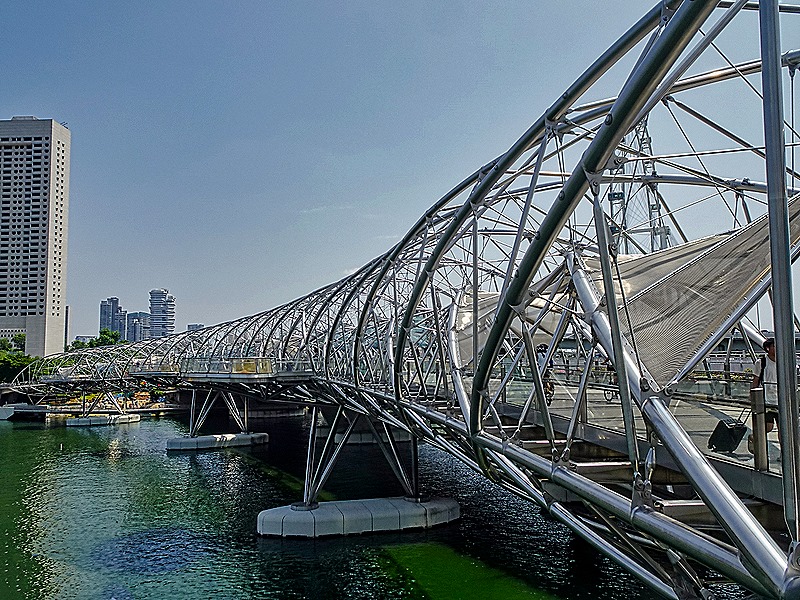
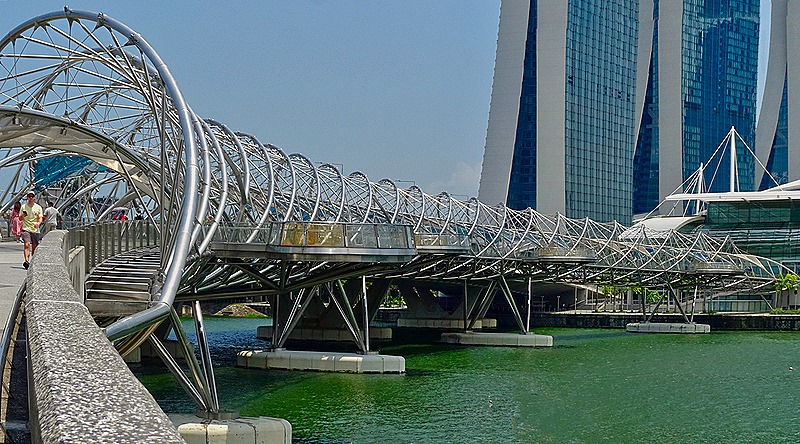
We crossed the Helix Bridge to reach the Marina Bay area. Opened in 2010, the design of this metal pedestrian bridge is based on the structure of the DNA molecule and the views of and from the bridge as you cross are endlessly interesting. Looking back as we crossed we also had a different view of the Sands hotel.
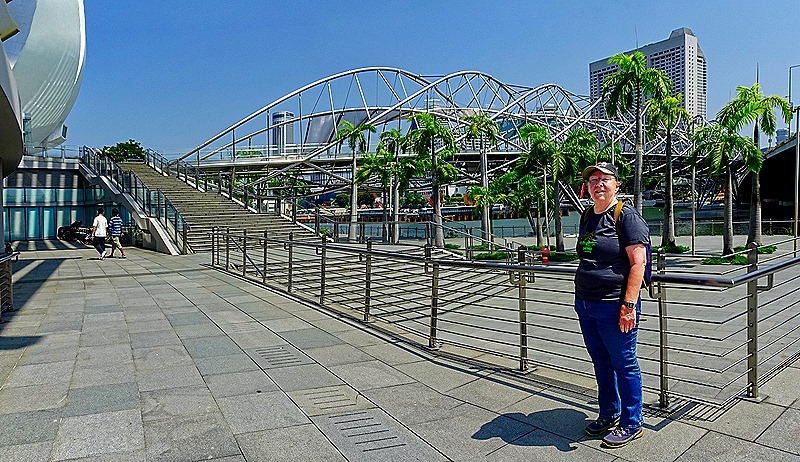




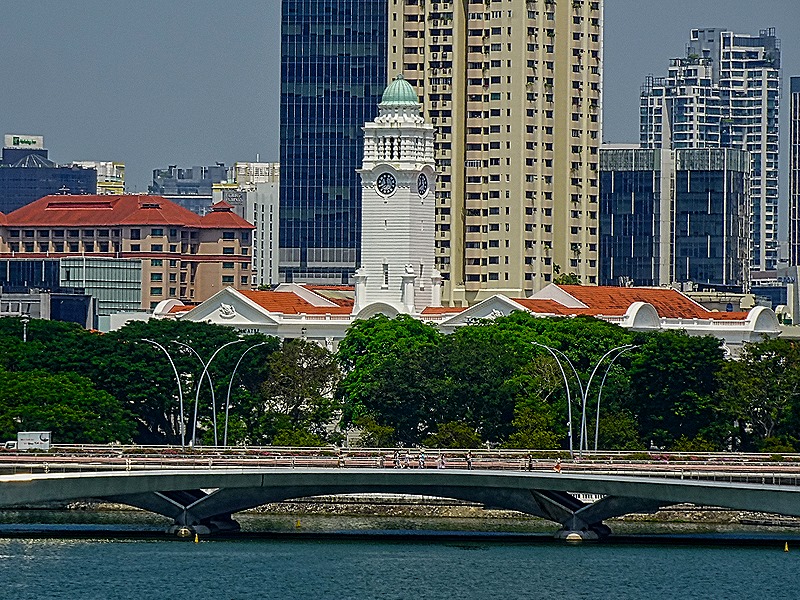
From a viewing platform on the bridge we could see several important structures.
*The green domed former home of the Supreme Court, opened in 1937, is now part of the national art gallery.
*The Victoria Theater and Concert Hall, built in parts between 1862 and 1909, has a distinctive white clock tower.
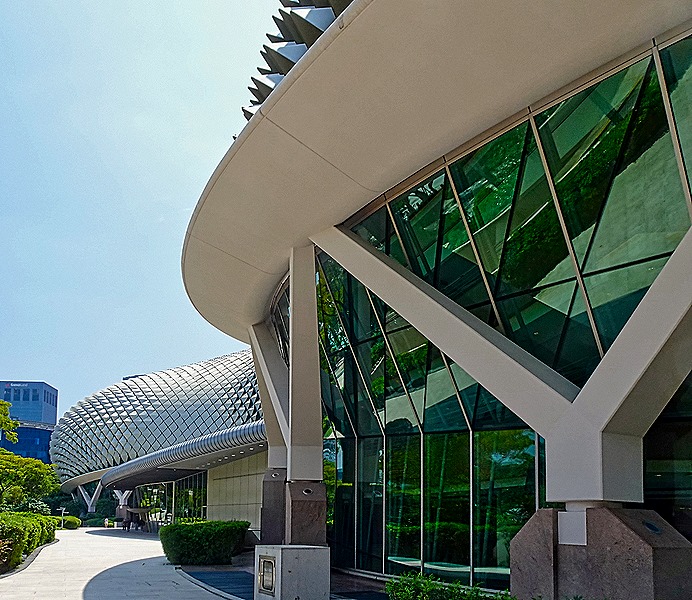
*The Esplanade – Theaters By the Bay opened in 2001. It is referred to colloquially as the “Durian” because of its resemblance to that popular but foul smelling fruit.
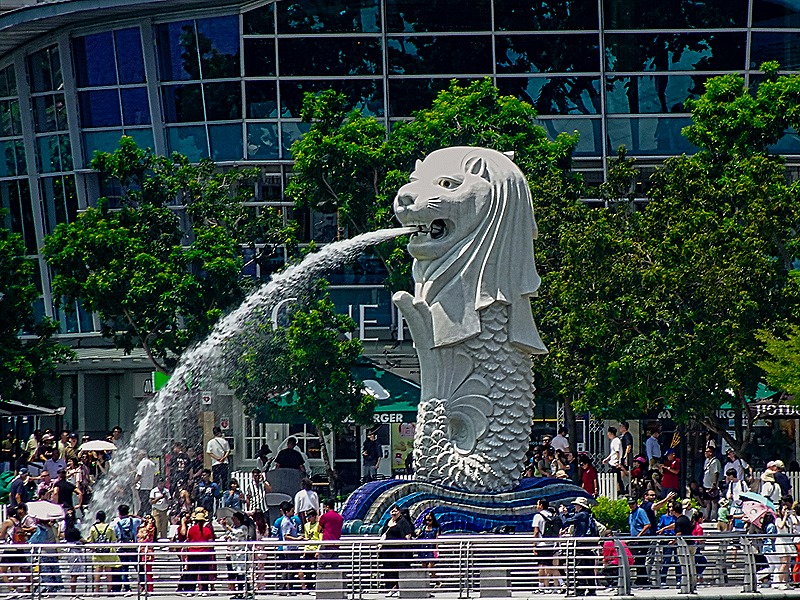
*The Merlion is a large sculpture/fountain of a beast that is part lion and part fish and spits a stream of water into the bay. It was created in 1972 and moved to its present location in 2002. The Merlion was dreamed up by the local tourist board in 1964 to be a symbol of Singapore and part of the board’s logo.
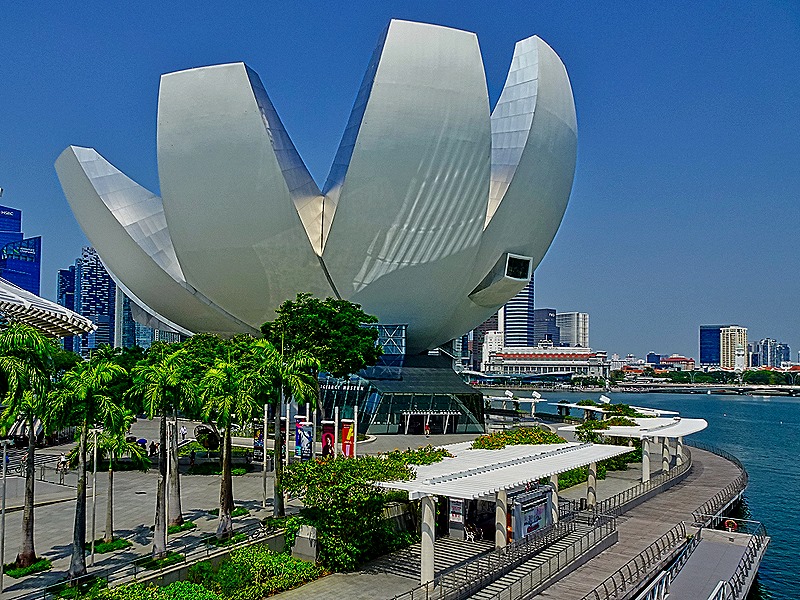
*Finally, the ArtScience Museum, which is associated with the Sands hotel complex, is shaped like a giant white water lily. It opened in 2011 and is a venue for exhibitions involving arts, sciences, culture and technology.


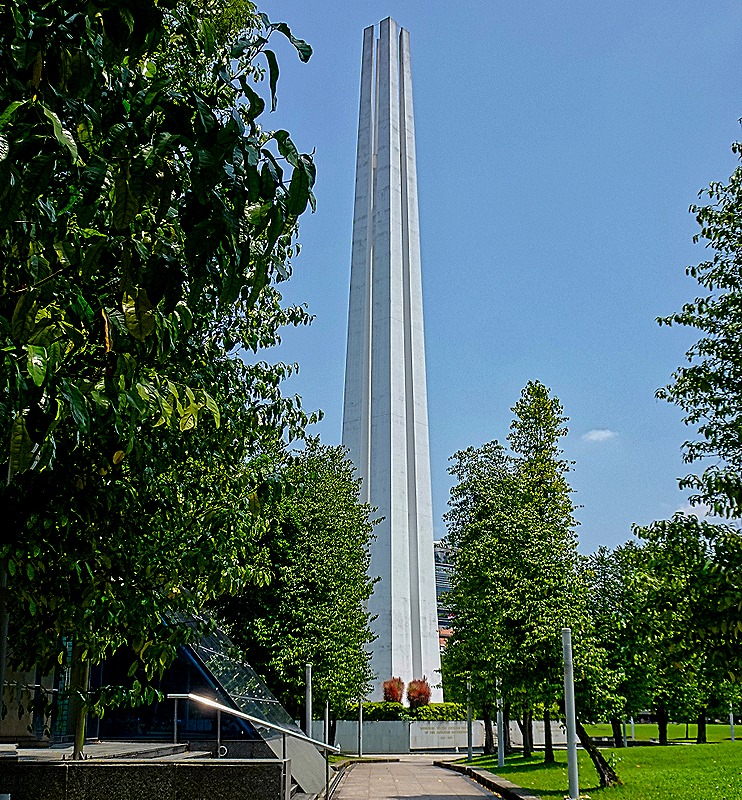
After leaving the bridge we walked past the Merlion and stopped briefly at the Esplanade, taking a breather on some small bleacher seats on the bay side of the building, We crossed a large and busy street through a large subterranean passage under an intersection and walked to the Civilian War Memorial. The Japanese occupation of Singapore from 1942 to 1945 was quite brutal. In particular, tens of thousands of men of Chinese ethnicity were massacred in a drive to suppress opposition to Japanese rule. This memorial was begun in 1963 to commemorate them, but was broadened to include victims of other ethnicities as well. The memorial was officially unveiled in February, 1967, but the year before a ceremony was held to inter more than 600 urns containing remains of unknown civilians killed during the occupation. The memorial is a very tall white obelisk divided into four sections representing different ethnicities honored by the memorial. It is surrounded by a fountain and a park, which is in turn surrounded by many tall downtown buildings. The official name is “Memorial To The Civilian Victims Of the Japanese Occupation 1942 – 1945.”

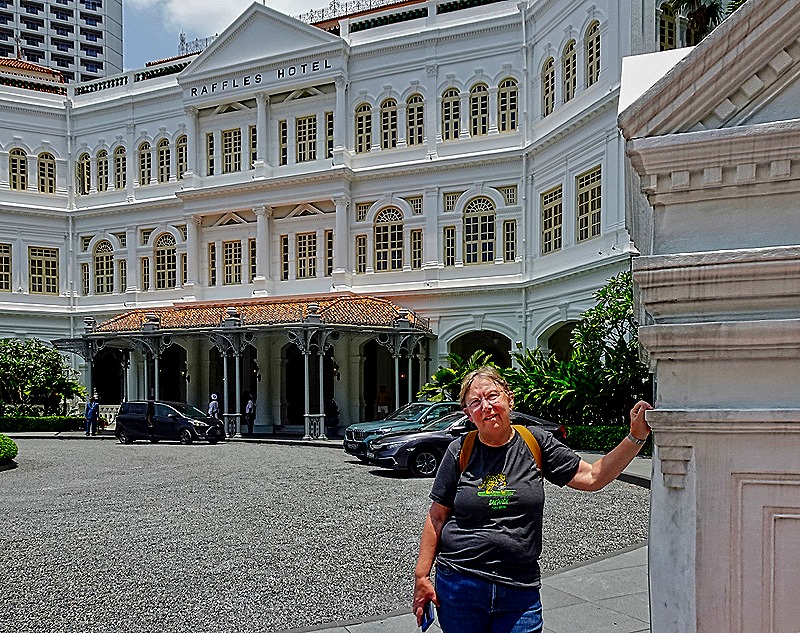
The Raffles Hotel has long been a prime landmark in Singapore. It began as a private beach house in the early 1830’s and was expanded into the 10 room Raffles Hotel in 1887. It has been expanded and renovated and has changed ownership a number of times over the years and is a good bit larger today, but still has a reputation as an elite hotel. Its most recent renovation had it closed on our last visit to Singapore in 2018 but it was open for business when we visited today.
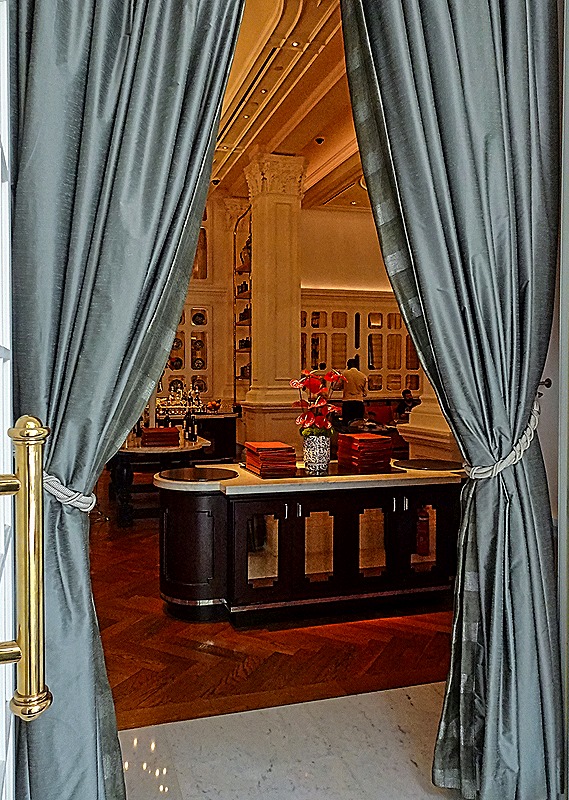
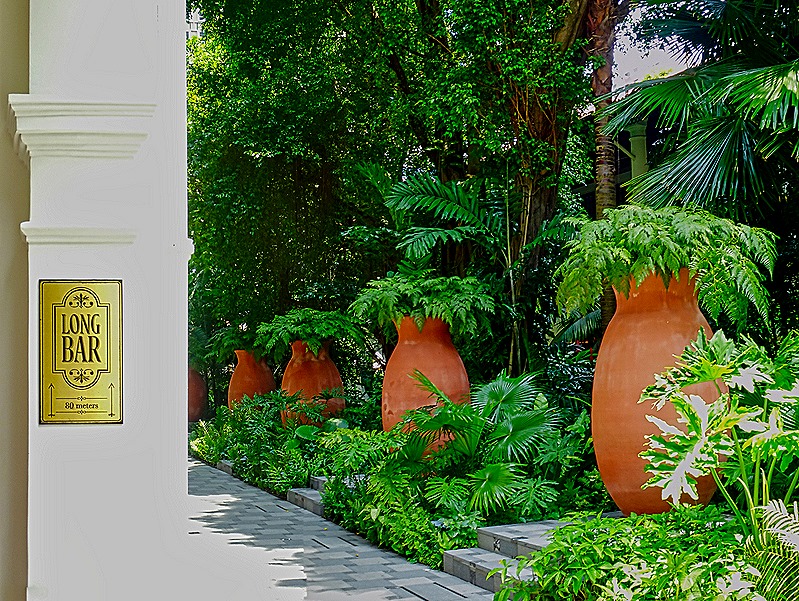
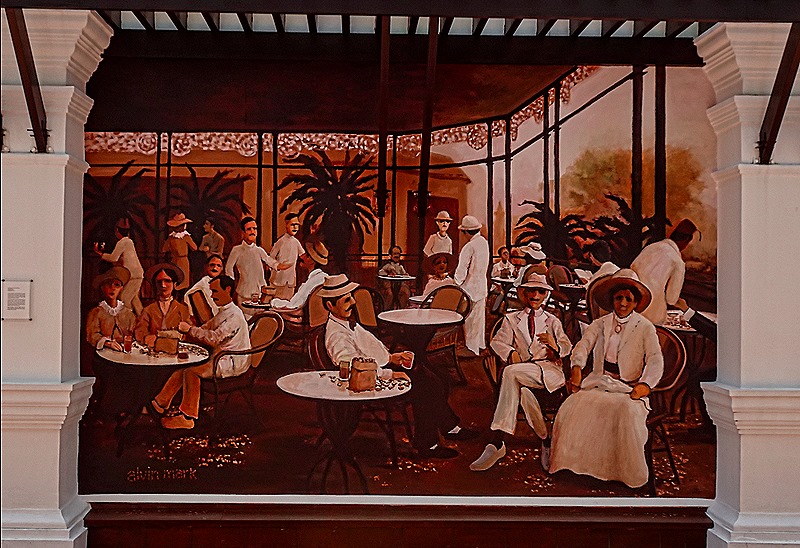
Behind the hotel is an upscale shopping arcade containing boutiques and restaurants, with a large courtyard in the center with a fountain where people can sit at tables and presumably eat or drink if they like. We walked back there with the intention of visiting the hotel’s famous Long Bar, which was moved here from the hotel’s lobby during a renovation in 1991. The Long Bar is famous as a hangout of famous people like the writer Somerset Maugham and was also known for its patrons’ practice of throwing used peanut shells on the floor. We thought we might try a Singapore Sling here at the drink’s birthplace (although we understand it can be shockingly expensive). But it was not to be. When we reached the second floor after following signs for the Long Bar there was a very long line of people waiting to get in. So we moved on. A series of interesting murals based on old pictures from the Long Bar was exhibited on the walls nearby.
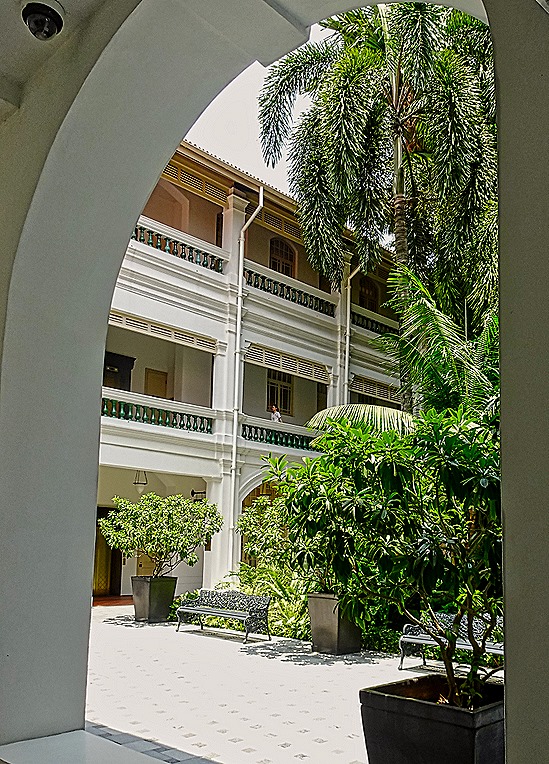


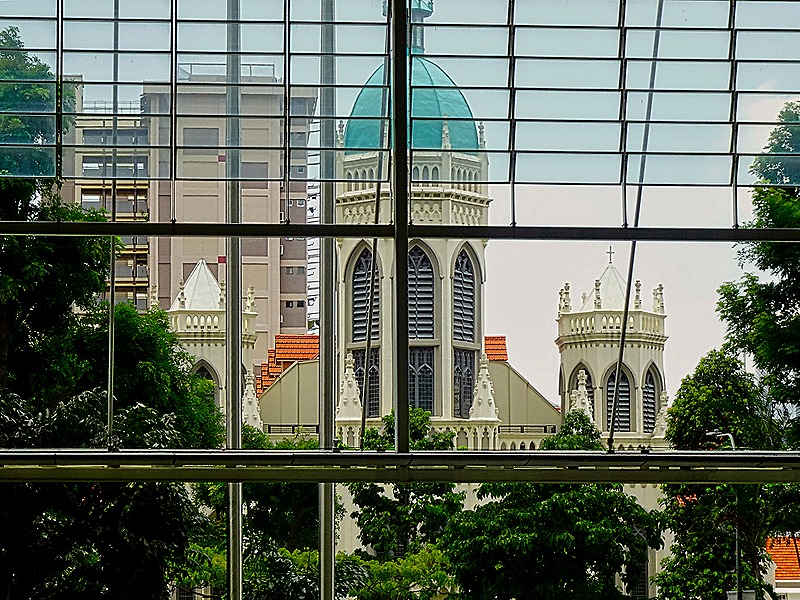
Before walking back to the ship we visited the library, one part of a large building. It wasn’t open but we rested a bit in a covered patio outside (did we mention it was REALLY hot and humid?). Through a back window of the patio we saw the blue domed tower of St Joseph’s Catholic Church, which opened in 1912 to serve the Portuguese community. On a wall of the building housing the library was a mural of children enjoying books. On the way there we passed an interesting block of old buildings painted in a variety of bright colors.
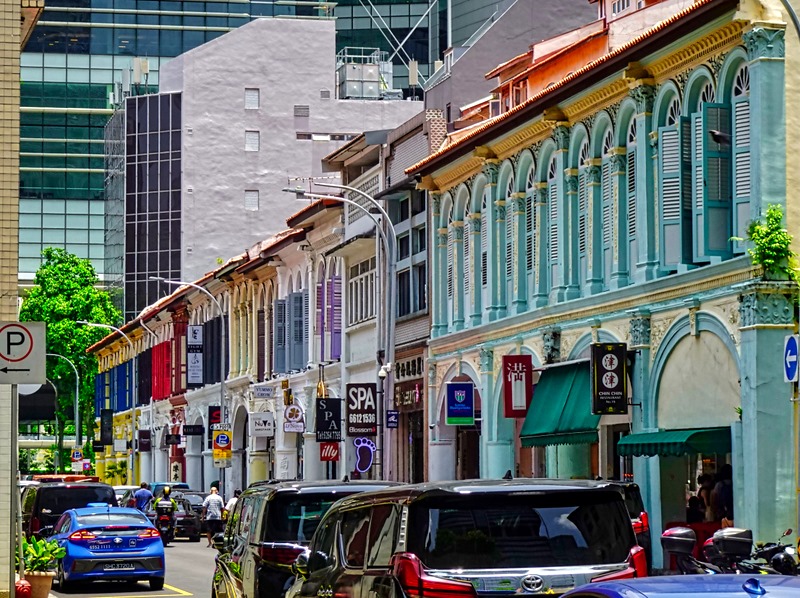

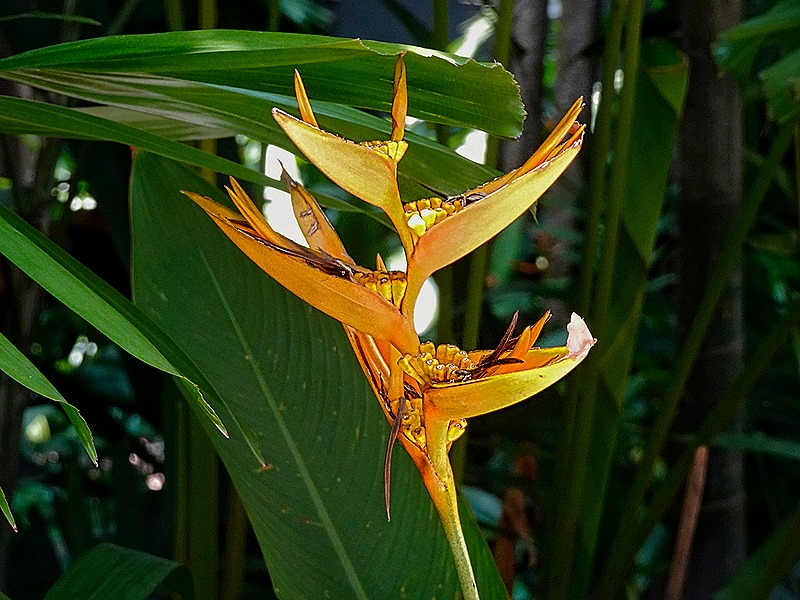
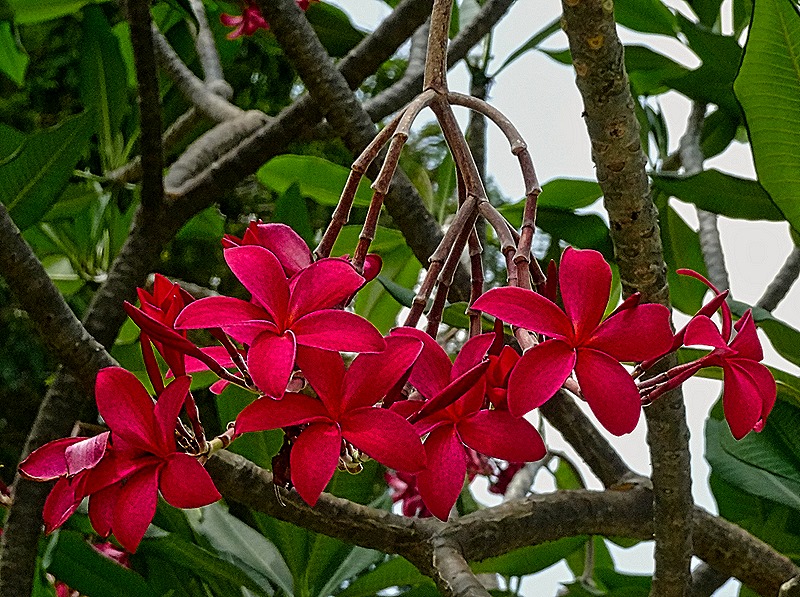
The walk back to the ship seemed much longer than the walk into town in the morning, mostly because we were tired and it was so hot and muggy. We saw some nice flowers and we stopped just before reaching the Helix Bridge for a drink and a bite to eat in a small Italian fast food restaurant. We walked back across the bridge, through all the construction and along the long covered walk parallel to the ocean front (where local folks were fishing) to the cruise terminal. If I remember correctly, we ended up walking a total of about 13 miles in these sauna-like conditions and by the time we got back we were running on fumes.
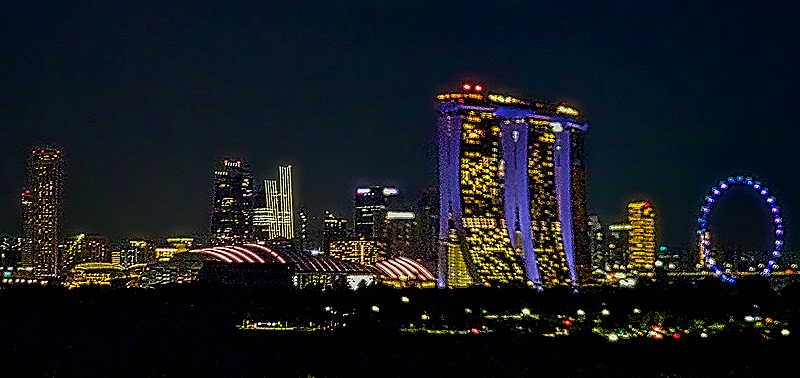
We got dinner in the Lido buffet and ate it on the aft deck, which had a great view of Singapore, looking fine as the city lights started coming on at twilight.
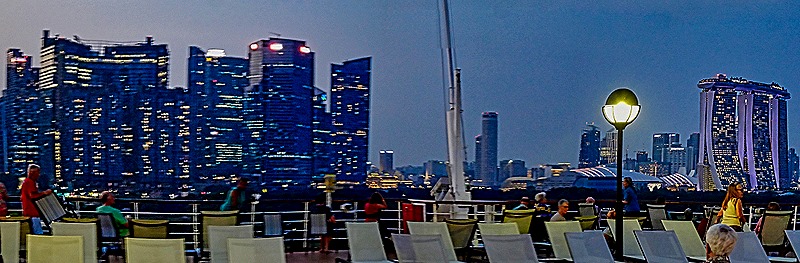
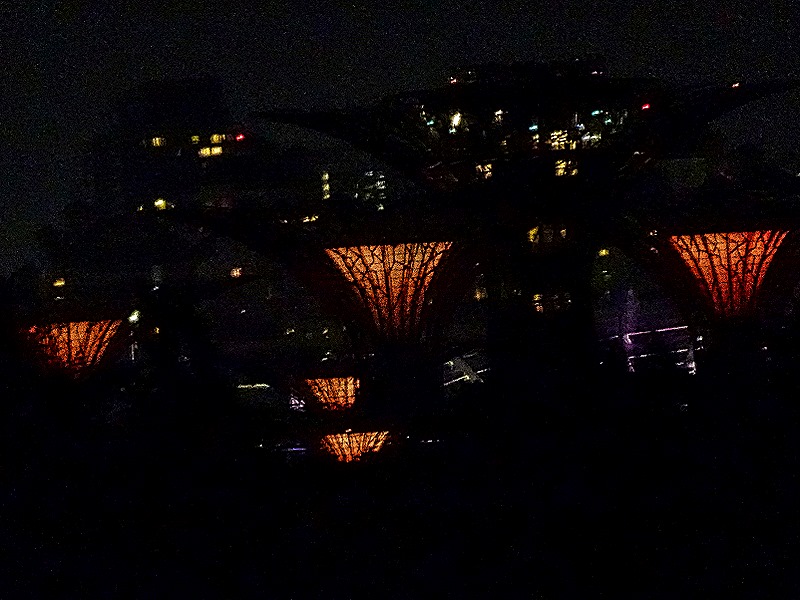
After dark the Supertrees in the Gardens by the Bay were lighted. These are more than a dozen towering structures (about the height of a 16 story building), each with an inverted cone at the top to emulate the look of a tree, and each filled with many plants filling up its trunk. At night these Supertrees are lighted in ever changing colors (with musical accompaniment we are told, although we couldn’t hear that from the ship). Quite an unusual sight, with some of Singapore’s other iconic buildings (such as the Sands hotel and the Singapore Flyer) lighted up as well.


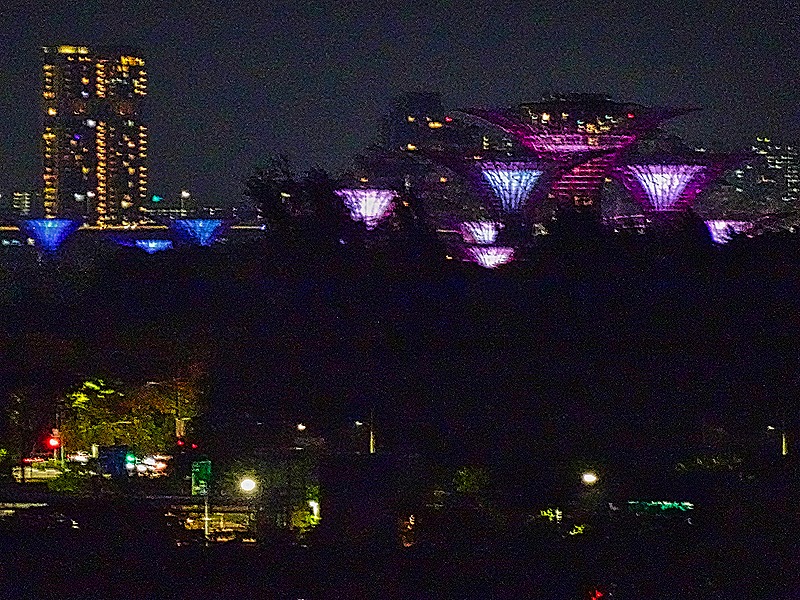
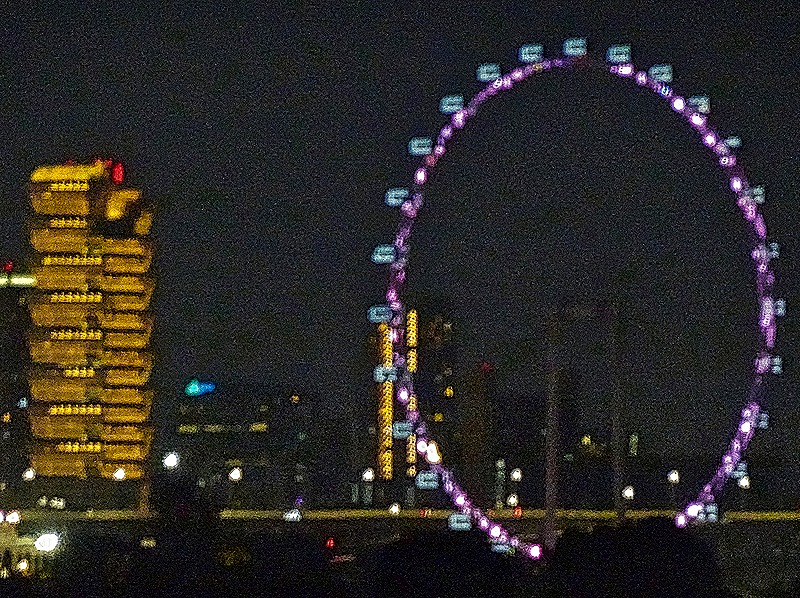
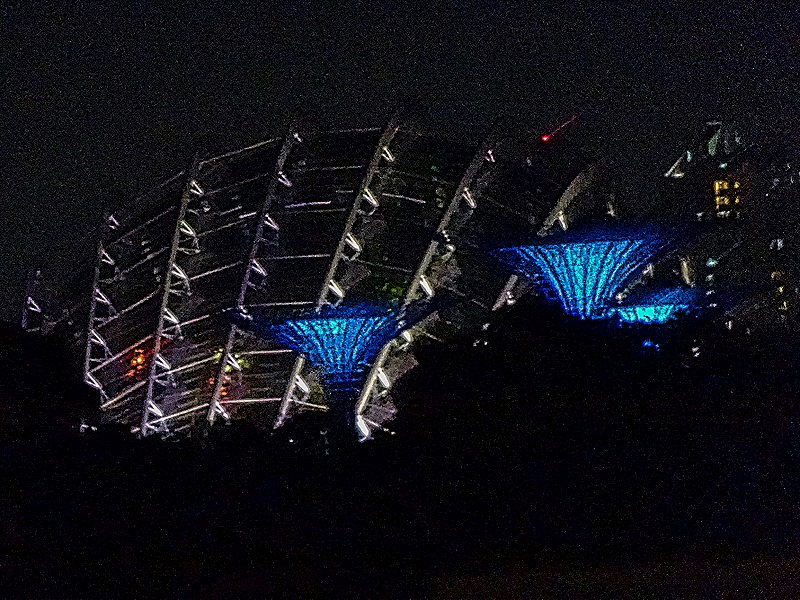
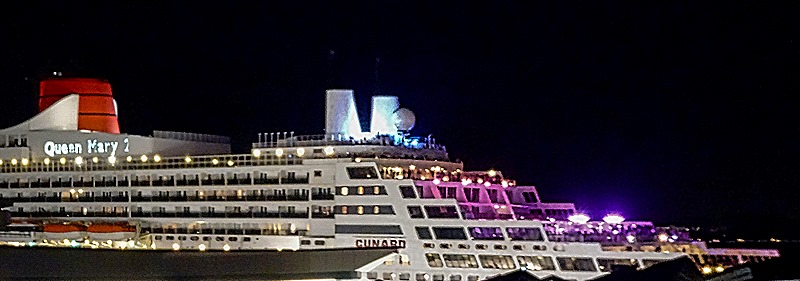
Docked next to us was the Queen Mary 2, which left before the night was over. One more look at Singapore from the Zaandam, and then to bed.
Day 2 (March 24)
There was no way we would be walking anywhere for a second day here, so it was a good thing we had booked an excursion for today with our travel agency to visit some World War II sites. Before the war Singapore was a British colony, very important because it was the hub for trade going by sea between the Indian and Pacific oceans (as it still is today). It is an island just off the southern tip of the Malay Peninsula. The peninsula to the north was largely forests, which the British thought would be impassable to an army, so the island was heavily fortified with large cannons designed to fire hull penetrating shells to stave off any attack from the sea. It was called “Fortress Singapore” and was thought to be impregnable.
Within hours of the attack on Pearl Harbor, however, the Japanese attacked the upper Malay peninsula. After destroying two of the UK’s best warships they were able to land on the peninsula and began moving south. They used bicycles and light tanks to maneuver through the woods. The British, who had more than twice as many men (though many not fully trained and poorly supplied) were convinced that they were greatly outnumbered, and retreated down the peninsula to Singapore, then blew up the causeway bridge that connected the island to the mainland. They were sure the Japanese would try to invade from the northeast and, ignoring intelligence to the contrary, concentrated their forces there. But the Japanese actually invaded in the northwest of the island and pushed the British (and Australians) back to the outskirts of Singapore city in the south. Despite Churchill’s insistence that they fight to the last man, with water, food and ammunition running out (and more than a million civilians crowded into the few square miles of the city), the British commander surrendered on February 15. What the British didn’t know at the time was that the Japanese were also at the end of their tether and were certain they would lose if it came down to street warfare in the city of Singapore.
The Japanese occupied Singapore until the end of the war in 1945, brutally suppressing all opposition (including the killing of thousands of ethnic Chinese men who were assumed to be in opposition to the Japanese). A complex of POW camps was established, with prisoners divided by sex and, sometimes, ethnicity. The central prison, which also gave its name to the whole complex of several prison camps, was in Changi. That was the first place we saw today.

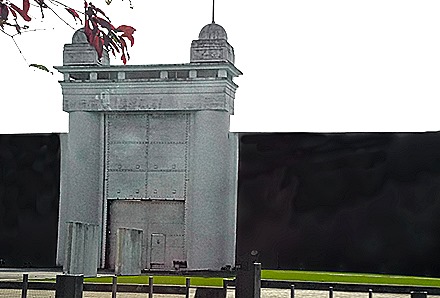
Changi prison was built by the British in 1936. It was designed to hold 600 prisoners, but during the Japanese occupation some 3,000 civilian prisoners were held there. It was a British barracks near the prison that was converted into a POW camp, holding some 50,000 mostly British and Australian soldiers. About 850 POWs died there, and more of these prisoners died after being transferred to forced labor sites (like the Burma-Thailand railroad depicted in Bridge Over The River Kwai). One of the POWs interned here was James Clavell (author of Shogun), whose first novel, King Rat, was based on his experiences as a POW. After the war Changi was used by the British to house Japanese prisoners of war, a handful of whom were executed here. Today it is part of a larger modern prison complex, although at the request of the Australians much of the original prison building has been preserved.
Since it is still a prison we were not able to visit inside the prison walls. So the pictures here were taken from the bus as we drove by it.
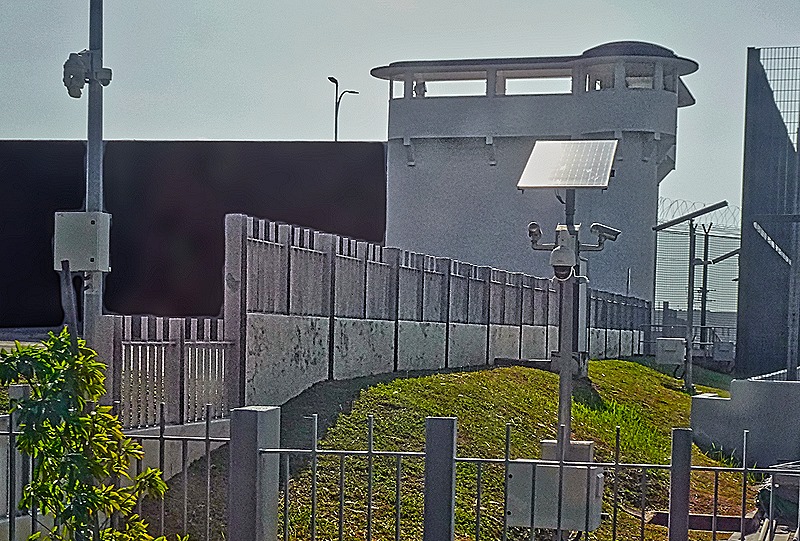
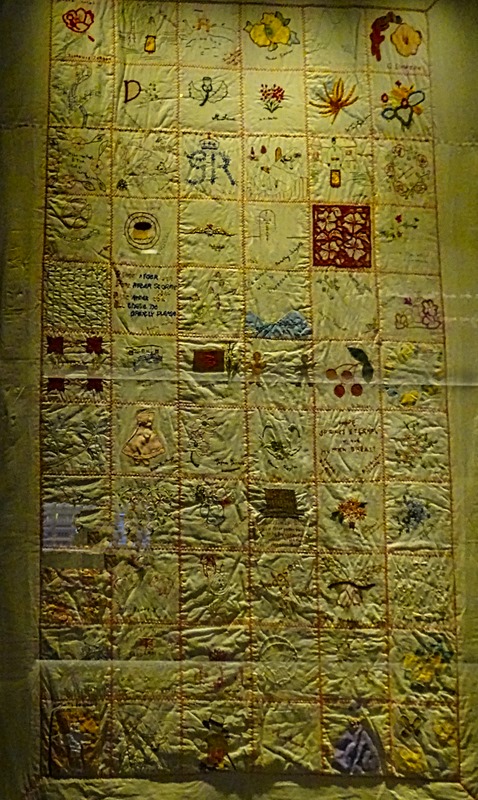
A museum has been established not far from the prison, which presents an eye opening depiction of life in the POW camp. There are a number of artifacts but the museum mainly presents wall boards with photos and written explanations. It is very well done and quite educational. Among other things, one notable artifact is a large quilt sewn by inmates of the women’s prison. A number of these were made for use in the hospital and the women concealed in their designs the names of inmates and meaningful symbols which, had the Japanese recognized them, could have resulted in serious punishment. Apparently the Japanese did not try to restrict religious observances and the prisoners built several chapels during the occupation. One of them is in a museum in Canberra and there is a reconstruction of another one, called St George’s Church, just outside this museum. On the altar sits a metal cross made by one of the inmates from a used shell casing. There is quite a bit more to this museum and it was well worth visiting.

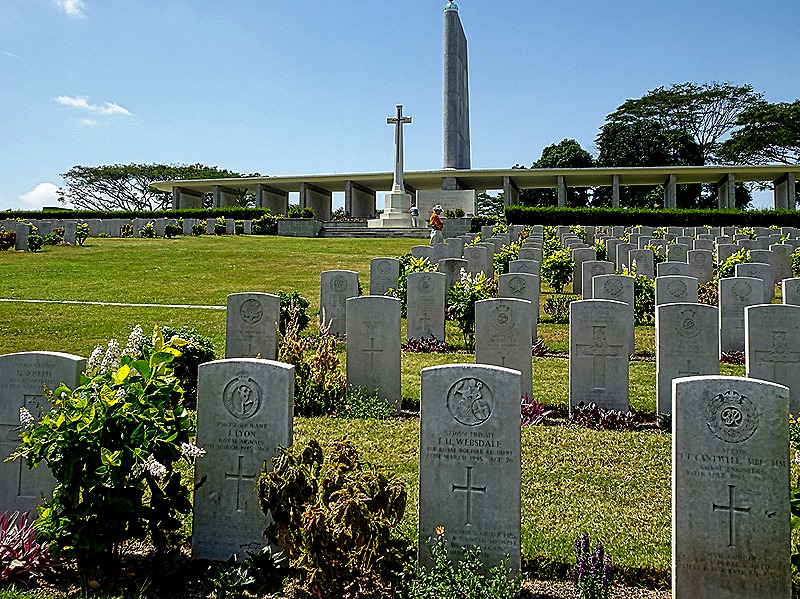
We visited the Kranji War Cemetery, which contains the remains of almost 4,500 Allied soldiers (850 unidentified) who died during the Battle of Singapore and the Japanese occupation. During the war this area held a POW camp and a hospital, and after the war Kranji was designated to be Singapore’s War Cemetery; war graves from other parts of Singapore were moved here.
At the top of the hill is the Kranji War Memorial, etched with the names of more than 24,000 service personnel for whom no remains could be identified (including a number from India who had been cremated in accord with their religious beliefs). Its columns represent soldiers standing at attention, its roof is shaped like the wings of an airplane, and the tall portion behind represents the fin of a submarine. A tall cross in front of the Memorial marks the mass grave of more than 400 wounded who died in the nearby hospital at the end of the occupation. This mass grave preceded the establishment of the War Cemetery and the cross was erected later.

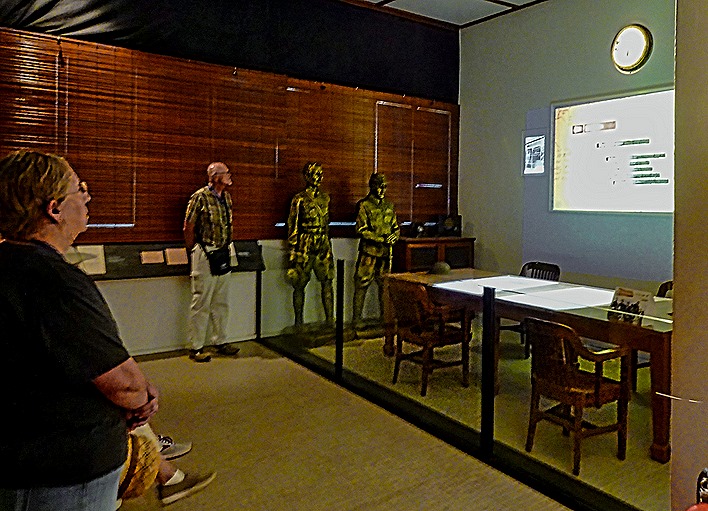
Our final stop was at the former Ford Factory, the site of the British surrender to the Japanese in 1942. Ford built the factory to serve the southeast Asian market for automobiles, but Ford’s timing was not good. The factory was completed in October of 1941 and just two months later the Royal Air Force took it over to assemble fighter planes to defend Singapore. The fighters assembled here were flown out of Singapore near the end of January, 1942, to keep them out of the hands of the advancing Japanese, and on February 15 the Japanese army took control and made the factory its temporary military headquarters. The Japanese company Nissan operated the plant during the occupation to assemble military vehicles. After the war Ford regained control of the factory and was finally able to operate it as a vehicle construction plant, which it continued to do until 1980.
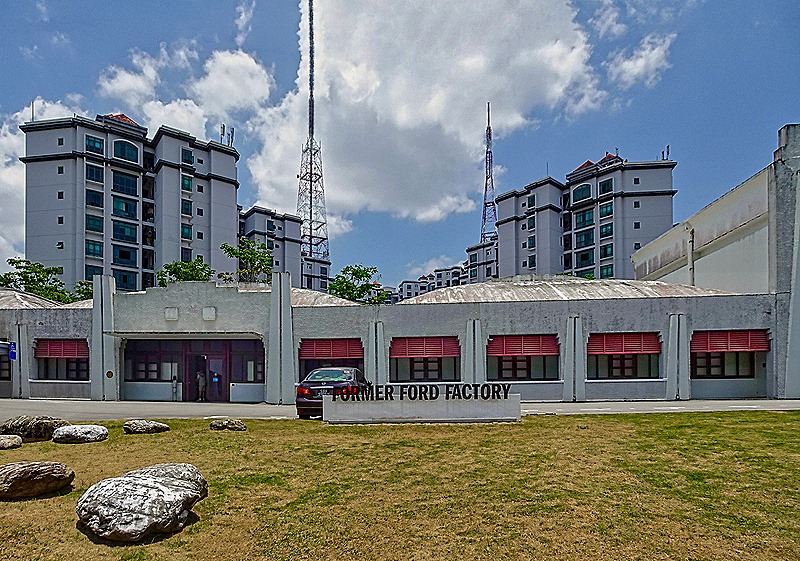

The Ford plant’s special place in history stems from its role as the site of the British surrender of Singapore. On February 15 the British commander, General Arthur Percival, surrendered Singapore unconditionally to Japanese General Yamashita Tomoyuka in the boardroom of the factory. That room is preserved much as it looked then, with a replica of the original conference table (the original is now in Australia) and a clock set to 6:40, the time of the signing. The room has full size statues of the two generals standing at one side.


After this we drove back to the ship, through this neighborhood that now has a number of high rise residential developments. We set sail before dinner time, looking forward to the three upcoming sea days to recuperate from all the exertion on our first day in Singapore.

 BADER JOURNAL