Puerto Vallarta, Mexico (2024)
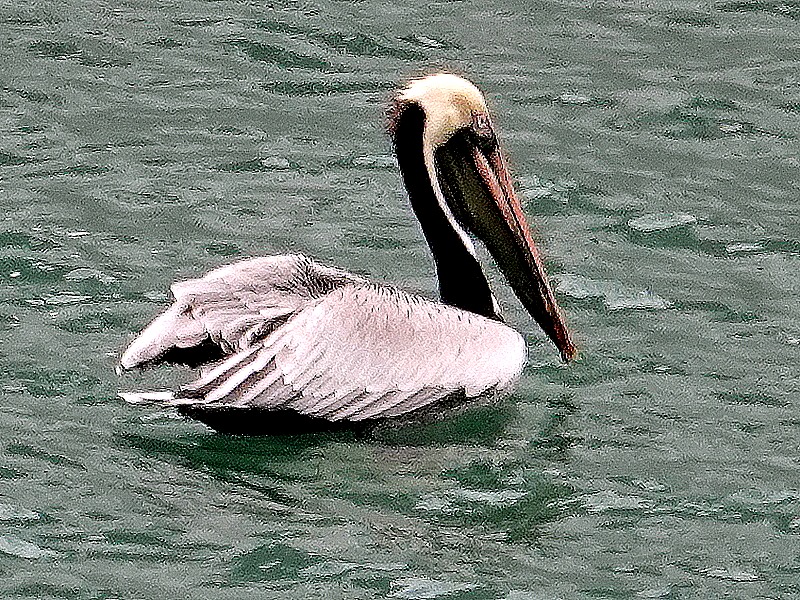
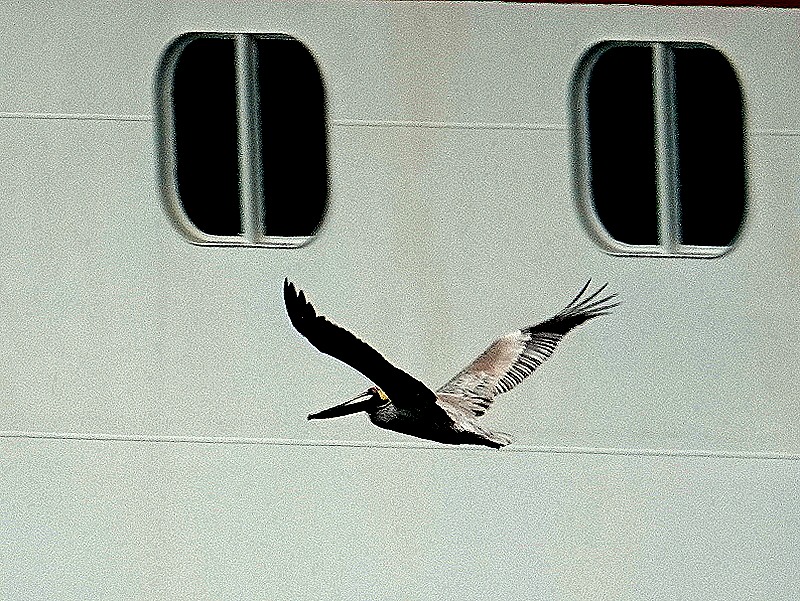
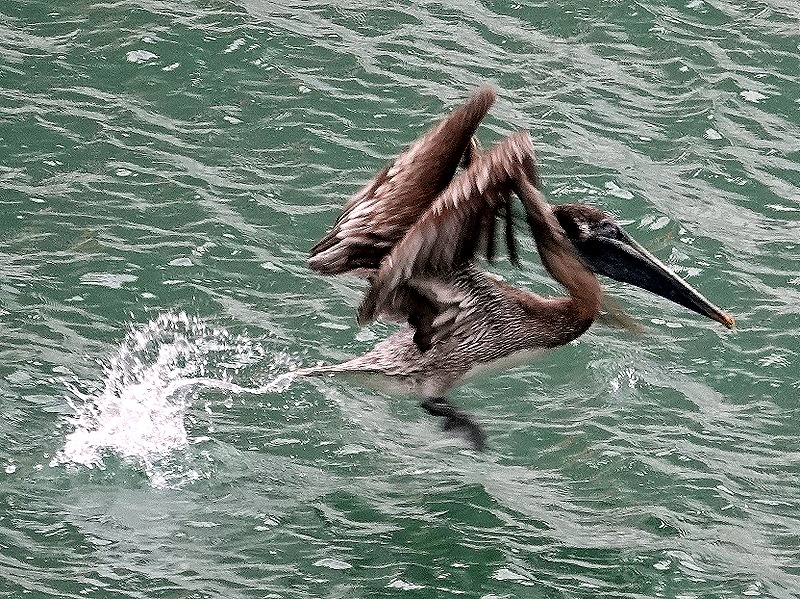
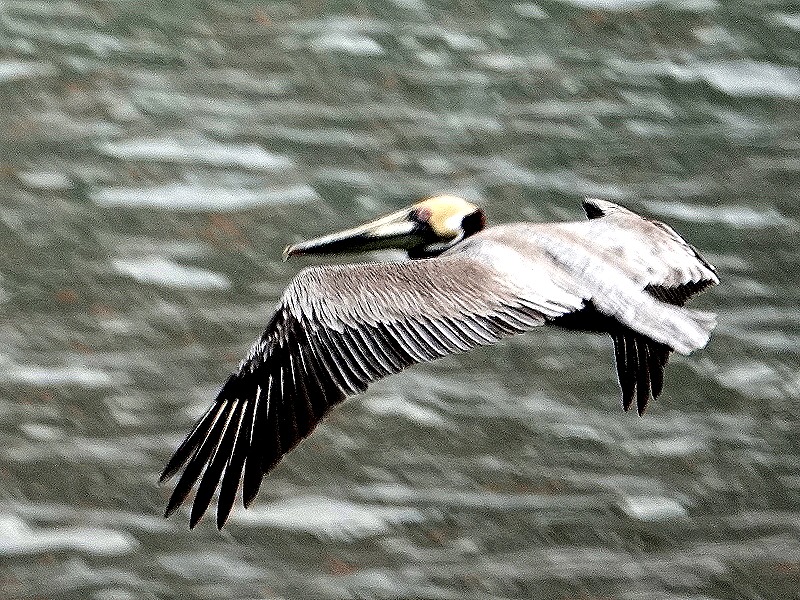
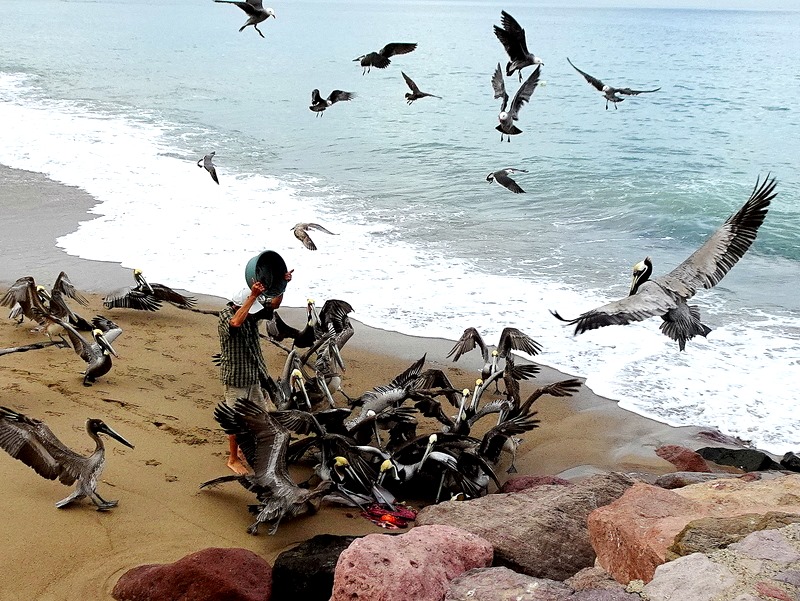
We were docked in the harbor of Puerto Vallarta on the morning of January 30. A much larger cruise ship was docked nearby and was playing a movie or video on its top deck, where there were also some carnival style rides being used. The soundtrack was loud enough that we could hear it on our verandah, pretty far away. A party ship, we guess. During the morning we enjoyed watching a number of pelicans were flying around the area between the ships, doing who knows what (but probably looking for food).
Spanish influence in this area dates back to the 16th century. Early in the century Hernan Cortes sent ships up the coast from Acapulco to establish harbors safe from the pirates that were rampant in the area. Near the town of Tintoque (now Puerto Vallarta) one ship was wrecked and all but 3 crew perished, with bodies floating to shore for some days. Apparently a number of red flags floated to shore with them, resulting in this being named the Bay of Banderas. A nephew of Cortes conquered the area in 1525 and Tintoque became an important port for the Spanish galleons travelling between Manila and Mexico. The Spanish village that became Puerto Vallarta began in the mid 19th century and by 1885 had about 800 residents.
Puerto Vallarta became a major tourist and vacation center in the late 20th century, attracting many US tourists and vacationers after the 1964 film Night of the Iguana was filmed here, with extensive press coverage of the activities of Richard Burton, one of the film’s stars, and Elizabeth Taylor. Today about 80% of the workforce in this city of 275,000 is employed in tourism.
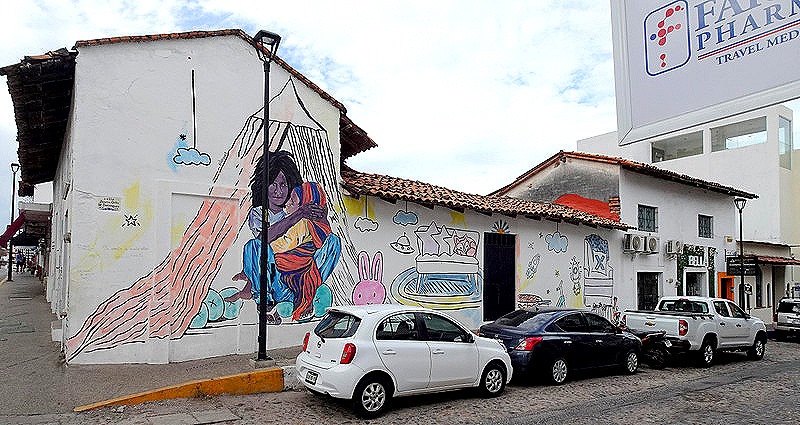
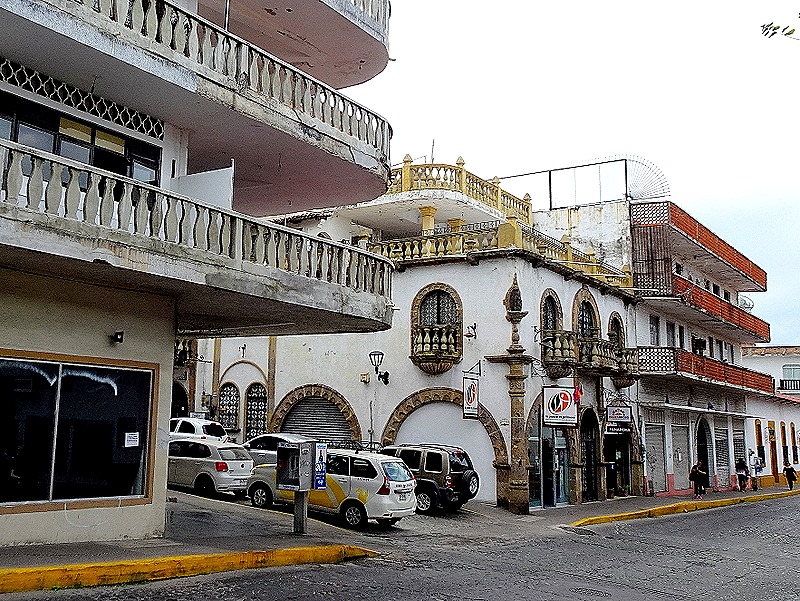
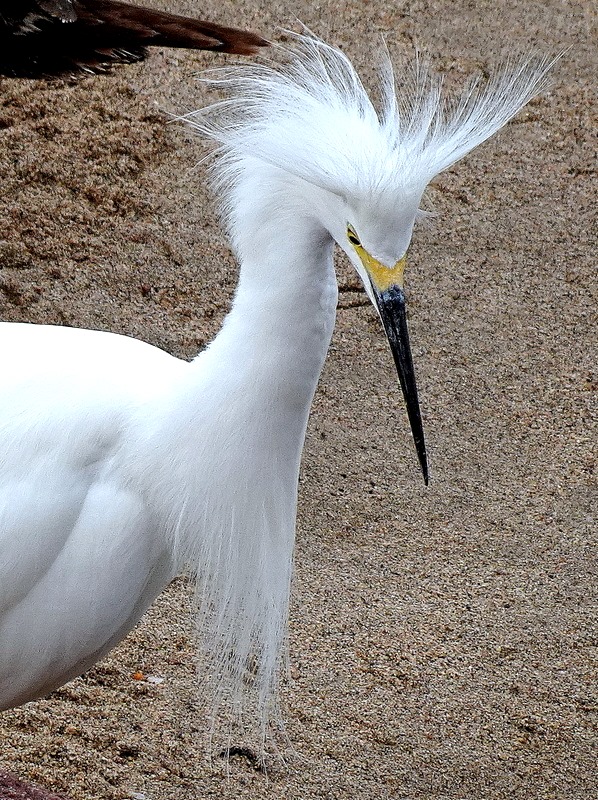
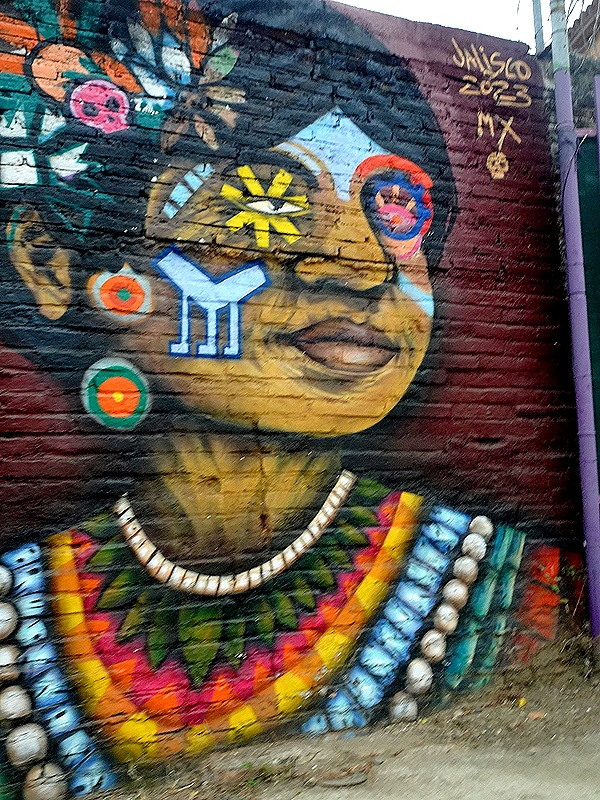
Not having been here before, we decided to take a taxi to the Malecon (the city’s downtown beach walk) to explore the town. Once we got to downtown we passed many cobblestone streets and colorful buildings. The cab dropped us off at the edge of the boardwalk next to a sandy beach where some pelicans and a snowy egret engaged in a food frenzy when a fellow dumped some garbage from a container there.
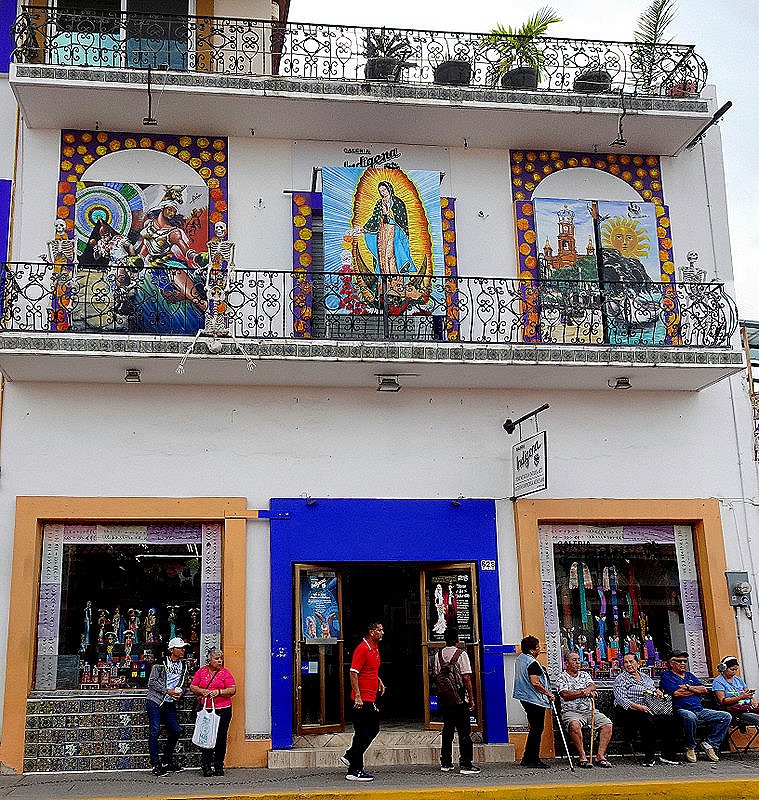

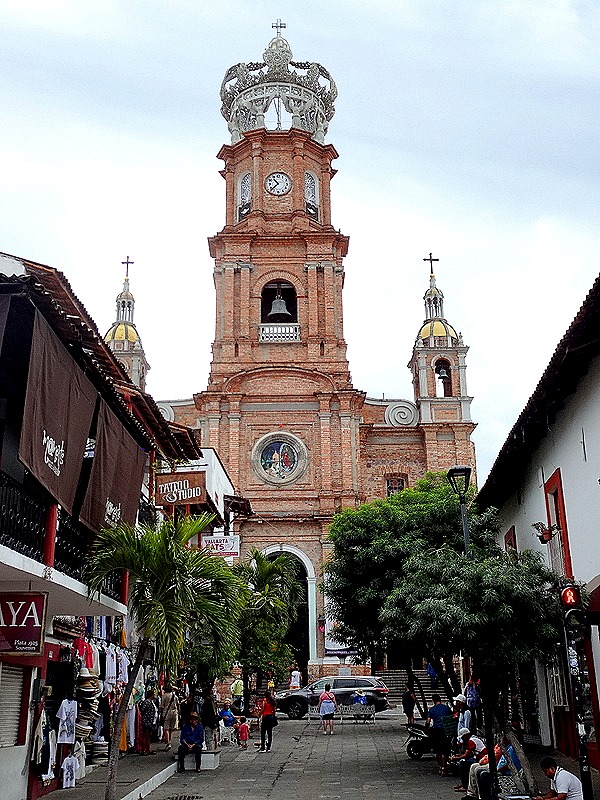
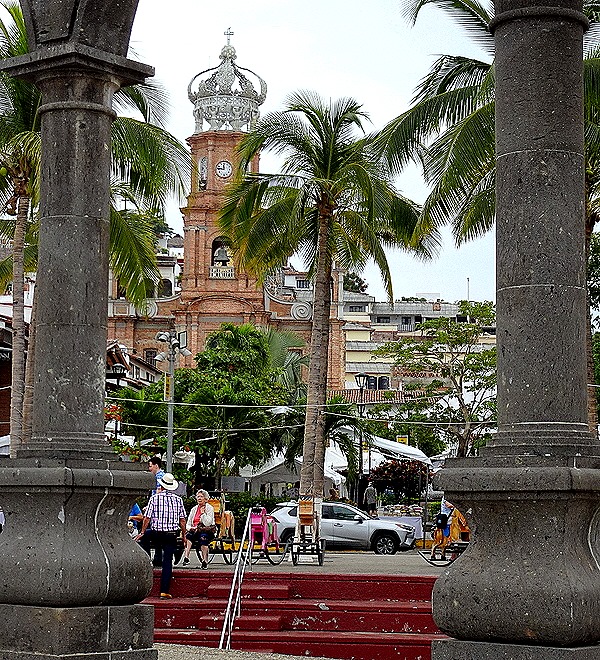
The church of Our Lady of Guadalupe is an iconic sight in Puerto Vallarta. Located in the center of the old town, its tall tower topped by an open see-through crown is visible all around the area and is often featured in photos of the city. It was built in the 1930’s on the foundations of a chapel dating to 1901. The Lady of Guadalupe is the patron saint of Mexico, beginning with an event in 1531.
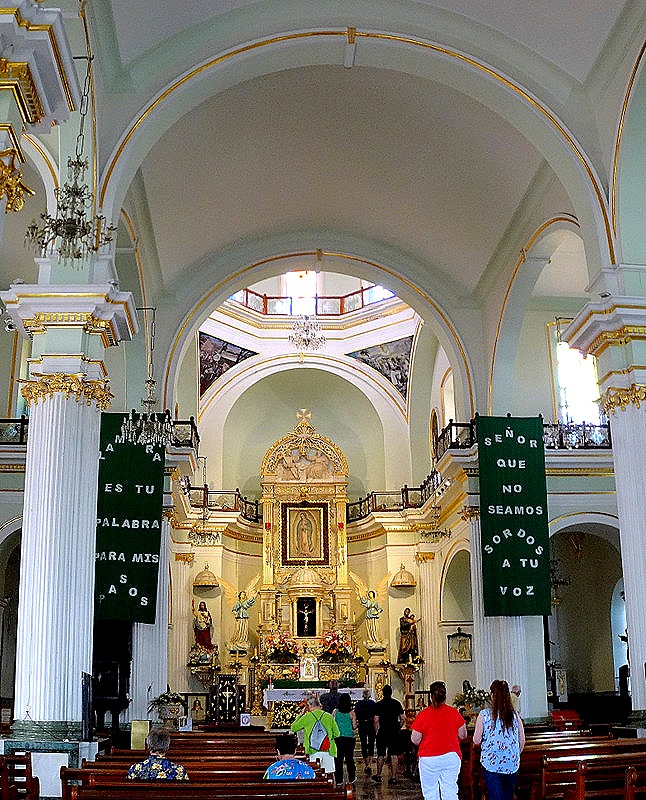


The stations of the cross were depicted inside in what appear to be deep relief carvings on small stone panels.

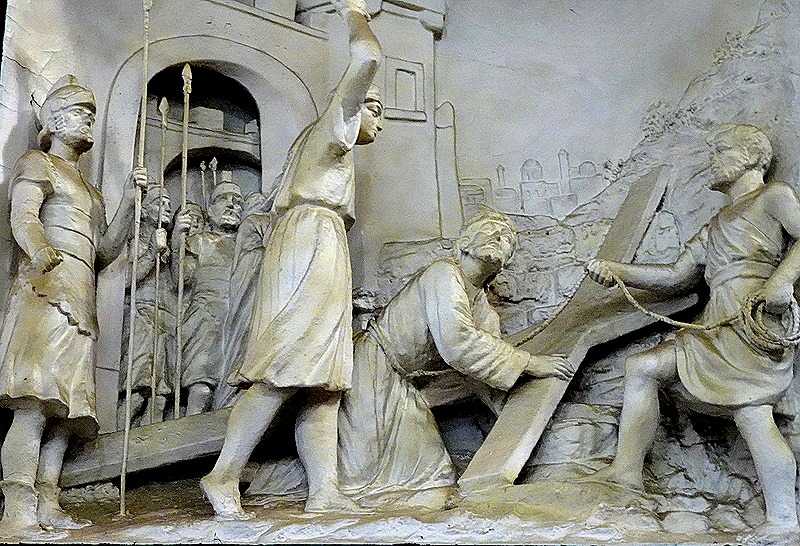
The original crown on top of the church was replaced in 1985 because of erosion. However it was badly damaged in a 1995 earthquake and the current crown was erected in 2009.

We walked back down the hill from the church to the Plaza de Armas, which had a small bandstand pavilion. A book sale was in progress under a long tent and there were some adult size rocking horses nearby for people to use.
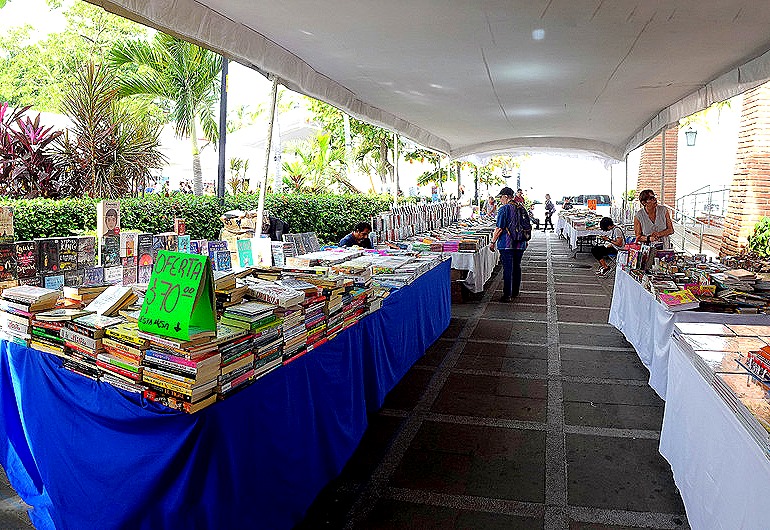
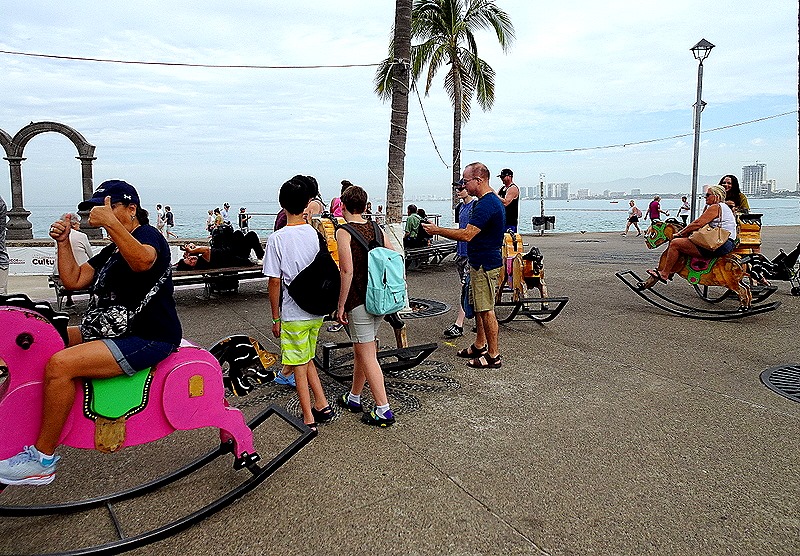
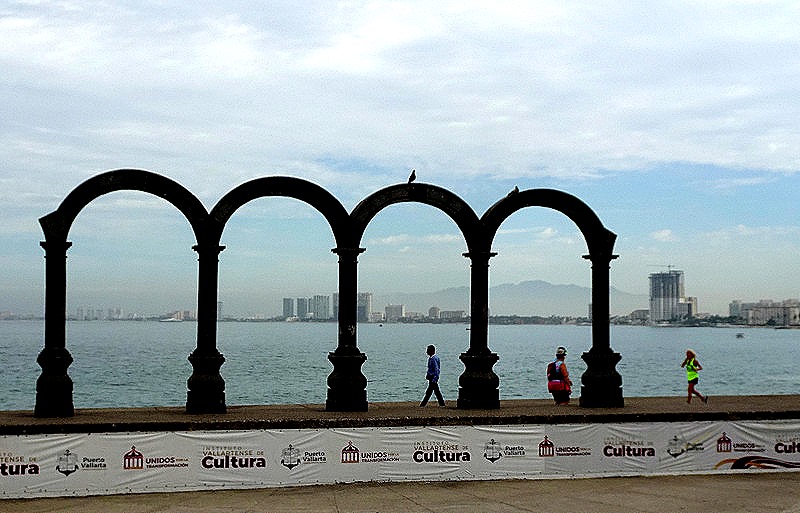
Between the plaza and the Malecon (sea side walk) is a small amphitheater for free public performances. It is called Los Arcos because the stage is backed by four arches standing in front of the water. The arches are an arresting sight in front of the water with the distant shore of the city behind.
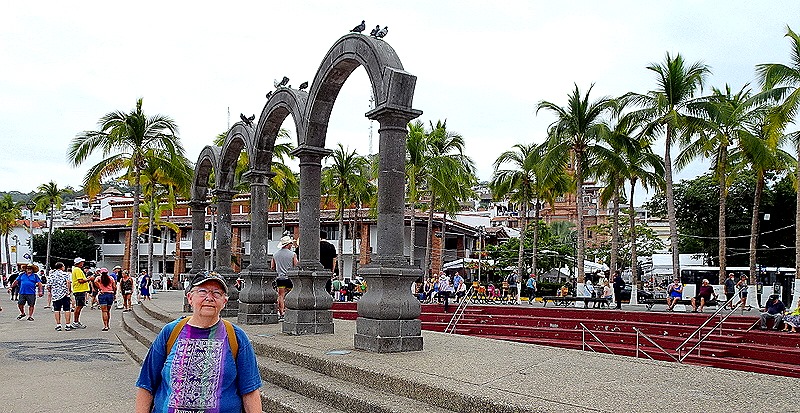

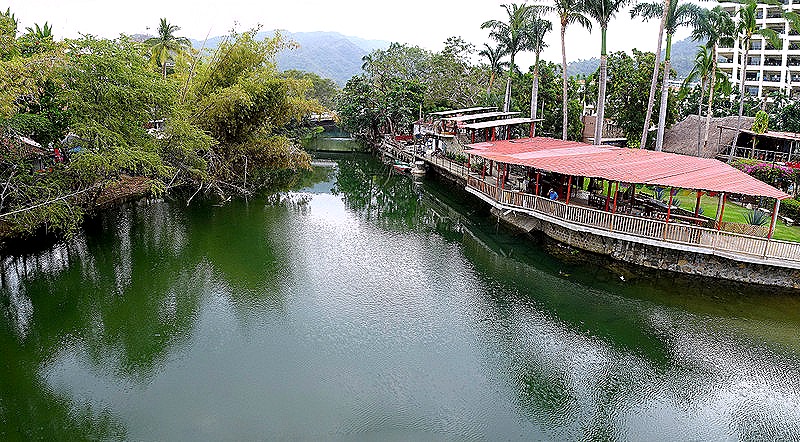
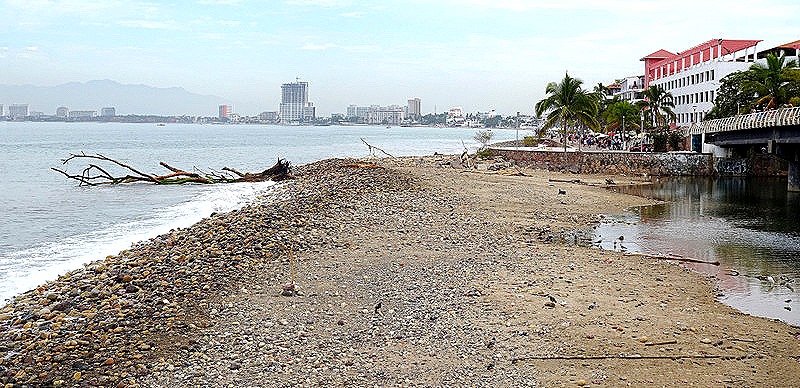
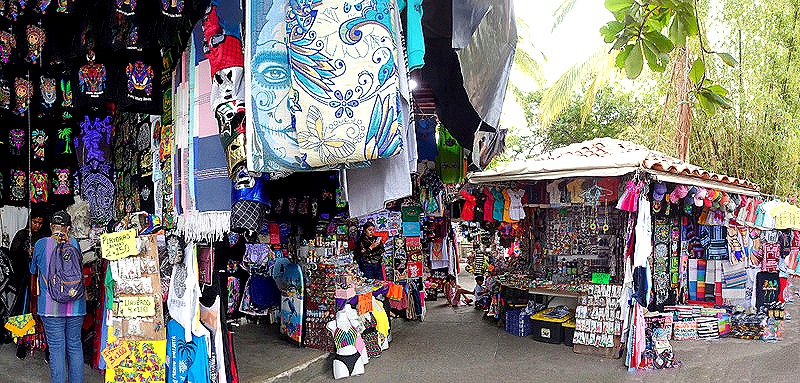
A little down the Malecon we crossed a bridge over the Cuale River. Further up this river is an area called Gringo Gulch which includes the house built there by Elizabeth Taylor where she and Richard Burton lived (it is now a small hotel). We walked down to an island in the mouth of the river where there was a lively market.
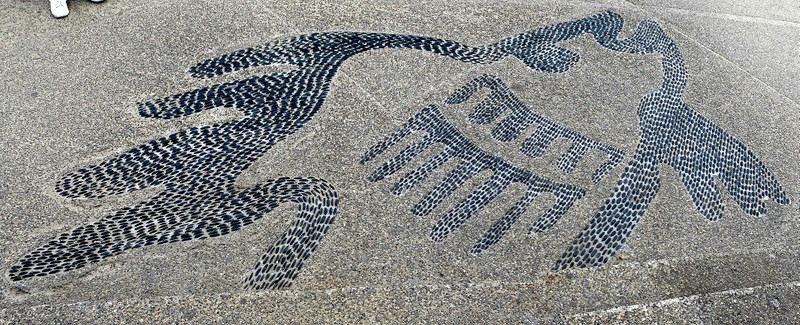
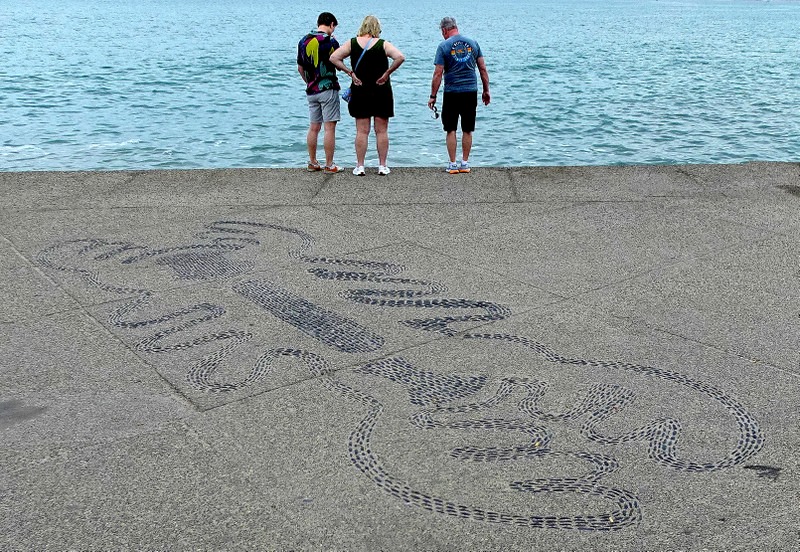
We have seen mosaic sidewalks before, notably in areas with Portuguese culture. But the ones in the Malecon were quite different, made of small polished black stones set in the concrete sidewalks in what appear to be indigenous style representations of wildlife.

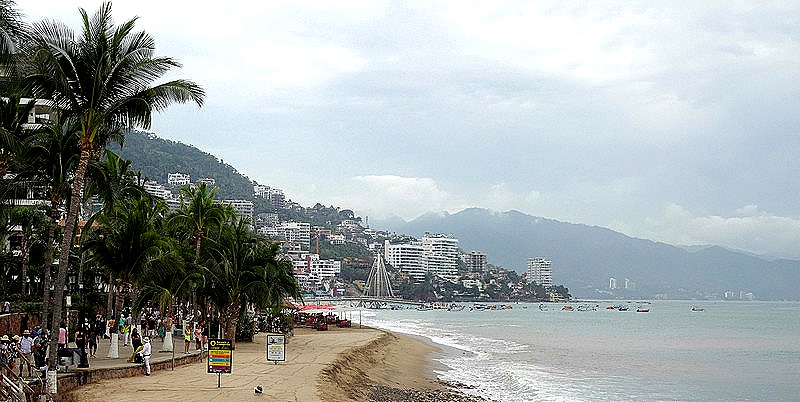
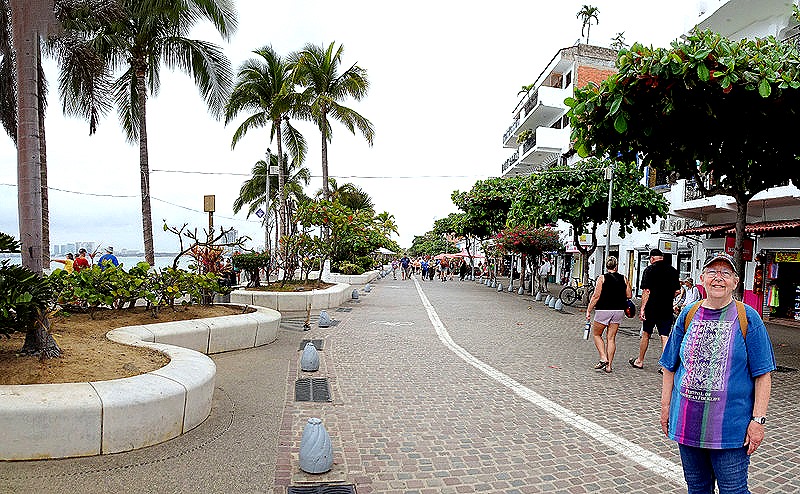
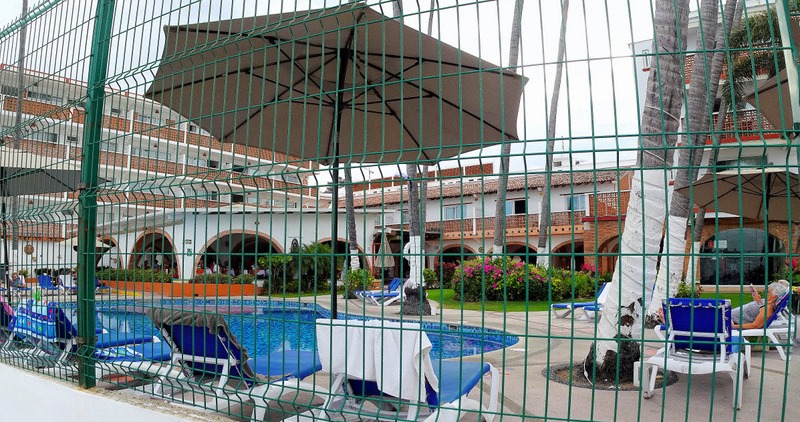
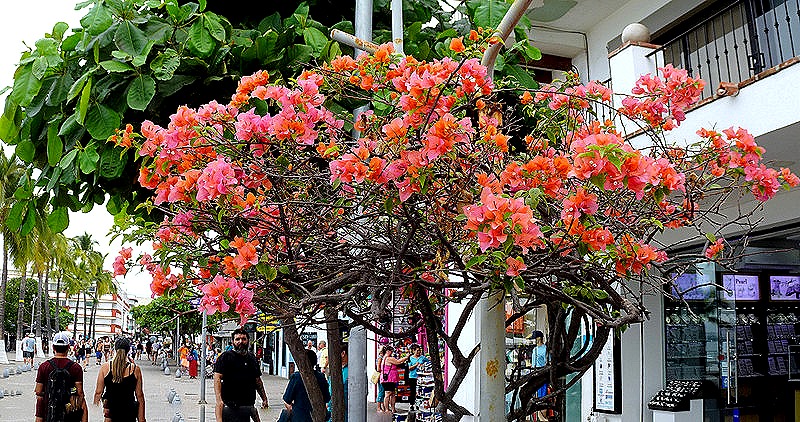
The Malecon is a mile long paved waterfront walk lined on the shore side with many shops and restaurants (most with English signs catering to tourists). It is very lively and colorful and makes for a nice place to spend a day. Of course, this is a resort town and we saw one with a pool on the Malecon rather than on a beach.

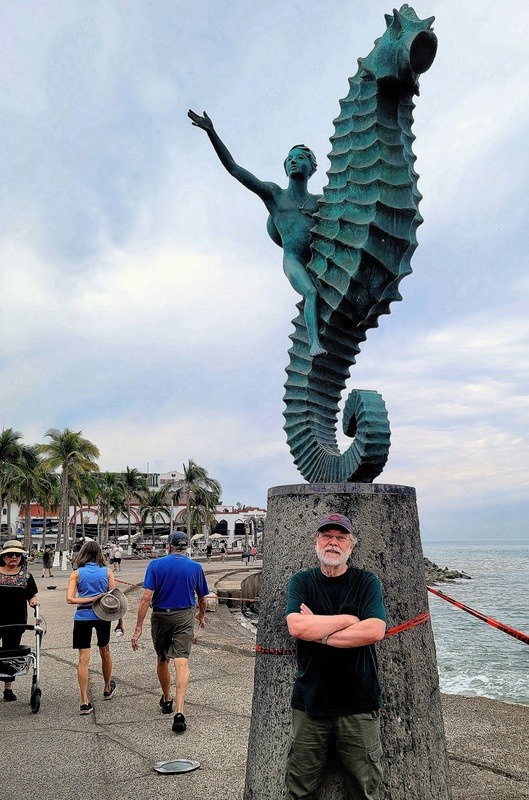
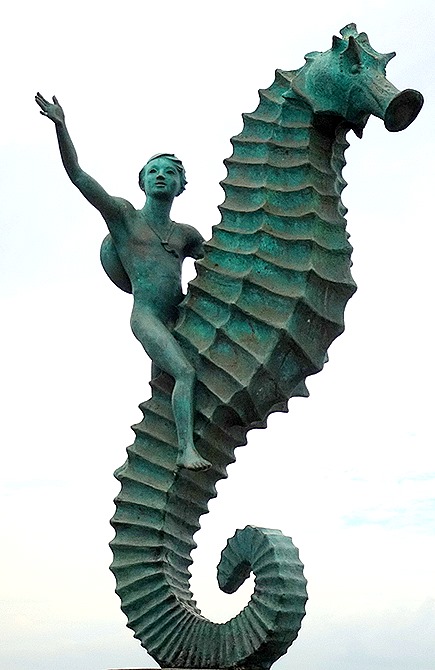
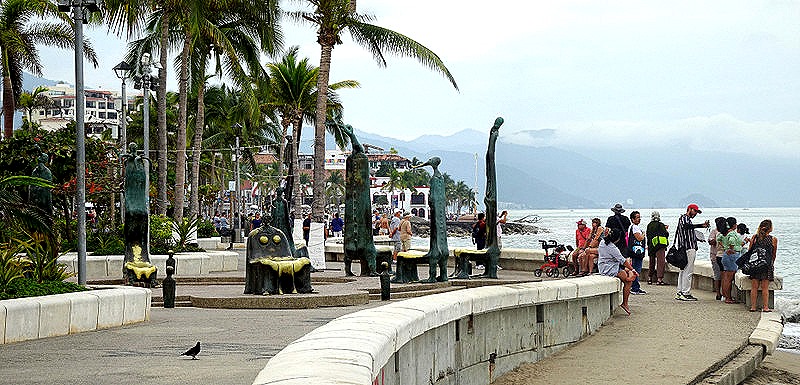
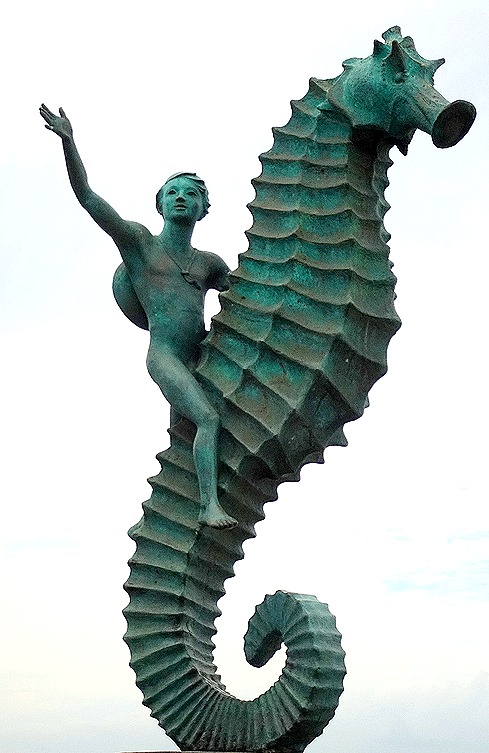
The most distinctive aspect of the Malecon is a series of sculptures set along the walk. Created mostly by local or regional artists, they are quite varied. One of the best known, considered an icon of Puerta Vallarte along with the church and the arches, is the Boy On A Seahorse. A small version erected on a nearby beach in the 1960’s was swept away by the sea and this one was set up on the Malecon in 1976.
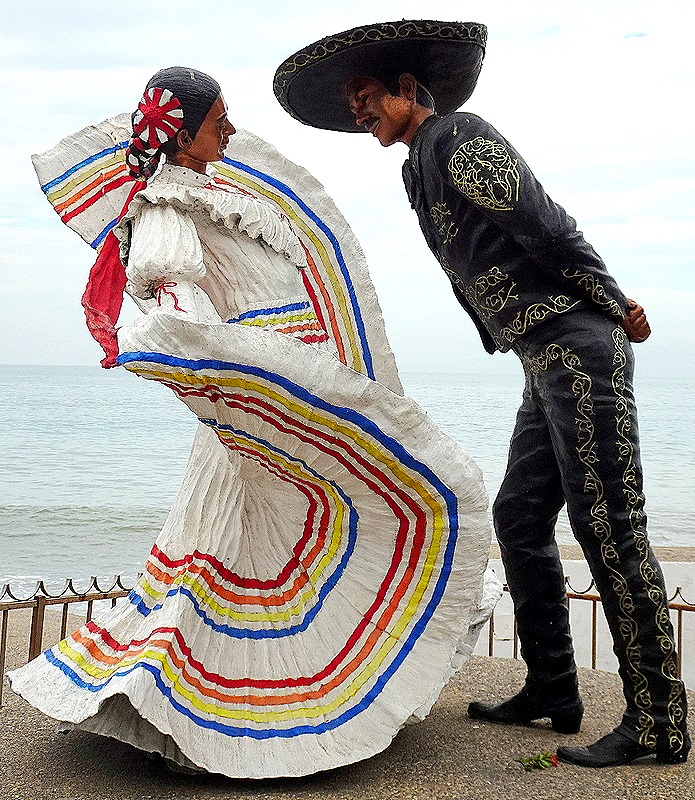
“Millenium” is a soaring sculpture installed in 2001. “Vallarta Dancers” is unusual in that it is brightly colored (what would Mexican dance be without bright, swirling colors?). We aren’t sure when it was erected, but it was already there in 2014.

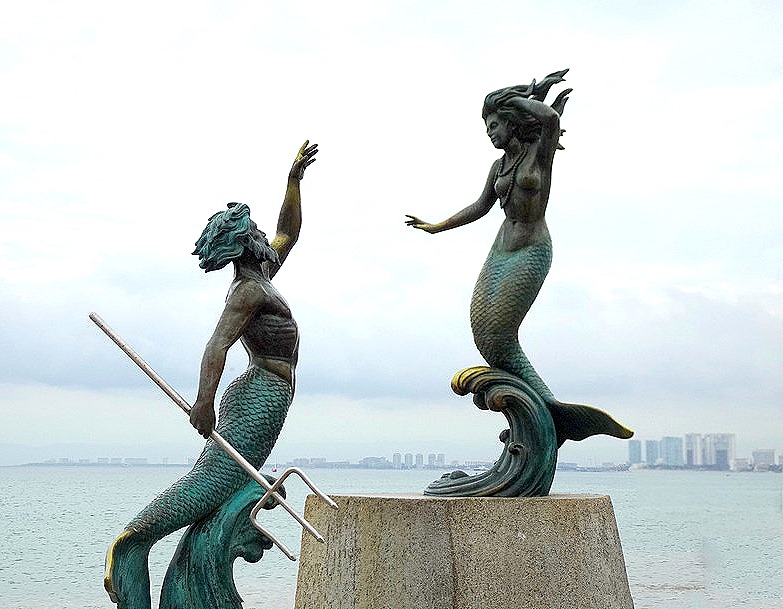
“Tritón y Sirena, erected in 1990, depicts two figures from Greek mythology. “Nature As Mother” is a sort of combination person and wave. We don’t know when it was created, but it was there by 2021.

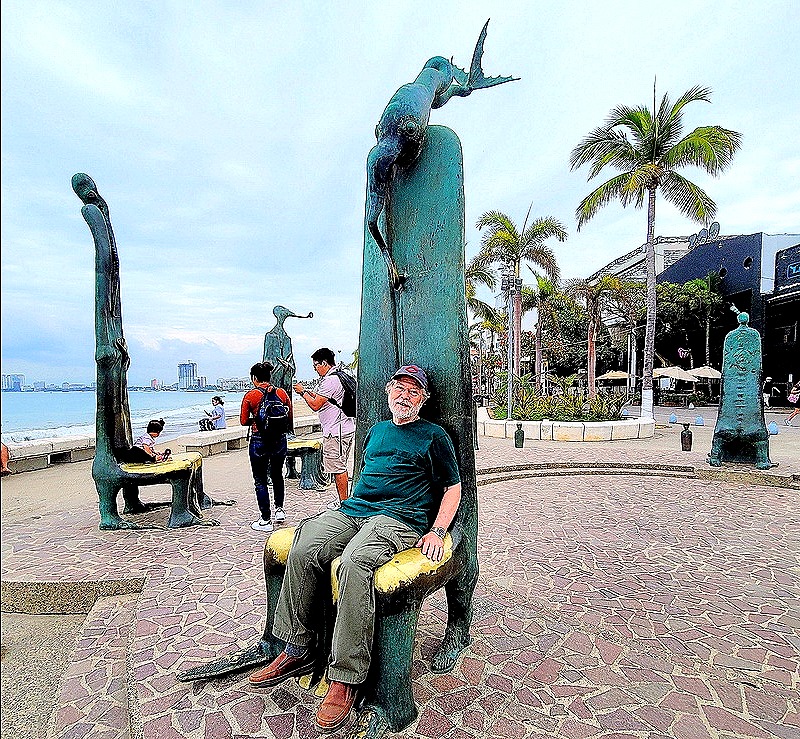
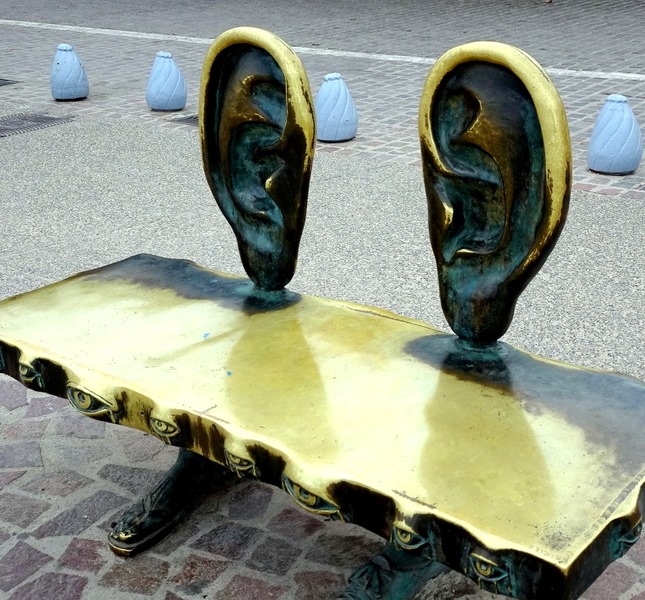
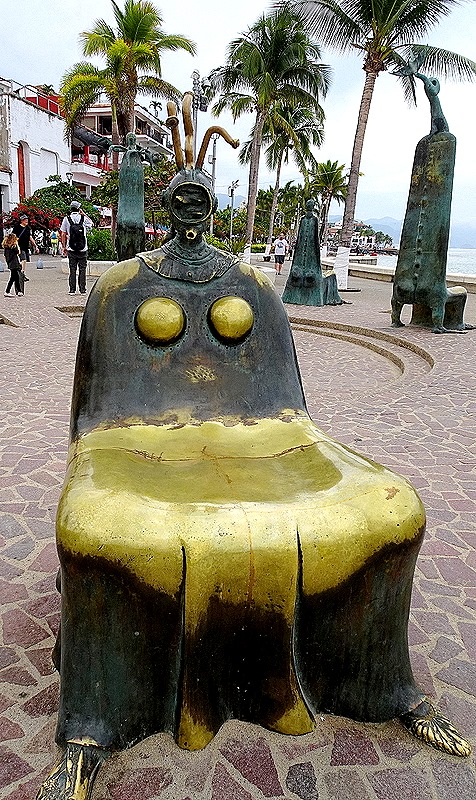
“The Rotunda By The Sea” dates to 1996. It consists of eight figures with seats looking like thrones. The patina has worn off the seats, which are gleaming bronze, probably because people often sit on them for pictures.

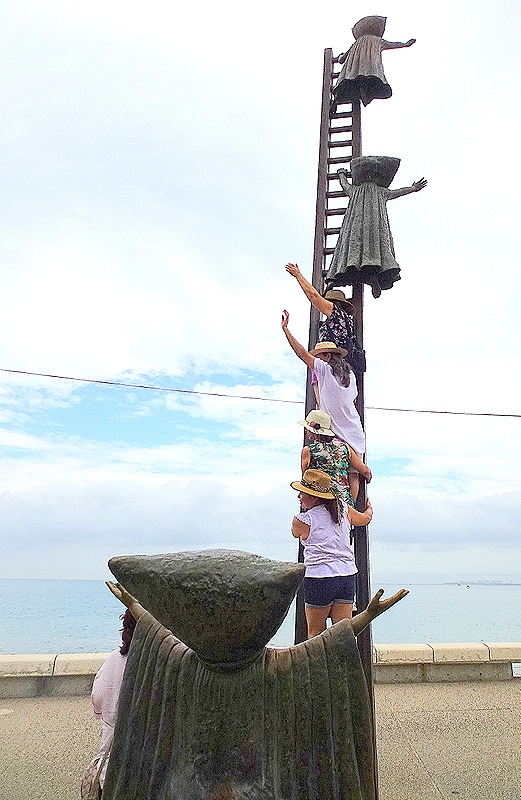
Another sculpture with a sitting theme is “Nostalgia,” installed in 1984. “In Search Of Reason” was erected here in 2000. It depicts a pillow headed woman standing on the ground watching two girls climbing to the top of a free standing ladder. Apparently the unoccupied lower part of the ladder is a little too inviting, as we watched four women climb up for a photo. We walked on before seeing whether it would hold them all.

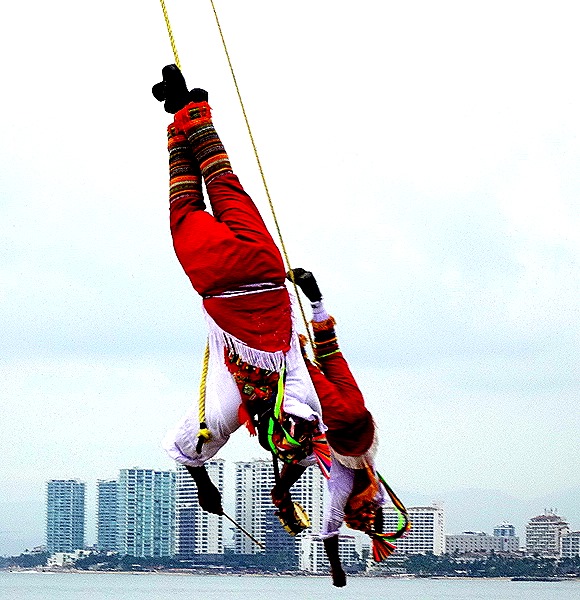
Some people perform and solicit money in this area. We saw evidence of people having stacked rocks on the beach, but the people were gone when we got there. Then we happened by while a group of colorfully dressed people hanging upside down from cables attached to a very tall pole were playing instruments as they were swung around the pole, descending bit by bit. We have no idea what this was about (other than the assistants working the crowd for donations), but it sure was unusual.


We grabbed a cab and headed back to the Zuiderdam, still patiently waiting right where we left it. It turned out that to reach the ship from the taxi drop off required walking through a long obstacle course of vendors selling all variety of things we didn’t want. We sailed away from Puerto Vallarta (and the Western Hemisphere) in late afternoon and headed out for a long sail across the Pacific Ocean.

 BADER JOURNAL
Leave a comment