Honolulu, Hawaii (2024)
By the time we got up on February 8 we were already in the Honolulu Cruise Port. First settled by Polynesians around 900 years ago, this was a small fishing village until the early 19th century when Kamehameha I briefly moved his capital here. It was first visited by a foreign ship in 1794 and soon became a significant port for whaling and commercial ships. Although the capital was moved to Kona in 1812, by 1845 Honolulu had again become the capital and has been the capital and largest city in Hawaii since 1845. It was, of course, the location of the beginning of the US involvement in World War II when the Japanese attacked Pearl Harbor. Since statehood in 1959, tourism has increasingly become one of the most important industries here. Today Honolulu has a city population over 300,000 and a metropolitan population in excess of a million, making it the largest city in Oceania outside of Australia and New Zealand.

We had been planning to join a private excursion but that fell through. Instead we were joined by our friend Bill in a visit to the Bishop Museum and the Iolani Palace in the old downtown district. We arrived by taxi at the Bishop Museum entrance and, after entering the multi building campus, walked to the Hawaiian Hall which houses the world’s largest collection of Hawaiian and other Polynesian artifacts.
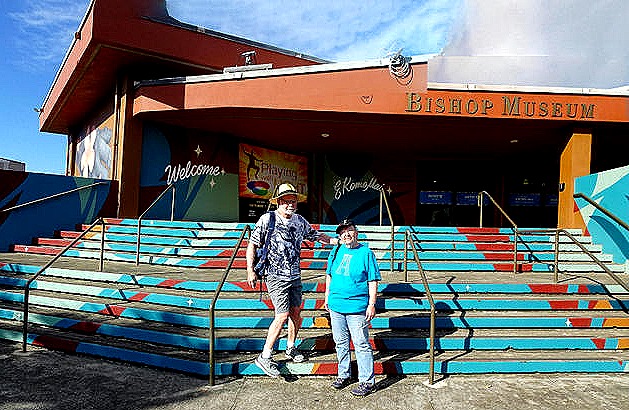

The museum was founded in 1889 by Charles Reed Bishop and named in honor of his late wife, Bernice Pauahi Bishop. Hawaiian genealogy is very complicated, but it appears that Bernice was a great granddaughter of Kamehameha the Great and the last royal heir of the Kamehameha family. By the time she died in 1884 she was the largest landholder in Hawaii, owning about 9% of all the land including what is now the Waikiki district. She also possessed virtually all of the Hawaiian artifacts and family memorabilia accumulated over the years by the Kamehameha family. Her will created a trust to establish and operate the Kamehameha schools for Hawaiian children and left most of the rest to her husband. He started the museum on the campus of the first Kamehameha school and built the Hawaiian Hall building in 1898 to house the Kamehameha artifact collection (and now many more items contributed since). We have seen estimates that the Bishop estate operating the schools and museum today is worth some 10 billion dollars.
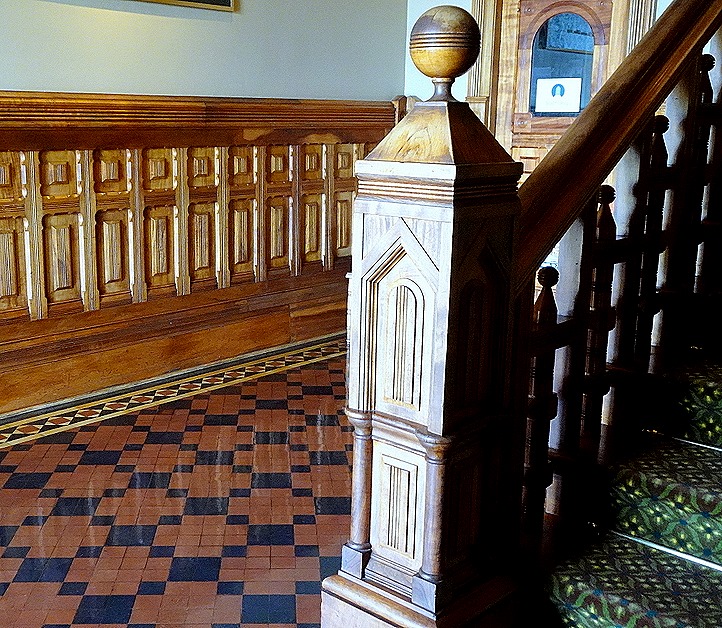
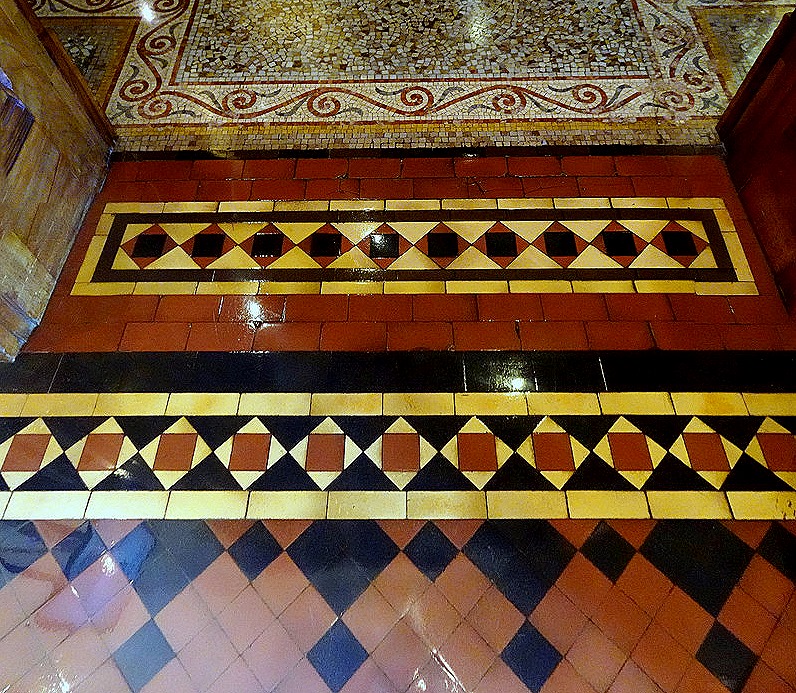
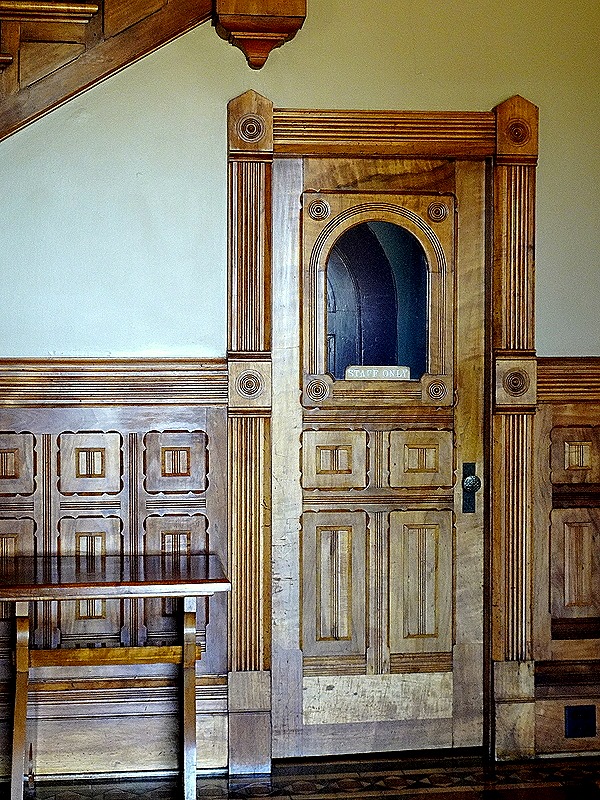
The museum building itself is quite beautiful, in a Victorian style. As shown above, the outside is made of gray stone blocks; the inside is done up in Koa wood, which today is quite valuable. Even the glass display cases are made of Koa wood, giving the museum a lush and warm feeling.


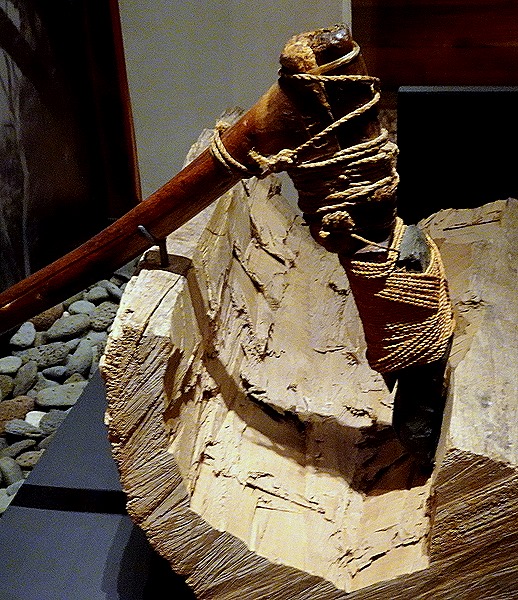
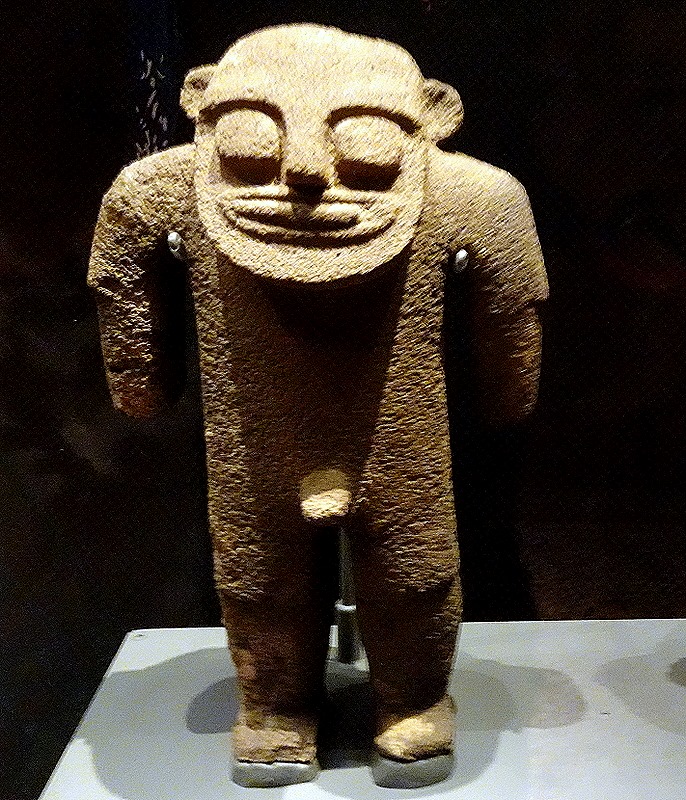
There are hundreds of interesting artifacts on display (and thousands more in storage, we assume), so we can only give you a small taste of some of the more interesting ones. Below are two large wooden images, both from Kauai. The brown one was discovered in 1878 and the black one in 1909 (probably either Kane, god of sunlight, or Ku, god of war). Below them are an adze discovered in 1889 that was specially made to carve narrow portions inside a canoe, and a stone image contributed in 1894.


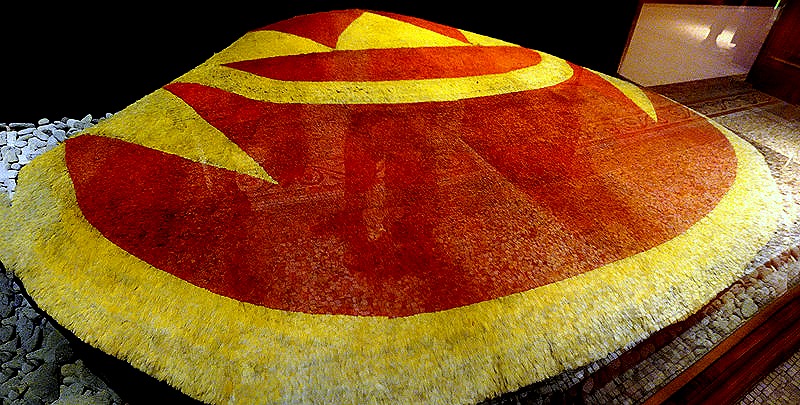
Several sets of ancient feather cloaks and helmets were on display at the museum. Made with red and yellow feathers from some now extinct birds, each large cloak includes several hundred thousand feathers from some 20,000 birds. The Hawaiians usually did not kill the birds for their feathers, but trapped them to pluck just a few feathers then release them to grow the feathers back and, perhaps, harvest them again later. The feathers are attached to a cloth matrix that holds the whole thing together.
The first set was given to Captain Cook on his last, fatal, visit to the island of Hawaii in 1779. The chief of the island removed the cloak from his own shoulders and draped it around Cook, then placed the helmet on Cook’s head. These items have been in other museums over the years, most recently in New Zealand, but have been here since 2016 and will now be here “in perpetuity.” The other set includes another feather cloak collected by the Cook expedition and a feather helmet believed to be from the voyage of Captain George Vancouver in the early 1790’s.
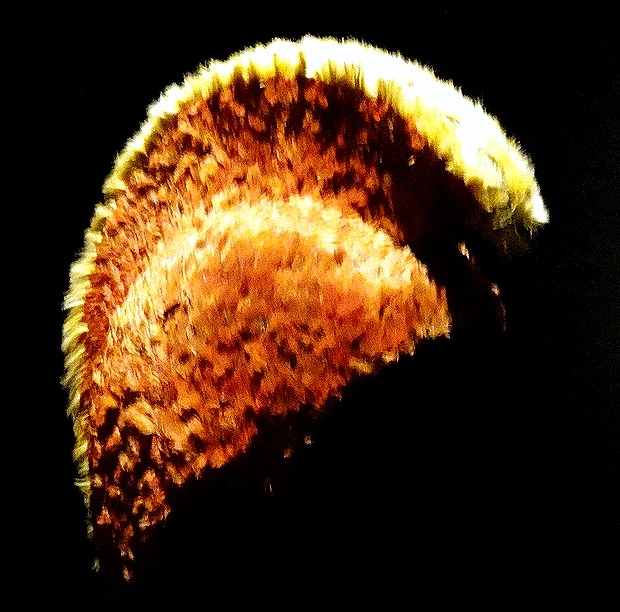

There are several notable exhibits in the main open area of the exhibit hall:
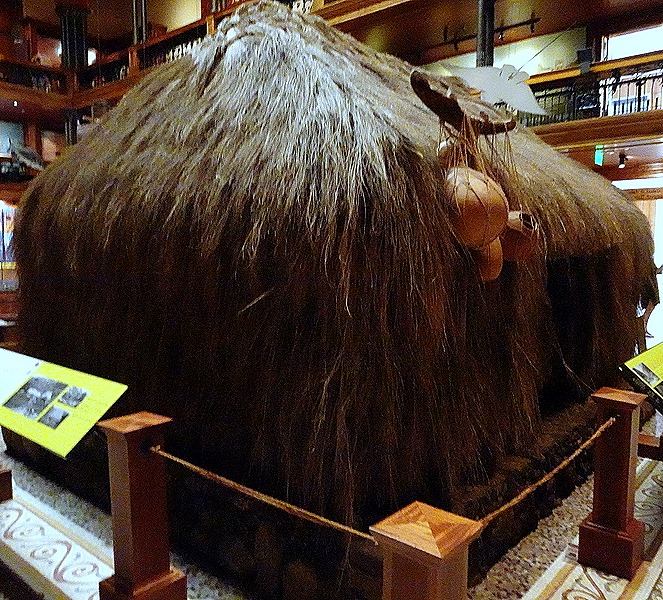
— A “Hale Pili,” or grass house, sits in the open on the first floor. Its wooden structure was collected from an abandoned thatched house in Kauai in 1903 and it may have been in its original location for up to 100 years. It was rebuilt in the museum with new pili grass and cordage and today is thought to be the only building of its kind still in existence.
— A pair of large connected wooden canoes hangs from the ceiling by the first balcony.
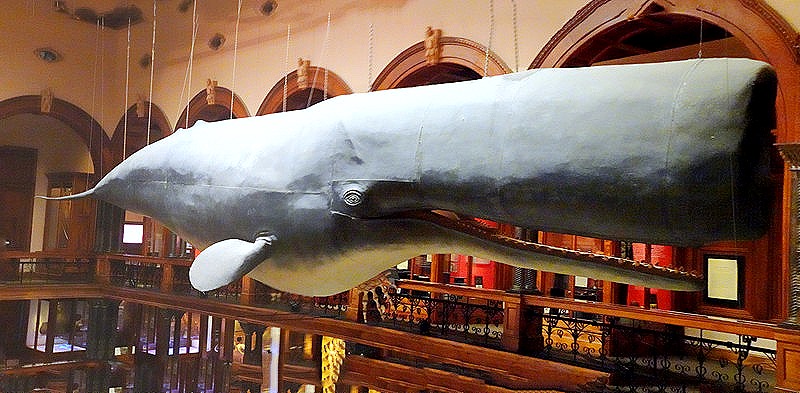
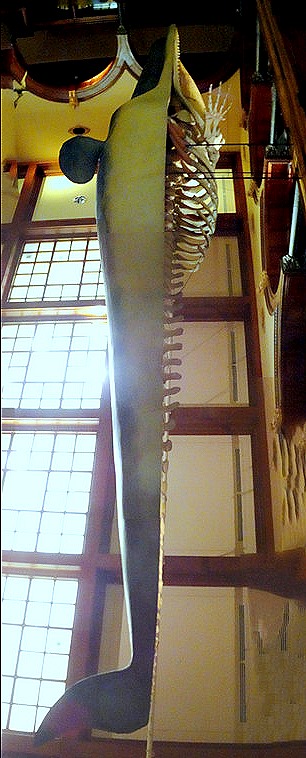
— The skeleton of a large sperm whale hangs from the ceiling by the upper balcony on the other side of the hall, covered on one side by a papier-mache rendering of the whale’s body. This has hung here for more than 100 years, having been purchased originally rather than collected or donated.
— On the top floor, not in the central area, was the surf board used by Duke Kahanamoku (1890-1968), a three time Olympic gold medalist in swimming and considered the father of modern surfing.


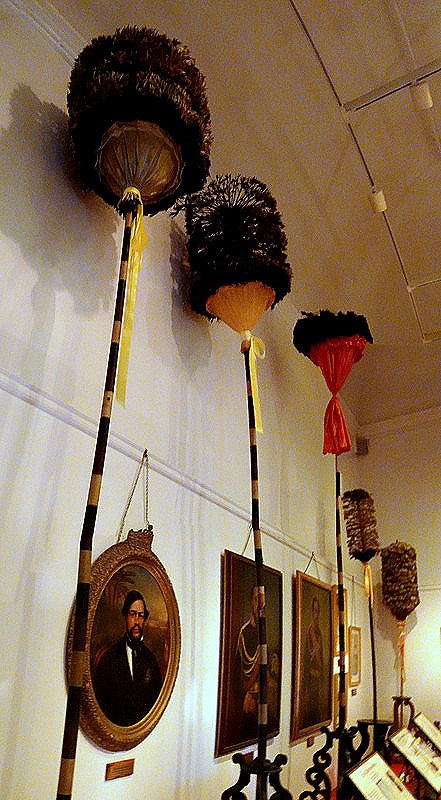
A separate room in the museum was dedicated to Kahili. These are long staffs topped with feathers that were a symbol of authority, with only royalty permitted to have them. They were held by bearers who followed behind the royals, sometimes using them to brush away flies. Old pictures of Hawaiian royalty usually depicted Kahili being held behind them. Most of the Kahili in the museum came from the collection of Queen Emma, who was married to Kamehameha IV. It seems that Bernice Bishop inherited the collection upon Emma’s death in 1885.

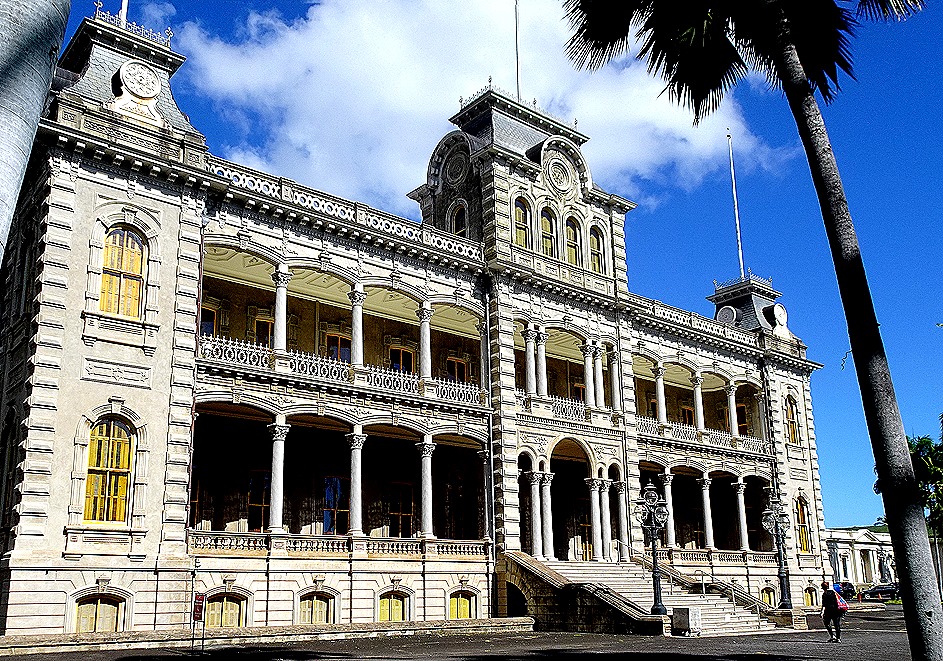
Leaving the museum we taxied to the Iolani Palace. This was the home of Hawaiian royalty from 1882 until a coup by a committee of foreign nationals (mainly US) overthrew the monarchy in 1893 (with the help of US marines). Hawaii became a US territory five years later and a state in 1959. Iolani Palace served as the government headquarters from the coup until 1969, when the state government moved into a new building nearby. The palace measures 140 feet by 100 feet and it is usually noted that it is the only royal palace on US soil (although why that would surprise anyone is a bit of a mystery to us). It was built on the site of a previous Iolani Palace that was a third the size of this one and had been the official royal residence beginning in 1845 when the seat of government was moved to Honolulu. The king had travelled in Europe in the late 1870’s and wanted to replace the deteriorating old building with one that would command respect in European circles, so the new building was designed with that in mind.
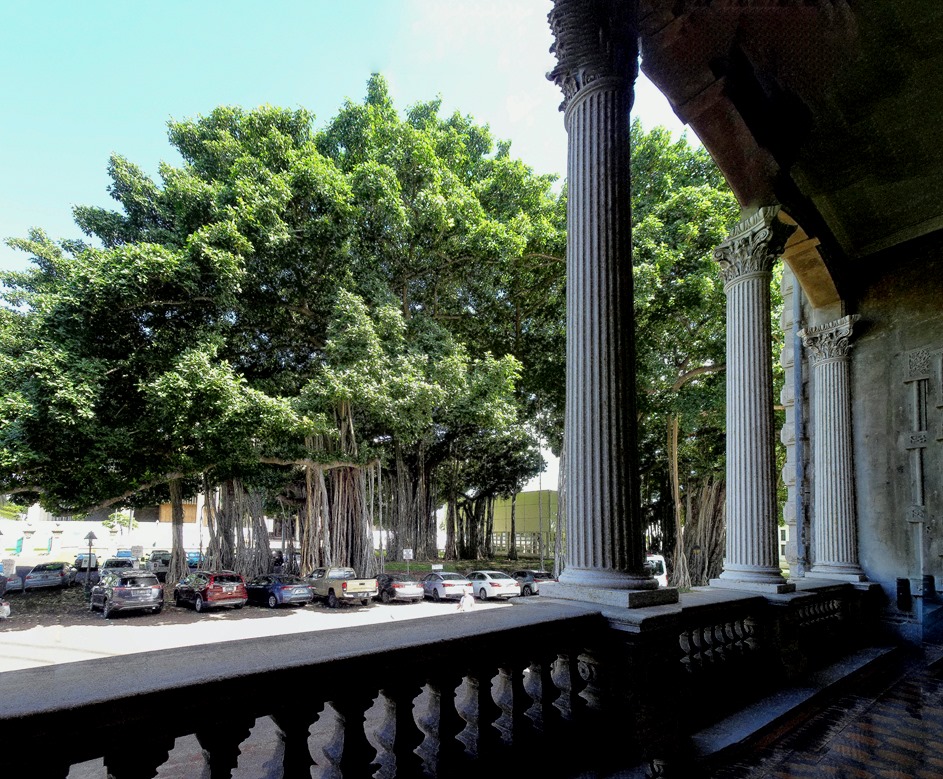
After purchasing tickets we were seated with others on the veranda at the rear of the palace overlooking the parking lot. Across the parking lot was a large Banyan, reputedly a gift from Indian royalty and planted by the Hawaiian queen herself in the early 1880’s. We understand that the new Hawaiian legislative building is a little way beyond this tree. In front of the palace are some Monkey Pod trees, very popular in Hawaii since they were first imported around 1850.

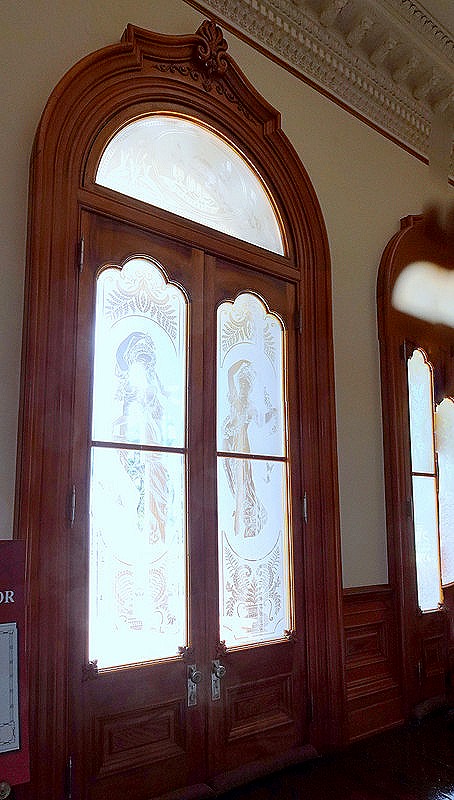
The first floor of the palace is dominated by a large central entrance room with a grand staircase made of koa wood in the center. The doors opposite the staircase are made of wood and etched glass and there are portraits of Hawaiian royalty on the walls.


The Throne Room is also on the first floor. It is a very large room with two thrones at one end. A Kahili (feather topped staff) with white feathers stands on each side of the thrones. Between them is a puloulou, or kapu (taboo) stick, comprised of a large gilded ball mounted on a narwhal tusk. Two years after the coup the new government tried Queen Liliʻuokalani in this room, resulting in her imprisonment in the palace for some 9 months.

Upstairs were the living quarters. The Iolani Palace was very modern for its time, with electricity, telephones and a bathroom installed before the White House had them we were told. Queen Liliʻuokalani was imprisoned alone in a small room on the second floor and was only able to step out on the veranda outside her room. While imprisoned here she worked on a quilt that is on display in this room (we have read that it was completed later by friends and relatives). The Americans’ takeover of Hawaii and its treatment of its royalty and people is a rather sordid episode in US history; in 1993 the US Congress adopted a declaration of apology for all this (although Hawaii is still a state and there has been no restitution as far as we are aware).
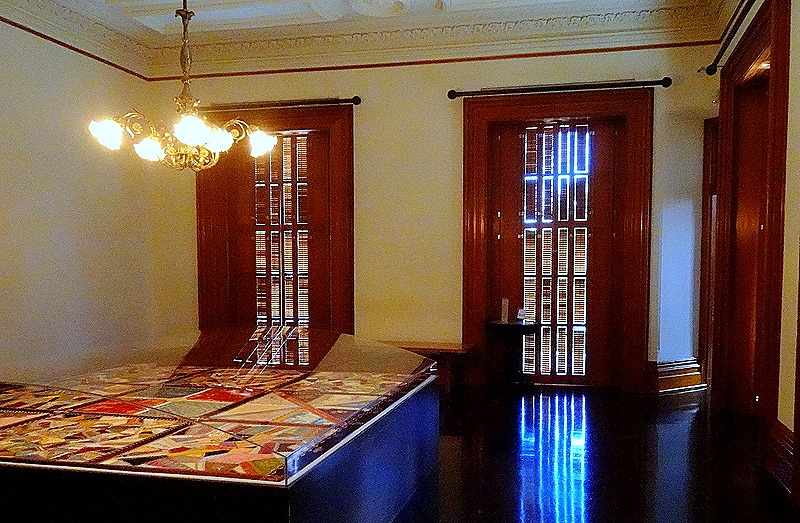
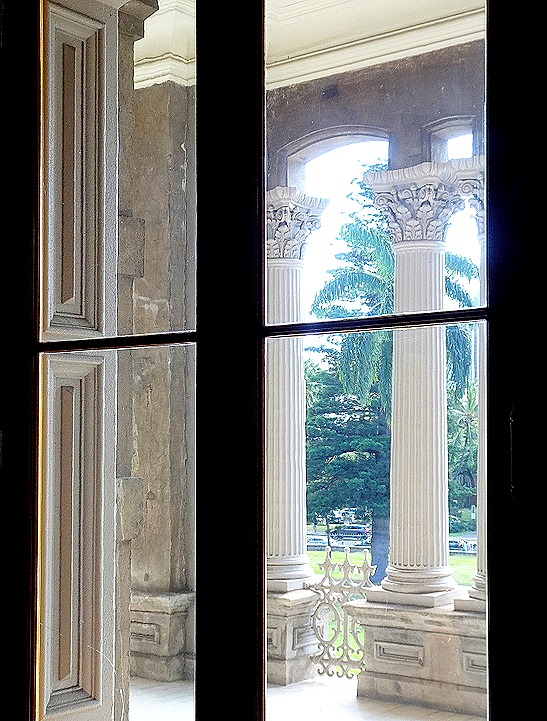


The palace was in disrepair when the government moved out in 1969 but soon a massive restoration project began. Millions of dollars were spent fixing walls, ceilings, floors and furnishings. After the coup in 1893 the new government had inventoried and sold everything in the palace that they could, but as part of the restoration project a large percentage of these items were recovered and this recovery effort continues today. The palace was reopened as a museum in 1978. It is well worth a visit.
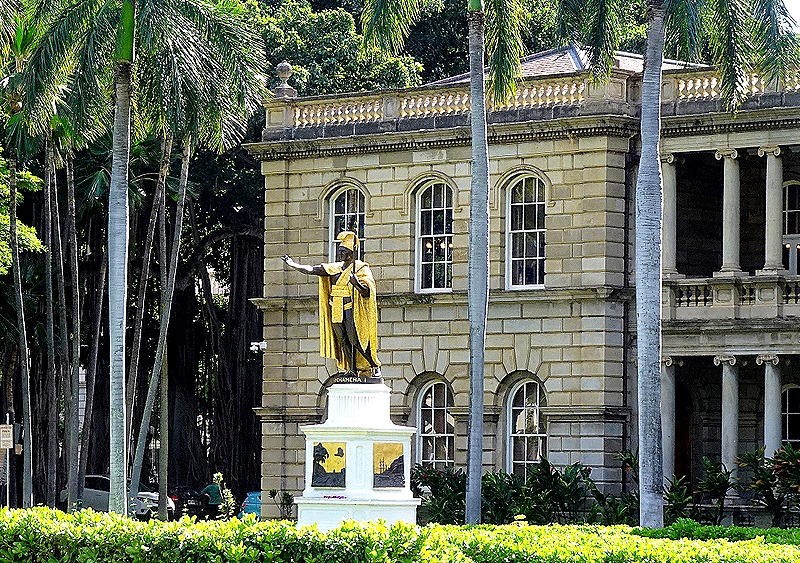
Across the street from the palace is a building called Aliʻiōlani Hale, which was built in the 1870’s and currently houses the state Supreme Court. In front of it is another of the statues of Kamehameha the Great, like the one we saw in Hilo. It is very imposing in this context.


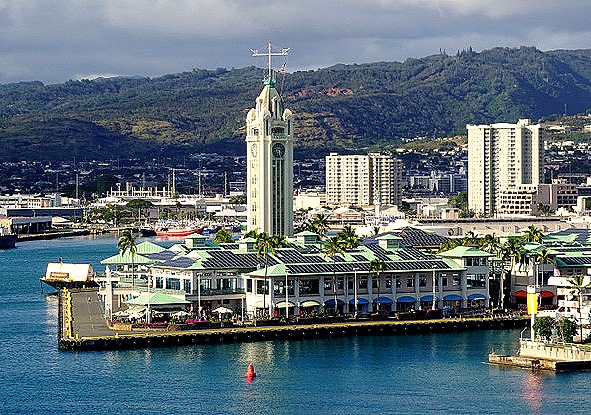
We walked back to the ship and after lunch we took some pictures of the port area from the top deck. Not far away was the Aloha tower. Opened in 1926 it was originally a lighthouse, but is better known as a welcoming beacon for ships and visitors to the city. For several decades after its construction this was the tallest building in Hawaii, and during World War II it was covered in camouflage paint to hide it at night.

From the starboard side of the ship we could see Diamond Head, an extinct volcano that overlooks Waikiki beach. There is a military installation inside the cone. Even from this distance it is pretty impressive. There was also a nice view from the starboard side of the mountains beyond the city and one of the bay on the port side.
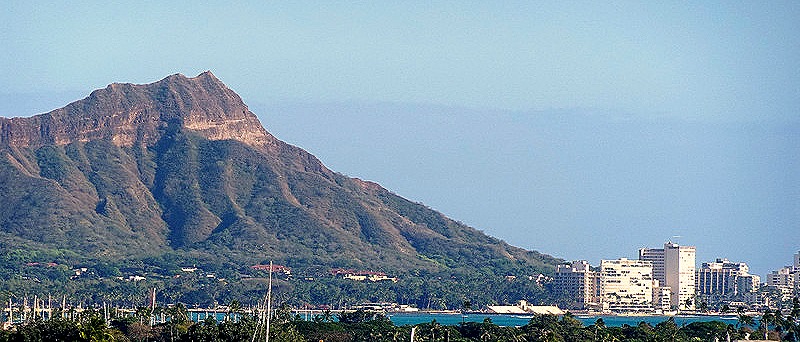
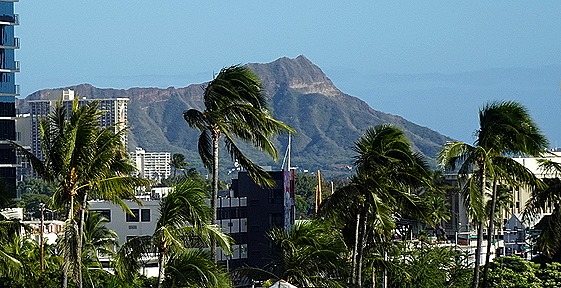


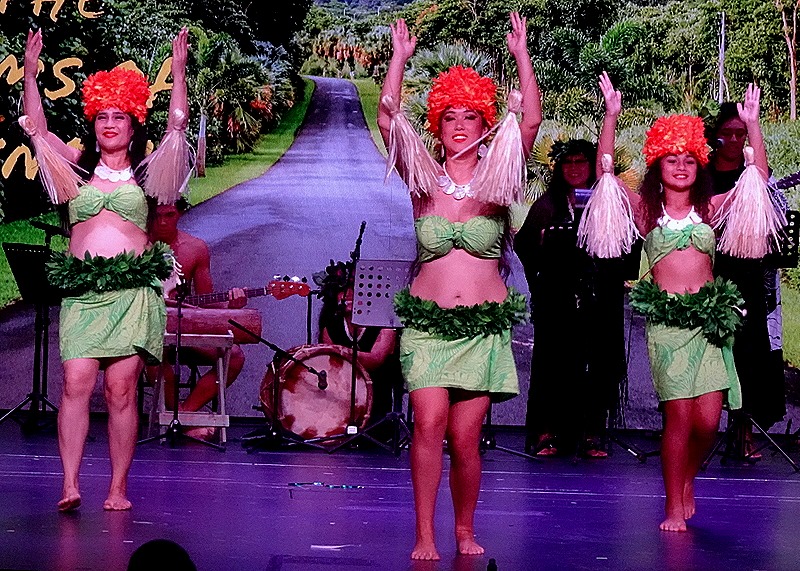
Many cruise ships have overnight stops in Honolulu and there is certainly more than enough to see and do here to justify that. But our cruise had only one day here (albeit a long one) so there is much to see . . . next time. In the evening there was a local folkloric show on board and we looked forward to that because we have seen some fabulous Polynesian singing and dancing shows on cruise ships. Alas, this was not one of them. It was colorful and the musicians and singers were fine, but the dancing left something to be desired and it was accompanied by a narration that made the whole thing pretty disappointing, at least to us.
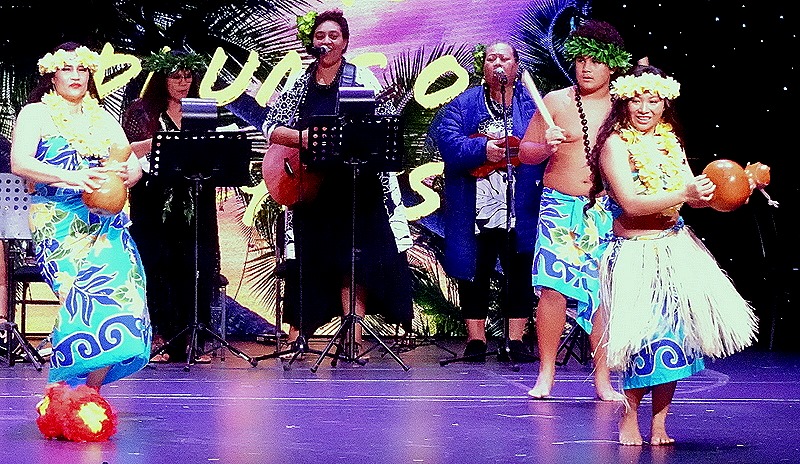


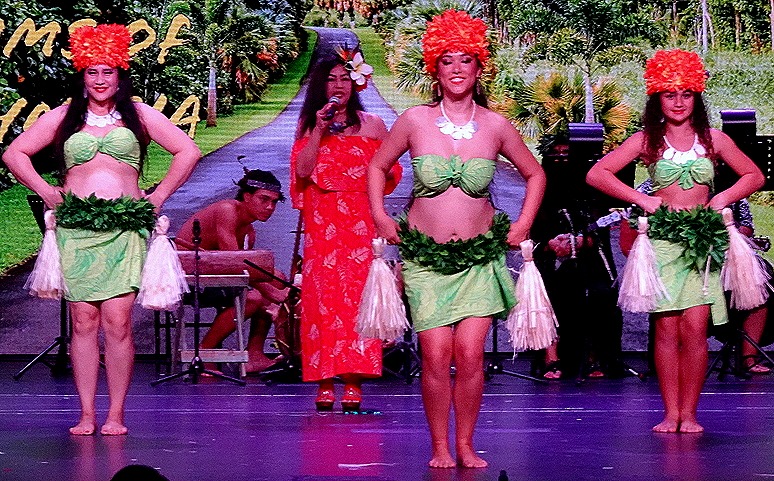
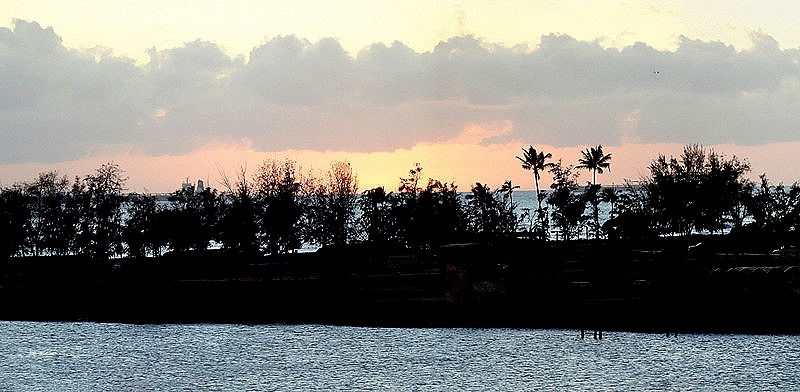
The sun set over the water and palm trees and later we sailed away, hoping one day to return.

 BADER JOURNAL

Leave a comment