Naha, Okinawa, Japan (Day 1) 2024
We arrived at the port of Naha early on the morning of Saturday, February 24, for a two day visit. Naha is the capital of Okinawa Prefect (which includes Ishigaki), located about a thousand miles southwest of Tokyo at a large distance from the main Japanese islands. The island of Okinawa was unified in the 15th century, forming the Ryukyu kingdom. For most of its 300 year existence the kingdom was a tributary of China and Naha was a hub for trade throughout eastern Asia. The Meiji emperor incorporated it into Japan as the Okinawa Prefecture in 1879. In World War II it was the site of the only battle on Japanese soil, which lasted several months and cost the island more than a quarter of its population (including many by suicide). The Americans occupied Okinawa for about 25 years after the war, but in 1972 it was repatriated to Japan and has been a Japanese prefecture ever since, although the Americans still maintain a very large and controversial military presence here.
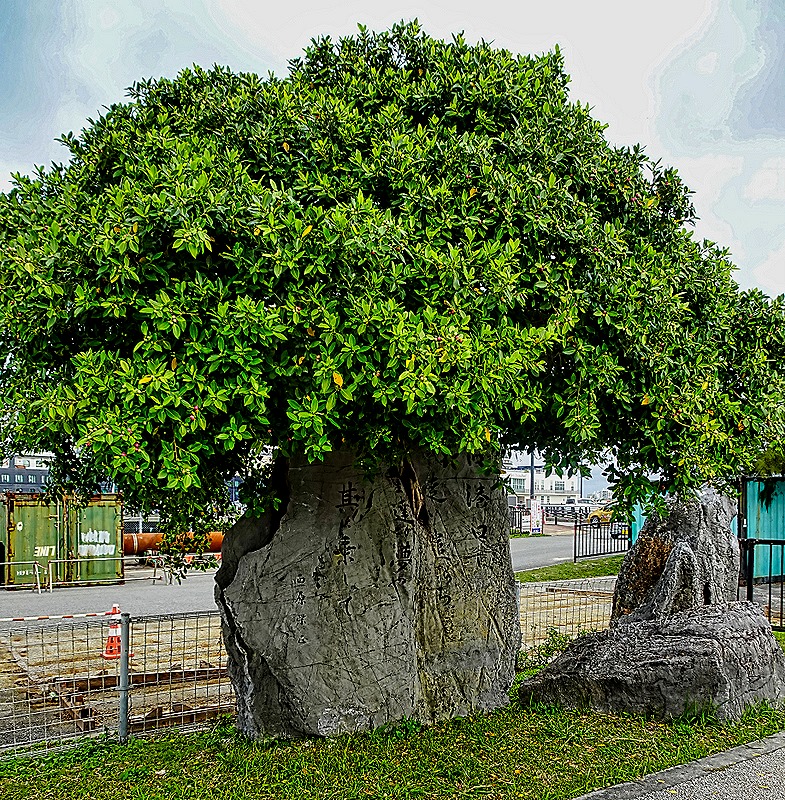
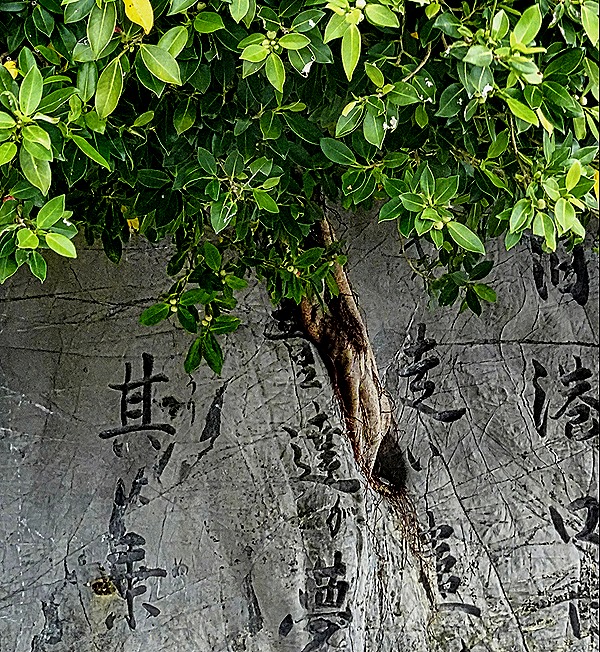
We had a private excursion scheduled for our second day in Naha so we decided to spend our first day visiting the main shopping area of the town, which was within reasonable walking distance from the port. As we left the port we passed what looked at first like a tree, but closer inspection revealed that it was actually a bush growing out of an inscribed rock.
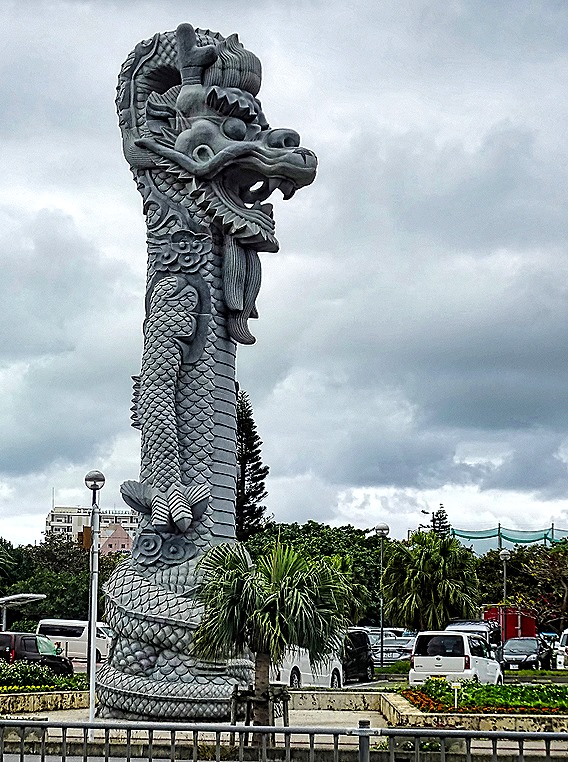
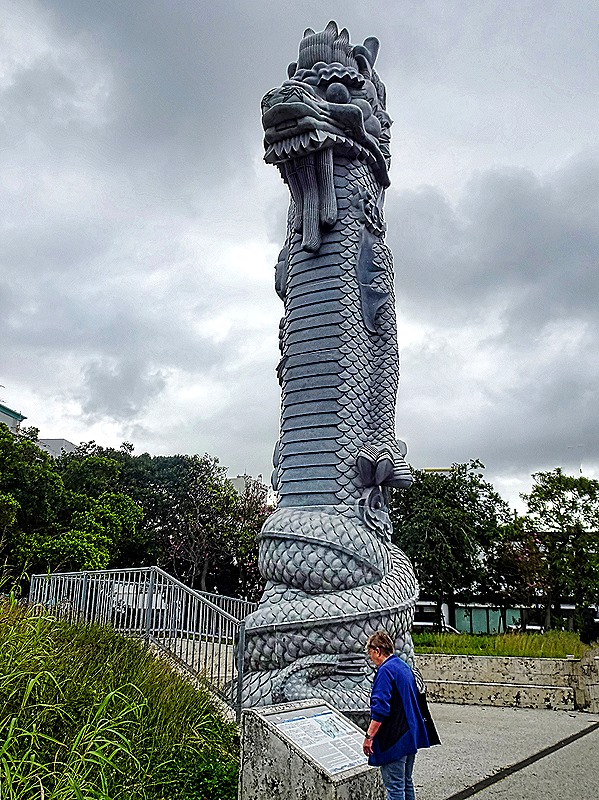
Turning up another street heading away from the water we came to two dragon pillars, erected in 2015 to commemorate the 30th anniversary of Naha’s friendship agreement with Fuzhou City, China, which was celebrated in 2011. Each dragon is 15 meters high and 3 meters wide. They were modeled on dragon sculptures that were in the main hall of Shuri-jo Castle, the home of the Ryuku monarchy, which were lost in a 2019 fire that destroyed the castle.
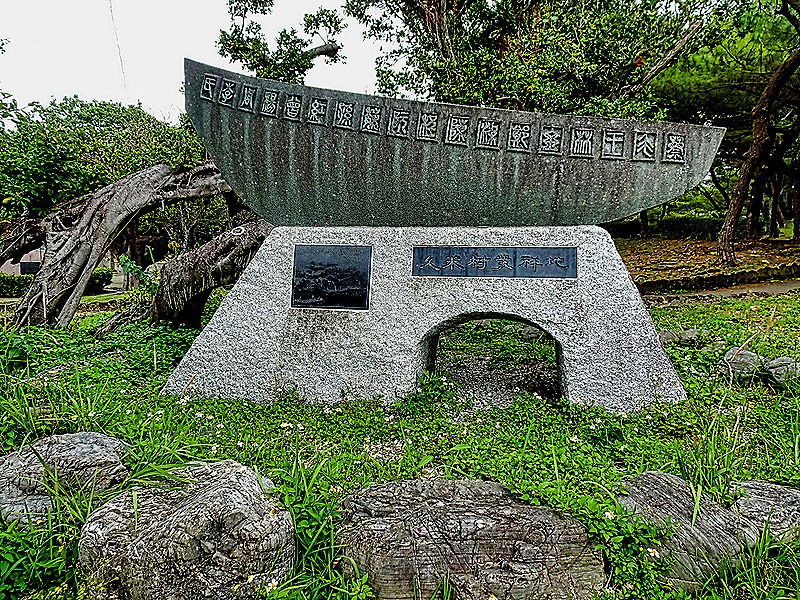
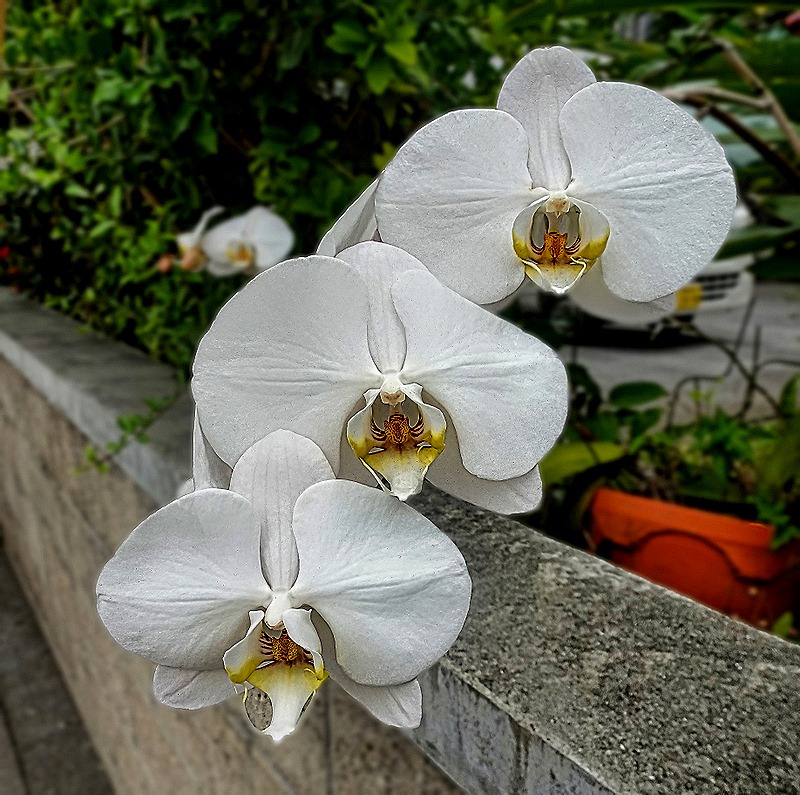
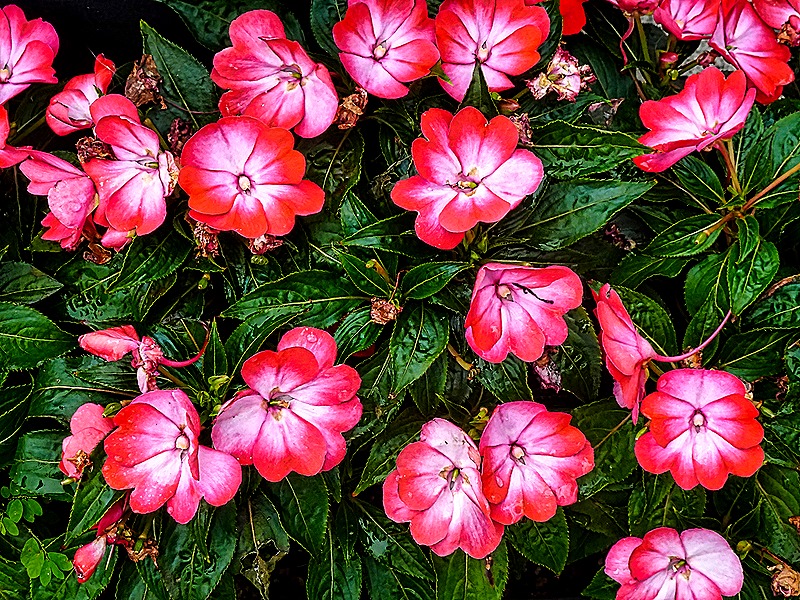
Further up the street we happened upon a low building housing public restroom facilities. After availing ourselves of the facilities we continued on toward our goal, the main shopping street. We passed what we learned later was Matsuyama Park, much larger than what we could see from the sidewalk. It had nice flowers and a monument shaped like a boat dedicated to Kume Village, a settlement established here more than 600 years ago by a group of 36 families who travelled by sea from Fujian, China, and greatly influenced the political, cultural and economic development of Okinawa.

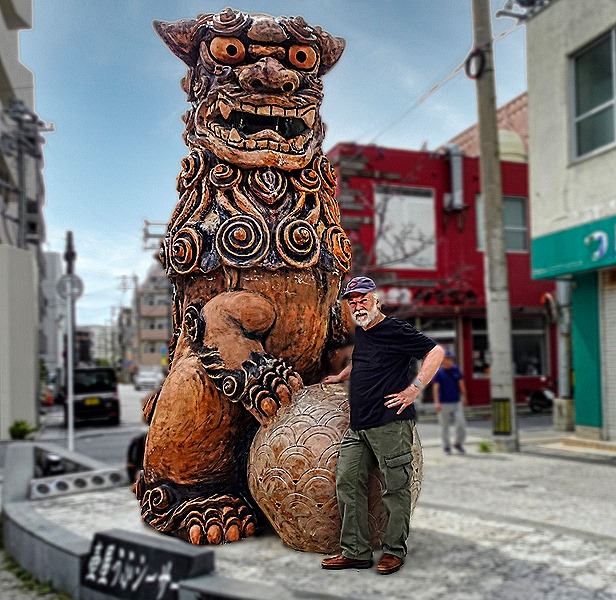
We crossed a river lined with pillars holding up the monorail track and reached our goal, called Kokusai-dori (International Street). As we turned left onto this street we were met by a sculpture of a shisa (lion/dog).

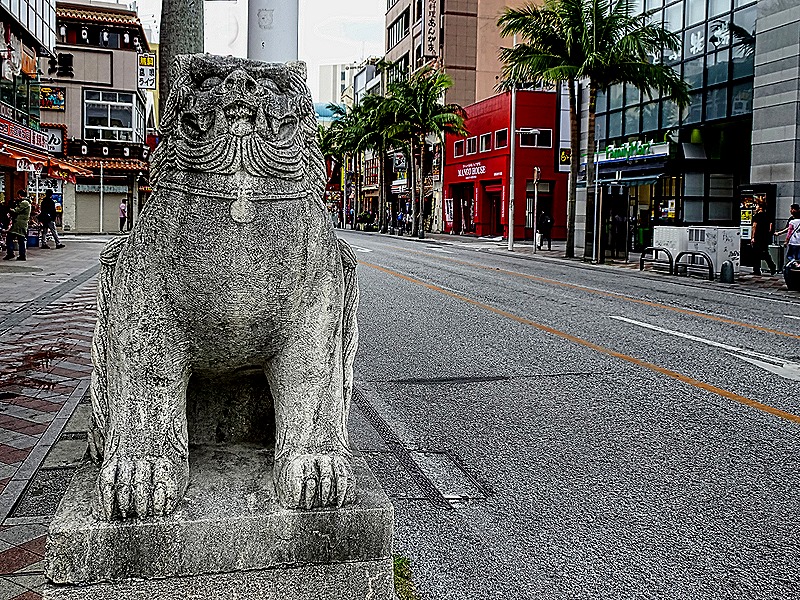
It was just about then that Mary noticed her bag wasn’t hanging over her shoulder. Time to panic! We looked all over the area to no avail and were about to give it up as lost or stolen when she suddenly remembered that she had hung it on the back of the stall door at the restroom facility and did not recall taking it back down. So with little hope of actually finding it still there, back we went (at a much faster speed than our original leisurely stroll). To our surprise, after what must have been 40 minutes or more, Mary found her bag exactly where she had left it, hanging on the restroom door! There are probably few places where we would have found it again after leaving it alone for so long, although we once had a similar experience in Singapore. What a relief.
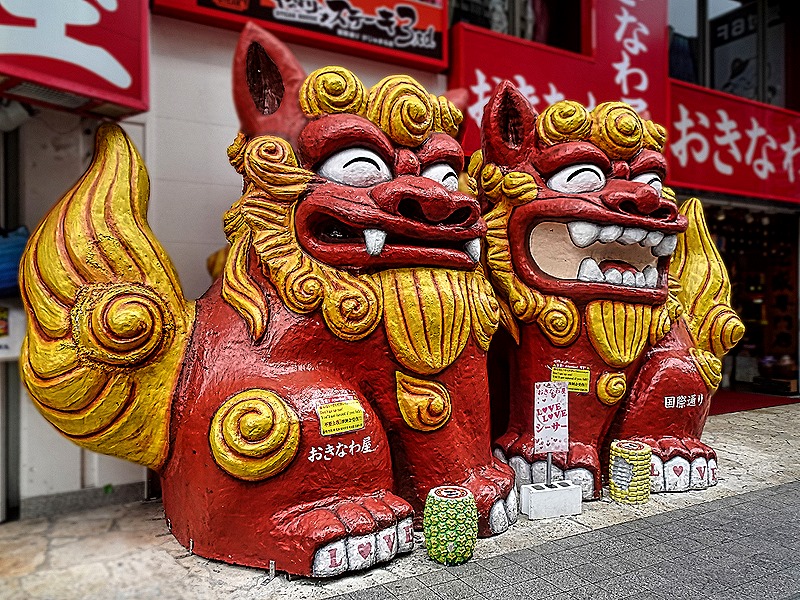
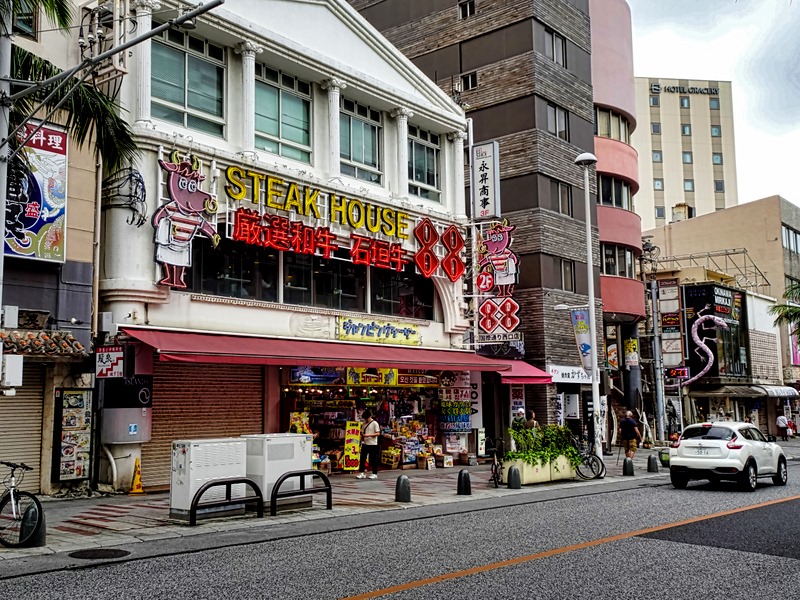
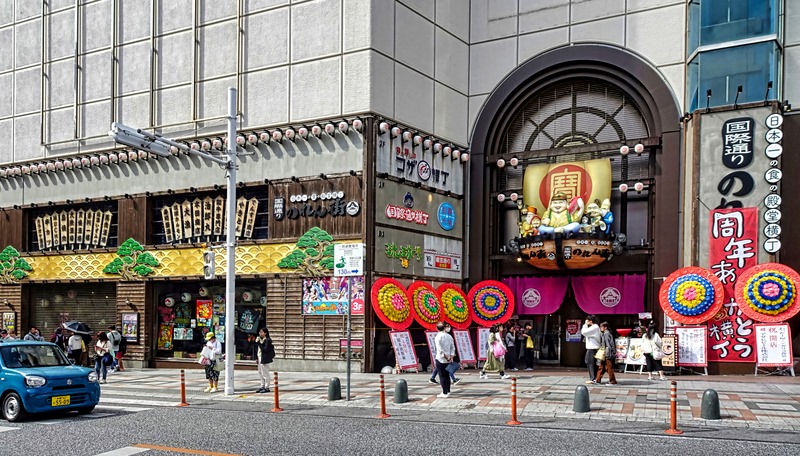
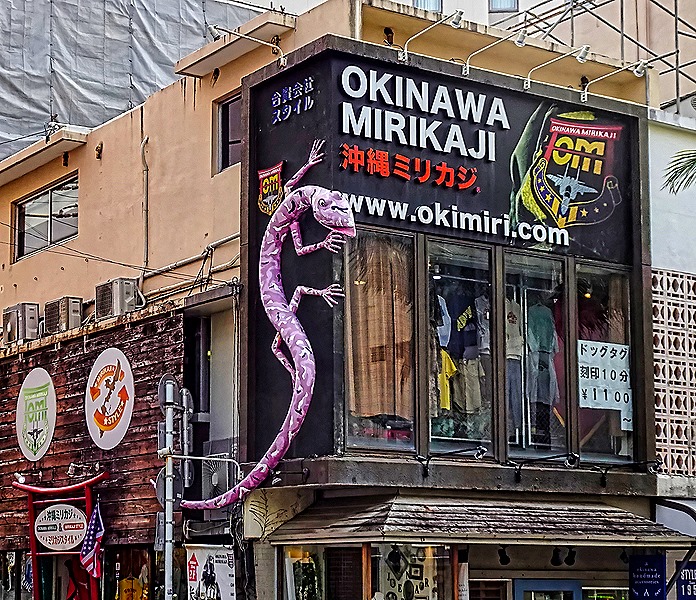
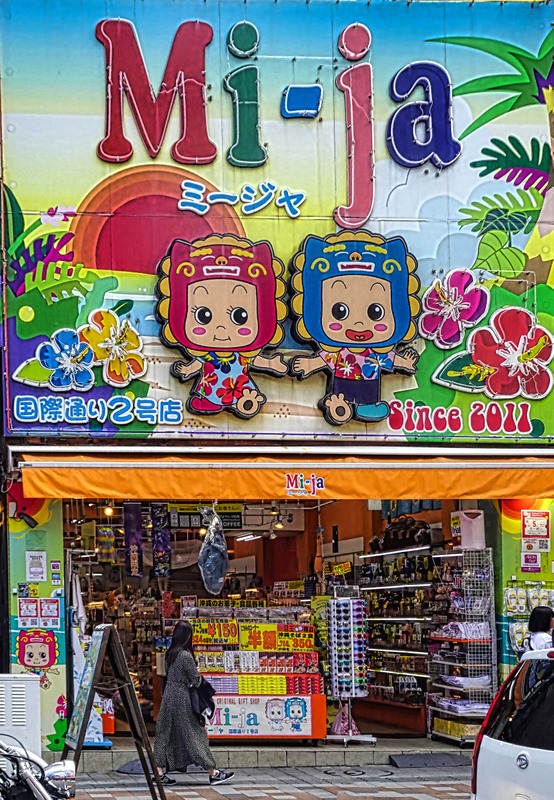
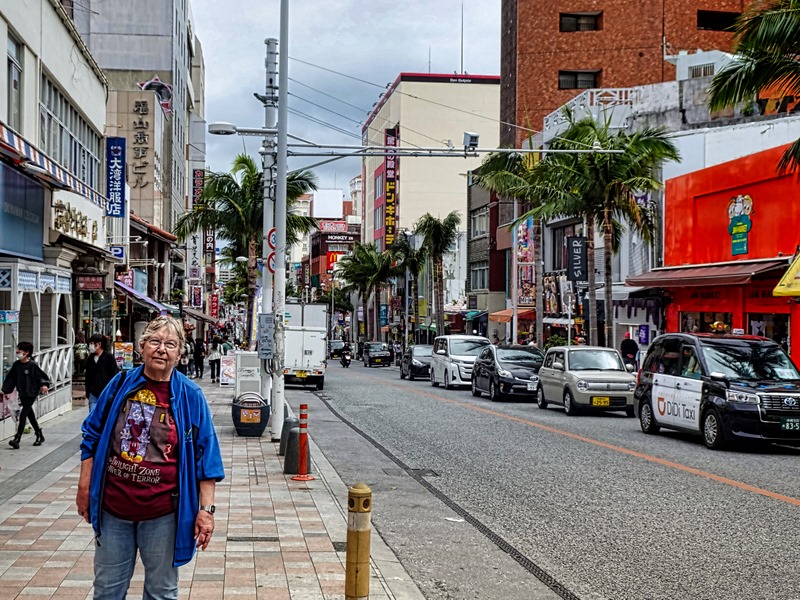
We walked down Kokusai street, enjoying the very Japanese looking signs for stores and restaurants, looking in windows and nosing around in some of the many open front stores selling everything from cheap little plastic shisa to hats and tee shirts to much more expensive ceramic works of art. In front of one store was a huge pair of red and yellow colored shisa, which could not fail to attract the attention of passers by. By reputation this street is often quite busy with traffic but on the Saturday we visited it wasn’t very crowded. We understand that on Sunday this street is pedestrians only.
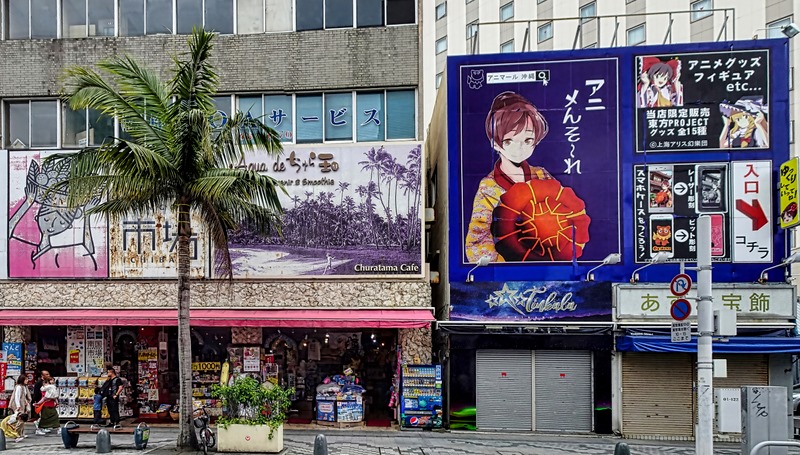
Several blocks along we turned off Kokusai and walked through the covered open-air market. There were two long glass topped buildings containing stalls selling everything from fresh fish to clothing and a variety of other things in between. Stores along the sides also had entrances opening into the market. Bustling and very eclectic.


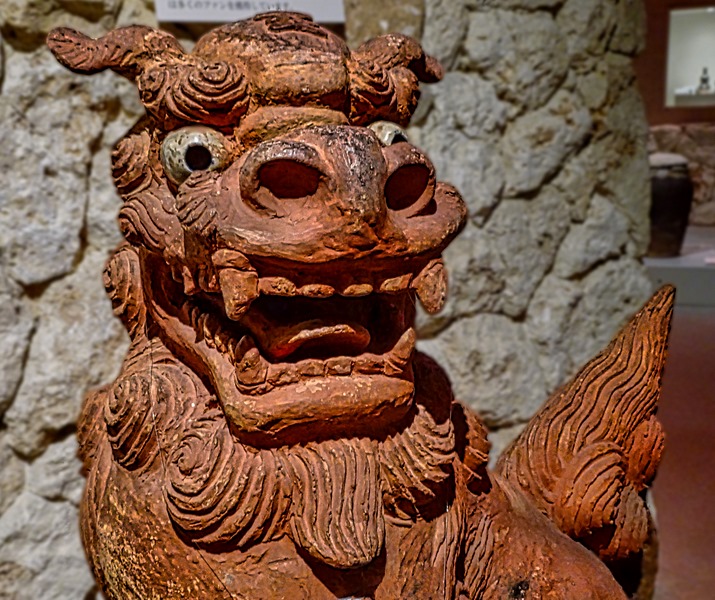
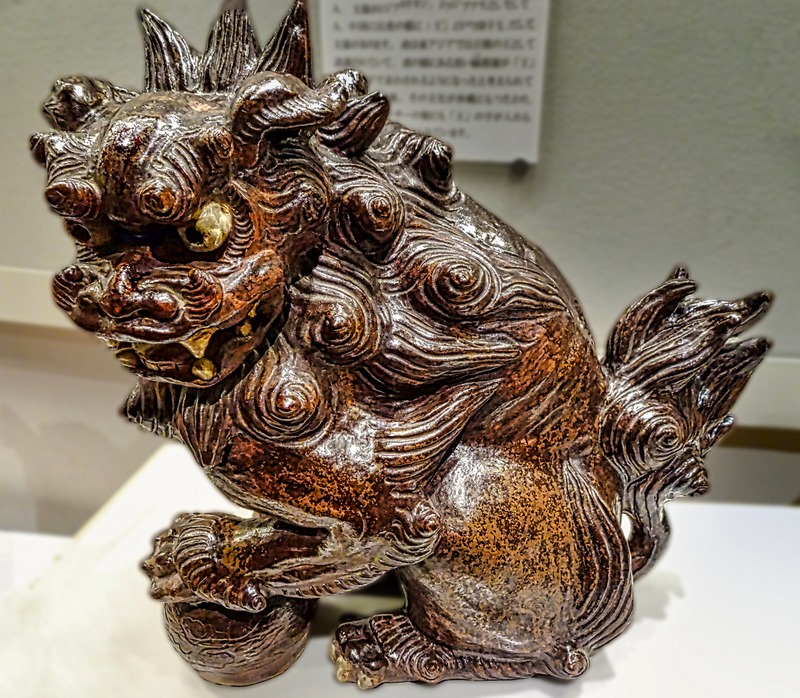
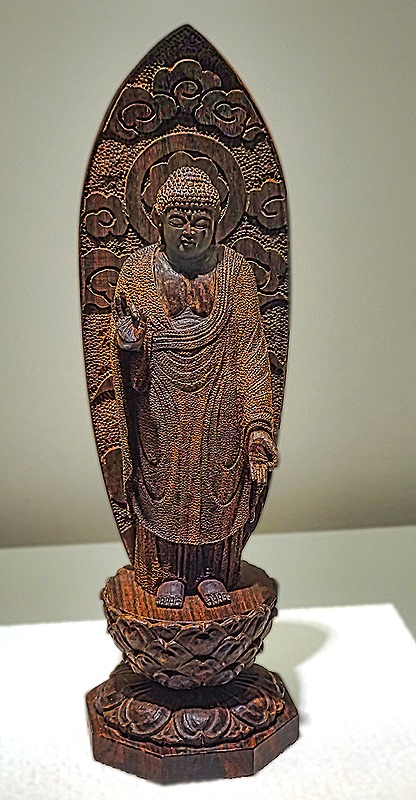
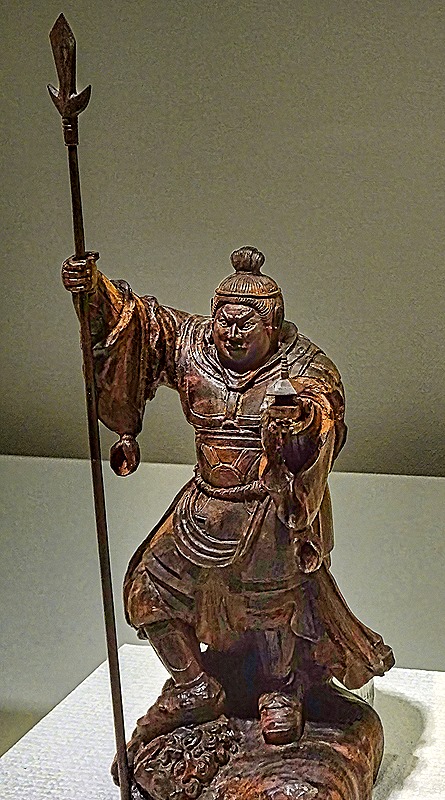
It took a while to find in the maze of often unmarked streets behind the markets, but we finally came to the Tsuboya Pottery Museum. It sits in the Tsuboya neighborhood, which has been the center of Okinawa pottery making for centuries and still has a good number of pottery shops and workshops. The museum is quite interesting (although most of the signage is only in Japanese), with exhibits old and recent plus an interesting video showing how the distinctive Okinawan red tile roofs are made. A number of ceramic sculptures were on display, including several shisa.
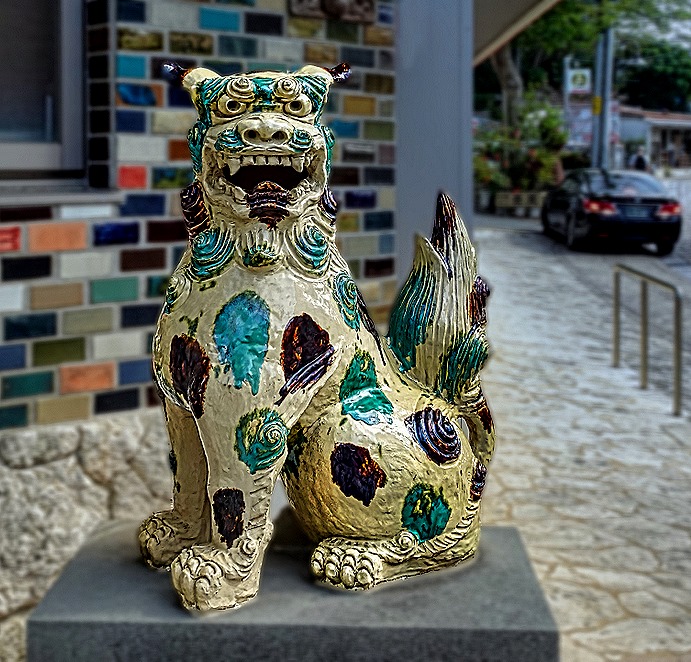
As we mentioned in the Ishigaki episode, shisa are a combination lion and dog and they generally come in pairs. The female that is usually on the right has a closed mouth to retain good spirits, while the male that usually sits on her left has an open mouth to scare away evil spirits. They are thought to have been first brought here from China in the 14th century as gifts for Ryukyu royalty and today you can see them everywhere, placed on roofs and in front of houses and other buildings to protect the premises. Many of the shisa in the museum are single sculptures, perhaps because their pairs have been lost. The shops on Kokusai street are full of colorful shisa, mostly small and looking mass produced for the tourist trade, although some are much nicer than that. We really liked the more artistic shisa, which are all similar in design but each one distinct, and you will see a lot of them here (and tomorrow) since they are such an important part of this island.





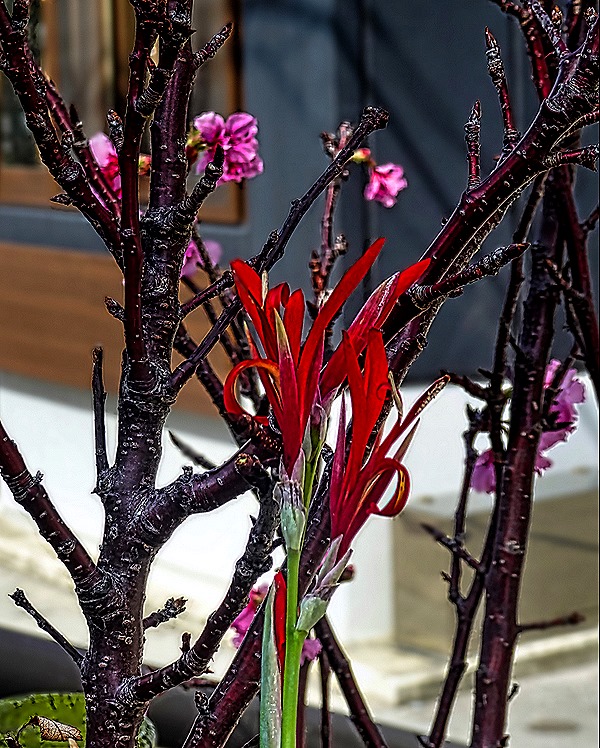
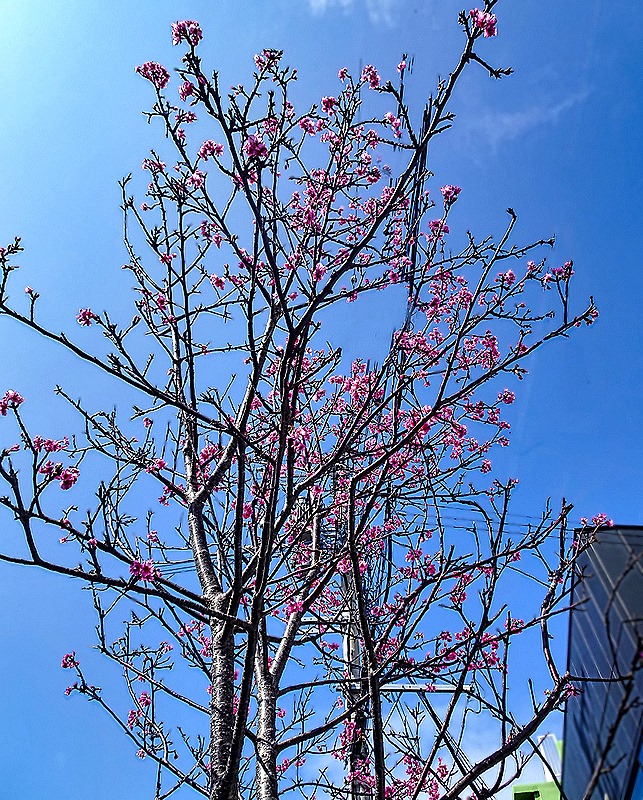
After exploring some of the very interesting shops near the museum we headed back to Kokusai Street and the ship. Along the way, we noticed some colorful flora, one of which was a young tree covered with pink buds. Our first reaction was that this must be one of Japan’s famous cherry trees, but we found out later that cherry season had ended in Okinawa about 10 days earlier. So more likely these were plum or peach buds (or maybe we were just lucky). We also encountered more shisa, large and small, on the street level and also on roofs. The facade of one building closer to the port sported an interesting relief.


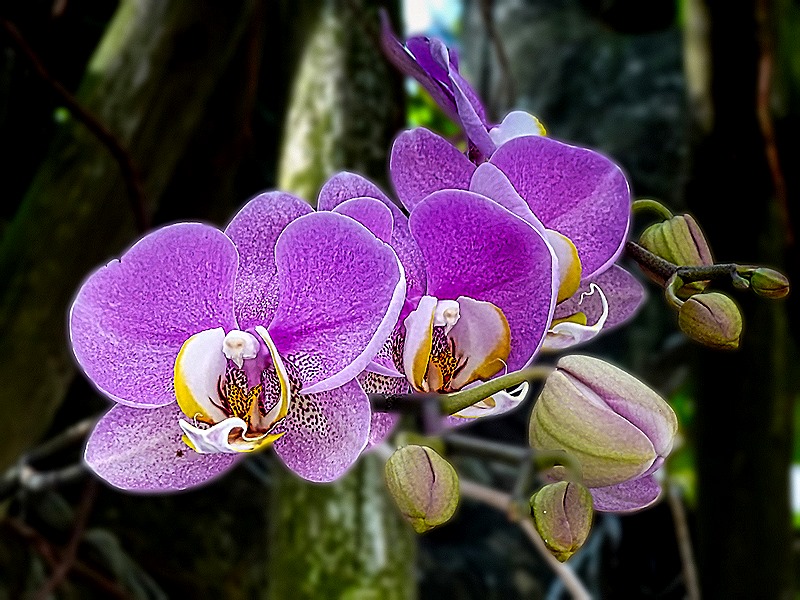
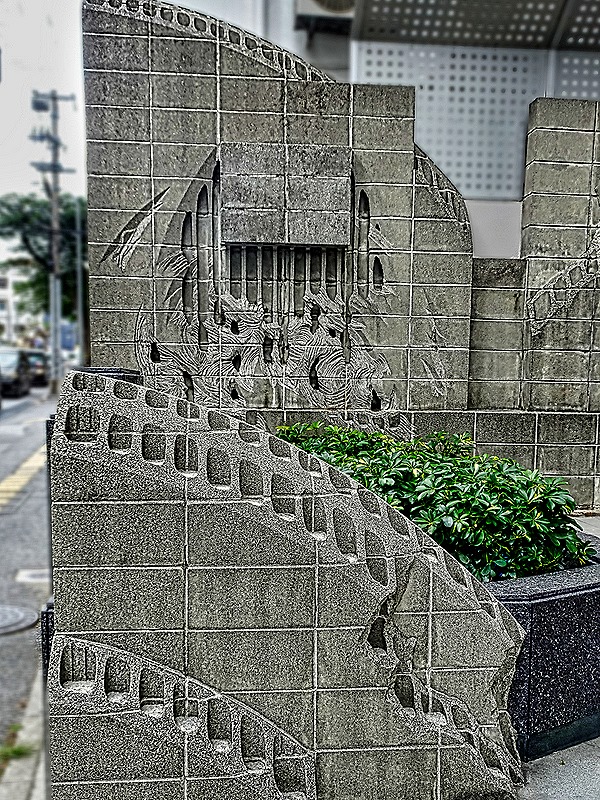
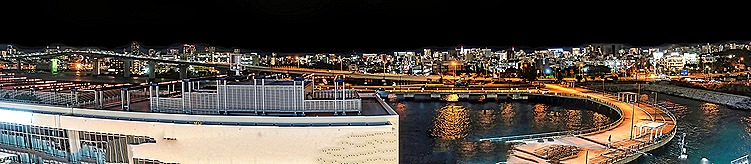
 So that is the end of our first day in Naha. But we stayed there overnight, so there is much more to come tomorrow. This was the night view from our balcony.

 BADER JOURNAL
Fascinating, as always. We loved Japan, although you saw portions of it that we didn’t have time to get to.
June 22, 2024 at 10:56 pm
And you saw parts we didn’t get too (yet). We are hoping to go back one day.
https://www.avast.com/sig-email?utm_medium=email&utm_source=link&utm_campaign=sig-email&utm_content=webmail Virus-free.www.avast.com https://www.avast.com/sig-email?utm_medium=email&utm_source=link&utm_campaign=sig-email&utm_content=webmail <#DAB4FAD8-2DD7-40BB-A1B8-4E2AA1F9FDF2>
June 23, 2024 at 10:30 am