
Naha, Okinawa, Japan (Day 2) (2024)
The morning of February 24 found us, of course, still in Naha. For today we had joined another all day excursion arranged by Tina and (the other) Rick and, like Tina’s other excursions, it turned out to be excellent.
The World War II Battle of Okinawa was fought for more than two months, from early April to late June of 1945. It was the bloodiest battle of the Pacific war, with some 12,500 Americans and more than 100,000 Japanese dead, and estimates of another 40,000 to 150,000 civilian deaths (many of the last two categories by suicide). The commanding generals on both sides died near the end of the battle, the American general by artillery shells and the Japanese general by suicide.
When the battle began the US goal was to seize Okinawa to use as a staging area for the final invasion of the Japanese homeland. But that invasion never occurred because less than two months after the Battle of Okinawa ended the Japanese surrendered, following the atomic bombing of Hiroshima and Nagasaki. It is thought that the fierce resistance and high casualty rate in Okinawa played an important role in President Truman’s decision to use the atomic bomb in an effort to make an invasion of the main Japanese islands unnecessary.
Our first stop today was at one of the battle sites. The Maeda Escarpment is a 400 foot high cliff. From the top there is a view over a large expanse of land to the seashore, where the US Marines landed and fought their way across to the cliff. On April 26 they began to try to take the escarpment, which they called Hacksaw Ridge. The Japanese were dug in, not only on top of the ridge but also in caves and tunnels further down, but after 10 days of brutal hand to hand fighting the Americans finally captured the top on May 6. From the top we had quite a view over the town of Urasoe to the sea.
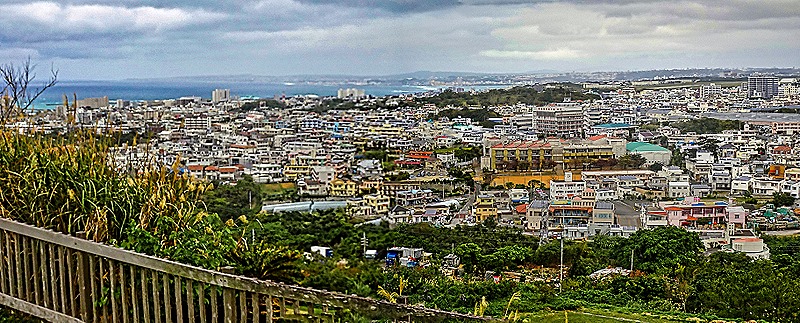
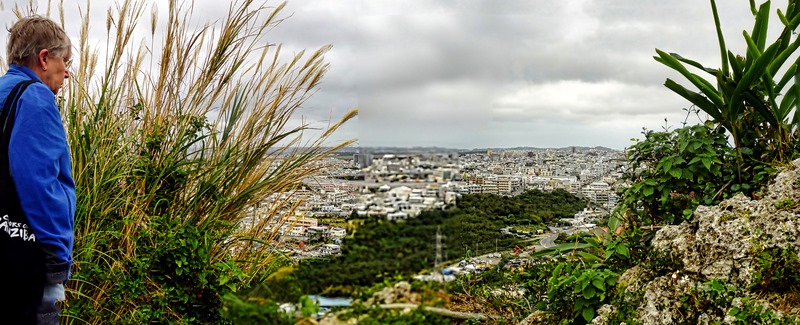
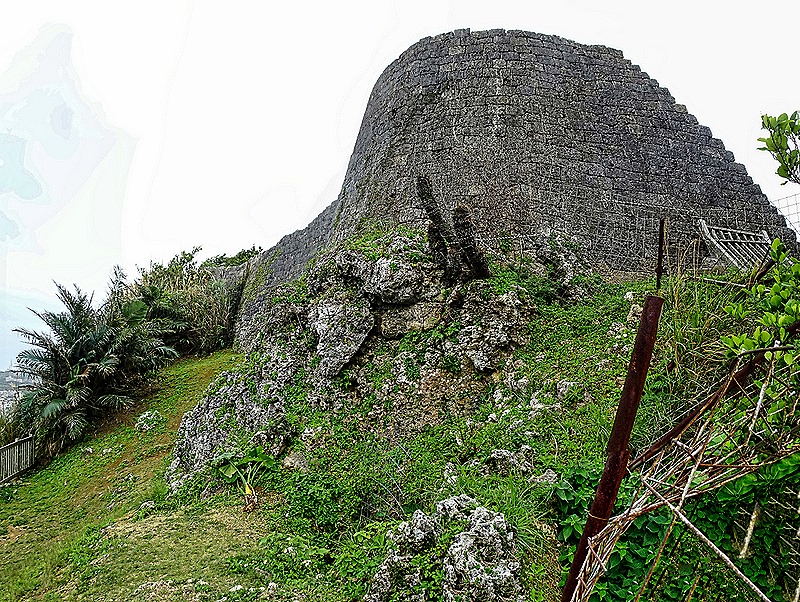
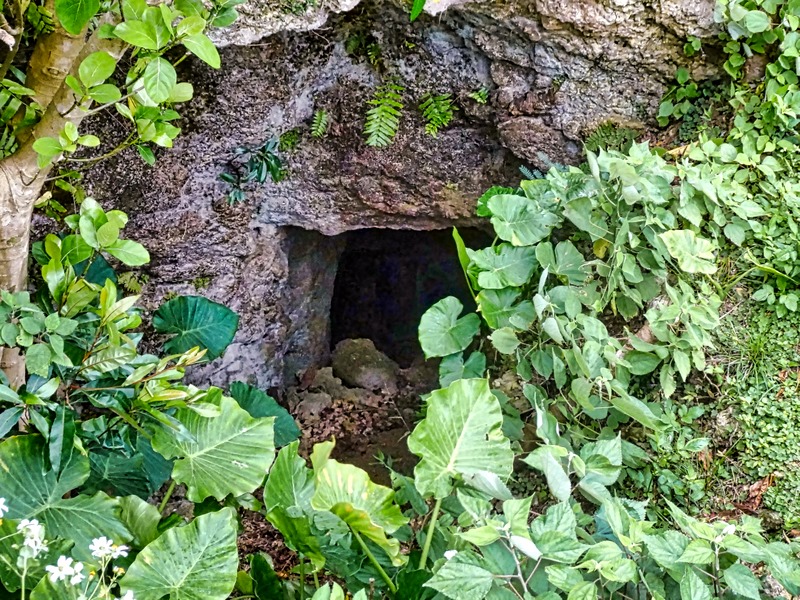
As we walked up from the parking lot that was (thankfully) not too far from the top, we passed a restored wall from Urasoe castle, a 14th century Ryukyu castle wrecked during the Japanese invasion in 1609 and used by the Japanese soldiers during the World War II battle. Though completely destroyed during the fighting this wall was restored after the war (as we understand it). We also passed the entrance to one of the tunnels used by the Japanese in defending the ridge.
If Hacksaw Ridge sounds familiar it is probably because of the popular film by that name that was nominated for multiple Oscars (and won two) in 2017. It focused on the true story of a conscientious objector named Desmond Doss who served as a medic during this battle. One day the Americans managed to get close to the top of the ridge, suffering heavy casualties on the way, then were driven back down. Doss stayed behind treating the injured and then, one by one, lowered 75 wounded men down the cliff in a rope sling. For this heroism he became the first conscientious objector to be awarded the Medal of Honor. It seems that the engagement at Hacksaw Ridge was not well known before the movie; it was not specifically mentioned in several general histories of the Battle of Okinawa I found online. Our guide told us that before the movie no one asked him to take them here, but since the movie it is on everyone’s list.
The top of the ridge is an expansive grassy plateau with protective fences at the cliff edges and several small war memorials, mostly in Japanese only. We walked around this area for a while, taking in the views and seeing some nice plant life. On the side opposite the cliff was a forest, turning green in the Spring weather. Then we walked back down to the parking lot to head for our next destination.


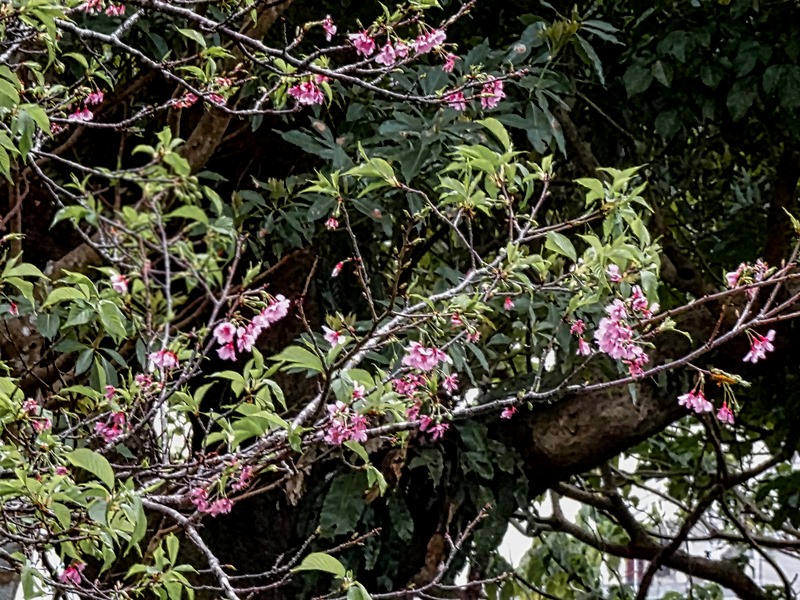


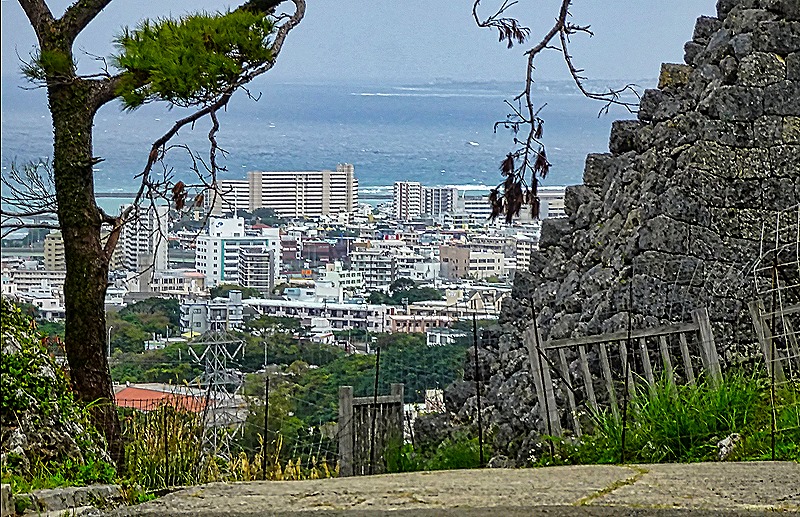
Hacksaw Ridge was one of several battles fought as the Americans drove south toward Shuri-jo (Shuri castle), an important Japanese stronghold. Originally built in the 15th century, this palace was the capital of the Ryukyu kingdom for 450 years until the kingdom was annexed by Japan in 1879 and the Ryukyu royalty were sent to live in Tokyo as Japanese nobles.
In the 1890’s the occupying Japanese military built a series of tunnels and caverns below the castle. During World War II the Japanese army set up a headquarters in this complex under the castle and built extensive lines of communication and defense from there throughout the entire southern portion of Okinawa. A massive American assault on this key position continued from April until late May, 1945. An American battleship shelled the castle continuously for three days and by May 27 it was on fire and the Japanese withdrew to the south. The American capture of the castle on May 29 was important both strategically and symbolically. Nothing was left of the castle beyond rubble and some foundations of the former buildings.
Shuri castle had burned down and been rebuilt several times over its long history and after the war the Japanese set out to do it again. Shureimon gate was reconstructed in 1958 and the reconstruction of the rest was begun in 1992. So everything we saw there was built in the last 75 years, but it all reflects care in recreating the original appearance of the castle complex based on old pictures and plans. We passed through several gates to reach the main buildings. The first was Shureimon, a free standing gate mostly in Chinese style with three entrances. Only royalty and high nobles could use the center entrance.


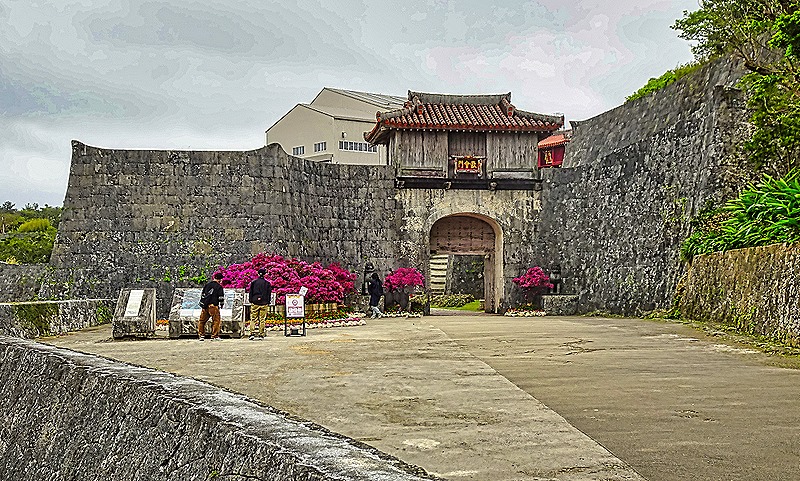
Second was Kankaimon, a single entry gate attached on both sides to the outer walls of the castle.
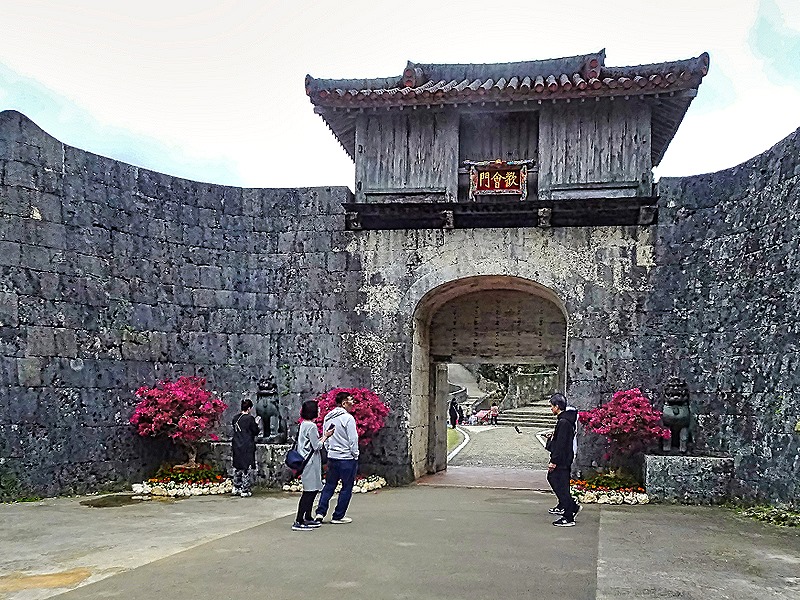
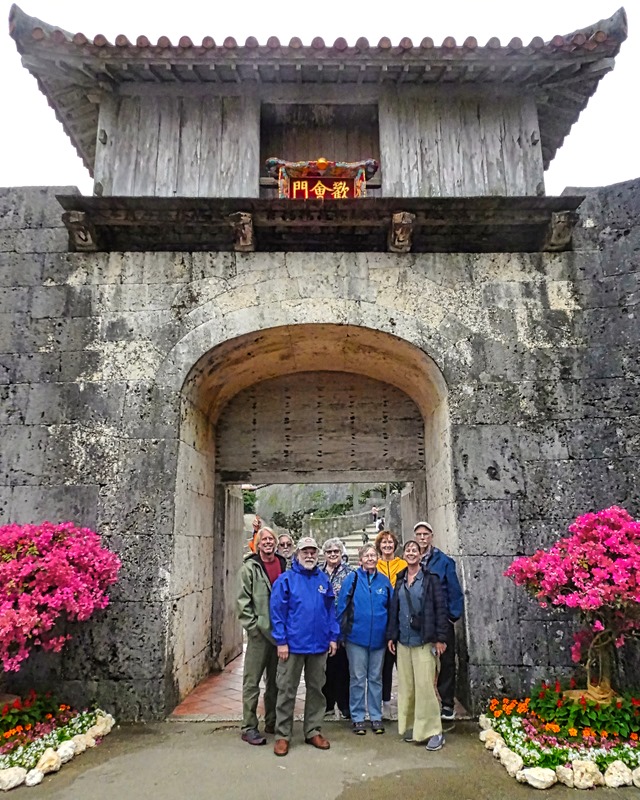
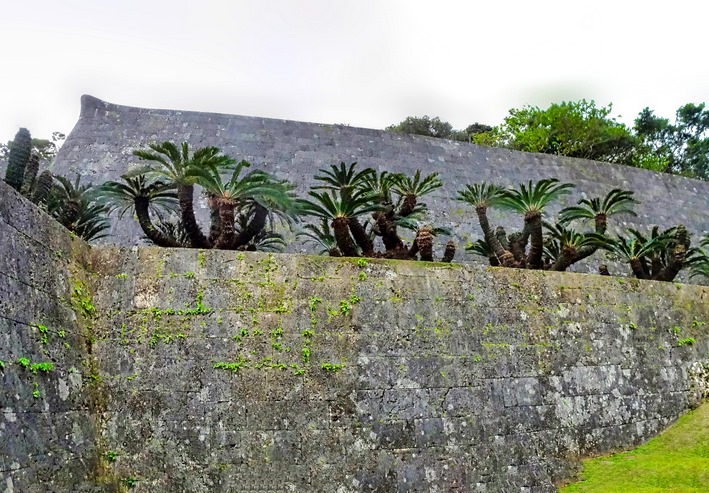
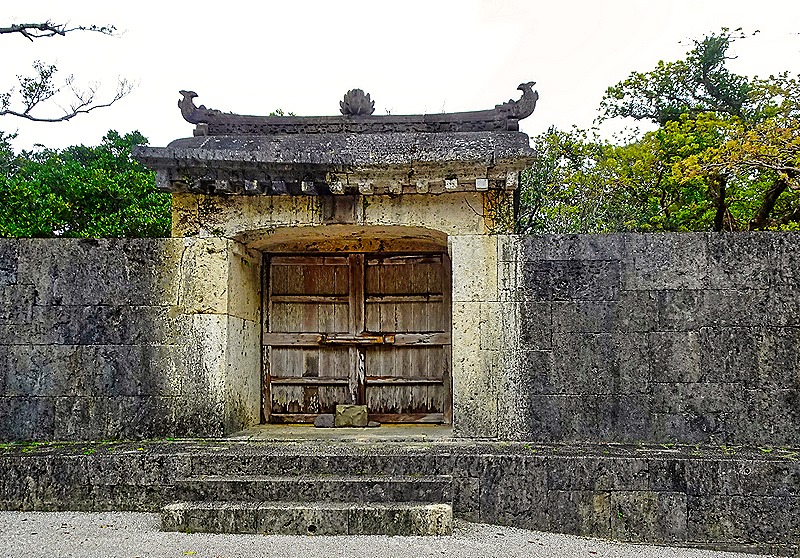
On our way to this gate we passed a small shrine built into the castle wall.
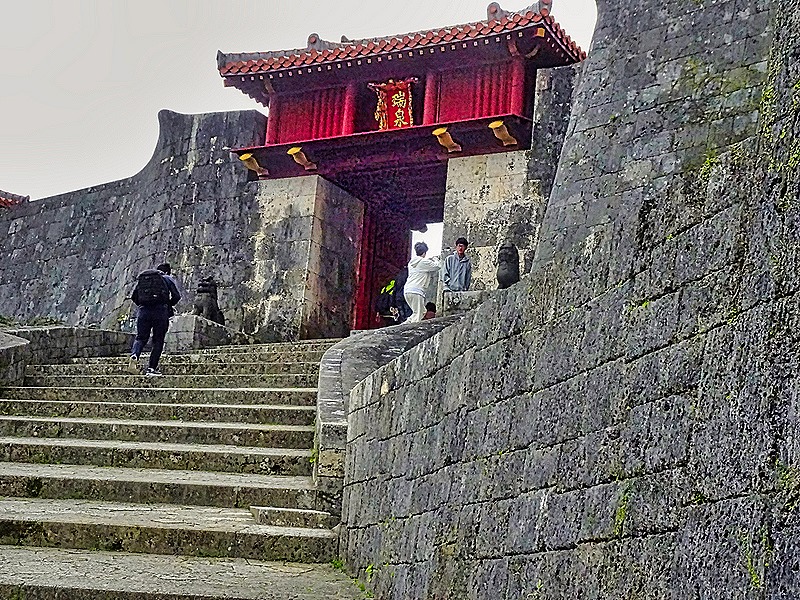
Zuisenmon gate is situated in the wall at the top of a long stairway.
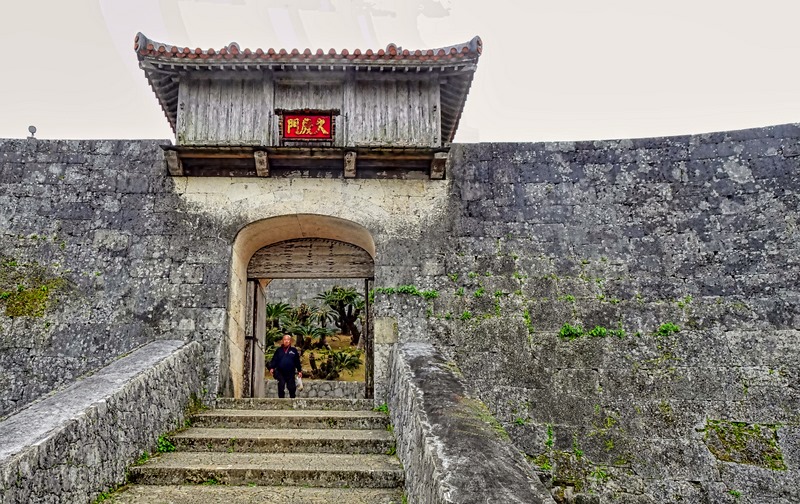
Well, I thought I knew which gates I had pictures of, but now it turns out on closer inspection a few are not the ones I had thought. But the pictures are interesting (at least to me), so here are some other gates whose names I don’t know (as you will see we walked through at least one of them).


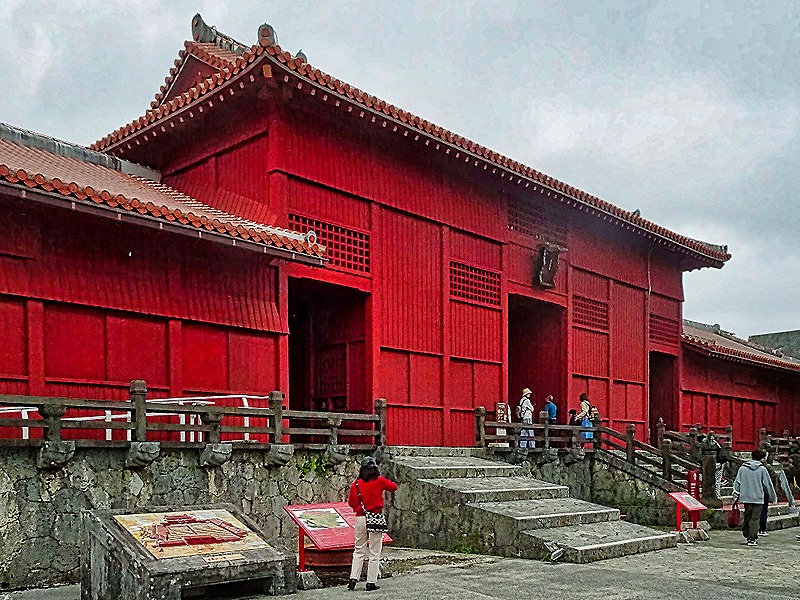
We entered the castle proper through the ticket building, also considered a gate, a large red building that leads to the central square. Unfortunately, in October, 2019, an electrical fire destroyed all the restored main castle buildings that used to surround this square. The primary castle building, called the Seiden, is currently undergoing reconstruction inside a huge temporary metal building, so all we saw of it were paintings on the front and back walls of the construction enclosure. It is said that the design of this building was influenced more by Chinese architecture than Japanese, and it was not hard to see that it doesn’t look much like other Japanese castles we visited later. Reconstruction of the Seiden is scheduled to be completed in 2026.
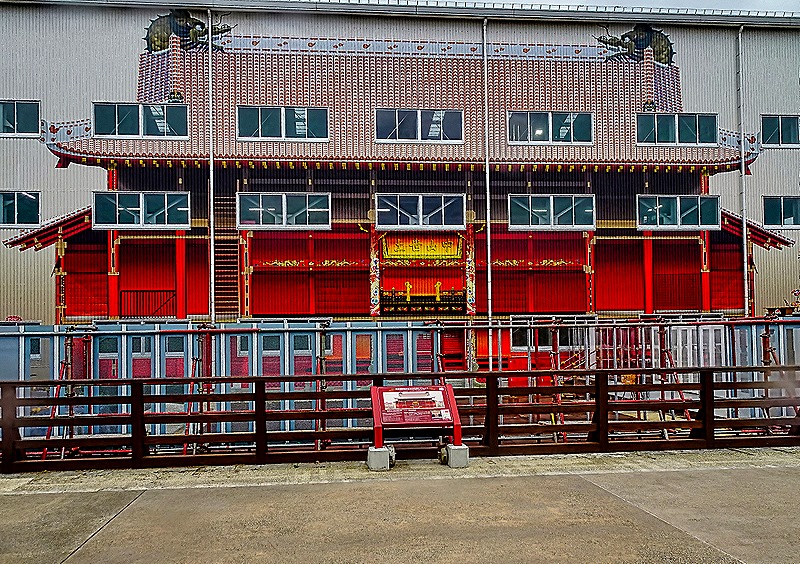
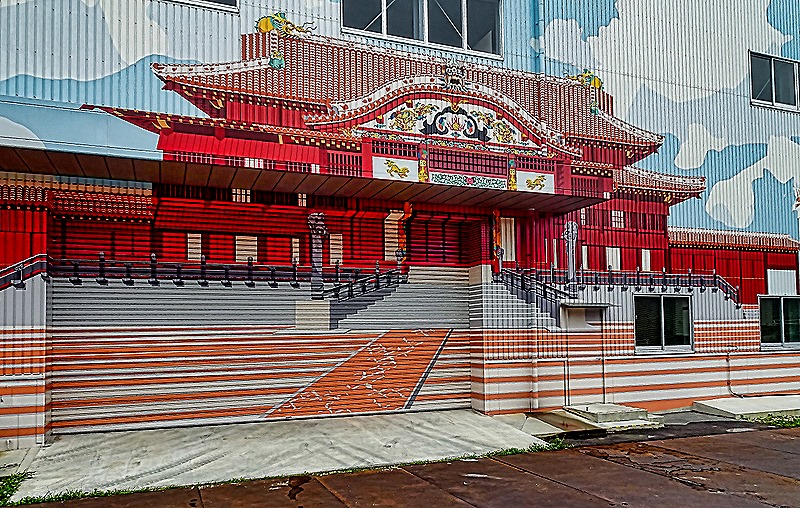
We were able to view some of the construction work taking place by climbing up the “observation deck” and looking through windows in the construction building. This was a Sunday and no work was being done, but we saw what was being worked on, most notably a new roof.
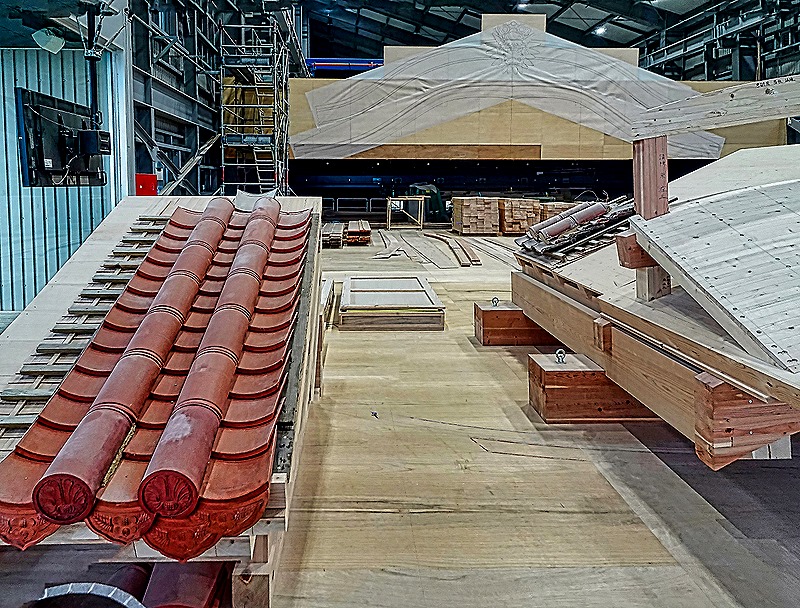
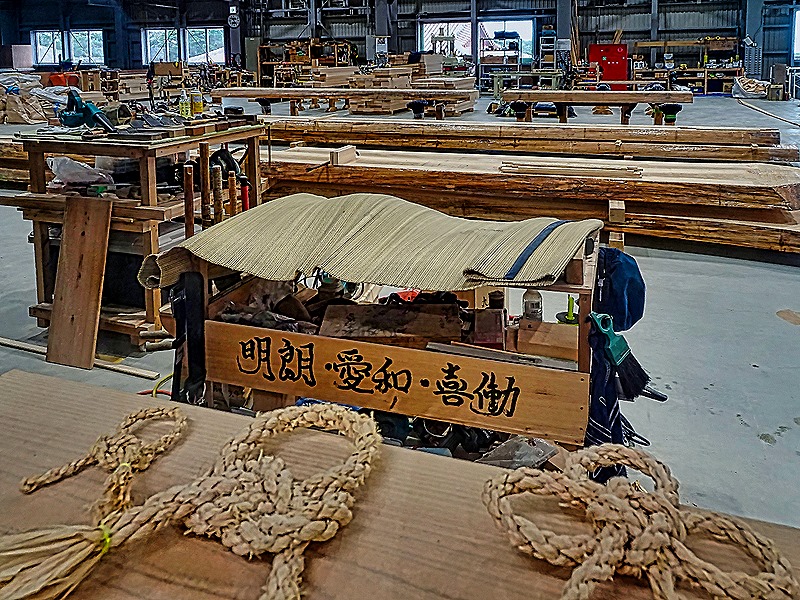
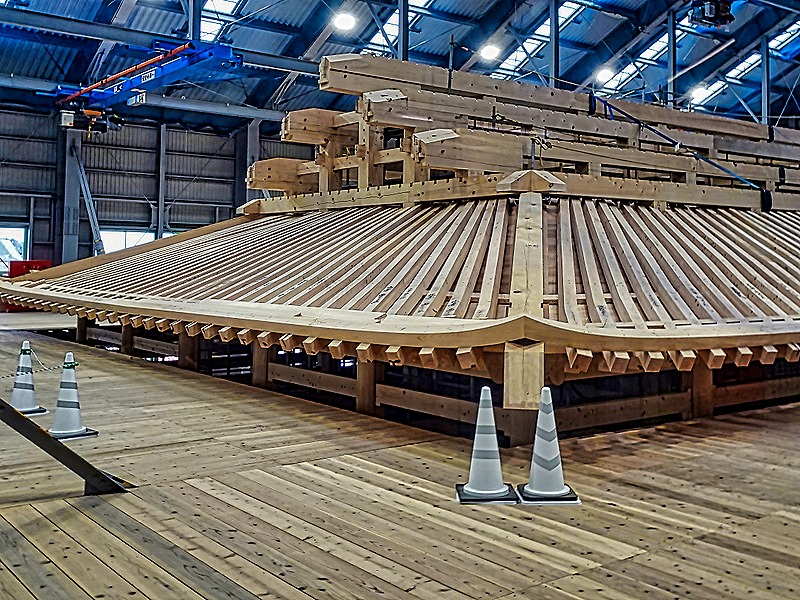
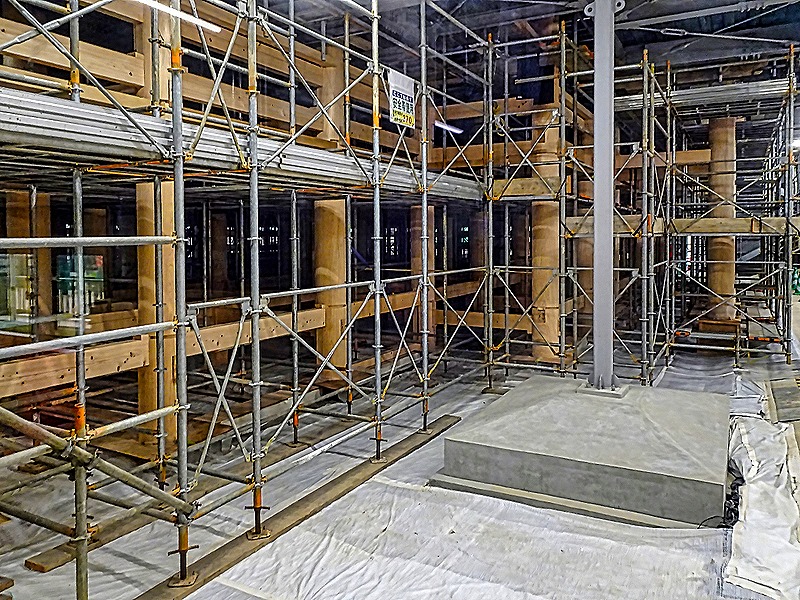
After climbing several flights of stairs to look through all the windows we were rewarded with several nice views, both inside the castle walls and a long distance outside. We particularly liked the distant view being watched by a shisa sitting outside the building.
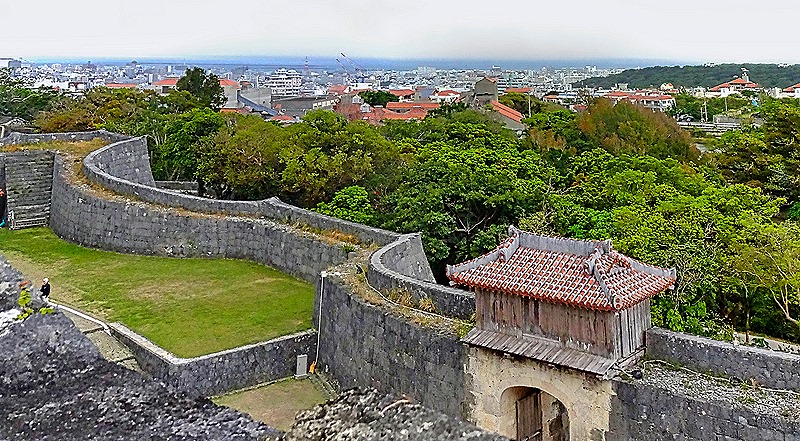
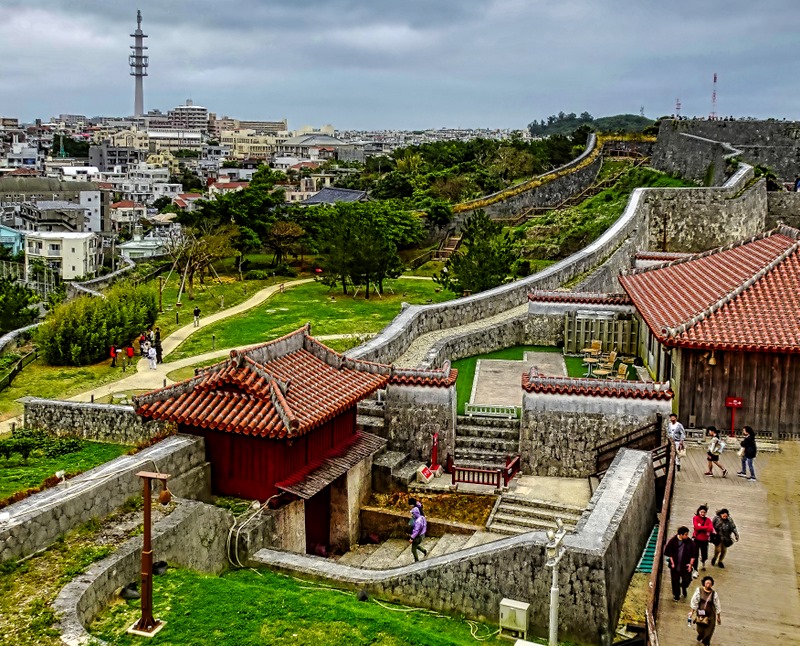


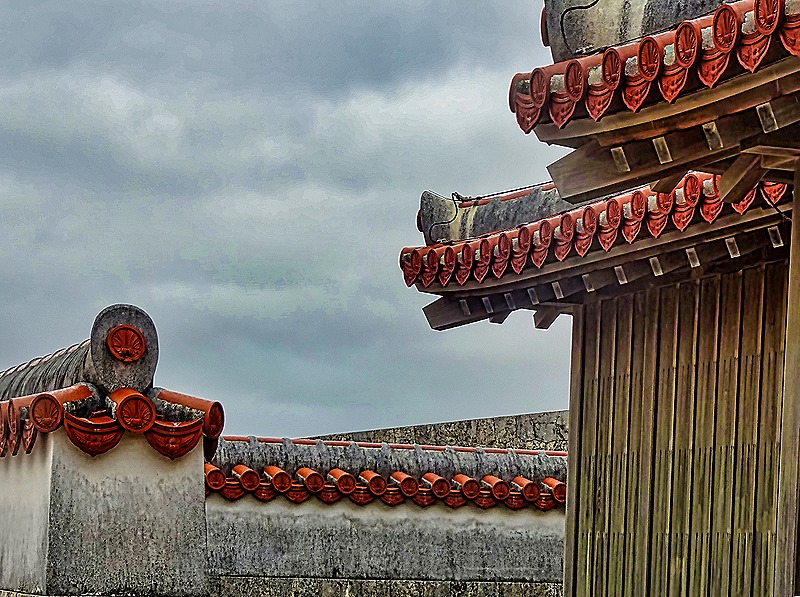
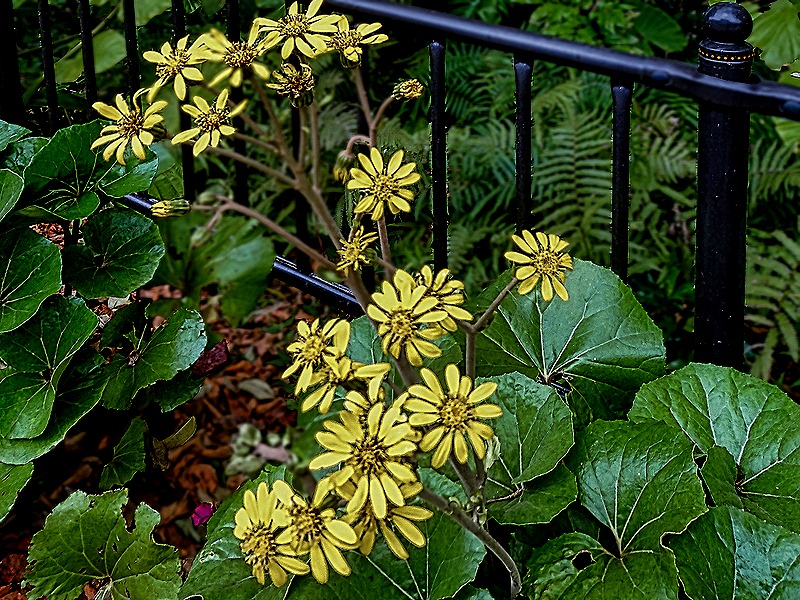
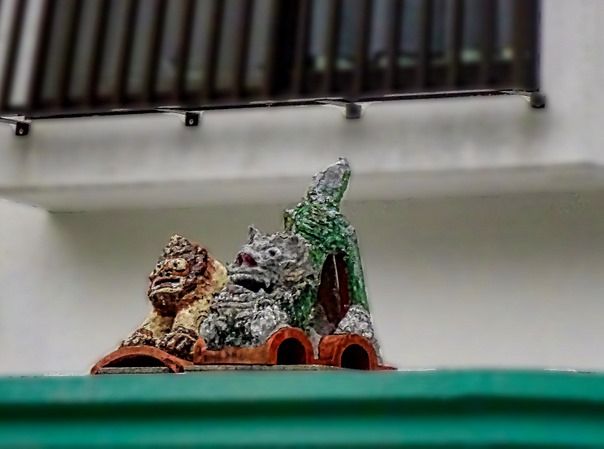
After gathering up our group, somewhat dispersed while wandering through the castle grounds, we walked back to the van past some more nice flowers. On a roof across the street from where we were parked was a small pair of shisa, looking home made and rather crude but colorful.

Not very far from the castle is Shikinaen Royal Garden, a UNESCO World Heritage site (as are the old foundations and surviving walls of the castle). The garden was first established in 1799 and the palace on the grounds was built in 1800. Unfortunately the entire garden was destroyed during the Battle of Okinawa in 1945. Restoring a huge garden with woodlands takes many years as new plants and trees mature and the 20 years it took to restore this one began in 1975, shortly after Okinawa was given back to Japan by the United States. It is a beautiful spot and we enjoyed walking the rustic but sometimes steep paths through the forest.
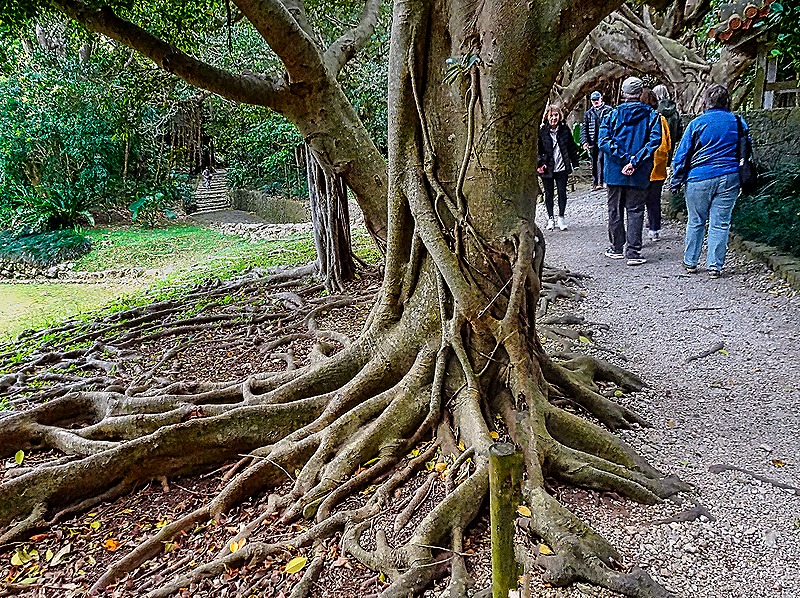
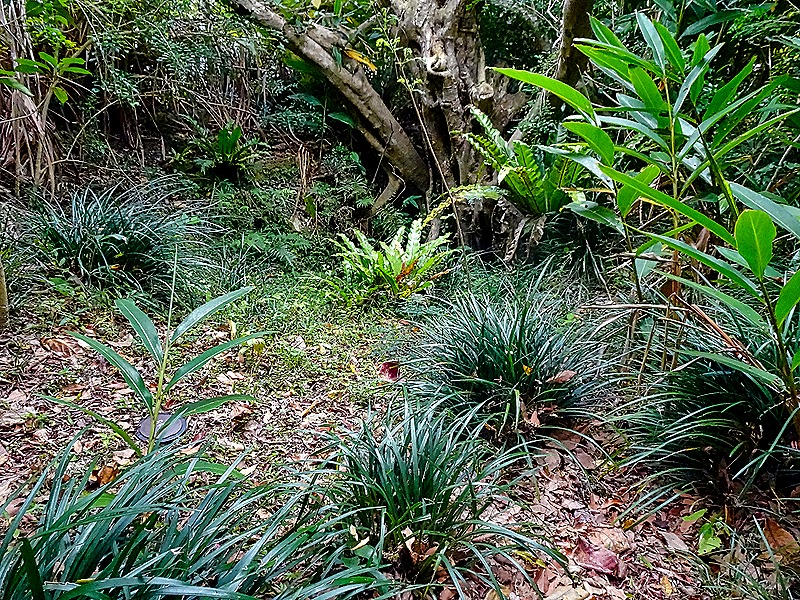
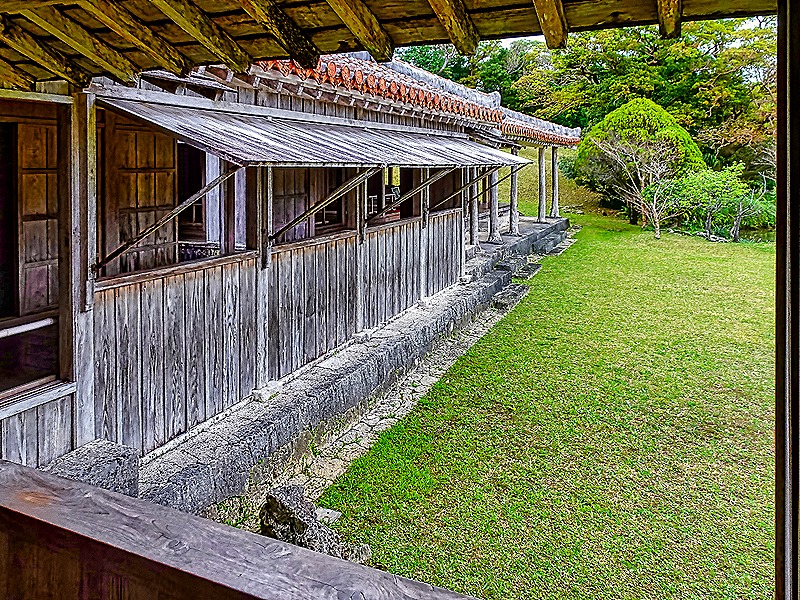
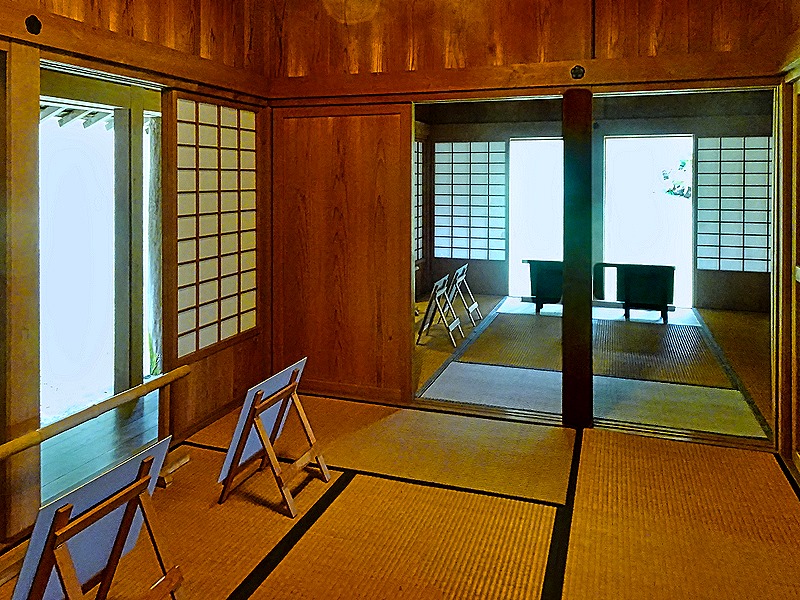
The centerpiece is the one story Udun palace sitting near the edge of a small lake, a second home for the Ryukyu royal family. It has a very open floor plan and a peaceful, relaxing view of the lake, which has a small hexagonal pavilion on an island in the water called Rokkako-do.
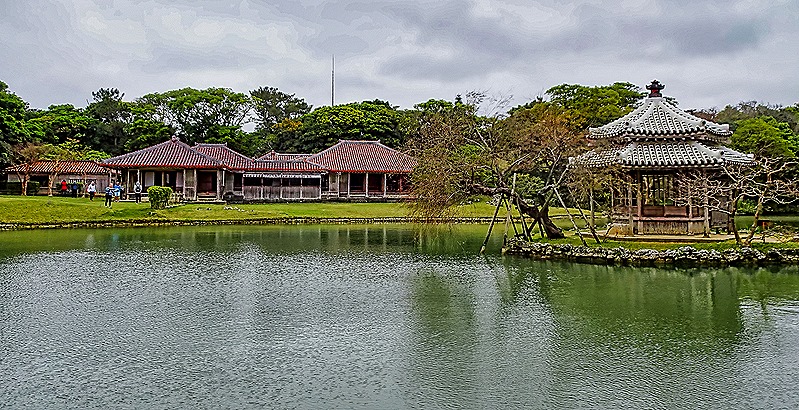

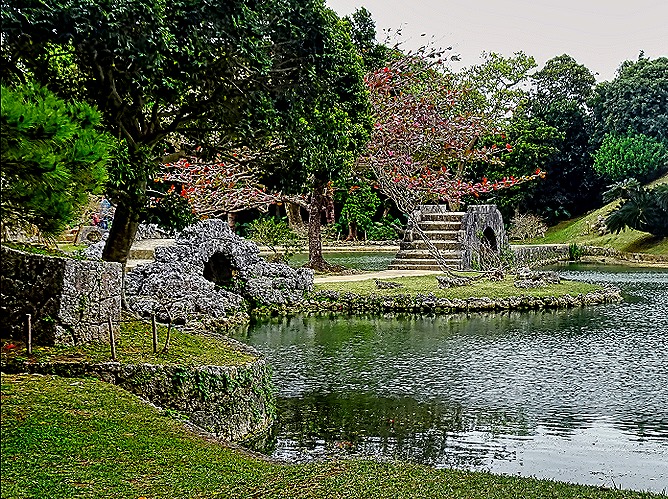
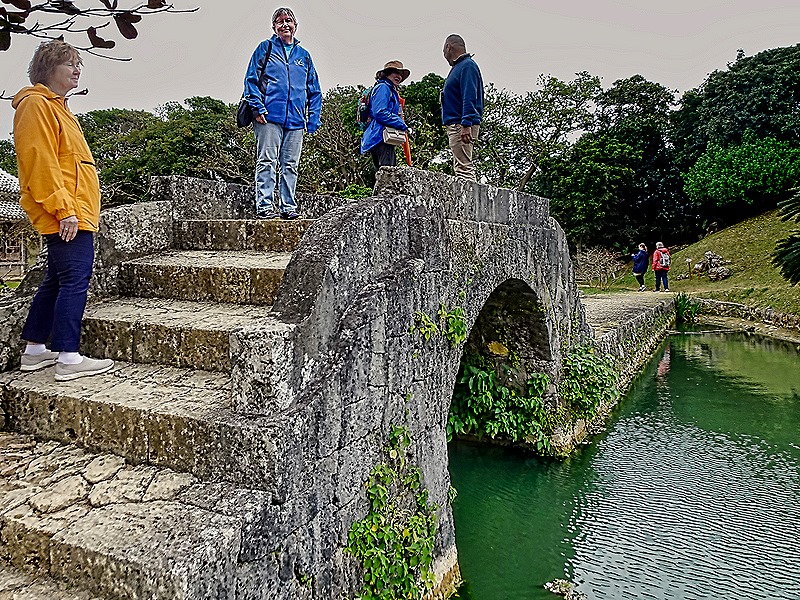
To reach the Udun we walked over two stone bridges built in semi-circular arches to allow small boats to pass underneath. Called Ishibashi, their design is Chinese and they are built of coral limestone. One has a formal design and the other is considered rustic, with rocks brought from the seashore.
When we left the garden it was time for lunch. Of course, it was lunchtime for many other people as well and we visited several restaurants in the area before our guide found one that could accommodate our party. But the restaurant was nice and the lunch was good. We had Soba noodles, served in broth with pork. Our guide was at our table eating the same thing and he picked the bowl up near his mouth and started slurping loudly. We must have looked a little taken aback because he smiled at us and said “In Japan it is OK to make noise when eating.” So we did.
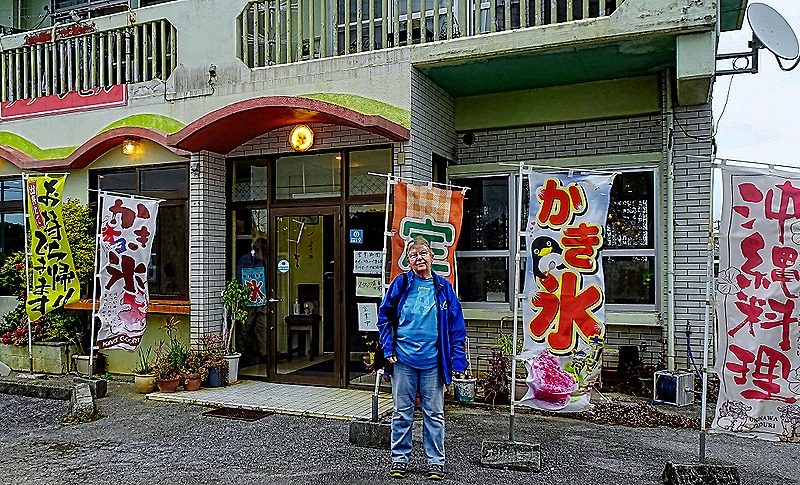
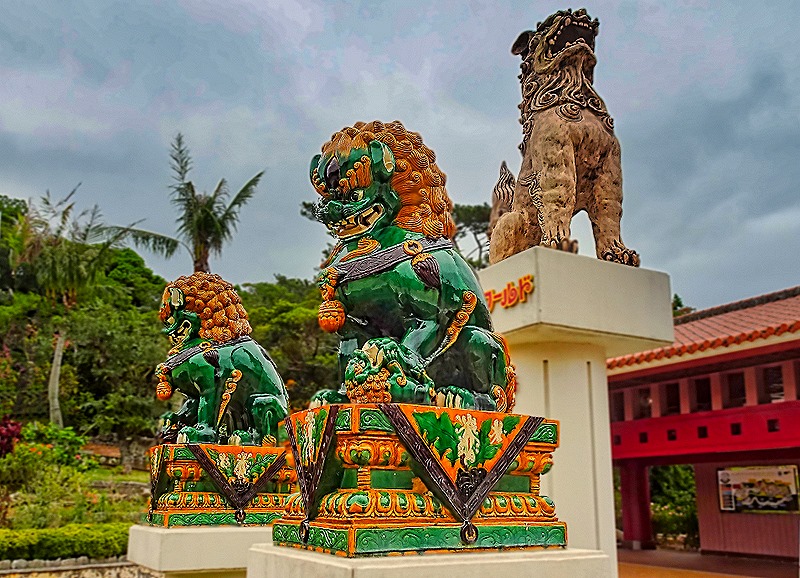
After lunch we went to Okinawa World, a sort of theme park with a number of attractions and plenty of food and souvenirs to buy. We were welcomed by shisa, of course. One pair was made of flowers and there was an installation of not one, not two, but five shisa inside the entrance.


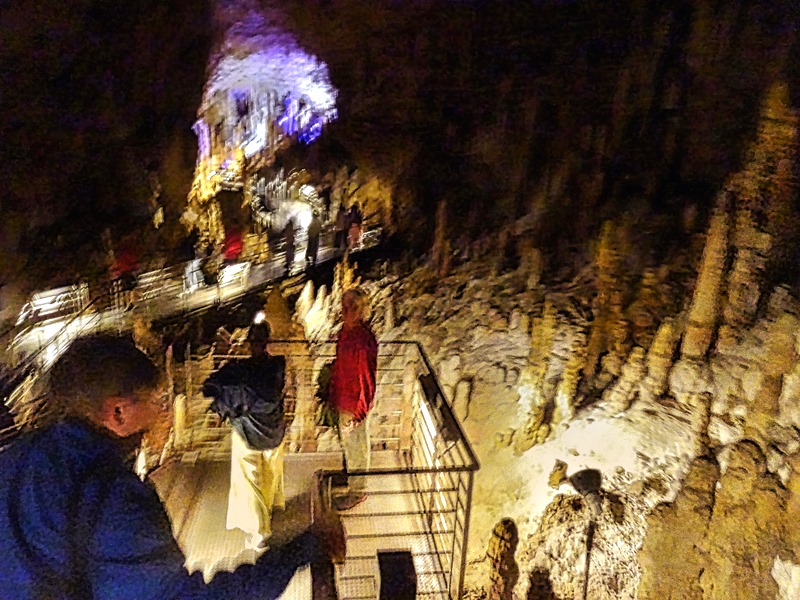
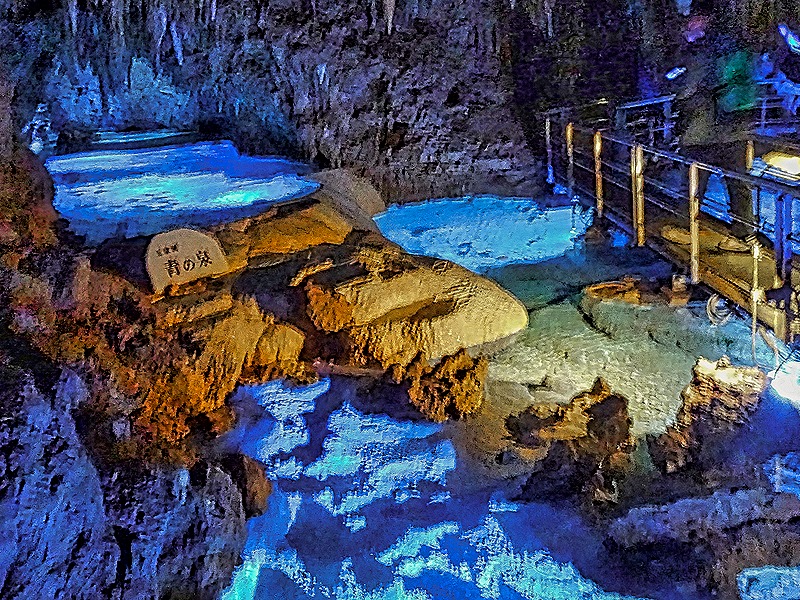
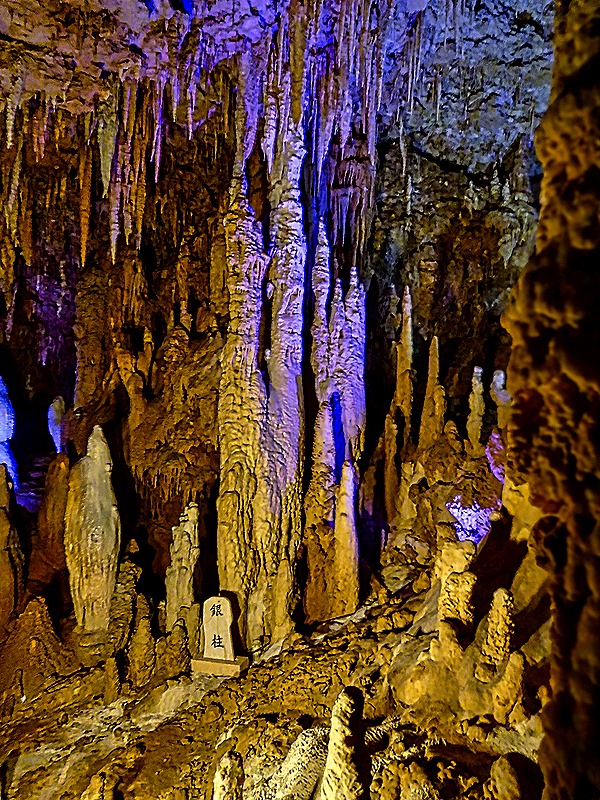
What we were there to see was Gyokusendo Cave, at six kilometers in length the largest in Okinawa. Less than one kilometer is open to the public. The cave has more than a million stalactites and stalagmites that have formed over about 300,000 years. It is pretty well lighted inside, with colored lights giving an eerie glow in some areas. This cave is bigger and apparently more famous than the one we visited in Ishigaki two days before, but really this was mostly more of the same kind of ambience. It felt like a pretty long walk on the uneven pathway so we were glad at the end to find an escalator to take us back to the top.

After leaving the cave we had a fairly long walk to reach a performance stage where we watched some traditional dancing accompanied by a drum group. It was an upbeat and interesting show but photos were not allowed. We then returned to the van, passing the shisa group near the entrance once again.
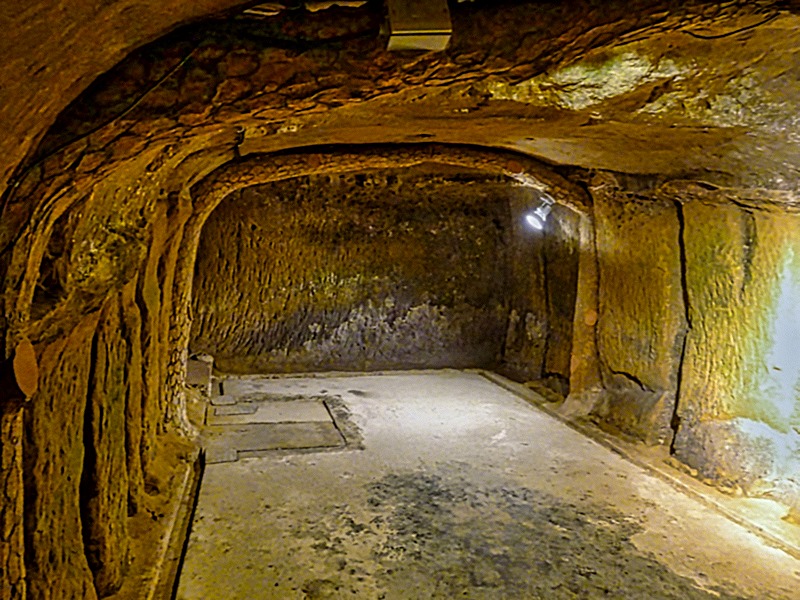
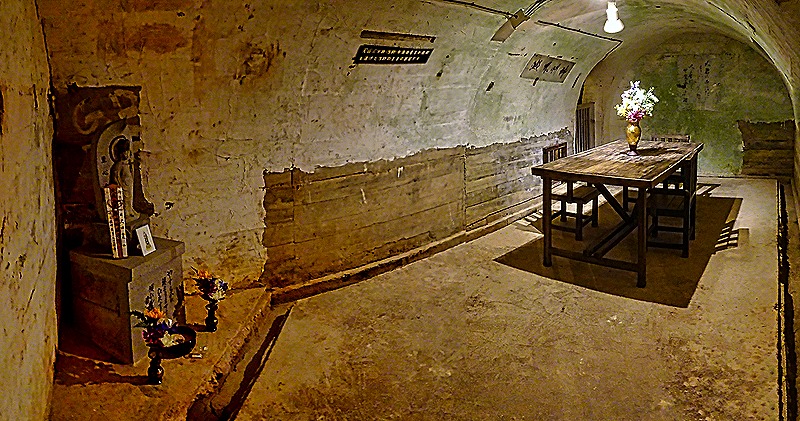
In 1944 the Japanese built a large underground complex in southern Okinawa to house their naval headquarters in Okinawa. It was dug by hand, using picks and shovels, and reinforced with wooden supports and concrete. The complex was about 450 meters in length but only about two thirds of that can be visited by the public today. This is where the Japanese naval leaders spent the last weeks of the battle, along with probably a couple of thousand sailors. They all committed suicide on June 13 as the US Marines were closing in for a final onslaught. Apparently the Marines reported finding 175 bodies at the time, but they sealed the entrances rather than exploring the tunnels and when it was unsealed in the 1950’s the remains of some 2,000 sailors were found (presumably many were not intact corpses because grenades were used in the suicides).
The tunnels are lengthy and small in size, and with the yellow lighting they seem a bit claustrophobic.
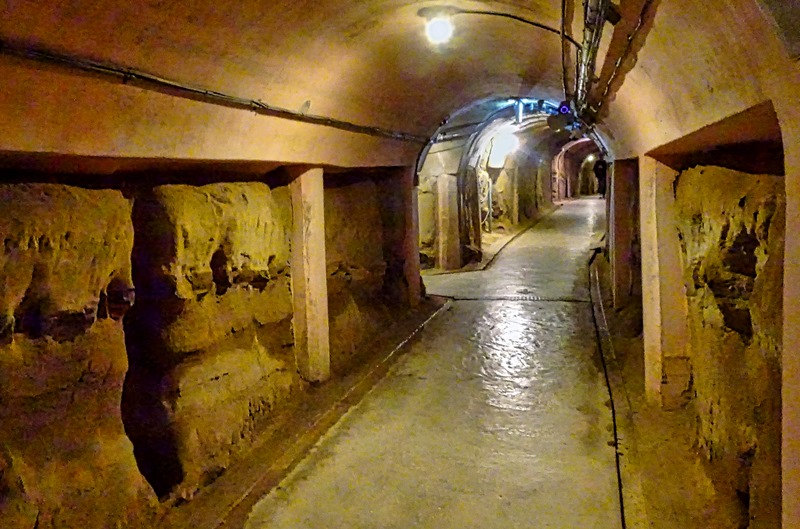
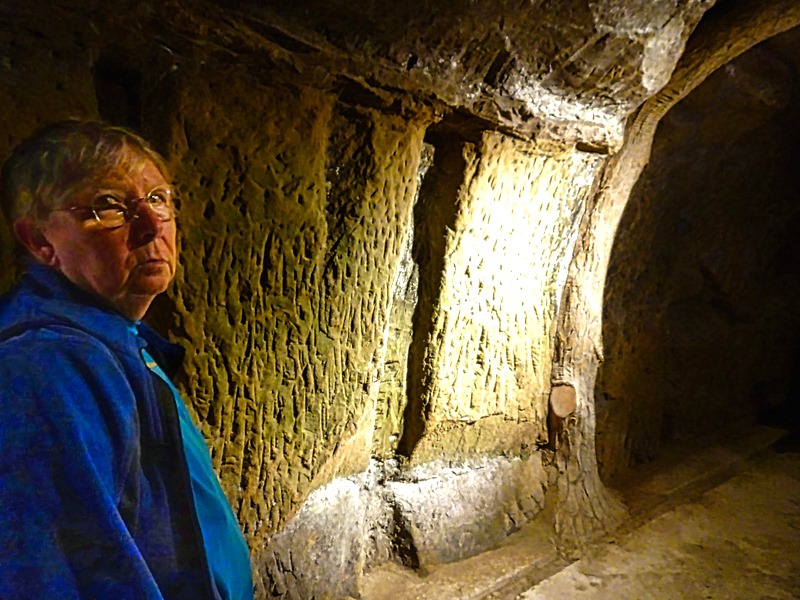

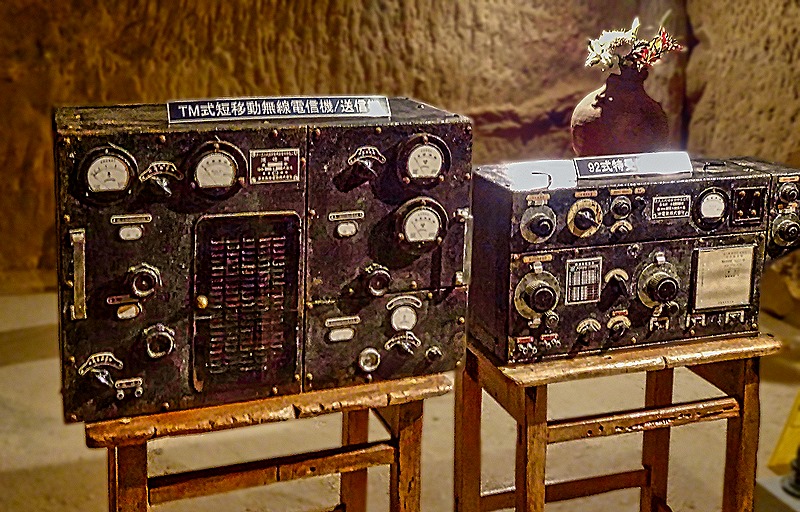
We saw several rooms dug out of the walls lining the tunnels. The nicest was the Commanding Officer’s room, with a dining table set with flowers. There was a large room that, if we remember correctly, housed quite a few sailors, and the signals room with period radios on display (not sure whether they were actually found here). Then there was the staff room, where the walls still bear the marks of shrapnel from grenades used for mass suicide.

Finally we visited a long hallway leading to what once was an exit from the complex. Our guide told us that every night during the last few weeks a small group of sailors, some armed only with knives or sticks, would be sent out through this exit during the night to conduct harassment operations against the US forces. He said none of them ever returned, but new groups continued to be sent out every night regardless.

Altogether, this was a very interesting, but grim, conclusion for our excursion. We returned to the ship and sailed away at night for the main Japanese home islands.
Finally, after a day full of war and death we will leave you with something brighter to look at. Before reaching Okinawa there was a show on the Main Stage featuring a balloon bender. I’m sure we have all seen these guys before, twisting together a few long balloons into various animal shapes. It didn’t sound like much of a show so we didn’t attend. This was a mistake. Over the next couple of days we saw several of his creations displayed around the ship and, really, we had never seen anything like it. Large, complex, colorful and whimsical; very much worth seeing. Here are two of them on display by the front desk.


 BADER JOURNAL
Leave a comment