
Tokyo, Japan (Day 1) 2024
We arrived at the new cruise port in Tokyo around 8:00 AM on February 28 for a two day stay. You may have read that, although the iconic Mt Fuji is more than 60 miles away, it can be seen from Tokyo. That’s true, but not most of the time because rain or hazy weather in Tokyo or the clouds often generated by the mountain’s own weather system hide the view more often than not (and some say much more often than not). But it was a very clear morning as we approached the dock and there was a stunning view of Mt Fuji. At least there was if you were on the port side of the ship. Alas, we were on the starboard side and had no idea this was even happening until much later in the morning when the mountain was behind nearby buildings. But our friend Jean was on the port side and she shared this picture taken from her veranda (I have enlarged the portion of the photo containing the mountain).
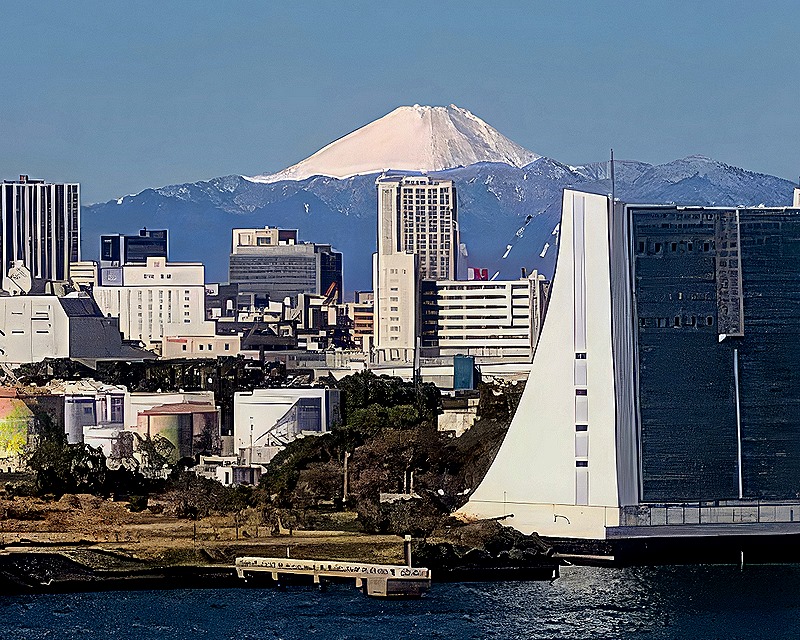
Tokyo is really big. Most sources list it as the world’s largest city, with some 40 million people (give or take a couple million) in its metropolitan area, including Yokohama. Excluding the metropolitan area some 14 million people live within the city limits. We aren’t really clear about the differences in counting, but we have read that the United Nations uses the bigger number, so that’s good enough for us.
The city started out as a fishing village called Edo (or Yedo). If you are familiar with the book or TV series called Shogun, you probably know that while the emperor lived in Kyoto, Edo became the capital of the actual ruling government headed by the military leader called the shogun. The Tokagawa clan held this position for about 265 years until the 1860”s when the Emperor was restored to actual power in what was called the Meiji Restoration. The shogun had lived in a highly fortified compound called Edo Castle, which became the Imperial Palace when Emperor Meiji took up residence there. At about the same time the name of the city was changed from Edo to Tokyo (meaning “eastern capital”).
Tokyo’s history is characterized by a number of destructive disasters followed by energetic rebuilding and modernization. It sits on the confluence of three tectonic plates that make earthquakes a common occurrence. Great fires have consumed large parts of the city several times. In modern times Tokyo has been decimated by a great earthquake in 1923 that killed more than 100,000 people and again in 1945 by Allied incendiary bombing that by some measures was more destructive in total than the atomic bombing of Hiroshima and Nagasaki. After 1923 buildings began to be constructed with concrete that is much more resistant to earthquakes and fire than the wood widely used for building before that. After World War II Tokyo was rebuilt in a more modern way, but the many ancient buildings destroyed in the bombing were meticulously recreated using largely traditional methods but less vulnerable materials, such as copper or titanium for roofs instead of wood. Probably because almost every building in town was constructed in a hurry after 1945, the main impression we had driving through the city was of block after block of gray boxy buildings. Not all of them, of course, and we saw a good bit of very distinctive modern architecture and also distinctive reconstructions of important buildings that had been destroyed. But the gray and boxy ones seemed to predominate in most neighborhoods.
Never having been here before, we spent our first day in Tokyo on an excursion to see some of the highlights. Unsurprisingly for a city this large and crowded, the traffic seemed pretty bad to us and it took a long time to reach our first stop, the Imperial Palace. The palace is a large green area in the center of the city with a number of buildings, including the ceremonial palace and a separate living quarters for the royal family. This is where Edo Castle once sat and we understand that some ruins from the castle can still be seen on the grounds. The main buildings of the palace complex were destroyed during the Allied incendiary bombing in 1945 and rebuilt after the war.
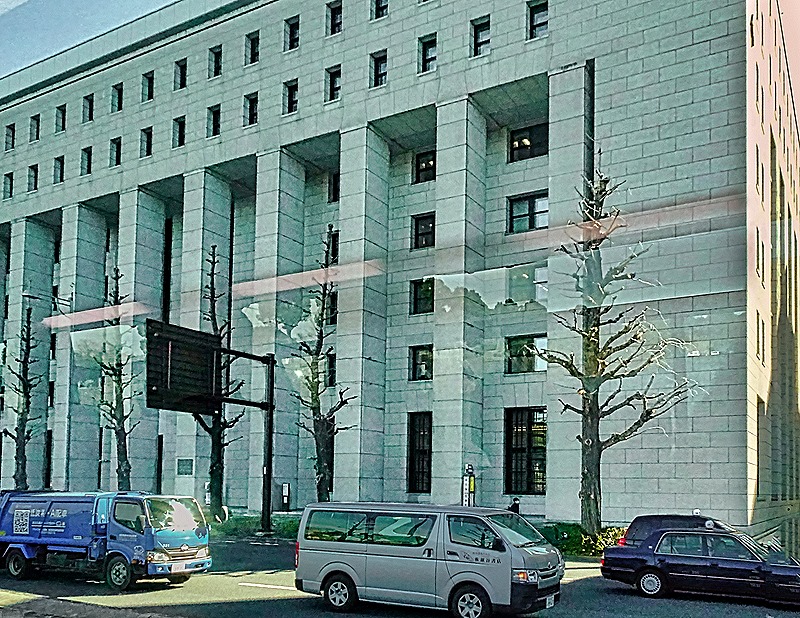
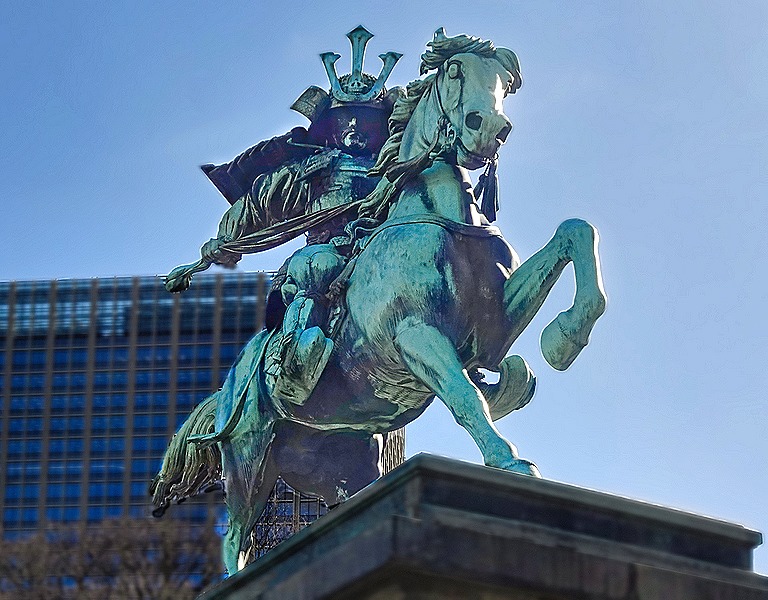
On the way we drove past the building Douglas MacArthur used as his headquarters as commander of the occupation after the war. It was built in 1933 and survived the war. We had a fairly long walk through the many carefully landscaped pine trees in Kokyo Gaien National Garden to the viewing area near the palace. We stopped to look at the bronze equestrian statue of Kusunoki Masashige, a 14th century samarai considered the ideal embodiment of loyalty, courage, and devotion to the Emperor. This statue was erected in 1900.



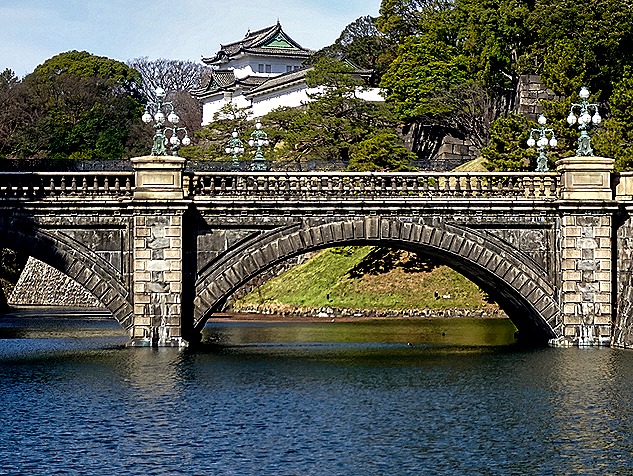
The outside spaces inside the palace grounds are open to the public for a few hours twice a year, on January 2 and the Emperor’s birthday. At other times members of the public without a reservation for a private tour (still only outside) can enter some of the peripheral gardens and also the plaza leading to the Main Gate. The latter spot is where we arrived after our walk. We walked up along a moat with heavy stone castle walls and where the moat turned left we could see the Nijubashi Bridge and an Edo era building beyond (which survived the war) called the Fashimi-yaguri Watchtower. There are actually two parallel bridges across the moat, each with unusual lamps on top of its uprights. The stone bridge in front is called the Meganebashi (Eyeglass) Bridge (because the double arches look like round glasses when reflected in the water) and the metal bridge behind it is called Nijubashi (double) Bridge. This name comes from the original two level wooden bridge built here during the Edo period which was replaced by the current steel bridge in 1964. We were able to walk up a ramp on top of the wall on the right as far as the entrance to the stone bridge.


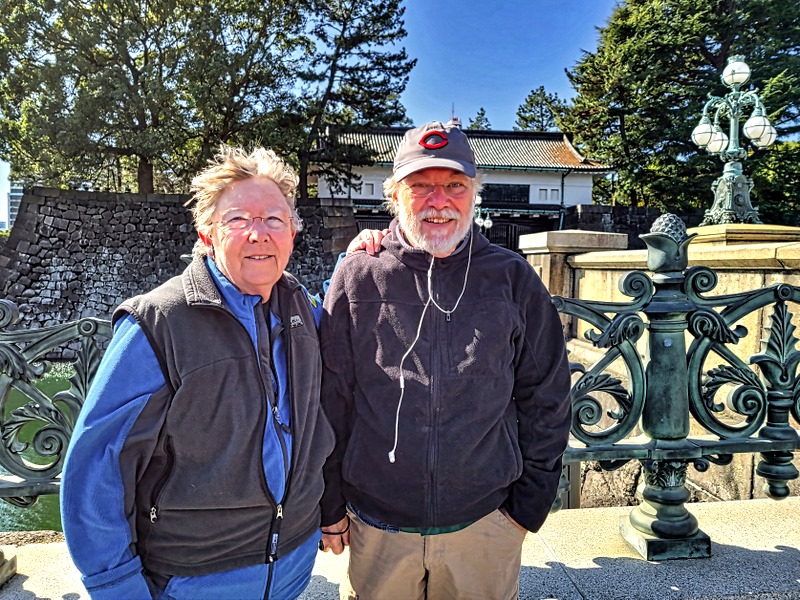
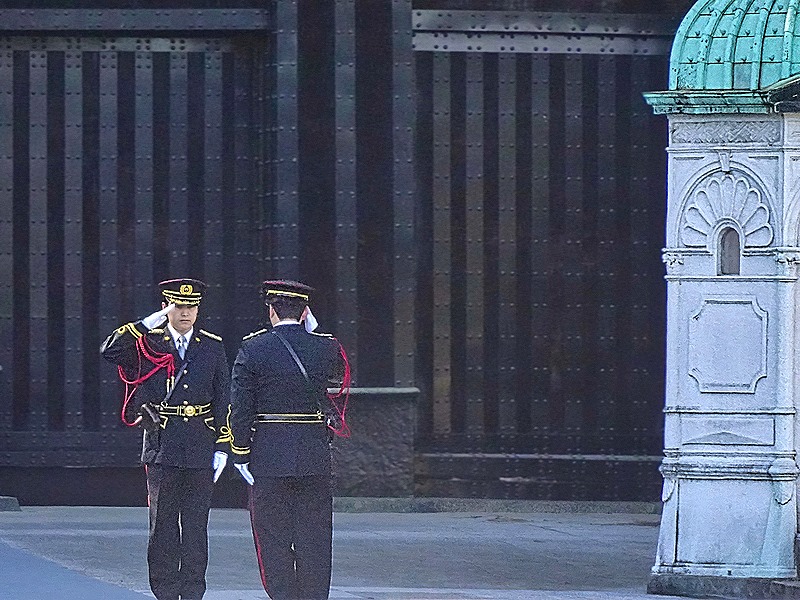
We were lucky to be there just at the right time to see the changing of the guard (actually we think our guide carefully timed our arrival). The Main Gate is located on the left side of the stone bridge and in front of it are two white guard houses with metal roofs. The guards came out, saluted each other, then went back (we didn’t notice any new guards replacing the old ones, but we could have missed that).
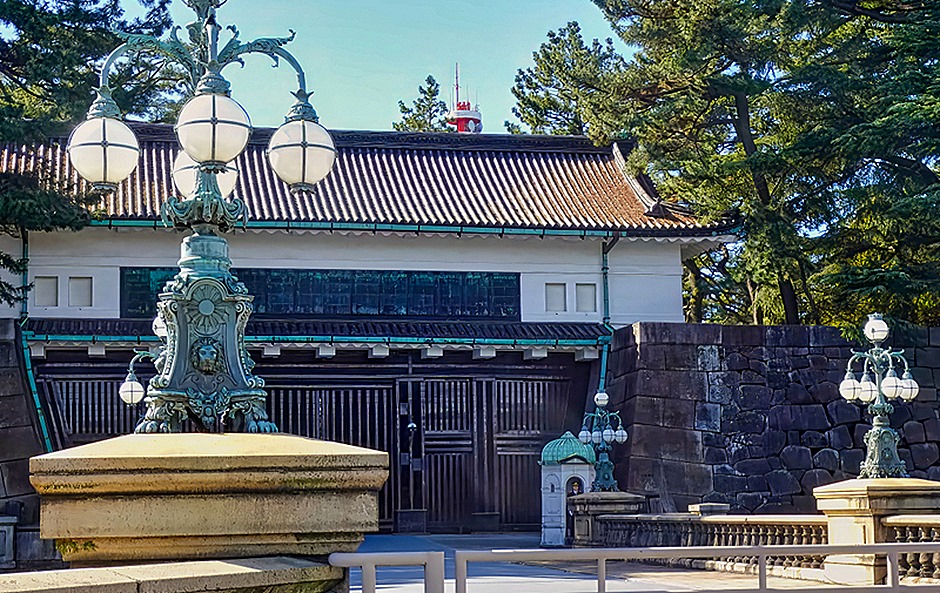
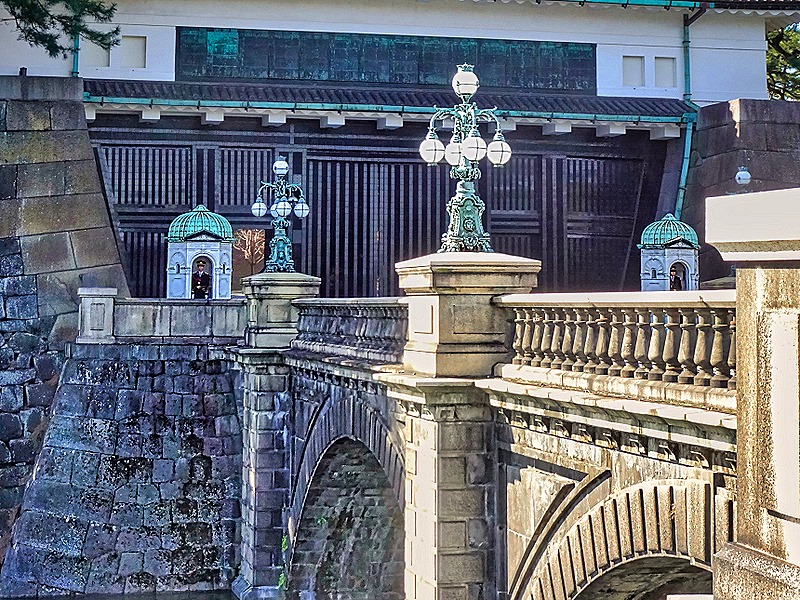


High above the moat beyond the bridges is the old Fashimi-yagura watchtower, built in the old Japanese style common in castles of the era. Quite a sight above the stone bridge in front of it. If you look closely at the second picture below on the right you should see a row of black decorative metalwork running along the top of the stone railing; this was all we could see from our viewing point of the metal bridge behind the stone bridge.

After the lengthy but pleasant walk back to our bus we drove to the Asakusa district to visit the Senso-ji Temple. First established in 645, this is the oldest Buddhist temple in Tokyo. With some 30 million visitors a year it is also, according to some, one of the two most visited religious sites in the world (we would visit the other one this afternoon). The story of its founding is that two fisherman brothers found a tiny golden statue of the Buddhist deity Kannon in their catch one day. They presented it to the headman of their village and about 17 years later the temple was opened.
As with so many important sites in Japan this temple has been destroyed and rebuilt a number of times over the centuries, most recently after it was destroyed by the Allied bombing near the end of World War II. So the current structures are not all that old (rebuilt from the 1950’s to 1970’s), but they are very impressive and accurately represent what was here before.
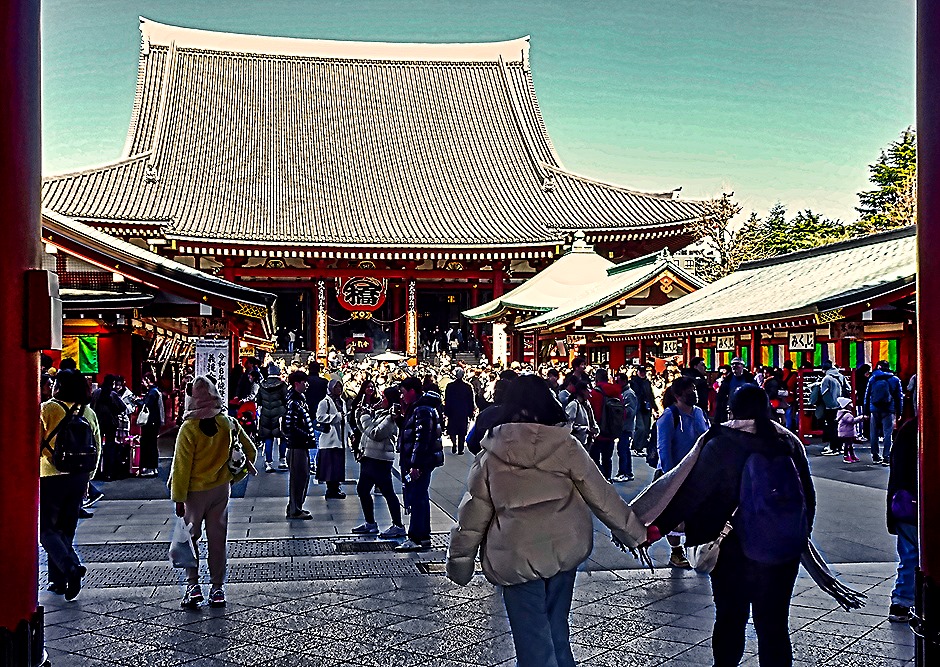
It seems that it is always a fairly long walk from where a bus can find parking to the site you want to visit, and this was no exception. When we finally reached the temple complex we entered through the Nitenmon gate and proceeded to the main temple building. This gate was created in 1619 and brought here from another religious site in 1642.


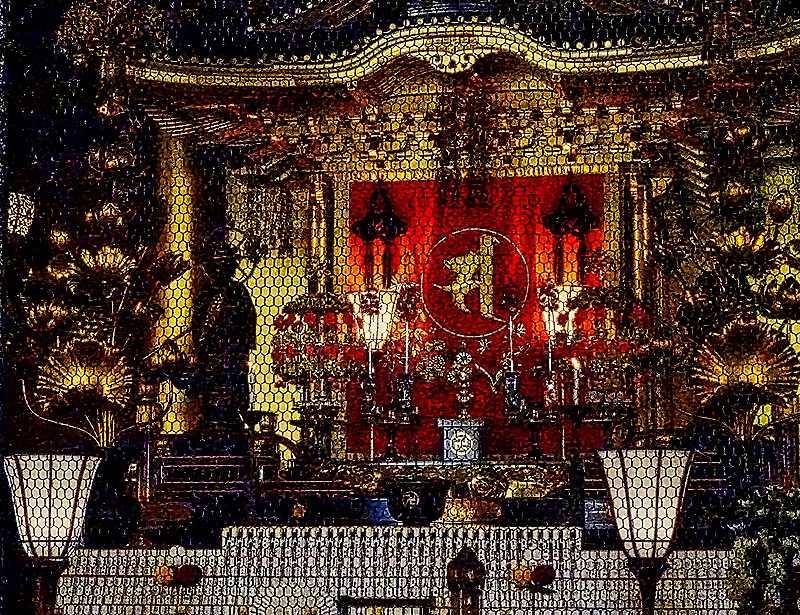
We walked through the very crowded interior of the main hall. Inside were a number of paintings and in the center a shrine-like area behind a metal screen containing many objects that must have important religious significance. It is said that the original tiny (less than 3” tall) statue of Kannon that led to the founding of the temple is still there, housed in an elaborately decorated three layer box, but no one has seen it since 645 when it was first decided that it was too sacred to be seen. We did not see this box and are not sure which building it might be in. We exited the packed hall on the other side, relieved to leave that crowd behind.


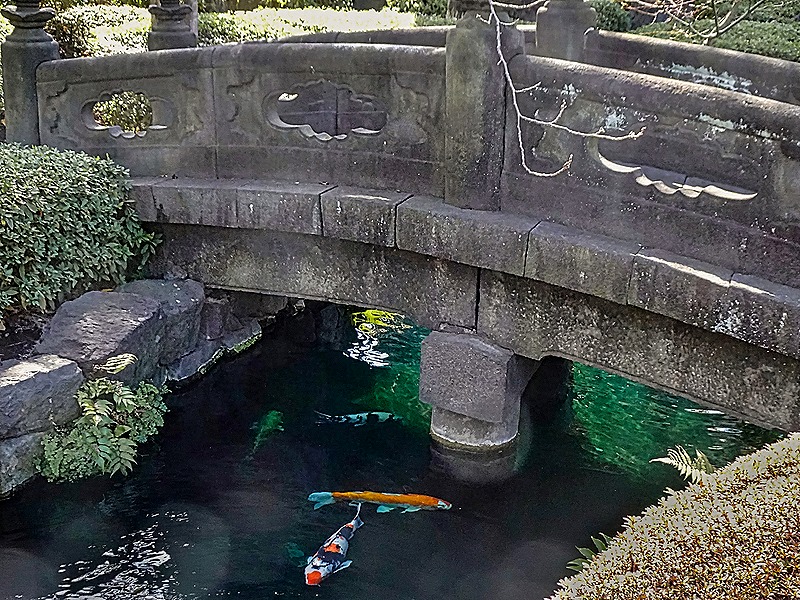
Beyond the main hall on this side was a garden area, with sculptures and a stone bridge over a koi pond. Very pleasant and picturesque.


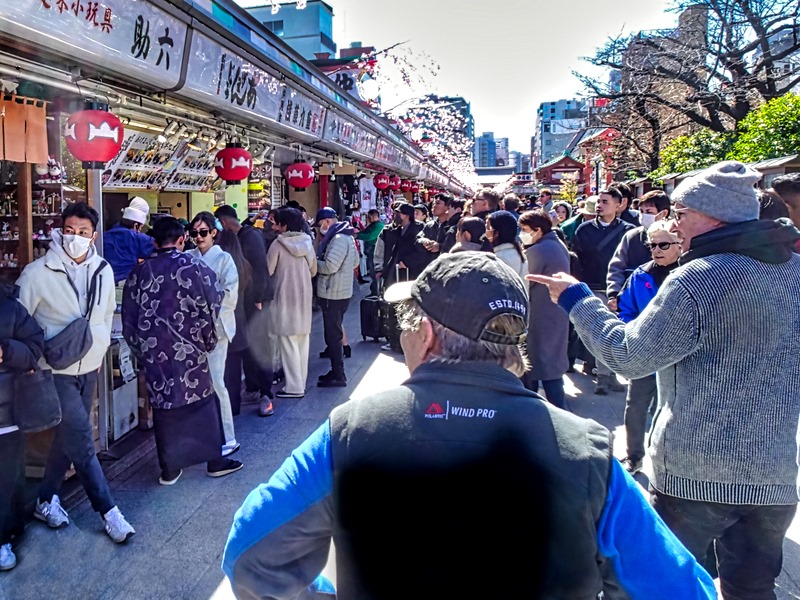
We went out through the Hōzōmon Gate to walk down Nakamise Dori, a long crowded pedestrian shopping street lined on both sides with vendors’ kiosks. It is within the temple complex, inside the largest gate. Vendors have been selling many different wares here for centuries. Above some of the shops were branches with pink blossoms (probably too early for cherries in Tokyo). Among the crowds were a number of women dressed in kimonos. We wondered who they were, but it turned out they were visitors like us (the ones pictured are from Korea). There is a popular tradition here of renting (by the hour) period costumes to feel more a participant in the activities. We saw this at a number of places throughout Japan and China, not just here.



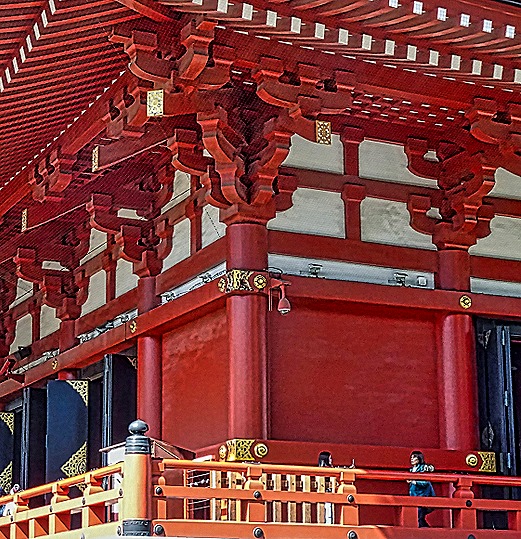
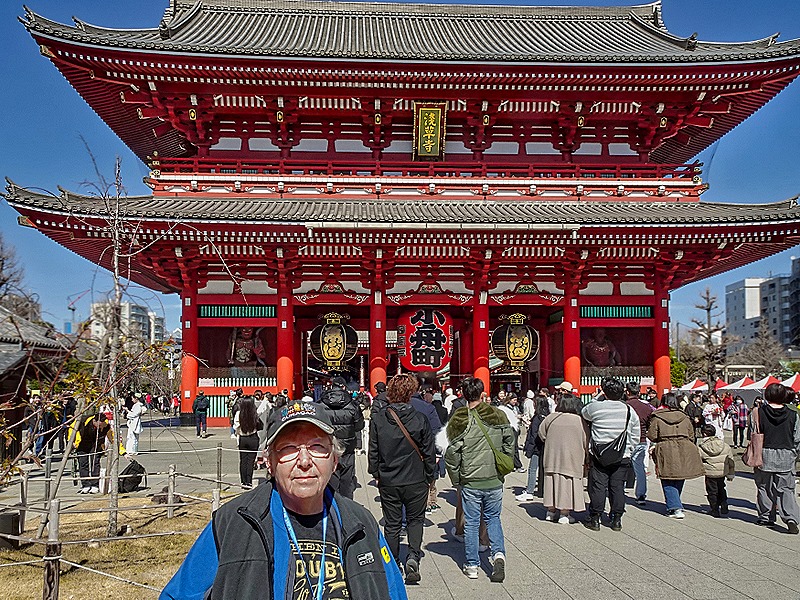
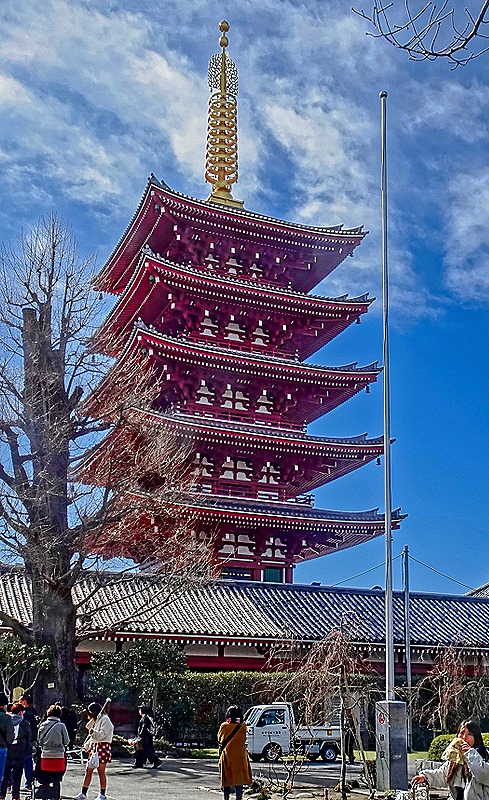
We walked back toward the temple, reentering through the Hōzōmon (Treasure House) Gate. First built in 942, the gate was burned down and reconstructed in the 1630’s, then destroyed again by the Allied bombing raids in 1945. It was rebuilt in 1964, made of steel reinforced concrete. Because it is made of fire resistant materials many of the temple’s treasures, including old sacred scriptures, are stored in the gate’s upper story. The gate is 74 feet tall and 69 feet wide. The large red lantern in the middle is more than 12 feet tall and about 6.5 feet wide. As you approach this gate you can see on the left the 5 story pagoda, at 175 feet the tallest pagoda in Tokyo and one of the tallest in Japan. Originally built in 942 it was also destroyed in the 1945 air raids and reconstructed in 1973. It is not open to the public, but is said to contain 1,000 statues and 10,000 Buddhist tablets. Ashes of the Buddha are said to be on the top floor.



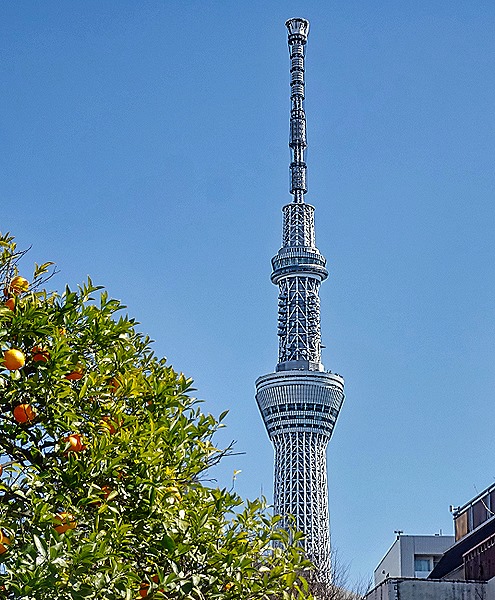
Tokyo has two broadcasting towers that loom high over the rest of the city. The orange and white painted Tokyo Tower opened in 1958 and is more than 1000 feet tall. Its design was inspired by the Eiffel Tower and until 2012 it was the tallest tower in Japan. In that year the Tokyo Skytree opened, less colorful but much taller at more than 2,000 feet. Its name was chosen in a nationwide straw poll. It is the third tallest structure in the world. Today most TV broadcasting is through the new tower which is tall enough for effective digital broadcasting. We saw the Tokyo Tower from the bus on our way into town in the morning and the Skytree rose well above the rooftops in Asakusa.

At the time scheduled for departure we went to the area where we entered the temple grounds, as we had been instructed. As often happens, however, there were a few stragglers who either didn’t get the message or were too busy to show up when everybody else did. While we waited we took one last picture with Bill & Robert near the main hall. When our excursion leaders finally rounded up everybody else we walked back to the bus and headed for lunch in a hotel.


The Meiji Restoration in the 1860’s removed the Shogun and returned effective rule to the Emperor. The Meiji emperor (whose birth name was Matsuhito) ended the Shogunate’s isolationist policies and led Japan through an era of rapid modernization until his death in 1912. Meiji-jingu, a government sponsored Shinto shrine honoring the Meiji Emperor and Empress Shoken, opened to the public in 1926. (Note: our guide helpfully explained that in Japan temples are Buddhist and shrines are Shinto.) It does not contain their graves, which are in Kyoto. The shrine was destroyed in the 1945 bombings and the current reconstruction opened in 1958. We have read that this shrine receives 30 million visitors each year.
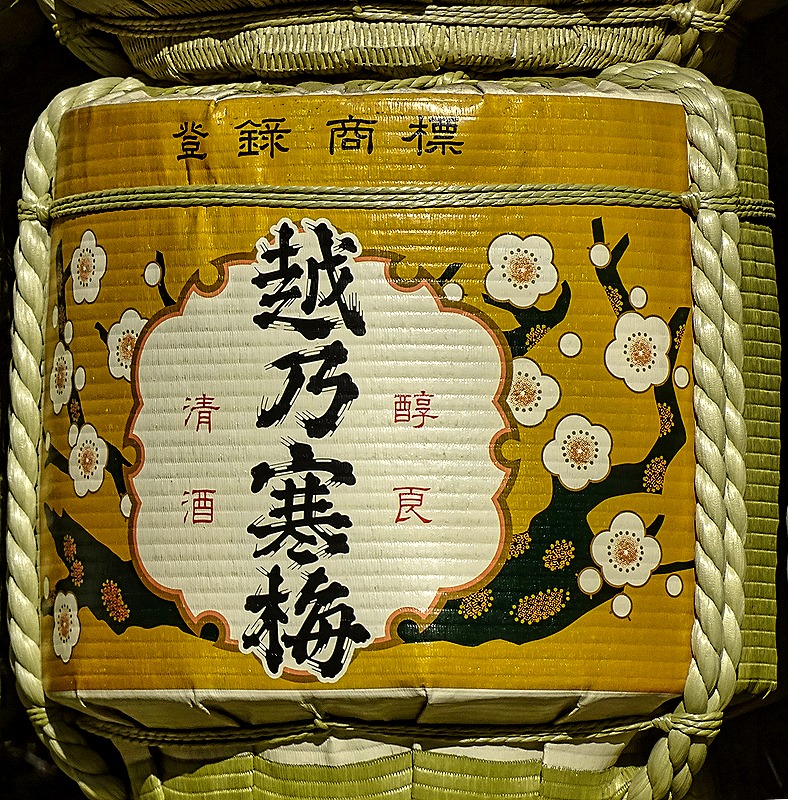
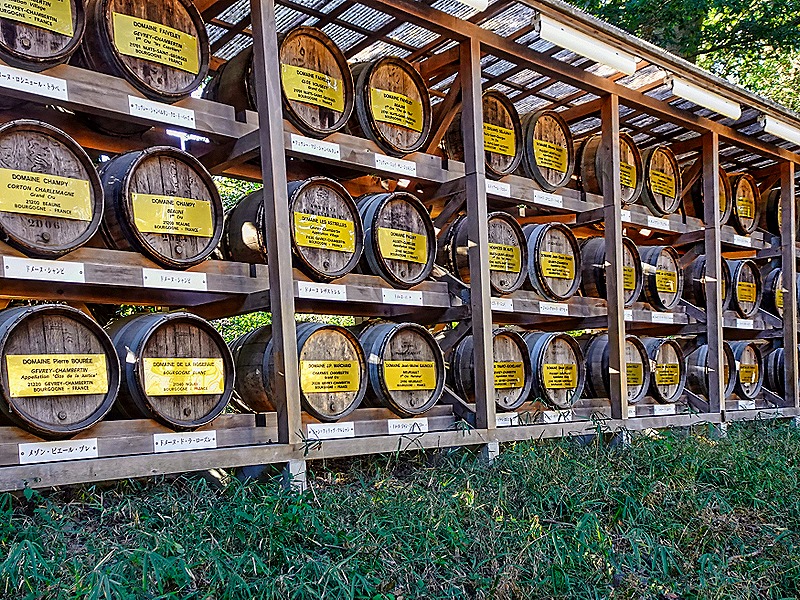
We left the bus in a parking lot in the grounds of the shrine. It was a fairly long walk on gravel paths through a forest of more than 120,000 trees to reach the shrine itself. On the way we stopped to see a wall of some 200 (empty) barrels of sake donated by all the major breweries in Japan in exchange for prayers for the breweries’ prosperity. Each barrel had the donating brewery’s name and logo painted on it. Our guide pointed out one barrel he said was from the oldest brewery in Japan. There was also a smaller wall of French wine barrels, apparently representing the Emperor’s embrace of the modern world (and perhaps he liked French wine too). At wide intervals along the path were attractive lights in a traditional Japanese pattern. Finally there was an attractive low white building whose name and function we do not know.



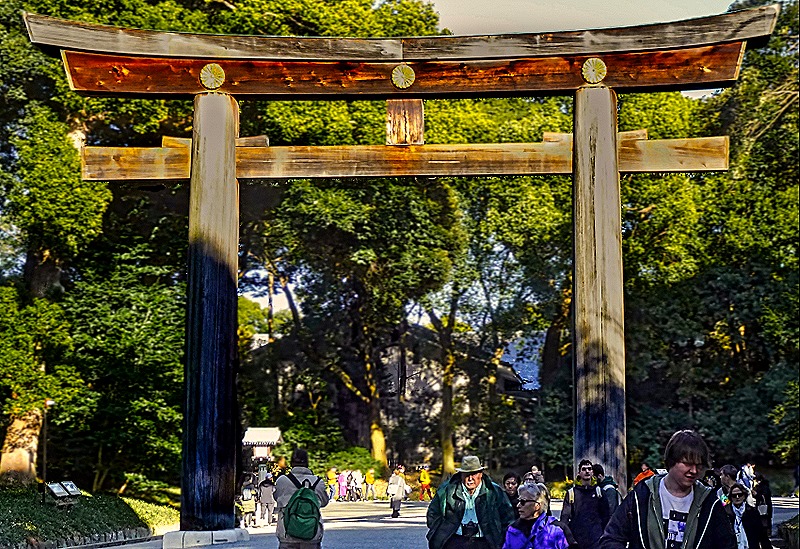
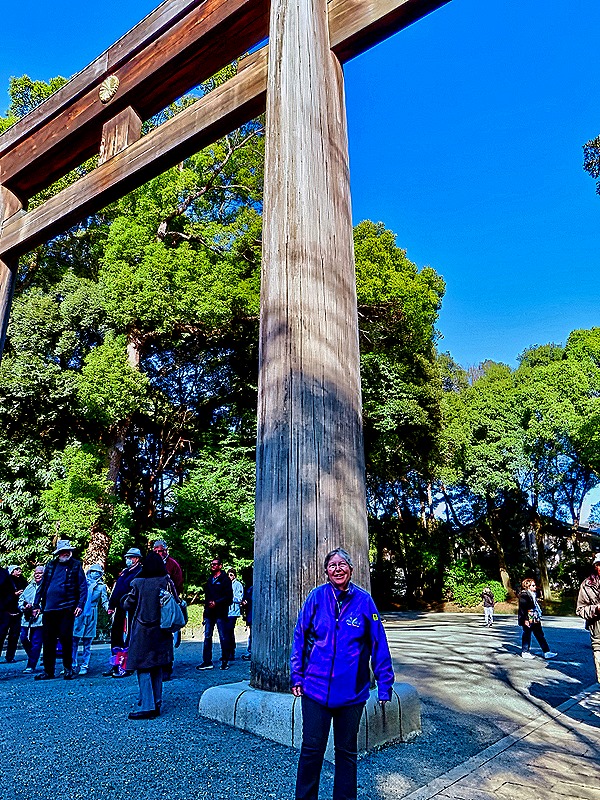
Torii gates are ubiquitous throughout Japan. There are some 90,000 Shinto shrines in the country and each one has at least one Torii gate. They are erected to mark the boundary between the sacred ground of the shrine and the profane ground outside. They are generally very graceful and simple in design, mostly just two pillars connected by one or two cross beams, sometimes with a small sign in the center between the beams. The Meiji Shrine has Torii gates in the woods at each entrance and also nearer the shrine itself. We walked through several large wooden ones to reach the shrine and there was another inside the outer gate of the shrine.

We entered the outer courtyard of the shrine through a very tall and intricately designed gate.

 At this point things became a little chaotic. One of the people on the excursion, a woman named Sue who lived in the cabin next to ours, apparently tripped on the concrete stairs leading up to the gate. The steps are a little odd, with the bottom step set maybe an inch above the pavement, difficult to see as you walk but a problem if someone inadvertently catches their cane there, as Sue did. Everything stopped and Keith, who was leading this excursion, and our guide quickly called for help. A medical team showed up pretty quickly given how far we were from the street, and they took Sue away presumably to an ambulance. She was back in her cabin on the ship that night but the next day she was evacuated home to the US. Yikes, things sure can go completely wrong really quickly. We felt pretty bad for Sue; terrible way to end a grand voyage.
While we were waiting for the medics I walked through this into the main sanctuary, which included a courtyard with the entrance to the main shrine on the far side. To its right was a place where you could purchase a prayer paper, sign it, and hang it on a rack set up to receive them.

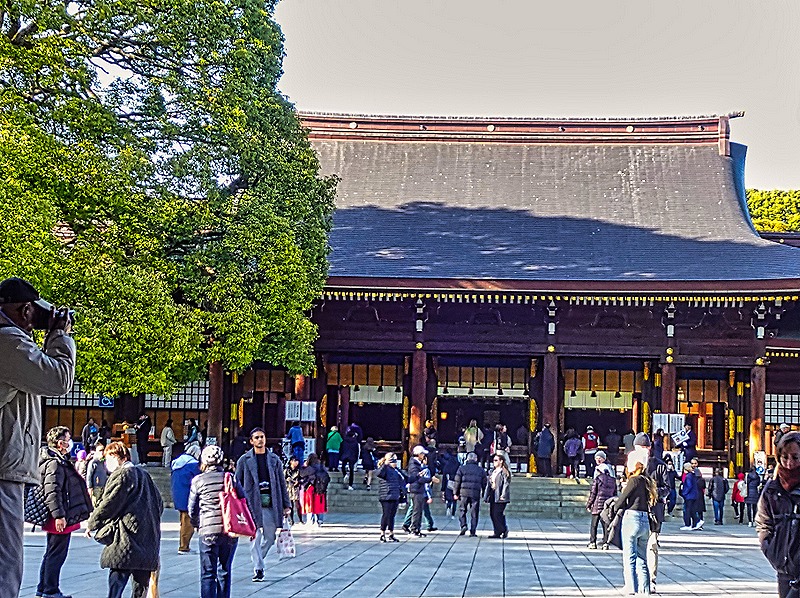
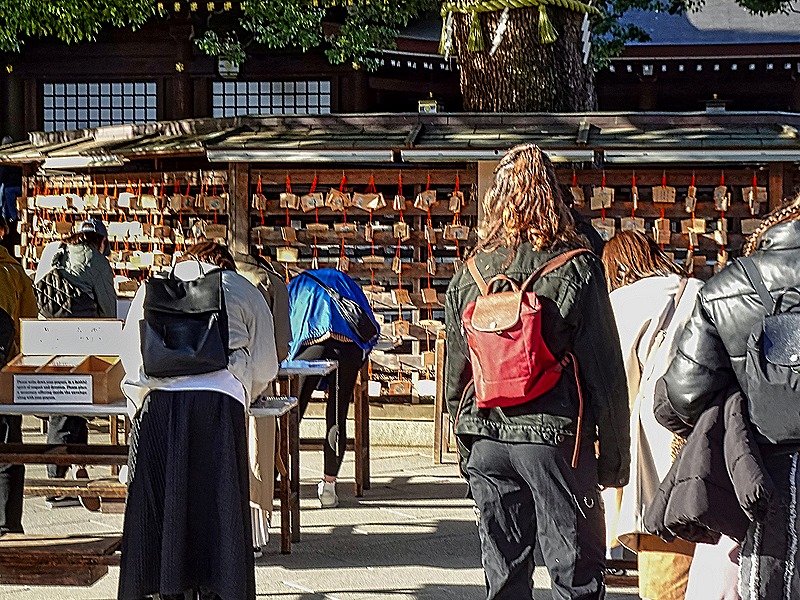
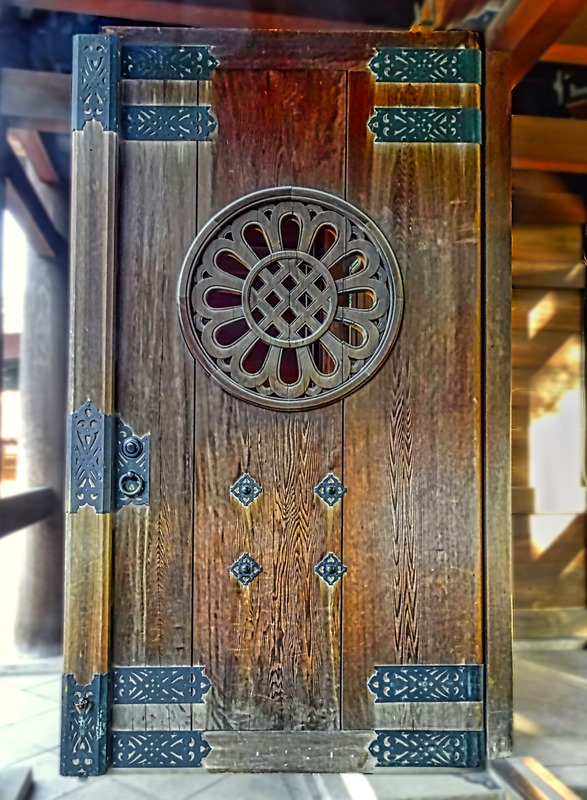
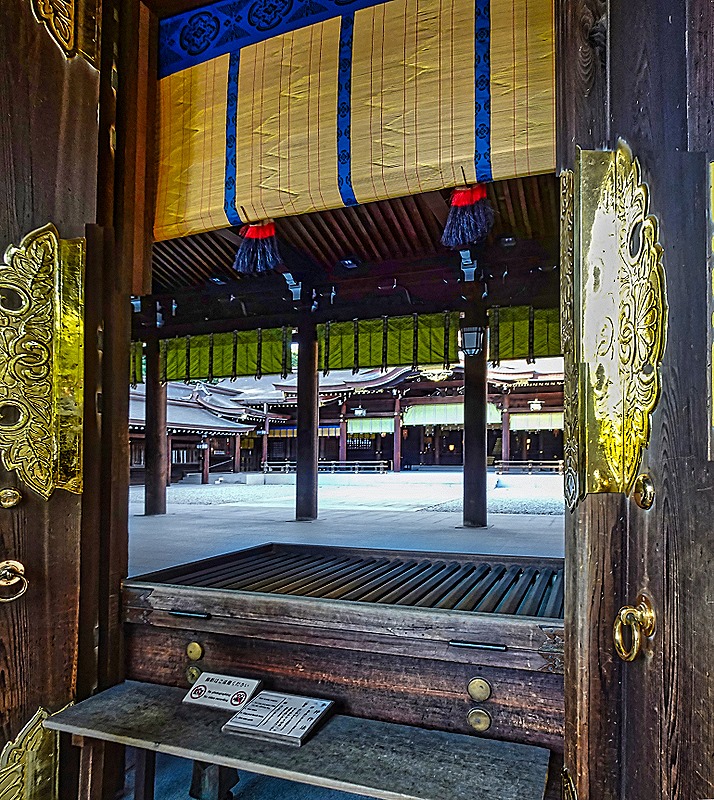
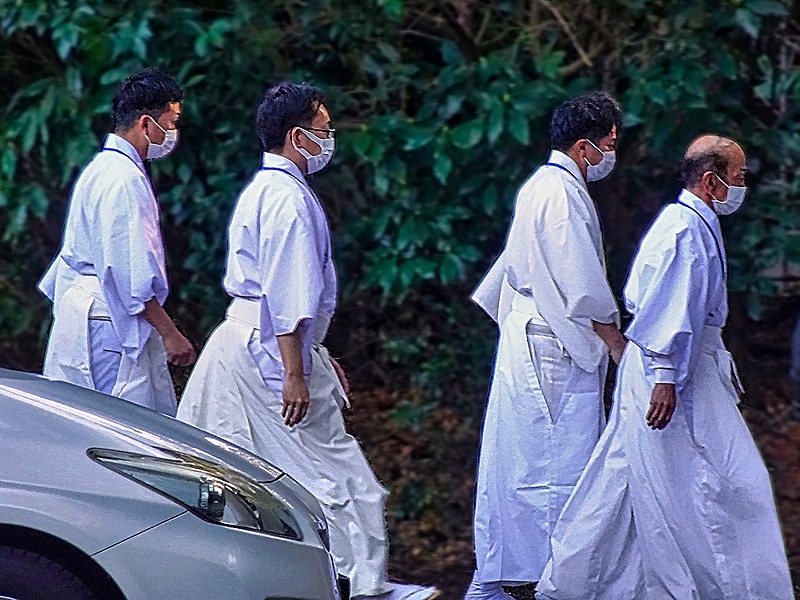
I walked up the steps of the inner shrine and, although entrance was not permitted, took a couple of pictures through a window of the courtyard within. Well it turned out that photography through the window wasn’t allowed either . . . who knew? To be fair there was a sign nearby that I hadn’t noticed. An attendant ran up and pointed the sign out, so I stopped and rather sheepishly walked away. After Sue was taken away we left the compound through the gate where we had entered it and returned to the bus. In the parking lot we saw what looked like a line of monks or priests all dressed in white heading toward the shrine.

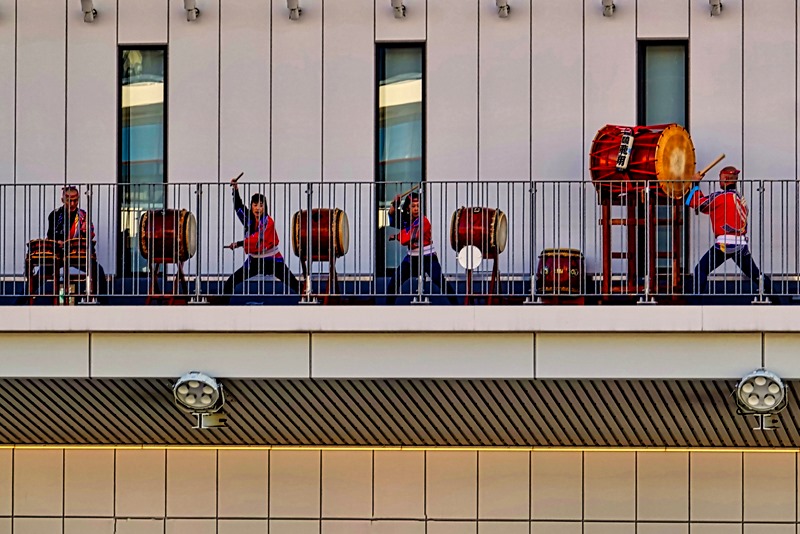
Back on the ship there were two shows that evening. First a group of drummers performed on a balcony of the cruise terminal right across from our balcony. Second a young Japanese dance group performed on the main stage, accompanied by their own drumming. This was apparently a modern take on traditional dancing and was pretty interesting.


Our overnight stay gave a chance for some night time pictures..I went up to the top deck after the show and got a nice picture of the Rainbow Bridge across which we had driven into Tokyo in the morning. It is called the Rainbow Bridge because sometimes it is lighted in multiple colors, but when we were looking it was all white. We think the red and yellow tower on the left is the Tokyo Tower.

Earlier I went to the top deck to see if there was a nice sunset. It didn’t seem all that great at first, until I moved around a bit and spotted Mt Fuji in the distance. We started this episode with Mt Fuji in the morning so it seems appropriate to end it with Mt Fuji at sunset.


 BADER JOURNAL
Leave a comment