Shanghai, China (Day 2–Suzhou) 2024
We woke up VERY early on the morning of March 8 to get ready for our excursion to Suzhou that was to leave at 6:30 AM. From the travel literature it appeared (at least to Rick) that Suzhou was a comparatively small garden city just outside Shanghai with a traditional ambience centered around a canal with arched bridges and much greenery. Much of that was true, but with a population of 5 or 6 million (one of the 60 largest in the world), Suzhou is anything but small.
Actually, Suzhou (formerly westernized as Soochow) has been a major commercial and manufacturing center for centuries. Founded in 514 BCE (under a different name, becoming Suzhou in the 6th century), by the 10th century it was the largest non-capital city in the world, eclipsed by Shanghai only in the early 20th century. Its size and importance began to decline relative to Shanghai in the second half of the 19th century, partly due to the devastation wrought by the Taiping rebellion in the 1860’s and the Boxer rebellion in the 1890’s, and partly due to the growing importance of Shanghai’s port in international sea trade and the deterioration of the Great Canal, of which Suzhou was a major trading hub. From the late 1930’s to the end of World War II Suzhou was occupied by the Japanese, with further damaging effect, but beginning in the 1950’s its economy and beauty have been substantially restored.
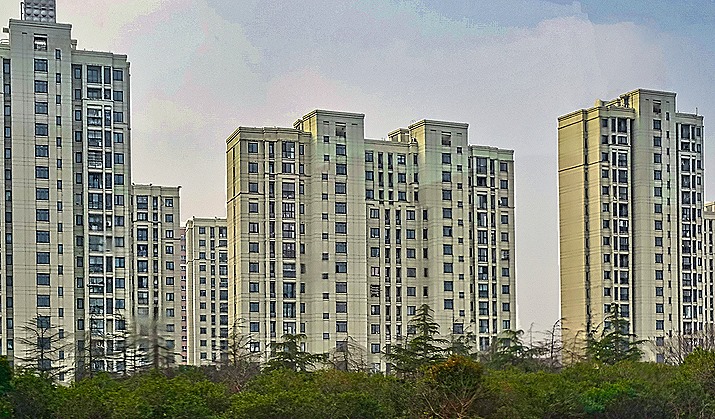
As we drove into Suzhou we began to get an idea of how large it really is, with many large complexes of tall and characterless apartment buildings (this was actually characteristic of everywhere we went in China).

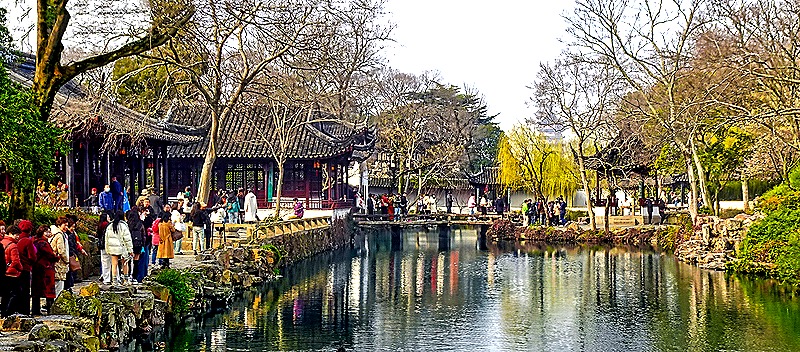
Suzhou has some 69 classical gardens and we visited the largest (13 acres) and most renowned, the Humble Administrator’s Garden. In 1509 Wang Xianchen retired from his government job, which he found unrewarding, determined to lead a simpler life growing plants and vegetables. He built this garden over the next 16 years and, when he died, his son disposed of it to pay gambling debts. At least that is the most popular version. We have read that the name of the garden has alternatively been translated as the Inept Administrator’s Garden or the Unsuccessful Politician’s Garden and our guide told us that Wang was actually forced to resign by the Emperor because of corruption. We don’t know what is true here, but either way the Garden is extremely beautiful, even in winter when we visited and many trees were bare and few flowers had grown.
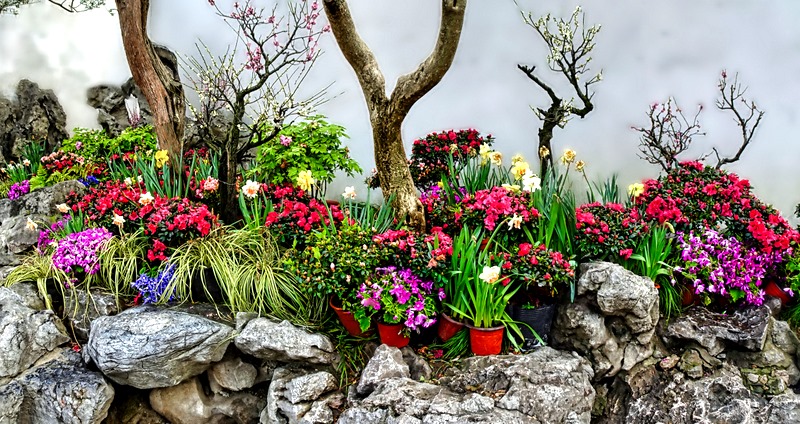
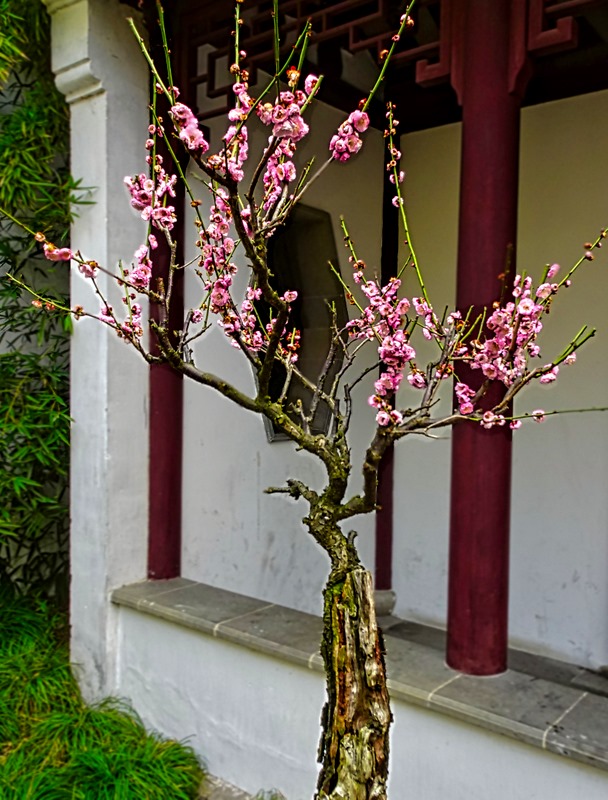
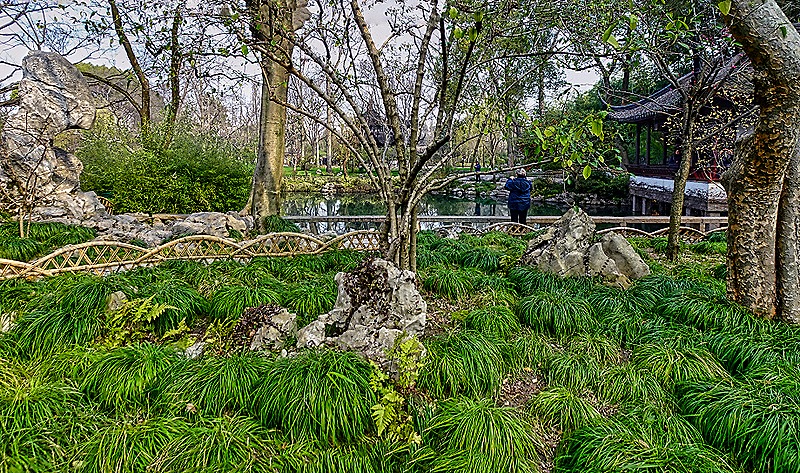
The classical design of the garden is built around four main elements: rocks, water, plants and buildings. The idea is to provide a contemplative environment through which one can walk and enjoy the vista in every direction. If it weren’t for the crowds of tourists that showed up beginning in mid-morning this garden would undoubtedly achieve that aim. Inside the entrance were flower gardens, among the few flowers we saw already in bloom.

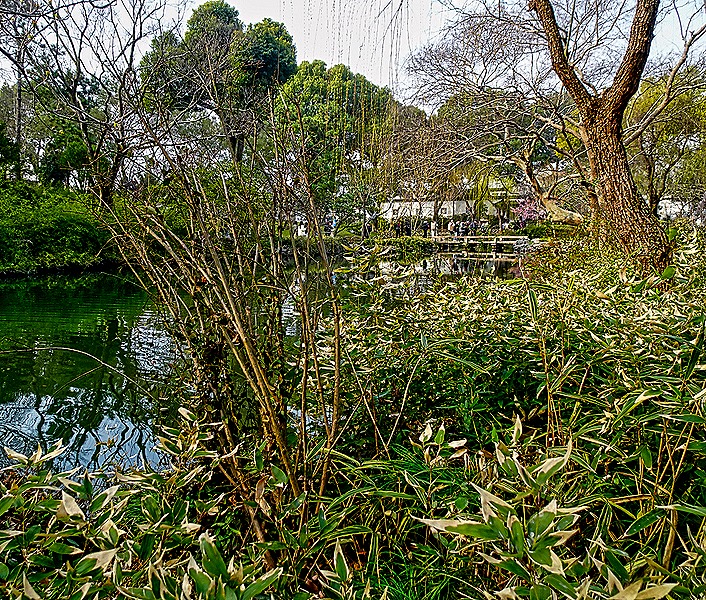
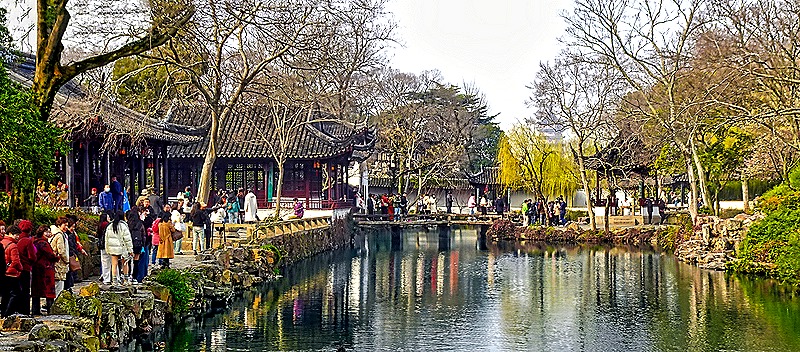
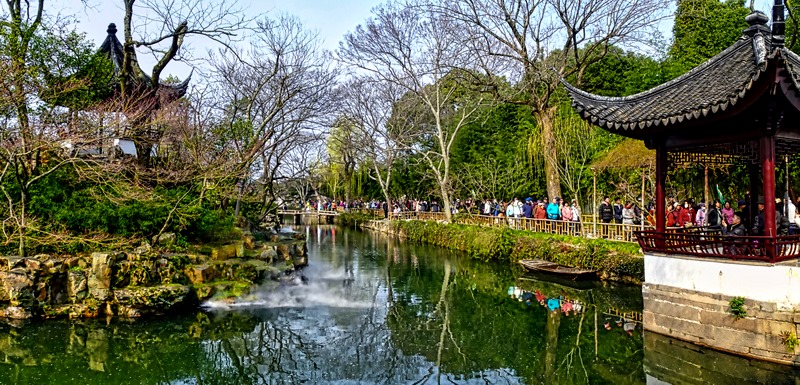
This garden is larger and has a much more open feeling than the one we saw in Shanghai yesterday, partly because there were a lot fewer walls here. The vistas were generally more vast and the combination of buildings, trees and water were hard to beat. Keep in mind that later in the year many of these water features would have large numbers of lotus flowers floating on top. Also there would be a lot more greenery after the trees leaf out.

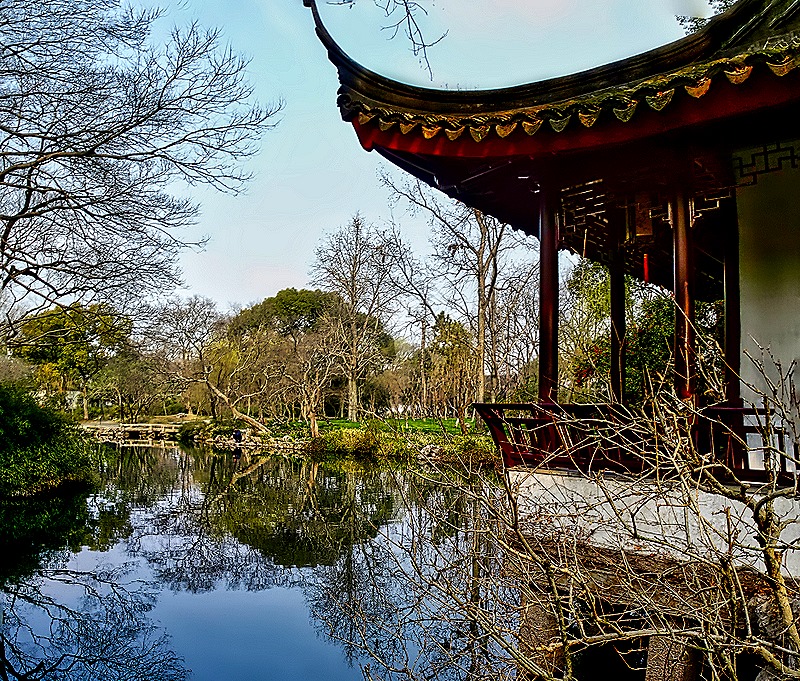
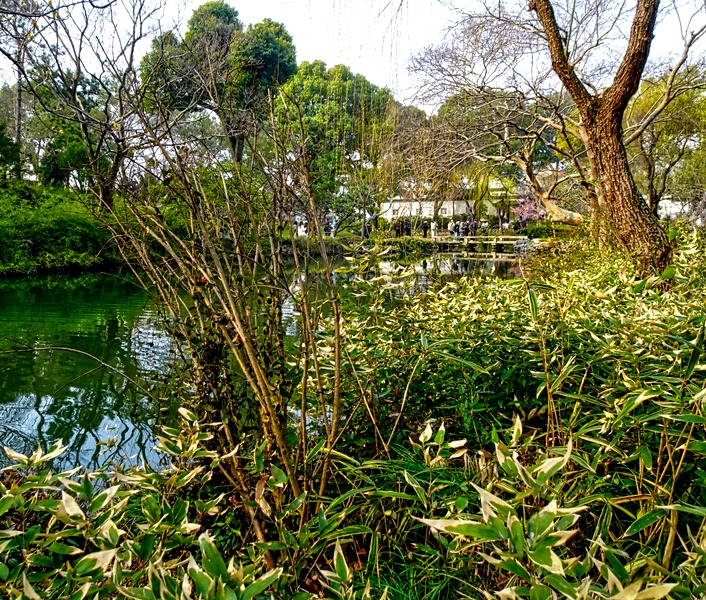
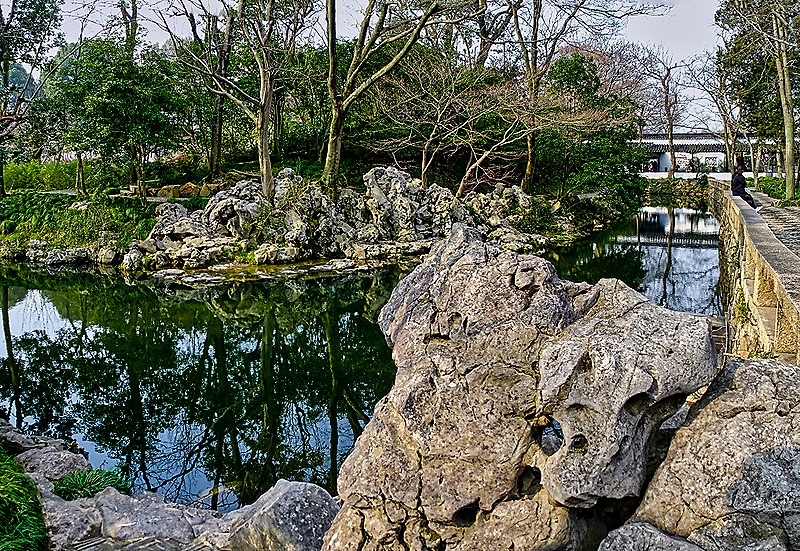
This shows the “Whom-To-Sit-With Pavilion” in the center, with roof, stone floor and window shaped like fans. Reputedly named for an old poem: “With whom shall I sit? Bright Moon, gentle Breeze and myself.”

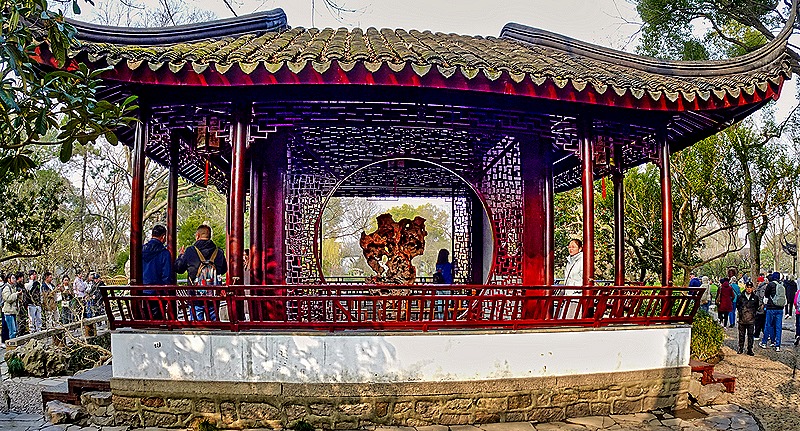
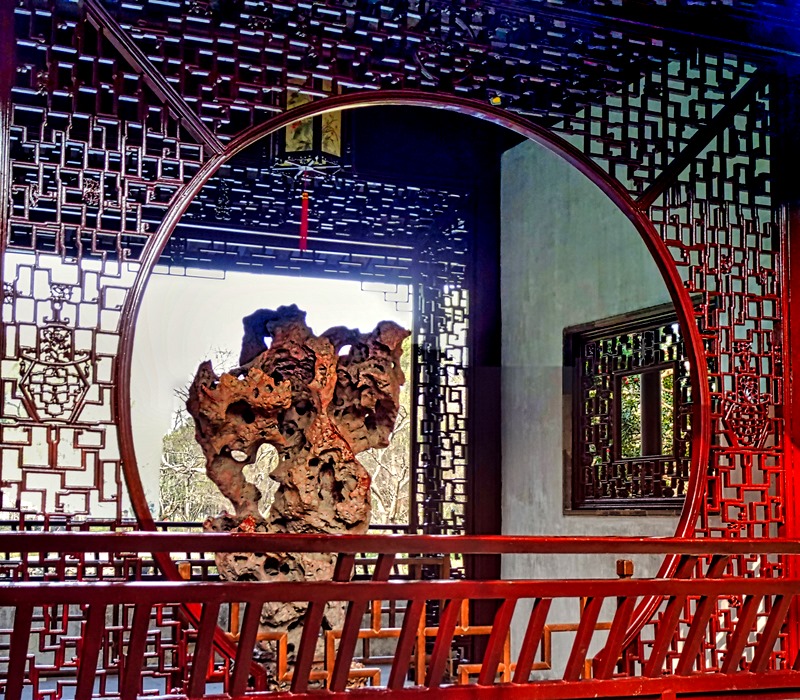
Particularly attractive was the “Green-Embracing Pavilion,” which had a moon shaped window in an open grid-like wall with a decorative rock on display in the center.

We have read that the “Small Flying Rainbow Bridge” is a rare type of bridge, but we don’t know what makes it rare. It is, however, quite beautiful and tranquil.

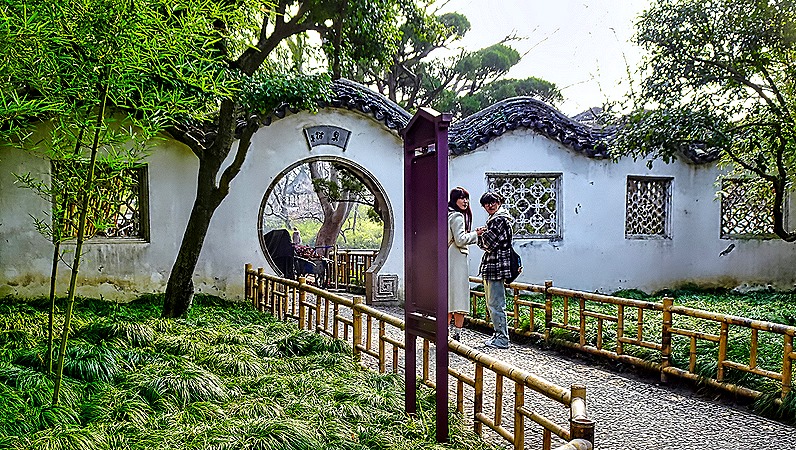
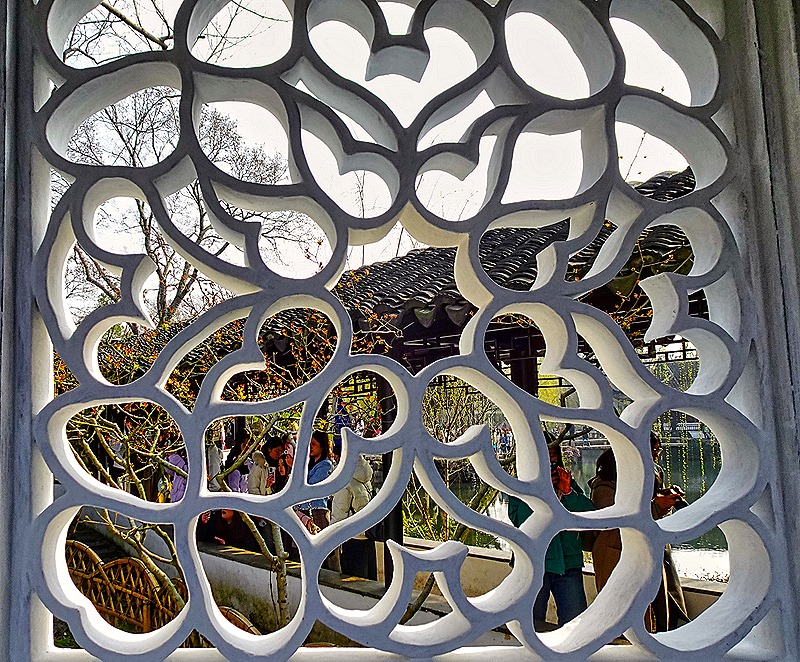
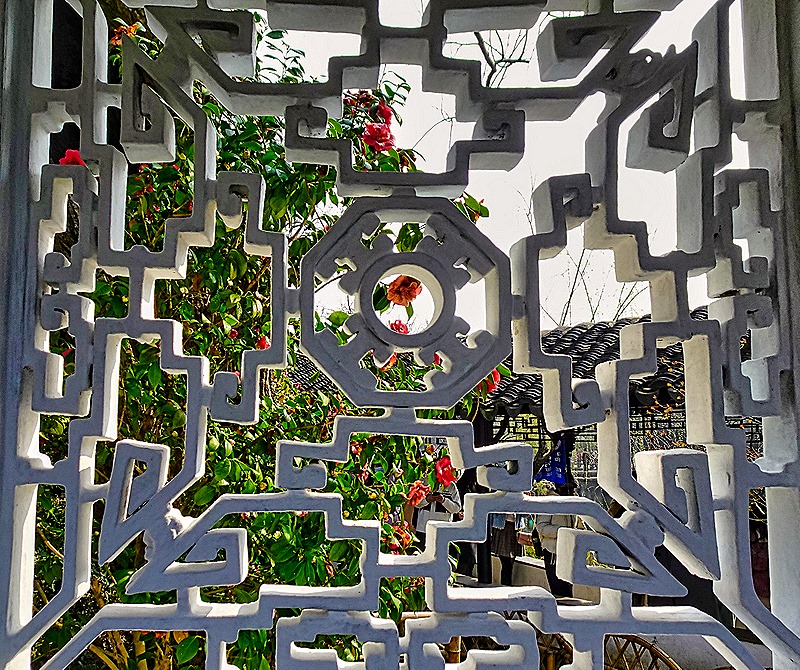
Many of the stone buildings in the garden have windows with decorative grills, the sort that let you see out while people passing outside cannot see in. The notable thing is that the decorative grill on each window is different from all the others. Here is a wall of such windows and the views out of four others.


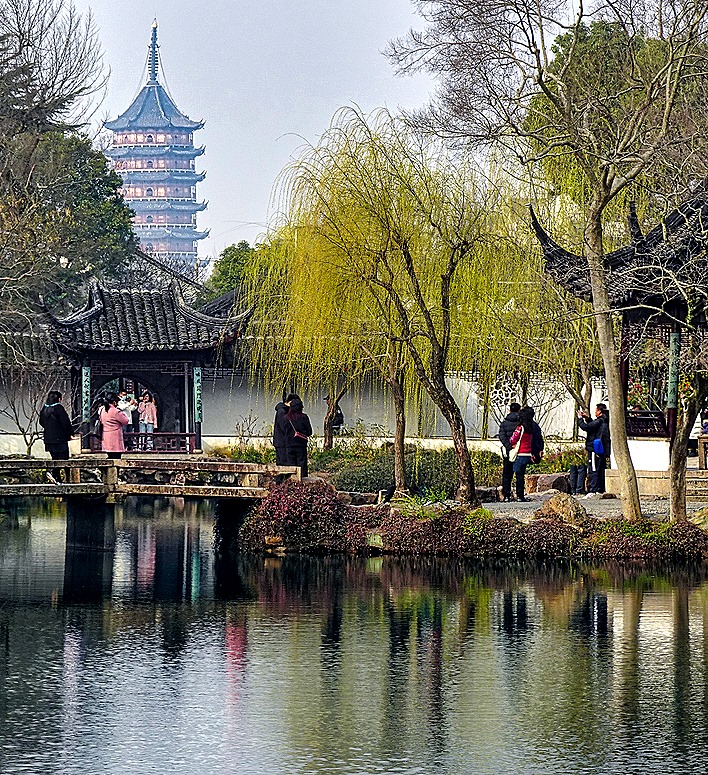
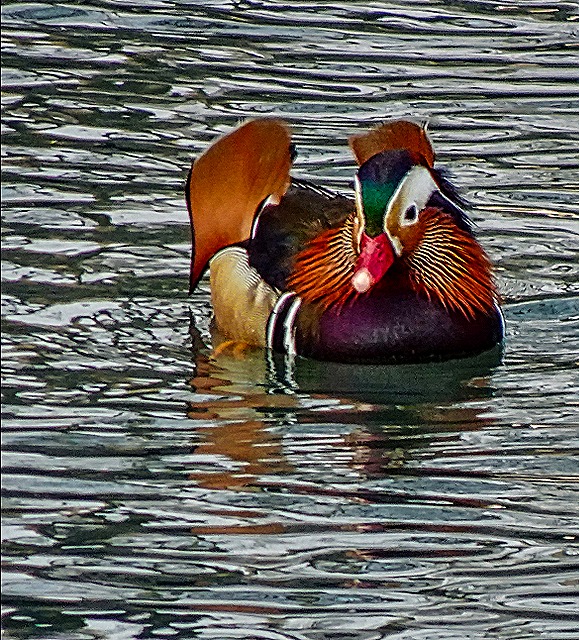
Several other vistas were particularly stunning. One of them has a pagoda in the distance beyond the water and a stone bridge. We think this is the octagonal 249 foot tall Beisi Ta, originally built in the 12th century and last renovated in 2006. There were Mandarin ducks in this pond, an amazingly well decorated species thatis a symbol of fidelity in China.
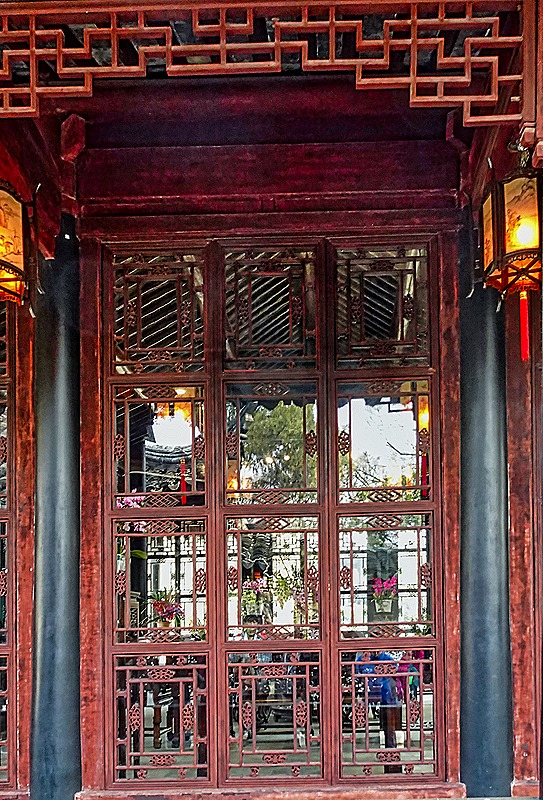
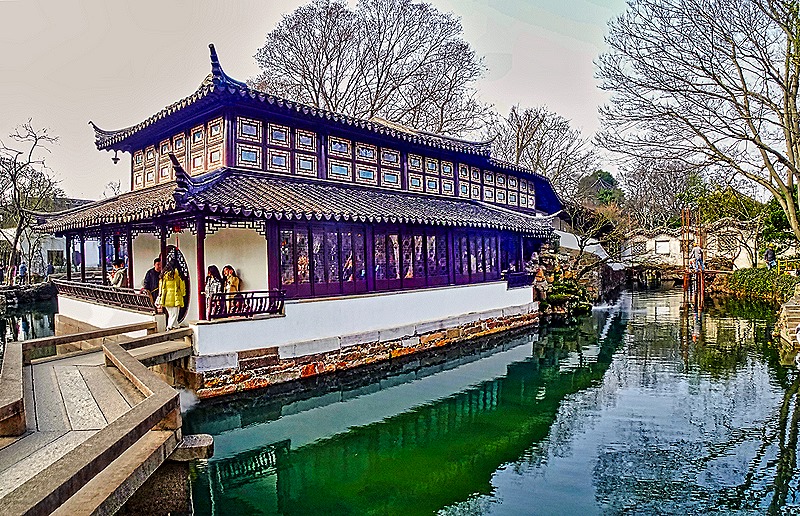
A second fetching water view was seen through the attractively carved shutters of a pavilion, possibly the “Tower of Reflection.” Note in the distance what looks like a pagoda shaped cupola behind the building, which can be seen in closer views below.
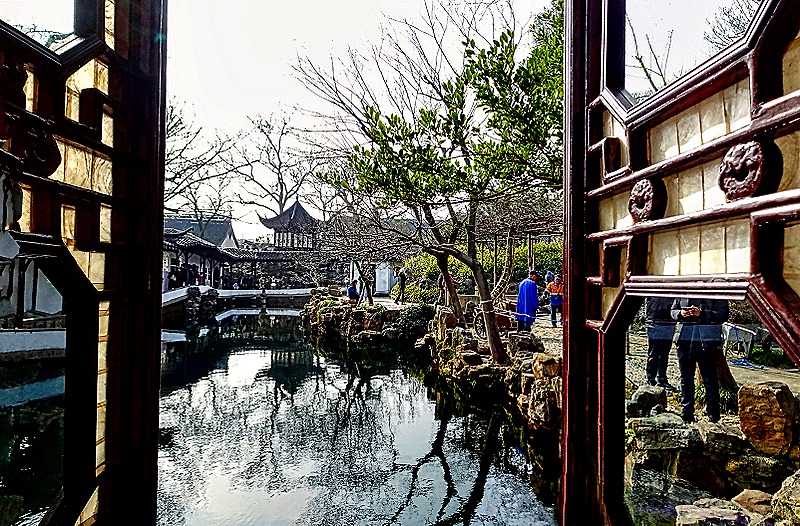
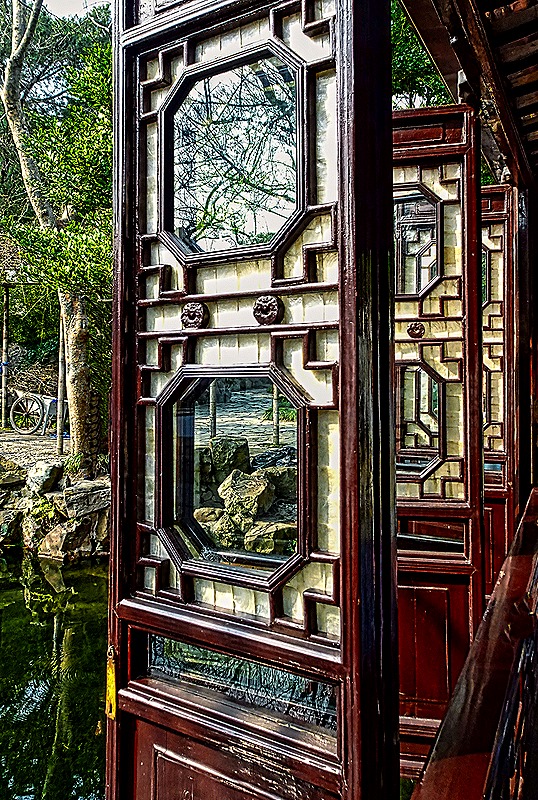

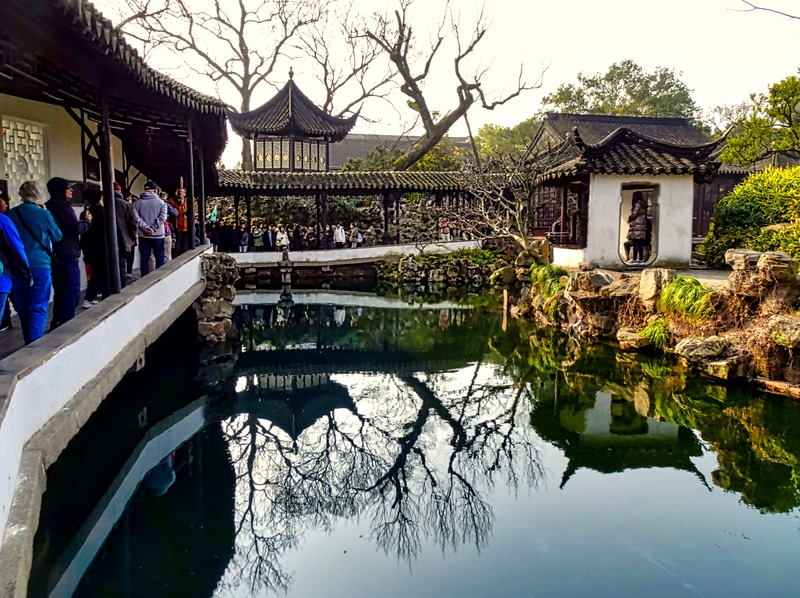
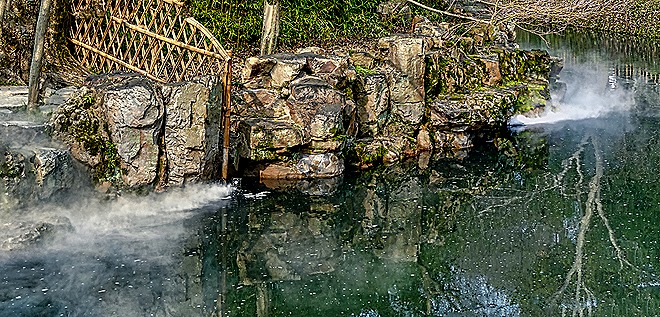
While this all looks very natural, it is actually carefully planned and constructed to provide the desired views. You can see that clearly in one scenic bend in a water way where there are pipes that emit a mist to create the desired atmosphere.

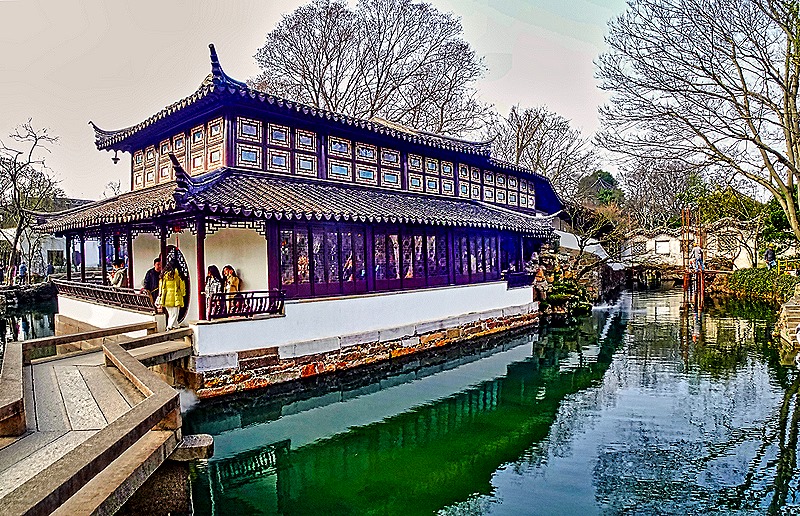
This seems to be the two story “Mountain Viewing Tower,” with a zig-zag bridge leading to it, said to represent a dragon (round opening on the left is the mouth, slanting stairway in the back is the tail).
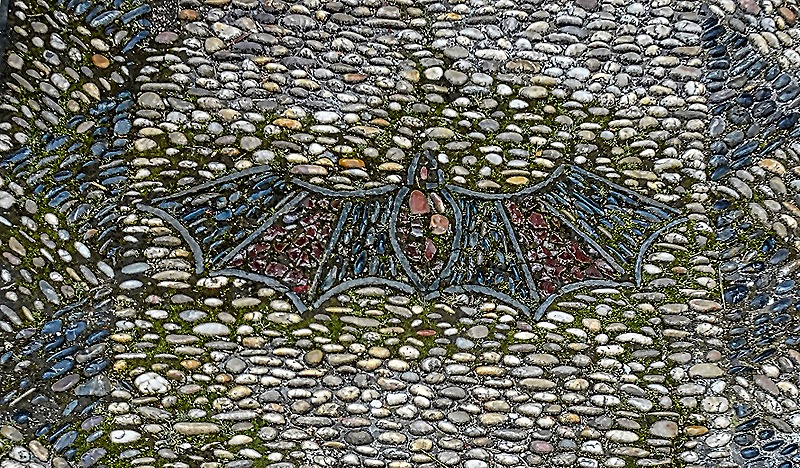
Not to be neglected are the pathways, many of which are stone mosaics, most with patterns but some with pictures of wildlife.
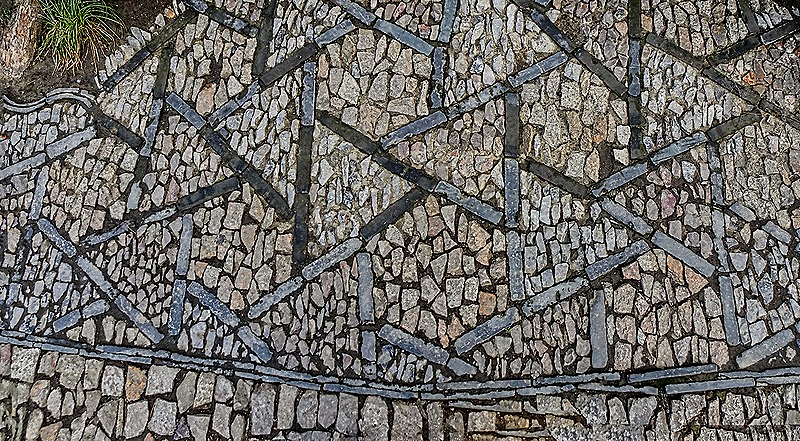

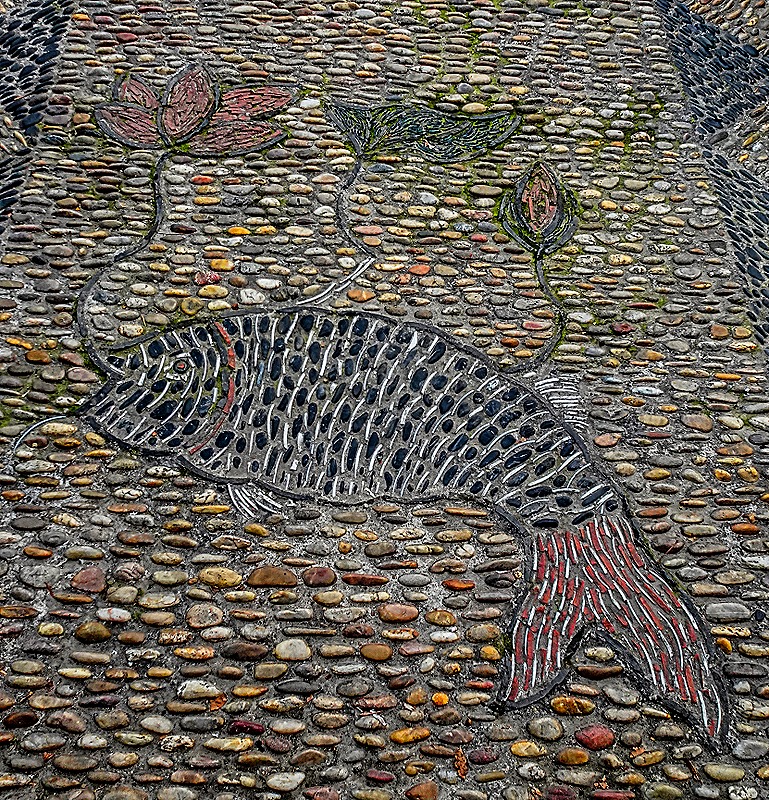

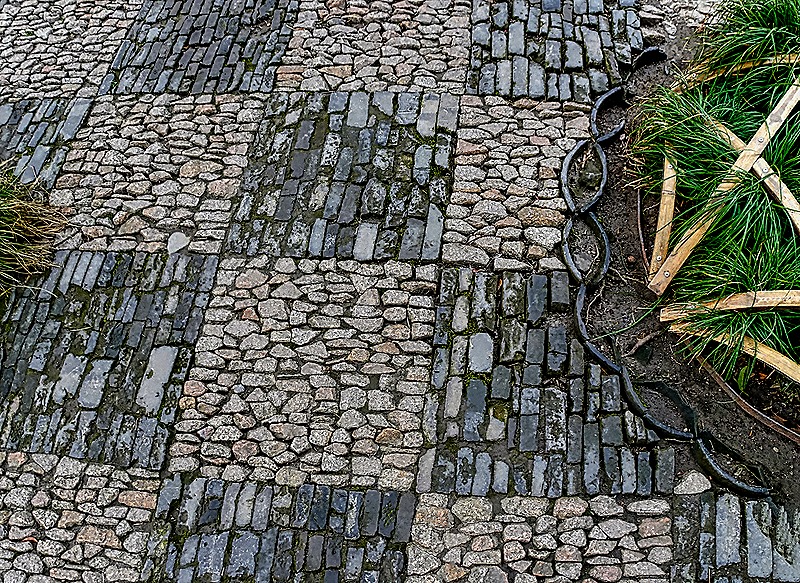
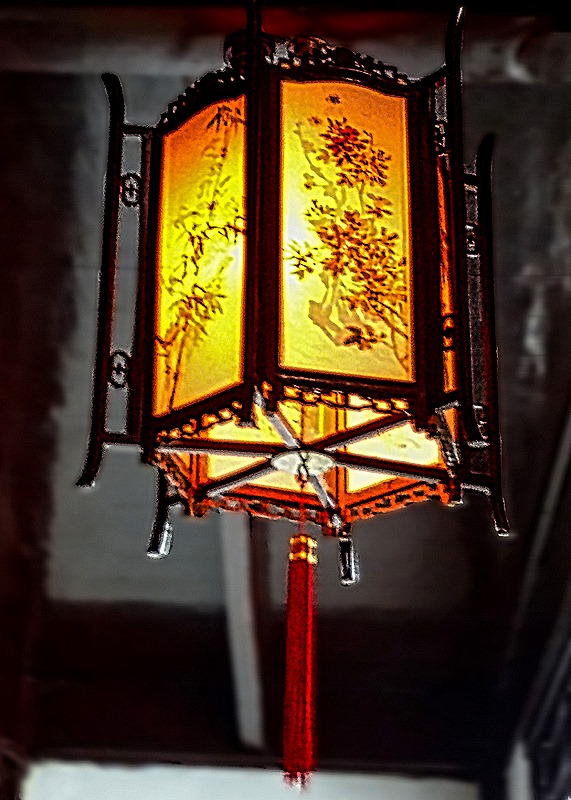
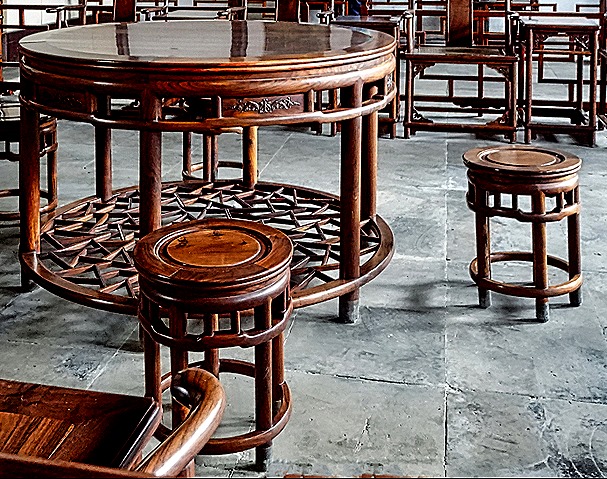
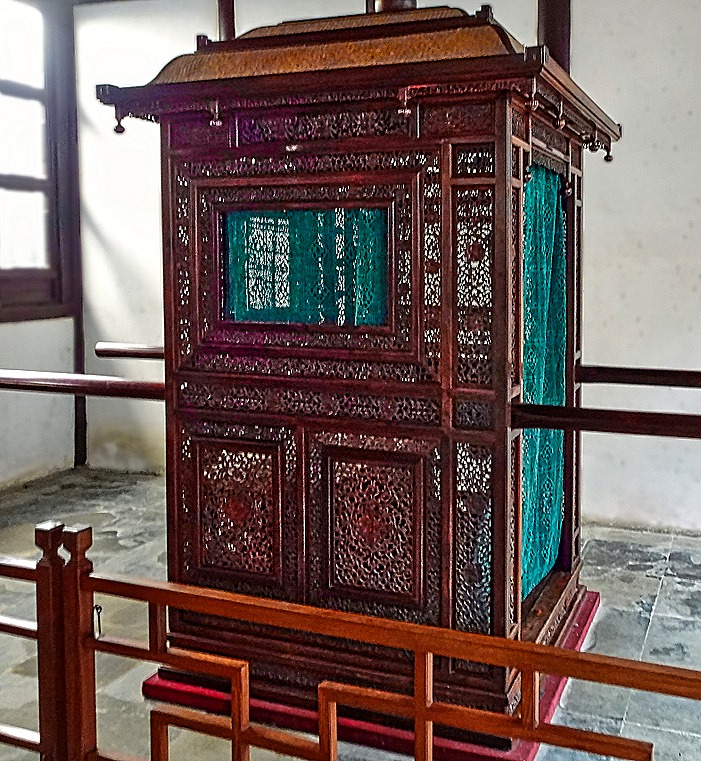
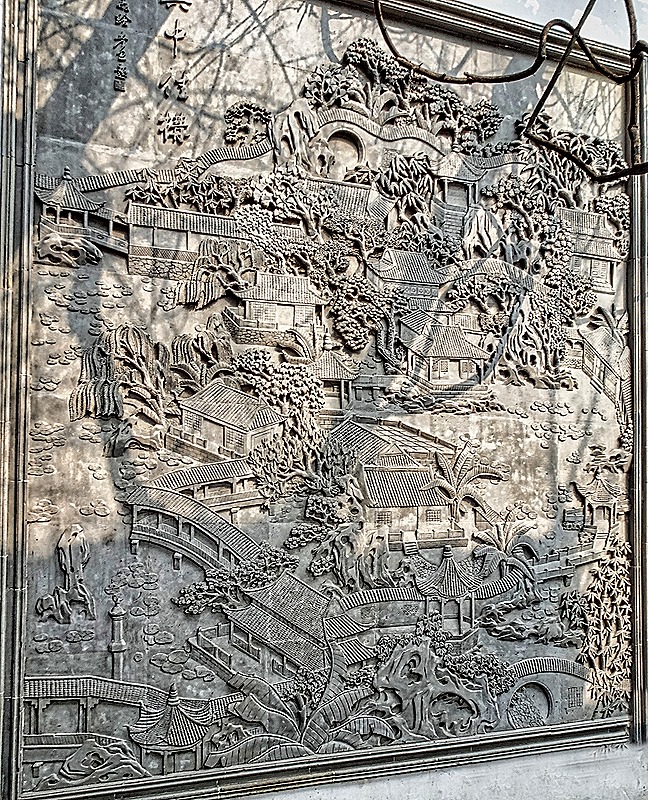
We left the gardens through a building filled with period furniture. There was also an intricately carved palanquin in which the family of one of the owners were carried around town, and a relief map of the gardens that appears to be sculpted in stone.

Everyone knows about the Great Wall of China, but before this trip we had never heard of the Grand Canal of China. At more than 1100 miles it is the longest canal in the world. It is also the oldest canal in the world, the oldest parts dating to the 5th century BCE. The modern “pound” locks (with two gates that allow raising or lowering a boat in the area between them) were invented by the Chinese for use on this canal in the 10th century CE. The section of the canal that runs through Suzhou was built early in the 5th century BCE. While the canal has had its ups and downs, it made Suzhou a commercial powerhouse during the middle ages and, after some reconstruction and improvement after the 1949 revolution, it still carries a large amount of Suzhou’s trade today.
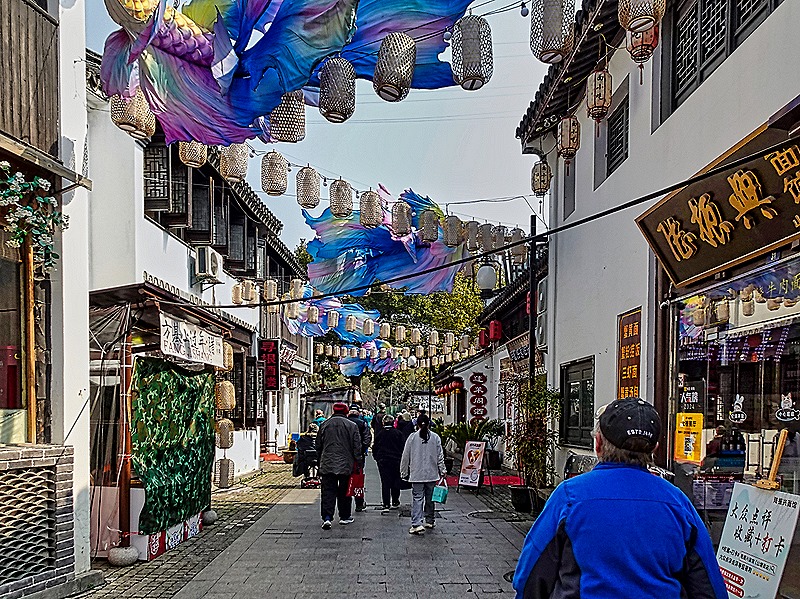
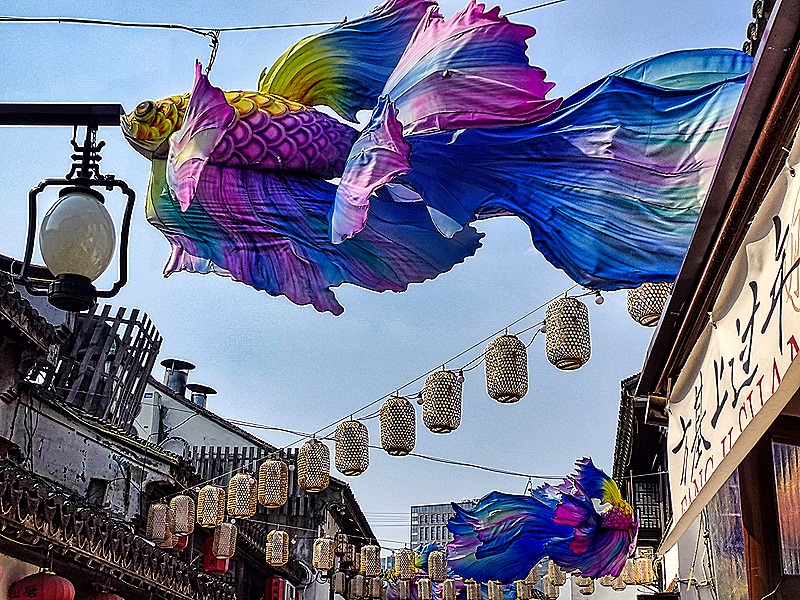
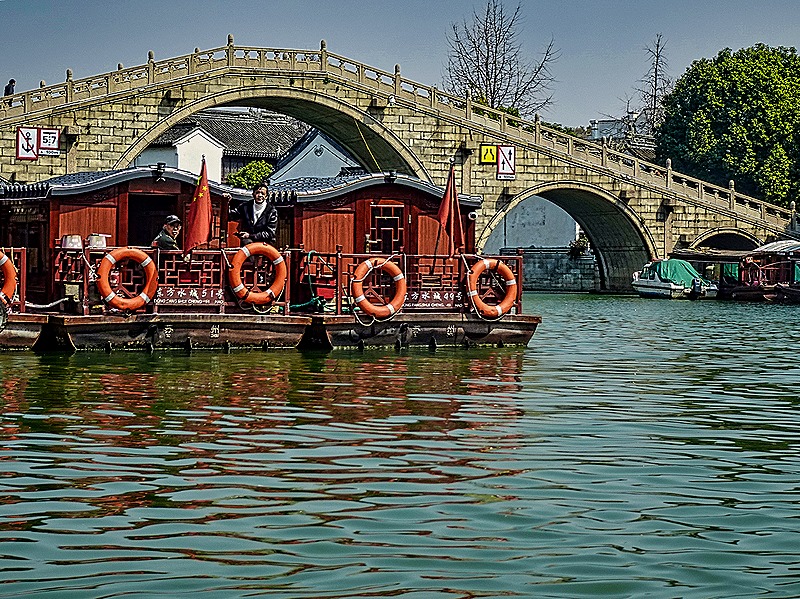
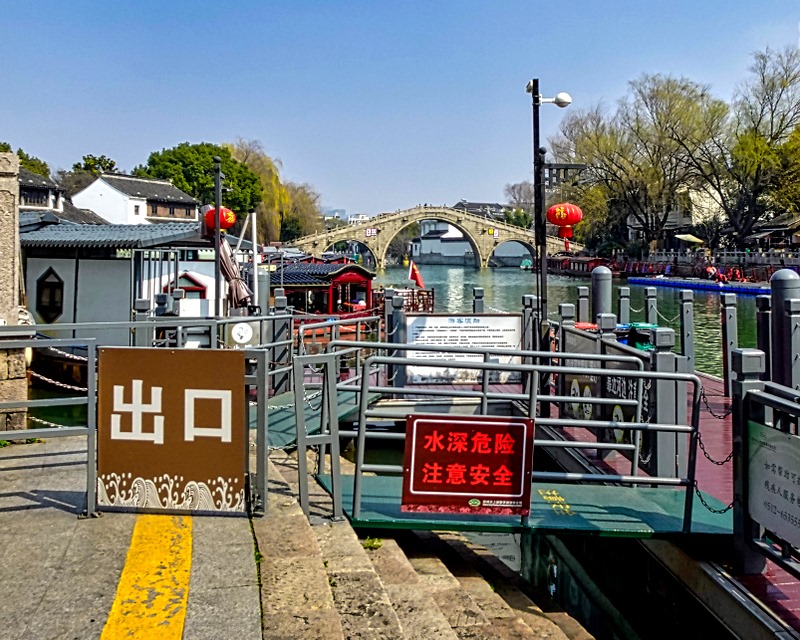
The section of the Grand Canal that runs through Suzhou is called the Jinghang canal. In Suzhou it runs along two sides of the old town outside what is left of the old city walls and served as a defensive moat as well as a transport route. We didn’t see that part, but we did have a boat ride along part of the canal after we left the Humble Administrator’s Garden. We had a nice walk through that part of town to the wharf where we boarded a long red river boat. Our walk crossed a couple of stone bridges and walked down a street lined with kite-looking fish above our heads.
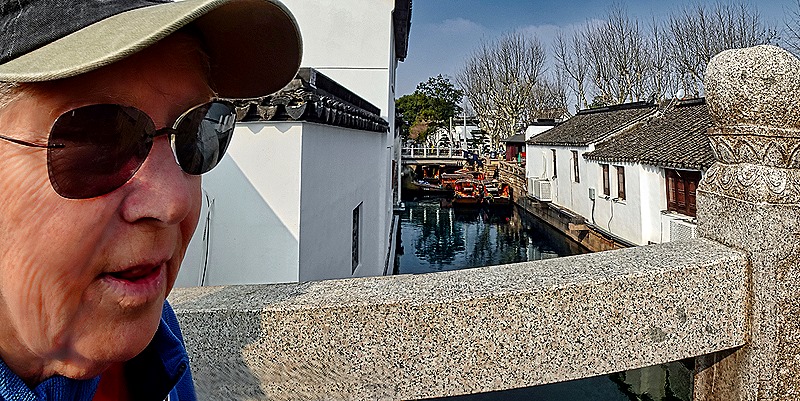

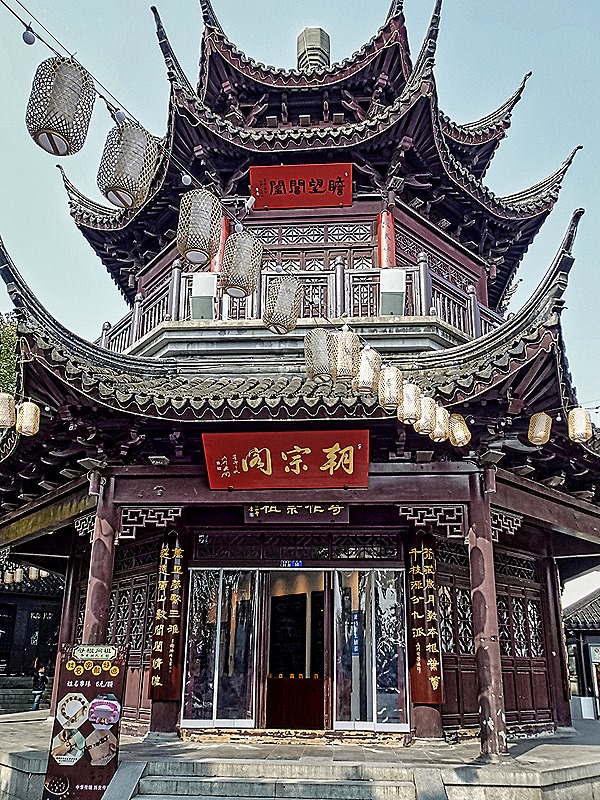
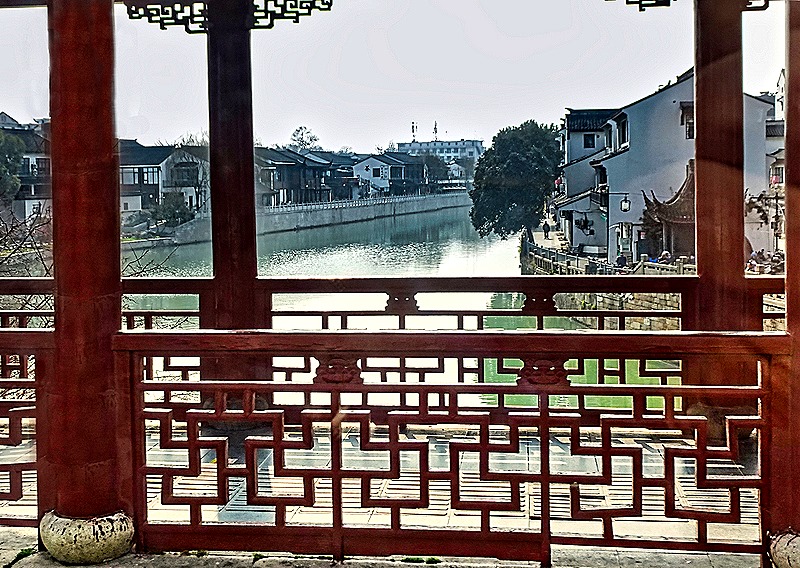


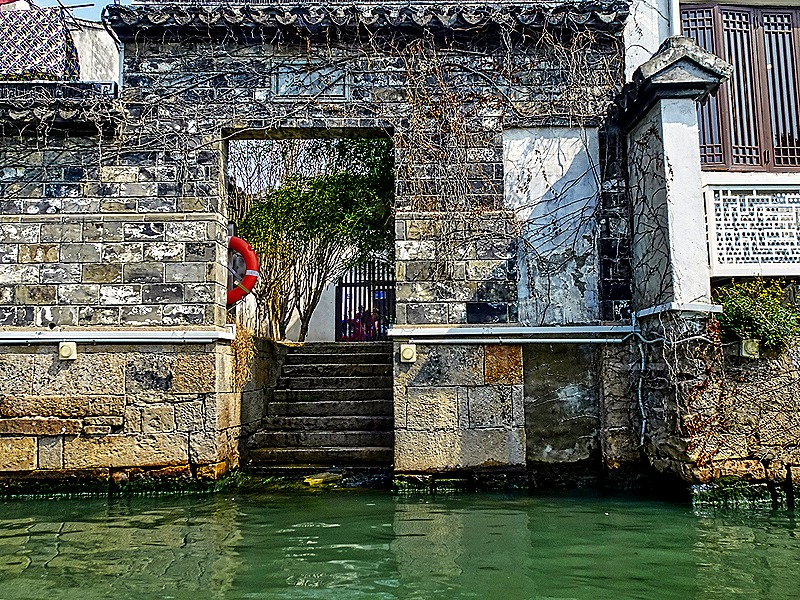
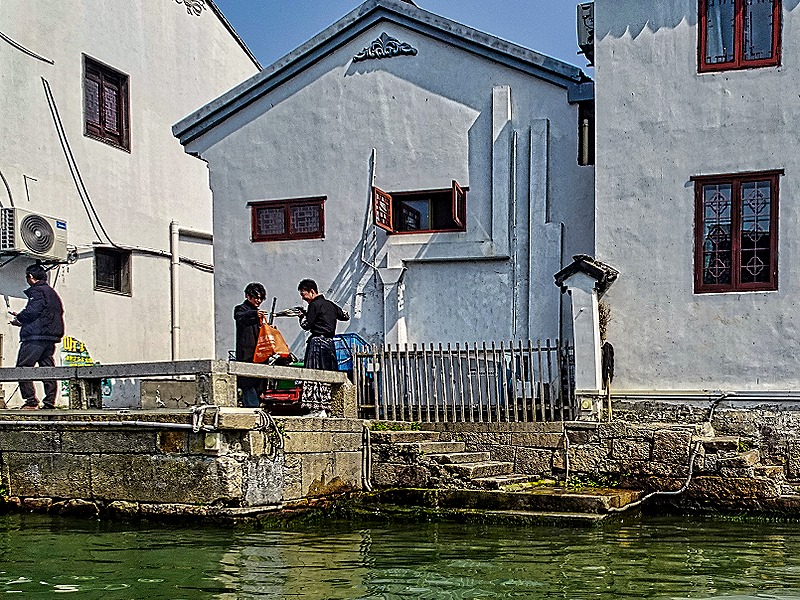
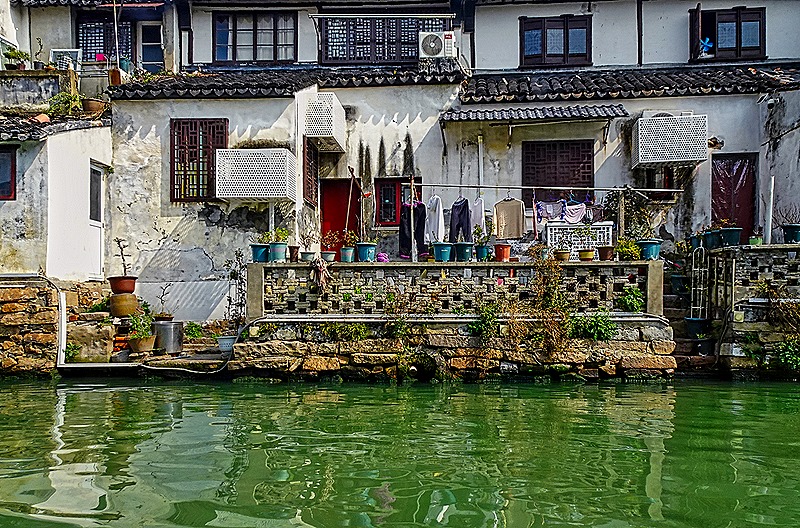
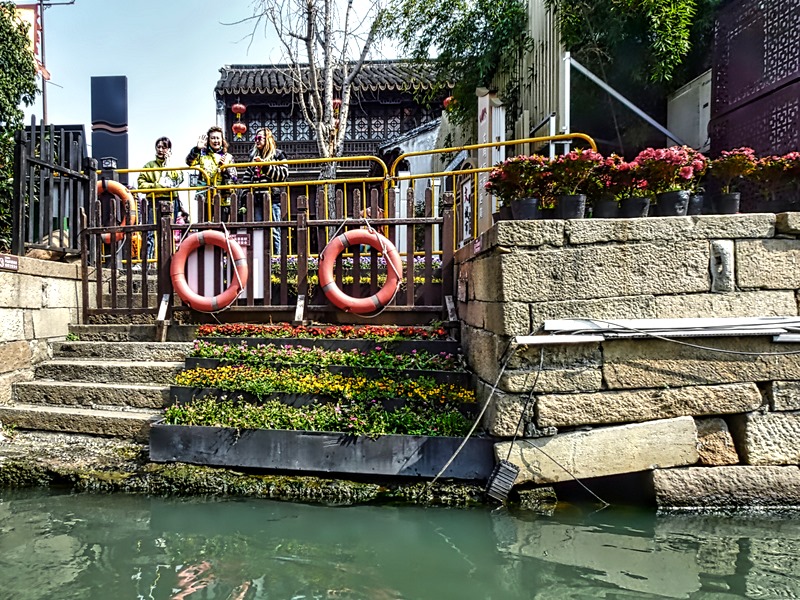
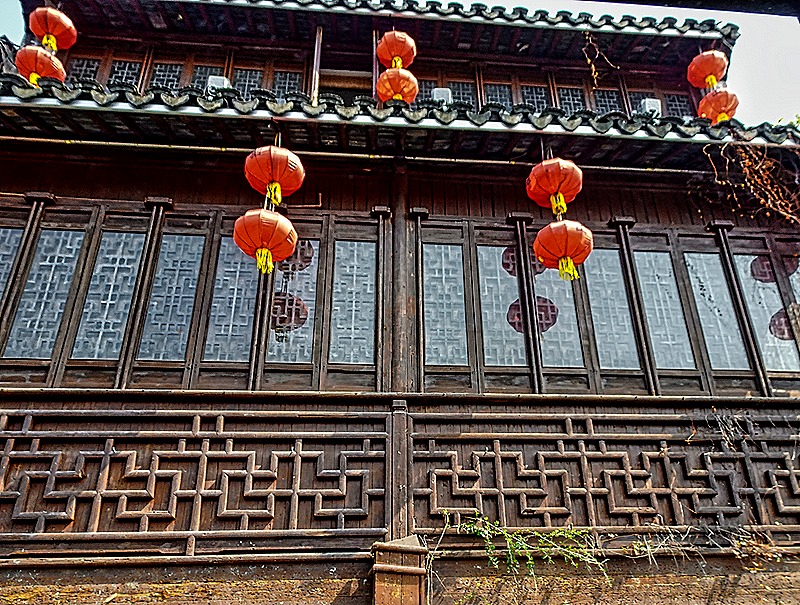
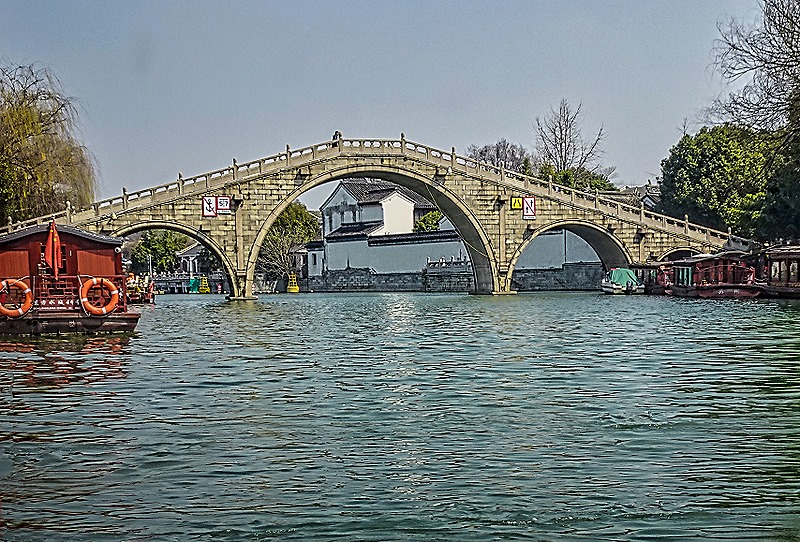
We understand that the stone bridges and whitewashed houses on the canal are several hundred years old. Many of the houses lack bathrooms (public bathrooms are available in the area) and many occupants wash their clothes in the canal. We went under an arched stone bridge and passed a number of the white houses, most with red lanterns hanging outside. At night these lanterns are lit up and there are lights on the bridges, which must give the area a romantic ambiance. Unfortunately, by the time night fell we were already at sea in the Zuiderdam.
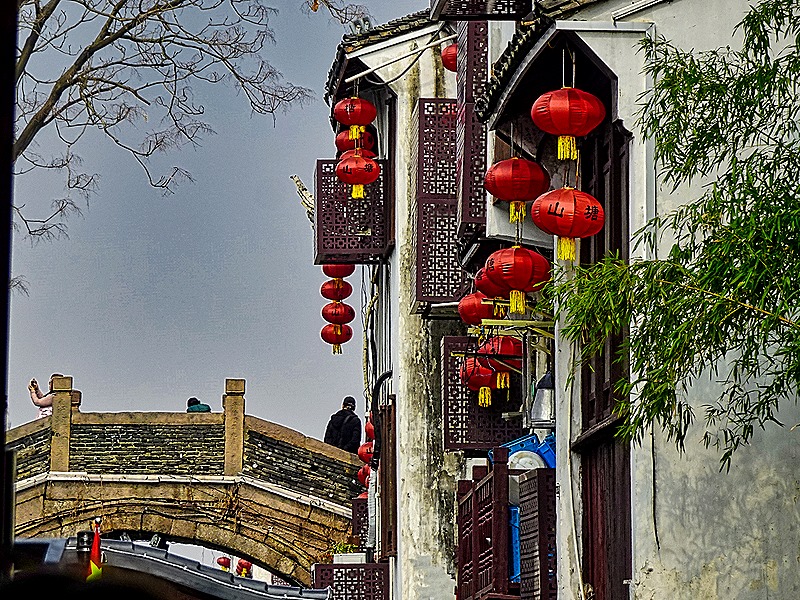
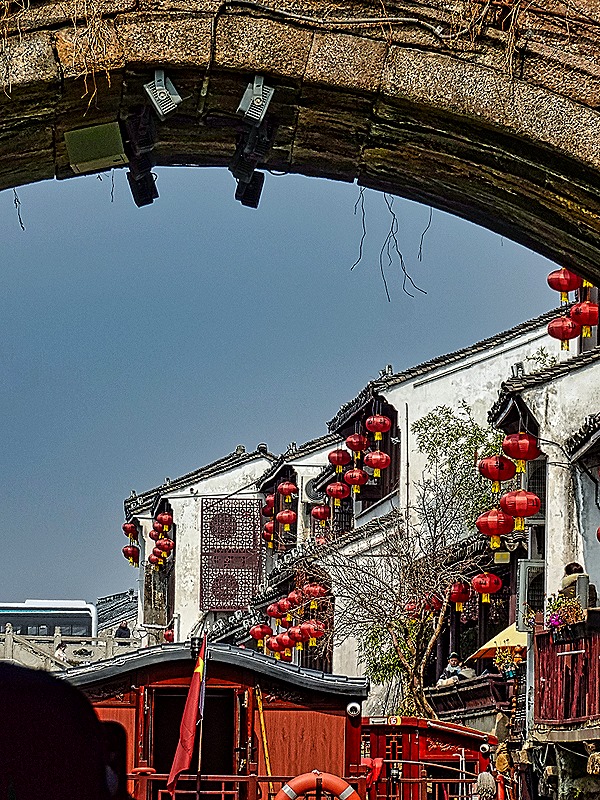


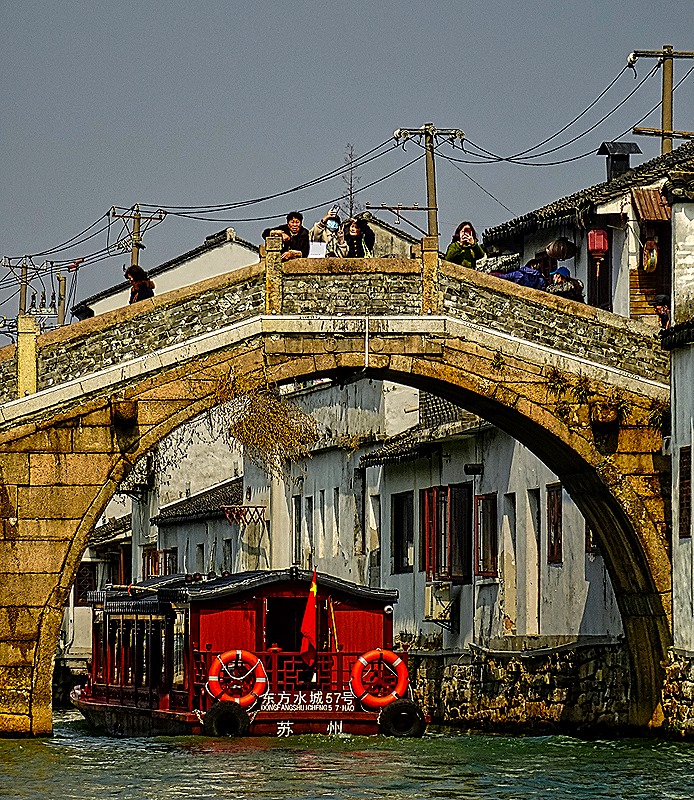
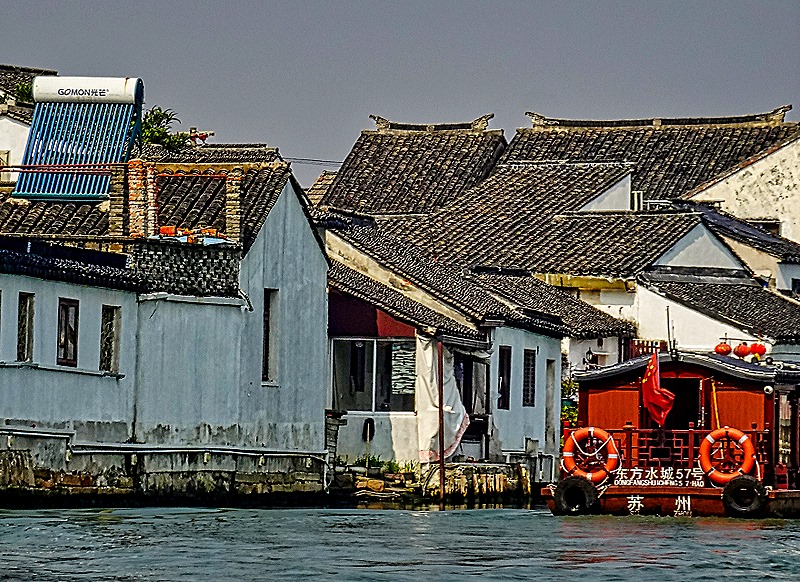
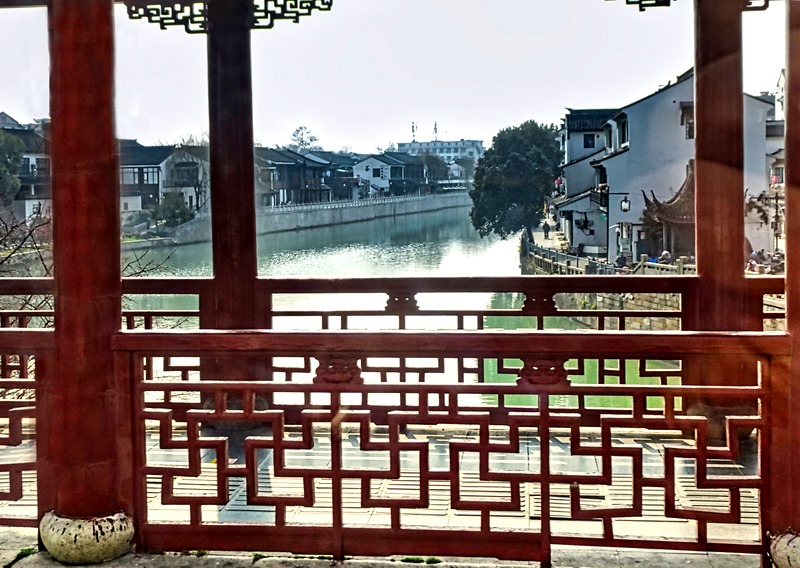
The best spot for photography was outside on the front of the boat, but you couldn’t stay there because it would obstruct everybody else’s view. Rick walked up there once or twice to take some pictures, but mostly we were limited to photographing through the side windows where we were sitting, which only gave a view of one side of the canal.

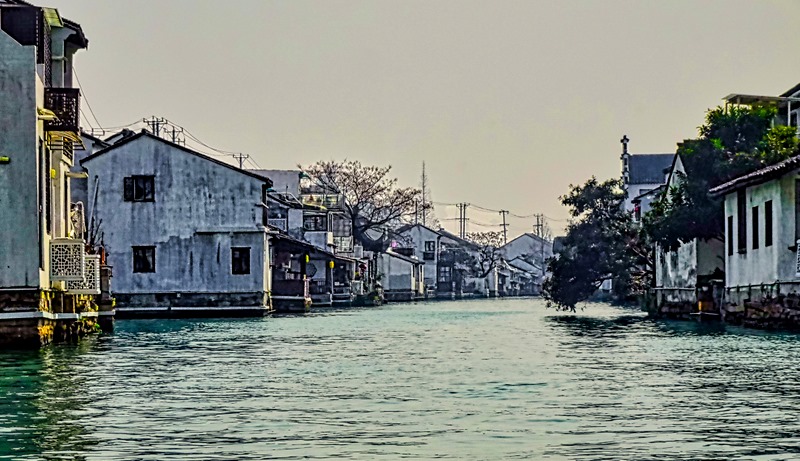
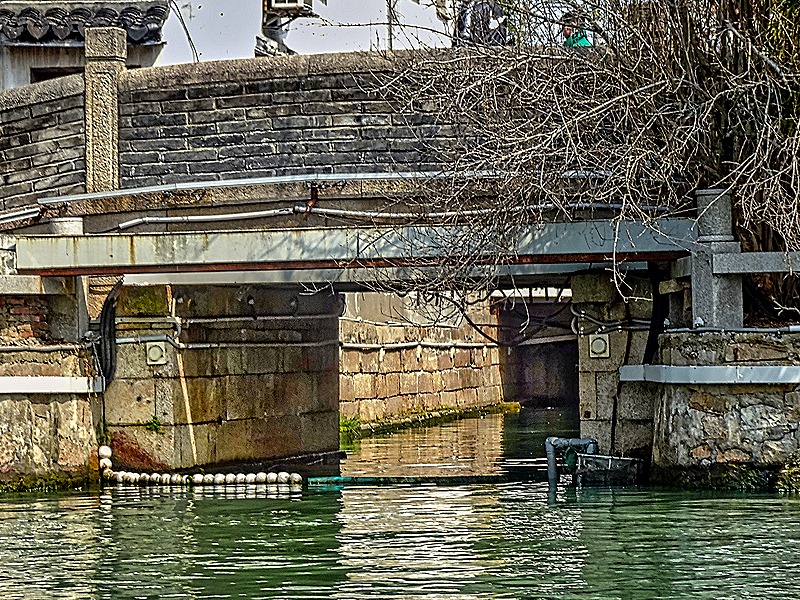
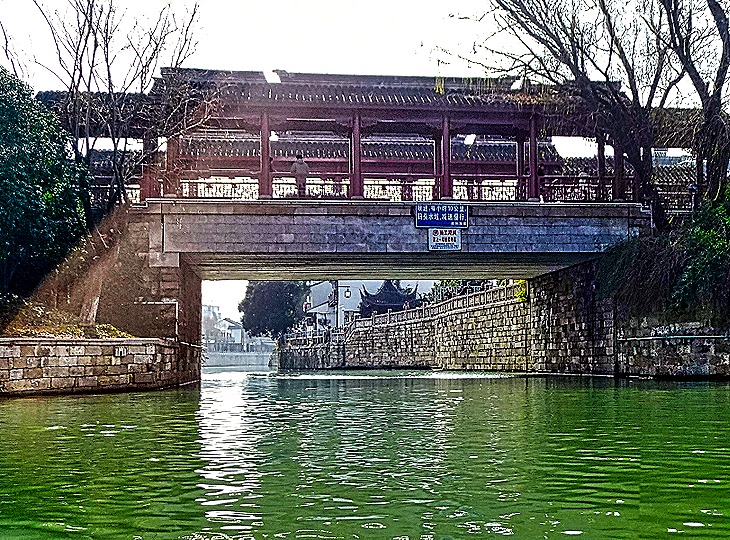
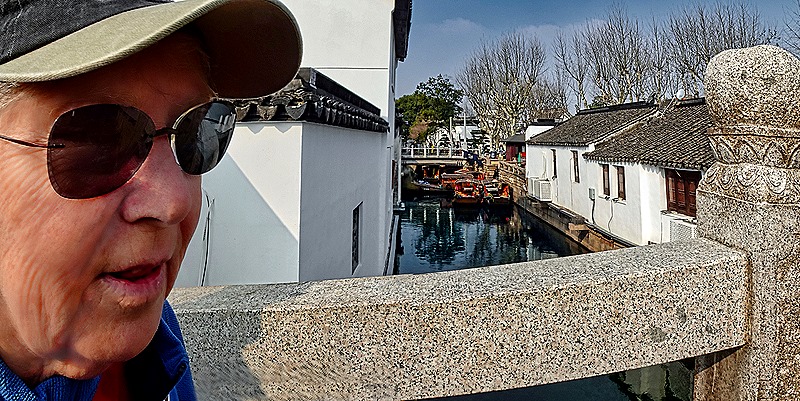
Several smaller canals branch off the Grand Canal in Suzhou’s old town area. Marco Polo, who claimed to have visited here in the 13th century, called it the “Venice of the East.” From what we saw it doesn’t quite reach that height of grandeur, but you get the idea. Anyway, we passed several small stone bridges spanning intersections where these smaller canals branched off.

Many of the houses along the canal had porches or landings through which they interacted with the canal. Some had steps down to the water, some had laundry hanging by the water’s edge and some had other things stored on their decks.
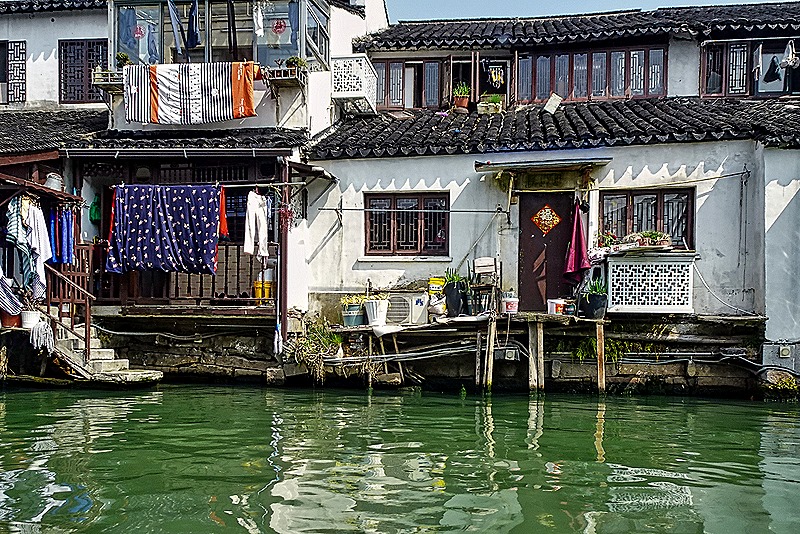

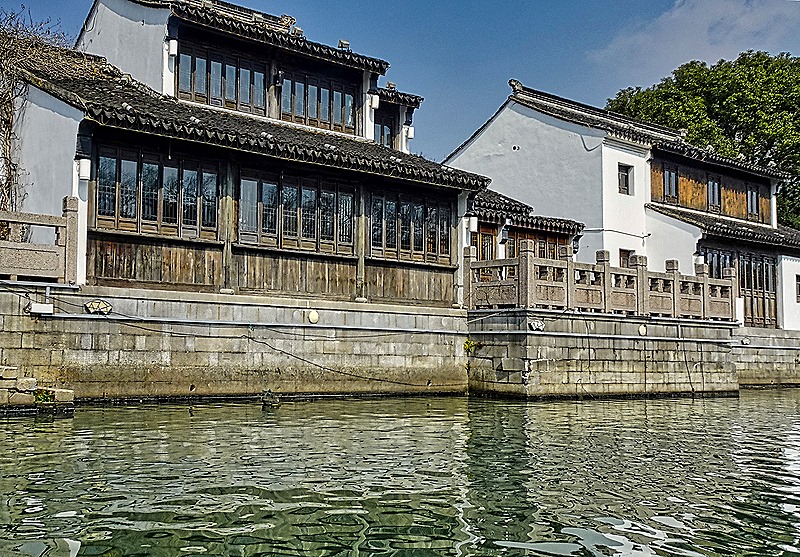

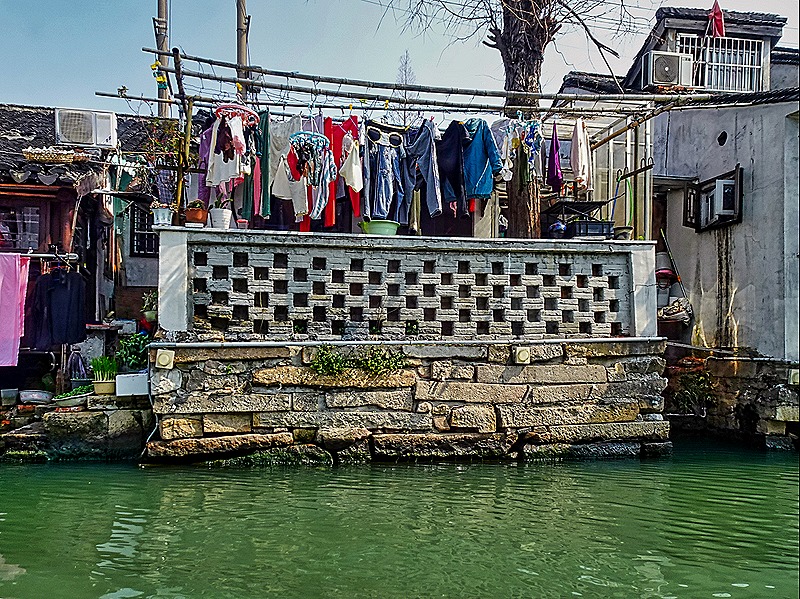


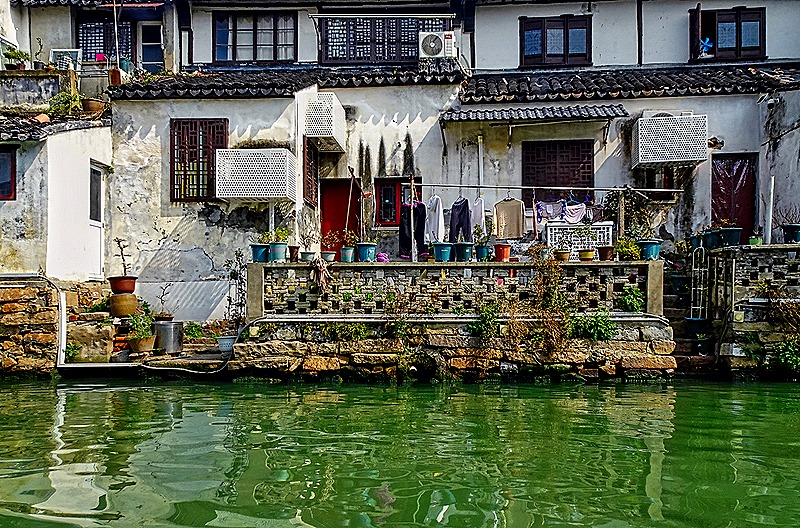
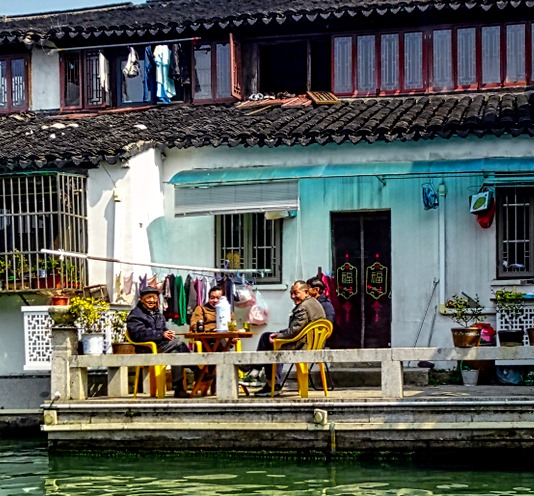
Most of the canal side buildings were houses of a similar plain, whitewashed design. But there were a few that were more elaborate (one looked like it could be a temple), and we also passed what looked like a family watching us from a park with steps down to the water.
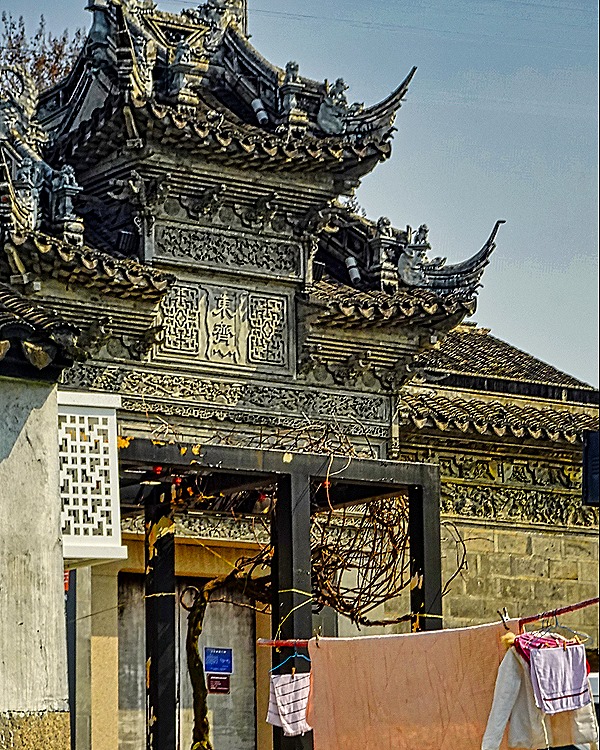


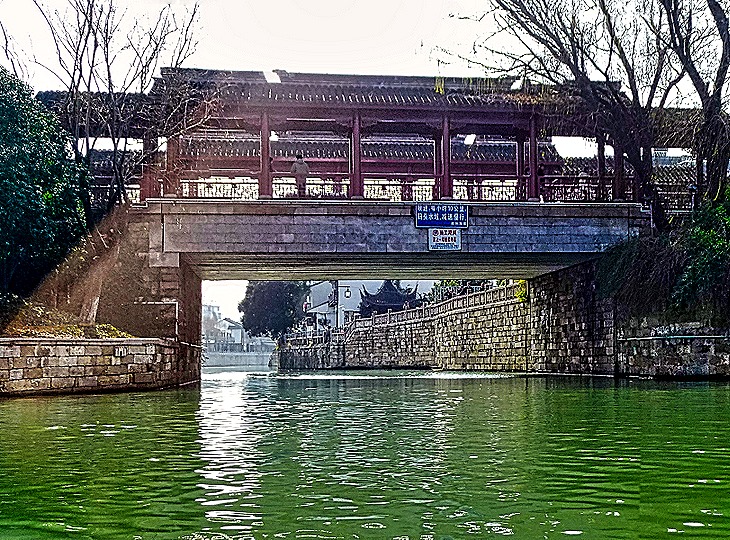
As we returned to the dock the canal opened into a much wider space. We went under a large stone bridge and passed a smaller wood and stone bridge leading to another branching canal. Walking back to the bus we had a nice view down another narrower canal lined with houses on both sides.



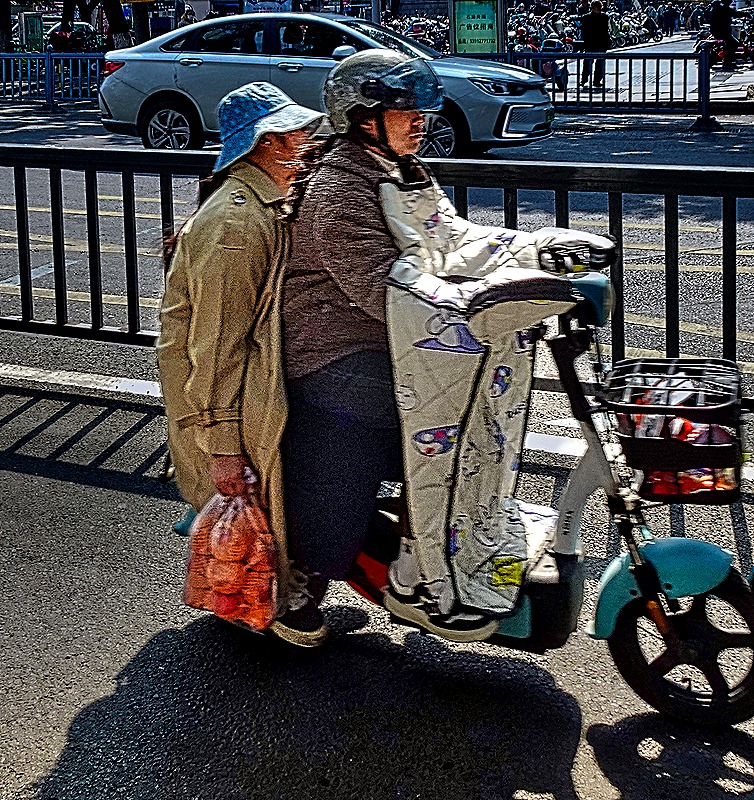
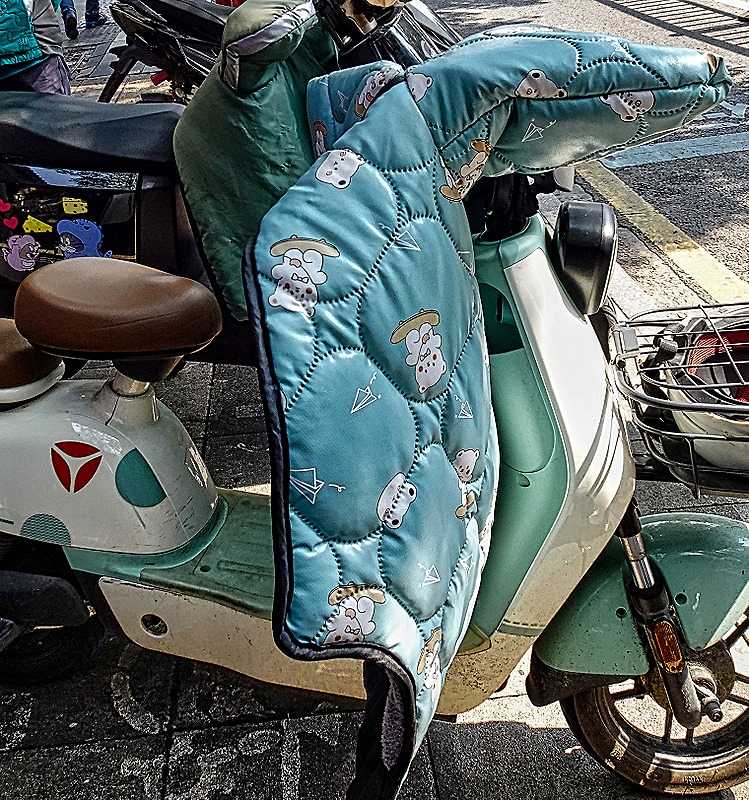
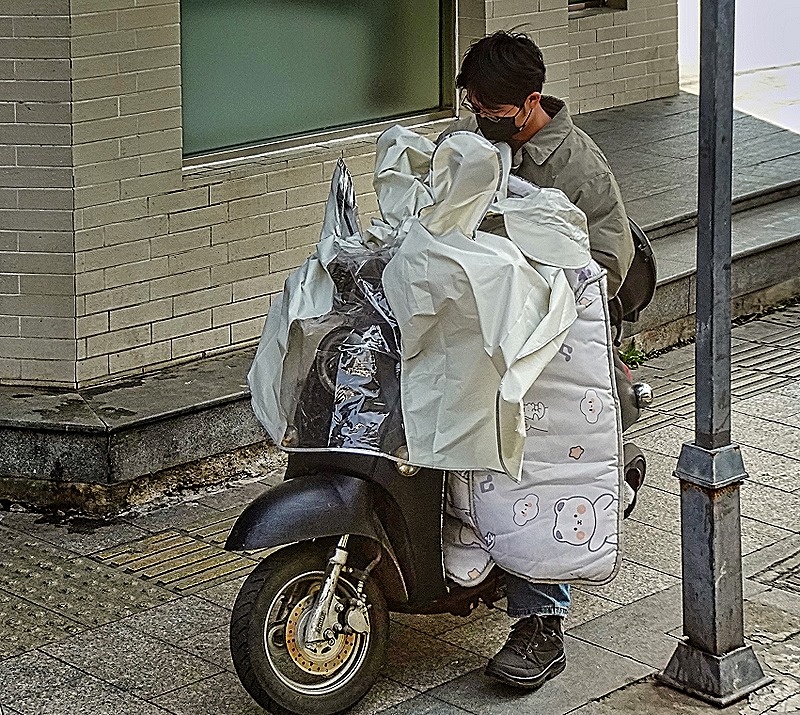
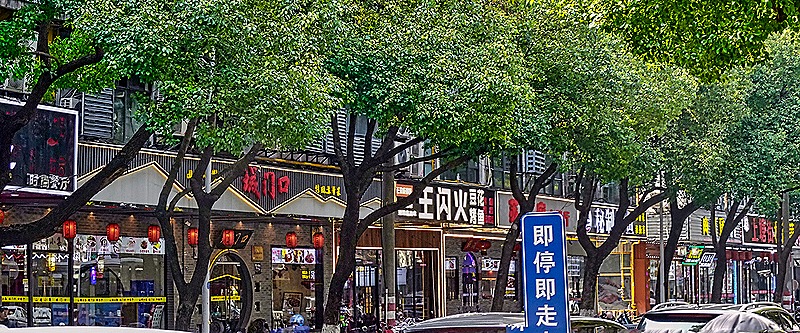
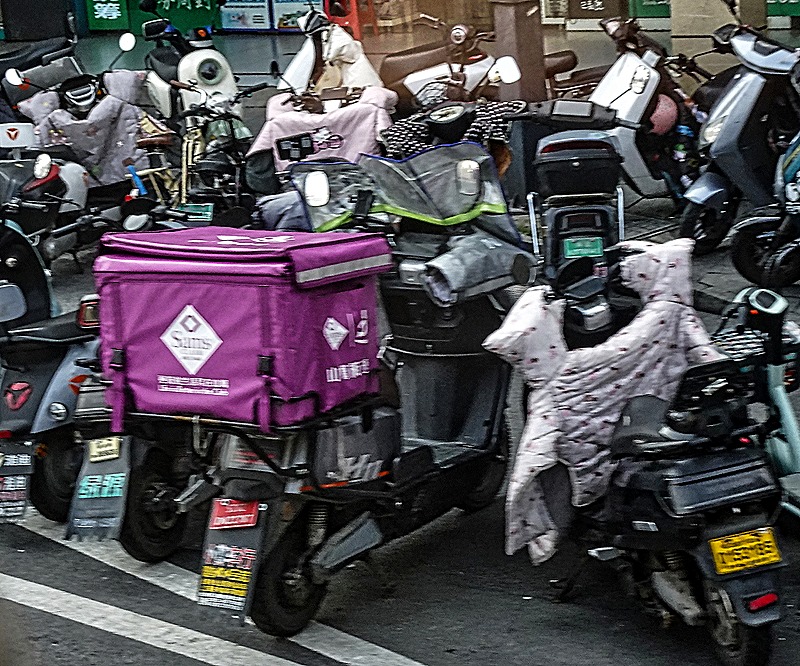
We had a Chinese lunch at a very nice hotel; the round tables had turntables in the middle for passing the platters. It is no surprise that here in the far east the streets are crowded with motorcycles and motor scooters. But it was a chilly day and the riders wore a kind of blanket with sleeves ending in oven mitts to keep warm while riding in the cold breeze. We had not seen anything like that before. When they left their scooters they just left these blanket things sitting there where anyone could make off with them. I guess that sort of thing is not done here.

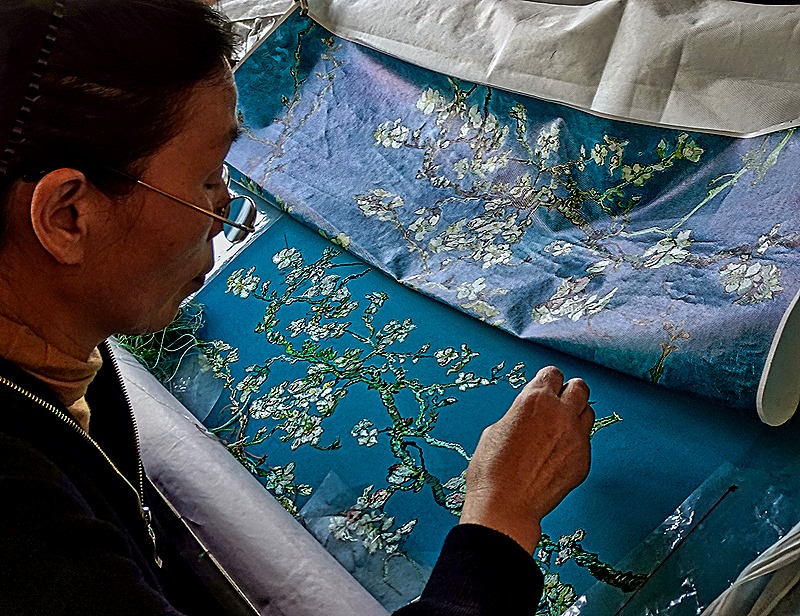
After lunch we visited the Silk Embroidery Research Institute. Suzhou has been a center of production of silk embroidery for well over 2,000 years. Suzhou (or Su) Embroidery is one of four main types of silk embroidery in China, centering on subjects from nature, such as animals, birds and plants, although these days it is not limited to those subjects. Silk embroiderers in Suzhou use up to 40 different kinds of needles and 1,000 kinds of thread, dyed in a variety of colors. A single raw silk thread can be divided into up to 16 separate embroidery threads. One unusual Suzhou specialty is two-sided embroidery, which has a different picture on each side. Perhaps a white cat on front and a black cat on the back, or even a cat on the front and a dog on the back. Since both sides are visible, the ends of the silk strands are not knotted, but woven into the pattern in a way that makes them invisible to a viewer.
This embroidery is quite an art. We have read that even a very small silk embroidery takes about three months to complete, a medium size one takes a year and a large one can take three years or more. Many of these artists only produce about 15 works during their entire careers. No wonder they are expensive.
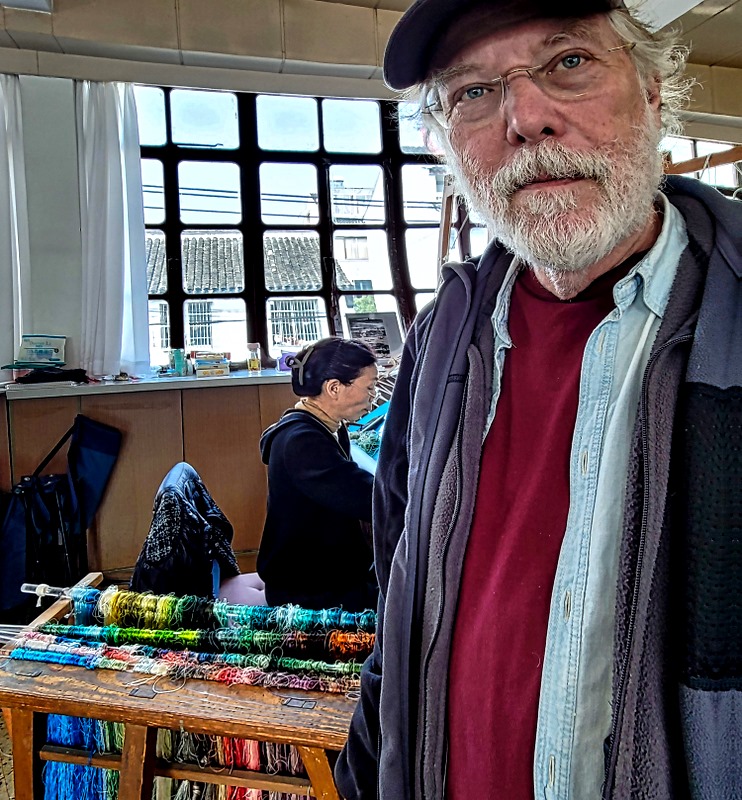
We spent some time in the work room watching the individual embroidery artists at work. We were told that to do this job you must have excellent eyesight but we wondered whether they still have that after doing this every day for a decade or two. The work was being done mostly by light coming from a large bank of windows and most of the embroiderers were working from a picture.


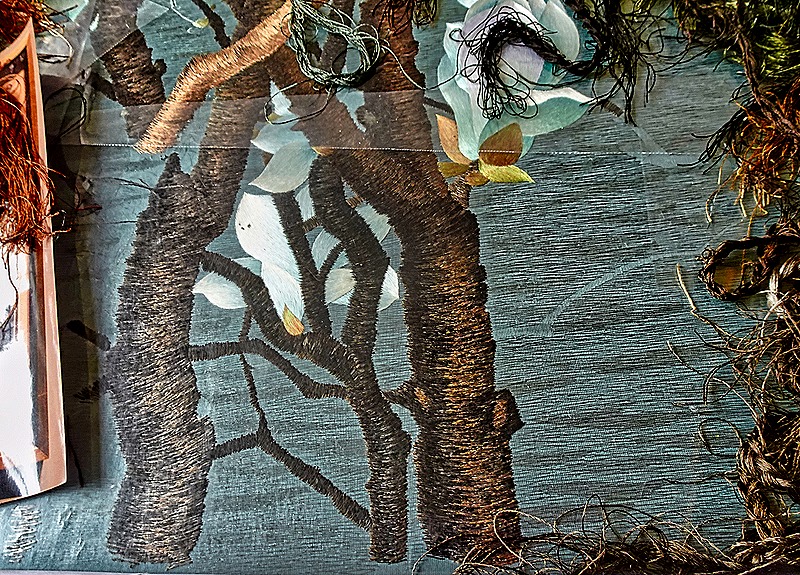

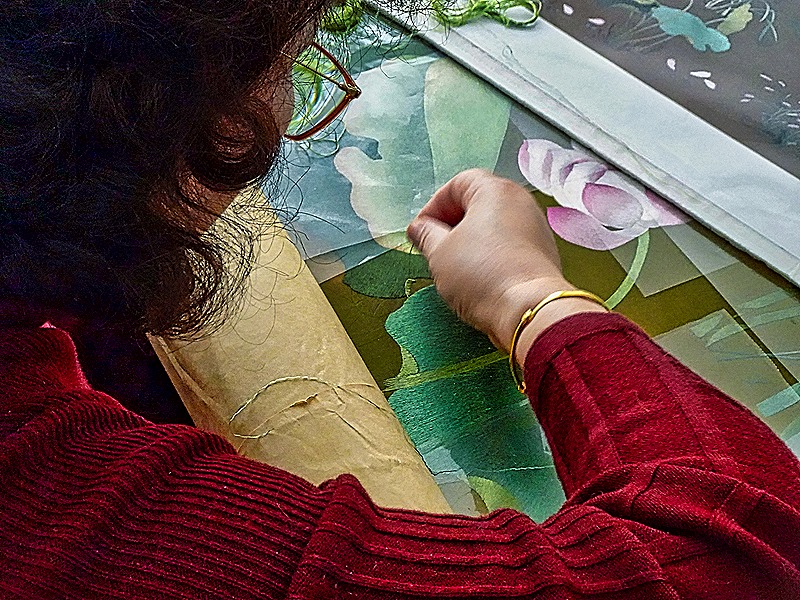
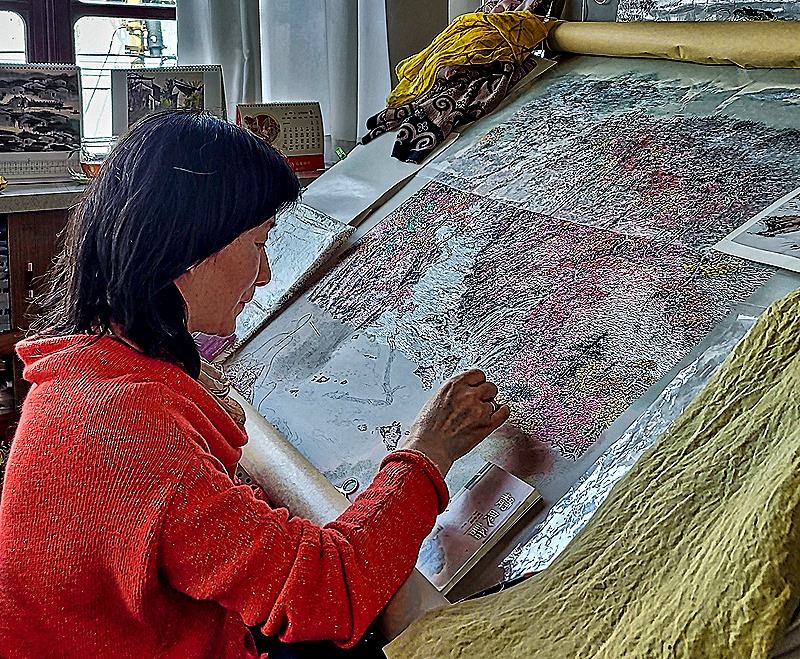
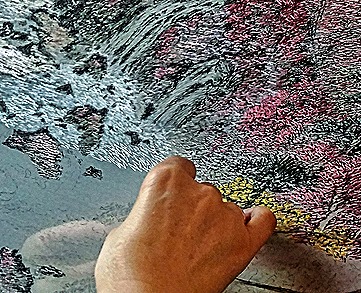
After leaving the work room we were taken to a show room where a large variety of embroideries were for sale in many shapes and sizes and mountings, including some two sided ones. It was all quite dazzling but outside our budget, sadly, and many were too big to carry home on a cruise ship anyway. Unfortunately, photography was not permitted in the showroom.
Leaving the Embroidery Institute we boarded the bus for the long ride back to the ship, on which we sailed away at 5:00 (the early departure is why this excursion left the ship so early in the morning). We had a welcome sea day to rest up before our next stop in China.

 BADER JOURNAL










Leave a comment