Tianjin, China (Beijing) Day 1 — 2024
On March 11 we berthed in the port of Tianjin, the closest port to Beijing, for an overnight stay. When we saw the itinerary we thought Tianjin was just the port for Beijing but it turns out to be a city of almost 14 million people. HAL had excursions to see Tianjin, which has a long and eventful history and many interesting things to see, but this was our first trip to this part of China so there was no way we were going to pass up an opportunity to visit Beijing. We have read that about 95% of cruise ship passengers stopping here make the same choice we did.
However, it is about a 3 hour bus drive from Tianjin to Beijing in normal traffic and doing that trip twice in one day (there and back) would not only be exhausting, it would leave little time to do anything else in Beijing. So we were very happy when our travel agency posted an overnight trip to Beijing, which would cut the driving time in half, spreading those 6 bus hours over two days. So that is what we did here.
Beijing, of course, is the capital and second largest city in China, with some 21 million people. It has been the capital for some 600 years now. Perhaps the most famous thing to see in this part of the world is the Great Wall of China (which, contrary to myth, cannot be seen from the moon) and that was our destination for this first day.
We set out around 9:00 AM (after some people had delays making it through customs). In the cruise terminal we had an entertaining welcoming committee as we hurried the long distance to our bus.


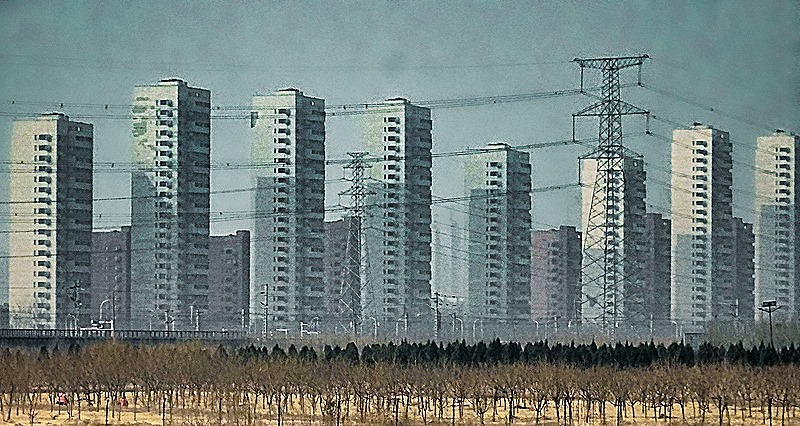
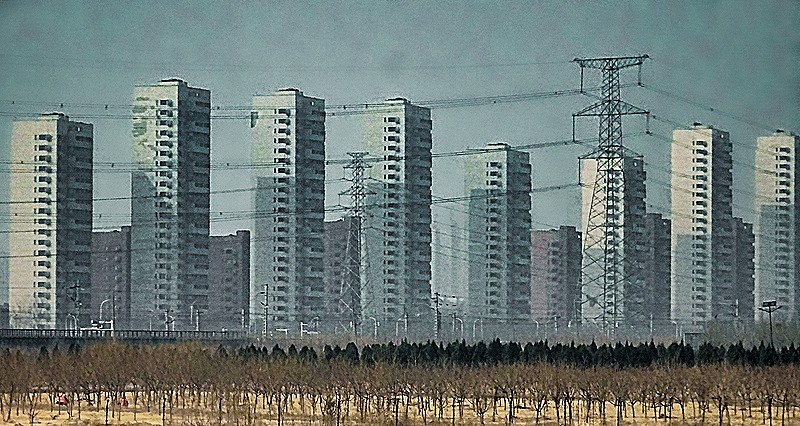
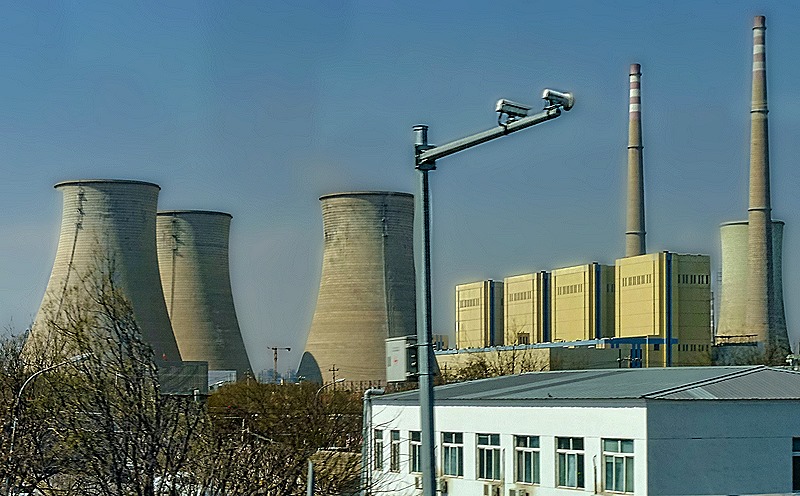
Beijing has a reputation for very polluted air, but the day we were there pollution was visible in the air near Tianjin, but the closer we got to Beijing the more it dissipated. In all, we had a beautiful day and even the temperature was nicer than expected. It seems the Chinese have been addressing their housing shortage by building sets of high rise apartment buildings in the countryside rather than in the cities. We saw this in the Shanghai area as well. It looks a little odd when passing by to see these large apartment complexes unconnected to a city, but I guess you do what you have to do to address an important problem like that. We also passed what appeared to be several nuclear power plants in the countryside.
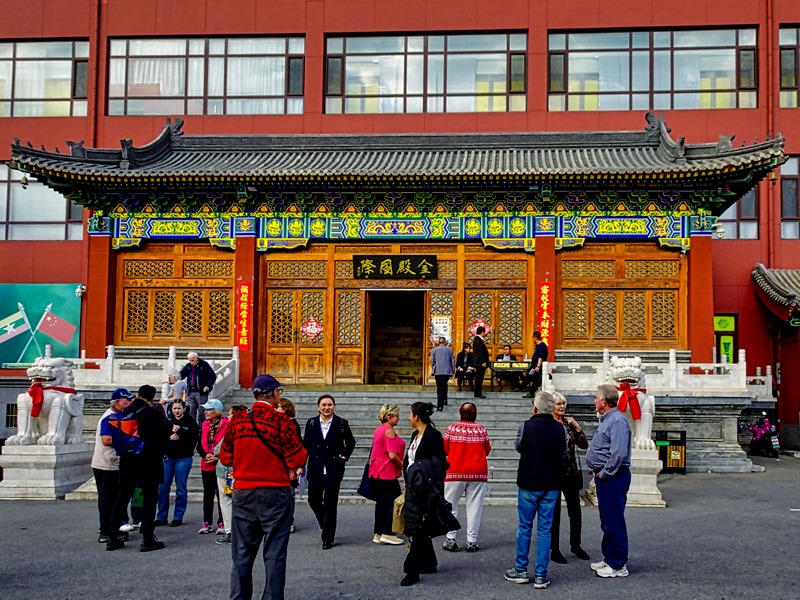
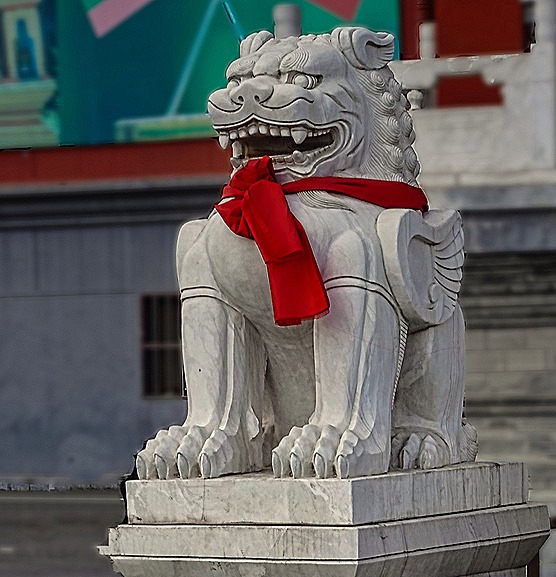
We made two stops on our way to the Great Wall, which is located on the other side of Beijing from the port. First, as if the drive from the port was not long enough already, we stopped at what appeared to be a security checkpoint, where everyone’s passport was inspected (again, since this had been done once at the port before we left). For some reason this took quite a while, maybe because other buses were ahead of us. We didn’t time it but would estimate that we sat there on the bus for about 45 minutes. Second, we stopped for lunch at a nice Chinese restaurant about 20 minutes from our destination. The restaurant and some neighboring buildings were in a traditional Chinese style of architecture, the food was quite good and there was a sculpture gallery selling jade items in all shapes and sizes, at substantial prices. Photography was not allowed in the gallery.


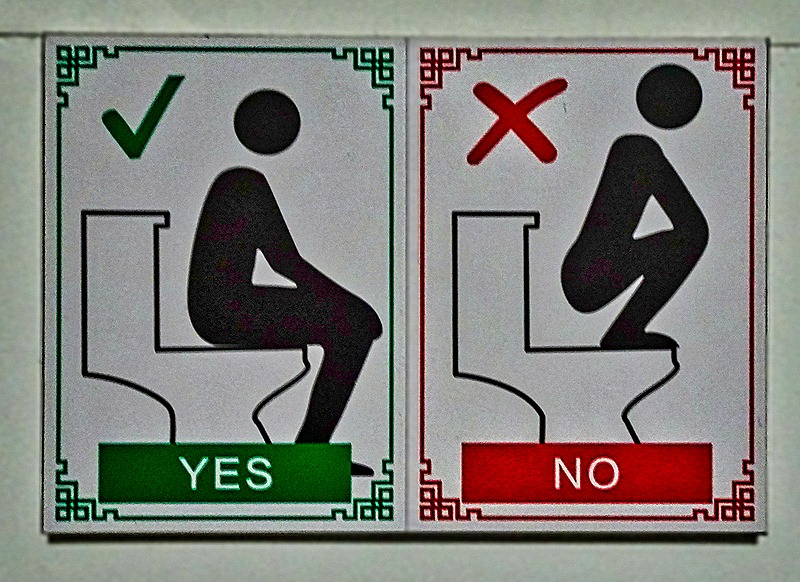
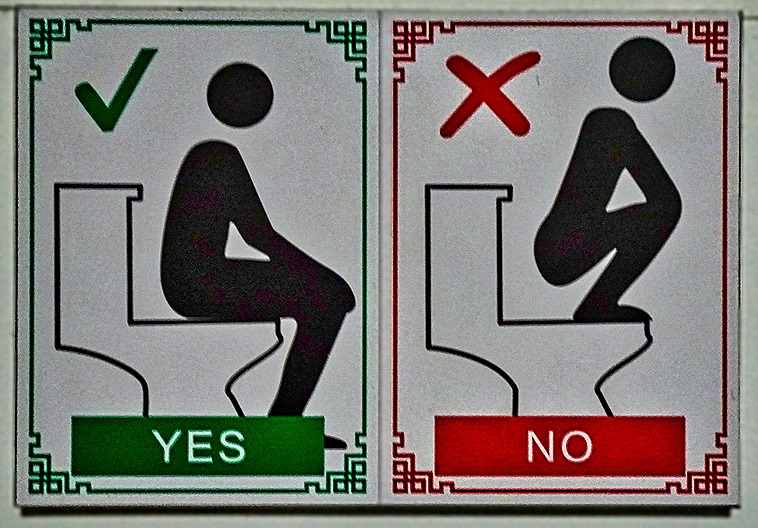
Since we are talking about a restaurant, this is probably a good place to mention one more thing about touring Asia . . . toilets, or rather the lack thereof. People in many parts of Asia, even in cities, squat over a hole in the ground for this purpose and have never seen a Western style toilet. If one has never used one, encountering a toilet must be bewildering. Here is a sign over a men’s room toilet in China which helpfully explains how it is used even for visitors who are illiterate. The picture is quite suggestive of the common response when no such instructions are available.
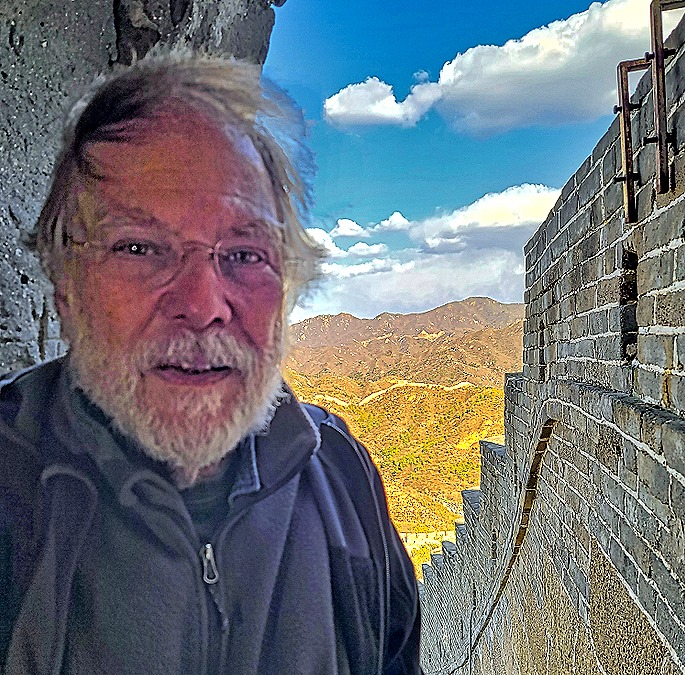
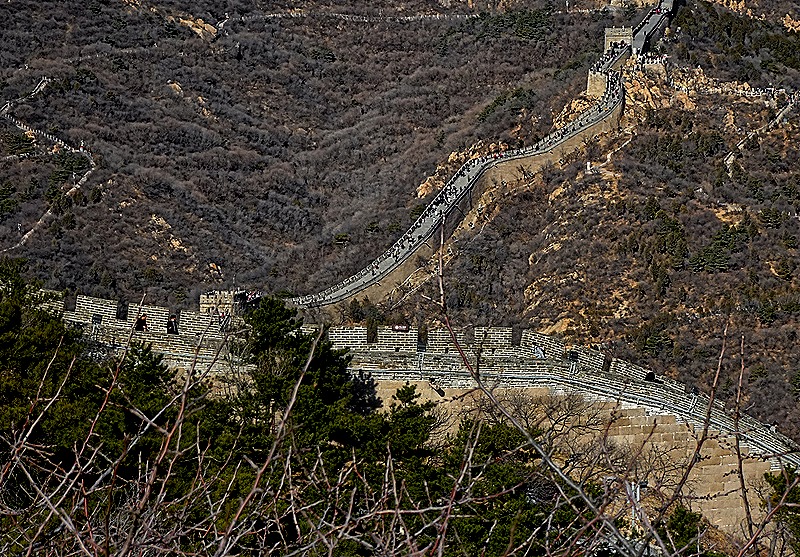
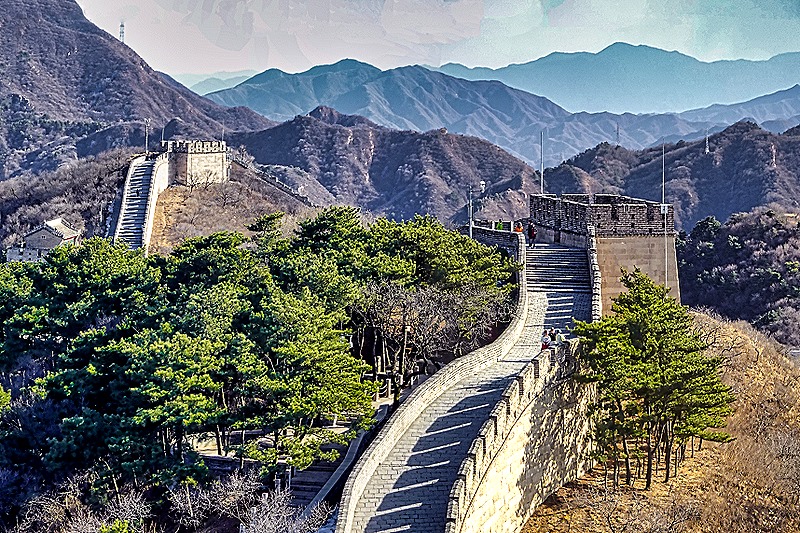
The Badaling section is the best restored and maintained portion of the Great Wall. Because of that, and because it is the closest to Beijing, it is often very crowded. In 2018, we have read, 10 million people visited this site and in 2019 a limit of 65,000 per day was instituted. We were extremely lucky in our visit, because not only did we have beautiful weather and clear air that allowed long distance viewing of other portions of the wall, but also (at least partially because we arrived in late afternoon) there were very few people other than our group in the area. A funicular here (this is the only section of the wall that has one) took us up the steep hill from the parking lot to just below the wall itself.





The Great Wall of China is more than 13,000 miles long. The first sections of the wall were built between the 8th and 5th centuries BCE, mostly of earth and stone. In the early 3d century BCE, however, the first emperor of a unified China had these walls destroyed because they were no longer at the border of his empire, and built new walls further north. Most of these ancient walls have eroded away long before now, with some of their materials carted away for use in other construction. In the 14th century CE the Ming dynasty began building a new wall along China’s northern border to defend against the Mongols. This wall was much stronger, built primarily of bricks and stone rather than packed earth. The Badaling section of the wall that we visited was built in 1504 and was the first section opened to the public in 1957. It is about 25 feet tall and 16 feet wide.
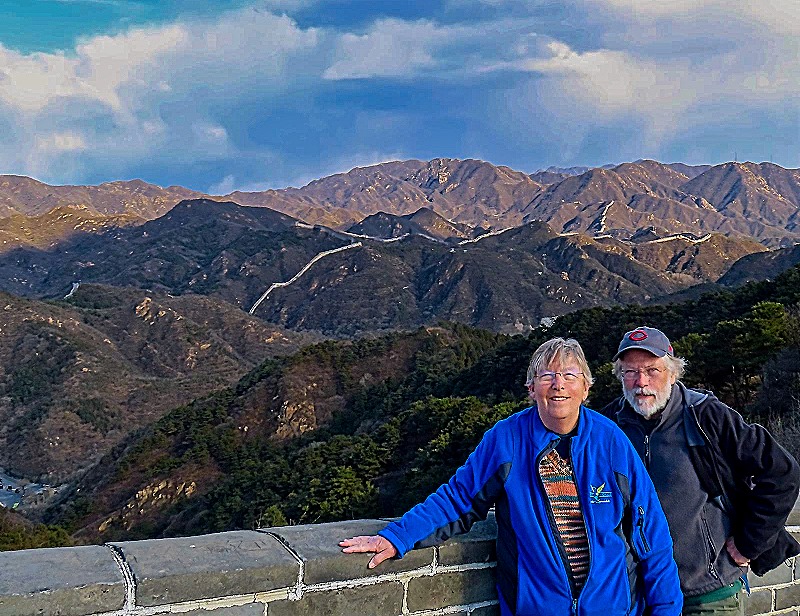
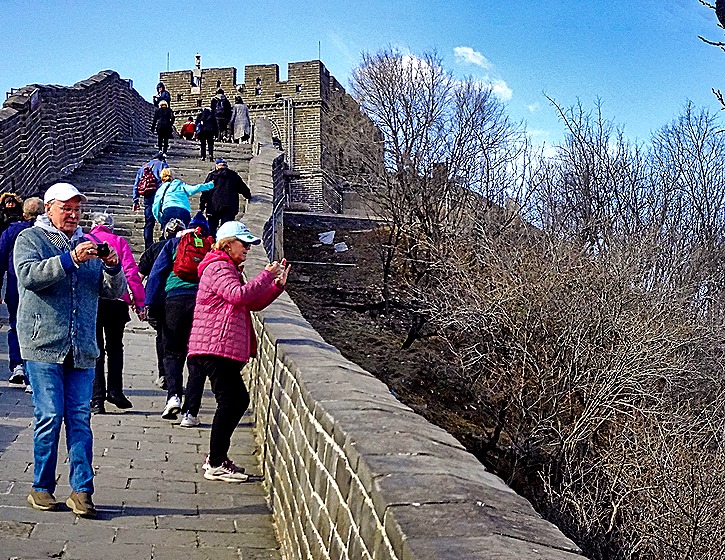


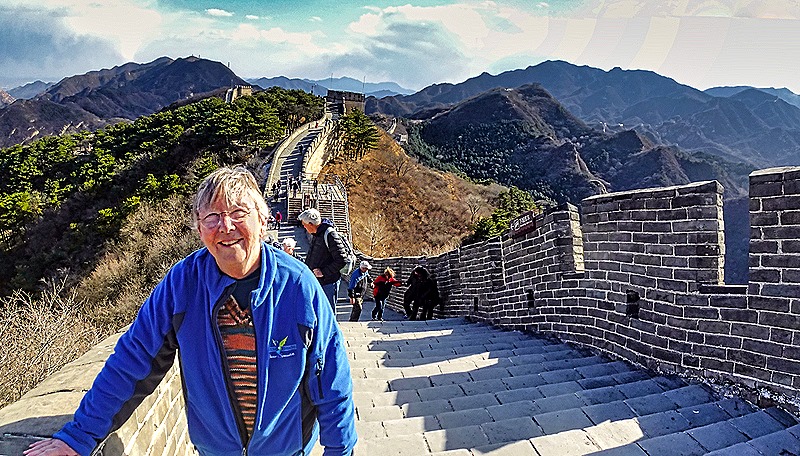
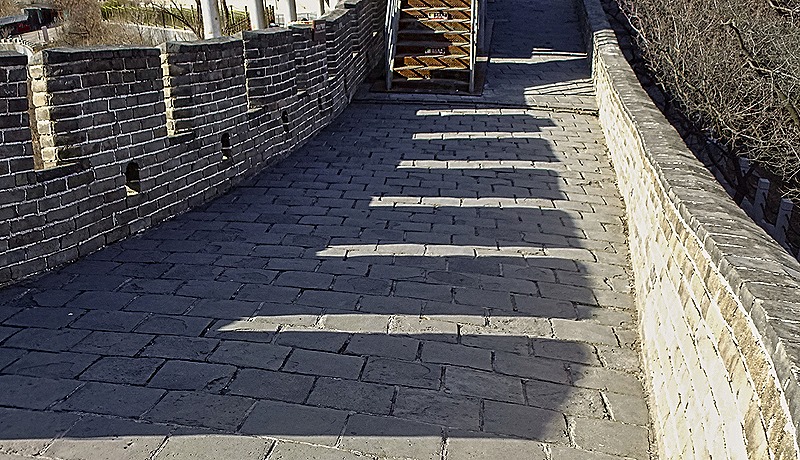
Note how few people are on the wall in these pictures; it almost seemed that the site had been reserved just for us! You can also see that the wall is crenelated on one side (which allows archers to fire through the openings without exposing themselves to enemy fire). Presumably the crenelated side faces away from China toward the enemy; the shadows show that this side faces west. This is very mountainous country and the wall undulates up and down with the hillsides. Among other things, this makes exploring the top of the wall challenging since it requires climbing some very steep inclines, steep enough to have steps in them. At the tops of the inclines are watchtowers and signal towers. . . tens of thousands of them across the entire distance of the wall.
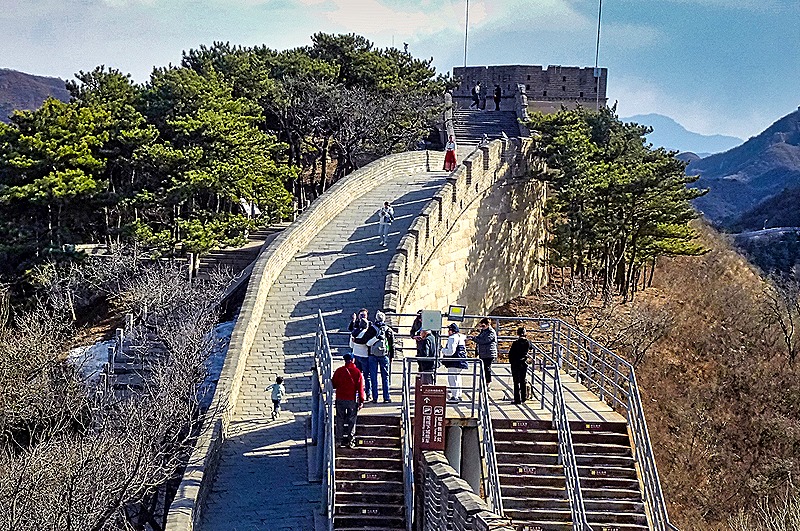
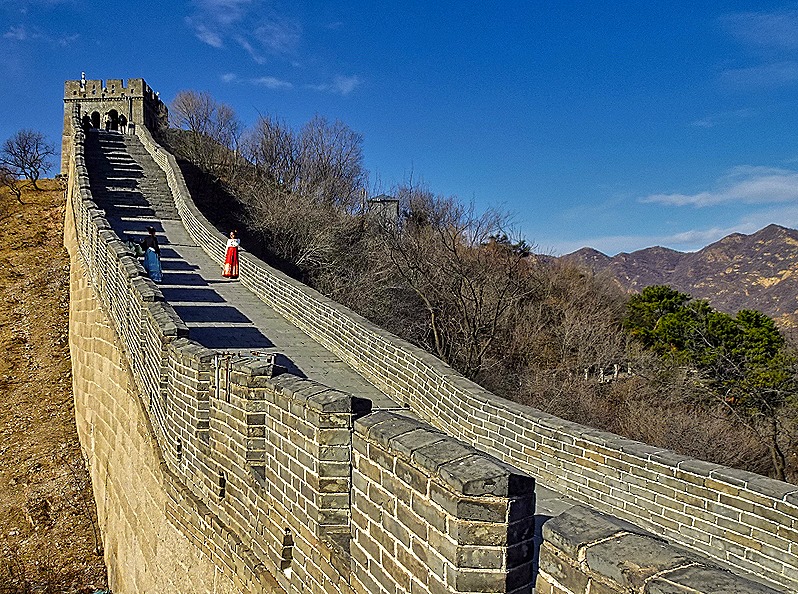
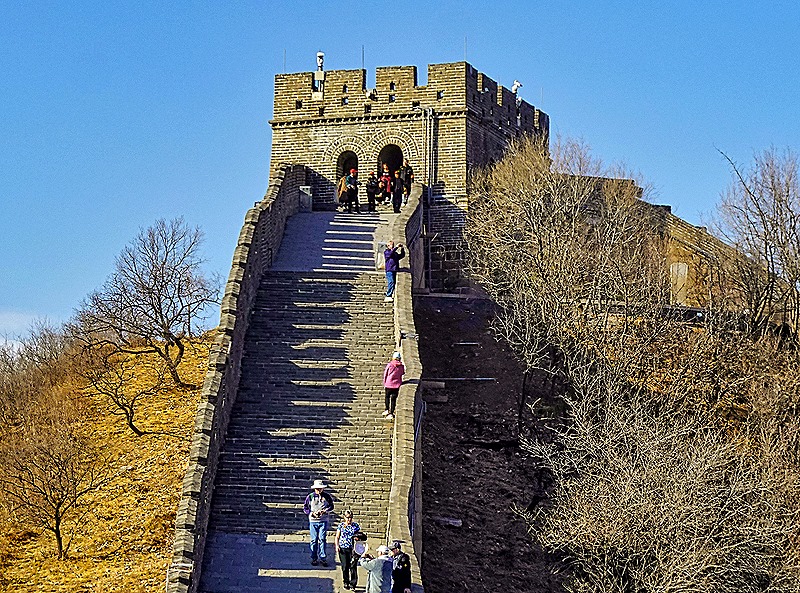
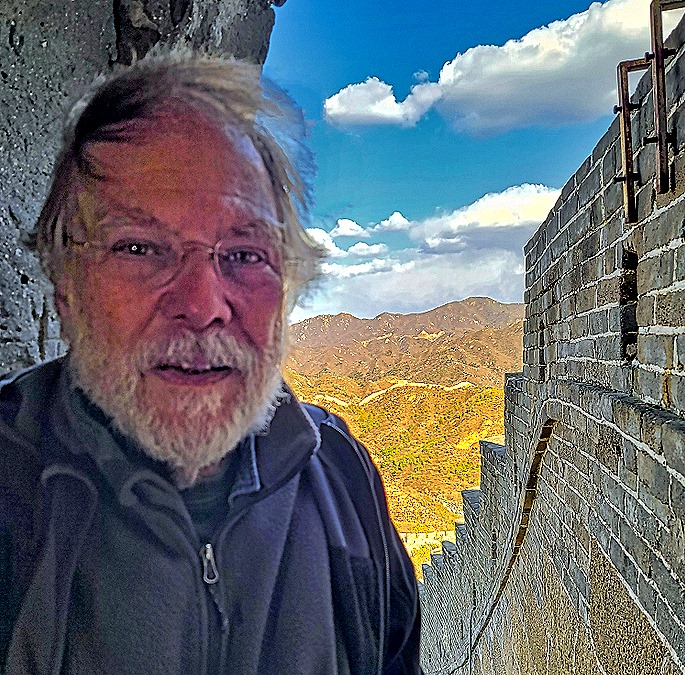
We did walk up and go inside this watchtower. Not much inside it today, but the views from the windows were interesting.



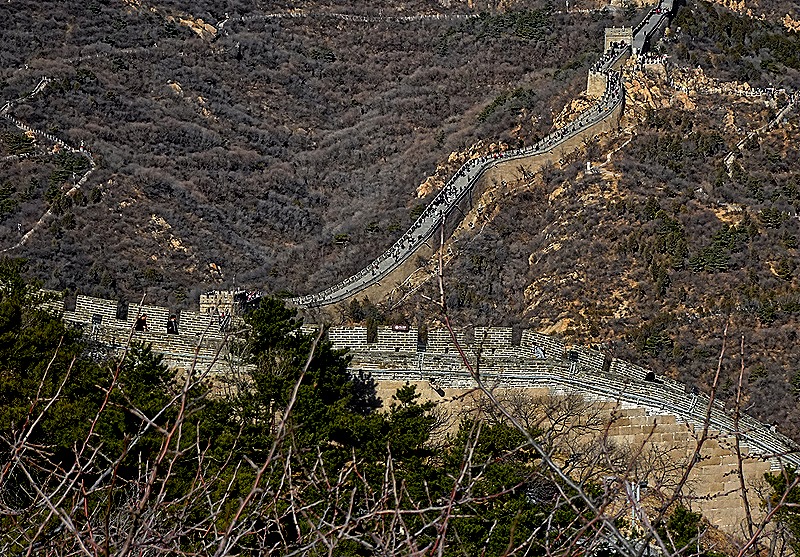
As seen in some of the pictures above, other sections of the wall could be seen in the distance from the top of the wall where we were. We aren’t sure how far away they are but they could be seen clearly on the day we visited.



The sun was dropping the whole time we were there and by the time we had to leave the shadows stretched almost to the opposite wall.
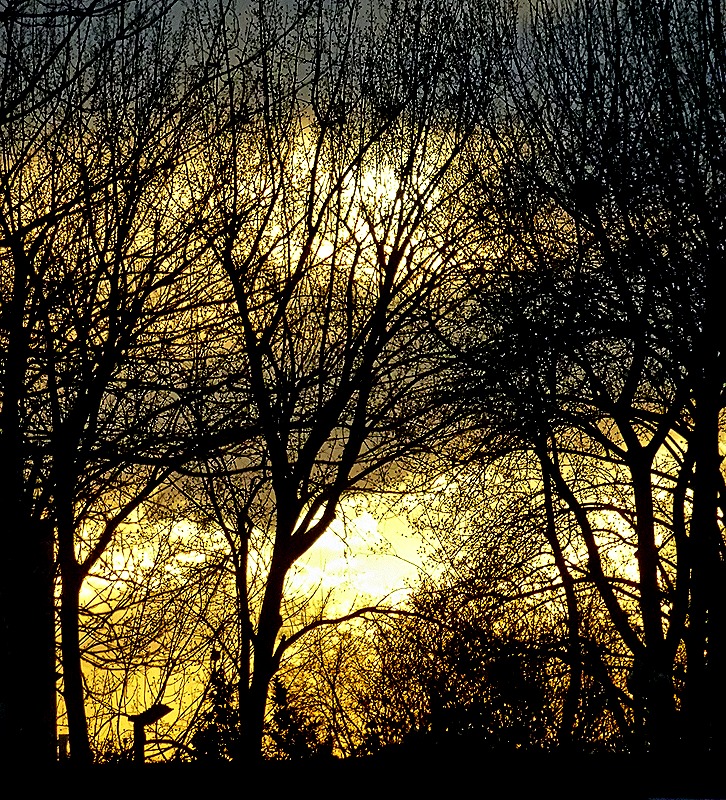
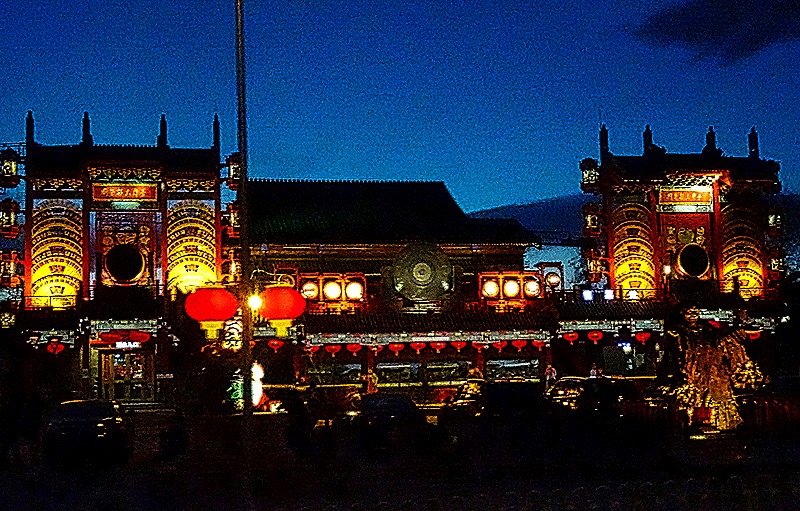
As we left we noticed a platform near the wall up on the mountain that appeared to serve as a cell tower, with a jumble of antennae. As we drove back toward Beijing we saw a fiery sunset through a leafless woods, then some lighted Chinese style buildings along the streets leading to our dinner restaurant.

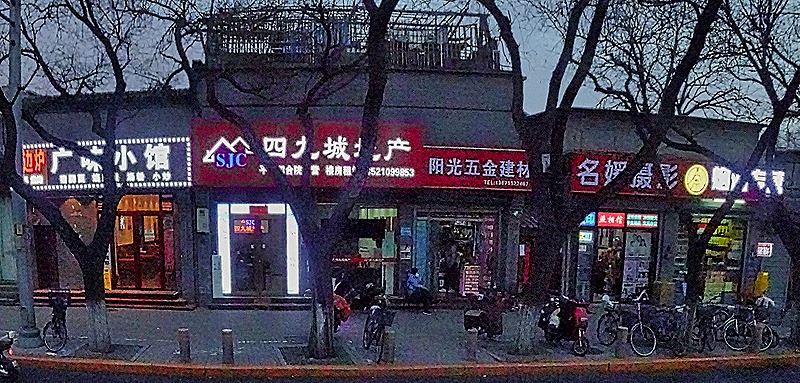

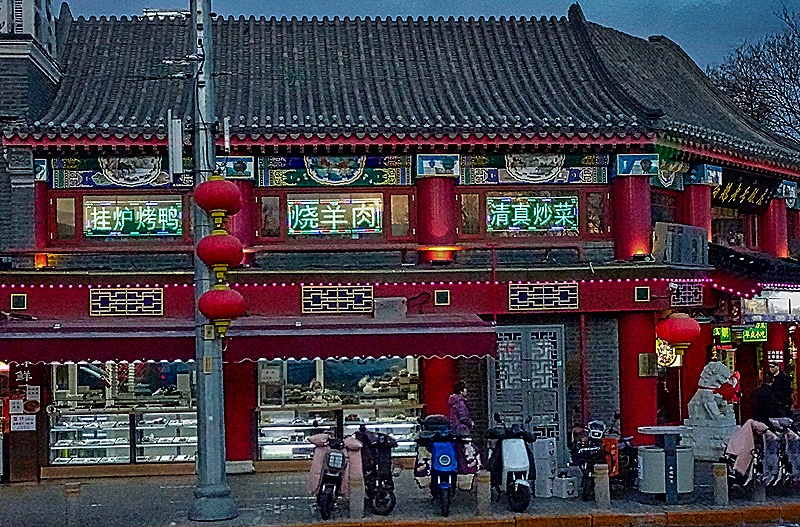


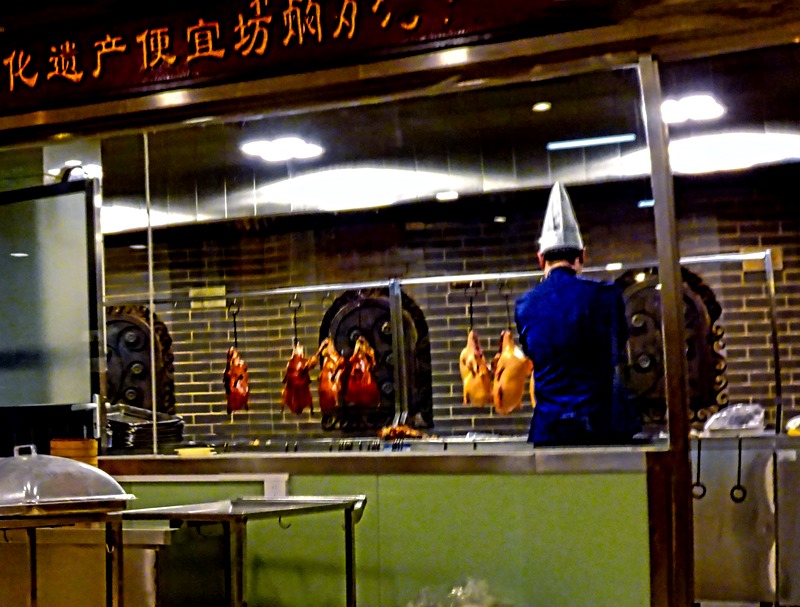
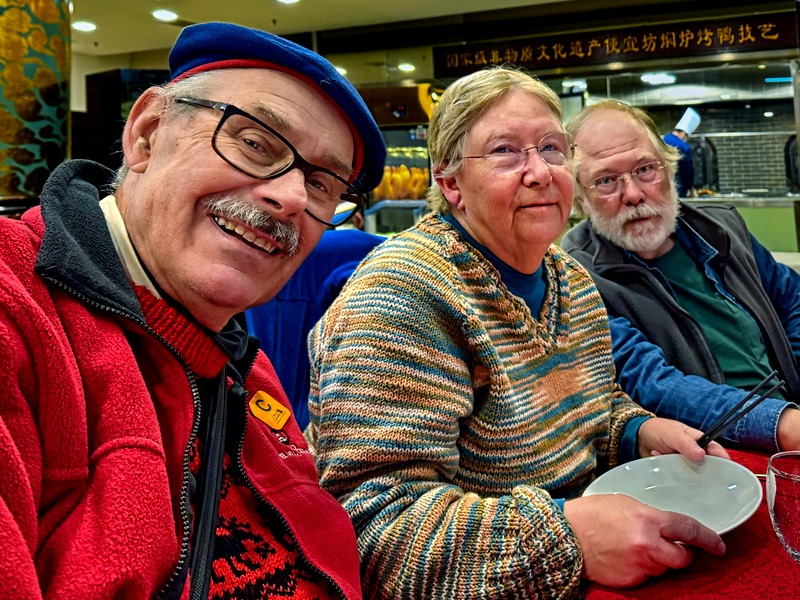
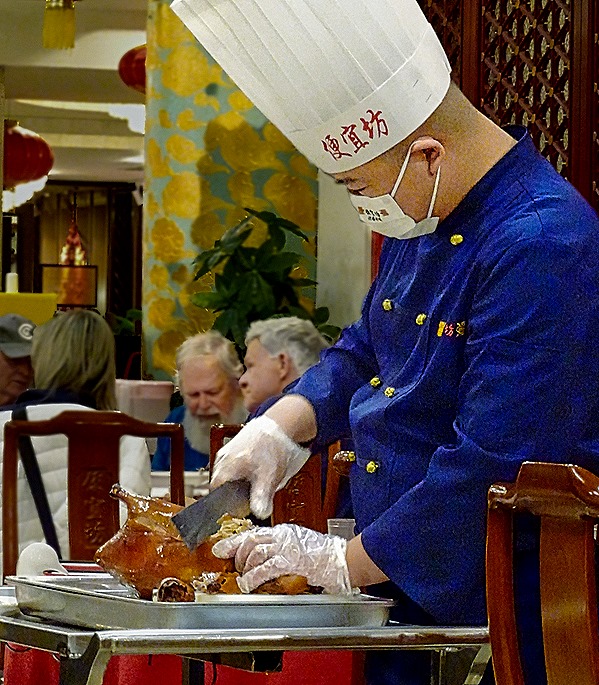
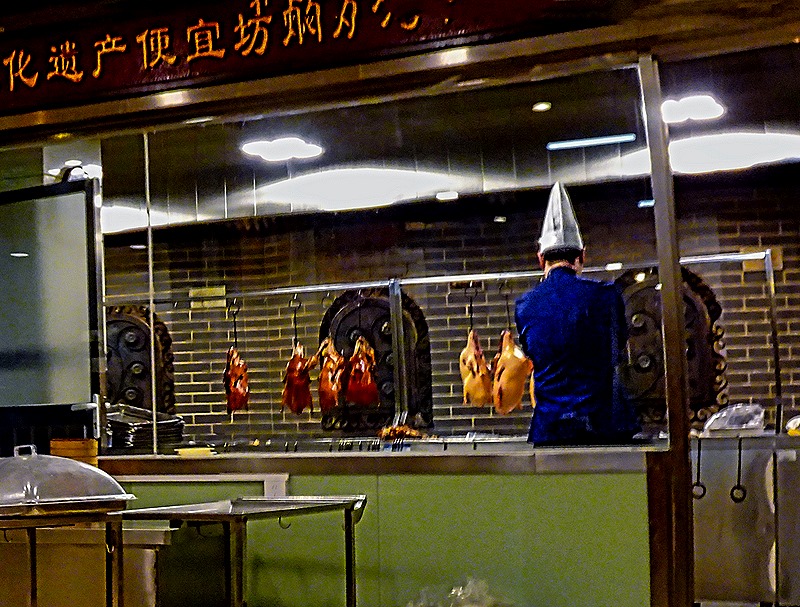
We had dinner in a Chinese restaurant where each large round table had a lazy susan in the center for sharing the many courses. The signature dish was Peking Duck (our guide explained that it is still called that even though the city is now Beijing). Many cooked ducks were hanging in the open kitchen and we watched the chef carving ducks not too far from our table. Yum.
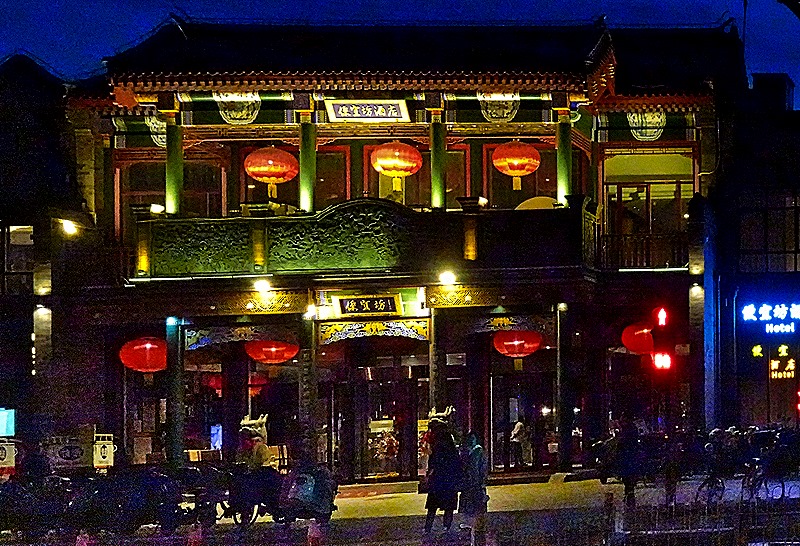

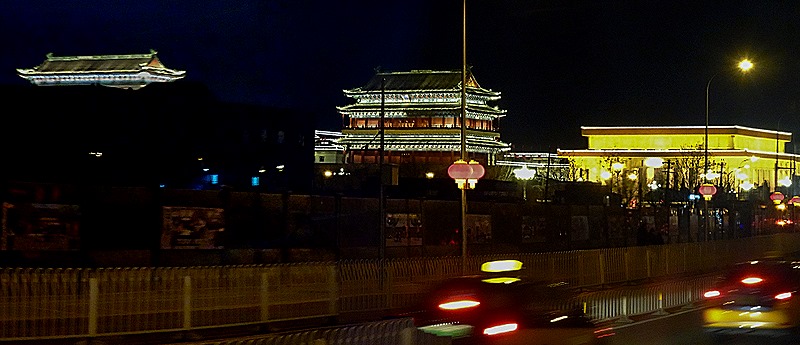
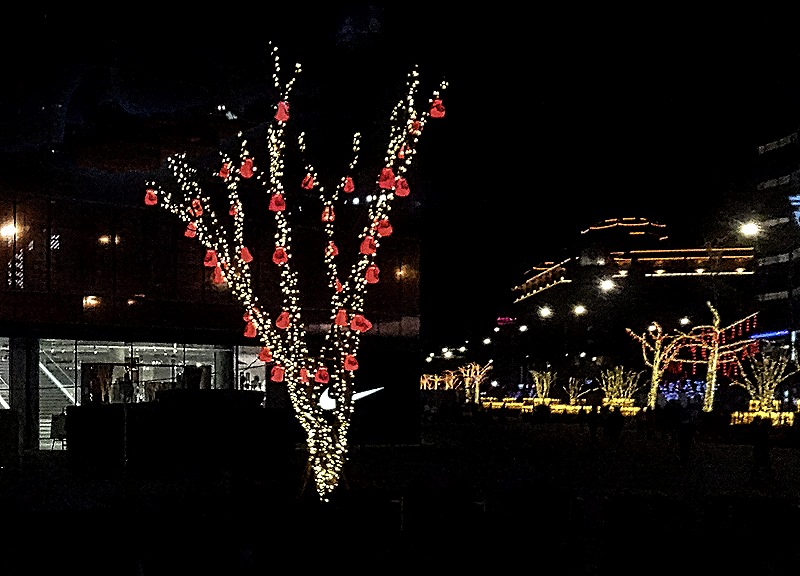
After our sumptuous dinner we drove to our hotel, the Regent Beijing, a luxury hotel not far from the Forbidden City. Again we passed through streets with lighted buildings and some lighted trees. Notably in the first picture the building on the right is a back view of Mao Zedong’s mausoleum and next to it is Qian Men gate, the front entrance to Tiananmen Square. We haven’t identified the third building whose lighted roof is further to the left, but it might be the archery tower associated with the Quian Men gate. The last picture in this group is a view through our hotel window of the lighted street below.


 We had a very nice hotel room but we did not stay up late to enjoy it because in the morning after breakfast we were scheduled to leave at 7:30 AM. It would be a long and enriching day.