
Da Nang, Vietnam — 2024
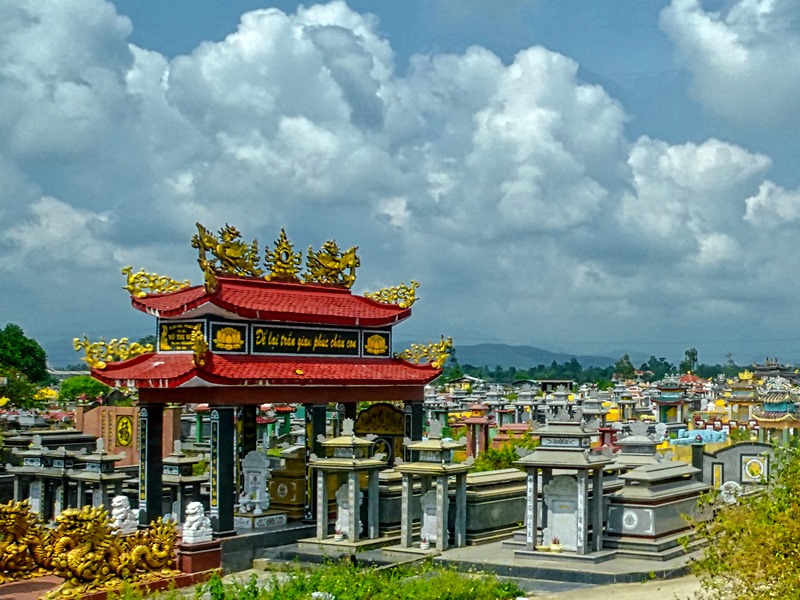
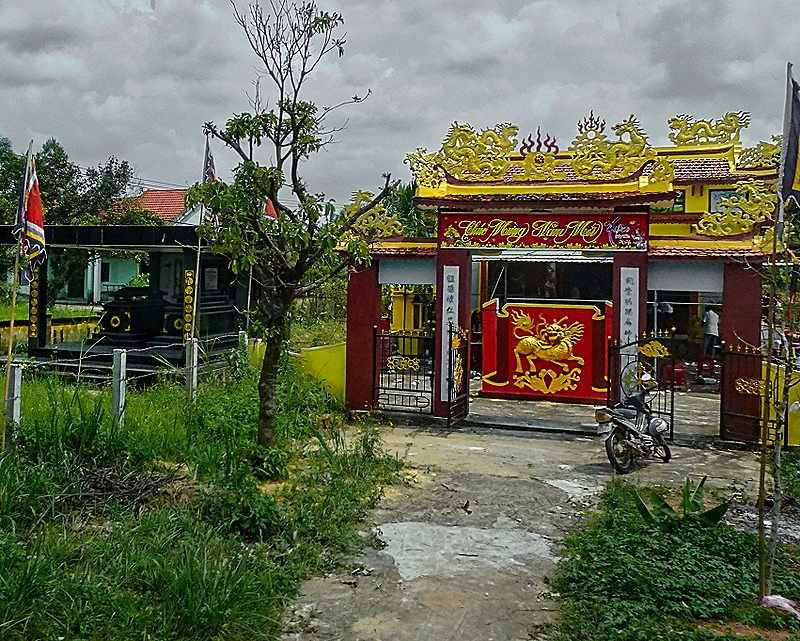
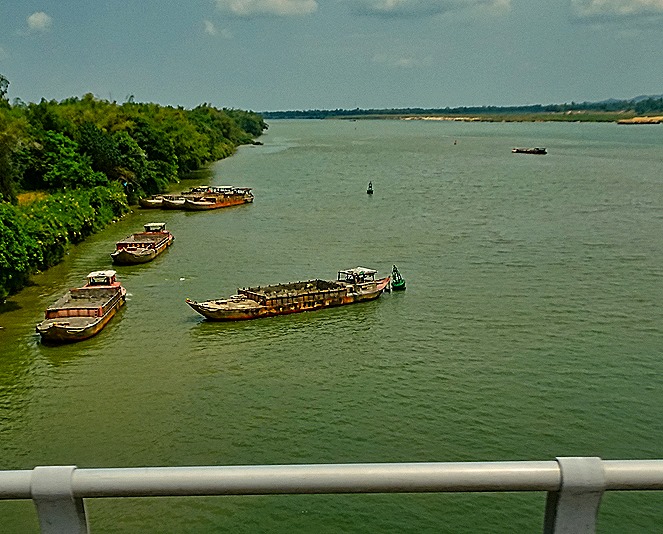
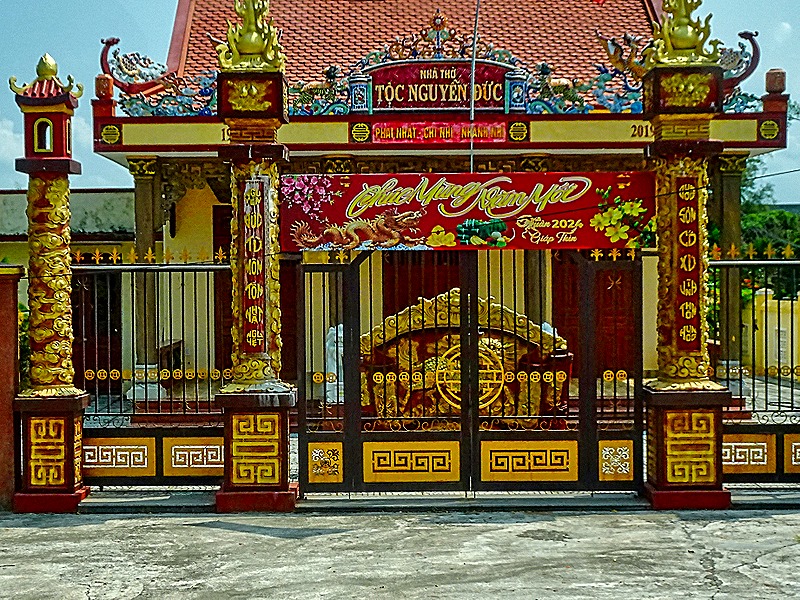
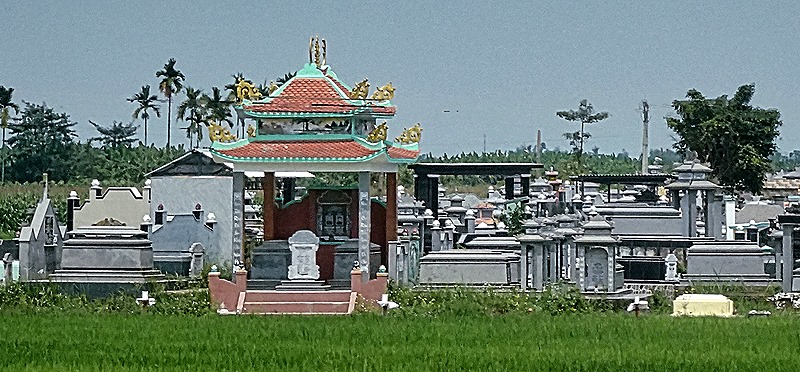
We spent March 19 docked in Da Nang, the third most important city in Vietnam with a population of about 1.3 million people. It is the most important port in central Vietnam, becoming that only when the Vietnamese king barred western ships from entering the previously dominant harbor of Hoi An. We visited Da Nang previously in 2016 for an overnight stay. We spent the first day in Hue, the last imperial capital: https://baderjournal.com/2016/04/10/; we spent the second day in Hoi An: https://baderjournal.com/2016/04/13/danang-vietnam-day-2-hoi-an/, Today our prime objective was the ruins of the ancient temple complex of the Cham people in My Son. This was about a two hour bus ride away, so we got started early. Passing through small towns and countryside we saw some interesting buildings, including several cemeteries, and a class of schoolchildren.




My Son was the religious and cultural center of Champa, which occupied most of what today is central Vietnam and was populated by the Cham people. The Cham were the original indigenous people in this area, having immigrated by sea some 2,000 years ago. They were heavily influenced by India and practiced Hinduism. My Son was a large complex of Hindu (and later Buddhist) temples built between the 4th and the 13th centuries, with each new king adding a new temple complex. The temples were dedicated to the Hindu god Shiva. It is thought to be the longest inhabited archaeological site on the Southeast Asia mainland.
Over the centuries there was a great deal of fighting between the Cham and others in the area, particularly the Viets and the Chinese. In 1832 the Vietnamese annexed what remained of the Champa kingdom. My Son fell into disuse after that and was largely forgotten, reclaimed by the jungle. A French archaeologist rediscovered it in 1898 and in 1937 the French began to restore the temples. But during the war in the 1960’s the Viet Cong established a base there and in August of 1969 US B-52s carpet bombed the area for a week. Of the more than 70 temples documented by the French at the beginning of the 20th century only 18 structures remain.
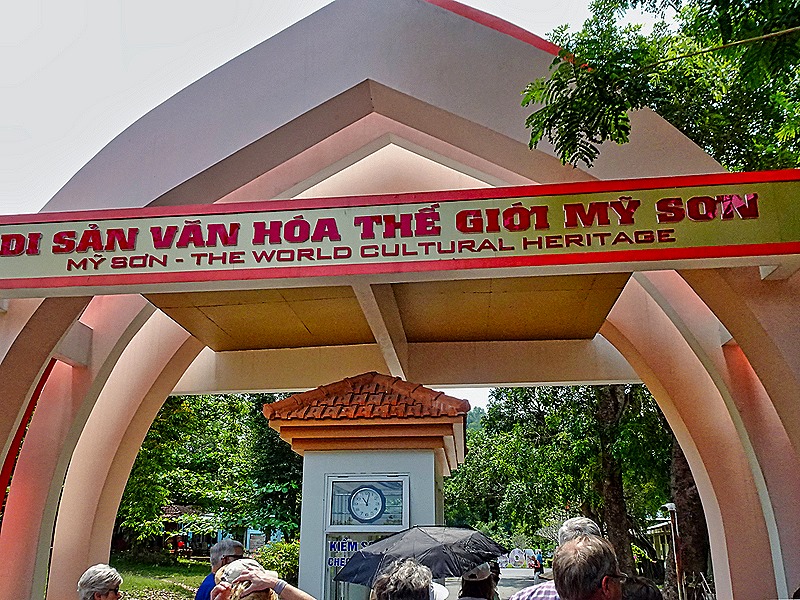
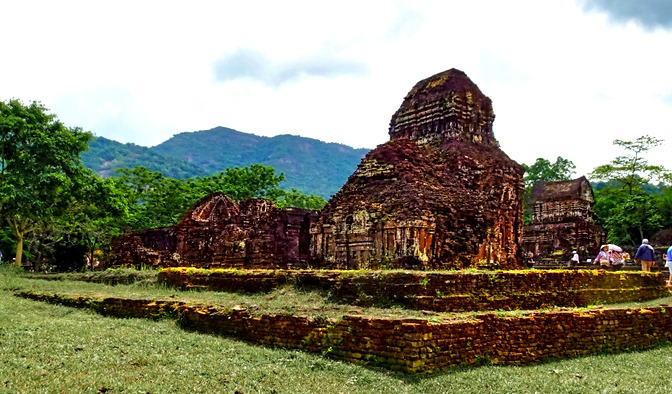
The bus dropped us off near the entrance but there was still quite a walk to reach the archaeological site. As we walked down the road our bus surprisingly pulled up, apparently having talked the guards into letting it drive us further, and took us to a spot near a bridge over the river where there were some small snack and souvenir shops. Beyond that point the road became a narrow walking path so the bus could go no further, but there was still a good distance to the site . . . and it was getting pretty hot. Nonetheless, we persevered and reached the first of two temple complexes we visited.

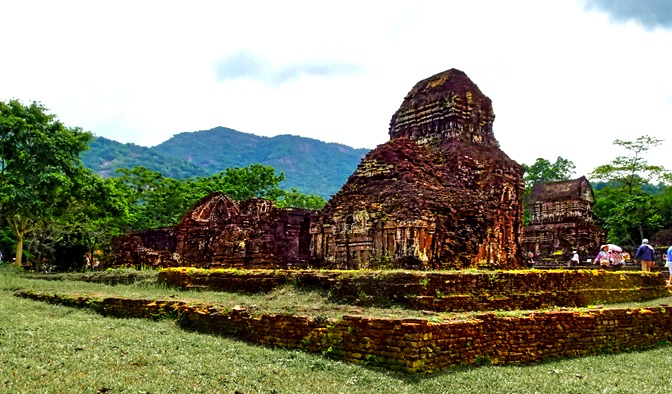

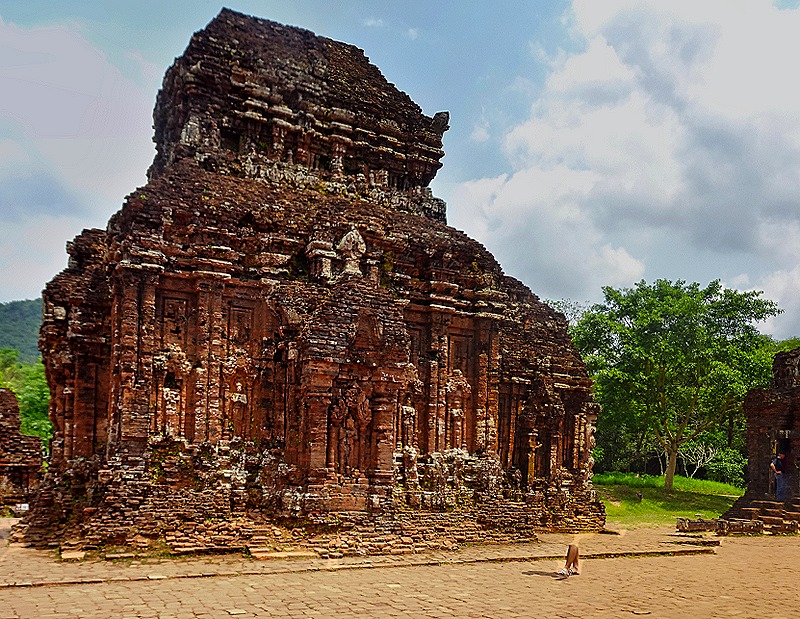
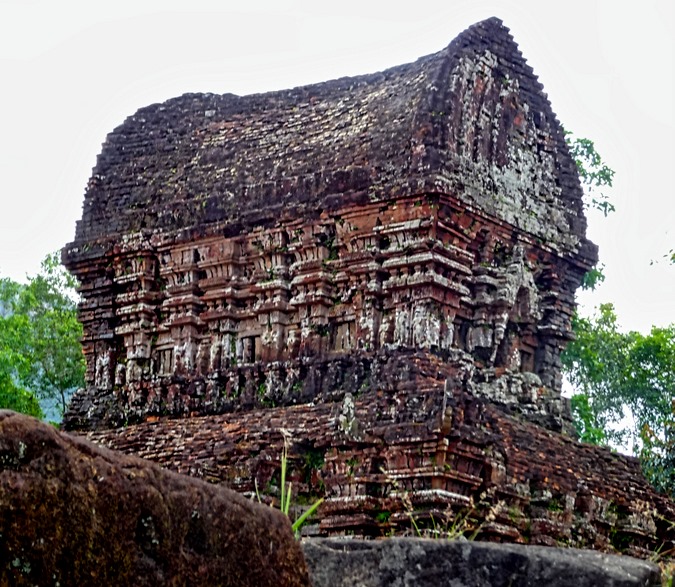
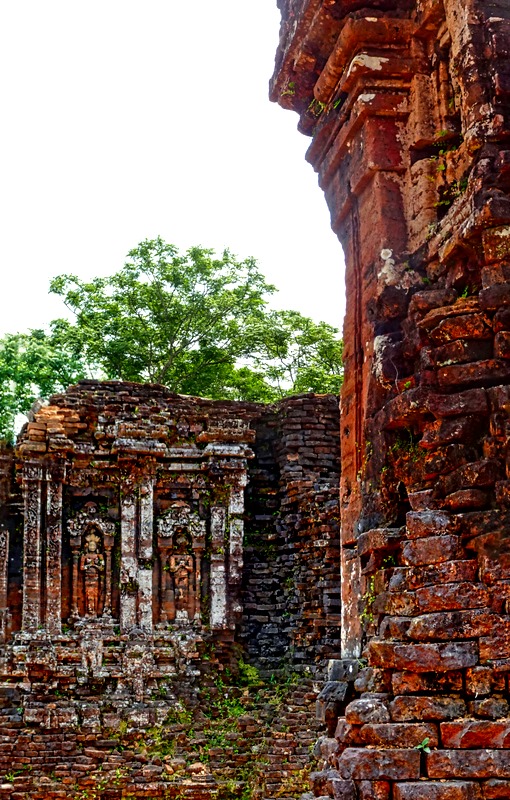
While we have been calling this a temple complex, not all the buildings are temples. There are storage buildings, perhaps some living quarters for religious personnel and the Champa monarchs were buried here, so there may be some tombs. Unfortunately we can’t really tell you which buildings are which, but it seems that the larger buildings are the temples and the smallest ones the storage units. These structures are built mostly of red brick and held together by a substance that is not visible from the outside. Originally, in the 4th century or so, temples here were made of wood. But a huge fire destroyed them early on and after that brick was used instead. Some of these buildings rise to a narrow, almost blunt, top. But others are topped by what looks like a smaller building with a saddle shaped roof.




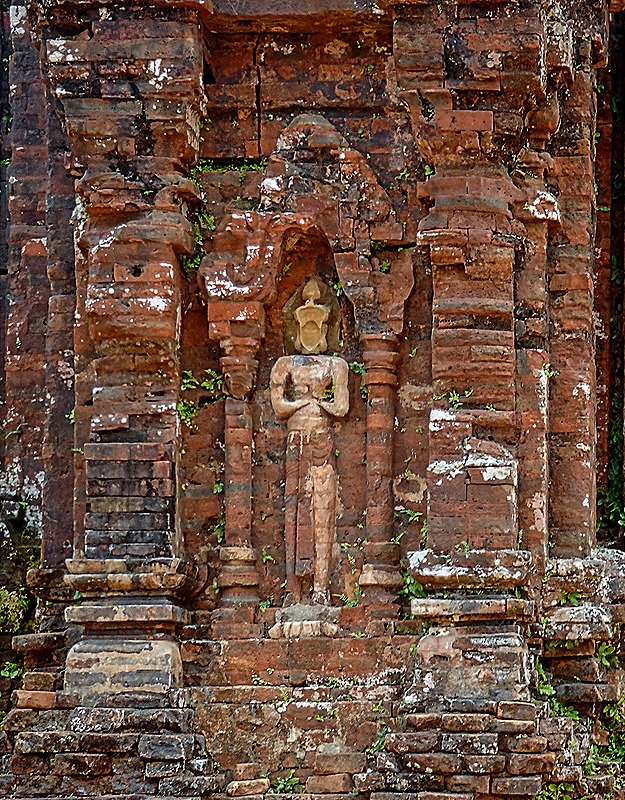
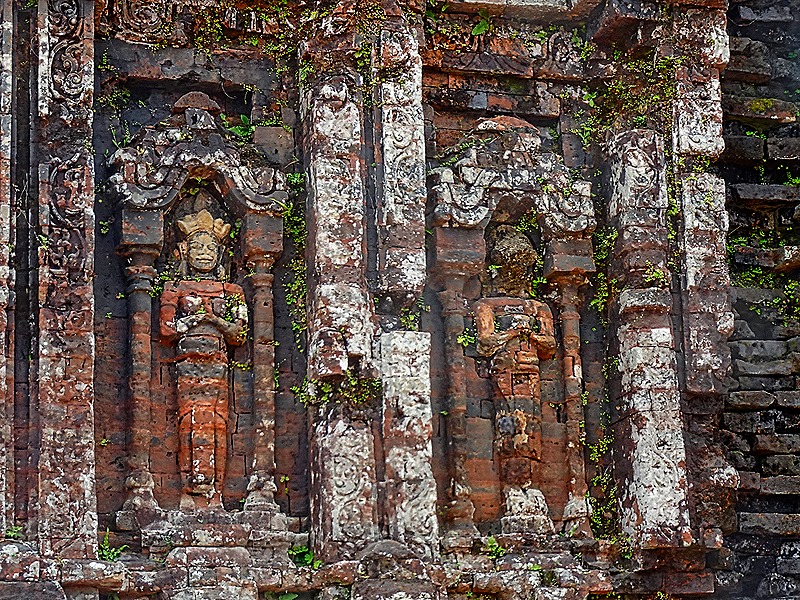
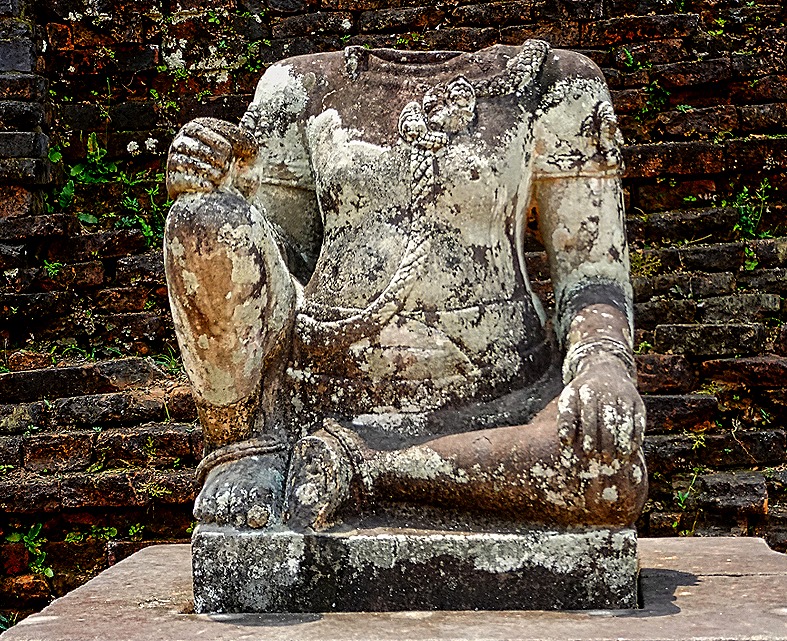
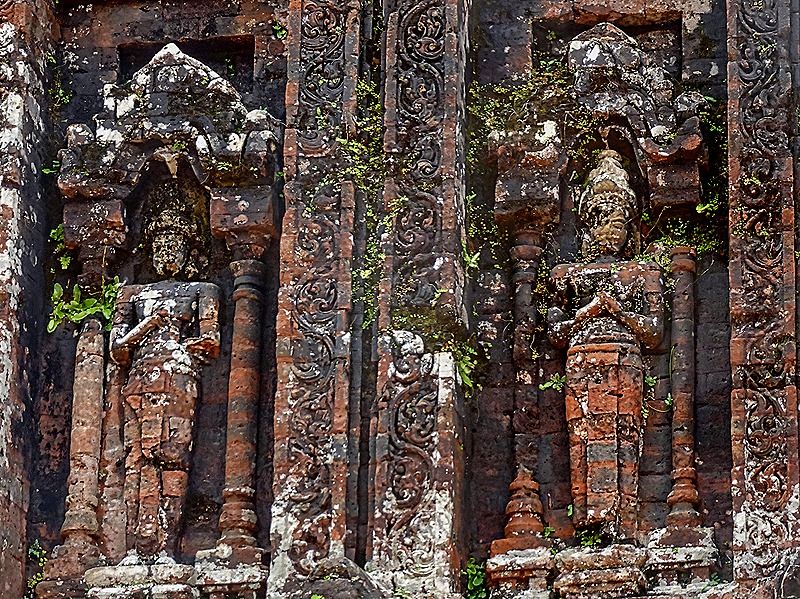
Most of the artwork from this site that survives has been moved to European museums or the museum in Da Nang we visited later. We did see what is left of a sitting headless sculpture and there are other relief sculptures that were carved directly into the brick walls.

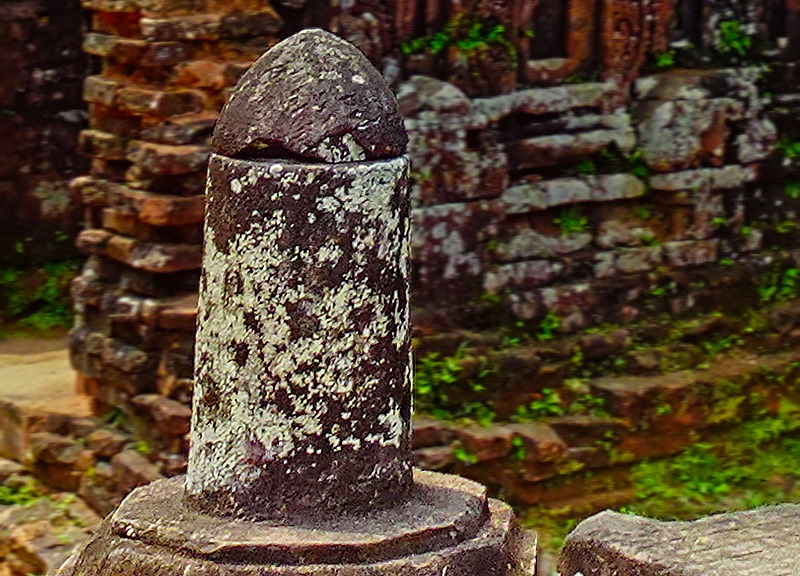
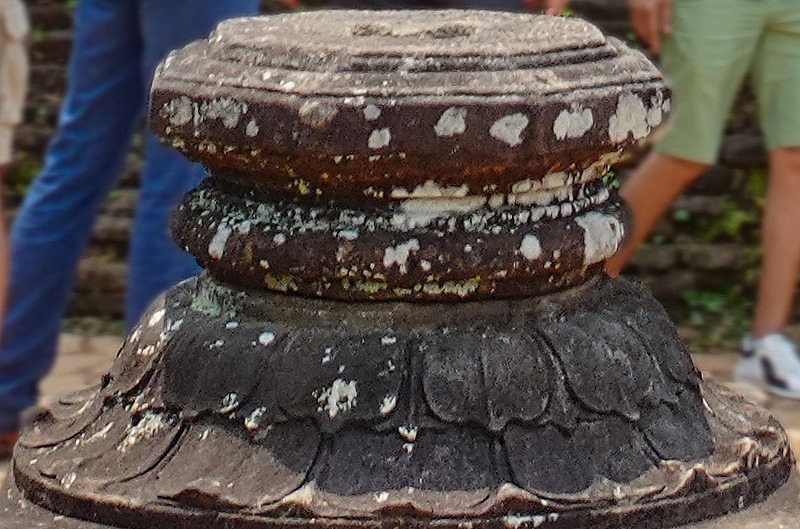
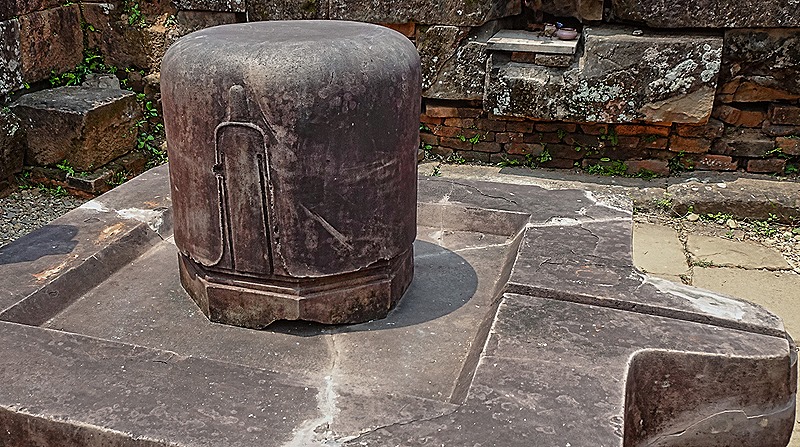
The Cham people often included a phallic fertility symbol called a lingam in their temple complexes. Sometimes these are reduced to a cylinder shape, and they are sometimes enclosed in a metal cover called a Kosa which can have relief decorations. Some of them are gone and only the round base remains.
As we have mentioned, much of this area was destroyed or badly damaged by US bombing during the war and bomb craters can still be seen. But reconstruction is continuing. The French archaeologists took many pictures and made many drawings and wrote descriptions of what was here early in the 20th century, which gives a lot of guidance to the restorers. You can tell what is restoration work because the bricks are a lighter color and look newer than the old ones worn over time. We also noticed several buildings with scaffolding, but we are not sure whether that is for restoration work or just to give extra support to buildings in danger of collapse.


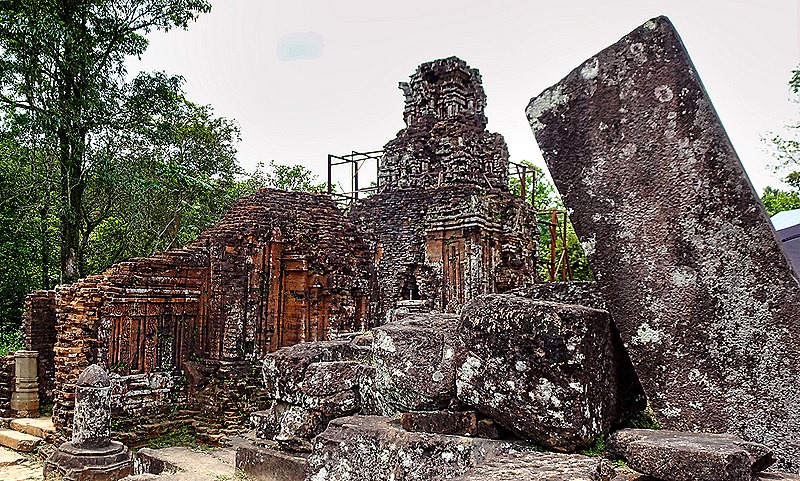
Some of the later buildings (still quite old) have details, like pillars, made of stone with carved decorations. There are also some steles with writing carved into them, although we don’t know what language they are. We understand that some of these memorialize the kings who built the temples.


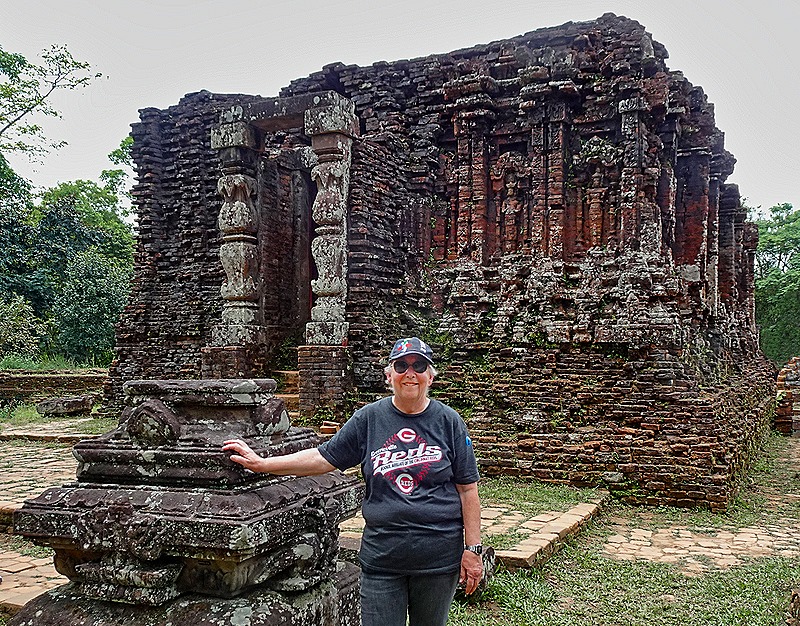

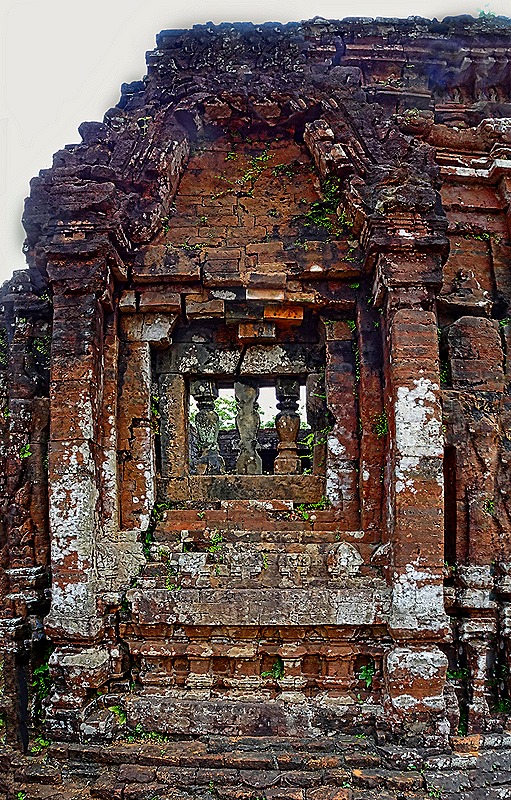


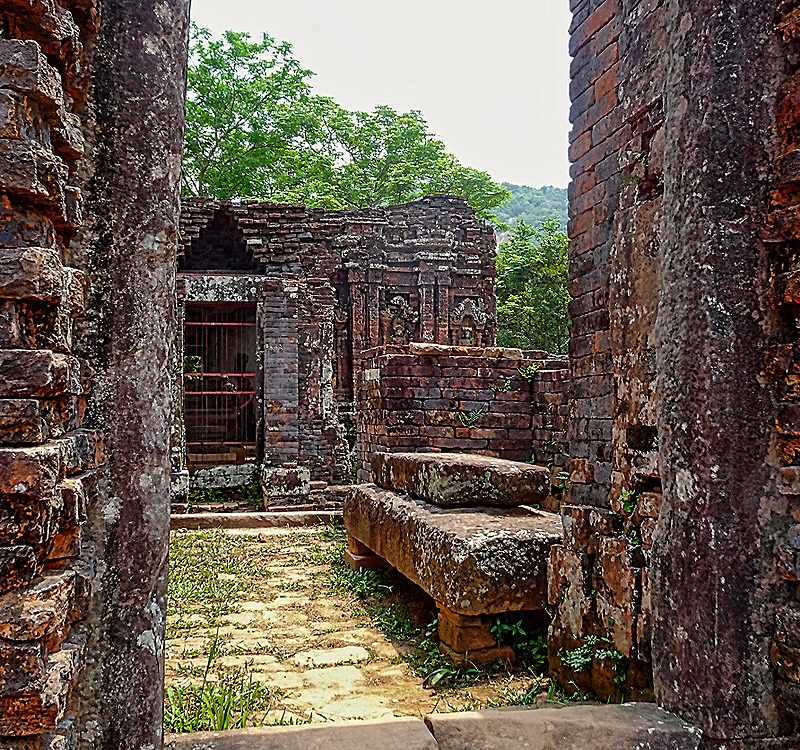
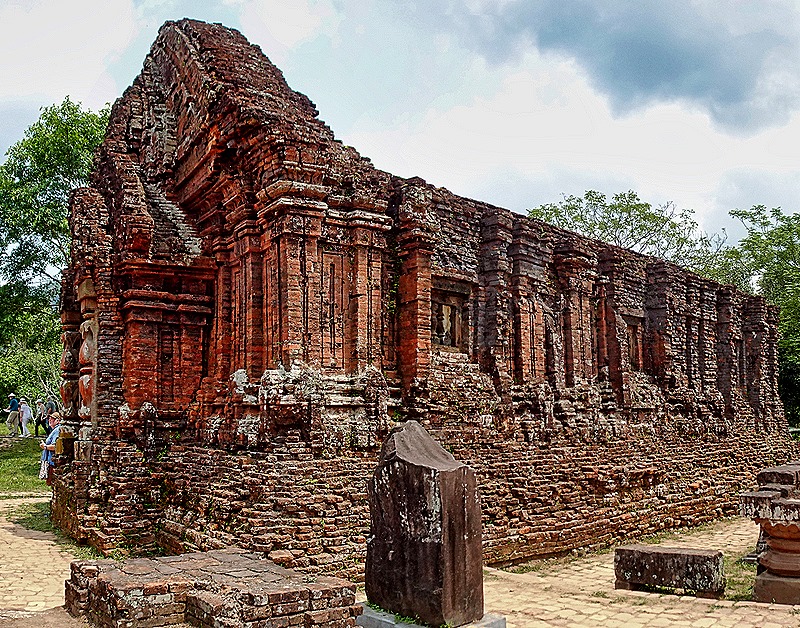
We walked a little way through the woods and came upon another complex of temples. On the way we passed a few more that were partially hidden by the jungle. The second complex had a much greater concentration of lighter colored new bricks, so it must have received a large amount of restoration already.


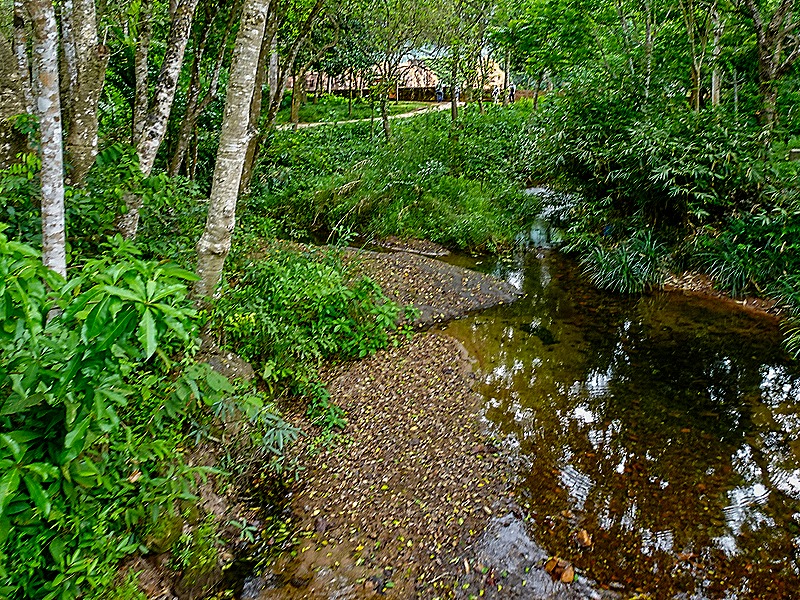
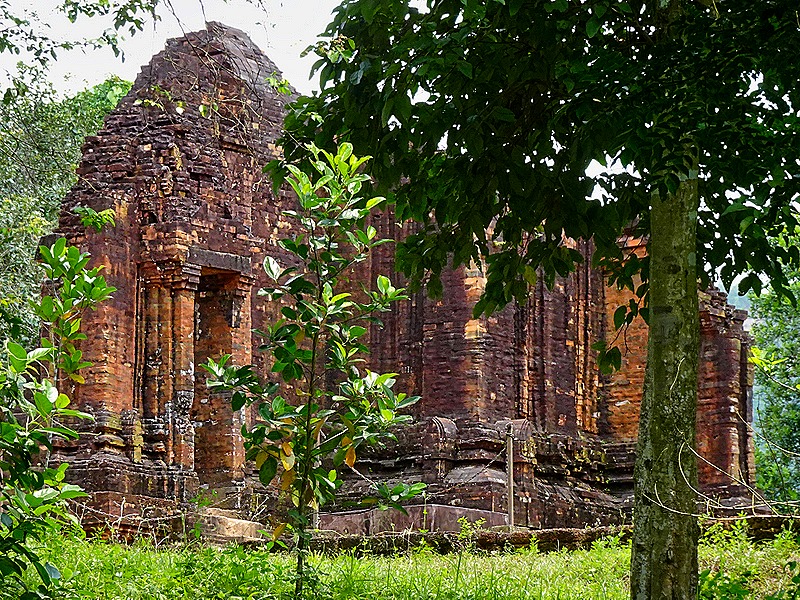

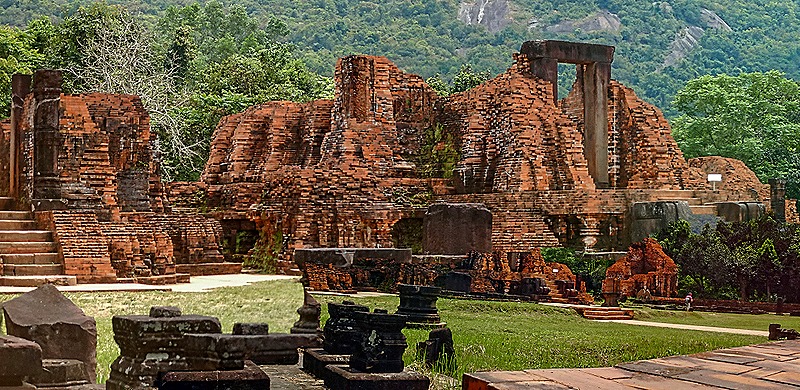
Among other things, this complex had triangular niches in some of the walls that may once have contained sculptures. It also had some well preserved (or well restored) pillars, doorways and corridors. You could really see the new bricks, sometimes looking more like piles than buildings (maybe some of them were).
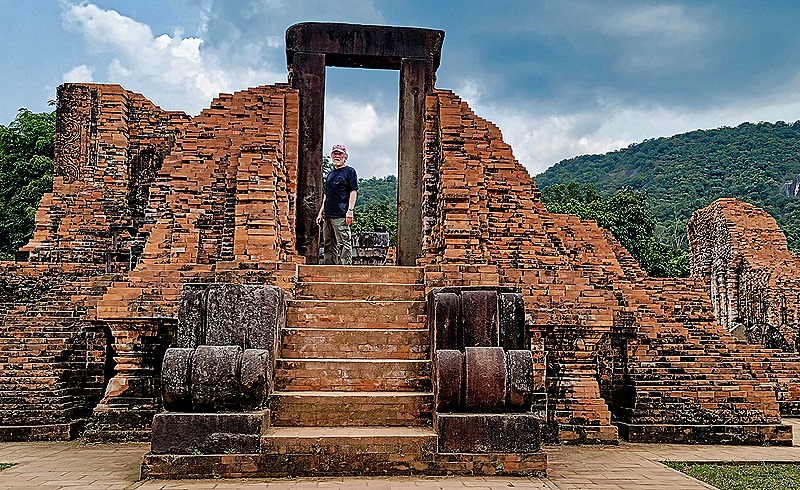
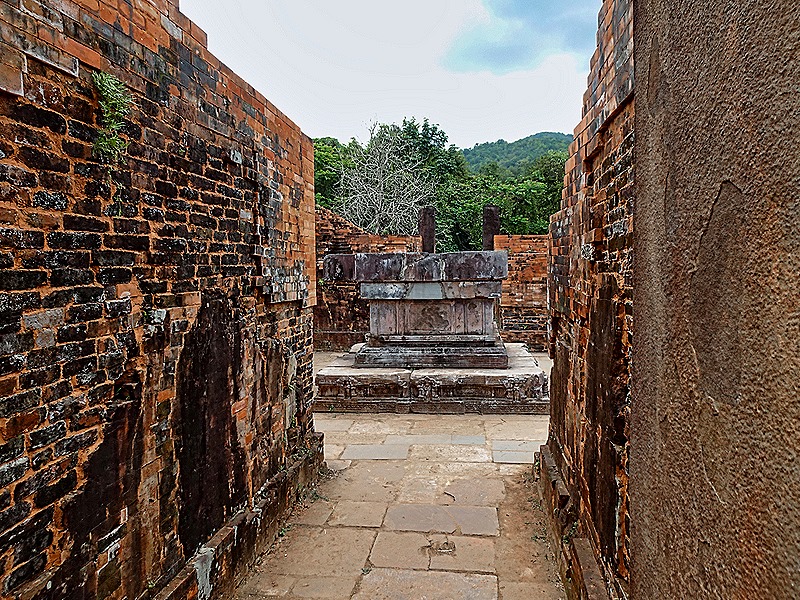


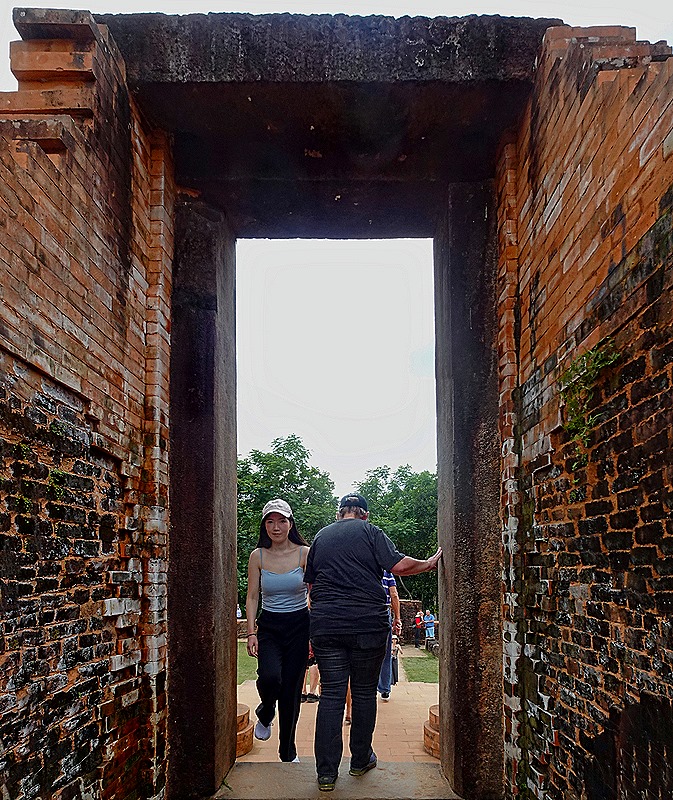


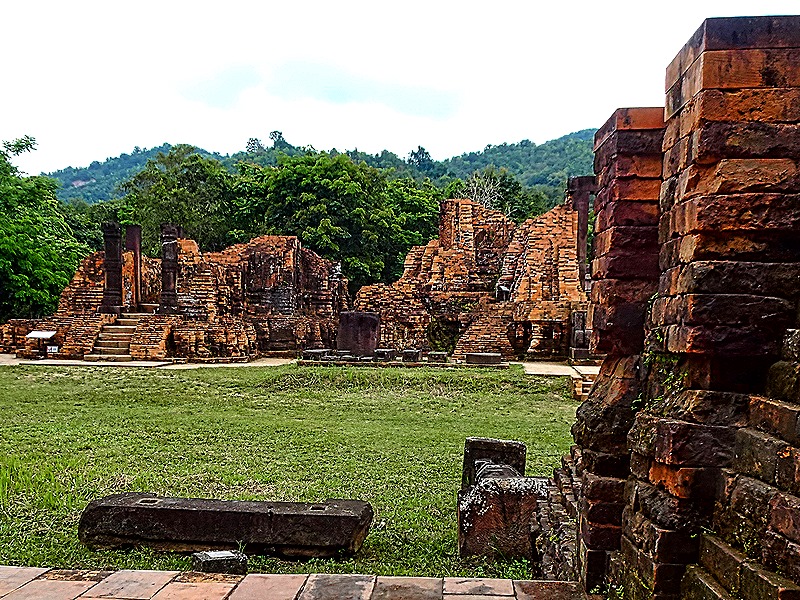
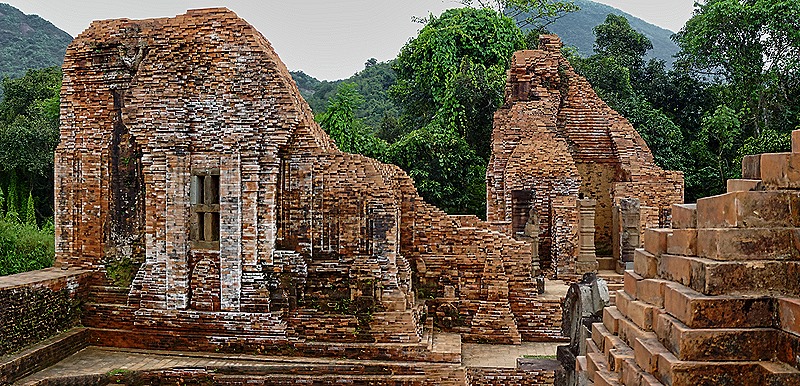
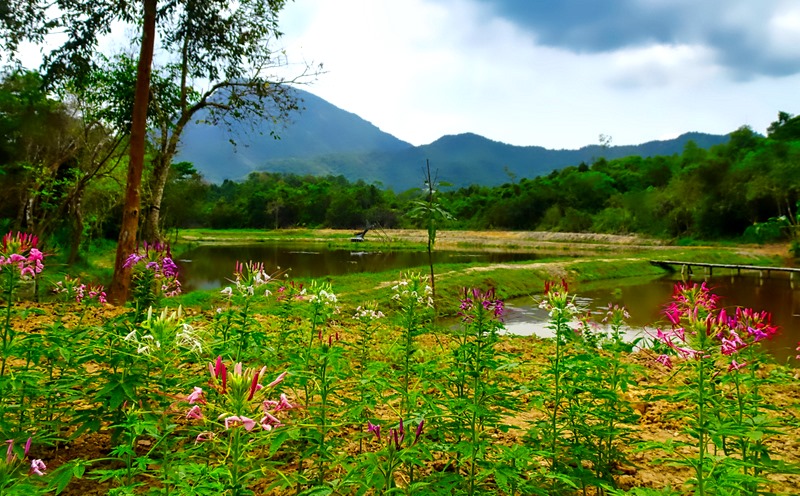
We left the archaeological site to return to the bus at the entrance. This time we had to walk the whole way and, although the surroundings were nice, it was really very hot. Probably not a good choice for people with walking difficulties especially since our guide was always in a hurry. We saw many flowers in the woods and fields and along a man made water feature, perhaps a reservoir. We did pass one more of the old buildings up on a hill in the woods.
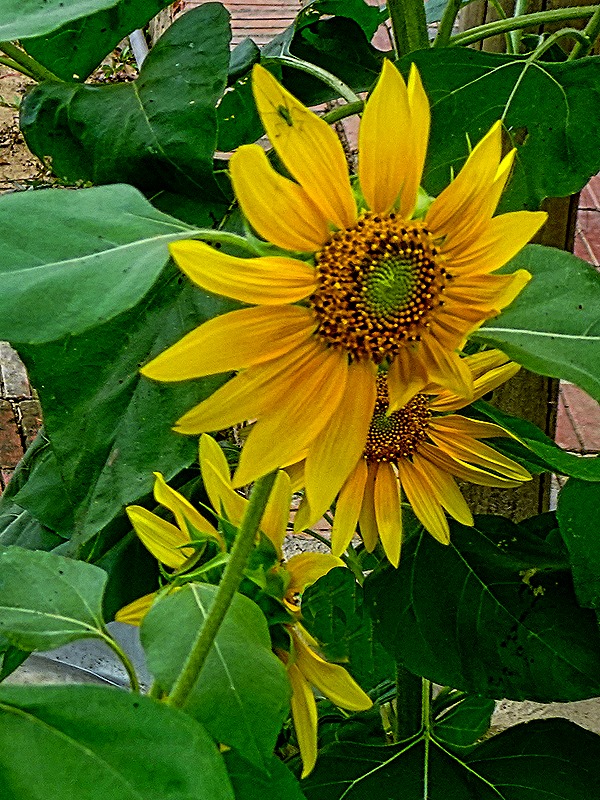

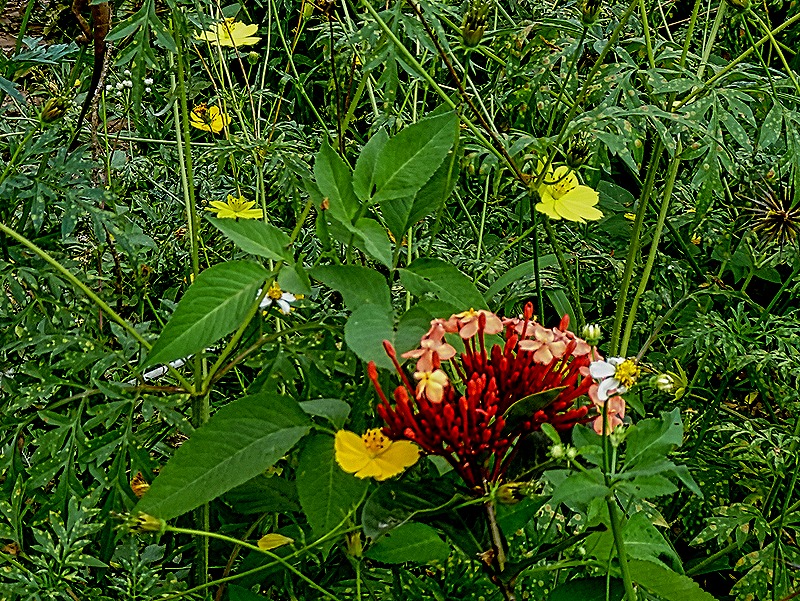
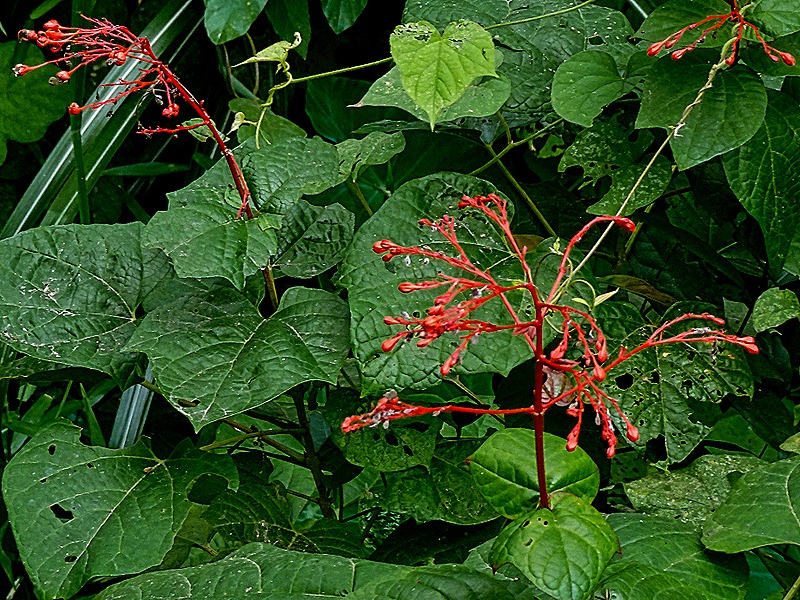

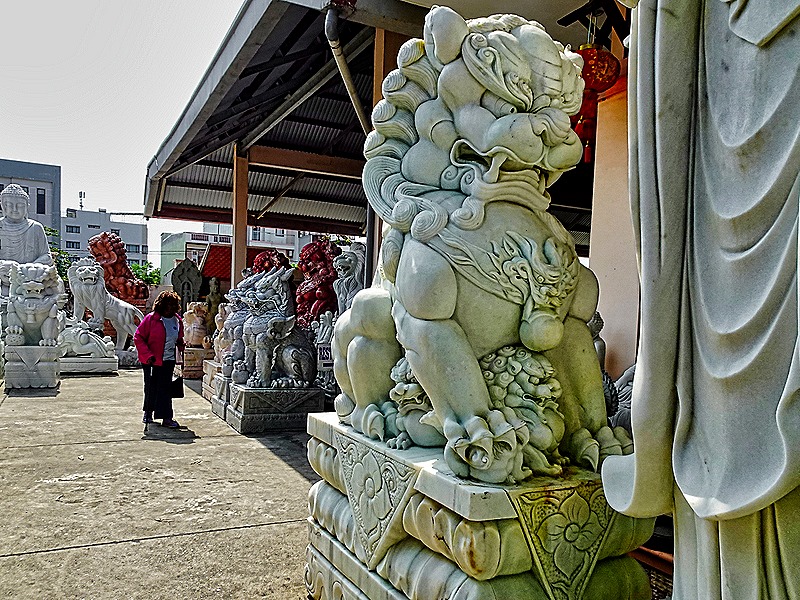
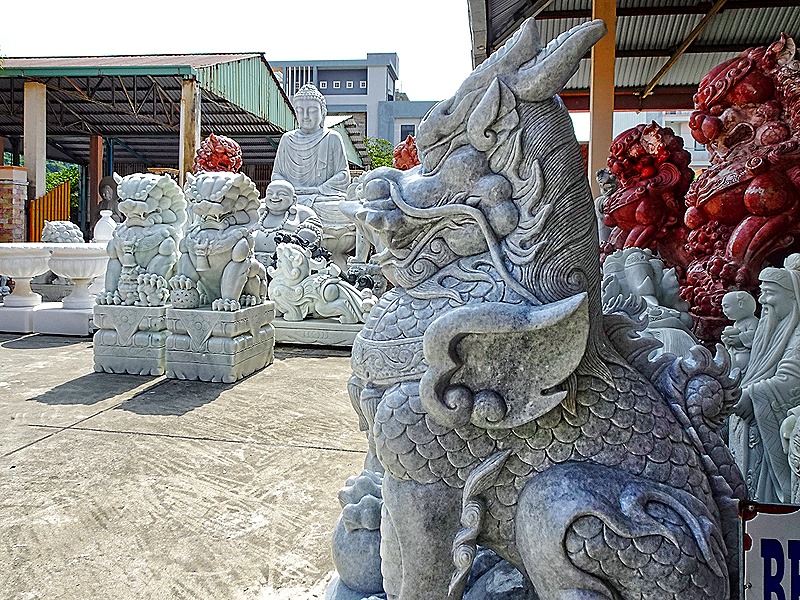
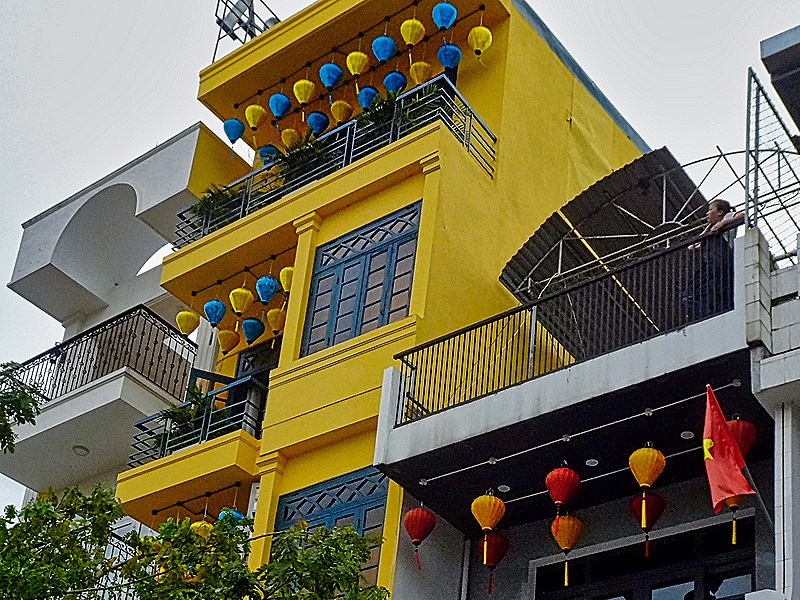
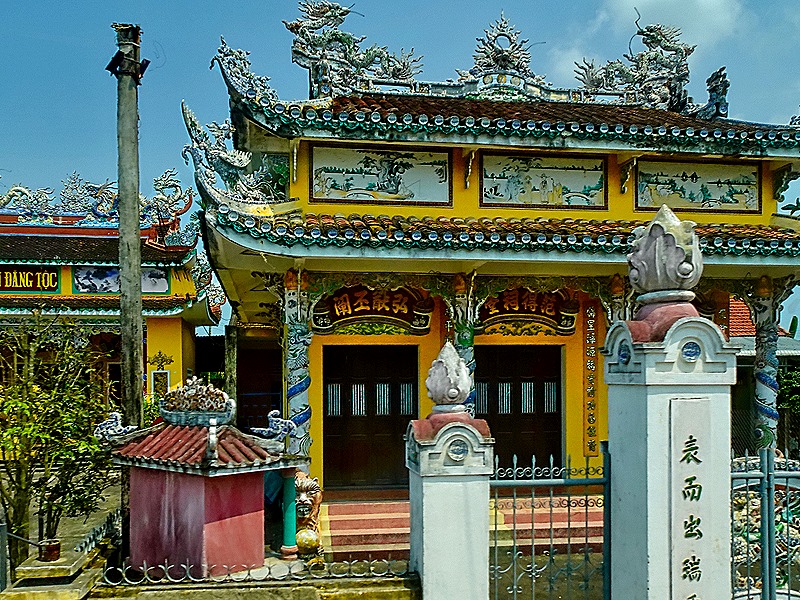
Driving back toward Da Nang we passed some more colorful buildings and made a pit stop in a small town at the foot of the Marble Mountains, where a number of shops had large marble sculptures on display (way too big to carry home).




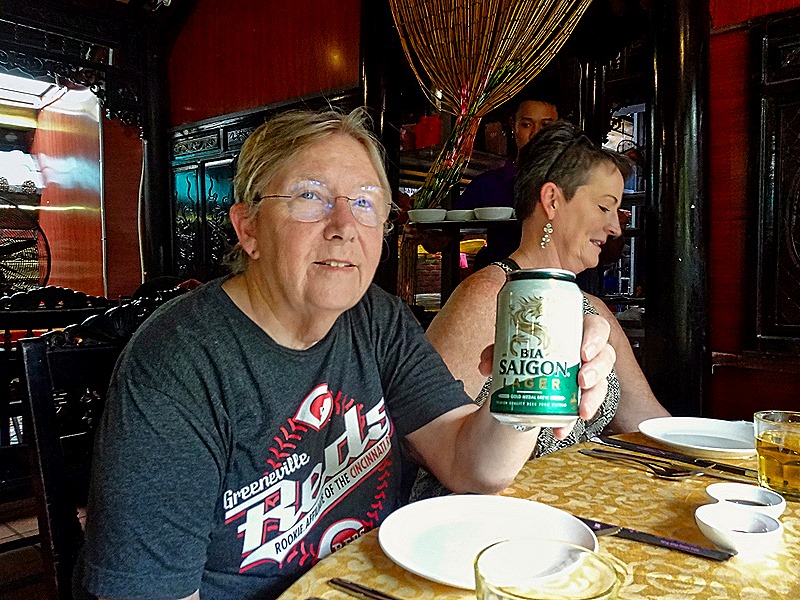
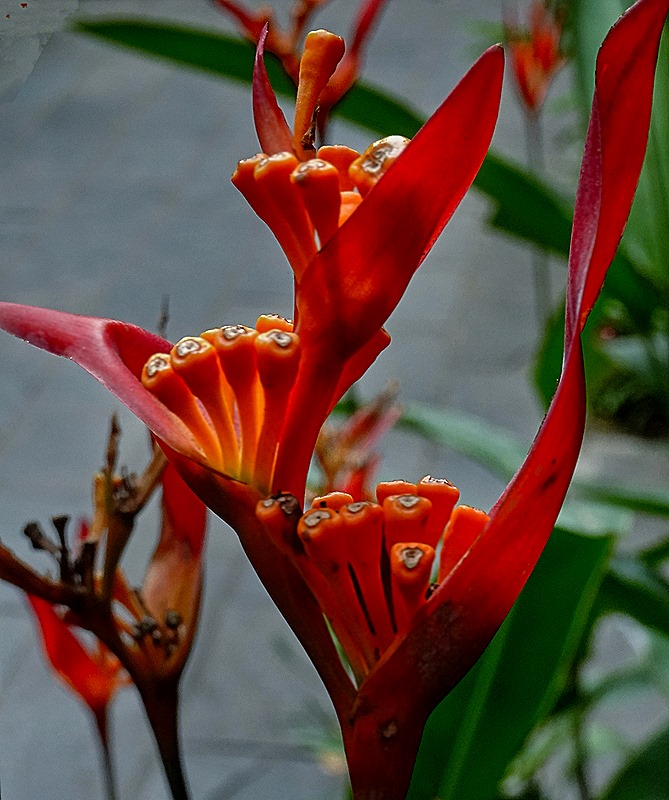
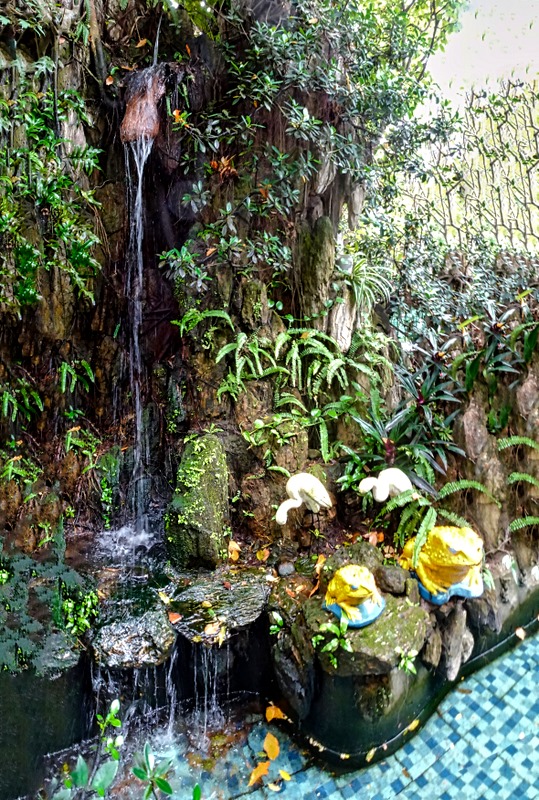
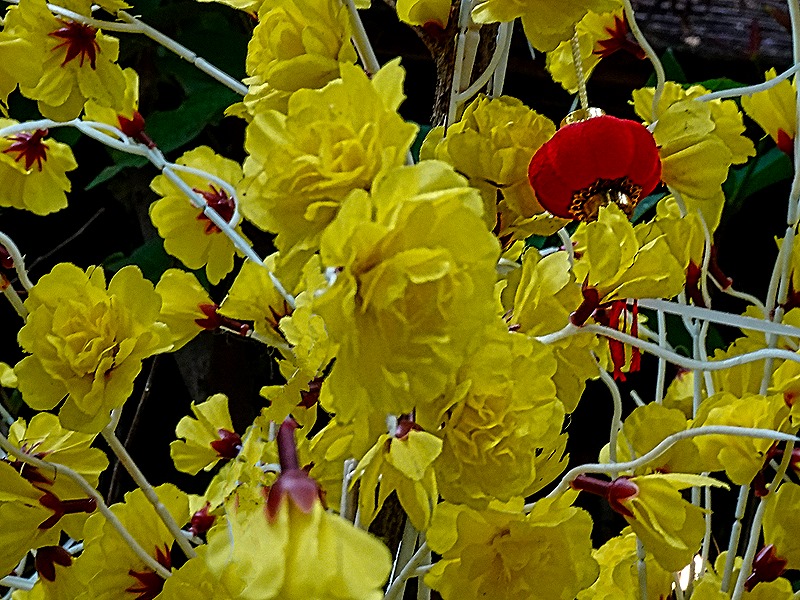
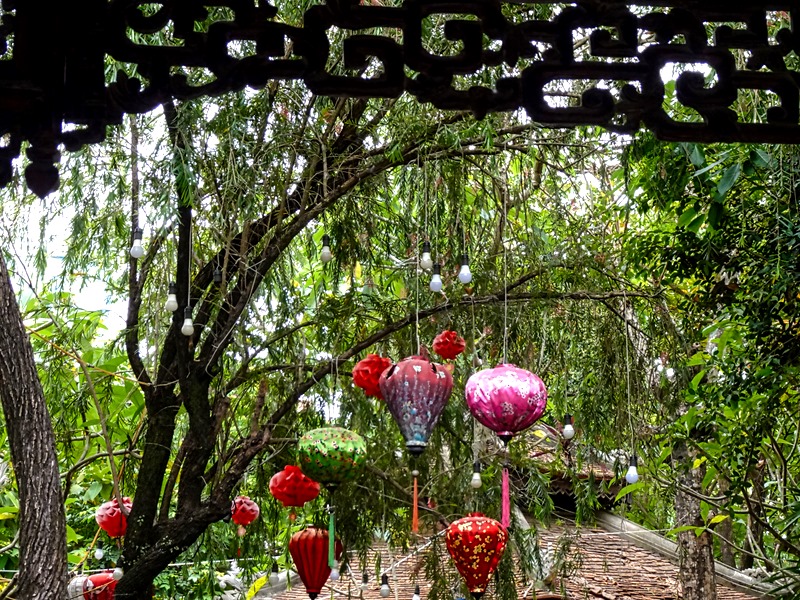
Back in Da Nang, we stopped for lunch in a nice restaurant off on a side street away from the busy traffic. Several courses of good Vietnamese food, some in sculptured presentations, and outside it was surrounded by gardens.




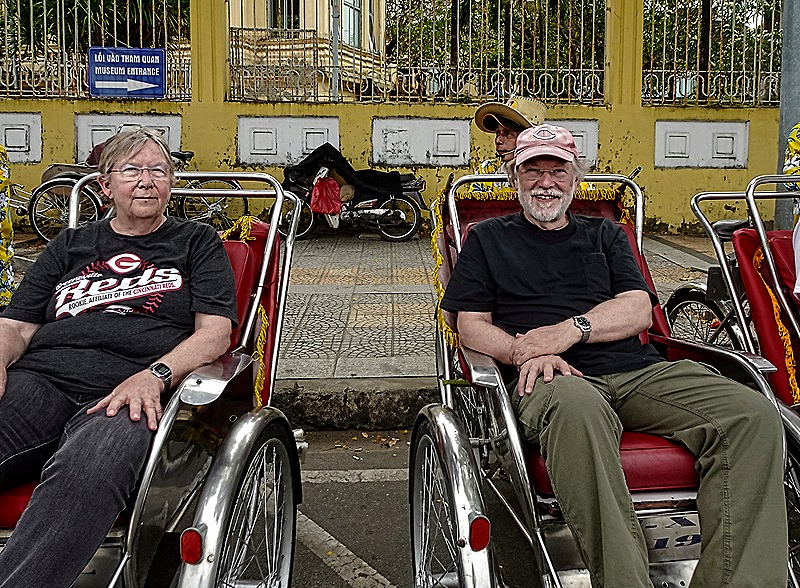
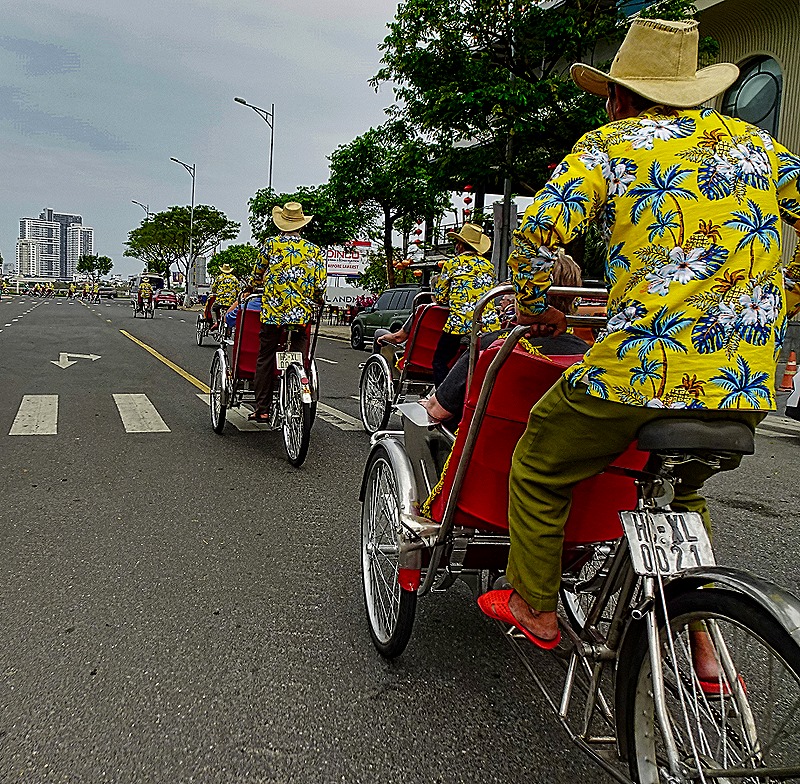
After lunch it was time for a rickshaw ride through this neighborhood and up along the river. We had a rickshaw tour of the Hutongs in Beijing just a week before, but this time it was one person per vehicle, the driver was behind instead of in front and, of course, it was an entirely different city in a different country. Our rickshaw drivers wore a uniform (of sorts) consisting of a cowboy hat and a loud Hawaiian style yellow shirt with palm trees. Very subtle.

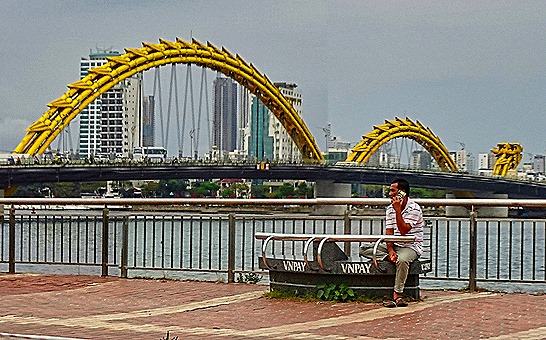
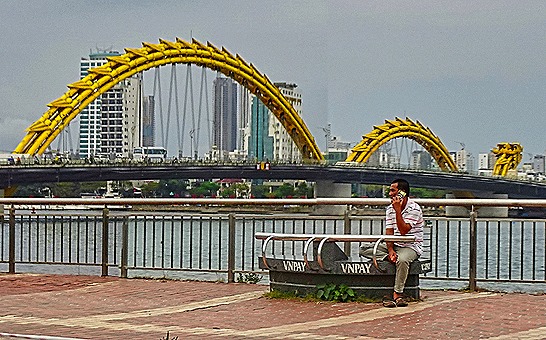
There was a sculpture display on the riverside walk but the main feature was the Dragon Bridge. Opened in 2013, it is quite arresting in the daytime but at night it is completely lit up and it spits smoke and sparks. Sadly we didn’t see that. The end of the dragon on our side of the river looks like it might be the head, but it is actually the tail with the head on the other side.


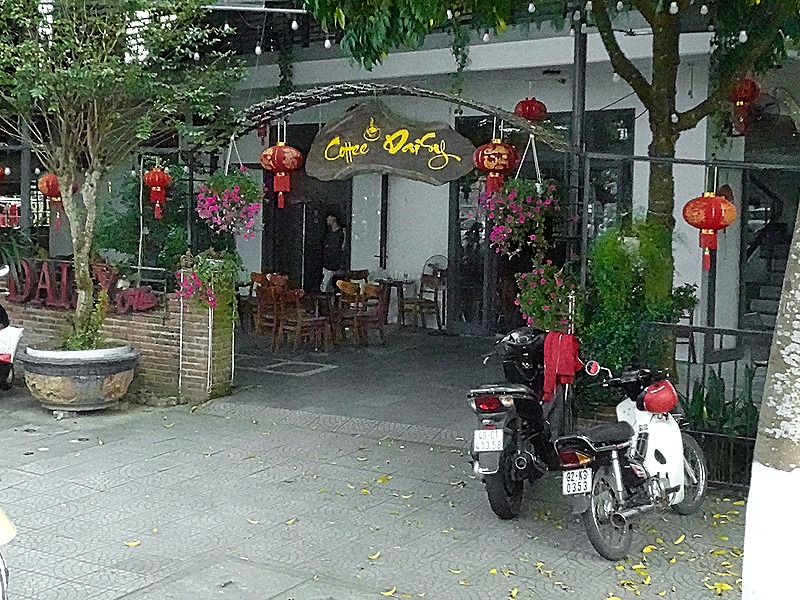
During this tour we saw the bright pink cathedral built by the French in 1923. It is called locally the rooster church because of a weather vane on top of the tower that is just outside the picture. There are some other street pictures here including a cafe with motorcycles parked on the sidewalk out front.

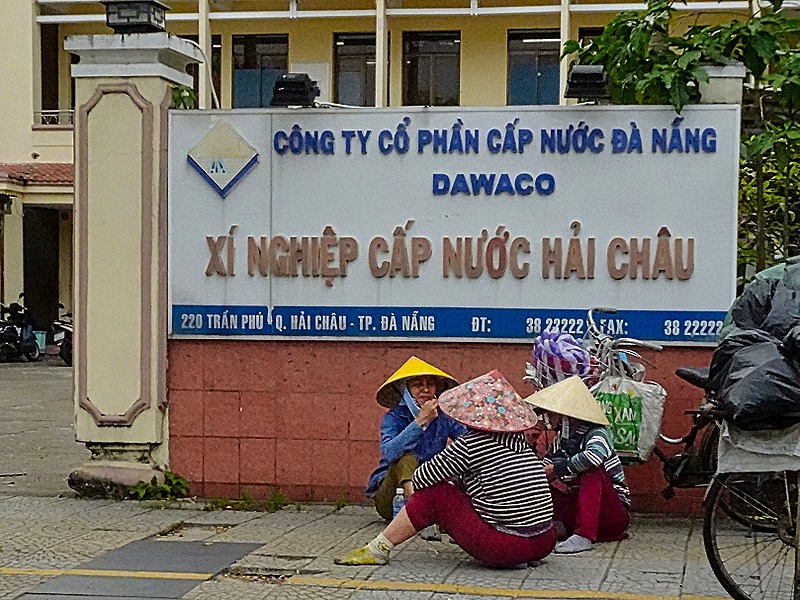

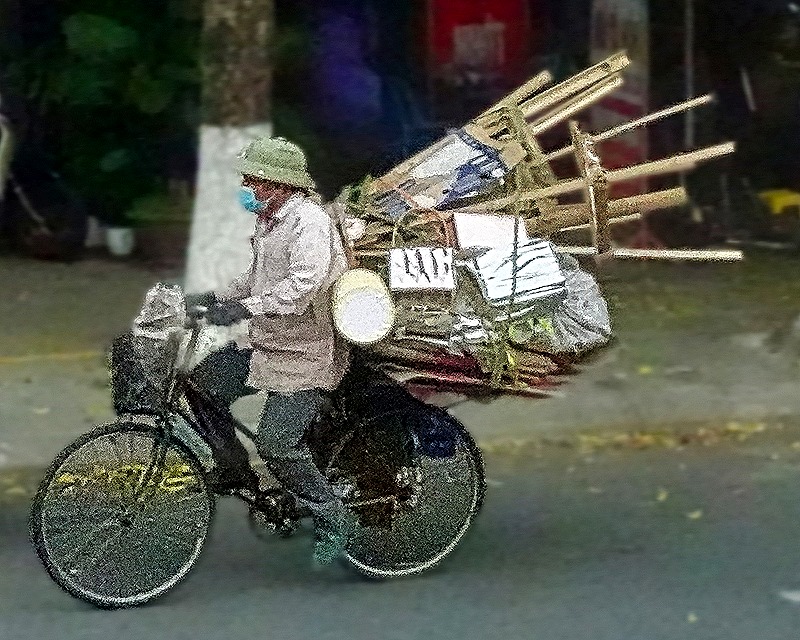
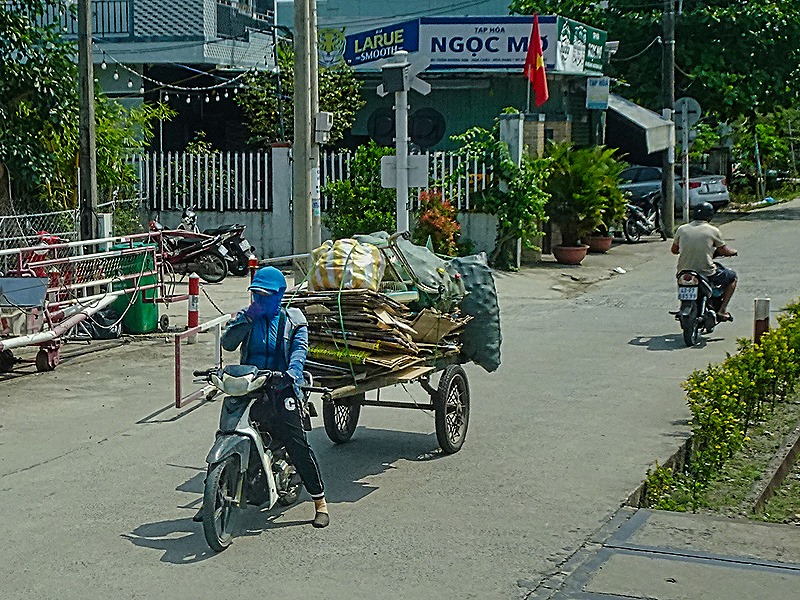
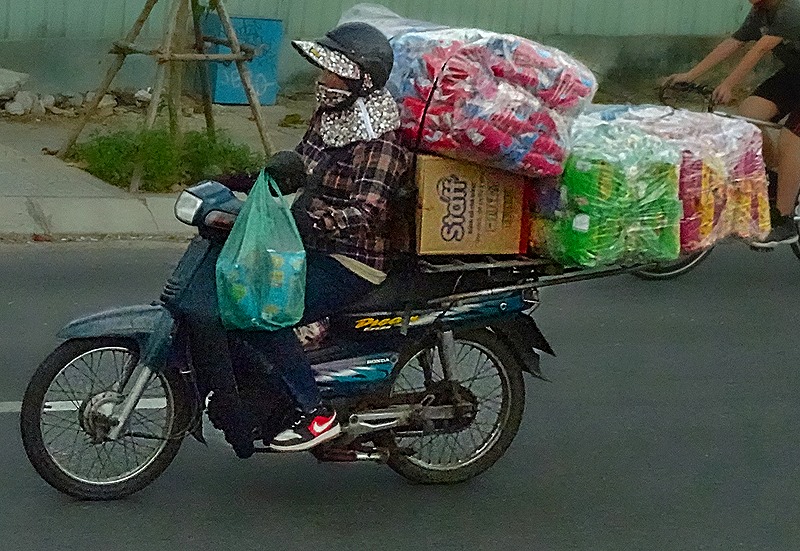
Speaking of motorcycles, anyone who has visited Southeast Asia knows that this (along with bicycles) is the ubiquitous form of transportation here. We have seen many creative uses of motorcycles to transport tools, boxes and even a family of five. Creative and interesting, but it doesn’t always look very safe. Some people here also bundle up in the heat of summer as if it were winter time, to protect their skin from the sun we have been told.

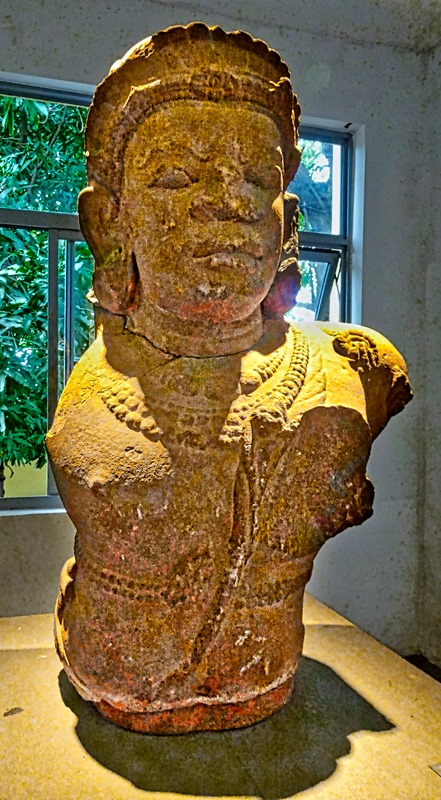
The last stop on our excursion was the Museum of Cham Sculpture, not far from the river walk. The museum was first opened to the public in 1919 and has been substantially expanded twice since then. It has the world’s largest collection of Cham artifacts, many from My Son, totaling more than 2,000 items. Most of the sculptures on display in the museum are more than 1,000 years old.
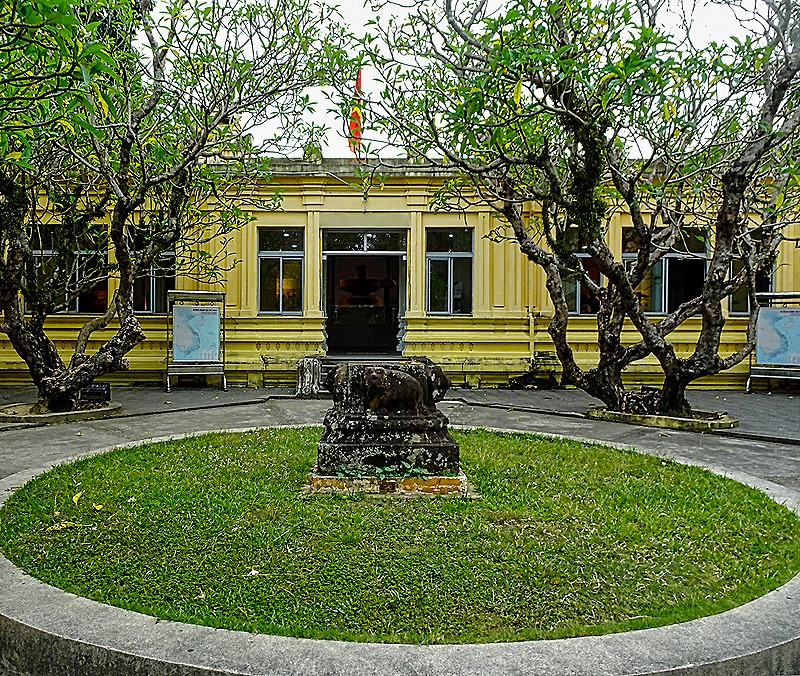
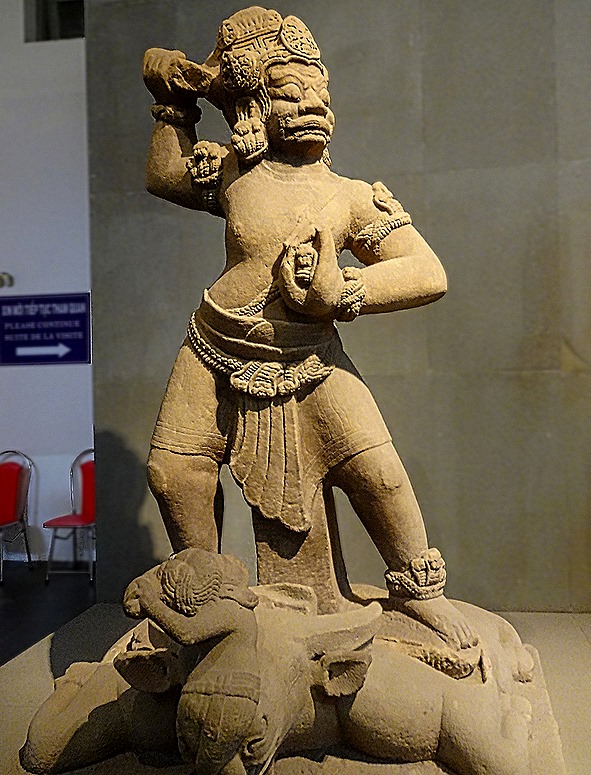
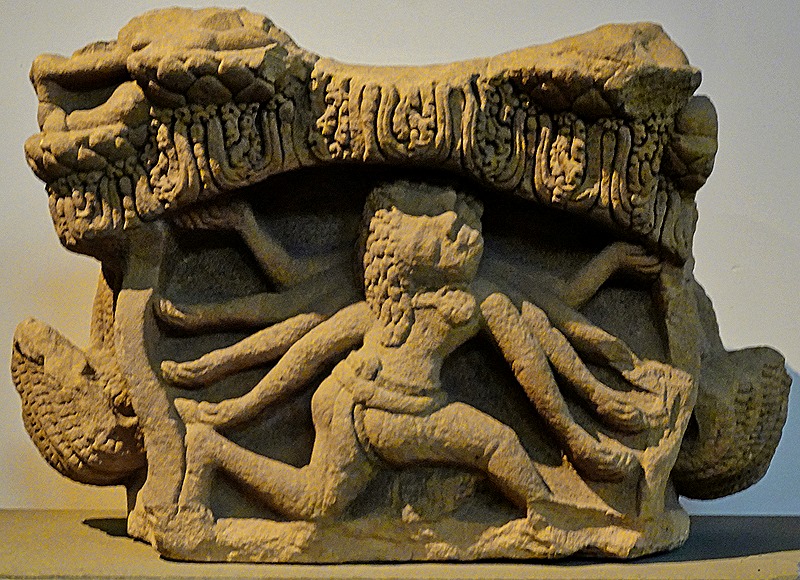
Some of the notable items there were a sculpture of Vishnu with four arms, a stone panel with a relief of the god Yaksa with curled hair, a sandstone guardian demigod dvarapala stomping on a bull, a 7th century male dancer carved into a step leading up to an altar pedestal, and a god (or goddess) sitting with hands on knees, possibly Lakshmi. Buddhism came to Champa late in the 9th century and the museum had an impressive display surrounding the largest Cham statue of Buddha on record.

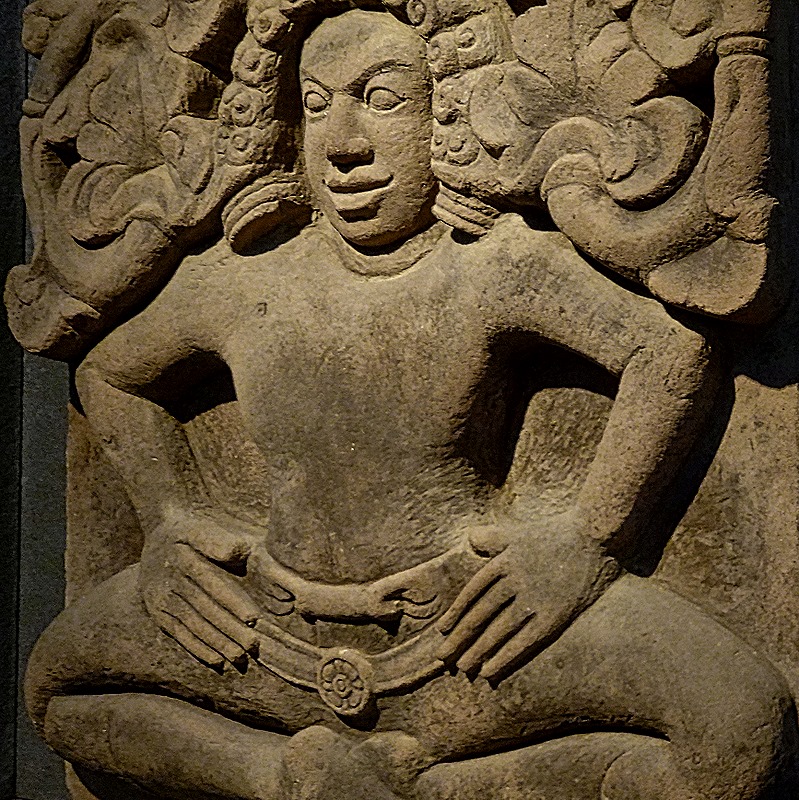


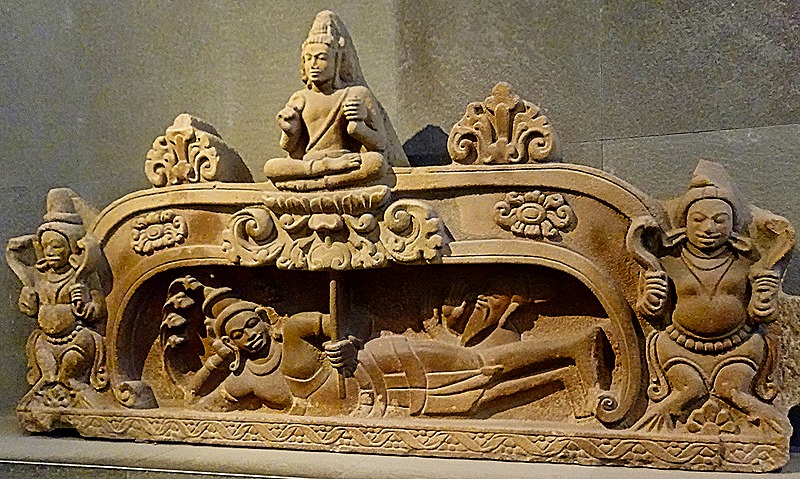
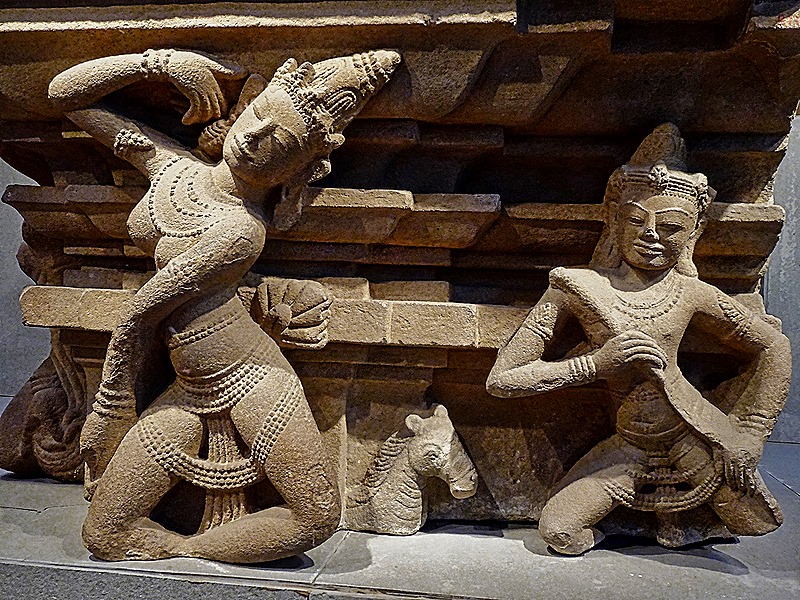
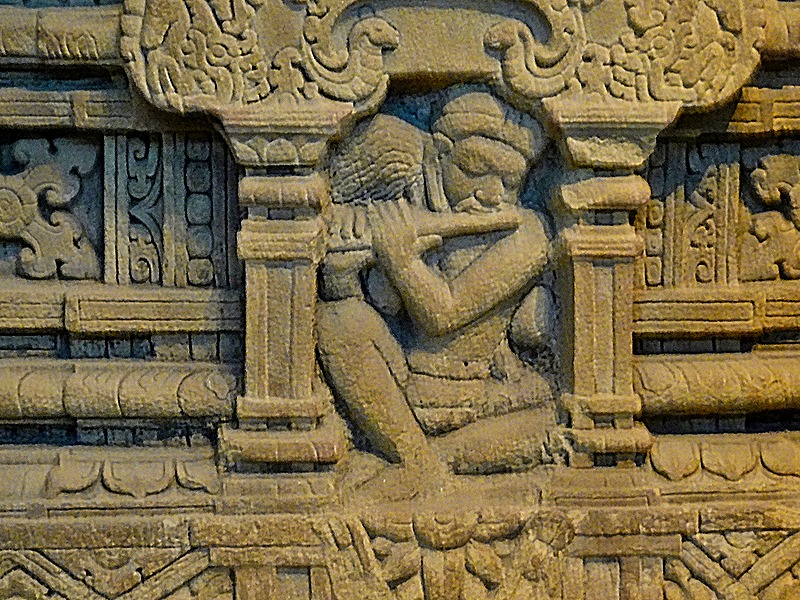
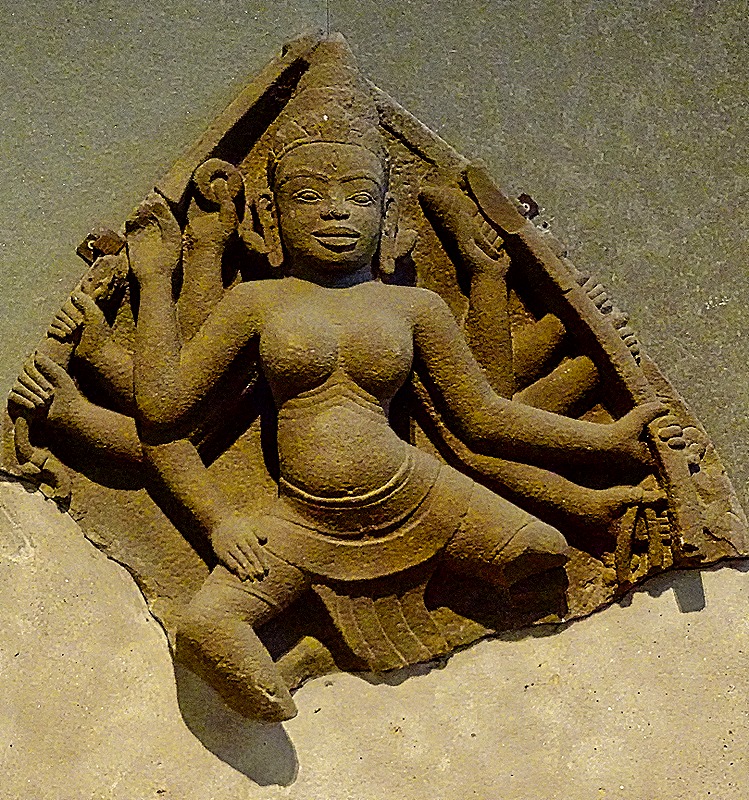
In addition to individual sculptures there were a number of excellent reliefs carved into the edges of platforms or pedestals. The first picture here is of a pediment showing the birth of Brahma from a lotus flower growing out of Vishnu’s navel. We have read that the second one, depicting a dancer and musician (who may be goddesses) wearing many strings of beads and whose clothing is evidenced only by a cloth hanging between their legs, is considered one of the Chan masterpieces. The third is a flute player that is a detail from a much longer platform edge. Next are, apparently, two depictions of the goddess Durga, and below them is a platform edge showing the court of Champa, with the king in the middle and apparently a number of dancing women.

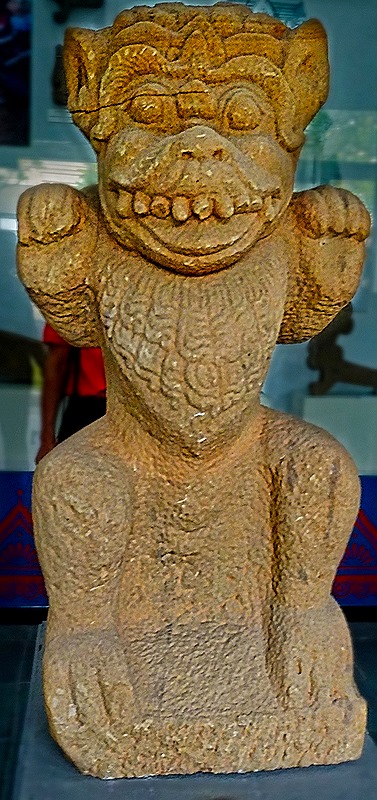
There was a large variety of other artworks on display, but our time was short and we only have pictures of a few more.



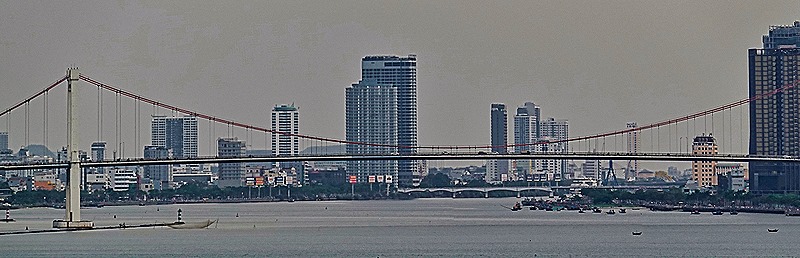
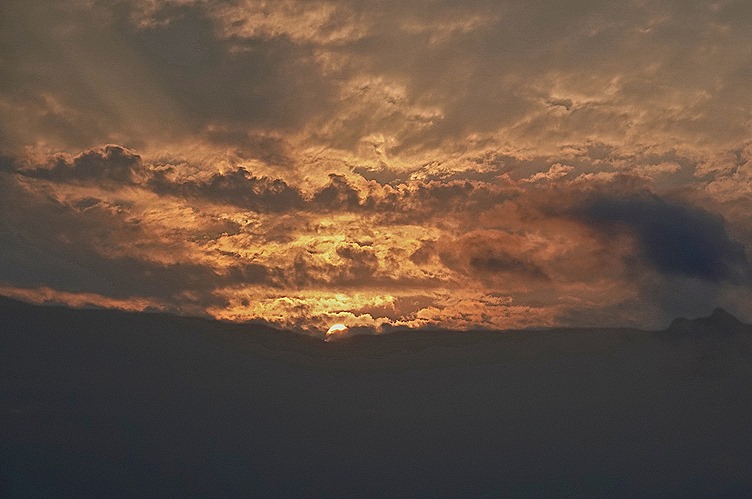
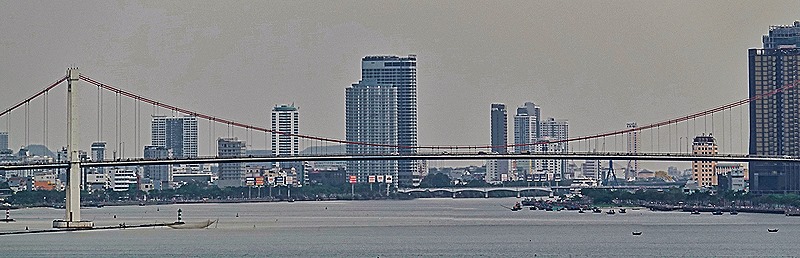
We returned to the ship, from where we had a wide view of the harbor with many fishing boats. The Thuan Phuoc Bridge, Vietnam’s longest suspension bridge at 1850 meters, which opened in 2009. The Tran Thi Ly Bridge has a single pylon and cables reaching out in both directions looking like a sail. When we saw it the cables looked red but we understand that it sometimes gets more colorful. We sailed away at about 11:00 after a rather fiery sundown.




 BADER JOURNAL






Leave a comment