
Colombo, Sri Lanka — 2024
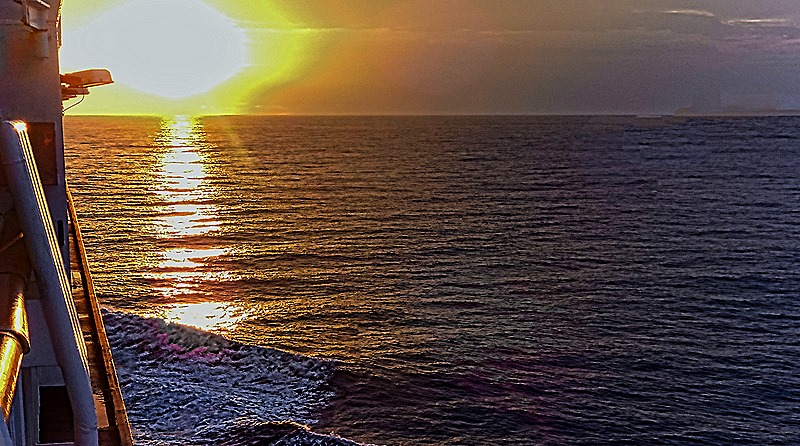
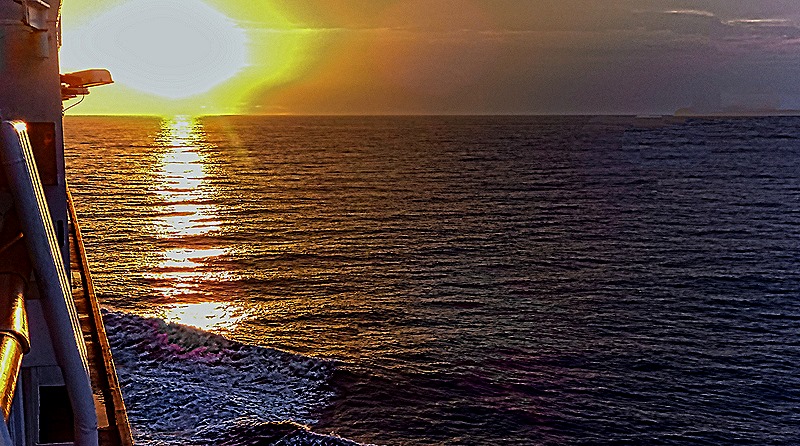
We reached Colombo on the morning of March 28. The previous evening we had a very bright sunset.
Before independence Sri Lanka was for a long time a British colony called Ceylon. It is an island nation off the southern coast of India. We have been here twice before, walking a long distance around the city in 2016 then visiting the city of Galle in 2018, so if you want to read background information and/or see a lot more pictures you can do so here:
2016: https://baderjournal.com/2016/05/07/colombo-sri-lanka/
2018: https://baderjournal.com/2018/08/06/colombo-sri-lanka-2/
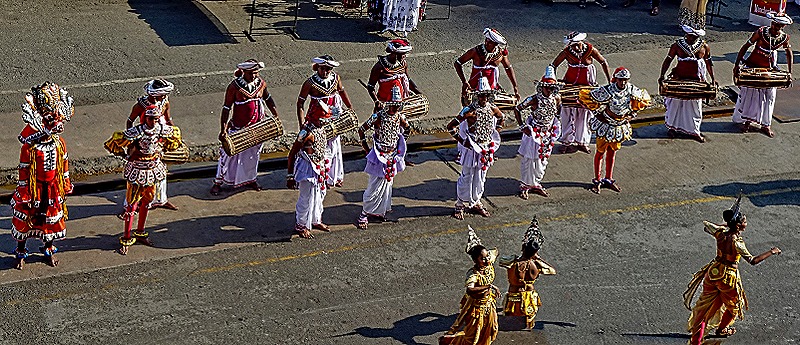
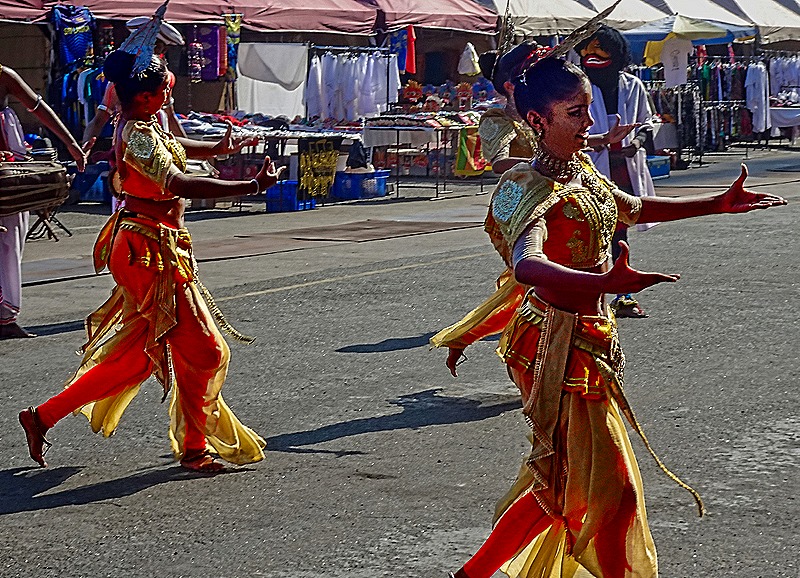
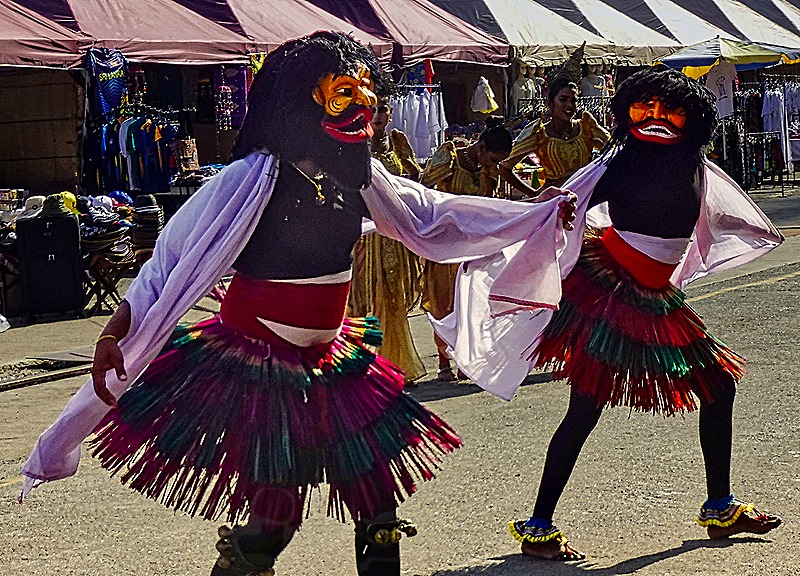
For this visit we booked an excursion with our travel agency that would take us to some places in Colombo we hadn’t seen (and passing by a few we had seen before). As on our previous visits there was a colorful troop of dancers and musicians (mostly drummers) to greet us on the dock. We watched them from our veranda, then again when we left the ship to start our excursion.

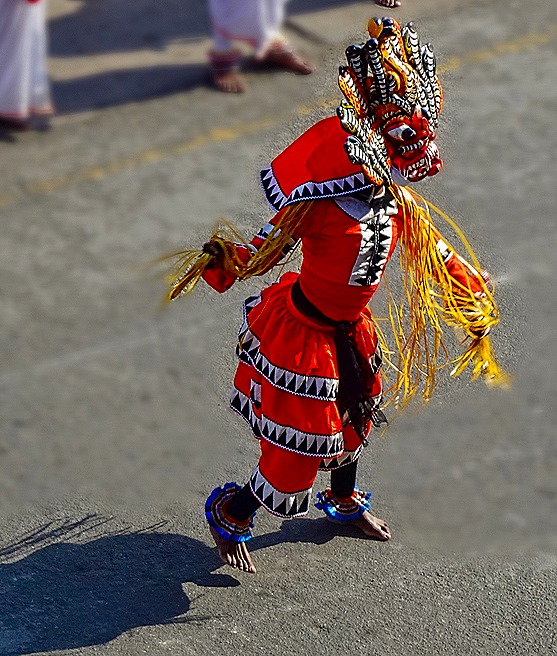

We left early in the morning after the ship had been cleared by the local authorities. The harbor facilities were much more extensive than the last time we were here 6 years ago and a lot of construction activity was still under way. In the past we had docked fairly near the port exit (close enough to walk), but we were docked much further away from town this time. So the bus trip was surprisingly long just to get to the port exit.
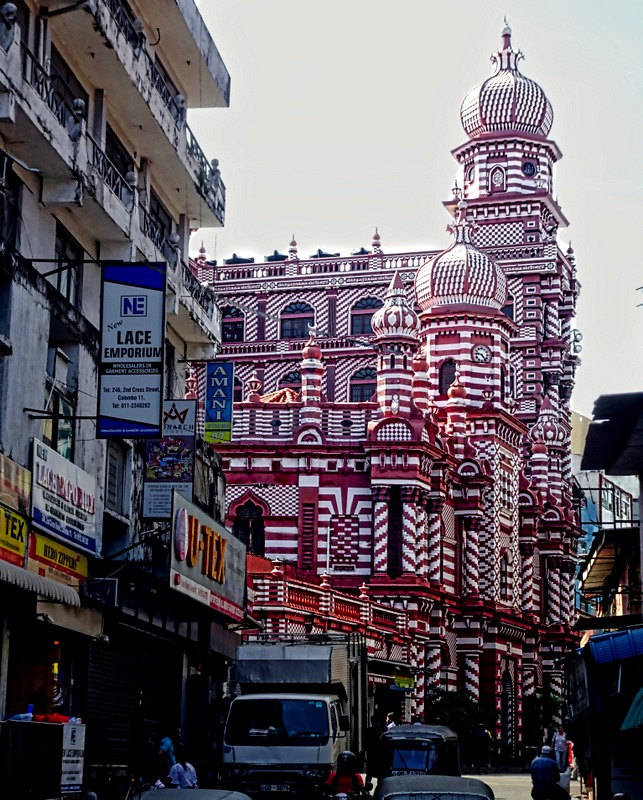
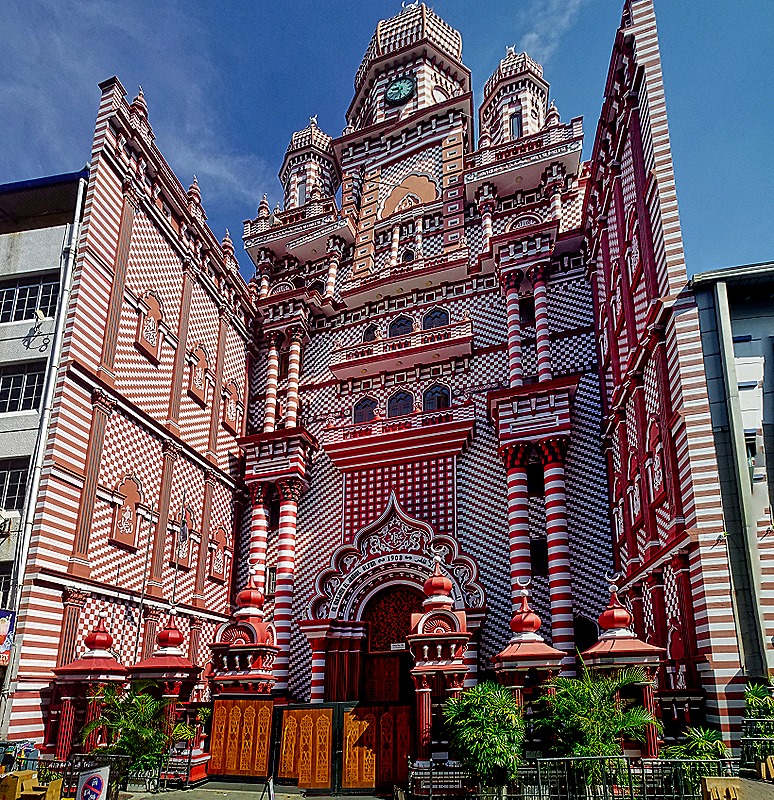
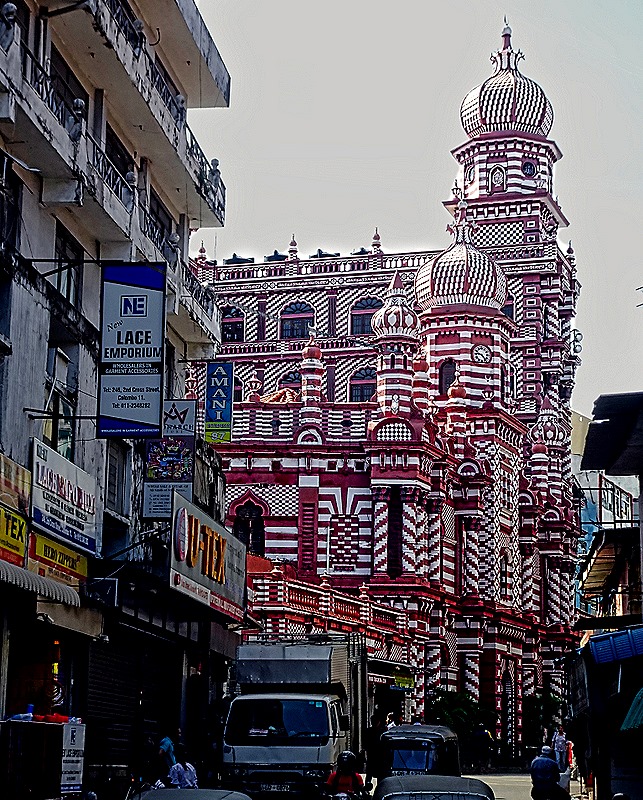
On the way to our first stop through the streets of Colombo, we passed several notable landmarks (shown here in no particular order). First was the Jami-Ul-Alfar Mosque, an unmissable large red and white candy striped building not far from the port. It opened in 1909 and was expanded in 1975.
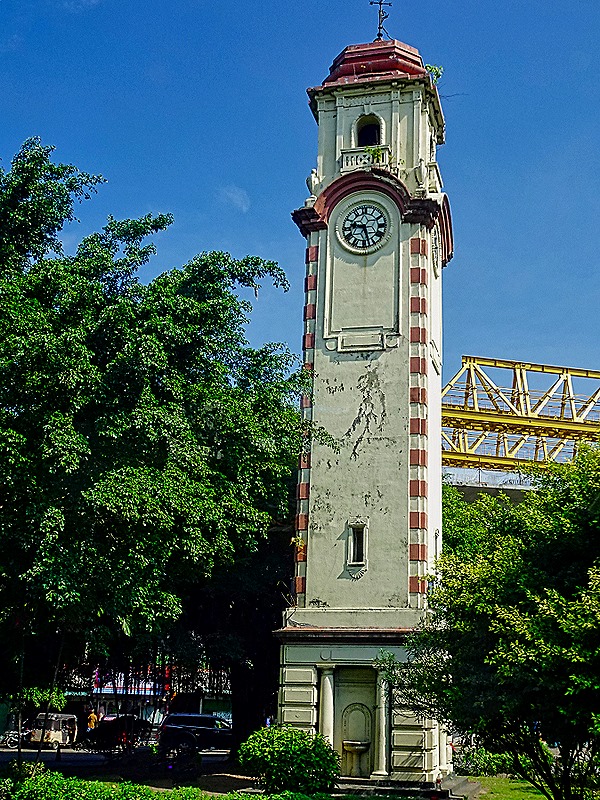
We drove past both of the old lighthouses of Colombo. The Colombo Clock Tower was built in 1857. It was the tallest building in Colombo at the time and the light from an old wooden tower was moved to its roof in 1867. As time passed taller buildings nearer the ocean front obstructed the light and it was decommissioned in 1952. The light was moved to a new 95 foot tall lighthouse built just outside the port. It is painted black and white on the ocean side but is plain stone on the land side, as you can see in the picture below (and note the lions at the base of the tower). We also drove past the Australia Building, which dates to 1900 and sports a distinctive Victorian facade with stripes of red and white brick.

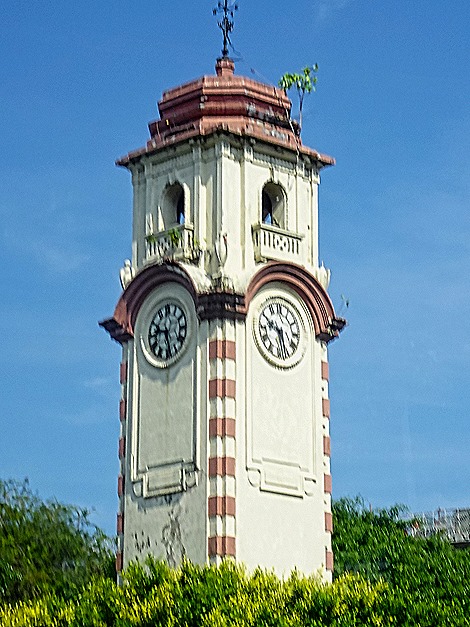
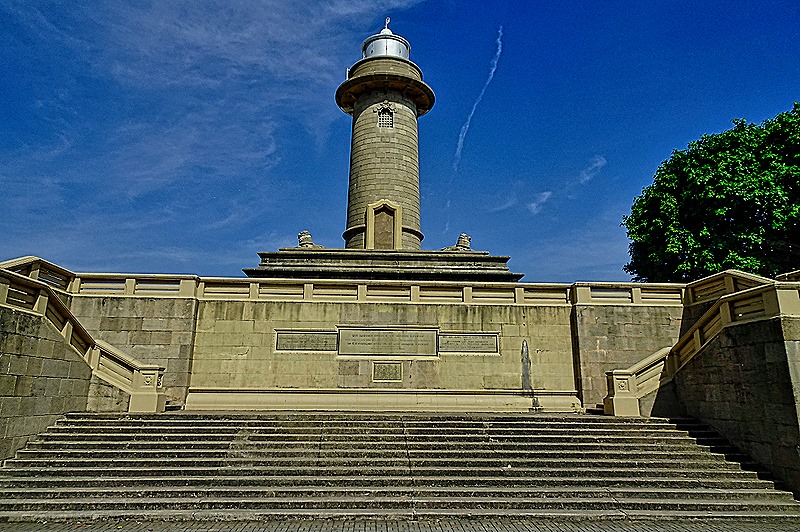
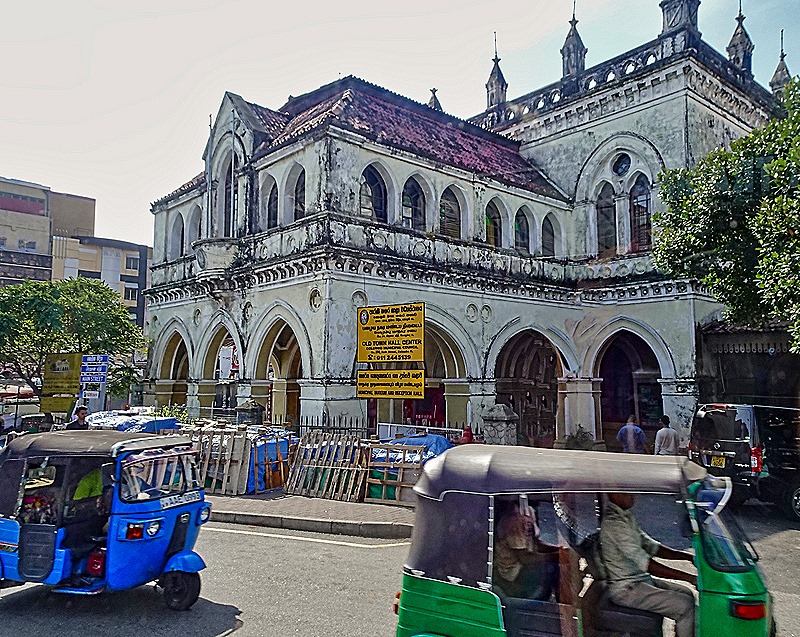
We passed through several busy intersections in this bustling city and we saw both the original old town hall and the current town hall. The old town hall was built in 1873, the first government building in Colombo. The governmental operations were moved in 1925 to the new town hall and the old one fell into disrepair until it was renovated as a museum in the 1980’s. You can tell from looking at it that the gleaming white new town hall was modeled on the US Capitol in Washington, on a smaller scale.
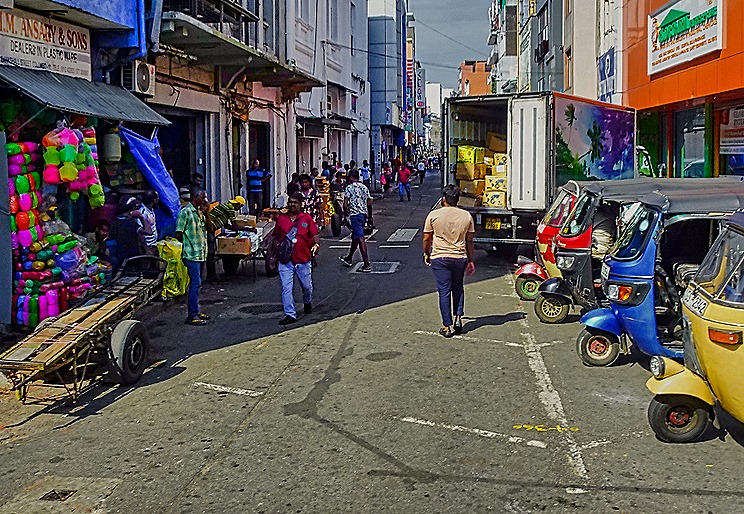

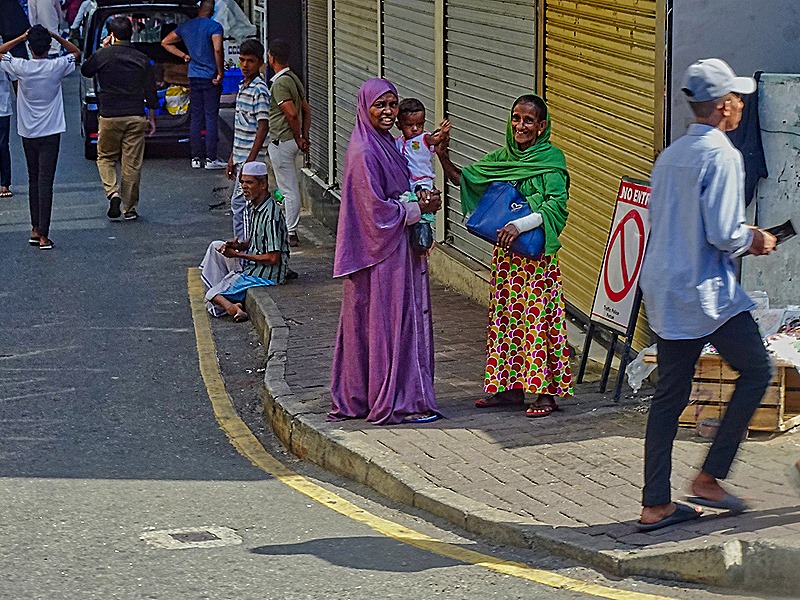
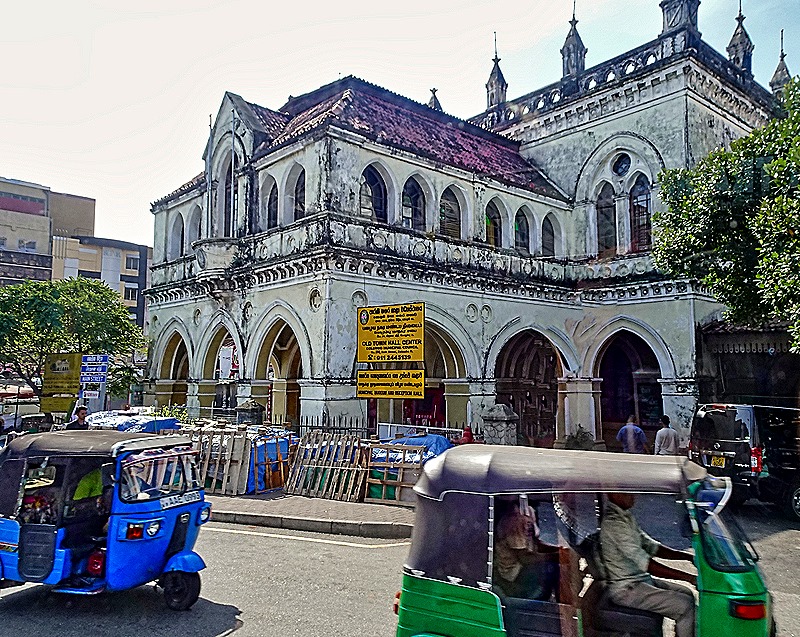

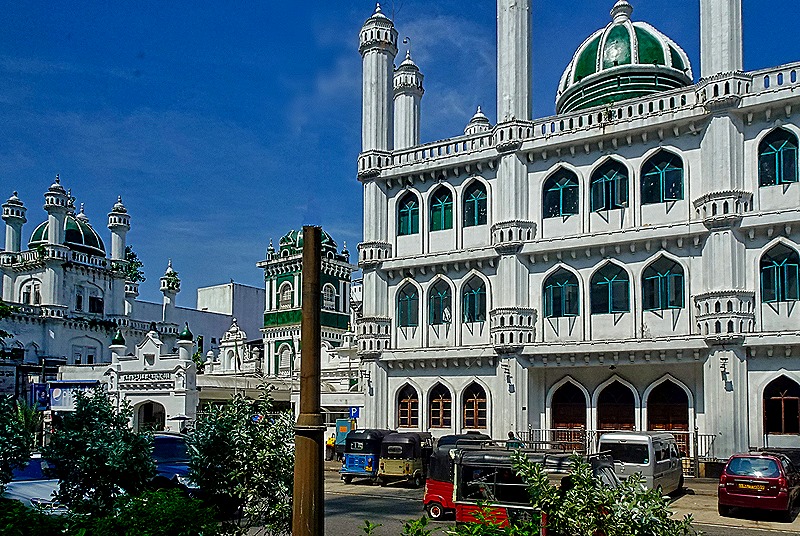
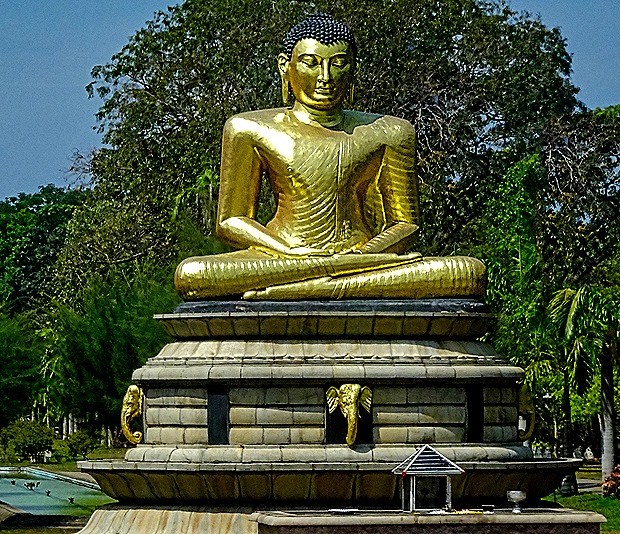
Near the current town hall were two other landmarks. The Dewatagaha Mosque, built in 1820, contains the remains of a Muslim saint. We think this is a picture of this mosque, but we have been unable to find another picture of it with green paint highlights, so the green may be very new. We also saw a very large golden sitting Buddha at the entrance to Vihara Maha Devi Park. Before the 1950’s this was called Victoria Park and we understand there was a statue of Queen Victoria here.
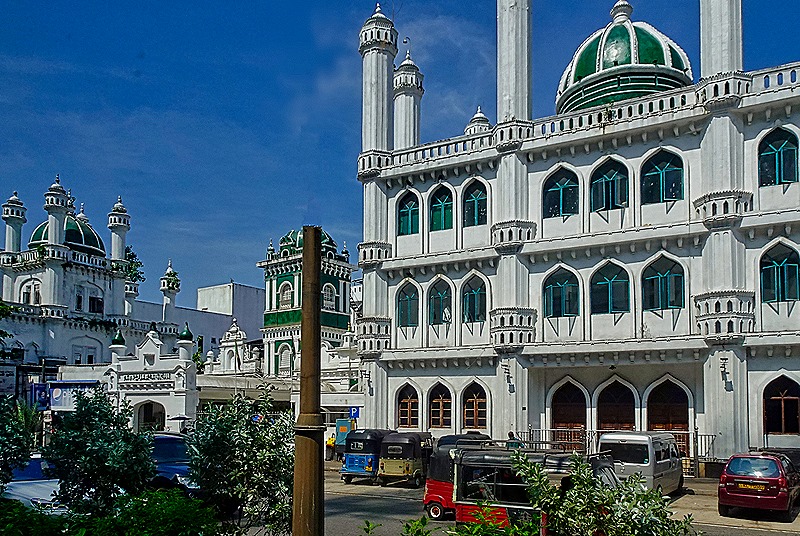

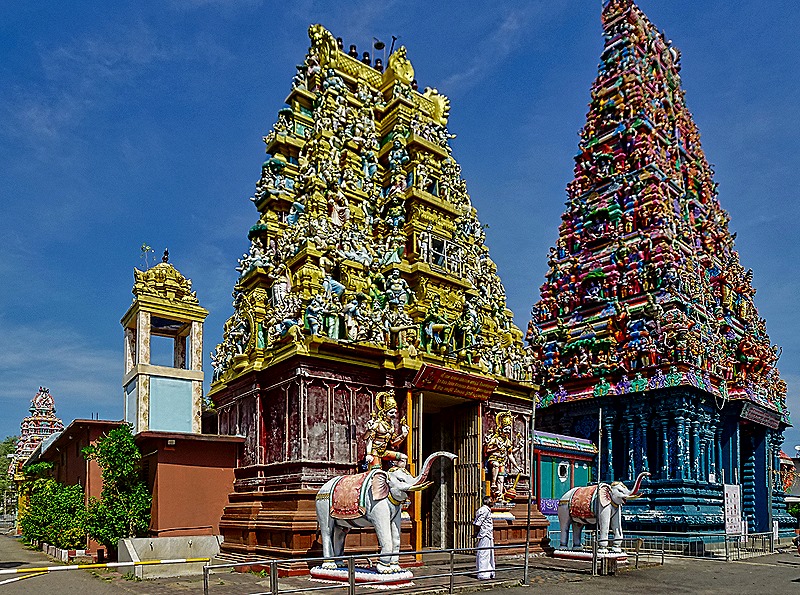
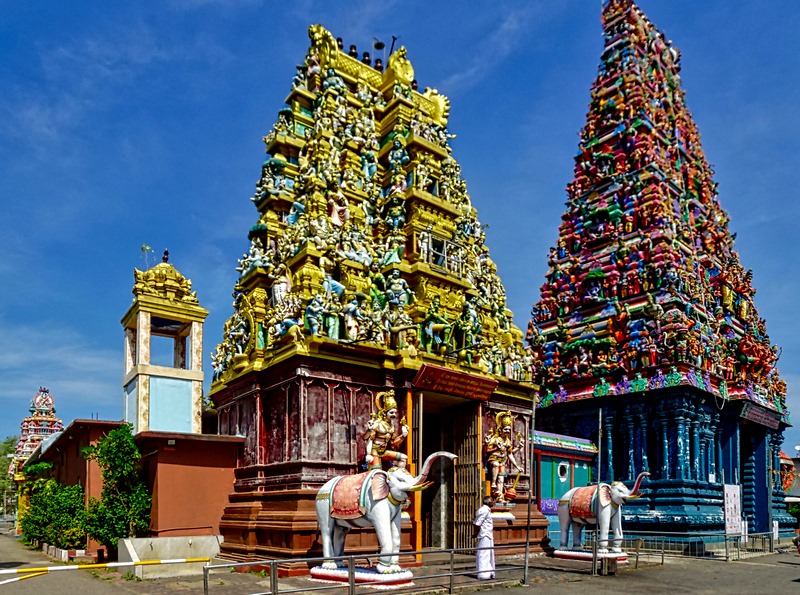
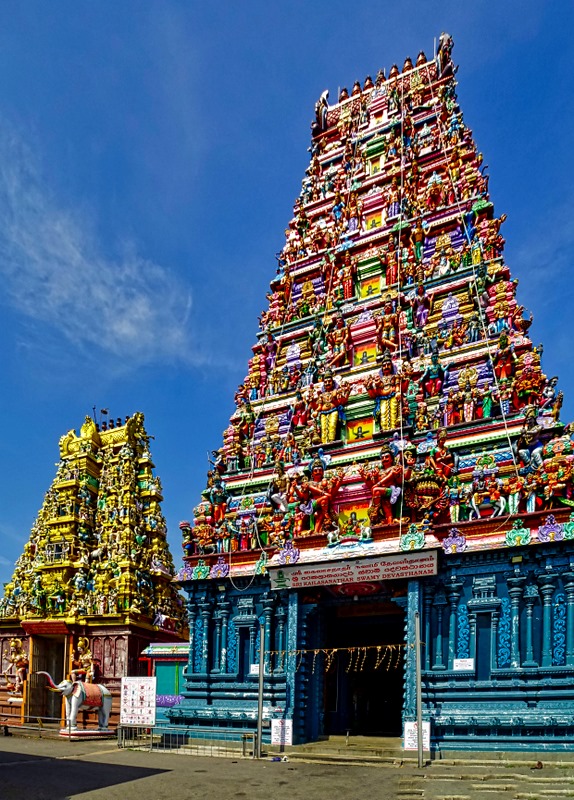
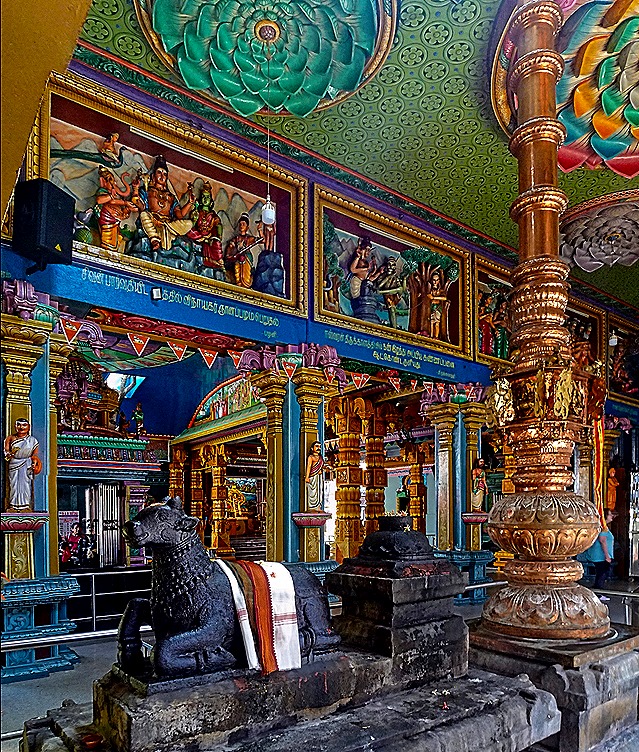
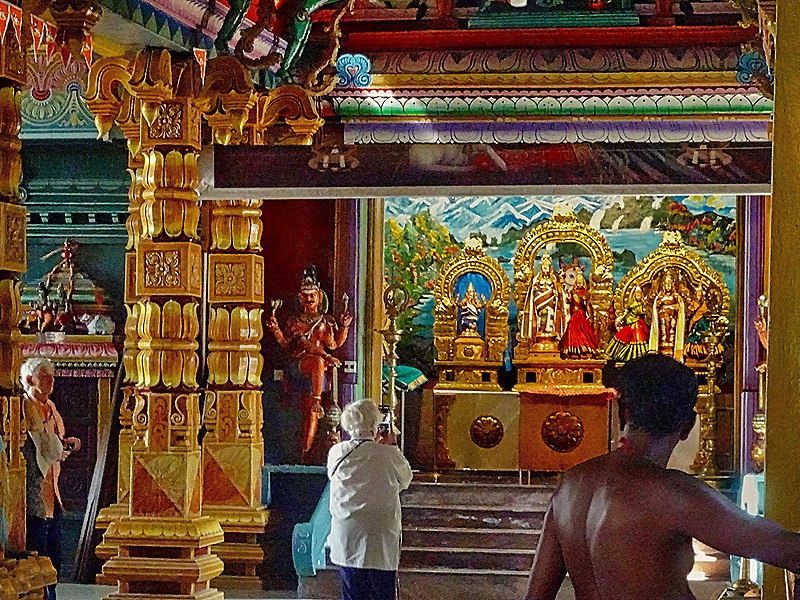
Our first visit of the day was to Sri Kailawasanathan Swami Devasthanam Kovil, a Hindu temple complex. Said to be the oldest Hindu temples in Sri Lanka, construction began in 1783. The two main temples connected by a pass through are dedicated to Shiva and Ganesa (aka Ganesh), and there are smaller shrines to other deities on the grounds as well. Like the other Hindu temples we have visited, the front has a tall roof over the entrance that is covered with colorful sculptures of Hindu deities.


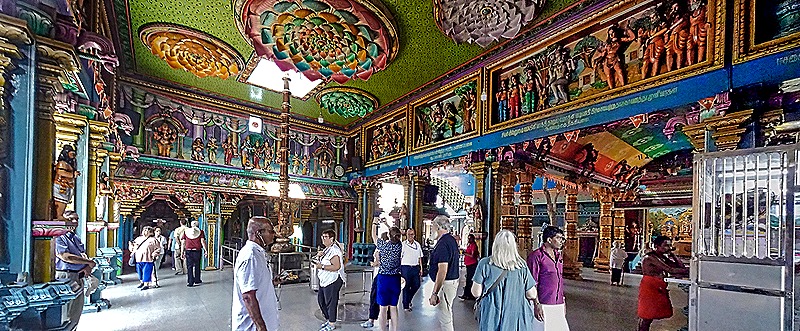
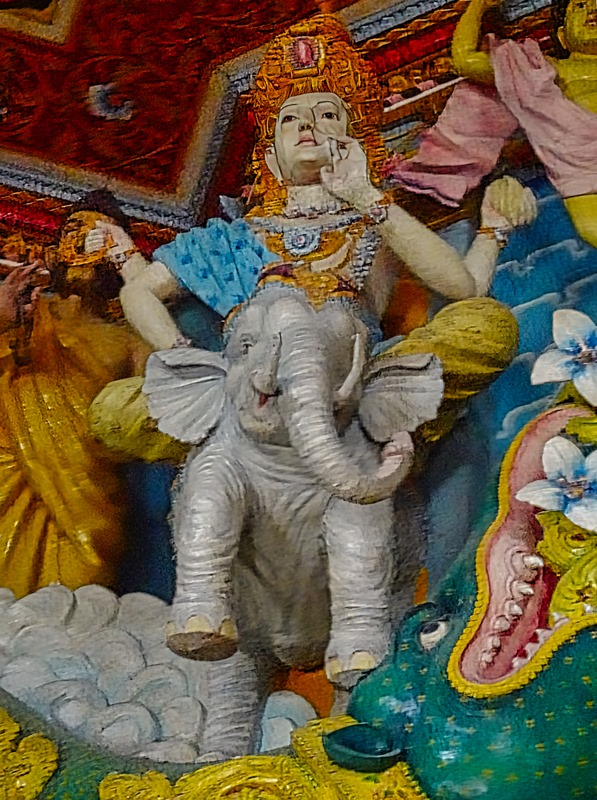
The rooms inside and the passageway were really very colorful, including the ceilings (always look up). We can’t identify many of the items in these pictures, but the elephant god is certainly Ganesa.
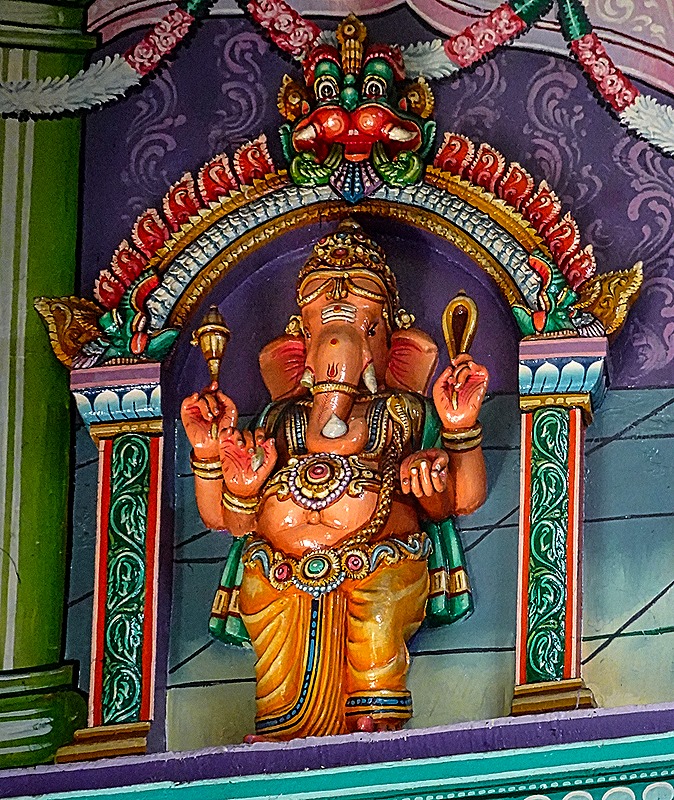

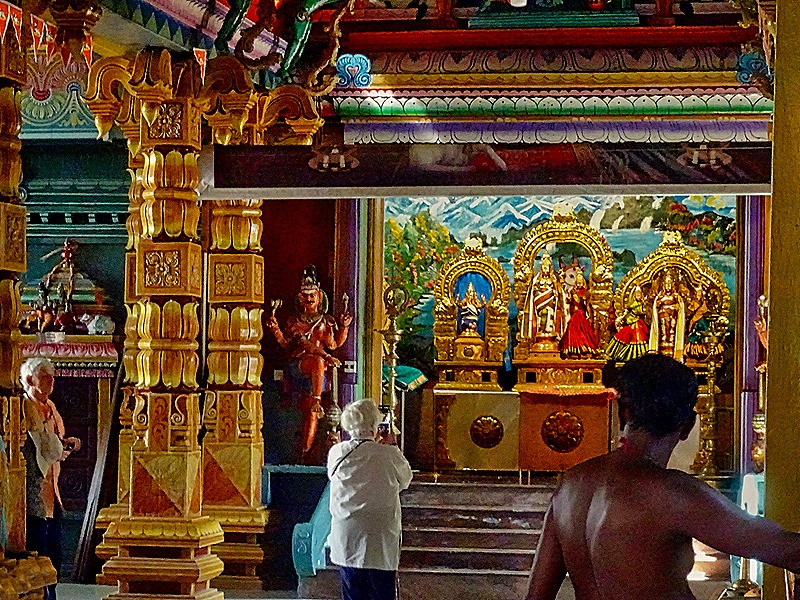
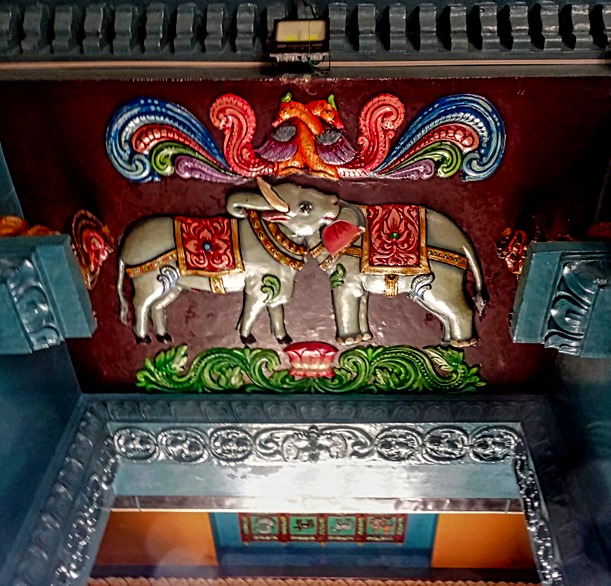

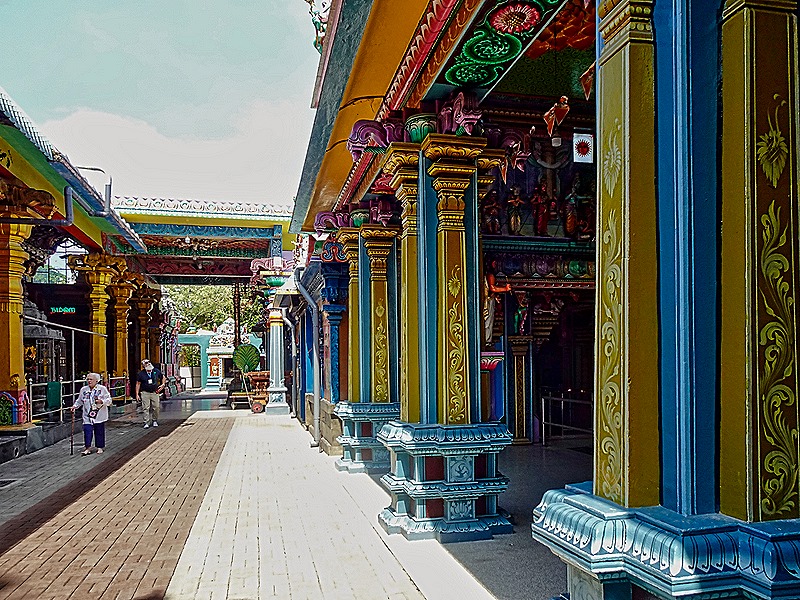
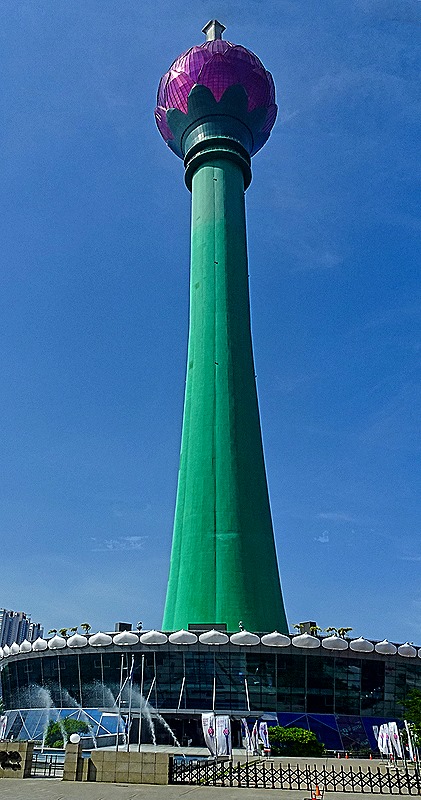
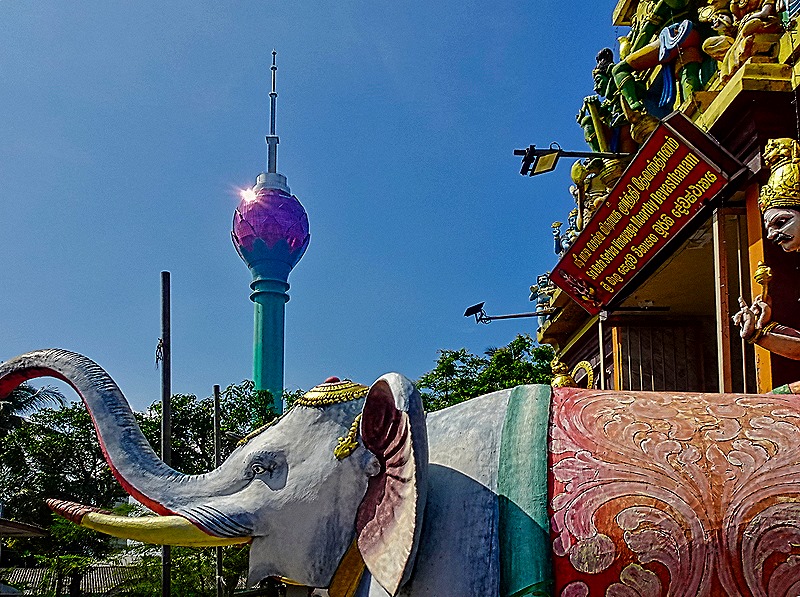
From these temples we could see the Lotus Tower; indeed at 1150 feet tall you can see this from many parts of town. This tower, which also can be seen from the port, was under construction during our first two visits. It was completed in 2019, financed by China we have been told. Its design is based on the Lotus flower bud, a symbol of purity in Sri Lanka.
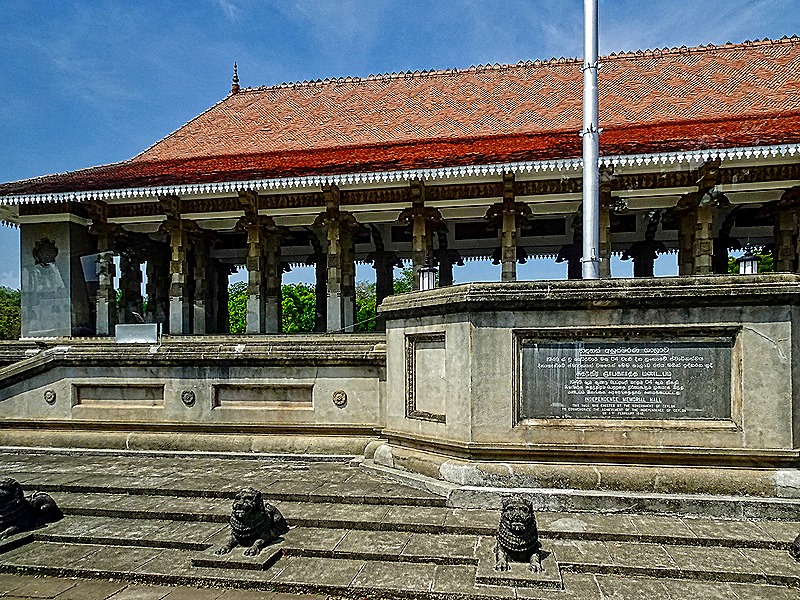
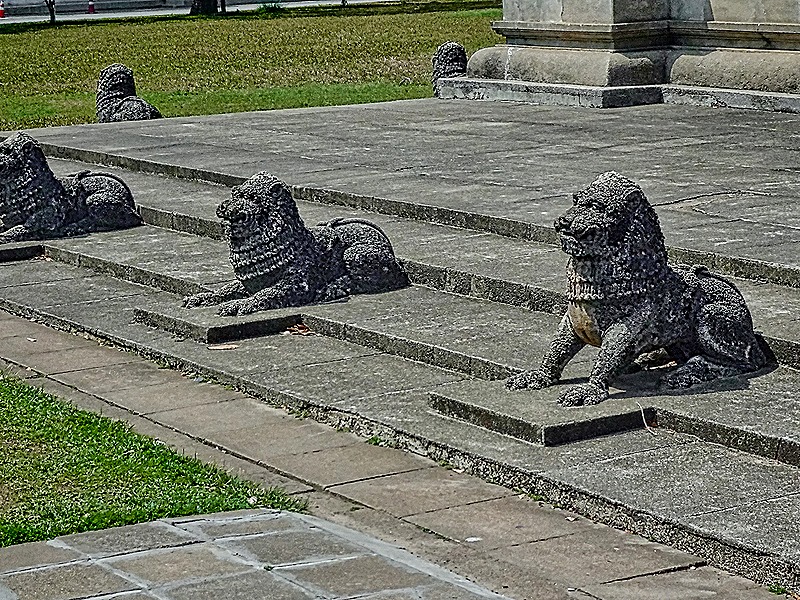
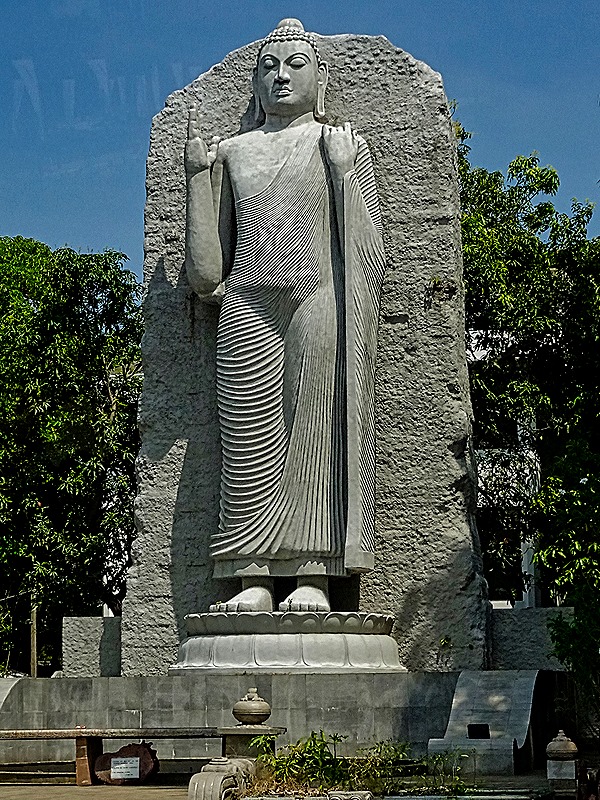
We drove past the Independence Memorial Hall in Independence Square. This is the spot where the first elected parliament convened on February 4, 1948 to mark the independence of the country. The Memorial Hall was later built to commemorate that day. We did not stop here but drove by it, leaving us with hurried pictures of the Hall and some of the stone lions that surround it. In a park nearby we saw a large standing Buddha sculpture.
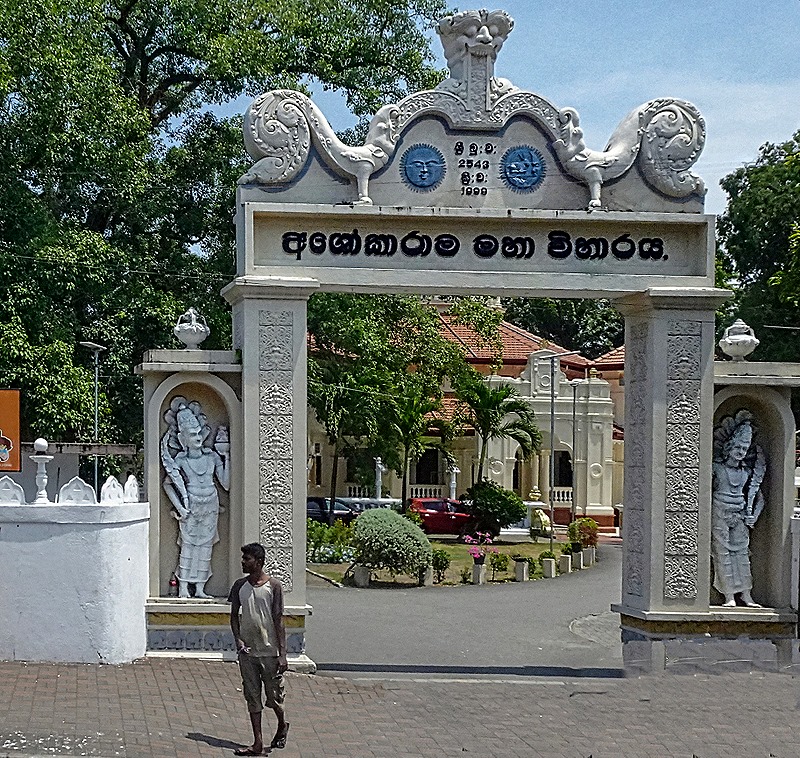
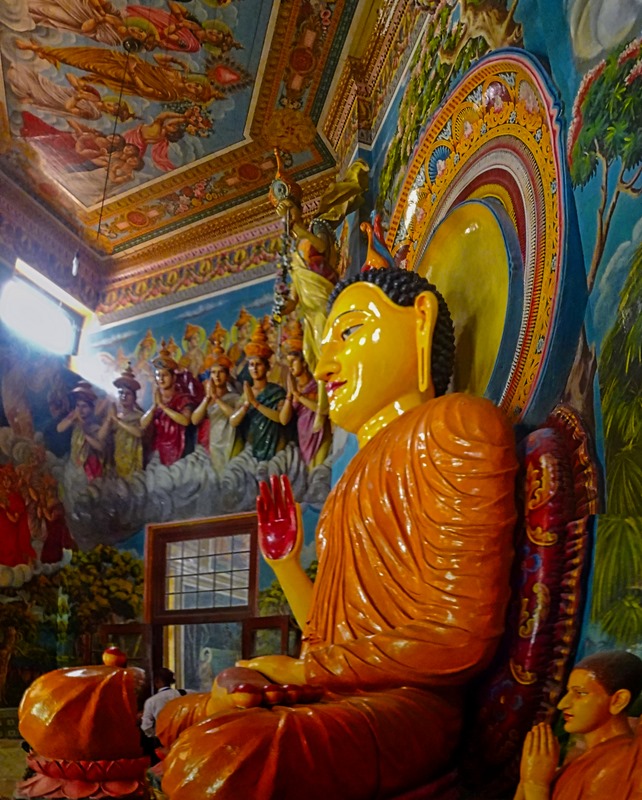
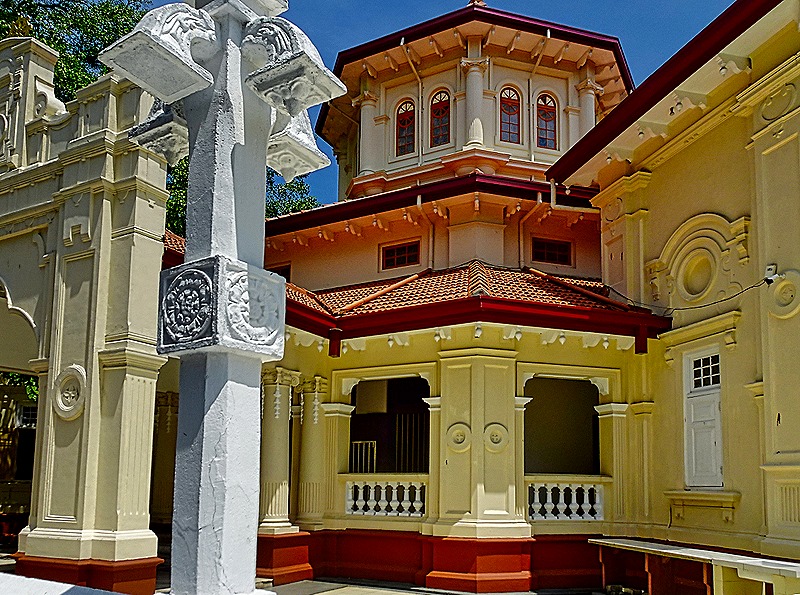
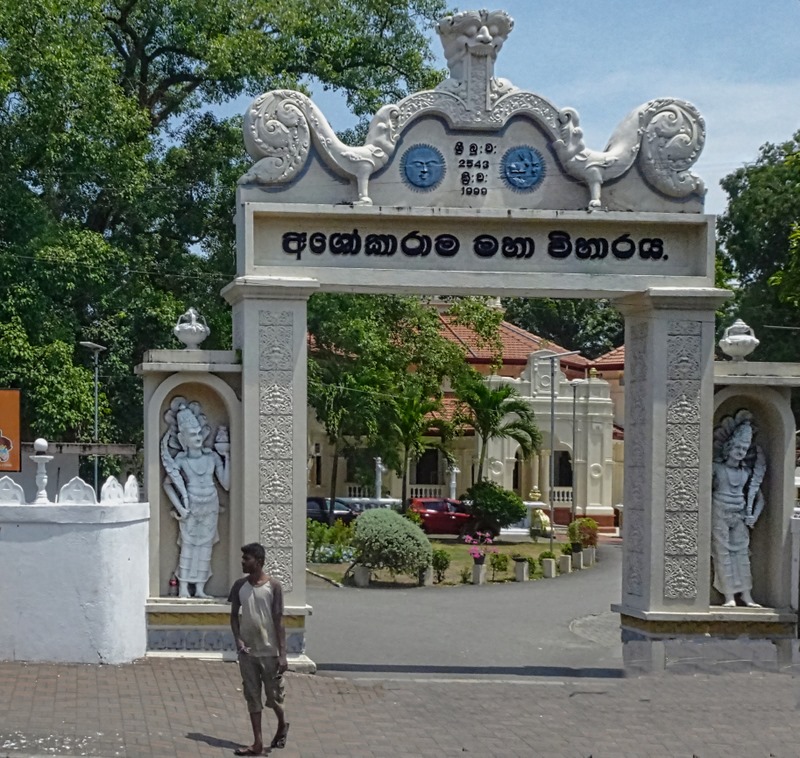
Our next stop was to visit the Asokaramaya Buddhist Temple, built in the 1870’s and expanded several times since. It is fairly plain on the outside, painted mostly white or muted yellow with none of the riot of color of the Hindu temples we saw this morning. But the inside is full of colorful statues of Buddha and other deities with well regarded Buddhist paintings on the wall, mostly about the life of Buddha.


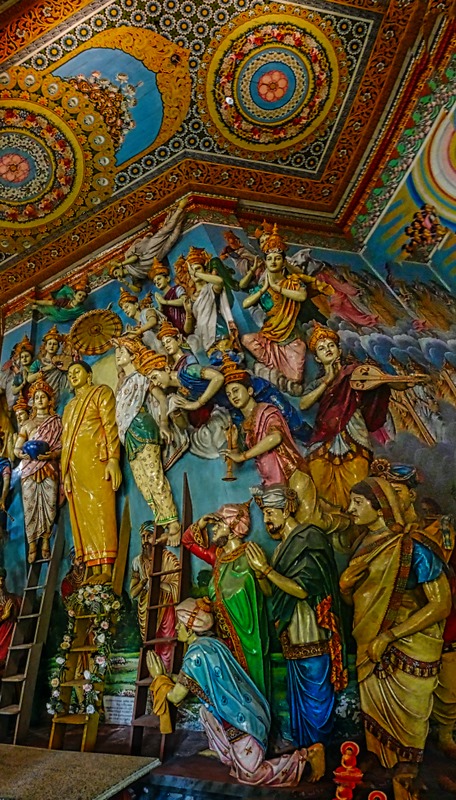
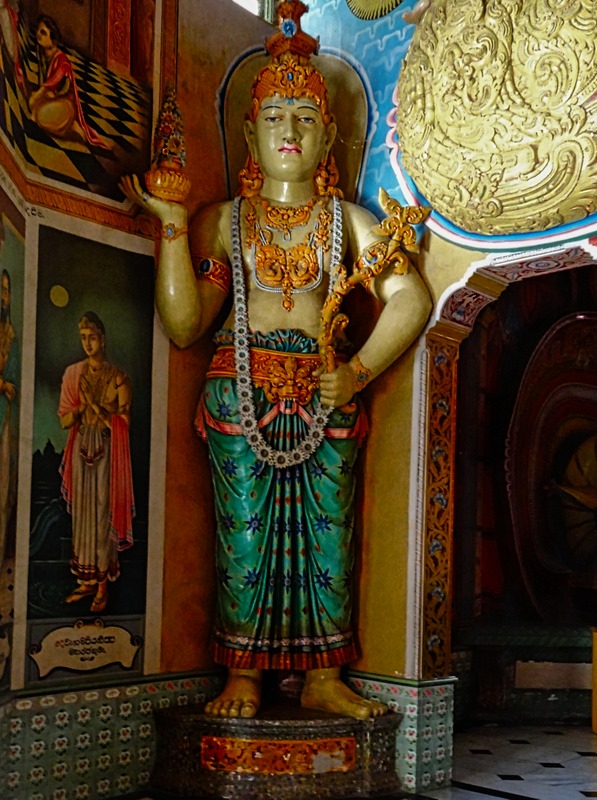
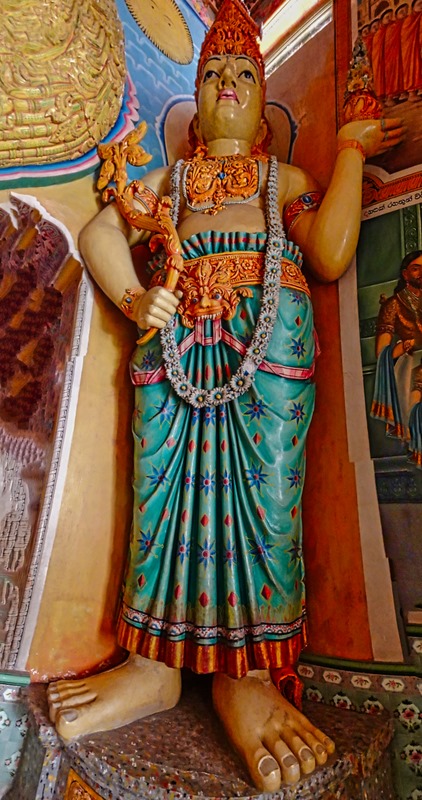
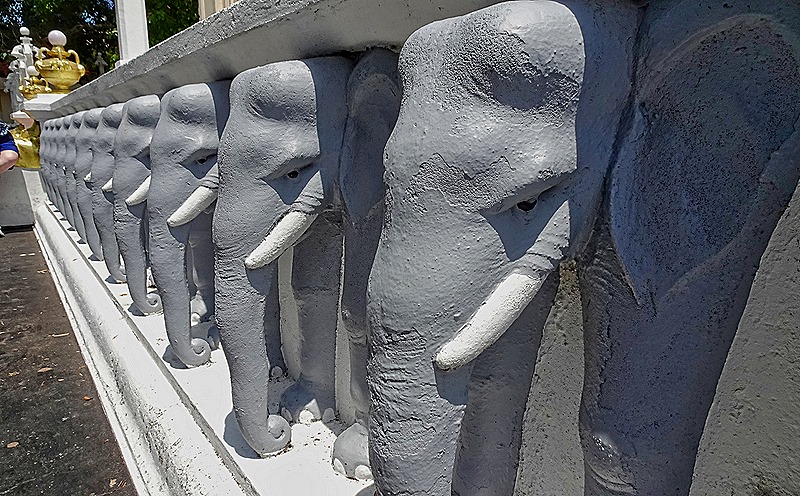
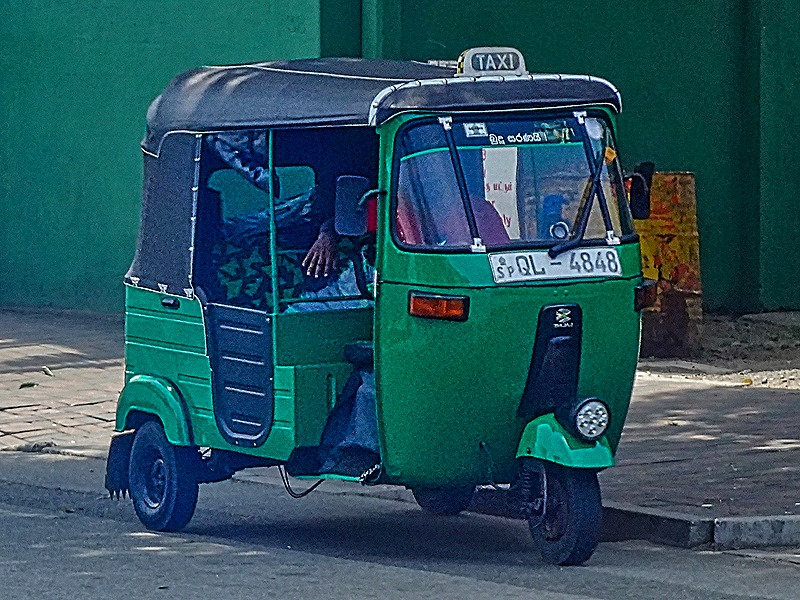
Outside in a rear courtyard of the temple is a Bo tree, rising from a low protective structure ringed with small Buddhas in niches. This species of ficus is the type of tree under which the Buddha sat when he attained nirvana. There are several stupas on the temple grounds that are said to contain relics meaningful to this temple, and we saw a delightful low wall shaped into a row of elephants. On the street outside we saw tuk-tuks, three wheeled vehicles used as taxis. Their drivers can be very aggressive in trying to recruit you for a tour; on past visits we have been followed down streets quite a way before they gave up.


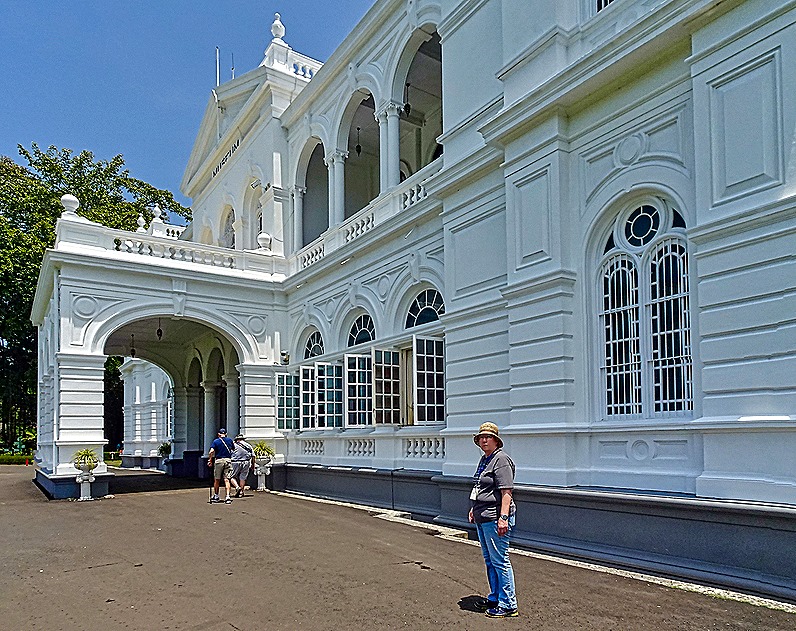
The National Museum of Sri Lanka opened in 1877. Today it has more than 100,000 artifacts and branches in nine other cities. As usual, we didn’t have enough time to really get to know and understand the museum, but we wandered through a number of galleries on its first floor that were crowded with antiquities. In fact, it was so crowded with display cases that the two of us lost each other for a while & it took some time to find each other again. Happily, there were informative explanations in English throughout (although we wished we had time to read more of them).

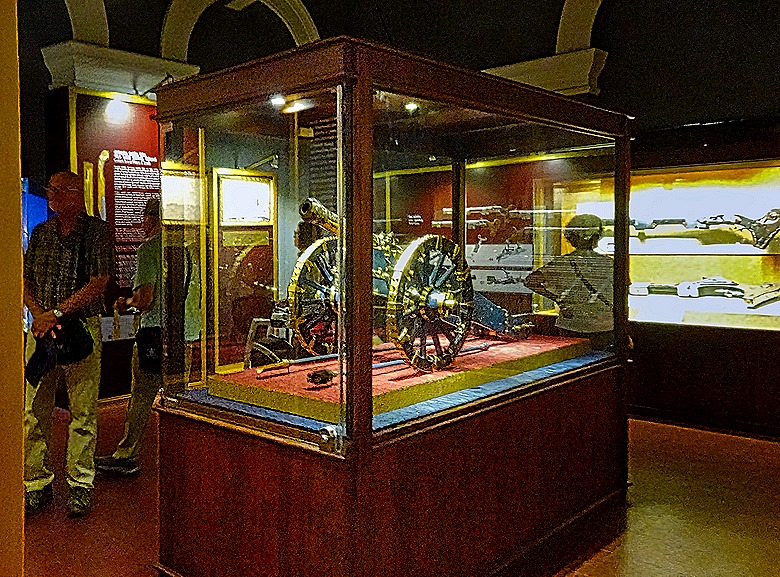
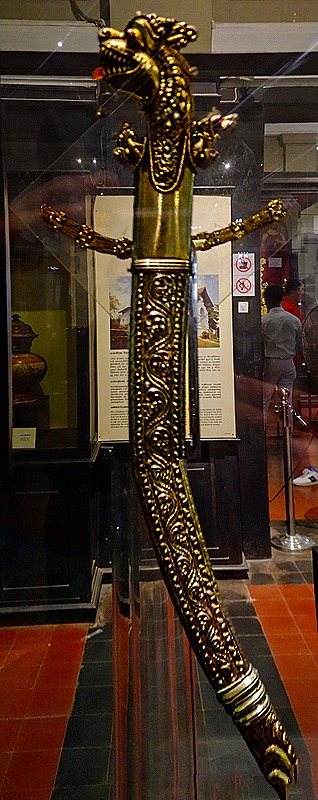
Here are pictures of just a handful of the exhibits we saw. The first two are 12th century table size bronze sculptures of Shiva dancing. The next two are front and side views of the royal seat given by the Dutch to the king of Kandy in 1693 and used by his successors until 1815 when it was captured by the English (returned in 1934). The third pair of pictures show a 12th century sculpture of the god Ganesa and a king’s silver dragon head sword. Last is a relief sculpture of a man with elephants on each side of him.
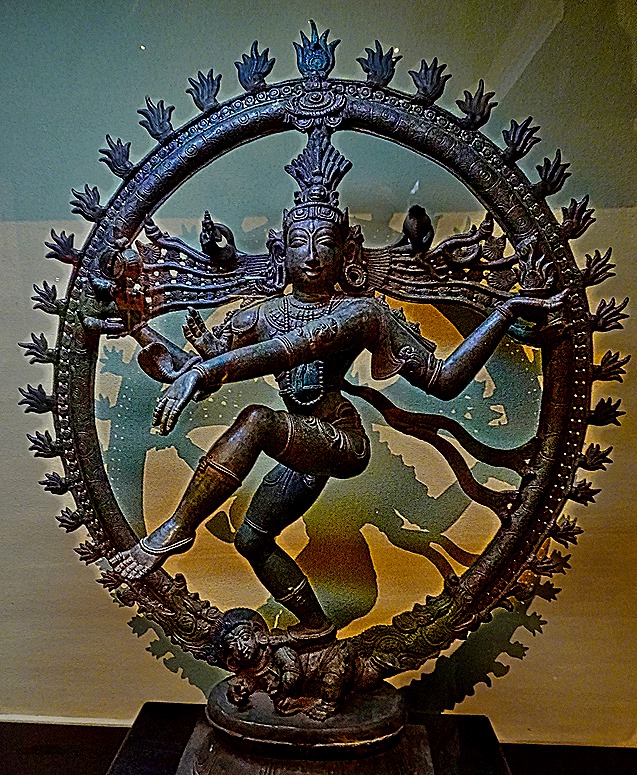
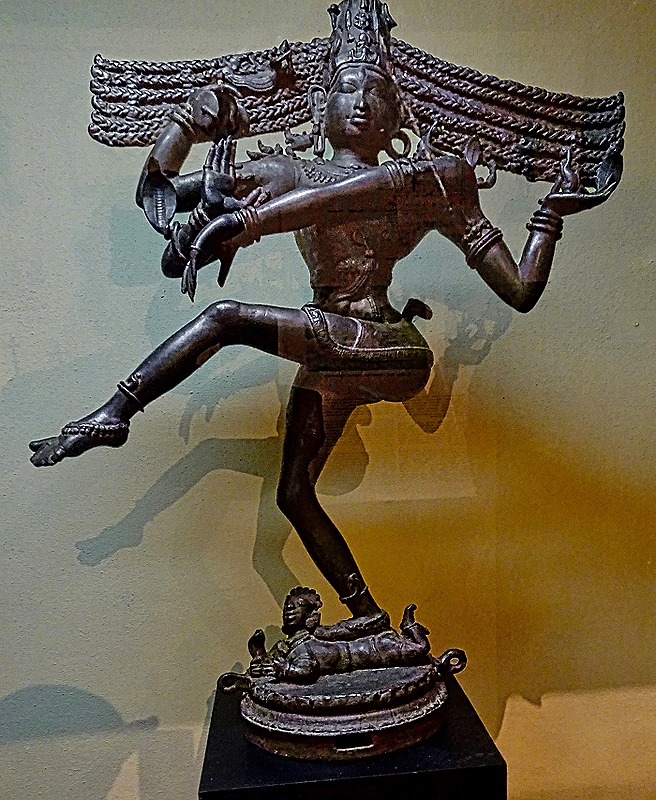
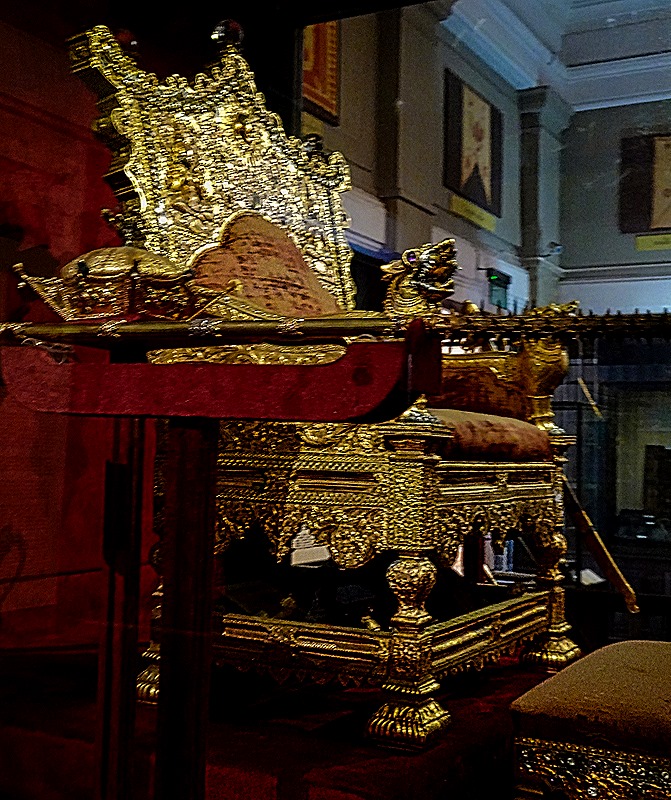
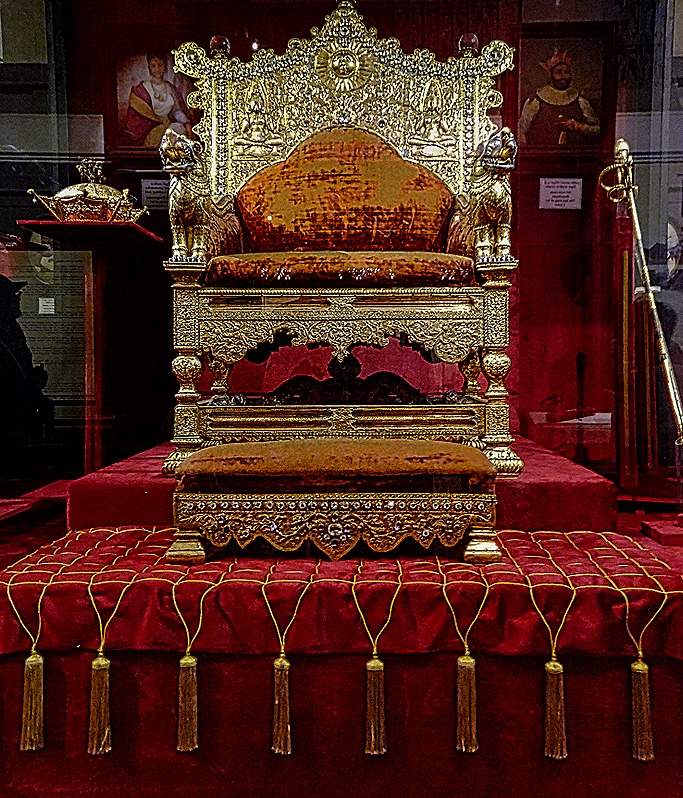


As we left the museum we encountered some interesting looking birds. We don’t know what they are called.


Before going to the Galle Face Hotel for lunch we stopped for an unreasonably long time at an upscale store selling Sri Lankan art and crafts. A lot of nice stuff, but nothing cheap. We generally prefer to shop on our own rather than have a tour company select a store for us (especially since tour companies often get kickbacks for bringing their captive audiences to a particular store).
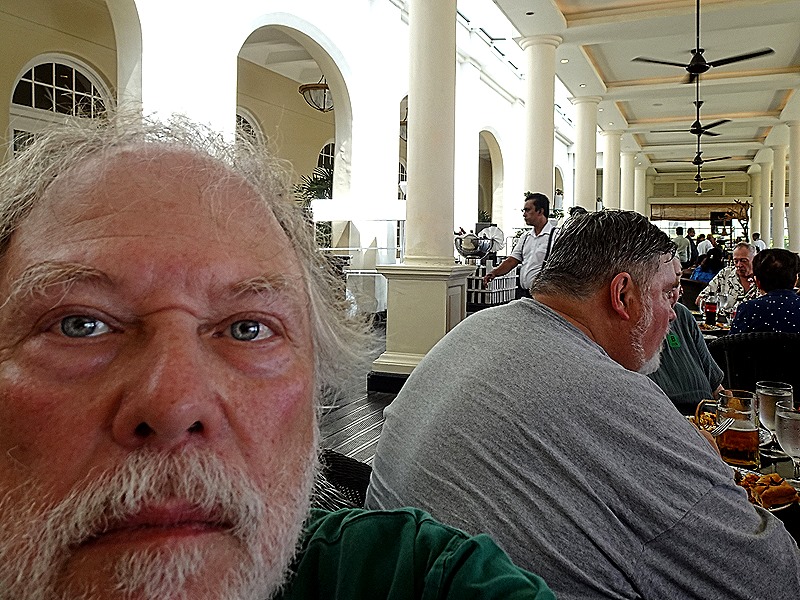
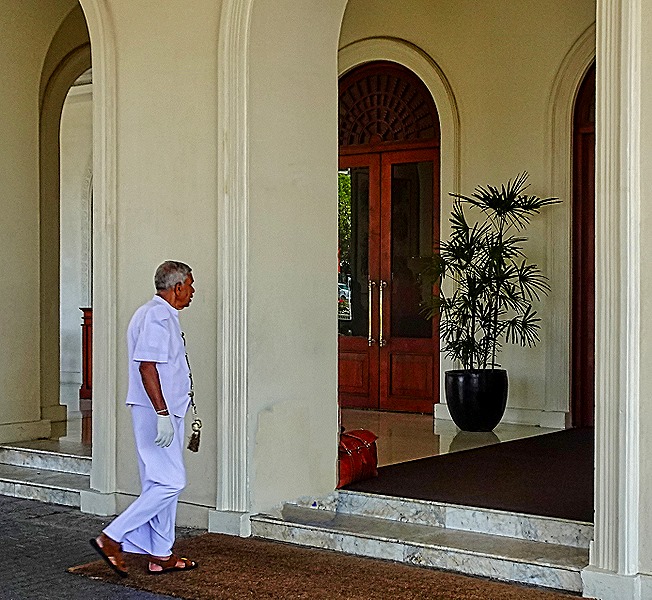
Opened in 1864, the Galle Face Hotel is one of the oldest hotels in Asia. It was expanded a couple of times during the 19th century and was last refurbished in 2015 (a few months before our first visit to Colombo). The hotel has hosted many celebrities, and Arthur C. Clarke, Mark Twain, Anton Chekhov and Sir Arthur Conan Doyle are prominent among the authors who have written here. The hotel forms the southern boundary of the large seaside park called Galle Face Green, from which its name derives. We had lunch here once before inside a hotel restaurant but this time we ate at their grand buffet outside on a very large porch called The Verandah. The buffet line was long, confusing and crowded and there was too much food on offer, but the food was pretty good. After lunch we walked down to the ocean’s edge, past a sitting area called The Checquerboard. I suppose you could take your buffet lunch to eat there, but unlike the Verandah it is out in the very hot sun, so it was no surprise that no one was sitting there when we saw it. As we were leaving the front of the hotel we saw what we think was the white gloved doorman who had been helping someone with their luggage.



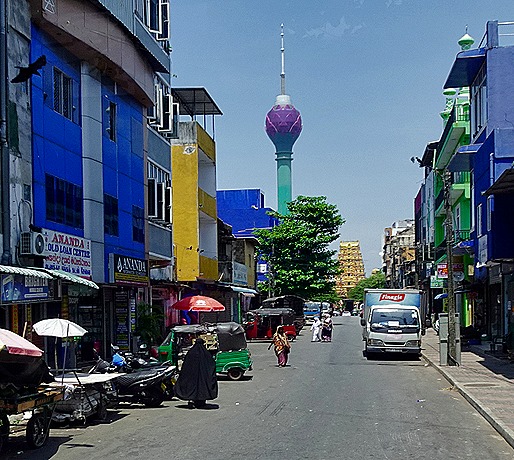
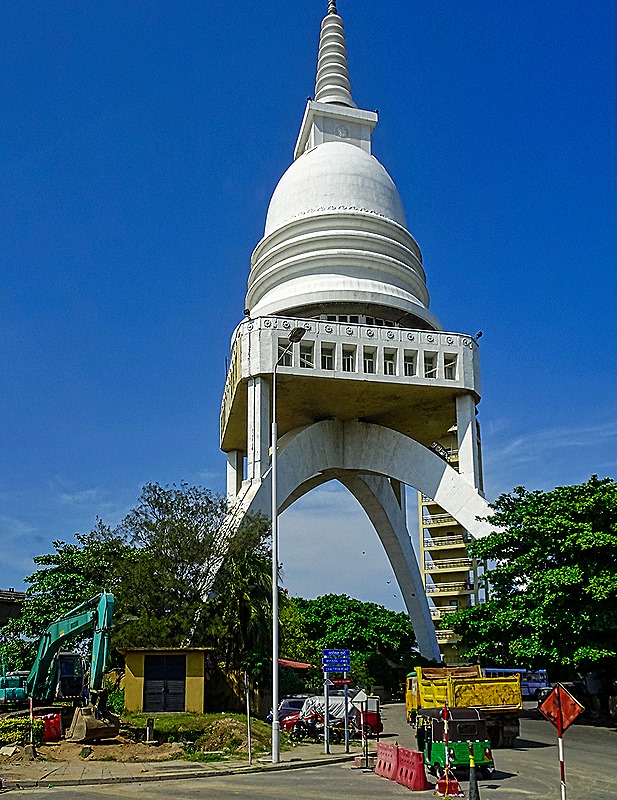
We boarded the bus one last time and headed back to the port. We passed one side street that gave us a view of the Lotus Tower and a yellow Hindu temple that resembled the smaller one we had seen in the morning. At the port gate we passed under the Sambodhi Chaithya, a large stupa on top of a platform made by two arches over the road into the port. It was built in the 1950’s and we understand that it may hold the offices of the port authorities. As in the morning, of course, there was a lengthy drive through the ongoing port construction to reach our ship.
The next day, March 29, was a sea day and a special Indian dinner was held in the Pinnacle Grill. We love Indian food so we went, along with Robert and Bill. We had a nice window table and they had fashioned the different colored napkins into elephants. Robert was dressed in his Indian suit, complete with red dot on his forehead. We had a good time and enjoyed the good eating, but would have preferred that the emphasis be on fine dining rather than on the large number of different Indian foods they could fit on a plate. On our original itinerary this would have led into our visit to Mumbai, India. But because of the troubles in the Red Sea we were no longer going there. More on that in the next episode.


 BADER JOURNAL


My fave pics yet! Thank you thank you.
😎 Karen. Sent from AOL Mobile Mail Get the new AOL app: mail.mobile.aol.com
October 28, 2024 at 10:01 pm