
Maputo, Mozambique — 2024
We reached Maputo on the morning of April 13. Maputo is a city of more than a million people and is the capital and largest city of Mozambique, a former Portuguese colony that achieved independence, through much warfare, in 1975. There was a nasty civil war after that and, even today, there is a good bit of unrest. We had been to Maputo twice but never had a chance to explore the city. In 2018 we drove through the city in a cramped bus on the way to Kruger National Park in South Africa for a wonderful four day safari. https://baderjournal.com/2018/08/13/maputo-mozambique-kruger-national-park-south-africa-day-1/ In 2022 we were unable to leave our ship here because of Covid, although we were able to photograph a surprising number of the city landmarks from the top deck of the ship. https://baderjournal.com/2023/03/27/ There is a good bit of historical background in this last episode much of which we won’t reproduce here, so if you want to read that, this post is where you will find it.

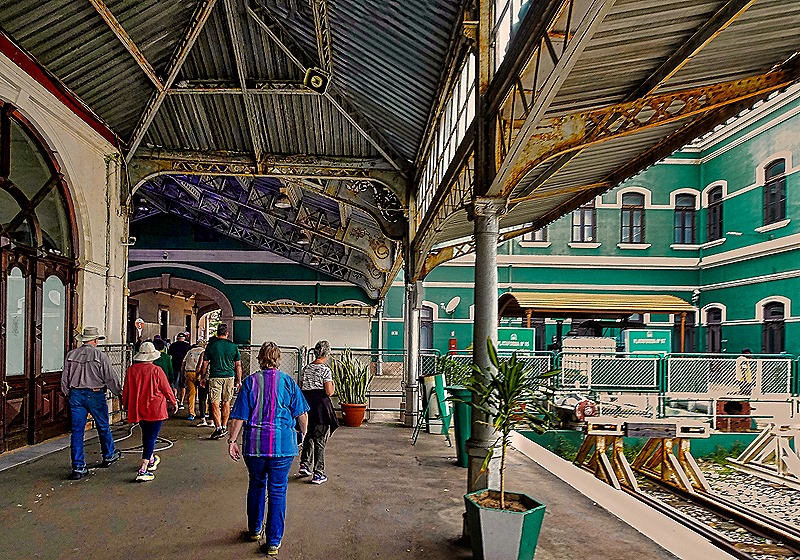
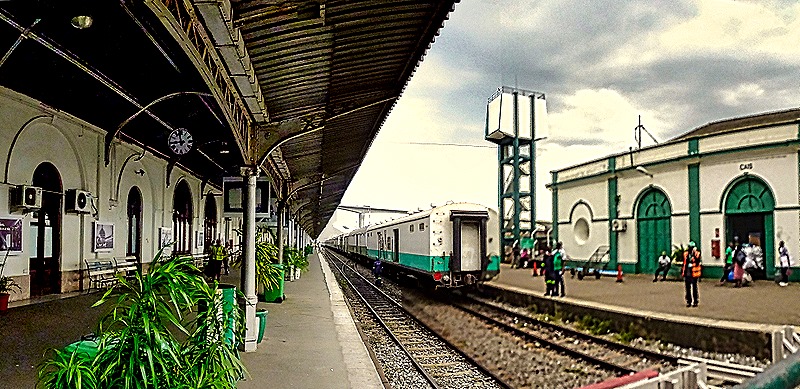
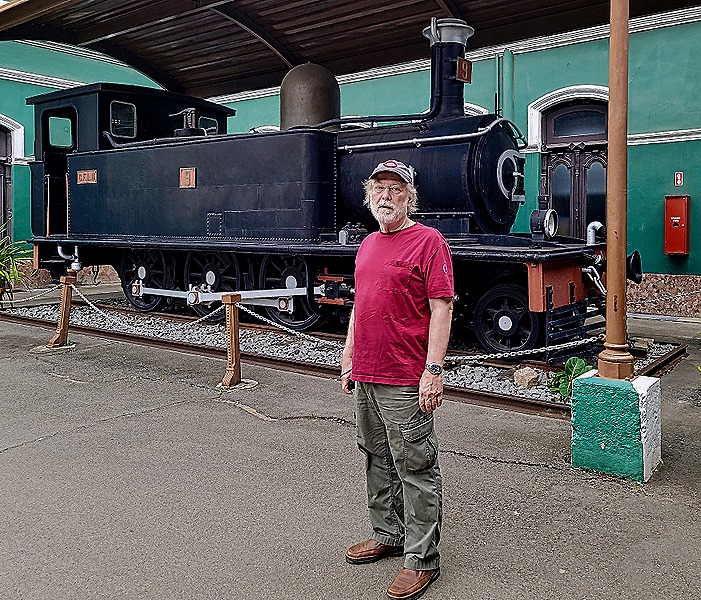
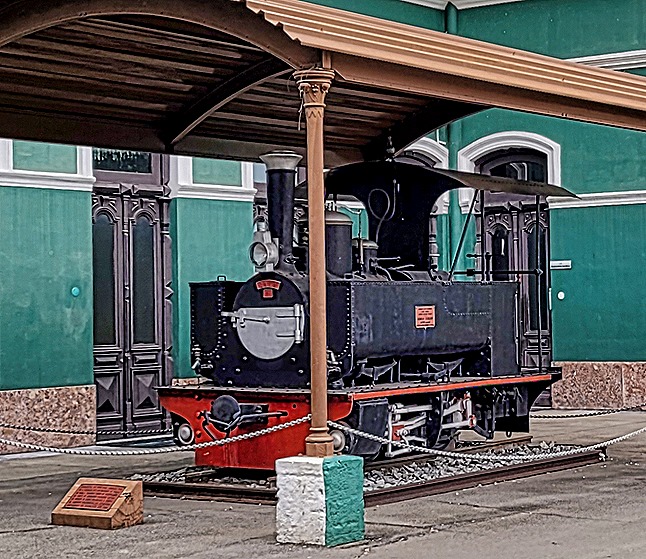
On this visit we wanted to see the city, finally, so we booked an excursion that would take us to most of the high points. Our first visit was to the Central Railway Station, quite close to the entrance to the port. Completed in 1916 it is built in Beaux-Arts style (but not designed by Gustave Eiffel as often claimed) with a distinctive green and white color scheme. We left the bus and had an opportunity to walk around inside the station and along its train platforms, where a couple of locomotives from the early period were on display.
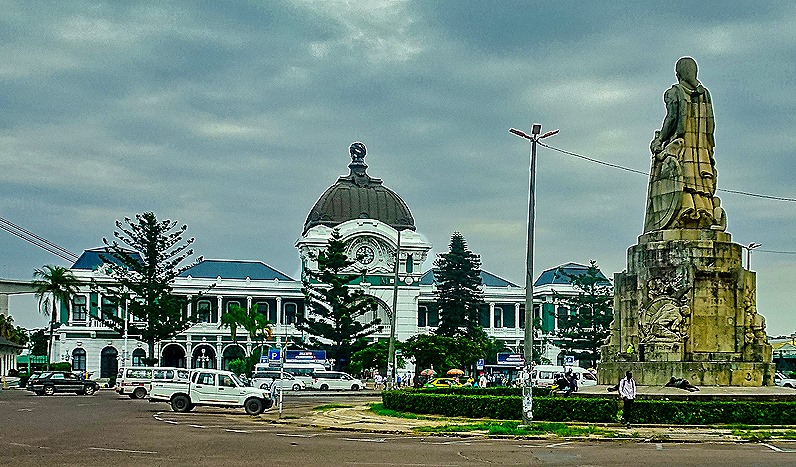


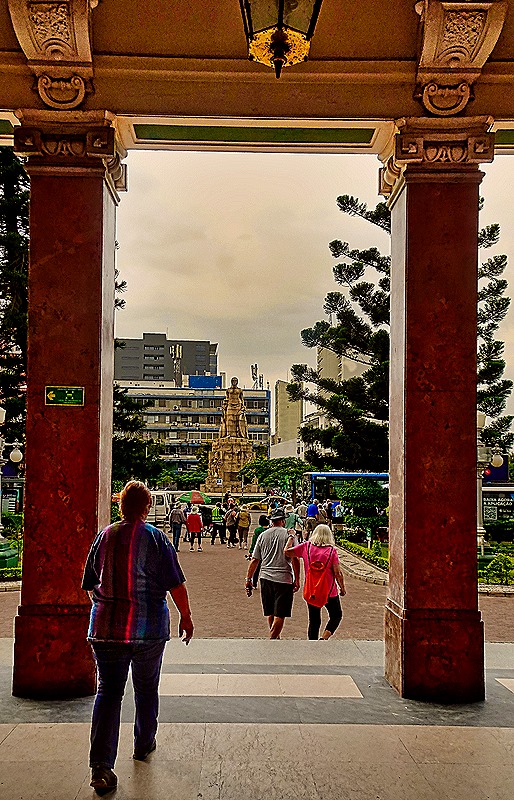
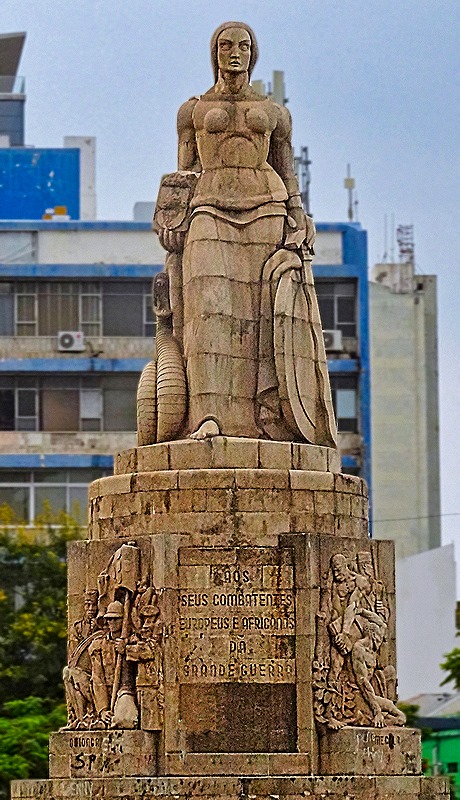
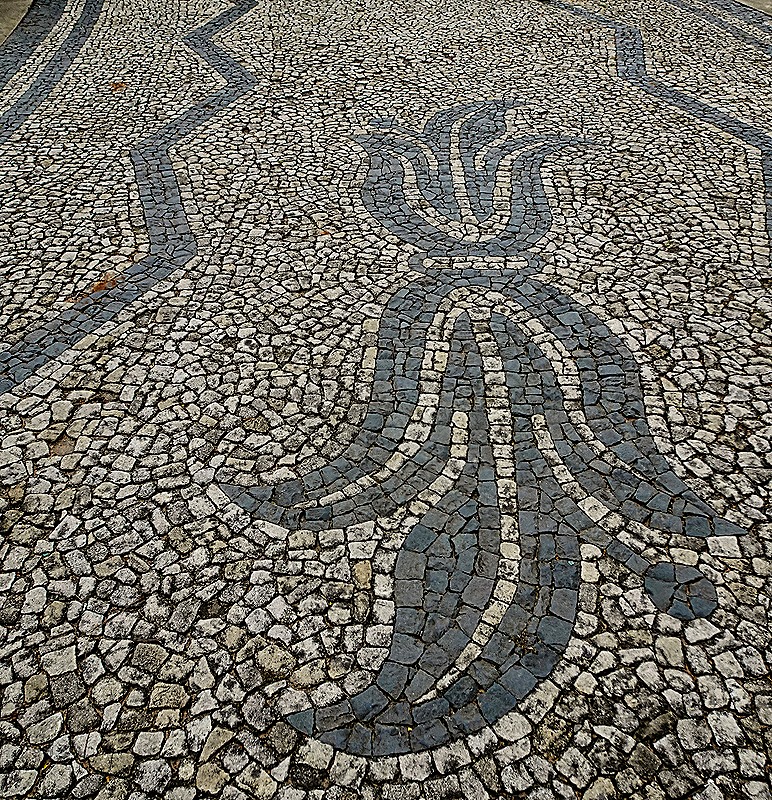
Across Workers Square (Praca dos Trabalhadores) from the train station is the Portuguese Monument to the Great War, memorializing those who lost their lives defending Mozambique from the Germans. Built of steel reinforced concrete, it was dedicated in 1935. Since Mozambique was a Portuguese colony it was not surprising to see mosaic sidewalks in front of the railway station.

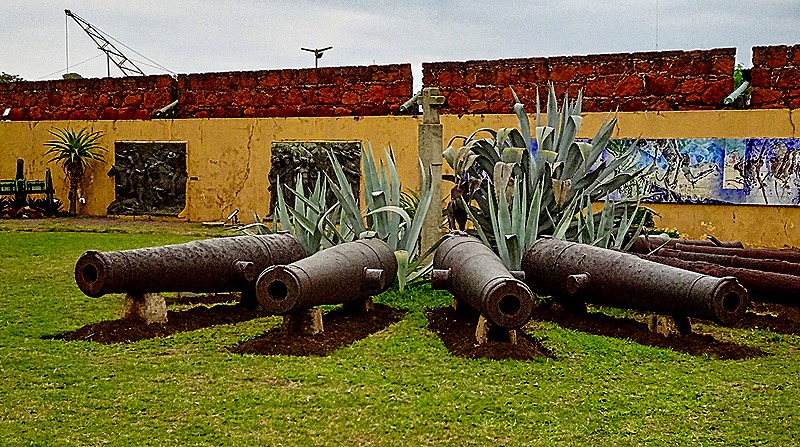
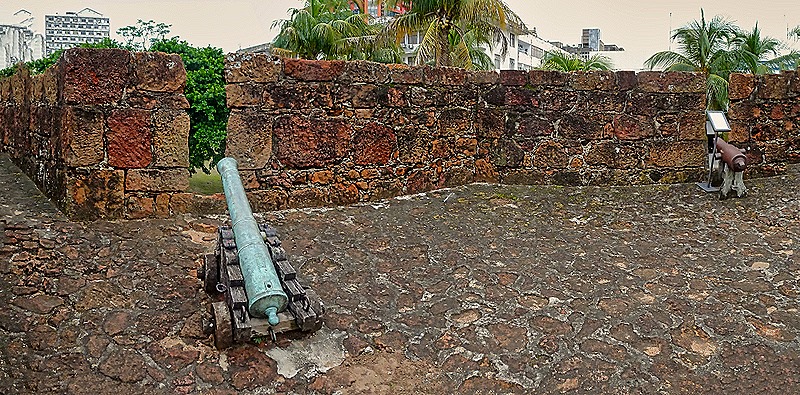
The Fortaleza Nossa Senhora da Conceicao de Lourenco Marques was built by the Portuguese in the late 18th century on a spot where small forts built by the Dutch and Austrians had previously been located. (Lorenzo Marques was the name of Maputo until 1976.) It was restored about 1946 on the foundations of the original fort. It is square in design with a single entrance to the interior courtyard from which doors lead to the rooms built into the fort. Old cannon are arrayed in the courtyard and on the ramparts at the top of the walls, which can be reached by dirt hills built into the corners of the courtyard.


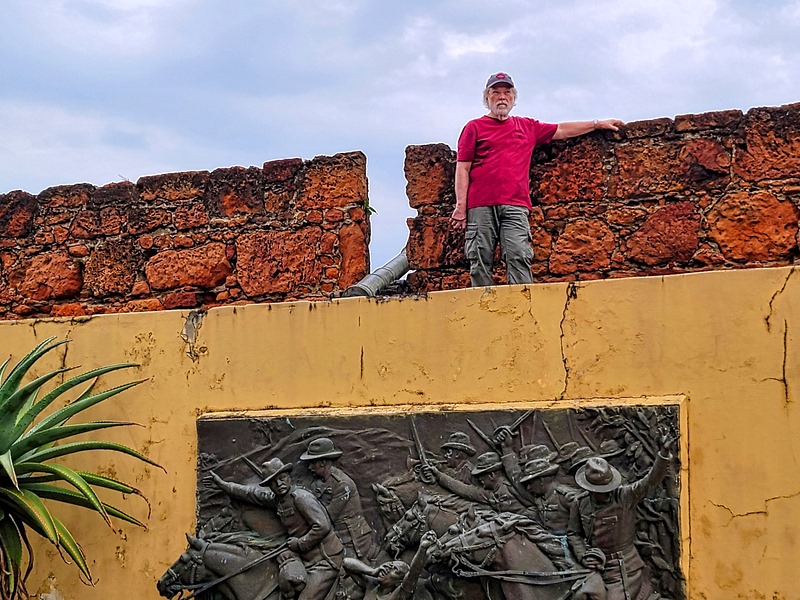


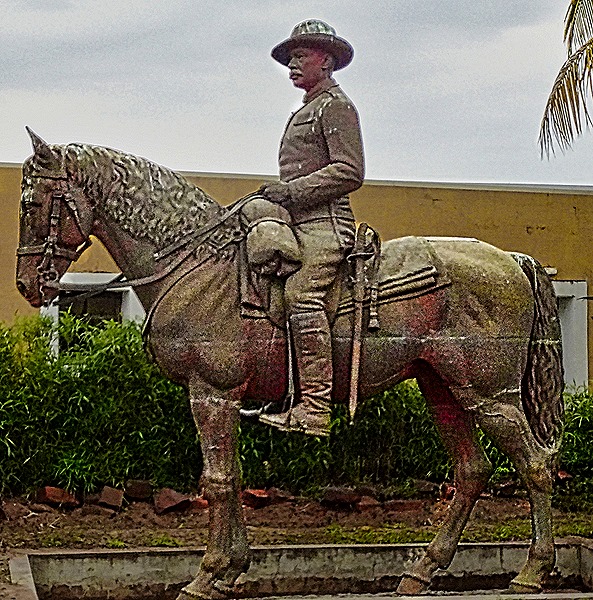
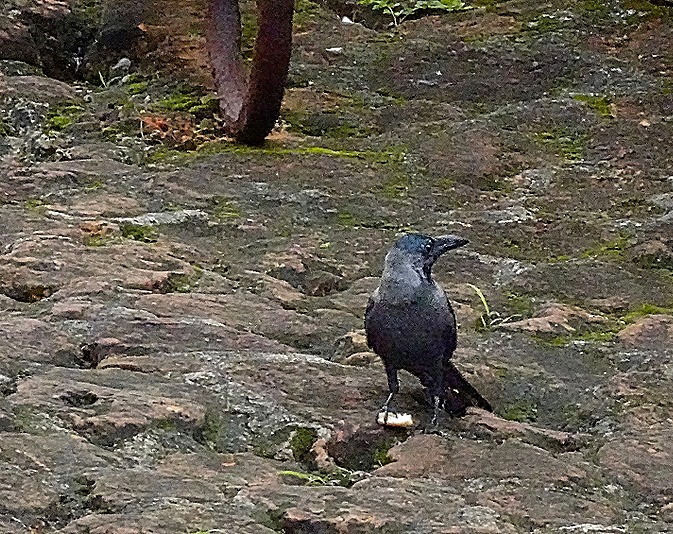
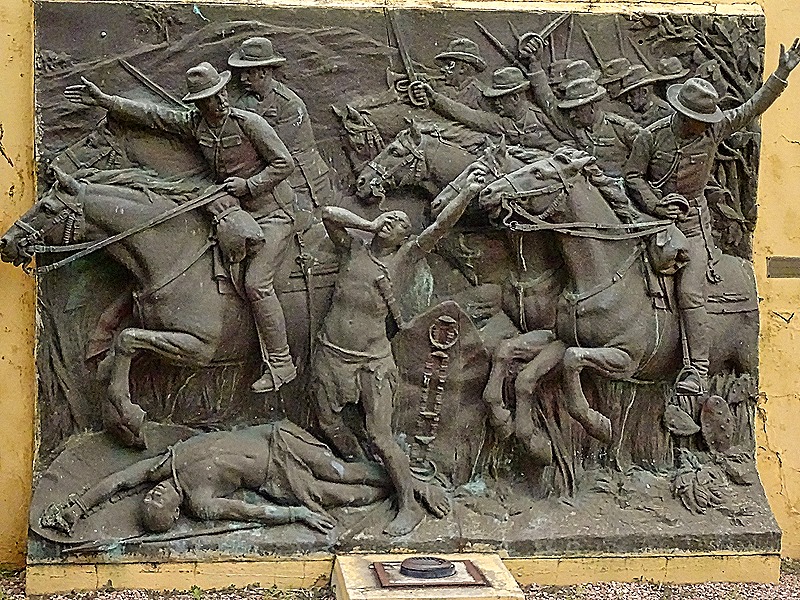
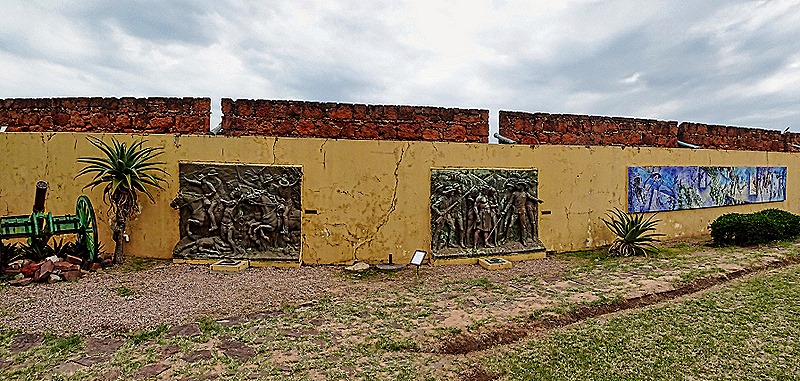
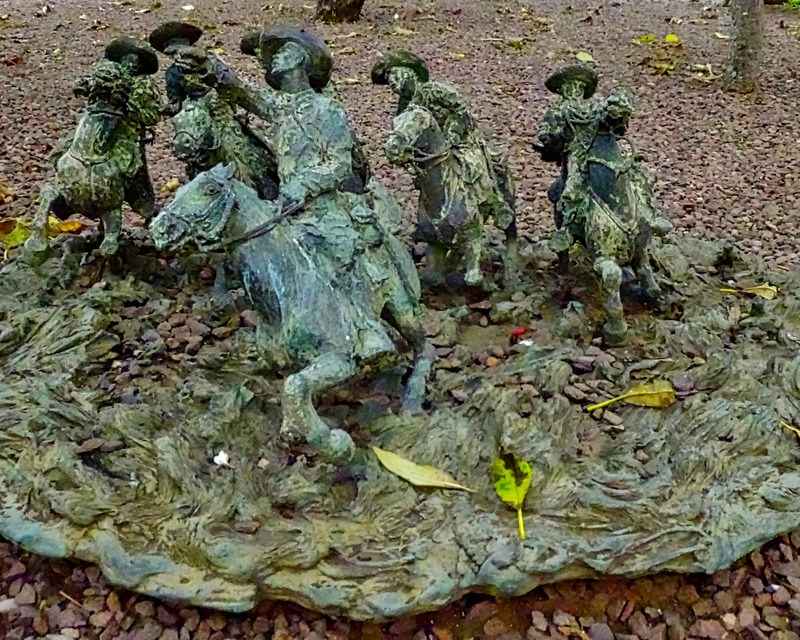
In the courtyard were sculptures of some Portuguese who figured in Maputo’s colonial history. There is an equestrian statue of Joaquim Mouzinho de Albuquerque, Commissioner of Mozambique from 1896 to 1898 and known for leading the occupation of Mozambique in 1895. It was unveiled in 1940 in the center of what is now Independence Square and moved here later. A statue of Antonio Jose Enes, another Portuguese Commissioner of Mozambique active in the 1895 occupation campaigns, was dedicated in 1910. The sculpture we liked best was a bronze group of Portuguese soldiers on horseback, looking a little like something that could have been made by Frederick Remington. It was brought here from elsewhere in 1975 or so. Finally, two large relief panels were on one of the walls of the courtyard. On the left was a panel representing one of Mouzinho de Albuquerque’s successful battles in 1897, and on the right was one depicting the 1895 imprisonment of the emperor of Gaza in Chaimite in 1895. There was also an interesting bird in the courtyard (alive, not a sculpture).



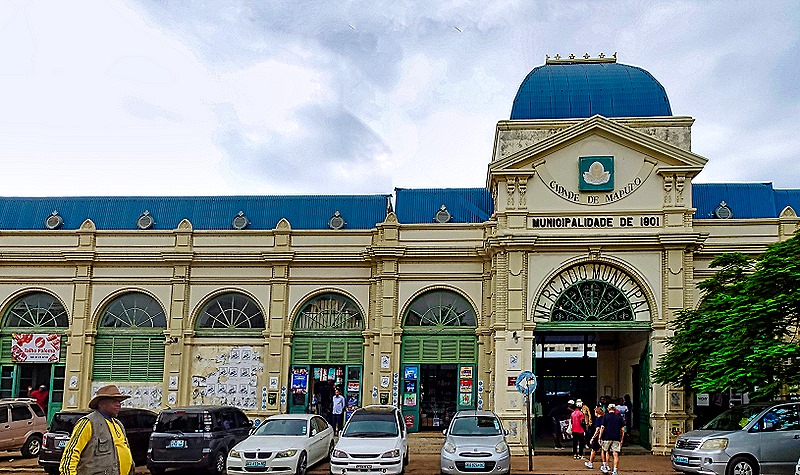
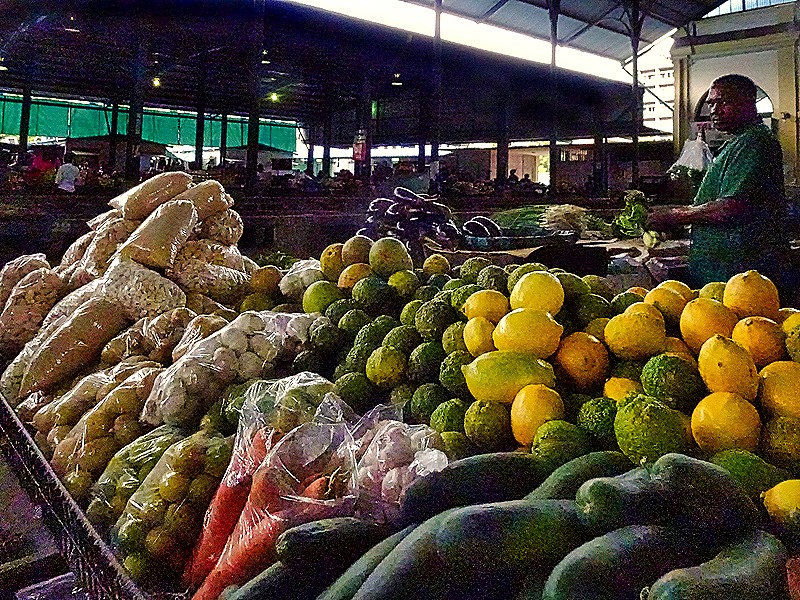
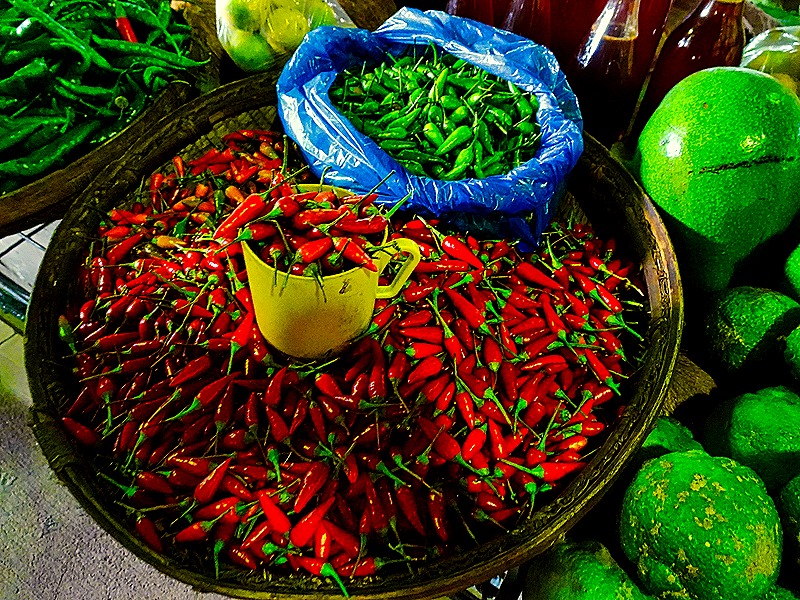
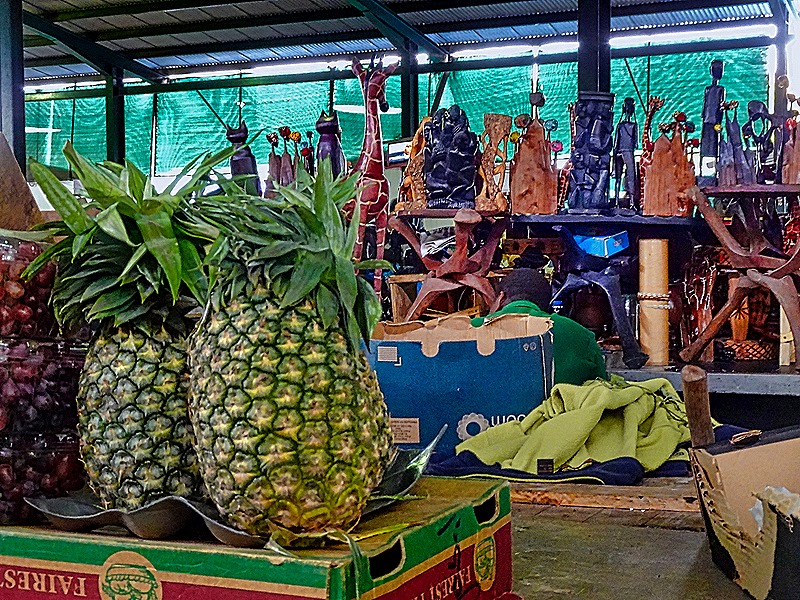
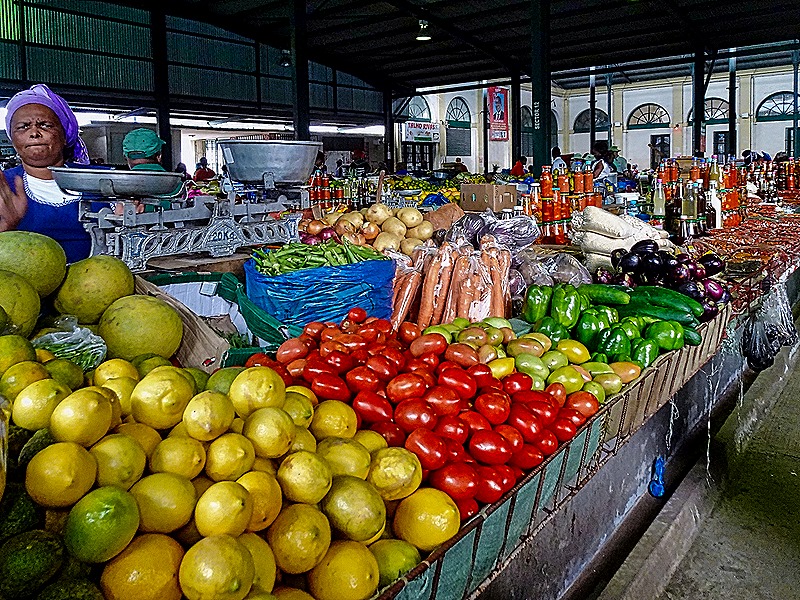
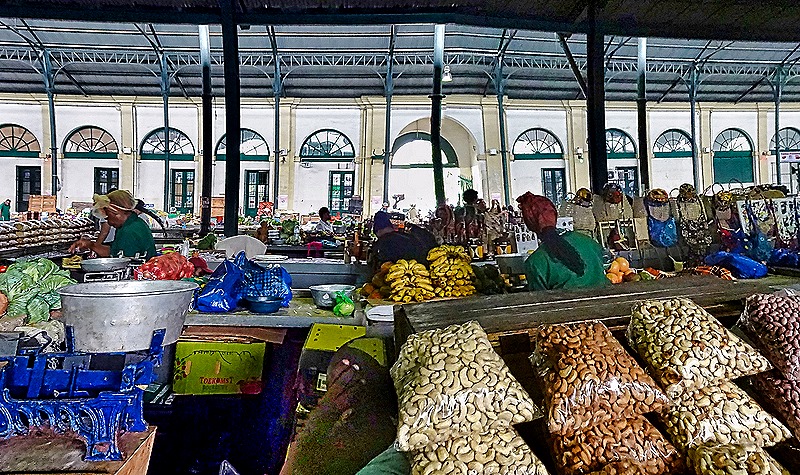
The Mercado Central de Maputo is a an enclosed market building that opened in 1903 with 18 vendors’ stalls. At that time it was named after Vasco da Gama. It was restored in 2001 and space for more than 150 additional vendors was added by 2013. The front facade somewhat recalls the railway station but with a much less grand scale and design. Inside it is a huge open warehouse-like space with countless individual vendors, mostly food but also some arts & crafts and souvenirs. An election campaign was in progress during our visit and several large political signs were on the walls.


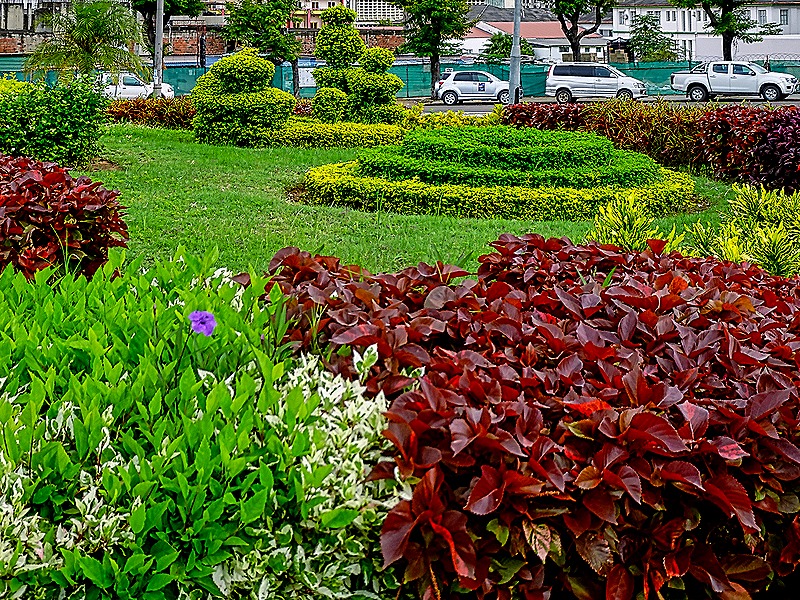
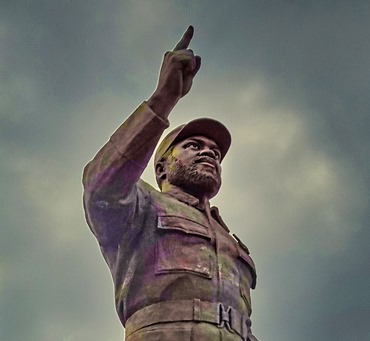
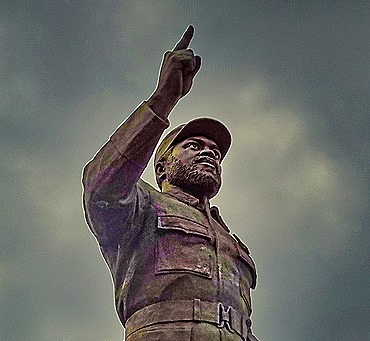
Praca da Independencia (Independence Square) is considered the focal point of the city. Around this square are the Maputo City Hall, the Catholic cathedral, the Iron House and Tunduru Gardens. As we approached in the bus it looked (at least to us) like a political demonstration was in progress in front of the City Hall, but we were told later it was a rally, religious in nature (if we remember correctly). In front of the City Hall in the middle of a traffic circle planted with colorful flowers was a 30 foot tall statue of Samora Machel, the first president of Mozambique who was still in office when he died in a plane crash in 1986. It was designed and built in North Korea before being erected here in 2011. Previously the equestrian statue of Mozinho de Albuquerque that we saw in the fort had stood here since 1940.

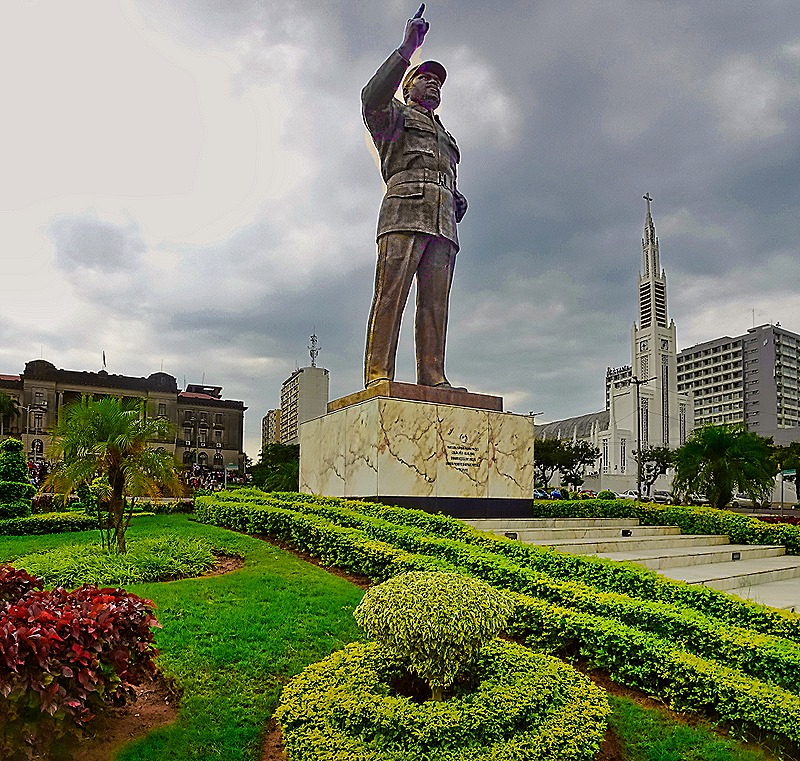
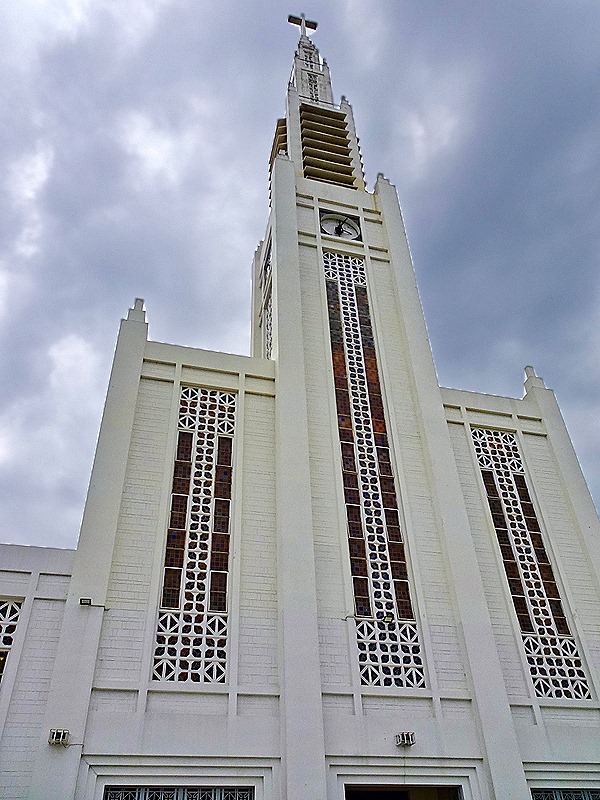
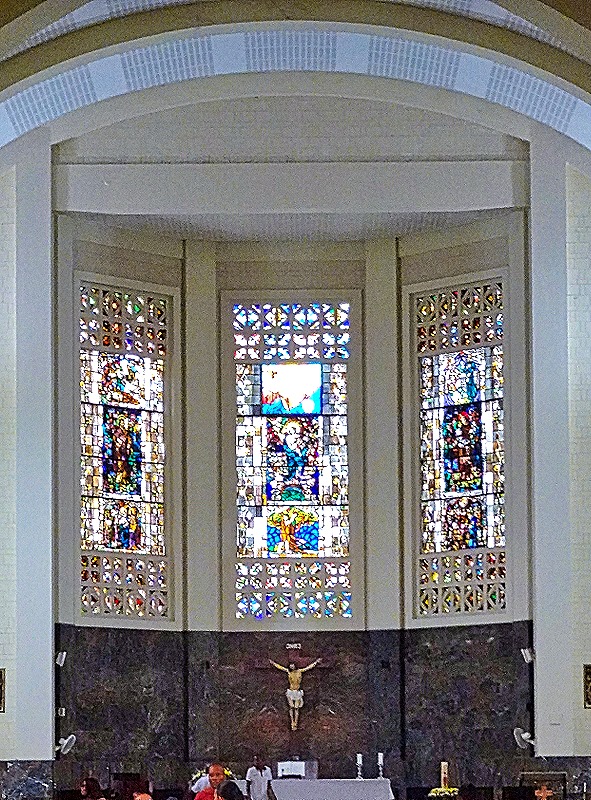
To the right of the City Hall is the towering white Roman Catholic Catedral de Nossa Senhora da Imaculada Conceicao, known locally as the Maputo Cathedral. Built of concrete and cement, its construction was completed in 1944. Another Portuguese style mosaic sidewalk was nearby.

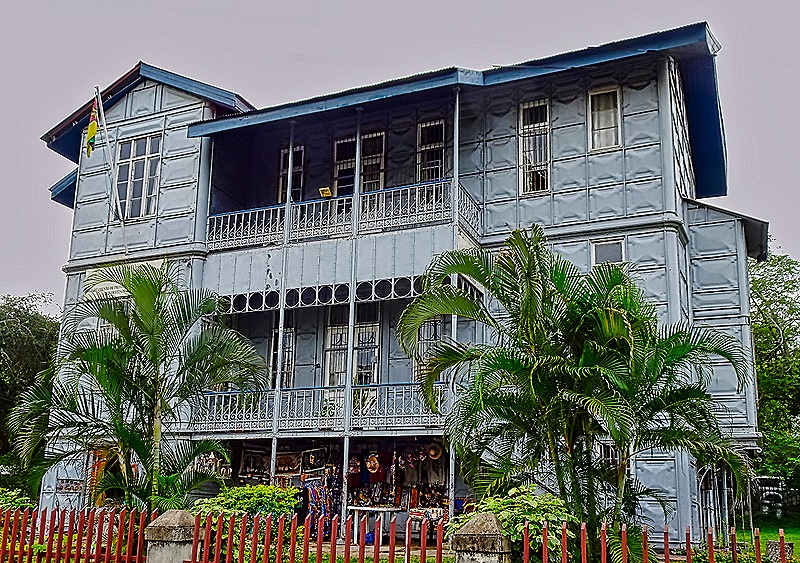
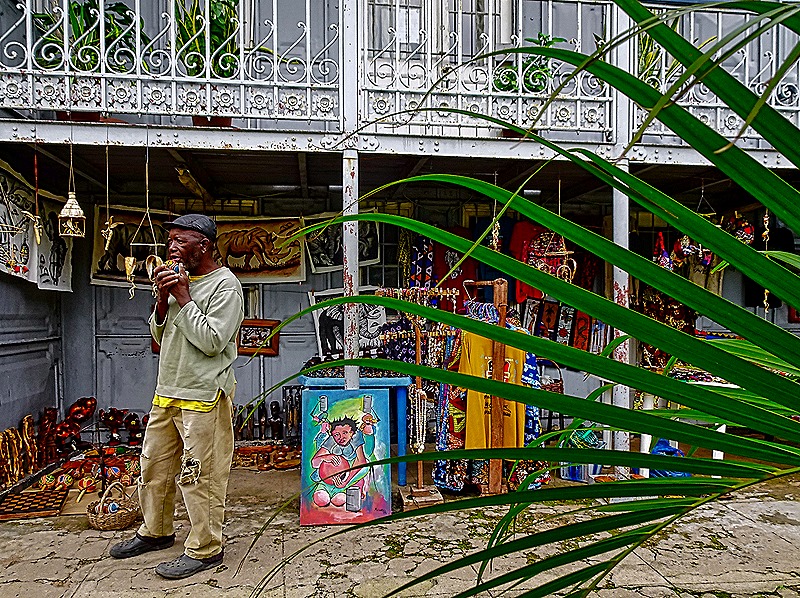
The Casa de Ferro (Iron House) was fabricated of iron (of course) in Belgium. It was purchased by the Portuguese and reassembled here in 1892 to be the residence of the governor. But it was never occupied by the governor and instead has housed several groups and institutions over the years. There are two popular myths about this house. First, like the railway station, it was not designed by Gustave Eiffel. Second, the popular story that it was uninhabitably hot in the tropical climate is also false. The governor apparently rejected it initially mainly because he preferred a more traditional house. After all, it has been used more or less continuously over the years by others without apparent difficulty, although not to live in. And it was designed to provide particularly good air circulation both inside the walls and through holes in the walls. Similar buildings by the same firm have been used successfully in other tropical climates, in South America and elsewhere in Africa. The building was moved to this spot in 1966 from its original location and was restored in 2014. But for its iron construction, and the geometric patterns impressed in blocks on its walls, this looks like a rather ordinary gray building, three stories tall. Today it houses the Ministry of Culture and there is a souvenir shop on the patio of the ground floor.

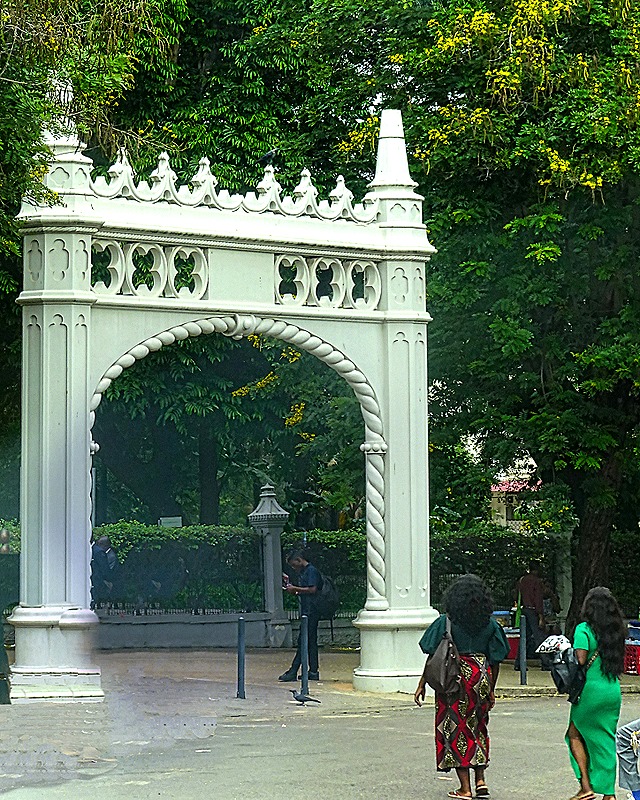
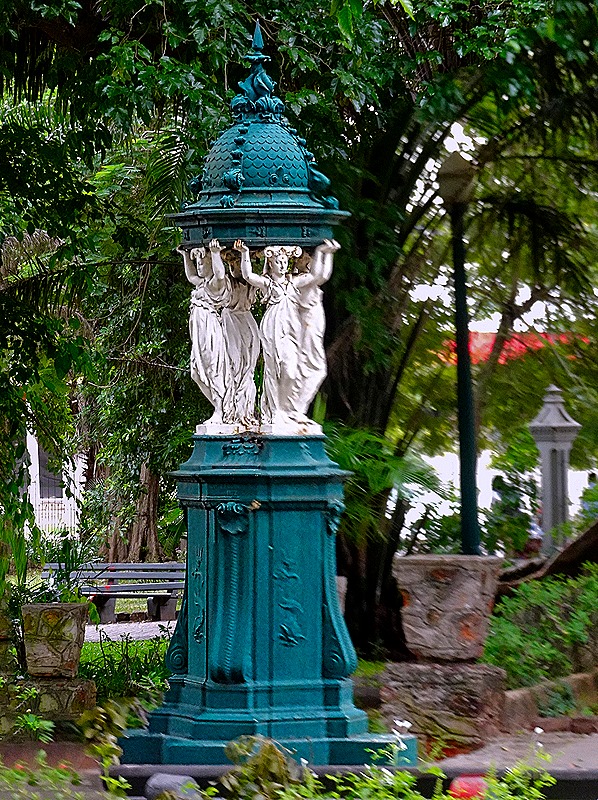
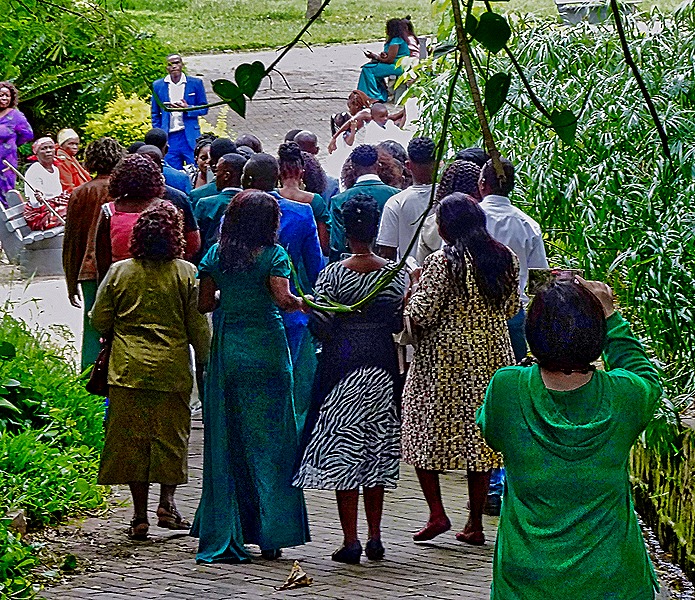
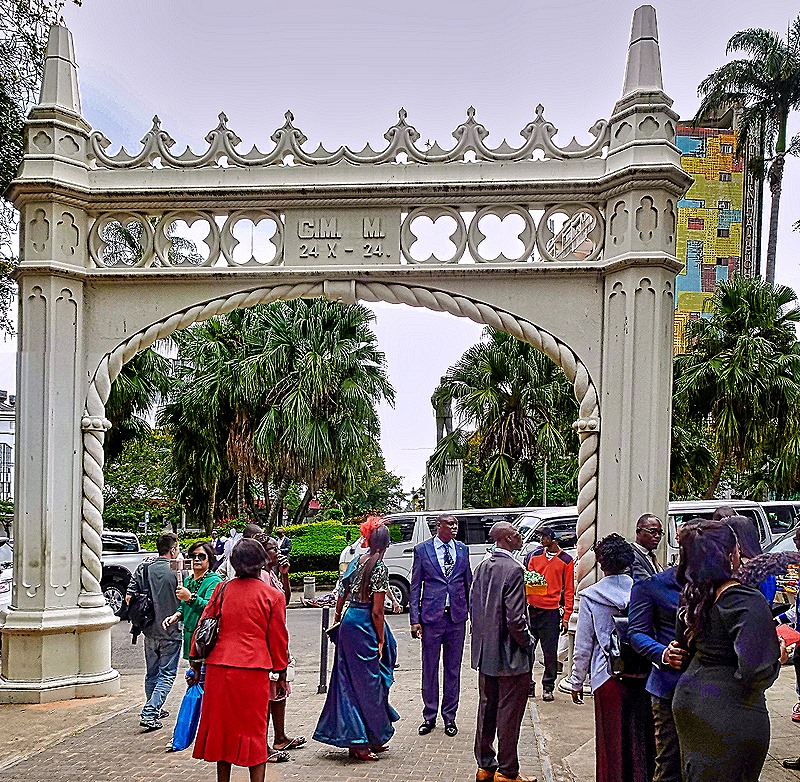
The Tunduru Botanical Gardens is a fairly small park quite close to the iron house. It dates back to 1885 and houses many very tall old trees and a large colony of fruit bats. On the day we visited the bats were very high in the trees and difficult to see, but we took some pictures in the general direction people were indicating and a few of them showed up. To enter the park you walk under an elaborately sculpted white arch. The highlight for us was seeing wedding parties walking through the park. It seems there is a tradition here that weddings take place on Saturday near a hotel not far from the park and before the ceremonies the wedding parties come to these gardens to take wedding pictures. Luckily it was Saturday when we visited so we got to see several wedding parties walking along the paths and gathering under the arch. Very nice place to visit.




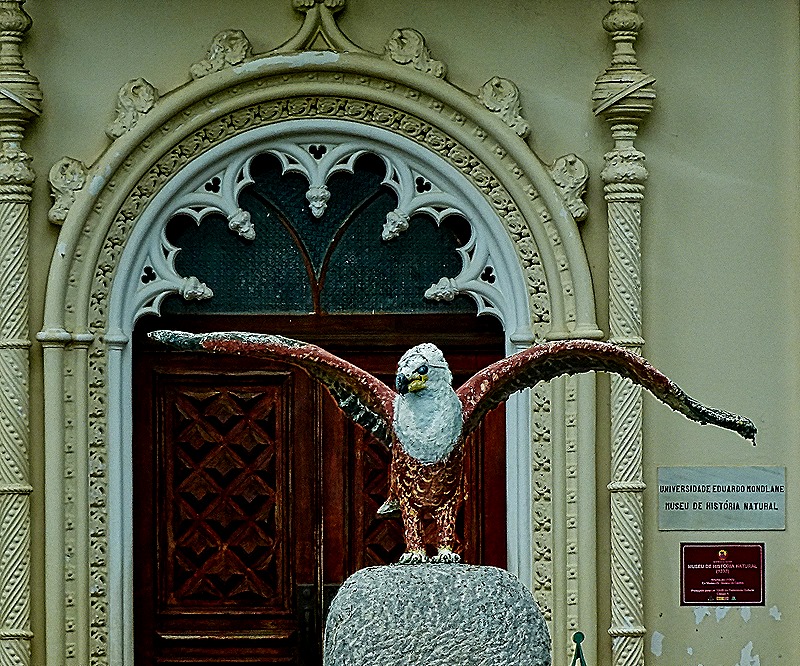
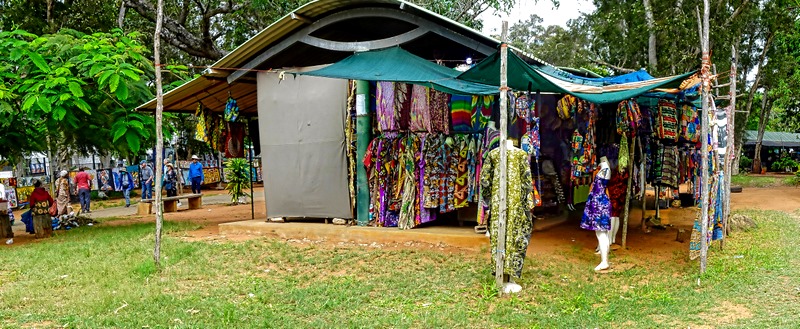
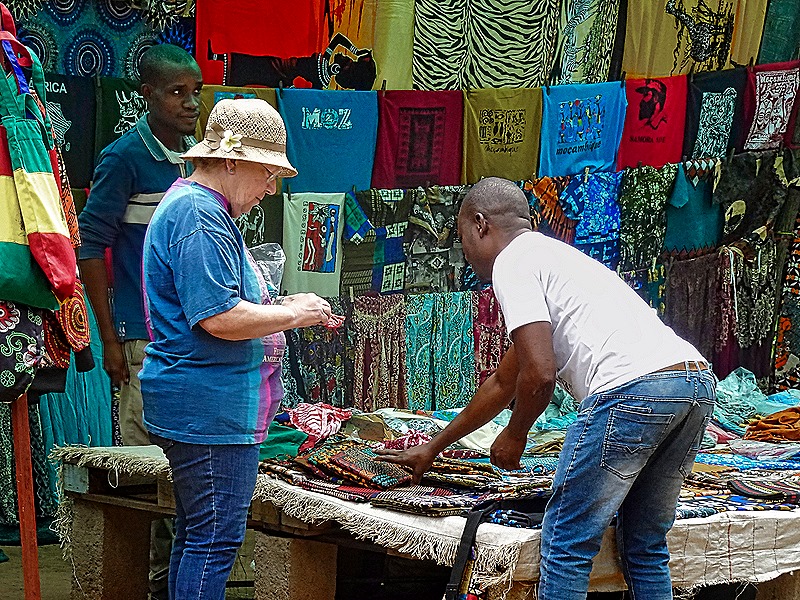
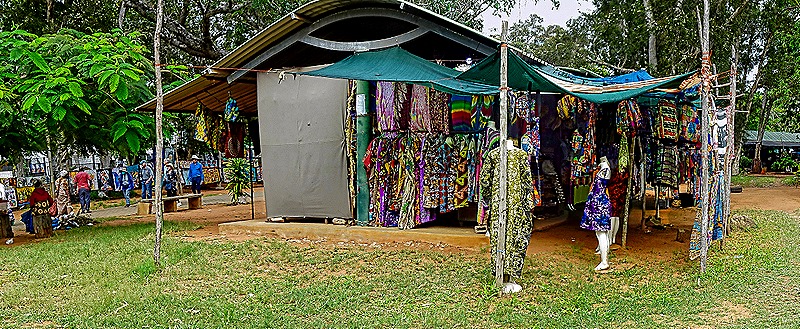
After leaving the gardens we boarded the bus to drive to Feira de Artesanato, Flores e Gastronomia (called FEIMA), a very large and bustling market for arts & crafts, flowers, jewelry, clothing and more, with several restaurants. It is located in a park surrounded by iron fencing. The vendors are friendly but anxious to make a sale, particularly when you show interest in a particular item. The wares are very colorful and it is fun just to walk around and enjoy the ambience. On the way to FEIMA we passed the Museum of Natural History, which had an arresting sculpture of an eagle in flight in front of the entrance.



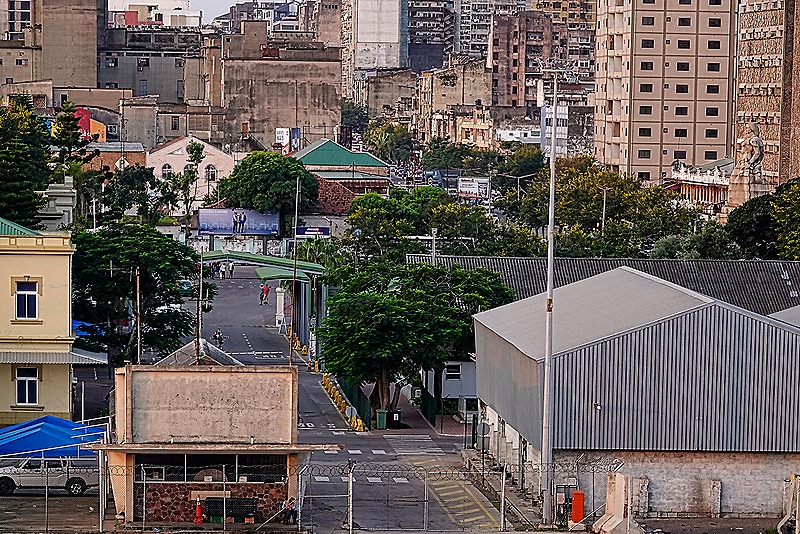
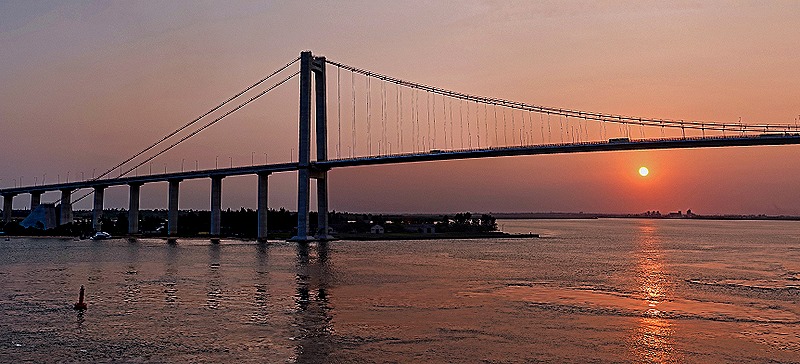
We sailed away in late afternoon. From our veranda we had a nice view of the nearby port facilities and the gates to the town. This is a very busy port, which has been in operation since 1544. The sun was setting as we left the dock and we watched it drop behind the Maputo-Katembe Bridge, the longest suspension bridge in Africa, which was built by the Chinese and opened in 2018. There has been some controversy over the years about the cost and construction of this bridge, but there is no doubt that the sun setting behind it makes for a lovely sight.


 BADER JOURNAL





Leave a comment