
Durban, South Africa — 2024
We reached Durban, the third largest city in South Africa, on April 15. It is situated on the coast of the Indian Ocean in the province of KwaZulu-Natal. Founded by traders from South Africa in 1824 on land granted by Shaka, the Zulu king, Durban’s population consists not only of Zulu and White residents but also a very large Indian community, one of the largest outside India, which grew from the import of indentured servants and immigrants in the late 19th and early 20th century. Mohandas Gandhi lived here for most of the period 1893 to 1914, and gained experience as a civil rights leader. We had been here once before just a year and a half ago, but because of Covid we stayed on the ship. https://baderjournal.com/2023/03/27/. So this was our first opportunity to see something of this city.
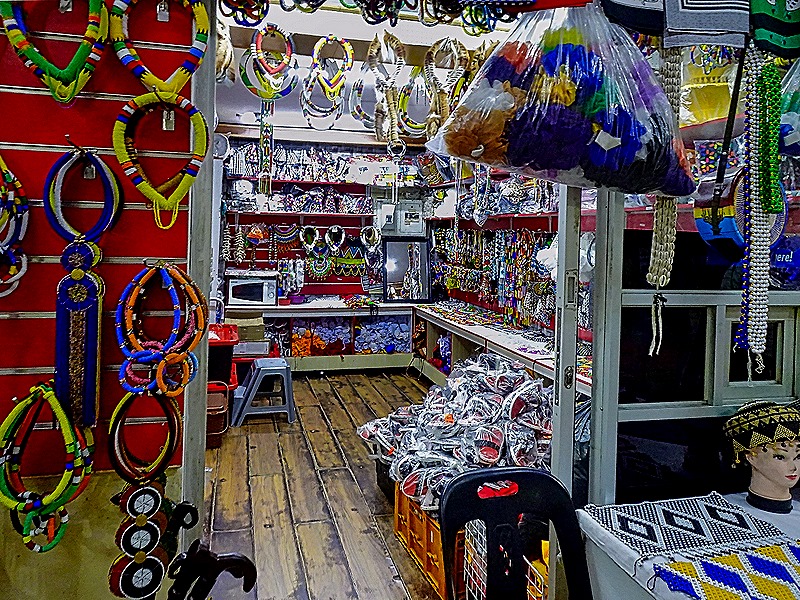
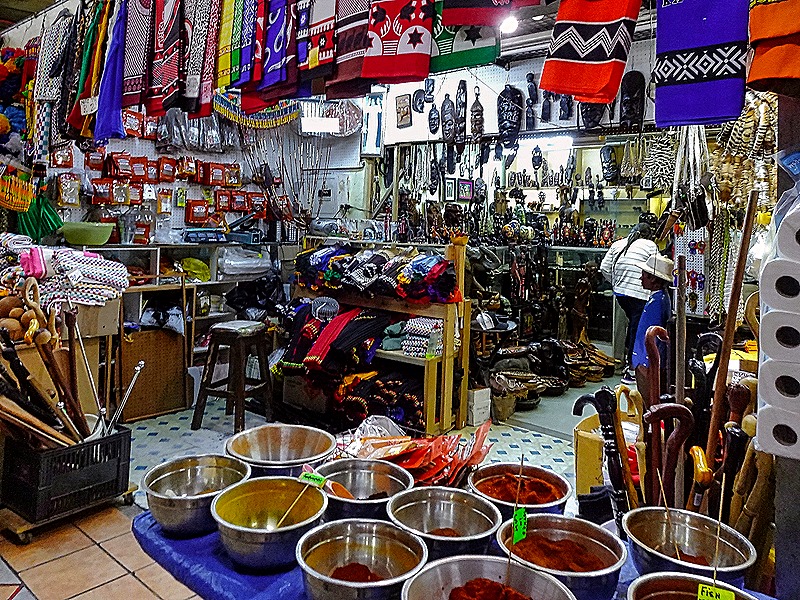
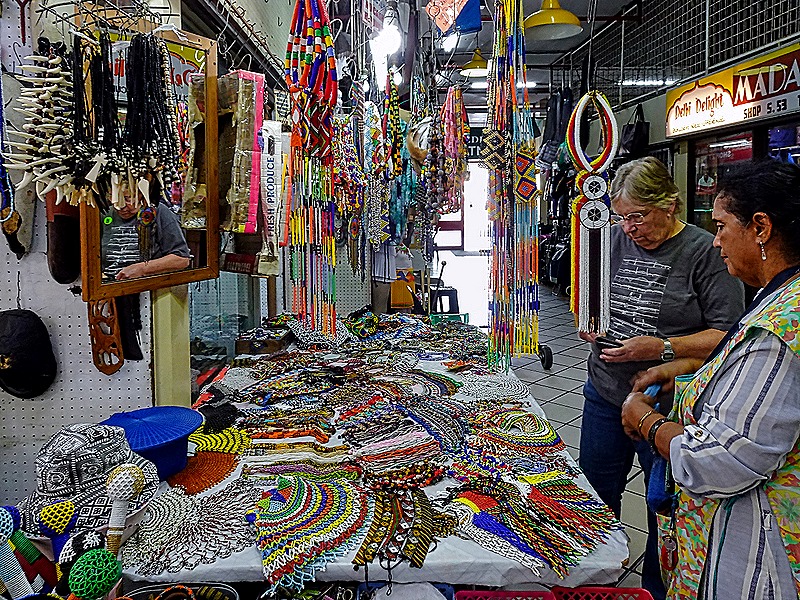
We had been cautioned that exploring Durban on your own could be dangerous because of high crime rates, so we decided to take an excursion to see the high points of the city. Our first stop was the Victoria Market, a two story indoor market with more than 150 vendors. This mostly pink market building was built in the 1980’s, but there was an Indian Market here as far back as 1910 that burned down in 1973. This early in the morning the market was not as busy as we understand it gets later in the day. In addition to the produce and meat areas, there is a great variety of interesting regional clothing, spices, jewelry and crafts, including Indian style items.
On the way to the market we passed the Juma Mosque (also called the Grey Street Mosque), founded in 1884 but greatly expanded over the years since then. Its two golden domed minarets were built in 1904 and 1905, when they were the tallest buildings in town. We also drove past an open air market lined with cloth covered stalls which was very quiet in the early morning.


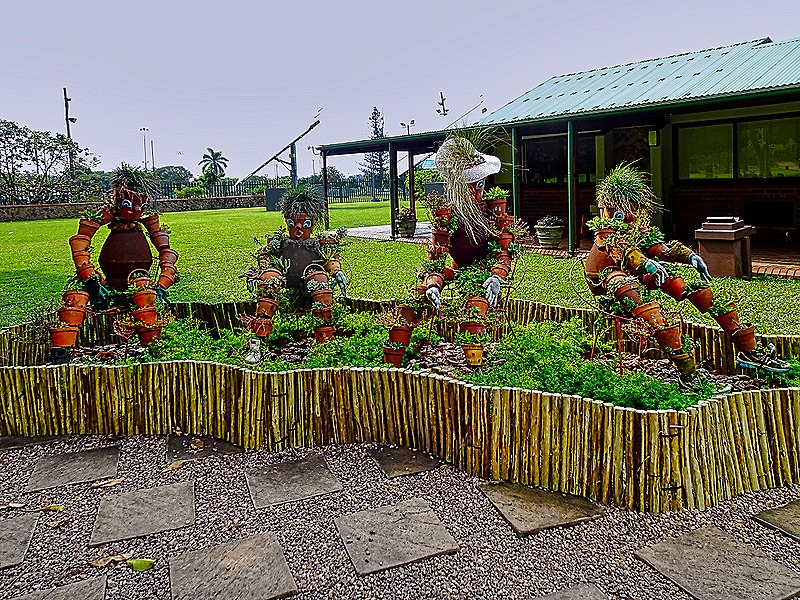
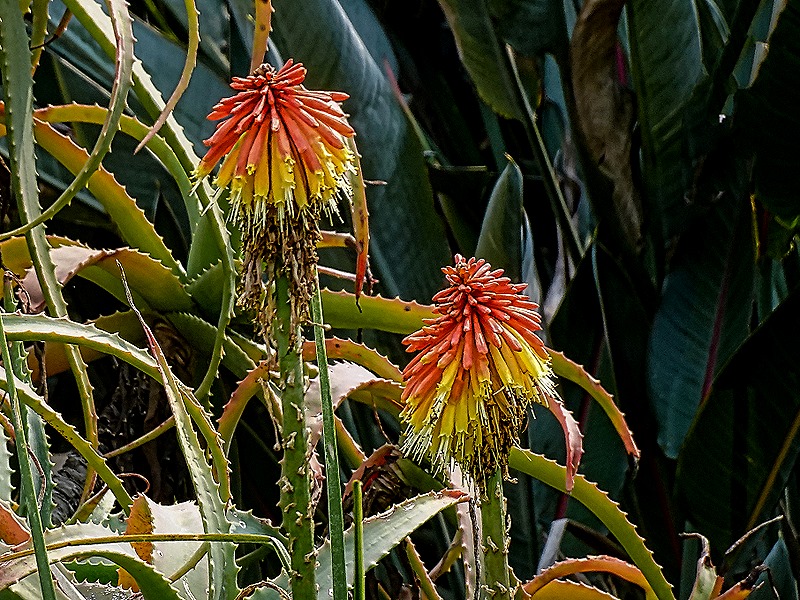
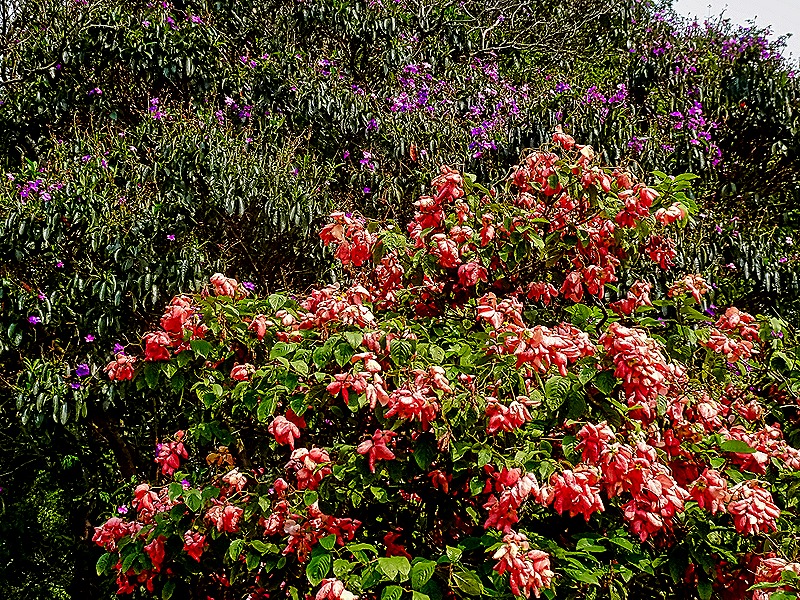
The Durban Botanic Gardens is the oldest botanical garden in Africa, founded in 1849. It covers 37 acres of land and includes many plant species from elsewhere in addition to native plants and trees. There are more than 1300 trees in the gardens, 90 of which are documented to be more than a century old. It is very nice to walk around here (though less so in the oppressive heat we had during our visit). Just inside the entrance is a whimsical display of four people made mostly of flower pots. Also on display near there is the original front gate to the gardens, painted white with double doors for vehicles and a single door for pedestrians.


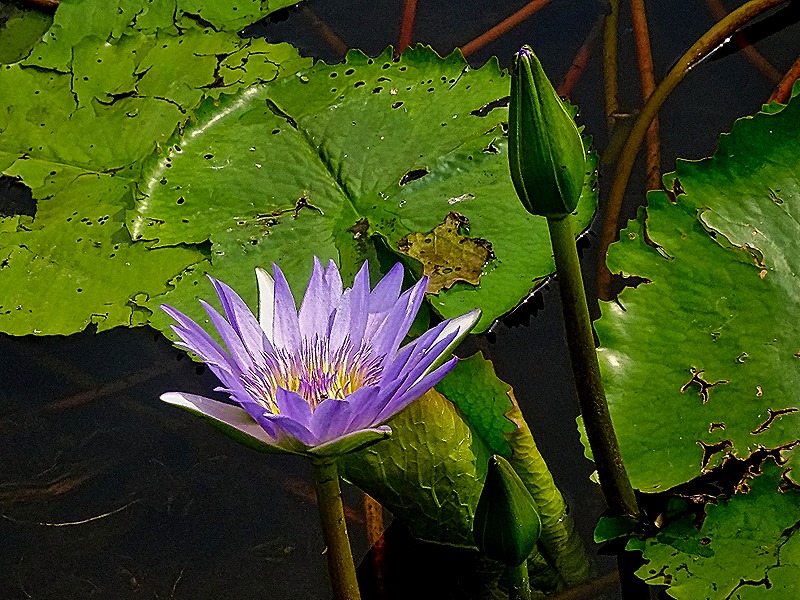
There were many colorful flowers in the gardens, including a pond with blooming water lillies. We also saw a more formal garden design, but too early in the year for flowers I guess.






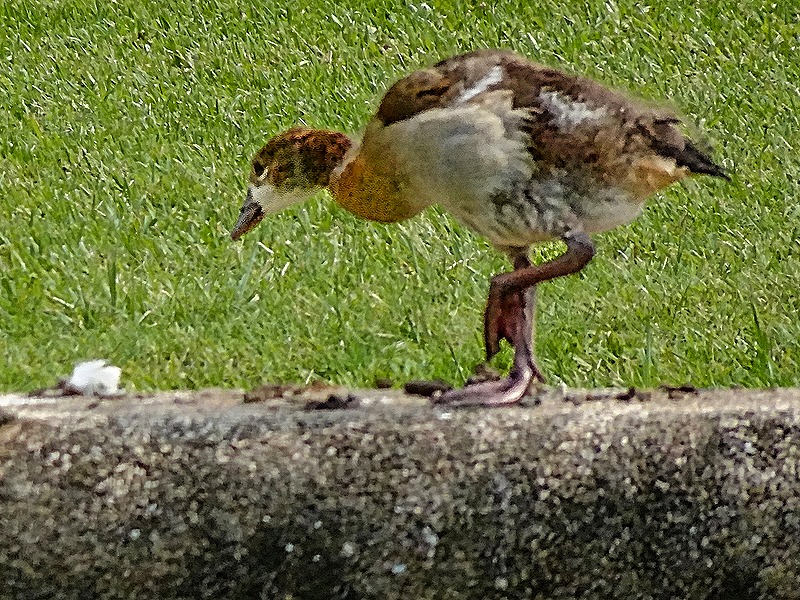
The only animals we saw were birds, although there are probably others too. We are told there is a family of Egyptian geese living here, but we only saw one. There was another bird that looks like some kind of Ibis and a third we can’t identify.


We mentioned above that there are many different species of trees in these gardens. One that we liked was a Eucalyptus from New Guinea, looking stately from a distance, with sort of peeling bark in multiple colors when inspected up close.


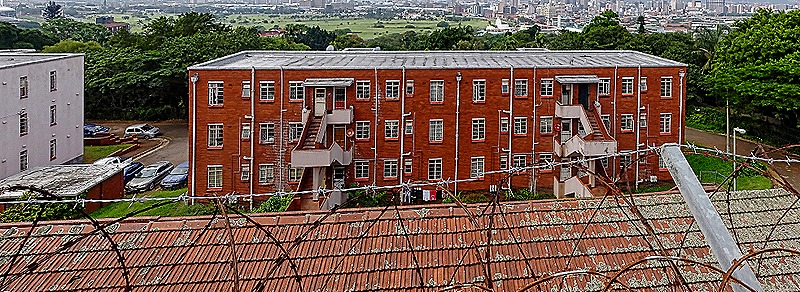
Leaving the gardens, after sitting on the bus for a while waiting for someone who apparently thought the meeting time wasn’t really for her, we drove up into the hills to a small park with a panoramic overlook of the city. The edge of the park was lined with barbed wire, apparently to ensure the folks living in the apartment buildings below couldn’t use it as an entry to the well off neighborhood behind the park (remember that this city has a crime problem).

Our last visit was to the Moses Mabhida Stadium, built to host the 2010 World Cup. The locals are very proud of this state of the art sports venue, which seats 56,000 people. We got a picture of it from the overlook, but we didn’t see much when we reached the stadium because we weren’t allowed to exit the bus. We were told that someone on an earlier excursion bus had been mugged here while the passengers were milling around looking at it. So we guess the warnings we received about crime and violence here were not entirely unwarranted. From here we drove back to the port, driving through some parking lots with views of the beach on what is called the Golden Mile, a long stretch of golden sand beaches along the Indian Ocean that is popular for swimming and surfing.


So that’s it for this stop. It was not too exciting overall but, as we have seen often, there were still some interesting places to visit (most notably here the botanical gardens). We sailed off in late afternoon, looking forward to a sea day before our next stop.

 BADER JOURNAL
Leave a comment