Cape Town, South Africa (Days 1 & 2) (Stellenbosch) — 2024
We were scheduled to arrive in Cape Town just after lunch on April 17, but we had to wait outside the port for an hour or two because it was fogged in. Happily for us, we had no excursions scheduled so we just waited semi-patiently on the ship for the fog to clear so we could dock. This was technically our third visit to Cape Town. In 2018 our ship docked here for a double overnight, but we didn’t arrive from our safari in Kruger National Park until late afternoon on the first day so we actually had only had about a day and a half here:
https://baderjournal.com/2018/08/20/kruger-national-park-day-4-cape-town-south-africa/
https://baderjournal.com/2018/08/22/cape-town-south-africa-days-2-3/
Our second visit was in 2022, and I described it as technical above because we were never able to leave our cabin during this visit because of Covid. All we saw was a bit of the top of Table Mountain through our cabin window.
https://baderjournal.com/2023/03/27/mozambique-south-africa-time-out-2022/
So of all the African reroute stops, we were most looking forward to Cape Town and this stop didn’t disappoint.

Day 1
As mentioned above, we were delayed entering the port in Cape Town because of a massive fog bank. When we finally headed into the port we had doubts about being able to see anything today, but once we were in the port the fog cleared and we had a great view of the city. In the past we had always tied up on the eastern end of the long dock but today another ship (a Princess, we think) was already there so we had to proceed a pretty far down the dock.
Because it was late in the day we decided to spend the rest of the afternoon at the Victoria and Alfred Waterfront. Begun in 1654, this was the original port for Cape Town back when the Dutch East India Company first established a reprovisioning station here for their ships heading to Indonesia. It is now named for Queen Victoria and her son Alfred, who visited here in 1860 and applied some of the first stones for a breakwater to enable ships to winter here safely. In the 1930’s the new, larger port where we docked was built on reclaimed land. It was not until the 1980’s that the old Victoria and Alfred Waterfront was developed into a major center for hotels, businesses, entertainment, retail stores and museums.
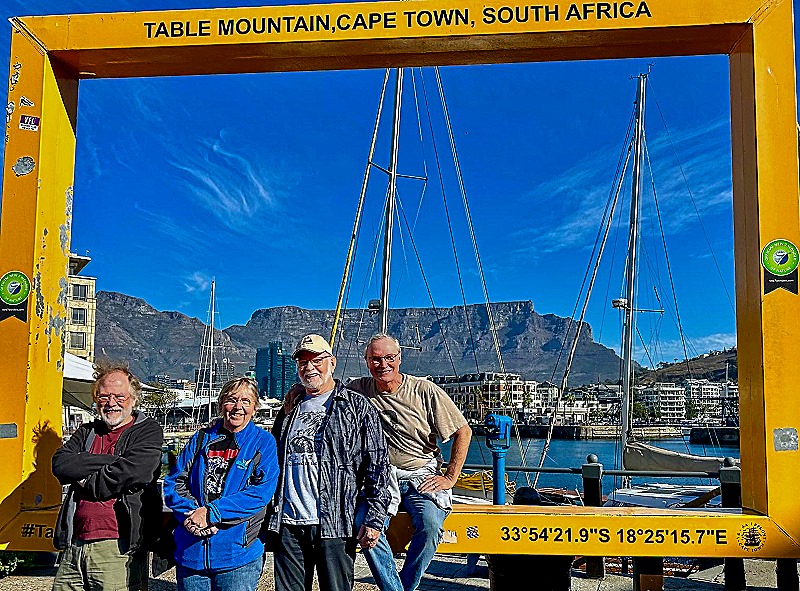
Today it is a draw for visitors, particularly those docked at the port, for entertainment and (especially) shopping. It is an easy and enjoyable walk from the eastern end of the pier to the V&A, which we did several times in 2018. But since we were docked much further away on our first day this time we boarded a shuttle bus, along with Robert & Bill, to take us there. The V&A has an excellent view of Table Mountain over the water and in 2018 we had lunch at a waterside table with this view. But they have now built a huge yellow frame to view it through, although we think the restaurant tables are still there.
Our main objective in coming here was to shop for African art, mementoes and gifts. There are more than 450 shops here, so plenty to choose from. This is the place, for example, to see and buy wooden masks from all over Africa, painted Ostrich eggs, Zulu beadwork and basketry and much more, in addition to the usual tee shirts, caps and souvenirs. One of the best places is the Watershed, a huge warehouse-like building with many dozens of individual vendors inside selling everything from clothes to arts & crafts to souvenirs. You can spend a lot of time in there.
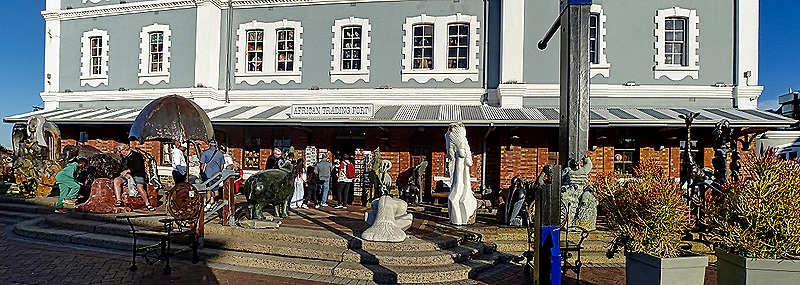

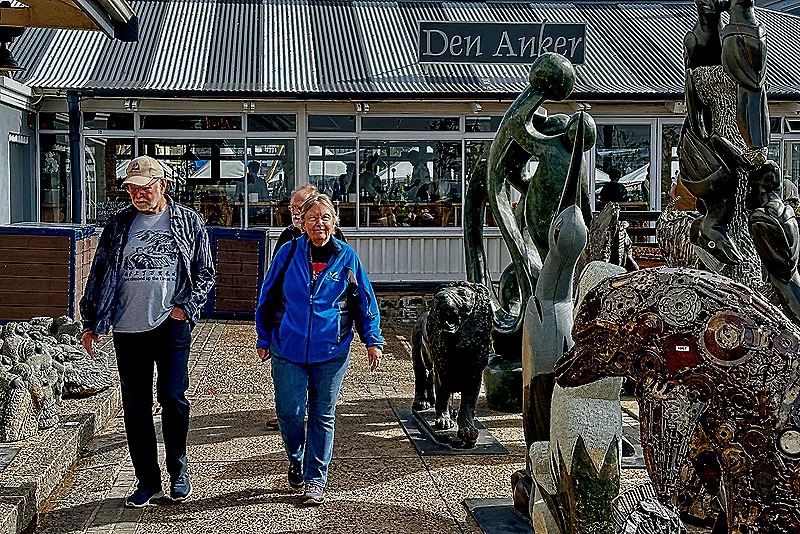
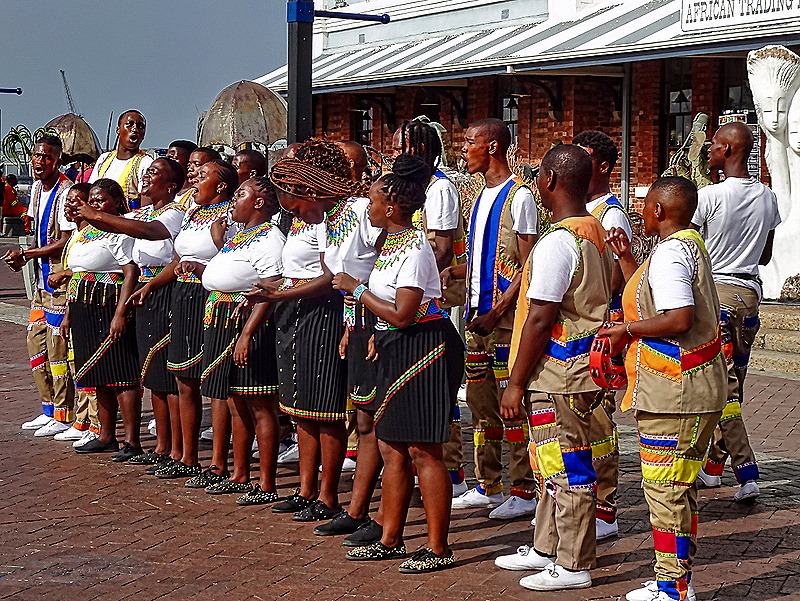
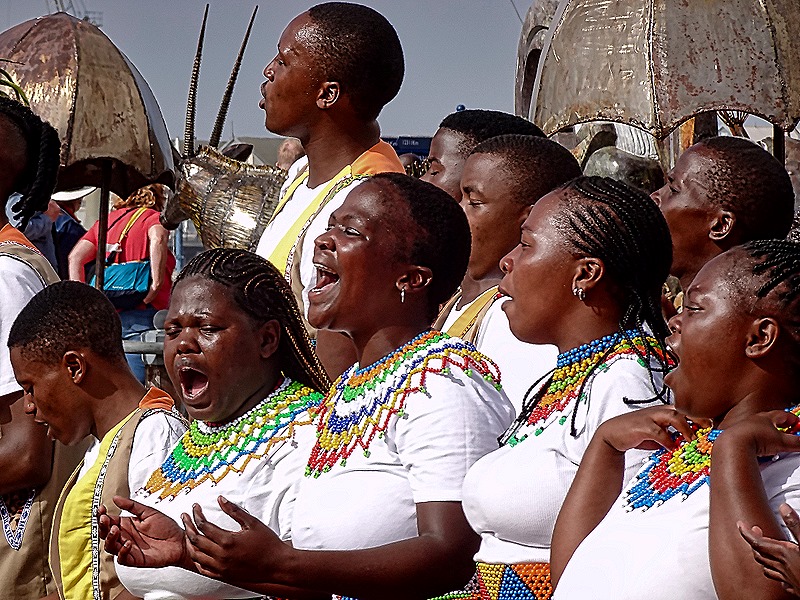
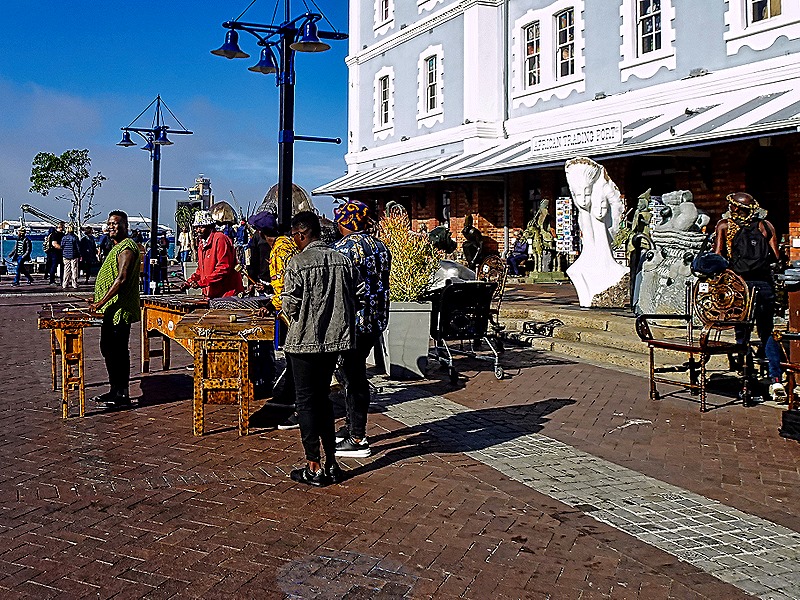
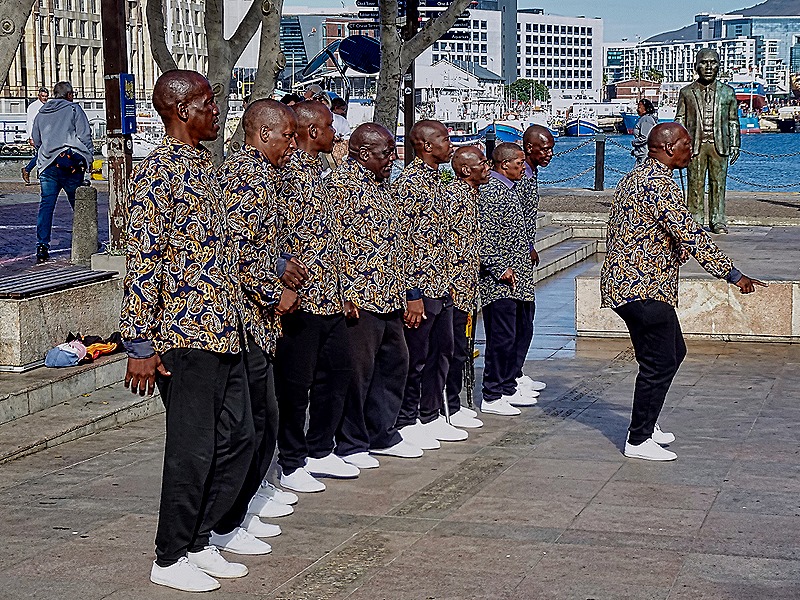
But visiting the V&A is not only about shopping. Throughout the area are local groups performing, in front of stores and in open spaces, singing and/or playing music. They move around so you may encounter a performing group in more than one venue. The performances are usually quite good, featuring African music for the most part. On this visit we saw a capella singing groups and a xylophone group.

Day 2
Our friends Judy & Bob had arranged tours for all six of us on both of the full days in Cape Town with a guide they knew named Ligia, who turned out to be excellent. The first day (Day 2 in Cape Town) was to be a wine tasting tour in the area of Stellenbosch. Founded in 1679, this is the second oldest town in South Africa. The name means “Stel’s Bush” (Simon van der Stel, then governor of the Cape Colony, founded the settlement and named it after himself). In 1690 there was an influx of Huguenot refugees (French Protestants fleeing religious persecution in France) who began the wine industry here. Stellenbosch is located about 30 miles from Cape Town and has a population in excess of 75,000.
The day did not begin auspiciously. The previous evening we had been informed that during the night the other ship would be leaving and when we got up in the morning we would already be redocked on the eastern end of the pier in front of the cruise terminal. We had agreed, therefore, to meet in the cruise terminal in the morning. But when we left the ship there was no cruise terminal to be seen. It turned out that we had not moved overnight as advertised but were still docked in the same place as the day before. We had heard no announcement to that effect; we discovered later that a notice had been delivered to our cabin . . . after we had already left the ship.
Bob notified Ligia to pick us up at our old spot instead of the cruise terminal and we waited, expecting Bill & Robert to show up any minute. But they didn’t. After a while Mary asked an officer if he could find out whether they were still in their room and after checking he told us they had left the ship before we had. There was nothing else to do but pile into Ligia’s car and start out, thinking we would probably have to go on without them since we had no way to find out where they were. But we drove past the Cruise Terminal just in case and, lo and behold, there they were walking out the back way toward Victoria and Alfred Waterfront. Apparently since they didn’t see us when they left the ship they decided to go to the Cruise Terminal where we had initially agreed to meet, instead of waiting for us to leave the ship and meeting us there. When we serendipitously spotted them they had given up on meeting up with us and were going to shop at Victoria and Alfred. So our full group of six plus Ligia headed for Stellenbosch, reunited at last.
Our first stop was at the Morgenster Estate, which produces olive oil as well as wine, and dates back some 300 years. The tasting room is very nice, clean and modern looking. Presumably because of the relatively early hour, the place was empty but for us. Not far from the entry door was a small olive tree, sporting some ripe looking olives.

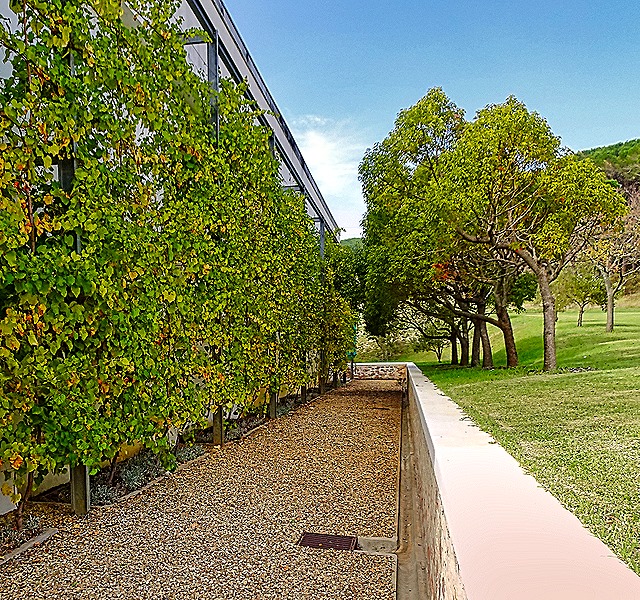
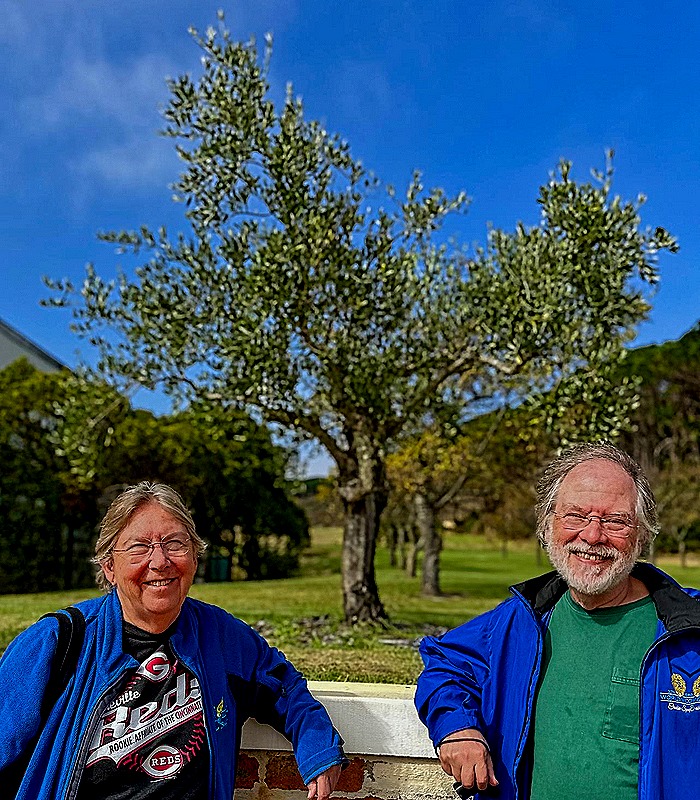


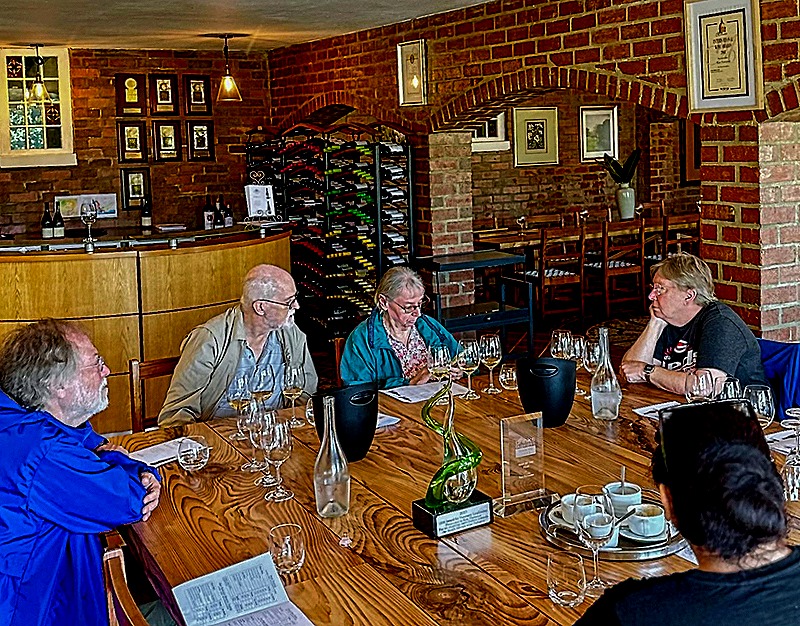
We were seated around a long wooden table in front of shelves of bottled wines. Our first tasting was olive oil, several varieties in small glasses along with balsamic vinegar and a bowl of delicious bread and olives. Our waiter explained how all of it was made before we dove in. After that we had wine, with the same treatment.


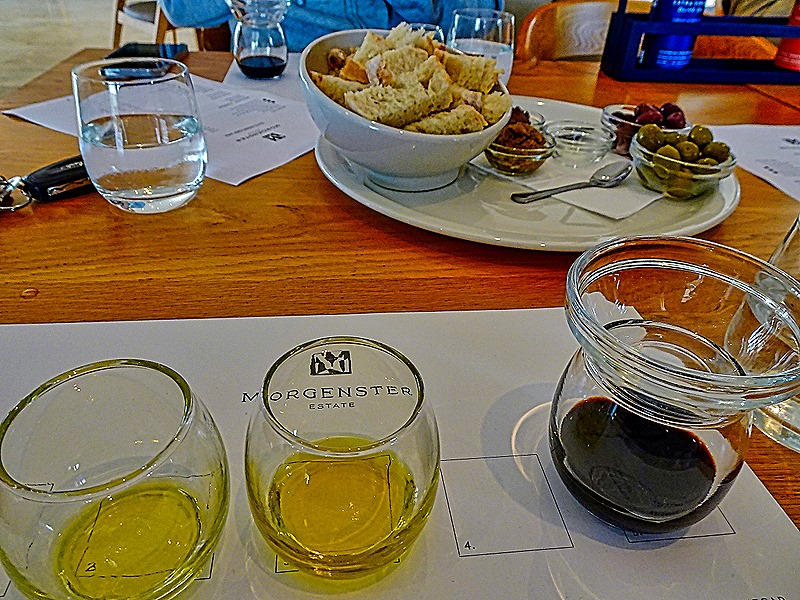

It was all really good. In fact, it was good enough that we bought some wine and some olive oil. Behind the desk was a large display of wine barrels that Rick photographed while Mary paid for our purchases, and in another part of the lobby was an interesting glass topped table with a natural wood base and a large pot near the door.


It took about a half hour to reach our second stop, Ken Forrester Vineyards. These vineyards date back to 1689, although Ken Forrester only purchased them in 1993 when they were sold at auction in a derelict state. Today they produce a million bottles of wine each year and are particularly known for award winning Chenin Blanc. They emphasize sustainable farming; they use no pesticides or herbicides and do all their tilling, pruning and harvesting by hand.
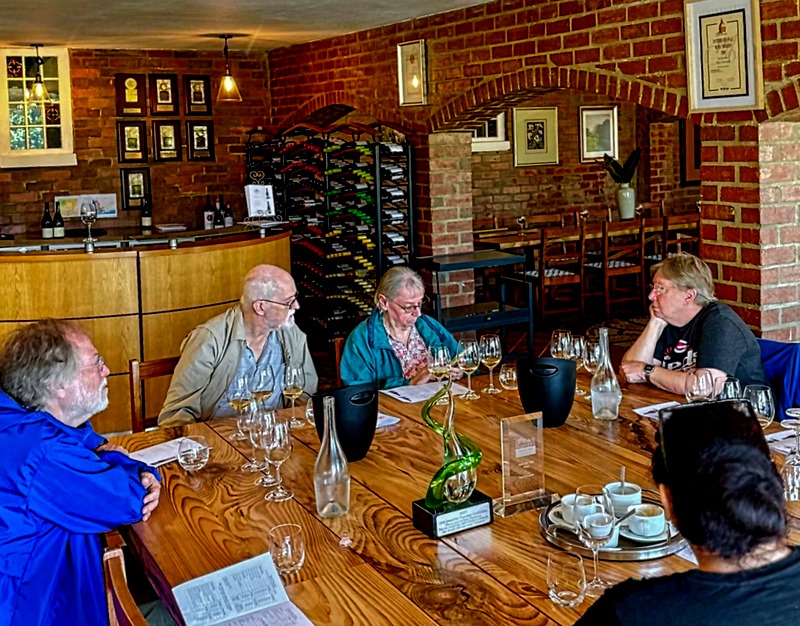
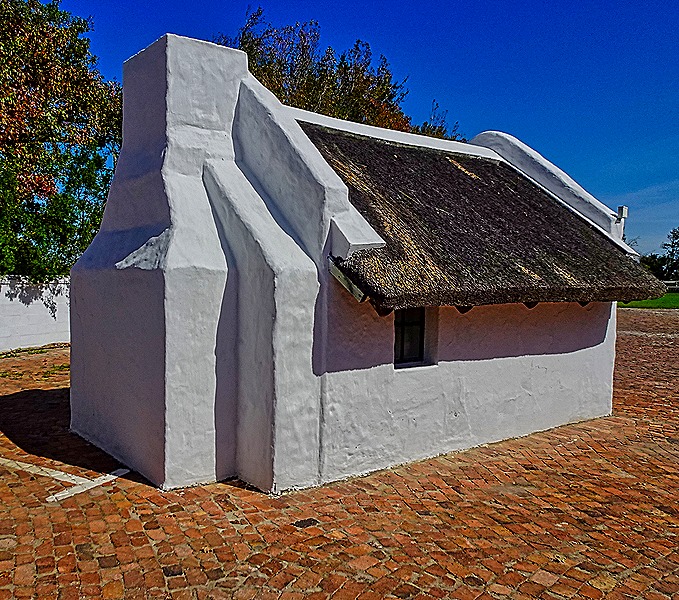
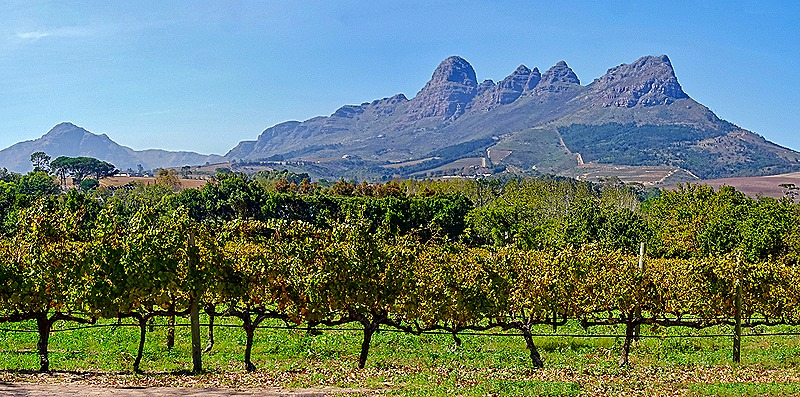
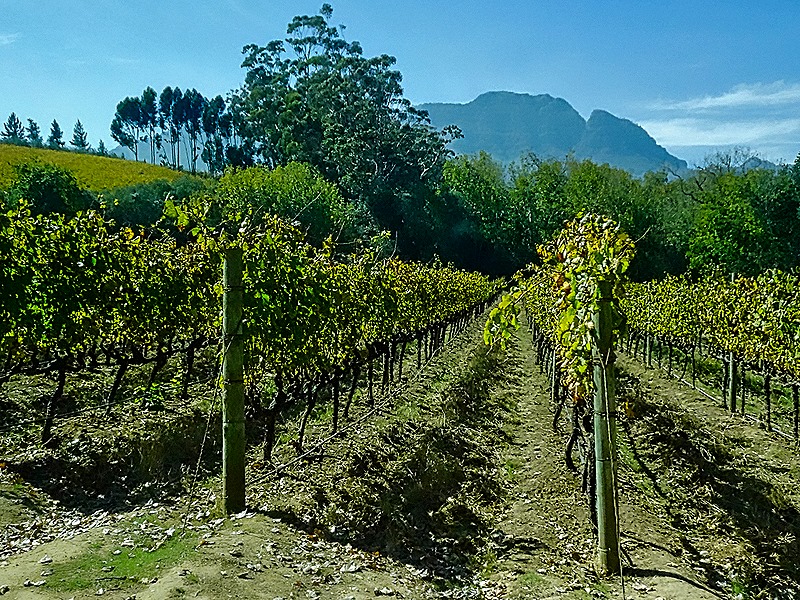
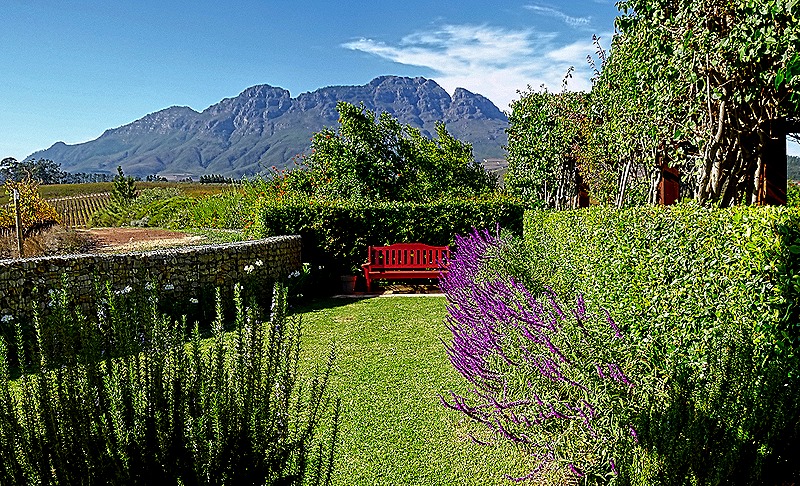
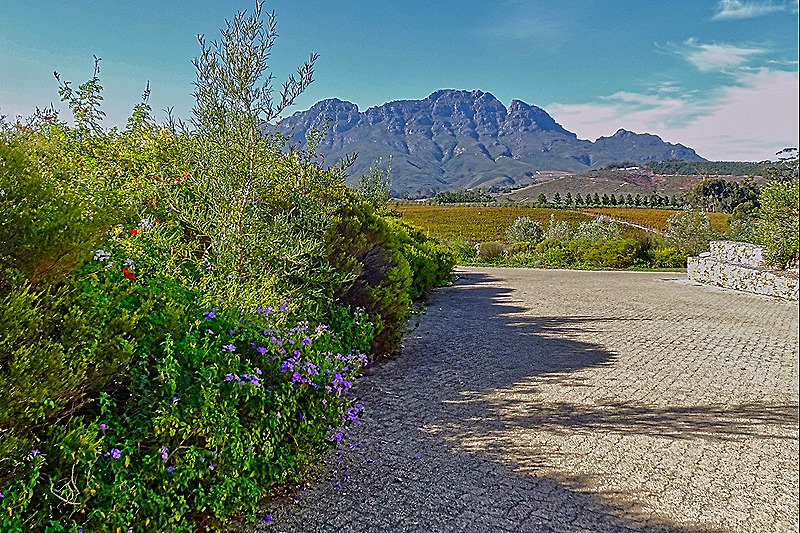
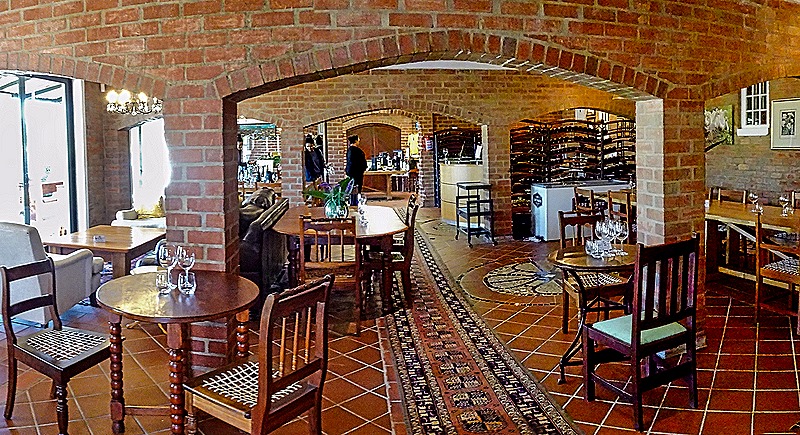
The vineyard is located near Helderberg Mountain, of which it has a beautiful view. The tasting room is large with graceful red brick arches and a striking stained glass window at one end. Again we had a good time enjoying the wine and the fine ambience and views of the mountain over the vineyard outside (April is autumn in the Southern Hemisphere, so the leaves of the grape vines were mostly yellow). Near the parking lot was a small whitewashed building with what appeared to be a thatch roof, in the old Cape Dutch style. Unfortunately we don’t know the story behind this building (although there undoubtedly is one).


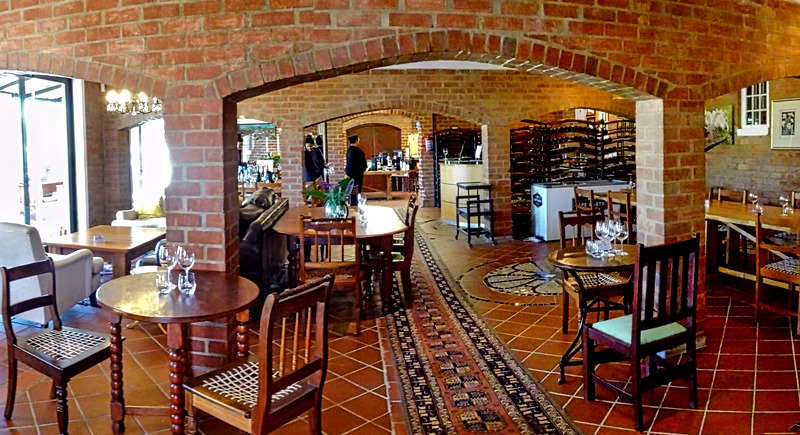



It was time for lunch and we drove through the town of Stellenbosch on our way to our lunch spot. We did not have a chance to get out of the car and see some of the town and it was very difficult to get usable pictures from the back seat of a moving car. Rick managed a picture of the 300 year old church, but it was too blurry to be usable. The decent pictures included the Hofmeyer Hall of the Dutch Reformed Church. Named after one of the first two professors at the seminary here, it was built in 1900. The Dutch (or possibly Africaans) words above the columns say this is the Young People’s Christian Association. Another picture is of a green house built in 1923 in the Cape Dutch style (technically, Cape Dutch revival), with a three story addition in the back. As the sign on the fence says, it is for sale. Finally there is a tree shaded house in Cape Dutch style and a sidewalk cafe at an intersection, with people enjoying their lunches.
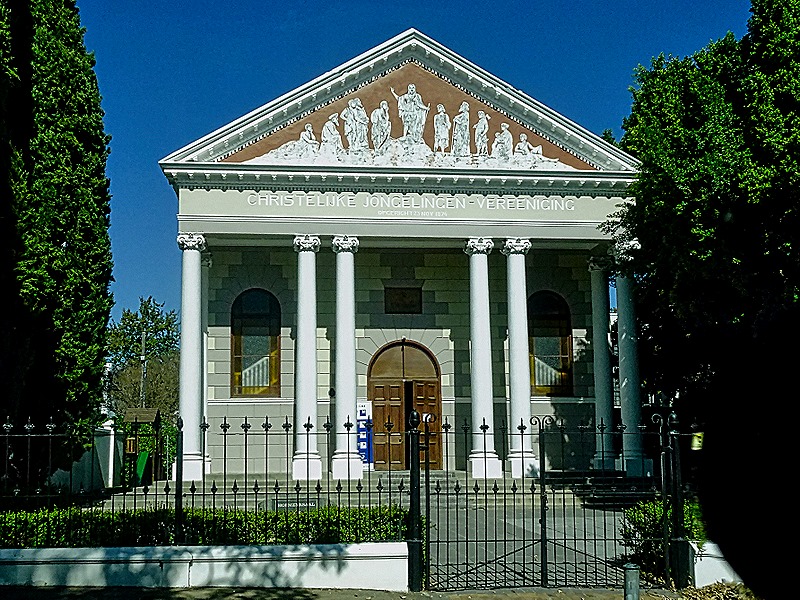

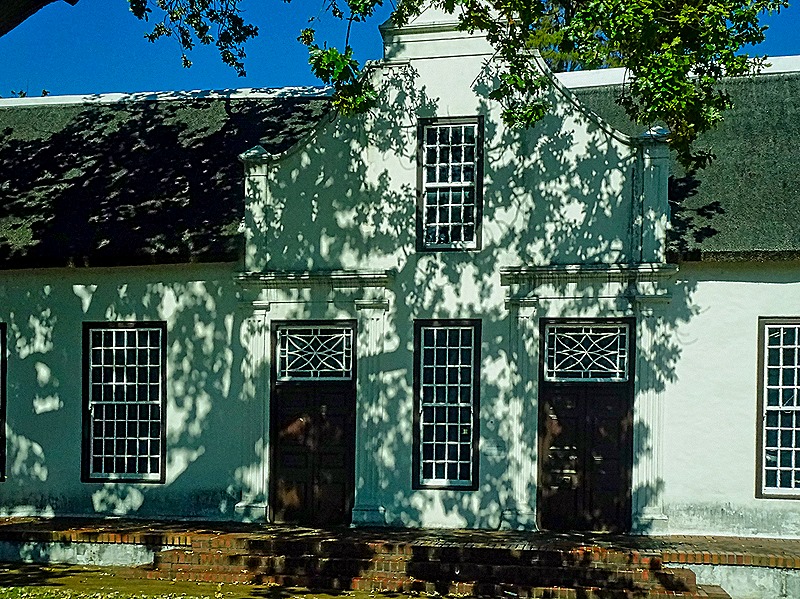
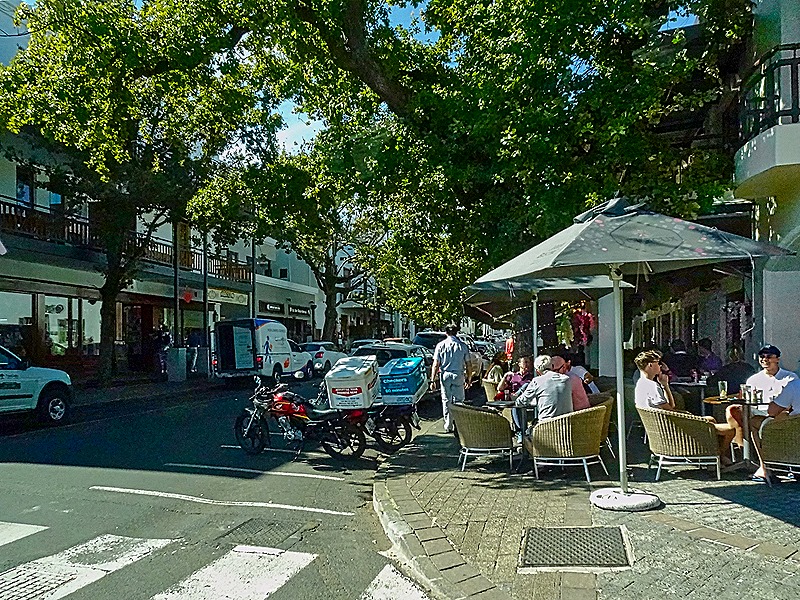
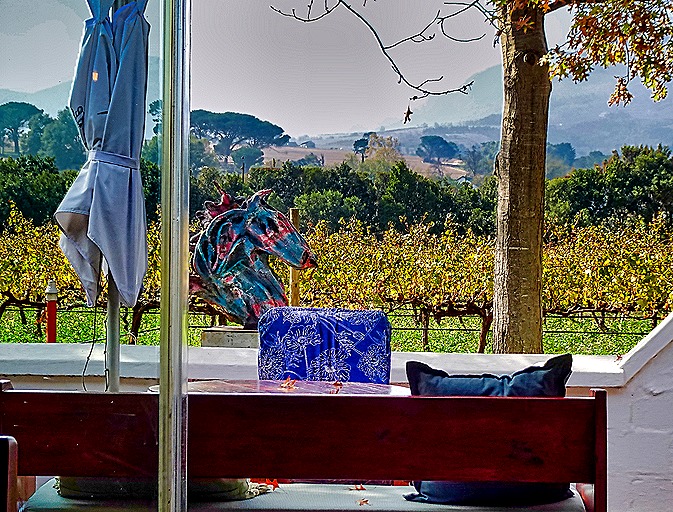
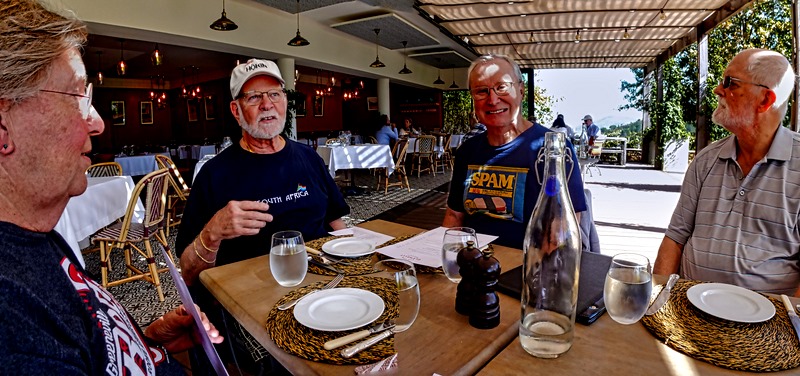
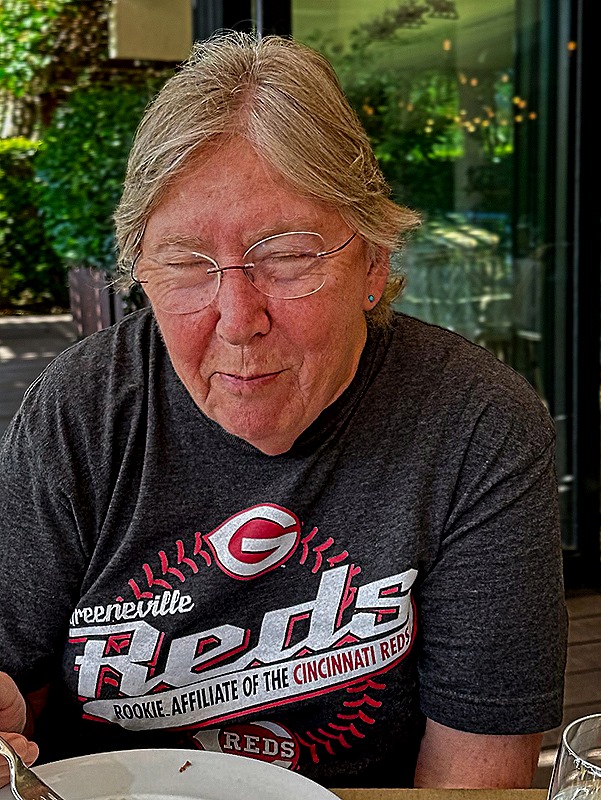
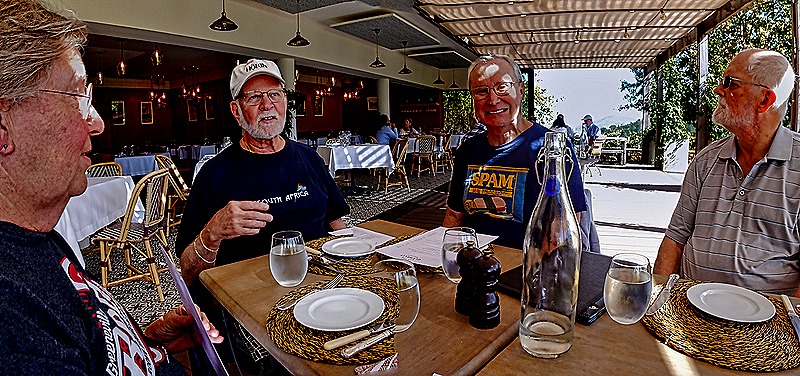
We had lunch at the Vine Bistro at the Glenelly Estate vineyard. This vineyard is owned by a 99 year old French woman who is well known for her wine estate in Bordeaux, France, and we understand that Bordeaux is the featured wine here. However we were here for lunch, not a wine tasting. We were seated on a covered open air patio with a fine view of the mountains beyond the gardens.

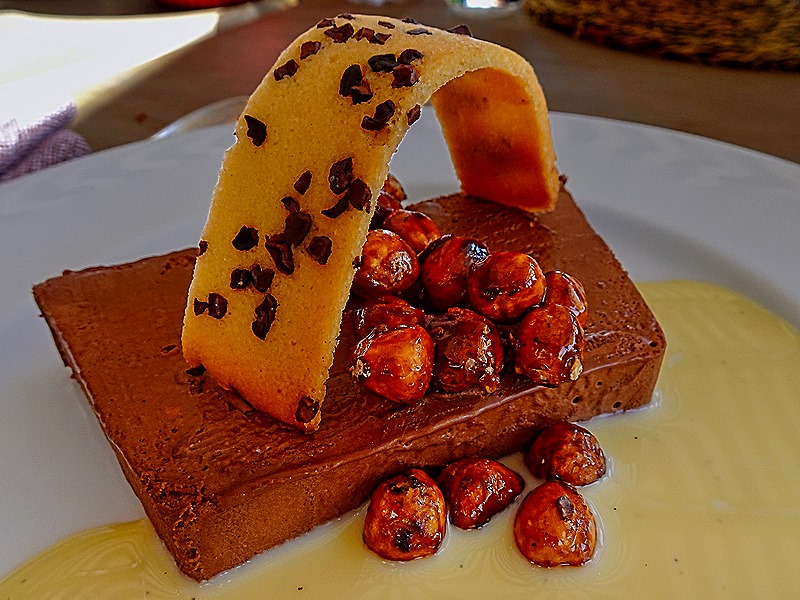
The Bistro is run by a French chef and its food was quite delicious on the day we visited. We rarely photograph our food, but this was so nicely presented we couldn’t resist. We can’t recall what these dishes were called, but they were an appetizer and a dessert.
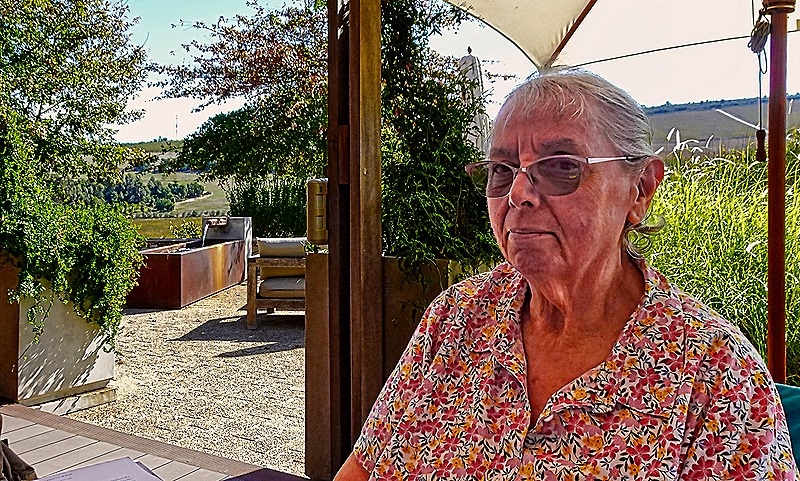


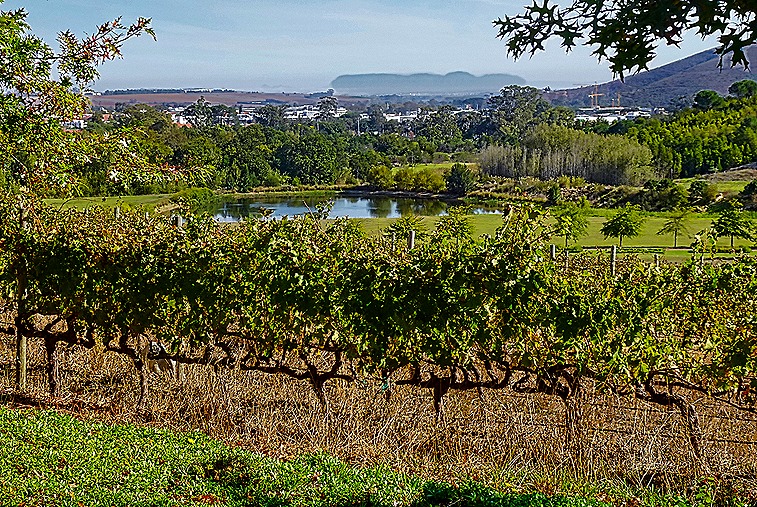
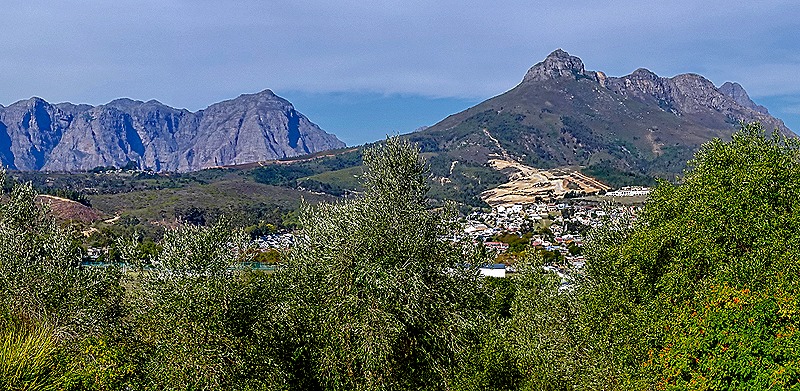
While Glenelly is supposed to be in a valley, there was a nice view from here down on what we assume must be Stellenbosch, nestled among trees below the mountains.

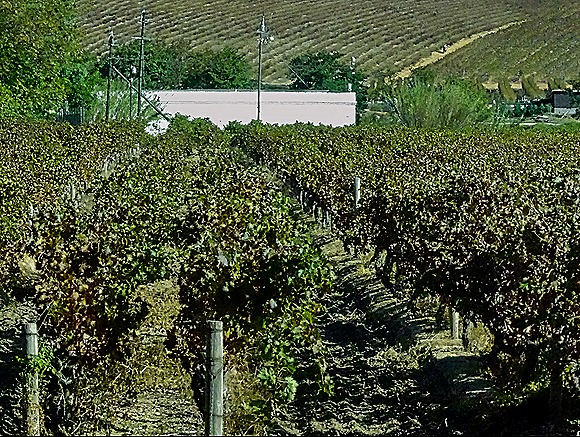
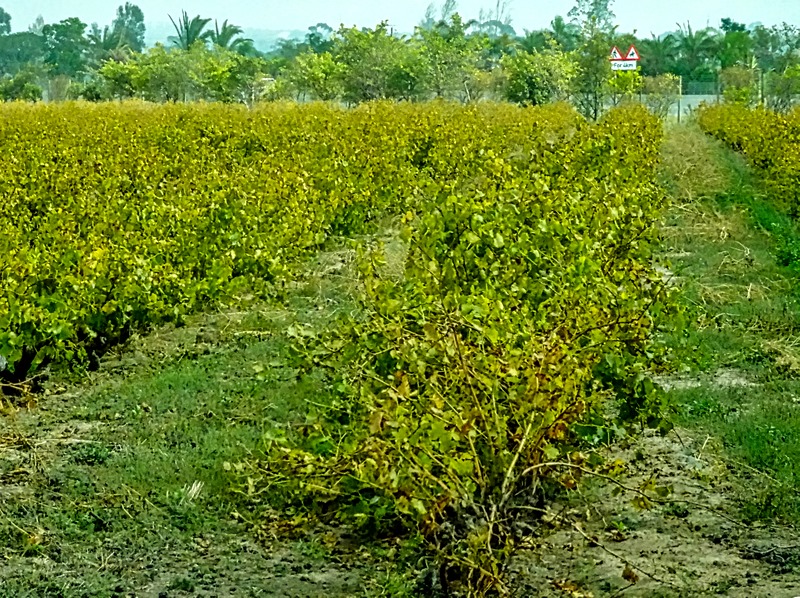
Our last visit of the day was to Kanonkop Estate. Kanonkop means Cannon Hill, because in the early years a cannon on a hillock near what is now this estate would be fired whenever a ship approached the Cape Town harbor. This was a signal to local farmers to load up their wagons with vegetables for the ship crew to purchase. Kanonkop has been bottling its own estate wines for 50 years, and if we understood correctly Pinotage wine was first developed here (a cross between Pinot Noir and Hermitage varieties). Pinotage is one of their featured wines today and it was what we were served. After this visit we headed back to the ship, passing one last field of vines with a narrow road winding over a hill.
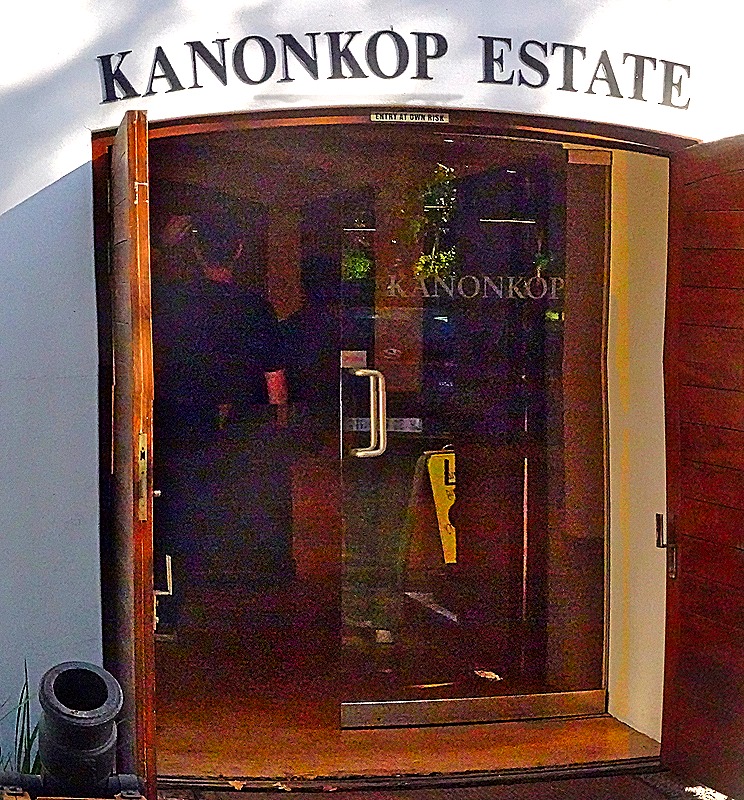
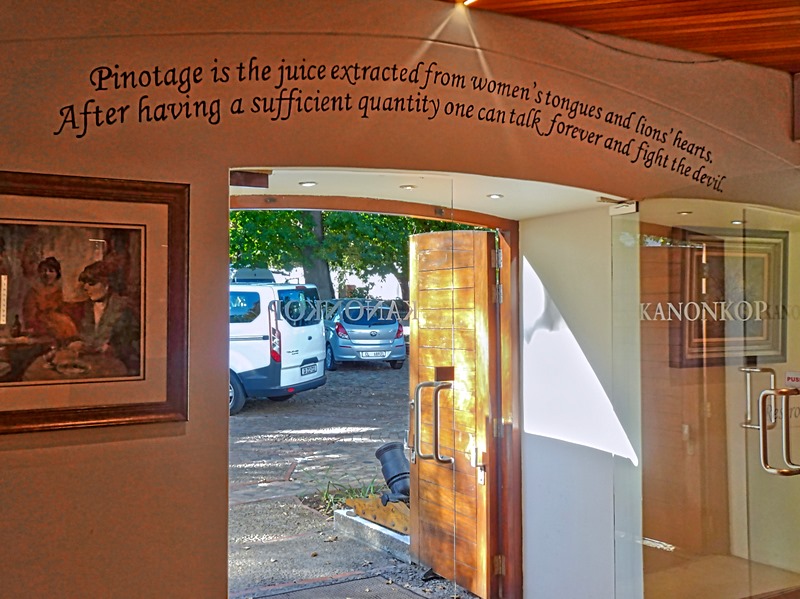


Meanwhile, we had been assured in the morning that the ship would be moved to its new berth by the Cruise Terminal during the day. But when we got back it was still where we had left it in the morning. So we drove over there and arrived just in time to see it pulling away from the dock. Ligia dropped us back at the Cruise Terminal, where we sat and waited as the crowd inside grew steadily. It was probably about an hour before the ship was ready for boarding and we were permitted to join the crowd headed there (the line was slowed because everyone had to go through the metal detectors on the way out of the terminal). But now that we actually knew that the ship would be in front of the terminal we agreed to meet in the terminal in the morning (for real this time) for our second Cape Town excursion.

 BADER JOURNAL


Leave a comment