
Sitka, Alaska 2025
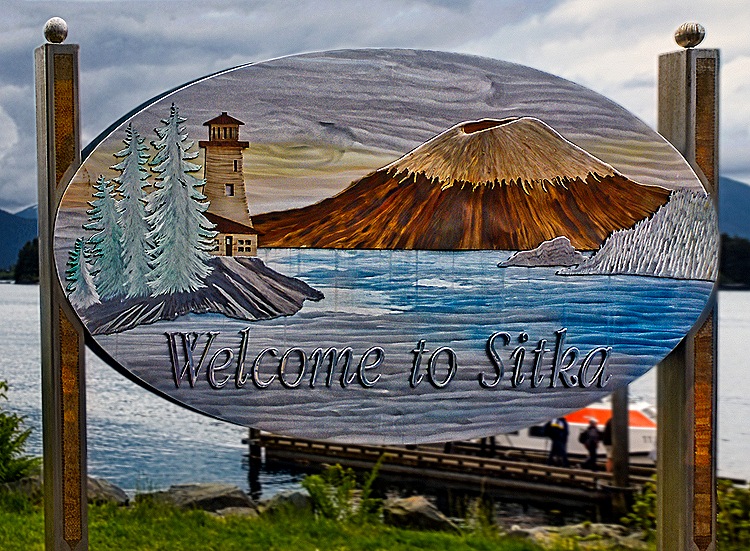
On the morning of June 11 we docked near Sitka, Alaska, which is situated primarily on Baranof island. With a population of almost 8,500 Sitka is the fifth largest city in Alaska (but with 2, 870 square miles it is the largest city by land area in the US). The city’s origin was in 1799 when Russian explorers built a settlement called Fort Of Archangel Michael. It was destroyed by the Tlingit in 1802 but after winning the “Battle of Sitka” in 1804 the Russians established a permanent settlement called New Archangel. Sitka was the capital of Russian America from 1808 to 1867, when Alaska was purchased by the Americans (for about 2 cents per acre) after Russia lost the Crimean War. Sitka continued as the capital of the Alaska Territory until 1906, when Juneau became the capital because of its growth in importance during the Klondike Gold Rush. Before tendering into town we took in the view from our veranda of the islands and mountains in the bay.
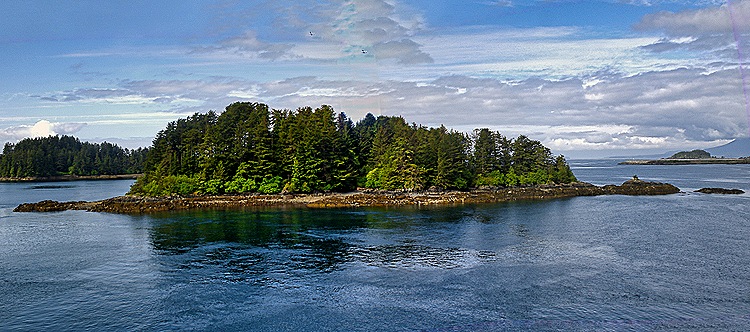
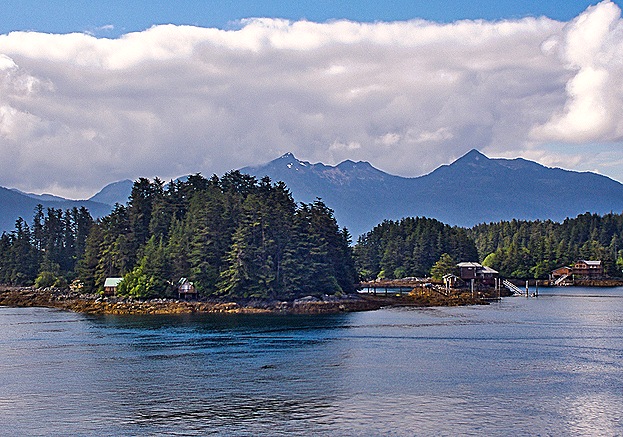


Our tender dropped us off near a bridge in the center of downtown, a very convenient spot. We had booked an excursion with our travel agents for the morning, then we spent the afternoon walking around the town on our own. This plan worked out quite well for us.
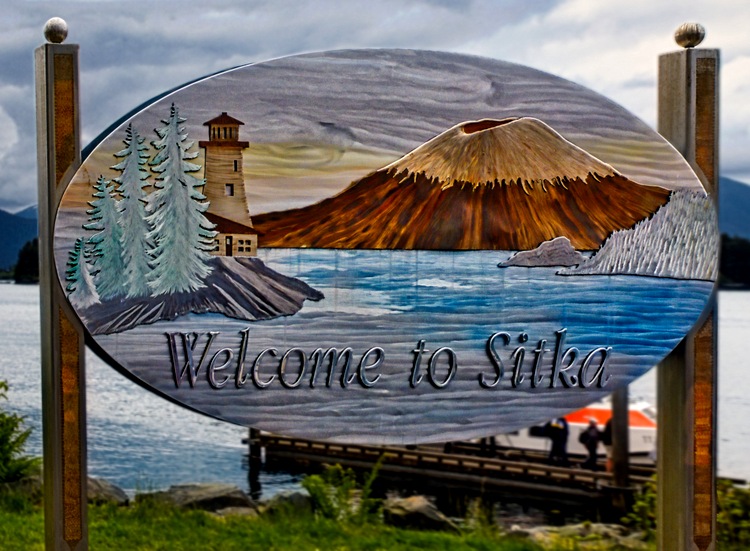
Our first visit was to the Alaska Raptor Center, established in 1980 to care for birds of prey that have suffered trauma, such as collisions, gunshot wounds, starvation and disease. While bald eagles predominate the Center will help any bird in need, and birds are brought here from all over Alaska for that purpose.

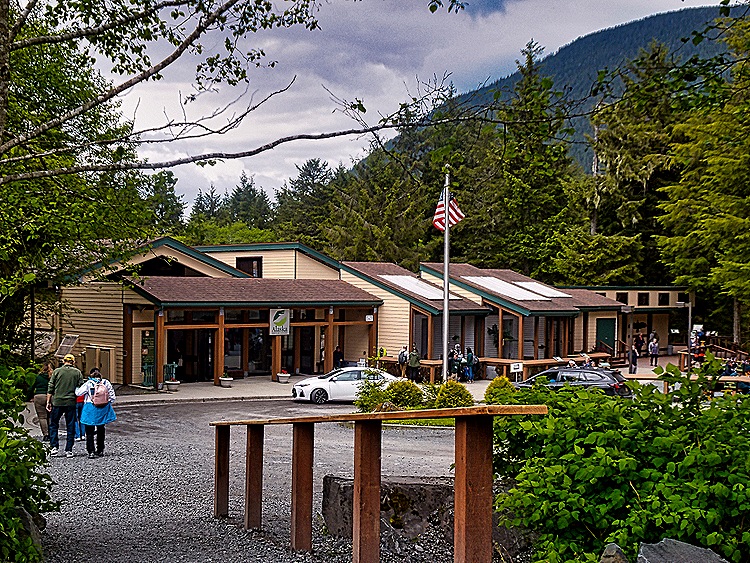

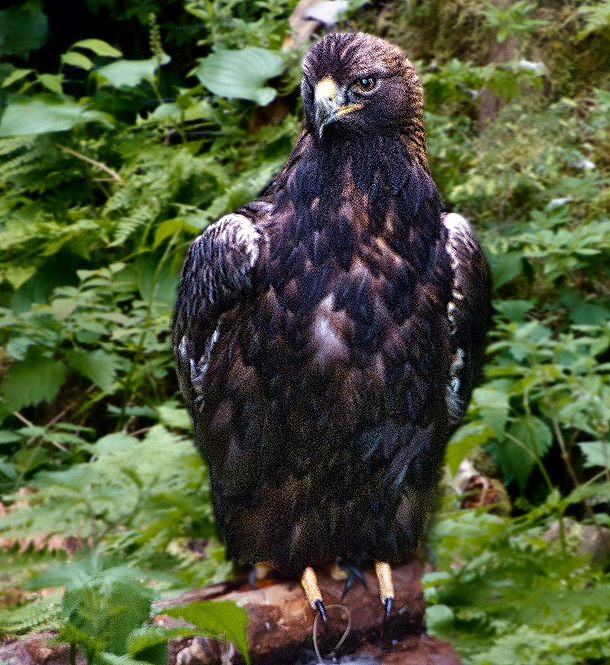
 When healthy enough, eagles are moved into the large indoor Eagle Flight Training Center, a transition facility on the campus where they can fly, bathe and meet other eagles until their release into the wild (our view into this facility was through a black netting). Birds that are unable to live in the wild are given homes in zoos and wildlife centers throughout the US, and some live out their lives at the Center.
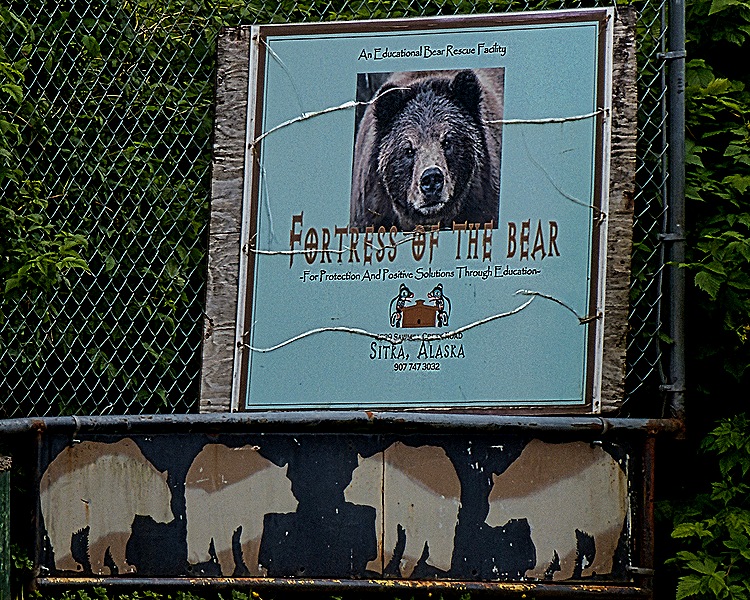
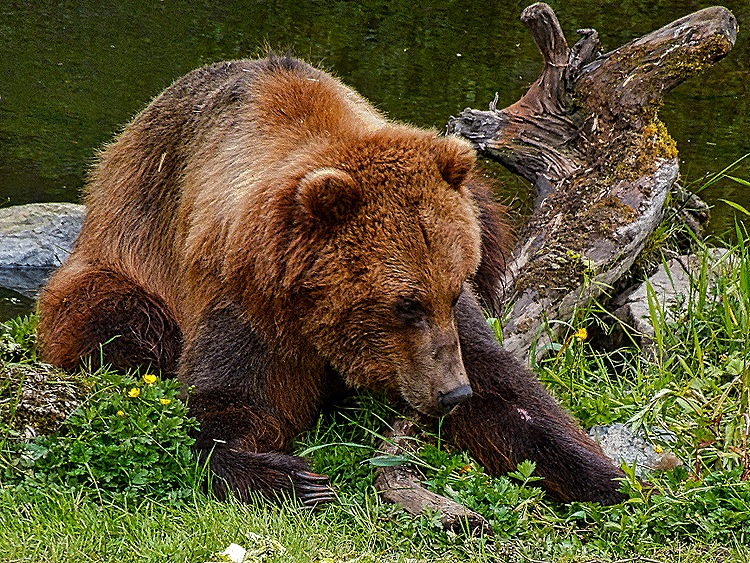
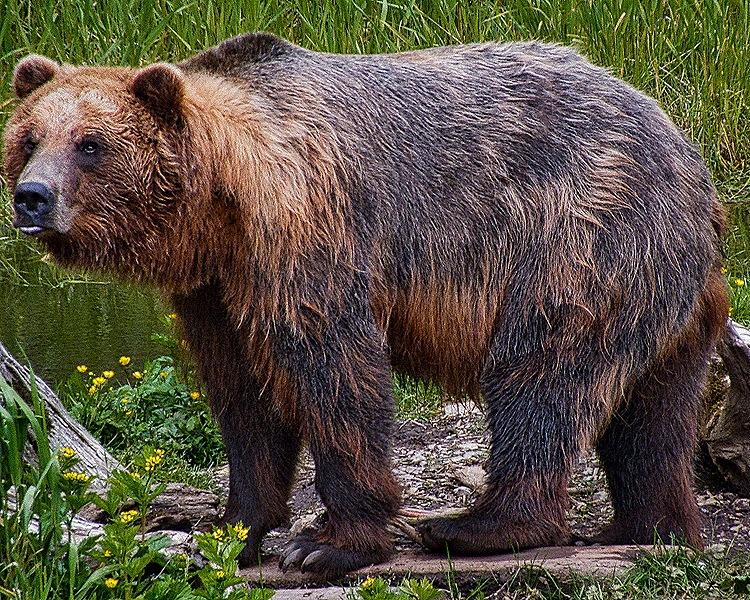
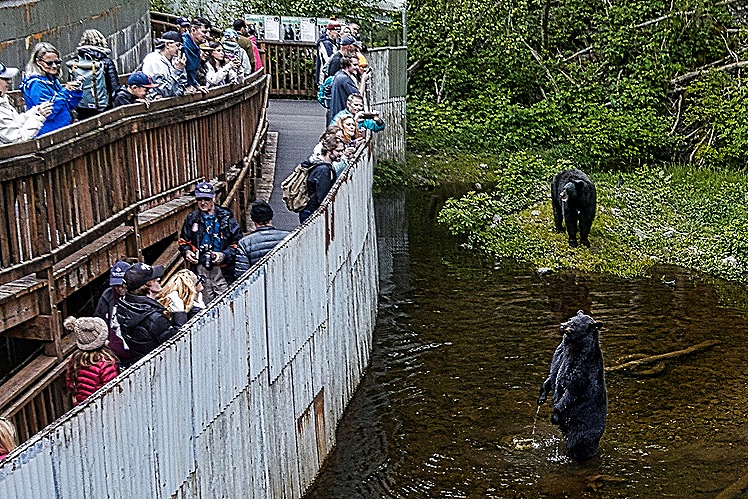
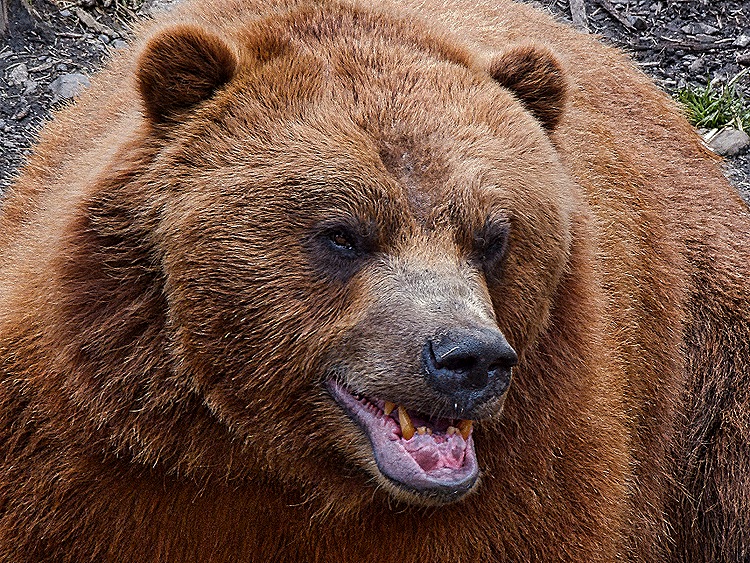
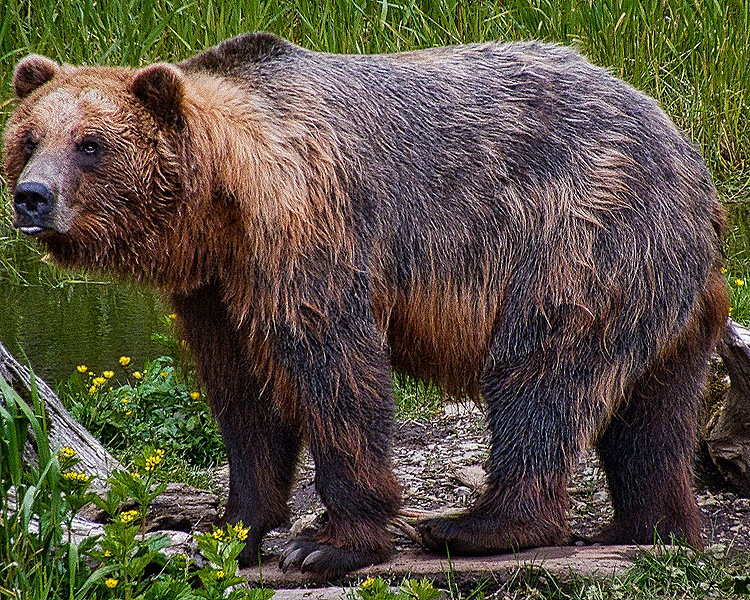
Our next stop was at the Fortress of the Bear, a refuge for bears unable to fend for themselves in the wild, often cubs whose mothers have died. It is situated on the site of a former pulp mill and the habitat area that can be visited looks like two huge (192 feet in diameter) vats with round concrete walls. The facility received its first bear in 2007. Not a lot of bears live here; we think when we visited there were about 5 brown bears and 3 black bears. Apparently it would be unsafe to release fully grown and healthy bears into the wild, but some of the bears are eventually transferred to new homes in zoos and wildlife facilities elsewhere. Others live out their lives here.




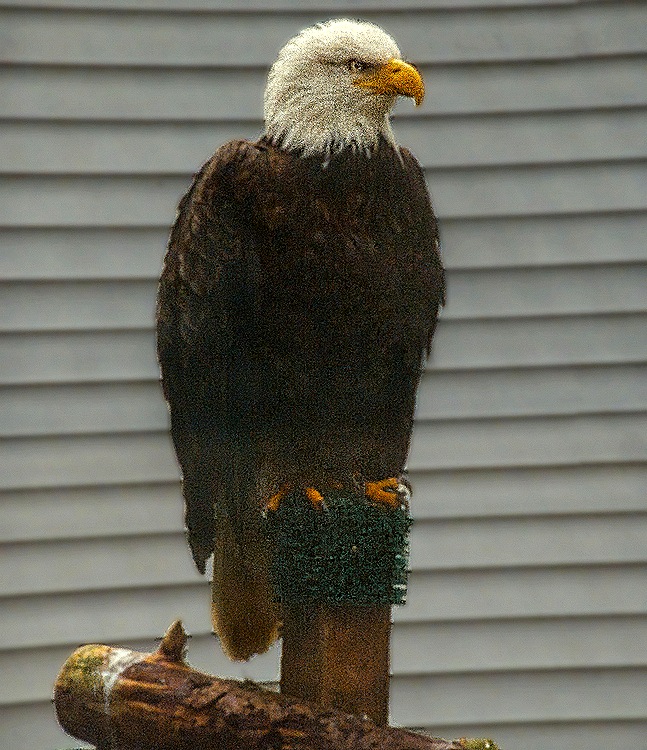
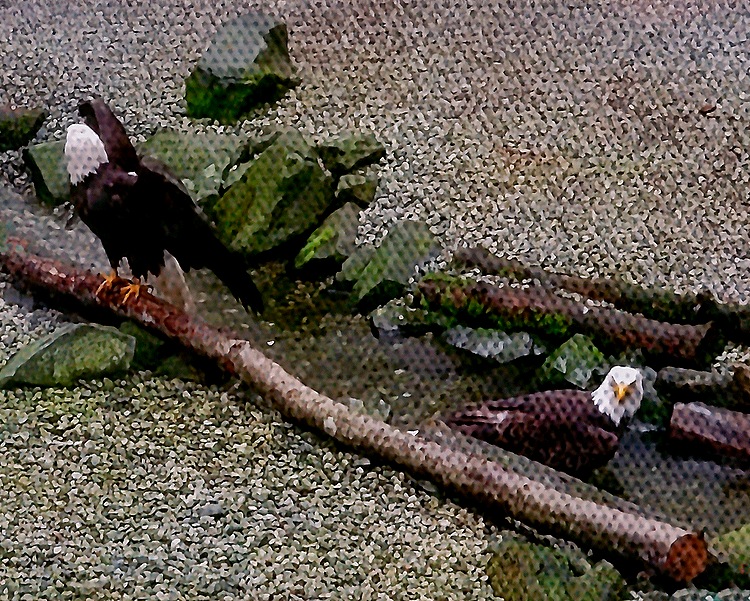
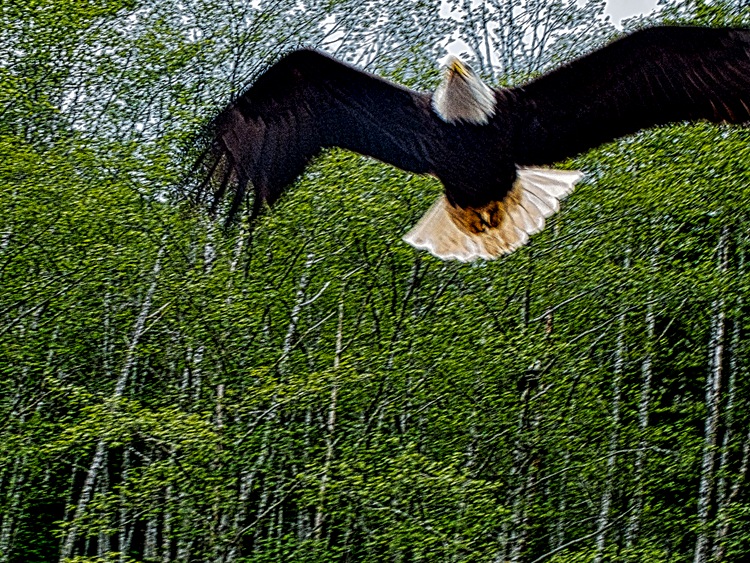
There were Bald Eagles at the Fortress as well, flying among the trees and roofs of the buildings.

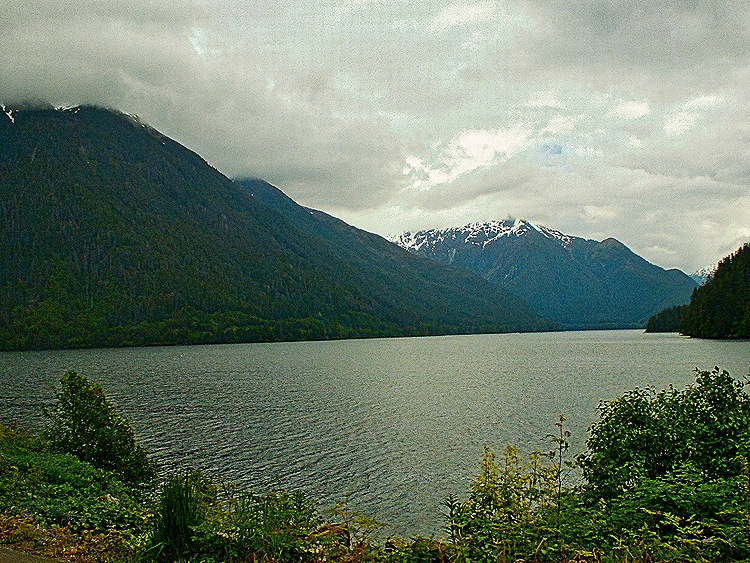
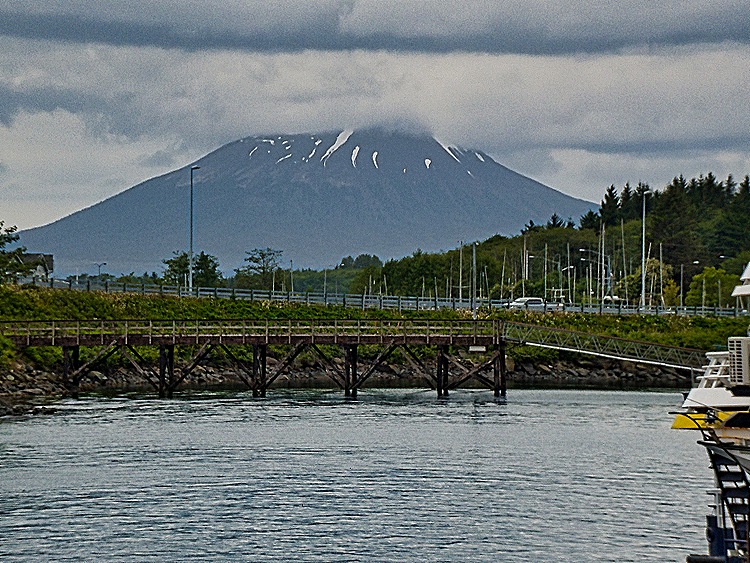
We drove back to the tender port in downtown Sitka, past one of the nice sea vistas that abound here. From there we began to walk up and explore the central part of the town. As we walked up we had a good view of Mt Edgecumbe, the large volcano sitting on a neighboring island about 15 miles away. Its Tlingit name is L’ux, meaning flashing, reputedly because it was erupting when they first discovered it, although the volcano has been dormant for more than 800 years. Captain Cook named it Mt Edgecumbe, possibly after an Earl of that name or a hill near Plymouth, England. On a clear day the mountain’s snowy summit and caldera are visible from Sitka but on the day we visited they were covered by clouds.
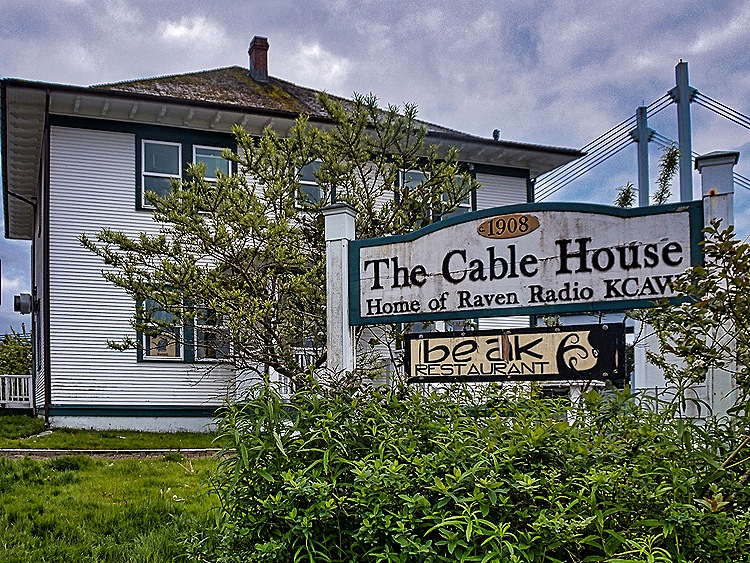
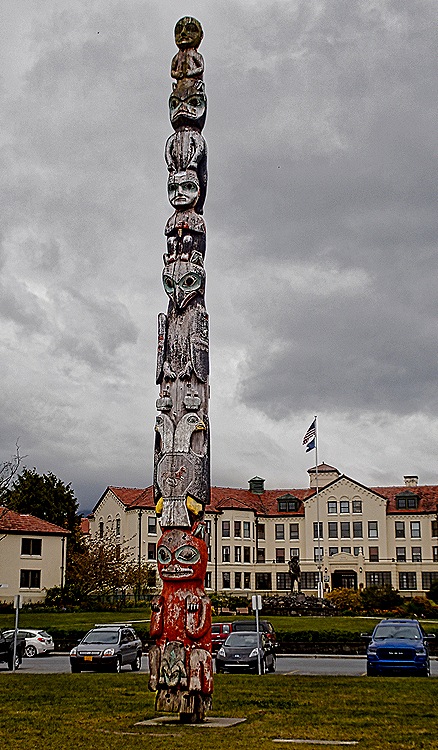
Upon reaching the top of the climb up to the city we encountered the Cable House. Built in 1908 it was originally the northern terminus of the underwater telegraph cable that was the first communication link between Alaska and the main United States. Today it houses Raven Radio, Sitka’s public radio station, with a restaurant on the first floor. Across the street is Totem Square with the Baranov totem pole first erected in 1942 and restored in 2011. At its top is an image of Alexander Baranov, the founder of Russian Sitka, and second from the bottom is a two-headed Russian eagle. Nearby is the yellow Sitka Pioneer Home, a retirement home built in 1913. In front of the home is a large sculpture called “The Prospector” that has been here since 1949. It is supposed to have been modeled after William Clark "Skagway Bill" Fonda, a pioneer who is said to have arrived in Skagway in 1896 and is credited with breaking first ground in the building of the White Pass Railway there.

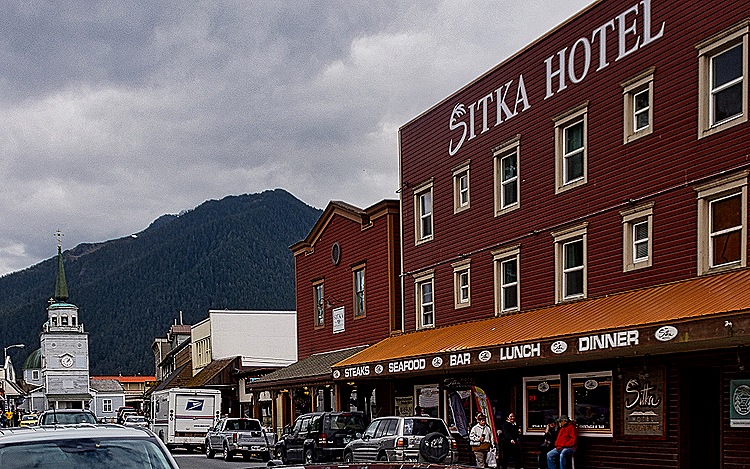
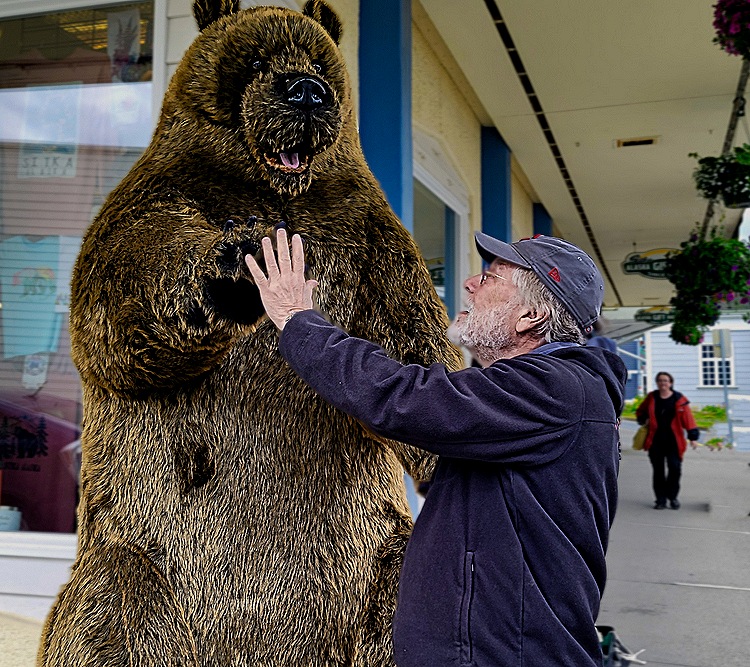
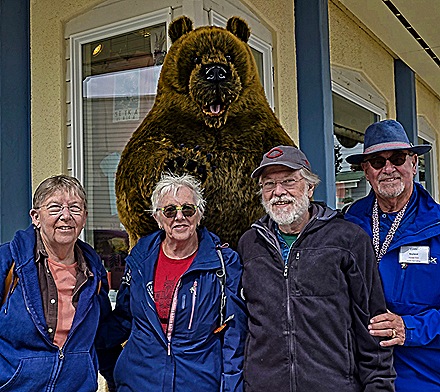
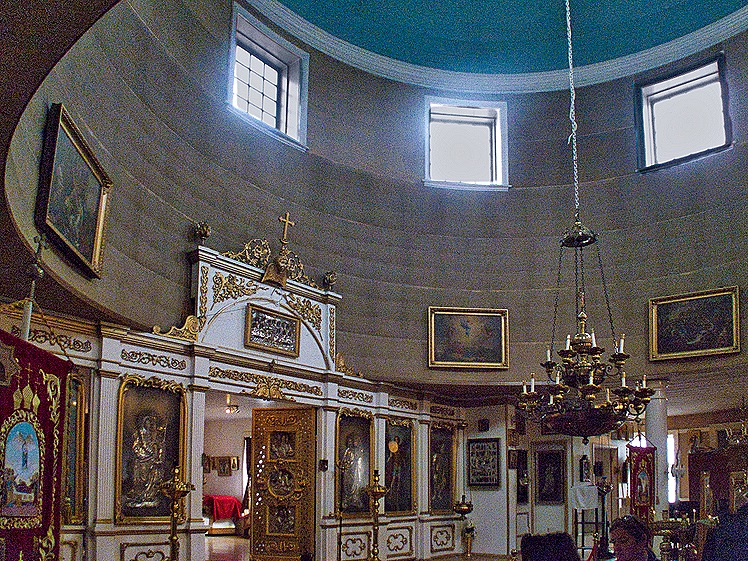
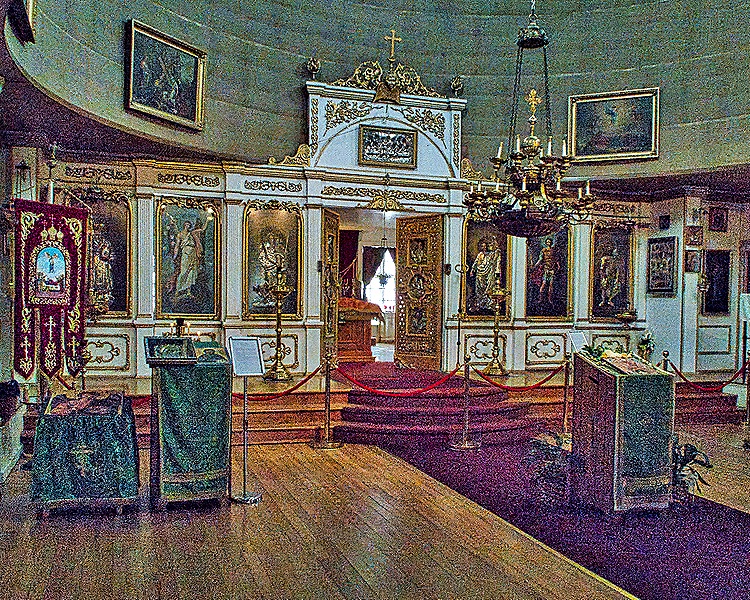
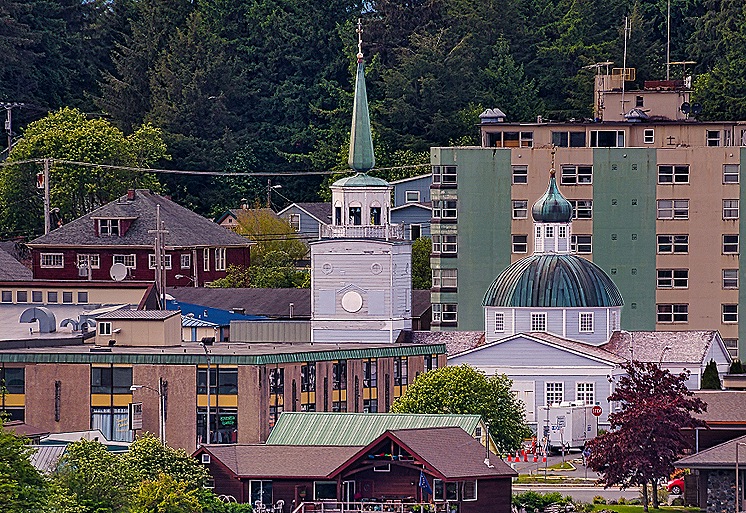
We walked toward the East down the street toward St Michael’s Cathedral. Originally dedicated in 1848, this is the oldest Orthodox cathedral in the western hemisphere. It burned to the ground at the beginning of 1966 but was rebuilt following detailed drawings of the original and reopened in 1977. The surrounding streets are largely commercial, including the Sitka Hotel. Rick encountered a large bear nearby, who then agreed to pose with us and our friends Keith and Susie, our travel agent’s hosts on the cruise.

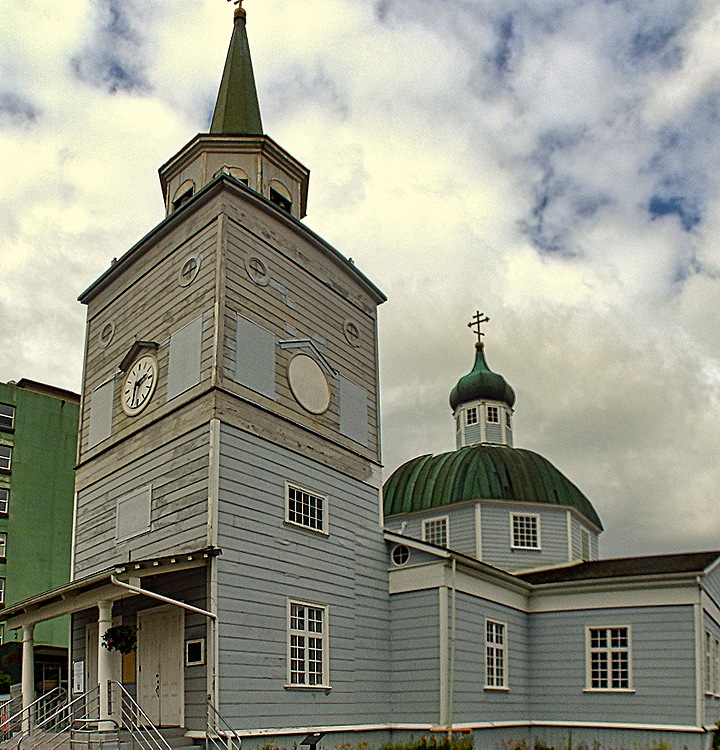
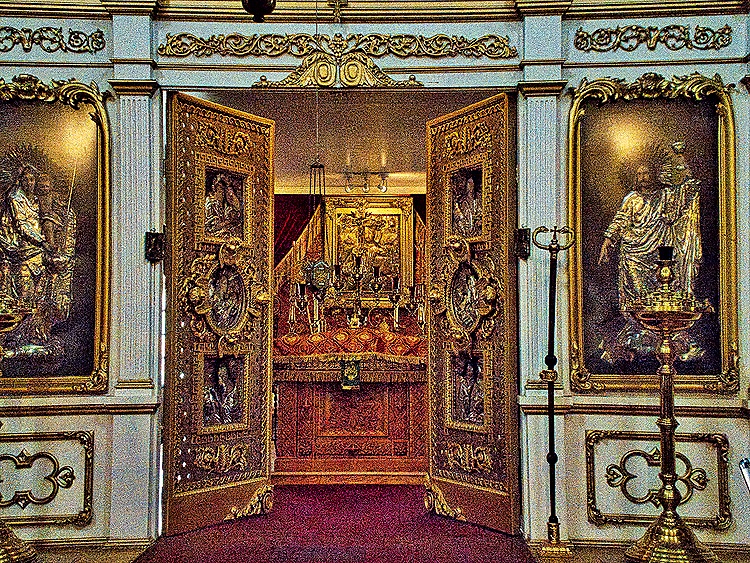
During Russian rule in the first two thirds of the 19th century many artistic treasures were contributed to the cathedral by Russian nobility. Some of it was lost in the fire of 1966 but most was saved, including the icon wall and the chandelier that can still be seen inside the building. The carved wooden doors in the middle of the icon wall, leading to some chapels, are notable for their intricate carvings. The room is lit during the day through windows circling the dome.
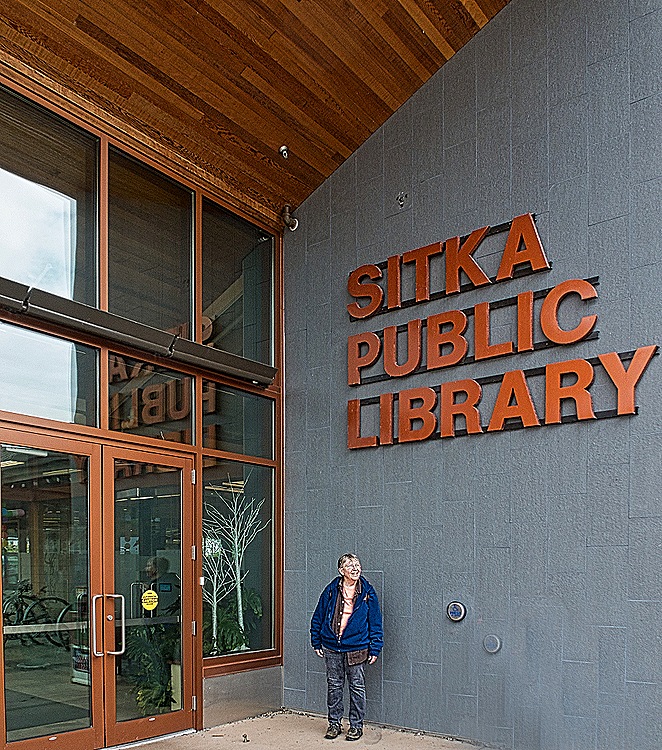
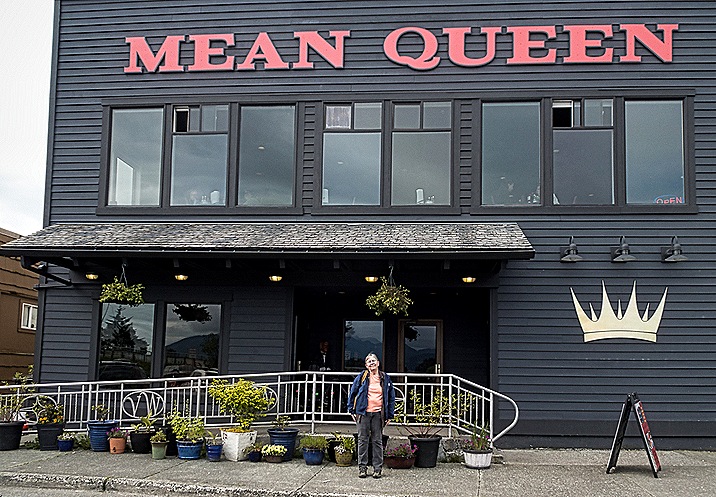
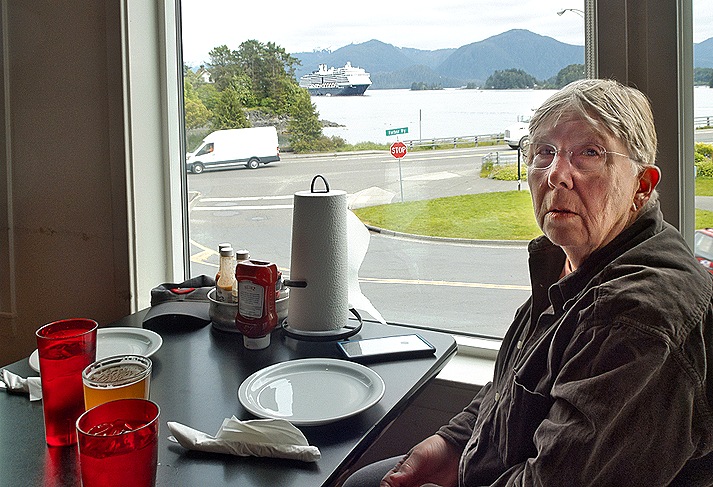
The Sitka Public Library first opened in 1923. It moved a number of times before settling in its current building in 1968. It has an inventory of some 75,000 books and other items. After seeing the library we had a late lunch at a very good pizza restaurant called Mean Queen that had been recommended by our morning excursion leader. It had a very nice view of the harbor.


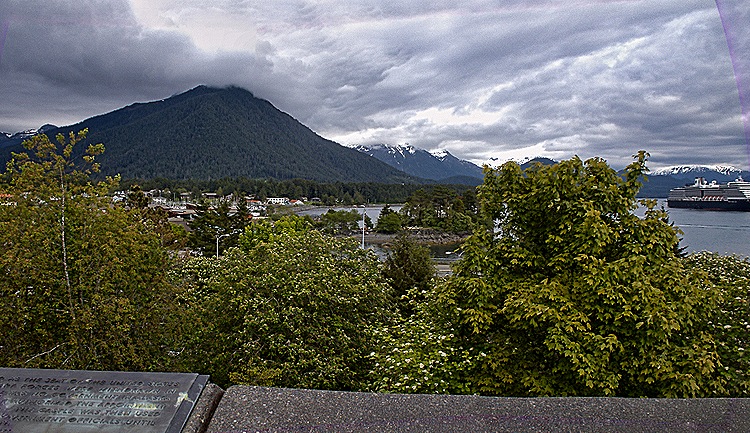
After lunch we climbed up to Baranof Castle, located on a high bluff above the harbor. Also called Castle Hill, this was originally right on the water and was fortified by the Tlingit. They abandoned it during the Russo-Tlingit war and it came under Russian control in 1806 at the end of that war. They refortified it and it served as the center of Russian administration of Alaska until 1867 when the United States got control. The formal transfer and first raising of the American flag took place here in 1867 and when Alaska became a state in 1959 this is where the first 49 star US flag was raised. Today it is a state park with several old cannon on the level top of the hill surrounded by a stone wall. Because it is some 60 feet above sea level it commands an excellent view all around (which would be even better if there weren’t so many tall trees in the way).

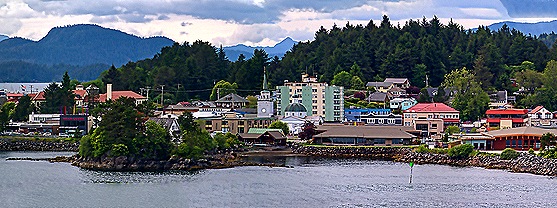
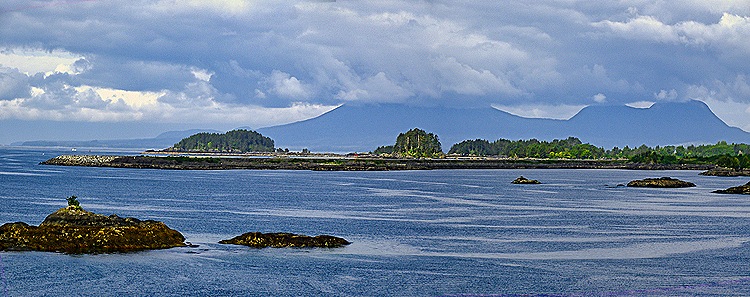
We returned to the tender dock and then back to the ship, from which we had a panoramic view of Sitka. We had a sea day to rest up before our next port visit.


 BADER JOURNAL


That was so fun. I learned some history also. And the eagles info. Thank so much. I loved Sitka also. And remember that movie where the young man falls for his boss who has Canadian immigration problems? And his family basically owns Sitka? I can’t remember the neme. THE PROPOSAL. What a great movie. Have you seen it? If not, you must. So fun. Thanks again for the journal. I’m doing ok. On oxygen now. Not constantly but if I’m doing much at all I need it. In the next couple weeks I will have repeat CTs to see what the progression looks like. I had one earlier that looked worse then the first one. So I’m just hopeful that this high resolution one will not show progression. Or much progression. The other big news is that the infusions I have been having every 4 weeks for crohns may possibly be what caused this. So I have to start s new drug to control the crohns in about a month. That’s scary for me. It could be the infusion, the crohns itself, or the methotrexate (crohns related drug) … any of these could have caused this. Hoping it is the methotrexate or the infleximab infusion as these are stopped so should slow progression. If it’s the crohns that caused it, then I can’t get rid of that smileSee with this next CT panel.
😎 Karen. Sent from AOL Mobile Mail Get the new AOL app: mail.mobile.aol.com
September 15, 2025 at 10:47 am
Thanks Katie. I am glad you enjoyed it so much. And I hope your complicated health journey is headed in the right direction.
Rick
https://www.avast.com/sig-email?utm_medium=email&utm_source=link&utm_campaign=sig-email&utm_content=webmail Virus-free.www.avast.com https://www.avast.com/sig-email?utm_medium=email&utm_source=link&utm_campaign=sig-email&utm_content=webmail <#DAB4FAD8-2DD7-40BB-A1B8-4E2AA1F9FDF2>
September 15, 2025 at 12:34 pm