
Dutch Harbor (Unalaska), Alaska 2025
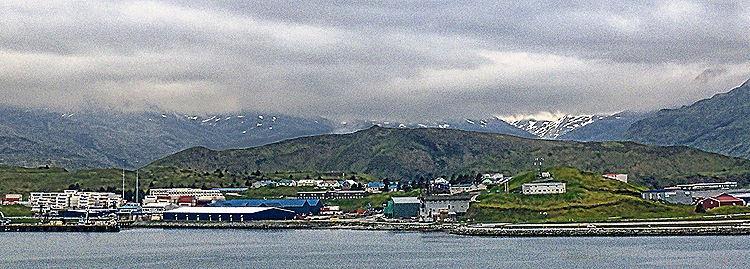
As we pulled into Dutch Harbor early on the morning of June 17 the skies were heavily overcast and the clouds were at the top, and sometimes lower, on the mountains. Located in an isolated spot in the Aleutian archipelago, this place is notorious for its unpleasant and changeable weather, often cold and windy, which often forces cruise ships to pass by this port. So as we docked in the harbor we were hoping for a change for the better, but not counting on it.
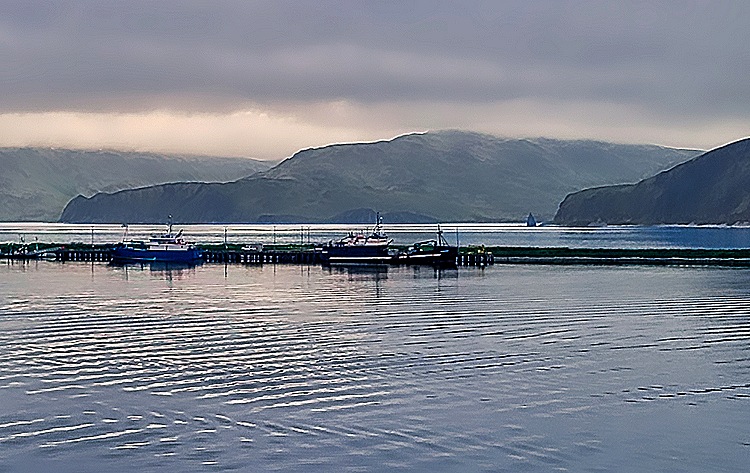

Located 2 or 3 miles from the nearest town, called Unalaska, Dutch Harbor is the largest port in the Aleutian archipelago. In fact, with a population just over 4,000 Unalaska has about 80% of the population of the entire Aleutians. We docked in a harbor protected by a long natural spit at the foot of Mt. Ballyhoo, at 1650 feet the highest mountain on Amaknak Island. The mountain was named by Jack London in 1897 after his lead sled dog Ballyhoo when he stopped here on his way to the Klondike gold fields. Much of London’s novel The Seawolf is set in this area.


The Aleut people lived here for a long time before the Russians showed up in the late 18th century to develop the fur trade, especially in sea otters. As the only deep water port in the Aleutians, Dutch Harbor developed a good deal of sea traffic and the Russians established a settlement here in the early 19th century. The area was conveyed to the Americans along with the rest of Alaska in 1867 and it became an important fishing center. Today it is one of the most productive fishing harbors in the United States; the reality TV show Deadliest Catch has been filmed in this area for the last 20 years.
HAL had no excursions available here and, as far as we know, there was no shuttle bus into town. We were able to book a tour conducted by the director of the Museum of the Aleutians. So in the late morning, after breakfast, we went out on the dock to await the tour van. This is an industrial dock with no cruise terminal so we waited in the parking lot. It was not really cold and very little wind, but chilly enough to wear a light jacket.

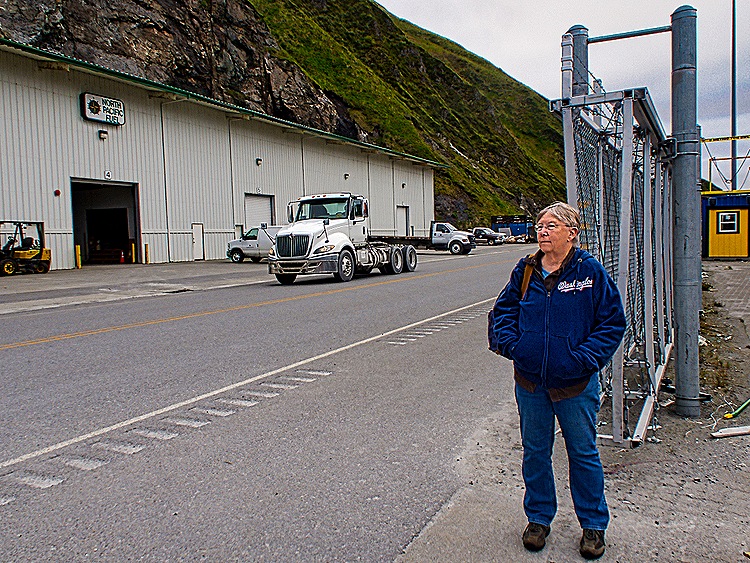
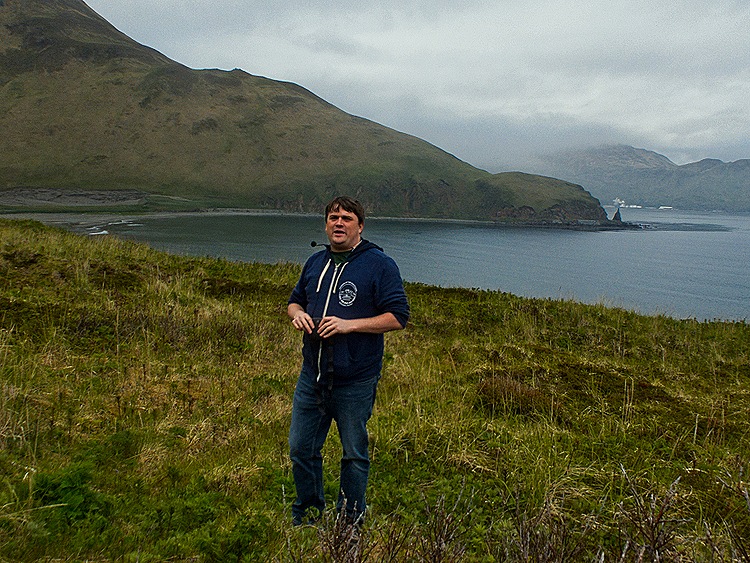
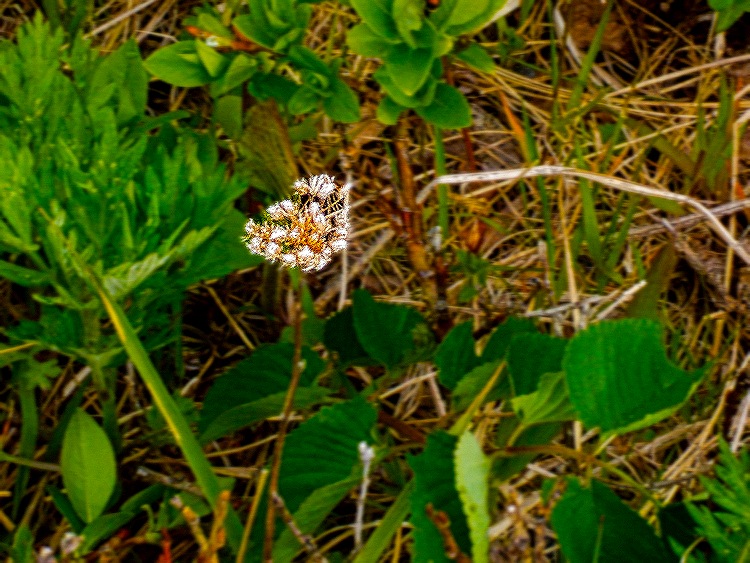
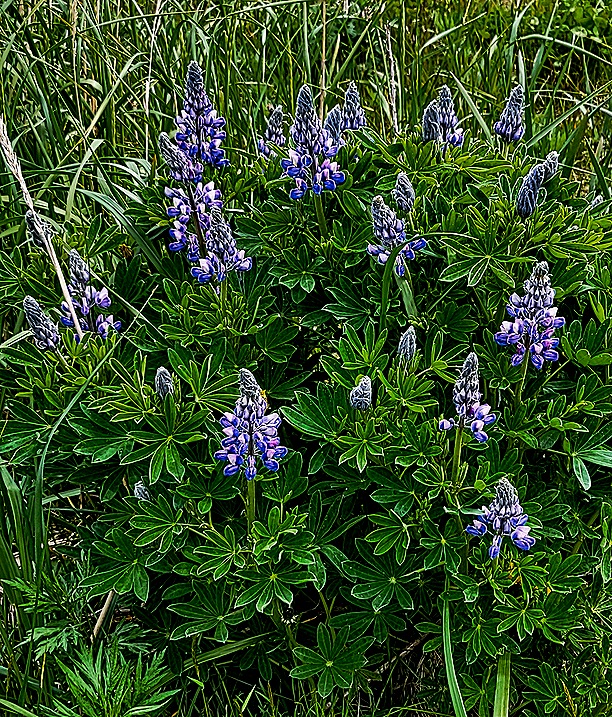
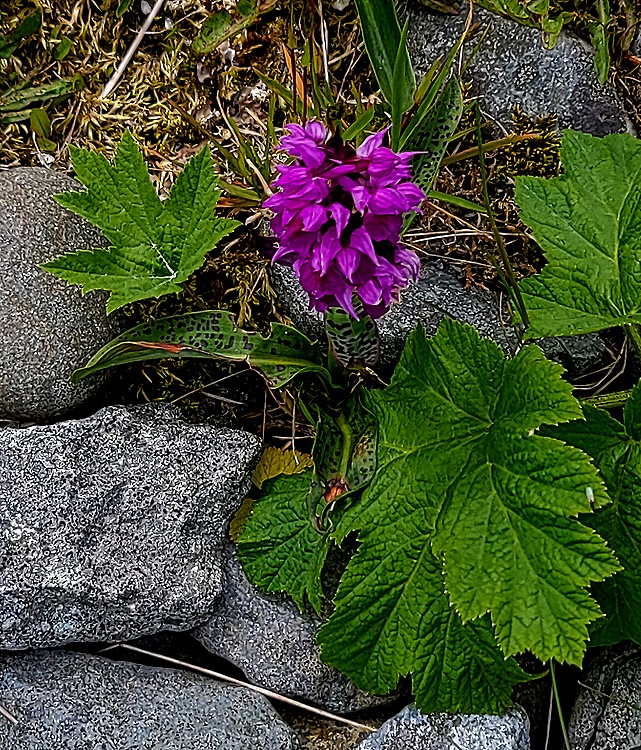
The tour took us quickly through the town of Unalaska and on to Summer Bay, which was mostly mountains and fields. There are very few if any trees in this area but spring flowers were blooming even though it was already the middle of June, apparently because winter weather lasts late in this area. Unalaska is reputed to have a particularly large community of bald eagles who often feed on the remains left by the fishermen, but we only saw a few and mostly they were flying, preventing decent pictures.



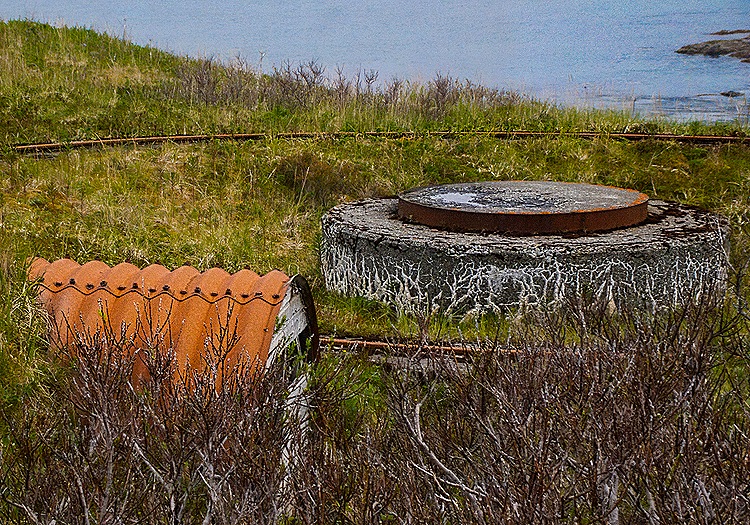
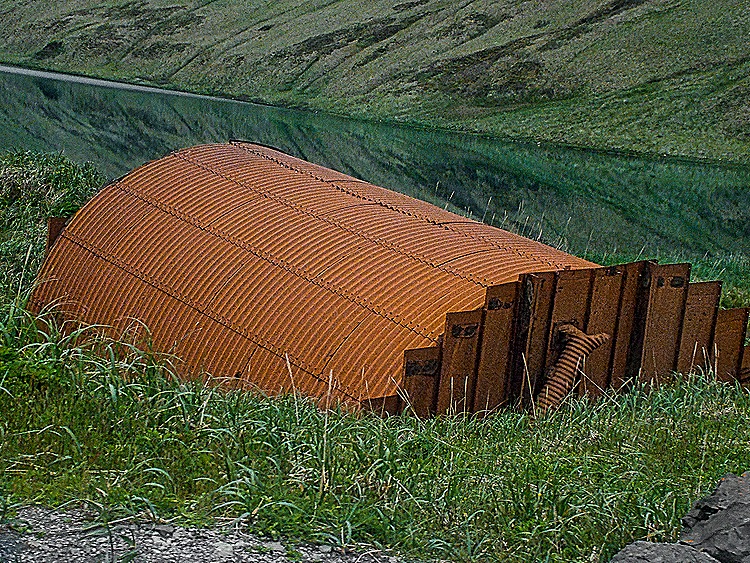
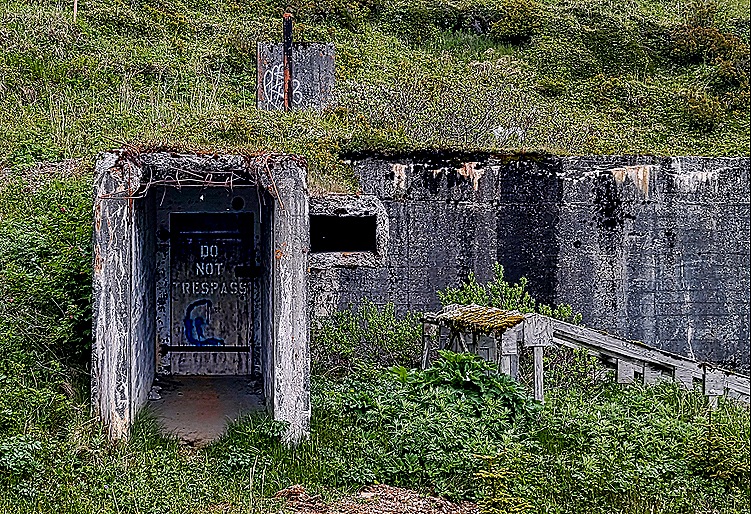
The year before the United States entered World War II the government began building up a military presence here. The Aleutians are close enough to Japan that it could have been used as a convenient base to attack the mainland US. So bunkers, quonset huts, artillery emplacements and a landing strip started appearing here in anticipation of a possible Japanese invasion. The Japanese did not actually invade Dutch Harbor but they did conduct bombing raids here on June 3-4, 1942, just six months after Pearl Harbor. They also occupied two of the more remote islands in the archipelago, Attu and Kislak, for a couple of months before being driven out by the terrible weather and American attacks. We did not climb Mt Ballyhoo to visit the main fort and guns installed to protect the area, but we did see some of these old fortifications in Summer Bay and also on the side of Mt Ballyhoo near where we were docked.



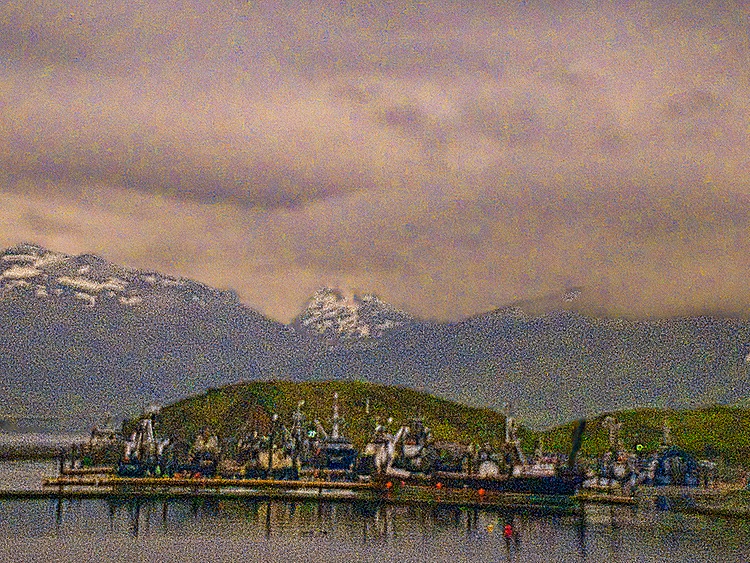
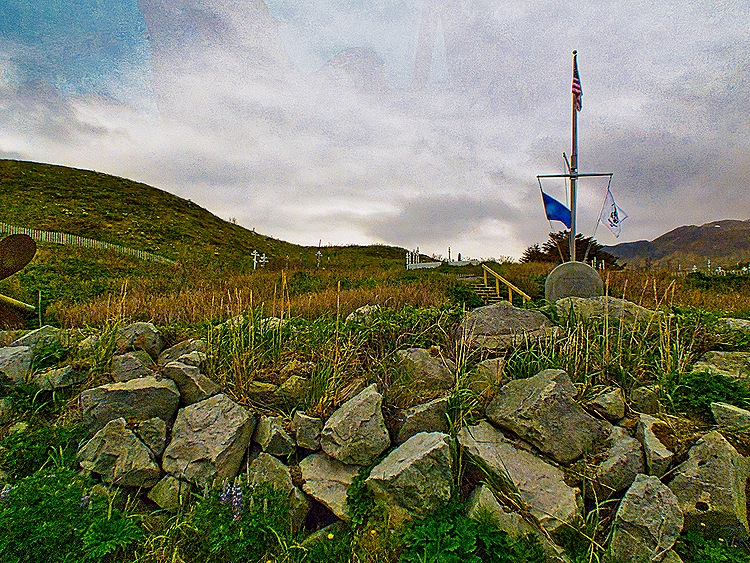
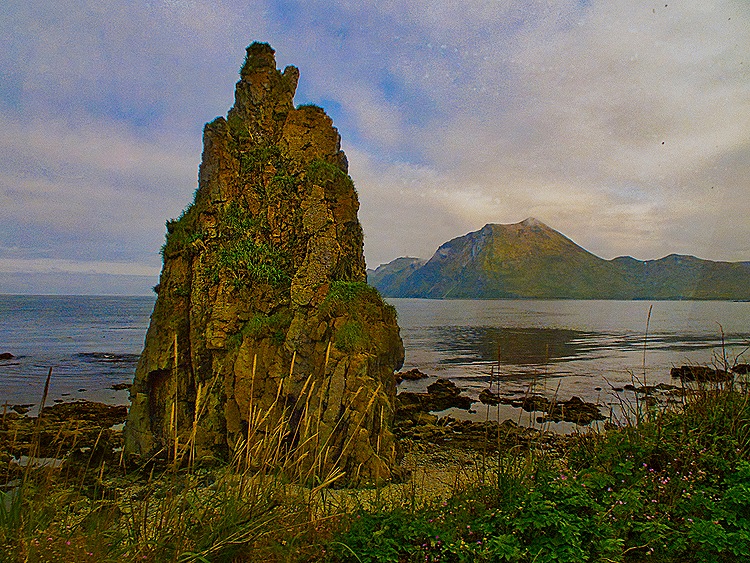
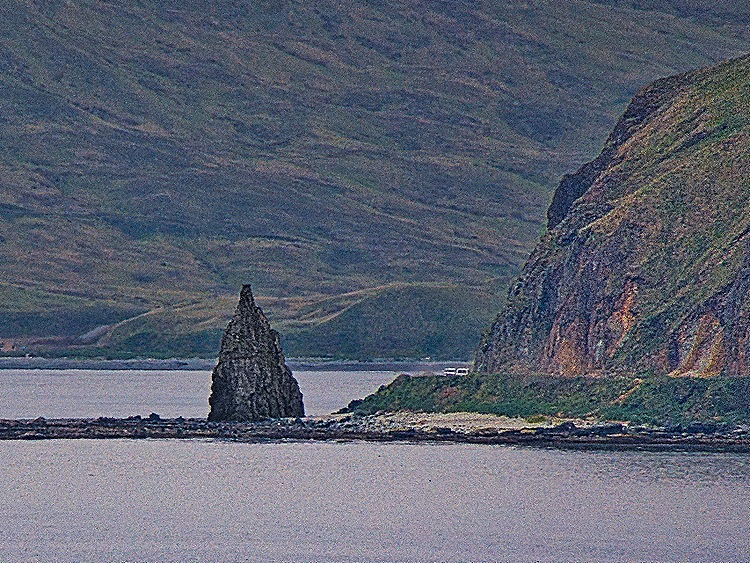
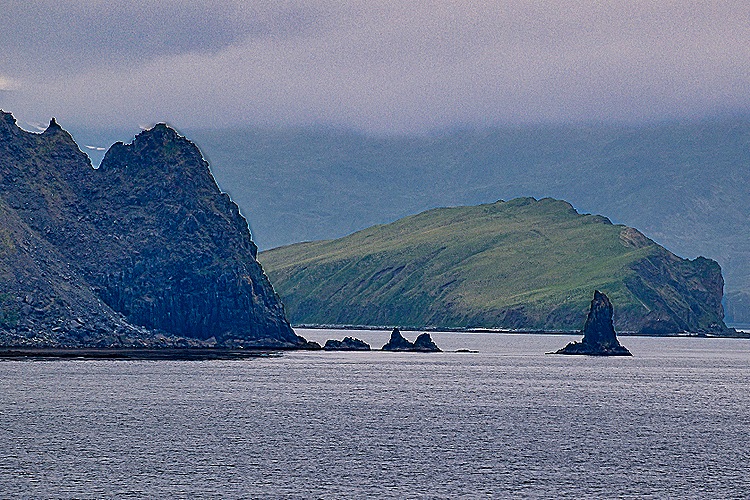
In passing we saw a fishing boat dock and also the Memorial Park, which includes several memorials to groups who lived and/or died here, including a brass propeller from a ship destroyed by the Japanese in 1942 that was installed here 50 years later and an old graveyard populated with Russian Orthodox crosses. On the way back toward town we passed a striking landmark called Little Priest Rock. It is an 80 foot tall rock that we understand some thought was shaped like the hat of a Russian Orthodox priest. It is on a small sandy beach where the neighboring mountain meets the water, although the tide must have been in when we were there because we couldn’t see much beach. It was big enough to see from the ship docked on the other side of the bay.
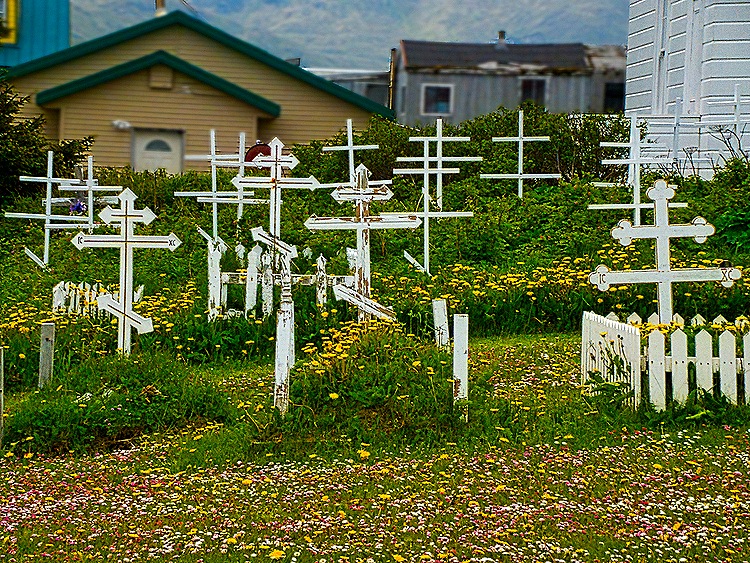
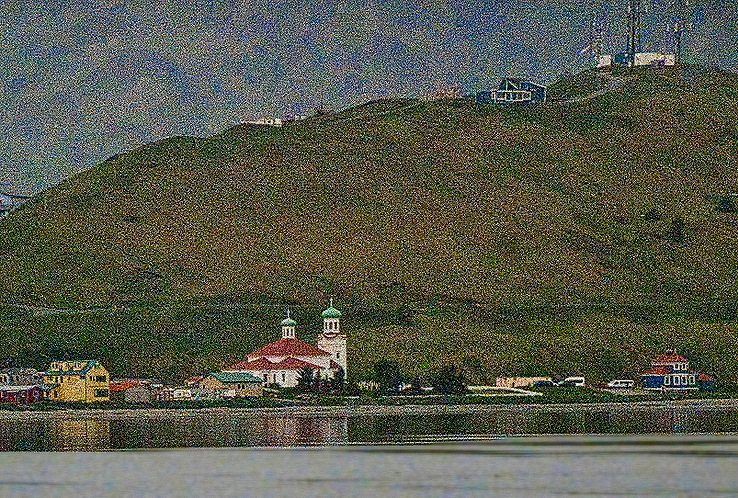
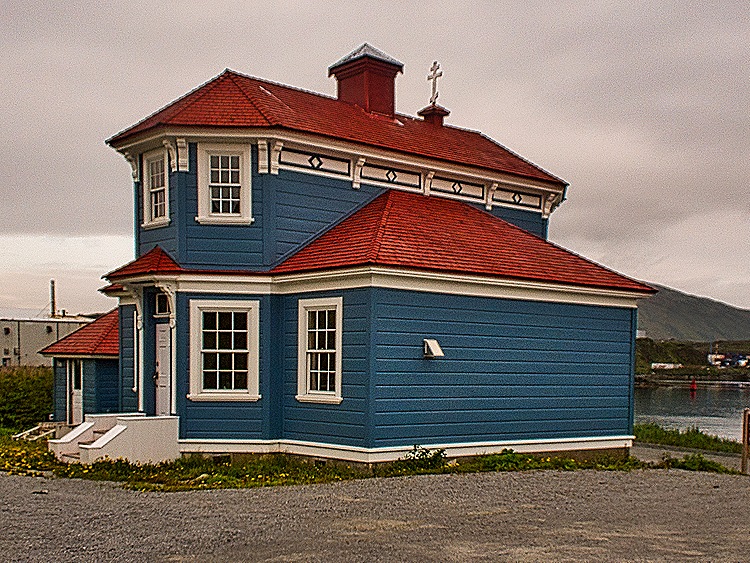
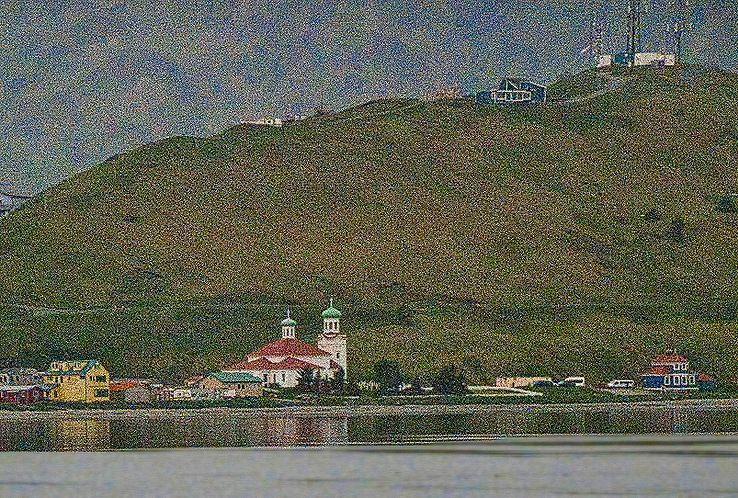
Perhaps the most distinctive building in town is the Russian Orthodox Cathedral, officially named the Church of the Holy Ascension. A chapel was built on this spot in 1808 and the church (with only one tower) replaced it in 1825. Due to wear and tear, probably due to the usually bad weather here, it was replaced in 1858 using the foundations and many of the timbers from the earlier church, and it finally gained its current form in the 1890’s, again incorporating pieces of the earlier churches. It very much resembles the Orthodox church we visited in Sitka and is reputedly filled with religious treasures, although we didn’t have time go go inside. Next to the church is a small graveyard dating to 1825 filled with white crosses in Orthodox style (with an extra cross bar). Nearby is the dark blue Bishop’s House, built in San Francisco in 1882 before being transported to Unalaska. The bishop who commissioned it died before having a chance to live there and is buried in the graveyard.



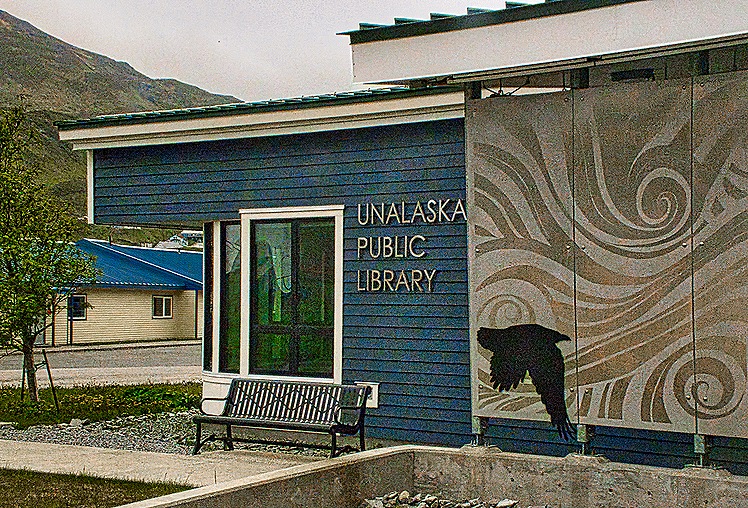
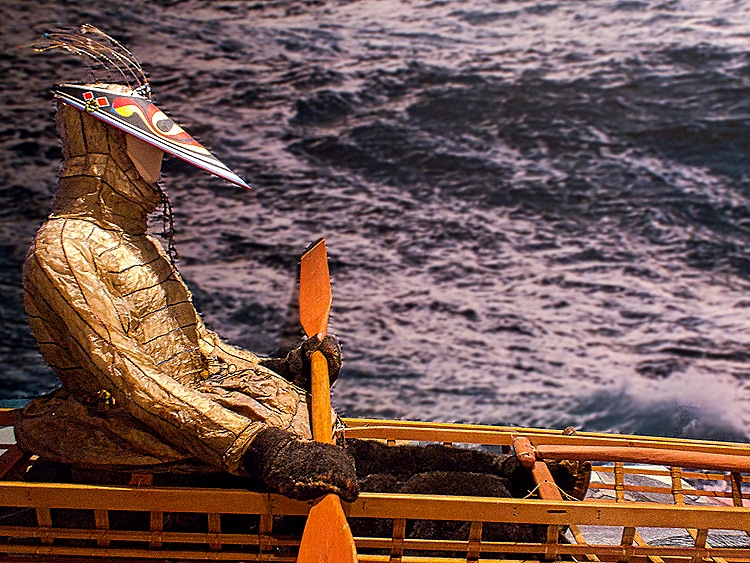
We made two more stops. The Unalaska Public Library was not on our itinerary, but there were at least three librarians in our van who all expressed interest in seeing it. So our guide compromised, taking us to see the library but not to leave the van for a visit. It looks like a very nice one. Then we stopped at the Museum Of The Aleutians, where our guide was the director. It was an interesting small museum with good information and exhibits, especially about the Aleut people that originally lived here. But importantly it also had a public restroom, which made the rest of the trip much more pleasant than it might have been! Outside the museum there was a large field with numerous flowers and a view across the bay.

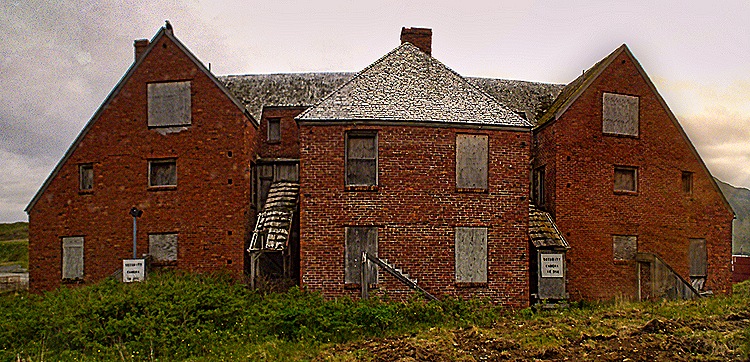
Across the water from the church we visited the underground hospital. Built during the war, we understand it had (or may still have) about 200 beds. It was not open to visitors, apparently for safety reasons. From the shore we had a nice view of the church and the bishop’s house across the water. Our last stop before returning to the ship (there was another excursion group waiting for our return) was at a red brick Tudor style building built in 1932 to house workers at the nearby Naval Radio Station. It originally had 6 apartments, but during World War II it was remodeled into housing for chief petty officers. It is reputed to be the only brick building in the Aleutians, although today it appears to be pretty dilapidated (obviously not a place to enter for a visit). There was a bald eagle sitting on the left gable.

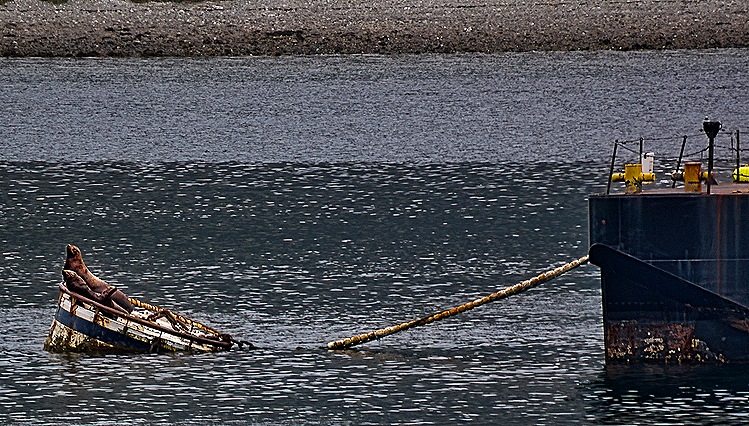
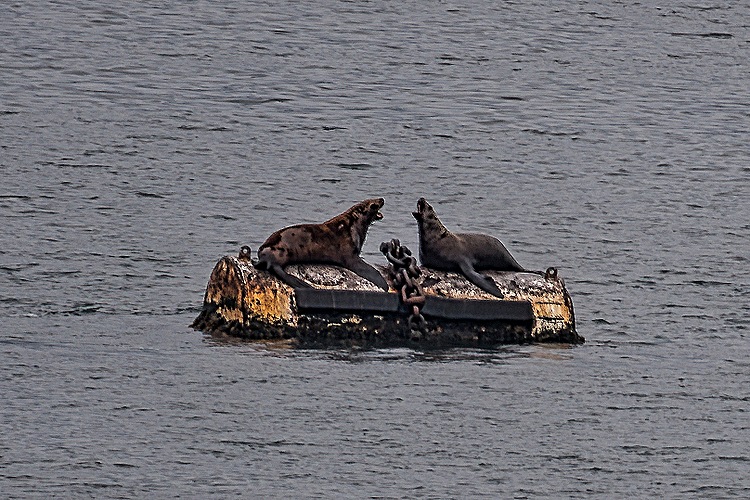
During the remaining time before our departure we took some pictures from the ship. To the aft was a view of the winding road up Mt Ballyhoo to the World War II ruins and the way we would sail away from Dutch Harbor. Looking forward was a view of Unalaska. More fun, though, was the view from our veranda, which was on the side of the ship facing the water. A ship was out there, probably some kind of work boat, with a thick cable running from its aft to a large round float. We don’t know why it was there but we do know that there were several seals and/or sea lions on it, sometimes looking relaxed and sometimes looking like they were fighting for position on the float. Whatever they were about, they were very LOUD. We heard them long before we saw them and their serenade went on for most of the afternoon. Very entertaining.



We sailed away around 6:00 and headed north. We passed some more nice scenery on the way out (of course). After dinner we headed for bed, where another towel animal awaited us.


 BADER JOURNAL




Leave a comment