
Nome, Alaska 2025
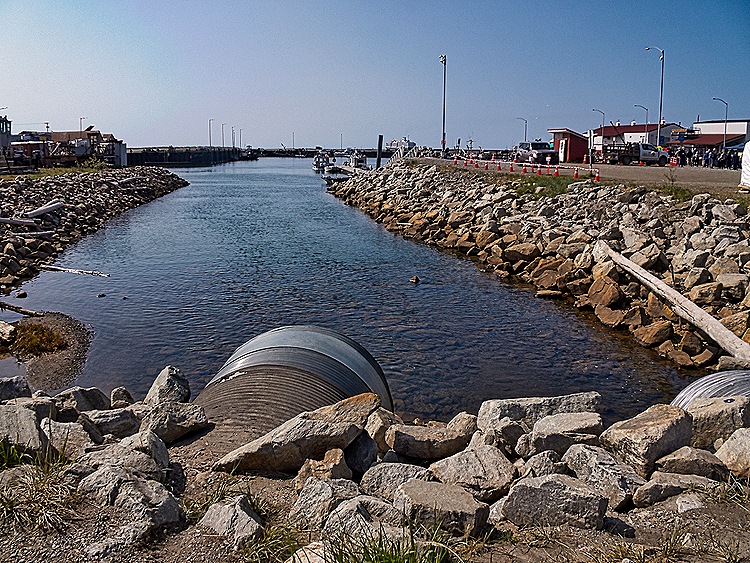
On the morning of June 19 we were anchored near the harbor of Nome, Alaska. This is a small town of only about 3,700 people, just a few blocks deep along the coast of the Seward Peninsula in northwest Alaska. No roads connect it to the main part of Alaska, so the only ways to get to or from here are by plane or ship (or dogsled).
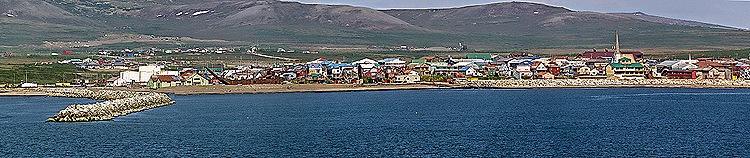
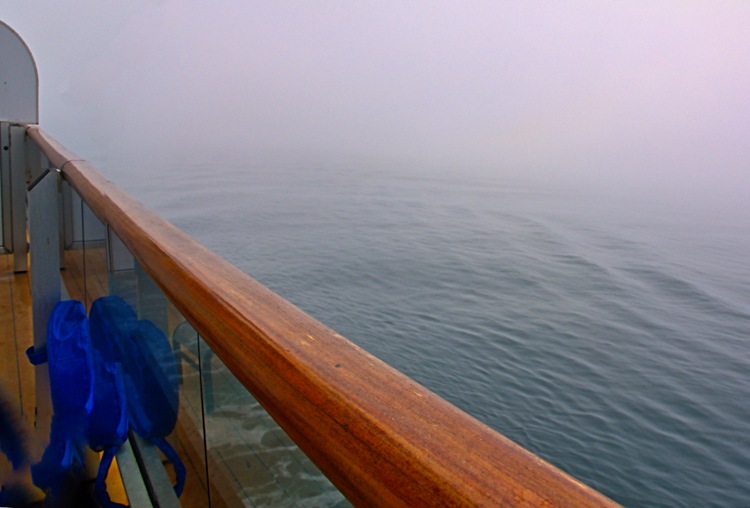
We sailed here from Dutch Harbor across the Bering Sea, one of the richest fishing areas in the world. It can often be rough water but it was rather calm when we crossed, although we were enclosed by a lot of thick fog. During our sea day before reaching Nome there was a presentation by the Captain, the Ice Pilot and an ice expert about what to expect. We were told that there was a lot of sea ice in the Bering Strait that was floating our way and that the weather was expected to be foggy enough that our tendering into Nome would likely be delayed several hours. This was discouraging . . . but it turned out to be a beautiful day in Nome, mostly sunny and clear and neither windy nor very cold. So after breakfast we tendered into the port.

While the Inupiaq people had lived in this area for perhaps several thousand years, the town itself began in 1898 as a tent city because of a gold rush. The first gold strike was registered by three fortune hunters known as the “Three Lucky Swedes.” Actually, one of them was Norwegian and today it is thought that they were led to the site by two Inupiaq boys who knew what was there. But indigenous people were not permitted to register mining claims at that time and the three who shared the first strike apparently shared neither their takings nor their credit with them, so their role was not generally known for decades. Once word of the leaked out gold hunters poured into Nome, on steamships arriving the next spring from Seattle and overland along the rivers from the Klondike (one prospector reputedly rode on a bicycle over the frozen rivers). At its height it is said that an average of 1,000 people per day poured into the area in the summertime. But by the time most of them arrived the productive areas were already taken. It was rough on the Alaska frontier and there was a good bit of claim jumping and violence facilitated by a corrupt federal judge. But the city of Nome was incorporated in 1901 with a population said to be around 20,000, the largest city in Alaska.
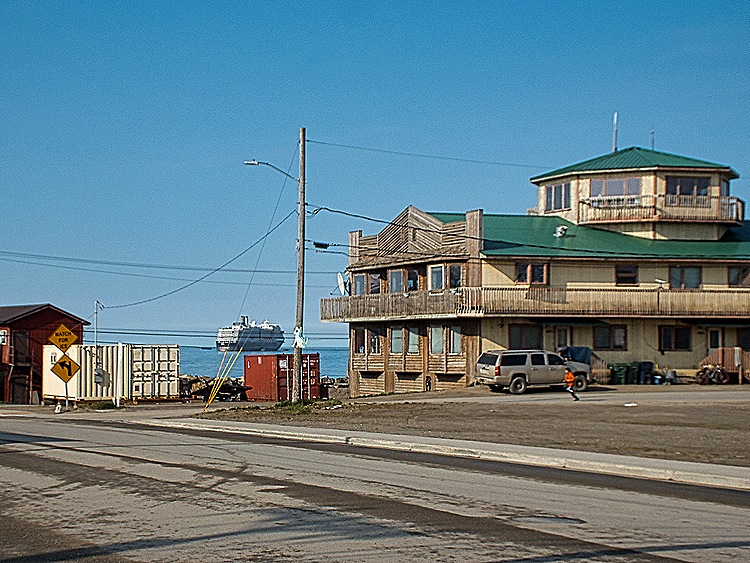
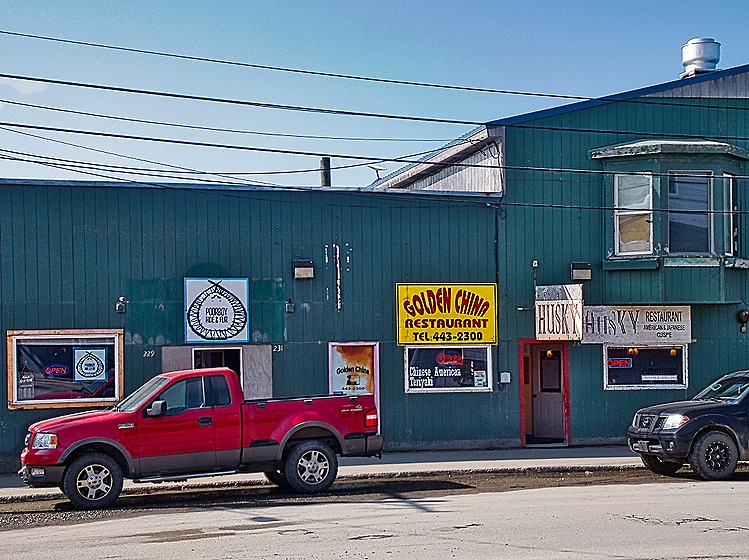
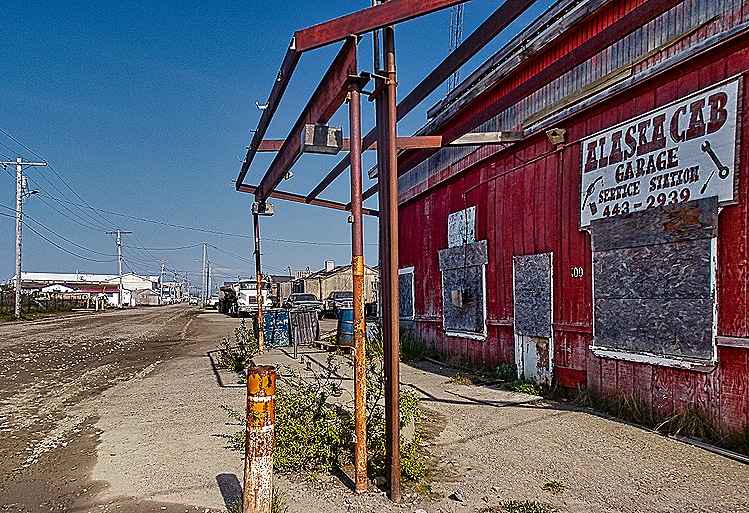
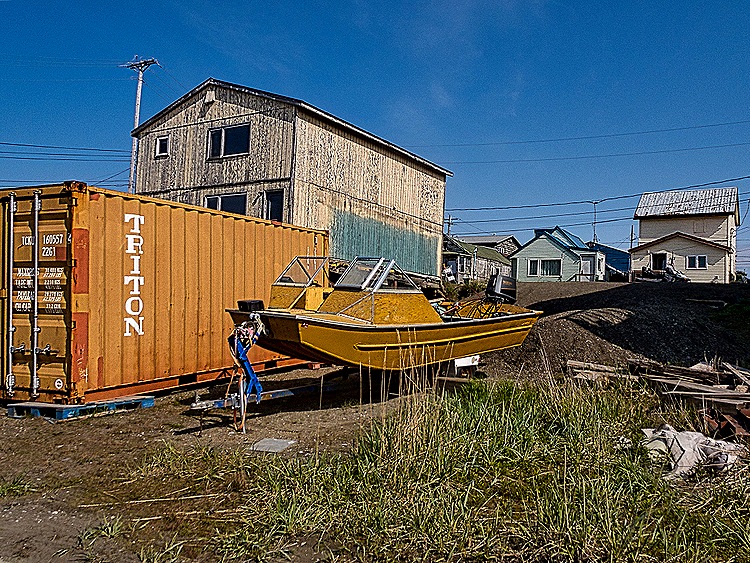
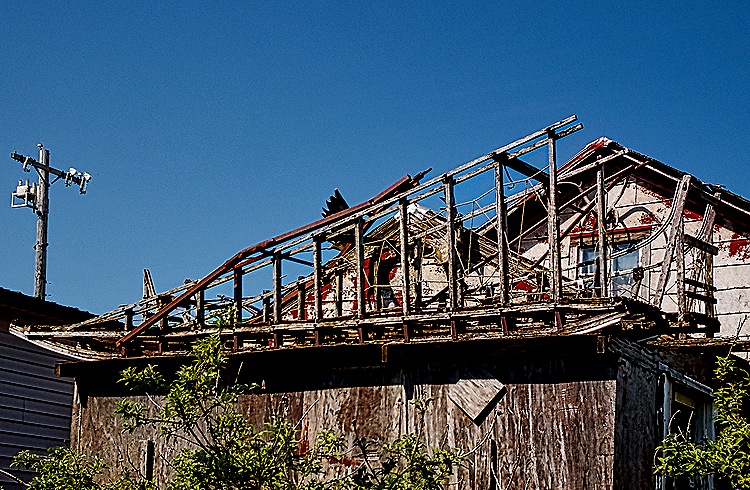
This was, then, a frontier town and as we walked down Front Street, which parallels the seashore, it still had that feeling. It had surprisingly wide streets lined with telephone poles. Most of the buildings from its early days have been destroyed over the years by storms or fires, but some have been restored or replaced with buildings in the same style so the ambiance is maintained. That is not only a lot of work but is also very expensive because all the materials have to be imported by ship (no trees grow in this area). While the streets seemed very empty, at least in the morning, the people we met were quite friendly and seemed glad to have us there. Some strangers on the street would wave and say “Welcome to Nome.” We did feel welcome.


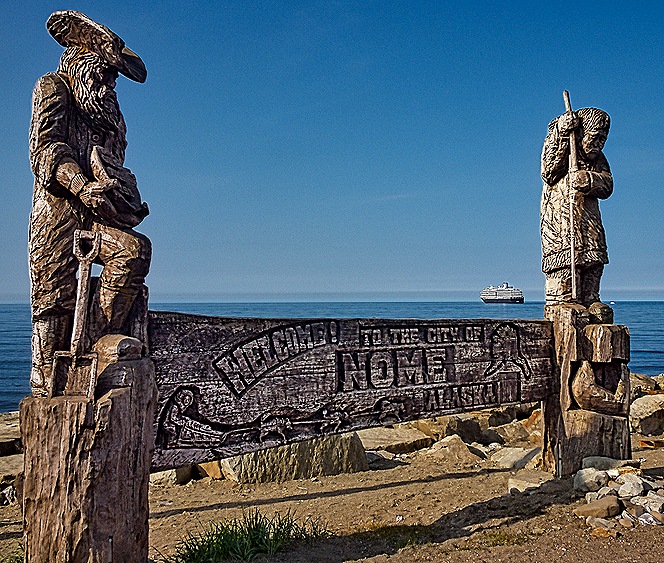
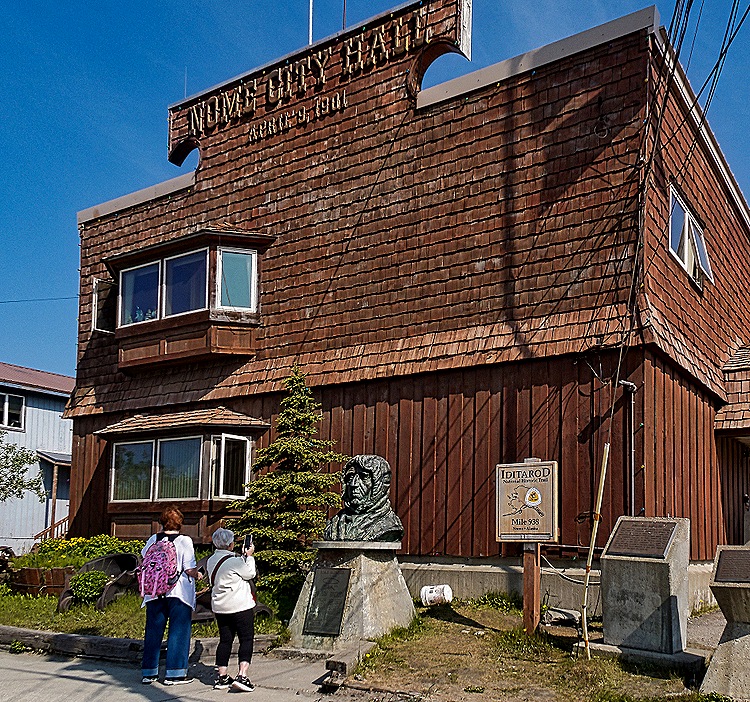
We walked along Front Street, passing a large carved wood welcome sign held up by pillars sculpted into a miner and an Inupiaq hunter. Across the street was the city hall, a two story wooden building that we understand was originally built by Wyatt Earp to house the saloon he operated from 1897 to 1901, leaving town with some $80,000, the equivalent of about $3 million today. In front of the building was a bust of Roald Amundsen commemorating the first flight over the north pole, led by Amundsen in a dirigible named “Norge” that flew from Spitsbergen to Alaska in 1926, executing an emergency landing about 75 miles short of its destination of Nome.
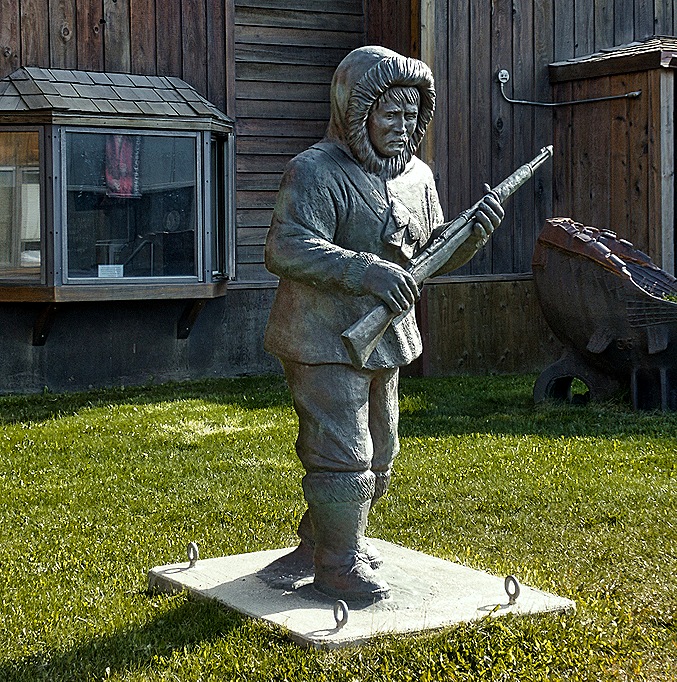
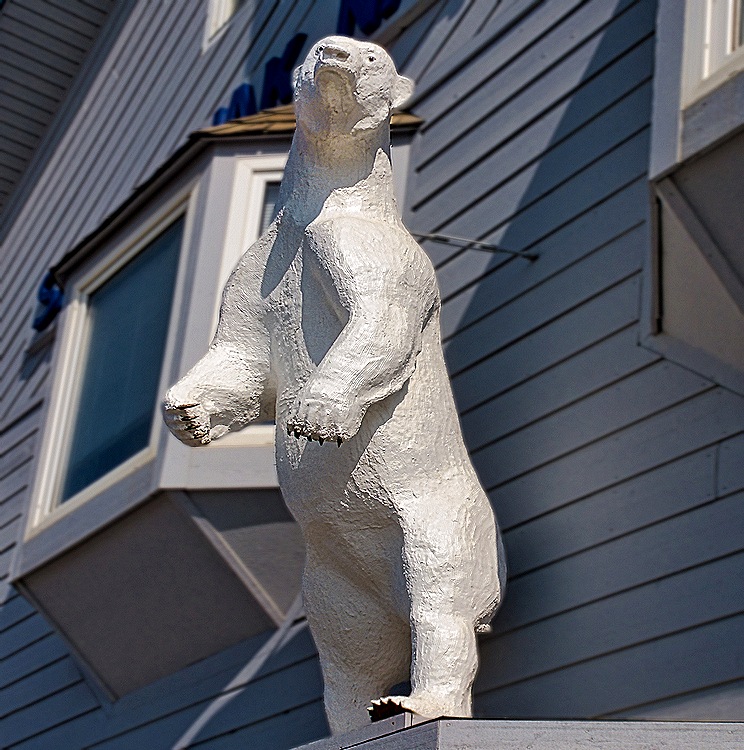
There were two other notable outdoor sculptures on this street. One was of an indigenous person carrying a rifle, commemorating the Alaska Territorial Guard. This was a group of several thousand volunteers, of Native and European descent, who patrolled the shores in this area during and after World War II. The other is of a large polar bear standing on a bay window in front of the Sitnasuak Native Corporation building.
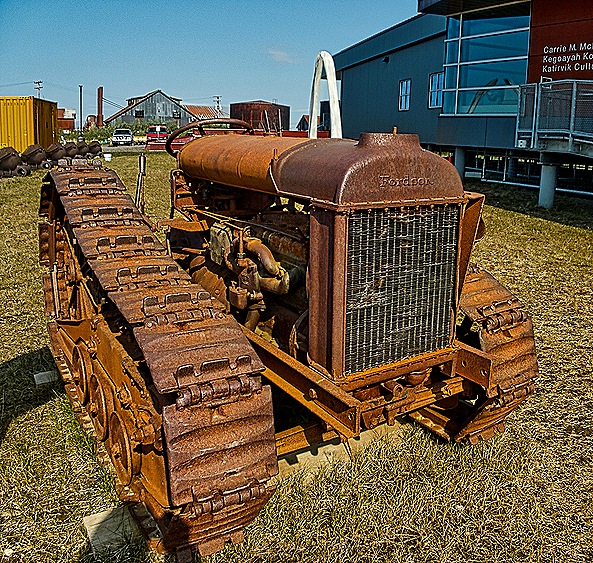
We turned left and walked up Steadman Street, away from the sea, to find the Carrie M. McLain Museum in the Foster building. It was only about 3 short blocks and well worth it, not only for this small but interesting museum but also because this building houses the Kegoayah Kozga Library. We got there before the library opened so we toured the museum first, enjoying its exhibits featuring Alaska Native art as well as the long and interesting history of Nome. Located on Front Street when it opened in 1967 the museum was moved to the larger current space when the Richard Foster building was erected by the city.




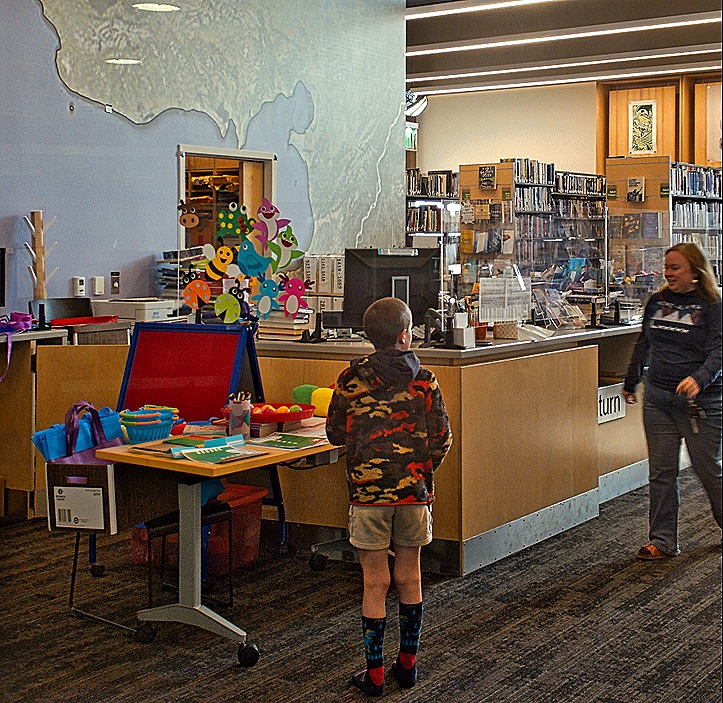
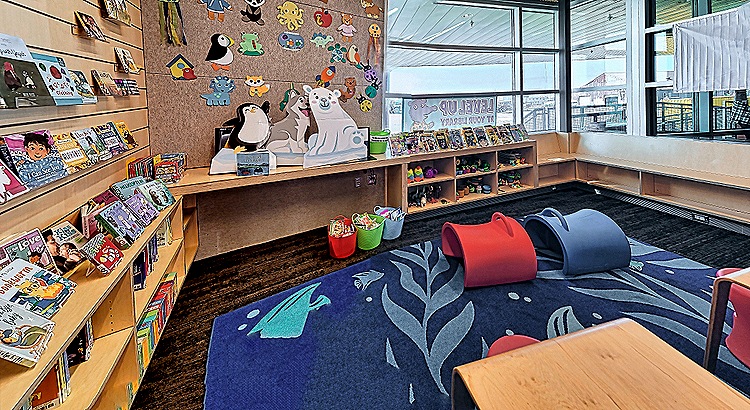
The library across the hall was spacious and welcoming. In addition to all the books it had a variety of local artwork on the walls. The librarian was friendly and showed us around.



We walked back to Front street in the direction of the port because we had scheduled an excursion for the afternoon that would meet there. Cutouts of dogs (which are obviously important in a dogsledding area) were mounted on many of the light and telephone poles, each one with a uniquely decorated painting apparently by local folks. This reminded us of about 20 years ago when the streets of Washington DC had similarly painted sculptures of elephants and donkeys. We liked the one in the last picture below the best.


Nome’s original name was Anvil City and we visited Anvil City Square. This large open space contains what Nome claims is the largest gold pan in the world (disputed, we understand, by a town in Canada), and statues of the “Three Lucky Swedes” and the two indigenous boys thought to have shown them where the gold was.

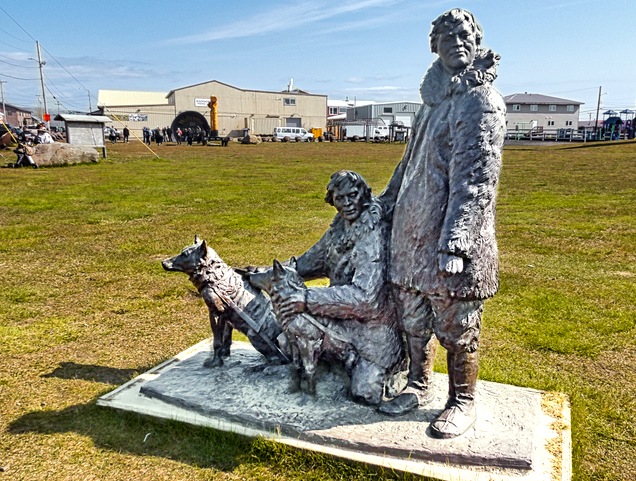
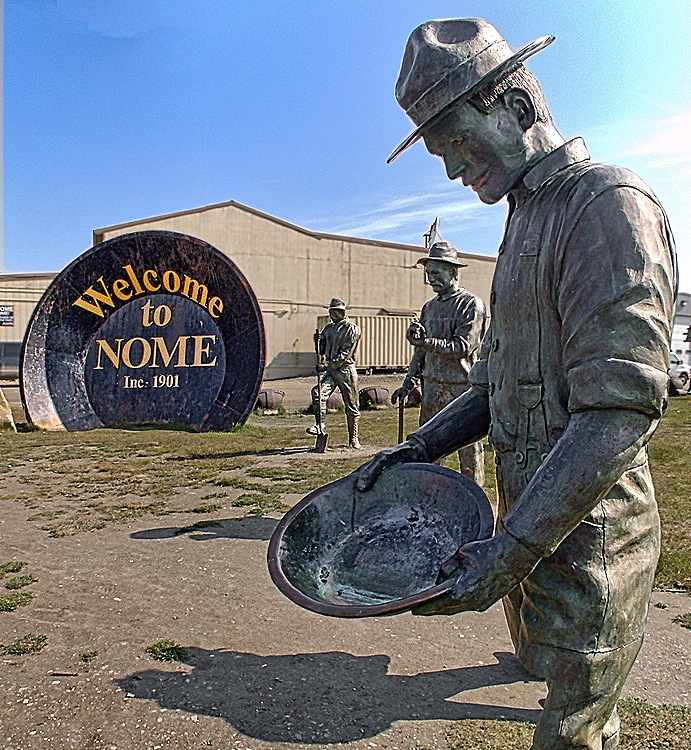
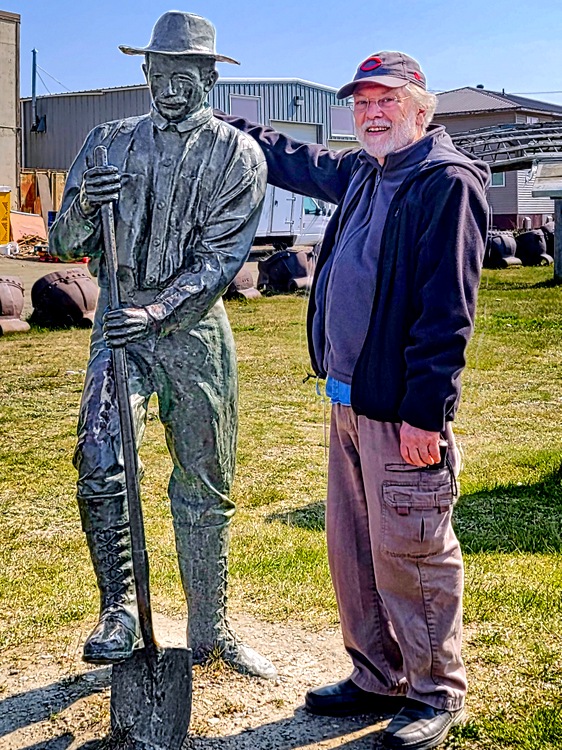
Also in this square was the finish line for the Iditerod dogsled race from Anchorage to Nome that has been held annually since the 1970’s. This finish line is moved to Front Street each year for the occasion. This race was inspired by a 1925 rescue mission to bring diphtheria antitoxin to stop an outbreak in Nome during the winter, when ships cannot reach its ice bound harbor. The antitoxin was brought as far as possible by train, but the remaining transport over almost 700 miles of hazardous snow covered terrain could only be done by dogsled. It was an exciting and suspenseful exploit that gripped the nation and it is worth seeking out a book to read the story. To make a long story short, the toxin arrived safely and stopped the outbreak, although by that time more than two dozen people had died (and perhaps many more that were unreported). A statue of Balto, the lead dog on the final leg of the sled relay, was erected in Central Park in New York City.
At the far end of the square was Old St Joe’s Church. Built in 1901 it was the first Catholic church in Nome and even today appears to be the tallest building in town. Originally located on Steadman street, the church had an 88 foot steeple with an 8 foot cross at the top that was lighted at night so that it could be seen for miles. This was an important local navigational beacon, particularly during the long dark winters. The steeple was dismantled in 1944 for safety reasons and the building became a warehouse. In 1995 it was donated to the city, moved to Anvil Square and restored to its original design. It is now used as a community meeting hall.


The Nome Nugget is the oldest newspaper in Alaska, first published near the end of 1899. It distributes some 2600 newspapers every Thursday throughout northwest Alaska and it is also printed in Anchorage for distribution in airports and libraries throughout the state. We understand that in the early days the newspaper was written in Nome, then taken elsewhere (Juneau?) for printing, then returned for distribution. We saw the newspaper’s offices on Front Street and in the Anchorage State Library we found on display the front page of the newspaper’s January 31, 1925 edition, reporting on the progress of the dogsled relay two days before the lifesaving serum arrived.


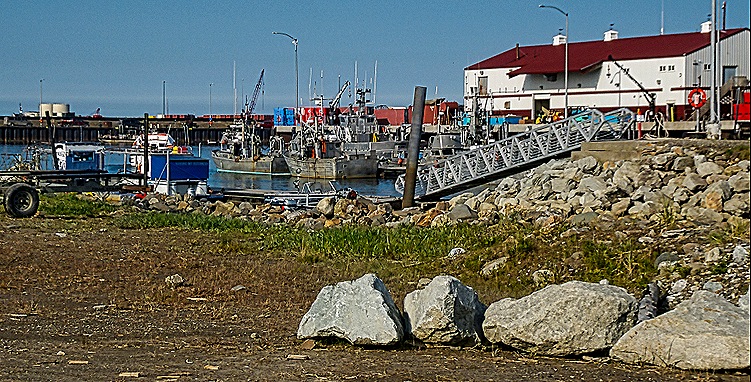
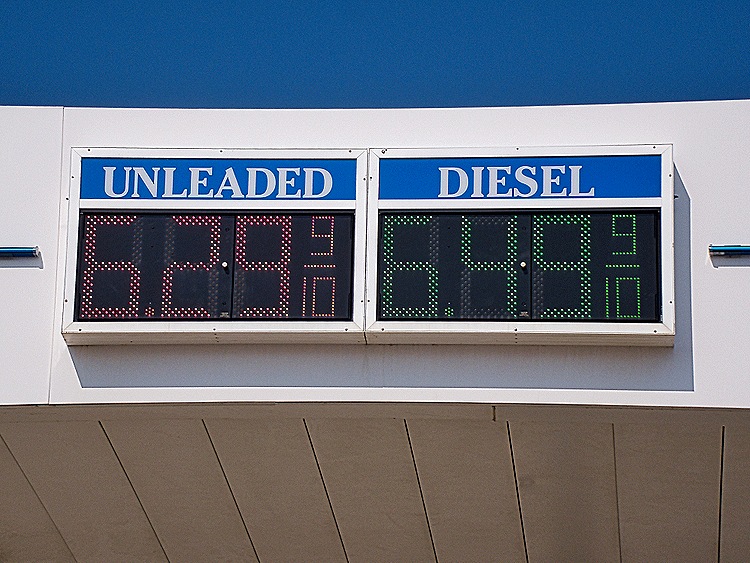
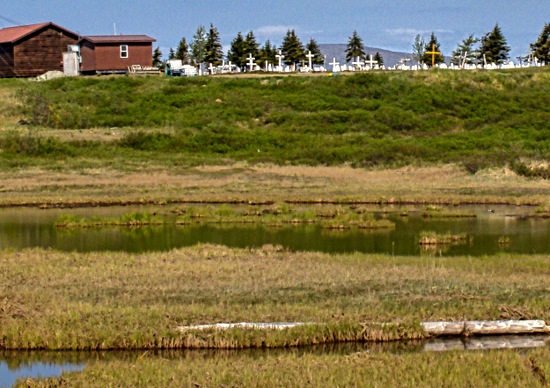
We continued to the port. Among other things we passed a building with two old dogsleds on top and saw a large cemetery on a hill. We mentioned that prices are high in Nome because everything has to be imported; case in point is gasoline, with regular unleaded selling for $6.29 per gallon when we had paid between 3 and 4 dollars while driving to Portland. When we reached the dock Mary joined a number of folks sitting under a shade erected by HAL waiting for the excursion to begin.


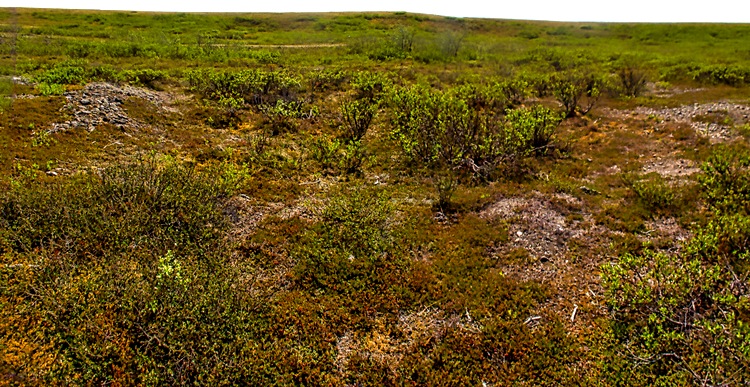
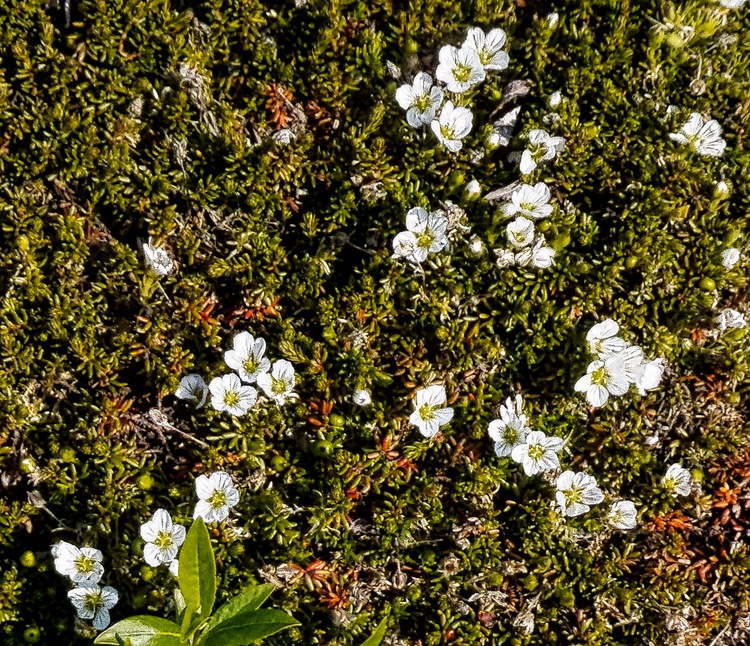
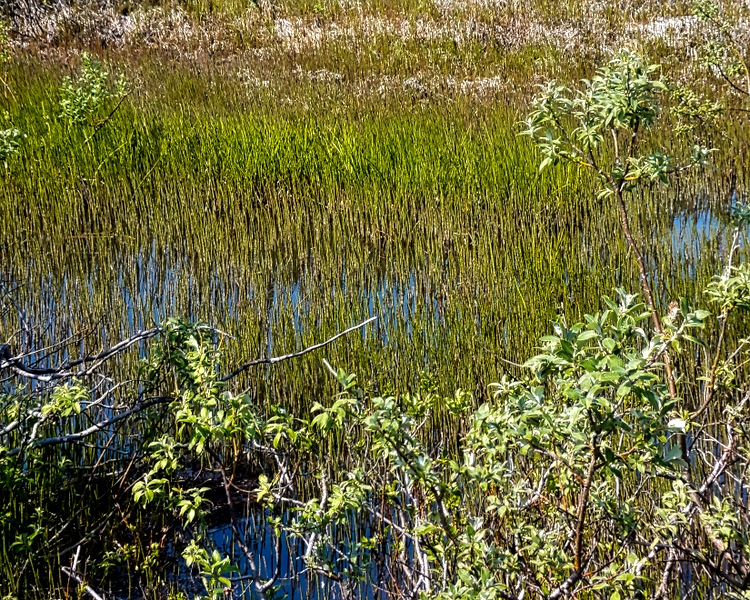
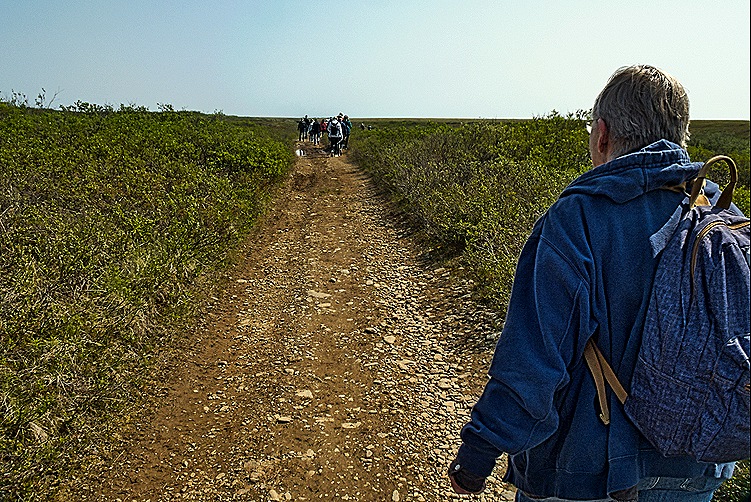
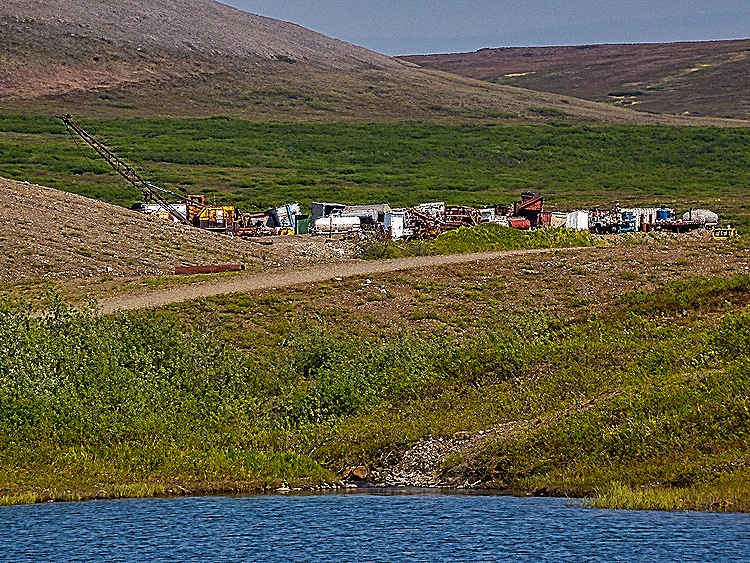
The afternoon excursion took us by bus through the tundra outside Nome to visit an old gold dredge. The road stopped well short of the gold dredge so we had to walk a mile or two over very rocky and uneven land to reach it (and then, of course, we had to walk back). The walk was a good bit longer than advertised and was more challenging than expected. There are no trees in the tundra but we saw many tiny flowers growing there. We did cross over a small but pretty creek with reeds growing in it on the way.




Gold Dredge # 5 was one of a number of such contraptions once utilized in this area to dig for gold on an industrial scale. We understand that this one operated from about 1941 into the 1990’s. It has a large hull with several rooms built on top with a long arm sticking out to one side that has a number of very large buckets that are drawn by a moving chain along the floor of the pond or lake like a conveyor belt to scrape up the bottom. As each bucket reaches the boat its contents are dumped and it continues on, repeating this over and over. The lake floor sludge is then processed on board to isolate and extract any gold that is there.
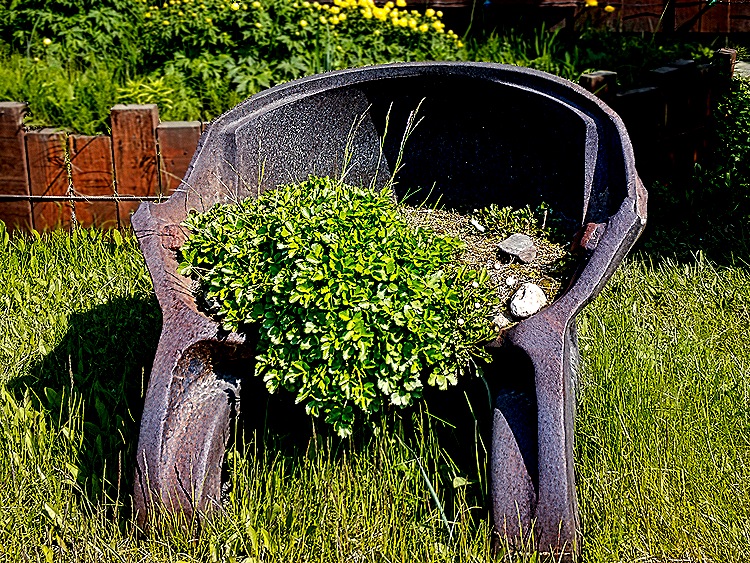
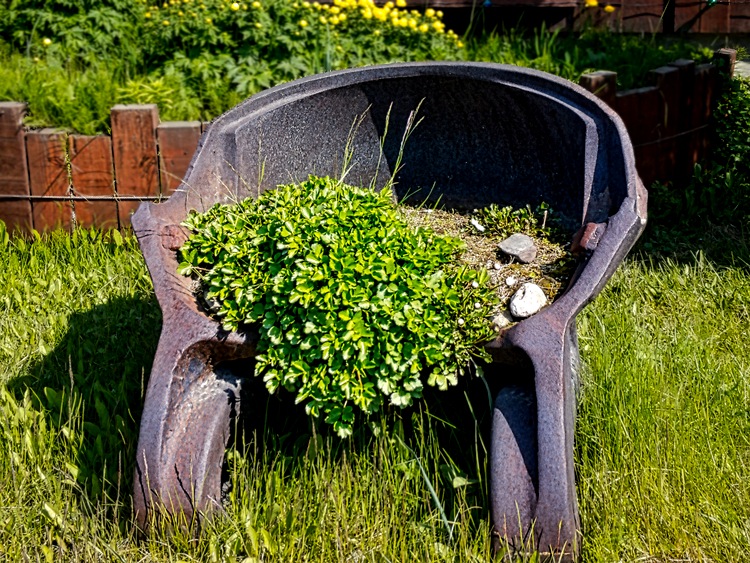
This facility is now closed to visitors, so we could only look at it from the edge of the large pond in which it sits then head back to the bus. You can see the row of large buckets still attached to the dredge, and in the town a number of them are being used as planters. There was also a row of them in front of the museum in the Foster building.


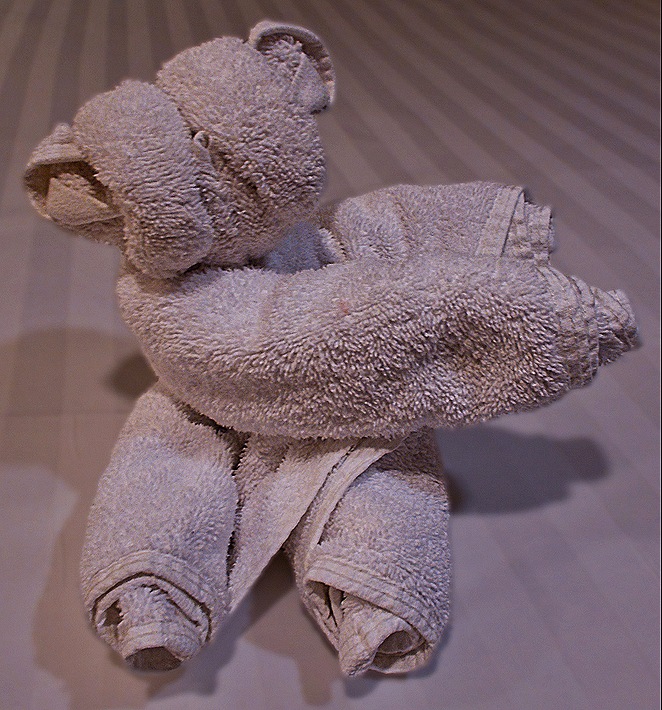
We were pretty tired after that unexpectedly difficult walk and were glad to take the tender back to the ship. We sailed away before dinner time heading north, where we hoped the ice would not prevent us from sailing above the Arctic Circle as it had during last year’s cruise. All that is left to show is towel animals.


 BADER JOURNAL




Leave a comment