Arctic Circle & Diomede Islands 2025
The Summer Solstice was on June 20, 2025 and the official title of this voyage was “Alaska Arctic Circle Solstice” cruise. So today, June 20, has to be the signature event for this journey, right? Last year HAL did this itinerary for the first time and they were unable to reach the Arctic Circle on this date (or at all) because of massive sea ice blockage. So we were concerned about that, especially after the presentation on June 18 by the Captain, the ice pilot and an ice expert who told us there was already a great deal of sea ice in the Bering Strait and we were very unlikely to make it through to the Arctic Circle. Darn!
But it turns out they were completely wrong about that. We should have known that weather predictions two days out are really more of a guess than a scientific conclusion. This was a beautiful clear day and, while we did see some floating ice, it was nowhere near the ship. The Captain did a great job of steering us where we needed to go while avoiding ice issues and the day (or at least the morning) turned out to be pretty special.
During the night after we left Nome, however, we still didn’t know whether we would be able to reach the Arctic Circle, the Captain’s discouraging presentation two days earlier having been the last we had heard. In the middle of the night Rick got out of bed to go to the bathroom, as often happens with people our age, and then looked through the windows to see whether there was any floating ice No visible ice, but the summer solstice is the longest day of the year especially in northern Alaska, the land of the midnight sun. So that is what this picture shows, though probably at an hour or two after midnight.
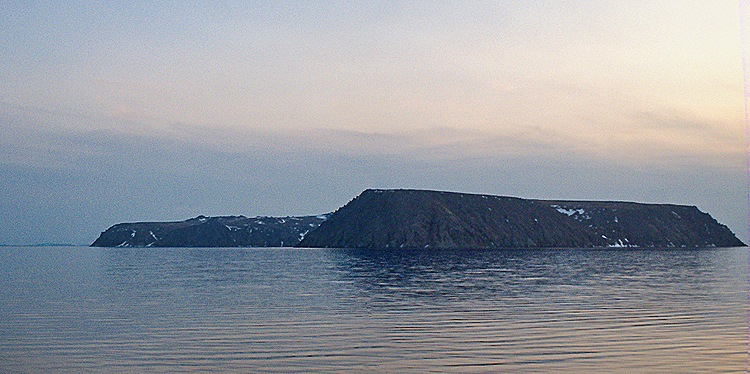
Looking at this picture as I write this it occurs to me for the first time that this is likely a view from the south of the Diomede Islands, about which more later as we sail back toward them from the north.
By the time we woke up for the day we were already near the Arctic Circle. From our veranda we could see Russia across about 40 miles of water. This is the Chukchi Peninsula, and Cape Dezhnev (on the right in the first picture) is the easternmost point in mainland Asia. Its highest peaks are about 2600 feet. The first record of a ship sailing by it was in the mid 17th century and Captain Cook visited in the 18th century. During the 19th century it was a fur trading hotbed.
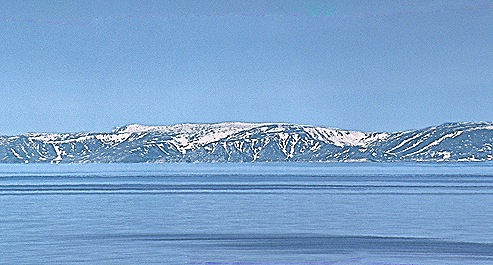
By this time we were in the Bering Strait, a body of water about 50 miles wide at its narrowest and about 300 ft deep that divides the Bering Sea from the Arctic Ocean. This is a very shallow part of the ocean and is thought to have been dry land during the height of the glacial period when ocean levels fell as a tremendous amount of water was absorbed into the world wide glaciers. Scientists today think that humans probably first spread into the Americas across this land bridge between Asia and America. The islands we will see today were once mountain peaks in this land bridge, which is sometimes called Beringia today. Like the Bering Sea, the Bering Strait is named for Vitus Bering, a native of Denmark who explored this area under the Russian flag in the 1720’s and 30’s. Here’s what the Bering Strait looked like from the aft of the ship in the morning before the crowds arrived.


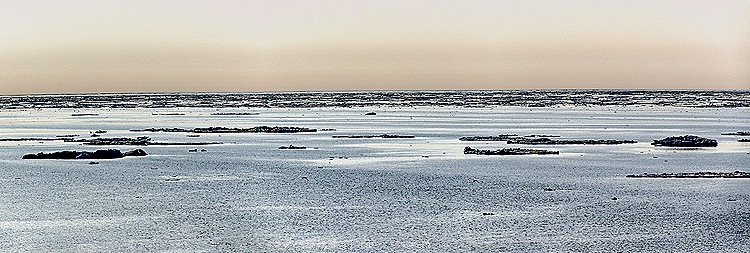
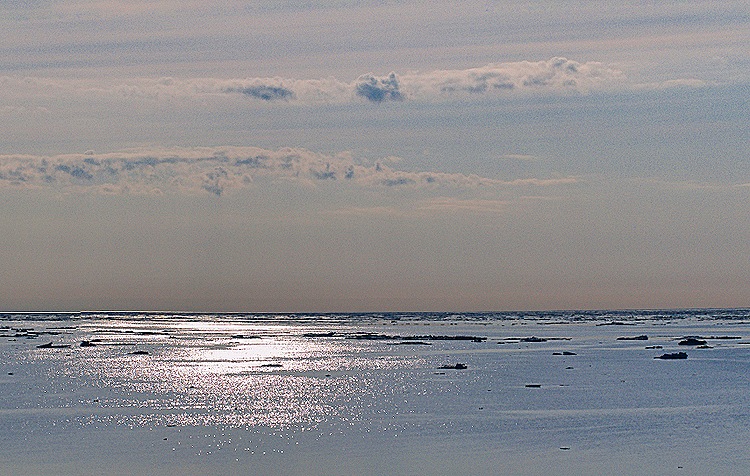
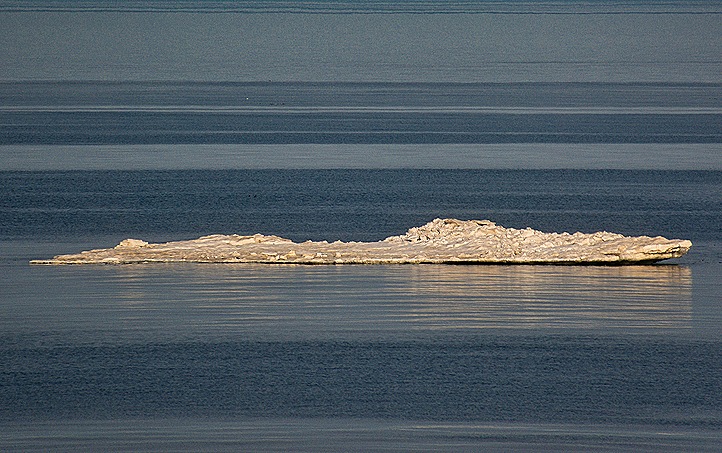
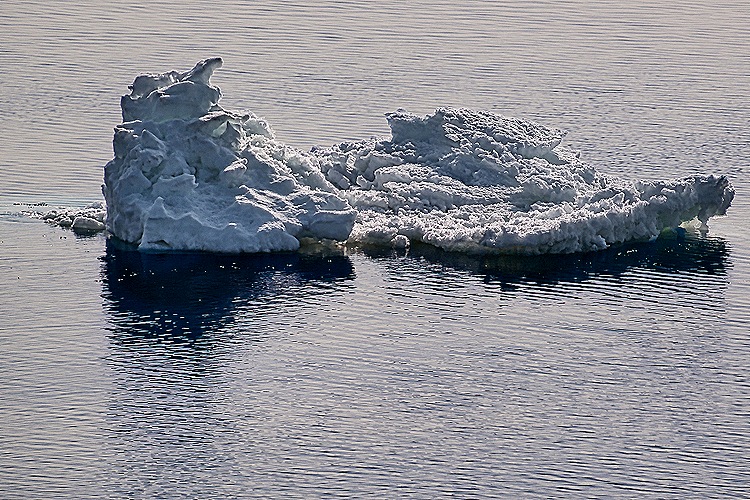
While it didn’t interfere with our trip we did see some fields of floating ice. On one ice floe was a walrus, which we didn’t see before it dove in the water but our friend Susie shared a picture with us. Some people saw whales and there were sea birds flying and, notably, fishing.



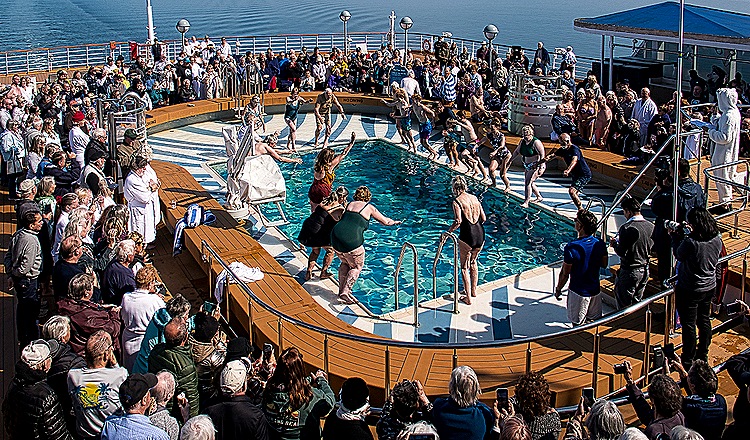
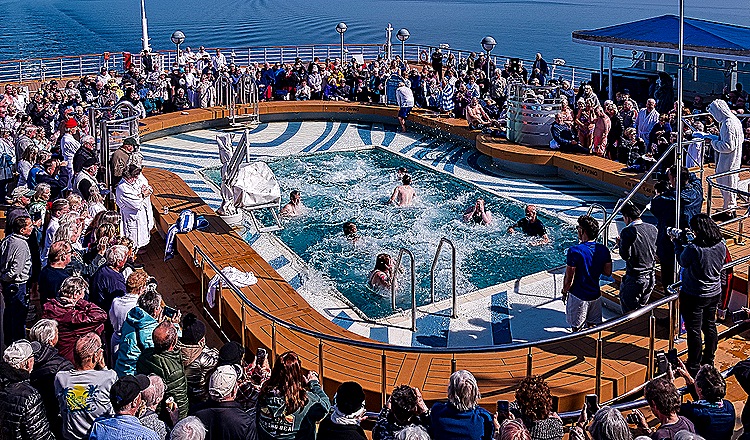
Later in the morning, but we think while we were still above the Arctic Circle, there was a “polar bear swim” in the aft pool. Two sizeable vats of ice cubes were emptied into the pool just to make sure it was cold, then interested passengers jumped into the pool in groups of about 15. When they emerged (usually pretty quickly) staff painted their noses blue. The master of ceremonies was dressed in a polar bear suit (really). It appeared that a good time was had by all.
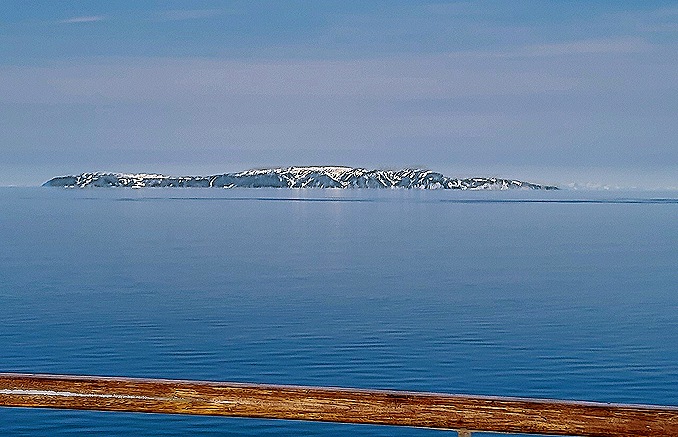
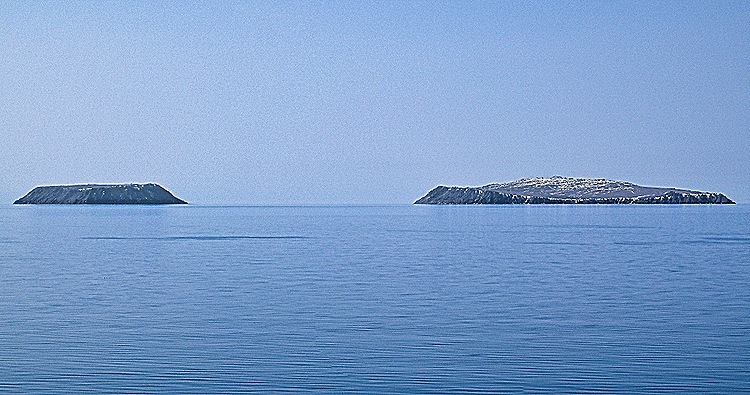
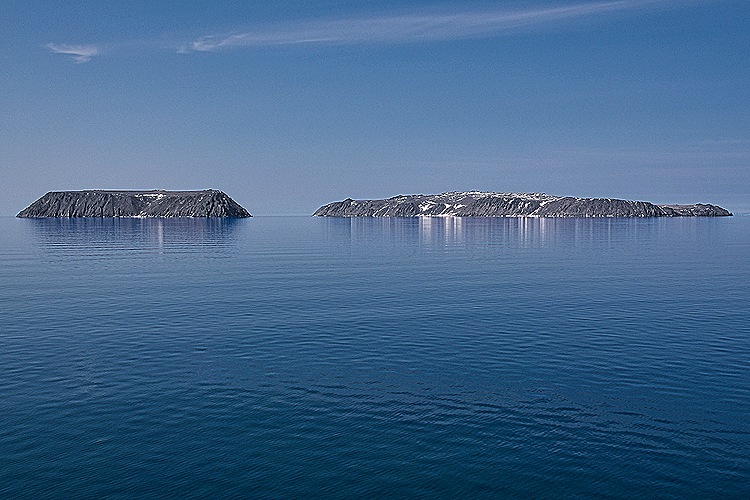
As we sailed south from the Arctic Circle we could see the Diomede Islands far in the distance. These are two small rocky islands situated close together in the middle of the Bering Strait, about 16 miles from Alaska and some 28 miles from Russia. Big Diomede Island is Russian territory and Little Diomede Island is part of the United States. The islands are just 2.5 miles apart but the international date line runs between them. For this reason some people (including our captain) call Big Diomede “Tomorrow Island” and Little Diomede “Yesterday Island.” During the winter the sea between them freezes over and it would be possible to walk from one to the other, if that were permitted (it isn’t; this is an international border between Russia & the United States). A small group of a little over 100 Native people live on Little Diomede (their village is on the west side between the islands where we couldn’t see) and Big Diomede now houses (we understand) only a Russian weather station and some border guards. After World War II the Native people on Big Diomede were relocated (involuntarily) to the mainland and it became for a while a military outpost. Vitus Bering named the islands after the Orthodox Saint Diomedes on August 16, 1728, which is the Russian Church’s holiday dedicated to him.
When HAL first advertised this itinerary a couple of years ago it included a circumnavigation of Little Diomede. But the people living there objected because they believed a cruise ship would scare away the walrus population during the time of their annual walrus hunt, so HAL cancelled the circumnavigation. But we ended up sailing fairly close to Little Diomede anyway to avoid ice buildup off the Alaska coast. We don’t know whether in the end that had any effect on the walrus population or on the walrus hunt. You will notice in the pictures that the islands appear much further apart when viewed from afar, then as we pass them to the east (left of Little Diomede) they appear closer & finally seem to merge.
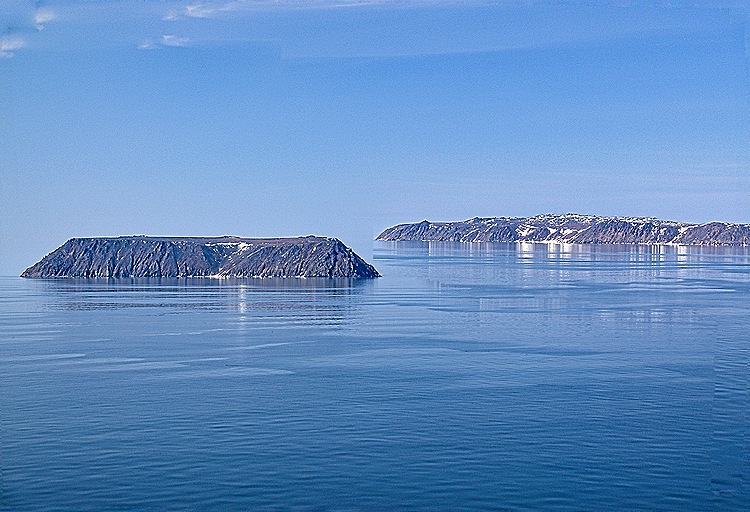
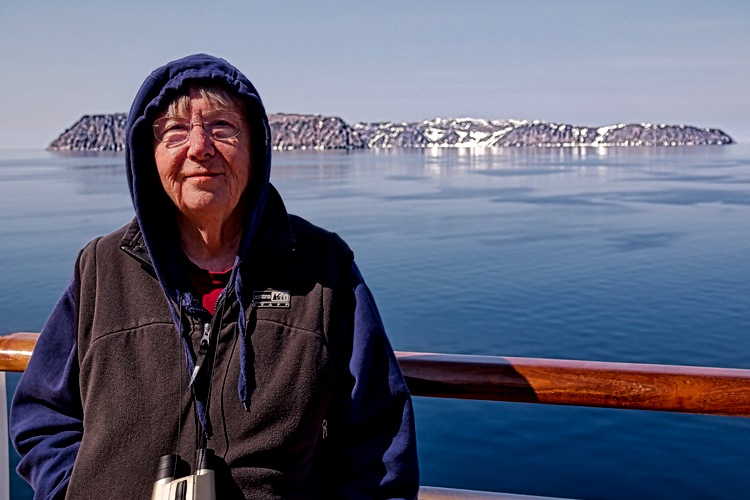
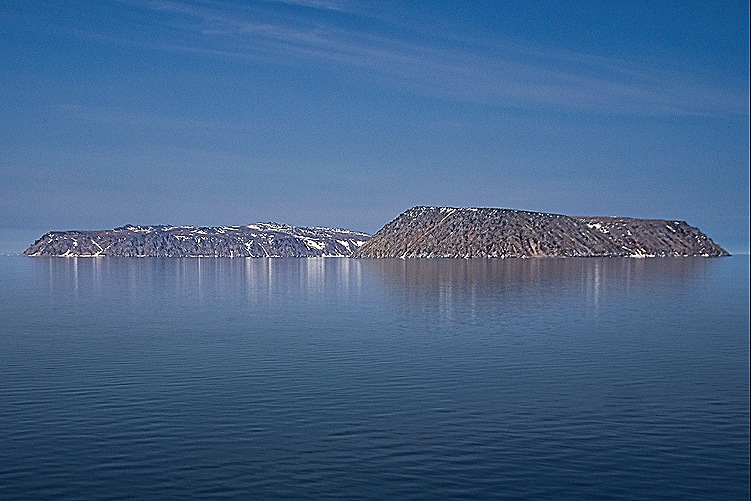
The first time we had heard of the Diomede Islands was when Little Diomede was the first stop on an excellent TV travelogue starring Michael Palin (of Monty Python fame) called “Full Circle.” He intended to circle the Pacific and end back on Little Diomede, but weather prevented returning there. We mentioned the ancient land bridge between Asia and North America above, and during that time the Diomedes were the tops of mountains.
South of the Diomedes we sailed past two more landmarks. Fairway Rock is a very small island with cliff sides rising abruptly more than 500 feet from the water. It was first documented by Captain Cook in 1778. It can be seen from the Alaska mainland 20 miles away and provides a nesting ground for many sea birds. Cape Prince of Wales is the westernmost point of the American mainland, at the tip of the Seward Peninsula. It was named by Captain Cook in 1778. There is a tiny town there called Wales (population 168 in 2020).


We sailed back into the Bering Sea after a morning that was even better than we had hoped, much less expected. And we had 3.5 sea days to look forward to before reaching the next port.

 BADER JOURNAL
Leave a comment