
Kodiak, Alaska 2025
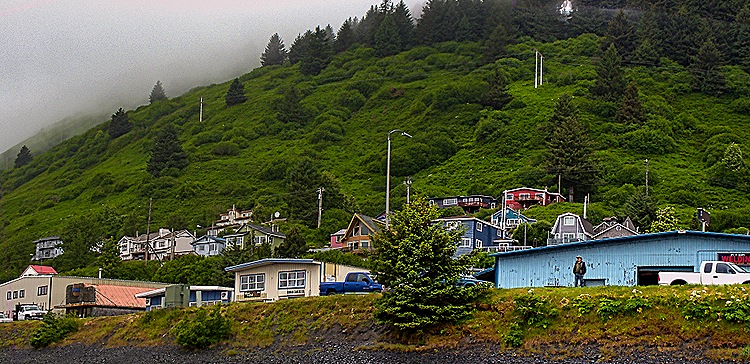
After three days at sea we found ourselves on the morning of June 24 anchored outside the port of Kodiak, Alaska. Those tired of reading about all the good weather we have had so far will be reassured to learn that this day had typical Kodiak weather . . . chilly, heavily overcast and damp. Here is what it looked like from our veranda.
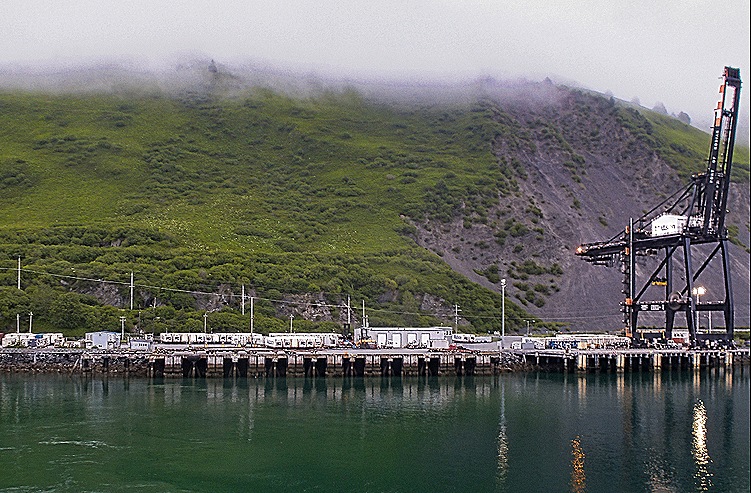
Kodiak is a small city of about 5,700 people but still the primary city on Kodiak Island. Its name is an adaptation of the native word for “island.” Kodiak Island had been populated for at least 7,000 years by the Alutiiq people before the Russians established a settlement here in 1792. It was the capital of Russian America until 1804, when the capital was moved to what is now Sitka. This was also a center for Russia’s booming fur trade which led to the enslavement of many indigenous people to hunt sea otters for them throughout the Bering Sea area, causing the near extinction of sea otters during the 19th century. With the sale of Alaska to the US in 1867 Kodiak became an important American fishing center (as it remains today).
We were booked on a private walking tour of Kodiak, so we tendered into the central port to meet our guide.

Ani was a wonderful guide, leading us on a thorough exploration of the port and the town beyond and regaling us with many entertaining and often hair raising stories from the town’s history. Her experience on local fishing boats contributed to her extensive knowledge of the area.
The town is on ground a good bit higher than the port itself and is reached by walking up very steep and fairly long covered ramps. We met Ani at the top and then spent a good bit of time walking around the edge of the harbor and out onto the wooden docks to see the fishing boats (which required a trip down, then later back up, one of the covered ramps). A lot of fishing boats were docked here.


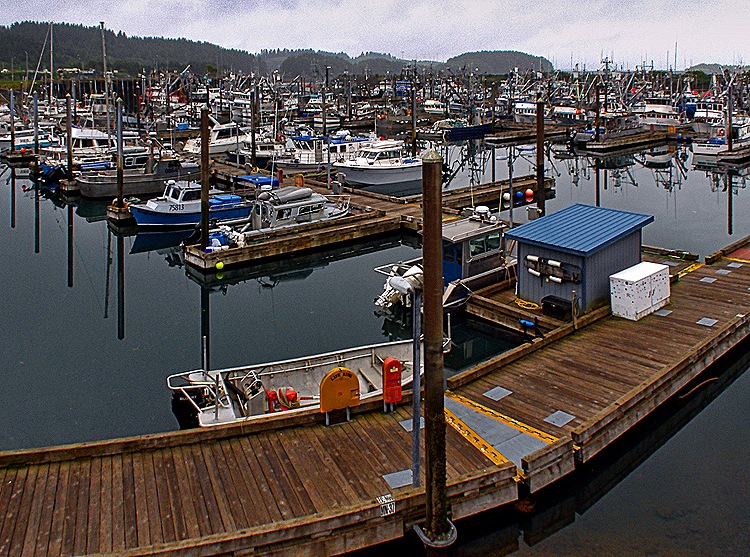
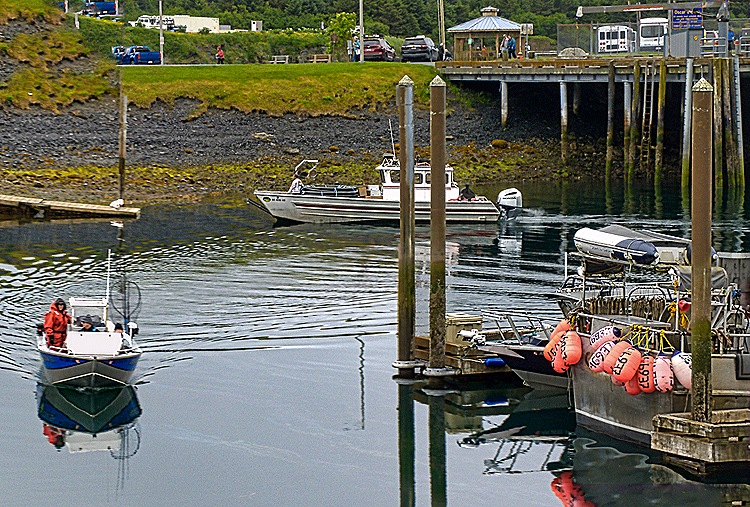
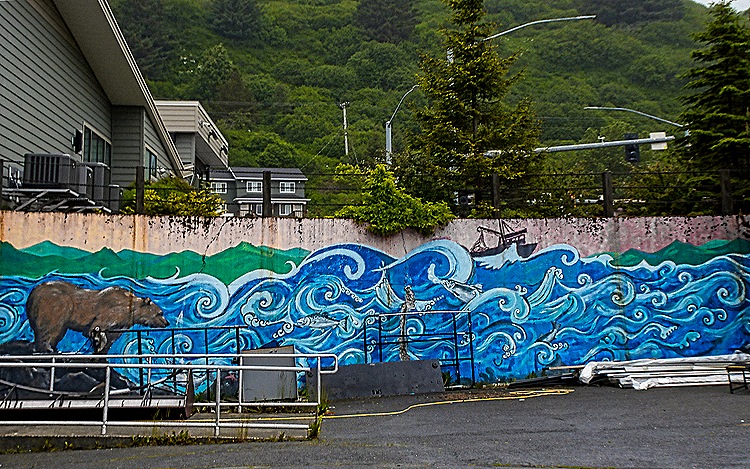
As we walked around the docks Ani told us about the fishing operations. Sailors are usually paid a percentage of the profits for a sailing, so it can be quite lucrative if the catch is good and the prices are high that year. But if the catch fails, because of a scarcity of fish or too much competition or because the catch spoils, they may get little or nothing. And the work is extremely hazardous, with one of the highest fatality rates in the United States, especially for crab fishermen. Most of the boats seemed to be in the harbor rather than out fishing on the day we visited, which might have to do with the weather or with fishing season limits or quotas. Among other things we saw many boats piled high with fishing nets (which are expensive and require constant maintenance) and a vat of bait consisting of pieces of halibut. Near the port we saw an interestingly painted wall and a hillside neighborhood, in which the building second from left in the front row is claimed to be the oldest bar in Alaska (B&B Bar, which we are told has its 1906 liquor license hanging on a wall).


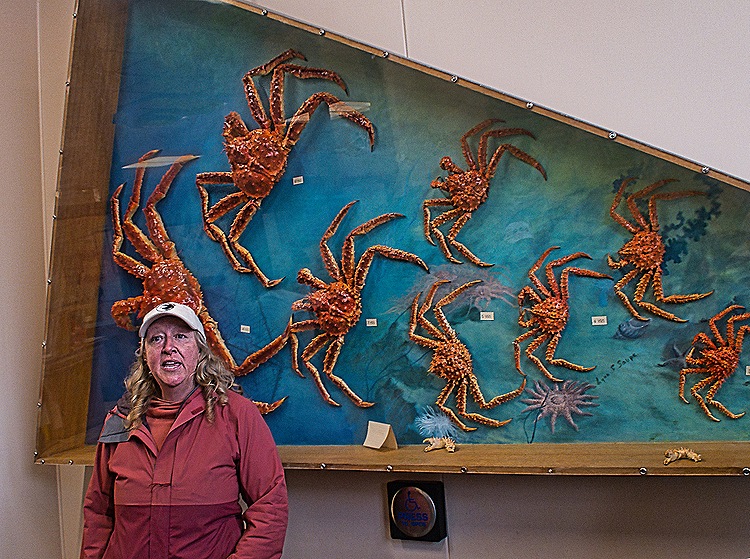
Kodiak is the center of King Crab fishing, by far the most hazardous occupation in the United States. Crab boats drop very large steel & net cages to the floor of the ocean by a winch and cable, attach their cables to a buoy, then return a few days later to haul the cages back onto the ship. The cages (called pots) weigh at least 600 pounds and when retrieved may weigh a ton with the water inside. These are swung on board by hand and it is all too easy to get caught in the cable when doing this. In 1980 Alaska crab boats produced some 200 million pounds of crab but by 1983 the catch had dropped by two-thirds, up to 90 % in some areas. Since then the crab industry has been more and more regulated to protect the crab population, with the crabbing season now measured in weeks instead of months (sometimes even in days). The going price for King Crabs varies considerably from year to year, as does the fishing workers’ income. The price seems pretty high to us right now; we ate in one restaurant in Alaska where a single King Crab leg was on the menu for $80 and a whole crab was around $300 (we didn’t order it). Ani showed us a display in a local bank that had king crabs of various sizes, with only the two or three largest sizes permitted to be taken (females must also be thrown back).
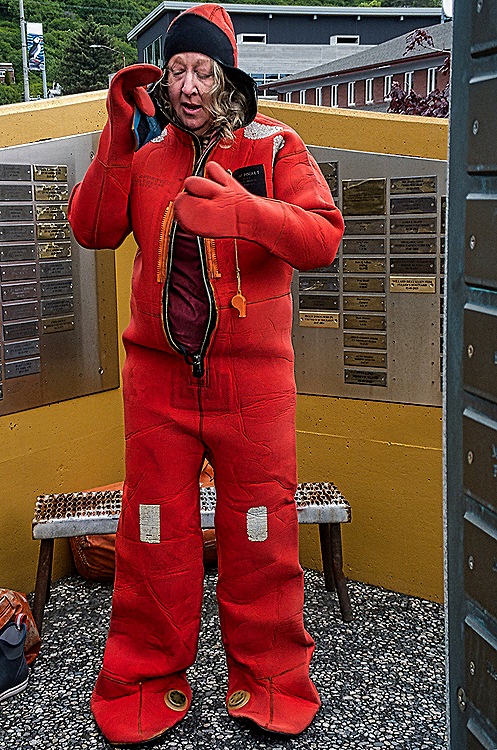
One of the precautions to protect fishermen these days is a survival suit, since most of the fatalities are by drowning and hypothermia. This is a waterproof onesie that is insulated to protect from freezing in the water. All fishing boats in this area (we understand) are now required to have these suits on board for their crews, and many people working on boats buy their own. These have to be put on when a boat appears to be sinking. Ani demonstrated one for us and it is a bit complicated to do correctly (and takes some time, while the ship is about to go down, remember). She told us about at least one fellow who died because he made a mistake while donning his suit and there was no time to correct it before he found himself in the water. As a result, training in the use of these suits is now much more uniform and intensive. When fully deployed the suit is very bright orange (so you can be seen and rescued in the water) and also puffy, with an orange hood over the head, so they are colloquially called Gumby Suits. The place where Ani demonstrated the suit is a yellow memorial to people who have died on Kodiak fishing boats; there are many small name plaques on the wall, just a few of which you can see behind her in the picture below.
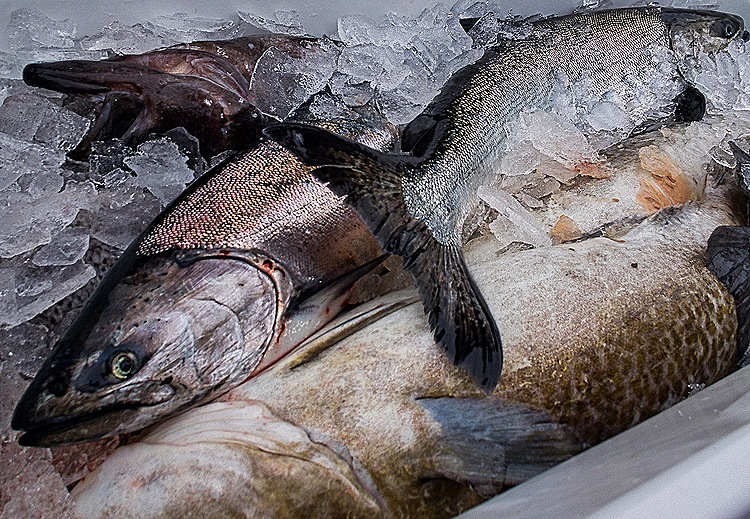
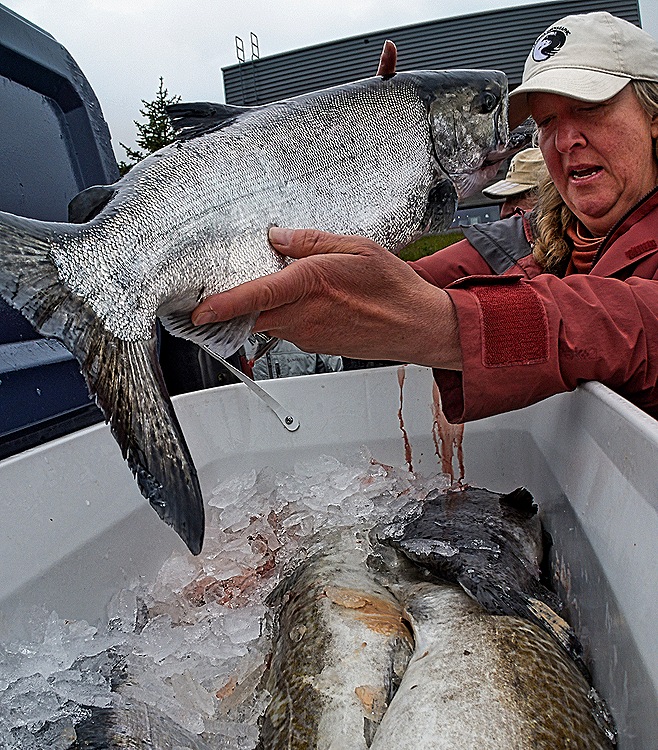
Walking through the downtown area we saw a number of stores and restaurants, many together in shopping centers. We passed the visitor center of the Kodiak National Wildlife Refuge, an almost 2 million acre wildlife reserve that covers about two thirds of Kodiak Island and several other islands as well. We didn’t stop to see the visitor center’s wildlife displays. Kodiak Bears are large and well known but are not near the city so the only one we saw was the large sculpture in front of the visitor center. We also walked past the Star Of Kodiak, the last liberty ship completed during World War II. It was designed to carry aircraft as cargo but was brought here in the 1960’s to serve as a fish cannery and is still in service, though it doesn’t go anywhere. As we passed through a parking lot a small truck pulled up and the driver and passenger got out and invited us over. They had just returned from a fishing boat and wanted to show us their catch, contained in a vat in the back of the truck. Ani picked up one of the salmon to show us & talked a little about salmon fishing.
The Kodiak History Museum (formerly the Baranov Museum) sits on a hill well above the water. We didn’t go in but the building is historic in itself, a log building covered in siding that was built by the Russians in 1810, one of the oldest buildings in Alaska. It was originally a storage building, converted to a residence in 1911 and operated as a museum and offices since 1967. Ani told us that when Kodiak was seriously damaged by a tsunami after the 1964 Good Friday earthquake in Anchorage the water came within a few feet of this building. Near here Ani also told us about the 1912 Novarupta volcano eruption, the largest in the world during the 20th century, that produced about 30 times the amount of magma and ash as Mt St Helens. Although the eruption was about 100 miles away in what is now Katmai National Park, Kodiak was covered in ash over the three days the eruption lasted. Even today strong winds sometimes lift remaining ash from the mountain and blow it toward Kodiak.



Our walking tour ended at the Russian Orthodox Holy Resurrection Cathedral, a white wooden building with two blue onion domes topped with gold colored Orthodox crosses. It was first built in 1794, then rebuilt in 1945 after most of it burned down. Inside are relics of two Russian Orthodox saints. St Herman of Alaska presided in this church for a few years in the early 19th century and was known for his support of the native people in the face of the Russian fur trading company, and St Olga of Alaska was canonized just 5 days before our visit, the first North American woman to become an Orthodox saint. The main hall has a number of old icons and a lot of gold colored decoration. A visit to Kodiak would not be complete without seeing this distinctive and historic building.
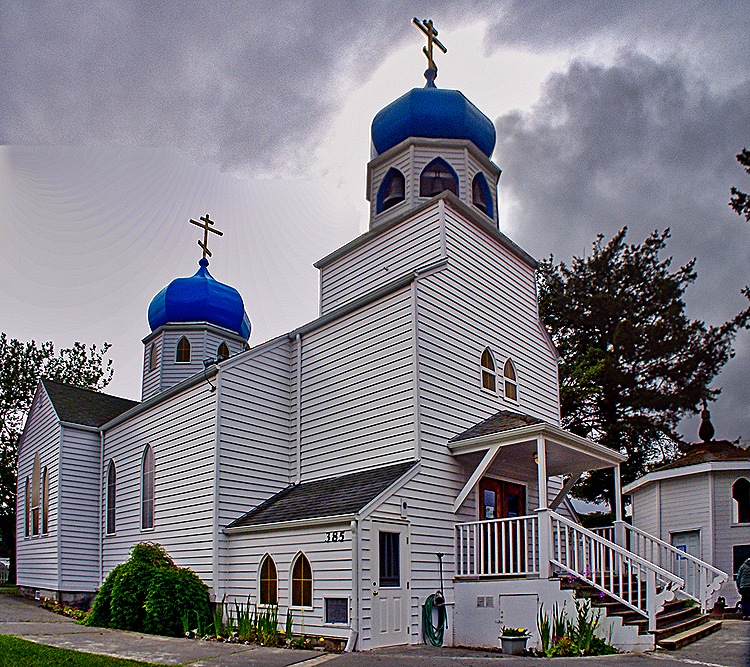


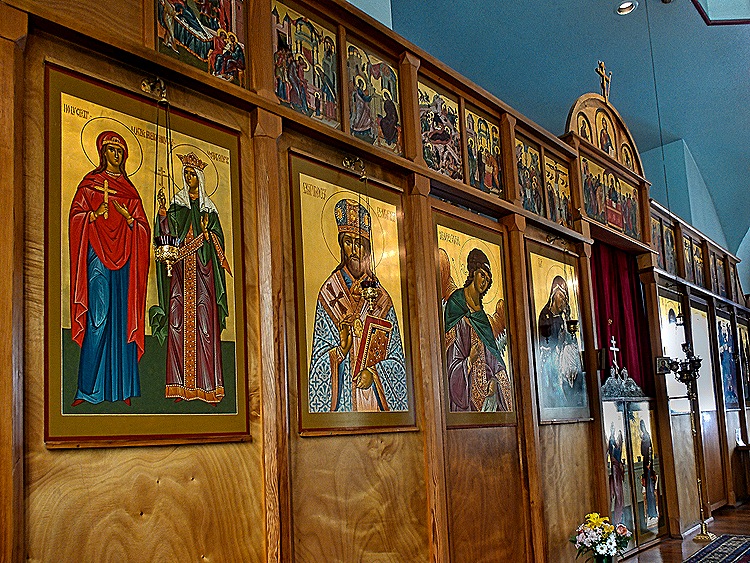

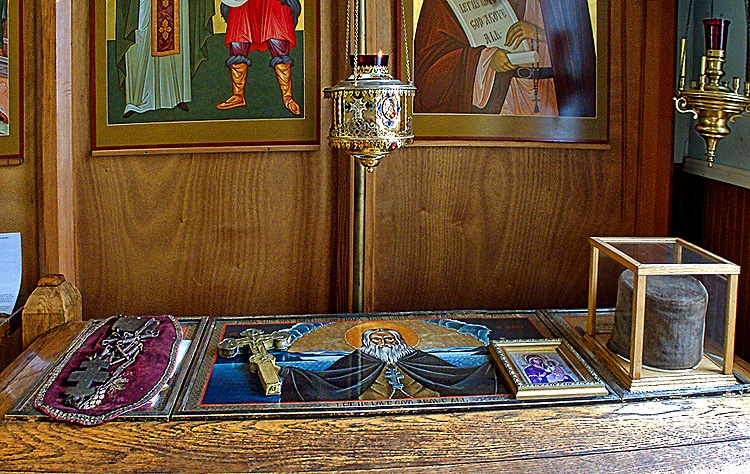

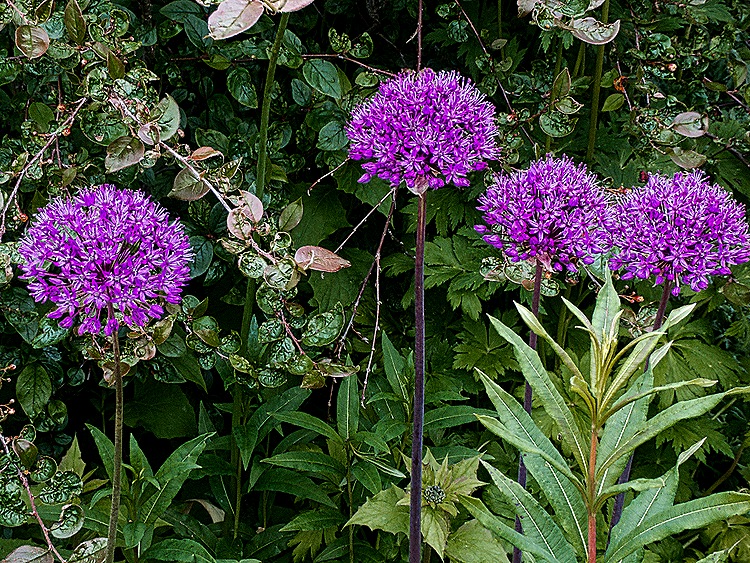
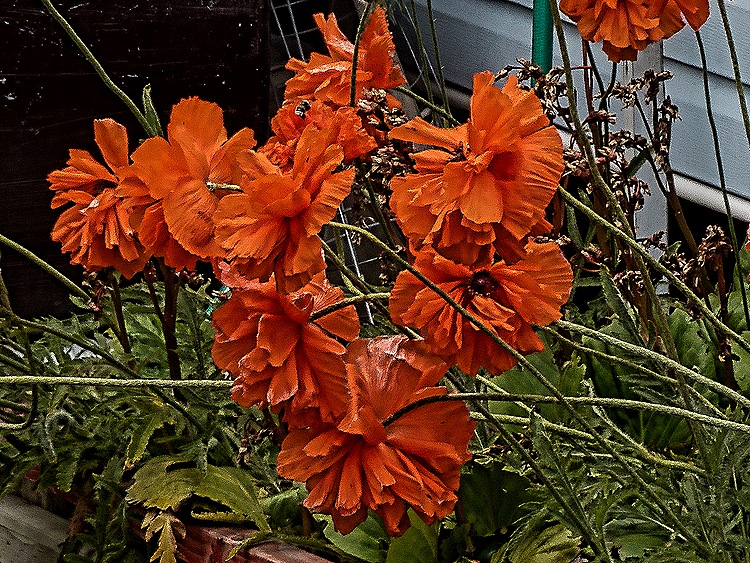
Leaving the church and our walking tour, we headed uphill to find the library. This was an uphill walk through a residential neighborhood that included colorful flowers and, we think, the old Russian cemetery.

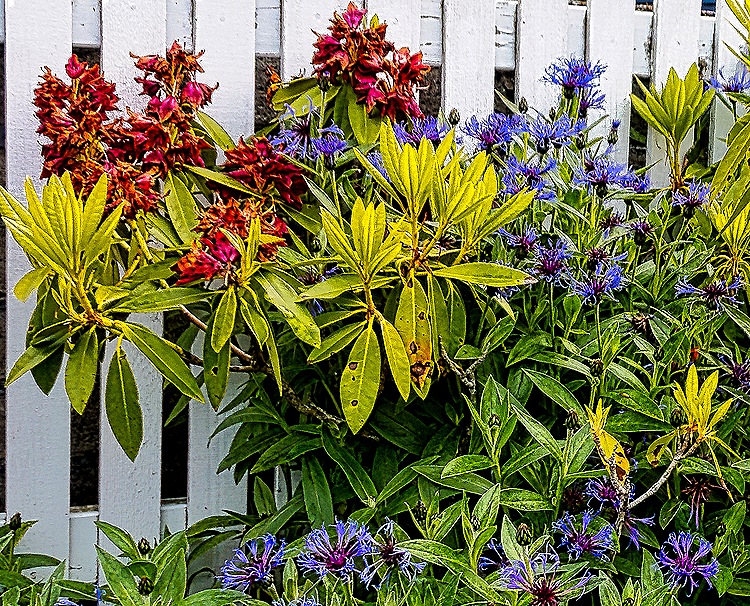
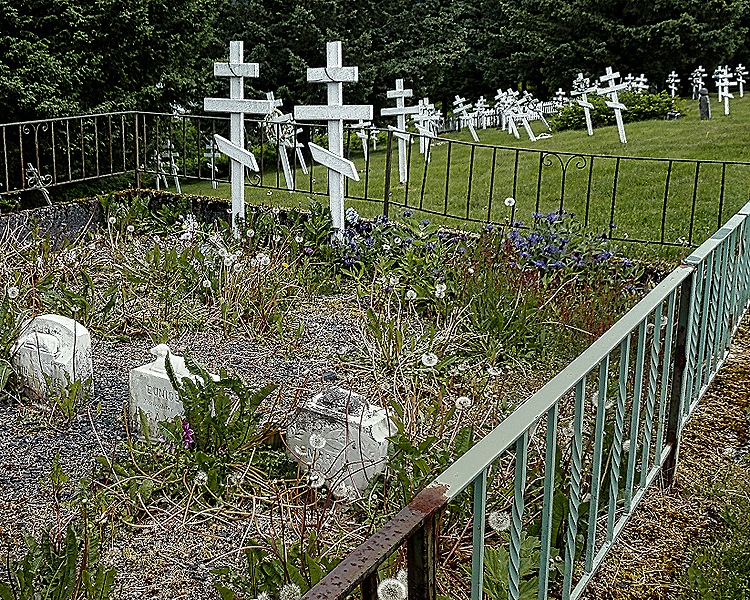
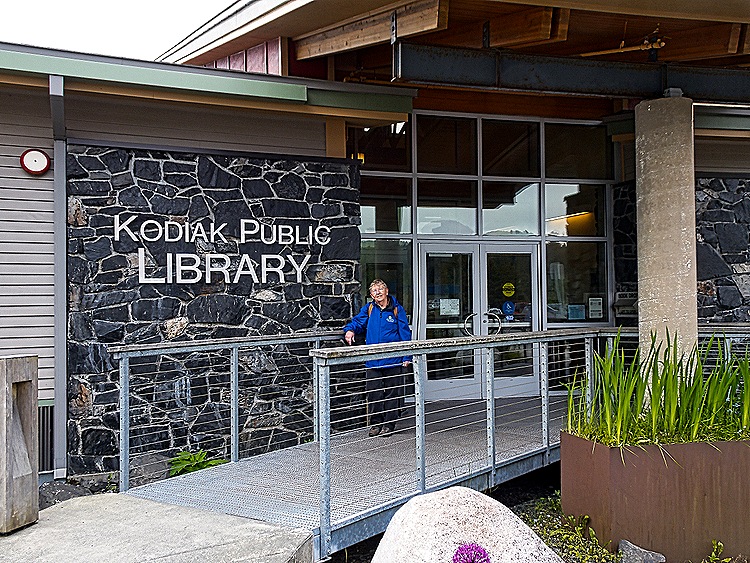
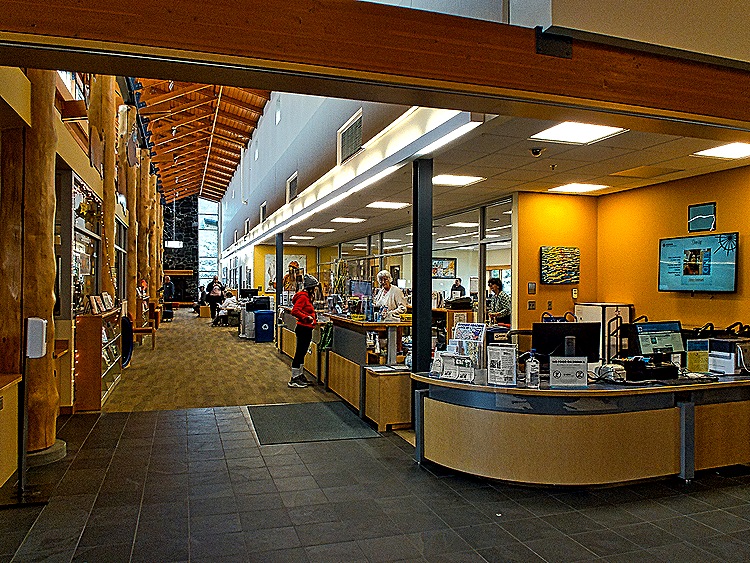
After a lengthy walk we reached the library. It is one story but spread out with an imposingly high vaulted ceiling inside supported by pillars that were once local tree trunks. Interesting decorations hang on the walls and elsewhere and the librarians were very friendly to us outlanders.



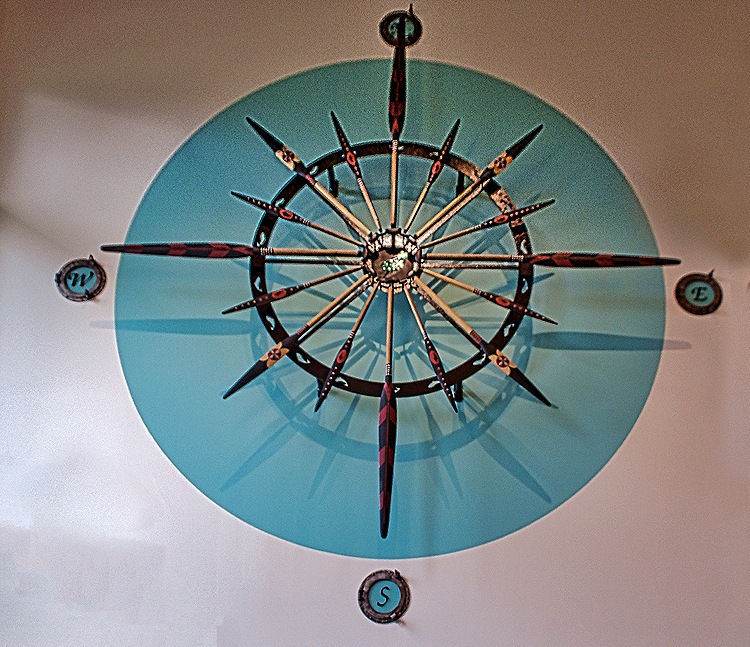

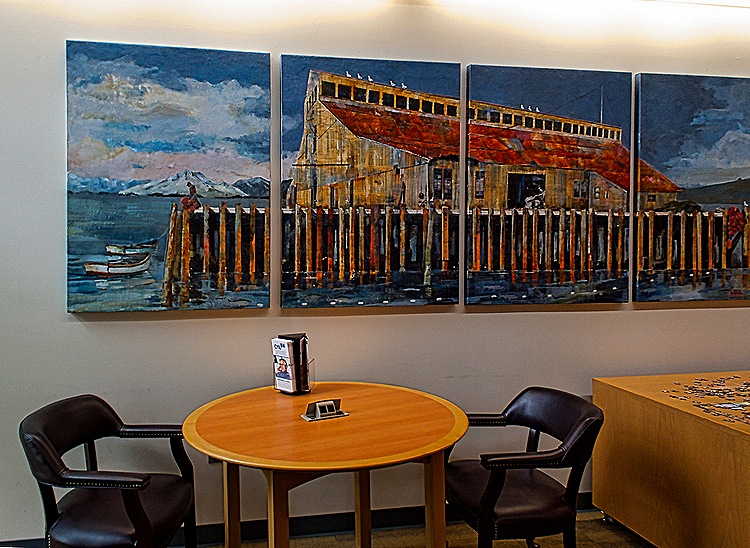
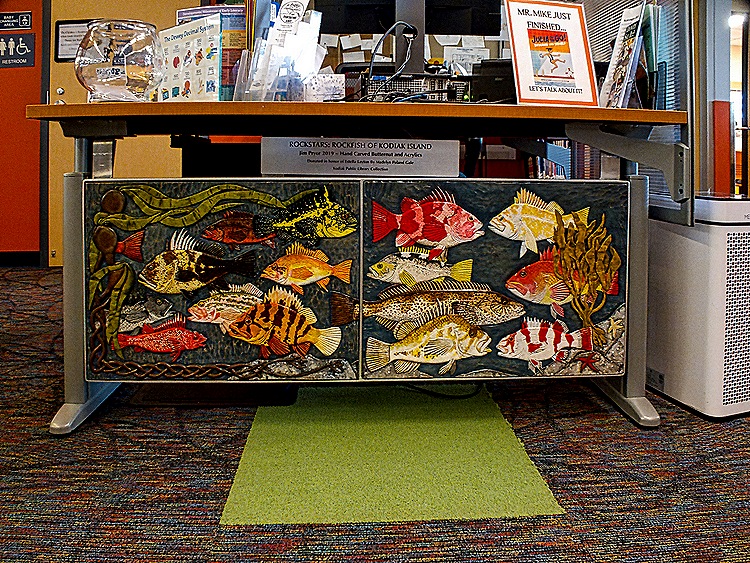
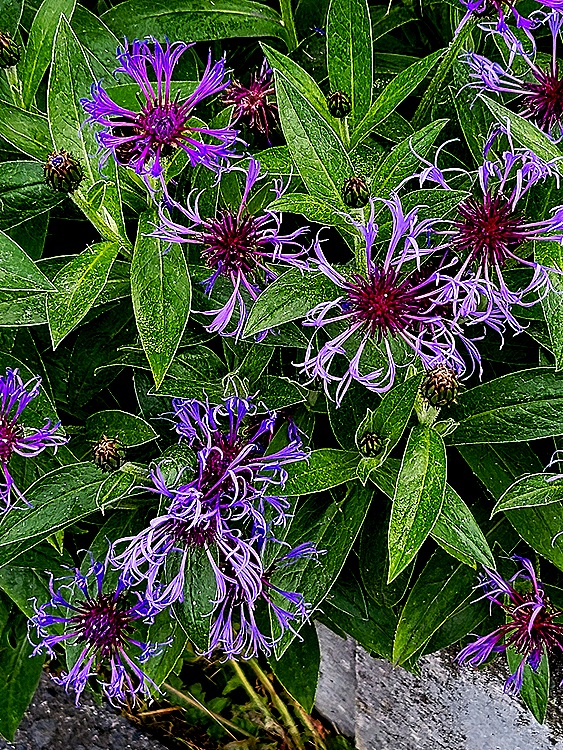
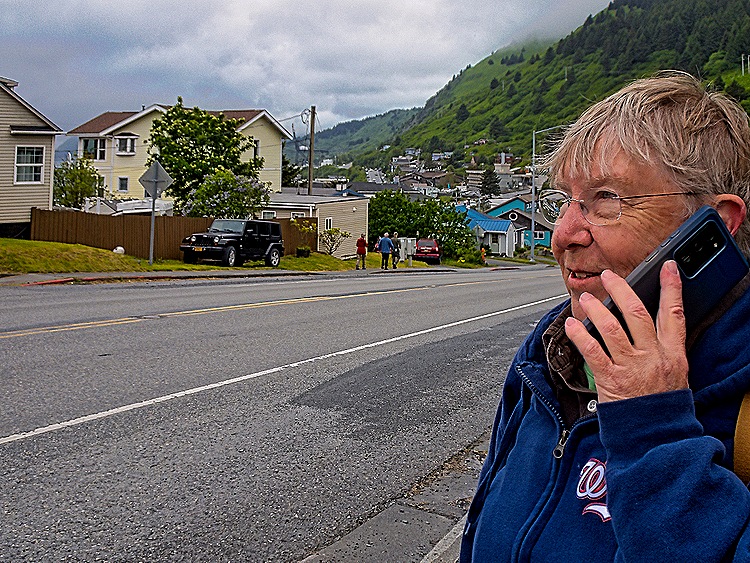
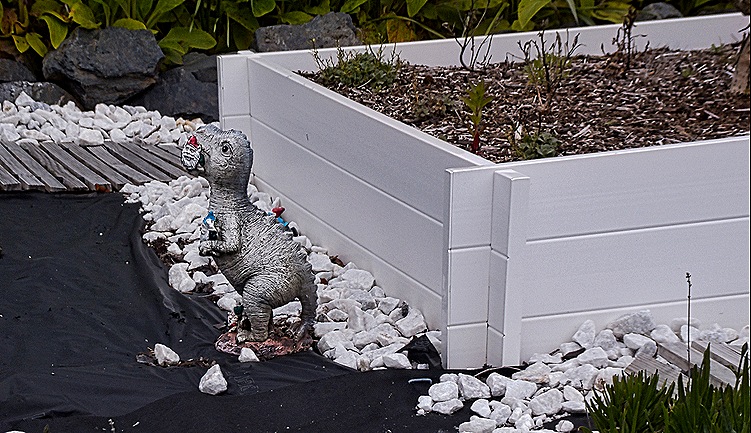
Walking back down the hill gave us a view of the bay and of other lower parts of the town. Again we passed many colorful flowers in front yards in this neighborhood and Mary called our daughter Carrie from pretty high on the slope. One yard had what looked like a tiny Godzilla devouring an even tinier troll on display near its flower box. You just never know what you are going to see when you wander.


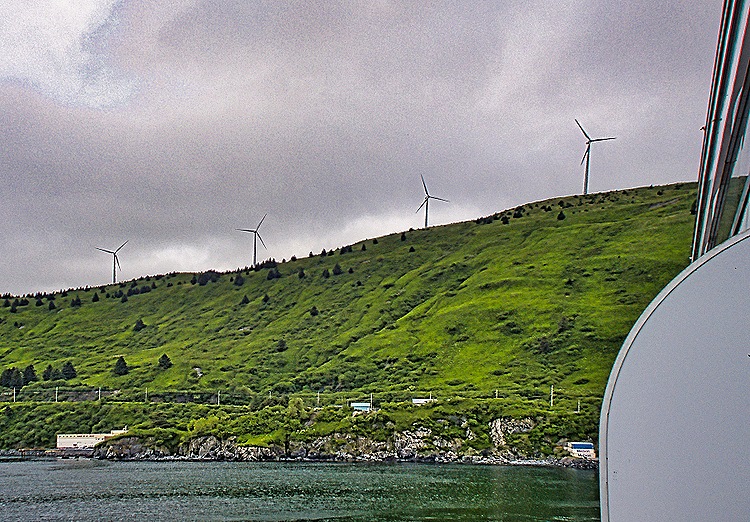
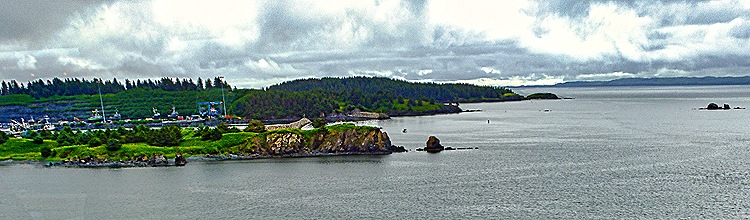
We looked through some of the stores back in the port area then boarded the tender to return to the ship. The clouds had lifted just enough to see a row of electricity windmills on top of the hill near the ship, which had been hidden by the clouds in the morning. We sailed away in late afternoon watching the nice scenery in this area as we headed for our next port tomorrow morning.


 BADER JOURNAL

Flowers are beautiful to say the least. I visited Alaska many years ago.John
November 3, 2025 at 11:36 am