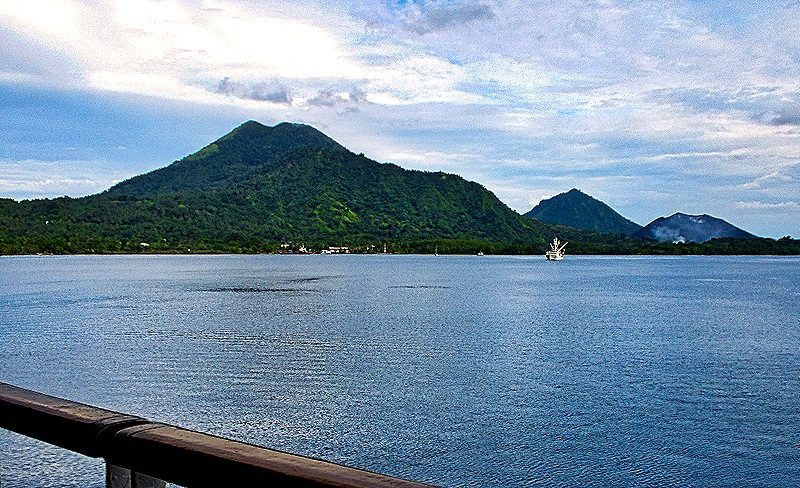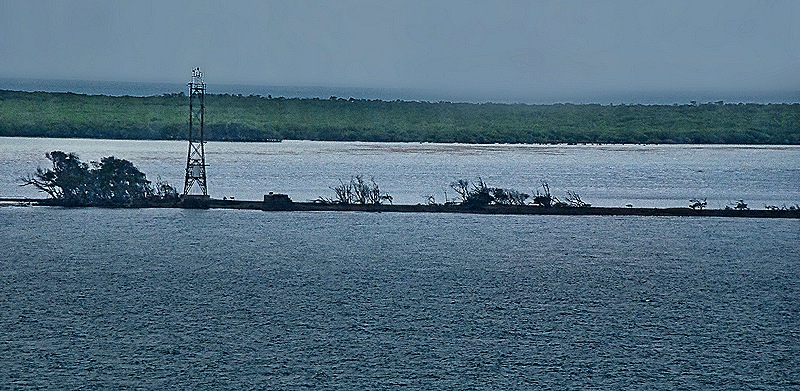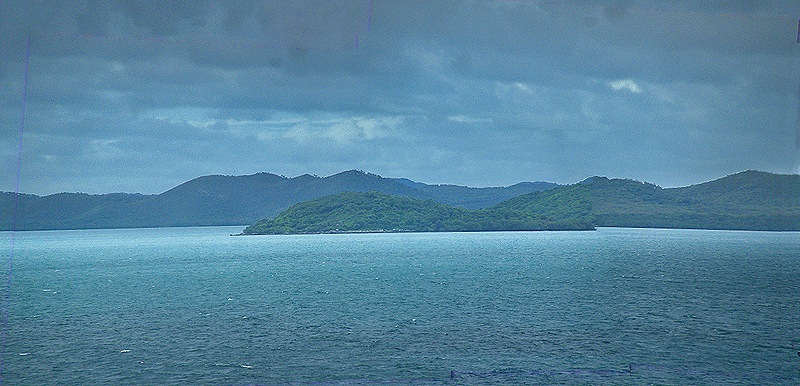
Darwin, Australia 2026
We were in Darwin for Valentine’s Day, February 14. We spent four days at sea getting there, billed by HAL as the Great Barrier Reef Experience. The Great Barrier Reef was there as we sailed by but it was well under water so of course we couldn’t see it. We aren’t sure what they mean by hyping it as an “Experience.” North of Cairns there were a few low, long and skinny islands that were probably pushed up by the coral on the reef, but not really special.
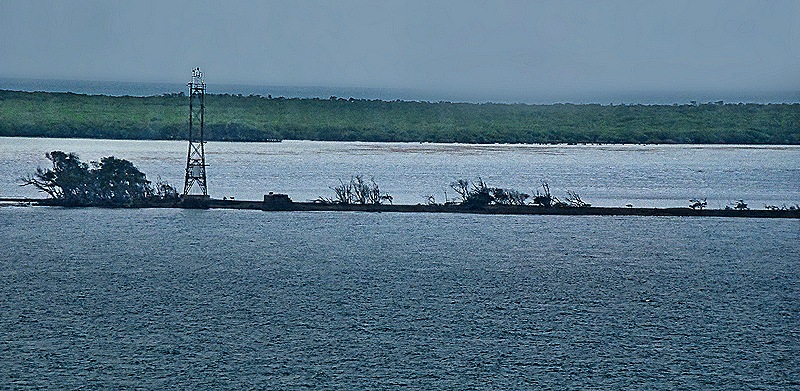
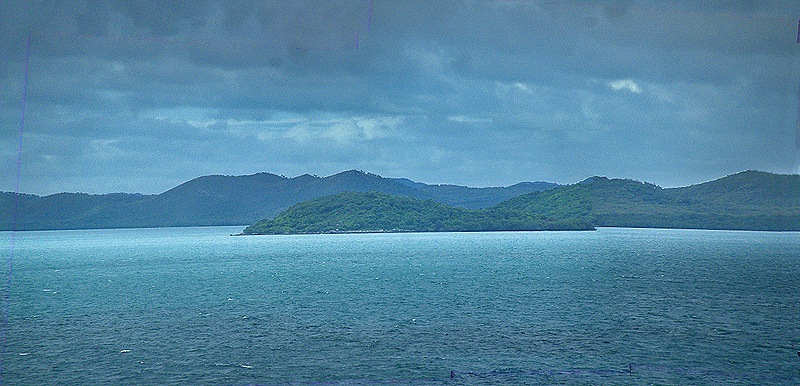
This was our second visit to Darwin. In 2016 we were here on a very sunny, oppressively hot and humid day, but we did a lot and explored the city. The blog post from that stop also includes some background and context that we are not going to repeat here. https://baderjournal.com/2016/03/08/ But today’s visit was entirely different. It rained all day, sometimes heavy sometimes light, and we spent the day on an excursion. So in the morning we all piled on a bus and headed out to see crocodiles.
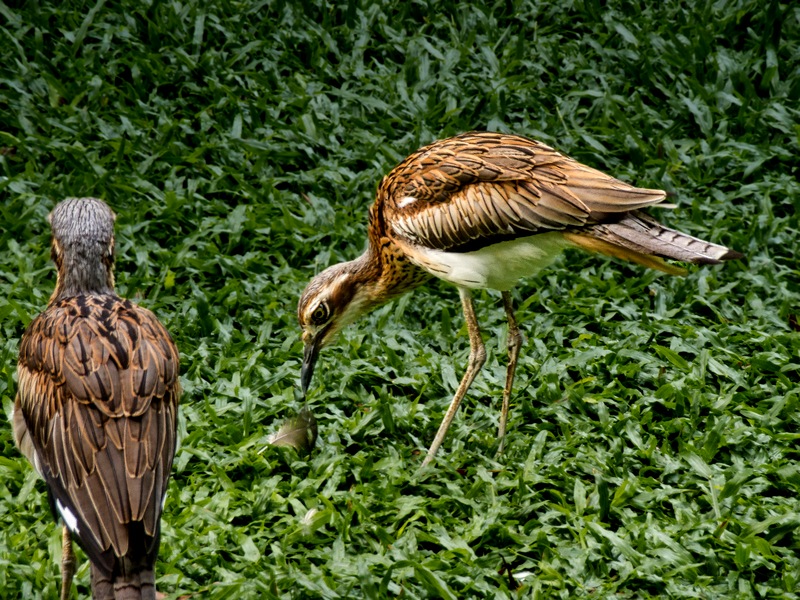
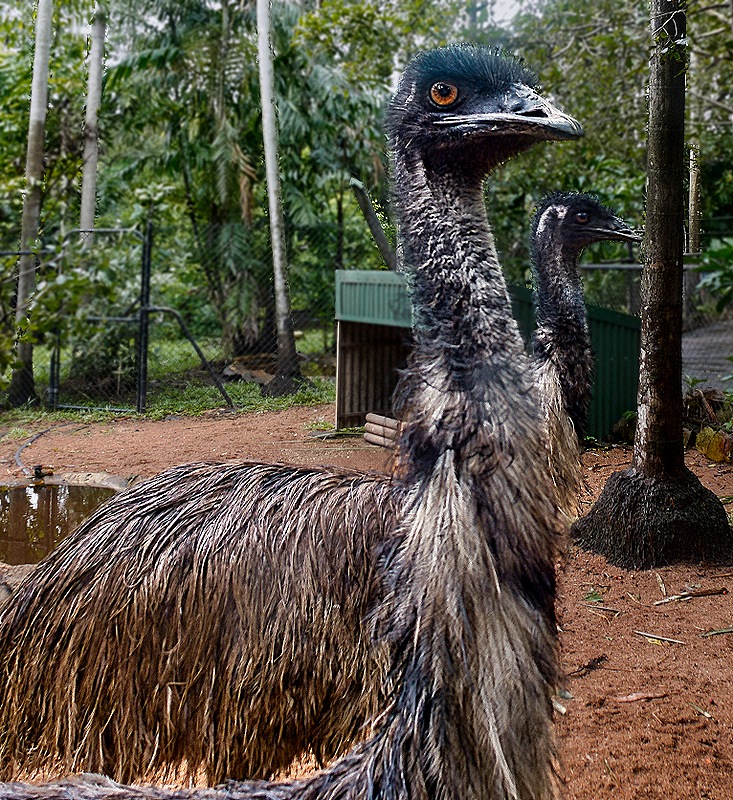
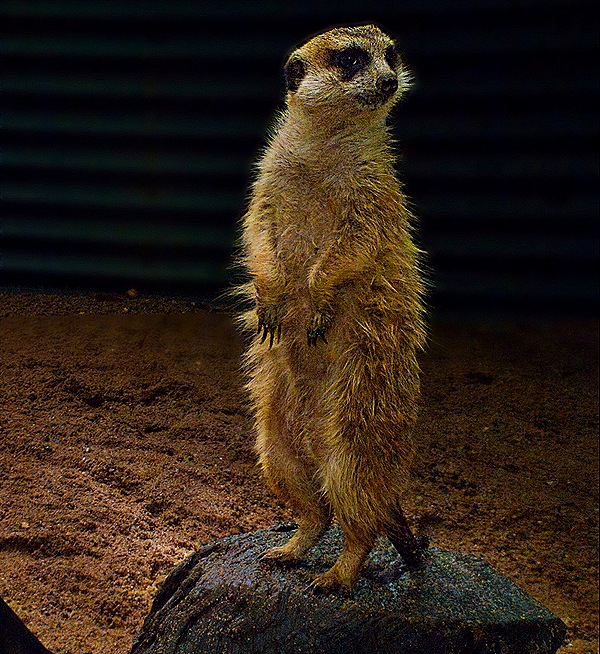
It was about a half hour drive to Crocodylus Park, which was basically an amusement park with zoo. We had about an hour to wander around the grounds to see the caged animals before our scheduled boat ride among the crocs. The animals on display in their small caged areas were mostly Australian, though not all, and some of them were pretty interesting. But really, we prefer seeing animals in the wild rather than cooped up in unnatural surroundings for tourists to look at. Among other animals we saw Meerkats from Africa, Bush Stone Curlews (Australian birds), Emus and Cassowaries (large Australian birds) and snakes (a Boa and an Anaconda).
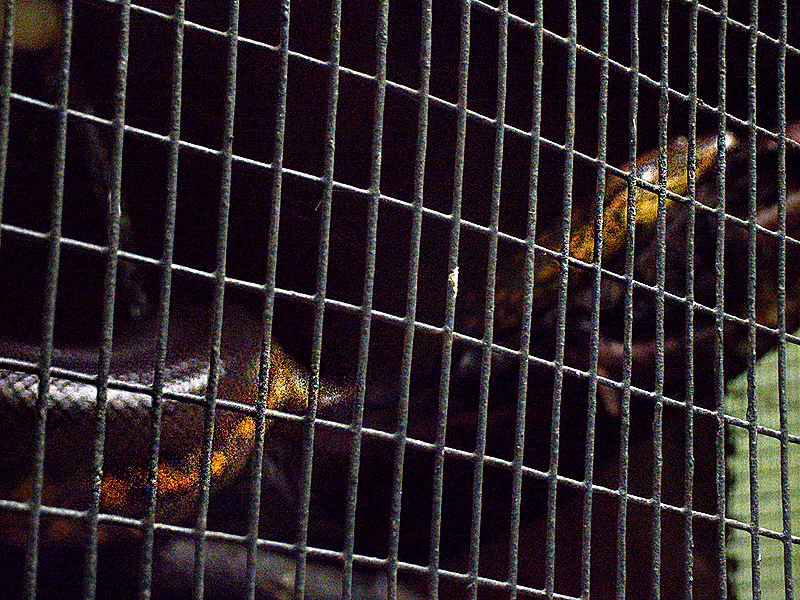
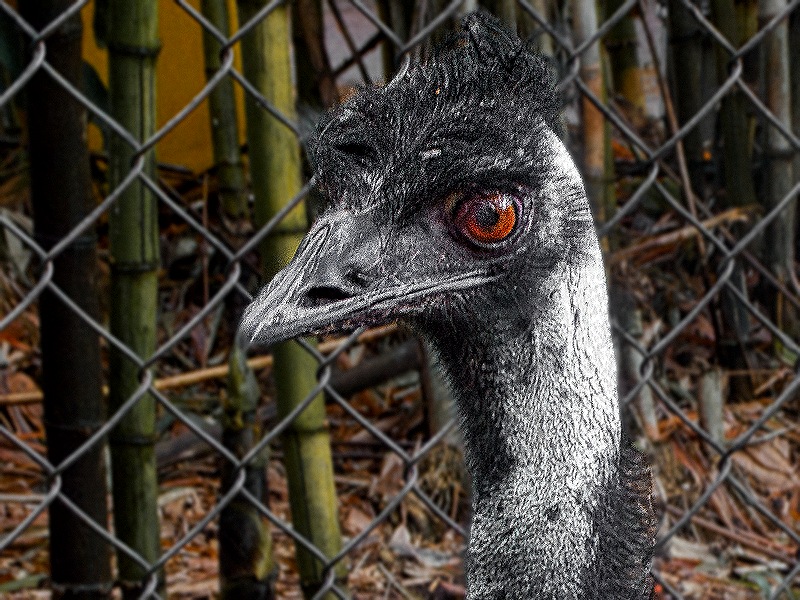
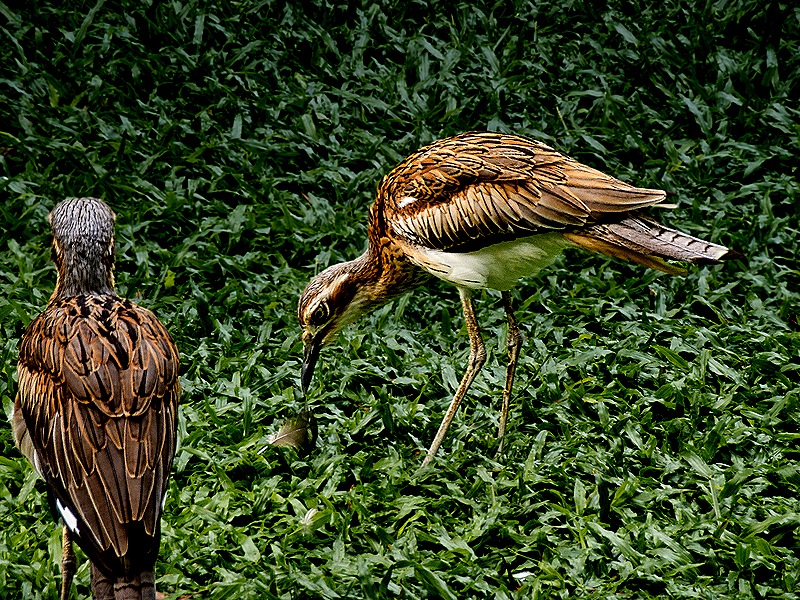
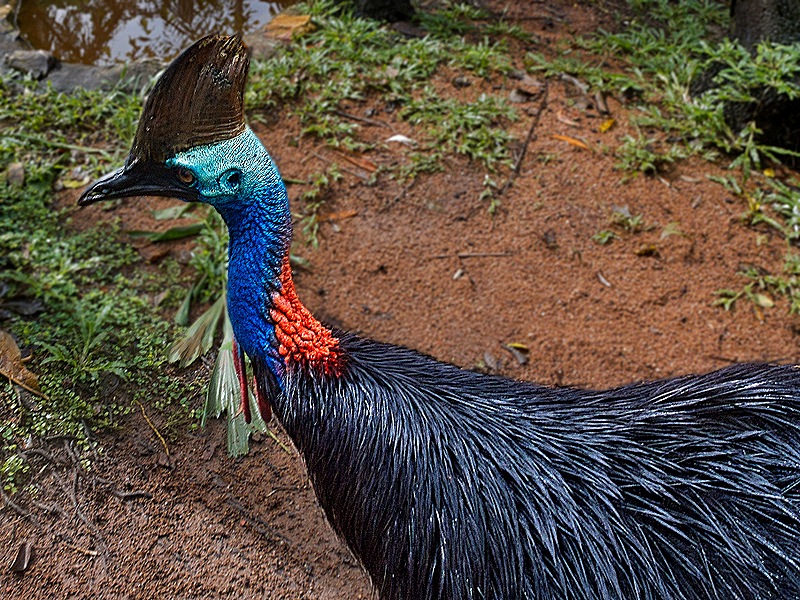
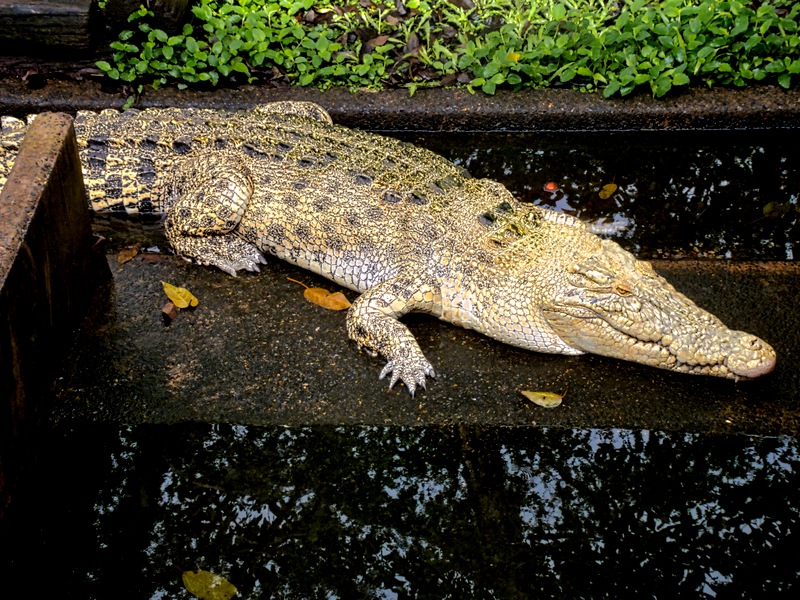
But really that was just a sideshow. There was no doubt that crocodiles were the main attraction here and we saw quite a few of them, many in fenced enclosures that looked far too small for them.
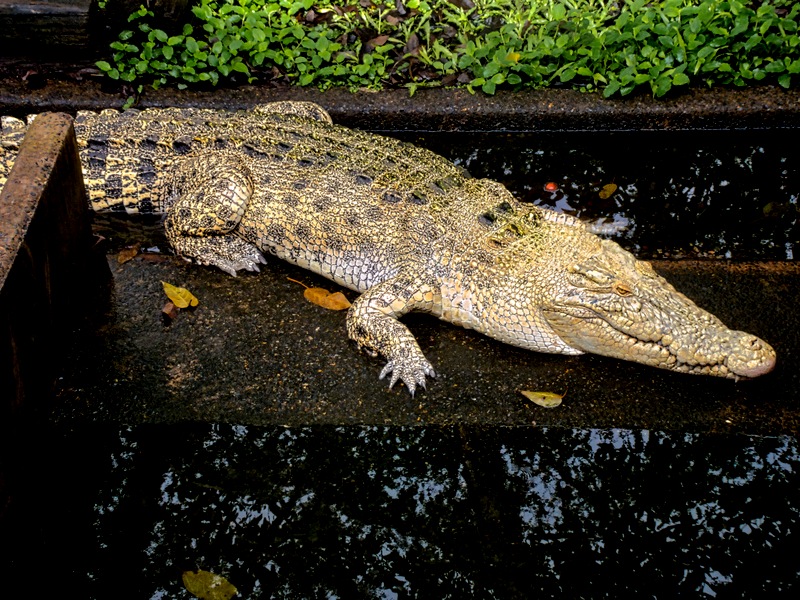
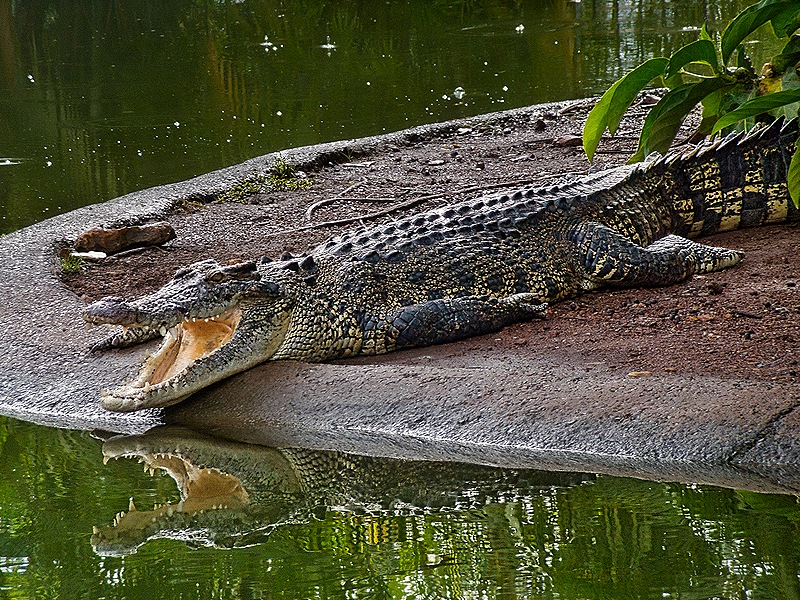
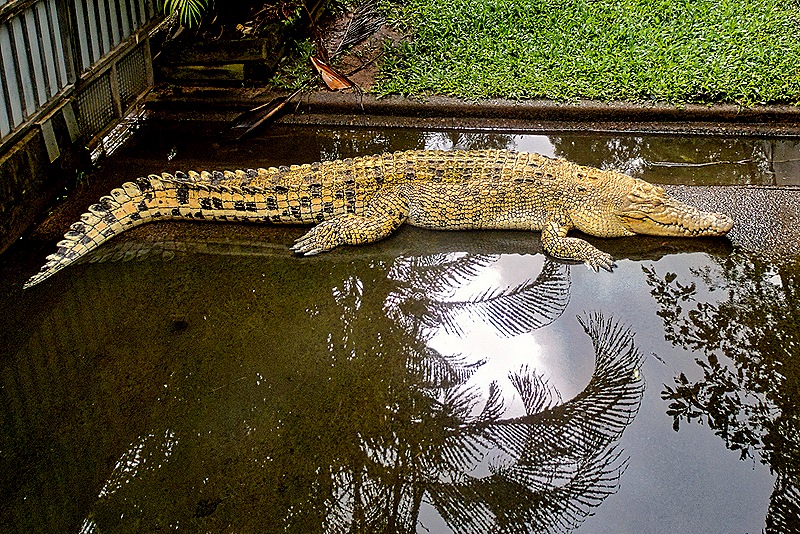
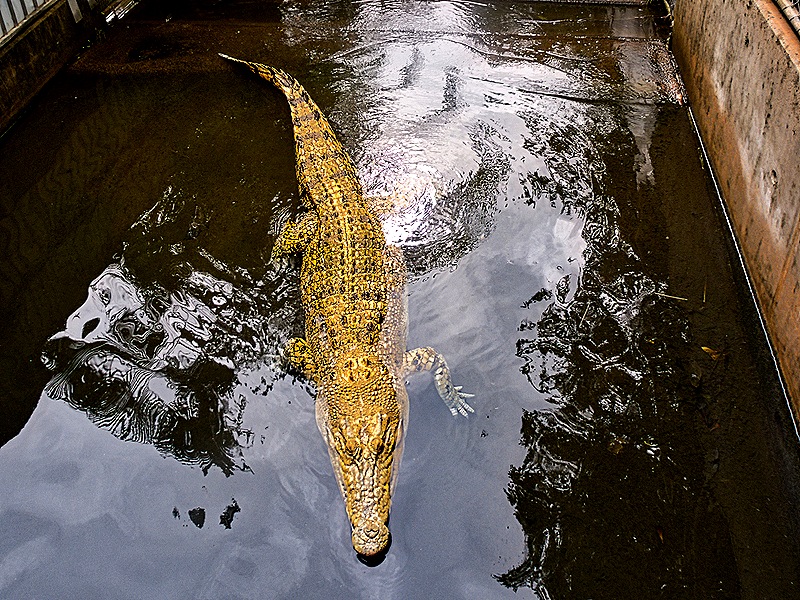
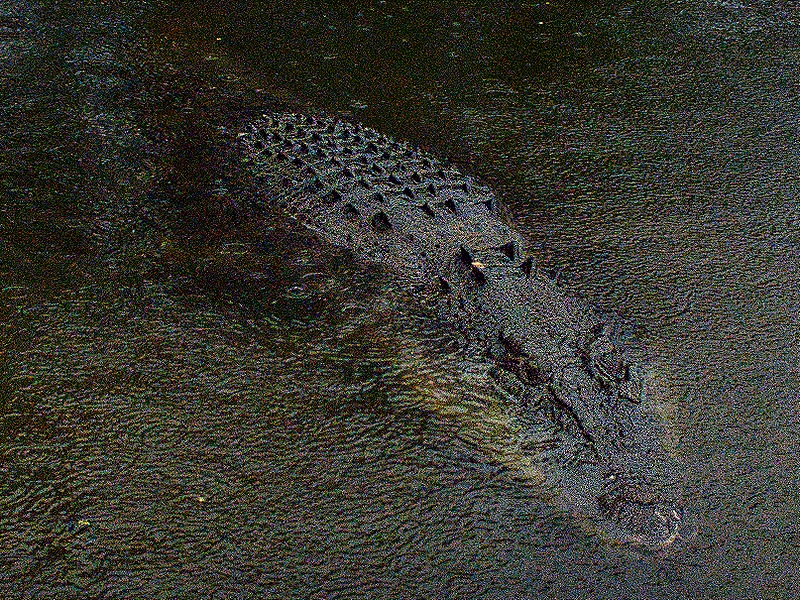
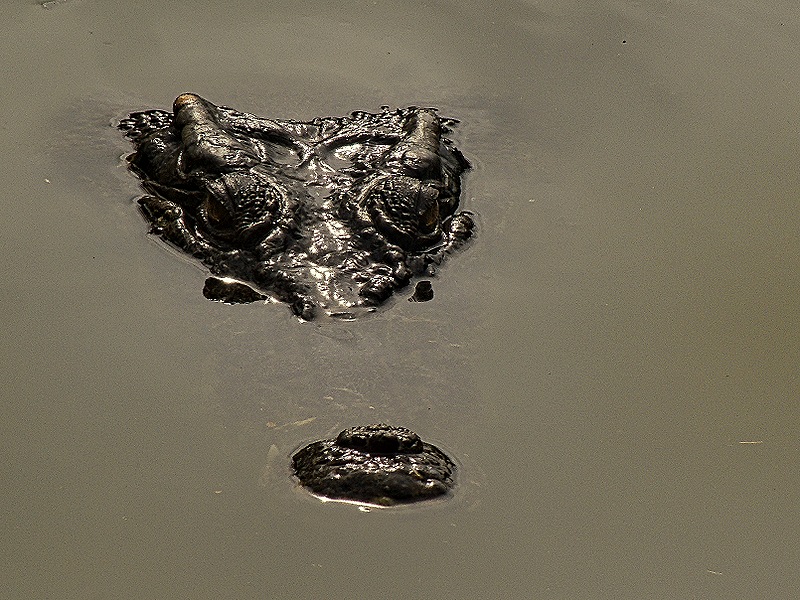
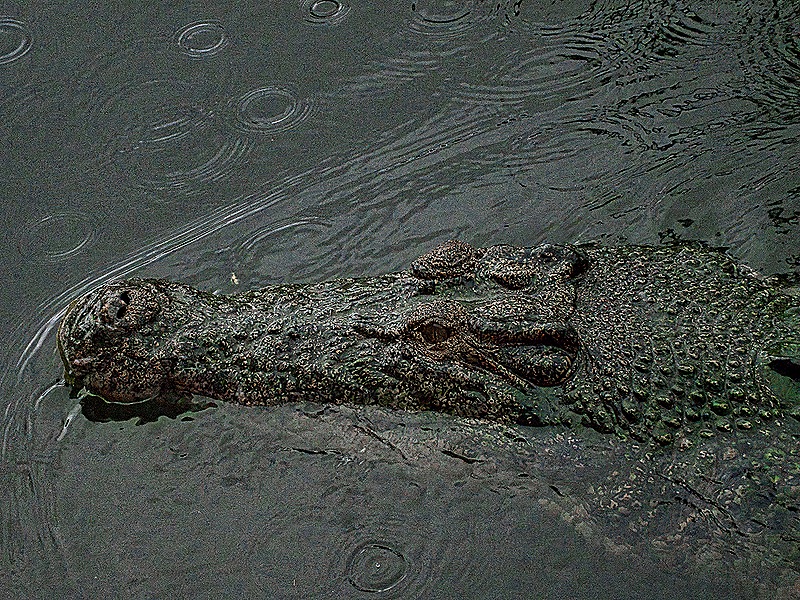
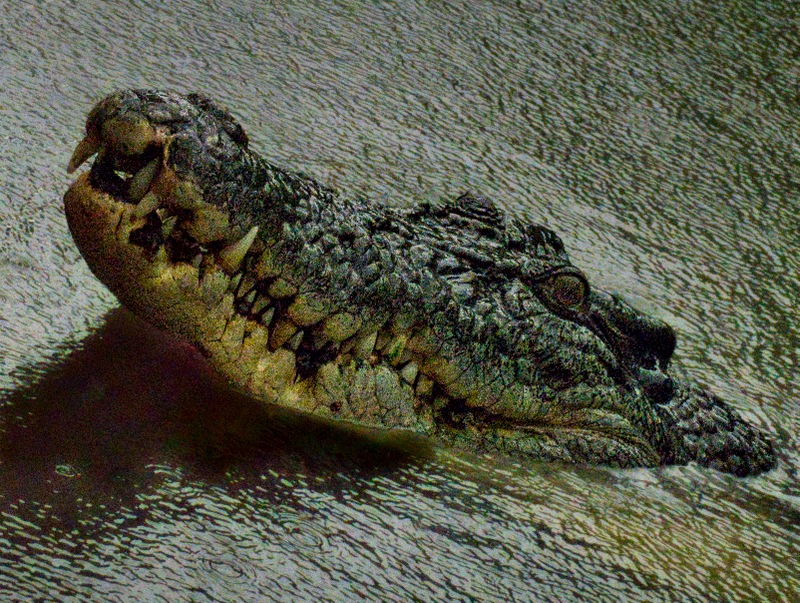
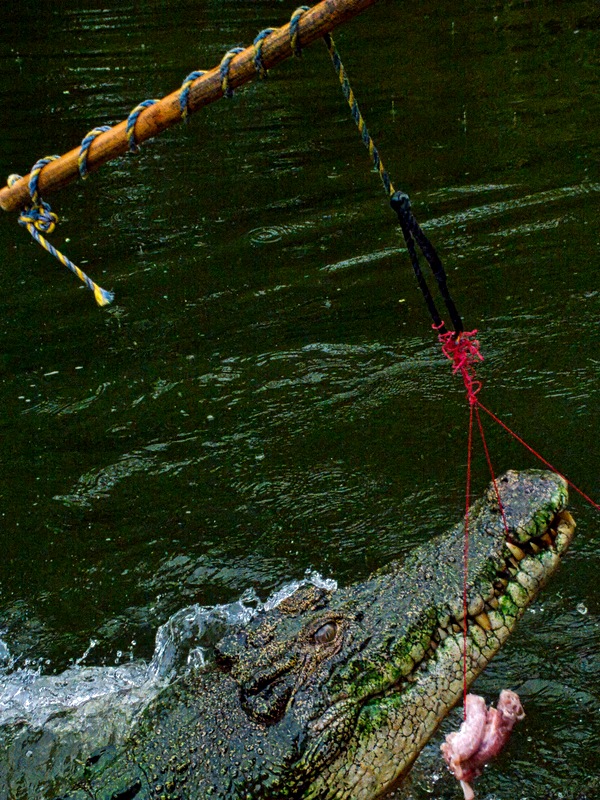
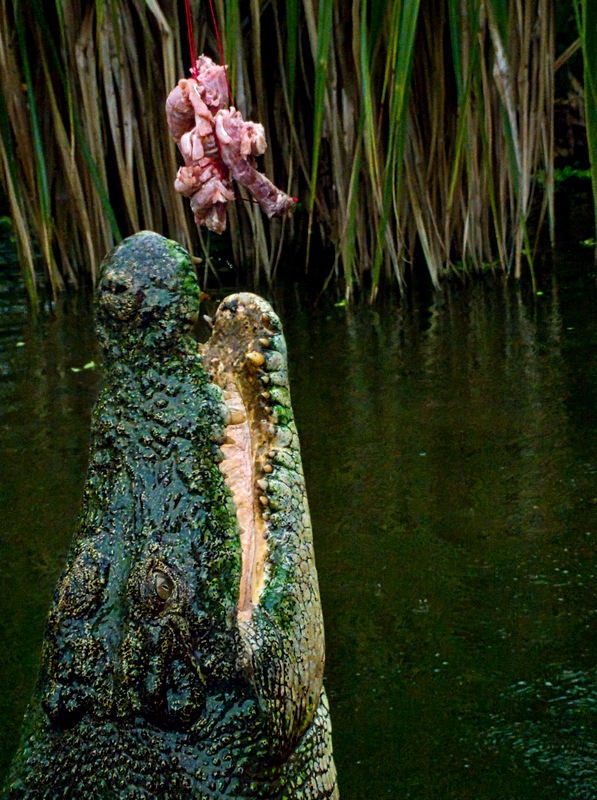
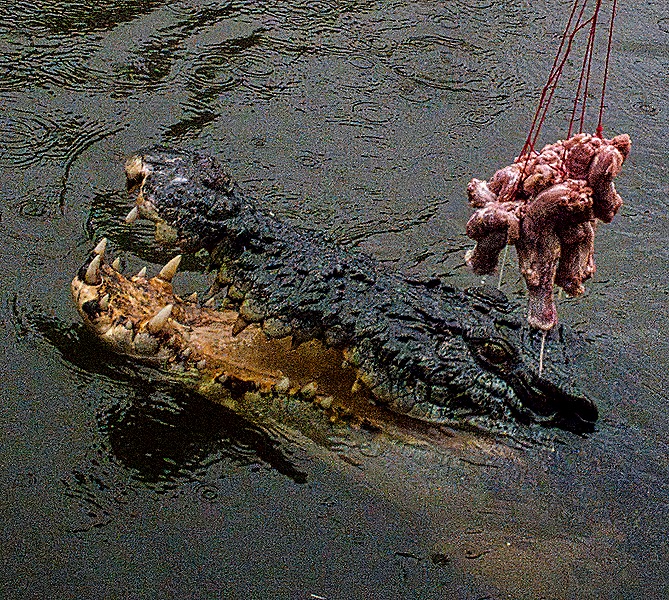
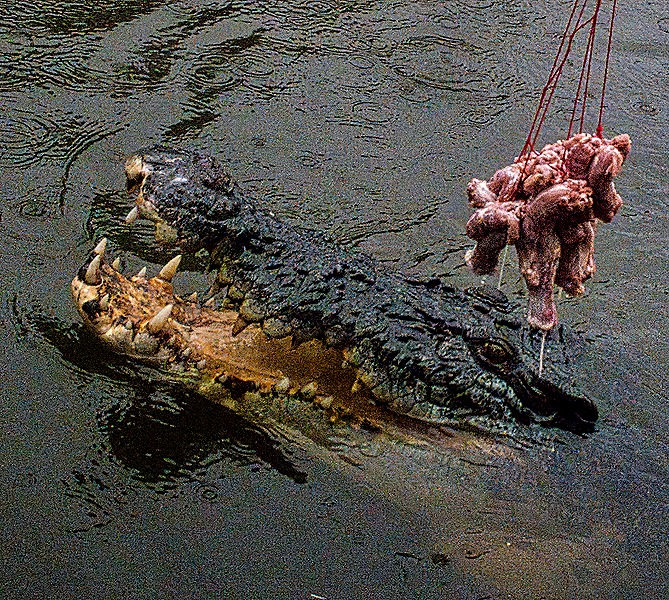
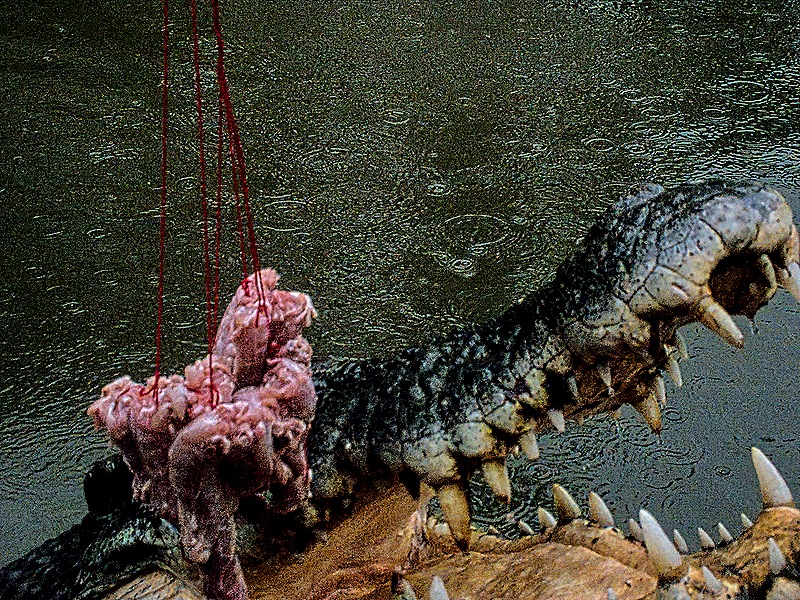
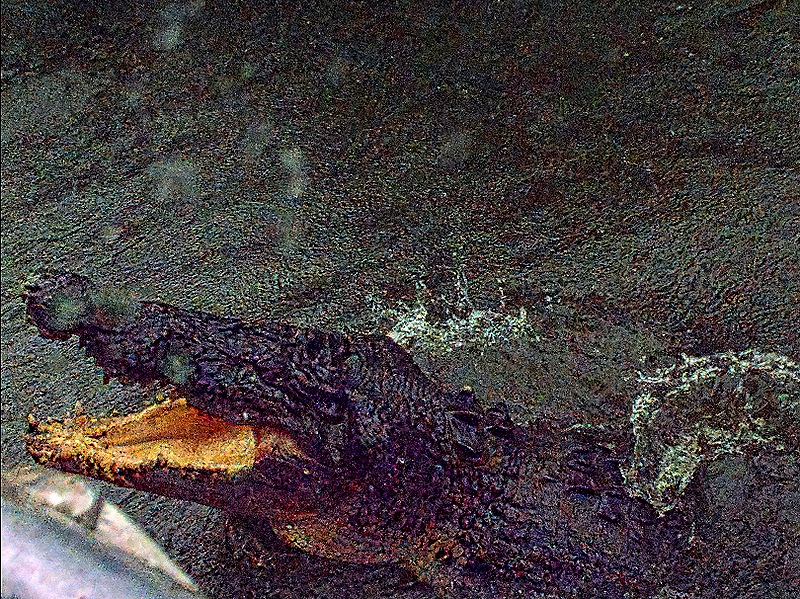
The highlight of the visit was a boat ride on a swampy lake full of crocodiles. These are the so called “jumping crocodiles” that are popular around here, not a special breed but just hungry crocs who will leap out of the water to grab food that is dangled above them. Our young but experienced driver/guide would attach a bunch of chicken necks to a rope on a stick, then hold the other end of the stick so that the food was well above the water. The crocodiles’ athletic display leaping directly up from the water to get the food was pretty impressive. Usually they look so restrained but when food is at issue they are fast and usually accurate. They glide toward the boat pretty stealthily, mostly underwater except for their eyes.
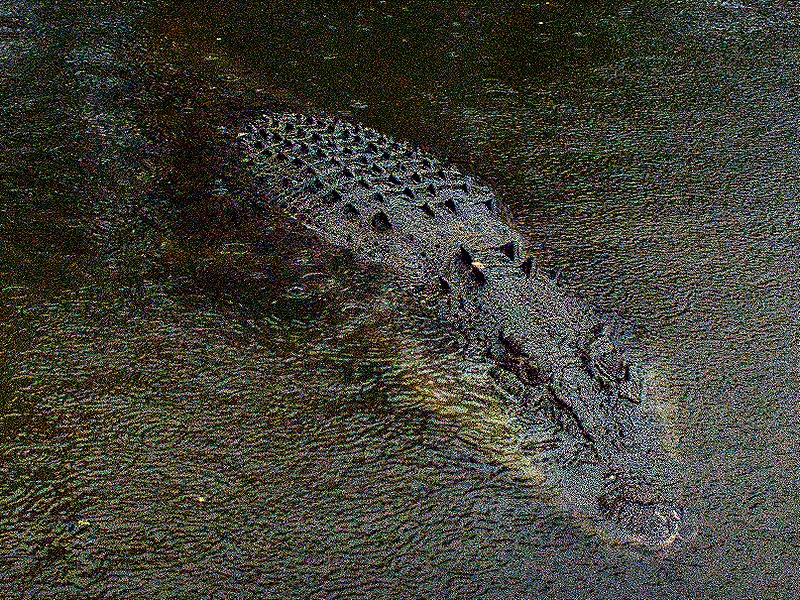
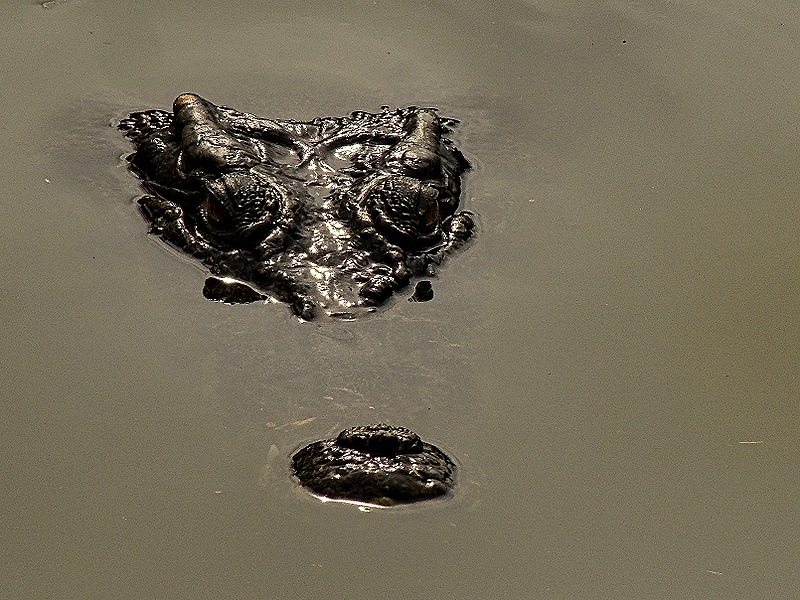
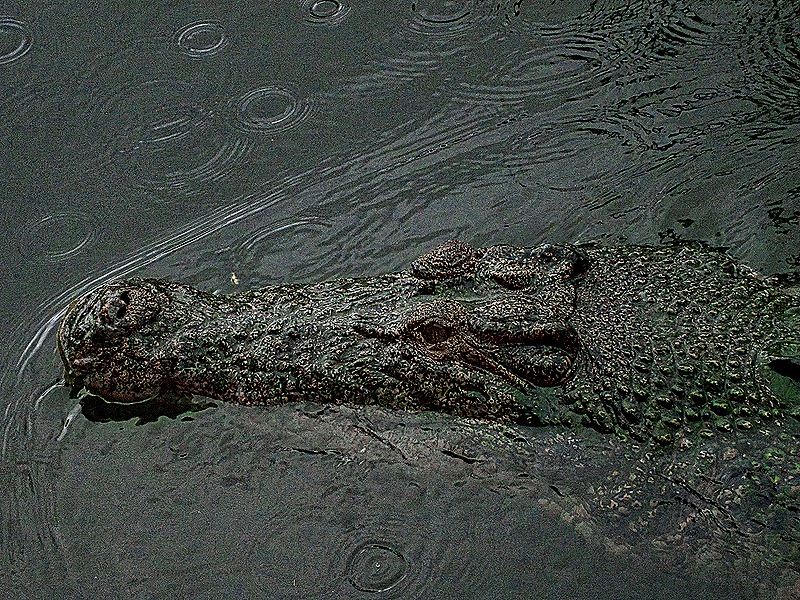
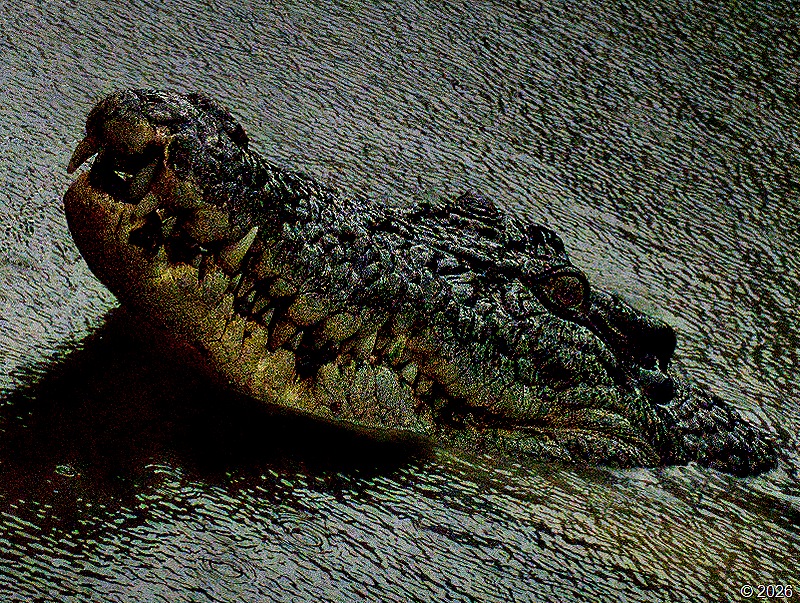
Spotting the food, they swim under it and leap high in the air.
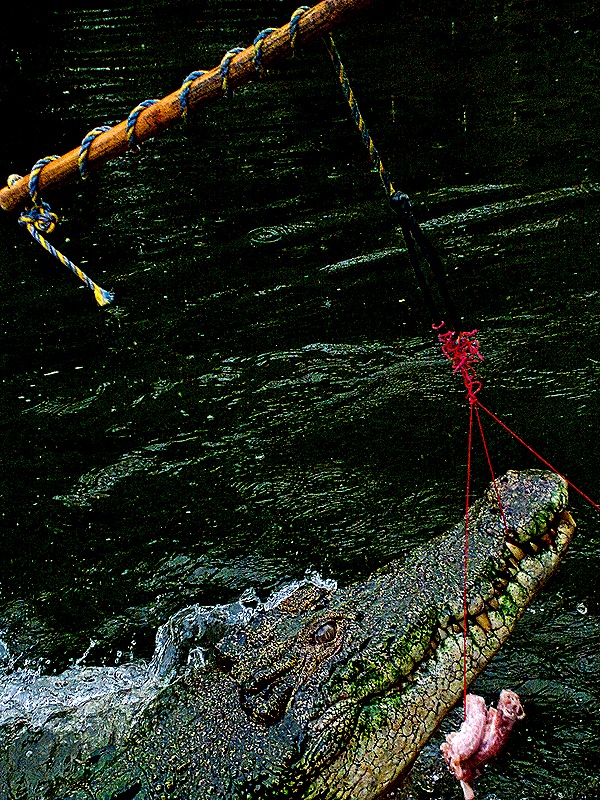
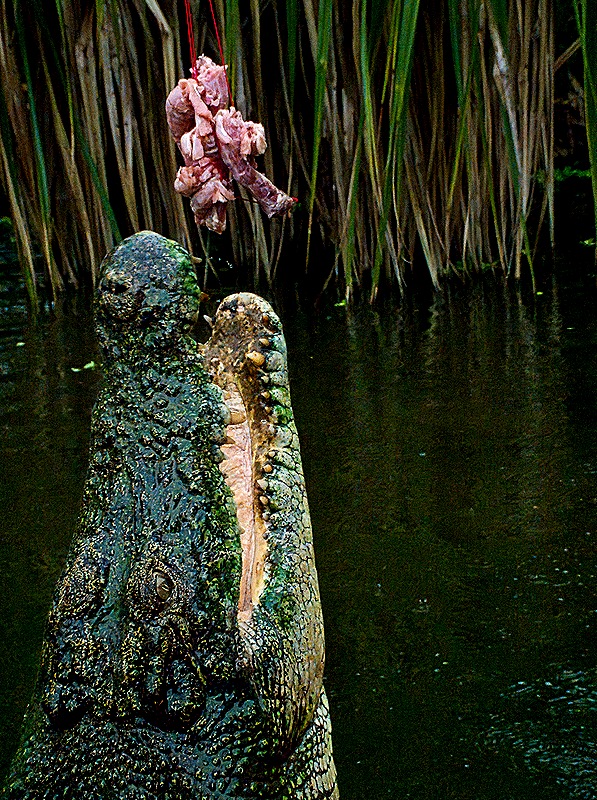
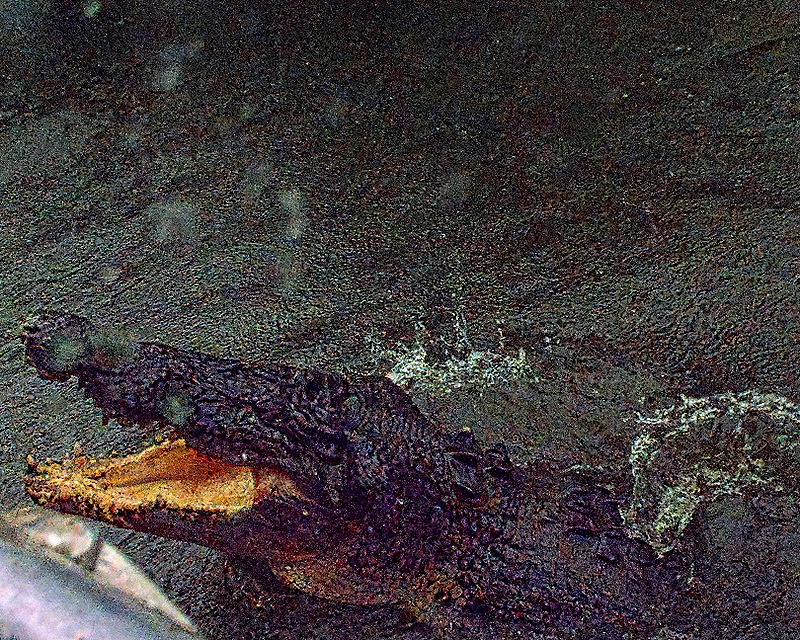
Usually they grab the food, but often enough they miss. Rick was sitting right at the edge of the boat so they were leaping up right next to him very quickly, making it difficult to get them in the photo. Note the raindrops in the last of these photos, the very beginning of a real downpour.
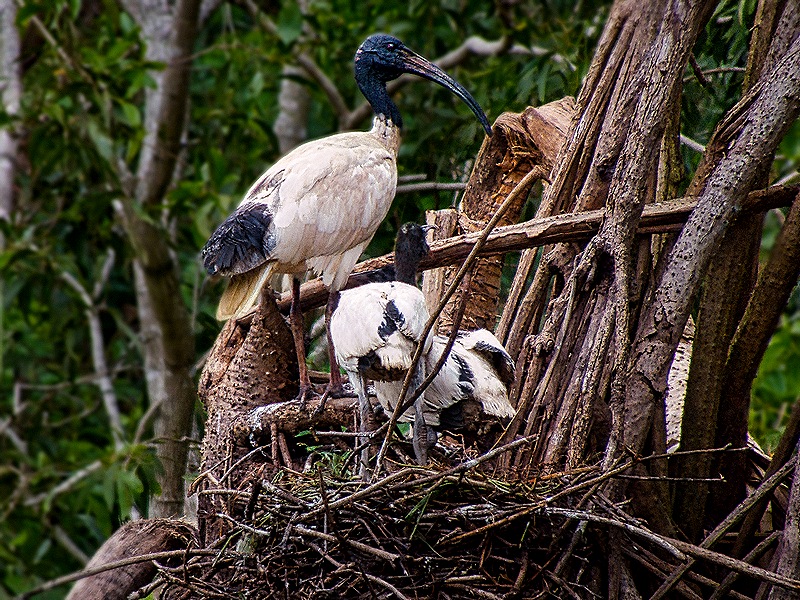
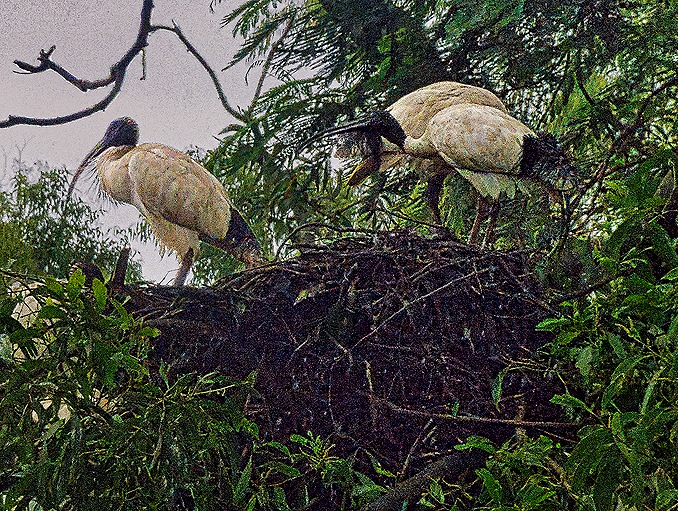
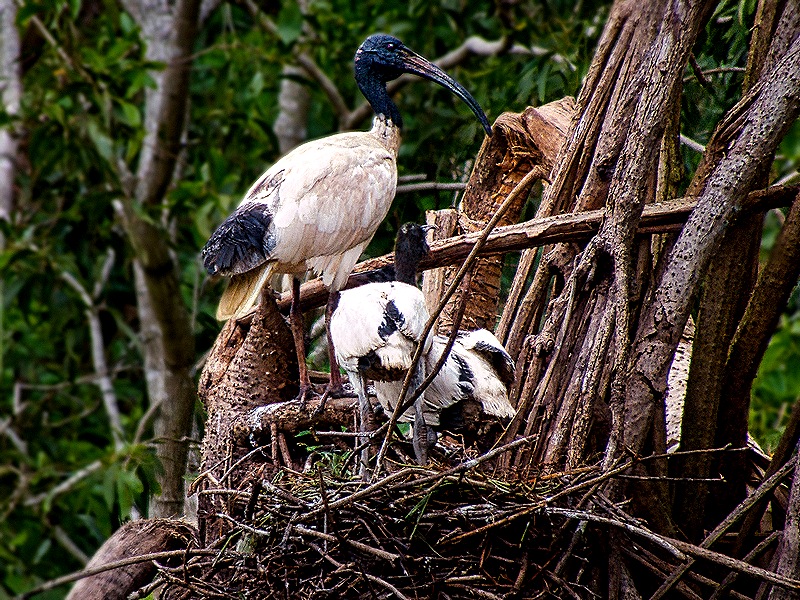
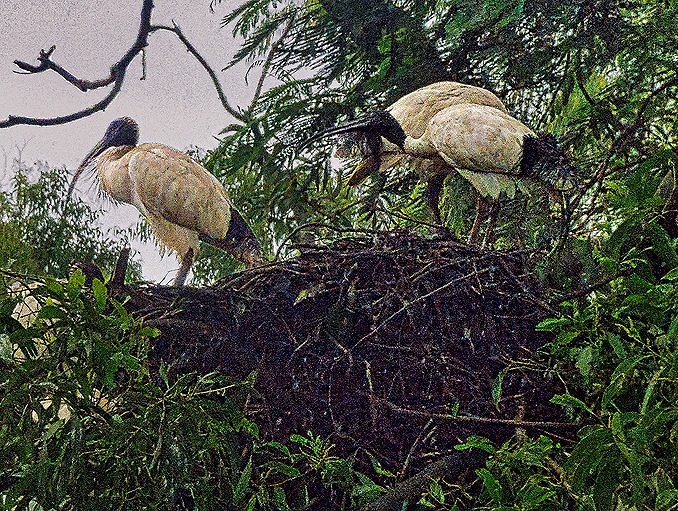
Also of interest here, in addition to the crocodiles, was a large colony of ibises nesting in the trees. We have seen ibises before but never in a nest.
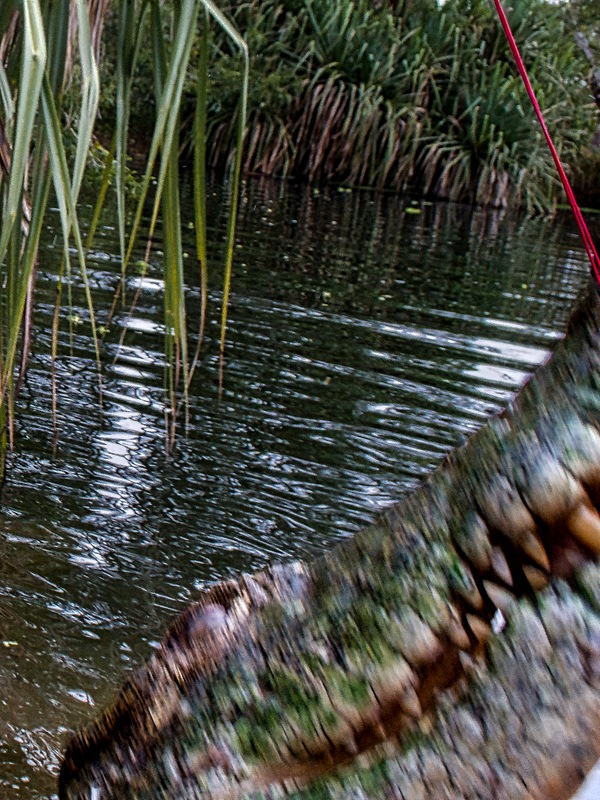
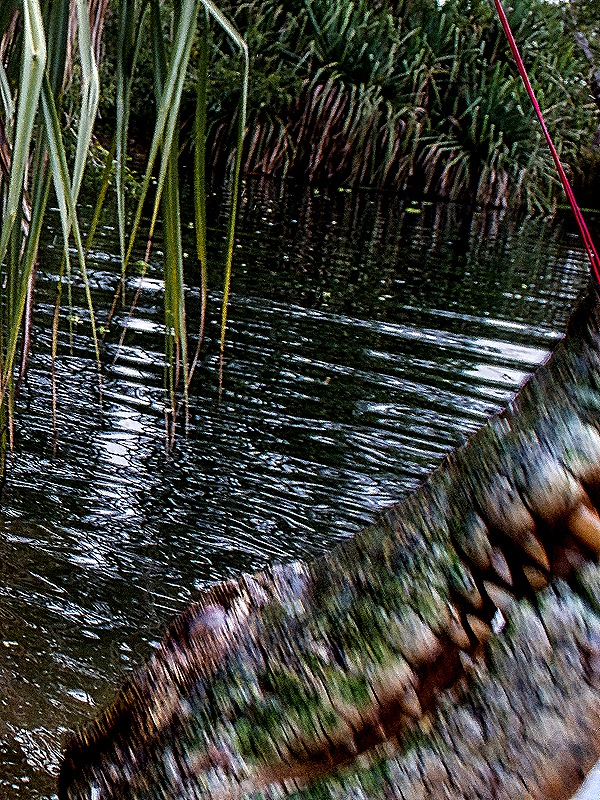
Well, we mentioned above that the crocs were jumping up very close to Rick at the edge of the boat. And of course they don’t care whether people in the boat get wet when they jump. Rick did get a little wet a few times, but finally one of them made a mighty leap at just the right angle to send a wall of water onto Rick. He wasn’t worried about getting wet, it was that kind of day, but the camera was inundated with water and apparently some of it got inside it. So these were his last pictures, at least for today, because the camera completely stopped working.
We walked (quickly) back to the building in the pouring rain and when we got back on the bus Rick opened up the camera as much as possible and tried to dry it out. Then we left it to dry (hopefully) for the rest of the excursion. But to no avail.
Our next stop was at Darwin’s military museum. Darwin is in the far north of Australia quite close to Indonesia, which the Japanese had mostly occupied early in the war. On February 19, 1942, a force of 188 Japanese planes fresh from bombing Pearl Harbor bombed Darwin. Darwin was then a small isolated town of about 6,000 but its location gave it strategic importance. Some 250 or more people were killed and more than that injured. More than half of Darwin’s civilians were evacuated after that and many of them never returned. This was the first of 64 Japanese bombing attacks on Darwin, continuing through 1942 and 1943.
We spent more than an hour at this museum, which is small and light on artifacts but includes many interesting photos and audio accounts by survivors. The highlight is a 15 minute film, including original pictures as well as CGI sequences of the Japanese planes, telling the story of February 19. Outside was some larger military equipment used during the war. Altogether worth seeing.
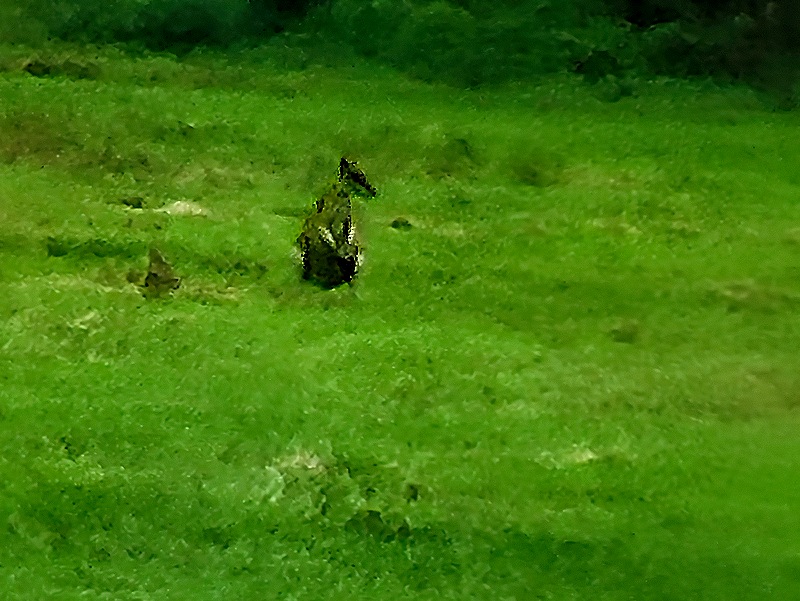
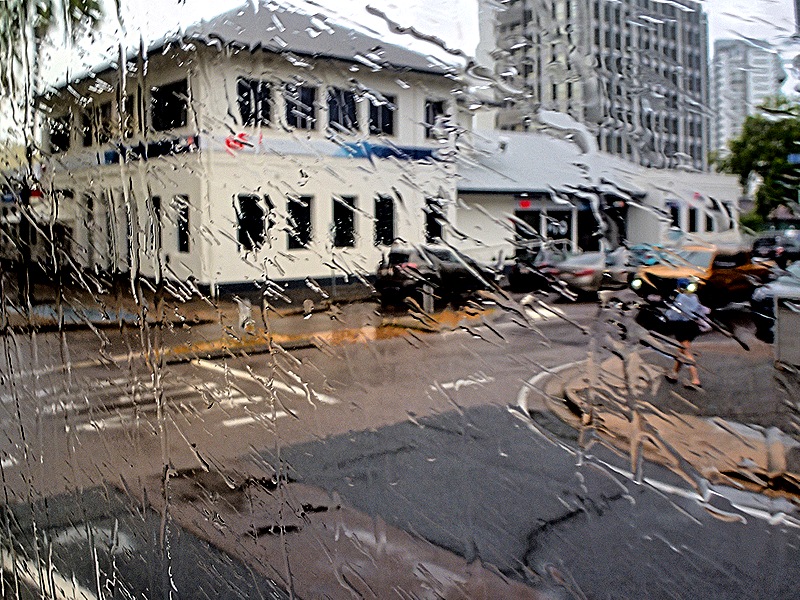
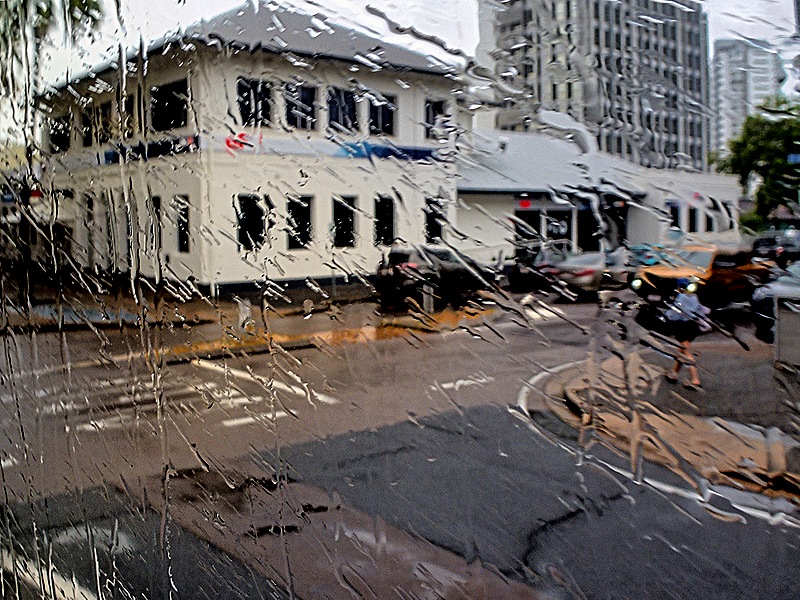
Of course, thanks to our friendly (or not so friendly) crocodile, you will see no pictures of the museum in this blog episode. We do have two more pictures to end this episode, however, such as they are. While sitting on the bus waiting to leave the museum Mary spotted a whole lot of little wallabies spread out in a meadow across the street. She took a picture with her phone, but they were really too small and far away for a decent photo. Second, although Rick’s camera did not recover during the excursion as we hoped, he did take a couple of experimental shots through the bus window just to see what would happen. Nothing, it seemed. But after we got back to the ship he was able to download all of the day’s pictures to his computer (yay!) and the two experimental shots from the bus were there. So that meant the whole camera wasn’t drowned, just the lcd display on the back. Still not very usable, but at least . . . ITS ALIVE! As you can see below, it was pouring rain as we drove back to the ship so we abandoned our original plan to take the shuttle into town to walk around. We sailed away around 5:00, keeping our fingers crossed that the camera would dry out and return to normal.
Cairns, Australia (2 days) 2026
On February 8 we arrived in Cairns, our first stop in Australia on this trip, for an overnight visit. Founded in 1876 as a port for a nearby gold field, Cairns became a town in 1903 (with a population of about 3500), was heavily involved in World War II (it is on the edge of the Coral Sea) and today has grown into a city of about 160,000 people. Cairns can be an interesting place, which we enjoyed on our first visit here in 2016: https://baderjournal.com/2016/03/06/. This stop had originally been scheduled for one day but was expanded to two when an earlier port stop was cancelled.
Day 1
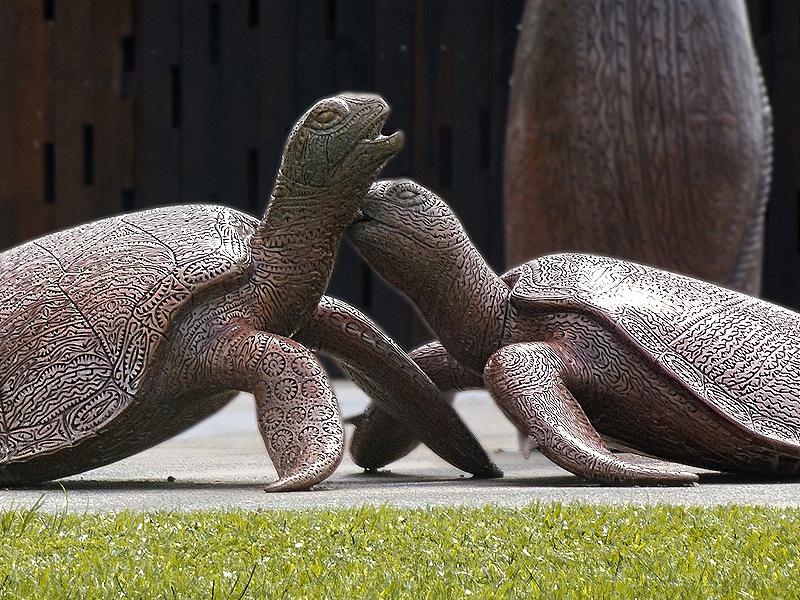
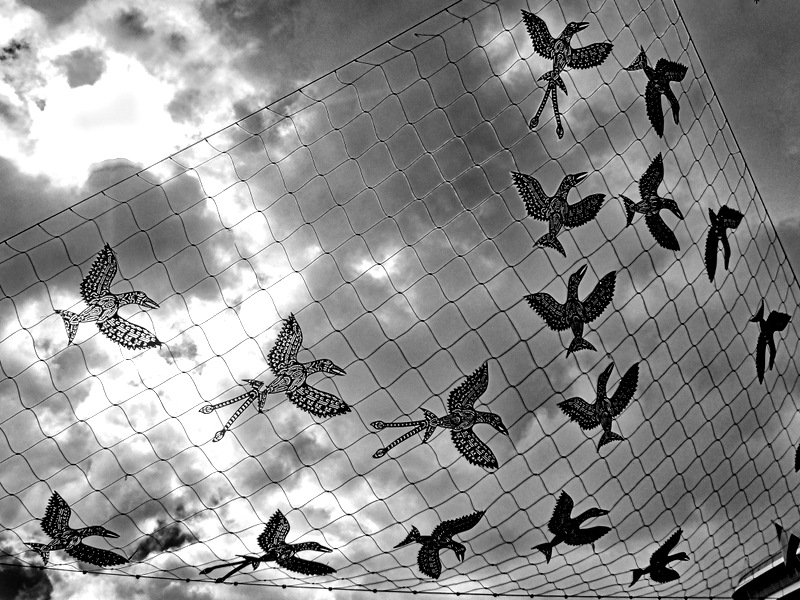
After a lot of excursions in previous ports we decided today would be a good day to spend walking around on our own. So we set out after breakfast, thinking this would be a nice walk mostly visiting places we had enjoyed in 2016. As we walked out of the port we passed some bronze wildlife that we had seen last time.
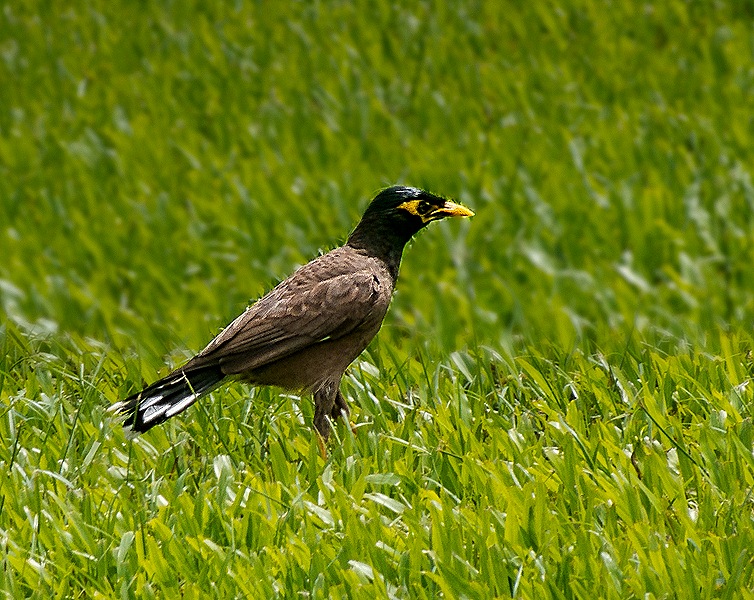
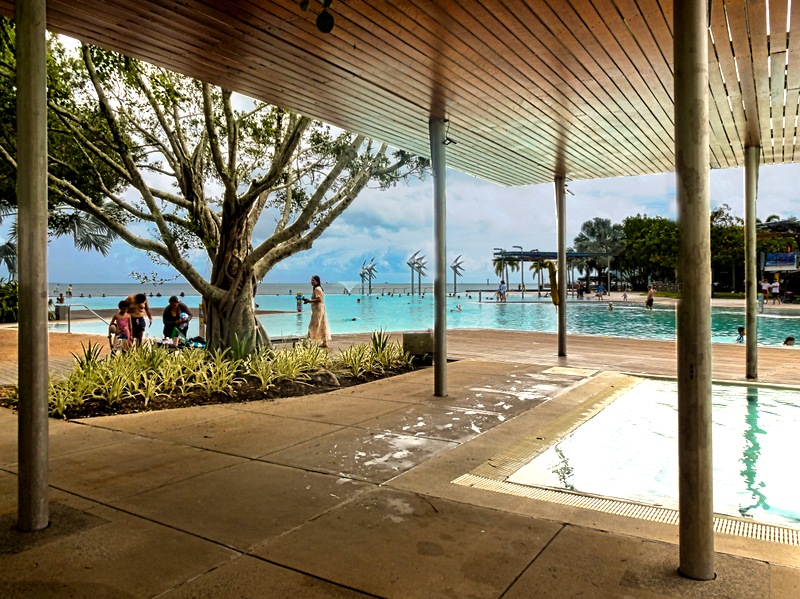
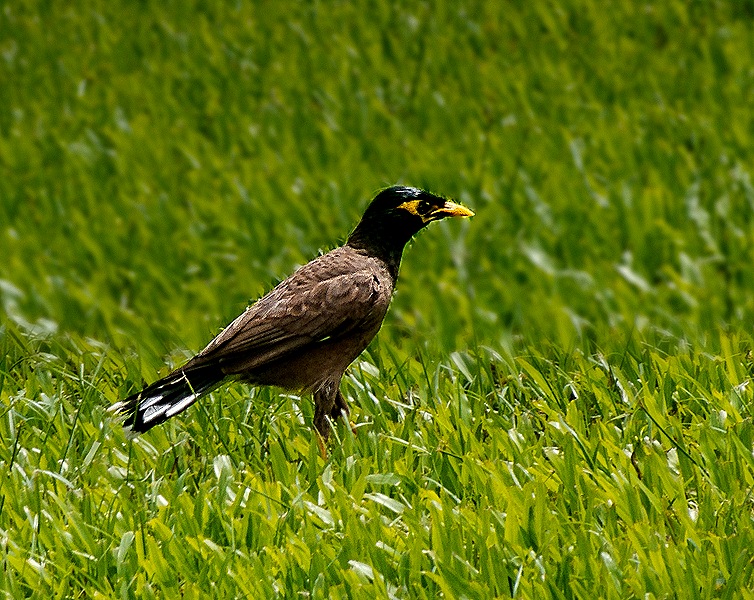
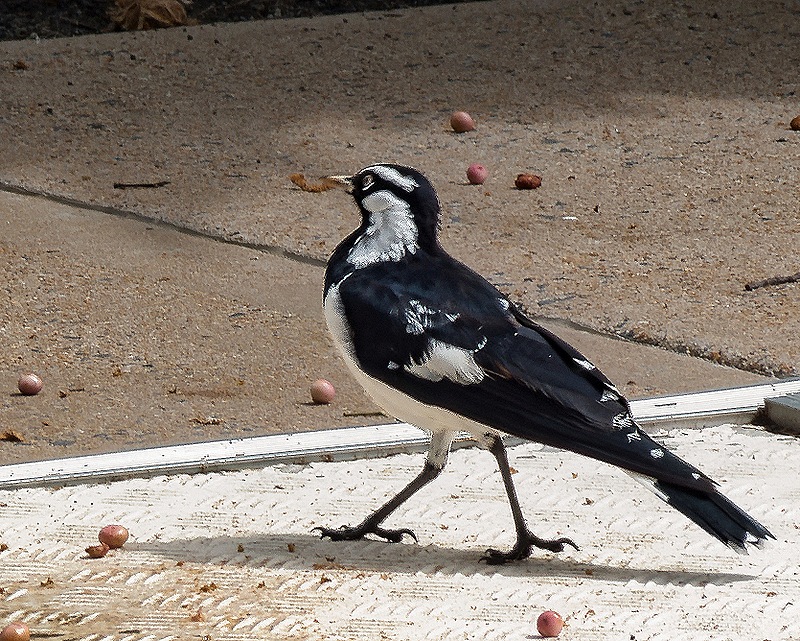
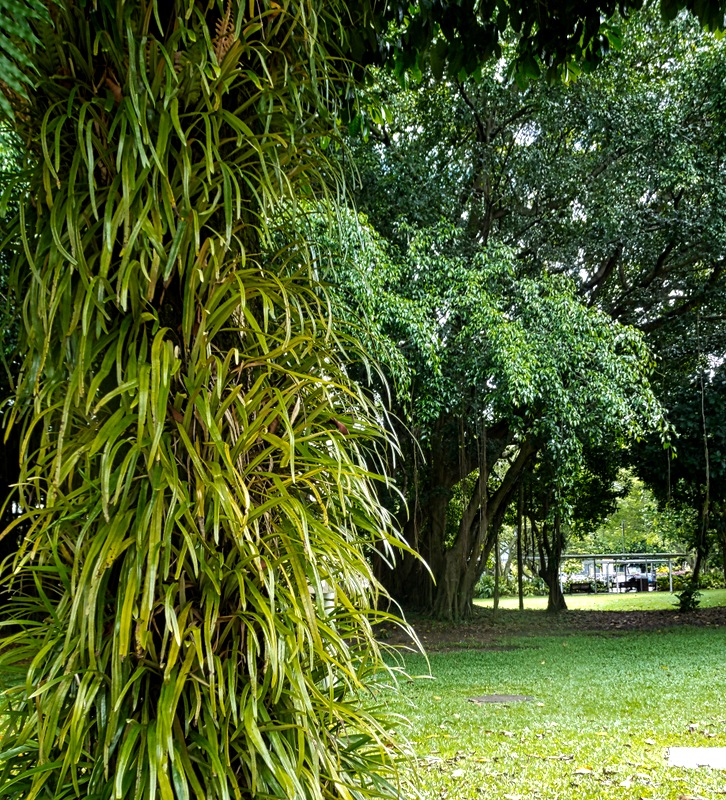
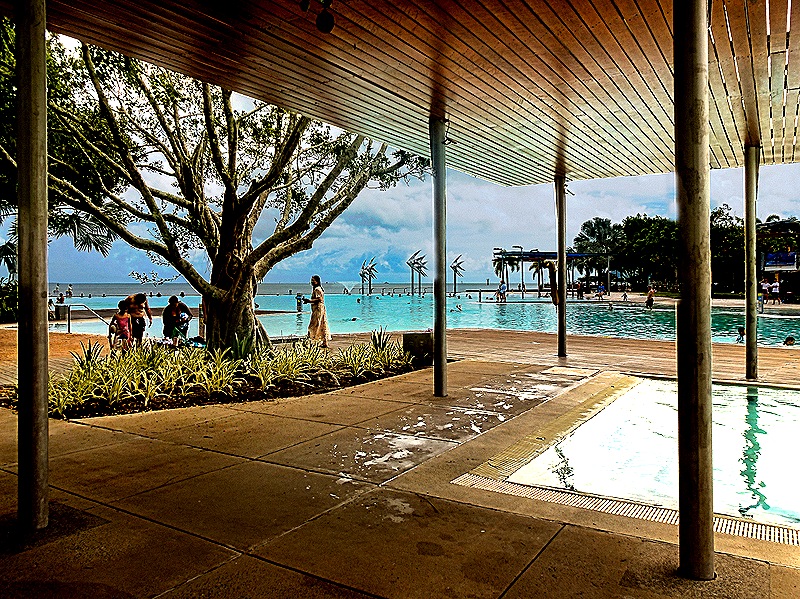
We walked into the town past our first disappointment . . . the wildlife dome above the casino we had enjoyed on our first visit was no longer there. It had a lot of fairly exotic animals, we wonder what happened to them. However we did pass some wildlife on our walk, a couple of interesting birds populating a park. And we also walked along the Esplanade, a park along the seafront, including the lagoon, a man made swimming facility built because swimming in the ocean is too dangerous with deadly box jellyfish and sometimes crocodiles. Australia can be a dangerous place; we have read that all ten of the ten deadliest creatures in the world live in Australia.
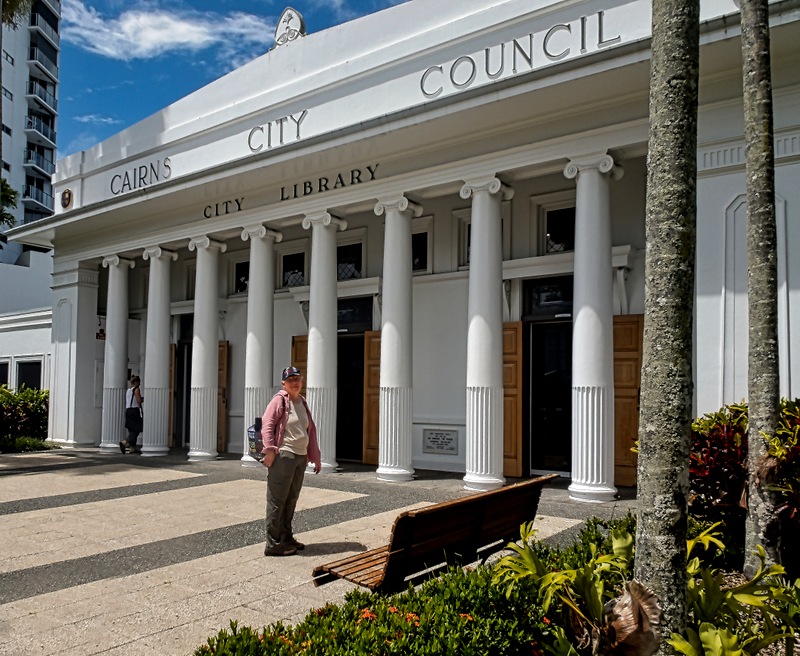
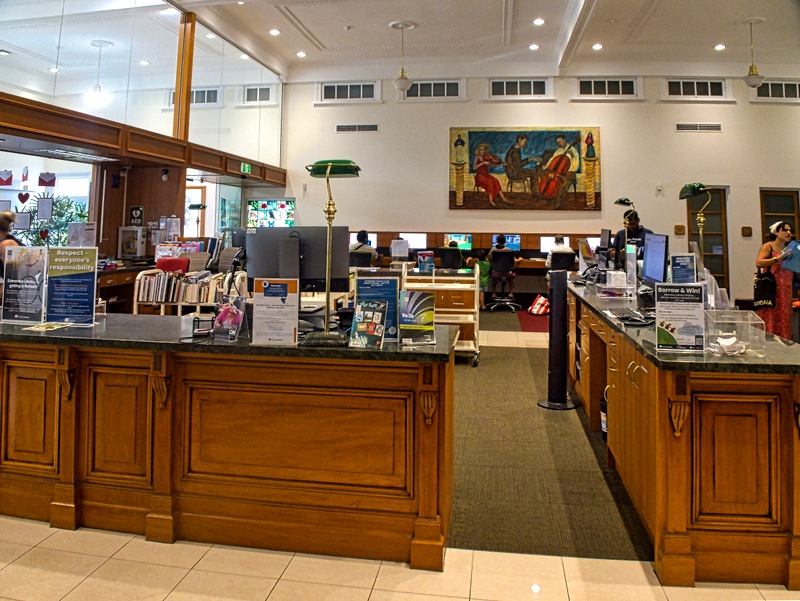
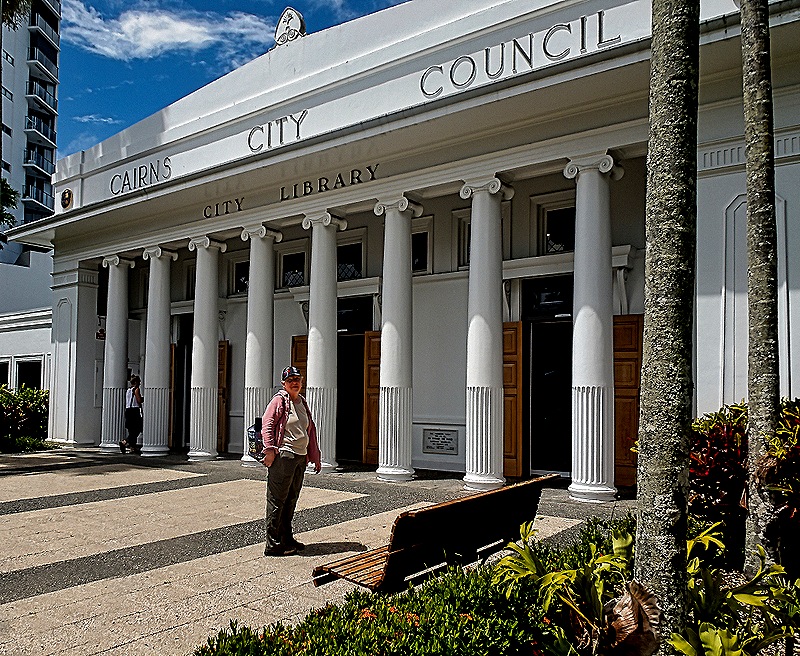
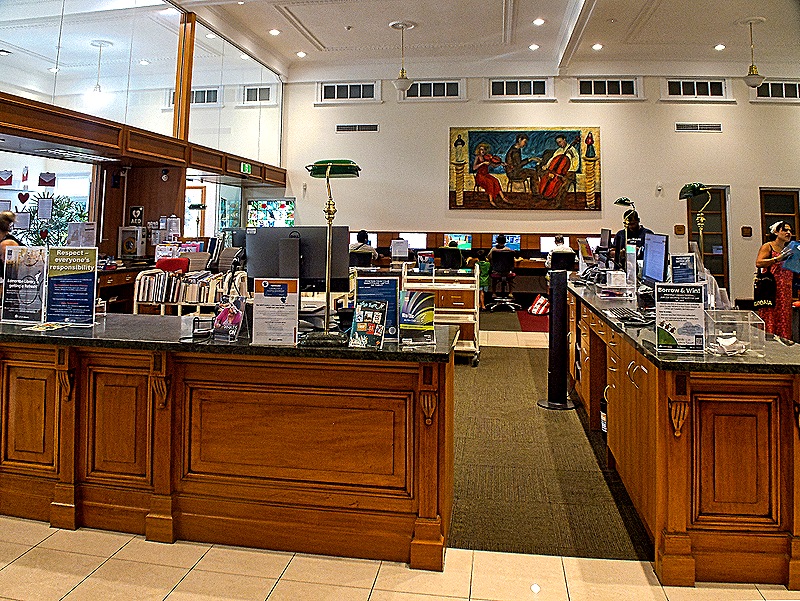
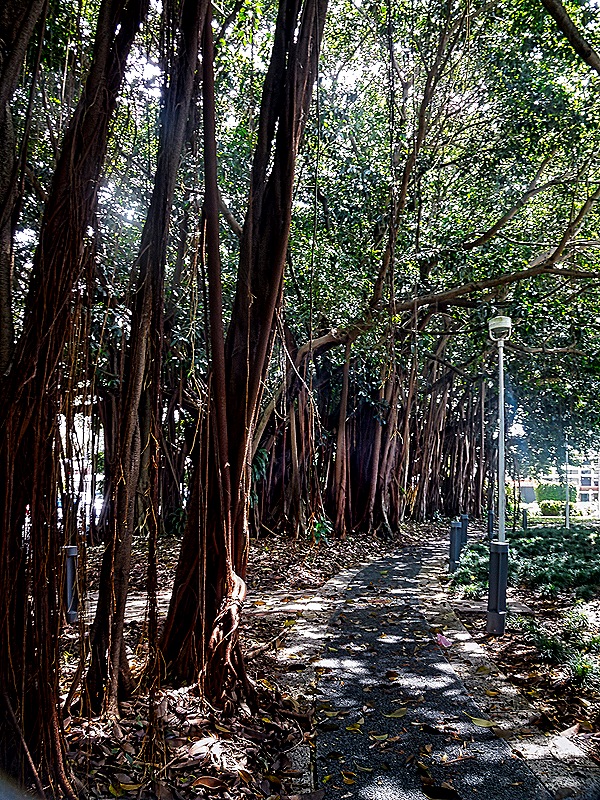
We visited the Cairns Library, where on our first visit we encountered thousands of Flying Fox fruit bats hanging from a couple of trees on the library grounds. It must have been quite a sight when they all flew away at once in search of food every evening. The library building first opened in 1930 as the home of the City Council (still etched into its facade) and reopened as a the Cairns City Library in 1999.
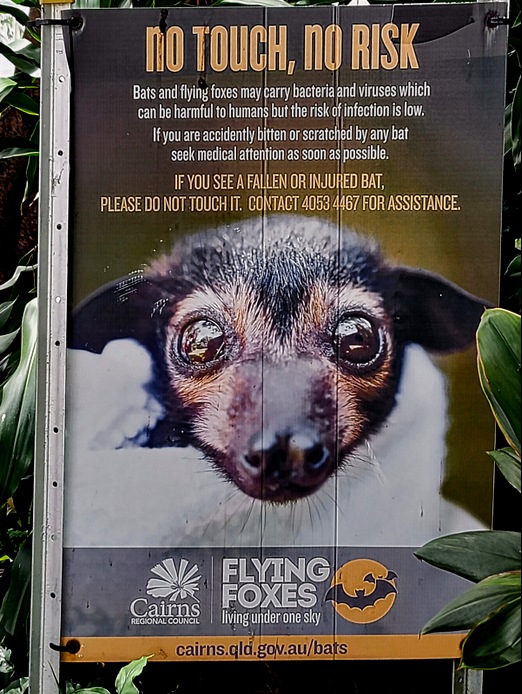
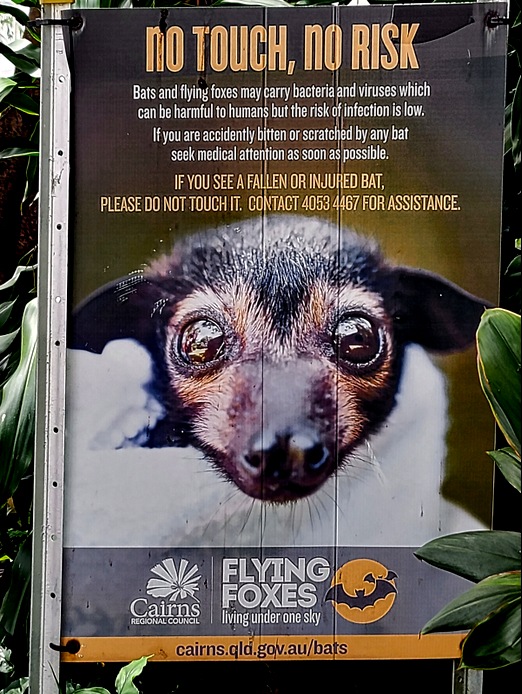
Well sadly the bats are no longer in residence at the library. We asked about it inside and a librarian told us that patrons complained about them a lot and cleaning up their droppings (as well as avoiding getting hit by them) became a burden. So the library successfully managed to convince them to go live somewhere else (not sure what that entailed). There is still a sign among the trees on the grounds warning visitors not to touch the now absent bats.
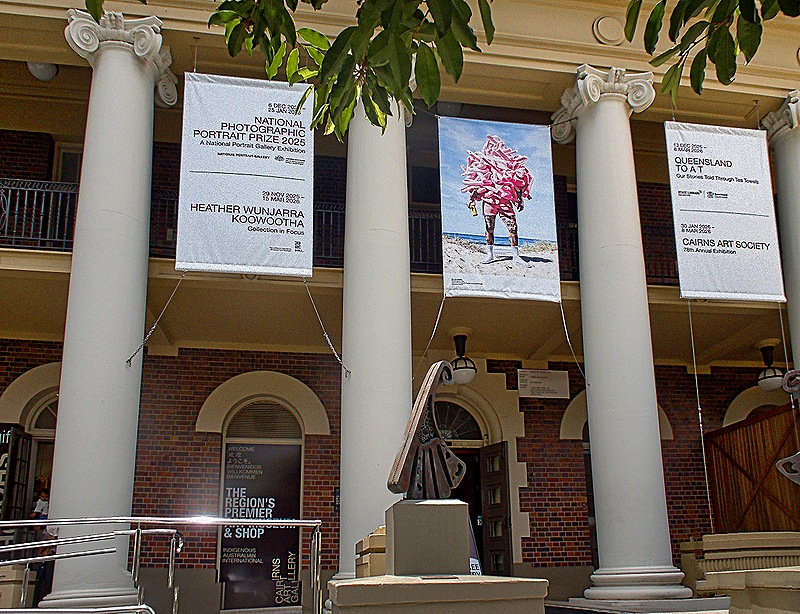
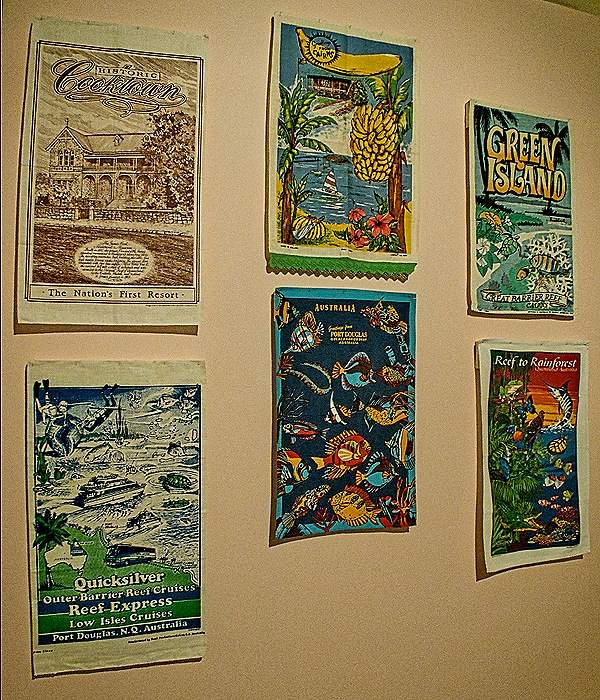
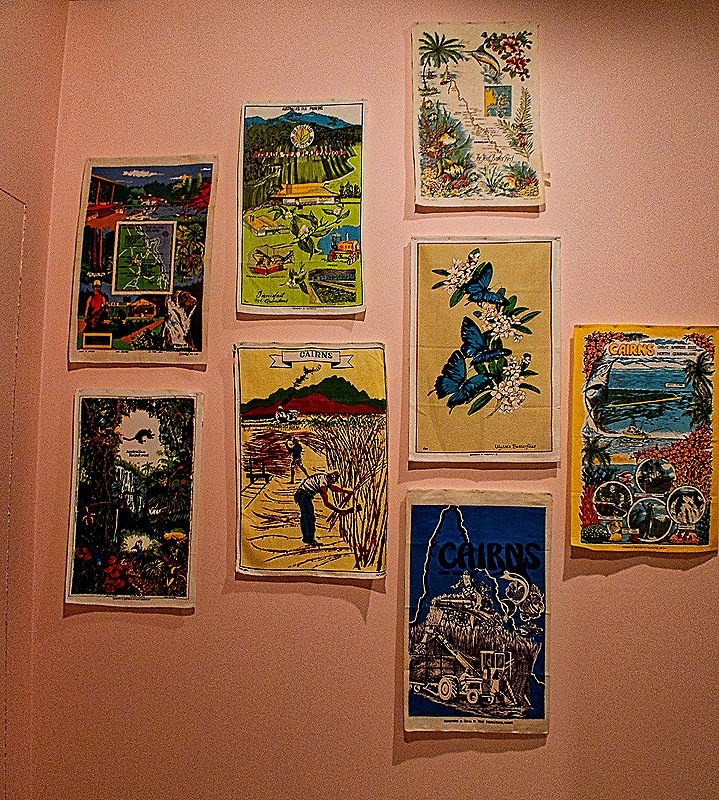
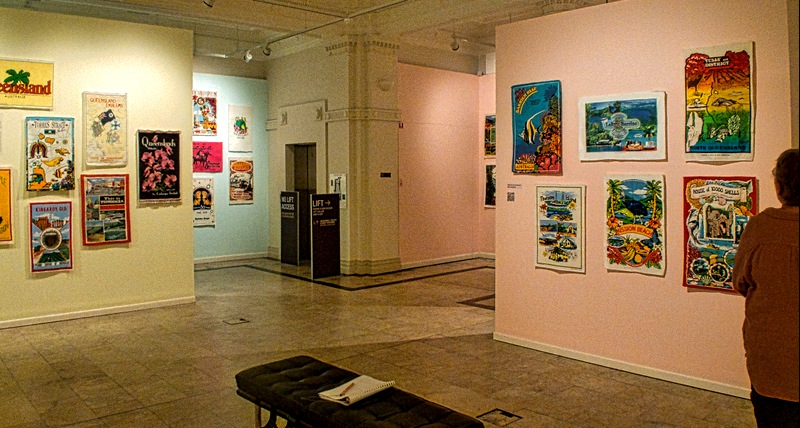
We tried to revisit St Monica’s Cathedral for another look at its unique stained glass windows, but alas it was Sunday so the cathedral was closed except for religious services. But we were able to visit the Cairns Art Gallery which we had not seen before. It is a very nice art museum with colorful displays of Australian art, an emphasis on Aboriginal art (which we really like), and rotating exhibits. The special exhibit when we visited was a collection of Australian tea towels, which was actually more interesting than it sounds. The art gallery opened in 1995 in an attractive building originally built in 1936 to house government offices.
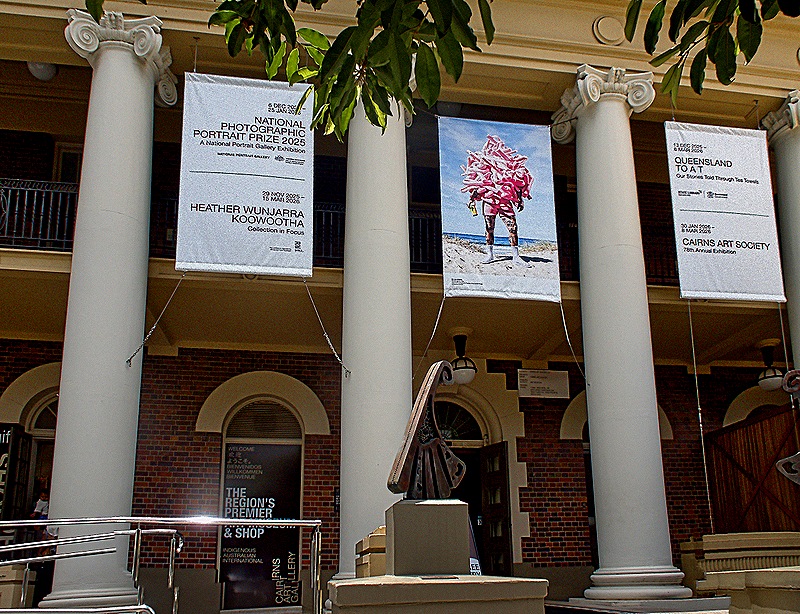
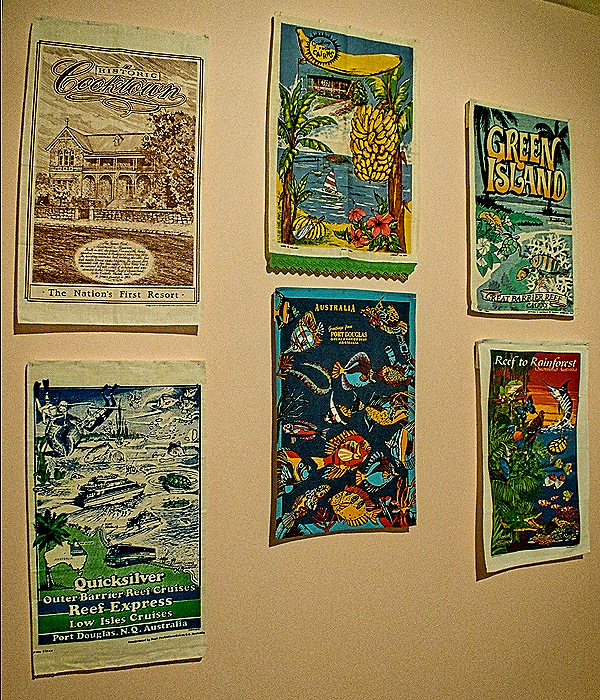
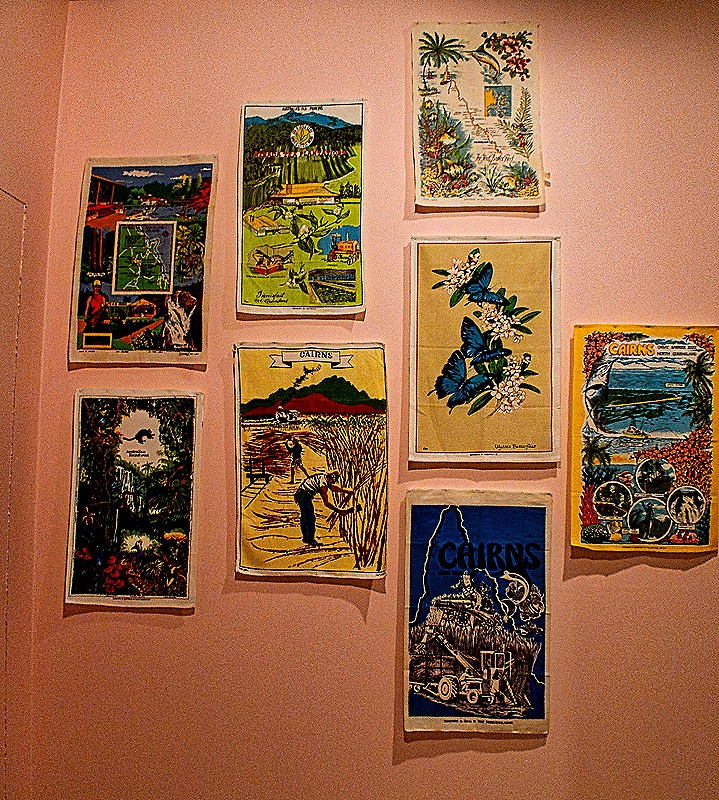
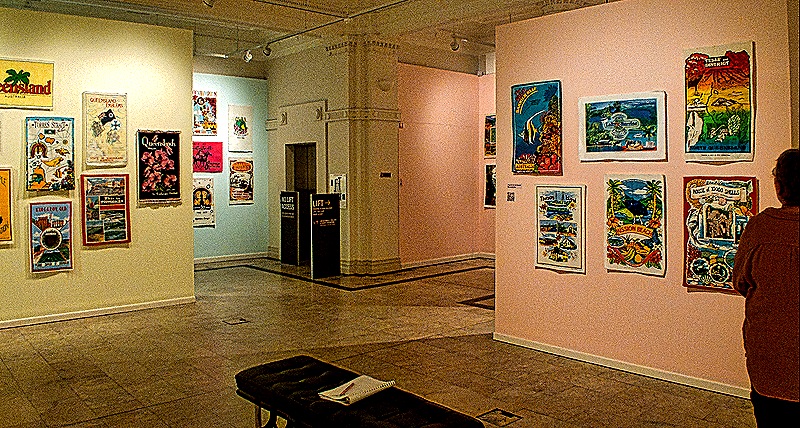
Well, it was a very hot and humid day (anyone who has been following along has read that before) and we had done quite a lot of walking because some of these buildings were harder to find than we had expected. We stopped for lunch in a nice shaded outdoor pizza place then had some very good gelato as we started the long walk back to the ship.
Day 2
We spent February 9 on an expedition to Kuranda, a small town (about 3300 people) located in the mountainous rainforest northwest of Cairns. The indigenous Djabugay people have lived in this area for more than 10,000 years and the first white settler arrived in the late 1880’s. A railway inland from Cairns reached Kuranda in 1891 and it has been known as a tourist destination since early in the 20th century, where people came to see the rainforest and the local Aboriginal culture. Since the 1970’s Kuranda has been known as an art center supporting alternative lifestyles and a tourist destination.
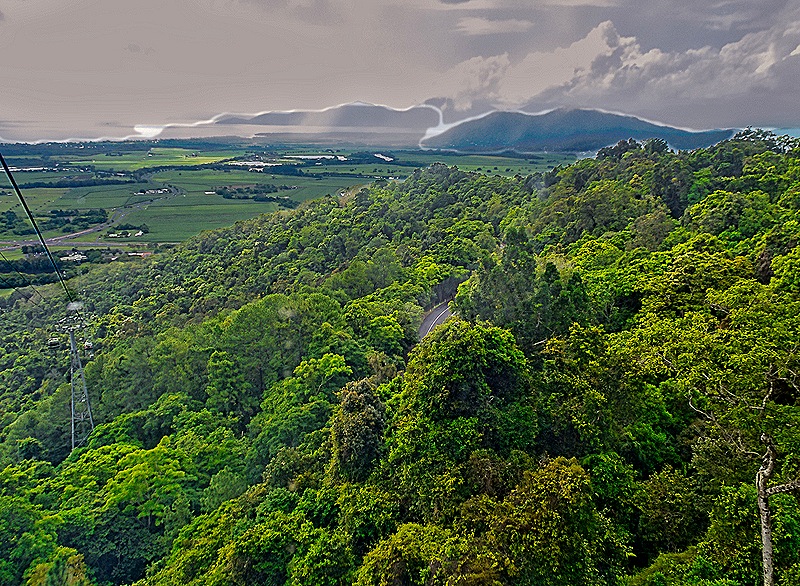
Our expedition traveled from Cairns to Kuranda on a cable car line running almost 5 miles from sea level in the northern part of Cairns into the mountains containing Kuranda. It was the world’s longest cable line in 1995 when it was completed.
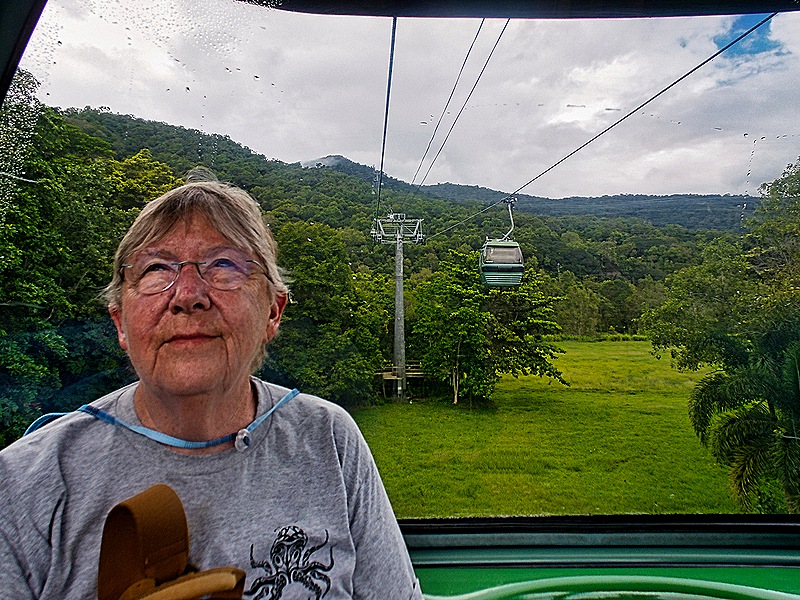
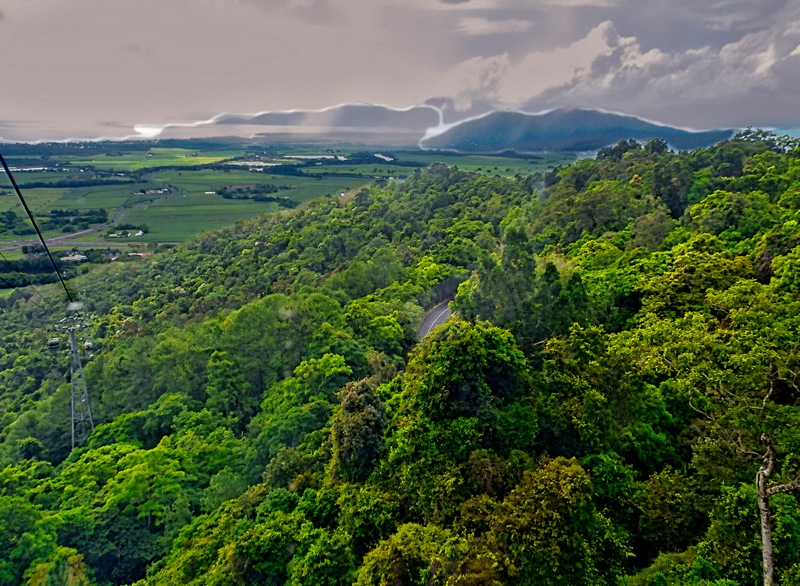
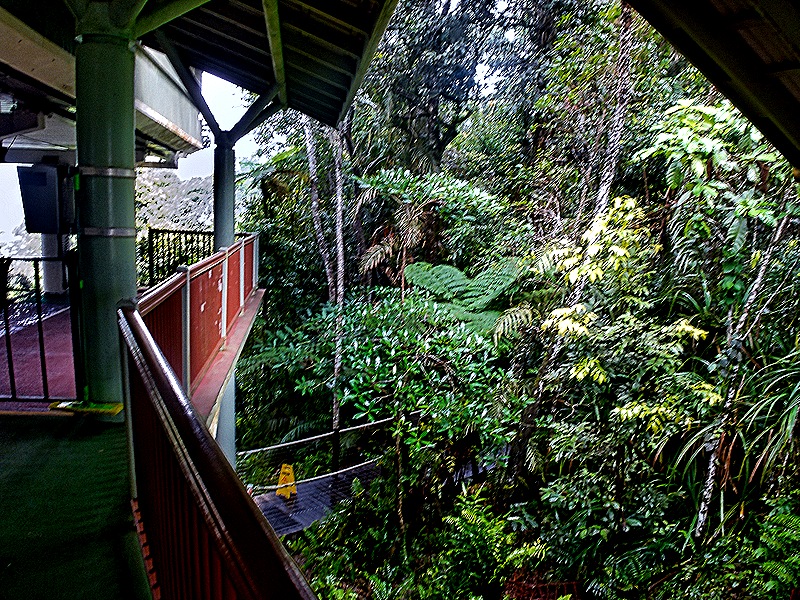
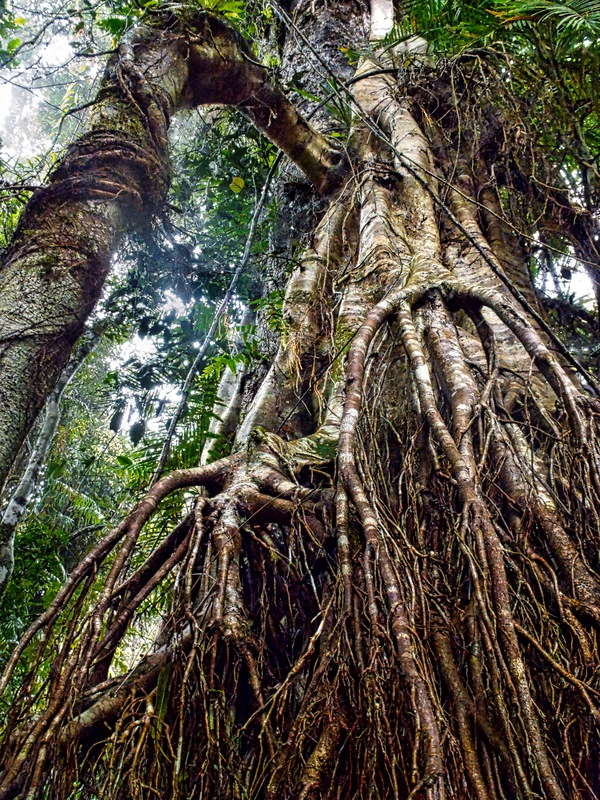
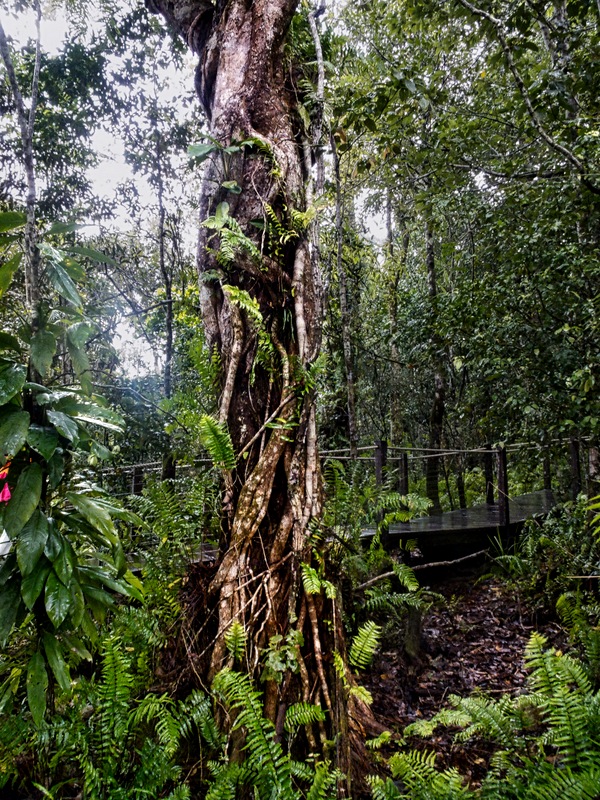
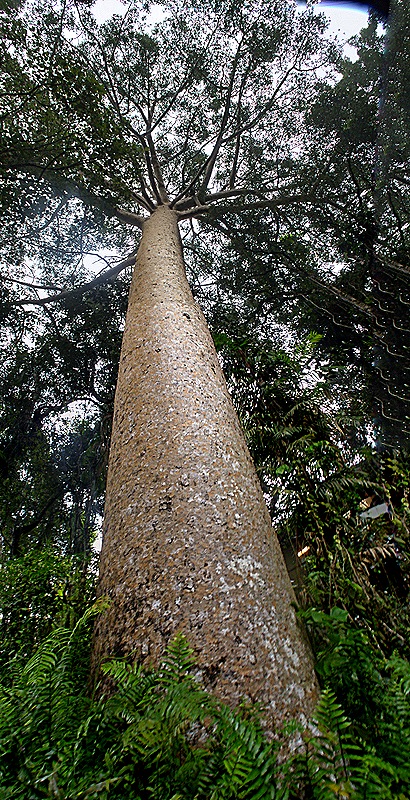
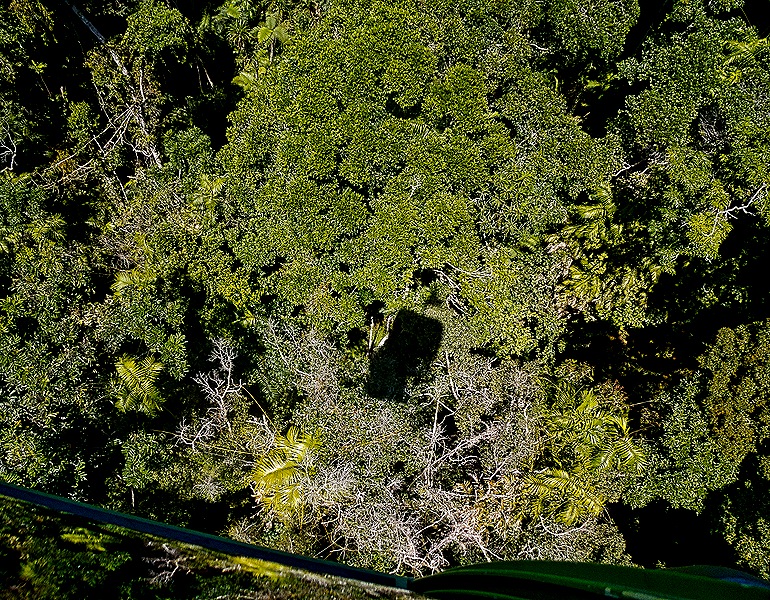
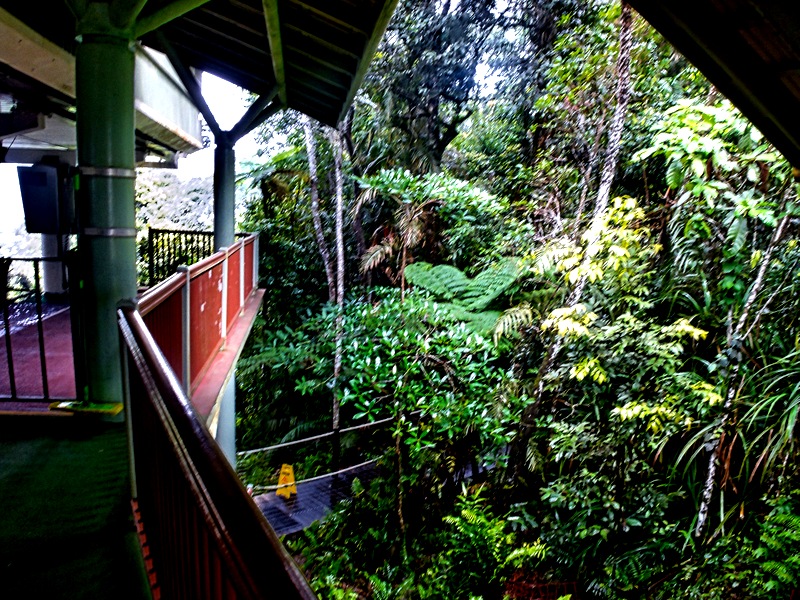
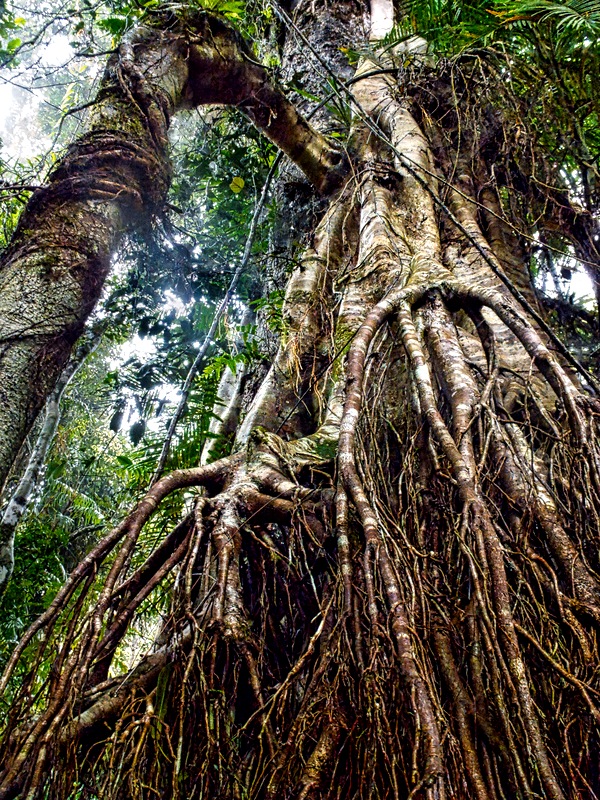
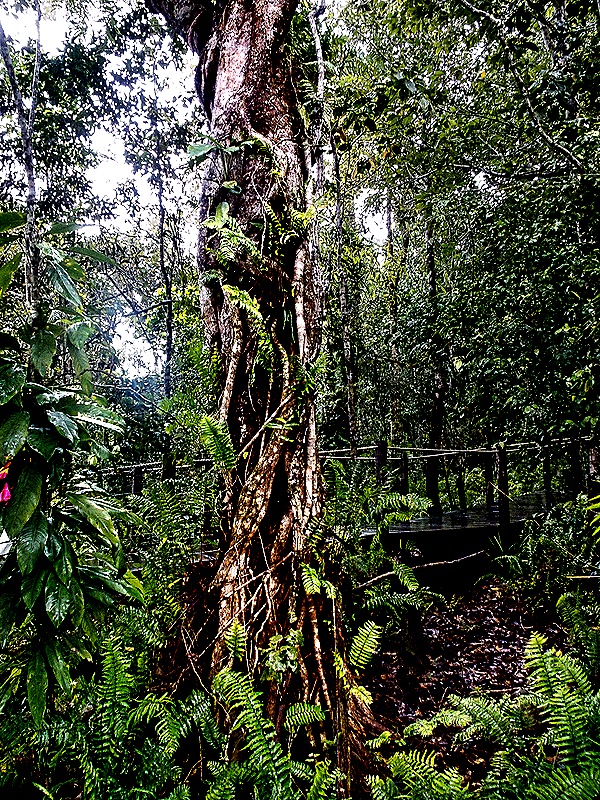
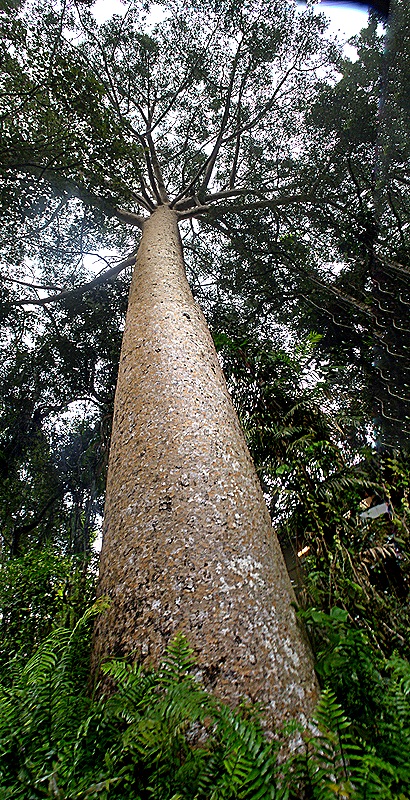
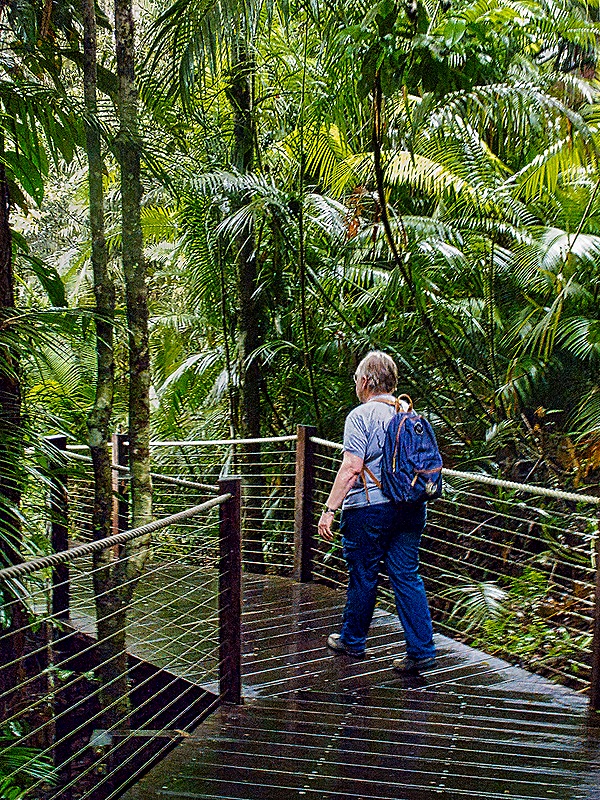
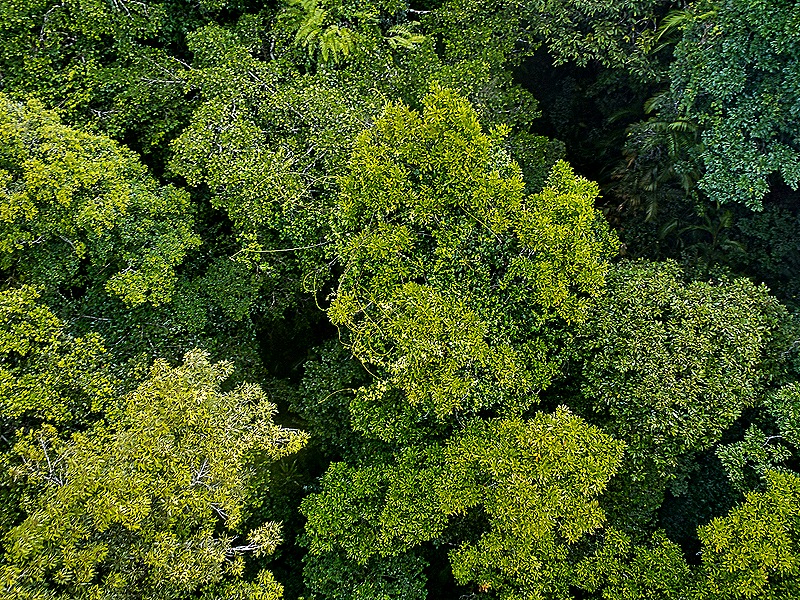
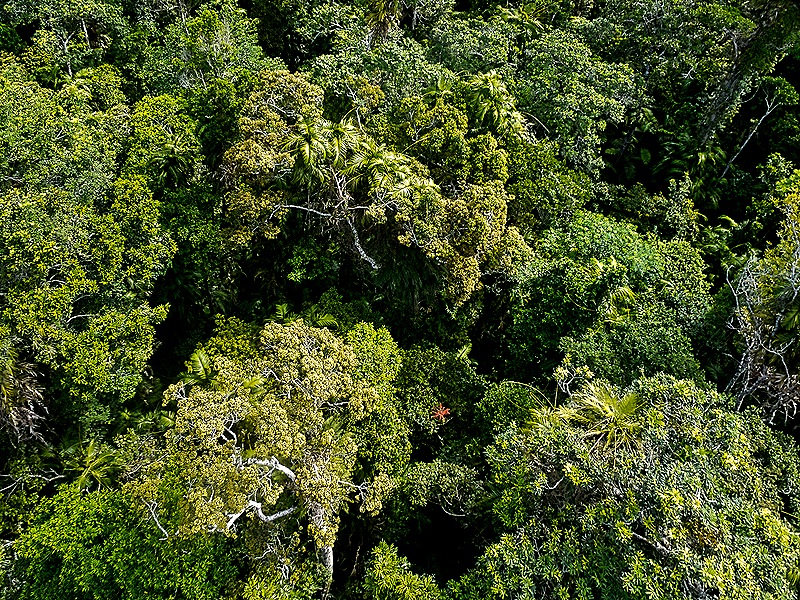
The cable cars stopped a couple of times to allow us to get out and look around. Each stop had well constructed wooden walkways with explanatory signs about the flora and other sights we were seeing. The first was called Red Peak, 1788 feet above sea level. This cable line travels through part of the Wet Tropics of Queensland, which encompasses the oldest rainforests in the world, some dating back 180 million years. The wooden visitor walkways at Red Peak are very high off the ground but under the top tree canopy. Notable among many other things we saw a Strangler Fig, whose seeds are deposited by birds and bats on high branches of a host tree. With plenty of light up there the Strangler grows down the surface of the host tree to the ground, where it fuses with other Stranglers and envelops the host tree. We also walked by a huge Queensland Kauri that is more than 400 years old. It has no low branches and its shedding bark prevents vines and other plants from growing on it and competing for light.
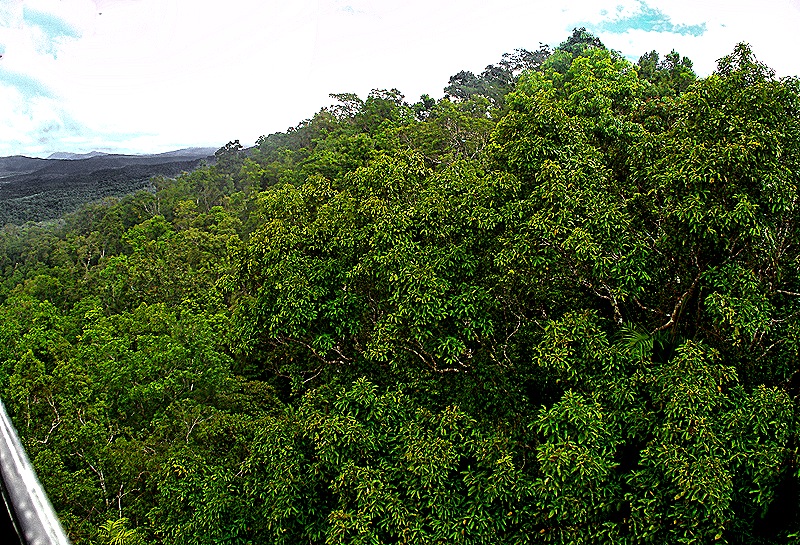
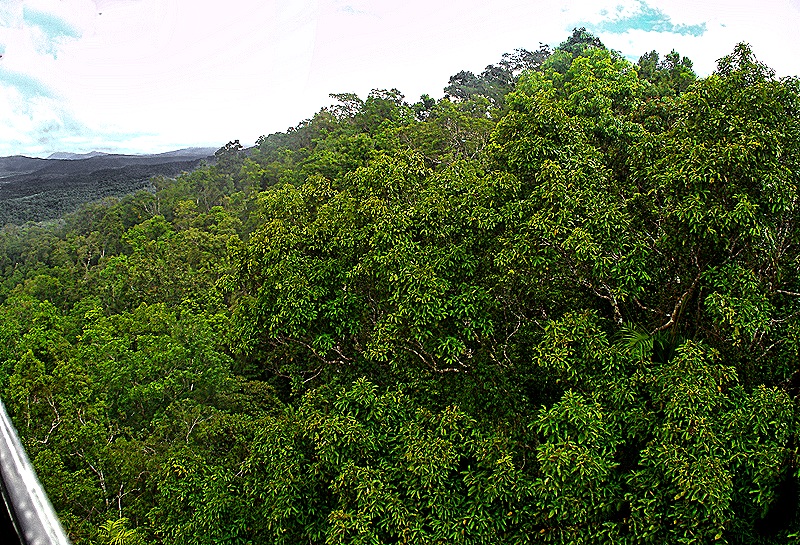
Climbing back onto the cable car we continued on, soaring over the canopy of densely packed tall trees below.
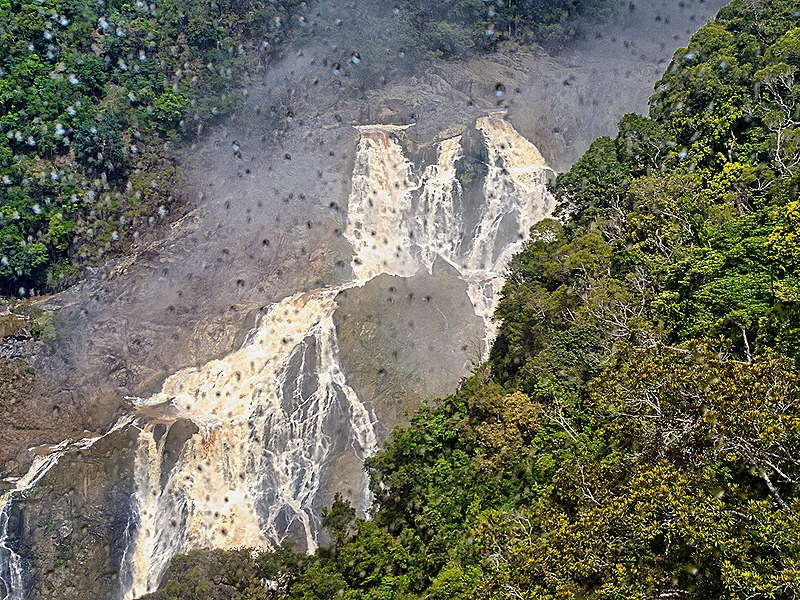
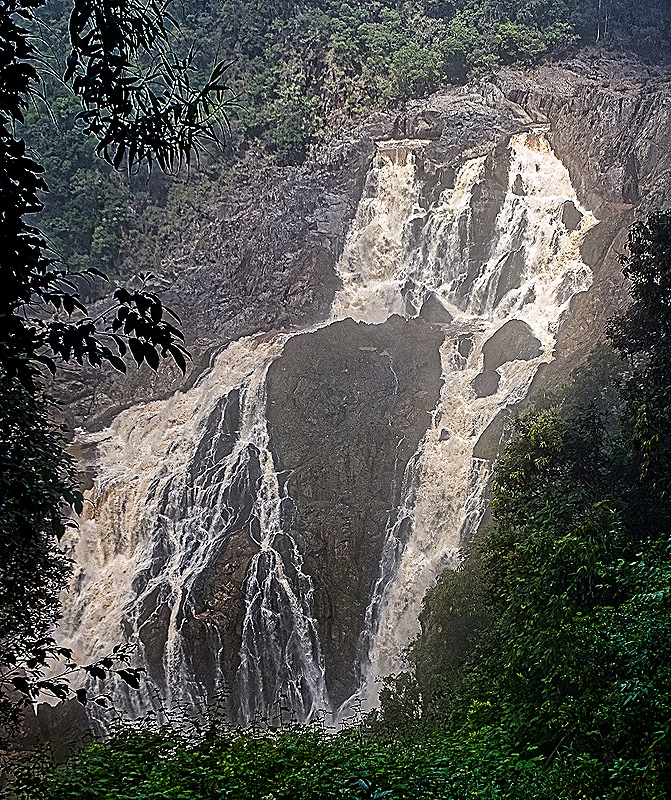
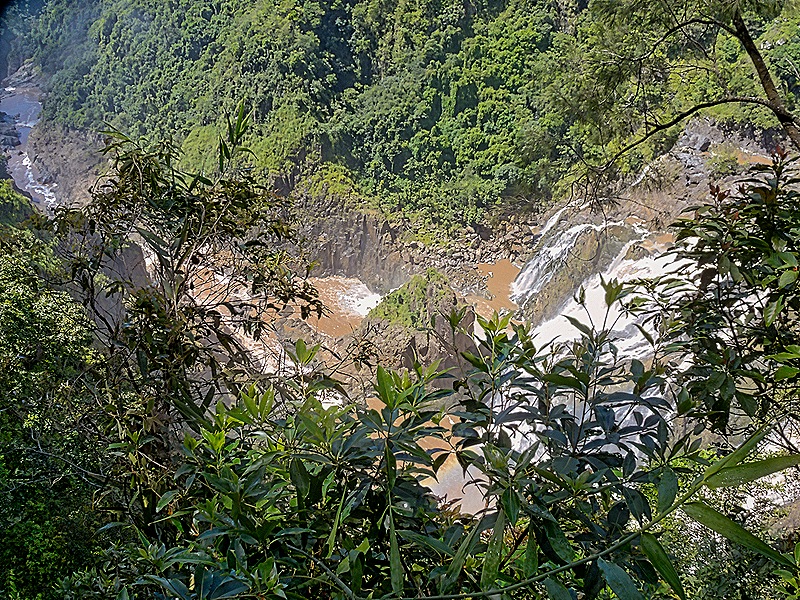
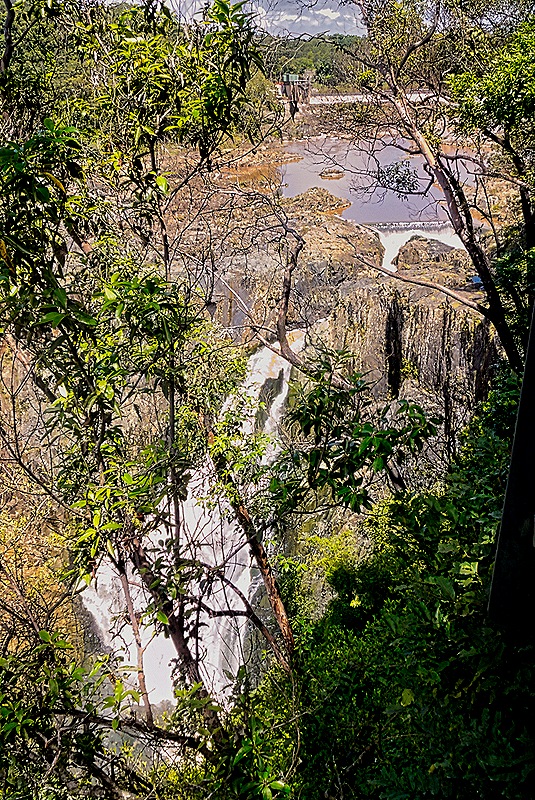
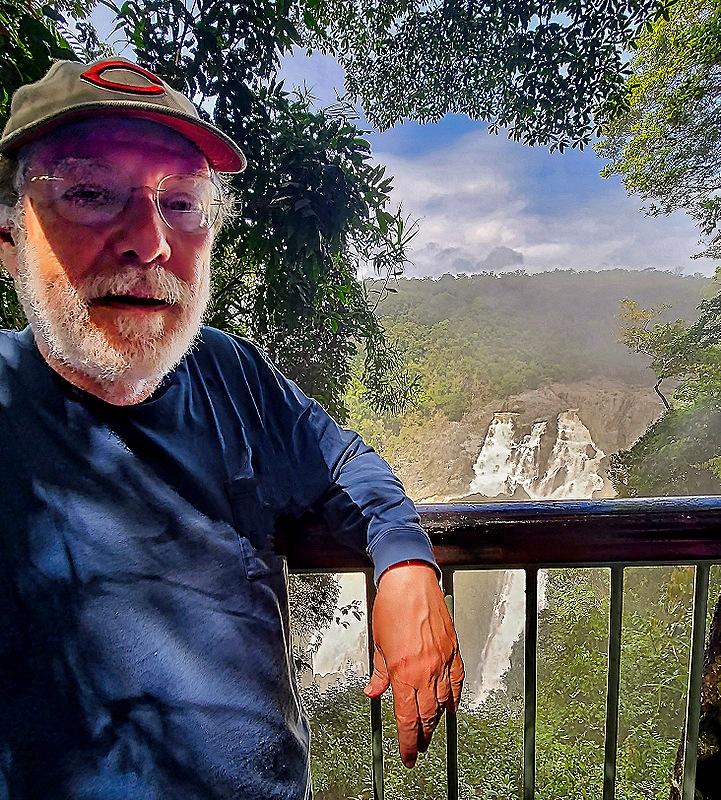
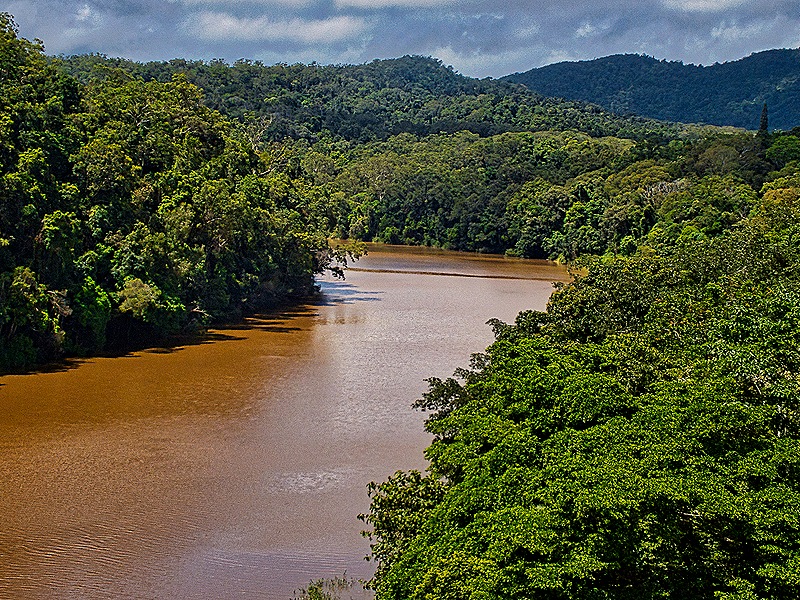
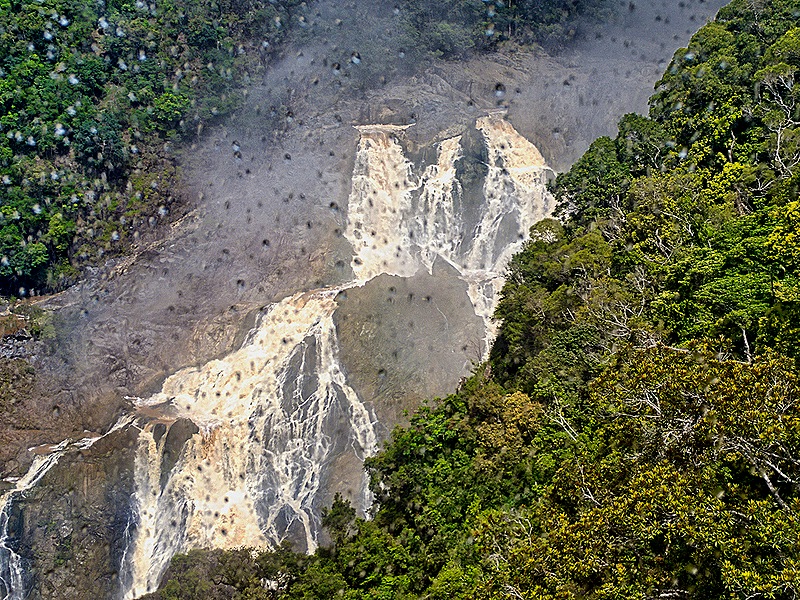
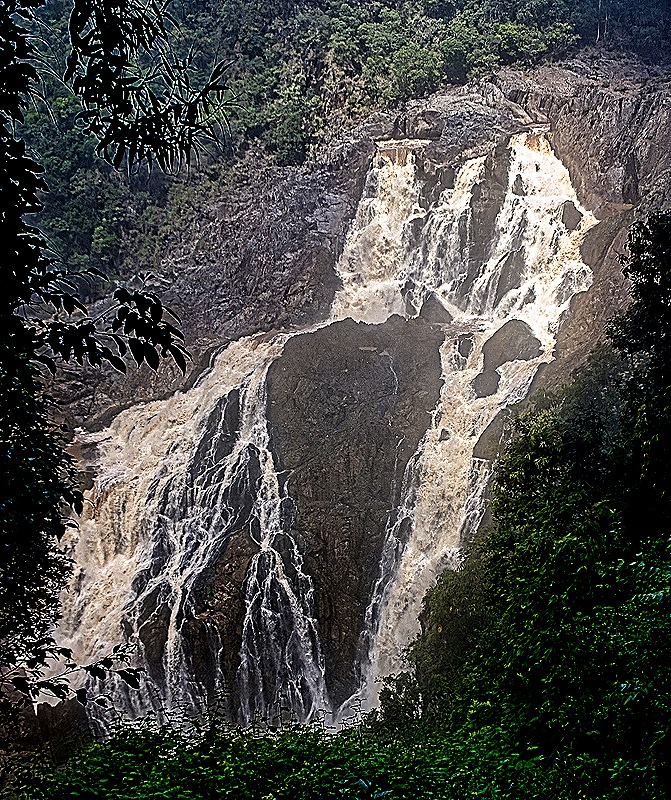
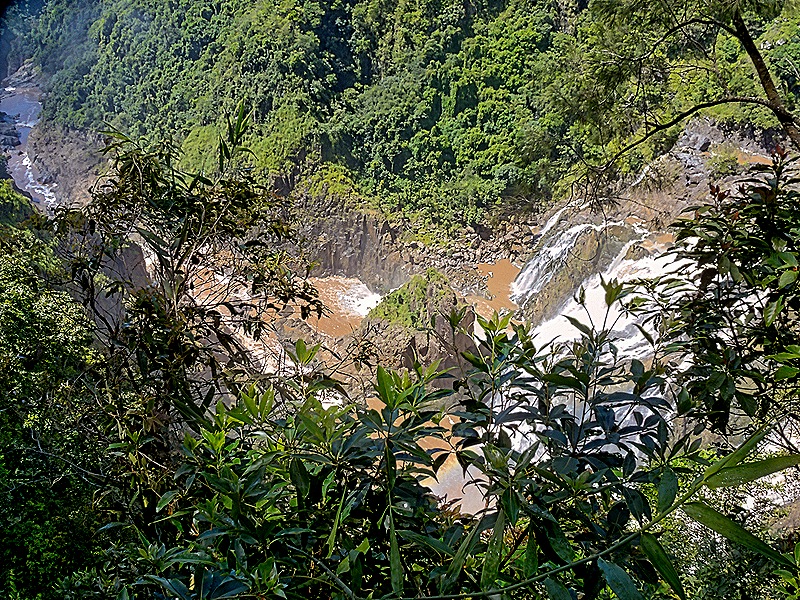
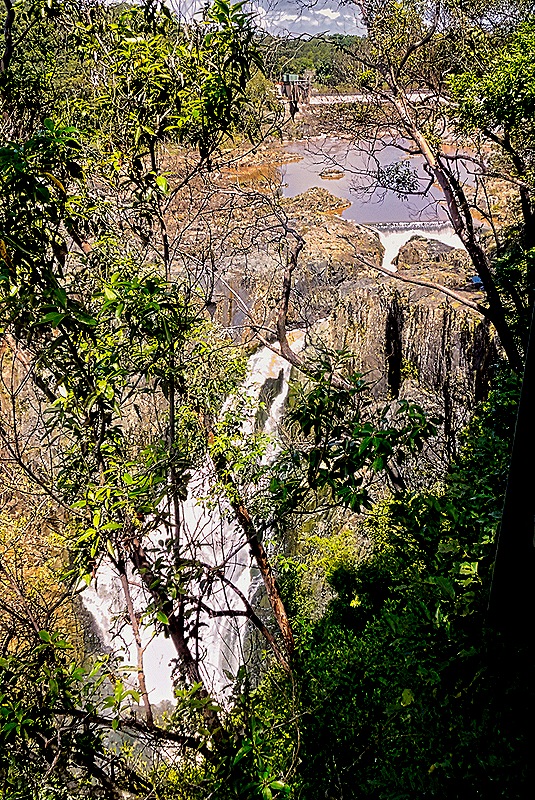
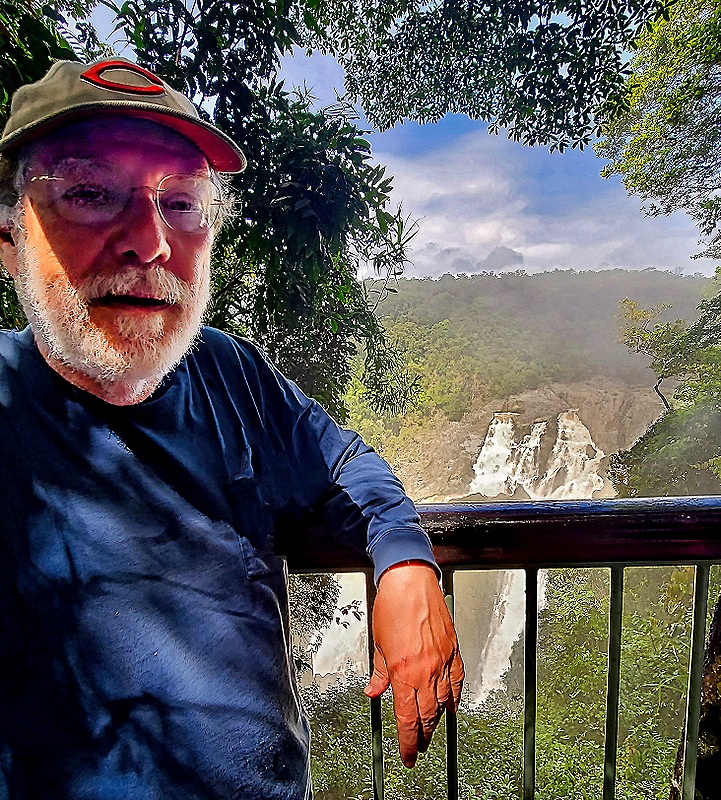
In the distance we could begin to see the 850 foot Barron Falls (called Din Din by the indigenous people) dropping water from the Barron River into the Barron Gorge below. There has been an underground hydroelectric power station above the waterfalls since the 1930’s. We were let out of the gondola again to explore another set of walkways that took us to several places with good views of the Falls. Most of the year the Falls have much less water than this but our visit was during the rainy season when the water flowing over the falls seemed plentiful. Still, we understand that following a substantial period of rain the flow can be much fuller and visitors standing where we did sometimes get a little wet. After we left the picture stop we passed over the reservoir of the Barron River upstream from the falls, created by the hydroelectric station diverting some of the water through its slower mechanism.
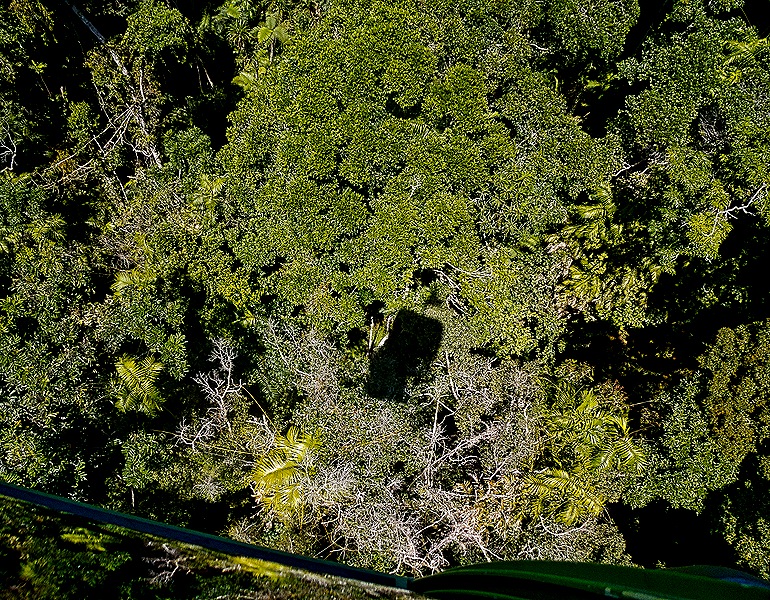
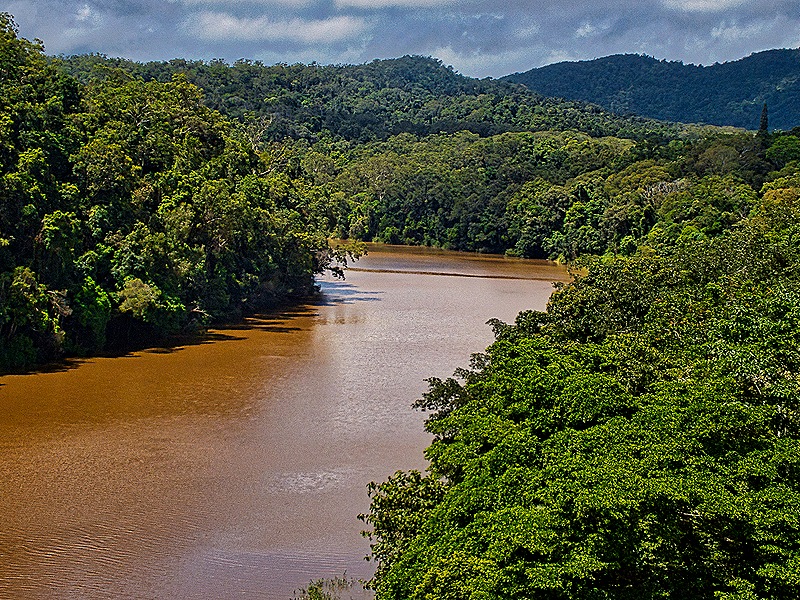
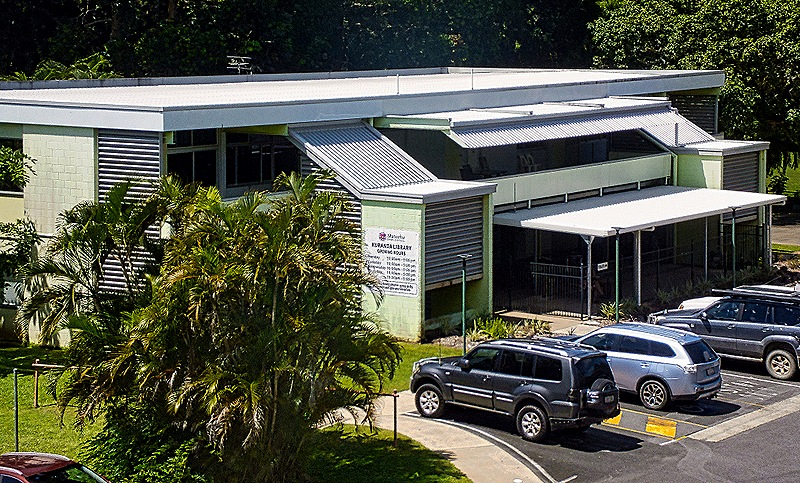
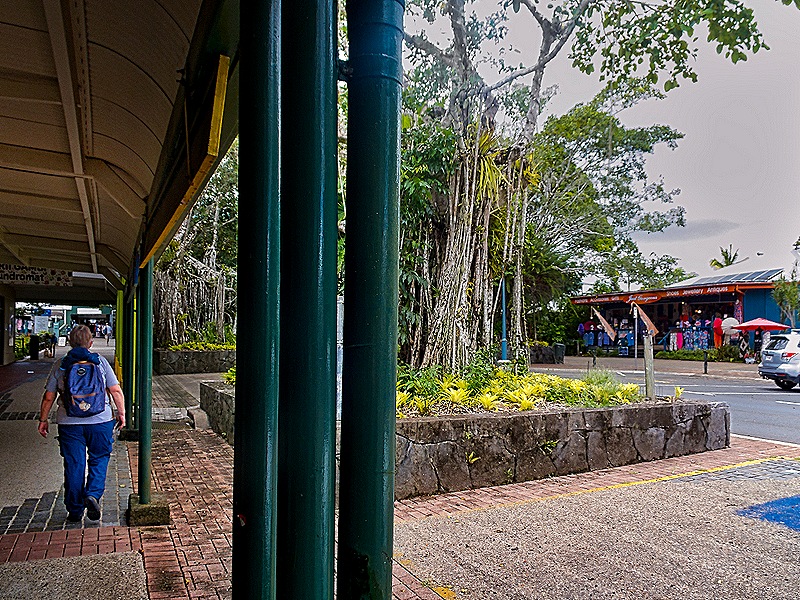
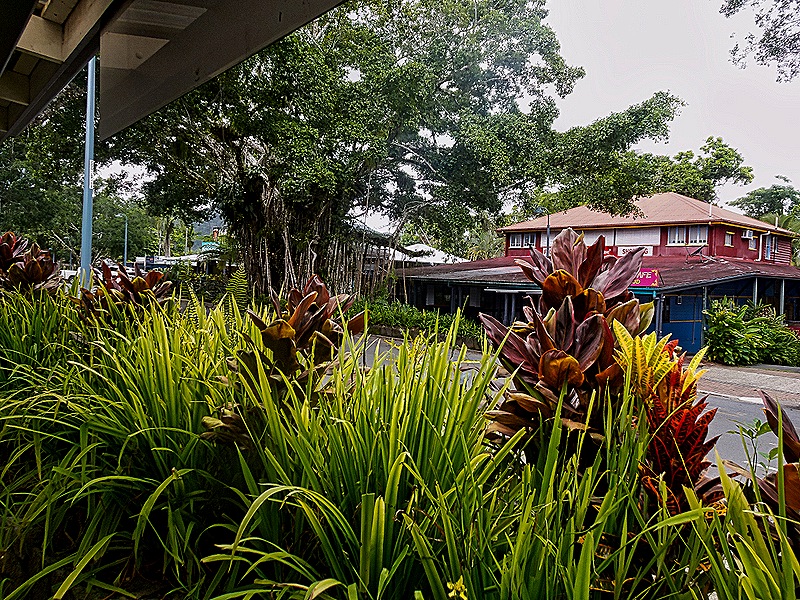
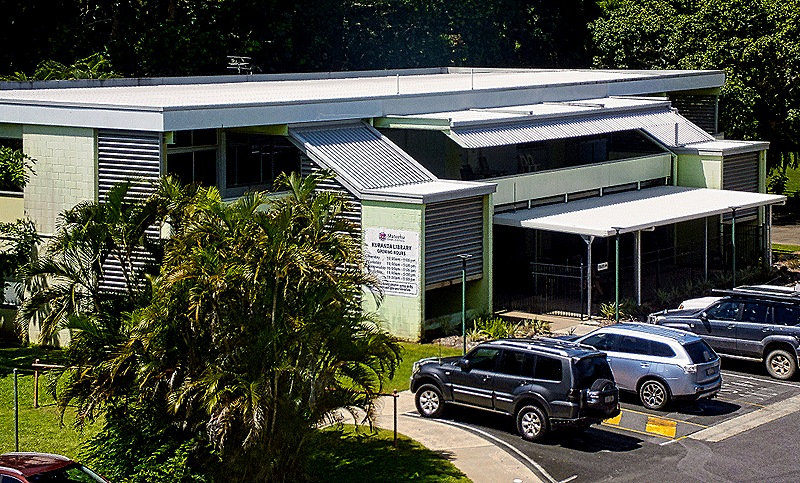
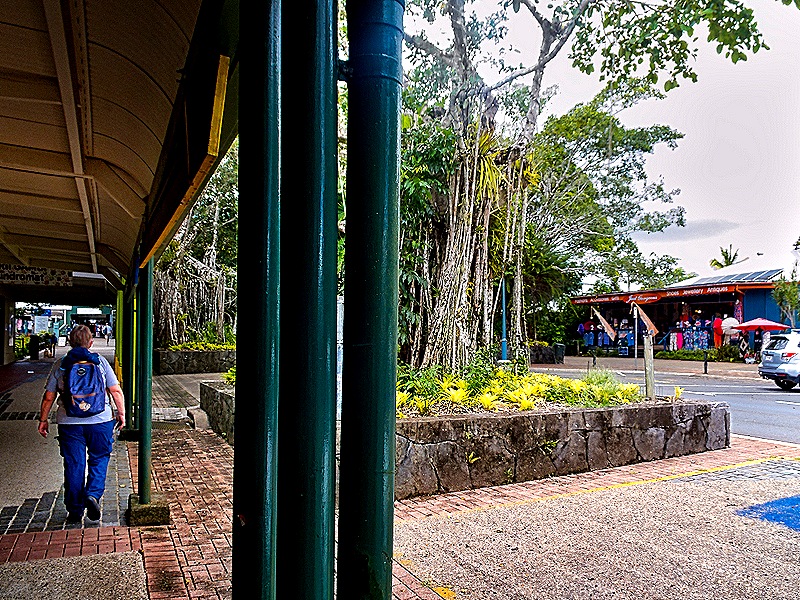
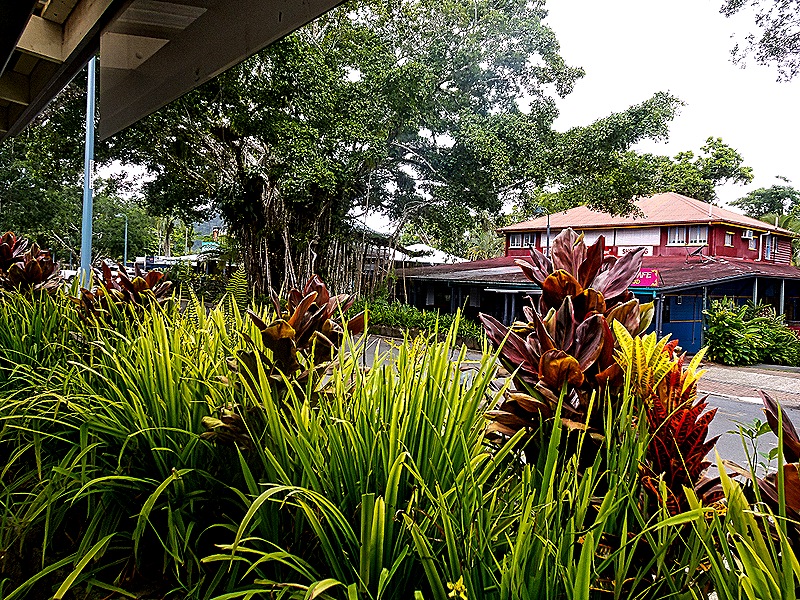
The cable car ride ended at a station just downhill of the town of Kuranda. Before we even reached the town we spotted the Kuranda library, which we passed over just before the end. The library opened in 1996, but it was too far from town to walk there during the time we had in Kuranda. The walk into town from the cable station was, of course, all uphill, but happily it was much cooler here than in Cairns yesterday, undoubtedly because of the elevation. The town is pleasant and quaint and we were glad to have some time to walk around (our friend Karen was on a different Kuranda excursion that had no time in town before having to go back because of some kind of mix up in the transportation arrangements). The town had a lot of open space and attractive flora.
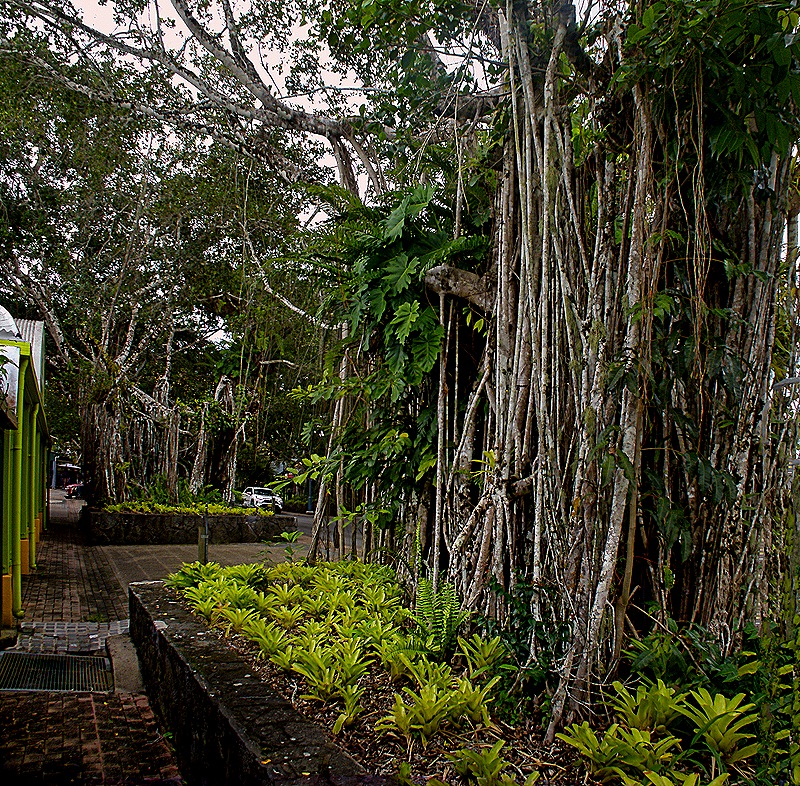
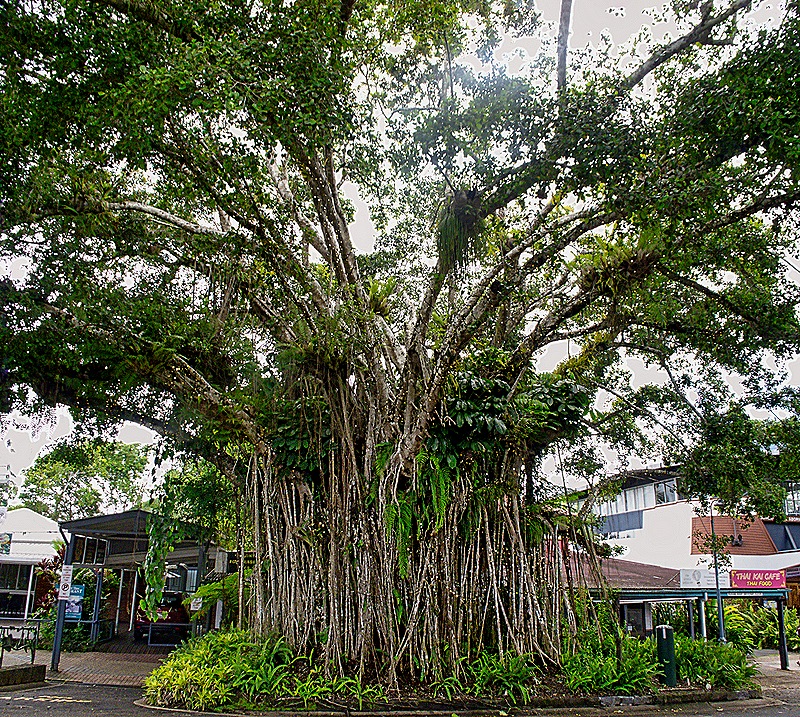
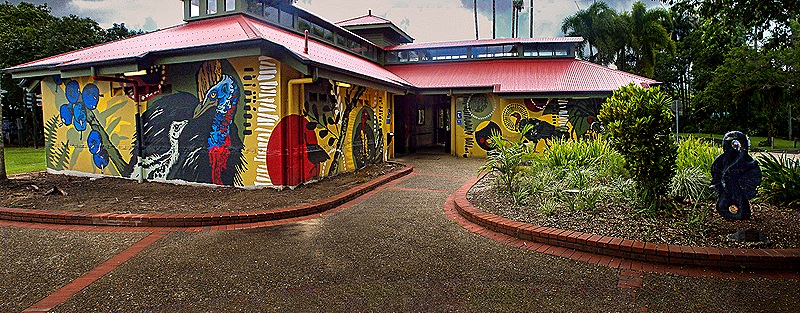
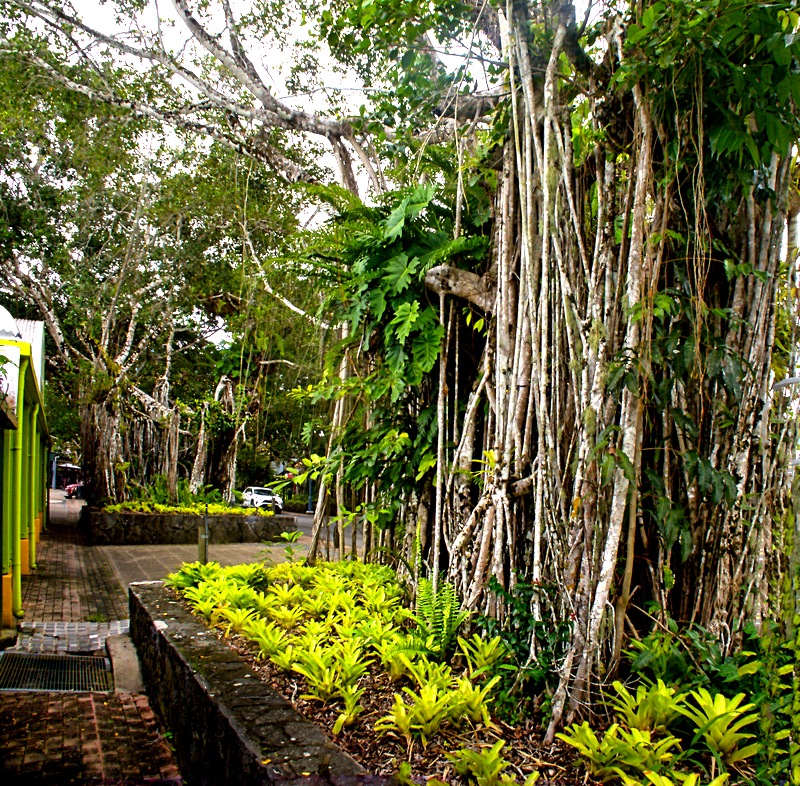
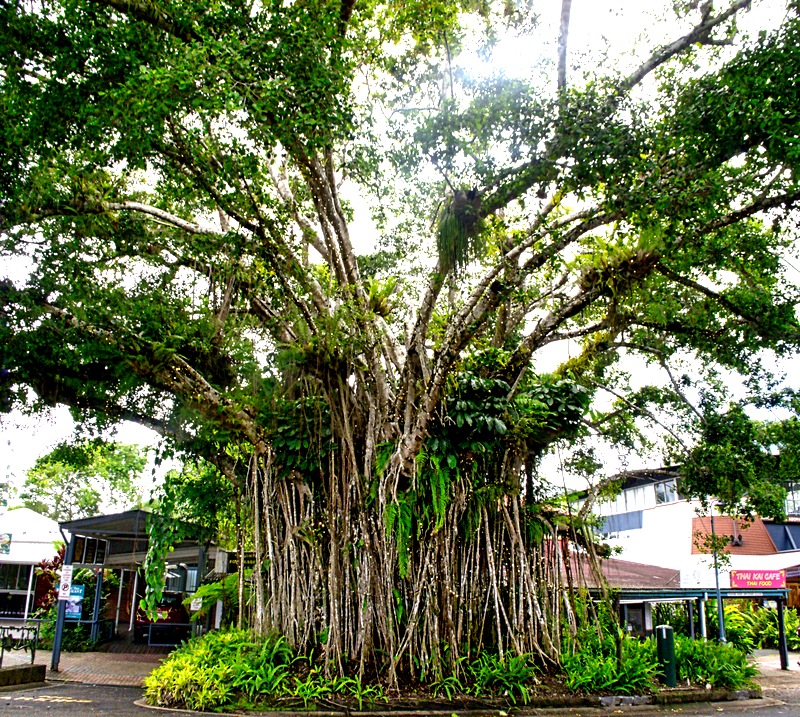
We walked around the town for awhile, visiting shops and galleries (including one selling very nice Aboriginal art, at prices far higher than the last time we were in Australia) and met the very helpful folks at the information center which had its own interesting display of regional art. One long, low building was covered in very bright paintings. We also walked down the Kuranda Fig Tree Avenue featuring 27 mature fig trees (including banyans) planted in 1931 on both sides of Coondoo street, the town’s main street. They make for a very pleasant shaded walk. There were some tourist attractions here, including a zoo, a “koala garden” and a “butterfly sanctuary,” but we didn’t see them.
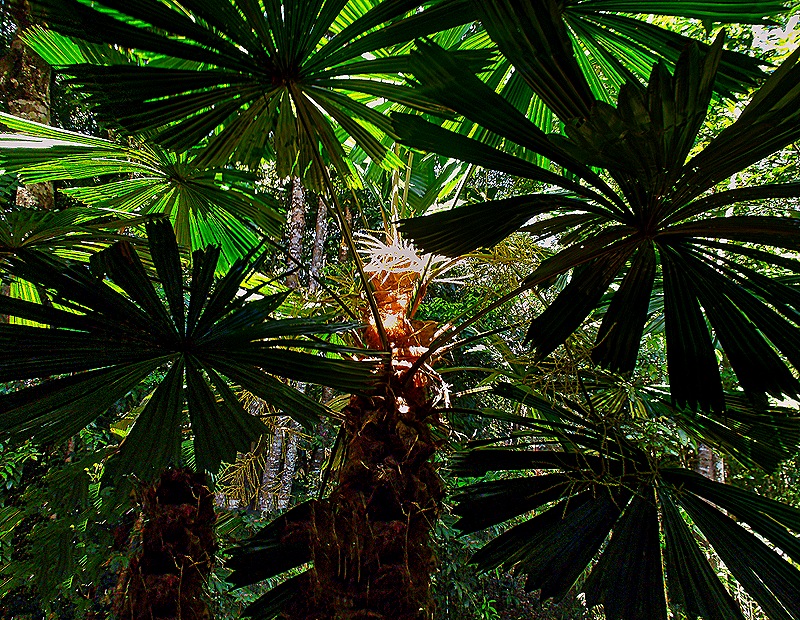
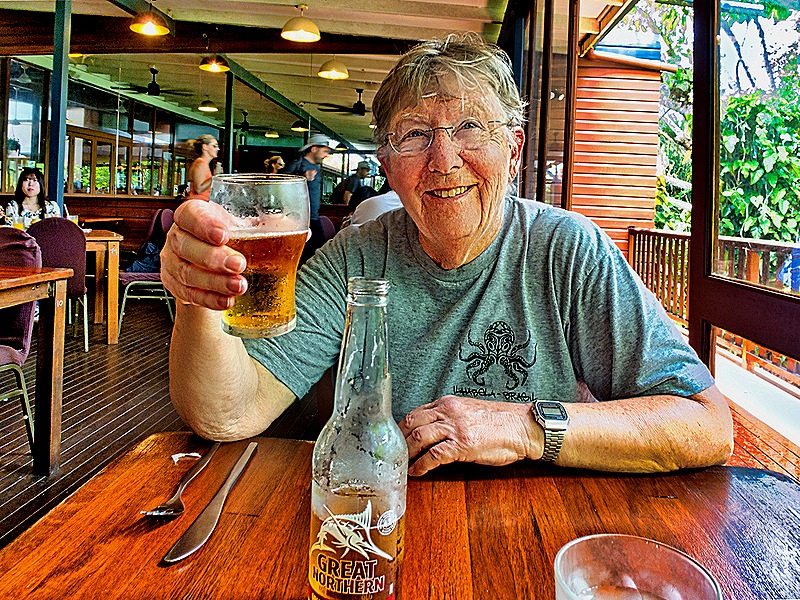
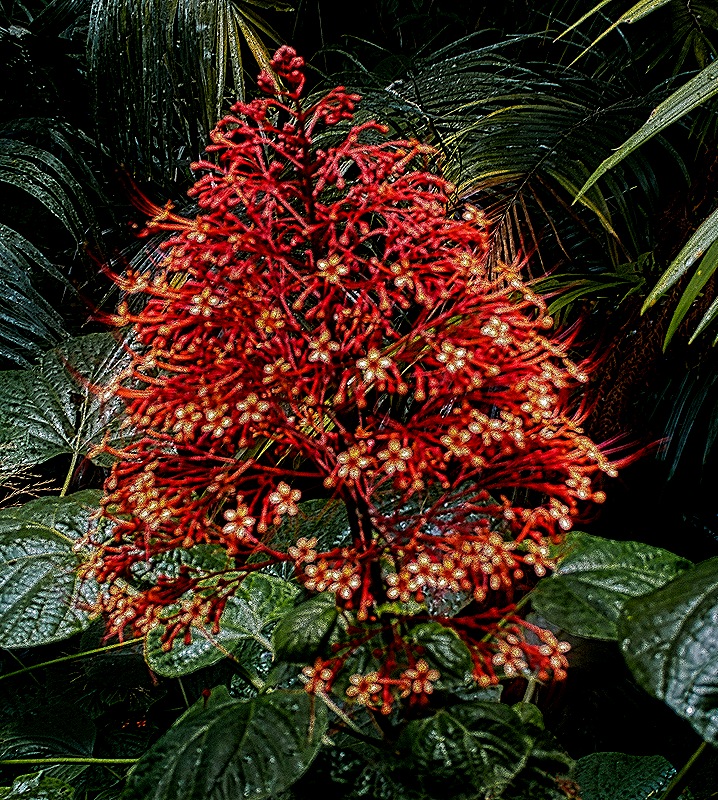
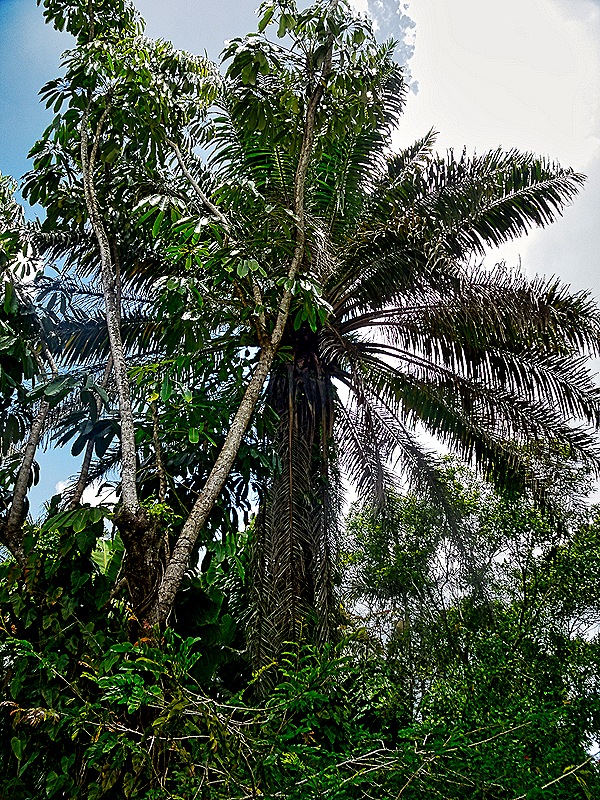
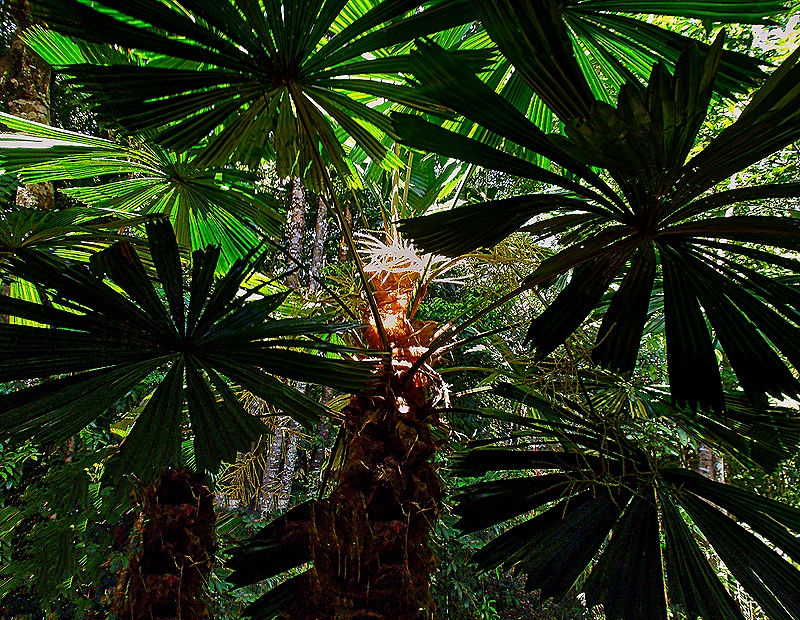
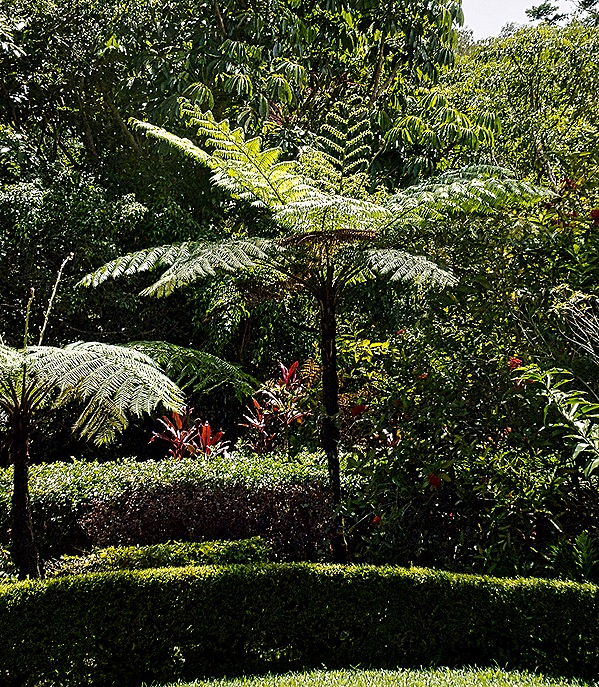
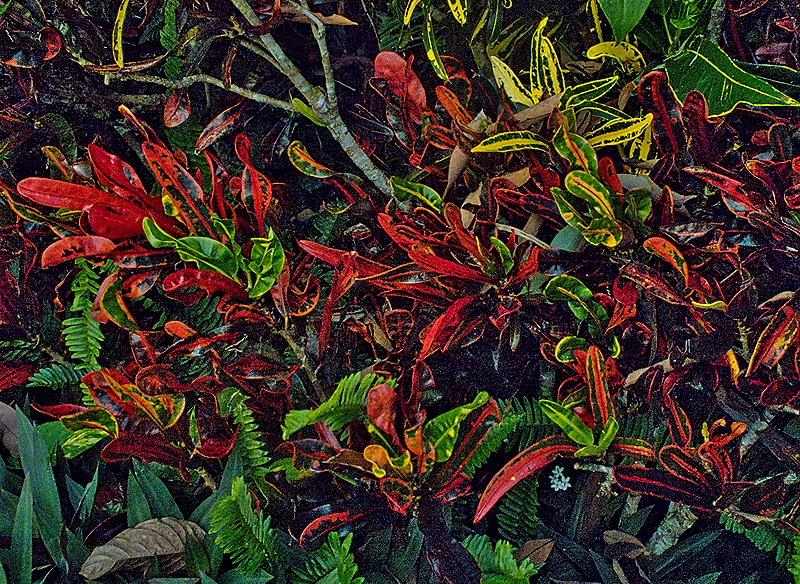
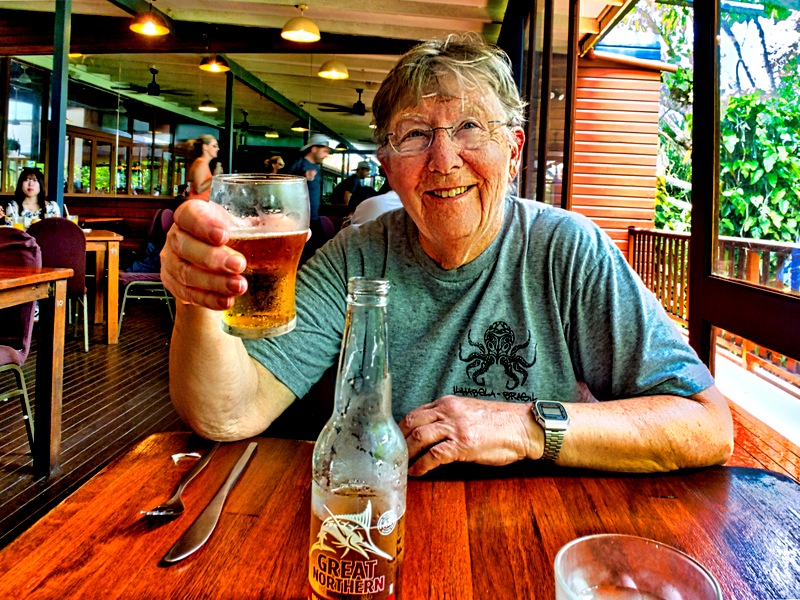
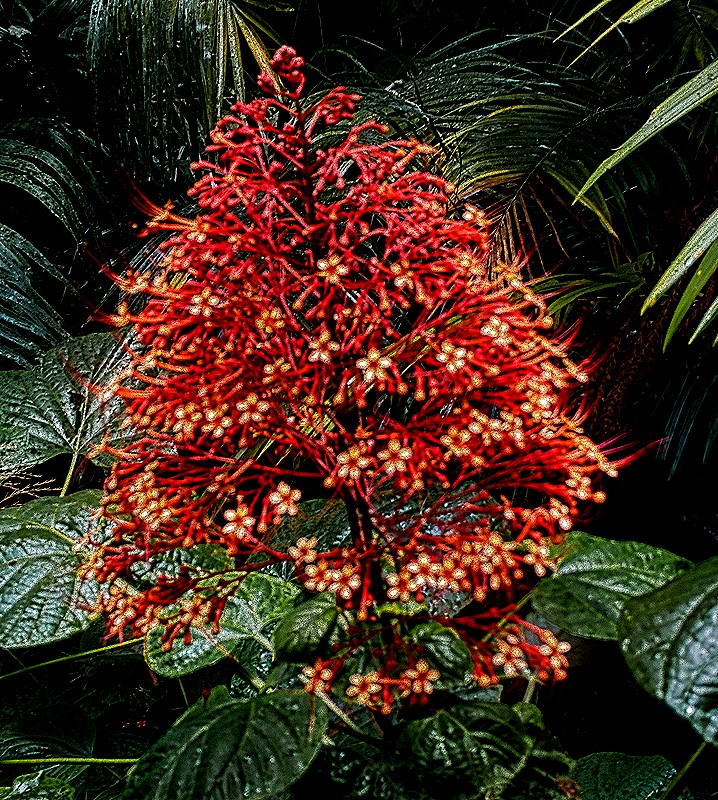
We stopped in a nice restaurant for lunch. We had a table next to a wall of glass doors in the back, which had a veranda with a nice view overlooking a hillside thick with flora. Rick stepped out and got pictures of a massive palm (or possibly fern) tree overlooking the veranda and a bush with orange flower stalks of a kind we had never seen before.
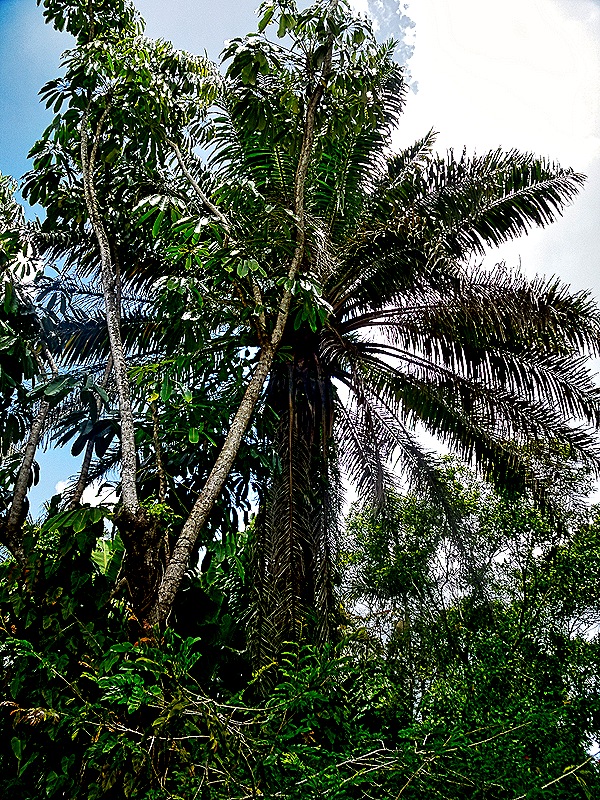
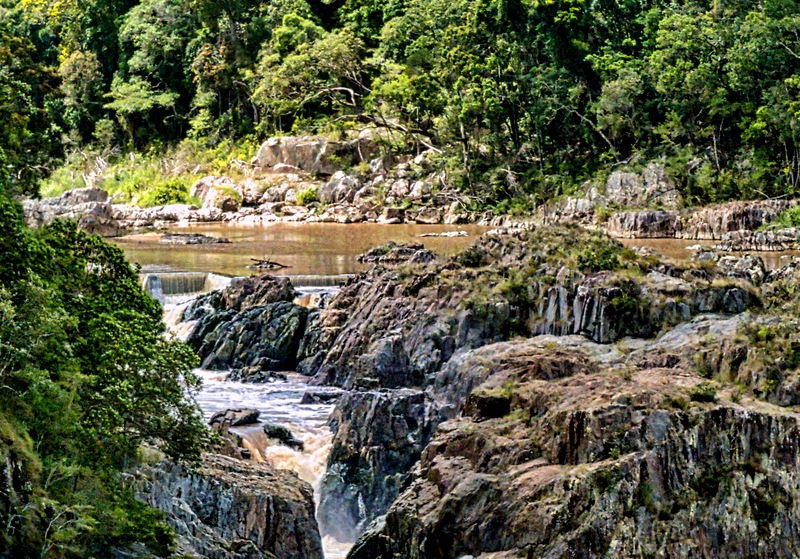
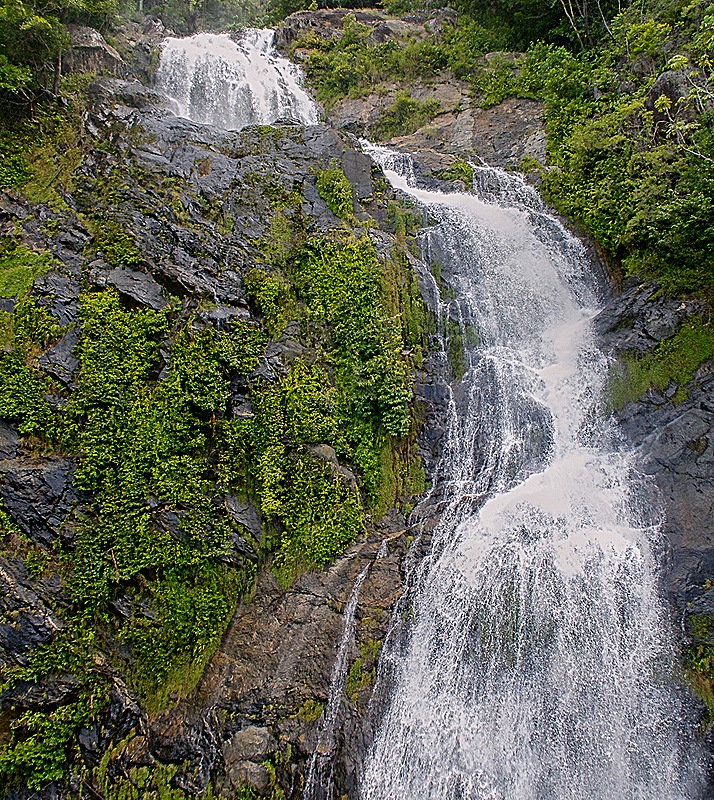
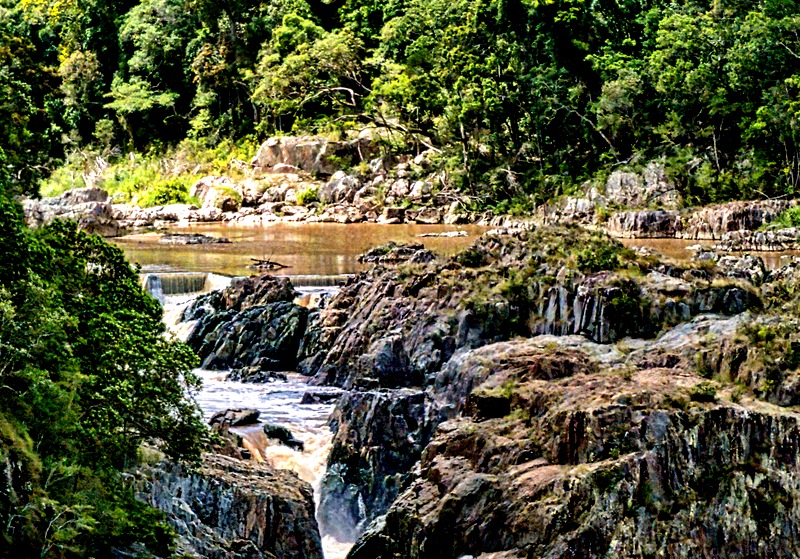
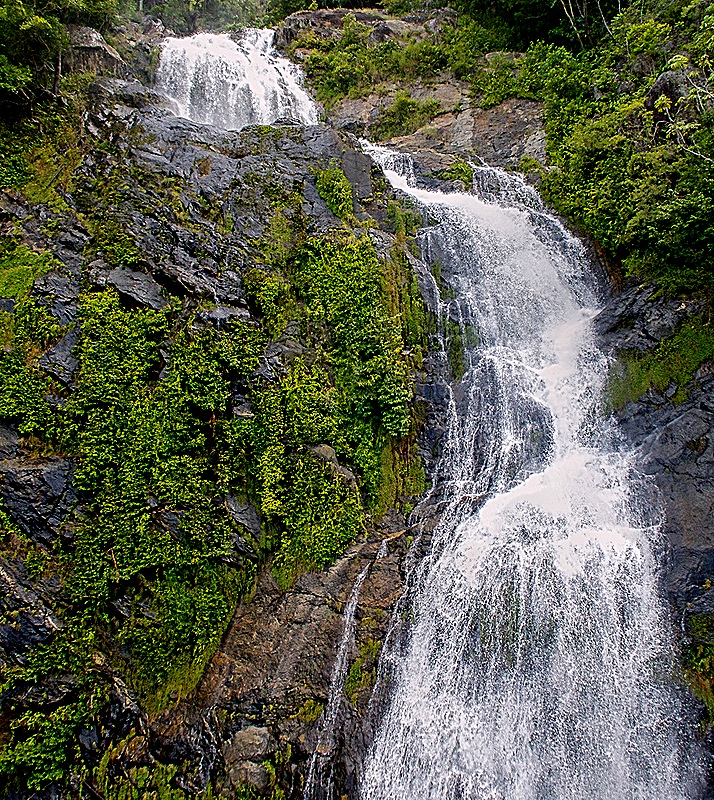
After lunch it was time to head back down to the railroad station. The station dates back to 1914 and sits in a “tropical garden” that has won a number of rain station garden competitions. The Kuranda Scenic Railway opened in 1891 and began carrying tourists in 1937. We sat near the tracks at the station until our train pulled up and we could board. It was a longer trip back on the train (about an hour and a half) than the trip up on the cable car, and it was pretty hot (no air conditioning) in the carriage (built around 1910) with only hard straight backed wooden benches to sit on. We have no pictures of the train or the station and didn’t have seats close enough to a window to take many pictures of the trip. But to prove we really did ride the train, here are two pictures taken through the window. The first is a nice view of the very top of Barron Falls, where you can see the water falling over the straight edge of what we think is the underground hydroelectric station’s apparatus just before running down into the falls. The second is of Stoney Creek Falls in the Barron Gorge, as we passed right in front of it on a trestle bridge. It was so close that the water seemed to be falling right under the train.
We sailed away that evening for five relaxing sea days before reaching our next stop.
Kiriwina Island, Trobriand Islands, Papua New Guinea 2026
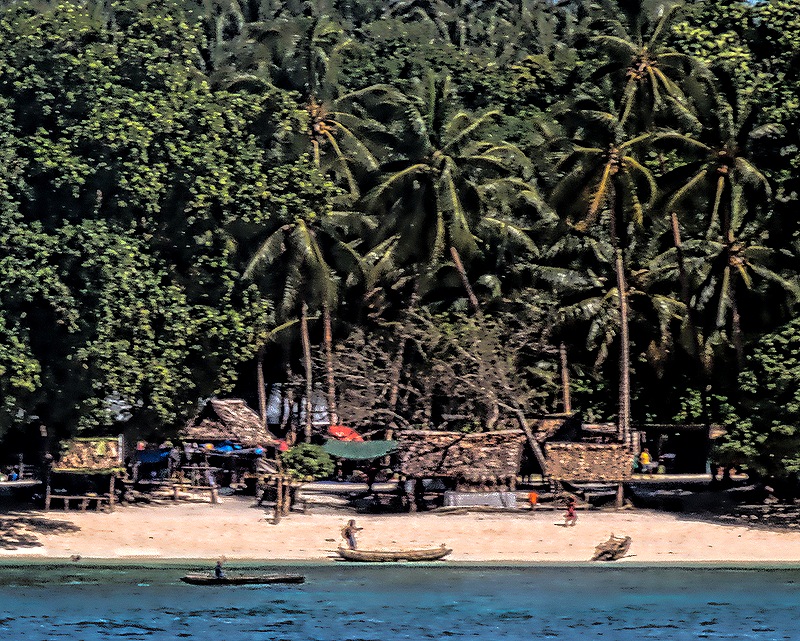
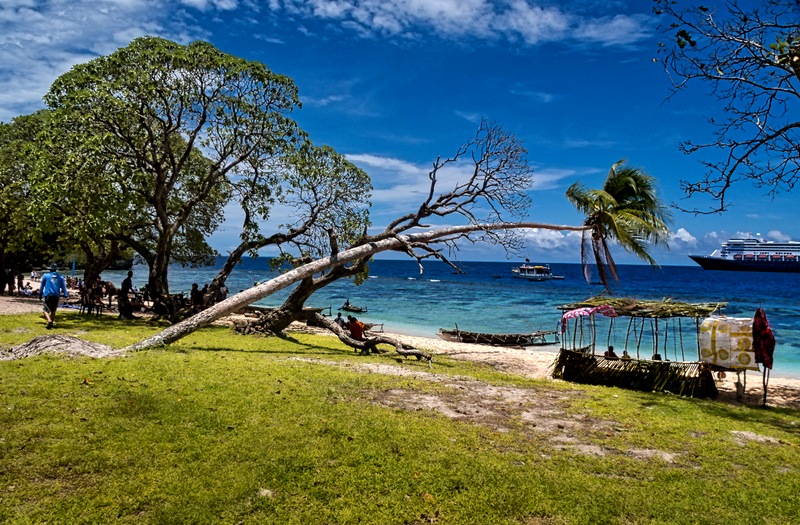
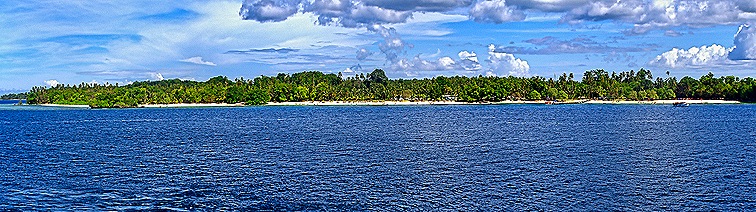
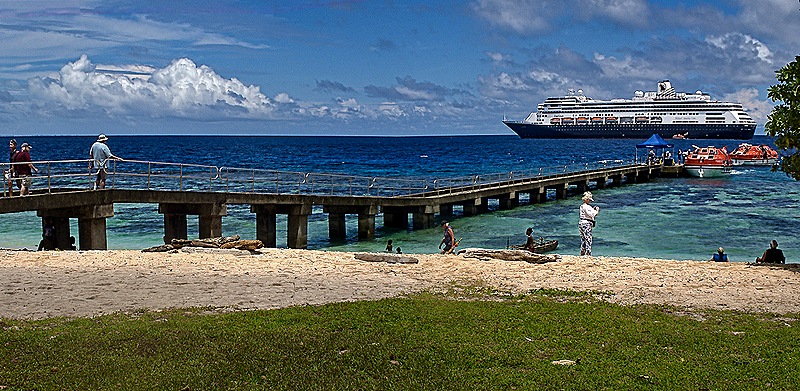
February 6 found us anchored within sight of beautiful Kaibola Beach on Kiriwina Island. It has a small pier for tender boats but beyond that it is mostly white sand, very clear water and dense forest. No town was in sight and no tours or excursions of any kind were on offer. Notably, an Australian couple who had lived here for several years were among the lecturers on board but for some reason HAL did not have them do a presentation about this island. We had breakfast with them in the morning before our visit and they were as puzzled about that as we were. So without much information or assistance from the cruise line it was a matter of tendering in, then seeing what there was to see.
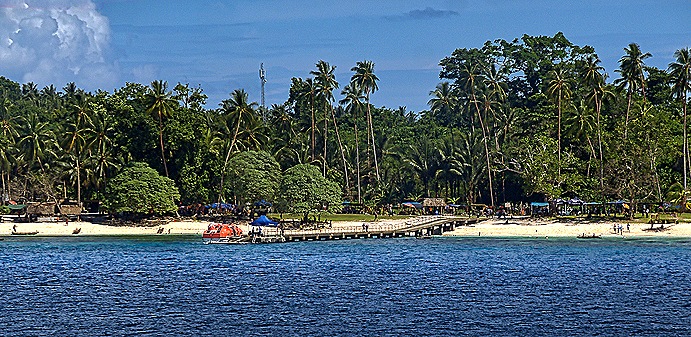
Kiriwina is the largest of the Trobriand Islands, an archipelago that is within the Milne Bay Province of New Guinea, the capital of which is Alotau which we visited yesterday. Most of the 60,000 or so people (estimates vary widely) living on the Trobriand Islands are on Kiriwina. The first European visit to the Trobriands was in 1793, when the islands were named after an officer on that French ship. The first European settled here in 1894 and before World War I the Australians had established a government facility. The Trobriands became much better known to the outside world during the 1920’s through the publications of anthropologist Bronislaw Malinowski, who lived here and studied the unusual culture during World War I.
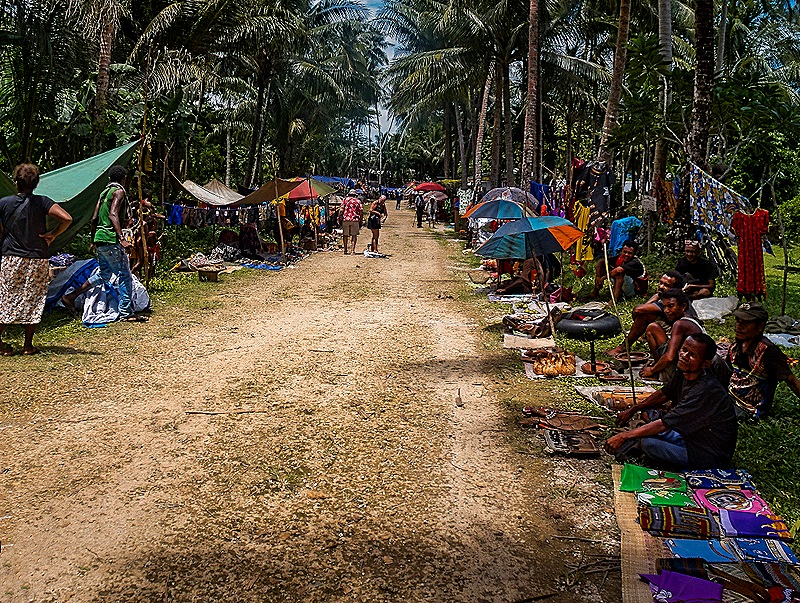
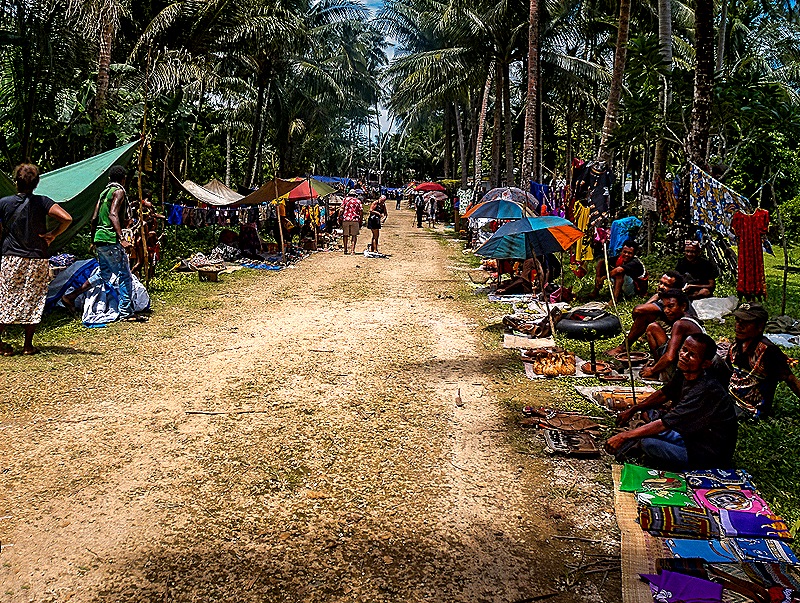
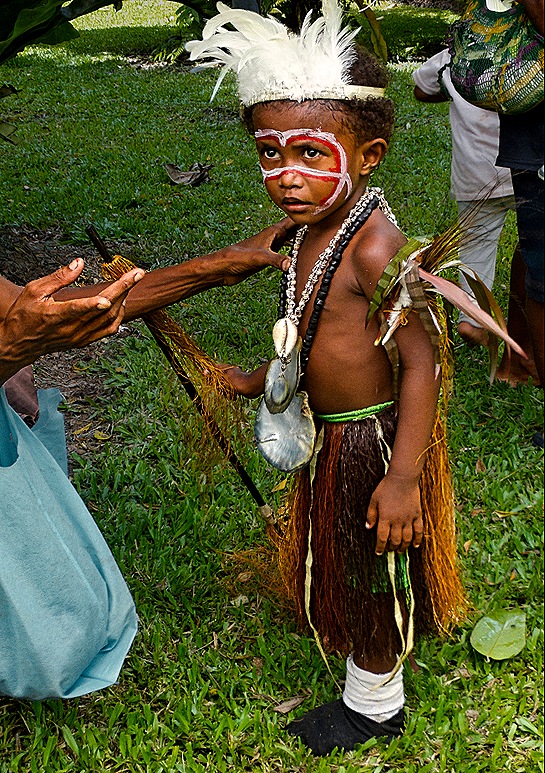
We tendered to the island in mid-morning. The word clearly was out among the islanders that a cruise ship would be there because the dirt roads in the area were lined with hundreds of vendors displaying their wares (mostly wood carvings and clothing), usually on a mat or blanket on the ground. Some had children dressed in traditional attire who posed for photographs. Other children were jumping off the tender pier as we walked past them. The Trobriands are known for elaborate wood carving and there were many examples on display but most of the designs were similar from vendor to vendor so it was difficult for a visitor (or at least these visitors) to tell which were authentic items made by islanders and which (if any) were imported from elsewhere (most likely China). The items we liked best were too big to take home on a plane from San Diego and we did not have any local currency, which is strongly preferred, so we ended up looking but not buying. We have read that some visitors have found vendors here to be aggressive but we did not. We understand that many of the local people one meets here on cruise ship days come from neighboring villages and even neighboring islands.
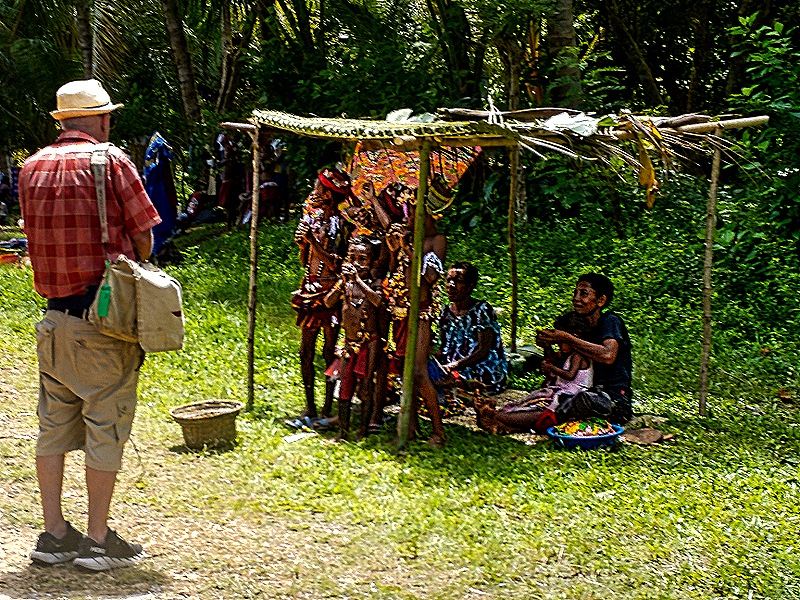
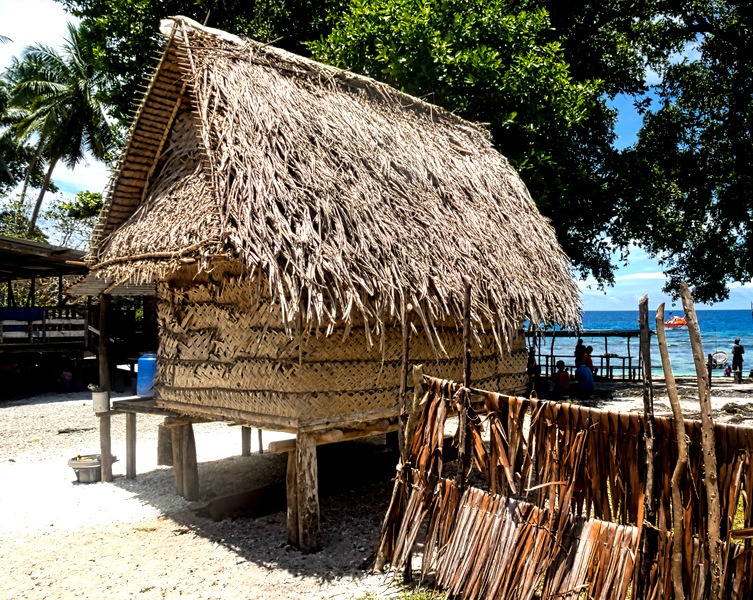
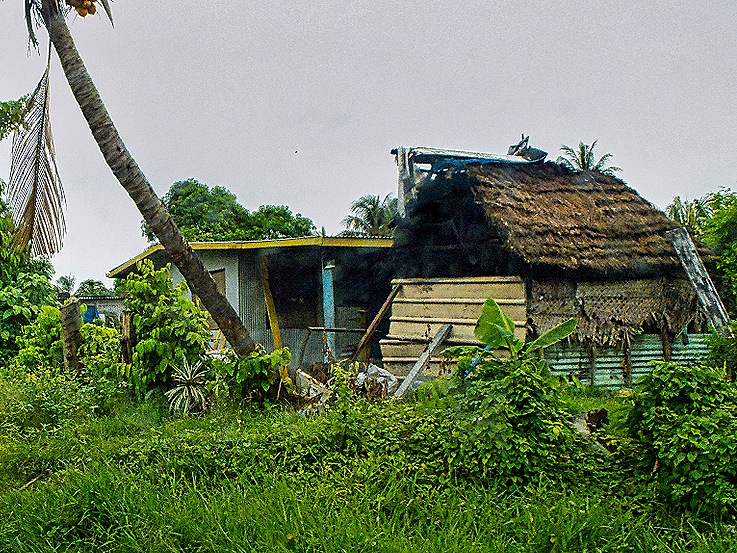
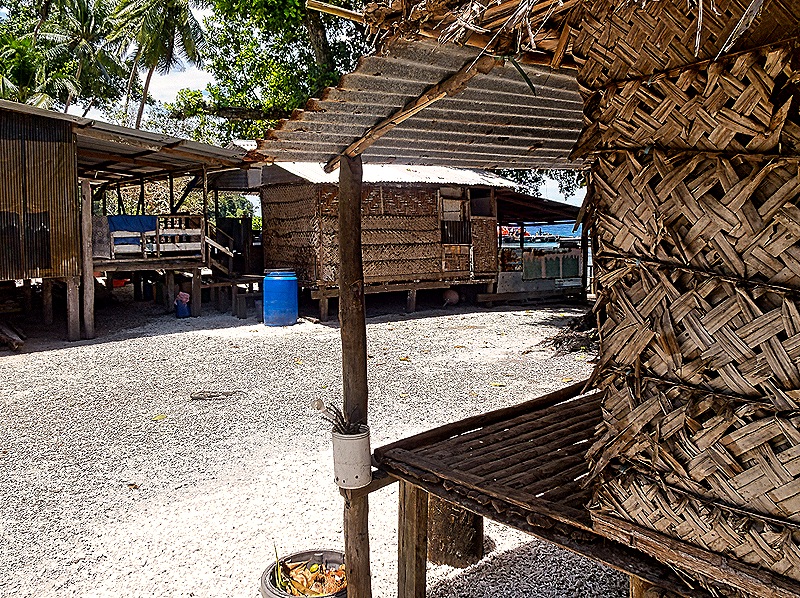
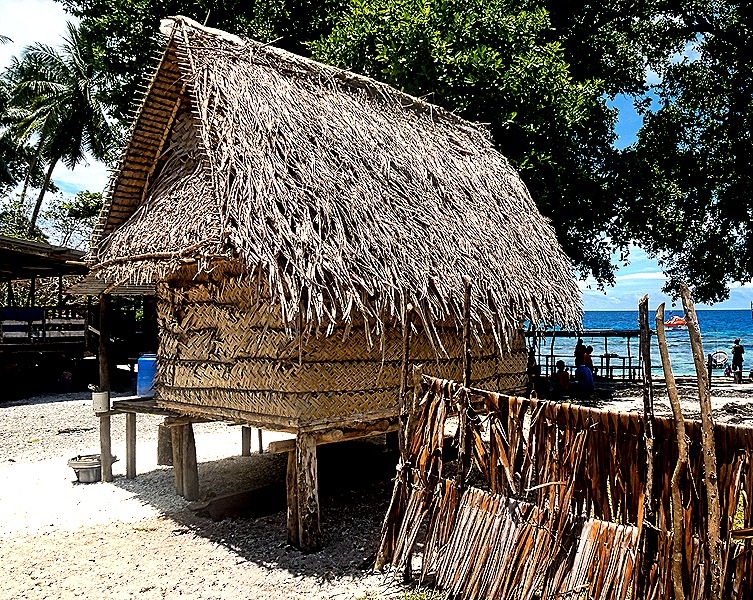
We walked through a thatched hut village not far from the pier. It looked real enough and probably was representative of how many people on this island live. But we didn’t see anybody acting like they lived there, so it could be a demonstration village rather than a living one. If so, it was still interesting.
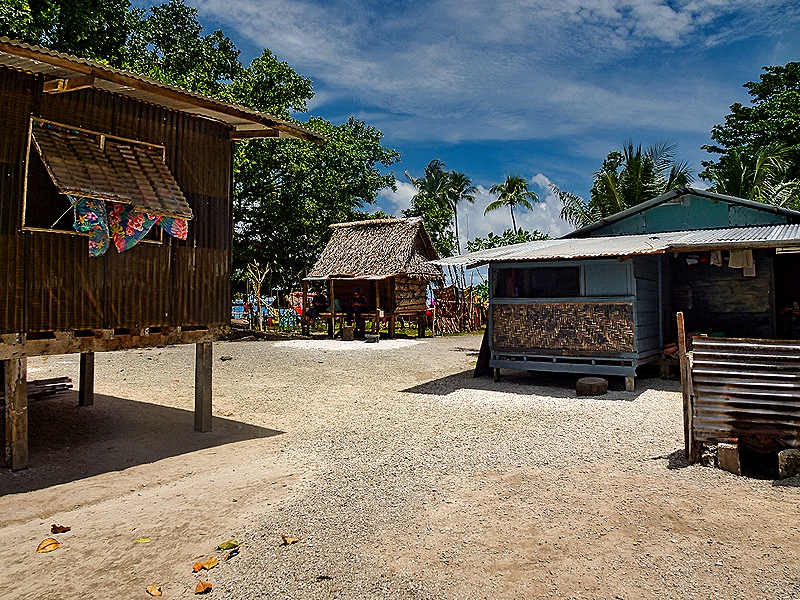
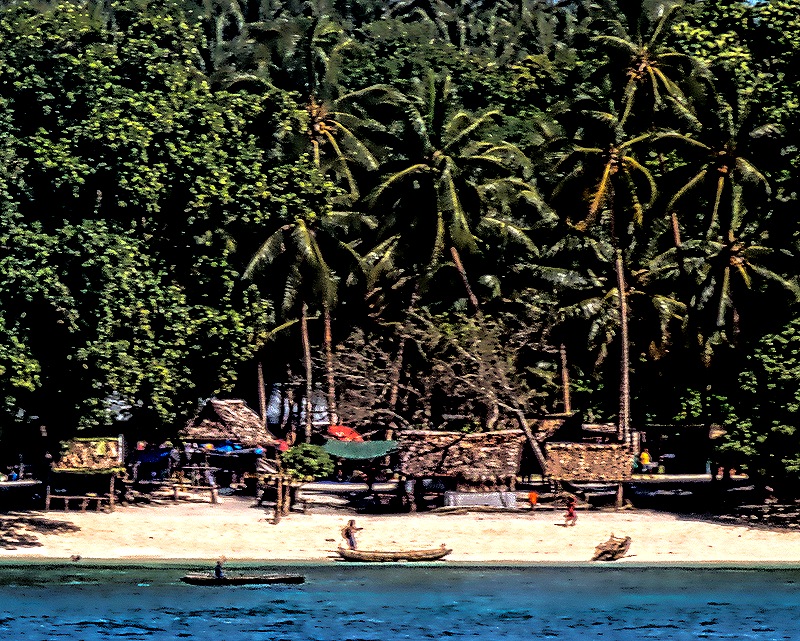
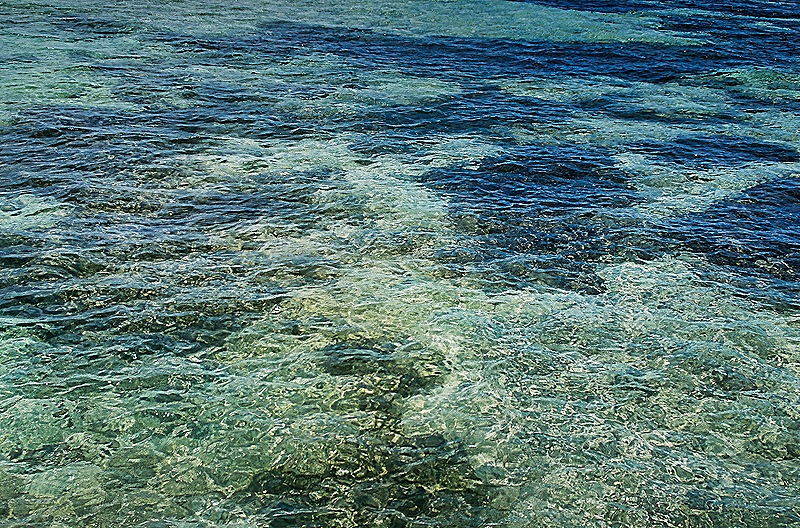
The main attraction here, however, was undoubtedly the beach. The ocean water was extremely clear and the bottom was always clearly visible. There were a number of young men with boats on or near the shore who were probably there in the hope of finding a paying passenger to take out on the water or perhaps to a village in the area. It looked enticing but kind of uncertain and again, we had no local currency anyway. Many trees were growing right by the beach, which was a great respite from the very hot sun.
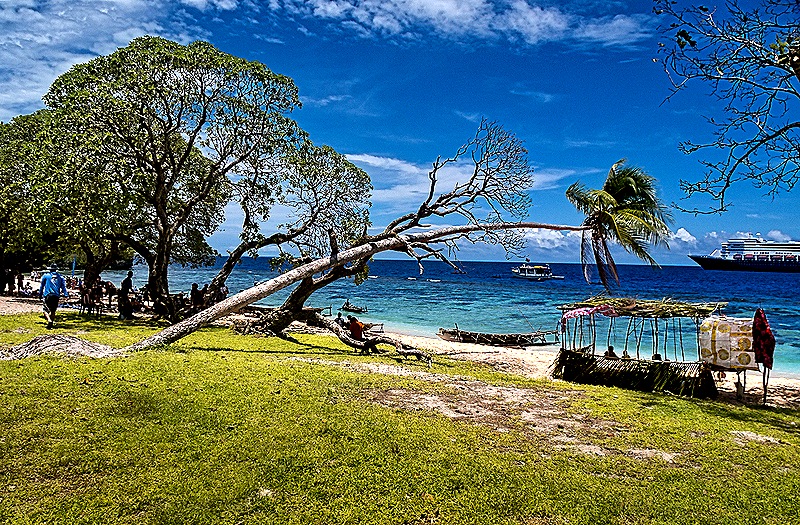
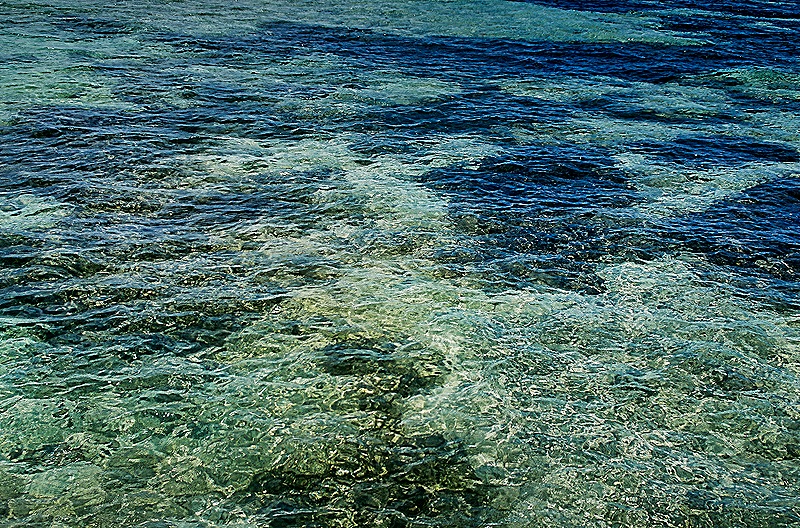
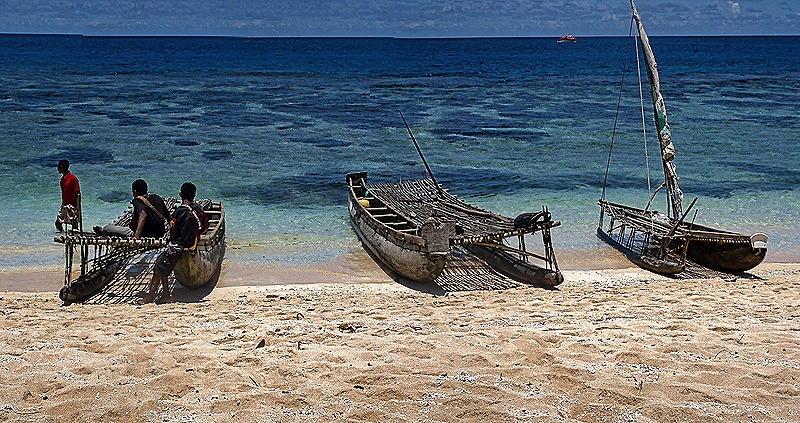
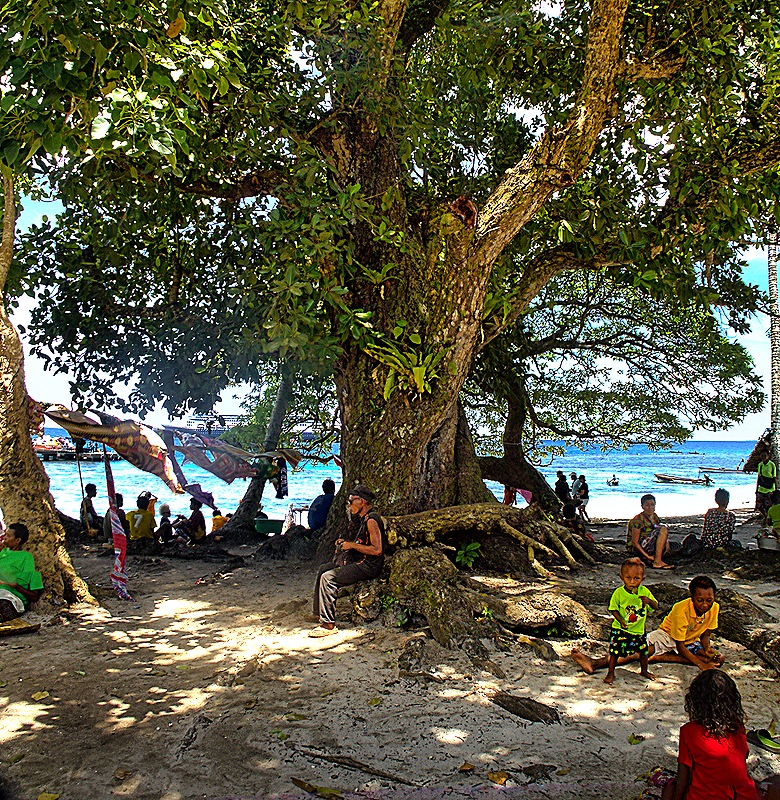
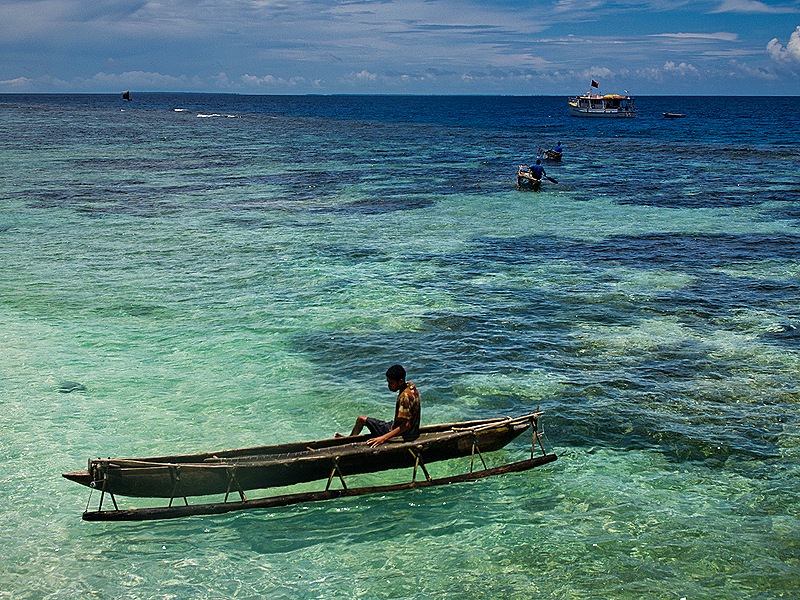
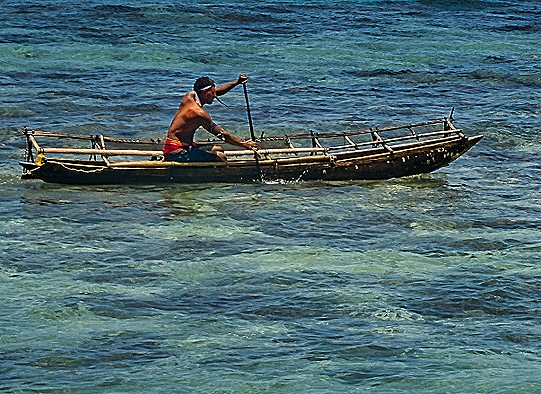
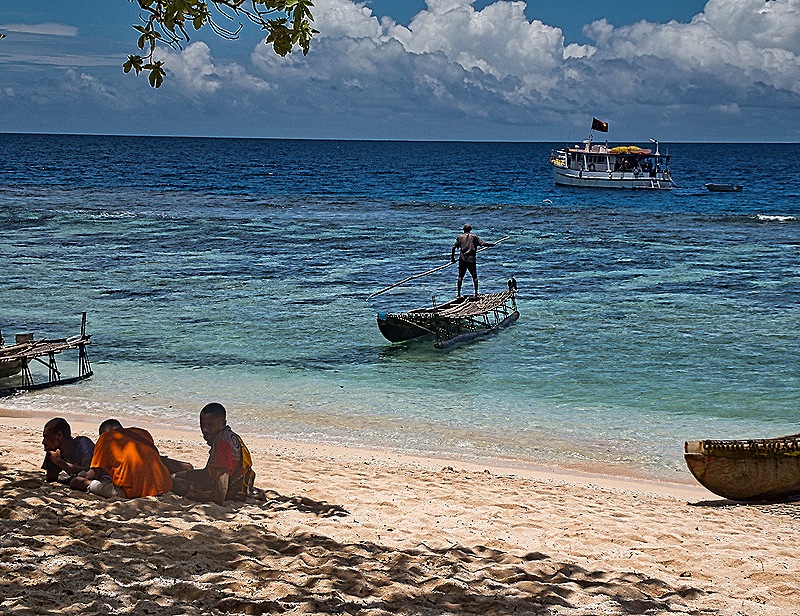
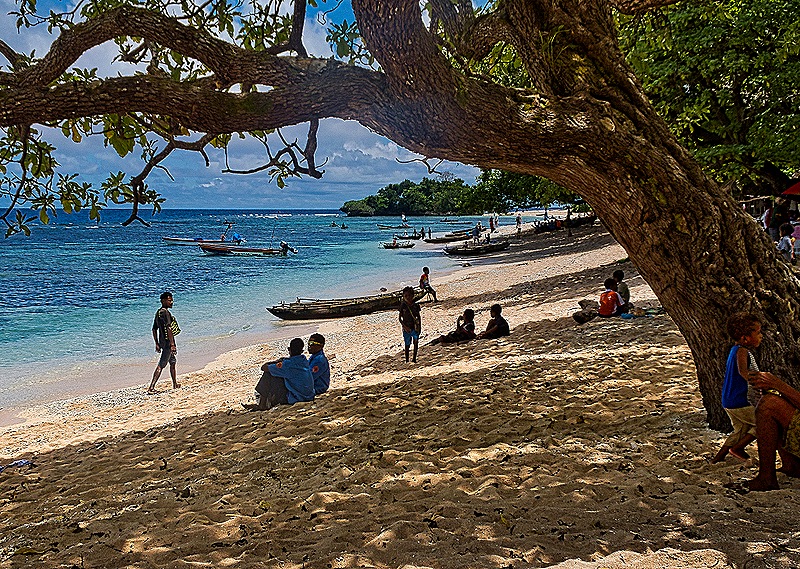
After two or three hours we were done in by the heat and humidity so we walked back to the tender pier and returned to the Zaandam. As this was our last island visit in the first part of this voyage we sailed away this evening toward Australia.
Alotau, Papua New Guinea 2026
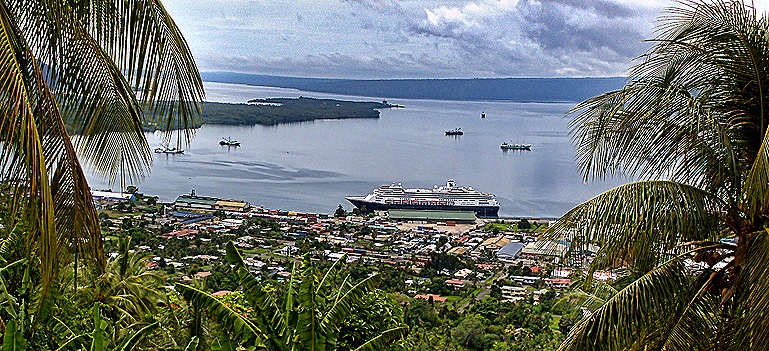
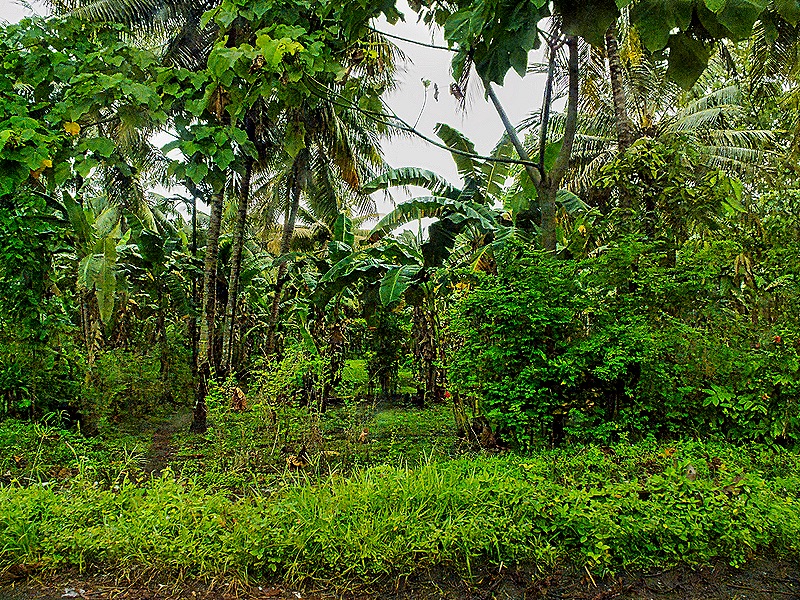
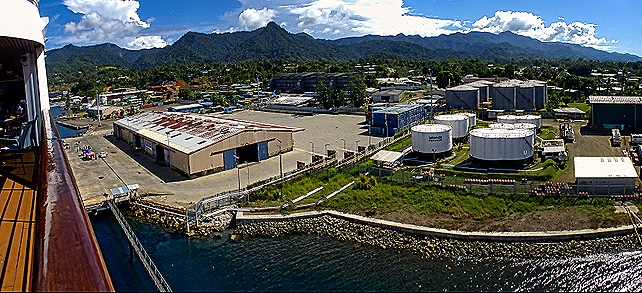
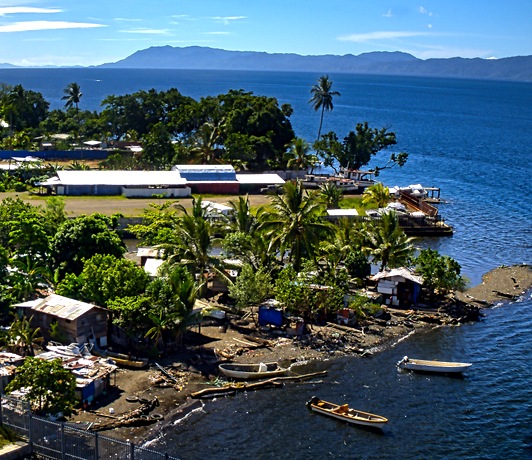
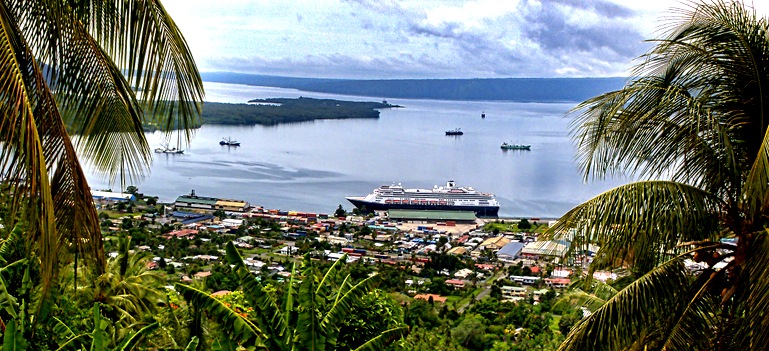
On February 5 we were in Alotau on the point of the New Guinea Peninsula, the easternmost spot on the island of New Guinea. The town was established in 1968 to serve as the administrative capital of Milne Bay Province. Today its population is around 15,000. Our excursion left later in the morning so we went up to the top deck to see what the area looked like. It was mountainous with a green tropical ambiance.
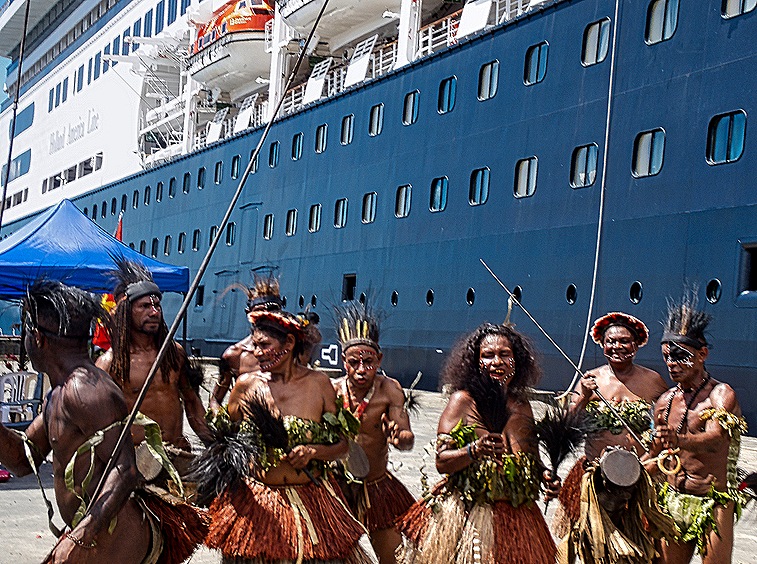
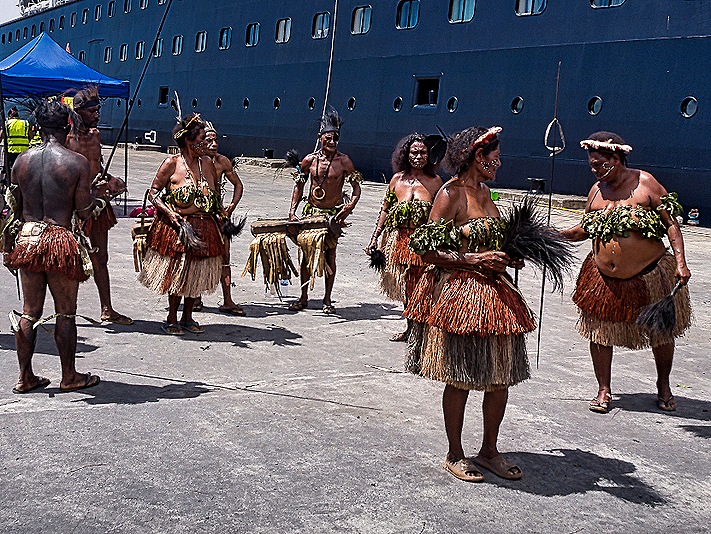
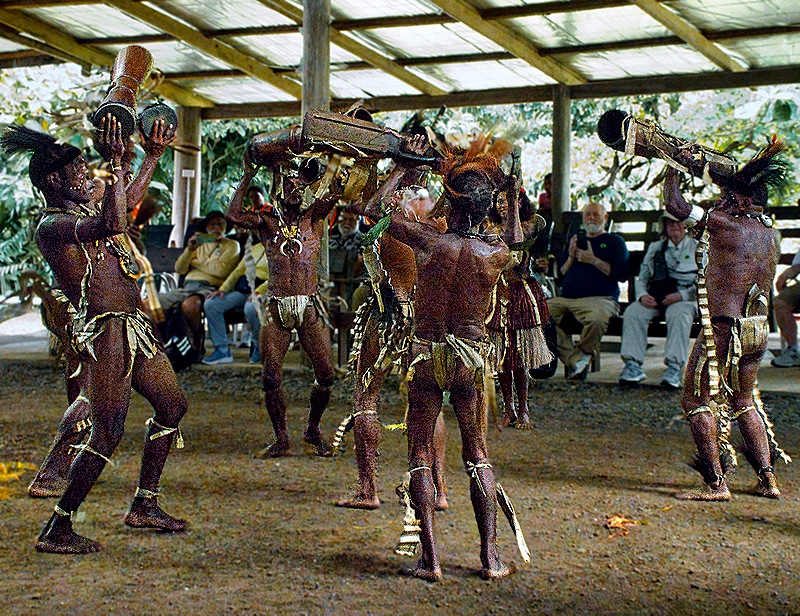
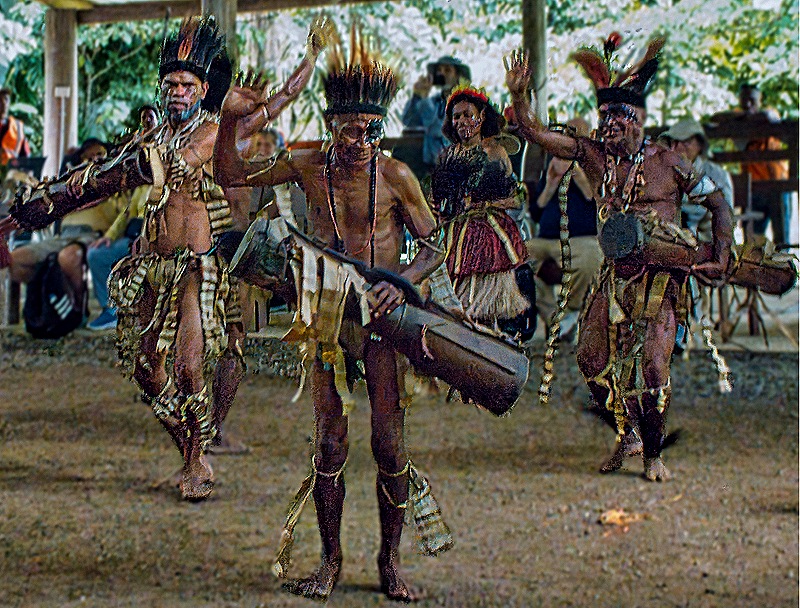
AS we left the ship for the excursion a dance group was performing on the dock. It is always fun & interesting when this happens.
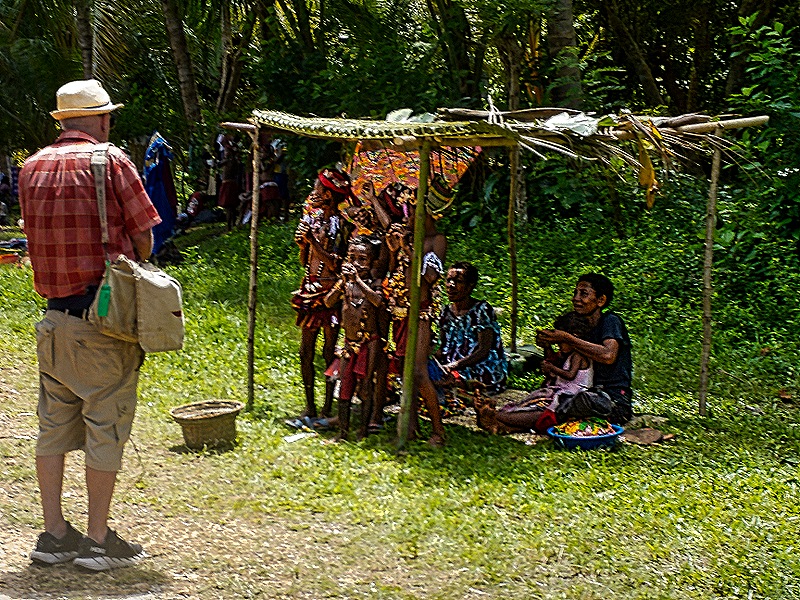
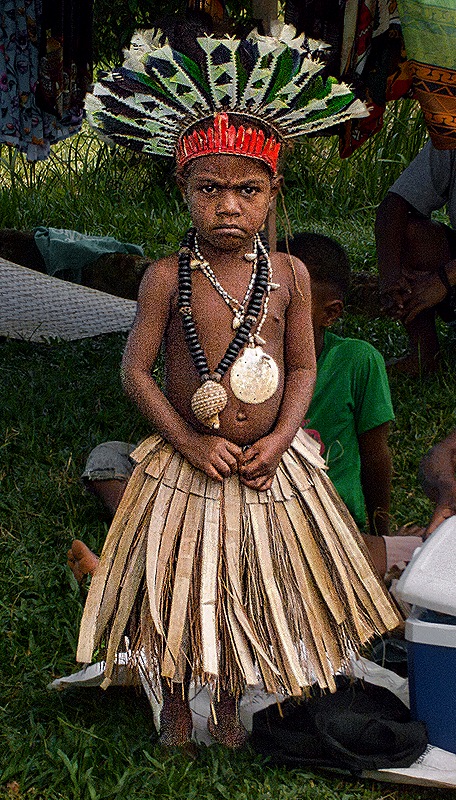
Our first stop was on a hill at a spot where a number of vendors were gathered, along with some folks dressed in traditional indigenous attire. This might have been a place called the Top Town Lookout, which certainly offers a great view of the town, Milne Bay and the mountains beyond (and on this day the Zaandam). People were friendly and the traditional clothing was very striking. Our guide, Rhoda, explained to us that under the matrilineal societal structure here men must have permission from the female head of the family for any financial or land transactions.
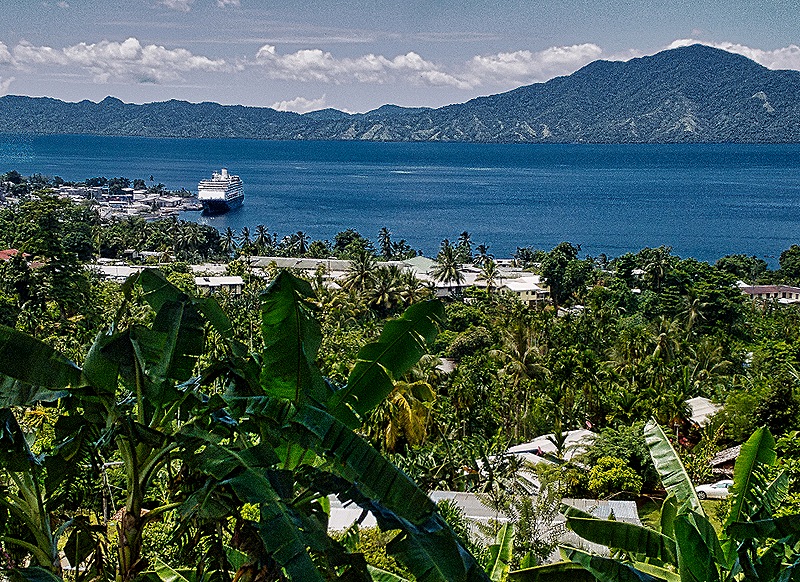
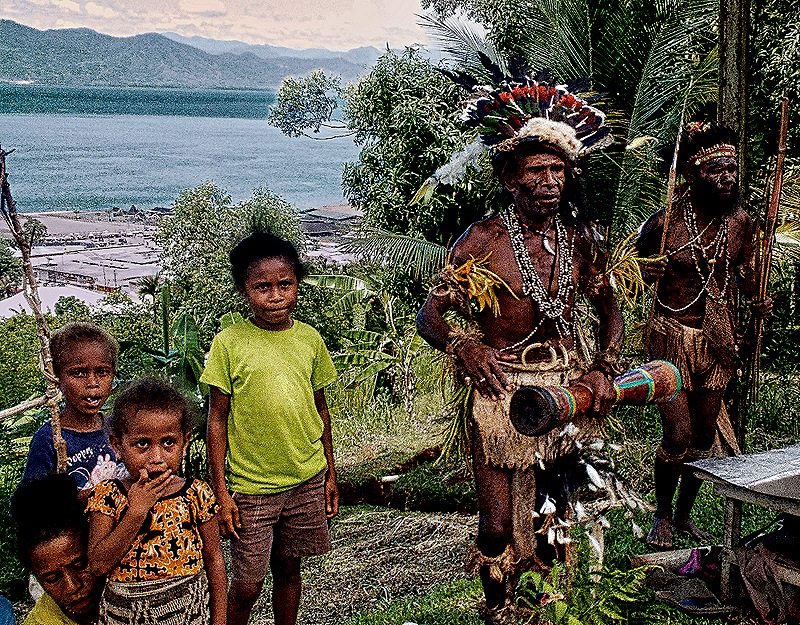
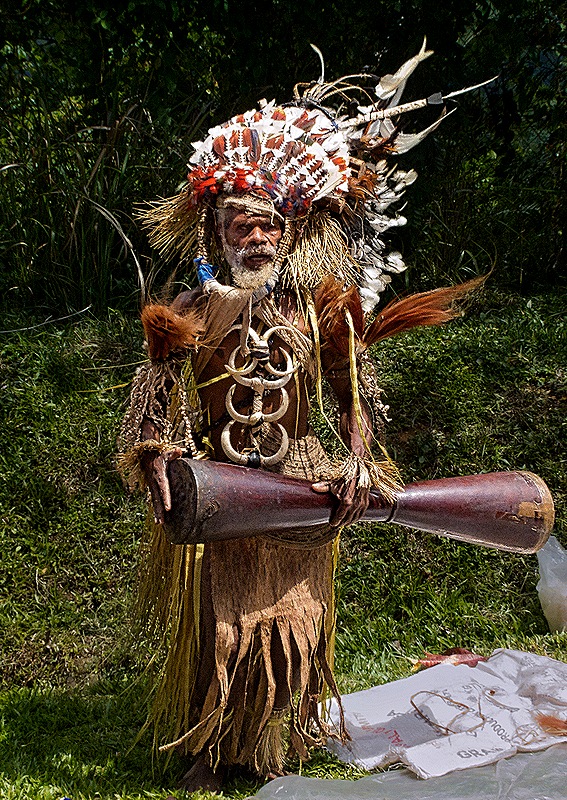
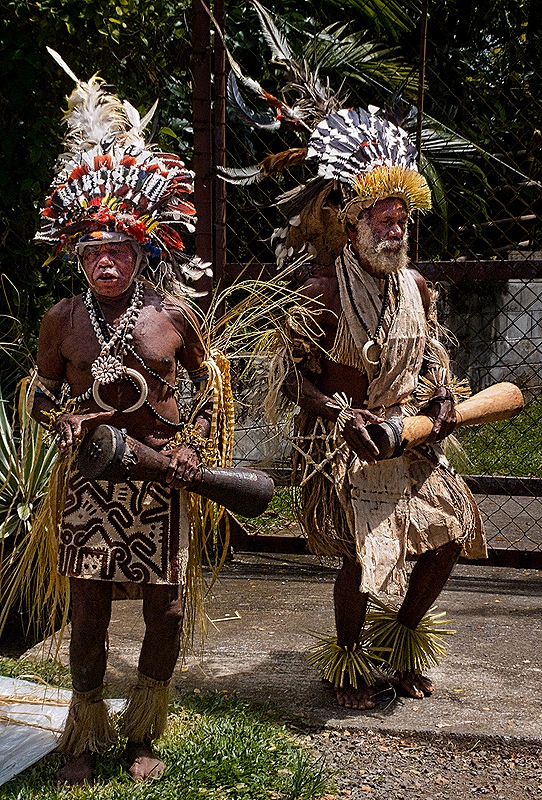
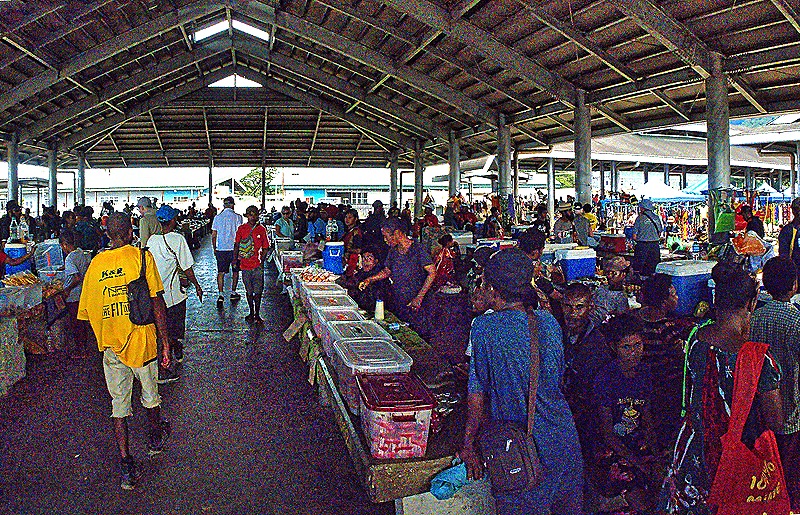
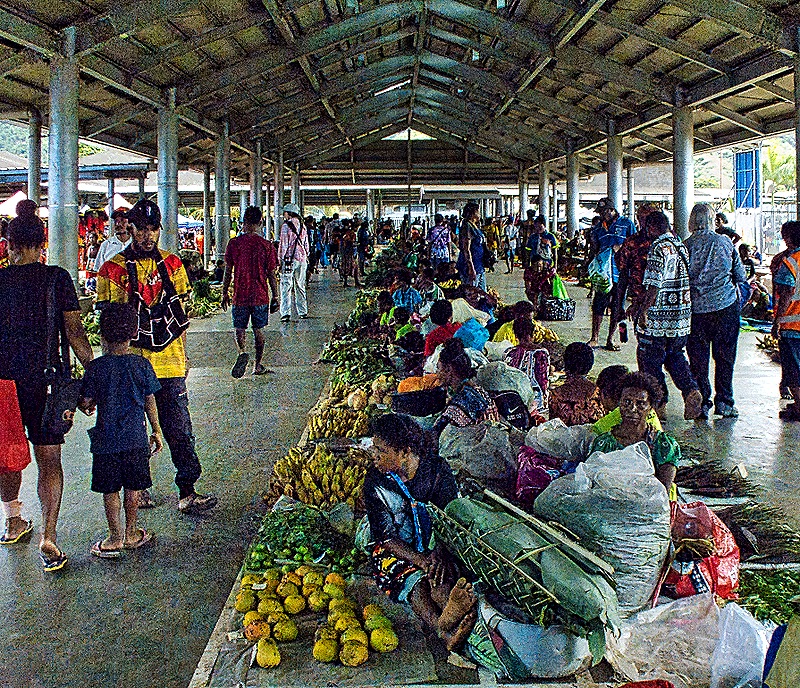
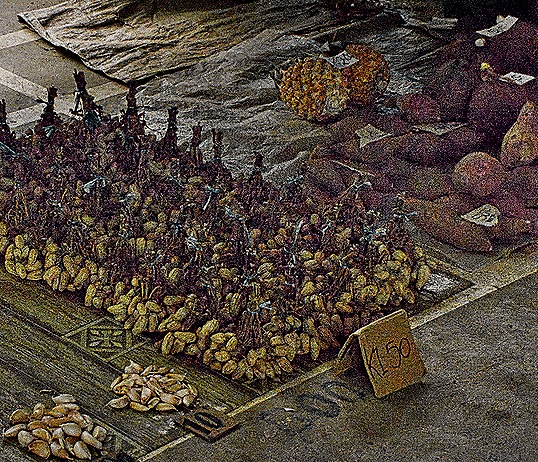
Back in the town we visited the main market, a large covered but open-air space full of small scale vendors selling fish, produce and handicrafts. Many local people were shopping here and we understand it is a place for community interaction as well as commerce. We were told that most people in this area shop daily for fresh produce.
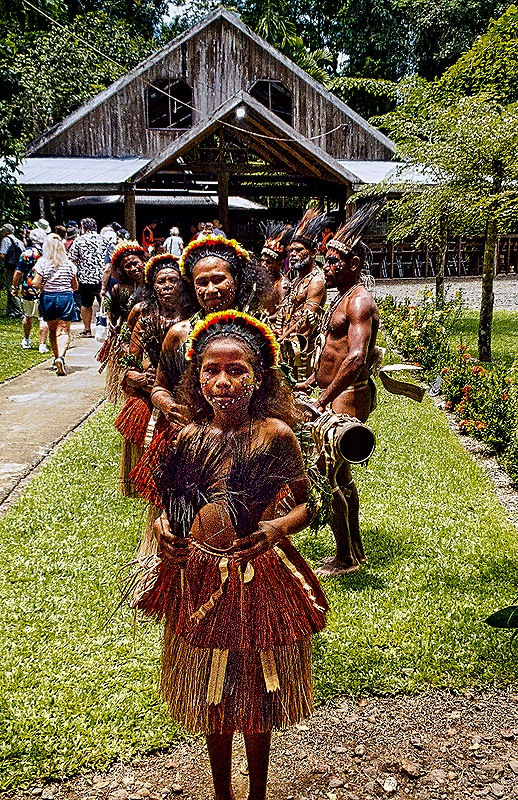
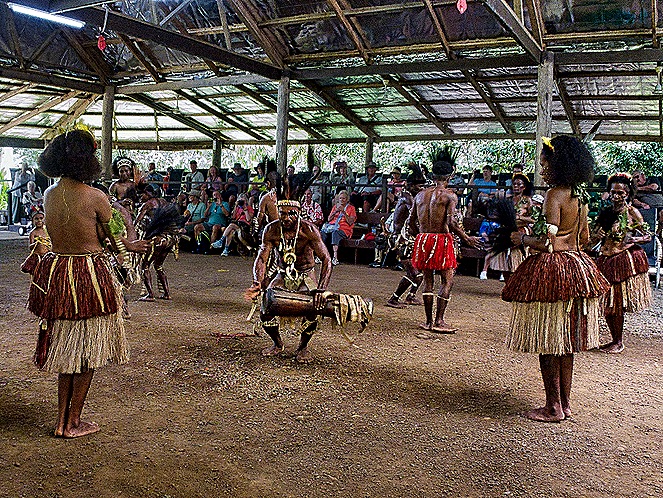
After this we were taken to a an open air performance facility that appeared to be part of a village in the woods. As we understood it, this place is owned by the man who introduced the dancers, explained the demonstrations of village life and generally acted as master of ceremonies. He spoke very good English and clearly was experienced at doing this sort of thing. We were greeted on the path from the bus drop off to the performance building by local people in indigenous dress (probably most were dancers). They lined the path on both sides and were very welcoming.
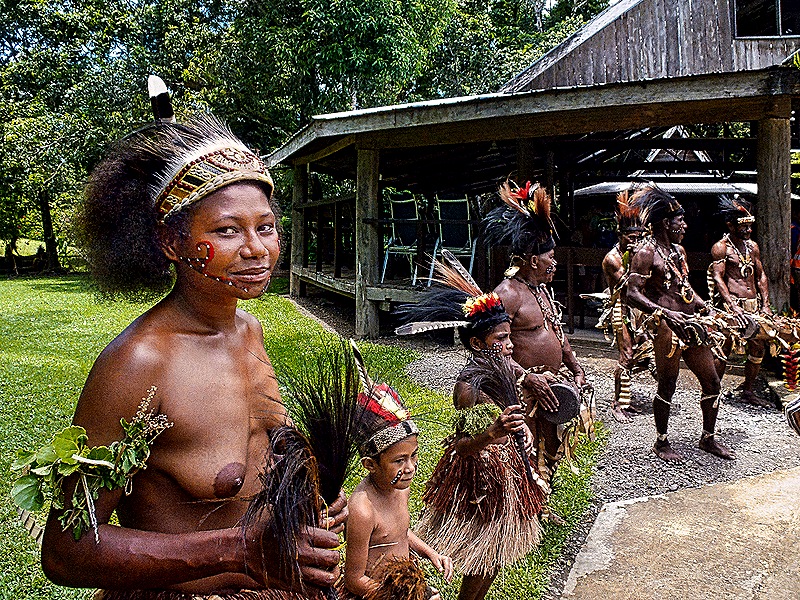
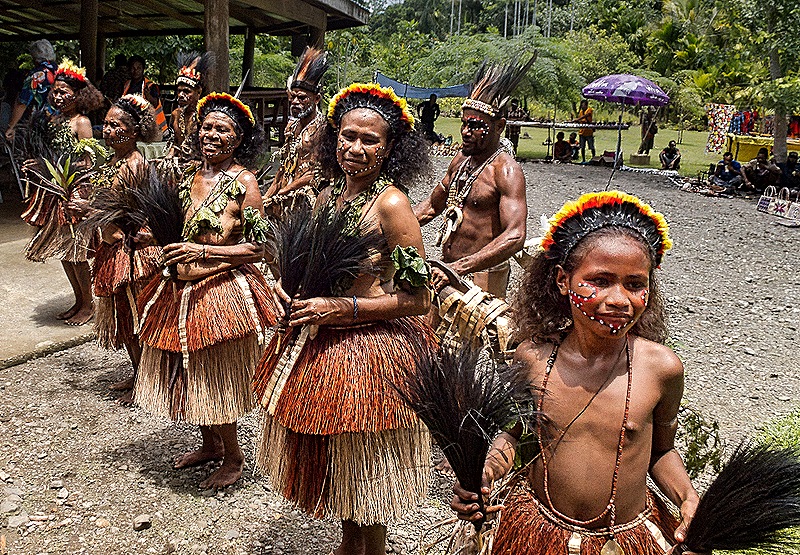
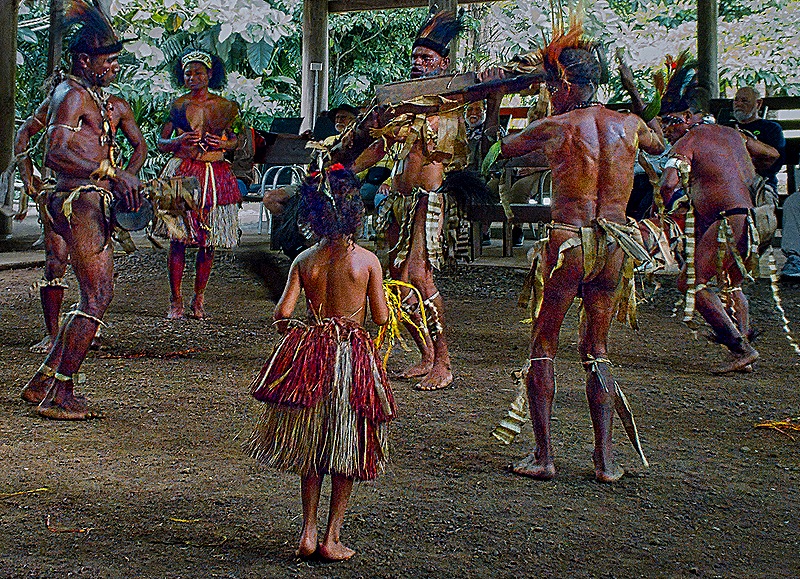
We all sat on two rows of benches around a large dirt dance floor. It was a very hot day so we were glad that this building had a roof for shade and open sides to permit air movement. There were several dances that went on for awhile. We understand that many, if not all, of the dancers had come from other villages and perhaps islands. The dancing was quite interesting and the dancers were very good. Men and women participated in the dancing, including some that looked quite young, and the men played drums that appeared to be hand made.
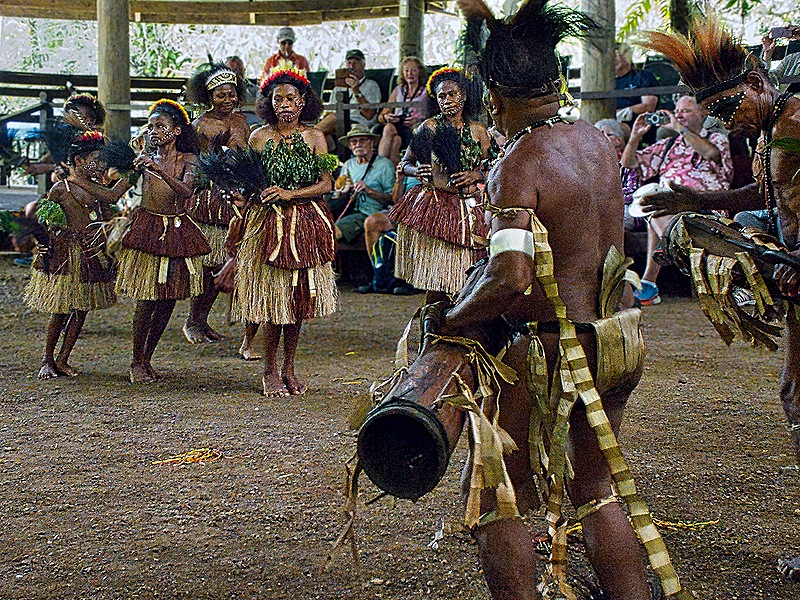
After the dancing there was a lecture and discussion about the main vegetables in their diet, including taro, tapioca, pumpkin, banana, papaya, watermelon, sago and cassava. There was a demonstration of how they open coconuts to get pulp and water and we were shown how they use the outside husk to start fires with friction. After that we were all invited onto a stage that was built on one side of the dance arena where a variety of local foods was arrayed on several tables for us to sample, buffet style. The food (especially the fresh fruit) was really tasty.
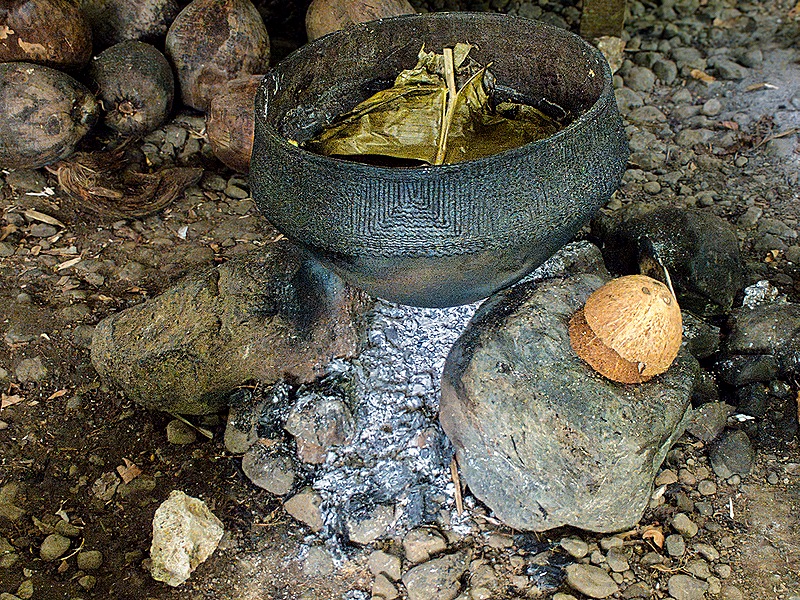
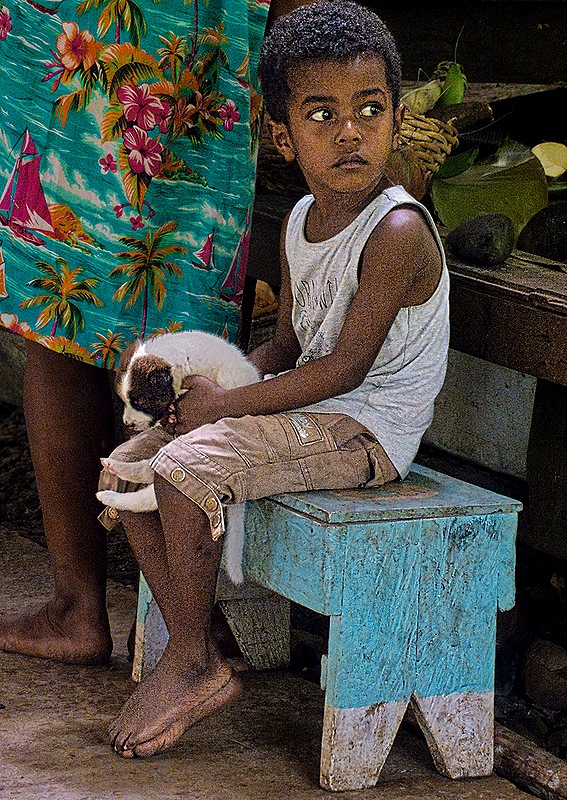
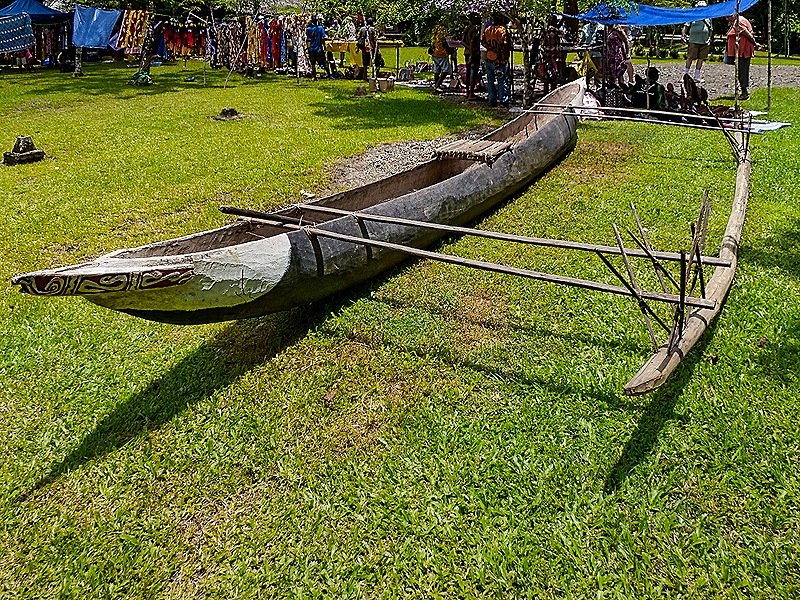
After the food demonstration we had time to walk around outside where there was a large display of interesting crafts with the craftspeople there to explain how they were made and to answer questions. We talked to the man who made an outrigger canoe on display and to a woman who told us about the large war canoe. We also saw a demonstration about creating sago, a starchy substance extracted from the center of a particular palm tree and used in a variety of dishes in this part of New Guinea.
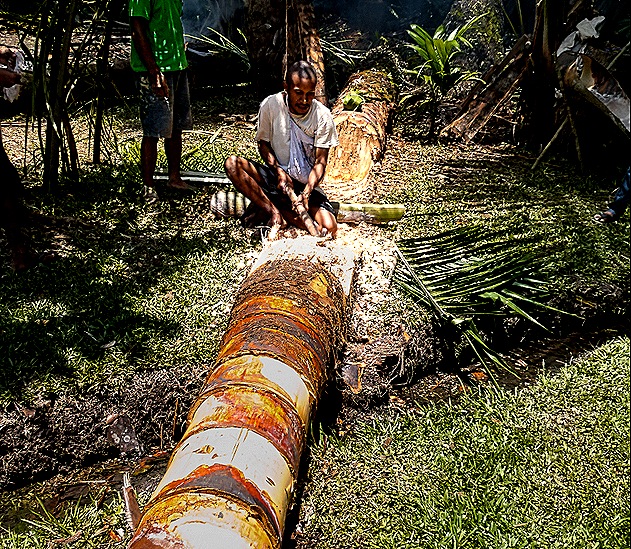
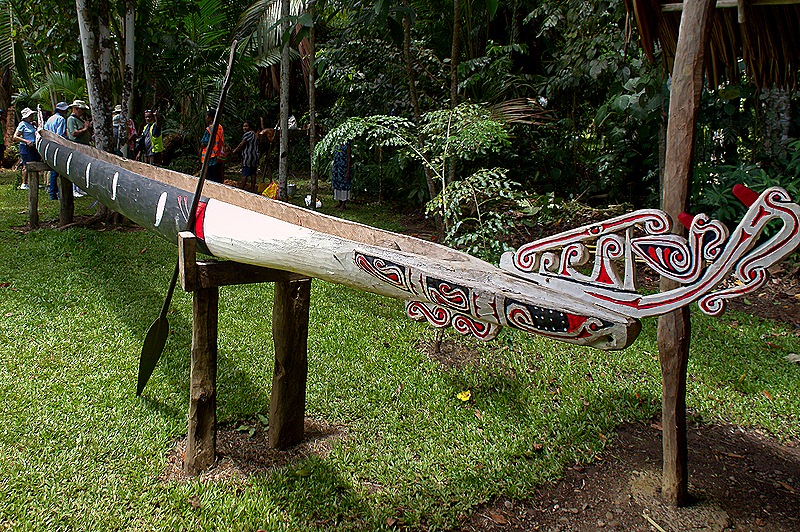
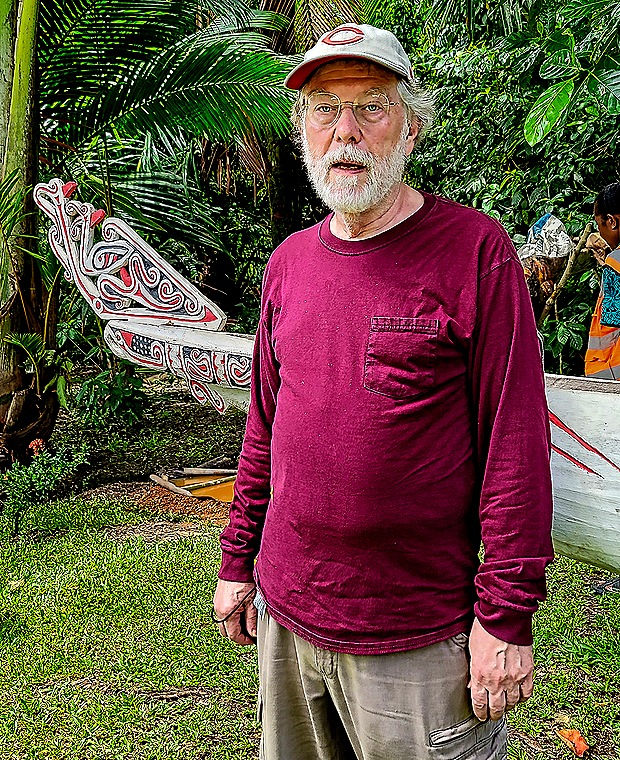
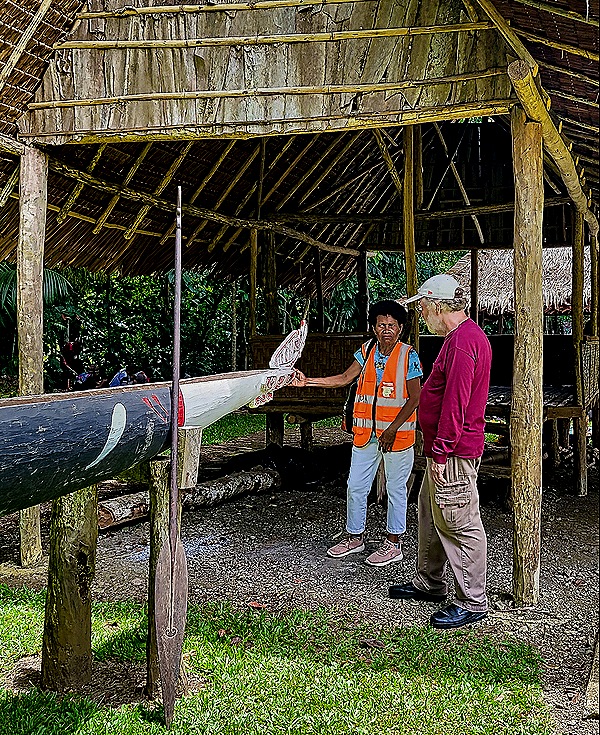
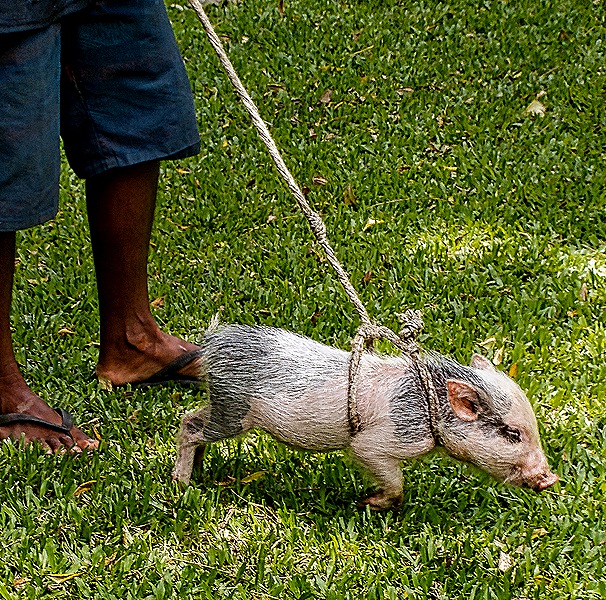
We returned to the performance building for another set of dances, then returned to the bus to head back toward the dock. Many of the local folks were around as we walked back, some still dressed in traditional attire. One was walking a pig in a rope harness.
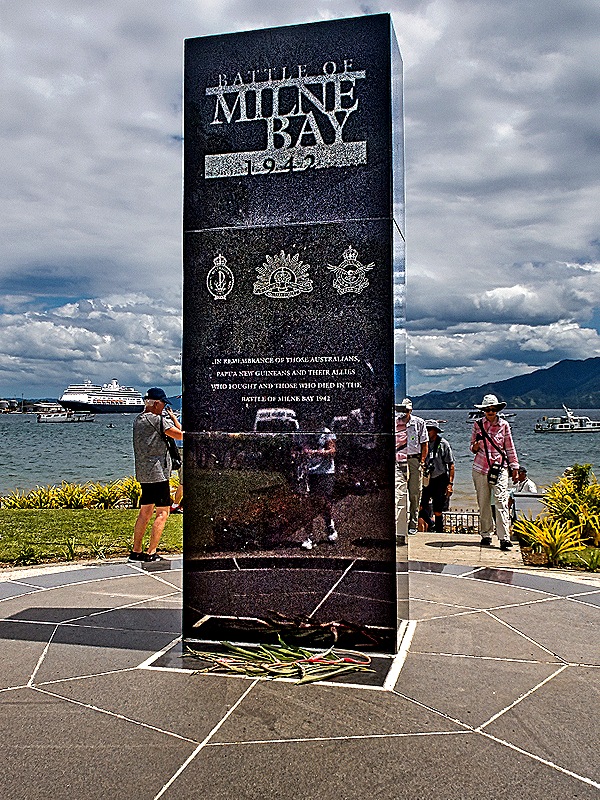
In 1942, about 25 years before Alotau was founded, this was an area of plantations and small villages. The Japanese were sweeping into the area in this early part of World War II. In New Guinea they had captured Rabaul and were targeting Port Moseby. In May and June the Allies built two air strips here at Milne Bay near where Alotau now stands. The Japanese discovered this in early August and decided to attack. After a delay to respond to the US invasion of Guadalcanal on August 7, they sent in a small force of less than 1,000 (later reinforced by more than 900) to take the airfield under the mistaken impression that few Allied troops were here to defend. The Allies, in contrast, were well aware of Japanese plans because they had broken the Japanese military code. The fighting here lasted almost two weeks from the Japanese landing beginning August 25 to their withdrawal September 7. About a third of the Japanese invasion force and about half as many Australians were killed.
This was the first time the Japanese army had been defeated in battle on land and forced to withdraw. It stopped the Japanese from expanding their perimeter further toward Australia, but perhaps its most important result was a big lift for Allied morale by demonstrating that the Japanese could be stopped and defeated. Along with the American victory a few months later forcing the Japanese to withdraw from Guadalcanal this gave the Allies new confidence that momentum in the Pacific was turning their way.
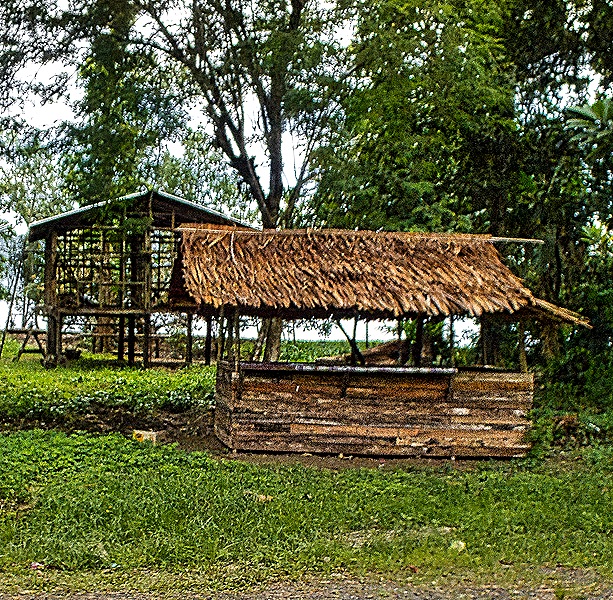
On our way back to the ship we passed several thatched roof structures in the woods between the road and the bay, but we don’t know their purpose. We stopped once, to visit a memorial to the battle of Milne Bay built on the waterfront in 2002 by the Australians. Several other war memorials can be seen in this area but this is the only one we visited. It says “In remembrance of those Australians, Papua New Guineans and their Allies who fought and died in the battle of Milne Bay 1942.” The locals have a term for white people, especially visitors: Dim-dim. We had previously read that this is considered descriptive and not derogatory. While we were visiting the memorial a boy tapped Mary on the shoulder and said “dim-dim." He may have expected that to stump her,and was probably disappointed by her lack of reaction.
That was the extent of our day in Alotau. We would have one more stop in New Guinea the next day.
Rabaul, Papua New Guinea 2026
We reached Rabaul on February 3 after one sea day, the first of three stops in Papua New Guinea. People have lived in New Guinea for 40 or 50,000 years. New Guinea is the second largest island in the world (not counting continents), but it only became an island about 10,000 years ago when its land connection to Australia disappeared under the Torres Strait. The first Europeans visited New Guinea in the early 16th century and Christian missionaries arrived in the mid-19th century. The western half of the island, now part of Indonesia, was annexed by the Netherlands in 1848 and the eastern half that is now Papua New Guinea was divided in 1884 between Germany in the north and the United Kingdom in the south. By 1906 the British portion had become part of Australia and the Australians gained control of the German portion as well during World War I. Papua New Guinea became an independent nation in 1975.
The population of Papua New Guinea is around 11 or 12 million, of whom about 40% live in small villages in the interior highlands. Many of these villages have their own language so that there are more than 840 languages spoken in this country, some limited to perhaps 100 people in a single isolated village. A pidgin tongue called “Tok Pisin” (meaning “talk pidgin”) is used throughout the country. It was not until the 1930’s that much of the interior highlands were contacted by the outside world and there are still villages in some areas that reportedly haven’t been contacted.
Rabaul actually is not located on the main island of New Guinea. Instead it is on the eastern end of the island of New Britain, the largest island in the Bismarck Archipelago. As you might guess from the name of the archipelago, New Britain was in the German portion of New Guinea before World War I, when the island was called New Pomerania. Rabaul was founded by the Germans in 1910 to be their colonial headquarters and continued as the capital of the Australian mandate over the former German colony until 1941. Rabaul’s urban population today is between 4,000 and 6,000.
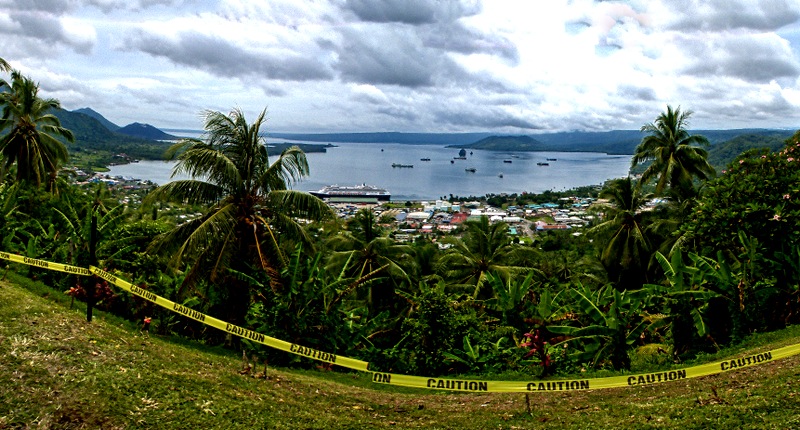
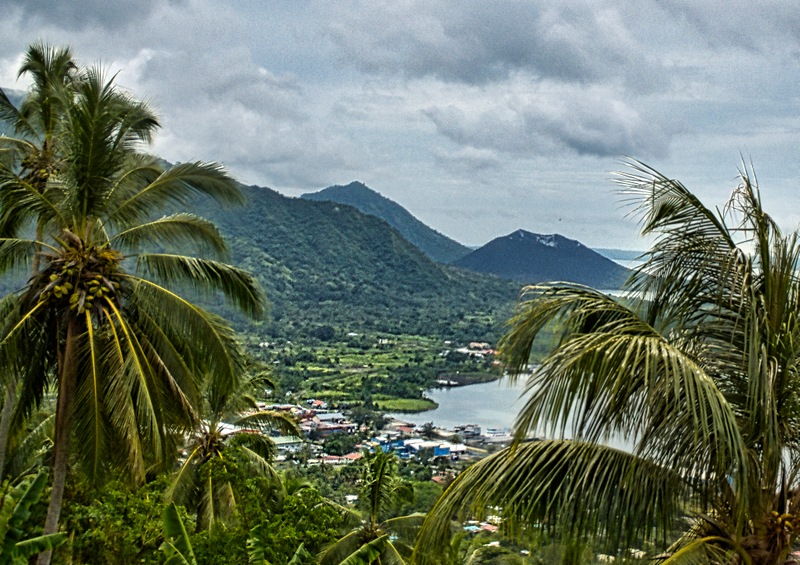
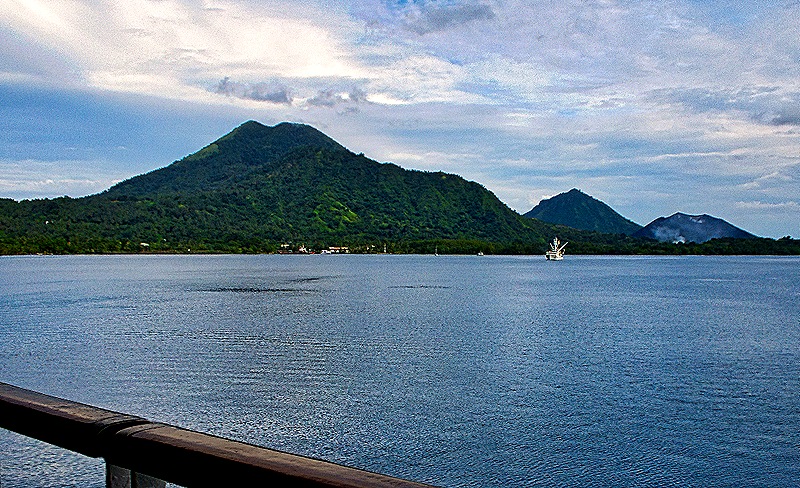
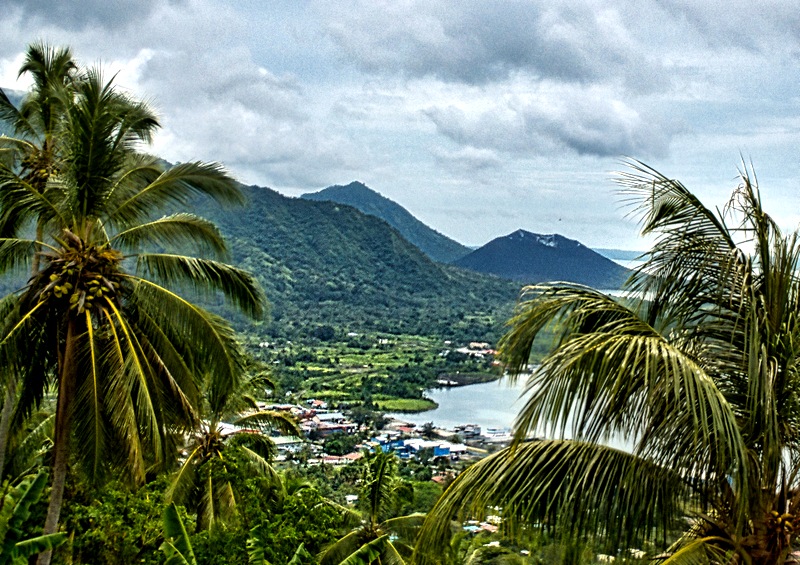
Rabaul sits in Simpson Harbor in the middle of a very large and beautiful bay, which is actually the caldera of what appears to have been a very large ancient volcano. Three volcanoes sit on the corners of the bay as it opens into the ocean and Rabaul has been all but destroyed twice by eruptions in 1937 and 1994. The first one killed more than 500 people and the Australians then administering the territory decided to move the capital to a different city, but they had not done so yet when the Japanese occupied the territory in 1941. Evacuation plans were developed during the 1980’s which paid off in 1994 when the same two volcanoes, Tavurvur and Vulcan, erupted again. Only 5 people were killed even though there was less than a day of warning. However the tremendous amount of ash that fell on the city, which absorbed rainfall and became very heavy, destroyed most of the city as about 80% of the buildings collapsed. The capital of the province was moved to Kokopo, about 12 miles further from these volcanoes, and even today the population is only about a third of the 17,000+ who lived in Rabaul just before the eruption.
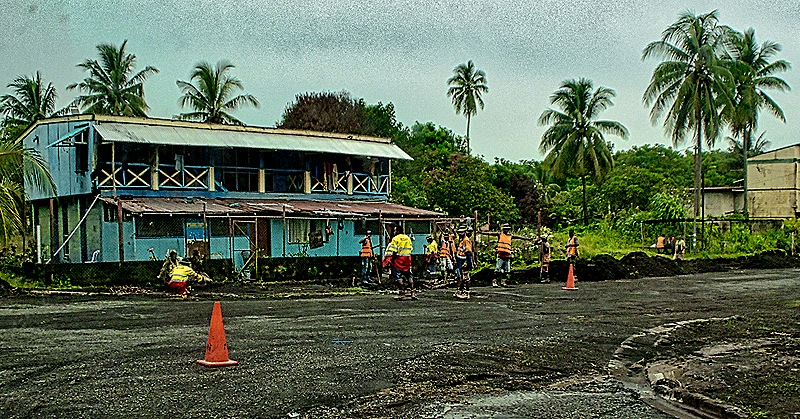
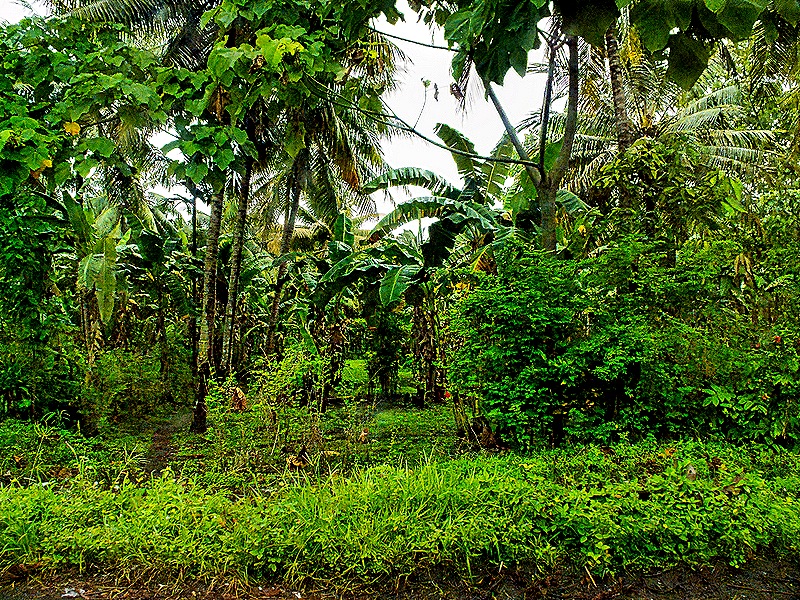
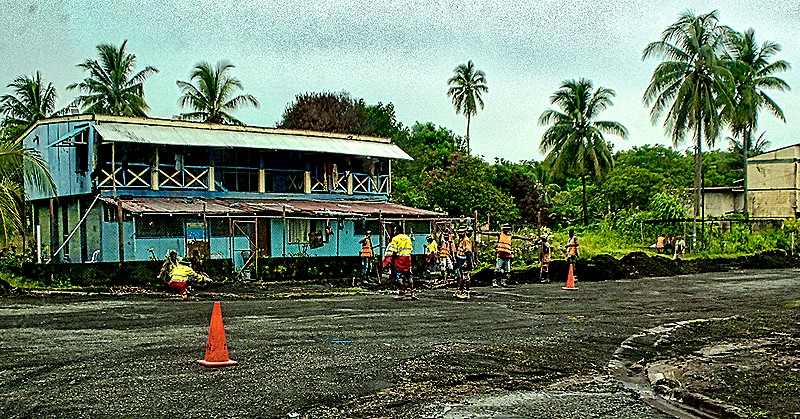
We spent the day on a small private excursion. Boarding the van in the morning we drove west. Once outside the central city the roads were very bumpy and uneven, mostly dirt (or really mud on this day). In several places gangs of men were repairing roads (and buildings) by hand, and there were few structures to be seen. We were headed for Matupit Island and an indigenous village there where our guide and our driver both lived and grew up. We think these were of the Tolai people, a matrilineal culture who are the dominant indigenous group in this area and who are thought to have migrated here from another island. Matupit was a separate island in fact as well as in name until 1994, when material from the big eruption filled the small gap between Matupit and New Britain islands so that now the road to the island is all land. The jungle has regrown to such an extent that we would not even have noticed the division of the land if our guide, Dora, had not stopped us and pointed it out. Dora was 19 years old and living on Matupit at the time of the 1994 eruption and her stories of that time were quite interesting.
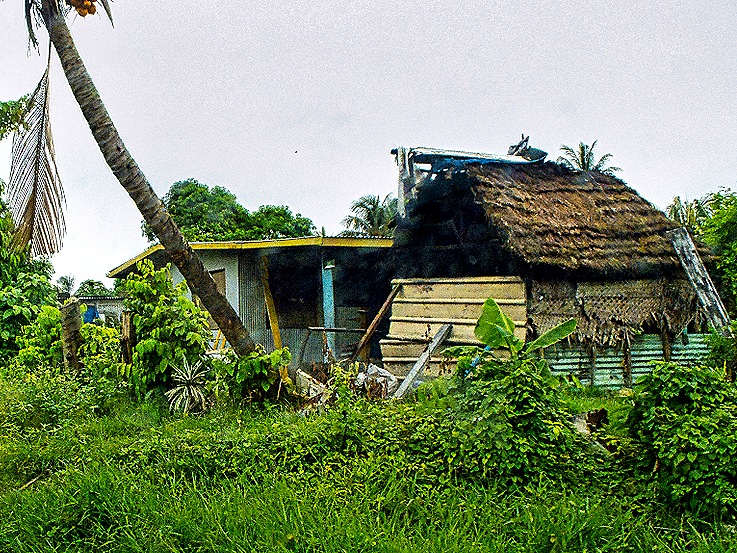
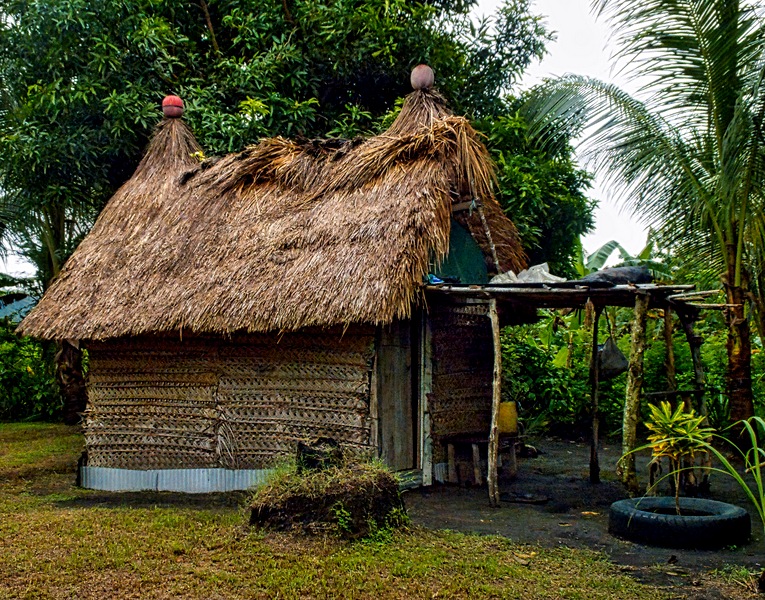
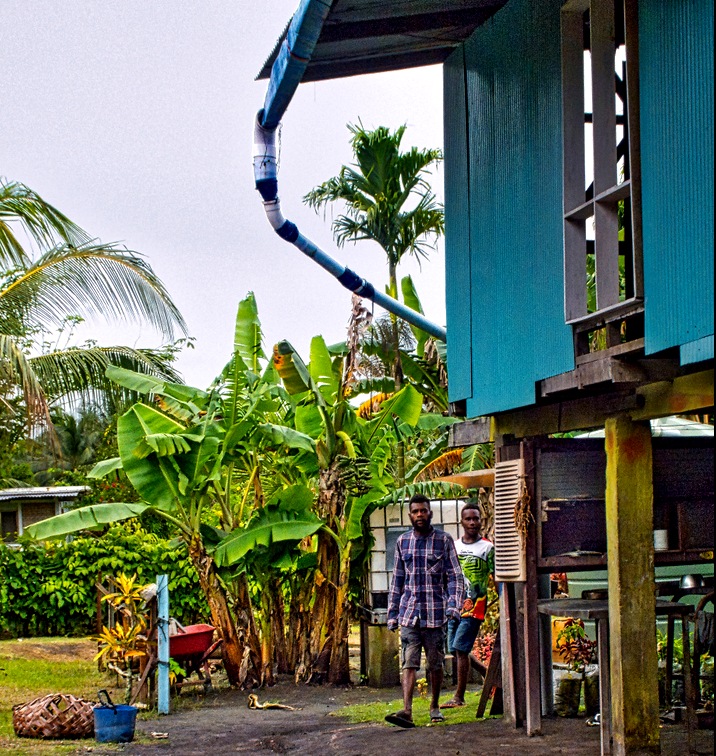
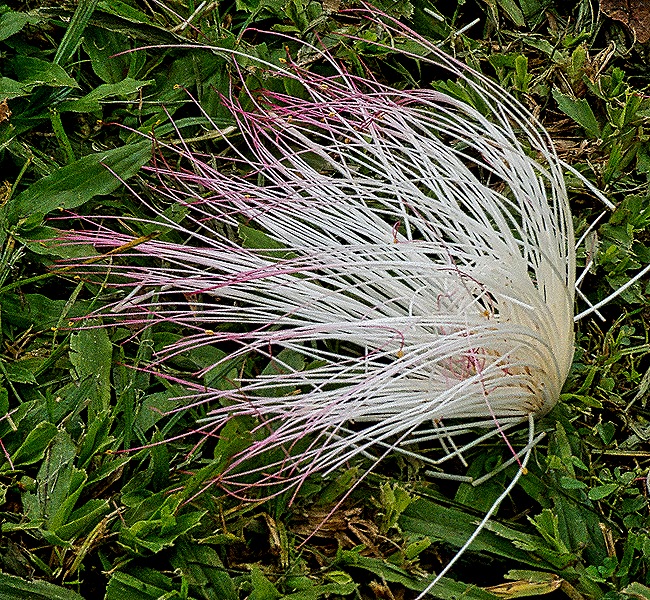
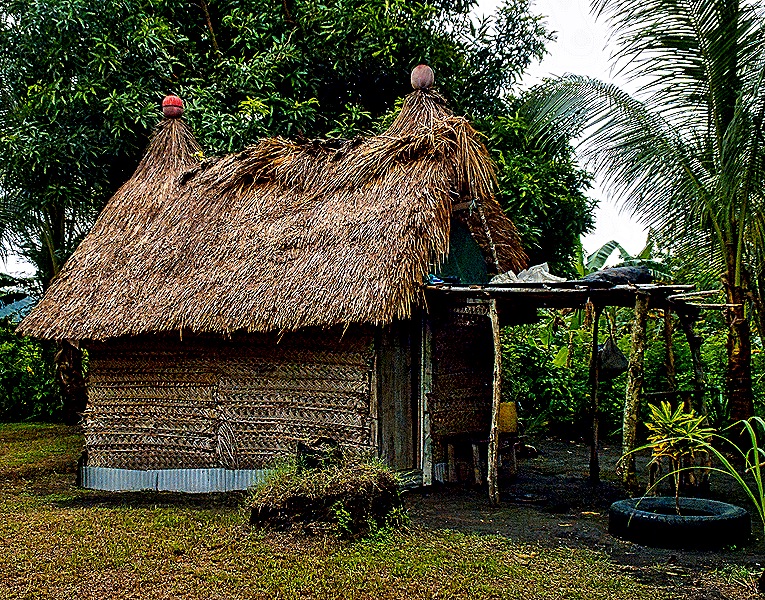
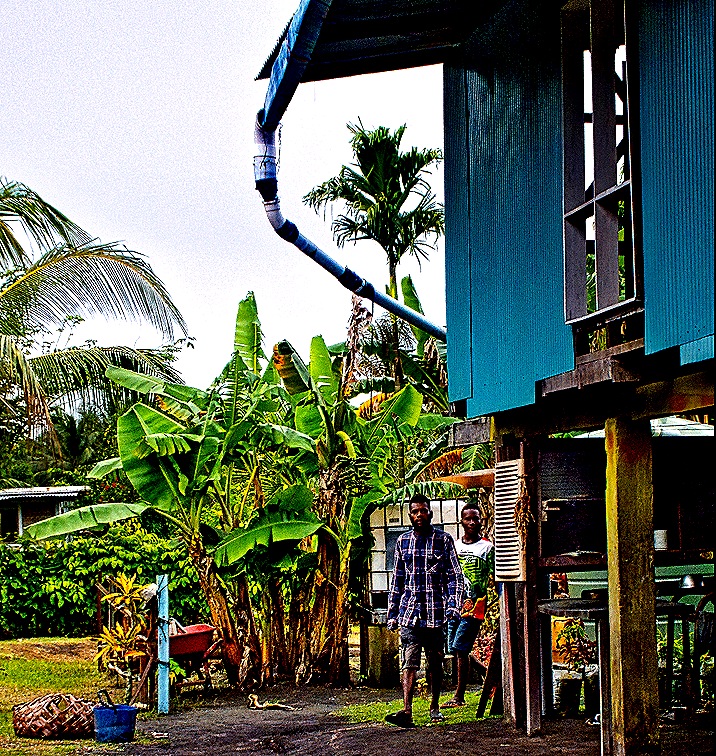
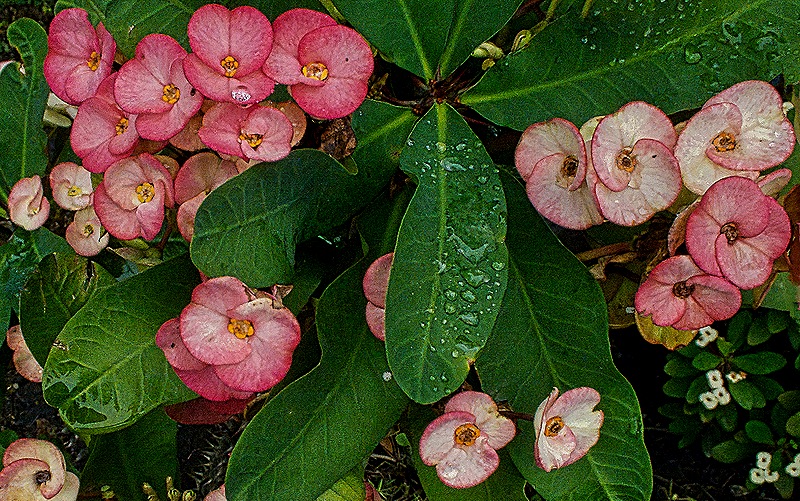
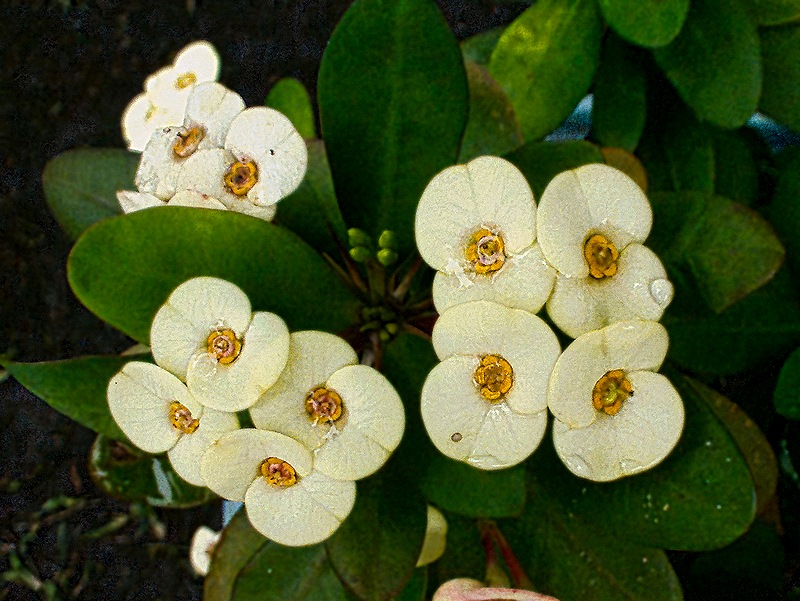
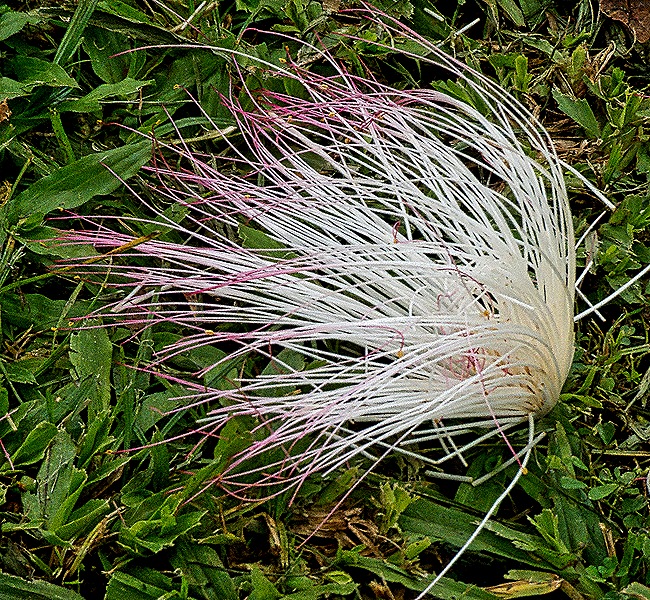
When we reached the village there was time to look around as we waited for other tour groups to arrive for a dance performance. We saw a display of the village’s handicrafts and were treated to some delicious fruit (watermelon, papaya, pineapple). There was an interesting hut made, it appeared, from mats of woven palm fronds with a grass or straw roof. We also noticed a pipe on the end of the roof of a building, apparently directing rainwater into large vats. And we enjoyed some nice flowers growing in the area.
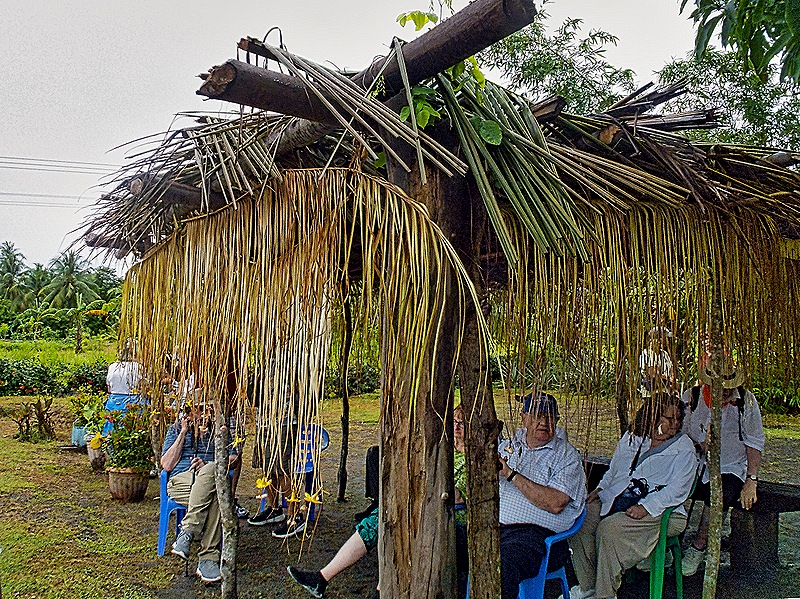
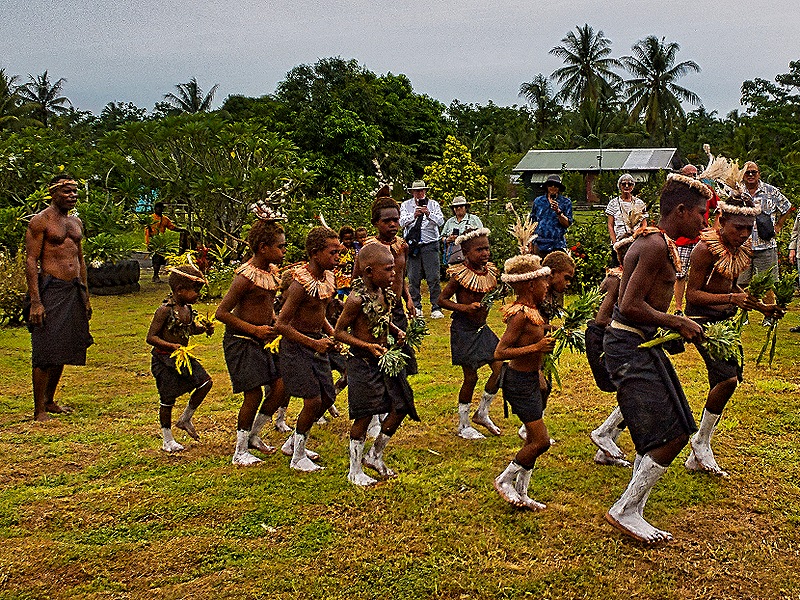
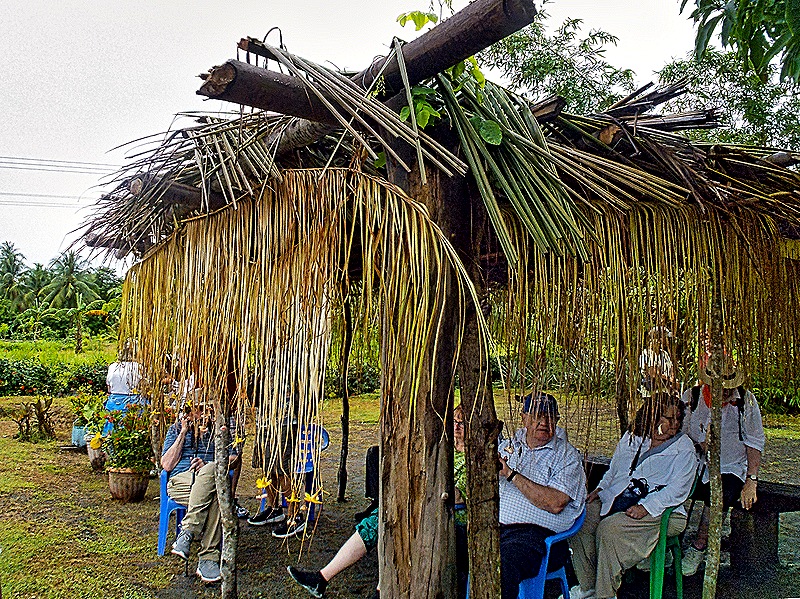
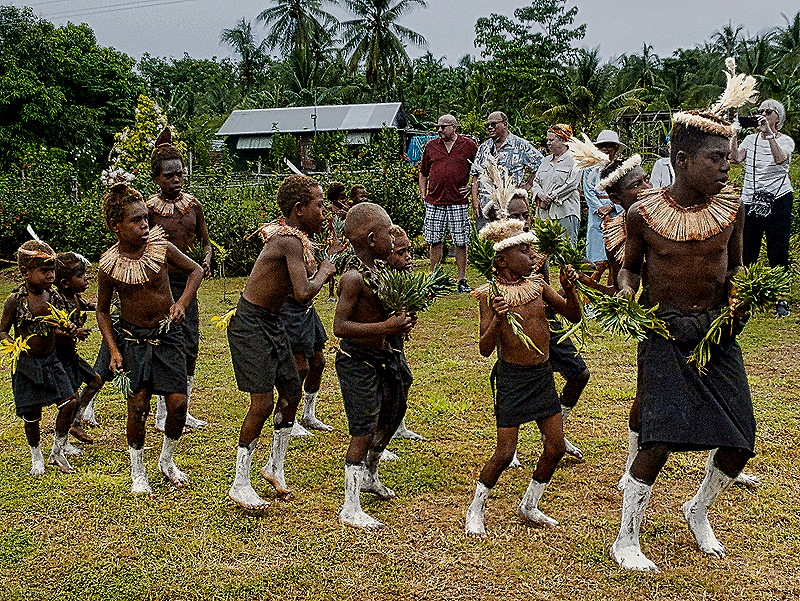
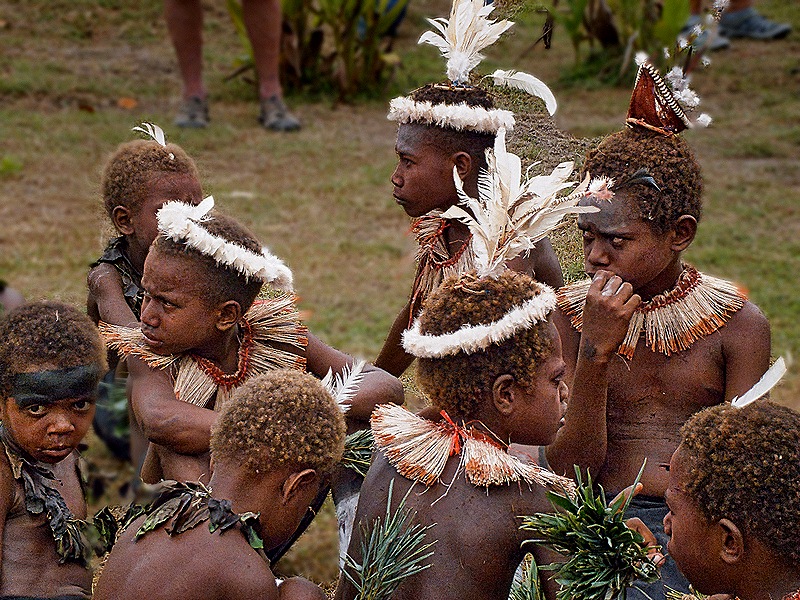
After the other buses arrived we were led to an open field with a wood and palm grandstand and listened to a presentation from a village elder about the village and its people and about the dances we were about to see. Tourism is a vital source of income in this area and there was no doubt that they were used to having visitors like us on a regular basis. But that doesn’t necessarily mean that people don’t actually live here or that the culture on view was not authentic. We saw several dance performances, one a whip dance in which a dancer is repeatedly whipped by others with long canes from some plant, and a couple of dances performed mostly by younger boys who seemed to be in training.
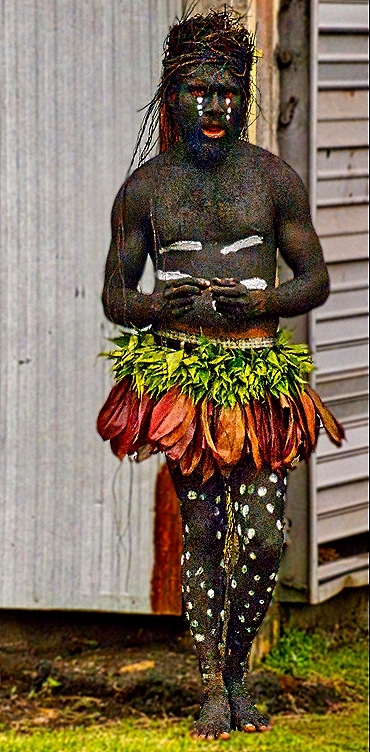
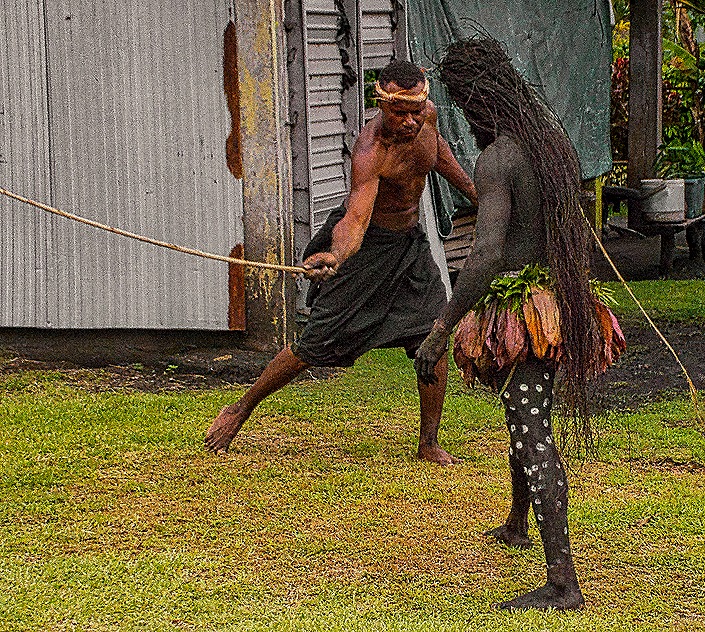
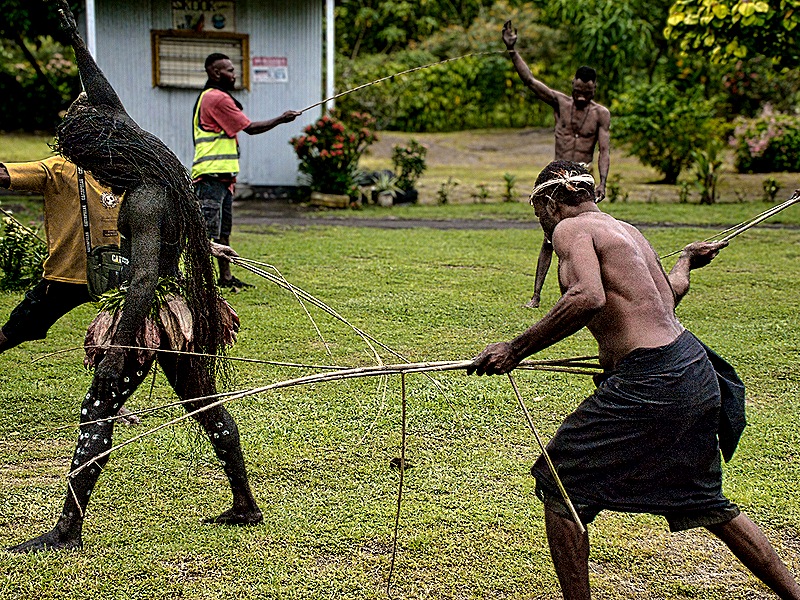
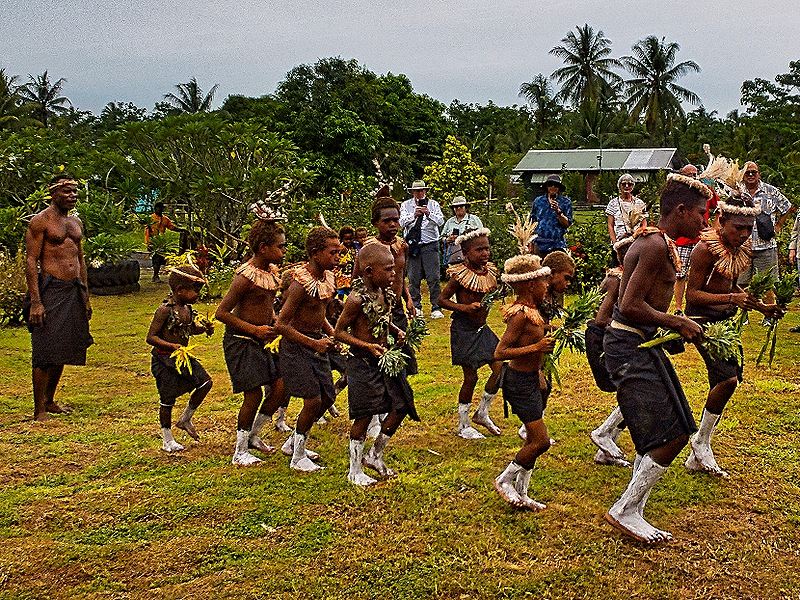
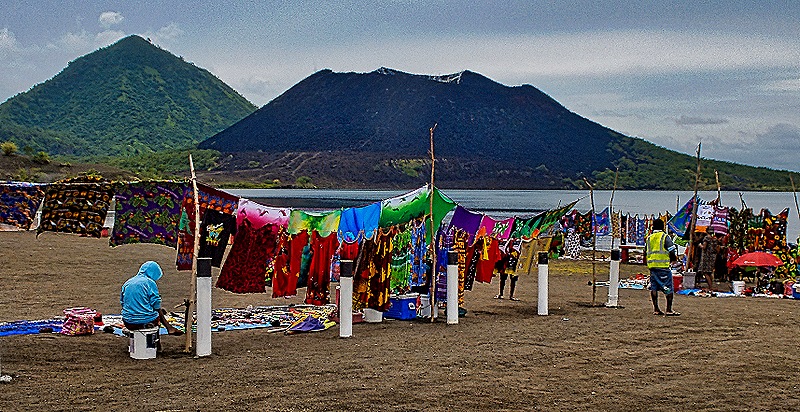
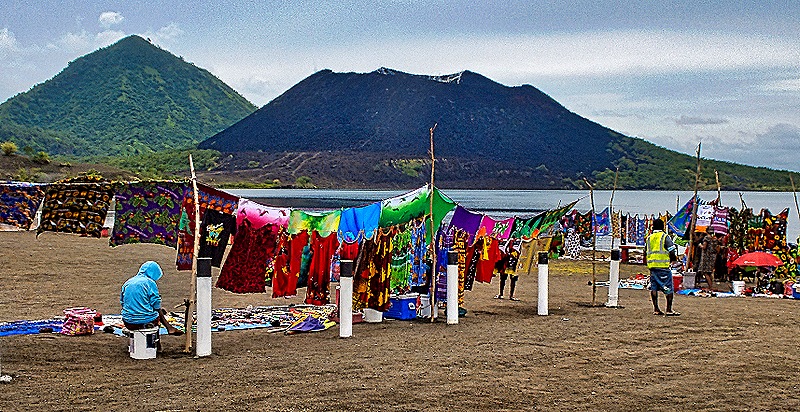
From the village we drove to a beach with a view of the volcanoes across the water. A number of vendors had set out brightly colored cloth and clothing for sale. Some were also selling carvings made of volcanic lava rock.
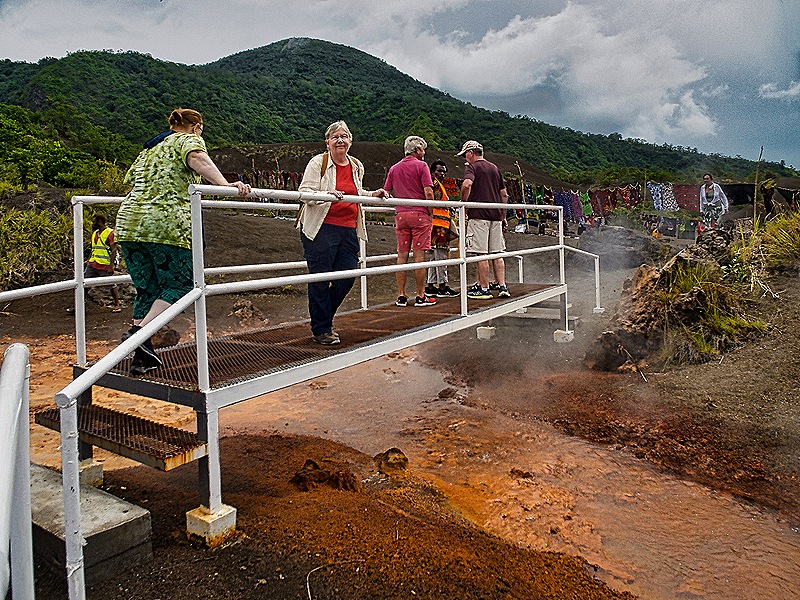
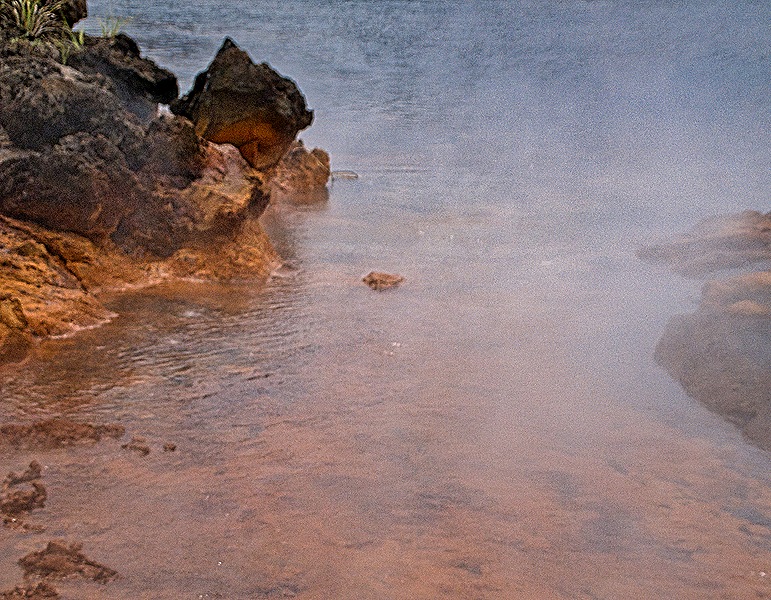
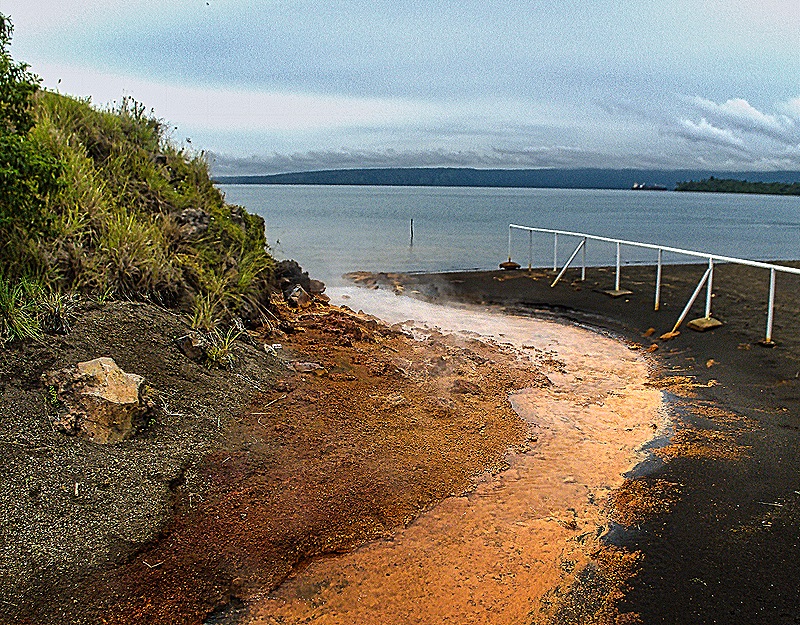
We walked a little way past the vendors and came to the hot springs. This stream runs into the bay at the foot of the Mt Tavurvur volcano. It is heated by geothermal vents in the mountain and, at least when we were there, was putting off a good amount of steam. We were warned it was too hot to touch safely but we wouldn’t have tried anyway.
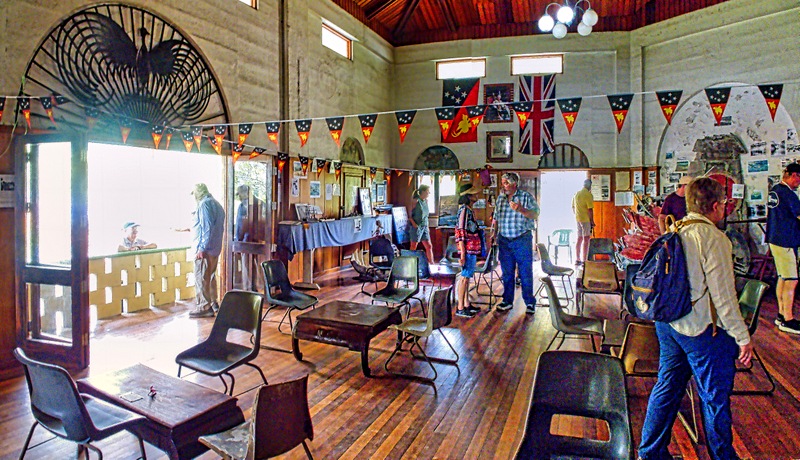
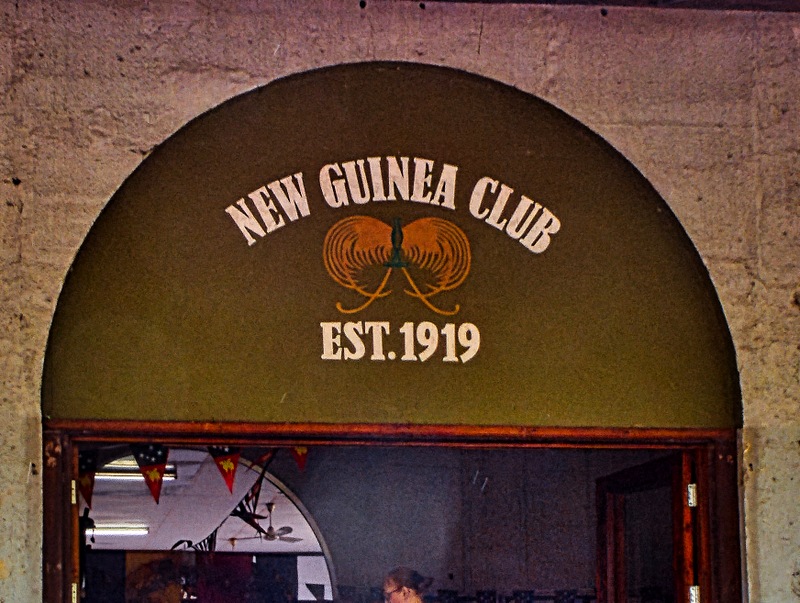
We drove next to the old New Guinea Club, established in 1919 as a social club for the European administrators and plantation owners. This was where the small Australian military outpost gathered on January 20, 1942 for the impossible task of defending the area from the overwhelming Japanese air, sea and land forces bearing down on it. Just before setting out to fight the commander radioed to Melbourne “Nos Morituri Te Salutamus” (we who are about to die salute you), a phrase associated (possibly incorrectly) with Roman gladiators entering the arena.
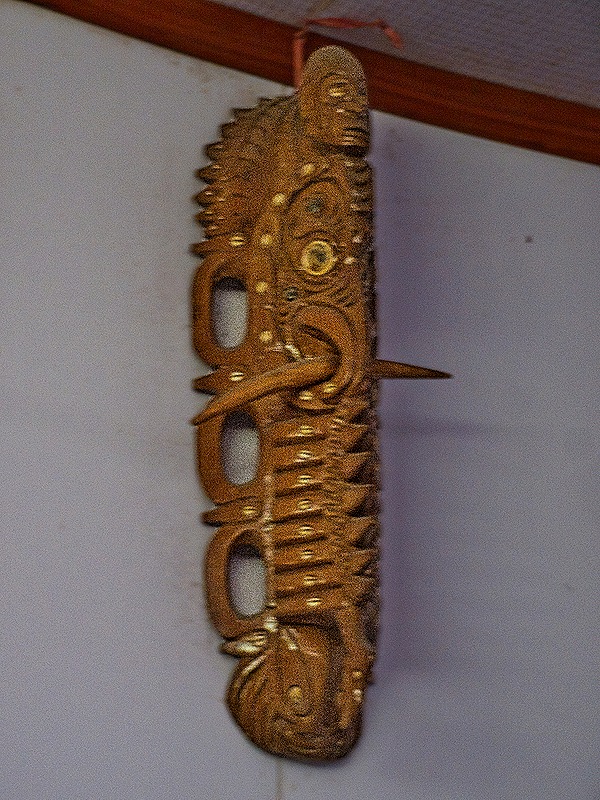
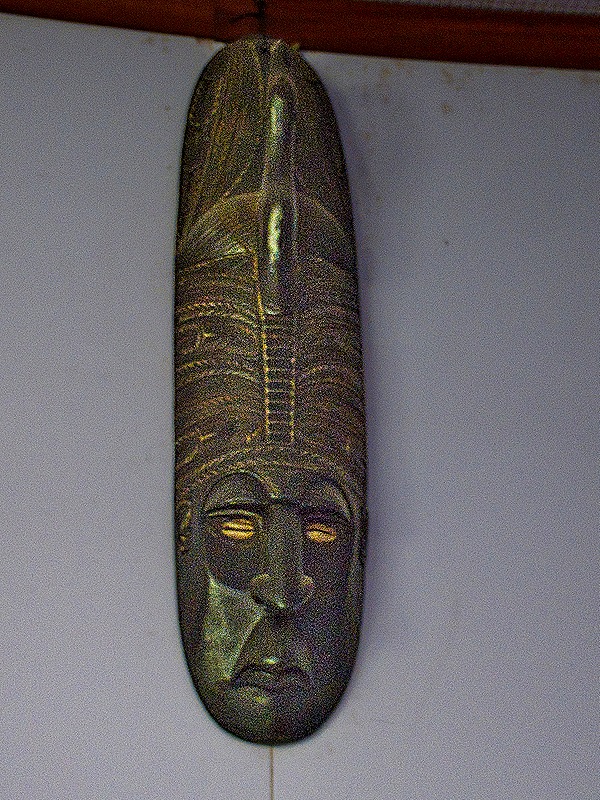
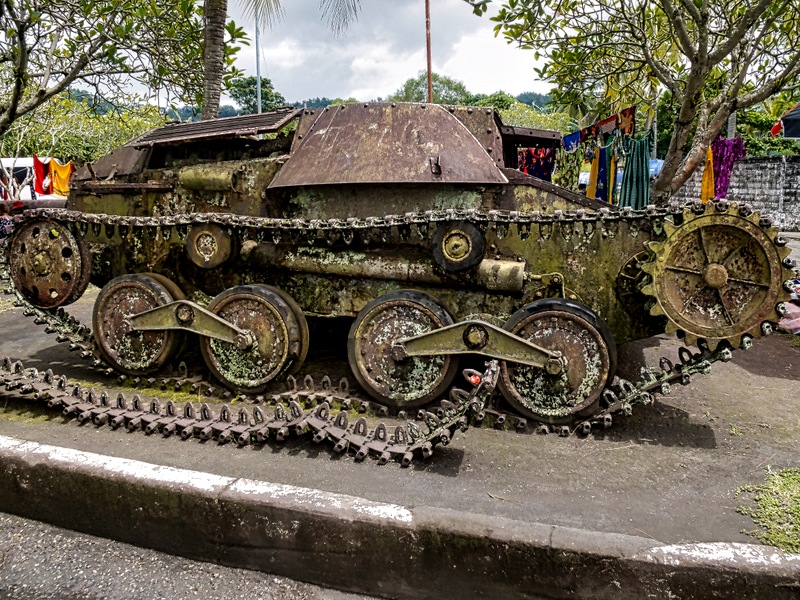
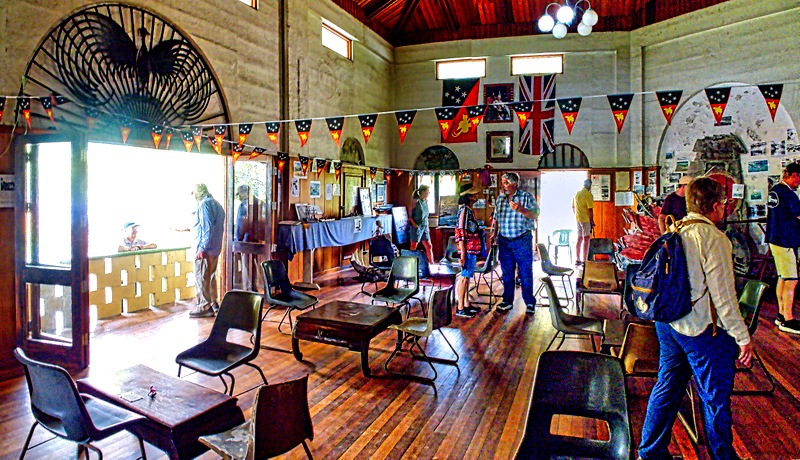
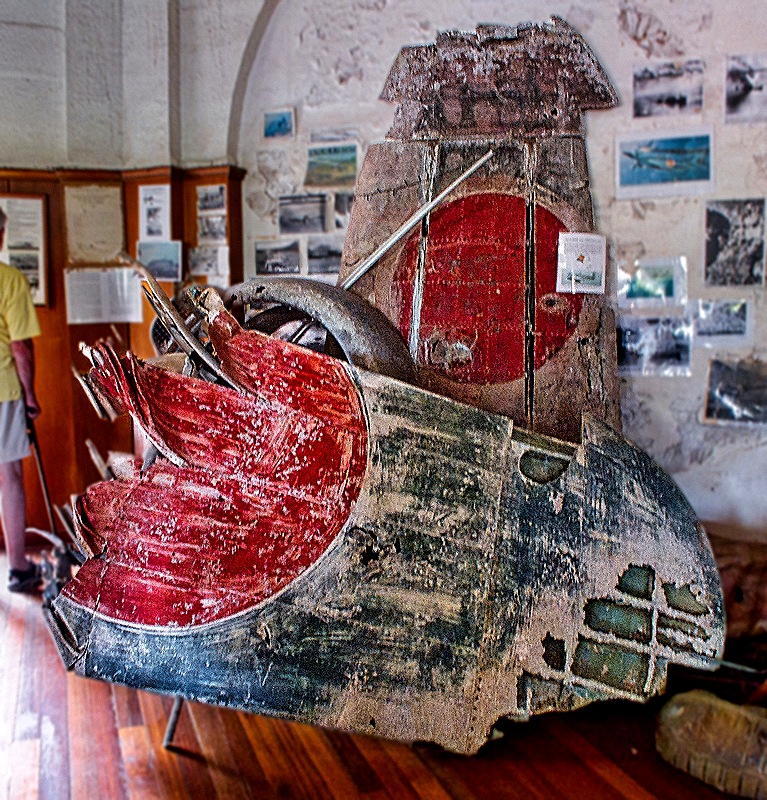
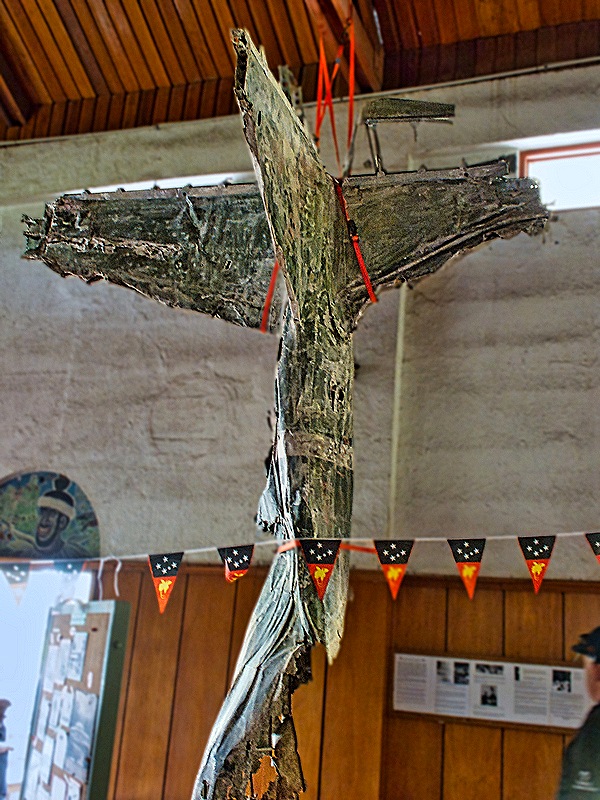
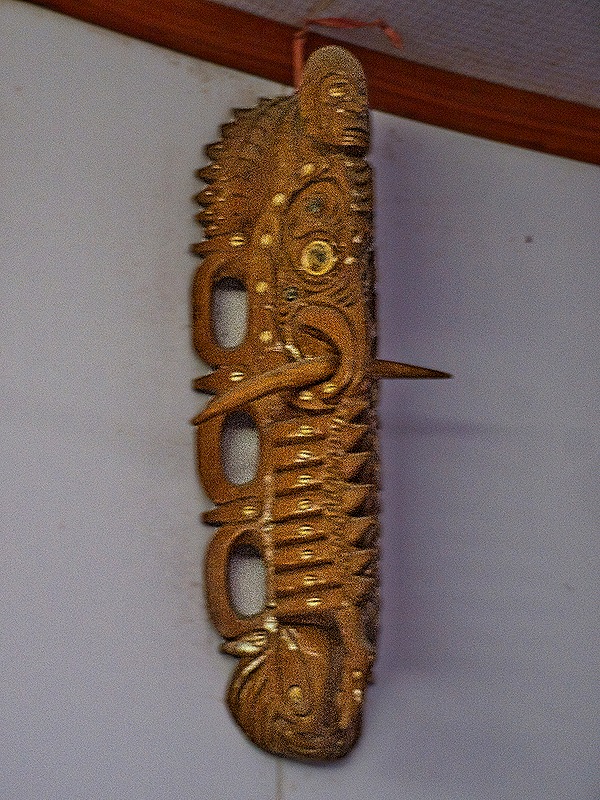
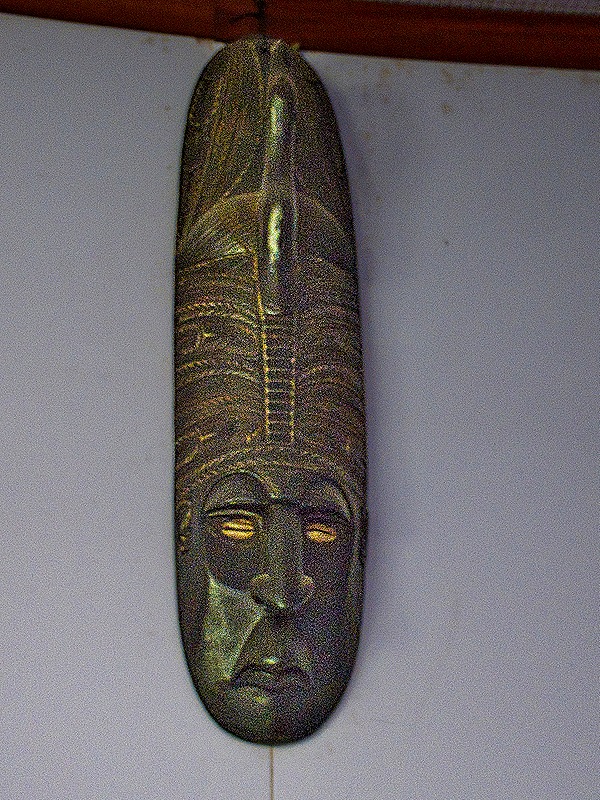
The building was partially rebuilt after being destroyed by Allied bombing during World War II and today serves as a museum, holding a variety of interesting artifacts from Rabaul’s history. The eclectic collection includes everything from tribal masks to parts of a Japanese Zero shot down during the war. The collection was interesting but filled the small museum rather haphazardly, seeming more like an attic than a museum. In front is a ruined Japanese light tank.
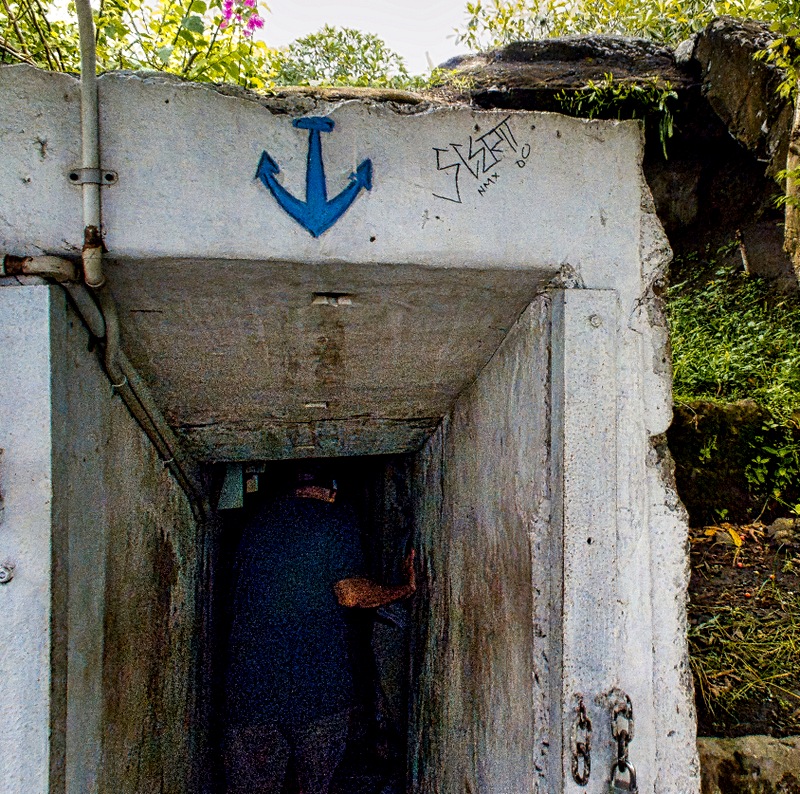
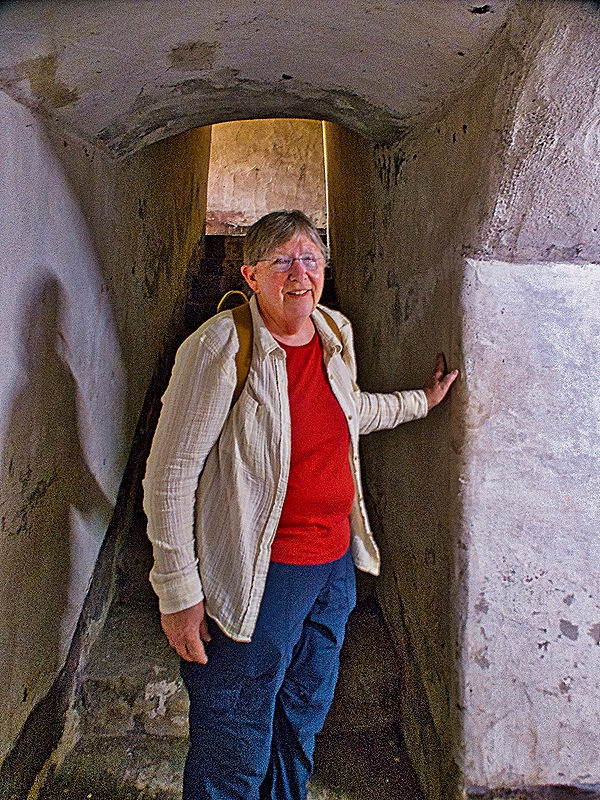
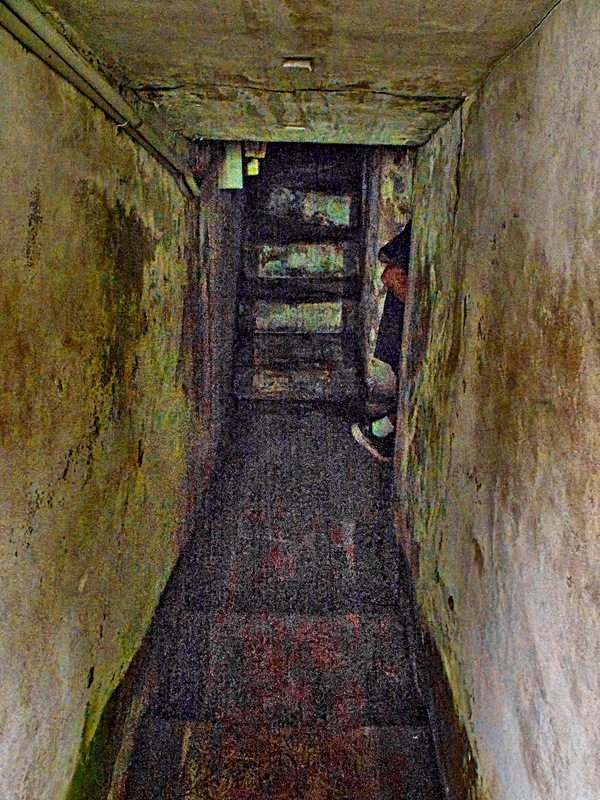
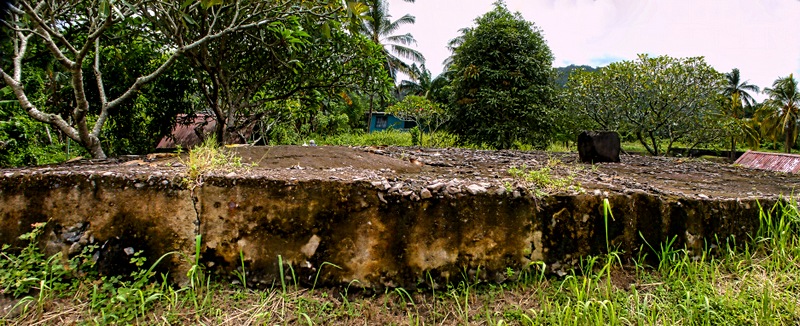
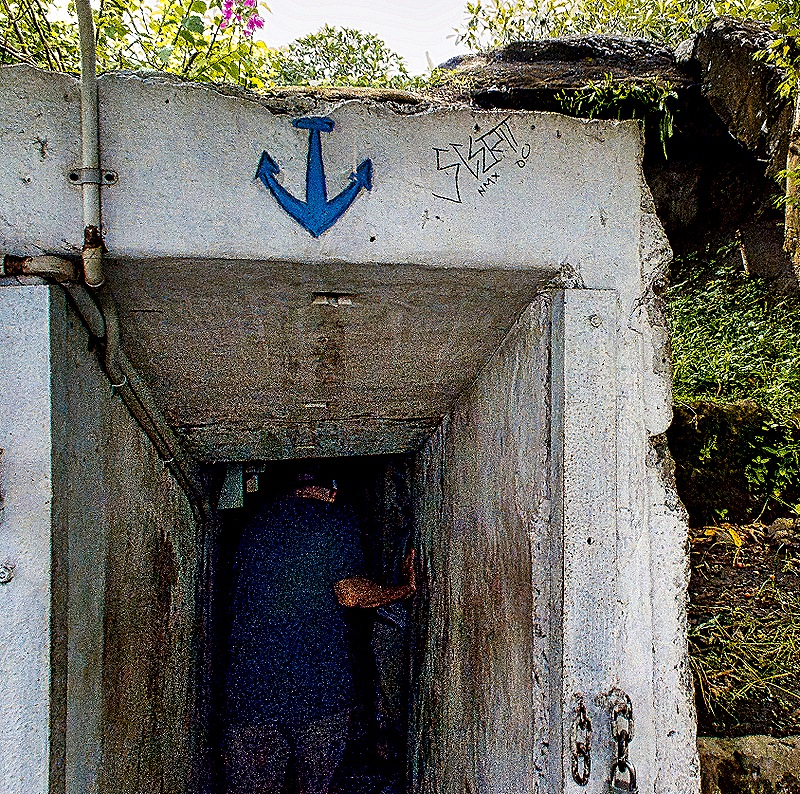
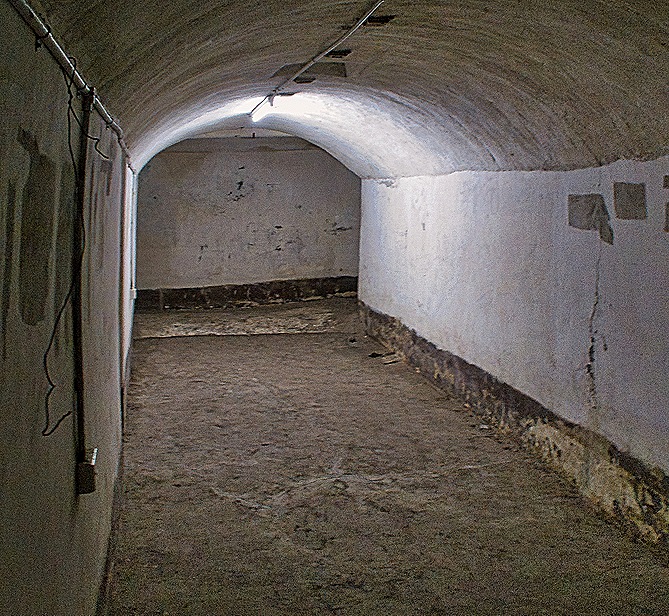
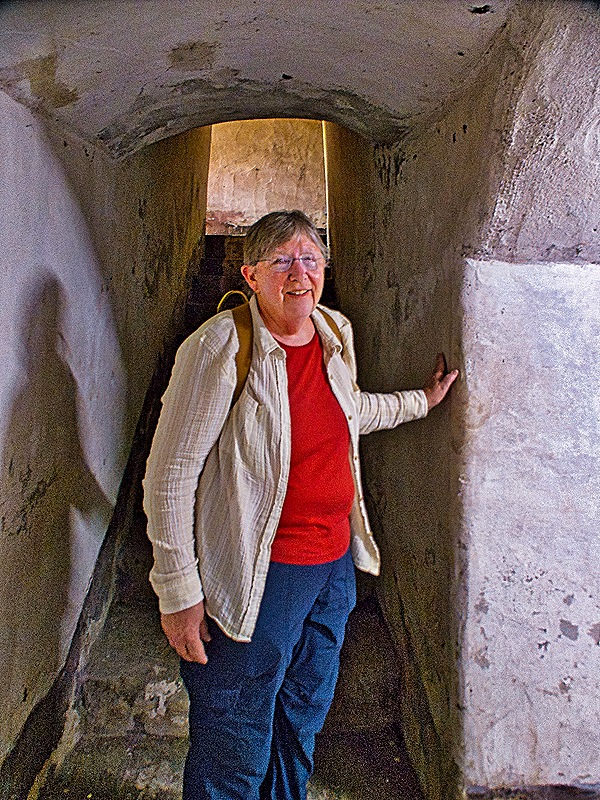
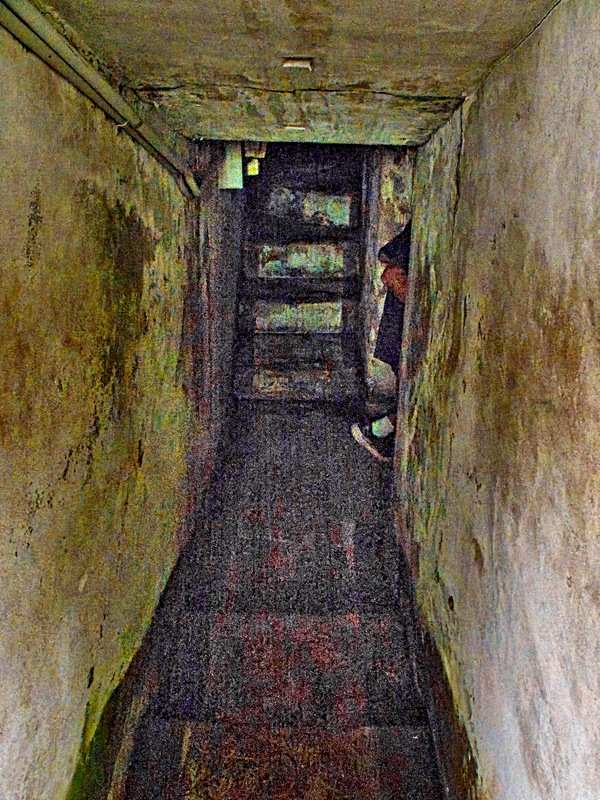
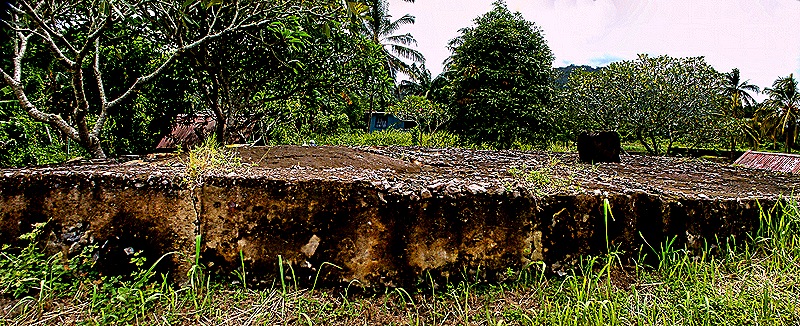
Behind the museum is a World War II Japanese bunker. This concrete bunker was the command post for anti-aircraft guns and spotlights in the region. It is called Yamamoto’s Bunker, but it is questionable whether Admiral Yamamoto, the mastermind of Pearl Harbor and the commander of the Japanese fleet in the Pacific, ever stayed in it. He was certainly in Rabaul in 1943 when it was among Japan’s most forward positions, but some think he stayed in another bunker not too far away. In any event, US code breakers intercepted his itinerary for an April 18, 1943, flight from Rabaul to Bougainville and a squadron from Henderson Field on Guadalcanal shot down his plane. This was a major loss for the Japanese. The bunker was dark and had no handrails on the stairs, so it was difficult to safely negotiate the many steps.
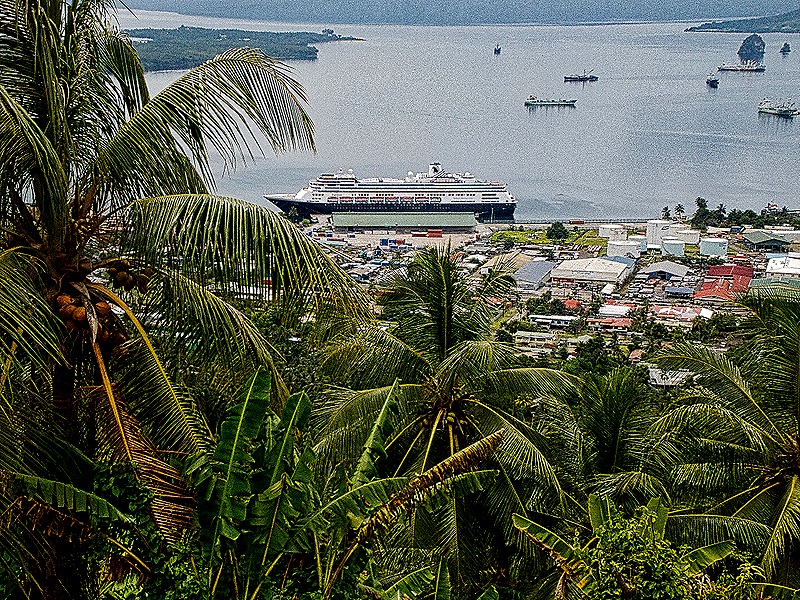
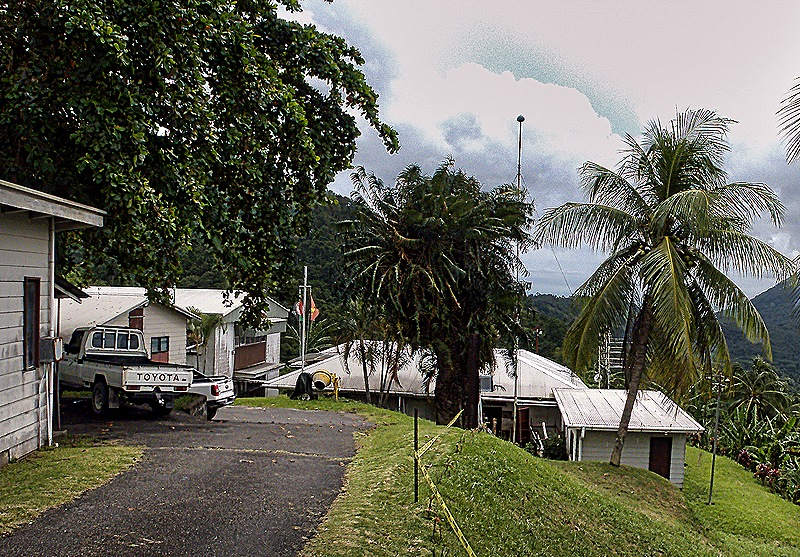
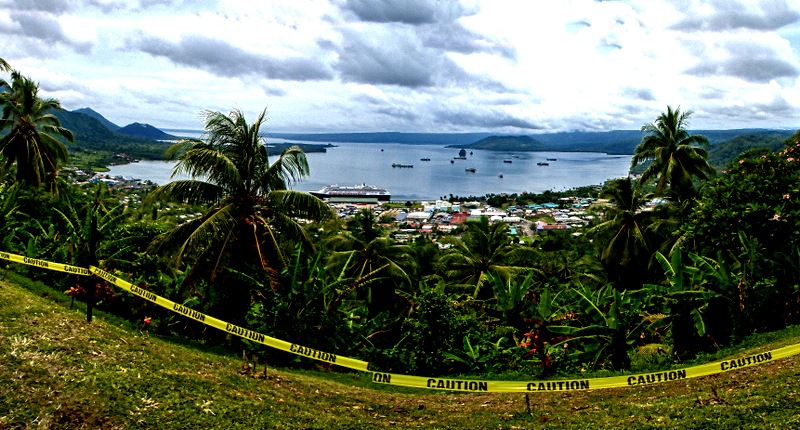
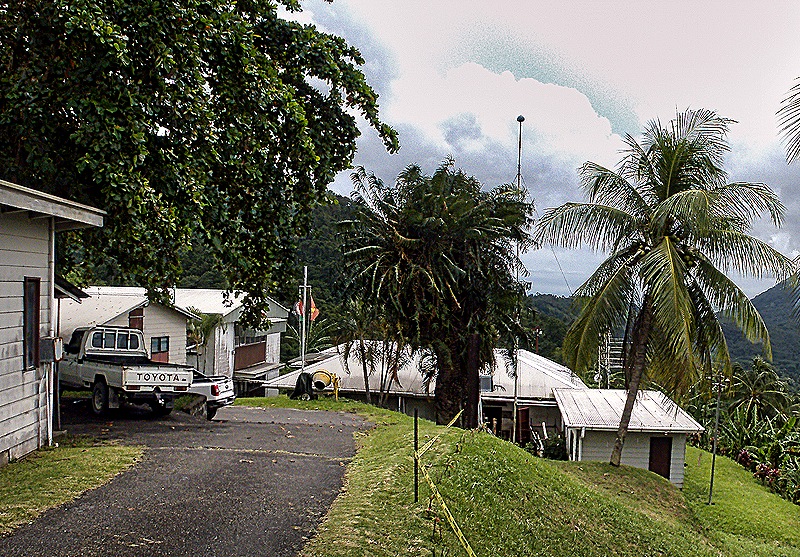
Our last visit was to a high ridge above the town of Rabaul, just uphill from the Rabaul Volcano Observatory. The Observatory was opened after the devastating 1937 eruption in the hope that any future eruptions could be detected in time to avoid such loss of life. Today it is responsible for monitoring 37 active and dormant volcanoes in Papua New Guinea. This is the main observatory and there are four supplemental observatories near other volcanoes. We were able to see the Observatory a little way down the hill but were not permitted to enter because this would disrupt its scientific work (there were quite a few visitors when we were there). It was a stunning view from here over the town, the bay and the volcanoes.
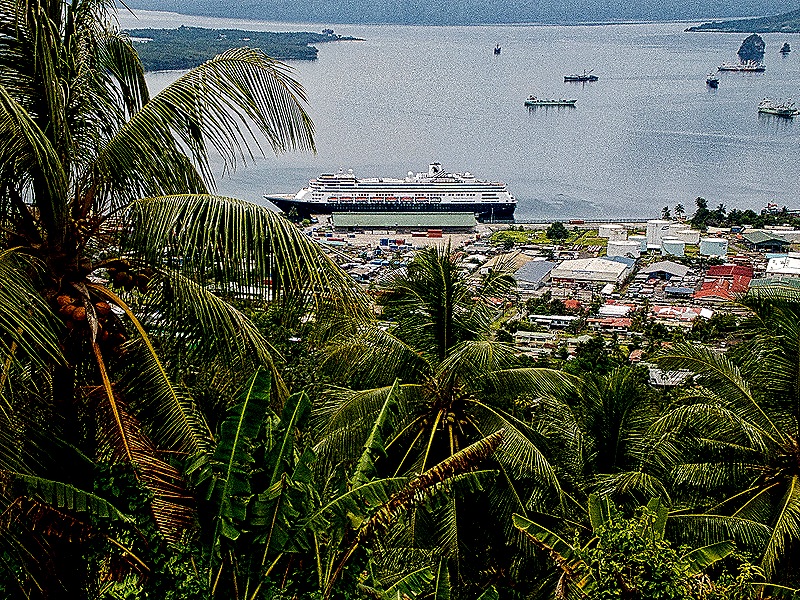
We returned to the ship after this last look over the whole area. It had been a very interesting day and really there are still things left here that would be worth seeing. But for now this was it as we sailed away through the bay to the ocean.