Napier, New Zealand
We arrived in the harbor of Napier on the morning of February 4. The Maori called this Ahuriri & Captain Cook (who else?) sailed by & described the place while exploring New Zealand in 1769. The town was founded by Europeans in the mid 19th century & now has a population a little over 60,000. It is located in the wine making region of Hawke’s Bay.
But what made it famous was a devastating earthquake in February of 1931 that measured 7.9 on the Richter scale & destroyed just about the entire city. Hundreds of aftershocks hampered rescue efforts over the next two weeks & fire destroyed what was left after the earthquake. The earthquake also raised the land almost 3 meters, adding some 300 square kilometers to the dry land.
The survivors were, however, determined to rebuild their city & they did so in record time over the next several years. This was the early 1930’s when Art Deco was the reigning architectural style, so most of the new structures in Napier were built in that style or the California Mission style that was also popular at that time. Because few cities were doing much building during the depression, Napier is now considered one of the two primary Art Deco towns in the world, along with part of Miami Beach.
We took the shuttle into town & spent the day walking around on our own. It was Sunday, so a lot of businesses (including restaurants) were closed. But much of the town itself was quite attractive. The bus let us off on a beach side road called Marine Parade. We were told that this street was the sea wall before the earthquake, but a large & attractive waterside park is now on land beyond it that was raised from the water by the earthquake.


 In front of the Information Center where the bus dropped us off was an interesting fountain, & down a flowered walk was “Pania of the Reef,” a sculpture named for a Moari myth that is one of the most photographed attractions in New Zealand. Near the colonnade there is an orchestra shell & across the street is a domed building that is one of the art deco landmarks visible from around the city.


Next to the T & G Dome is the Masonic Hotel, both built in the 1930’s. Nearby was a monument to those lost in the Boer War in South Africa. Given the early date of the Boer War we assume this must have survived the earthquake.


Across the street from the hotel is the Hawke’s Bay Museum. We were originally attracted to it because its front door said “Napier Library.” It turned out that the library is being housed temporarily in the back of the building. More on that later. The museum was quite interesting, though. There was a large room of Maori artifacts & the basement had an extensive exhibit about the earthquake, with artifacts & movies of survivors recounting their recollections. Quite worth visiting.


Walking around the town we saw a lot of buildings with interesting art deco facades. Most were commercial buildings, which tended to have art deco in the upper level and a storefront on the lower level with a solid awning-like structure over the sidewalk. As a result you could only see the art deco portion from across the street and the commercial first level detracted from the buildings’ architectural effect. It’s a shame, but this is not Disneyland, people actually carry on their lives here.


Notable art deco buildings included the ASB Bank, which has a gilded Maori design above the windows, and the Daily Telegraph Building, which once housed the local newspaper (since moved to a neighboring town). We reached the Municipal Theater later in the day and as we photographed it from the other side of the street a man walked over from the front of the theater. He was the caretaker and told us that he would have shown us through the building if he hadn’t just locked it for the night. He told us it was designed in the 1930’s by an architect who was convinced that movies were the future and stage productions a thing of the past, so he designed it exclusively for movies. He also put in only one restroom backstage, apparently because he thought there wouldn’t be many actors to use it. Funny how short sighted people can be.


Now the library, a complicated situation. We walked to the old library. It wasn’t really all that distinctive, but outside was a plaque to Becky, the library building site dog. It seems that while the library was under construction one of the workers ate his lunch while waiting for a concrete delivery. He couldn’t finish so he gave his last meat pie to Becky, who buried it nearby for later consumption. Seconds later that area was covered by concrete and the pie lies there still under the entrance to the library. Be that as it may, this library is now closed up because it was found not to be earthquake proof.


So the library was moved to a much smaller space in the back of the Hawkes’ Bay Museum, which was set to open a few days after our visit. It has not been determined yet whether it will stay there permanently, or the old library be upgraded to be earthquake proof, or it will go somewhere else. We could only look in from the outside, both from inside the museum and from outside on the street behind.


It was a bit hard to find an open restaurant for lunch so we ate at an Irish pub called The Rose. We had pizza & beer and it was good. The bartender carved a shamrock in the foam of the beer. Rugby was on TV and we watched Wales destroy Russia, 35 to 7. There was a large open window by our table, through which the waitress stepped to serve the folks outside on the sidewalk.


So here are a few flowers that caught our collective eye in Napier.


There were some wall paintings, a sculpture of a flower, and a sign I though was funny: “World Famous in NZ,” something of a contradiction in terms. The fellow noticed me photographing it, so I asked “World famous, just in New Zealand” & he responded “A bit of bullshit, but every bit helps.”


Last but not least is the St Johns Anglican Cathedral, very clean lined with little decoration. The tower was visible from much of the downtown. We wanted to see the inside but never found an entrance. On the lawn in front was a large stone cross, which must have survived the earthquake because it was in a picture of the earthquake rubble we saw in the museum.


Back at the Marine Parade we boarded the bus & returned to the dock, bidding Napier a fond farewell after a pleasant and interesting visit.
 Napier is a major port in this part of New Zealand with wood being one of the big exports. We were told it is mostly bound for China. The folks of Napier are very enthusiastic about their 1930’s heritage and outside the ship were parked several vintage cars driven there by folks in period dress. There was also a Dixieland band. Across the bay, beyond the town, was a row of cliffs that looked a little haunting in the lowering sunlight.

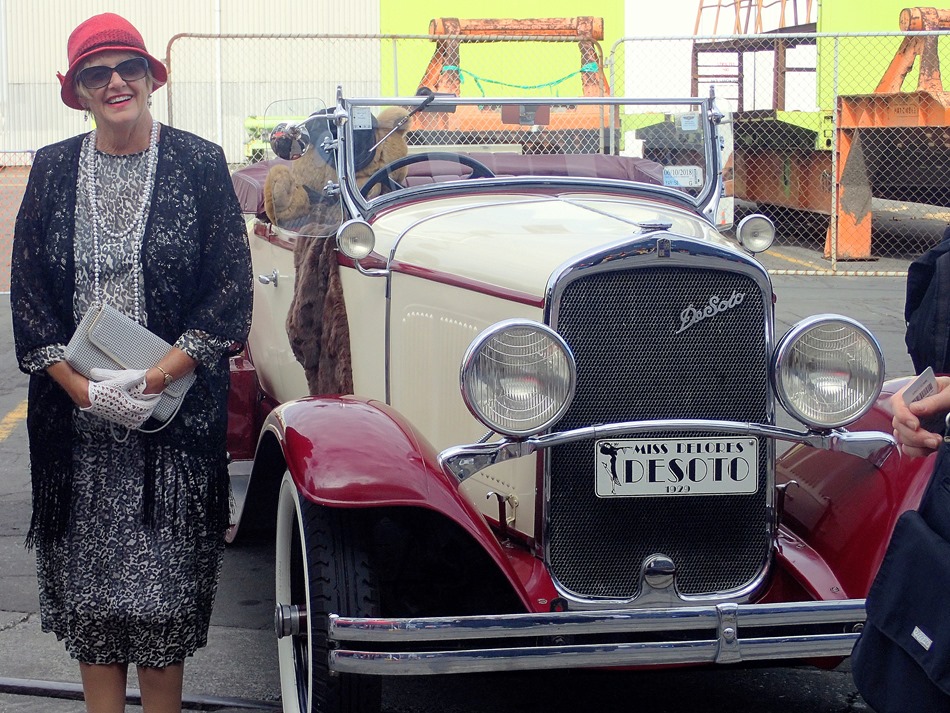


We went to bed after dinner while the ship headed south for our first visit to the south island of New Zealand. In the bedroom we were welcomed by one of our more delightful cabin mates.


Tauranga (Rotorua), New Zealand
February 3 found us in the port of Tauranga, a town of about 15,000 down the coast from Auckland. But we didn’t spend any time there as we were scheduled on an excursion to Rotorua, a famous geothermal area. Ngaio Marsh’s interesting novel “Colour Scheme” is set in this area, at a thermal spa near a Maori village.
Along the drive we passed a number of Kiwi fruit plantations. Our guide explained to us that until 1969 (I think) there was no such thing as Kiwi fruit. These fruits were originally called Chinese Gooseberry, and the first seeds were brought to New Zealand by a visitor to China early in the 20th Century. After World War II it was well enough established to begin exportation, but confusion reigned because Chinese Gooseberry sounded like it came from China. So the growers got together & decided to address this by changing the name to Kiwi, presumably after the New Zealand bird of that name. The rest, as they say, is history!

Our first stop was at Whakarewarewa village, a Maori village dating to pre-European times that is still home to some 80 Maori. Our guide grew up in this village. It is special because it is the only place where villagers still live among the geothermal features, including boiling mudpots, geysers & steam vents. As we walked across the bridge into the village we could see the steam vents among the houses. Unfortunately it was a gray & drizzly morning, but that didn’t interfere too much with appreciating this interesting place.


We stopped in front of the Maori meeting house. We had seen these before in Waitangi & Auckland, but this was the first time in a working village. The carvings on the front represent an ancestor, with the carving of a man on top & the two long rooflines representing arms. In front were two old wood carvings of men, which our guide pointed out showed the English influence: they were wearing bowler hats.


We visited a steaming pool called Parekohuru. The Maori in this village cook their food using the hot steam from the earth. They build boxes vented from the bottom & leave food wrapped in foil to cook, then retrieve it later. Very efficient.


The steaming water is also used for bathing. Several large bath tubs have been carved out of rock, then grooves from the hot water pool carry bathwater to the tubs. These are used by the entire community.


The village has two churches: one Catholic and one Anglican. We were told that when the missionaries came the head man was being pressed by both groups to convert his village to their faith. He resolved the issue by calling the entire village together in front of the meeting house, then dividing them into two groups. This group will be Catholic, he announced, and this other group will be Anglican. Thus Christianity was spread to people who weren’t consulted about their actual beliefs. We visited the Catholic church, probably the smallest we have ever seen. It has a graveyard in which all the graves are above ground because they would be destroyed by the steam vents if they were dug into the ground.


We had some free time to visit steaming pools, then headed for the song & dance performance.


The song & dance at the village was similar to what we had seen before, this year & in 2016, but it was easily the best Maori performance we have seen. Several different styles of dance, fast & slow, some with Poi balls swinging & a Haka with eyes bulging & tongues out. They were really very good.


With all the hot springs in the area it’s not surprising that Rotorua became a spa area. After leaving the village we drove over to see the old bathhouse on the shore of Lake Rotorua. Originally opened in 1906, it is no longer in operation as a bathhouse but was restored as a museum. Currently it is closed because of recent earthquake damage. Then we rode in a suspended gondola up the side of the nearby mountain for lunch at a place for mountain sports.


The lunch wasn’t much, but afterward we had some great Hokey Pokey ice cream. From the mountainside you could see a good way, even back to some steam vents in the area of the village. One of their more popular activities was a “luge” run, on wheels rather than on ice, all the way down the mountain. Looked like fun but we didn’t have time to try it. There was also a jelly bean store with mosaic copies of well known paintings & pictures made entirely of jelly beans!


Continuing from the flowers in the picture above, this is a good place to put some of the other flowers we saw in this area.


From there we went for a visit at a sheep farm called the Agrodome. The show began with the introduction, one by one, of championship sheep of more than a dozen varieties. Some of them were pretty exotic looking, with enormous coats of wool. Each was lured to its proper place with a bowl of food on a pole. After eating, several fell asleep on the stage (showing they had done this a lot). These are real sheep that walked on stage, not museum displays.


We were given a demonstration of sheep shearing. We were told that this was the first time this sheep had been sheared. It was amazingly docile and relaxed, not in the least afraid of the electric clippers. The whole coat was off within about two minutes, without a cut or a scrape, & the sheep didn’t seem to mind.


Next the amazingly well trained sheep dogs came on stage. Some ducks were released & a dog rounded them up, never touching them (the ducks looked surprised). After some more maneuvers the dogs leaped up onto the backs of the sheep that had been standing (or sleeping) patiently on the stage & ended up standing on the highest ones in the center looking around. It reminded us of our granddog Lucy, an Australian Cattle Dog who, lacking cattle, loves to jump up on our laps and place her paws on our shoulders then look around as if this were her domain.

Afterwards we went outside to watch a demonstration of one of the dogs herding a group of sheep (who looked like they would rather be somewhere else). The dog’s demeanor was all business as he followed directions communicated by a whistle. After the sheep were inside the small stall the dog walked directly across to a dog size hole in the fence then over to its designated spot, where it lay down to accept adulation from the people filing past toward the bus. It really knew its business.


The sheep farm show was a lot more interesting and fun than we had anticipated. As we left to return to the ship, we saw a sculpture of Prince, the prize Merino sheep we had seen in the show.

Back at the port, waiting for the sail away, we spotted a stand of Norfolk Pines on the other side of the peninsula & several sea birds. As dusk approached the bay looked serene.


As we sailed away from the dock we passed Mount Maunganui, with the town of the same name and Magnificent Ocean Beach in front of it on the narrow peninsula. There was a sculpture of a Maori warrior in the harbor & we saw a beach and some rough surf on the edge of the mountain


So we sailed away, as the wind drove the surf onto the rocks, looking forward to another fulfilling day in New Zealand.

Auckland, New Zealand
We arrived in Auckland on the morning of February 2. Auckland is by far the largest city in New Zealand with about 1.5 million people. We were docked in the middle of town, so you could walk right out the port gates into the city center.
The Auckland area was originally settled by the Maori about 700 years ago. They are Polynesians & came here from such islands as Rarotonga & Samoa. By the time the English came the Maori occupied pretty much all of New Zealand, which they called Aotearoa (land of the white cloud). They had a vibrant culture, which in recent years has been embraced & supported by the state, so that (for example) public signs are usually in both Maori & English & the libraries have books in English and Maori.
On our way to New Zealand there was a Maori cultural group on board Amsterdam, giving classes in language and dance and arts & crafts. They also put on a show of Maori song & dance.


Maori often have elaborate tattoos & many of their dances are aggressive, with much foot stomping & cries. Well known is the Haka, a Maori war dance that is performed before every game by their world champion rugby team, the All Blacks. It is characterized by bulging eyes and protruding tongues, which are supposed to be intimidating to the opposition, & I guess they are.

The last time we were here we walked to the War Museum, the library & the tower. You can see all that here:
https://baderjournal.wordpress.com/2016/02/22/auckland-new-zealand
This time we decided to ride the Hop On Hop Off bus around the city. So after breakfast we set out to find the bus terminal. But during breakfast we noticed right next to the ship a large crane, the top of which we couldn’t see from our table. This turned out to be a pop-up restaurant with a table & diners suspended in the sky from the crane. Its hard to believe the food was worth the $900 per person cost we heard, so it must be the thrill of eating suspended in the air with you chair over the edge. New Zealanders are known for this kind of thrill-seeking, but I don’t think it would be for us, even at a much lower price.


We found the HOHO bus just down the block from the old Ferry Building, built in 1912, right next to our ship. The bus took us across town & out to some islands. Auckland is built on 48 extinct (we hope!) volcanoes. The large island hill in the distance, Rangitoto Island, is the youngest one, having emerged from the ocean about 600 years ago. Must have been pretty scary for the Maori living in the area.


Coming back into town we drove past the Catholic Holy Trinity Cathedral & St. Mary’s Anglican Church, one of the largest wood churches in the world.


We exited the bus at the War Memorial Museum, a wonderful museum in which we spent hours last time. It was built in 1929 to commemorate the end of World War I & is now undergoing some renovation.


But this time we only stopped for a short time to transfer to the other HOHO bus line. This took us to near the top of Mount Eden, the highest spot in the city. Mt Eden is an extinct volcano and, along with One Tree Hill (now topped by an obelisk rather than a tree), offers the best panoramic views of the city outside of the Auckland Tower. We climbed to the top & the wind was so strong it felt like we would be blown away. It made picture taking very difficult.


From Mt Eden we had a nice view of the War Memorial Museum. There was a stately Norfolk Pine in the distance. We also saw an interesting black bird with an orange beak and some bushes with what appeared to be glowing thistles at first but upon closer inspection looked like a strange kind of flower.


We left the bus in the neighborhood of Parnell, with a lot of restaurants & boutique stores. We had a delicious pizza for lunch then started walking back to the dock. On the way we visited the Civic Theater, built in 1929 as an elaborate movie palace, complete with elephant & crocodile motifs. It even had a Bora Bodur Room, named after an ancient Indonesian Buddhist temple we visited on our last world voyage. Altogether it was interestingly over-the-top.


We walked back to the dock, detouring along the way for some shopping. But the area was in disarray from construction so we didn’t find much. We stopped in the Ferry building for gelato (our first of the trip!) then back on board. The sail away was during our dinner, so we didn’t get to see it. But there are some pictures of our 2016 sail away from Auckland in the episode linked to at the beginning of this post.
Alofi, Niue
Amsterdam anchored off the coast of the island of Niue early on the morning of January 28. Never heard of Niue? Well, you aren’t alone. This is the largest raised coral island in the world and also the world’s smallest sovereign state. Home to some 1500 people, give or take a hundred, it also boasts the highest percentage of elected representatives: 1 for every 65 people. There are actually twice as many Niueans living in Australia as on the island itself, and more than 12 times as many living in New Zealand. That exodus was probably exacerbated by Cyclone Heta, which devastated Niue in 2004 with 150 mph winds and 90 foot waves that cleared the island’s cliffs. Although independent since 1974, the islanders are citizens of New Zealand.
Many cruise ships miss scheduled stops here because of ocean conditions (no reef to protect the waters around the island). Our friend Bob, who has been on half a dozen HAL world cruises, told us that he had been scheduled to land here four times but had never made it ashore. But we did . . . two for two in difficult islands!
There were no shore excursions offered on this tiny island. In fact, this was a Sunday, which in Polynesia is a very serious matter with everyone attending church and businesses all closed down. We were told HAL had to negotiate with the islanders even to get permission to come ashore here on a Sunday. Fortunately, those negotiations succeeded, but still there was little to see or do since transportation was largely unavailable beyond walking down the one main road of Alofi, the nation’s capital and largest town.
So, after a leisurely breakfast, we tendered ashore. The Captain & his wife came ashore on the same tender.


We walked up the winding road in the first picture above and walked to the right. There we found a church with services in progress. We had heard much about the beauty of the singing of Polynesian choirs so we walked over to the church. The singing was indeed nice, in four part harmony, but probably not what it usually is because about a third of the congregation was from the Amsterdam. Several dogs were lying patiently near the front door waiting for their masters to finish the services. Around the church was an interesting graveyard, with many graves decorated with fresh flowers. One grave stone looked like it had been split by lightning. We actually saw graves in many places in Alofi, some in people’s yards & others near the cliffs that border the water.


Behind the church near the cliff was a small area with a tomb in it. Rick walked out there, but wasn’t aware that this is apparently the resting place of two of Niue’s ancient kings. It had a fine view of the tender dock & the waves that constantly run in over the rocks nearby.


Walking up the road from the church we passed the seat of Niue’s government, a colorful hut built for an art exhibition a few years ago and more nice sea views. Very little was open, just the tourist information stop, a small shop advertising DVD rentals (we were told it actually had no dvds) & a couple of restaurants. The tourist information shop had souvenirs and postcards for sale, but not much else was to be had. We continued up the road.


Finally we found the one historic spot in these parts. In 1774 Captain Cook found this island and tried to come ashore. On the third try they set foot on land. But although he brought trinkets & gifts he was driven off by spear throwing islanders with what he thought was blood around their mouths but was actually a red plant dye. He named this “Savage Island,” claimed it for England & sailed away. No other Europeans attempted to land here for another 80 years, when missionaries finally set up shop. The place where Cook tried to land is called “Opaahi Landing.” It was a very steep & slippery climb down from the road to the landing spot, so Mary stopped about halfway & Rick went all the way down to this picturesque spot.


While there wasn’t much here in the way of sights, we did see some flora & fauna while walking through the town and its outskirts.


One of the more dramatic aspects of Niue is the tall cliffs that line the water. They appear to have been worn away at the bottom only by waves, which gives them an unusual aspect of hanging out over the water. Quite beautiful.


We tendered back to the ship for the sail away. We were glad we had a chance to see this remote and not often visited island, but it is not one we would go out of our way to visit again. Unlike the others we have visited on this cruise, Niue lacks mountains or other distinguishing geographic features and the view as we sailed away was flat & uninteresting.


Avatiu, Rarotonga
On January 26 we were scheduled to stop in Rarotonga, the largest of the Cook Islands. These islands are “associated” with New Zealand, which means they use NZ currency & New Zealand handles their foreign affairs, but internally they are self-governing. In 2016 we visited here, but one of the tenders was shipwrecked on a coral reef, resulting in some injuries & expense to Holland America, including the Captain having to go to the Netherlands for an inquiry. You can read all about that incident (and our visit to Rarotonga) here:
https://baderjournal.wordpress.com/2016/02/17/rarotonga-cook-islands
As a result of all this, it was quite clear that the Captain would not send in the tenders unless conditions were quite reliable. During our sea day there were some sizeable ocean swells, so it didn’t look good for a visit. Ships often miss this port because of sea conditions (there is no reef creating a calm water space around the island, as there is in Moorea & Bora Bora); most recently just a few days before we arrived. The Cook Island newspaper had an article (edited by me) anticipating our arrival:
____________________________________________________
Cruise ship to call, weather permitting
With the scheduled arrival of the cruise ship MS Amsterdam this morning, local tourism operators are praying for a good weather so passengers from the cruise ship are able to come onshore.
The cruise ship which belongs to Holland America Line, an American/British owned cruise line originating in the Netherlands, will stay in Rarotonga for a day, leaving later in the afternoon.
It is expected to be off Avatiu harbour at around 7am.
Turama Pacific Travel’s Nina Webb said 340 passengers were booked for various tours during the day.
Webb said they were hoping for a better weather to allow the local tourism operators to maximise on MS Amsterdam’s Rarotonga tour.
On Friday last week, some tourism operators suffered a loss of business after efforts to get passengers onshore from the cruise ship Viking Sun proved futile. The cruise ship, with 930 passengers aboard, arrived on early Friday and was to call at Avatiu, but high swells made it difficult to get passengers onboard the cruise tender.
The ship was then directed to the Arorangi jetty where the sea was much calmer, but the passage through the reef proved too narrow for the tender to get through safely.
“We hope the weather is good enough to allow passengers from the Amsterdam to come onshore and enjoy what Rarotonga has on offer for them.”
Fourteen different ships will visit six of this country’s islands in 24 separate voyages, this year.
__________________________________________________
We arrived off the coast at Avatiu early in the morning. To make a long story short(er), the Captain maneuvered the ship around to protect as much as possible from ocean swells, then after lengthy consideration they lowered the tenders & tender platform. So we were going in (yay!).

We were on a HAL excursion so we were sent into the first tender. As luck would have it, this was the same tender that had been shipwrecked in 2016. Our friends Bill & Robert, who had been on the tender for the incident in 2016, were on the same excursion. From the look on Robert’s face we weren’t sure he would board the tender, but he did in the end. Boarding the tender was unusually treacherous, since it was going up & down several feet in the waves, and also drifting several feet away from the platform then smacking back against the platform again. So the crew helping people board were repeatedly yelling “hold on” as we hit the platform. It took a while, but everyone boarded & we sailed for the harbor. We noticed that while loading the next tender they had a second one acting like a tug, pushing the tender against the platform so it couldn’t drift away & back.
Because of the treacherous conditions the Captain had restricted tender access to those who could walk on their own, or with easily portable assistance (like a cane). We were told that one fellow wheeled his wife to the tender bay in a wheelchair and loudly demanded that she be admitted to a tender. With fully mobile people finding it so difficult to board the tender there was no way a wheelchair could have done so safely. Reportedly, he actually said (this is kind of a running joke on board) that he had paid a lot for this cruise (who hadn’t ?) & resented being denied access to this island. He was properly told to take it up with the Captain. You see a whole lot of strange behavior on a cruise ship; if you have a relaxed attitude this is one of the more entertaining aspects of life on board.

We boarded open trucks for a trip around the island and into the mountains. Unfortunately, three people hadn’t made it on time for the first tender, so we didn’t leave for about half an hour as we waited for them to arrive on the unusually slow tender service today. This had consequences for everyone on the tour later; we would have left them since it was their own fault they didn’t get themselves to the meeting point for the first tender on time. But lucky for them it wasn’t up to us. Finally, we all boarded the back of the trucks & drove through some rough landscape to reach a high viewing point.


Before we get to the tour, however, we wanted to mention one of the musicians on board. Hyperion Knight is a Julliard trained pianist from California. He put on three shows during his stay, including some truly virtuoso piano performances and some entertaining music history. But on most days he also performed informally in the Explorers’ Lounge. He called it practice, but he took audience requests & interacted with his listeners. Very unusual and a nice bonus.

Getting back to our story, we drove through some very rough & steep terrain to a viewing point in the mountains. At one point on a very steep climb the back door of the truck flew open & a step stool fell out on the road. Fortunately the passengers at the end were able to hold on and stay in the truck, because the driver wasn’t stopping for anything; if he had stopped he probably would not have had the momentum to make it to the top. At the top he stopped, then walked down the hill & retrieved the step stool. The viewing point was worth the drive & gave the closest view available of “the Needle,” a rock formation near the top of the tallest mountain.


We drove down from the mountain, the highest point vehicles can reach, to the only waterfall on the island. Called “Papua Vai Rere,” we were told that this was where women came to bathe in the old days. Men were not allowed. On the way we passed a goat & a bust of what looked like a Roman sitting on a pillar, weirdly placed in the middle of the jungle. Go figure.


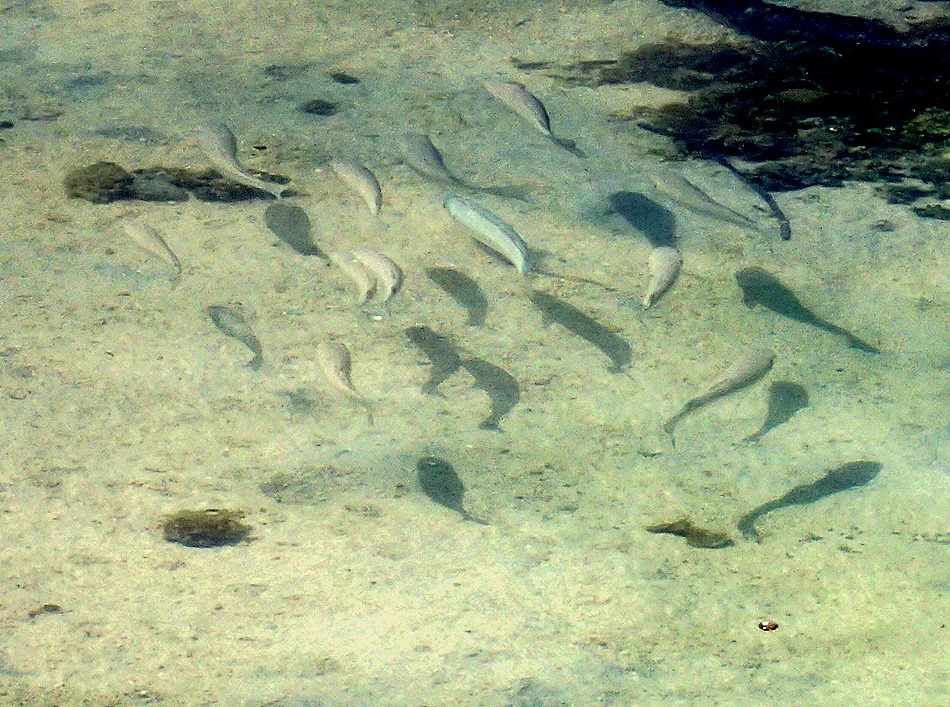
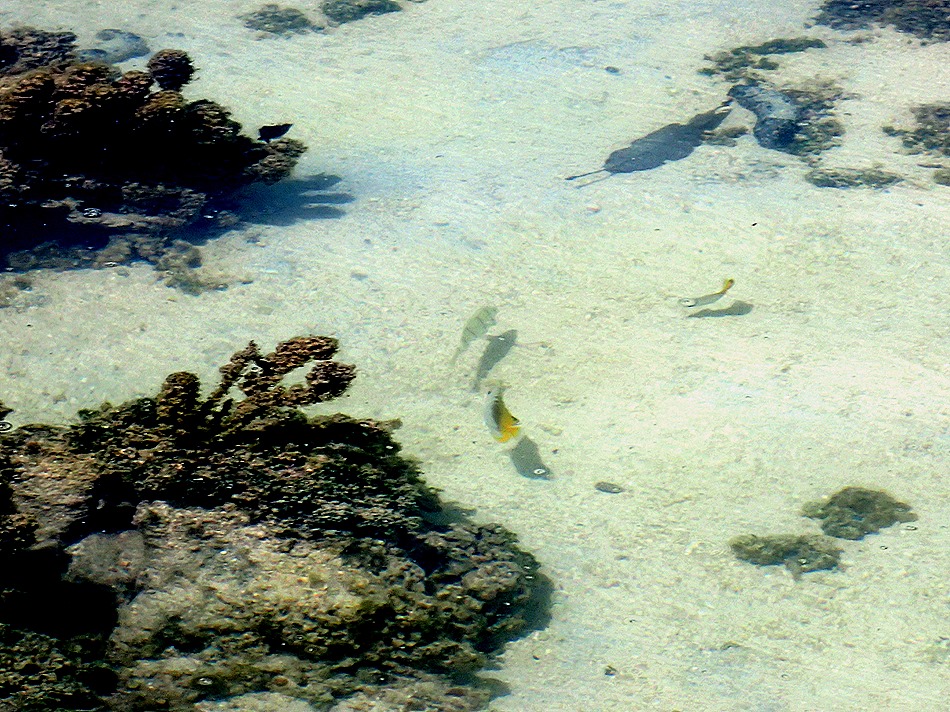
After a long drive across the island, passing the hospital (why?), the jail & the airport, etc., we visited a large & beautiful beach with water so clear you could see the fish swimming under the surface.




We went to see an ancient marae, a sort of platform that was sacred to ancient Polynesians on all of these islands. This one, called Arai-Te-Tonga, was the site of the royal court of the Makea tribe, built shortly after they first settled Rarotonga round 1350 AD. These sites are still considered tapu (taboo).

Because of our late start, they skipped the site we most wanted to see: the place where the sea canoes left to settle New Zealand. It was on the tour program & even announced at the beginning of the tour, but in the end they drove us back to town from the marae. We were not happy campers!
Back in town, we set out on foot. Our primary objectives were the local libraries. We found the town’s public library first, but it was closing so we only had a minute inside. It is quite small & unassuming with very few bookshelves. But it has a colorful mural on one outside wall.


We walked on to find the National Library. It wasn’t far away but was tricky to locate. It is in a much larger cultural center complex, amid lush greenery. It is bigger than the local public library, but not much.


Near the libraries was a lovely small “Peace Garden.” There was also a church with a cemetery & a tsunami warning instructing you to seek higher ground if there is an earthquake. We walked by the University of the South Pacific, which we think may have been the first university in Polynesia. There were a lot of trees near the church with huge trunks & roots but very delicate leaves.


Rarotonga is a very lush island, so there are a lot of beautiful flowers all over. Here are some.


We also saw some distinctive Polynesian stone sculptures.


After walking through town & visiting some shops we headed back toward the tender dock. On the way we passed a building with an interesting wall painting and a “fish tree.” Unique to the Cook Islands, a fish tree is used for fishermen to display their catch for sale. The fishermen sew their catch together in what is called a “tui,” then hang it from the tree. This large tree has been used for this purpose for many years.


At the dock we passed a water playground ($20 per hour), then boarded the tender for the much easier ride back to the ship.


So that was all, after a very full day on Rarotonga, an island we didn’t expect even to be able to visit when we arrived this morning. We sailed away toward another island that is often missed by cruise ships because of iffy ocean conditions. Would we get lucky twice in a row? Tune in next time to find out.


 BADER JOURNAL