
Willemstad, Curacao (2024)
After one sea day we arrived in Willemstad early in the morning of January 22. Occupied by Arawak people when the Spanish first arrived in 1499, Curacao was taken over by the Dutch in 1643. It became one of the most important slave depots in the Caribbean (until slavery was abolished in 1863) and developed a shipping industry as well. It gained autonomy within the Dutch commonwealth in 1954 and independence in 2008. Today its biggest industry is tourism.
Willemstad is divided into two parts by St Anna Bay, a narrow but deep inlet from the ocean. On one side is Punda (Point), the old Dutch settlement that is a UNESCO World Heritage site, and on the other is Otrobanda (Other Side). We were docked in the cruise ship port in Otrobanda. We think this was our fifth visit to Curacao (but only three previous visits are in the blog):
https://baderjournal.com/2014/05/01/southern-caribbean-part-2-oranjestad-aruba-willemstad-curacao/
https://baderjournal.com/2019/12/30/
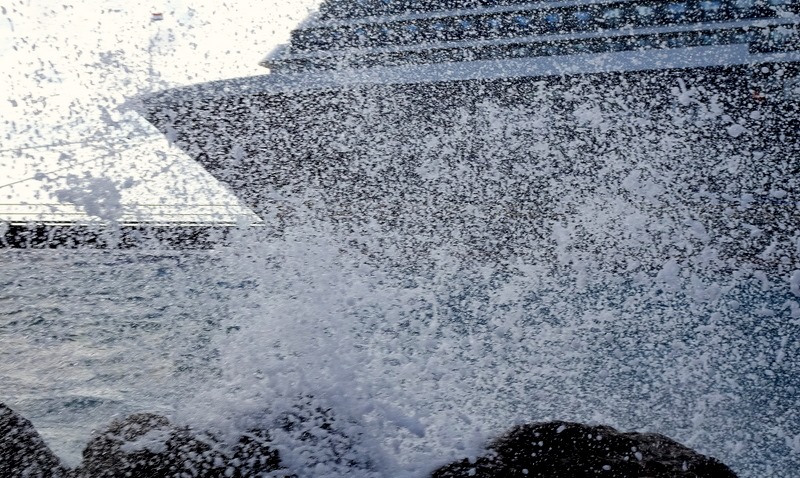
Curacao is a particularly enjoyable place to visit, both colorful and interesting. On this day there was quite a bit of wind as we walked from the ship toward Punda with surf pounding the rocks along the waterfront near the ship, something we had not seen before.
Our primary objective on this visit was to see the inside of the old synagogue of Curacao. We had seen the outside before but had never had the opportunity to go inside. This time we succeeded.
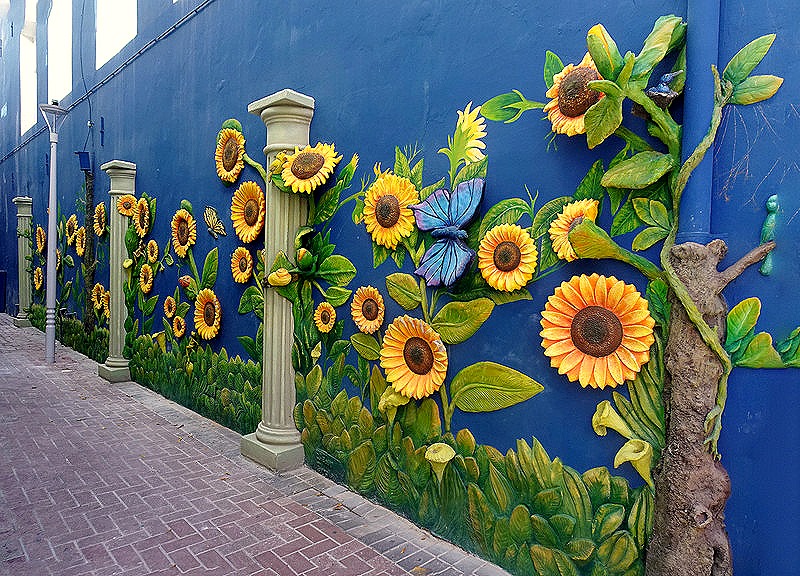
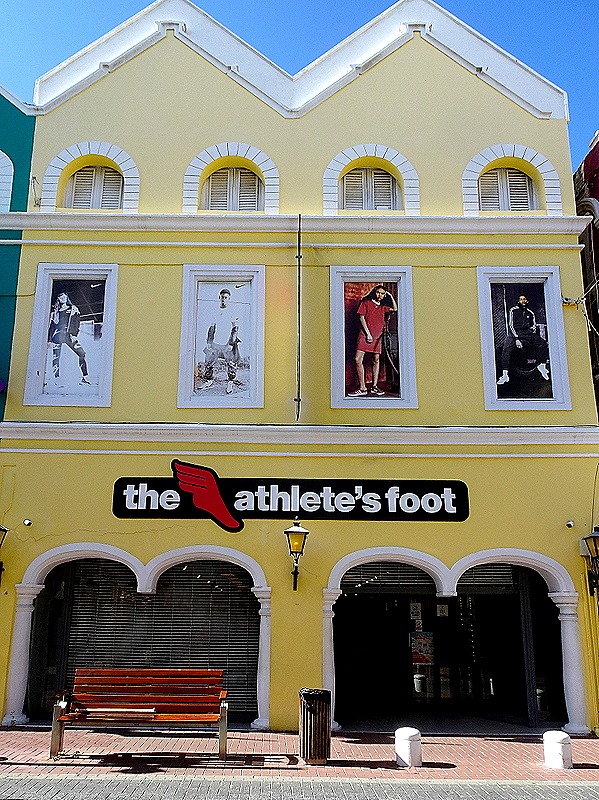
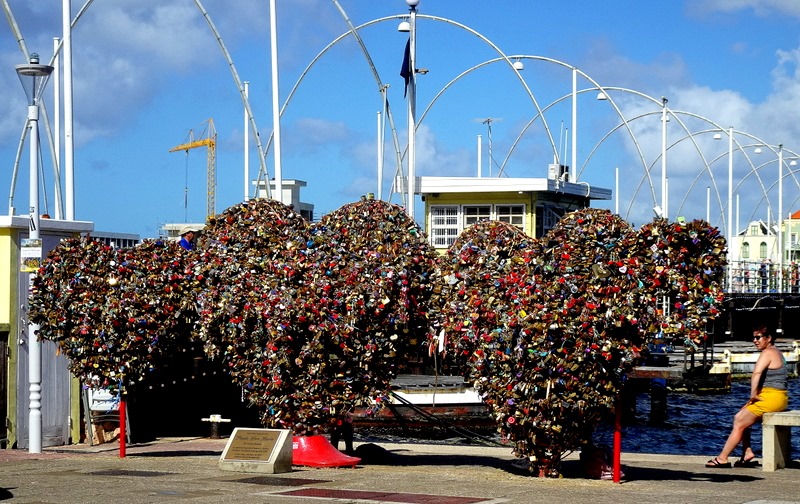
From the ship we walked to the Queen Emma Bridge, a swinging bridge across the St Anna Bay to Punda. The short walk from there to the synagogue took us past an art installation of flowers on a wall and a store that seemed to be selling a foot fungus (we didn’t shop there). Also an installation near the bridge called “Punda Love Hearts,” three large heart shapes in a row covered by locks, apparently attached there for good luck by couples. The island was named Curacao in 1499 for the Portuguese word for “heart,” so perhaps that had some influence on this installation too.
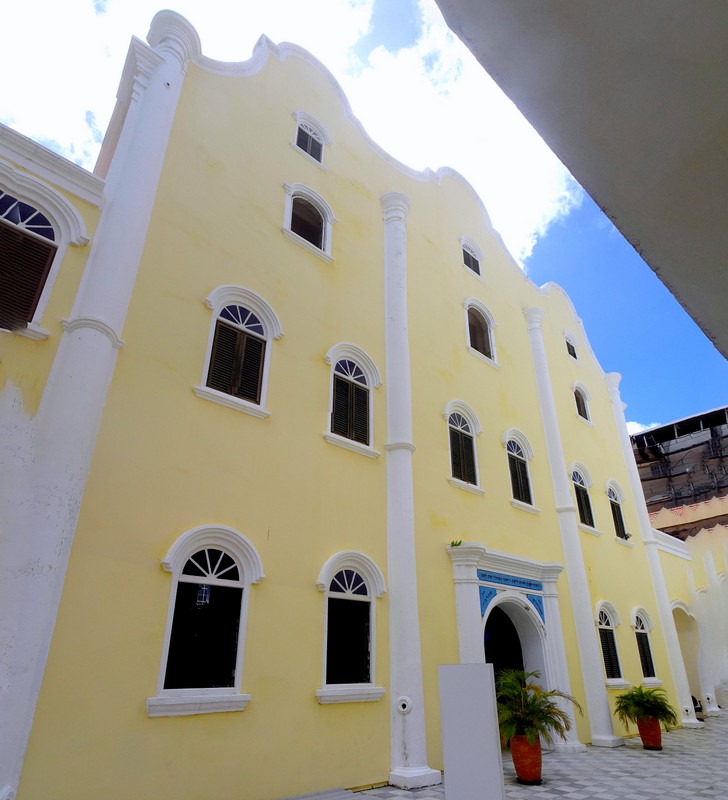
The Mikve Israel-Emanuel Synagogue is said to be the oldest continuously operating synagogue in the Western Hemisphere. It was opened in 1732 to serve a Sephardic community that had originally arrived in the middle of the 17th century to escape the Inquisition. Most came from Amsterdam, having previously fled there from Spain and Portugal, but we think that some came from Recife after the Portuguese reclaimed that part of Brazil from the Dutch and re-imposed the Inquisition there. This building is also known locally as the Snoa, a local variation of Esnoga, the Sephardic word for synagogue. This synagogue is said to have been modeled on the Esnoga in Amsterdam and we could certainly see the resemblance, full of polished mahogany, brass and silver. You can see our visit to the Amsterdam Esnoga here:
https://baderjournal.com/2014/08/26/amsterdam-netherlands-day-2/
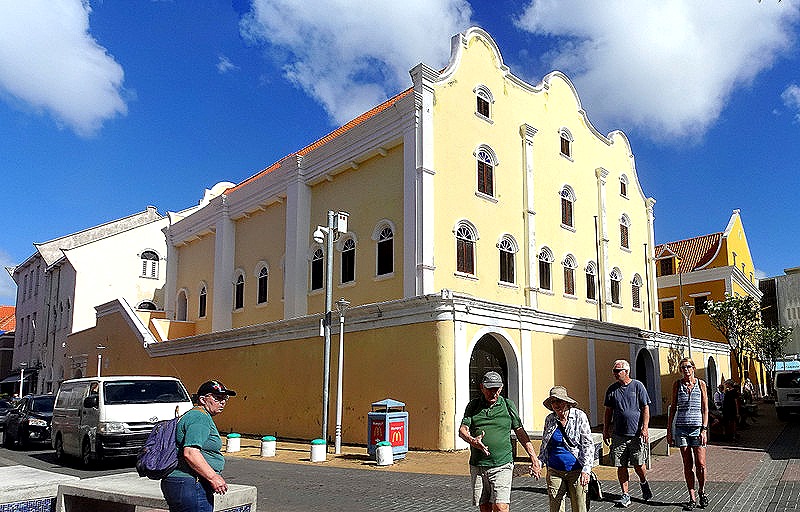

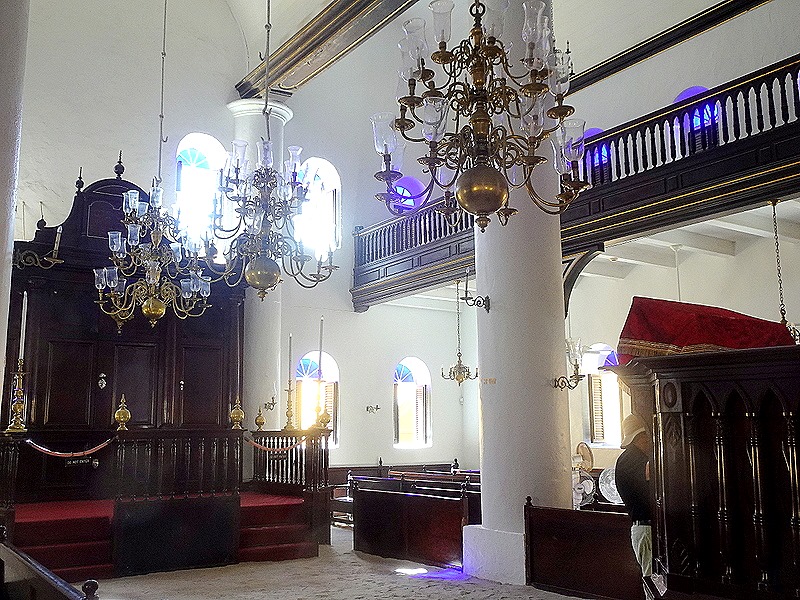
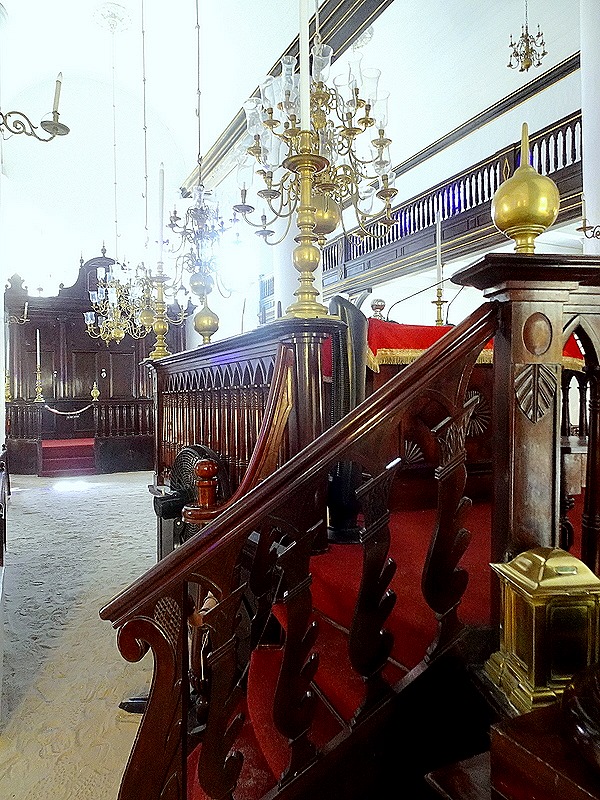

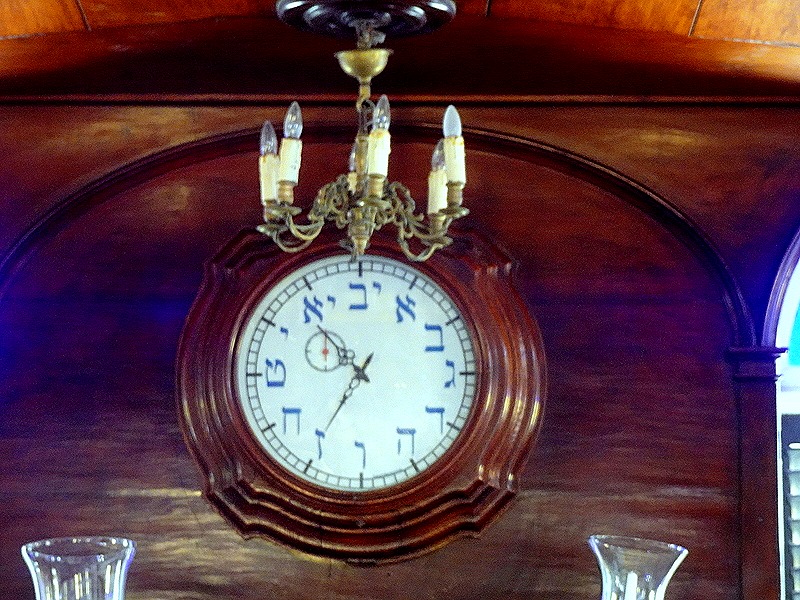
Notable items inside the synagogue were an old wall clock with Hebrew numbers and a beautiful pipe organ in the balcony, where a choir also sits during services. As we understand it, Sephardic congregations like this did not require women to sit in the balcony as Orthodox Ashkenazy congregations did. The floor of the synagogue was covered in sand, which is supposed to symbolize the Israelites’ 40 years in the desert after Moses led them out of Egypt, but was also a precaution during the Inquisition to muffle footsteps in order to protect the privacy of the service.


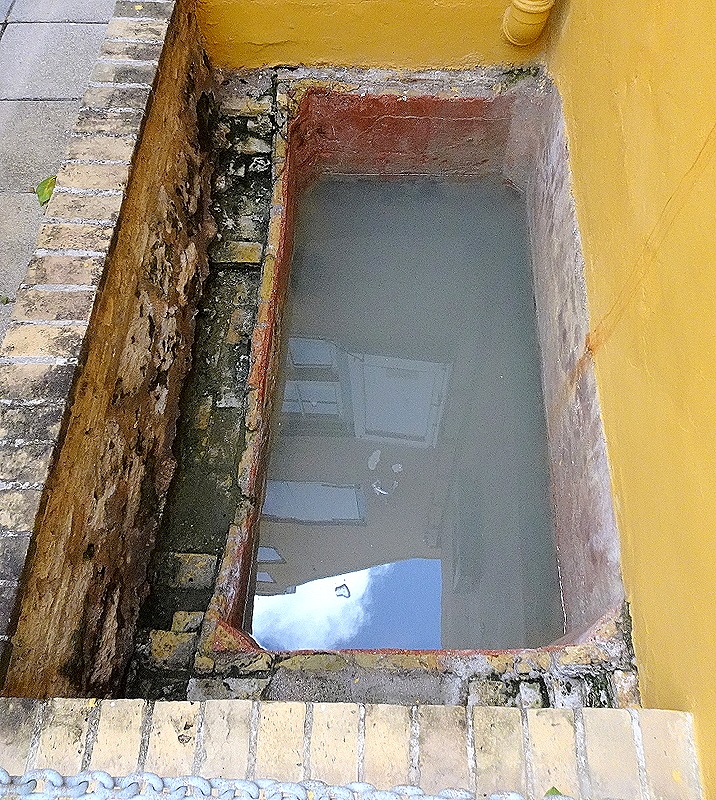
On the other side of the courtyard from the synagogue was a museum recounting the history of the Jews of Curacao and of the synagogue. Sadly, photography was forbidden in the museum. But outside the museum entrance was part of the remains of a Mikvah, a ritual bath, that was probably installed in the mid 17th century and was in use until about 1870. The street outside was actually named for the bath. The top part of it was rediscovered during renovations in 1969, but this was just the portion where water flowed into the Mikvah and it probably had steps down to a lower level where bathing actually occurred.
Also in this area of the courtyard were some gravestones (which may have been reproductions). If the one shown below makes you think “Live long and prosper,” there is a good reason for that. It depicts two hands as a Rabbi would have held them to impart a blessing. Leonard Nimoy said that his inspiration for the split fingered Vulcan hand gesture was his Rabbi’s use of this hand position when Nimoy was growing up.

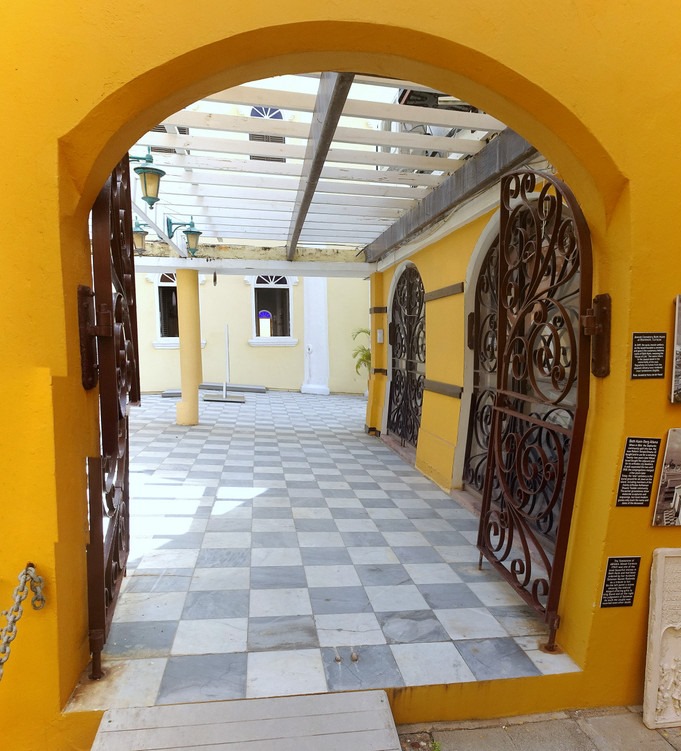
Last we have a view of the courtyard from the museum entrance, a view of the synagogue from the courtyard, and the outer street side entrance to the synagogue as we left.

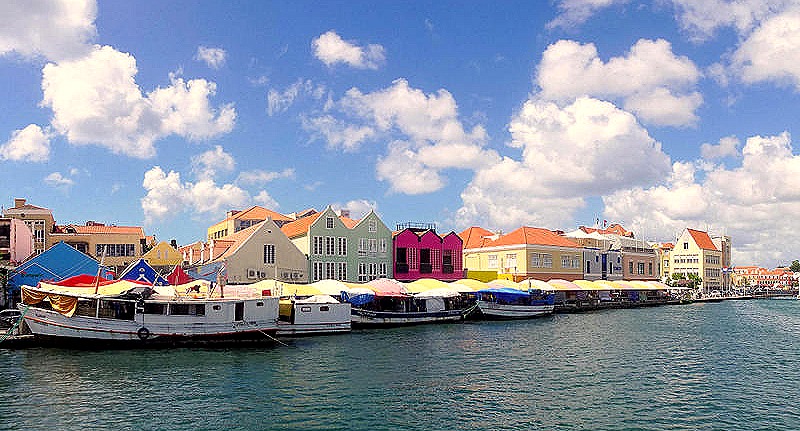
After leaving the synagogue complex we walked along a canal nearby toward our favorite lunch restaurant, which had been closed during the pandemic but we hoped someone would have opened it again. Along the side of this canal is the floating market, a long row of fish and produce stands with boats moored behind it. These boats belong to Venezuelans who sail the 40 miles to Curacao each day to sell their wares then return to Venezuela before night. The first time we were here the boats lined the canal all the way to the end of the market, but since the pandemic and the troubles in Venezuela not as many come. There seemed to be more on this visit than there had been in the last few years but perhaps not.
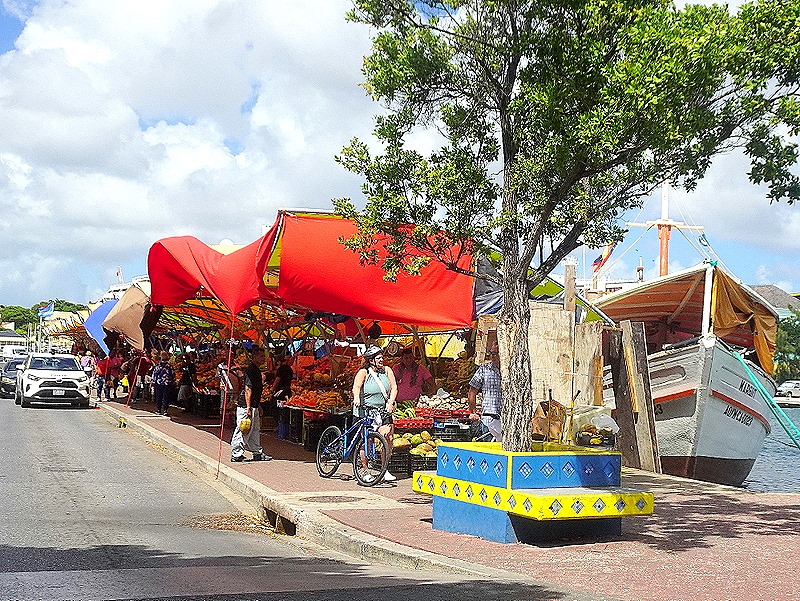
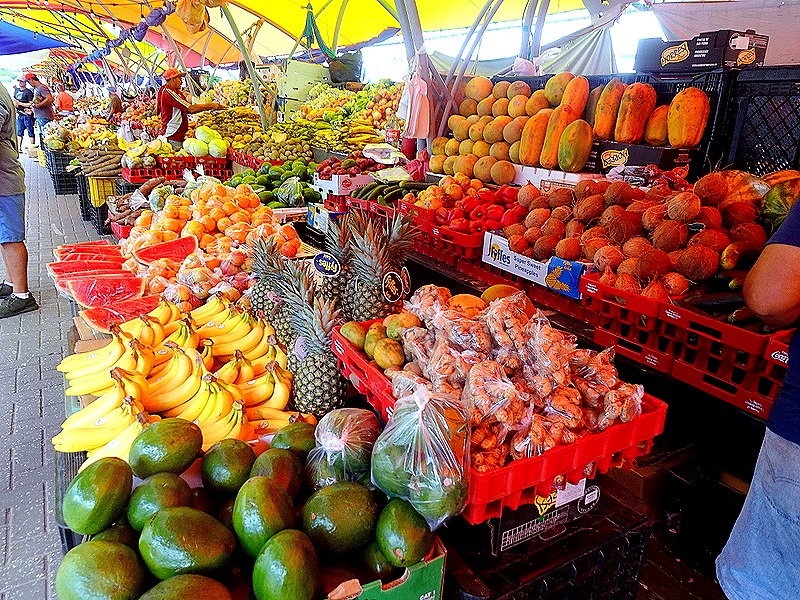
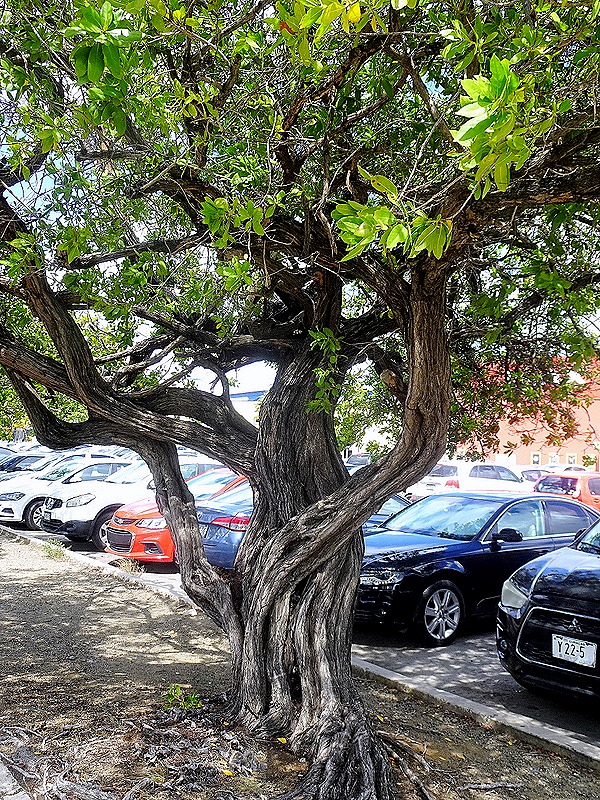
This canal has several Dutch style drawbridges, similar to some we have seen in Amsterdam. When we arrived at our restaurant it was still closed up and locked, but at least the “for sale” sign we saw last time we were here was gone so maybe someone is getting ready to reopen it. We hope so because it is a fun place to eat, set right out over the water in a small lake at the end of the canal. On our way back toward the bay to find another restaurant for lunch we walked by a long row of trees with interesting trunks (possibly live oaks?).


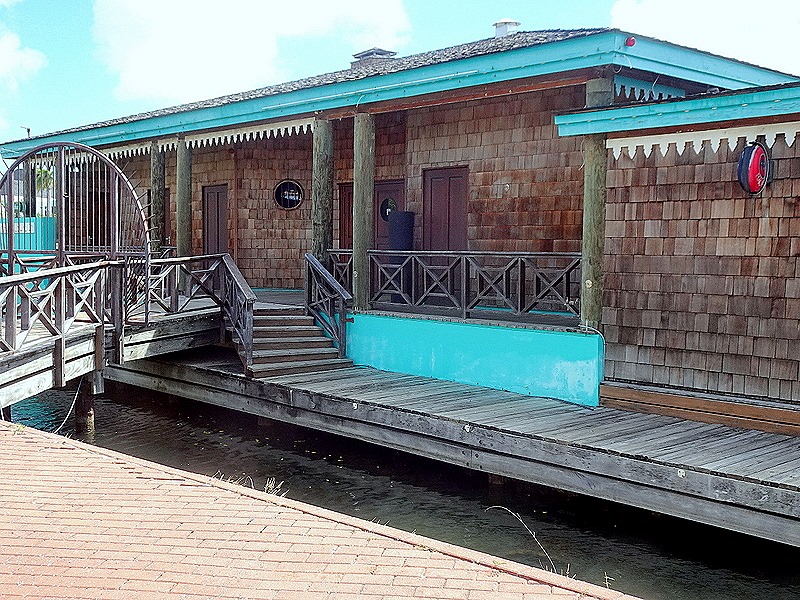
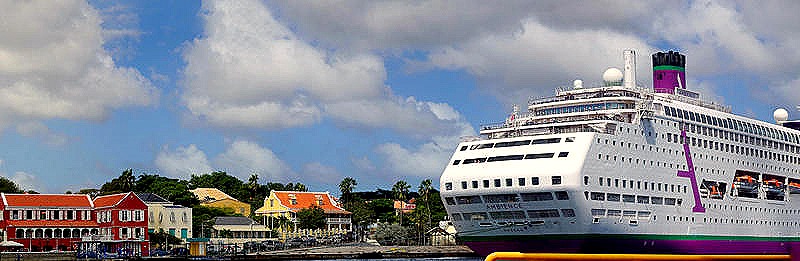
We ended up eating Chickenburgers (much tastier than it sounds) at The Iguana, an outdoor restaurant on the edge of the bay in Punda where we had lunch last time we were here. It has an unrivaled view of the bay and the Queen Emma swinging bridge. Docked across the canal was the Ambience, a cruise ship operated by the Ambassador line. It has a capacity of 1400 passengers and started life as the Regal Princess in 1991. We were told it is also on a world cruise, but we are not sure that is true.
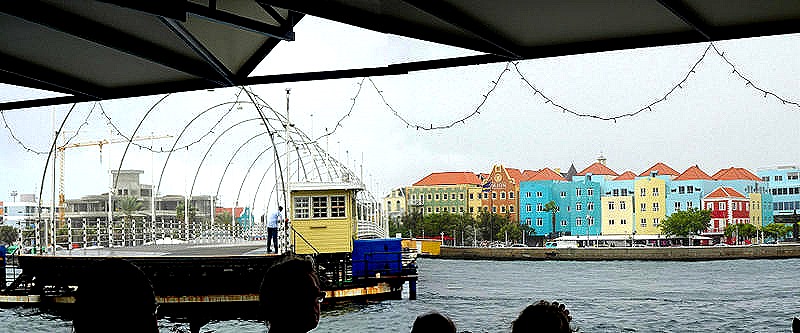
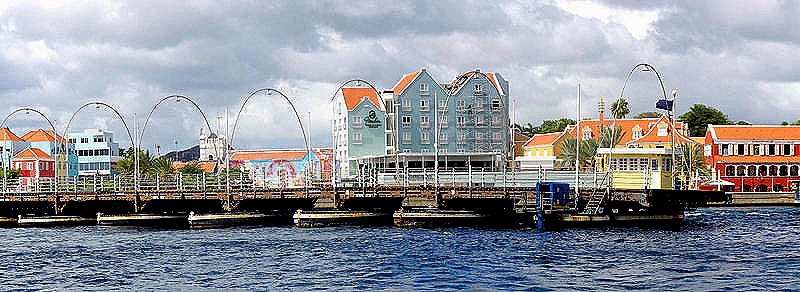
We were glad to be under cover in the restaurant because it started raining while we were eating. We moved to a table further from the edge and finished our meal. Meanwhile the Queen Emma bridge slowly opened to permit some ships to pass and came to rest along the opposite side of the bay. The little yellow building on the end of the bridge is the pilot’s house, where the engines that move the bridge are controlled. We had quite a nice view of this process and weren’t inconvenienced by it as were those who wanted to cross to Otrobanda. When the bridge is open the only way to get across is in a ferry boat, which many did.
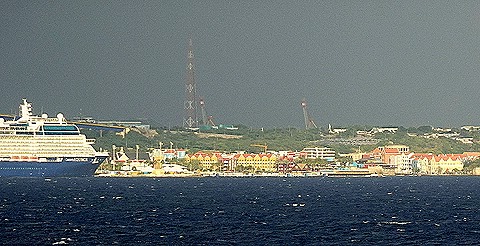
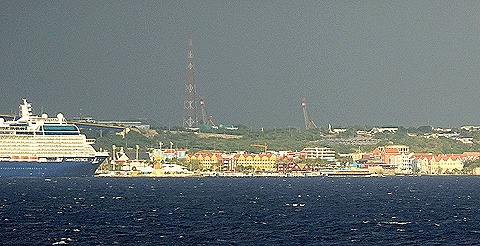
After our late lunch we returned to the ship the same way we had come in the morning, finding a Celebrity ship docked behind us. When Zuiderdam sailed away around 6:00 Curacao bid us farewell with a nice rainbow.


 BADER JOURNAL
I think you are now officially considered world travelers–you two are the only ones I know that can say they have a favorite restaurant in Curacao. Island looks beautiful.
Cecile
February 20, 2024 at 3:33 pm
Its probably more accurate to say we “used” to have a favorite restaurant in Curacao. Its certainly our favorite location to eat, but whether it will still be our favorite restaurant will have to wait until we try the food of whatever might open there. We do still have a favorite restaurant in Aruba though. Curacao is certainly one of our favorite islands in the Caribbean (although we still haven’t visited all of them).
February 20, 2024 at 11:24 pm