
Panama Canal (2024)
We entered the Panama Canal very early in the morning on January 24 (before we were even up). The canal would take us to the Pacific Ocean by the express route, saving weeks by avoiding going around South America as ships had to do before the canal opened about 110 years ago. The Panama Canal is a wonder of technology and is always exciting to cross even for travelers who have been here many more times than we have. But this would be our 5th time through the canal, so much of the newness has worn off by now (witness our sleeping until after we entered the first locks). You can see more pictures and read a good deal more about the canal in our prior blog posts from here:
https://baderjournal.com/2019/01/22/panama-canal-2019/
https://baderjournal.com/2018/05/06/panama-canal-3/
https://baderjournal.com/2016/02/04/panama-canal/
https://baderjournal.com/2012/01/11/panama-canal-2-2/
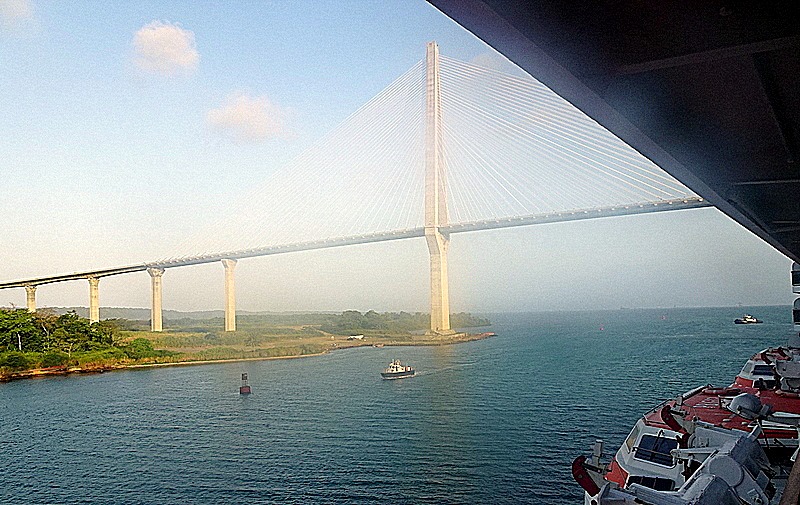
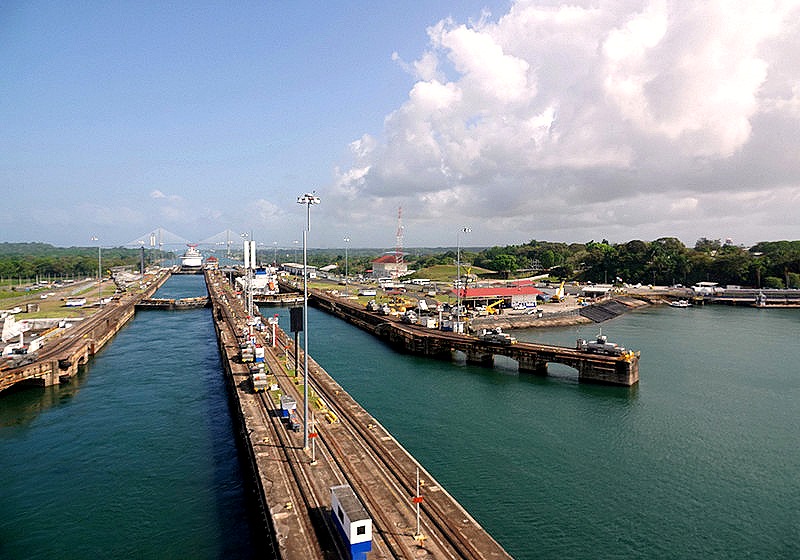
After we woke up we walked out onto our veranda to see what there was to see. Not much, it turned out. We could look toward the aft and see part of the new Atlantic Bridge (opened in 2019) spanning the entrance to the locks, whicht was not very far behind us. And there was a tug boat near us that was pushing the ship into position to enter the narrower channel to the first lock.

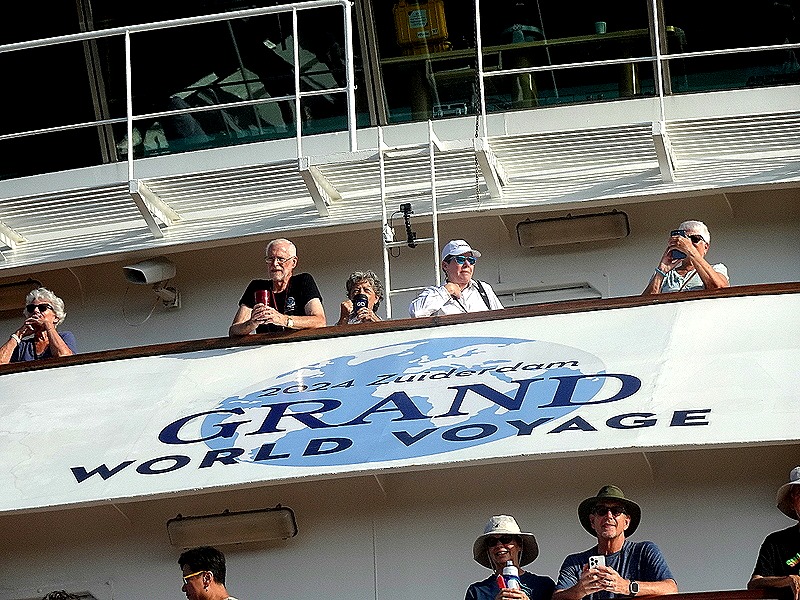
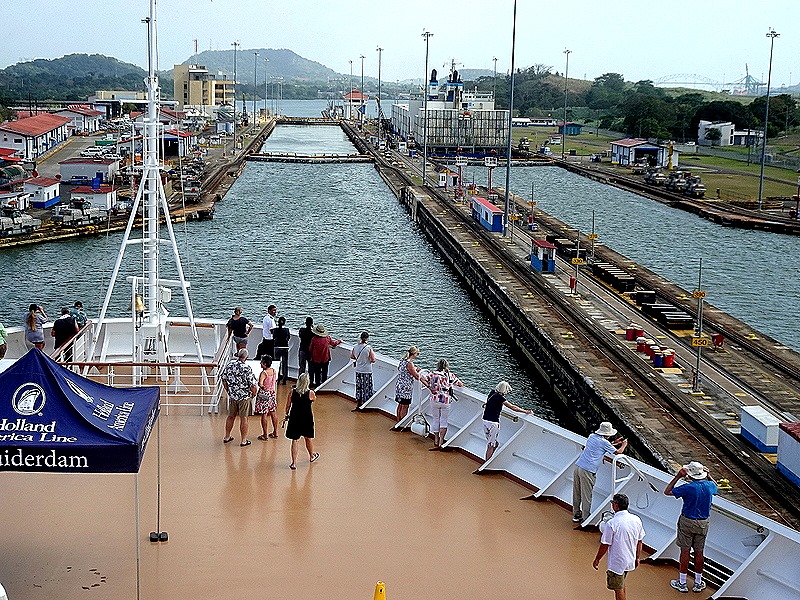
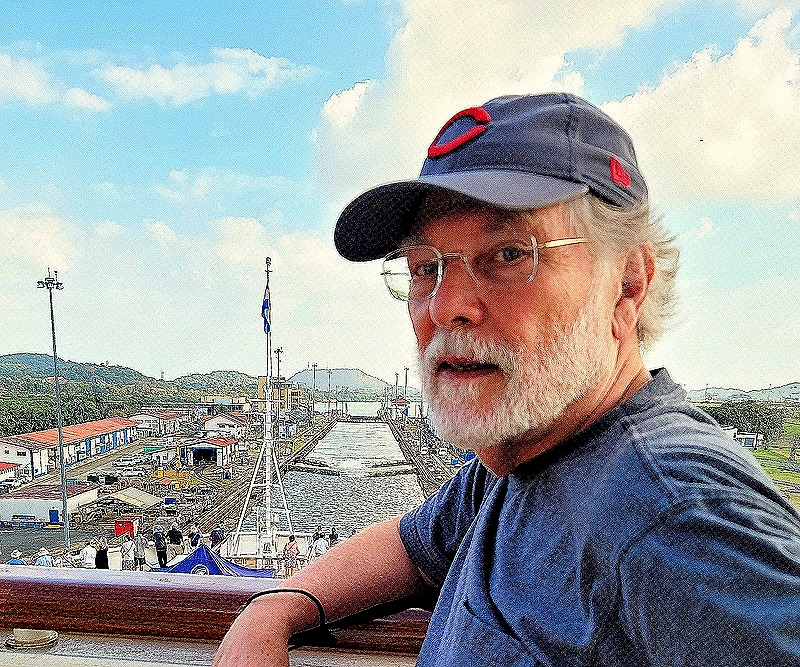
We hurriedly dressed and headed out to the bow area, where we could see where the ship was going. The initial set of locks on the Caribbean side are called Gatun and we were headed into the first level. The bow area is usually off limits to passengers but for the Canal crossing they keep it open. There was a tent set up there with a table for dispensing coffee and Panama Rolls (delicious sweet rolls with a kind of peachy filling) to those who came early, but all was gone by the time we arrived. The tent still served a purpose, however, as protection from the brutal sun. We were able to see the logo for the world cruise painted on the front of an upper deck, which was not previously visible from anywhere on the ship.

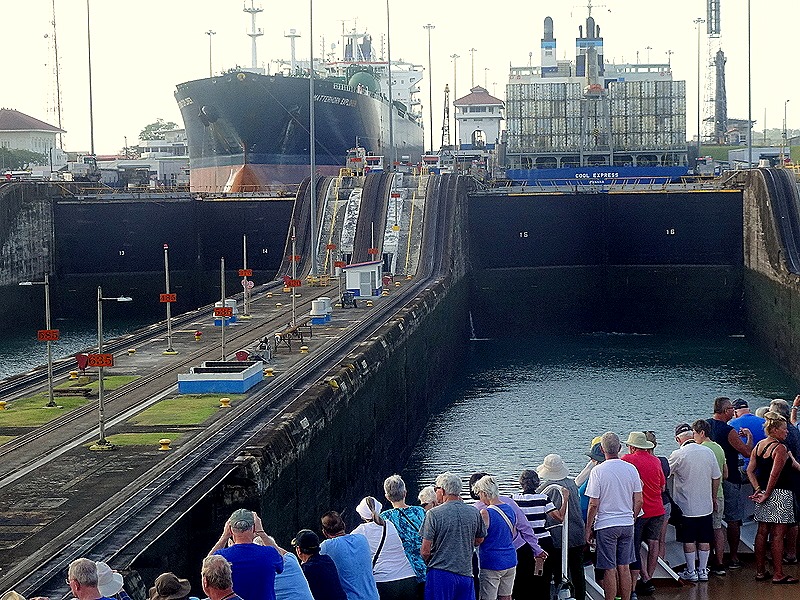
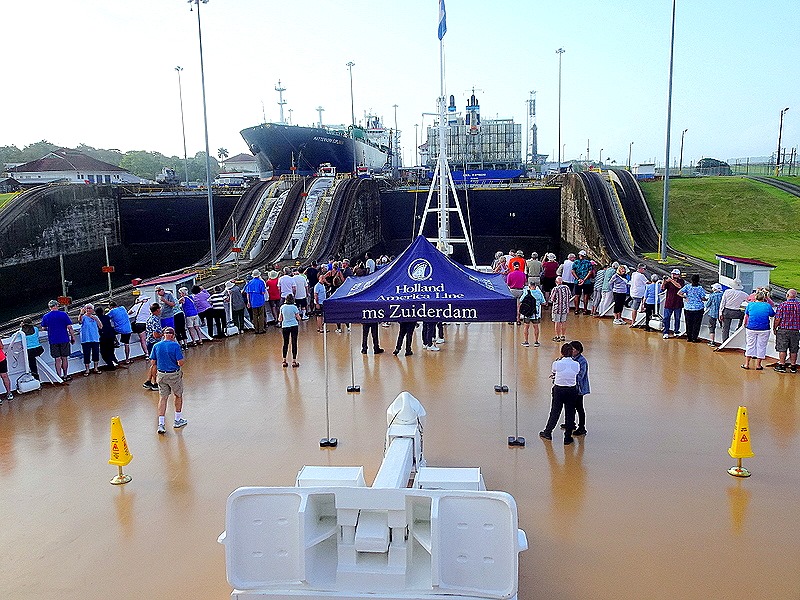
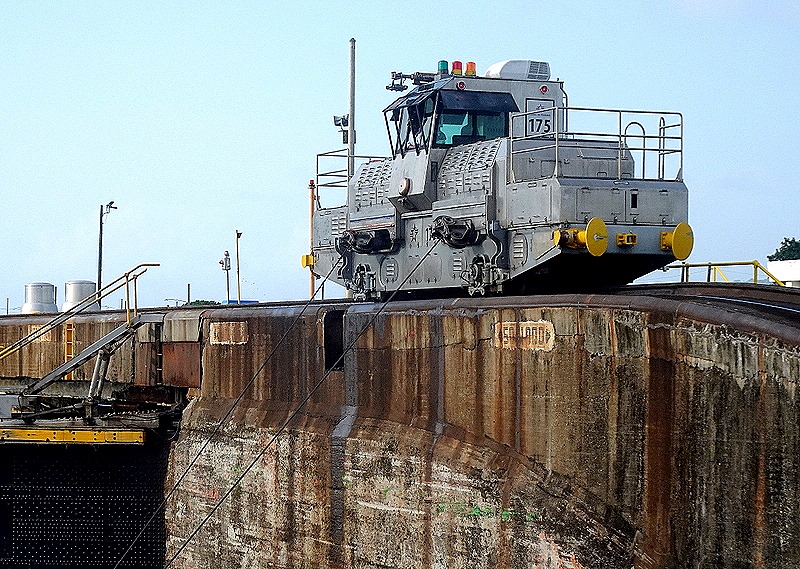
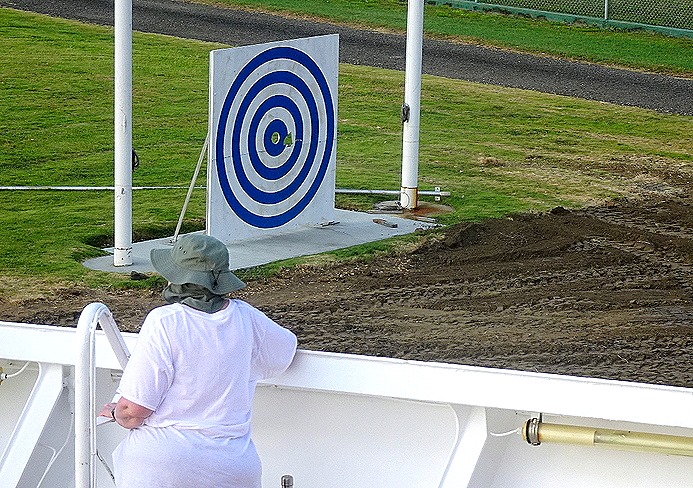
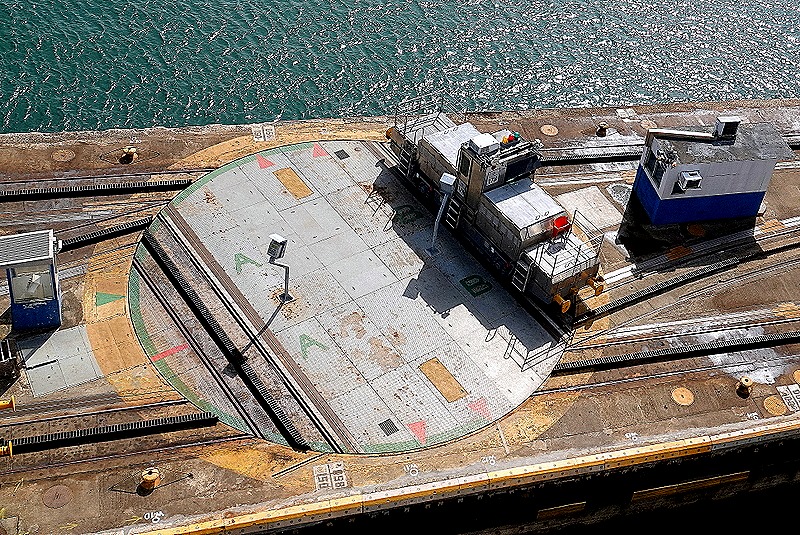
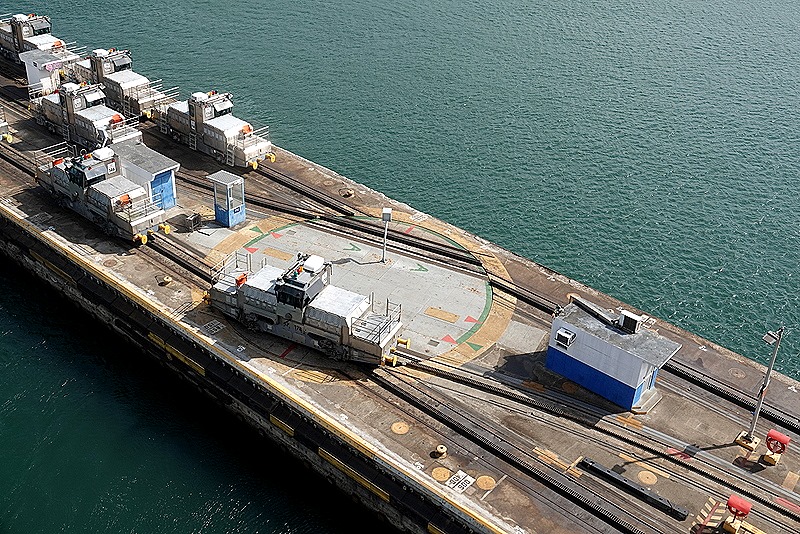
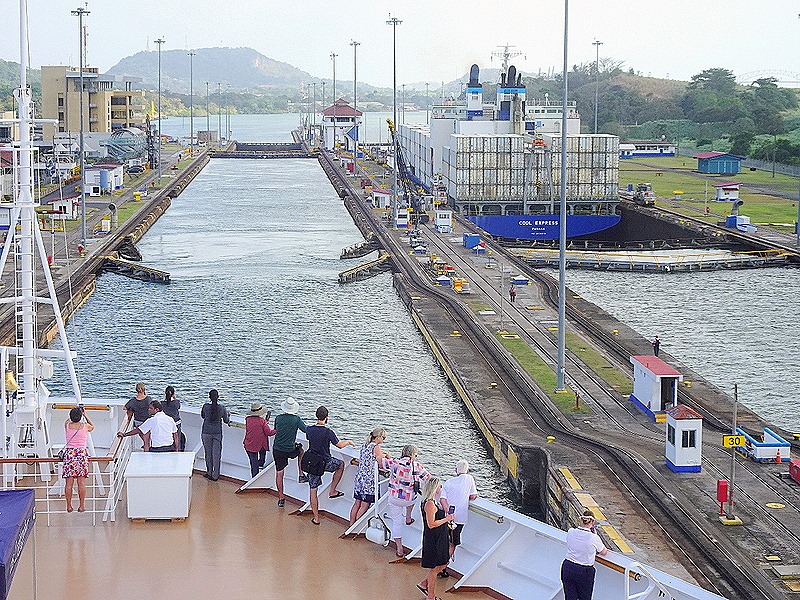
We also got our first look here at the “mules,” small vehicles running on railroad tracks along both sides of the locks. They attach to the ships with cables and are responsible for ensuring that the ship stays centered within its channel and does not touch the sides where there is very little leeway. They throw the cable to the ship for the crew to attach. We passed a target that the canal crew use to practice this throw.
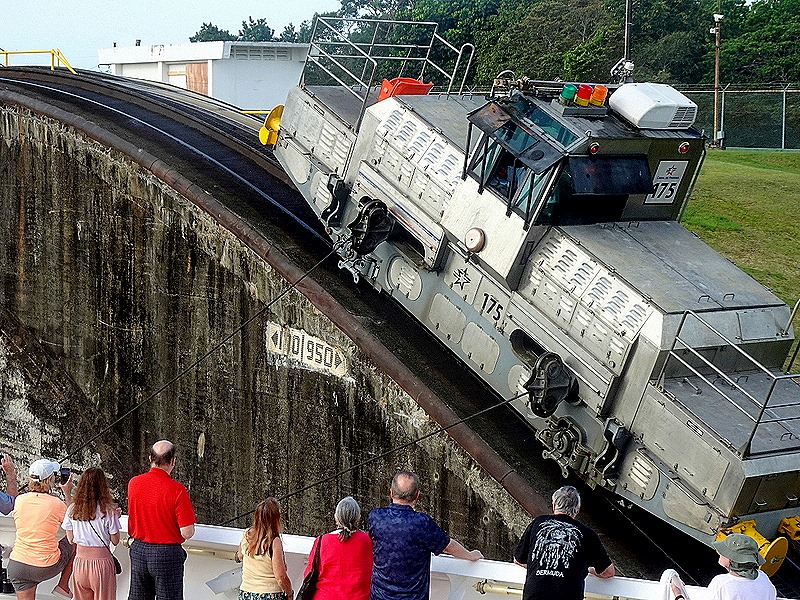
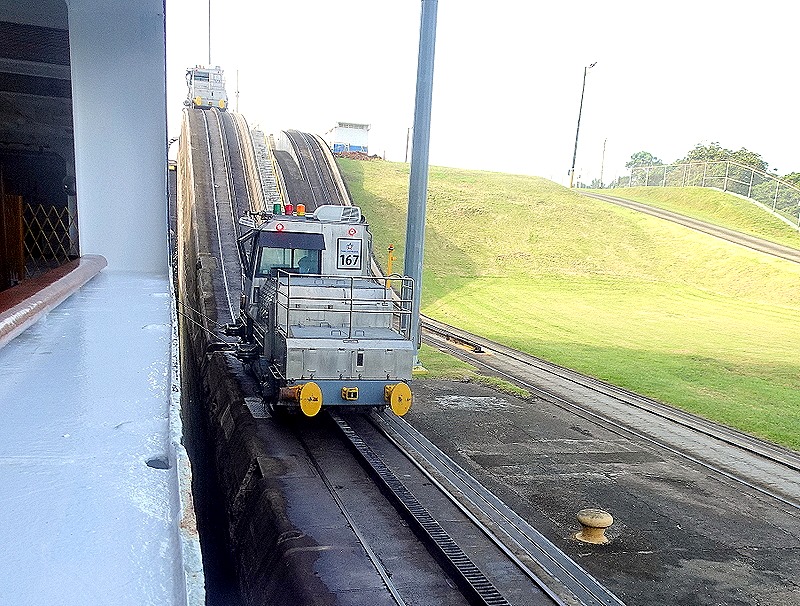
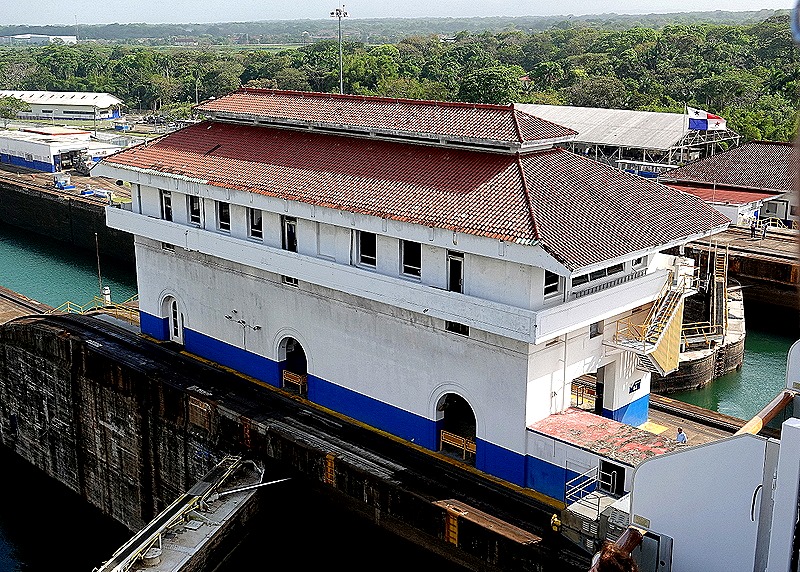
We headed to the aft pool on deck 9, hoping there would still be Panama Rolls available there. They were out too, but looking back from the ship we saw the bridge over the canal entrance still visible and a Carnival ship entering the first lock behind us. Next to us was the Gatun control building. The doors of the locks are, we understand, the originals installed about 110 years ago. When a ship enters a lock the doors behind it close and water flows into the lock through pipes. As the water builds the ship floats up, until it reaches the same height as the next lock. At that point the doors in front of the ship open and it can sail into the next lock. The doors are massive and heavy. When closed people can walk across them.

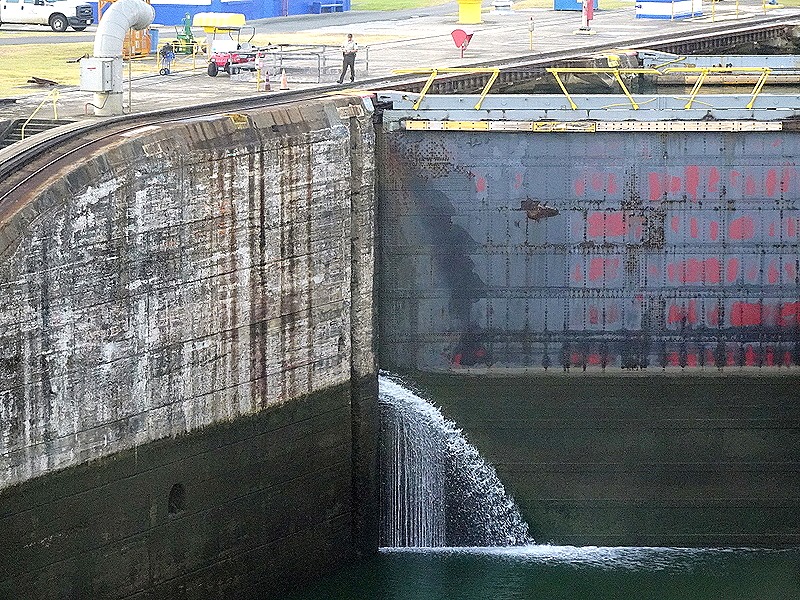



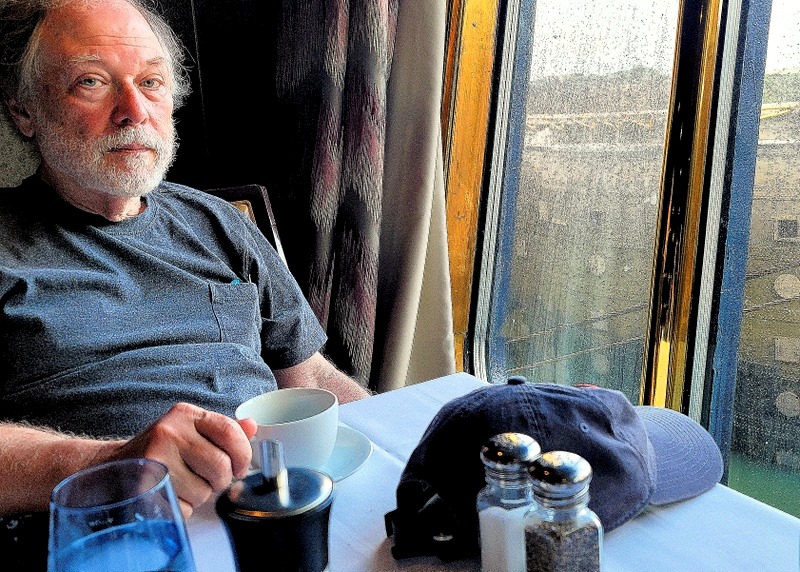
We went down to the restaurant on deck 2 for breakfast. We were seated by a window and took some pictures but the windows were fogged and wet so they aren’t very good. A mule on top of the wall next to the ship was attached to the stern of the ship with cables and we watched the lock door open flush into a niche in the wall of the lock. We asked, with little remaining hope, whether they had any of the delicious Panama Rolls in the restaurant, but were told that they had not been given any. To our surprise and delight, our waiter returned about 10 minutes later with two of them on a plate. We have no idea who in the restaurant went to the trouble to find out where any were left (probably the Crow’s Nest) and then run up there to get them for us, but we were grateful. This is not atypical for HAL crew members.


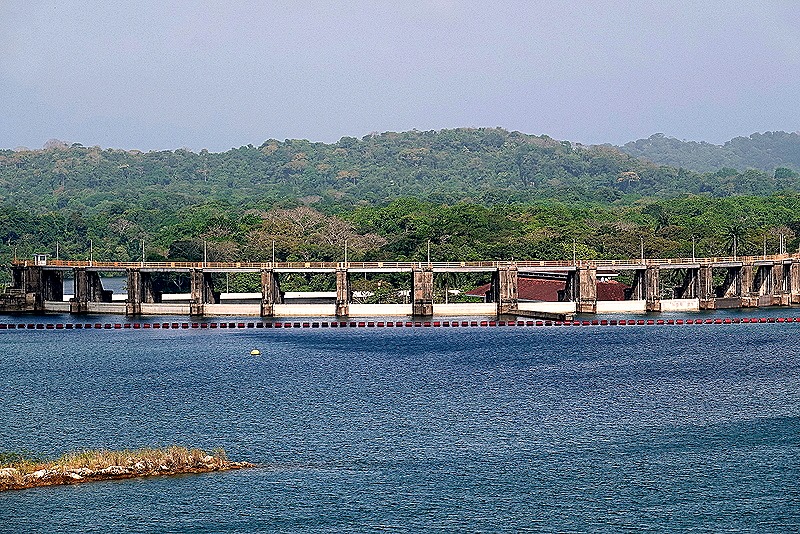
We were back up on the aft pool deck as we came out of the third lock. The middle portion of the canal, between the Gatun and Pedro Miguel locks, is mostly a man made lake rather than what one pictures as a canal. Gatun Lake was made by damming off a river, and this lake now provides most of the water used to operate the locks and also supplies drinking water to some nearby communities. This has become a problem this year because of a historic drought in the region, leading to a reduction in ship traffic to save water. We saw one of the river dams from the ship as we sailed into the lake.
We also passed a turntable at the very end of the locks that is used by the mules to change direction. And you might have heard that about 8 years ago a second set of locks was opened in Panama to permit the much larger modern container and tanker ships that are too wide and long for the original locks to pass through. These new larger locks were on our left as we entered the lake and we saw the Ruby Princess cruise ship emerging from those locks into the lake.
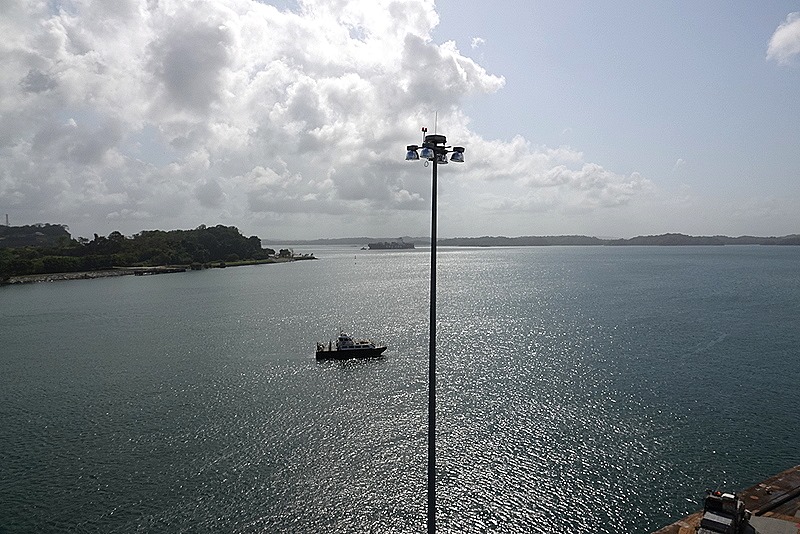

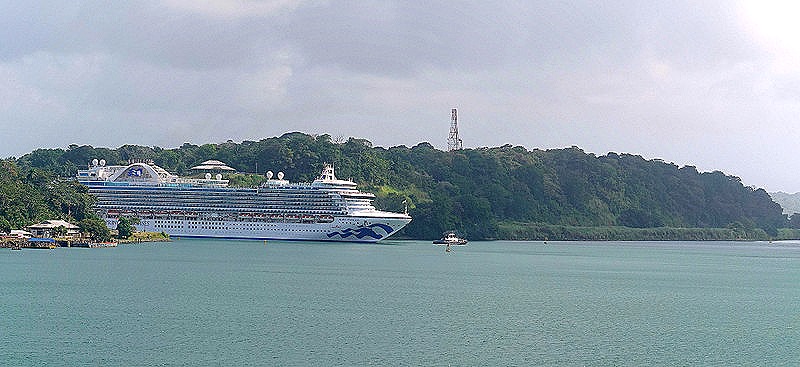
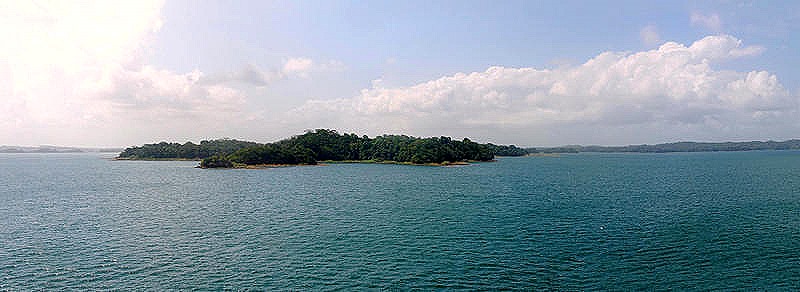
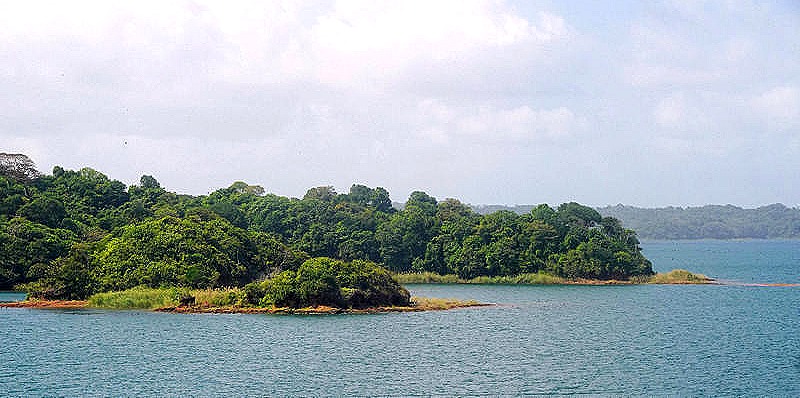
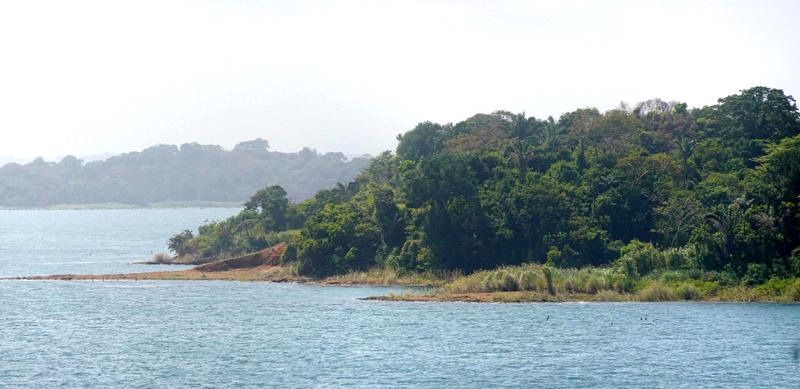
The passage through the lake is fairly long and uneventful so we turned to other things. There were some islands and we noticed a series of buoys marking the safest path through the lake. As always, we had pilots on board to help direct the ship safely during the entire passage. In the past the canal authorities had required that one of their people narrate the canal passage through the ship’s speaker system but this time Kimberly, the cruise & travel director, was allowed to do it. This is a demanding job because it lasts so long and there is so much information to impart and Kimberly handled it well. Her background in television probably stood her in good stead here.
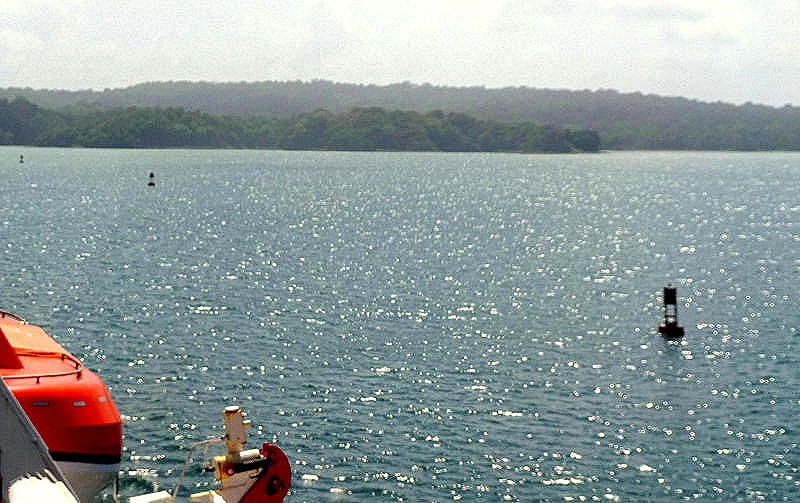
At the other end of the lake we came to the Culebra Cut, an almost 9 mile channel cut through the rock of the continental divide to connect the lake to the Pacific Ocean. Some 6,000 men worked there at any one time, working with dynamite and dodging landslides that could wipe out many weeks of work in an instant. Many lives were lost in this effort. It looks somewhat like a strip mine, which I guess it really is, with receding layers of cliff like walls. It leads to the Centennial Bridge, opened in 2004 and now part of the Pan American Highway that goes from Alaska to Ushuaia, Argentina.
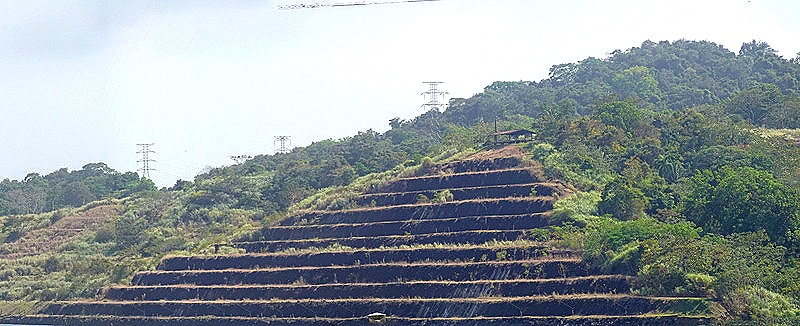

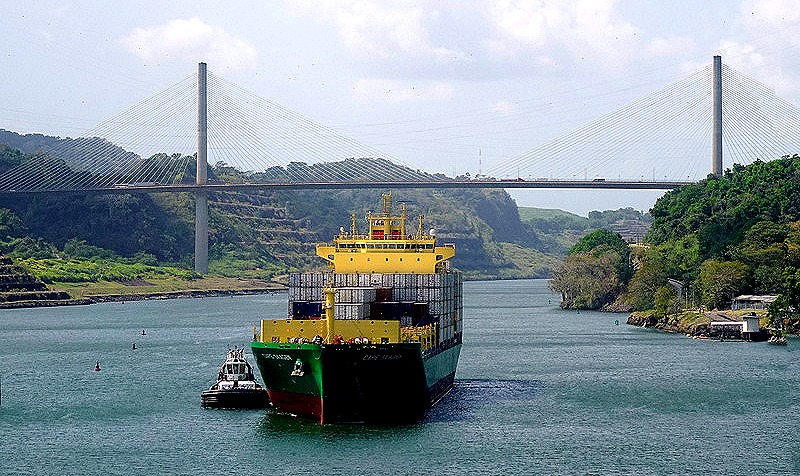
As we began to approach the Pacific side we came to the Pedro Miguel locks, which would lower our ship one level in a reversal of the process used at Gatun to raise it. Ahead of us in the right channel was a ship that at first sounded like a hippie shipping line, but we think now it is probably a ship that transports refrigerated containers.

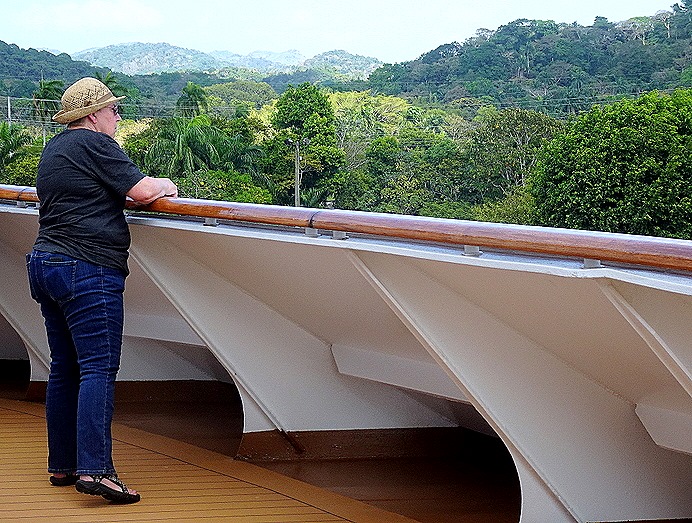
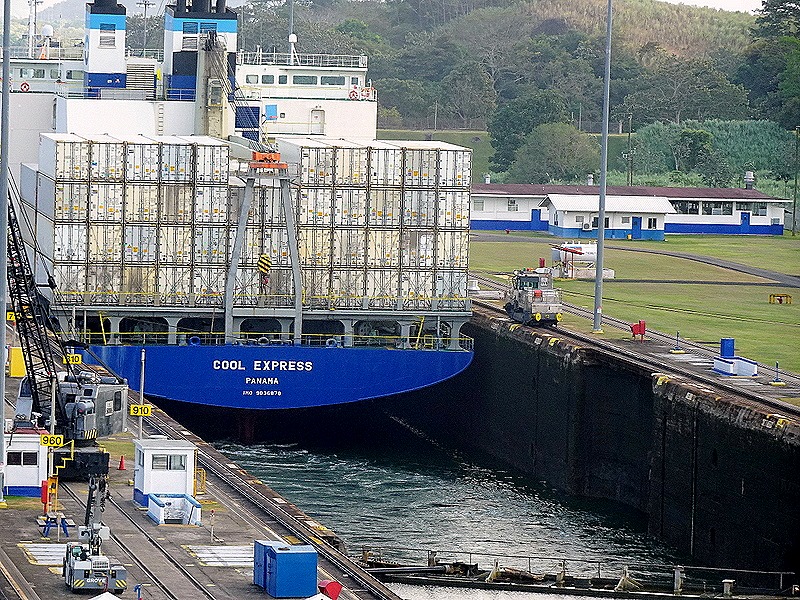
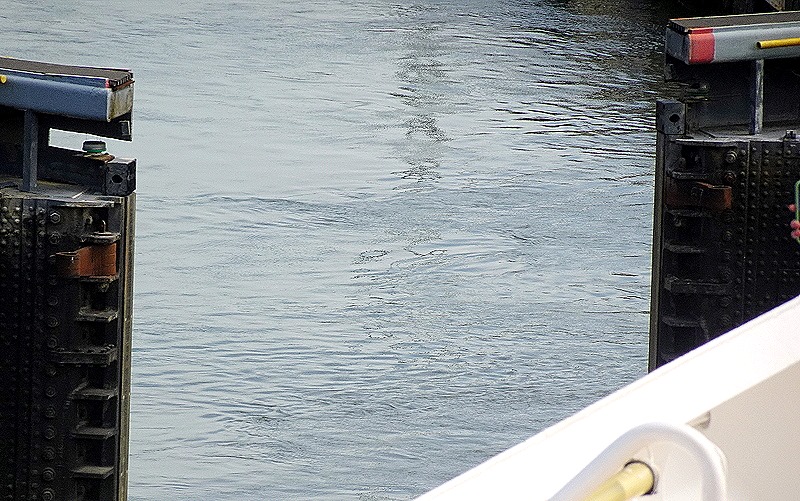
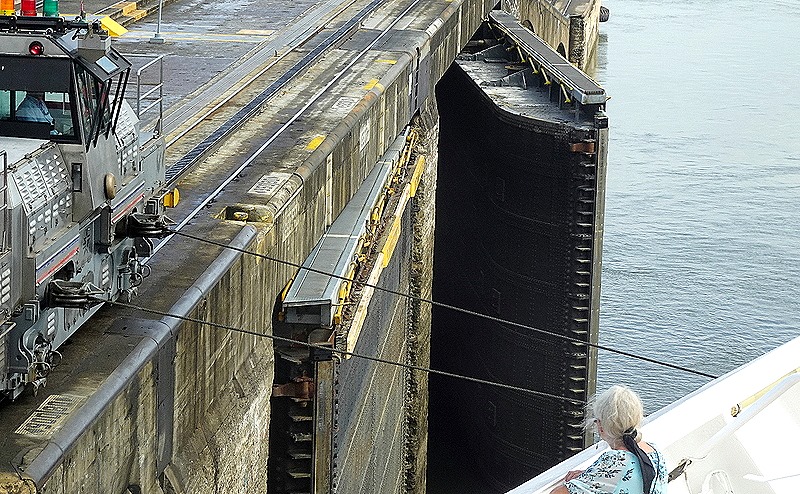

You will recall that earlier we talked about the new canal for larger ships that opened in June, 2016. We showed a large Princess ship sailing from the Caribbean locks into Gatun Lake. As we approached Pedro Miguel the two canals branched apart again, with the new larger channel going off to our right at a slightly higher level. We didn’t see any ships in that channel, perhaps because of the reduction in traffic caused by the draught, but we did see a dredging ship there. Dredging goes on constantly in the lake and the channels to keep them clear from buildup caused by erosion and falling rocks. There was a bridge and and a building in the distance on the new canal but they were too far away to distinguish much.

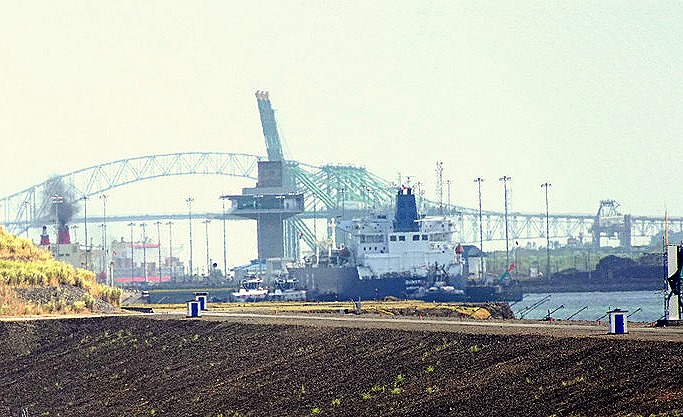

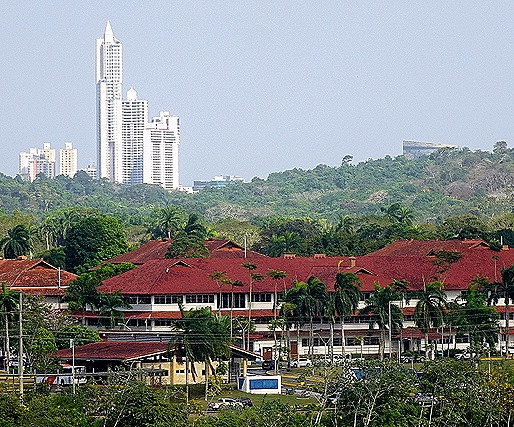
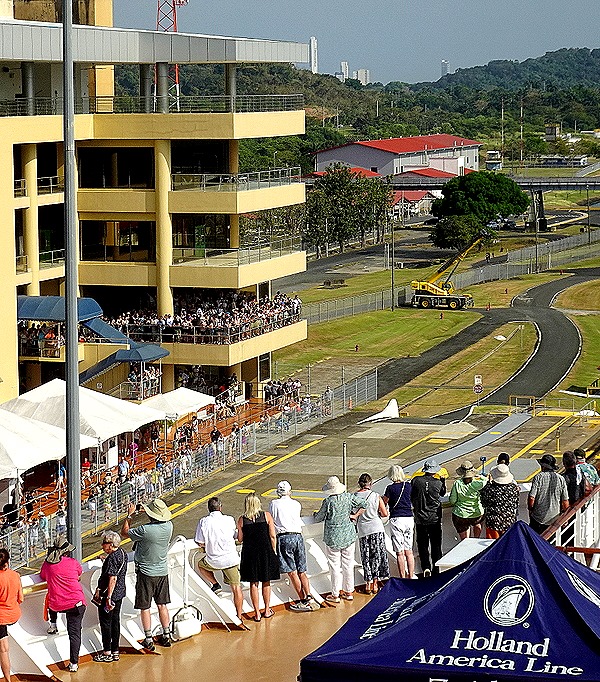
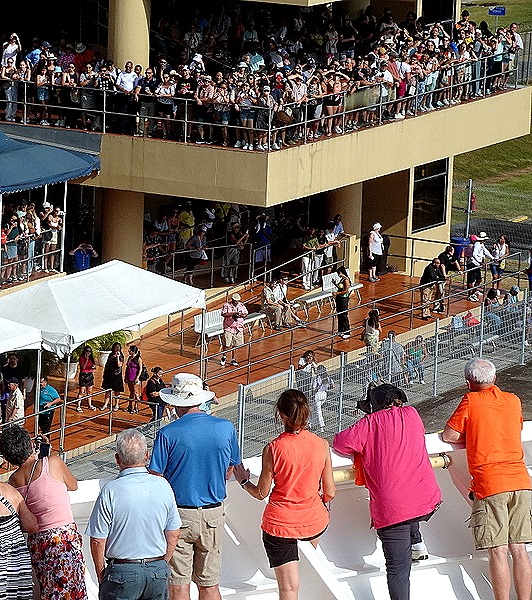
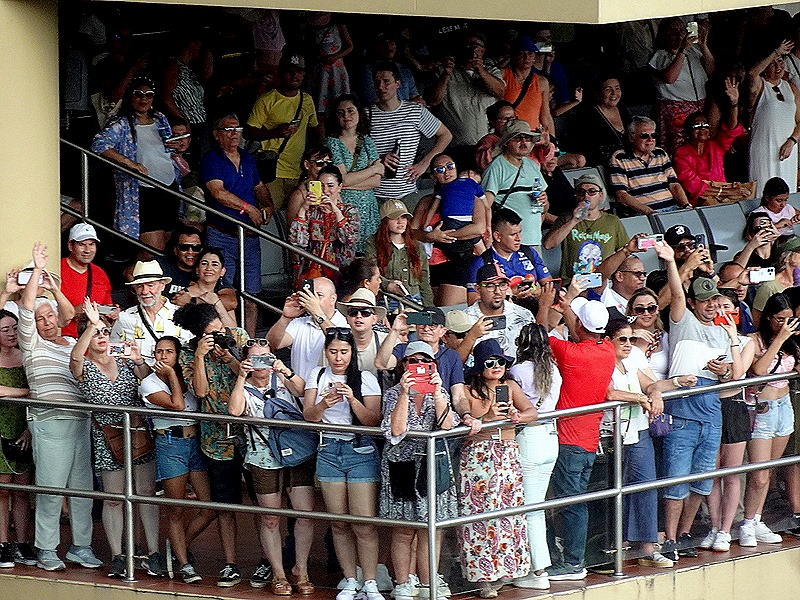
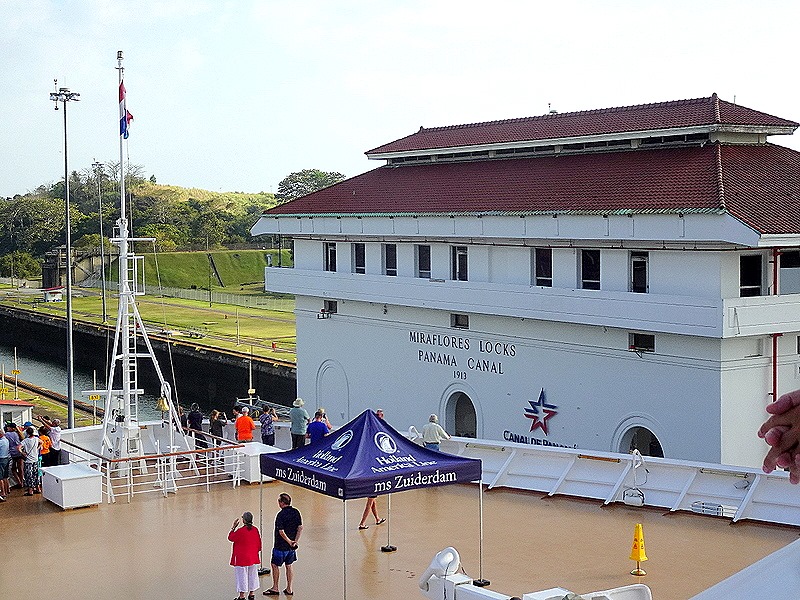
Not too far beyond the Pedro Miguel lock is Miraflores, the last set of two locks that would lower us to the level of the Pacific. There is an observation building on the left side that always has a large crowd of people waving and taking pictures in greeting. The first glimpse of Panama City’s gleaming white towers appeared here as well.
So now we were in the Pacific and, after stopping to refuel on Balboa Island at the end of the canal (a process that didn’t go very well), we headed up the west coast toward Costa Rica. As an aside, after the canal every port we would visit for the next two months would be new to us. Woo hoo!

 BADER JOURNAL
Leave a comment