
Dalian, China 2024
We spent March 10 in Dalian, the largest passenger port in China, located on the shore of the Yellow Sea at the southern end of the Liaodong Peninsula. With a population between 7 and 8 million people, this is another to add to the long list of huge cities we have visited we didn’t know about until they appeared on our itinerary. While this area was home to fishing villages for centuries, the city was not founded until the Russians took control in 1895 and began to build a modern naval port to be the home of its Pacific fleet because this was the northernmost ice free coastal site in the western Pacific. The Russians built a town they called Dalniy (“far away”) and modernized the nearby Port Arthur for its Asian fleet.
Port Arthur (named for a 19th century British naval officer, perhaps during the short British occupation in 1858 during the 2d Opium War) was the focus of the Russo-Japanese war that ended in 1905 after the Japanese defeated the Russian navy here. This was a shock, because Russia was a European major power and Japan had only begun modernizing 50 years before. Japan was ceded control of the peninsula in the Treaty of Portsmouth. After the end of World War II China regained sovereignty over the area, although the Soviet military did not leave until 1955. In 1950 Lushun (formerly Port Arthur) was merged with Dalian to form a city called Luda, whose name reverted to Dalian in 1981. So, although we had not heard of Dalian before this trip, we had known about Port Arthur, which is now a district of Dalian.
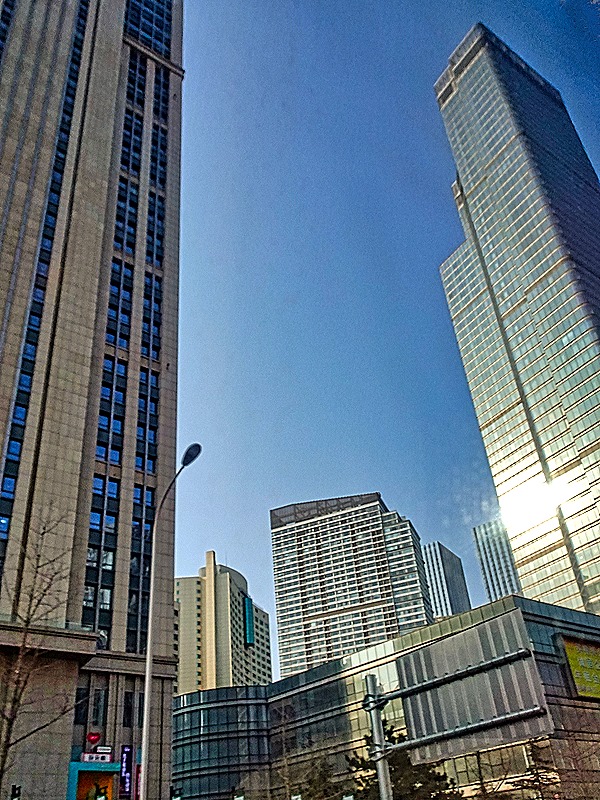
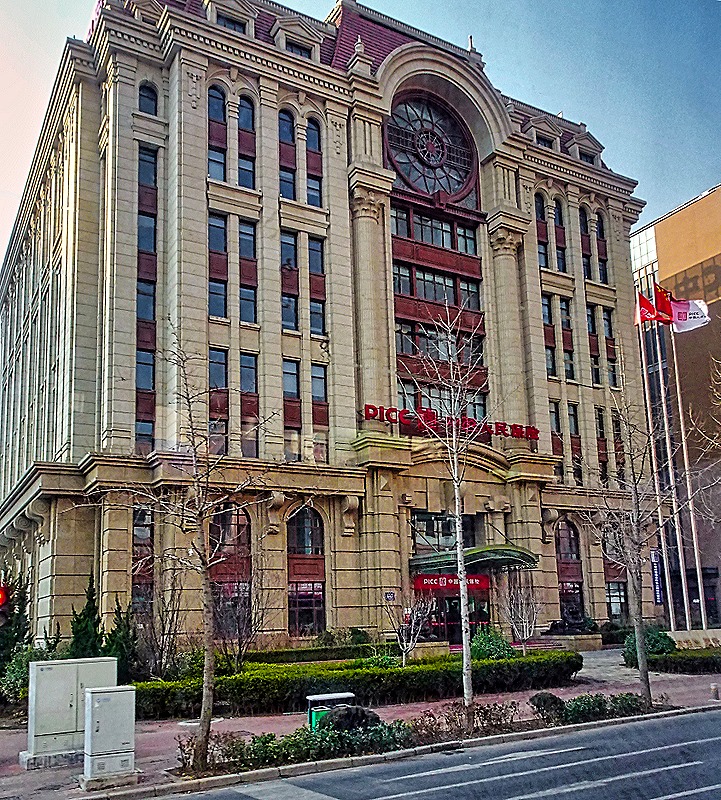
There was a shuttle available to downtown Dalian (a long walk away), but as mentioned in the previous post of our first day in Shanghai – https://baderjournal.com/2024/08/16/shanghai-china-day-1-2024/ – because we had not gotten Chinese visas we could only leave the ship on a HAL sponsored excursion (or one operated by someone approved for the purpose by the Chinese government). But HAL (Holland America) was only offering 3 excursions, all less than 4 hours long, so there was not much to choose from. We surely wanted to see what we could of the city rather than spend the day on the ship, so we signed up for the longest of HAL’s excursions as soon as the visa-free program was announced (we think we were the last to get places on this tour). So off we went in the morning after breakfast, driving through a city that turned out to be full of tall skyscrapers and open city parks.
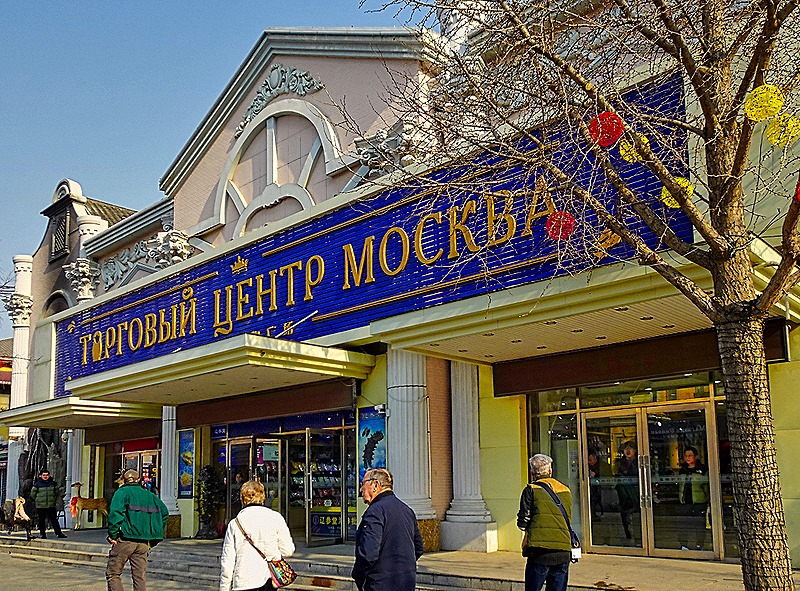
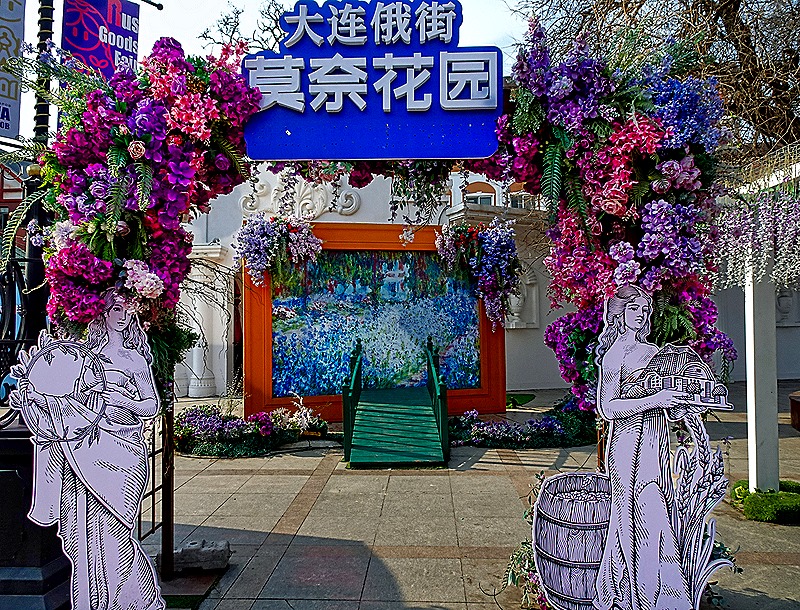
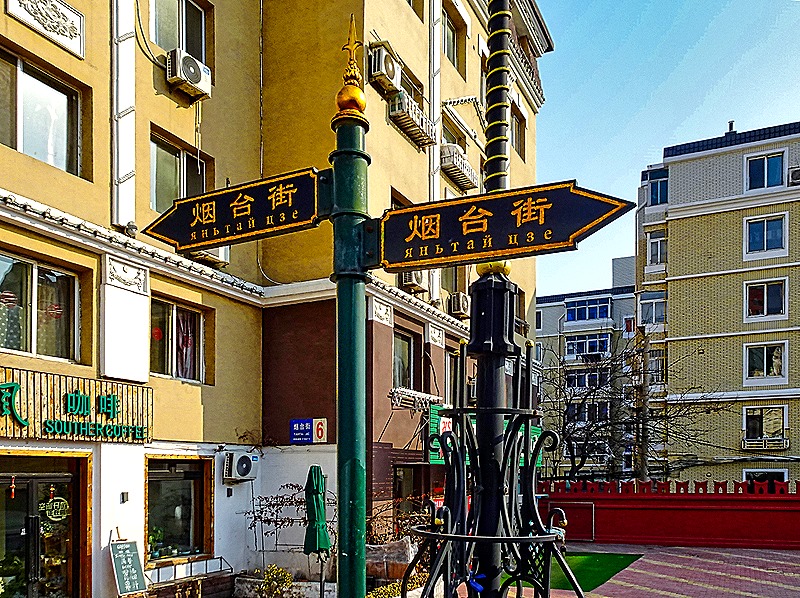
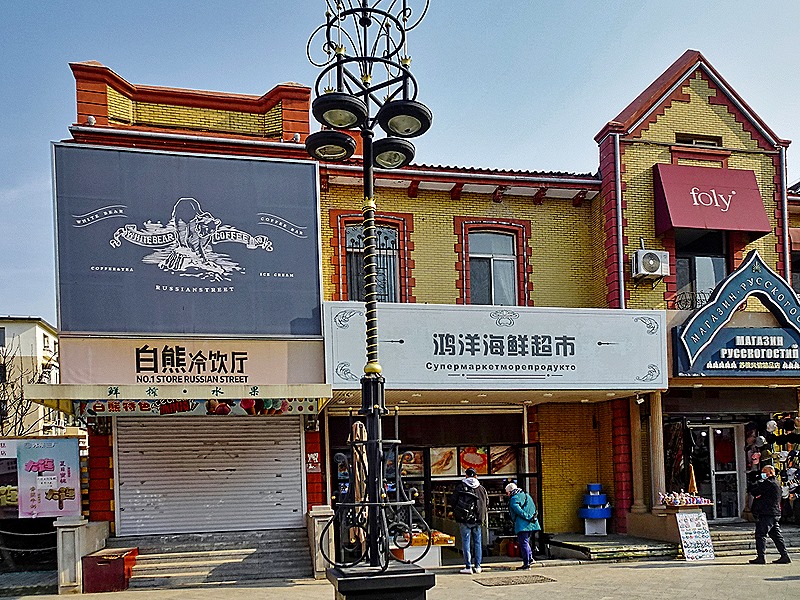
Dalian was originally built by the Russians beginning in 1895 and named Dalniy, replacing a small town called Qingniwa. Russian Culture Street, which we visited first, is the oldest street in town. Several of the buildings erected by the Russians were still there in 1999 when Bo Xilai, the mayor of Dalian, began the project to restore this district. Russian architects were employed to renovate eight old Russian buildings, add so-called Russian facades to six other buildings and build six new buildings in a Russian style. For the most part we don’t know which buildings are old and which are new, but none of them look Chinese (except for the signs outside them in Chinese). The area is somewhat atmospheric, but also highly commercial with many vendors selling tourist items you might expect to see in Eastern Europe rather than in China. We reached Russian Street through a side entrance, walking under a sign that is apparently lighted at night.


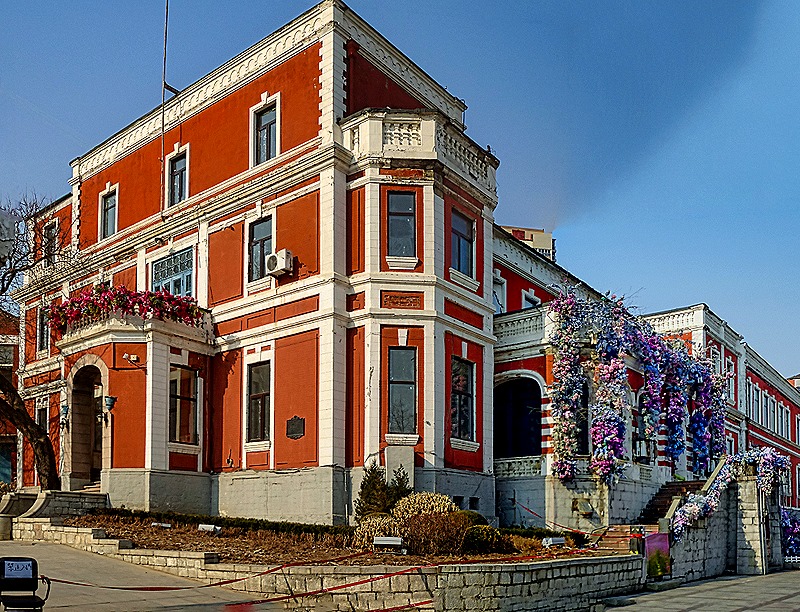
We saw some buildings seemingly dressed up for an occasion, such as with flower arrangements, but we don’t know what the occasion might have been. Maybe it was for our ship’s visit to Dalian . . . we were told we were the first cruise ship to stop here since the pandemic. Or maybe they keep it that way all the time to help attract tourists.


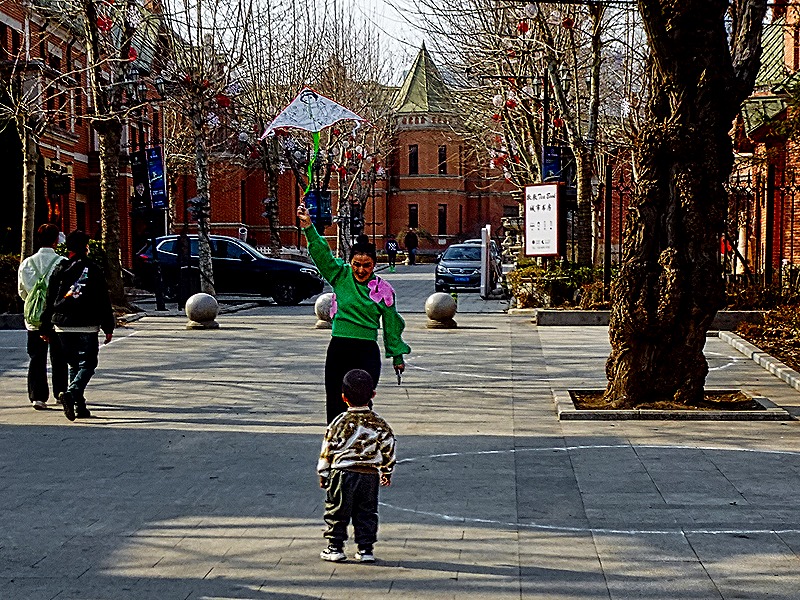
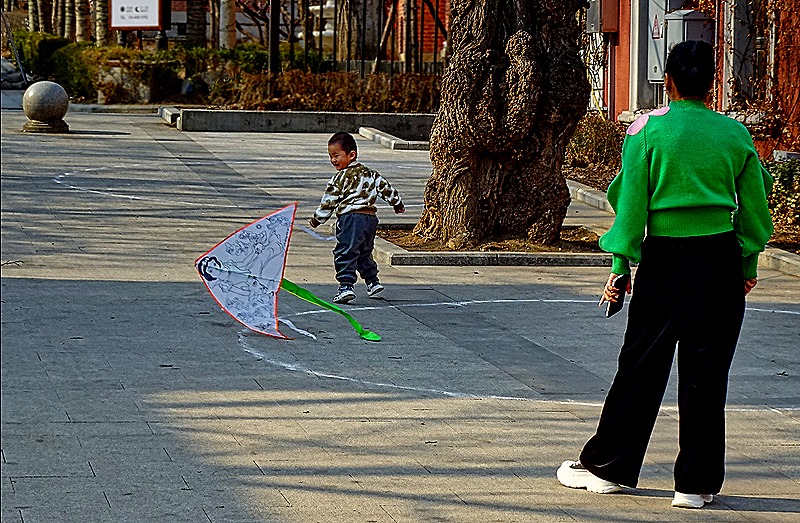
It was Sunday morning and bright and sunny (but rather cold) so as time went on more and more people were out and about. We stopped to watch a mother trying to teach her son (presumably) how to fly a kite.

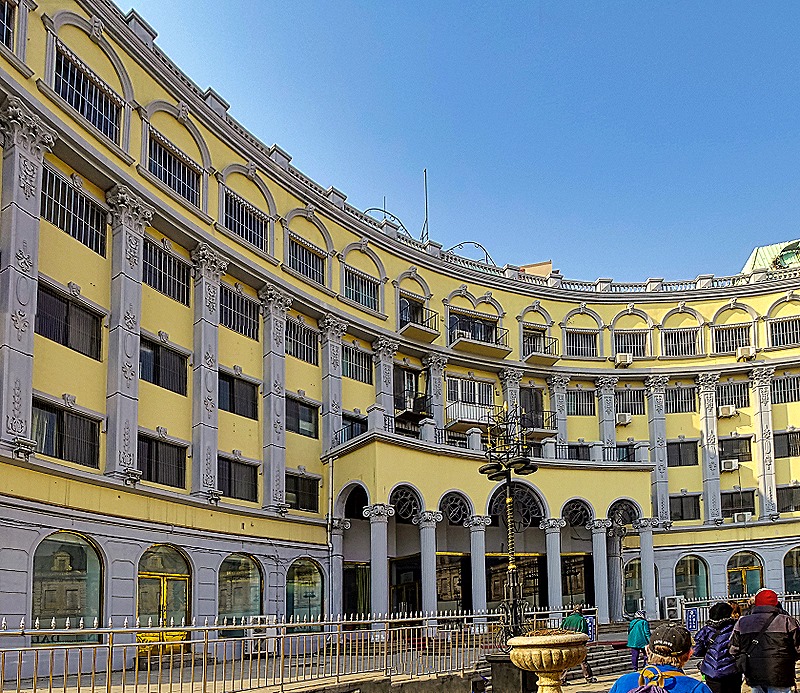
We didn’t get a lot of guidance from our very young guides about where to see original buildings or what their identity was. But we did walk past a Russian Orthodox church we think was old and a large curving building that might once have been a hotel.


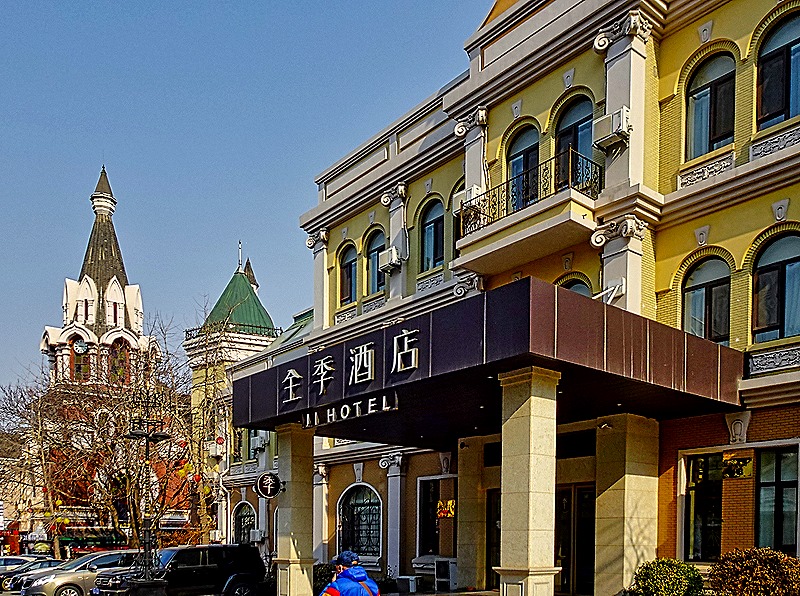
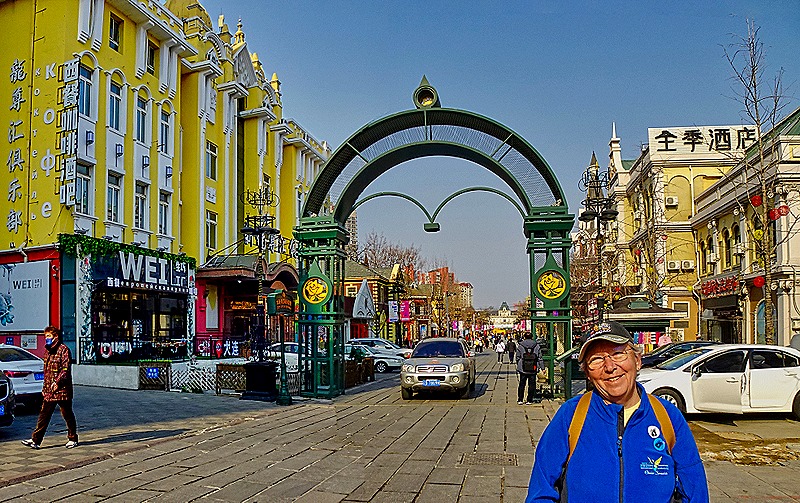
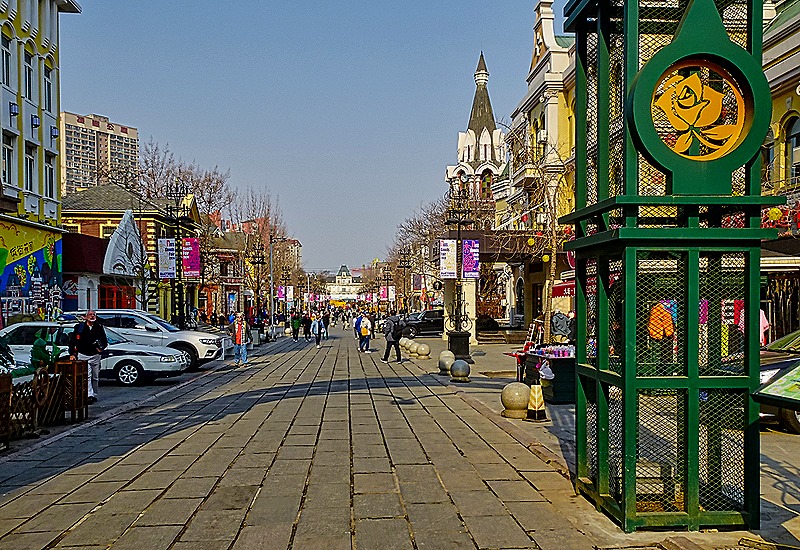
We spotted the main entrance to the Russian street and walked over to take a look. The large arched sign was over a wide avenue leading straight to the original Russian city hall. There was a big crowd there (and we didn’t know what that building was at the time) so we didn’t get close to it. If we had, we would have seen that it is much bigger than this picture seems, stretching out to the right and left.

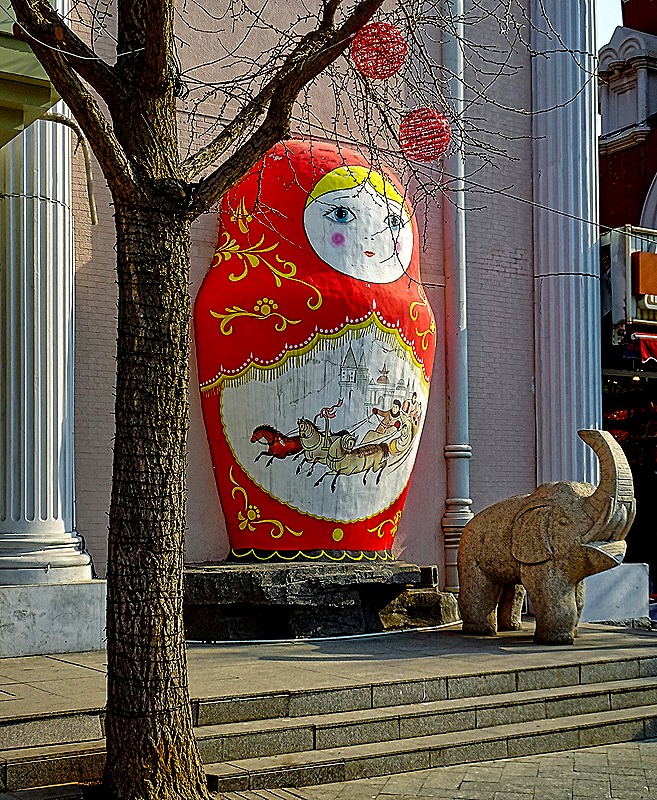
Finally, a few more random pictures of unidentified buildings, one of which had a large sculpture of a Russian nesting doll in front (along with a small elephant?). A lot of the trees in this area were decorated with what looked like balloons in red and yellow, all in all quite festive looking.


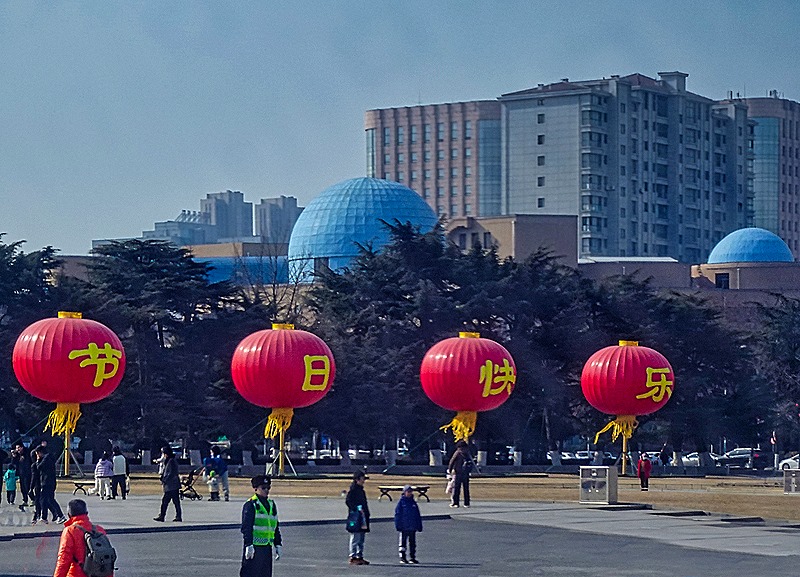
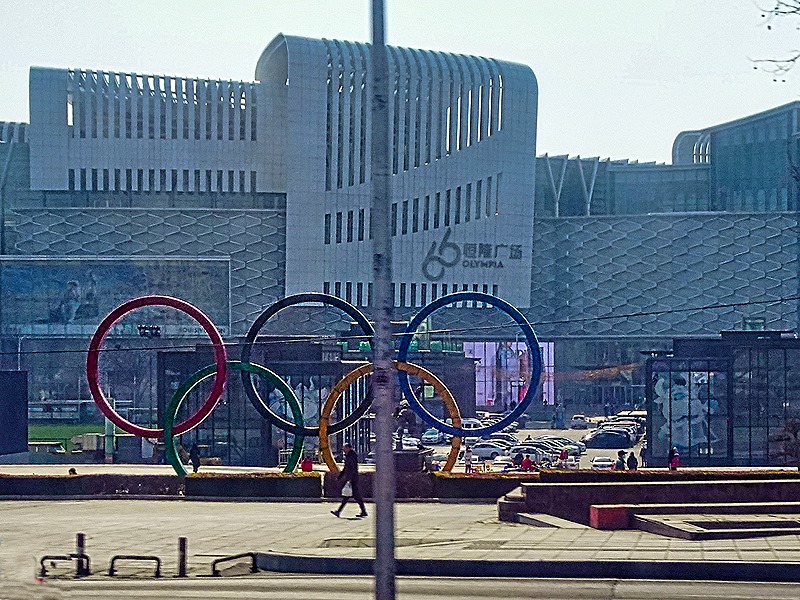
As we drove through town to our next destination we noticed that the whole town seemed brightly decorated with red lanterns and balls (balloons?). Among other things, we passed what we think is Olympic square, built in 1998 in anticipation of the 2008 Beijing Olympics.

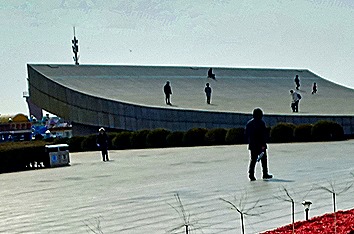
Xinghai Square in Dalian is the largest city square in the world with a total area of 270 acres, all of it reclaimed land. Its name means “the Sea of Stars.” We aren’t sure what the definition of “city square” is, but Central Park in New York is three times as big. Xinghai Square was built to commemorate the return of Hong Kong to China and opened in 1997. At the edge of the water is the Centennial City Sculpture, a huge stone sculpture of a book lying open on the ground, with its ends curling upward. It provides a large space for people to walk on and take in the view of the Xinghai Bay Bridge across the water.


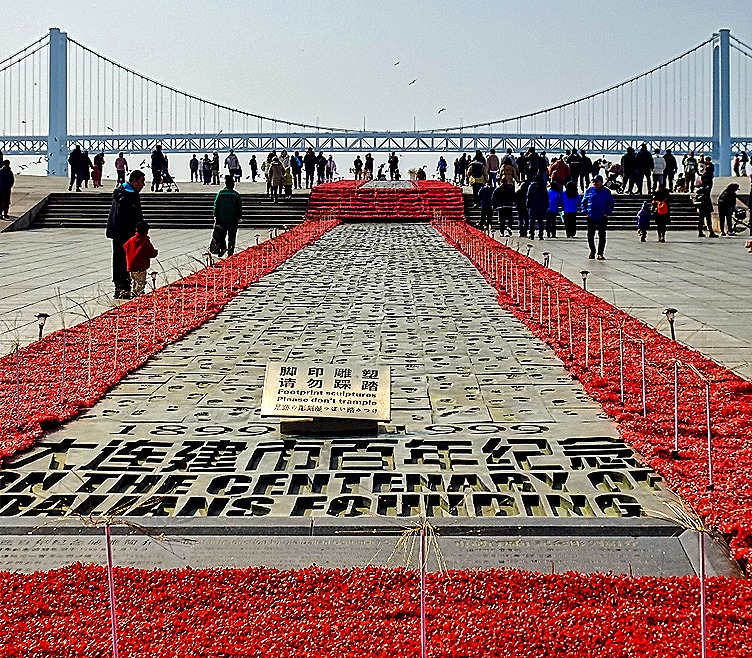
Leading up to the Centennial City Sculpture from the square’s interior is the long and low copper Sculpture of 1000 Footprints. It was completed in 1999, marking the centenary of the city’s founding. The footprints were made by Dalian citizens, starting with people born in 1899 and progressing toward the water with footprints of people born in 1999 at the end. Also at the end is a sculpture of two children who appear to be playing in the surf. When we were there it was surrounded by what looked from a distance like a bed of red flowers, but on closer inspection it appears to be some kind of carpet (look closely in the pictures and you can see some wrinkles).
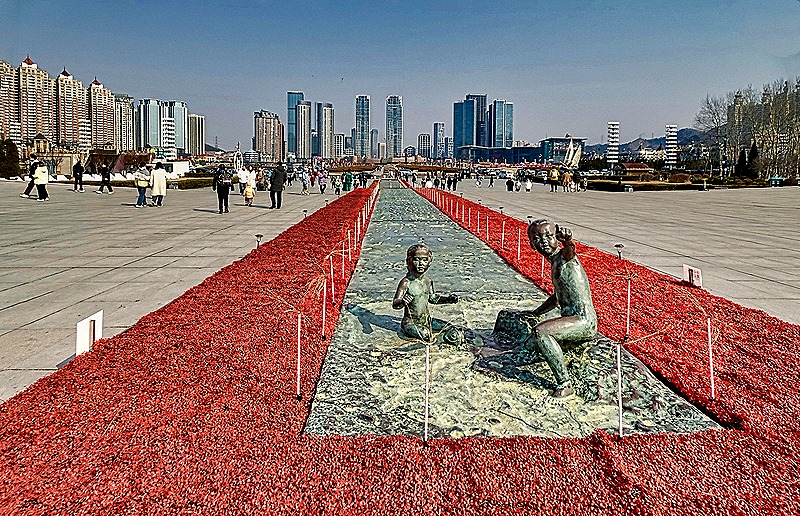

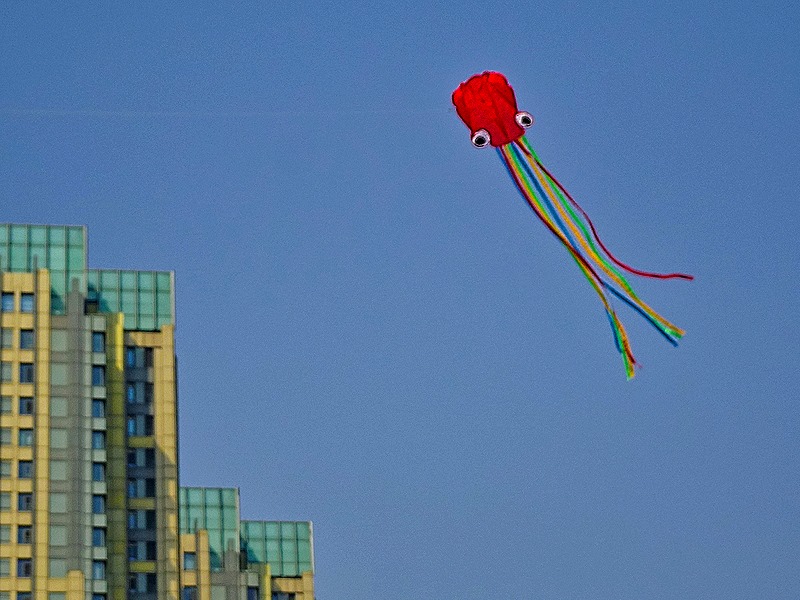
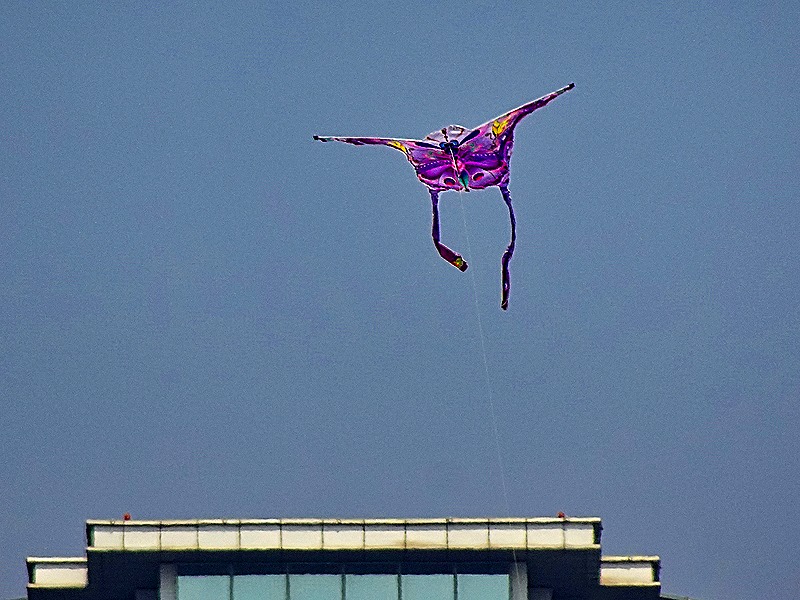
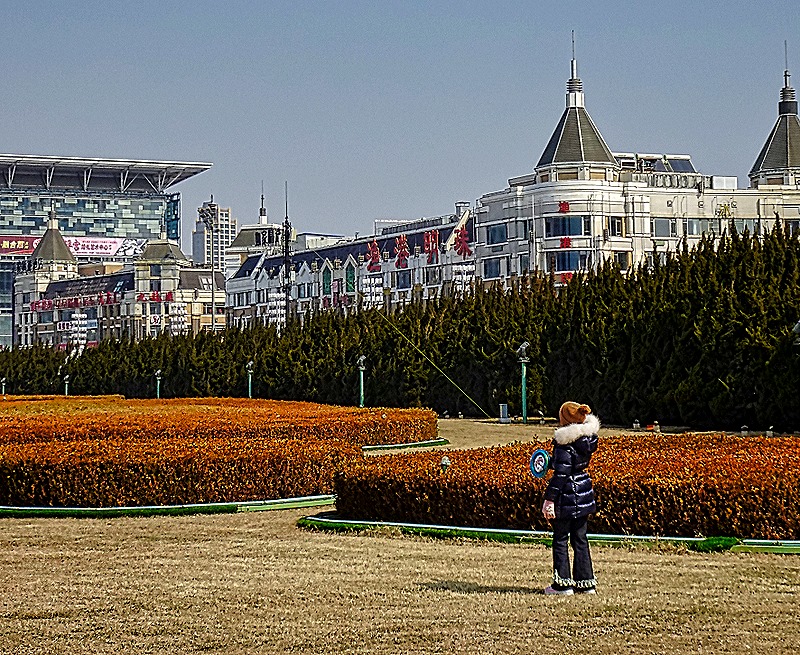
The square has a very large lawn area and is landscaped in bushes which, at least when we were there, were red. The red bushes really stood out against the yellow grass. Kite flying seems to be popular in Dalian; we saw a number of people flying kites, many quite high in the air.
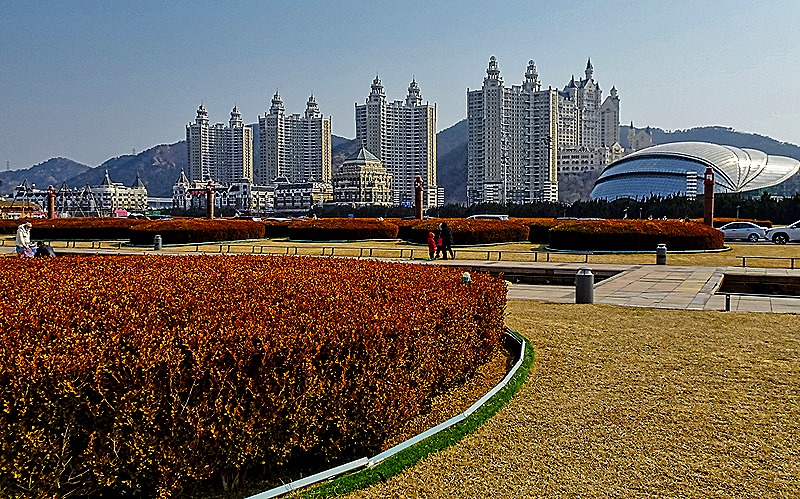

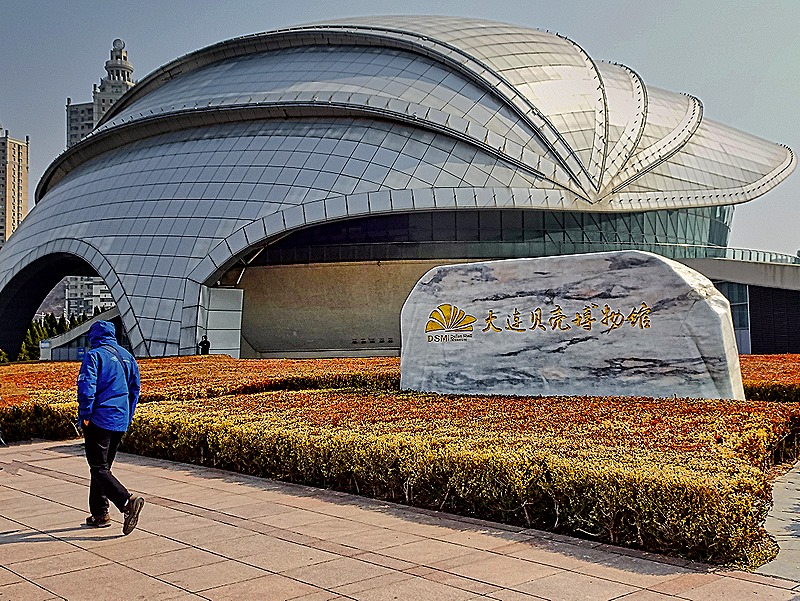
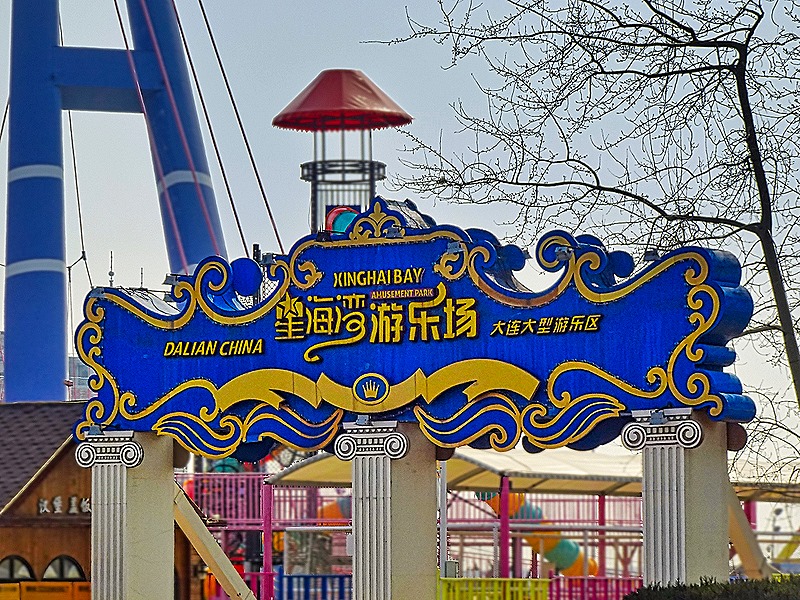
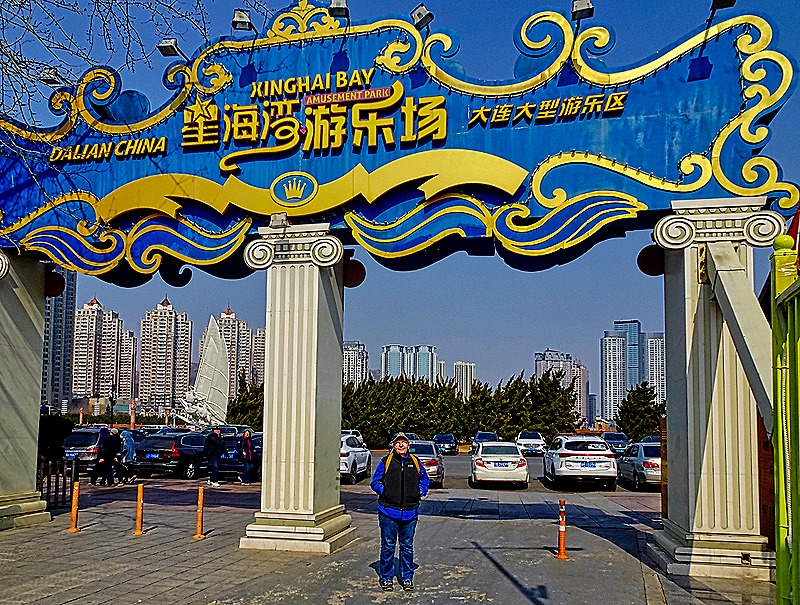
On one side of the square is the Dalian Shell Museum, opened in 2015. The building is shaped like a clam shell, slightly opened where the windows are placed. Next to it is the colorful Xinghai Bay Amusement Park.


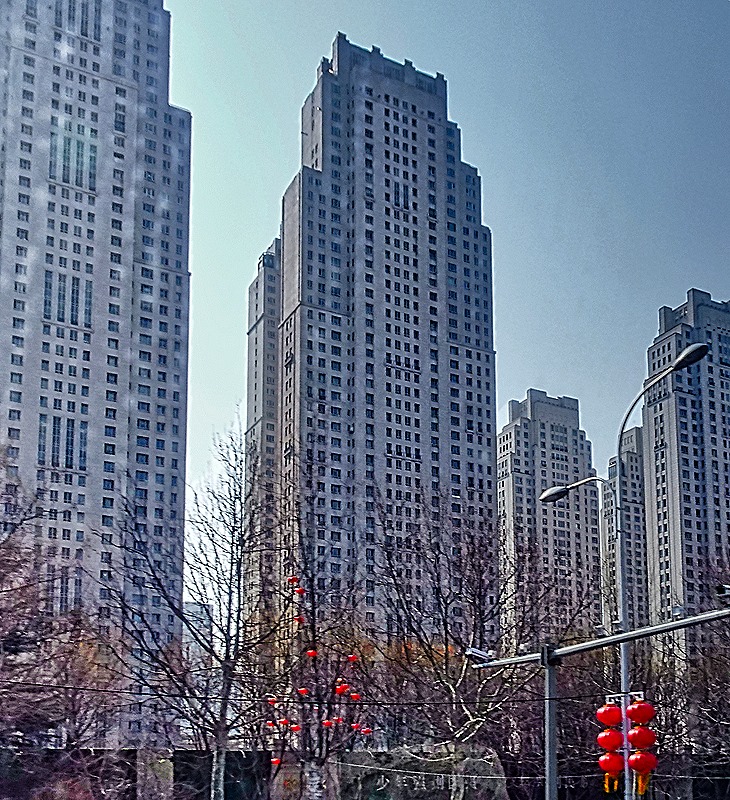
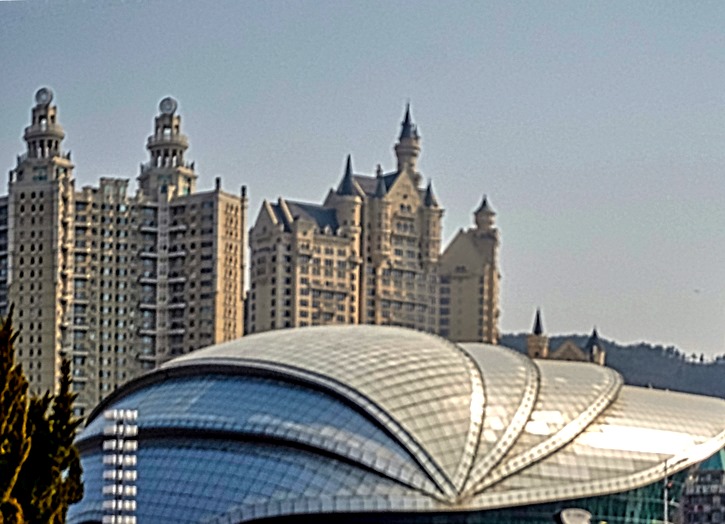
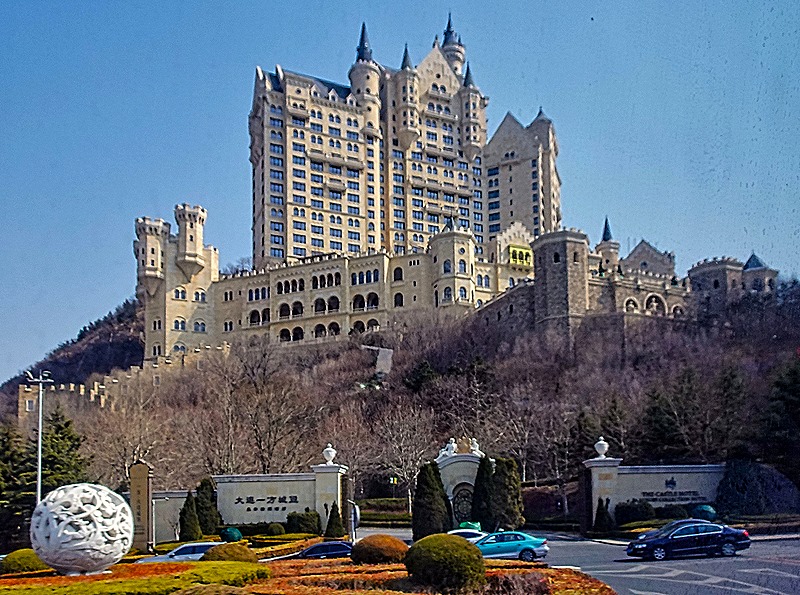
Most of the periphery of the park on the land sides was surrounded by tall buildings, reminding us of the view on the edges of Central Park in New York. In the business center area north of the park many of the buildings were glass and steel, but on other sides were a lot that looked like an older style made of concrete. Several of these rows of buildings appear in the pictures above. Most notable to us was a building that looked like an old European castle on a hill, appropriately called the Castle Hotel. Despite its appearance this hotel is only 10 years old.


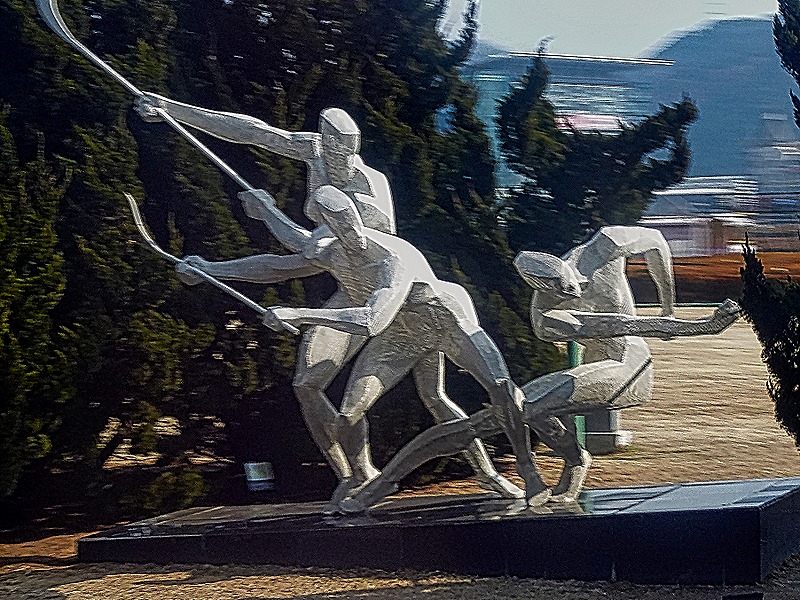
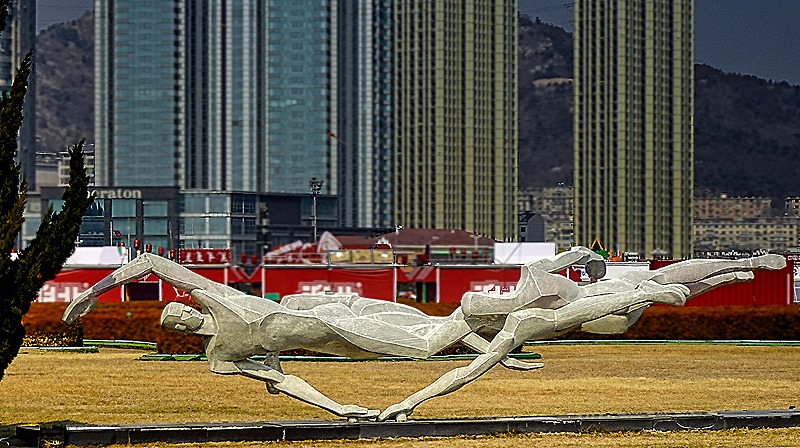
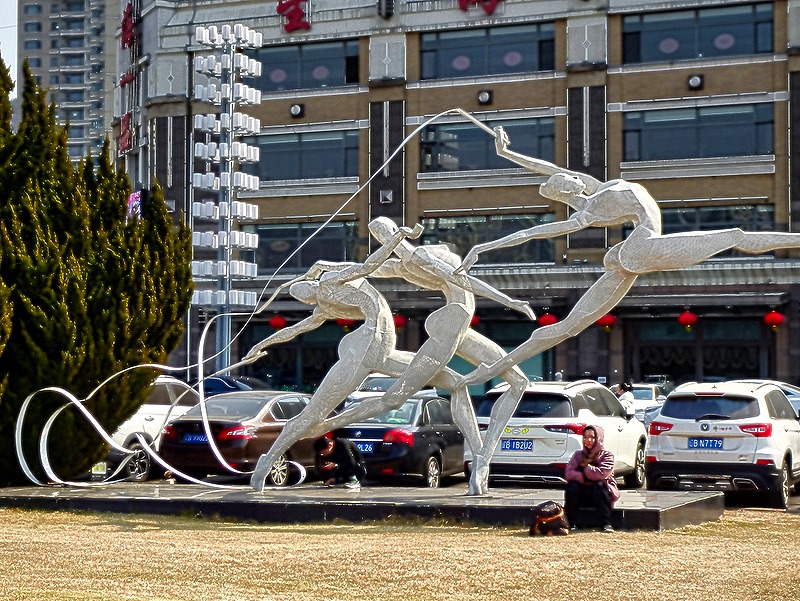
Finally (of the things we saw in the square), there are thirty groups of white steel mesh sculptures surrounding the square. Constructed for the 2008 Olympics, they depict athletes in action in a variety of sports. We only saw a few, but they were striking. Lighted at night they are probably even more striking. We also happened upon a pair of equestrian sculptures, but they weren’t of the mesh variety.



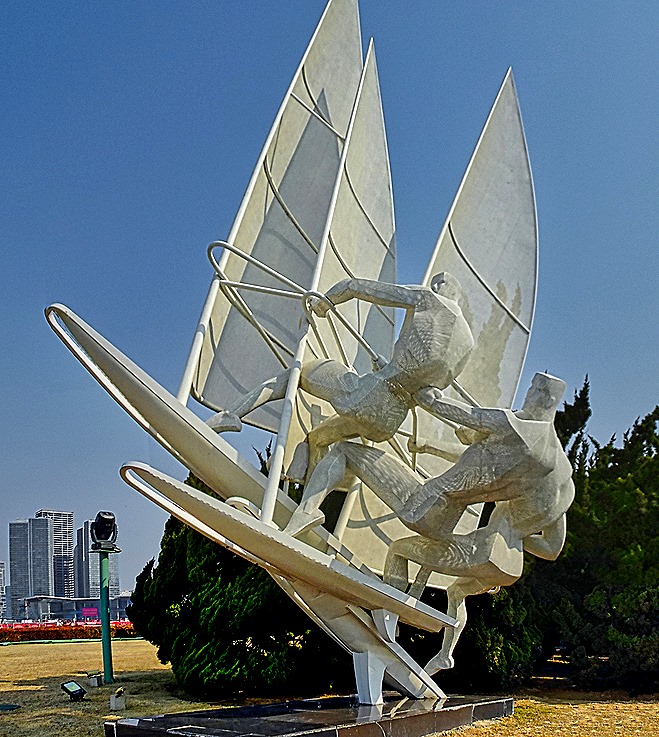
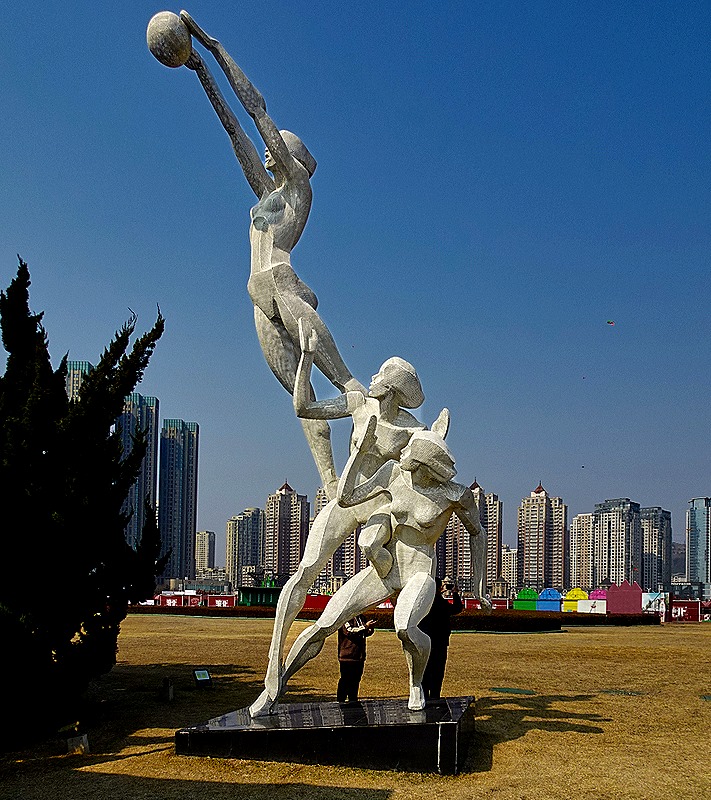

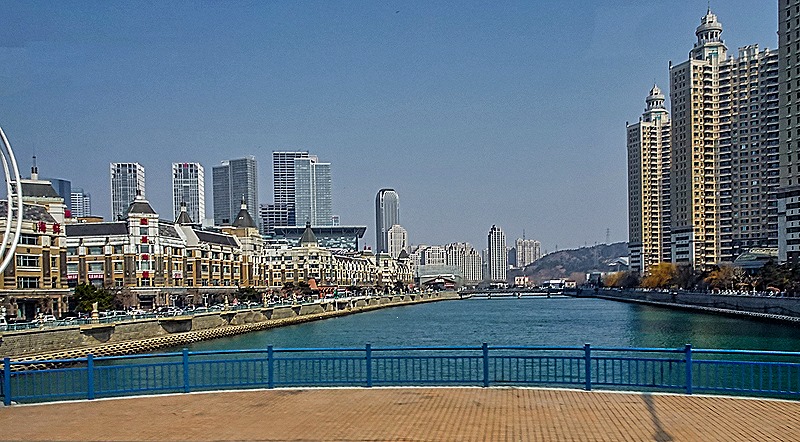
As we drove away from the square we passed a river or canal lined with tall buildings and an interesting green and white skyscraper.

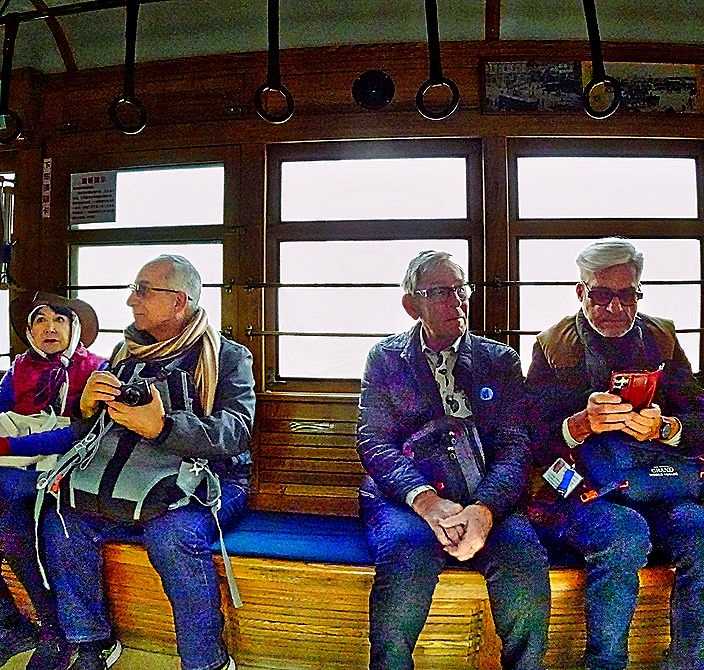
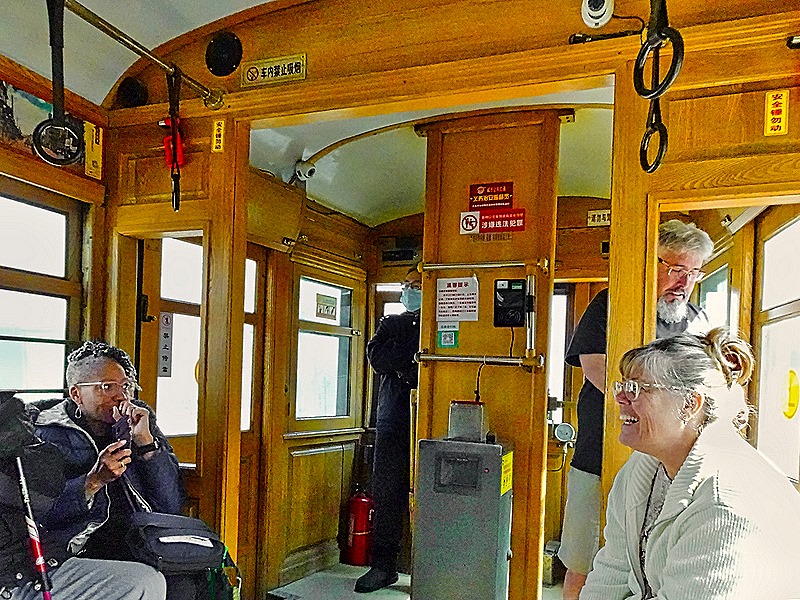
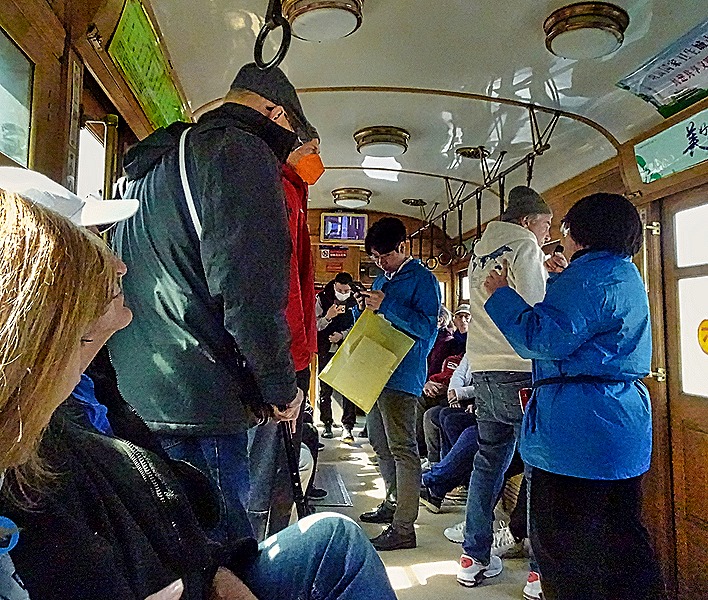
Dalian’s first municipal tram line opened in 1909 while it was under Japanese control. By the end of World War II eleven tram lines were in operation. During urban renewal in the 1970’s most of the tram lines were removed and today there are only two. A ride on the tram was the last event on our excursion.
Reading the excursion description we (or at least Rick) had envisioned riding on an overpass or along the side of a hill with a panorama of the city out the window. It didn’t really say that explicitly, but that was what we were hoping for. Alas, no. This is an old fashioned urban tram, running (slowly) on tracks laid out on city streets, with little to see out the windows to the sides. And the ride only seemed to be about a mile in length. Our excursion was led by two very young guides, maybe 20 or so, who spoke excellent English but did not seem very experienced. They told us afterward that they had been very nervous about this excursion because we were the first cruise ship in town since the pandemic. If we were correct in our perception of their very young ages that means they probably had been too young to have done this before. The young woman guide had a microphone and did an explanation during our tram ride. She was quite articulate and had obviously prepared carefully for this. The guides were delightful, but the tram ride itself was disappointing.

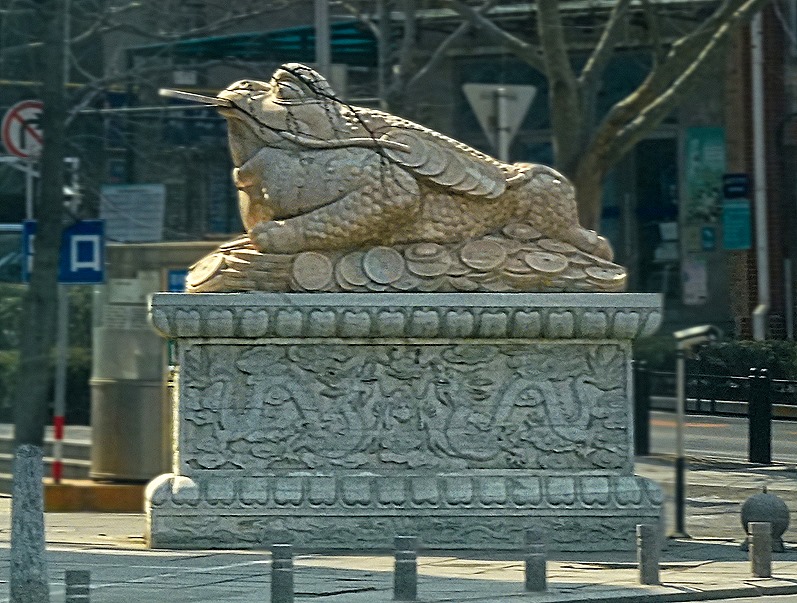
Dalian is known for its large open city squares and we passed several on the bus on the way back to the port. One was a sculpture of what looked like a toad sitting on a pile of money and the other we got a photo of had a large green and purple sculpture in the middle with large Chinese characters in front. We have no idea what either of these signified.

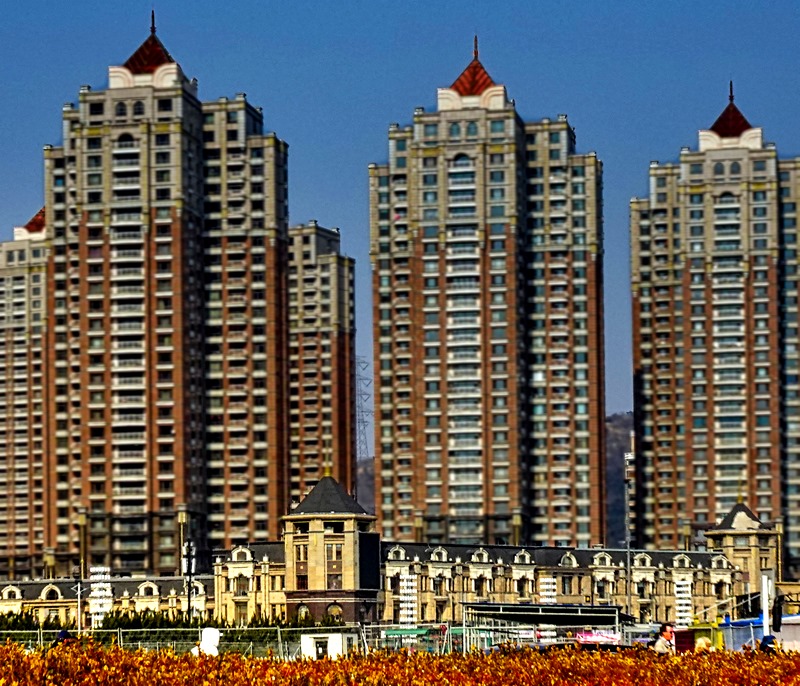
Back at the port we went through customs and boarded the ship. There were a number of police officers milling about near the ship entrance but we don’t know whether this was usual or something special. We took some pictures from our veranda, of the dock off to our left and of the city in the distance on the right. A Chinese flag was flying on the dock as well. On a trip that includes places like Beijing and Kyoto it would be hard to justify calling Dalian one of the highlights, but it was a good bit more interesting than we had anticipated and we enjoyed our day here. At around 5:00 we sailed away to our next stop tomorrow.

 BADER JOURNAL


Leave a comment