Suva, Fiji 2026
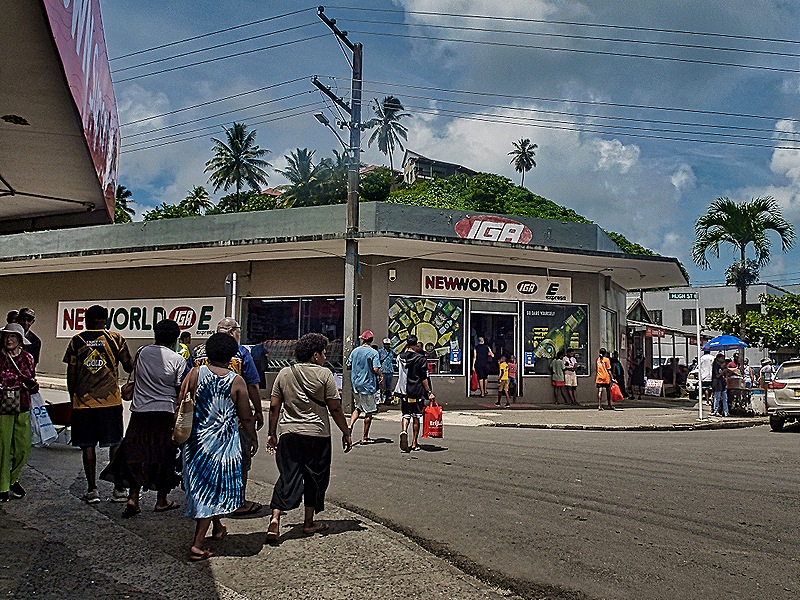
We spent January 24 in the Fiji capital of Suva on the island of Viti Levu. It was a very rainy day & we got pretty wet walking through the city with our friend and table mate Karen.
Fiji is a country on two large islands and several hundred smaller ones, only about a third of which are inhabited. Most of the population is on the two main islands with about two thirds (almost 600,000) on Viti Levu. Fiji has been inhabited for 3 or 4,000 years and Europeans first visited in the 18th century. Fiji long had a reputation as a violent place rife with cannibalism, but modern research suggests that at most there probably was occasional ritual cannibalism involving defeated enemies in warfare. From the 10th to the 13th centuries Fiji was part of the Tongan empire and in 1874 it was incorporated into the British Empire.
British planters established plantations but the locals did not want to work there. A system of slavery in all but name (it was called “Blackbirding”) was established in which natives of other Pacific island were captured, brought to Fiji, and then (if they survived the journey) sold to the planters. Prisoners from the battles to pacify Fiji were also sold into slavery. From 1878 to 1916 more than 60,000 Indians were brought to Fiji to work on sugarcane plantations. Some were able to return to India after their term of indenture (5 to 10 years) but most ended up staying in Fiji. Still today their descendants constitute close to 40 % of the population and there is enough ethnic tension that many of the Indians have left in recent years to return to the country of their ancestors, in which they have never lived. Fiji achieved independence in 1970 but unrest continued with several coups, the last (so far) in 2007.
Suva has been the capital of independent Fiji since 1977. It is by far the largest city in Fiji with a population near 100,000 (186,000 in the metropolitan area) and in addition to being the political capital it is the economic and cultural center of the country as well. We left the ship in mid-morning to see what was to be seen.
Our first stop was at a handicrafts market, set up like an indoor mall with a long row of small individual shops. There were many interesting things to see, most notably items carved from wood. But going from vendor to vendor, all selling the same or very similar wares, always makes us wonder what is made locally and what is imported from China, which has a lively trade in tourist items throughout the Pacific (and elsewhere). These Chinese goods are hard to distinguish from genuine local crafts, which makes it hard to pull the trigger on a purchase if much money is involved (not to mention we already have too many things we have purchased abroad waiting for space to be displayed in our house). So we did a lot of looking but didn’t buy anything here (actually we bought very little on this entire voyage).
We walked through Ratu Sukuna Park, which sat between the road and the water. It opened in 1955 on land recently reclaimed from the sea. In front of the sign is a stone monument to Ratu Sir Lala Sukuna, one of the prominent founders of modern Fiji. The park had undergone an extensive upgrade in 2024. It is a very nice park with many flowers.


The first building of interest we came to on Victoria Parade, which appeared to be the main boulevard in town, was the Suva City Carnegie Library. Originally opened in 1909 with a grant of 1500 pounds from prolific library supporter Andrew Carnegie, it was extended to its current size in 1929. During World War II the building was used as an American navy dental unit. The building was renovated in 2008 in preparation for the library’s 100th birthday. And truth be told, it looked like it could use another renovation, at least inside, since it looked a bit drab and understaffed when we visited. A picture of Andrew Carnegie looks down over the library patrons from the stairway landing.


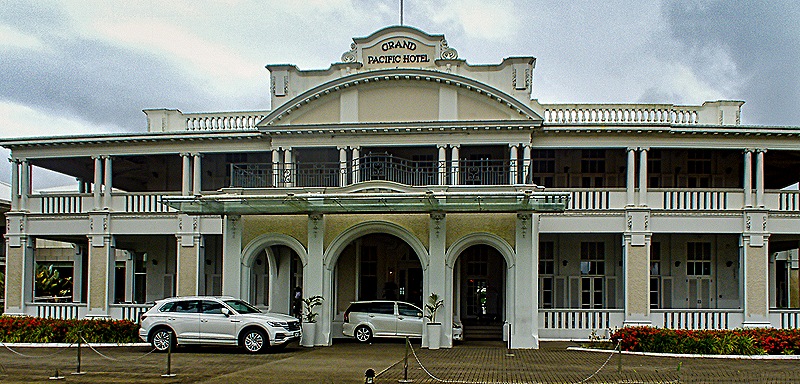
The Grand Pacific Hotel was considered one of the premier hotels in the Southern Hemisphere after its opening in 1914. It was built by a New Zealand steamship company to house its passengers and was designed to have the ambience of an ocean liner so the passengers would feel like they had never left the ship. It became a social center for Suva over the years, hosting many balls and famous guests (including Queen Elizabeth, James Michener and W. Somerset Maugham). The hotel was sold in 1958 and thereafter was painted pink to resemble the Royal Hawaiian Hotel we had visited in Honolulu. The hotel was closed in 1992 and served for a time as a military barracks. But it was restored to its former five star condition and reopened in 2014 in time for its 100th anniversary. We visited the first floor of the hotel and waited on its portico for a heavy downpour to end (it didn’t, just slowed down some) before continuing on.


Across Victoria Parade from the Grand Pacific was Albert Park (named for Queen Victoria’s husband), a huge park that is an important sports venue. As we passed there was what appeared to be a soccer team in front of the stands looking like they were there to practice, but the rain put a stop to that. In 1928 Sir Charles Kingsford Smith landed in this park during the first trans-Pacific flight from California to Australia. He stayed in the Grand Pacific where a ball was held in his honor.


To the left of Albert Park we could see the large Government Buildings and their clocktower. This Art Deco building complex, opened in 1939, houses the Prime Minister’s offices, the High Court, the Parliament and several ministries. The clock tower was also built in 1939. We had walked past the front entrance facing Victoria Parade before we reached the Grand Pacific Hotel.


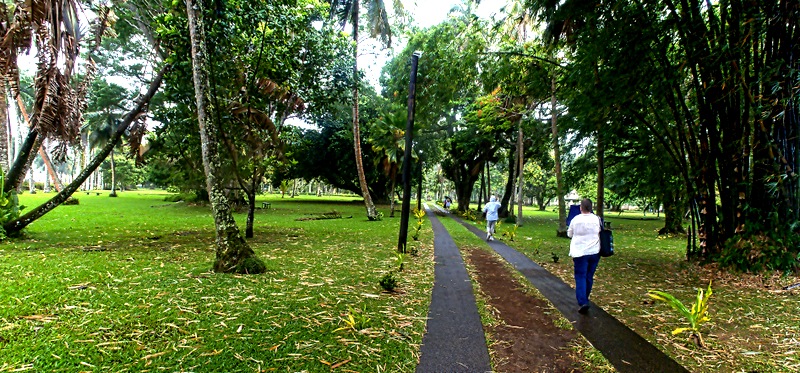
We walked on in a drizzle (by now Rick’s umbrella had helpfully lost its ability to stay open) to Thurston Gardens. This was a very nice botanical garden just beyond Albert Park. It was the site of the original indigenous village of Suva, which was burned in 1843 during a local conflict with many inhabitants killed (and reputedly eaten). The gardens opened here in 1879 on the initiative of Sir John Thurston, who was governor at the time. A clock tower and bandstand were built in 1918. We walked through the park to the Fiji Museum located on its grounds.
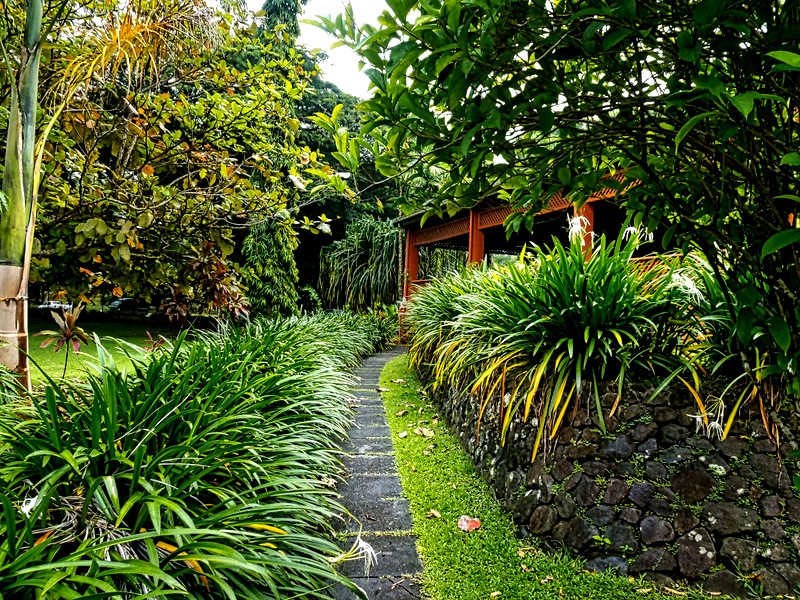
The Fiji Museum holds the world’s most important collection of Fijian artifacts, dating back as far as 3700 years. It originally opened in 1904 in the old town hall. From 1936 to 1954 the collection was housed in the top floor of the Carnegie Library and since 1955 it has been in its current building in Thurston Park. Next to the museum is a clock tower and there is a snack bar on its veranda. When we arrived a good number of people were on the veranda, partly to get out of the rain but mostly because the electricity was off in the museum and no one was being admitted.


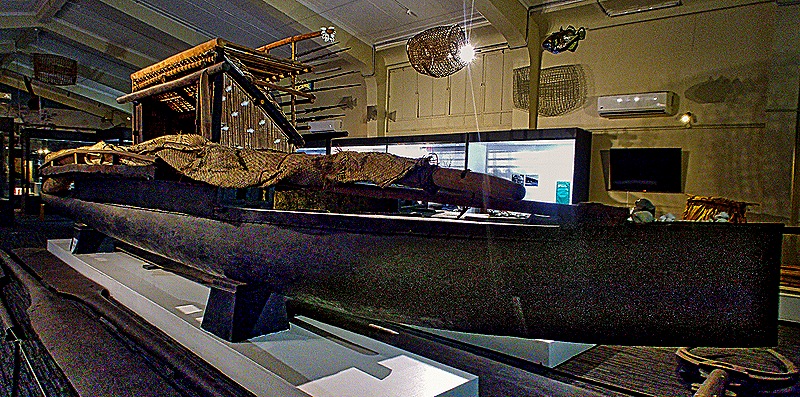
It wasn’t too long before some of the lights came on in the museum and we were admitted to look at the collection. But the lighting was still pretty dim and although the explanatory signs were (thankfully) in English, many were for some reason placed so low that it was difficult to bend over far enough to read them. Why do museums (and other places) do that? Upon entry we first came to a large double hulled canoe, the type of vessel Fijians traditionally used for ocean travel. It is a careful replica of this type of boat, built in 1914. Nearby is a large canoe with a single outrigger, probably also used for ocean travel.

An interesting nautical item of a different sort was the rudder from the original HMS Bounty. The mutiny on the Bounty is a famous story, recounted (not always accurately) in books and movies. In 1789 Lieutenant William Bligh was the captain of this ship, on a mission to Tahiti to gather breadfruit trees for transportation to British colonies in the Caribbean to feed the many slaves there. Some of the sailors, led by Fletcher Christian, were disgruntled by Bligh’s version of discipline and staged a successful mutiny near the island of Tonga. They put Bligh and a couple of dozen loyal crewmen into a small open boat and set them adrift, then sailed to Tahiti to pick up some local people and on to isolated Pitcairn Island to hide from the British. To further avoid detection they set the Bounty on fire and what was left of it sank in the bay. The remains of Bounty’s rudder were recovered in 1932 and given by the British to Fiji, where it was on display when we visited the museum. Some missing pieces were broken off by souvenir seekers during the time it was stored on Pitcairn Island before being transported to Fiji. (As an aside, Bligh managed to sail his open boat more than 3,500 nautical miles to Batavia, now Jakarta, in Indonesia without losing a man to the elements. During this legendary trip they sailed through what is now called Bligh Water, the passage between Fiji’s two main islands, during which Bligh became the first to chart the coast of Fiji).

Other interesting exhibits that caught our eyes included a whale’s tooth (tabua), highly prized and used as money in Fiji, a 19th century helmet made from a porcupine fish, a 19th century dancer’s headdress from Vanuatu and a pair of very tall wooden pillars carved into a man and a woman.


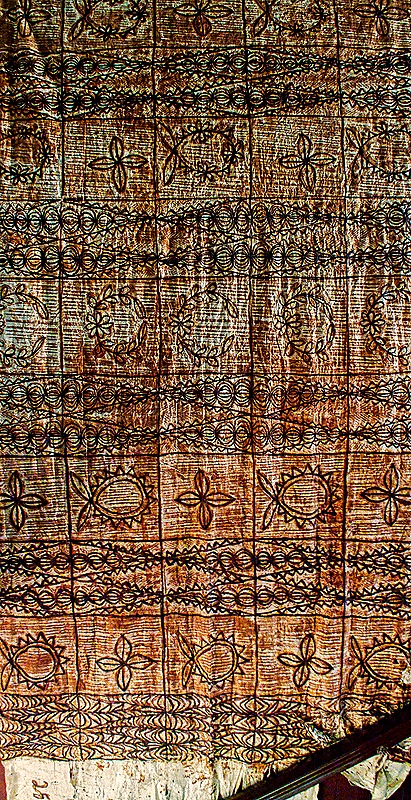
We have seen bark cloth under several names on other islands and in Fiji it is called Masi and made from Mulberry bark. Various decorating techniques are used on different islands but only in Fiji is this kind of cloth decorated by stenciling. Making masi cloth was considered women’s work.


There was a good bit more in the museum of which we have no further pictures. There was a very interesting room dedicated to the history of the Indian community in Fiji, and quite a bit more. The museum was, in our opinion, quite worthwhile and we were happy that they managed to get the lights working again so we could view it.
We walked all the way back to the ship, stopping at the crafts market again because Mary had her eye on a necklace, but the whole market was closed. We were pretty wet by the time we reached the ship so we had to change clothes before dinner. And we sailed away to our third and last stop in Fiji.
Savusavu, Fiji 2026
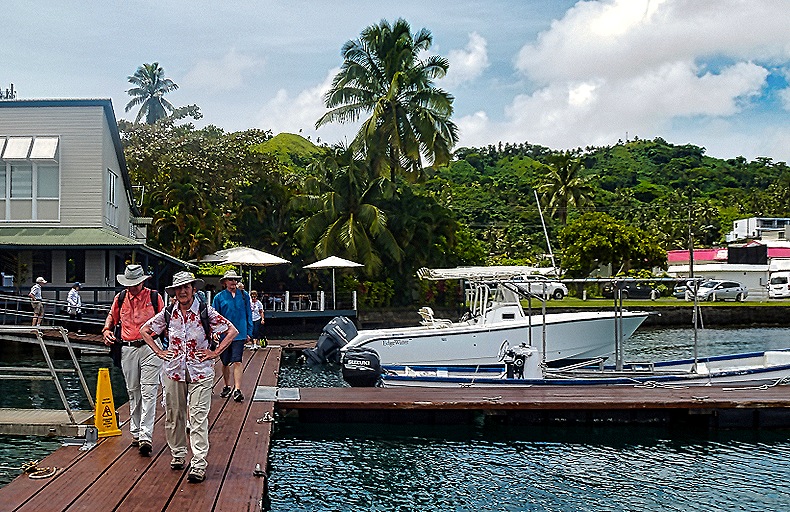
We spent January 23 in Savusavu, the first of three stops in Fiji, a country we had never visited before. The name is pronounced with emphasis on the 1st and 3rd syllables (unlike Robin Williams, when he emphasized the 2d and 4th syllables while intoning “Nanu nanu” on a popular TV show you might be old enough to remember). Originally settled by Polynesians around 1700 BCE, Europeans arrived in the mid-19th century and it became a trading post for sandalwood, copra and sea cucumbers. It was incorporated as a town in 1969. Located on the island of Vanua Levu, the town has fewer than 3,500 people with little in the way of notable landmarks. We often explore new ports on foot and with the town’s small size this seemed like a good plan. So we tendered to shore to see what was to be seen.
The weather here was unreasonably hot and humid so it turned out we really weren’t going to walk very far. It was a good thing this town was so small and had nothing we felt we really needed to see. The island of Vanua Levu has a reputation as a natural paradise, surrounded by good beaches and snorkeling venues, with some nice seaside resorts. And maybe that is accurate, but that’s not what we experienced. This was basically a one street town and apart from a waterfront park near the tender dock and a reasonably interesting craft store, that street was mostly lined with small glass front businesses and traffic.


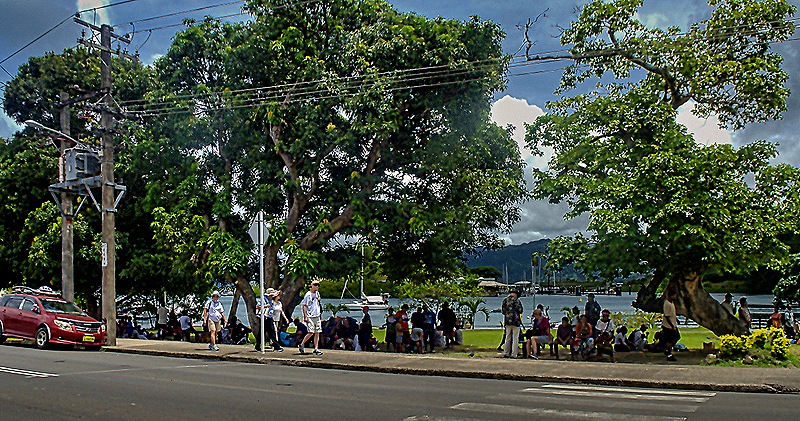
There was at least one other street running parallel on top of a hill and there is supposed to be a small hot spring there where people cook food. But we have seen hot springs like that before and it was really too hot to go uphill to look for this in the oppressive heat. So we didn’t. The one notable thing we found in our walk was the local library, always a highlight of our city walks. This one was a glass storefront like the businesses along the street and it was closed so we couldn’t go inside. Upon examining the orange notice taped inside the glass door we discovered that it advertised an event to be held in . . . 2023, two years before. From this we concluded that this library is closed permanently and we had no idea whether it might have reopened in another location.

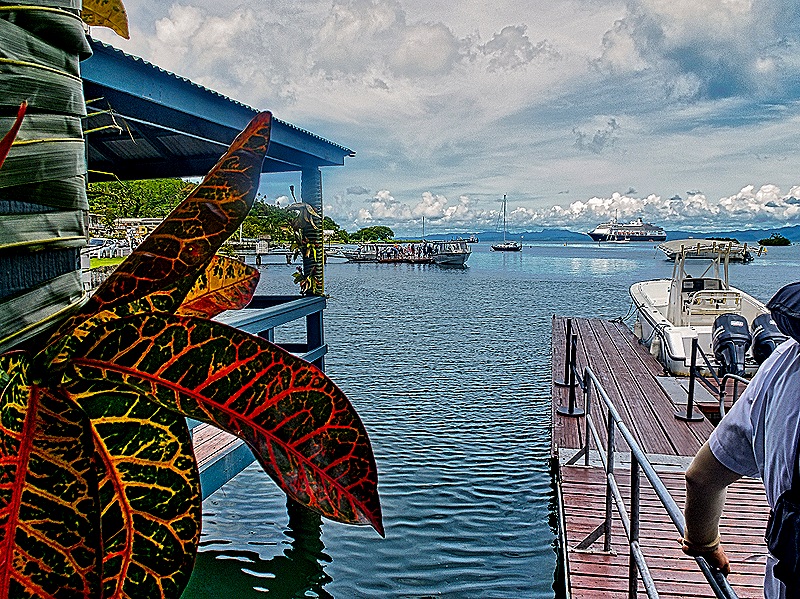
So that was it for us. We walked back to the dock and boarded the tender to go back to the ship. From the tender dock there was a nice view of the water and the shoreline. The tender pilot was climbing through a hole above his seat as we waited for others to board, presumably looking at the view but mostly escaping from the heat inside the metal boat. If we return here we will look into better options to spend a day on this island.
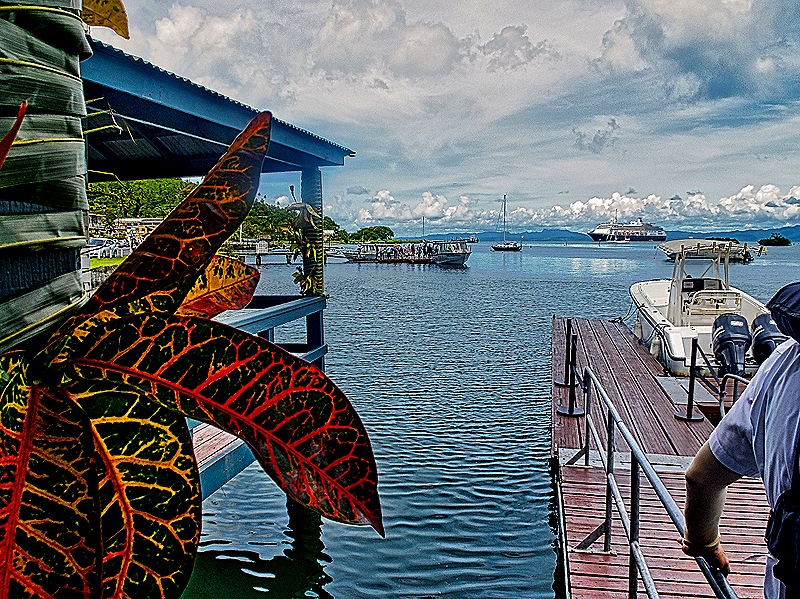

Apia, Samoa 2026
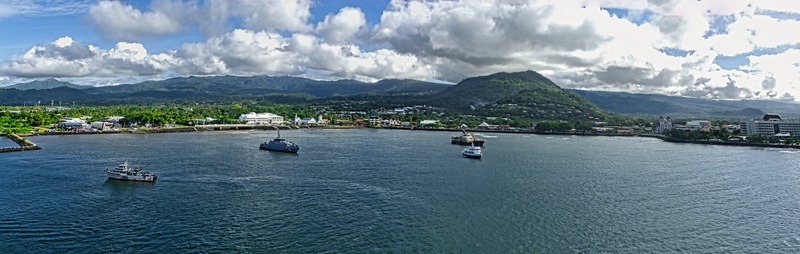
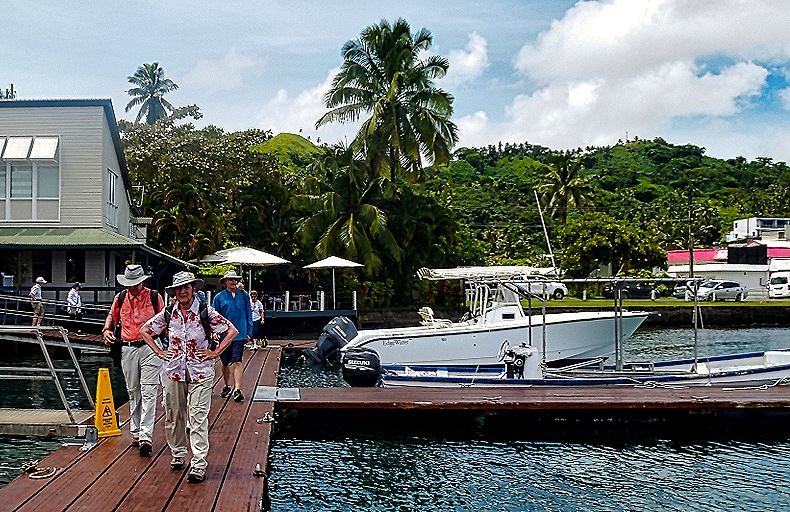
Having left Pago Pago on January 21 we arrived in Apia on the morning of January 23. Two days is a long time to sail the 80 miles to Apia, but the real reason for this calendar discrepancy is that we crossed the international date line between these ports and moved ahead a day. So we didn’t have a January 20 at all. We found ourselves docked in another large harbor.
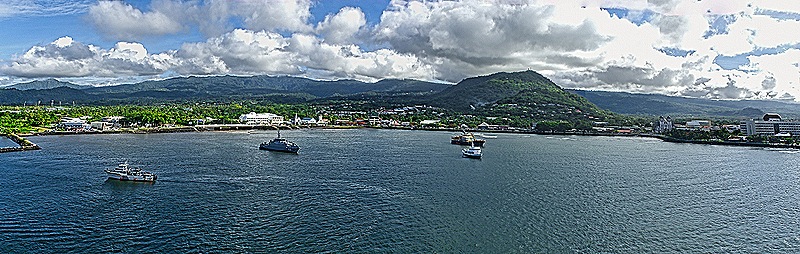
The Samoan archipelago was divided into German Samoa on the west and American Samoa on the east in 1899. Western Samoa remained under German hegemony until 1914 when New Zealand troops landed at the beginning of World War I and took control without resistance. About 20% of the population died in the Influenza epidemic of 1919, which the Samoans blamed on New Zealand (it has since been established that influenza was brought here on a New Zealand ship). Although political tension continued, Western Samoa remained under New Zealand control until it gained independence in 1962. In 1997 it adopted the name “Samoa,” over the objection of the American Samoans. In 2011 Samoa changed its time zone to ease trade with New Zealand, which moved the international date line to fall between the two Samoas.
The independent state of Samoa consists of two large islands and a number of smaller islands, most uninhabited. Apia is the capital of the country and by far its largest city with a population exceeding 35,000. The city itself has no central government, but is made up of some 45 communal villages. Like American Samoa, the island of Upolu on which Apia sits is very lush and green. All of our ports up to now had been US territory, so this was the first one for which we needed a passport. This was our first visit to Apia and we booked an excursion to show us the highlights.
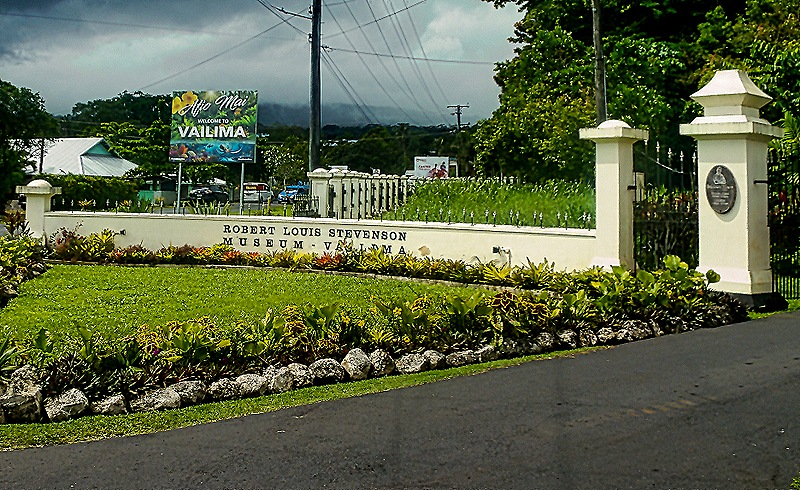
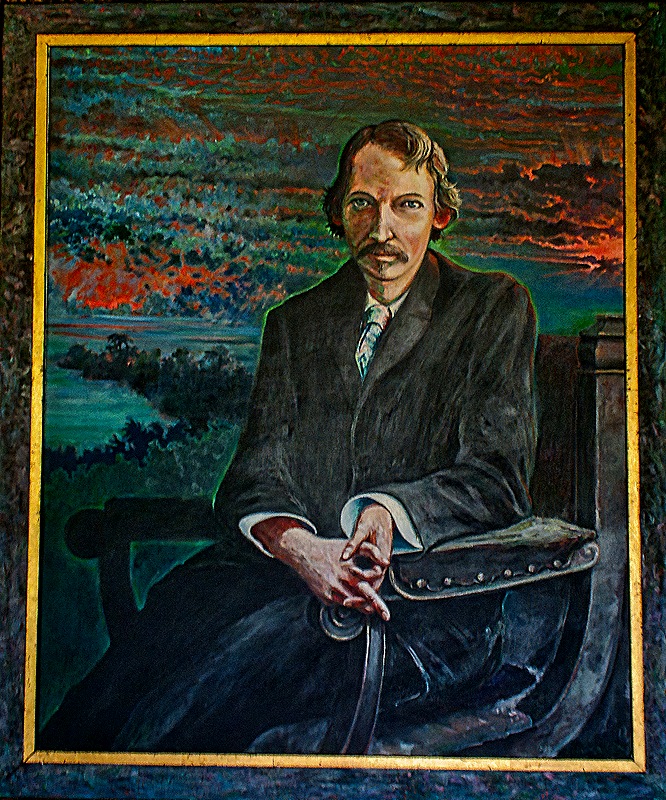
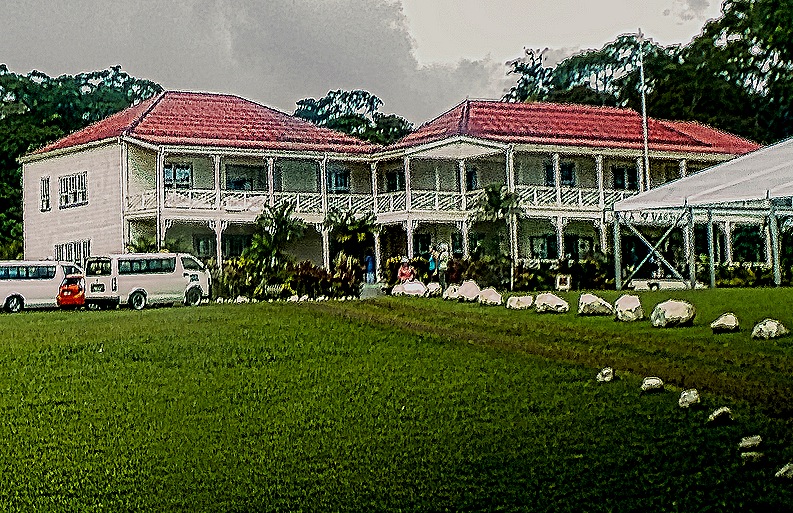
Robert Louis Stevenson lived here for the last few years of his life and was buried atop Mount Vaea in Apia in 1894. He built a large house of redwood imported from California at the foot of that mountain that was completed in 1891, named Vailima after the local village. Today it is a museum.
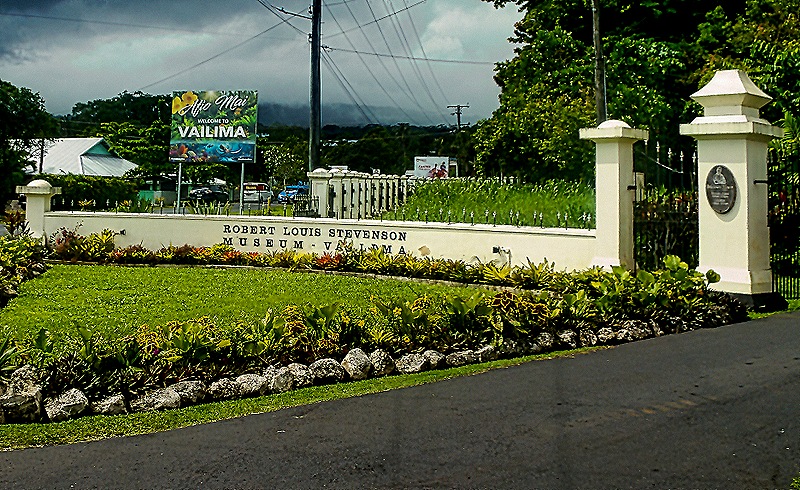
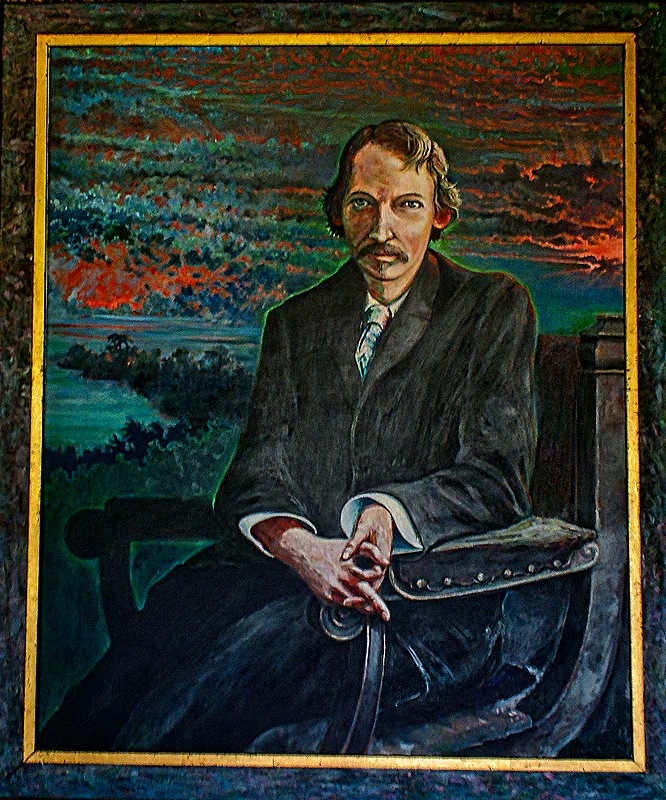
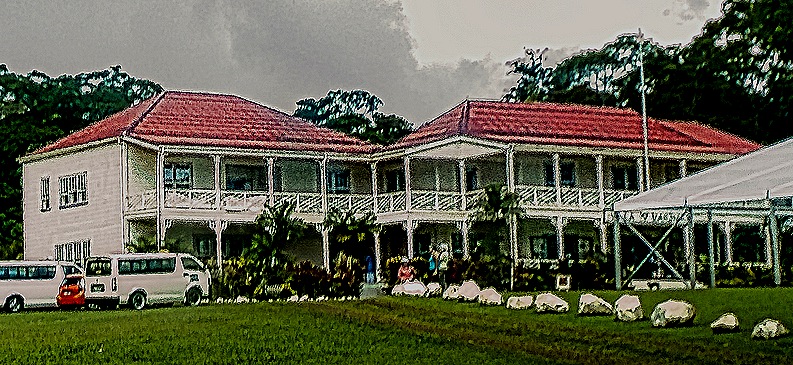
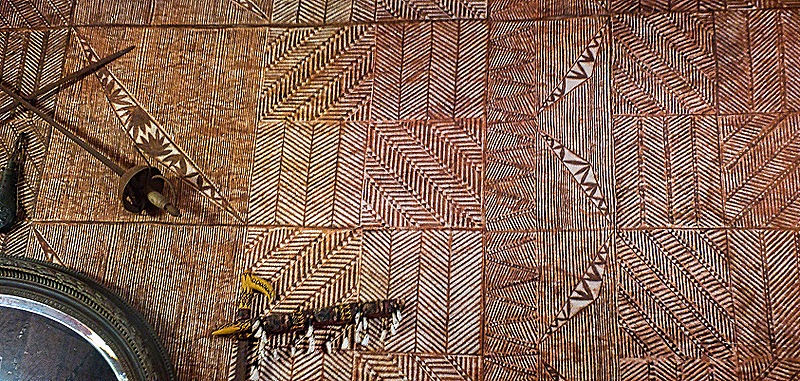
Rather than having a guide lead visitors through the house they had a sort of docent stationed in each of the featured rooms to explain it and answer questions as each group entered. Stevenson’s widow sold the house and most of its contents a few years after he died and moved to California. The house became the residence of the German governor of Samoa, then the New Zealand administrator of the territory and after independence of the head of state. It opened as a museum in 1994. It is furnished with period (or at least period style) furniture and decorations in an effort to make it look as much as possible as it did when the Stevensons lived here, but because Mrs. Stevenson sold almost everything very little here is original to the house. Among the interesting items inside was some elaborately printed siapo cloth adhering to the wall like wallpaper. Siapo could also be seen hung like tapestry. The verandas lining the outside of the upper story were airy and pleasant, in a rather Victorian style.
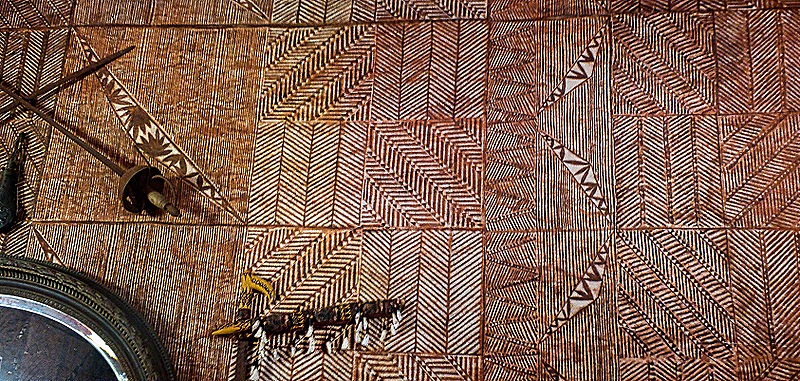
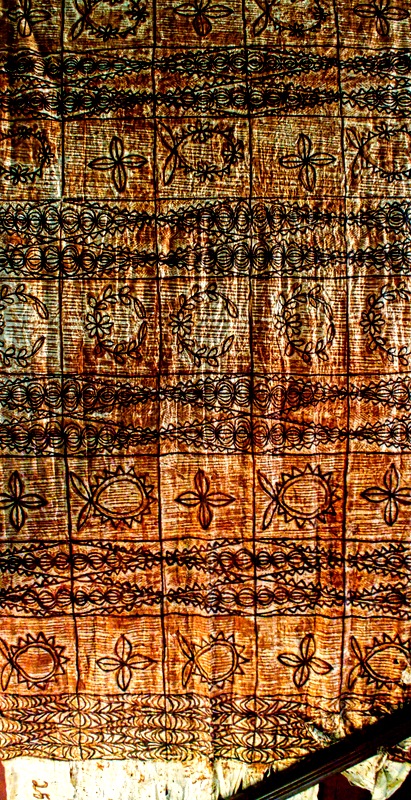
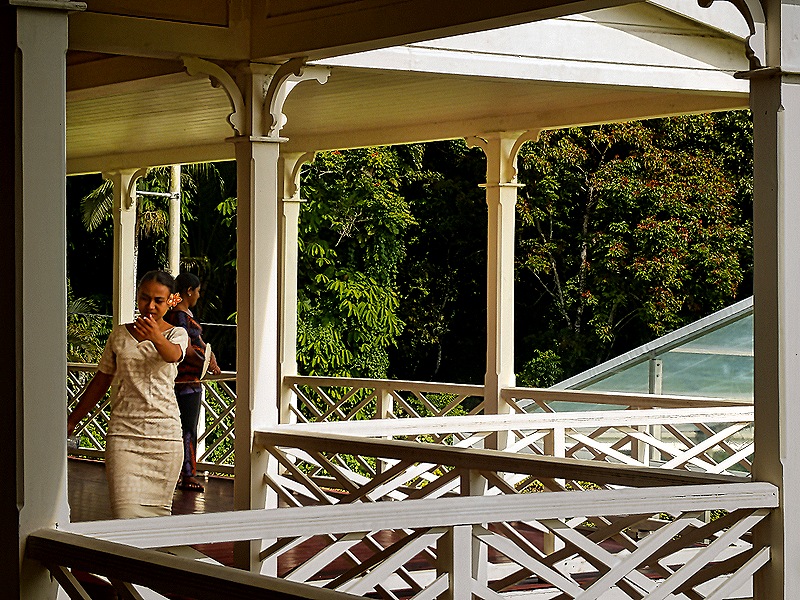
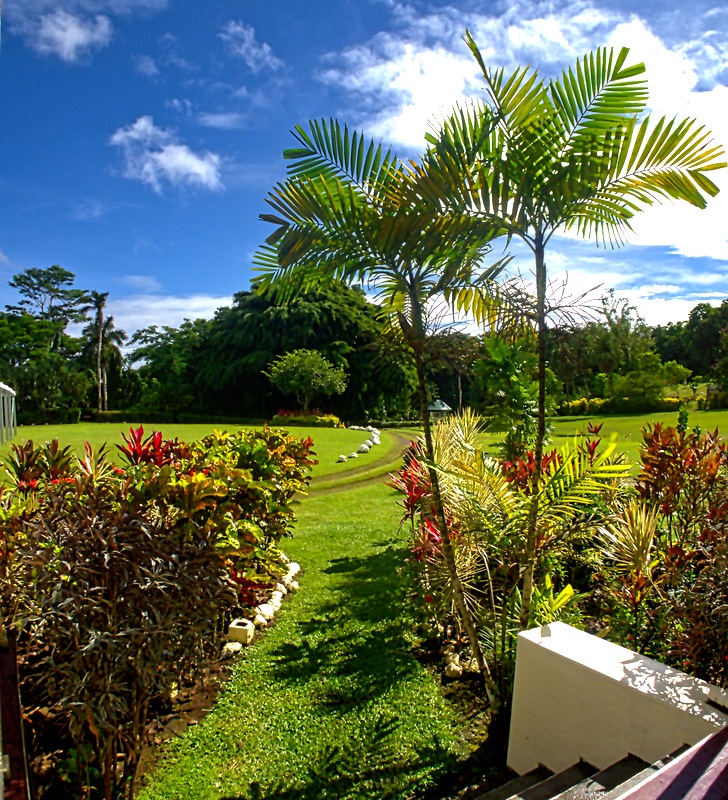
The grounds of the house were particularly beautiful, with many colorful flowers and well landscaped. And we spotted an interesting bird wandering the grounds, of a type we had never seen.
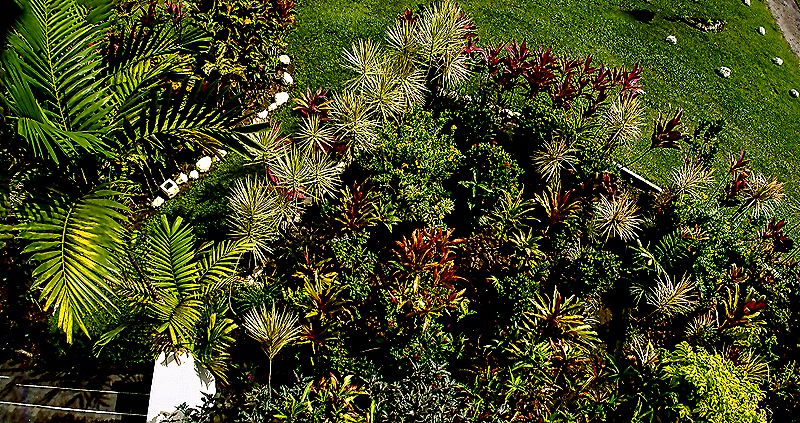
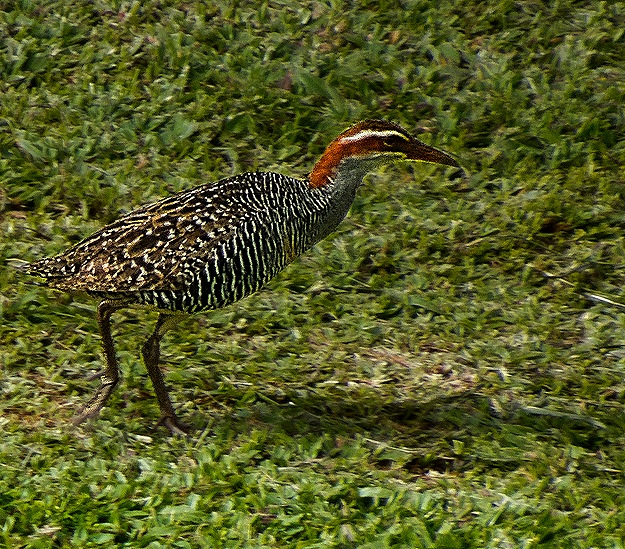
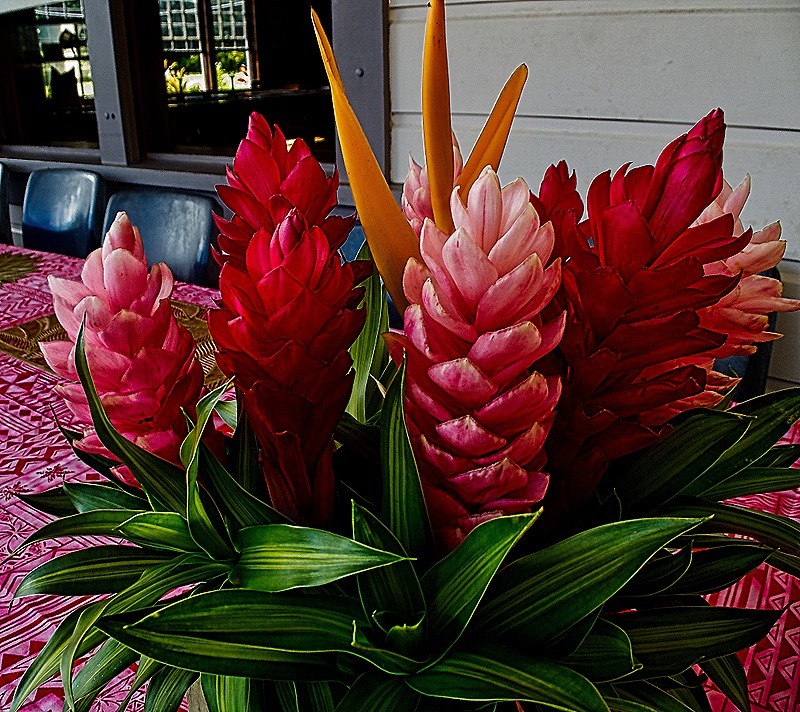
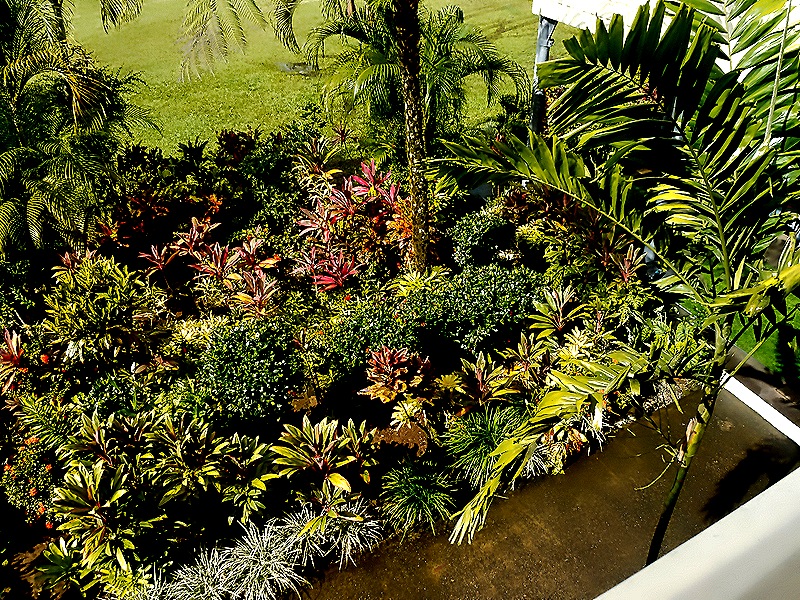
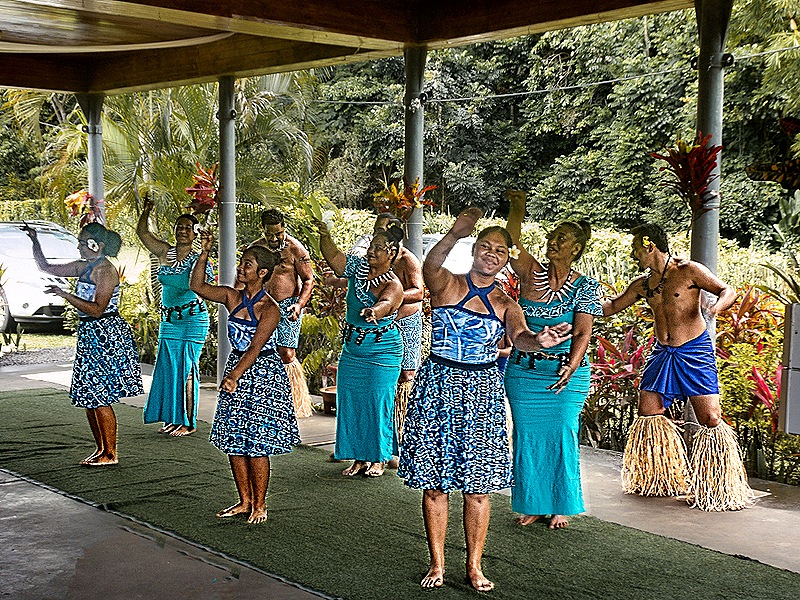
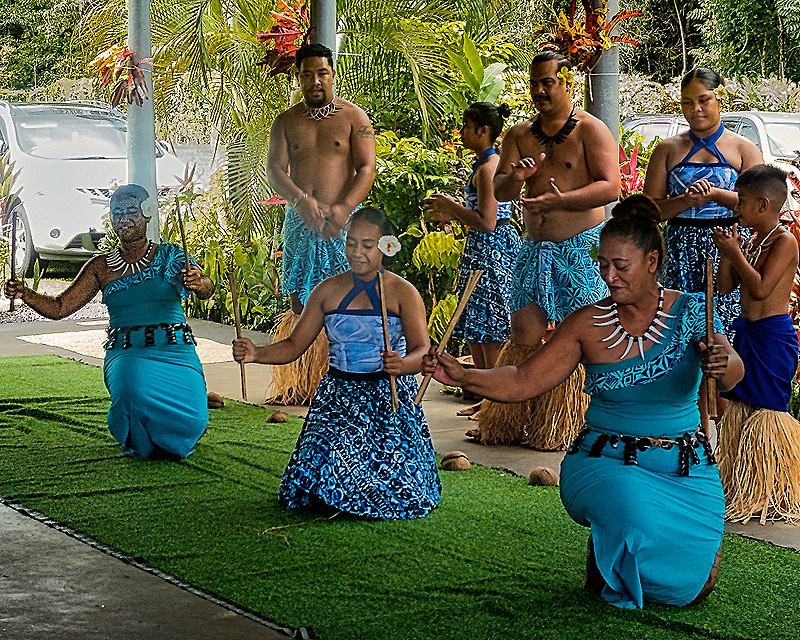
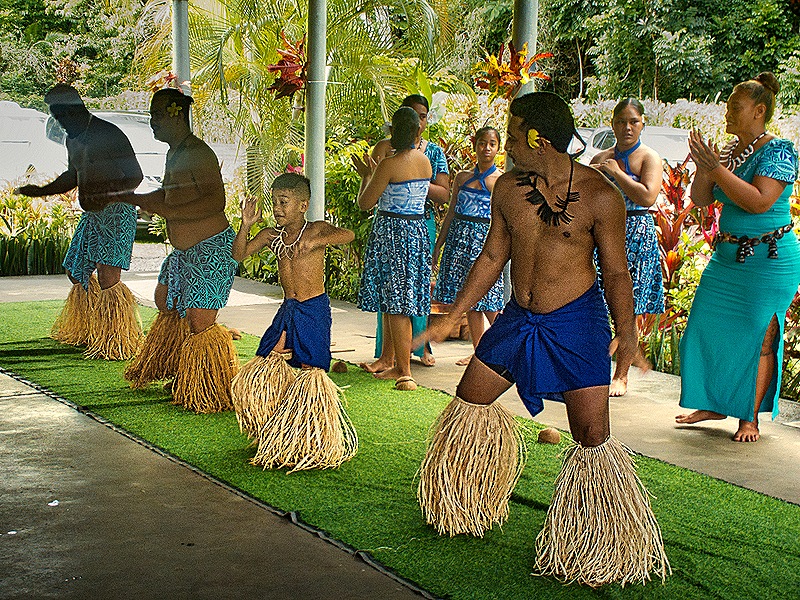
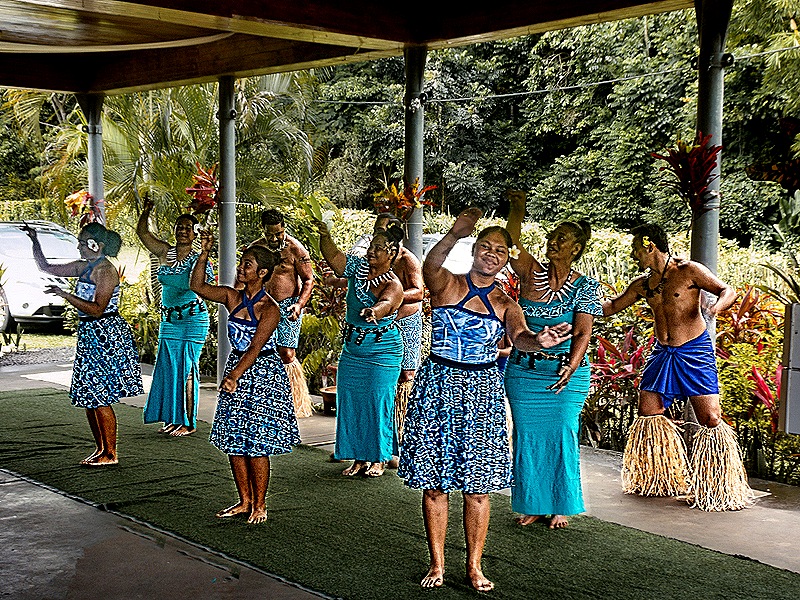
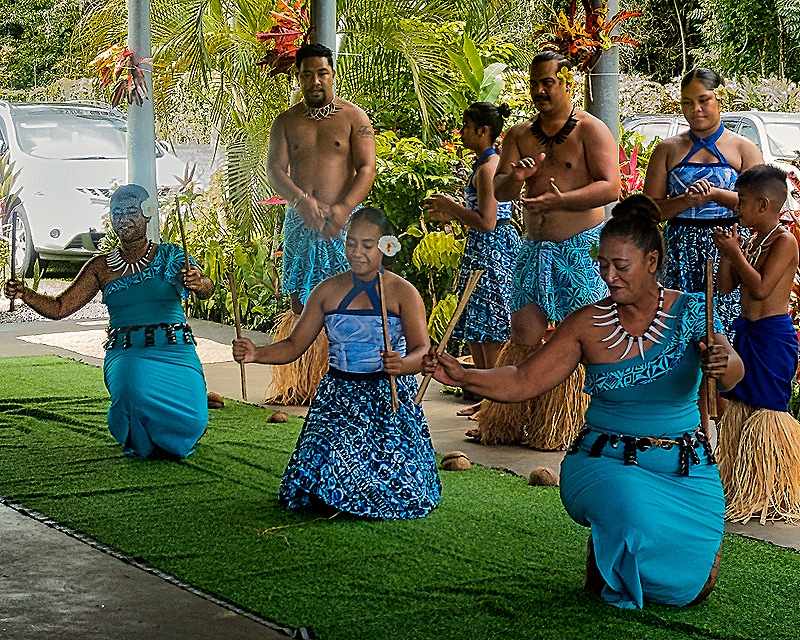
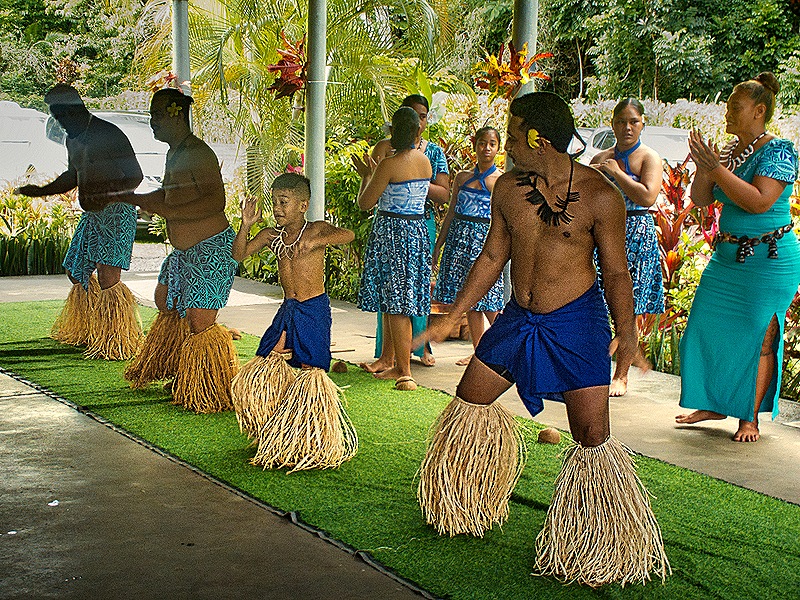
After we toured the house there was a dance performance on a large porch in the back of the house. It began with a demonstration of what the Samoans call an ‘Ave Ceremony (called a kava ceremony on other Pacific islands). This ceremony generally involves formal speaking and shared drinking of a liquid made from a root of some kind. One of the dancers sat on the ground with a bowl filled with the ceremonial drink, which was given to members of the audience who volunteered. It was scooped from the bowl into a piece of coconut shell and taken to the volunteer, then returned and swished in a bucket of water, filled again and distributed to the next volunteer, perhaps half a dozen times in all. We are sure it was safe enough and no one seemed to get sick, but since the pandemic we are more leery about shared food and utensils than we once were.
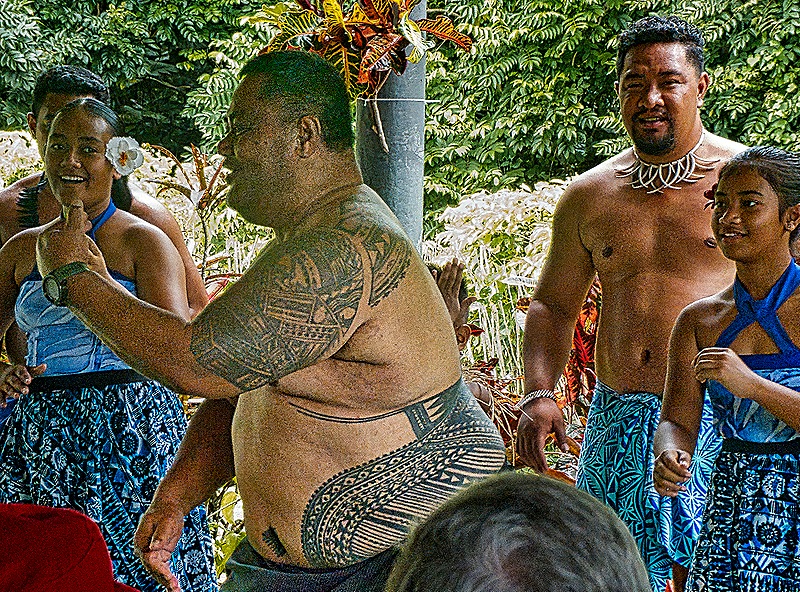
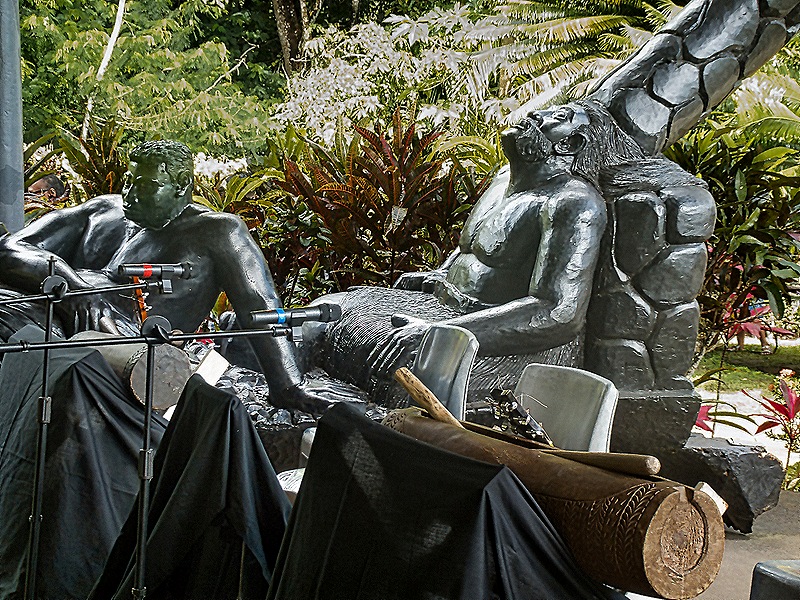
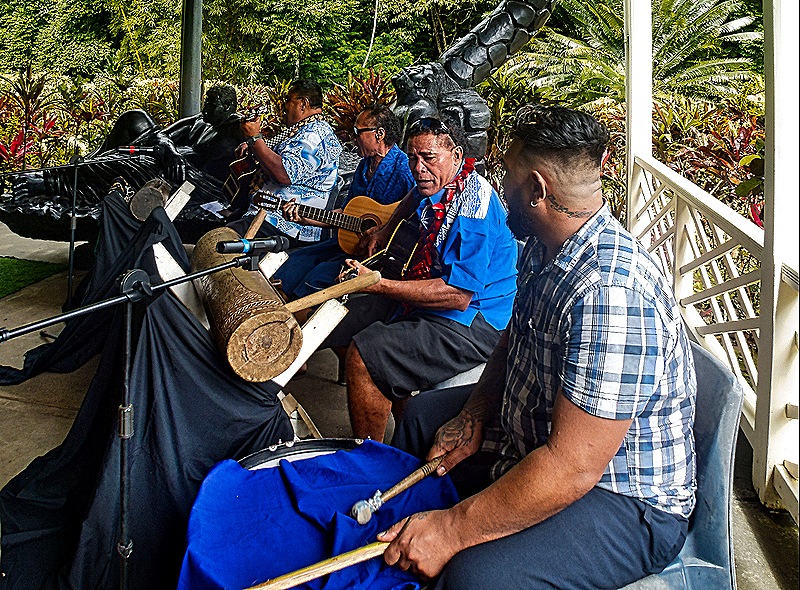
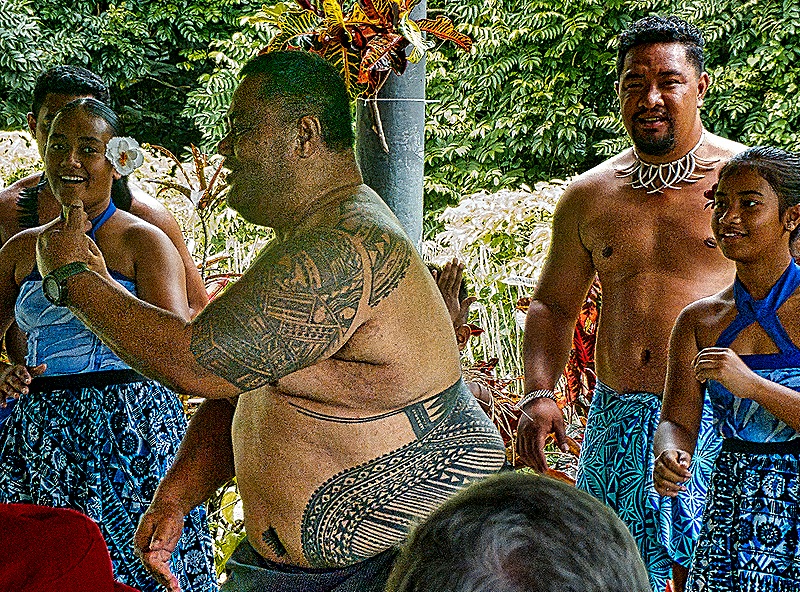
The dancing was very interesting, mostly performed in rows, sometimes standing and sometimes kneeling. There was a rhythmic band accompanying and at the end a rather hefty band member stood up, removed his shirt (revealing extensive tattooing) and danced. The band sat next to an interesting sculpture of two men sitting and seeming to be enjoying the music.
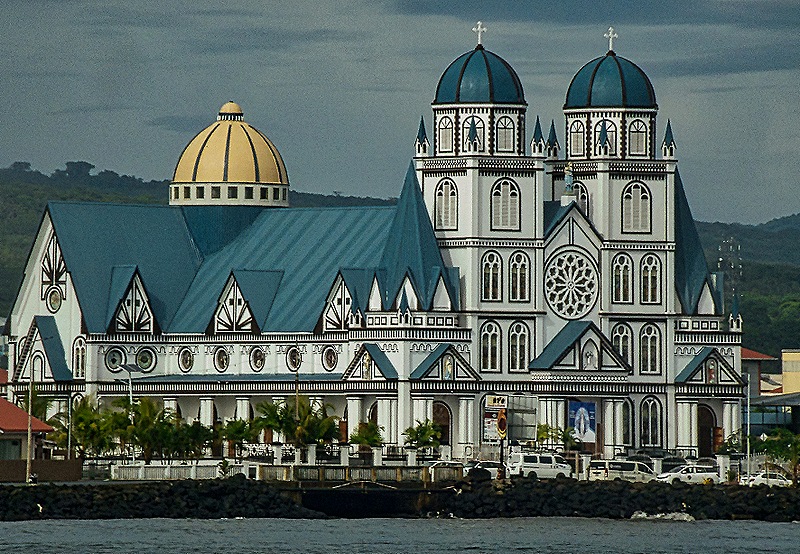
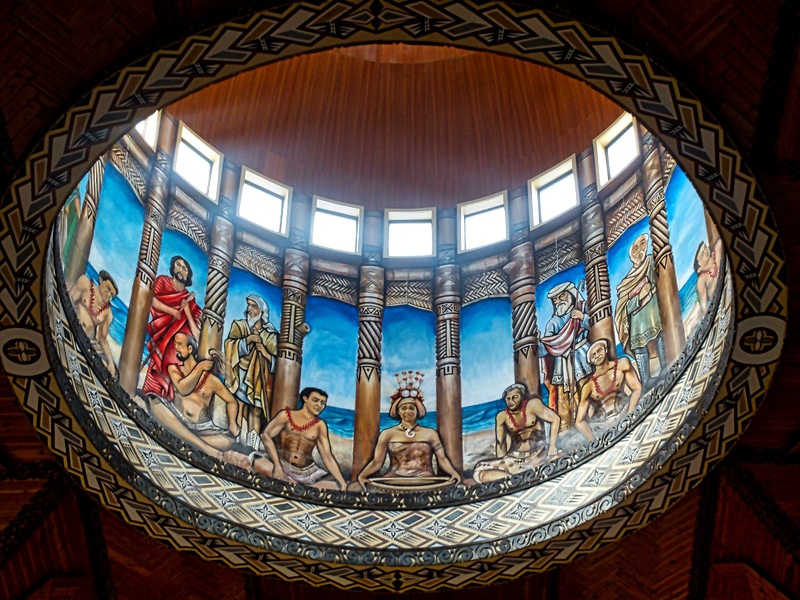
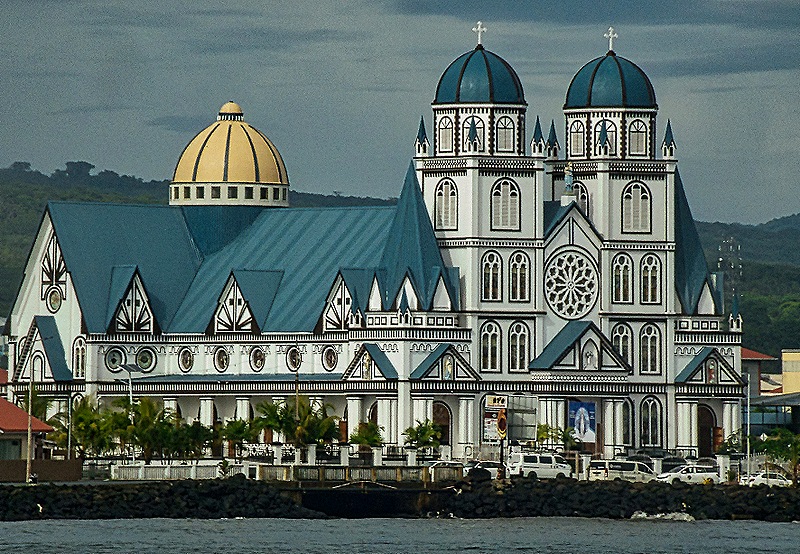
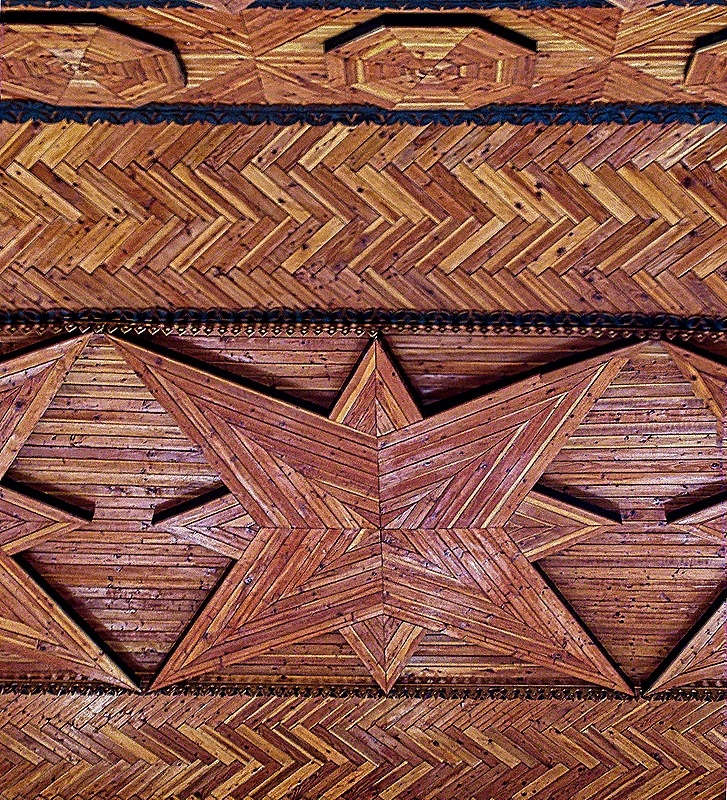
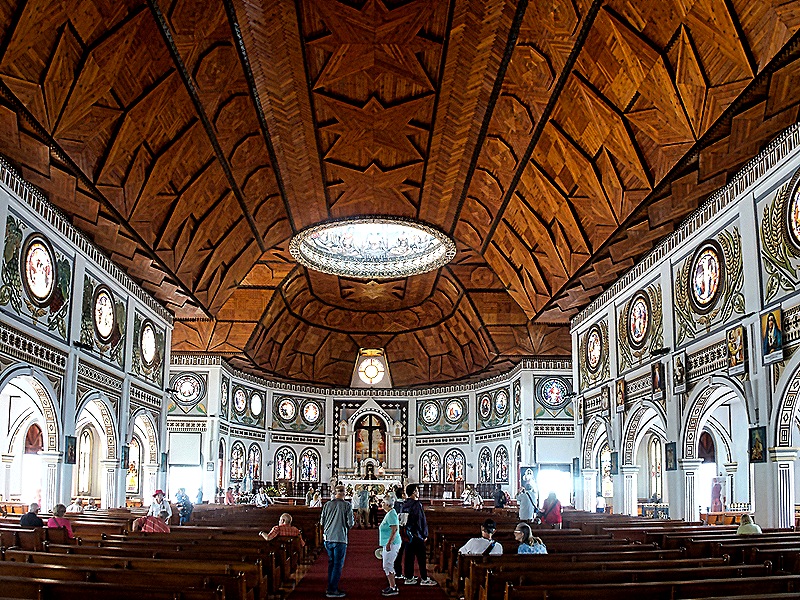
Our next stop was at the Immaculate Conception Cathedral, which was easily the most distinctive building we saw in Apia. There has been a church on this spot since 1857 and in 1884 it was replaced by a larger one. The 2009 earthquake damaged it beyond repair and it was replaced by this much larger one (with a capacity of 2,000 compared to the old church’s 400) that opened in 2014. The Apia archdiocese was created in 1966, so that is presumably when the church on this spot became a cathedral. We had a good view of it from the ship across the harbor. It is white with a deep blue roof and towers on either side of the front entrance topped by blue domes. There is a gold dome over the apse, the inside of which has a painted depiction of the Last Supper, with apparently Samoan figures seated around an ‘Ava bowl. It also has a very nice rose window near the entrance with a pipe organ surrounding it . The large interior is dominated by a stunning ceiling of imported mahogany carved into patterns resembling traditional Samoan male tattoos.
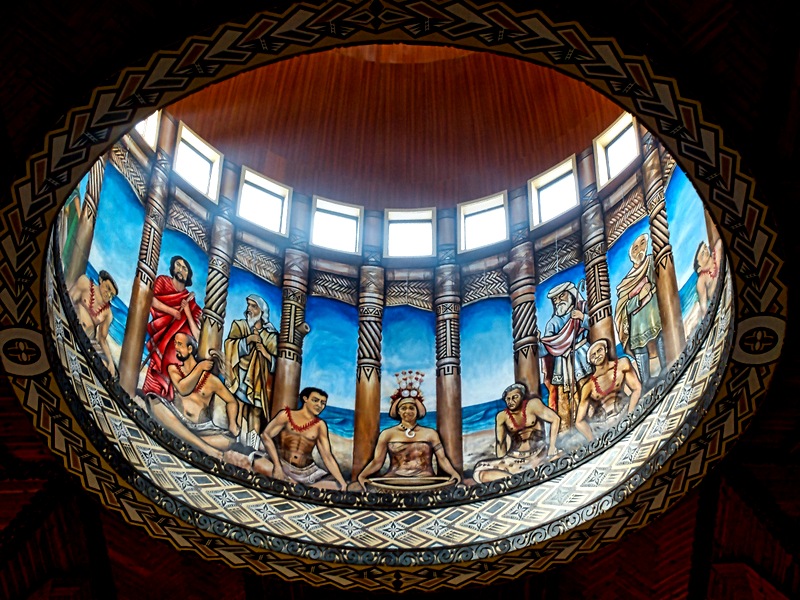
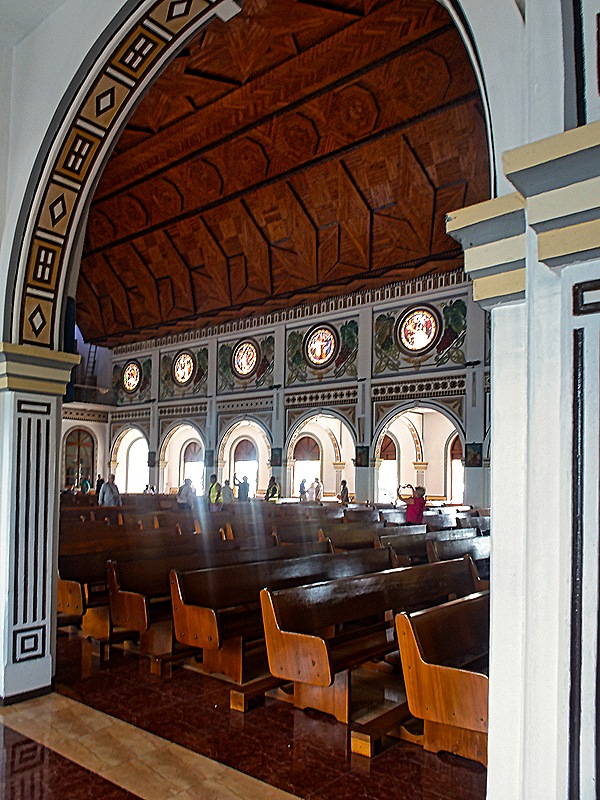
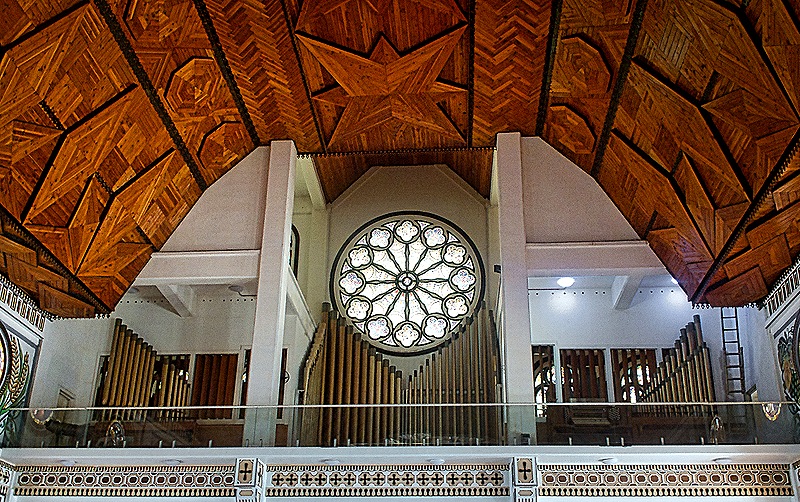
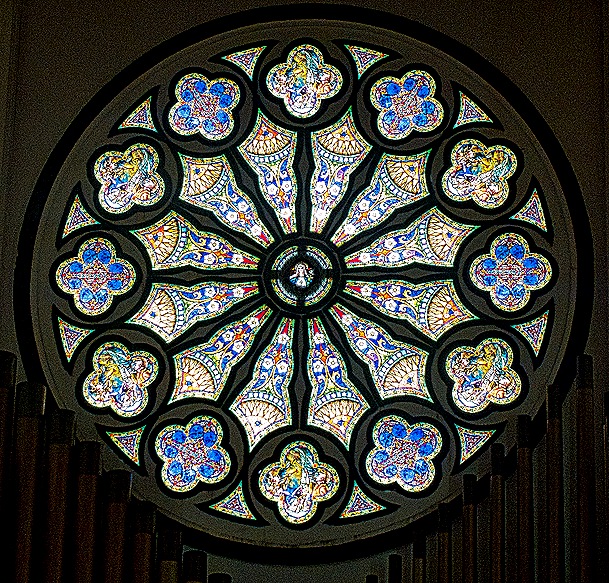
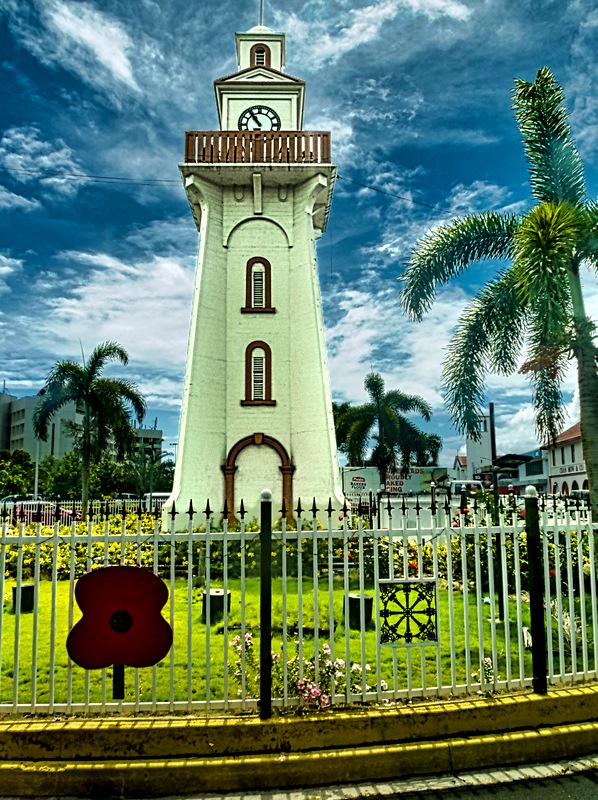
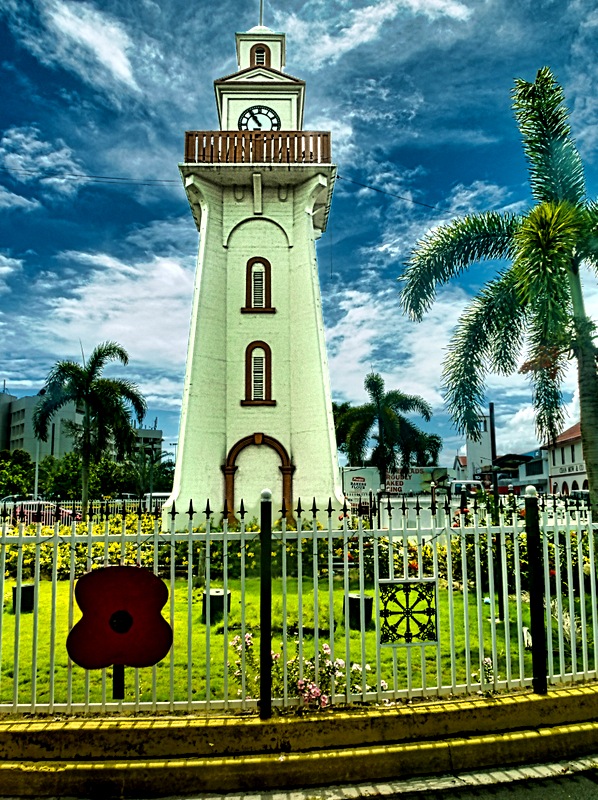
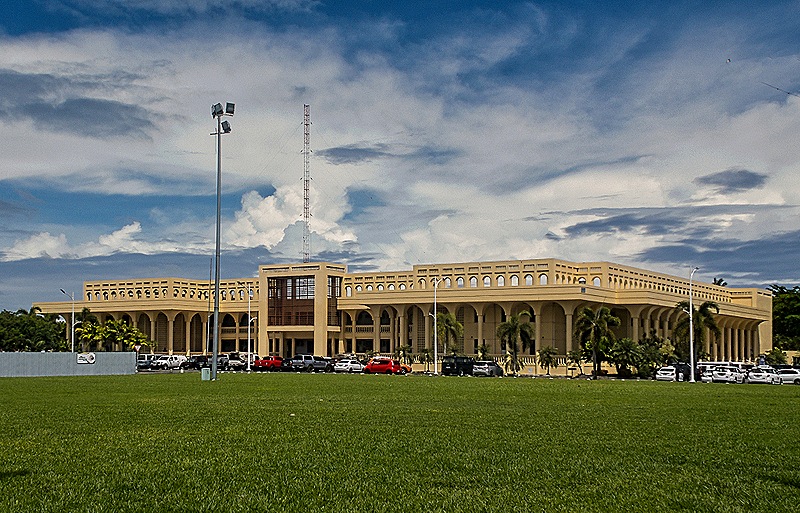
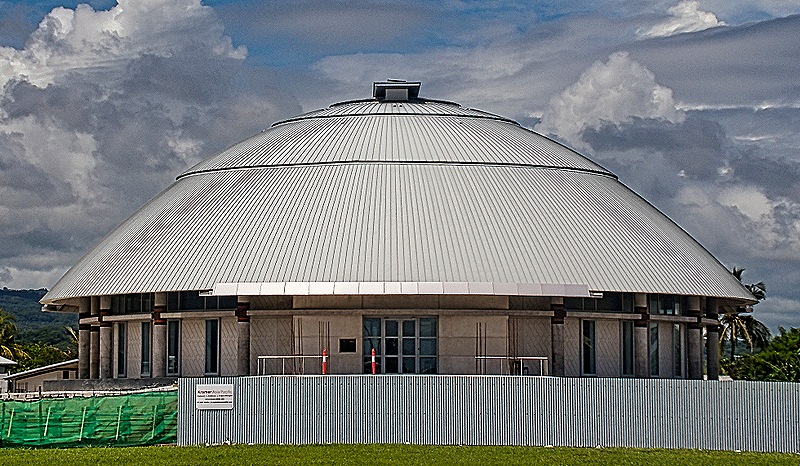
We drove across town to the Mulinuʻu peninsula. Apia’s clocktower was in the center of a traffic circle on our path through the central city. It was erected in the 1920”s as a memorial to Samoans killed in World War I and to the many Samoan victims of the influenza epidemic at the end of the war. Mulimu’u has been an administrative center of Samoa for many years and today the legislature and the main courts (among other buildings) are located here. We saw the interesting round and domed parliament building there, the design of which was based on the traditional Samoan meeting house called a Fono. Opened in 2019, this building (called the Maota Fono) was built by the Australian government to commemorate Samoa’s 1972 independence. Near the Fono was the new courthouse housing three levels of Samoan courts. Opened in 2010 this building has already undergone expensive repairs and renovation to correct severe deterioration. We thought this wide and low beige building looked rather institutional (after all, it is an institution) in contrast to the neighboring Fono.
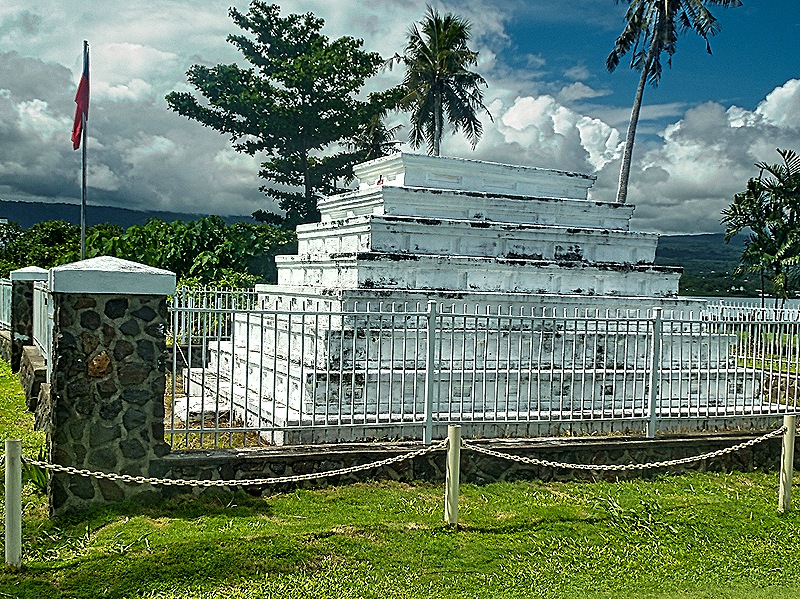
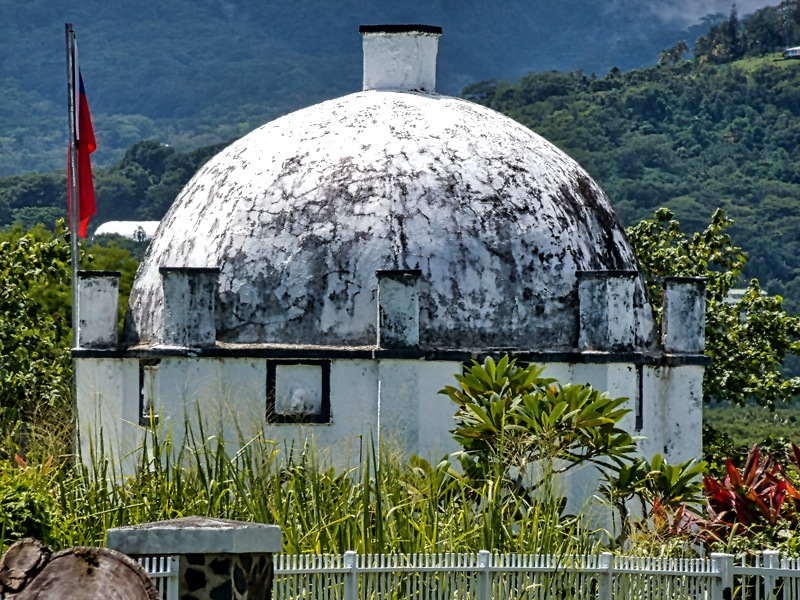
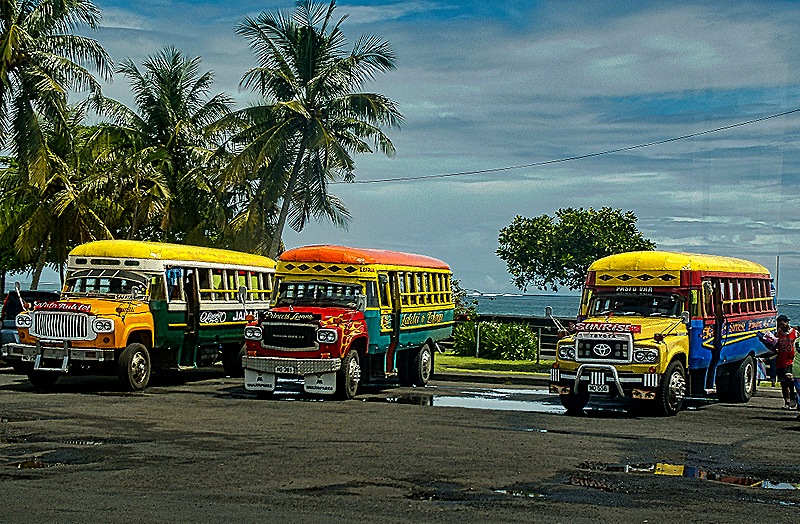
We continued on to the site of several tombs of prominent people (if not royalty). One looked like a step pyramid and the other was domed, both painted white and maybe 15 feet tall. They were located in a very nice green area bordering the ocean with many palm tees and tall grasses. Nearby was a parking lot with several buses painted in bright rainbow colors.
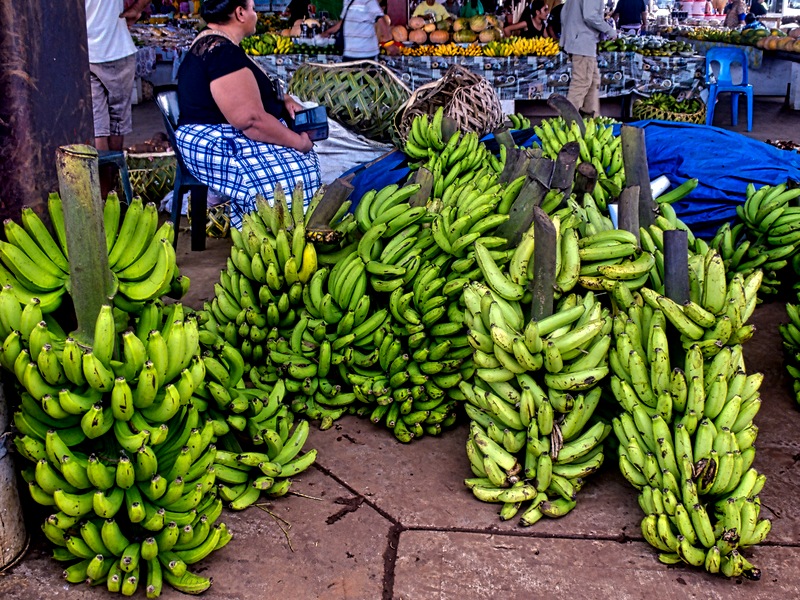
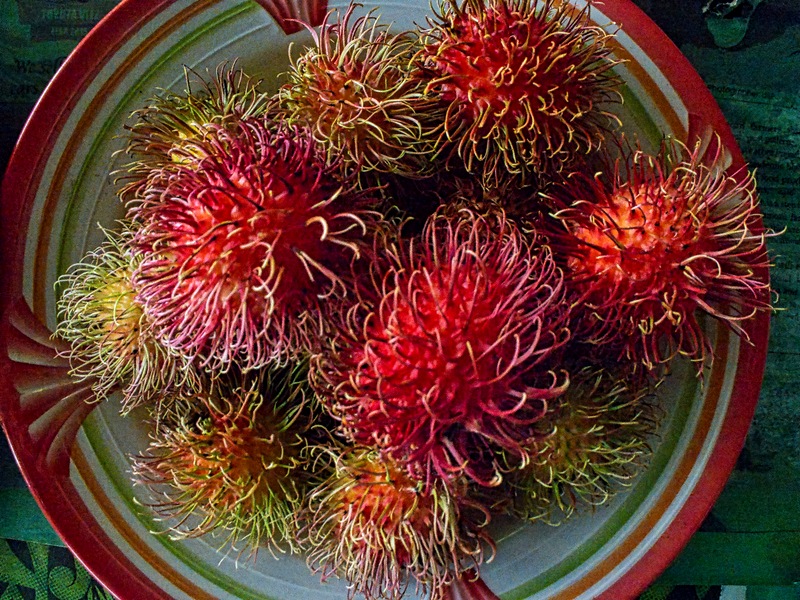
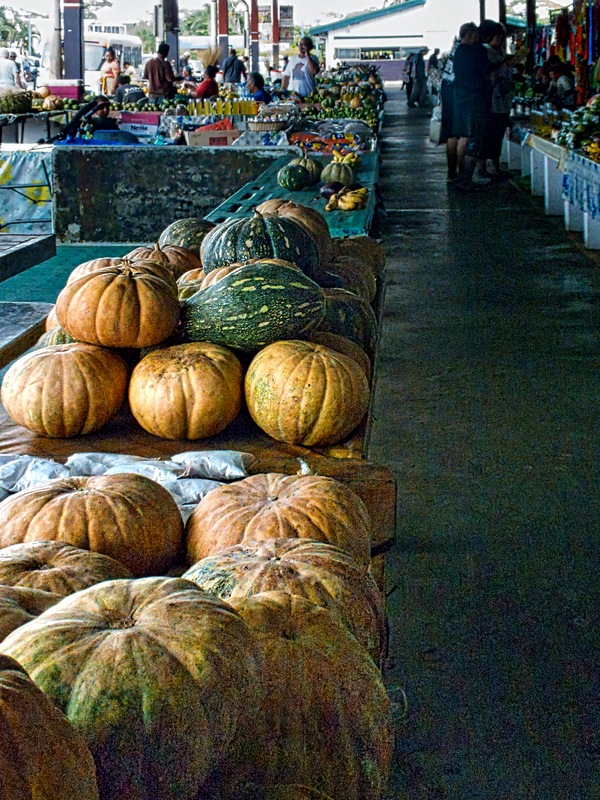
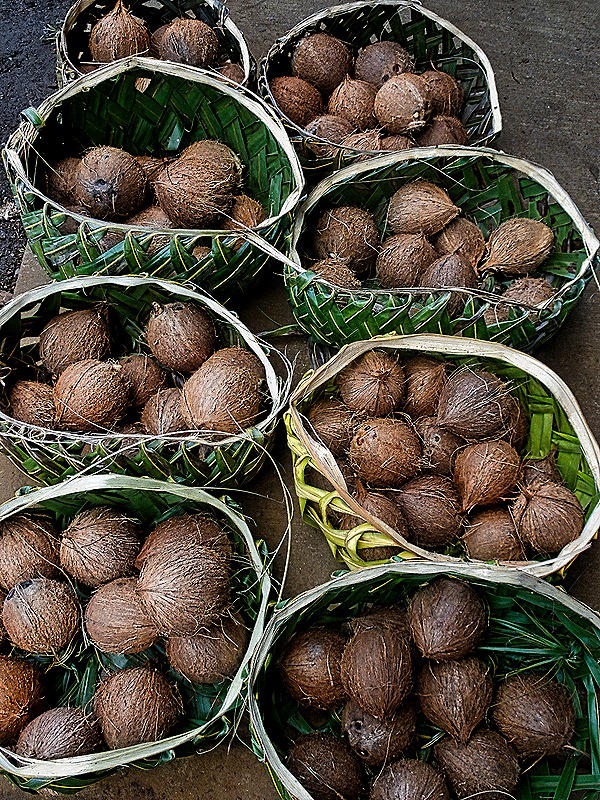
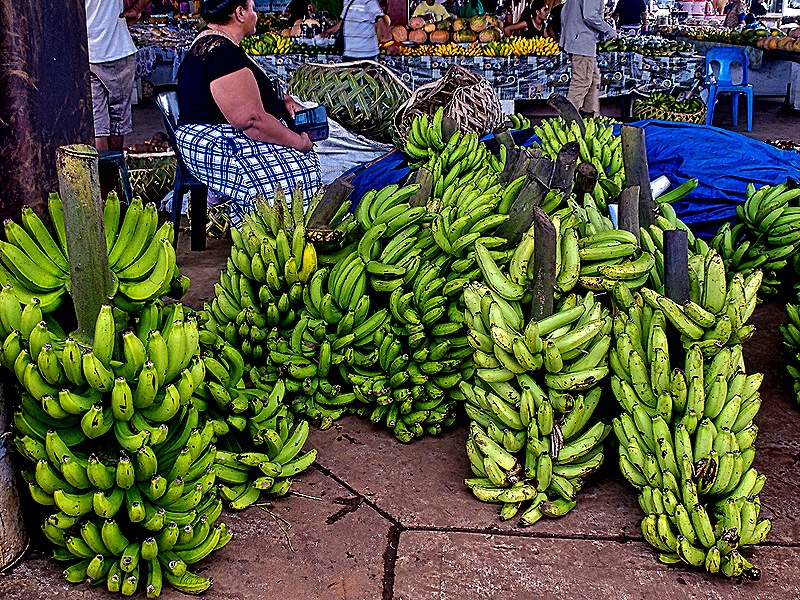
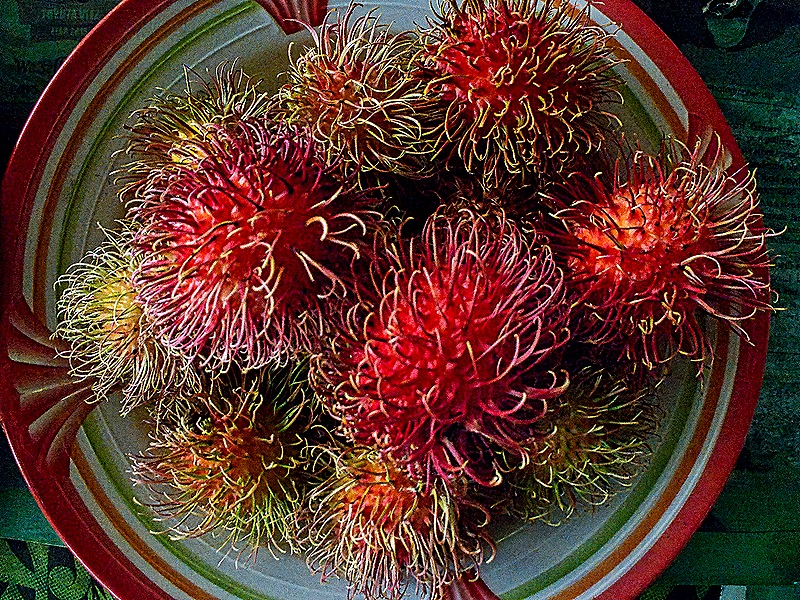
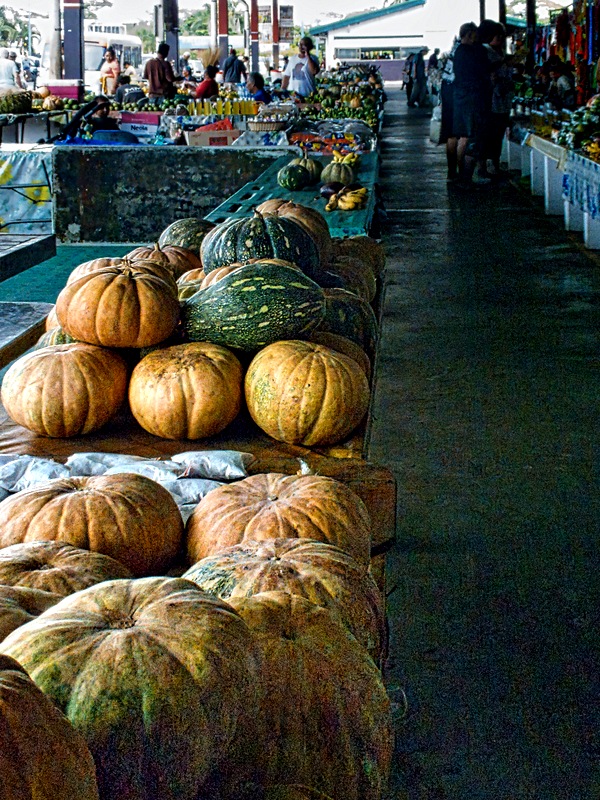
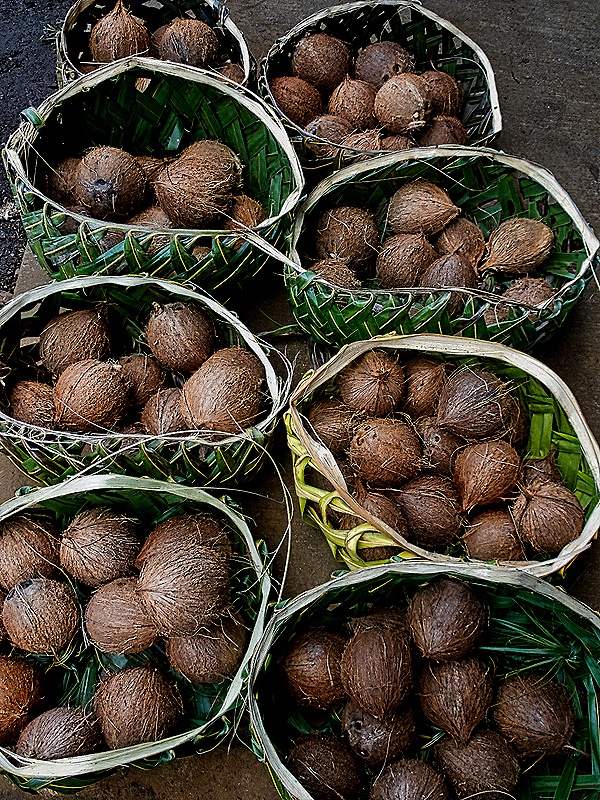
Finally, we drove back into town to visit the Fugalei produce market. This is a huge open air market under a roof with individual vendors selling mostly produce (although there are also some handicrafts and clothing vendors). We didn’t buy anything here . . . not only were we not in need of fresh produce but we had no Samoan currency, which is the only payment accepted at the market. We did enjoy exploring it though.
We returned to the ship. This was the end of our Samoan sojourn and we sailed away before dinner for Fiji.
Pago Pago, American Samoa 2026
After five days at sea we reached Pago Pago (pronounced “Pongo Pongo”) on January 19. Funny schedule, with only 3 ports in the first 15 days of the voyage, but Pago Pago is pretty far away from San Diego. Pago Pago is the capital of American Samoa, which is the southernmost populated territory of the United States and the only American territory south of the equator. Pago Pago sits on Tutuila, the largest of the 7 islands making up the eastern part of the Samoan archipelago more than 2,000 miles southwest of Hawaii. It has a huge mountain lined harbor that is one of the deepest in the South Pacific through which we arrived this morning. The total land area of these 7 islands is about 77 square miles, a little larger than the District of Columbia, and their population is less than 48,000, about 3,000 of whom live in greater Pago Pago.
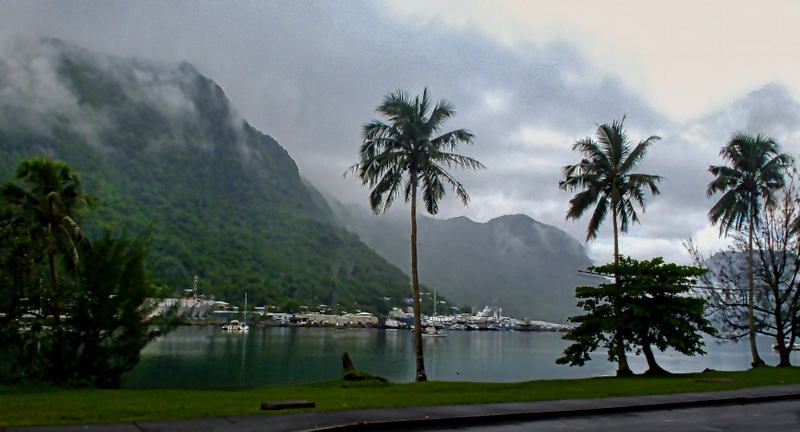
Samoa has been inhabited for about 4,000 years, originally by Polynesian navigators. Sporadic contacts with Europeans began in the late18th century, mostly whalers, missionaries and military vessels. This led ultimately to the Tripartite Convention of 1899 among the United States, Germany & Great Britain that recognized American control of the eastern part of the Samoan Archipelago (now American Samoa), German control of the western part (today the independent country of Samoa), and British control of Tonga and a few other Pacific islands. American Samoa has been a US territory ever since, its inhabitants recognized as US Nationals (but not citizens, apparently at their own request).
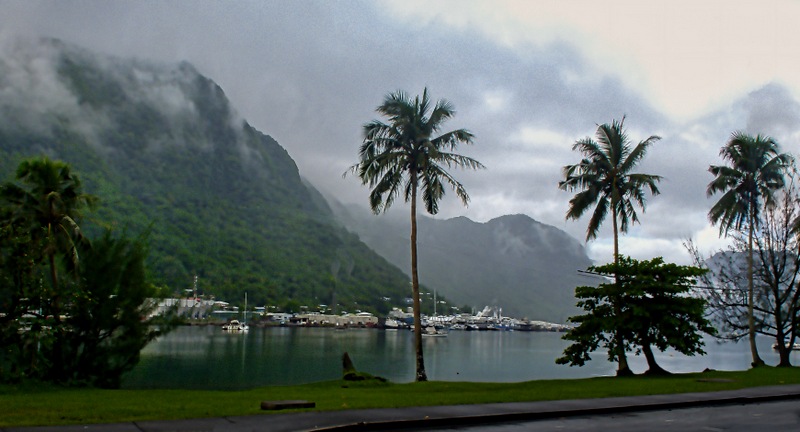
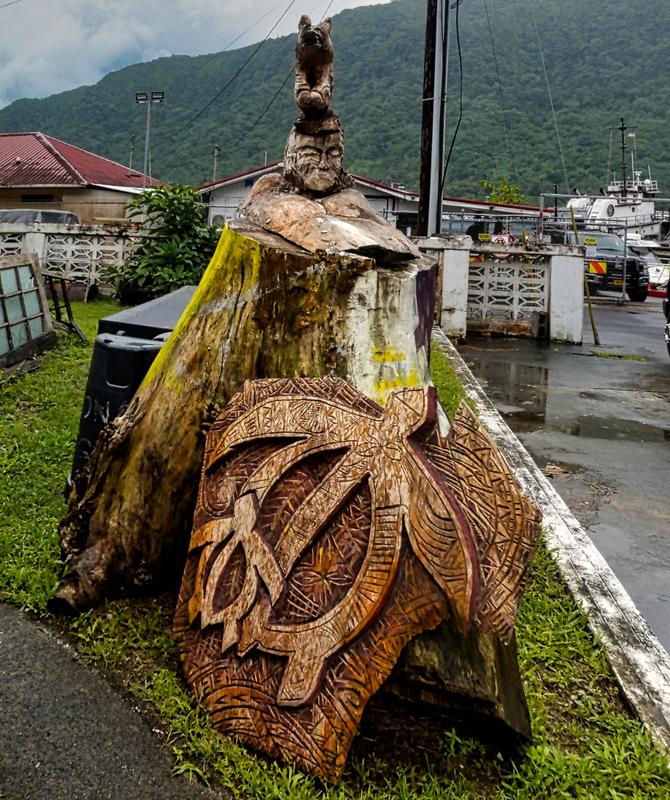
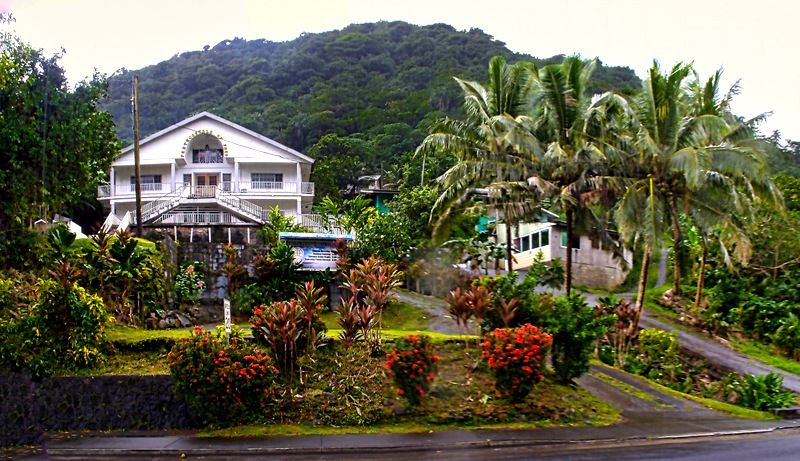
We left the ship after breakfast to explore the city on foot. As you can see from the picture above, however, it was a gray and rainy day, getting more so as the day progressed. Our first stop was the Jean P. Haydon Museum, founded in 1970 as the Museum of American Samoa, which was just outside the port. An interesting sculpture was outside near the street in front of the museum.
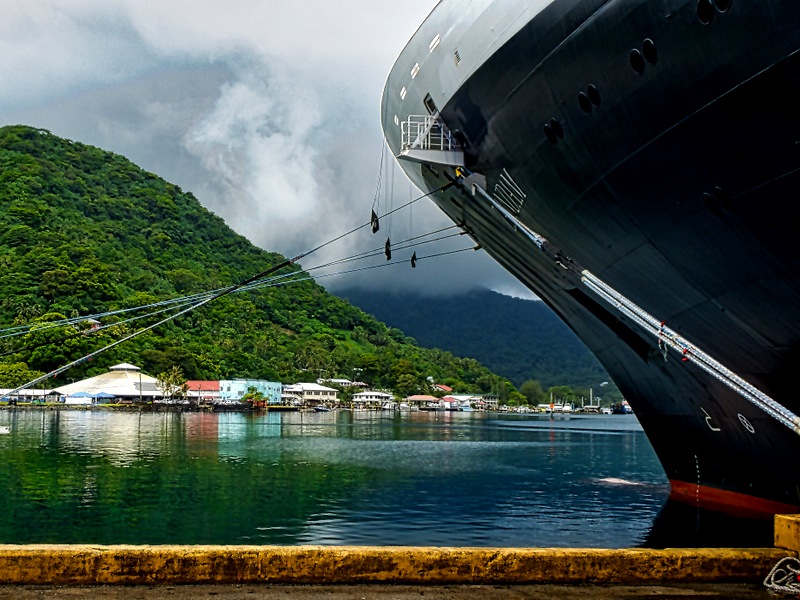
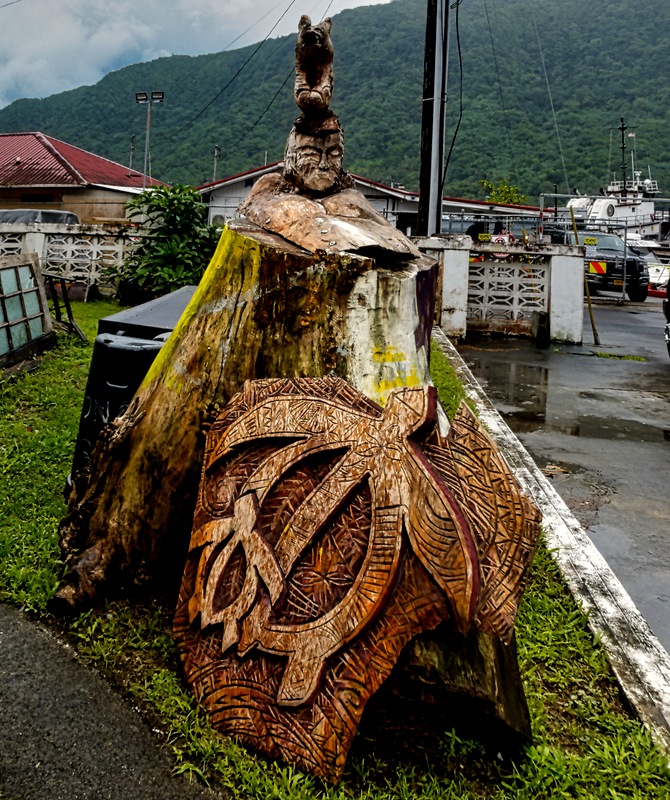
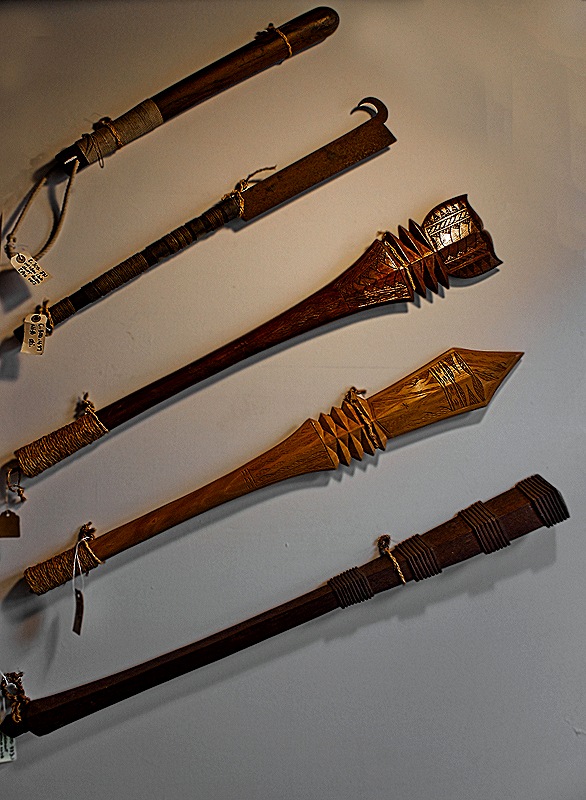
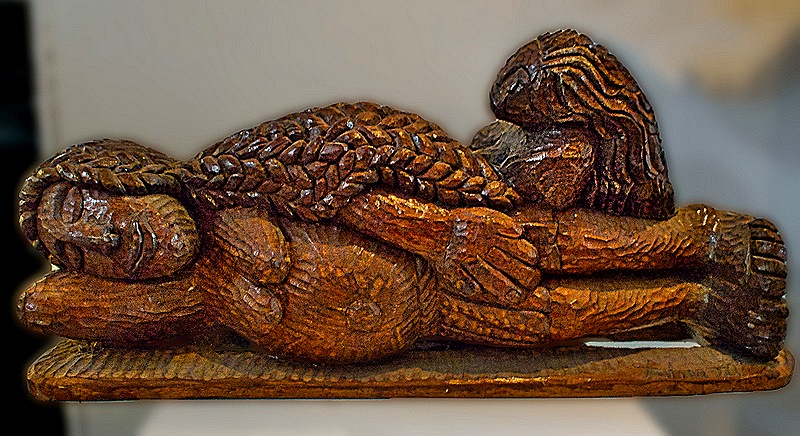
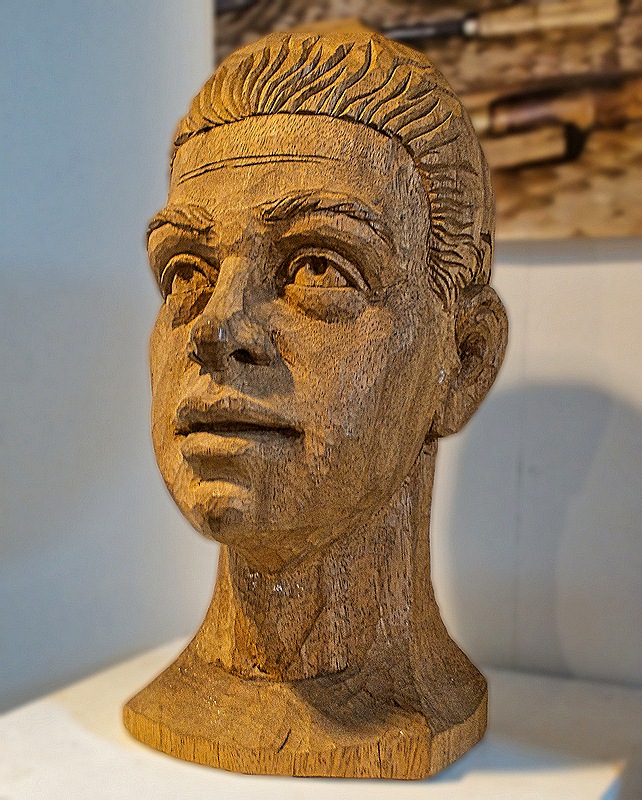
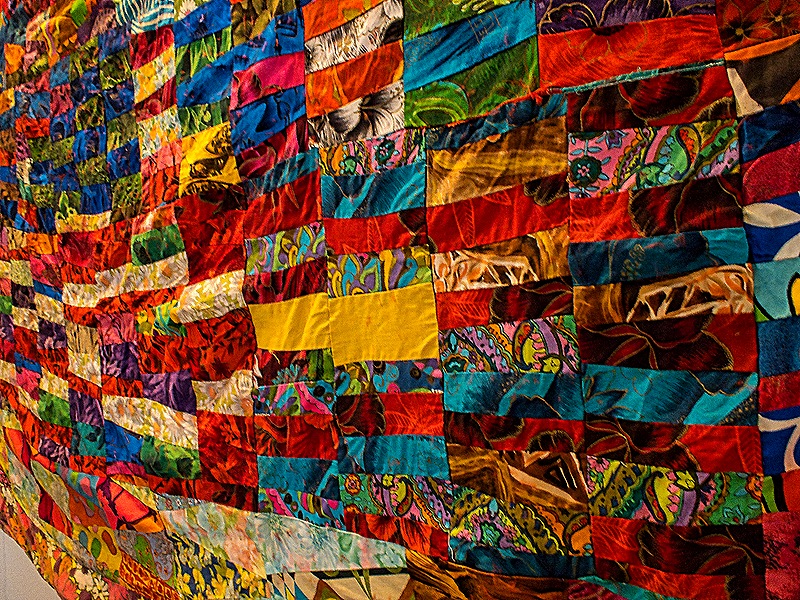
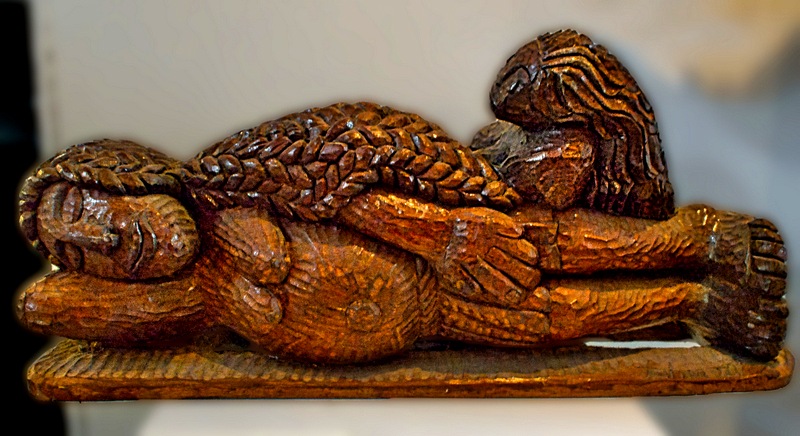
The concrete building housing the museum was built in 1917 and served for more than 30 years as the commissary of a US naval installation, then for another 20 years as the local post office before becoming a museum in 1970. Its displays of Samoan artifacts were quite interesting although only a very small part of its collections were to be seen in the few rooms open while the building is undergoing renovation. Among the items we couldn’t see were some moon rocks sent by the US government in recognition of American Samoa’s participation in the Apollo program, during which seven of the space capsules splashed down nearby. Notable to us among the artifacts on display were elaborate wooden sculptures, a collection of war clubs and a very large and colorful quilt.
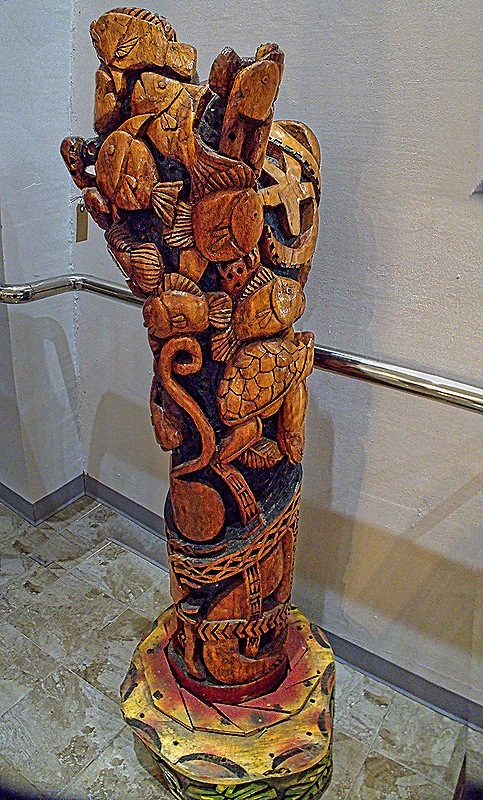
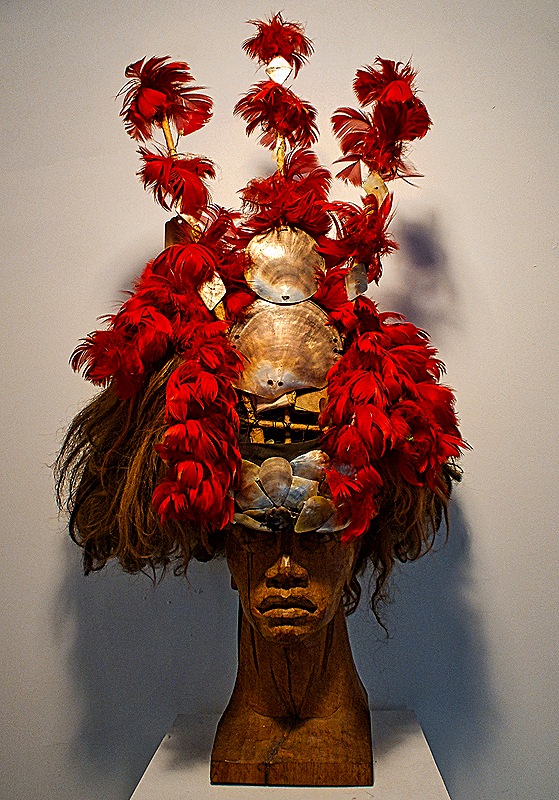
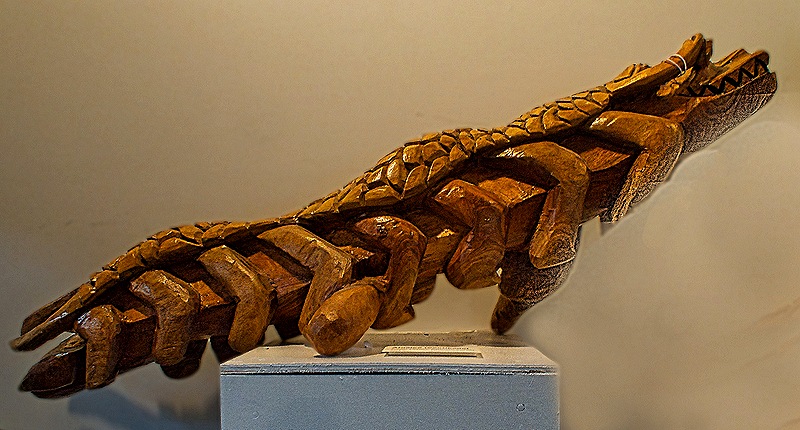
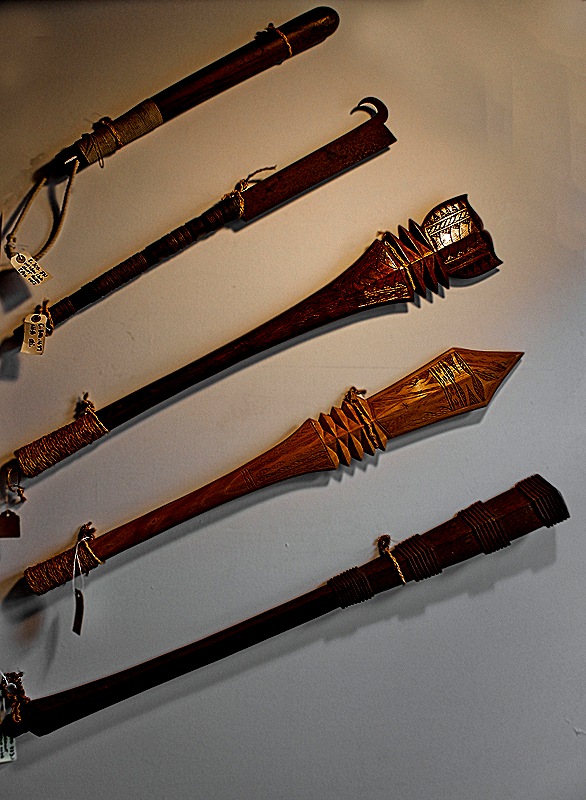
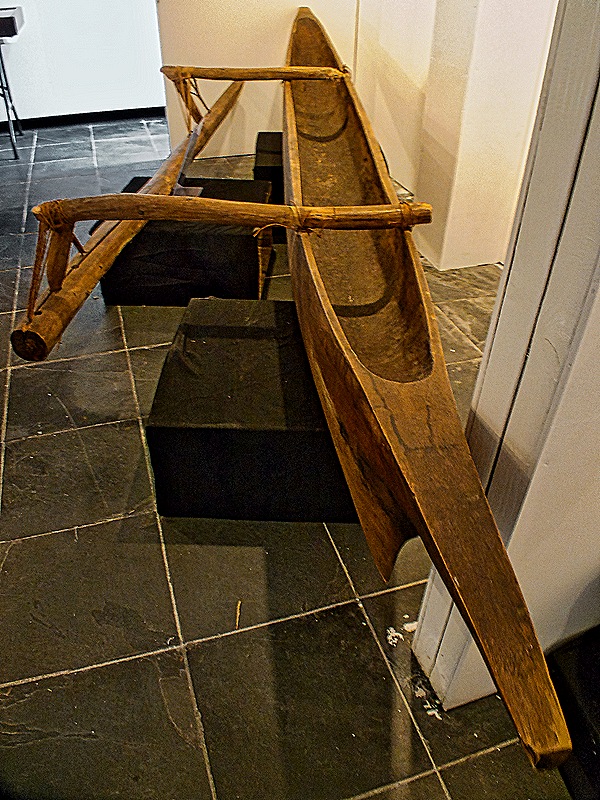
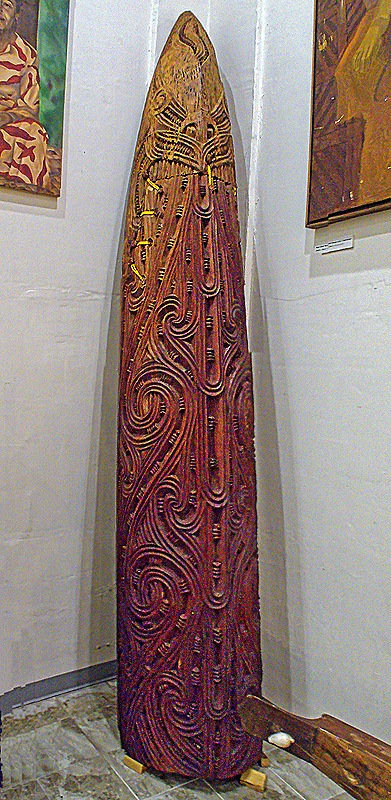
We saw two canoes, one a dugout outboard canoe and the other an intricately carved Maori canoe presented by them to the museum in 2008.
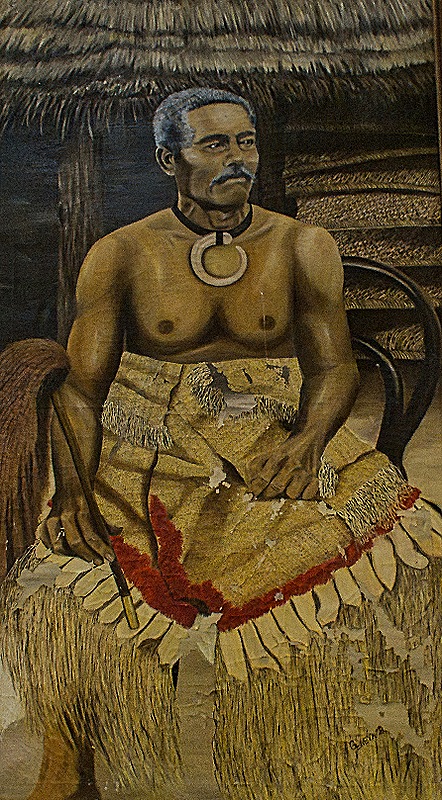
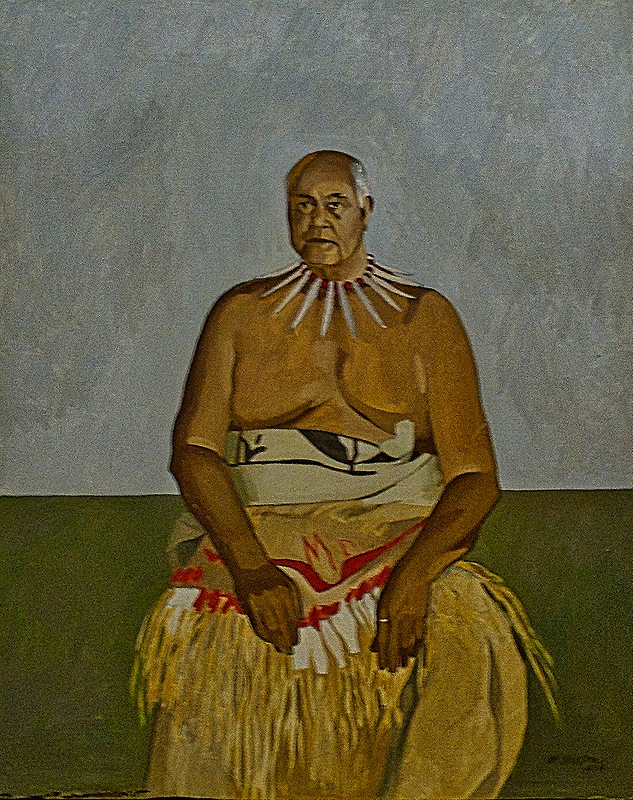
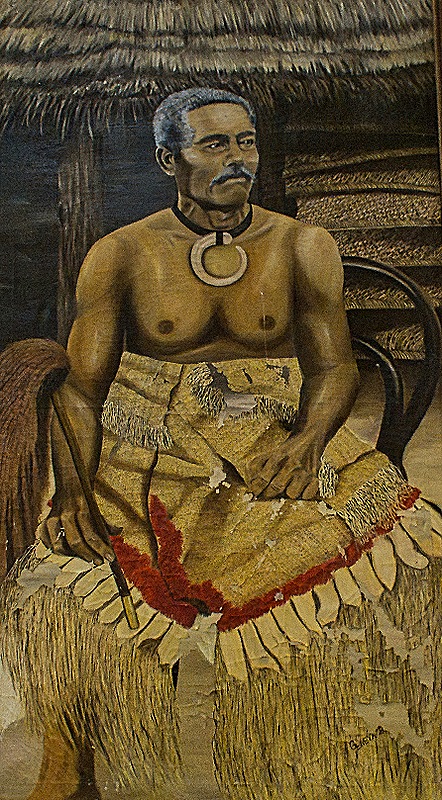
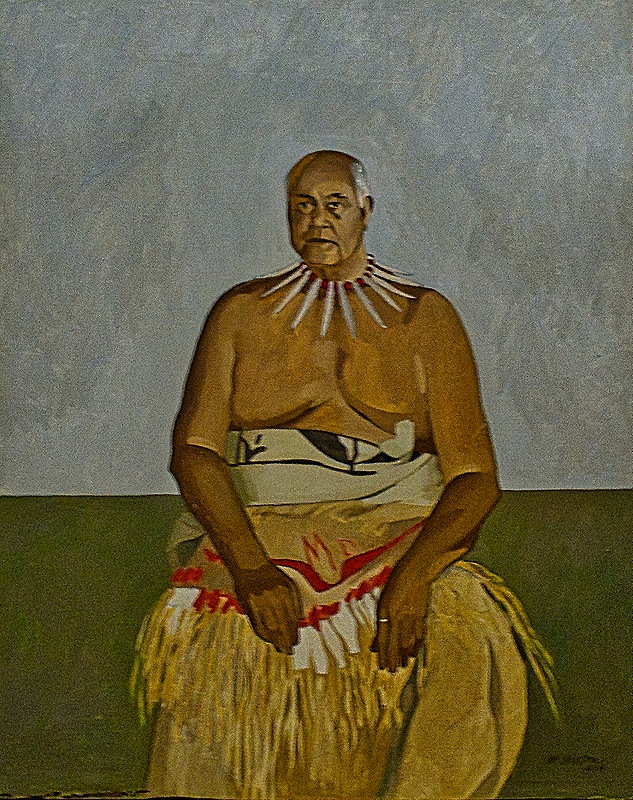
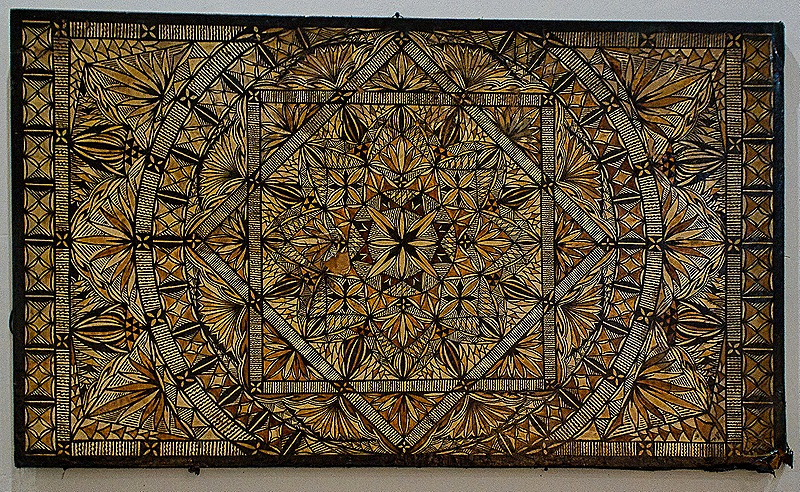
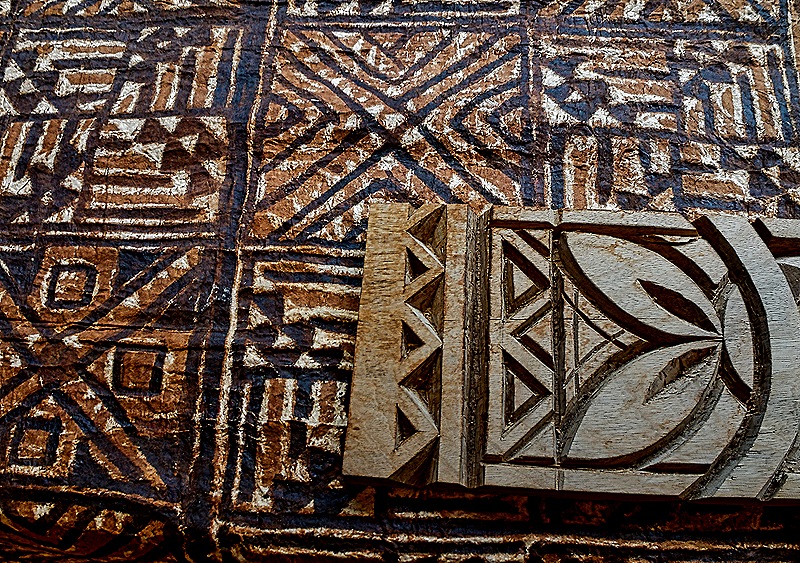
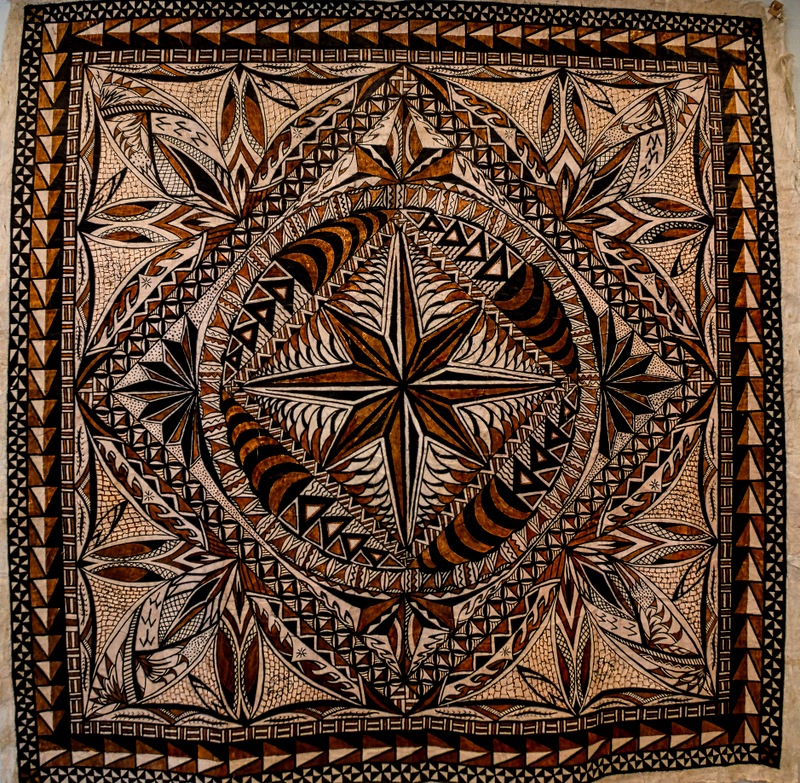
Several nice paintings of Samoan chiefs were on the walls. And there was a large Siapo, a Samoan art of dying tapa cloth with a detailed design transferred from a carved wooden board.
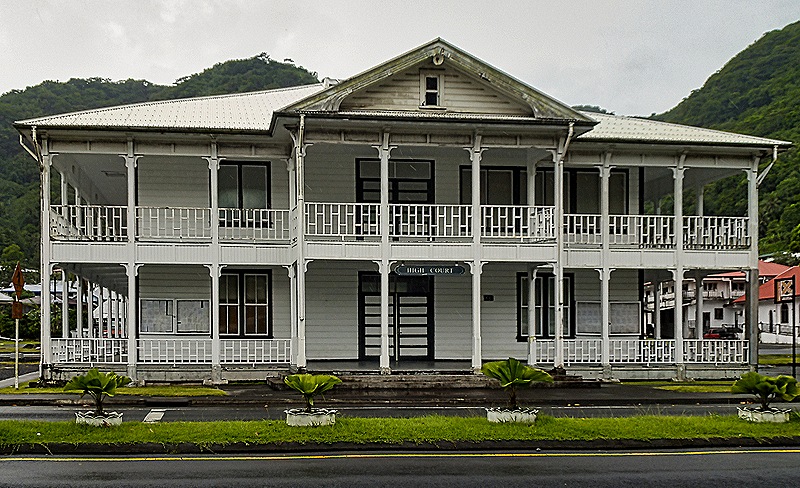
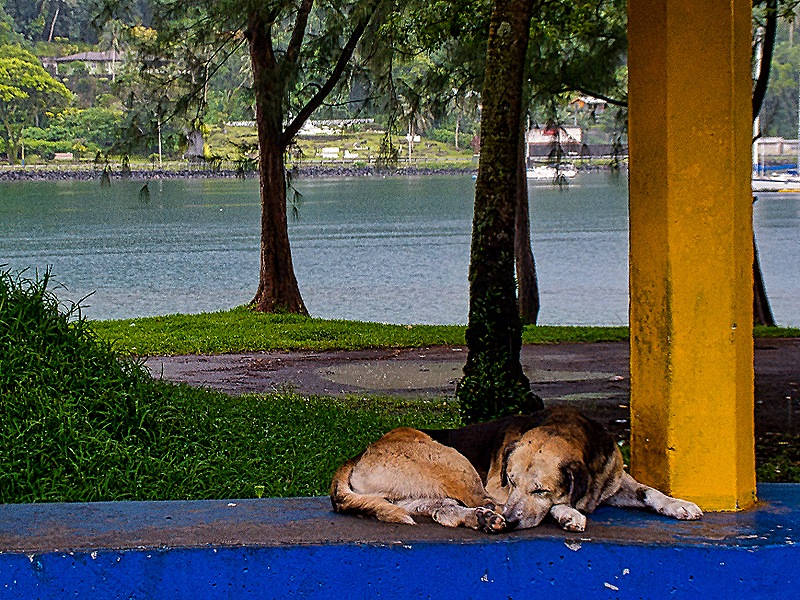
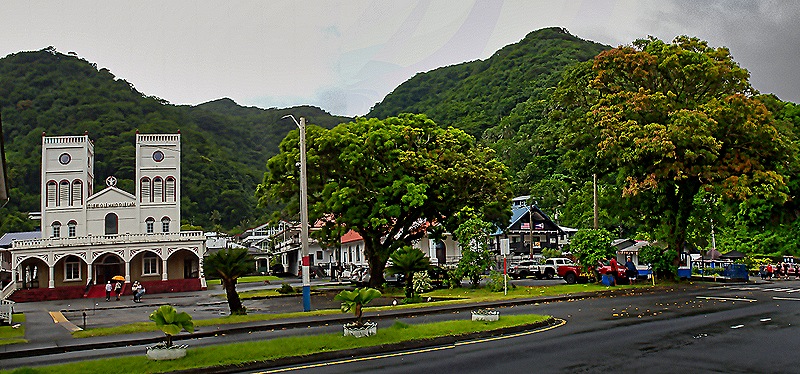
The next place we wanted to visit was the visitor center for the Samoa National Park. Most of this walk was in rain or at least drizzle. We stopped into the small market and a couple of stores, mostly to get out of the rain. On the way we passed the High Court (whose justices are appointed from Washington and whose judgments are reviewable directly by the US Supreme Court) and the Congregational Christian Church of American Samoa. We passed some beautiful gardens and a park bordering the bay with a dog relaxing on what appeared to be a bus stop bench.
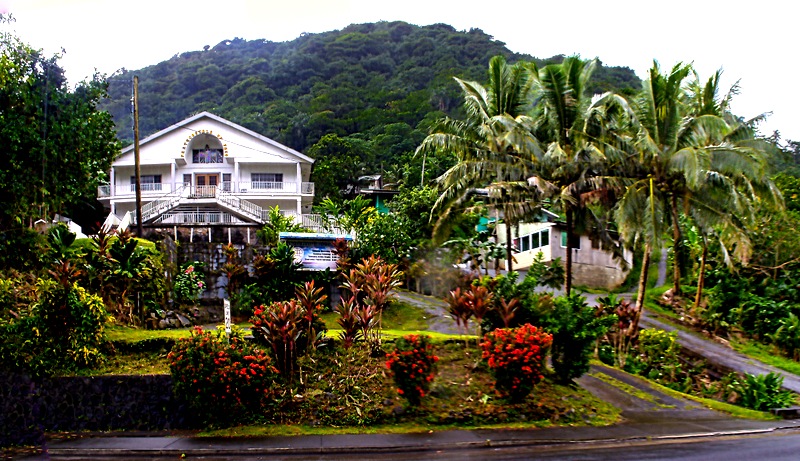
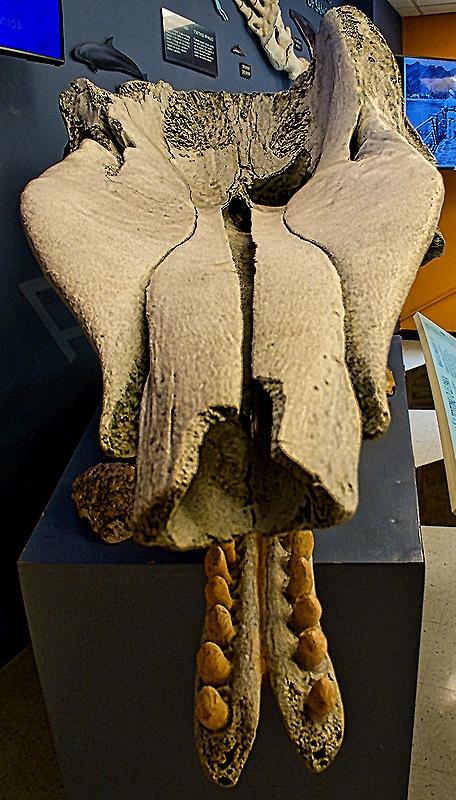
Unusual in our experience, the National Park visitors center is nowhere near the park itself. Instead it is on the second floor of a two story building in town. We have read that there was a tsunami in 2009 that caused a great deal of damage here, including wrecking the park visitor center, so perhaps it moved to this new location after that. Anyway, it was a long flight of stairs up to the visitor center, which was fairly small but packed with interesting and informative exhibits. Highlights included a movie about the making of tapa cloth and siapo, which involve days of very exacting work by several people. It explained, among other things, that tapa cloth is made from the bark of certain young trees, scraped clean with clam shells and softened in water. Tapa cloth is made primarily in Samoa, Fiji and Tonga, but also on some other Polynesian islands. On display were some siapos along with carved boards used to apply the dye. Also interesting was the skull of a sperm whale that washed up on one of the islands in 2015. Many other exhibits were on display and there was (of course) a souvenir counter.
We asked directions to the library and also hoped to see a little of the national park. Both of these were in the opposite direction from the ship so we headed back that way. We saw some more interesting flora, but the rain increased steadily as we walked and by the time we reached the port we were pretty soaked. So we decided to call it a day and reboarded the ship for lunch and a change of clothes.
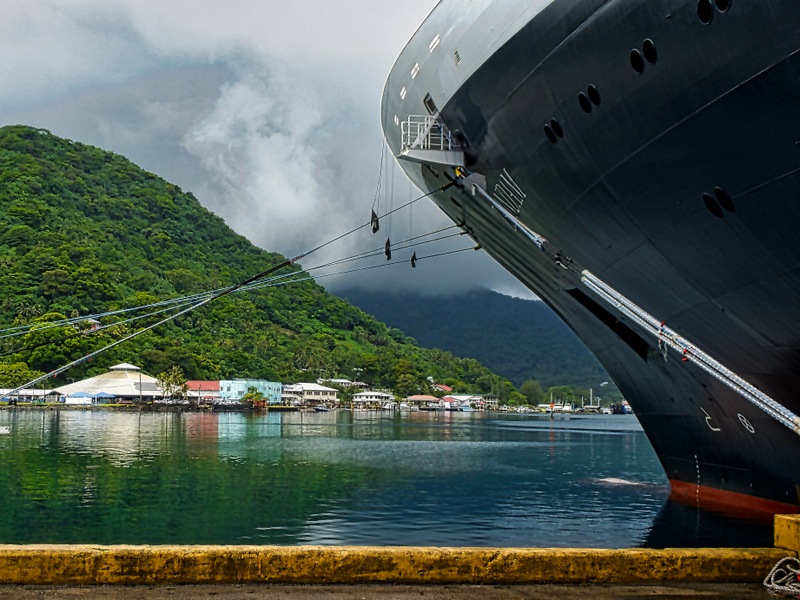
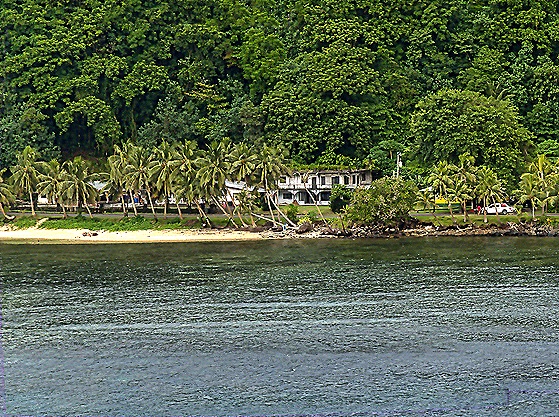
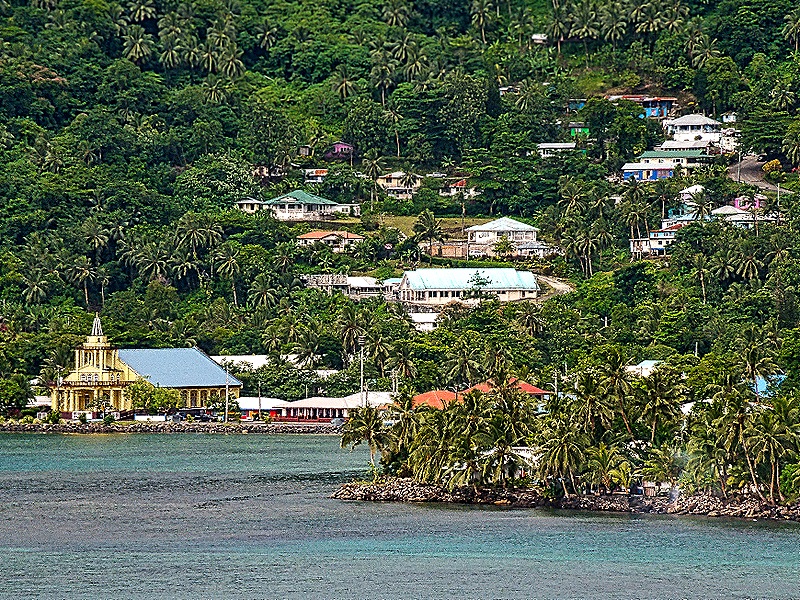
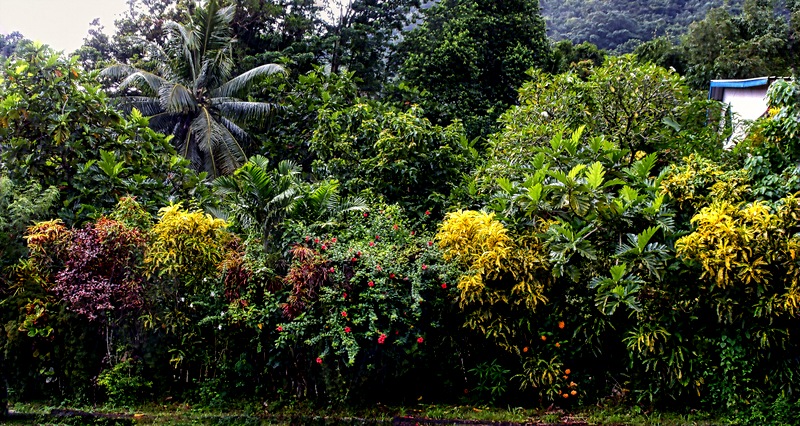
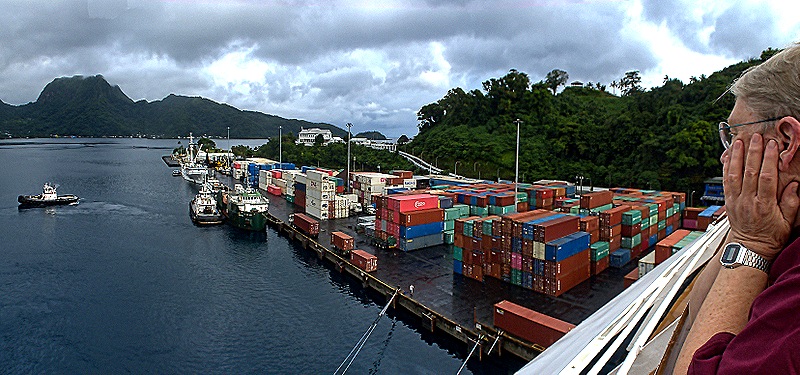
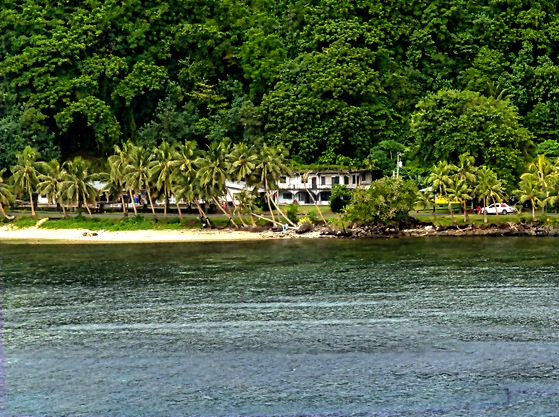
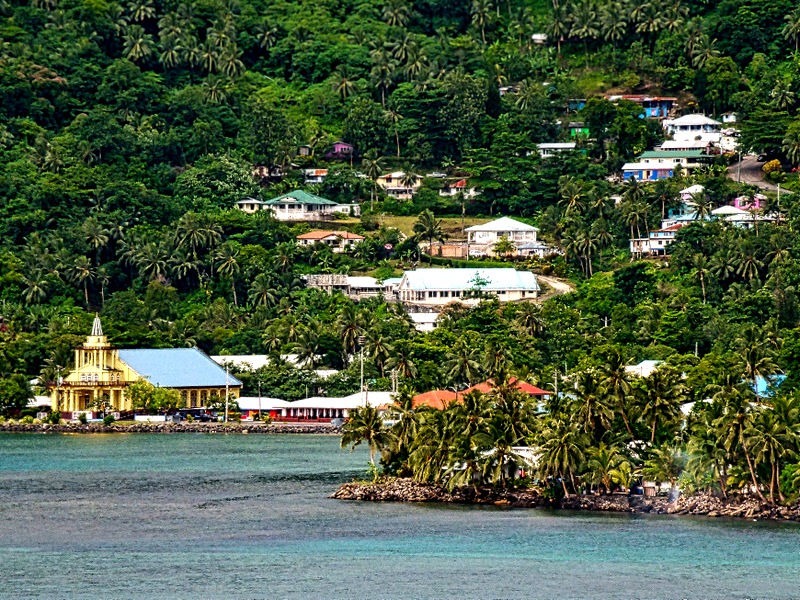
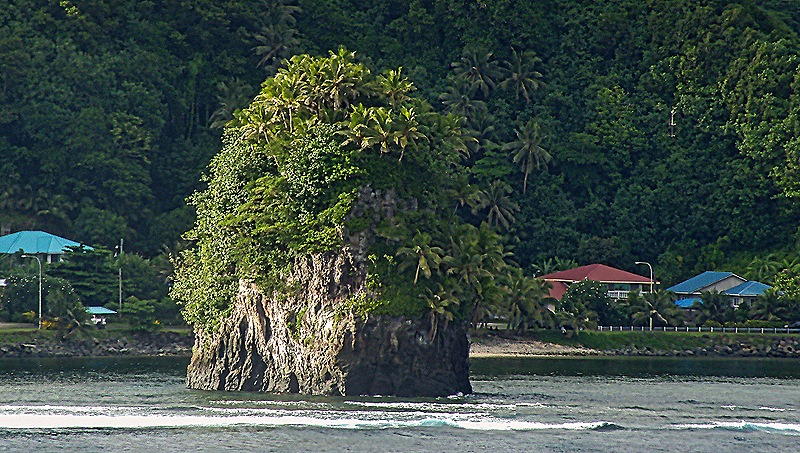
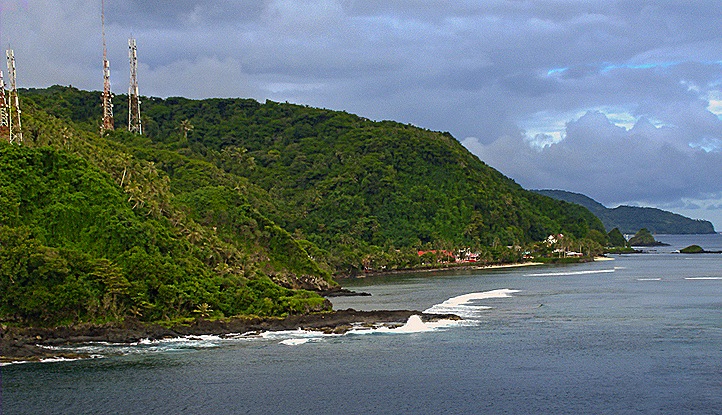
We sailed away before dinner while it was still light enough to see the harbor’s mountainous surroundings. We were docked right next to a relatively small container pier but could see the mountains beyond the large harbor. One particularly large mountain with an almost flat top is volcanic in origin and is called Rainmaker Mountain because it helps keep the wet weather over the harbor, making it the rainiest harbor in the world. The shore and mountains were quite lush with dense forests of green trees, shrubs and palms. We passed small villages along the water on land apparently cleared from the forests, one of which had a distinctive bright yellow church. As we reached the mouth of the harbor we passed one of the so-called flowerpot rocks. There are two of these, called Fatu and Futi, but we only saw one of them. Named after a couple from folklore whose canoes sank here, they stand as markers of the entrance to the harbor. Leaving the harbor we settled down for the night’s sailing to our next port, a whole 80 miles away.
Kahului, Maui, Hawaii 2026
January 13 found us docked in Kahului, mostly because (we think) it is a deep water port. We understand that before 2023 most cruise ships visiting this island docked in Lahaina, which was the capital of the Kingdom of Hawaii for 35 years and was reputed to be quite beautiful with much history to see. But in 2023 most of Lahaina burned to the ground and is still not ready to receive substantial numbers of visitors. Hence another port had to be found and Kahului was it. We understood that there was not a lot to see in this small city (although we did see local folks swimming and even surfing on a beach almost next to the ship). We had not been able to visit Volcanoes National Park near Hilo on our last visit to Hawaii, so we decided to take an excursion to the top of Haleakalā, a dormant volcano in Maui.
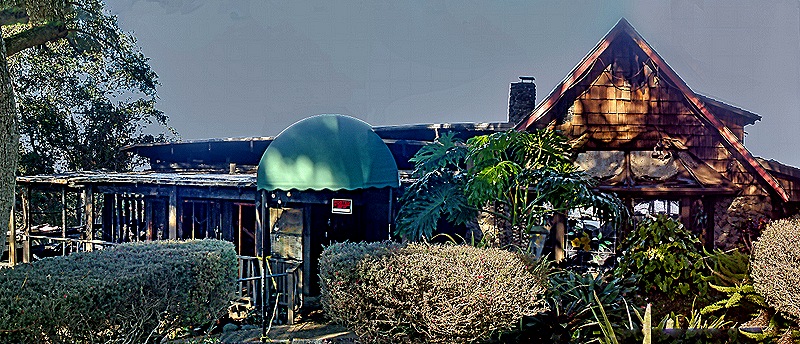
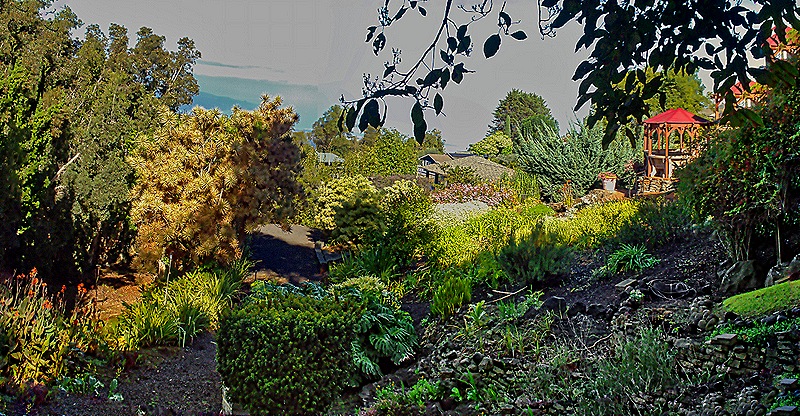
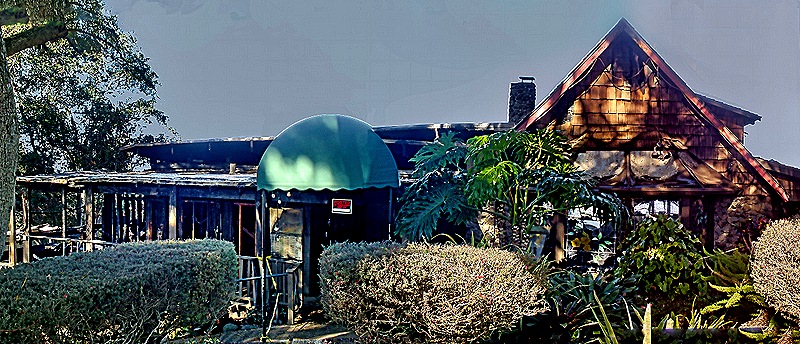
We drove across Maui in a bus driven by our engaging and talkative guide Wendell, a native Hawaiian. We passed farms, open terrain and the airport on our way; we have been on many longer drives during excursions, but this one was not short. As we drove up the mountain we made two stops, in part to give us a chance to acclimatize gradually to the higher elevations. Our first stop was at the Kula Lodge, near the town of Kula. Kula actually isn’t a town but a “census designated place,” because Hawaii has no incorporated towns or cities, just counties. Kula was the birthplace and childhood home of Dr. Sun Yat Sen, who led the revolution that overturned the Chinese Empire. Kula had a rather nasty fire in 2023 at the same time as the Lahaina fire, which destroyed more than 24 houses in this small town but left this Lodge untouched. However in August of 2025, about 5 months before our visit, their restaurant was destroyed by a fire. So when we visited they were selling food from a food truck behind their artisan market. There were some nice flowers here, notably poinsettias blooming on tall bushes. There was also a beautiful view down the mountain from the back of the market building.


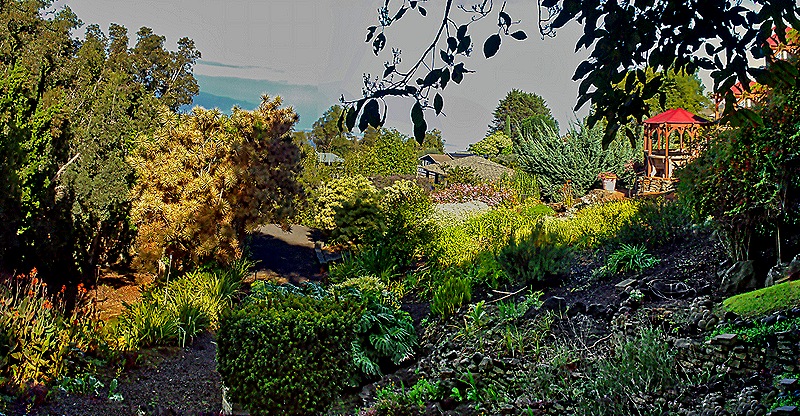
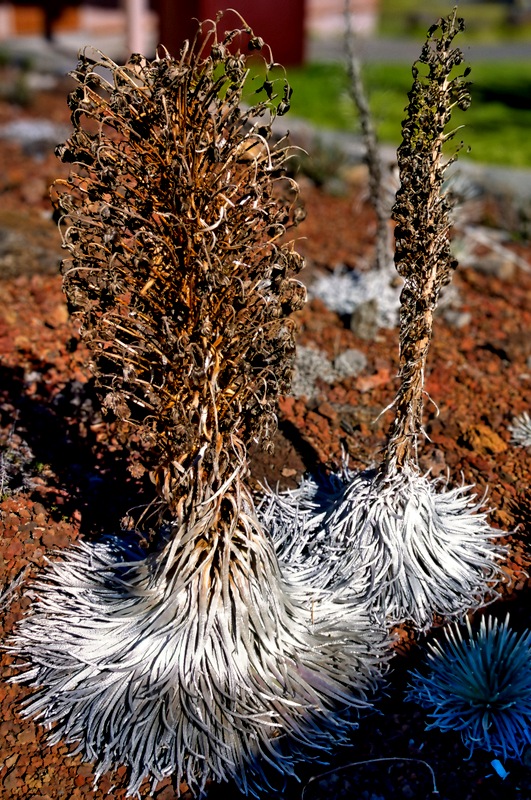
Our next stop on the way up was the Ranger station for Haleakala National Park. It was full of maps, posters and other exhibits about the park, it had a great view across from the back and a lot of unusual plants that, we understand, only grow on this island. Notable among them is the Haleakala Silversword which at one time covered the volcano’s top to the extent that it looked like a snow cap. This plant only grows here and only from 7.000 to 10,000 feet (there is another variety growing on the big island). It naturally lives between 15 and 90 years and blooms once just before its death, sending up a tall stalk with many flowers. It has been listed as endangered since the 1990’s as a result of damage from visitors and grazing animals earlier in the 20th century. While they are protected today from human and animal damage, climate change is apparently taking a toll.

From here our path to the top was along many fairly sharp switchbacks with views of the vast expanse below. The mountain top above the clouds in the distance may be Mauna Kahalawai, Maui’s other volcano: older, shorter and more eroded than Haleakala.

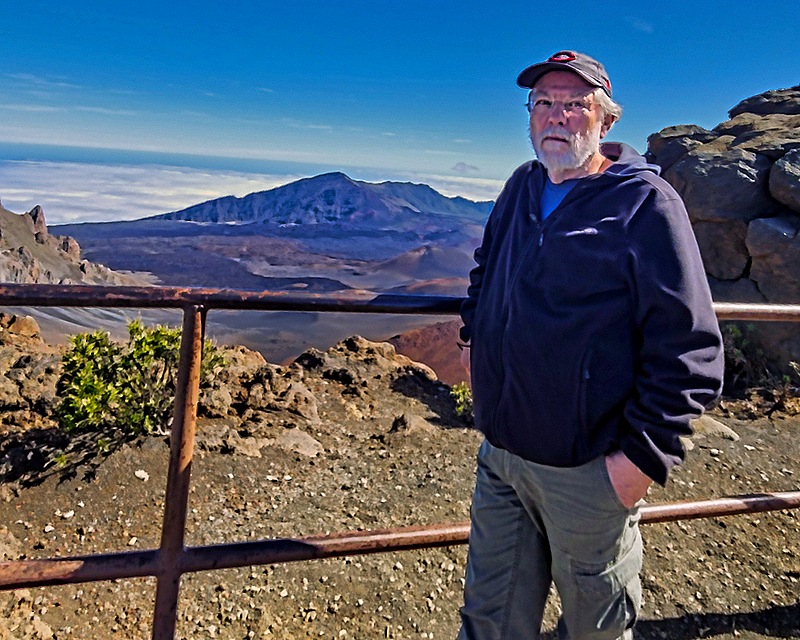
Haleakalā is more than 10,000 feet tall and its slopes make up more than three fourths of the island of Maui. The volcan’s name means “house of the sun” and the Hawaiians believed that its peak was the home of the grandmother of Maui, a demigod after whom the island is named. It has erupted 10 times over the last 1,000 years, the last eruption being estimated to have occurred during the 16th century. The volcano is dormant, not extinct, so another eruption in the future is possible. We parked in a small lot adjacent to a visitor center with its explanatory exhibits. Then we walked out to the observation area, happily protected by a metal fence. It was quite a view.
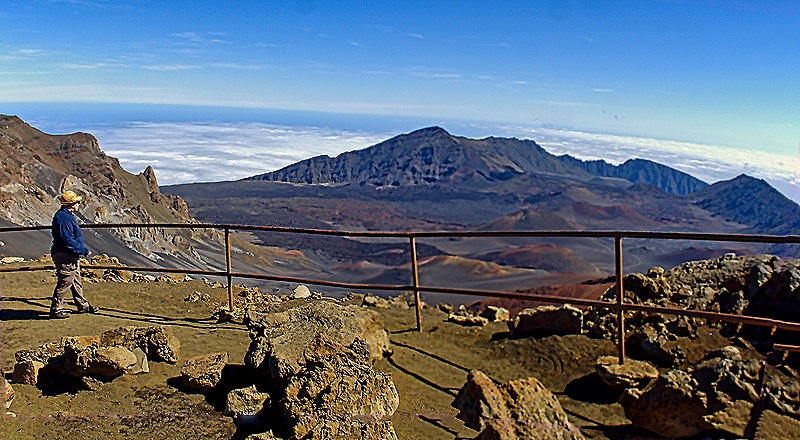

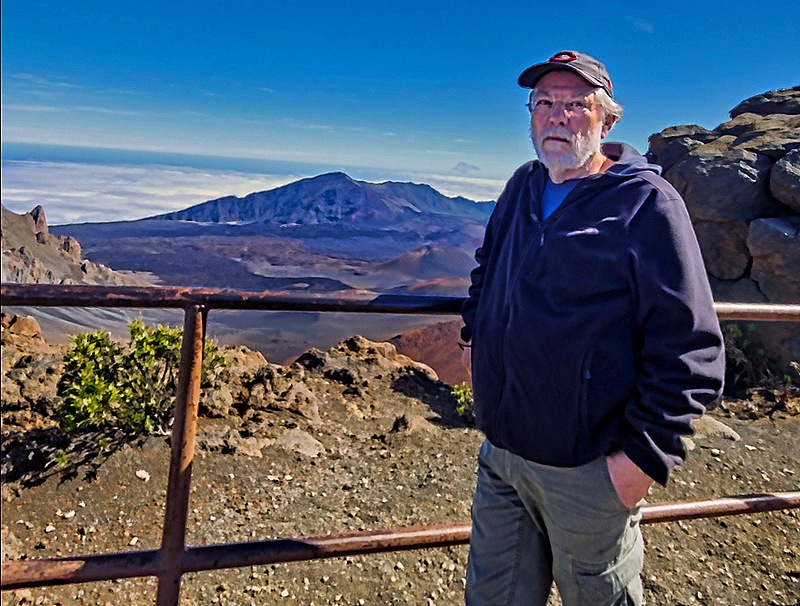
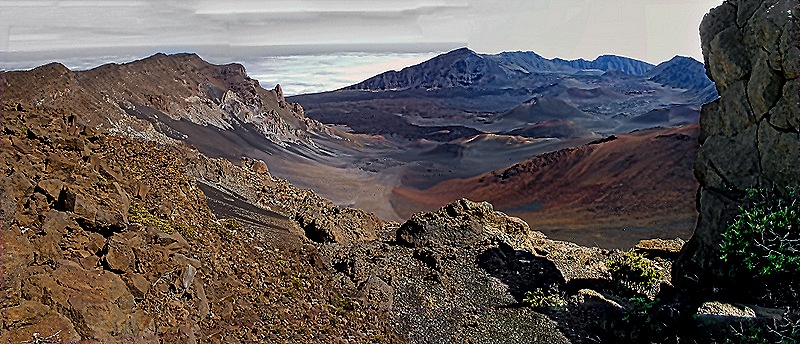
This huge crater is more than 11 miles across, more than 3 miles wide, and more than 2,500 feet deep. As we understand it, this is not the usual crater formed by volcanic activity but a depression mostly formed by the confluence of two rift zones (areas where the ground is pulled apart, presumably by tremors) along with erosion. There are, however, some smaller volcanic cones inside the crater.
To the right of the observation point is a very rocky higher summit with a stairway path leading around to the top. The summit was only about a fifth of a mile but it was a very steep path with very large steps (especially for folks with shorter legs). Mary stayed near the observation point and listened to a Ranger talk about the materials making up the caldera while Rick climbed the stairway. I (Rick) intended to climb until I was tired and then come back, but I kept passing families with children descending from the top and it seemed like it couldn’t be too far to the top. So I kept going and did reach the summit, which had its own viewing point.
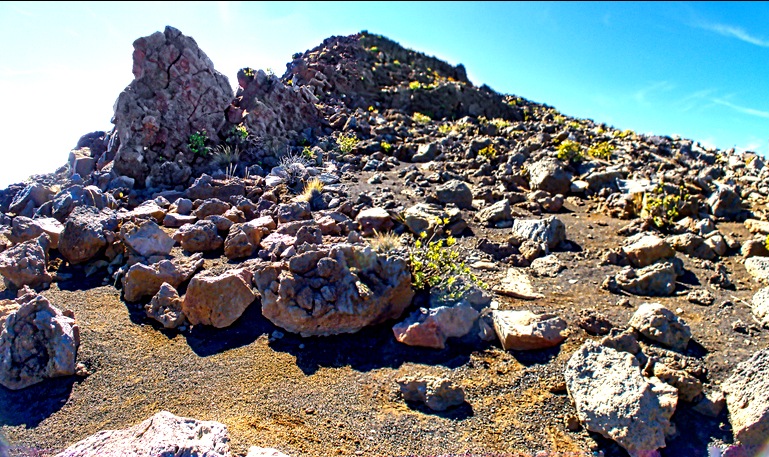


As you can see from the pictures above, the view from the summit was pretty similar to the one from the lower observation point, except for the better angle. Perched on a neighboring hill that could be seen clearly from the steps while descending the summit was the Haleakalā Observatory. This location lies above the atmosphere’s inversion layer, giving particularly clear views of the sky. A number of astronomical projects share this space, including one that has discovered more than 4,700 space objects from asteroids to stars, and one operated by NASA that tracks the artificial objects orbiting the Earth. It is not open to the public.


By the time I got back down to the visitor center it was time to leave. We drove back down the way we came, with nice views of the seacoast and the settlements at the bottom of the mountain. We spent the rest of the afternoon on the ship and in the evening we said goodbye to Hawaii and sailed away for five days at sea.