Honolulu, Hawaii 2026 Day 1
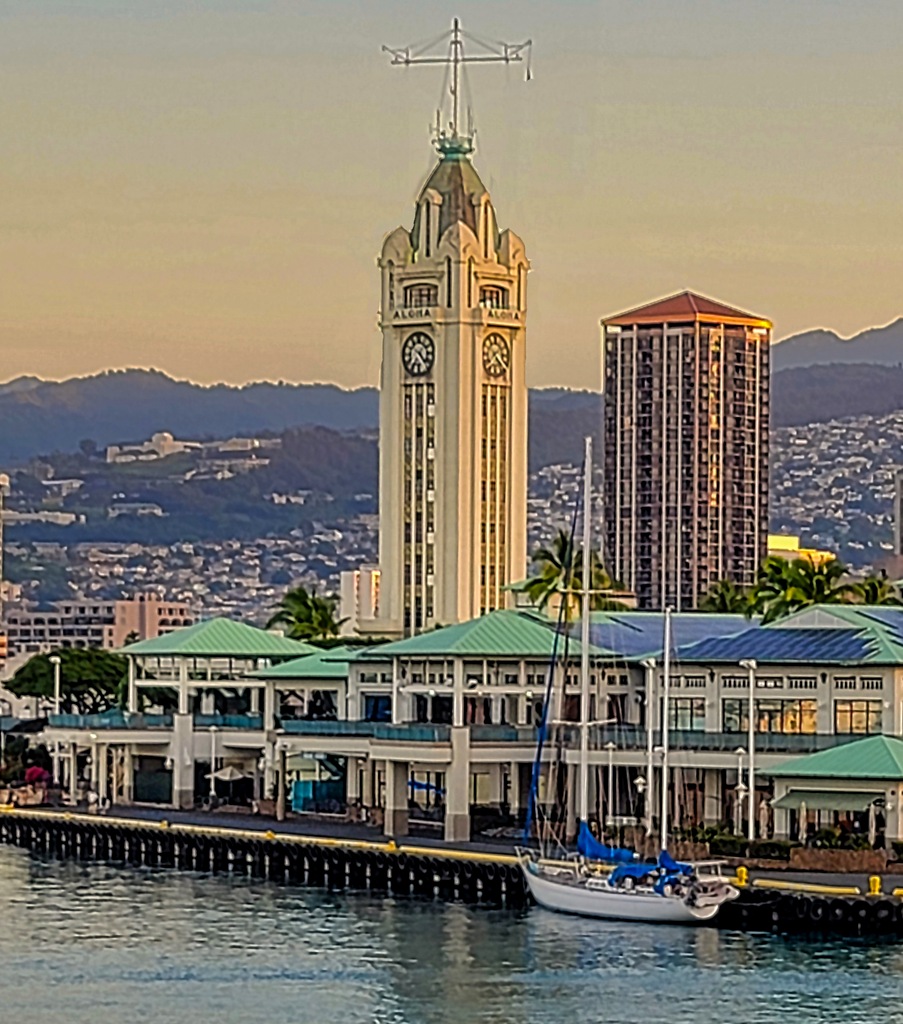
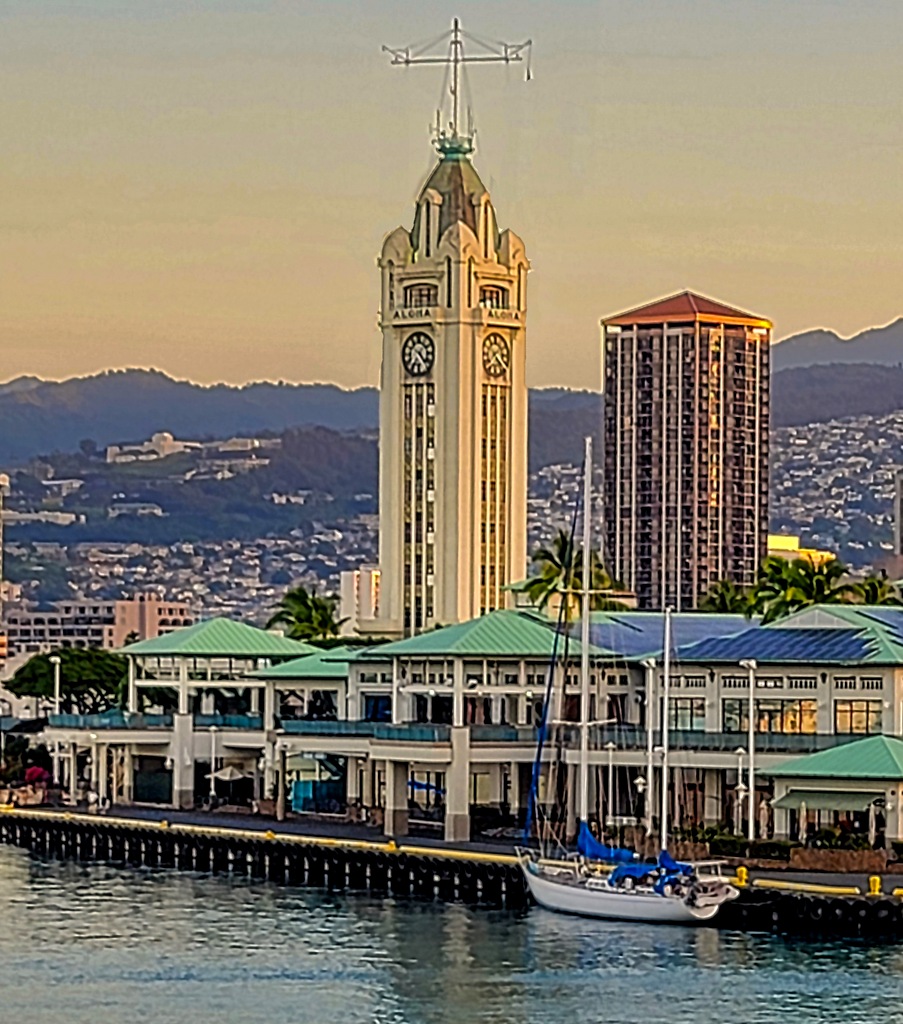
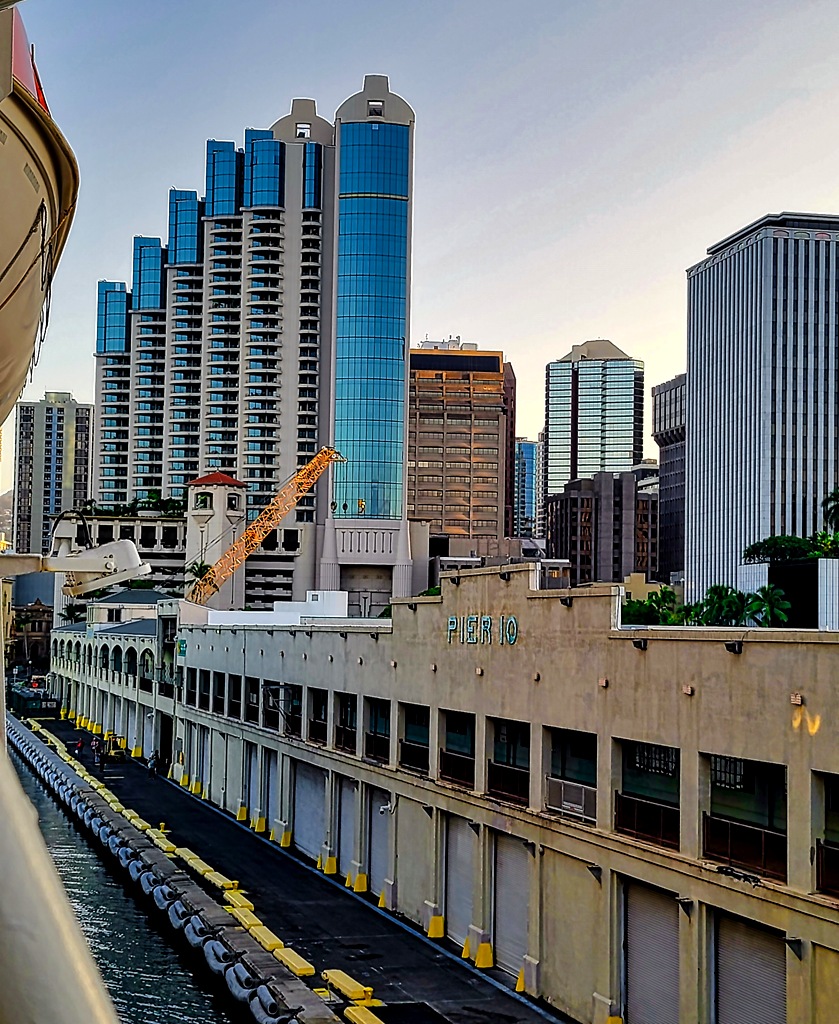
After five days at sea we awoke as Zaandam pulled into the dock in Honolulu on the morning of January 10. Our dock was very close to the iconic Aloha Tower, built as a lighthouse in 1926, that has been welcoming visitors to Honolulu ever since.
We first visited here on a one day stop in 2024, which isn’t nearly long enough to fully explore this city. The blog episode for that visit, which includes background information we won’t repeat here, is at this link: https://baderjournal.com/2024/04/15/honolulu-hawaii-2024/. This time around we had a more leisurely two days here.
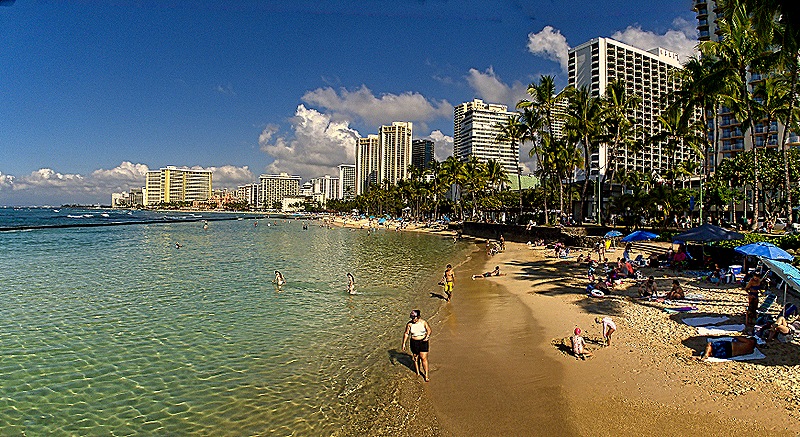
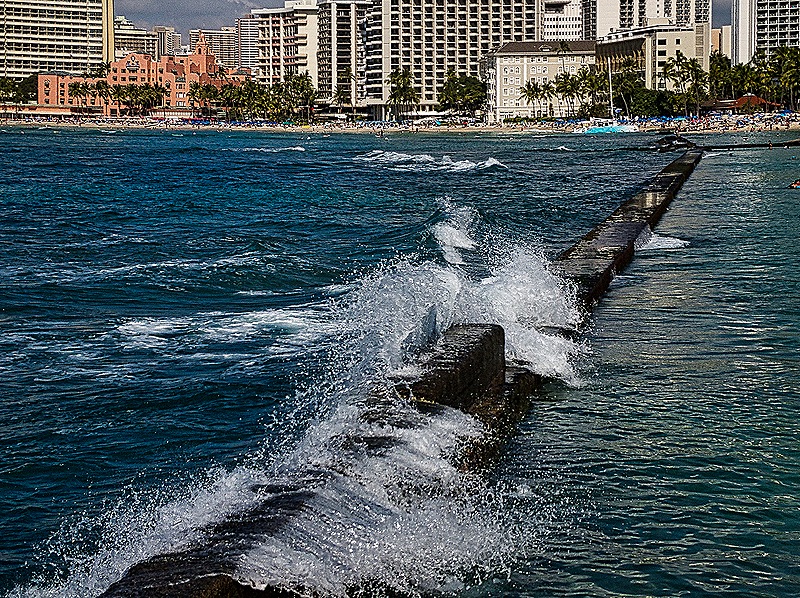
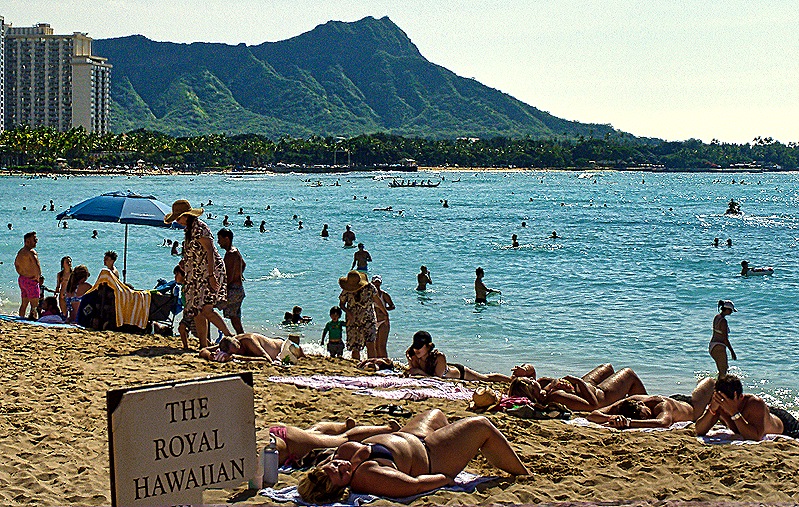
We decided to spend our first day in the Waikiki area. We found a nearby bus stop and rode down Ala Moana Blvd to Waikiki. We walked along the streets lined with restaurants, stores and tall hotels, then turned right and headed toward the beach. The beach is long and not too wide in front of the long line of resort hotels. It looked peaceful and uncrowded on this morning in January. There were several sea walls, some protecting the swimming area from the ocean with waves breaking on the wall instead of the beach and some dividing different sections of the beach. We walked out on one wall toward the ocean to get a better view.
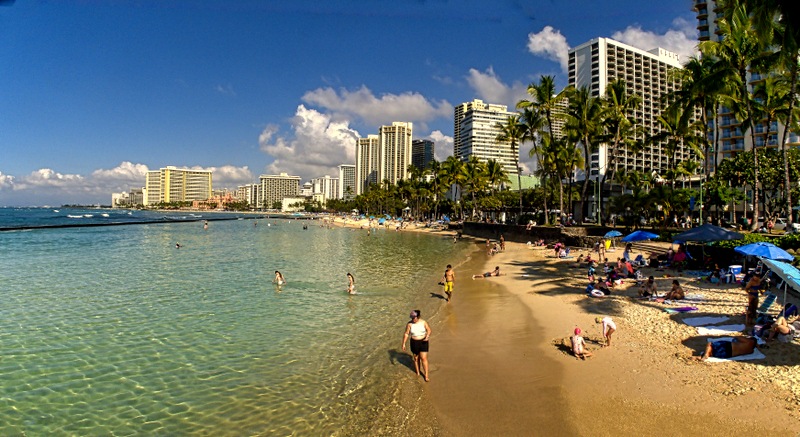
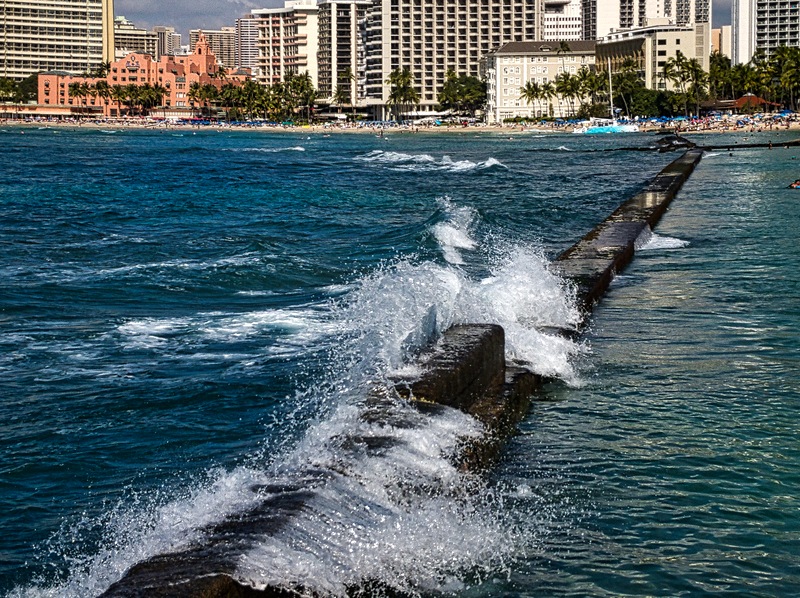
Waikiki means “place of spouting waters,” so named because it originally was a marshy area of wetlands fed by streams from the mountains. It had been inhabited for centuries by farmers and fishermen when it briefly became the first capital of the Kingdom of Hawaii In 1795 and 1796. After the capital moved to Kona this continued as a vacation retreat for Hawaiian royalty but for a long time it was accessible only from the sea as there were no roads. In the 1890’s the monarchy was overthrown, mainly by American business men (some the descendants of missionaries) looking to improve their commercial prospects and it was in that same period that a few hotels first appeared in the area. Construction of a canal in the 1920’s led to elimination of the wetlands. The dynamic growth of air travel after World War II greatly increased the tourist trade so that by the middle 1950’s Waikiki was inundated with the huge and luxurious beach hotels that dominate its skyline to this day.
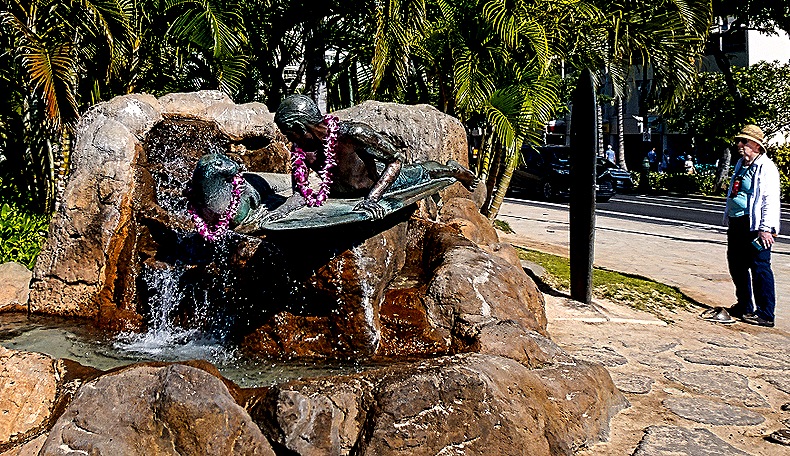
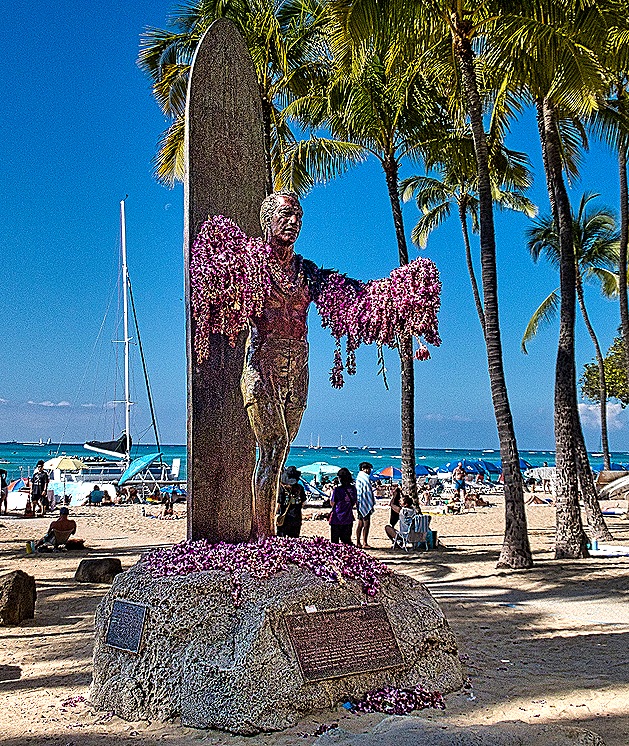
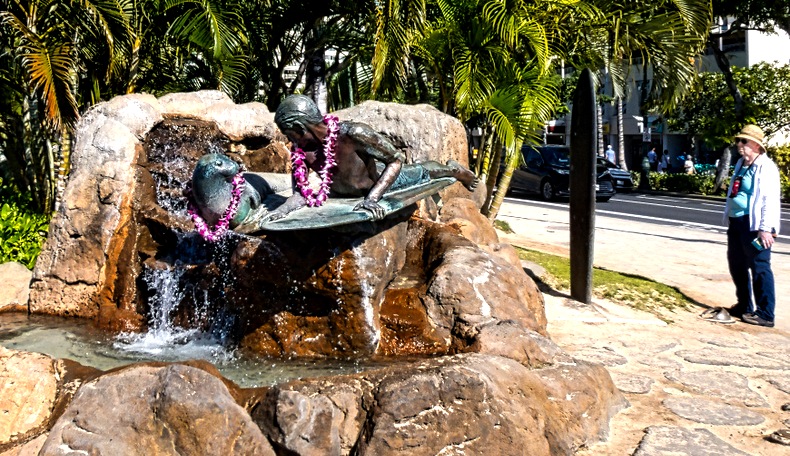
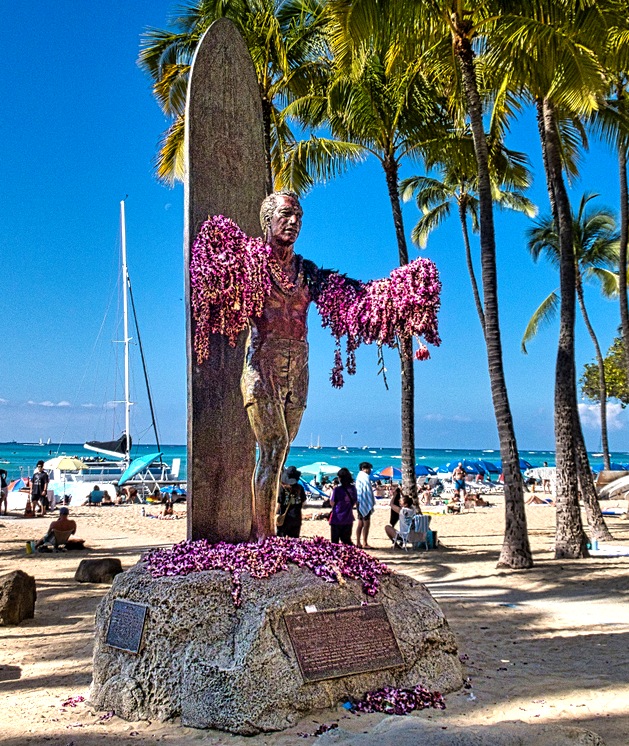
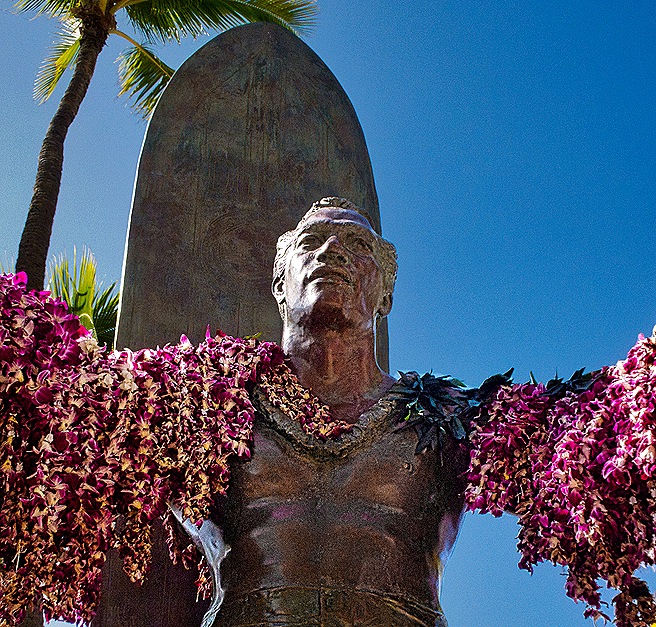
The beach area has several interesting sculptures. One that we passed is called “Makua and Kila.” Erected in 2001 and inspired by a short story, it shows a boy on a surfboard with a seal swimming along side. Another is a statue of Duke Kahanamoku, a Hawaiian celebrity considered the father of modern surfing. Born in 1890, Duke (his given name rather than a nickname) grew up in the Waikiki area. He won five Olympic medals in swimming between 1912 and 1924 and was well known as a world ambassador for surfing, which he was instrumental in popularizing in California and Australia. He appeared in small roles in a number of Hollywood movies and was the elected sheriff of Honolulu from 1935 to 1961. His statue on the beach dates to 1990; nine feet tall it shows him standing in front of his surfboard with arms outstretched. Flower leis are often seen on his arms, as they were when we were there.
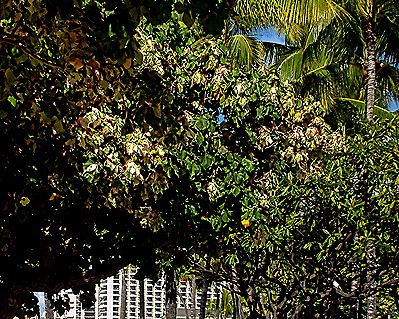
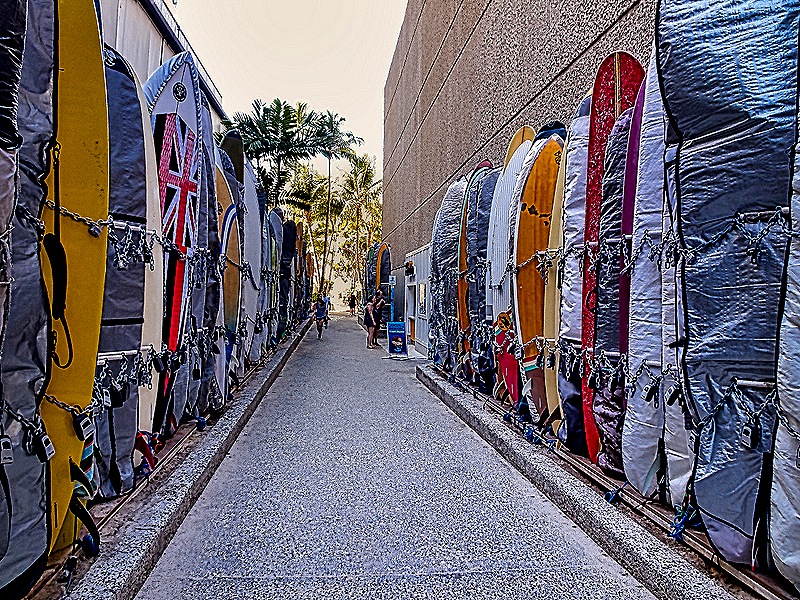
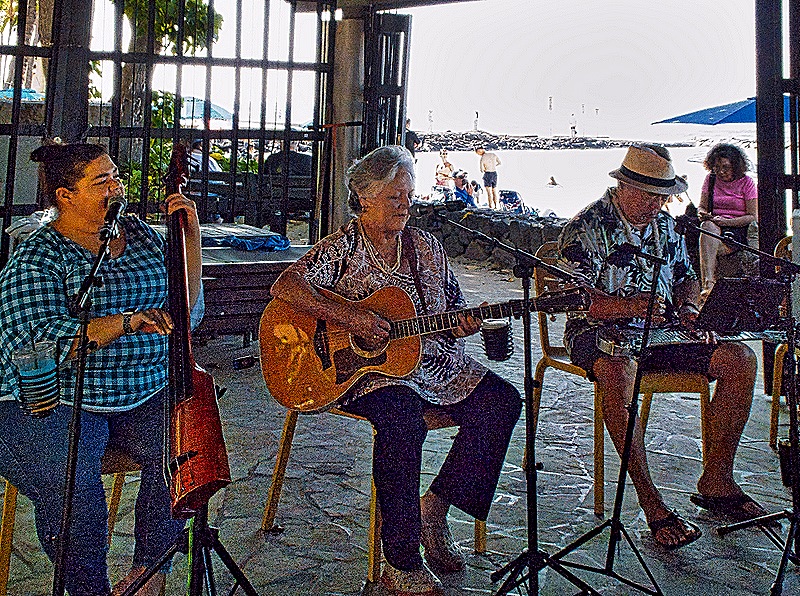
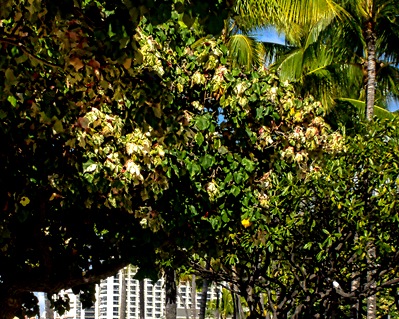
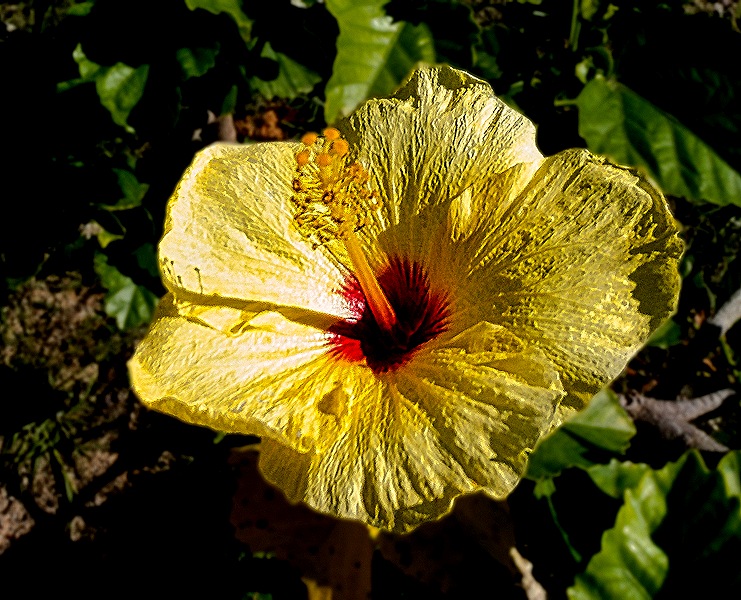
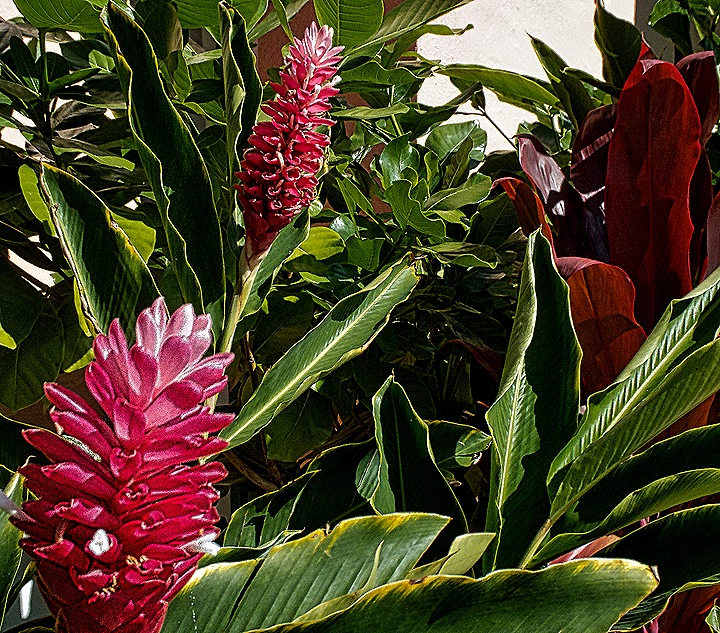
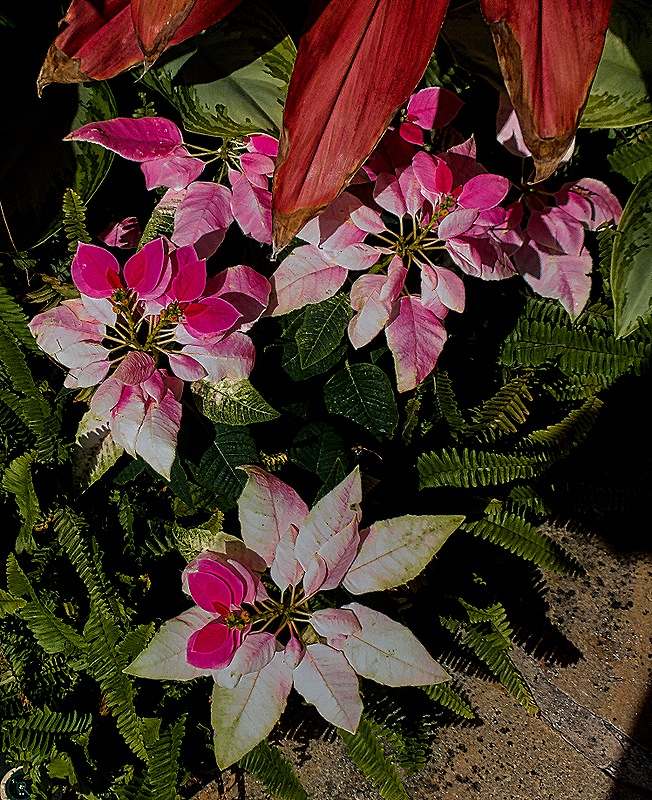
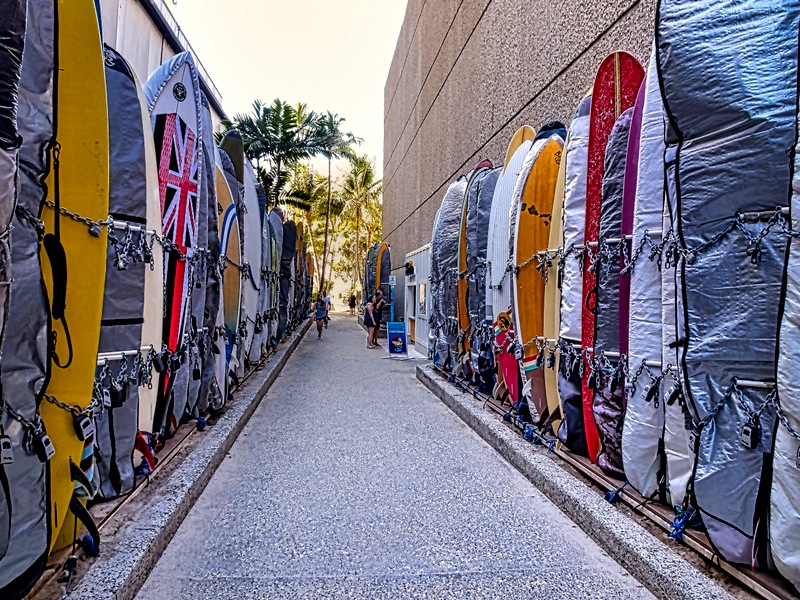
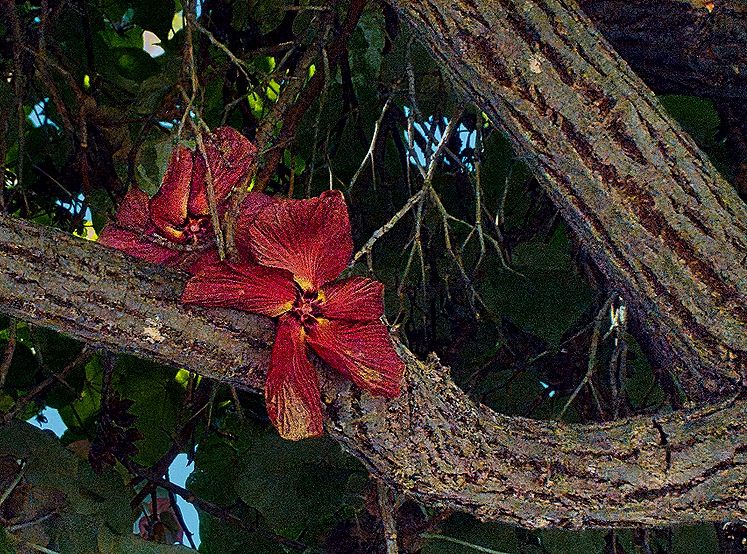
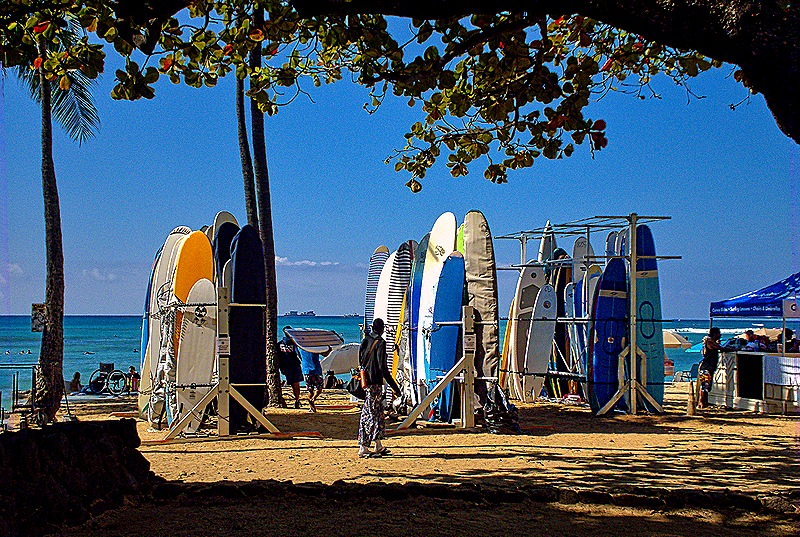
We stopped in a pavilion where a group of locals were performing music and, this being Hawaii, even in January we saw many beautiful flowers on trees, bushes and flower stalks (imagine what this would be like in May). We mentioned above that modern surfing really got its start here and we saw a number of surfers on our walk. It appears that certain stretches of the beach are set aside for surfers. There were racks of colorful surfboards on the beach and on what seem to be alleys leading into town.
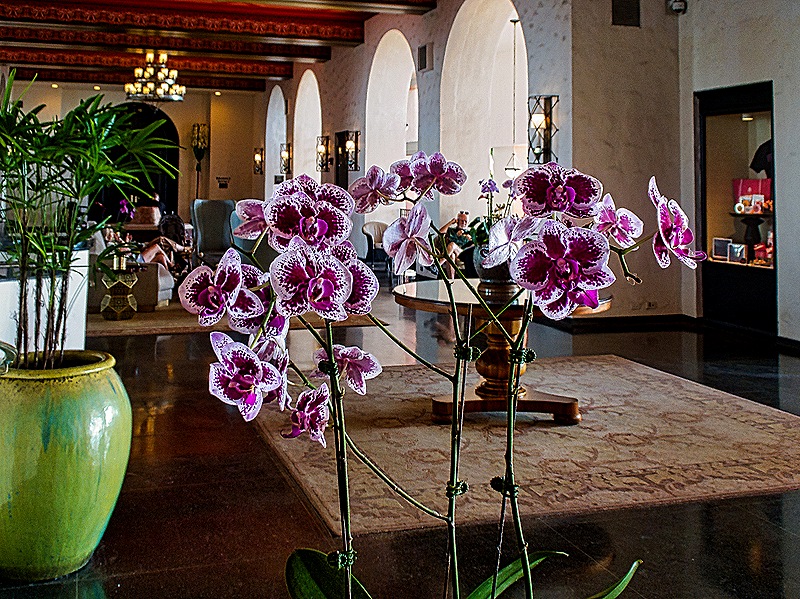
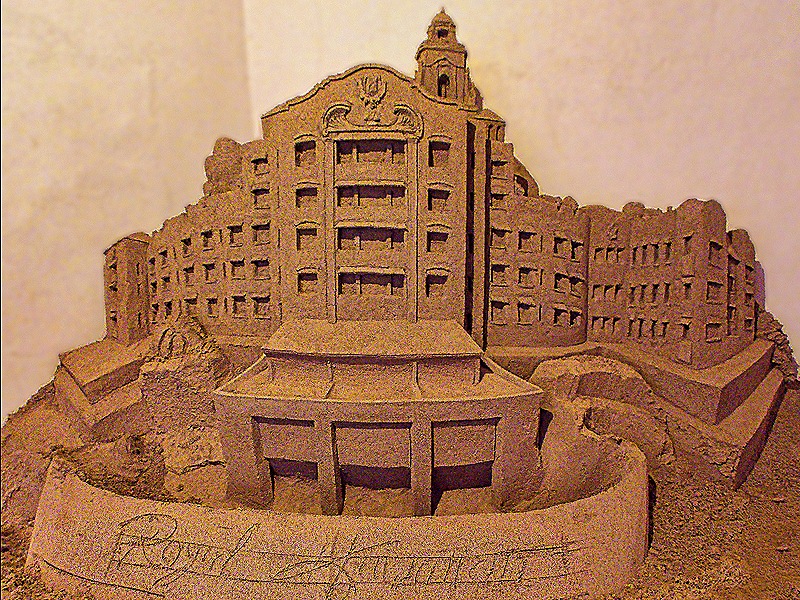
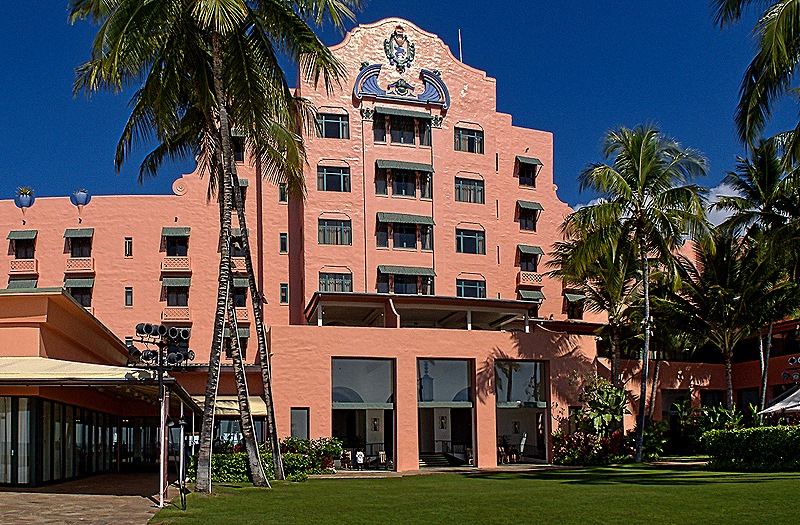
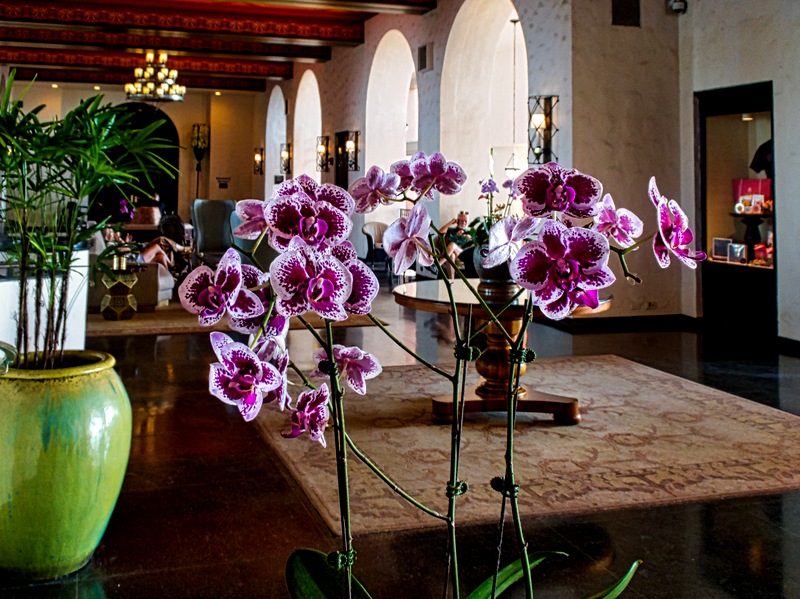
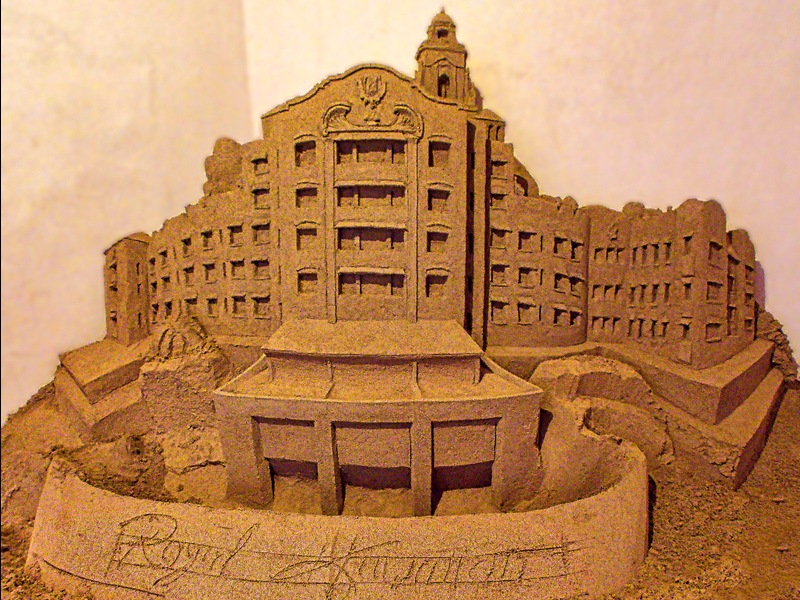
The most distinctive hotel on the beach is one of the shortest, the hot pink Royal Hawaiian Hotel. When opened in 1927 it was one of only 2 or 3 in this area and must have had a commanding view of the ocean, the beach and Diamond Head, the large volcano crater at the end of Waikiki. We could still see Diamond Head, of course, from the beach in front of this hotel. It is an expensive luxury hotel, beautiful inside with lots of flowers and plants and specialty shops and (at least when we visited) an impressive sand sculpture of the hotel in the lobby.
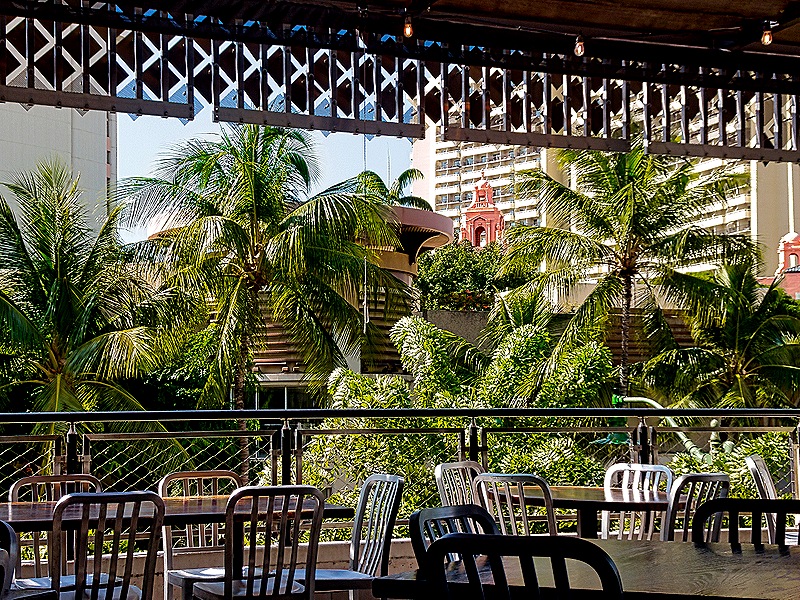
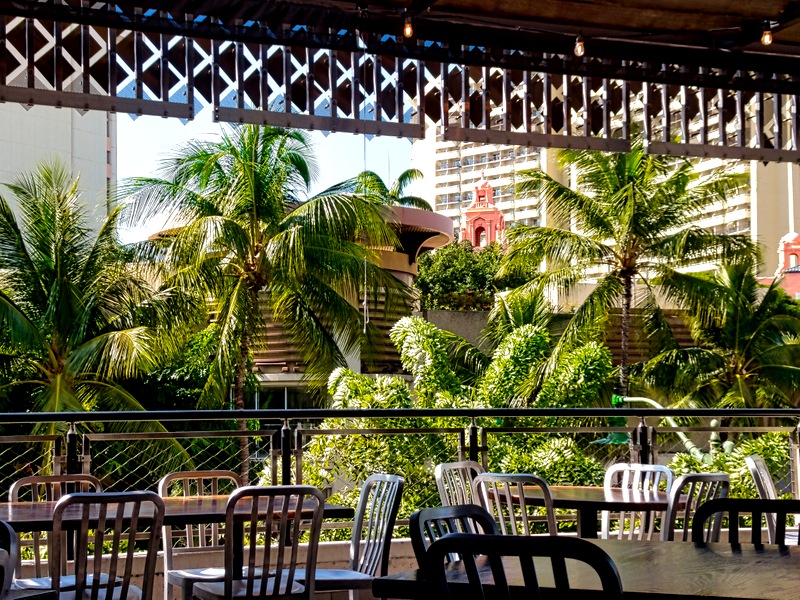
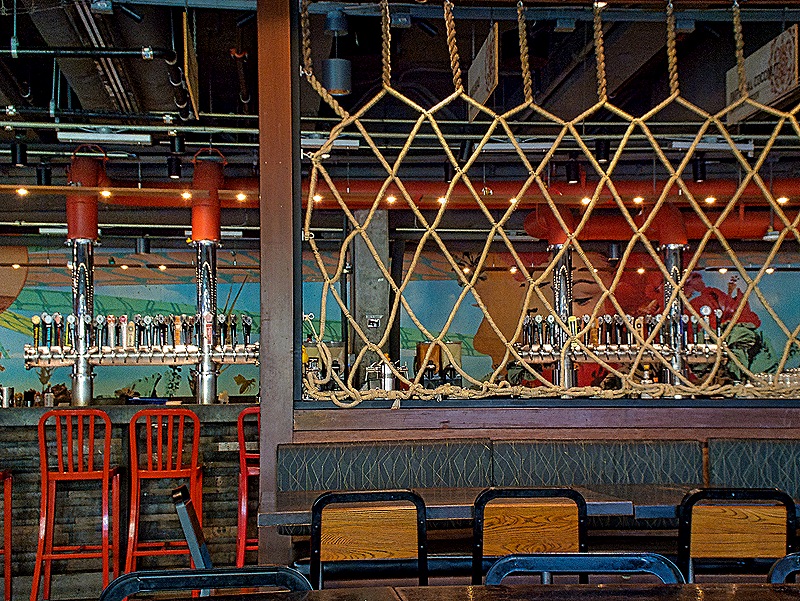
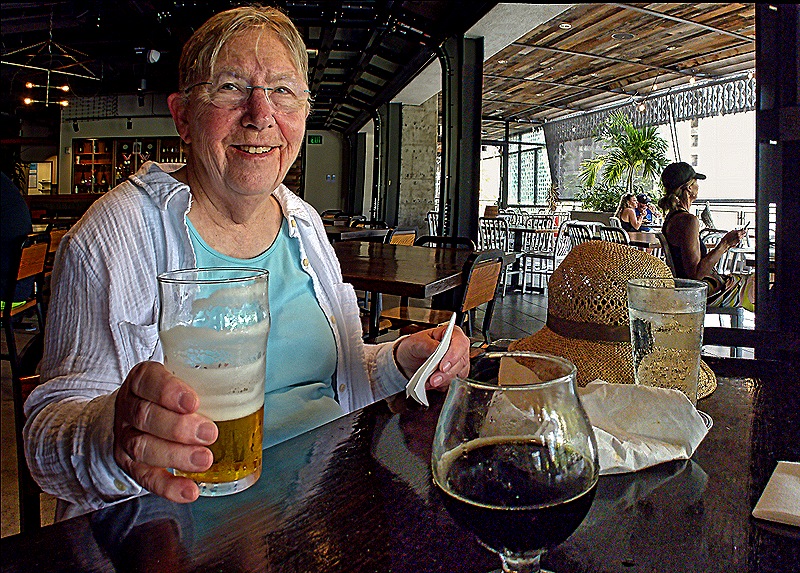
 We had hoped to find a lunch spot in the hotel, but we didn’t see one. So we walked back inland to a large commercial street nearby where we stopped for pizza and a beer at the Maui Brewing Company, a pleasant open air veranda above a stairway to the second floor. It had a nice breeze, was not crowded and had a view over the street in the direction of the beach. The pizzas and beer were unusual and quite tasty. Mary left with one of their tee shirts.
We walked down a few blocks to the zoo, where the bus turns around to go back toward the port. We asked the bus driver waiting there whether his route would take us past the Honolulu Art Museum we wanted to visit. He said he would pass nearby, but pointed out another bus across the street that would take us right to the museum. We took that bus right to the front door of the museum and the driver called out the stop when we got there. Two unusually helpful bus drivers, in our experience. Founded in 1922, the museum has a large and eclectic collection, ranging from European masters to the nation’s biggest collection of Asian and Pan-Pacific art, and everything in between. Of course, only a portion of that is on view at any one time and this draws your attention to individual artworks rather than roomfuls of works by each artist. It is housed in a lovely set of small buildings with courtyards, flowering plants and a cafe. We enjoyed our time here, but it did not seem to be on the same level with world class museums like the Louvre or the National Gallery in Washington, and we thought the $25 per person admission was excessive for what was presented. We also found it irritating that only people visiting from outside Hawaii had to pay this much, since Hawaiian residents were given a large discount.
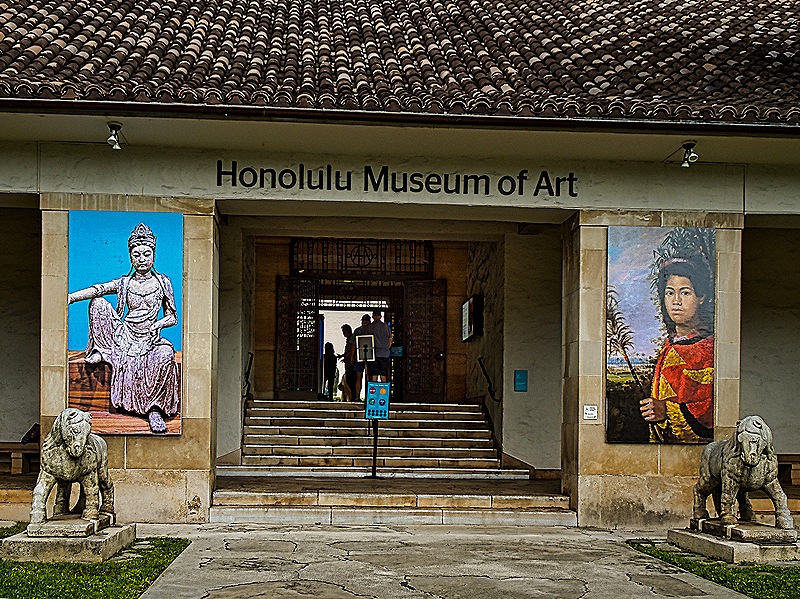
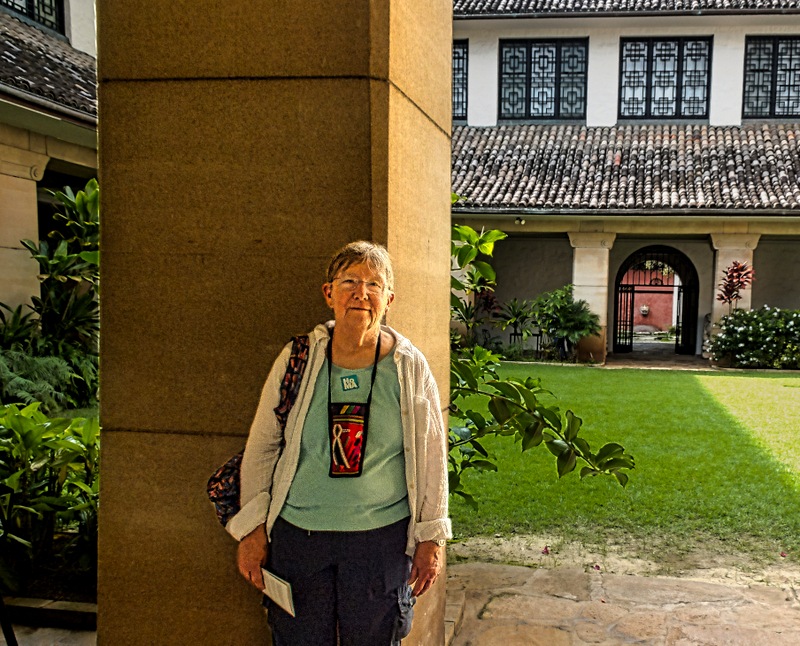
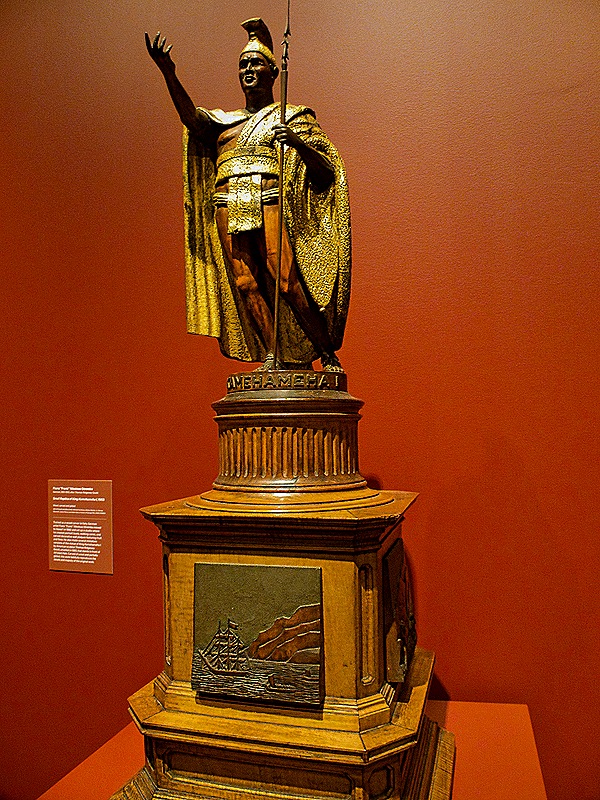
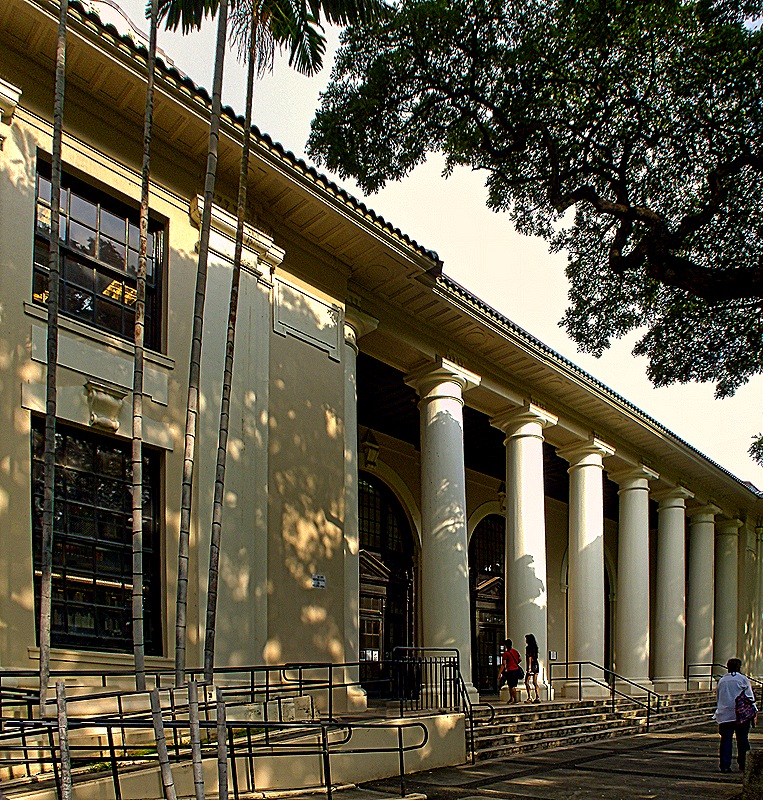
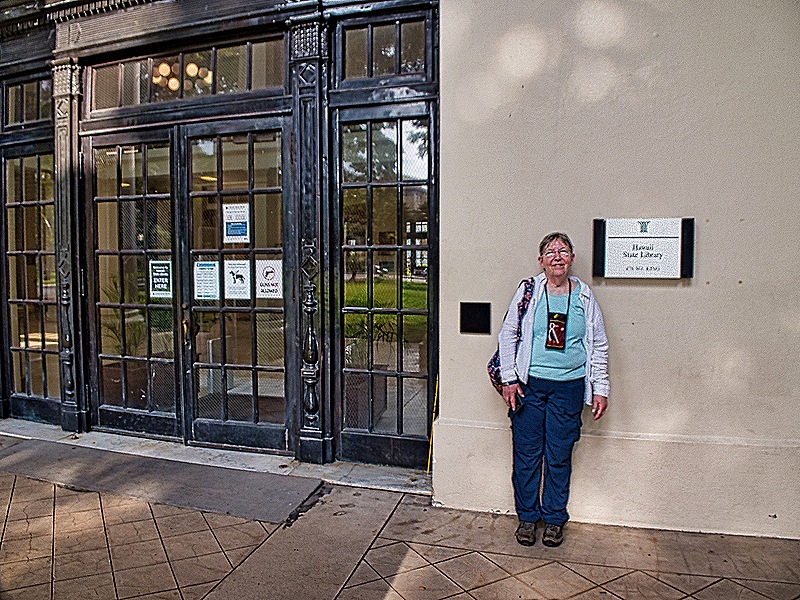
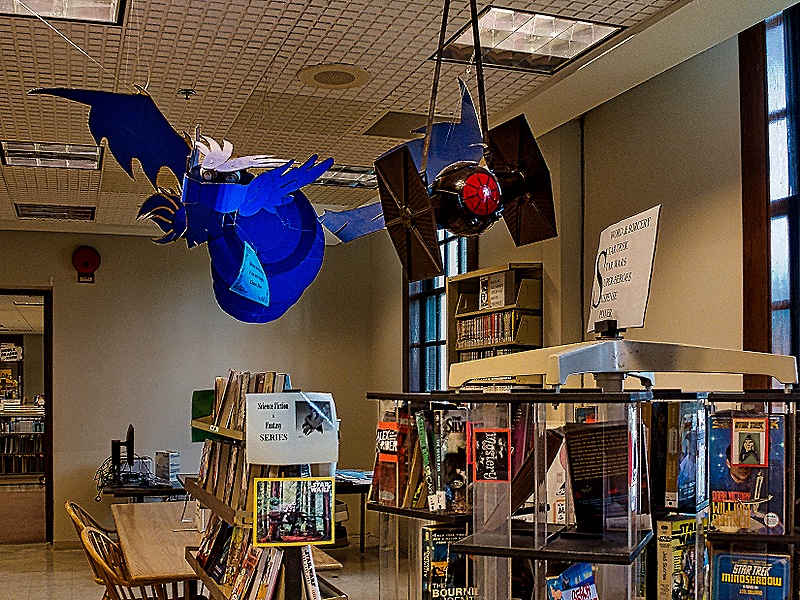
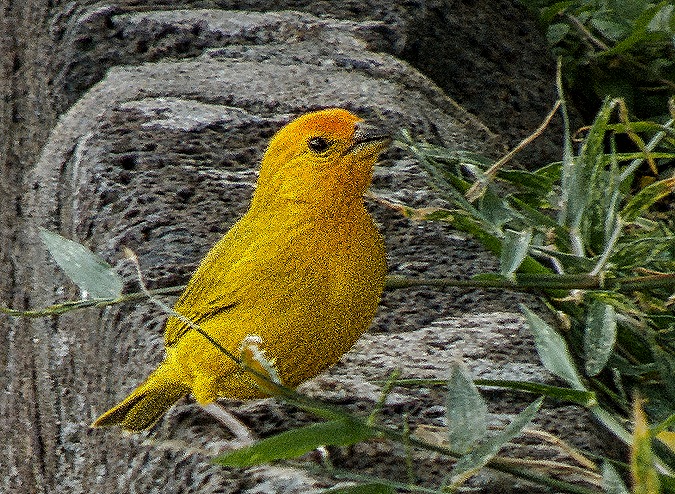
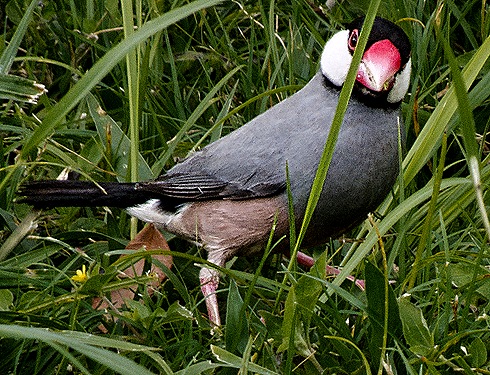
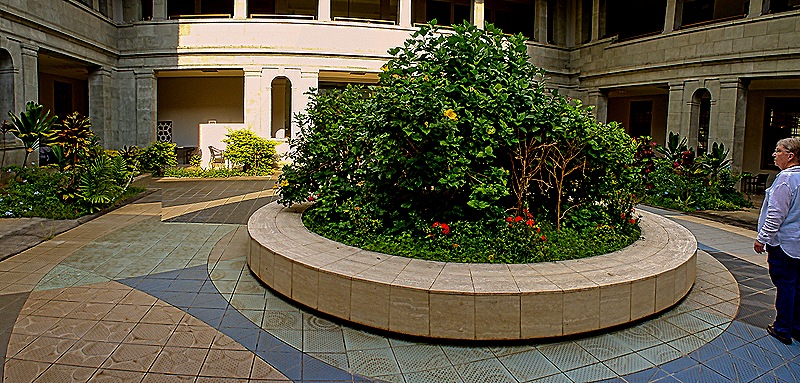
We decided to walk back to the ship from here. After a long walk we stopped at the Hawaii State Library, a pillared building in the downtown area that opened in 1913. With a collection of more than half a million items this is the flagship branch of the Hawaii State Public Library System, the only statewide library system in the US. The library was undergoing renovations and appeared to be closed when we approached so we were happy to find that walking around the building to the front revealed open doors that allowed us to visit the rather striking interior. We saw several colorful birds near the library as well.
 g
g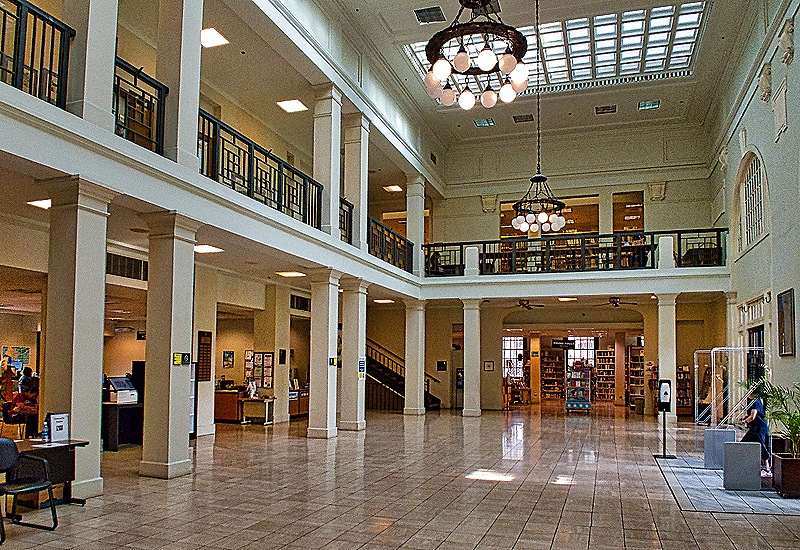
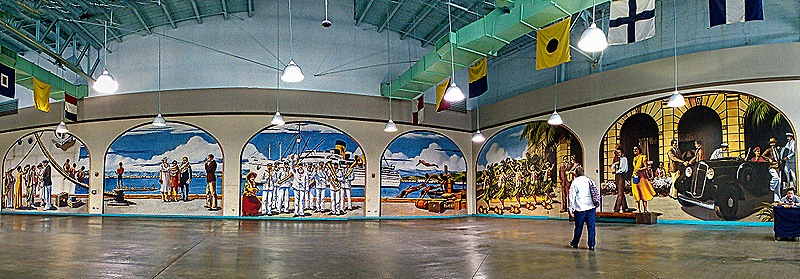
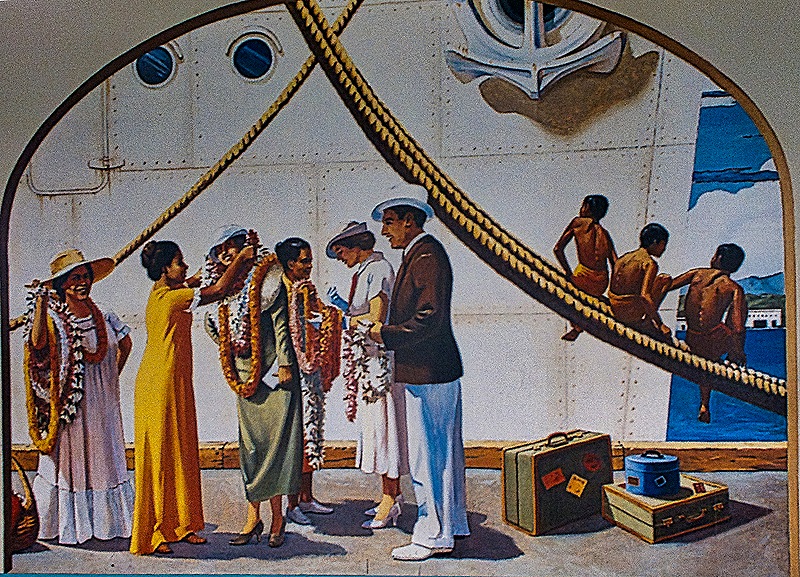
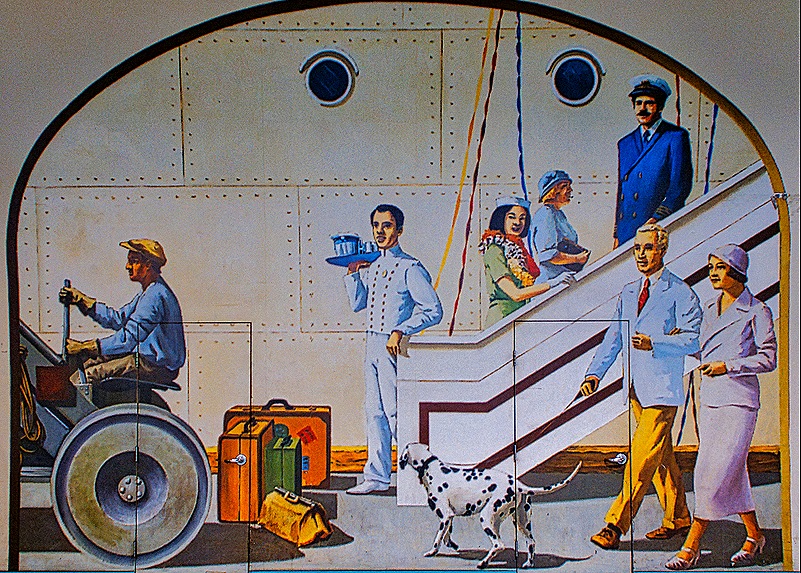
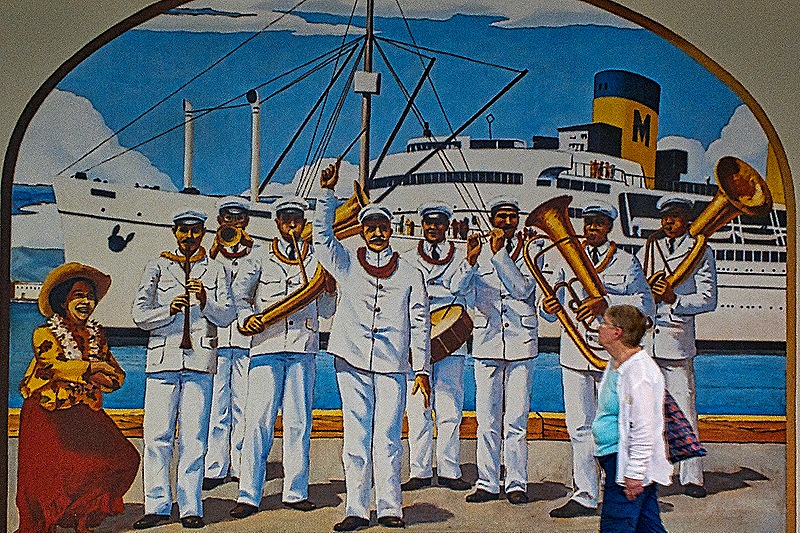
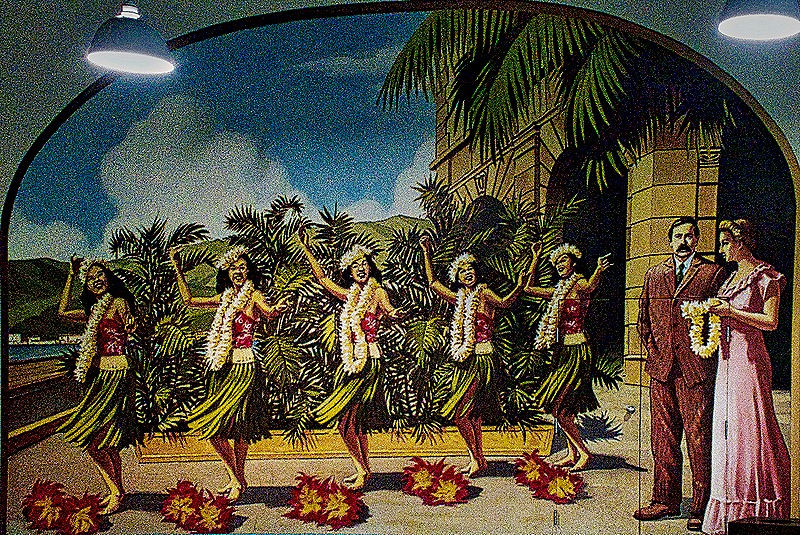
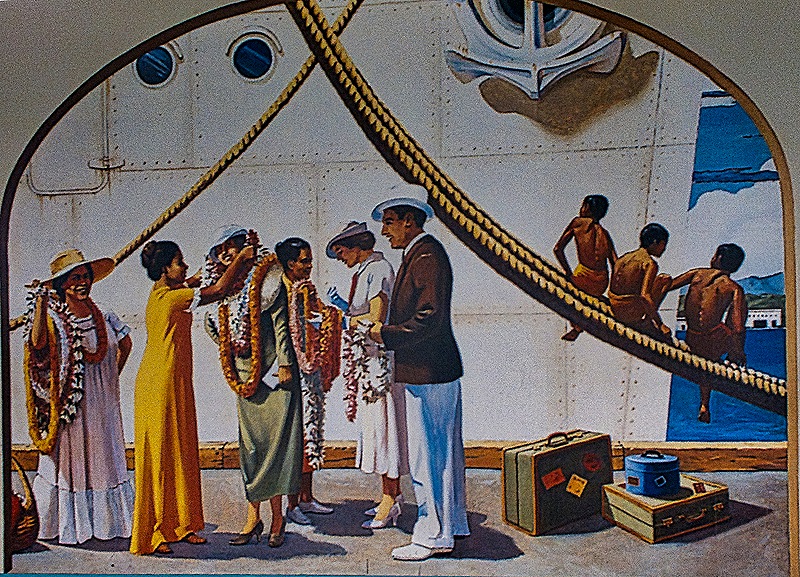
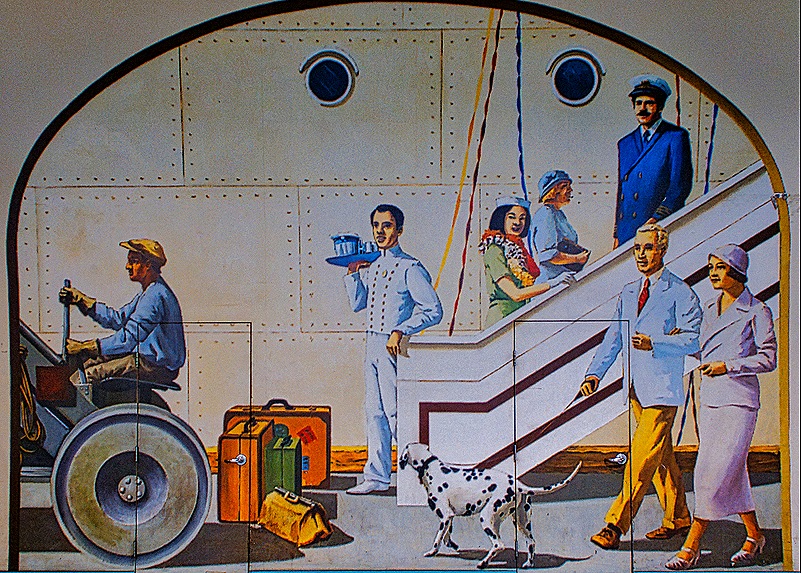
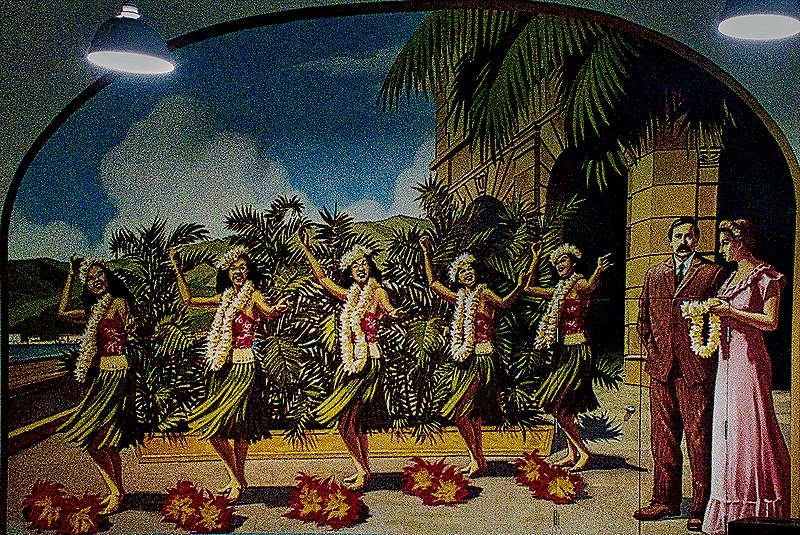
When we reached the port we walked through the Pier 11 passenger terminal to reach the ship. The terminal is a large room resembling an airplane hangar with security checks at the entrance. Two of the walls are covered in murals depicting Hawaiian scenes mostly at the pier that look like they were painted in the 1920’s or 30’s (we have been unable to find any information on when they were actually painted). In our opinion they are interesting enough to warrant a visit even if you aren’t boarding a ship there. And so ends day 1 in Honolulu.