
Kona, Hawaii 2026
We spent January 12 in Kona. We had seen most of the landmarks in this small town on our first visit here in 2024, which you can see here:
https://baderjournal.com/2024/04/02/kona-hawaii-2024/
So this time we signed up for an excursion that would take us along the coast to the south. This was a tender port so we had to be ready to leave by 7:30, which necessitated a hurried early breakfast. We boarded our tour bus near the tender port where we met our driver & guide, Gabriel, who was very knowledgeable about the history and ecology of the area and shared a lot of that with us.
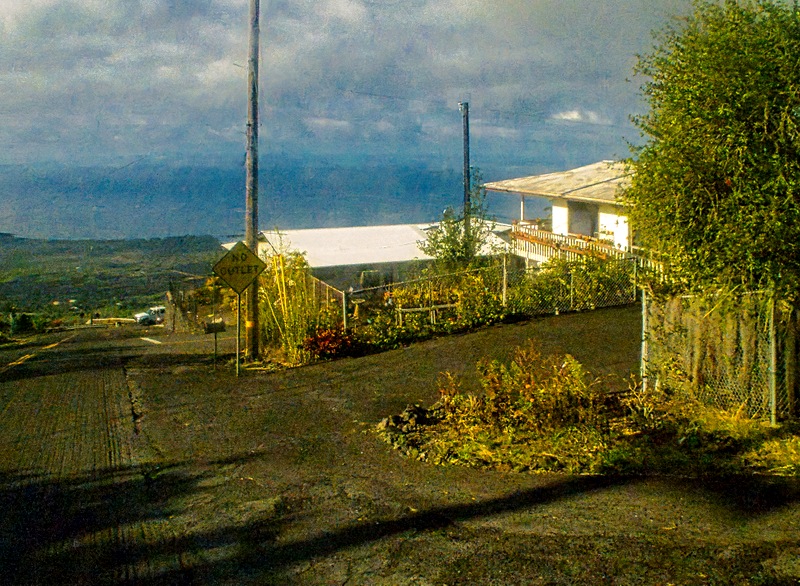
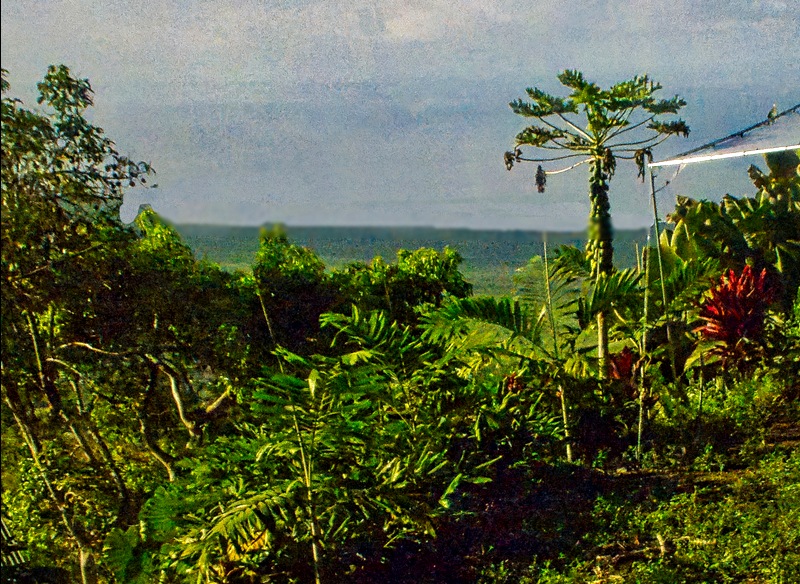
We didn’t stop or really see much of it, but at a point pretty far down the coast Gabriel told us we were passing Kealakekua Bay where Captain Cook was killed (and possibly eaten) during his third voyage on February 14, 1779. This was Cook’s second visit in a few weeks; the first had been very friendly but the second deteriorated rapidly (possibly because his return disabused the Hawaiians of their impression that he was one of their gods). Cook’s visit might have been the first by a European and he named the archipelago the Sandwich Islands after Lord Sandwich, who was one of the sponsors of his voyage. Here are a couple of distant photos of that bay (we think) as we drove past on the road.
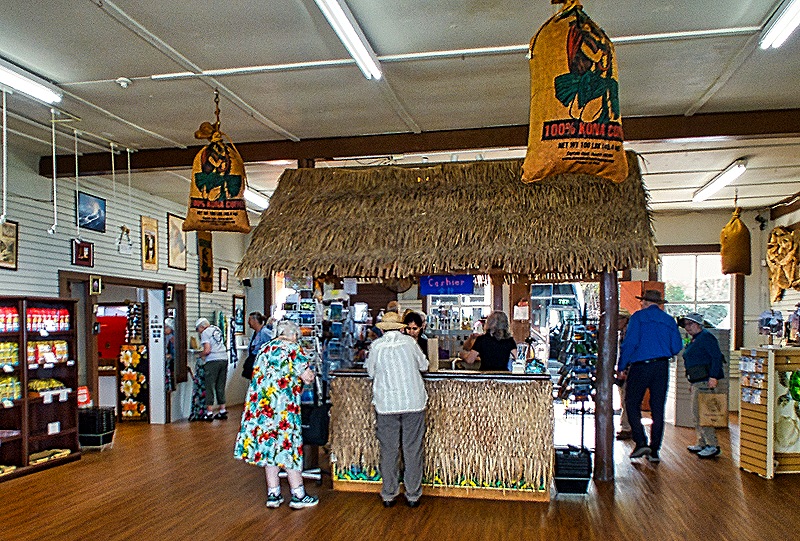
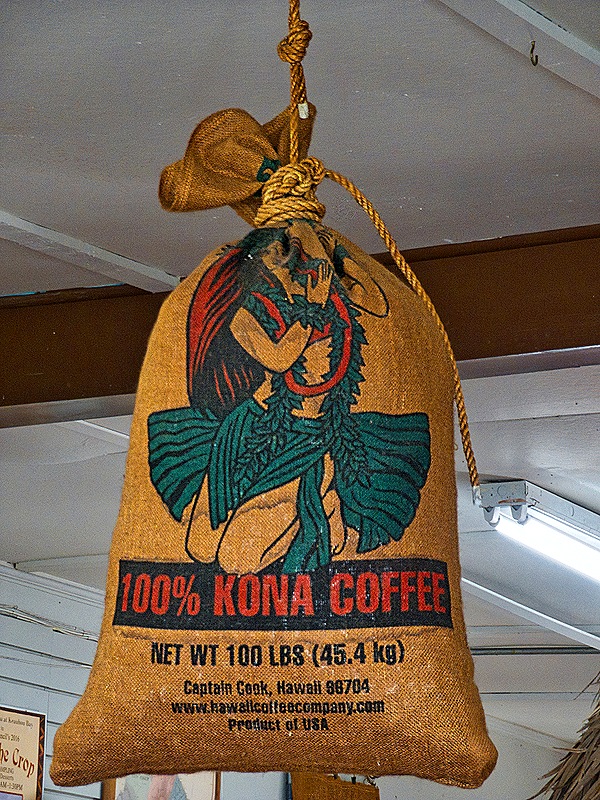
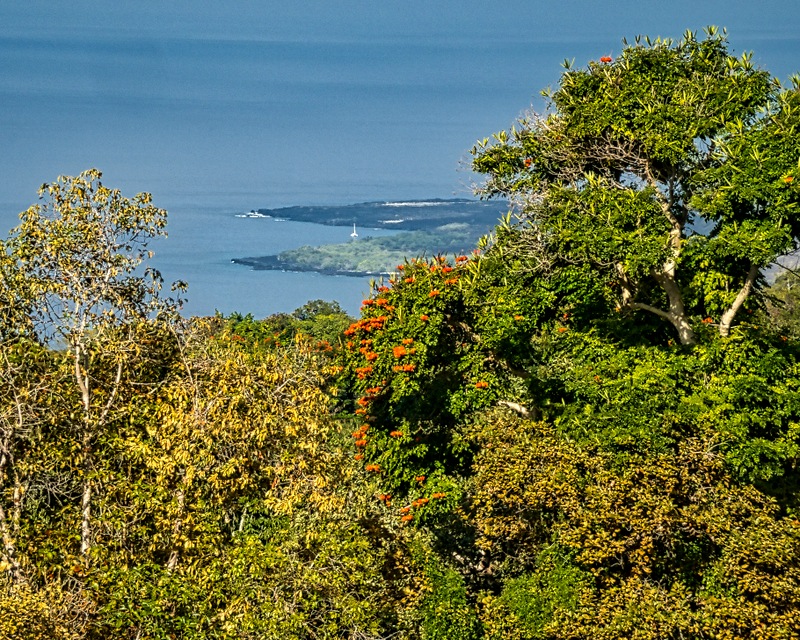
Our first stop was at the Royal Kona Coffee Center. Kona coffee is well known as a premium brew and it is very expensive. Widely marketed in Hawaii, it is only grown in this area, mostly at farms on the slopes of volcanoes. The Coffee Center had an area where various brands of Kona coffee could be tasted free of charge. We tried some and it was good, but really it tasted like . . . coffee. We didn’t buy any. In addition to coffee, the Coffee center sold a variety of souvenir items and was a nice place to visit. It was situated on a high hill with a beautiful view overlooking a lush woods toward the sea.
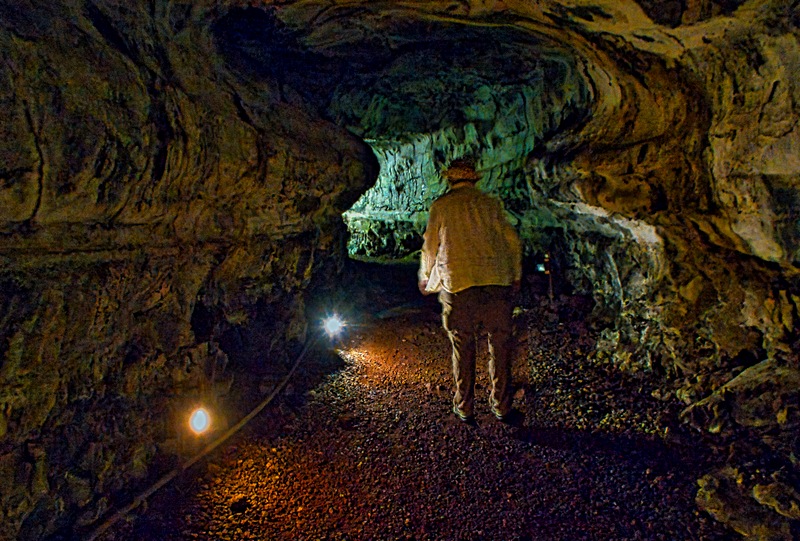
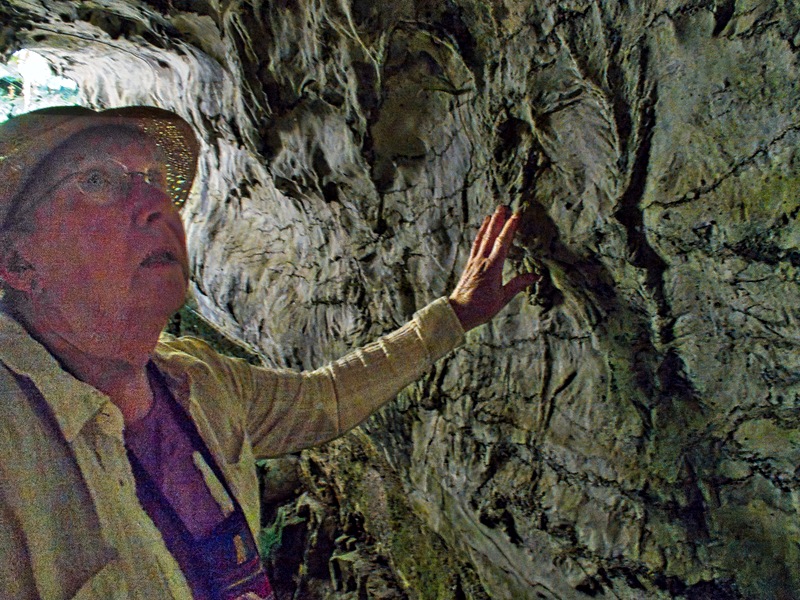
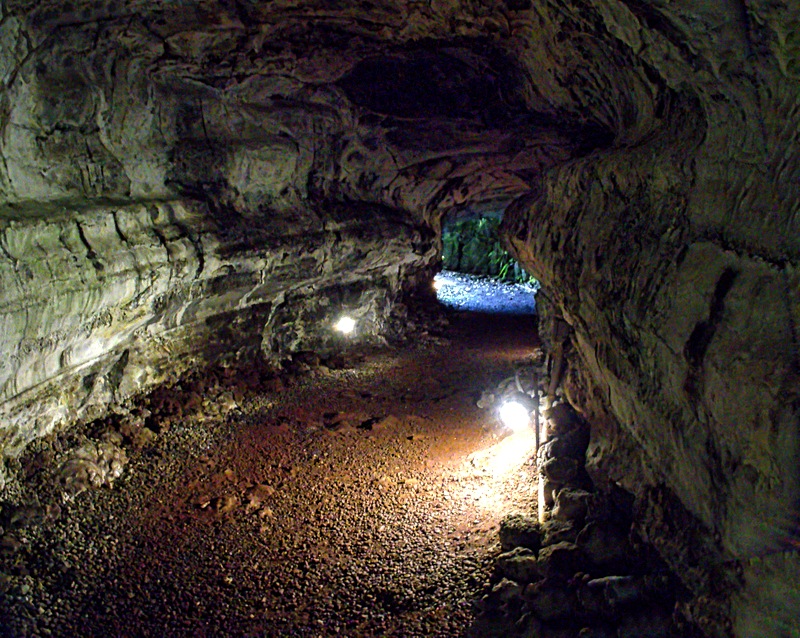
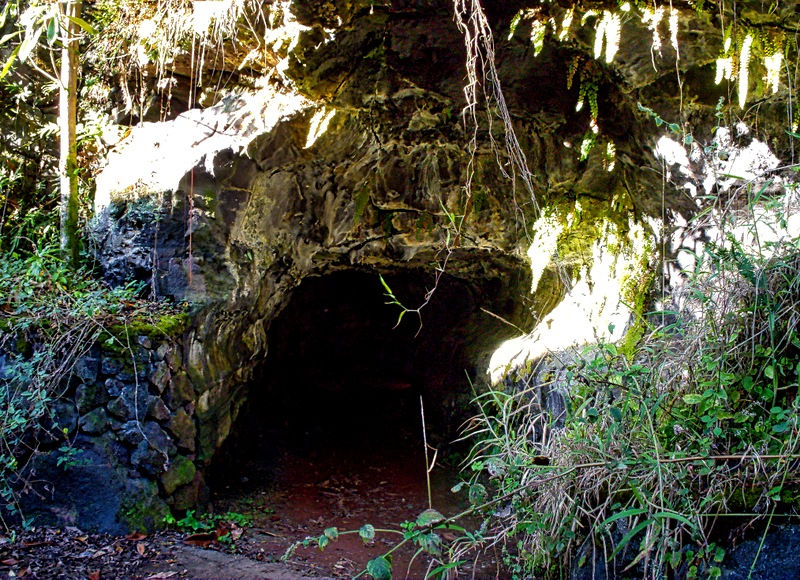
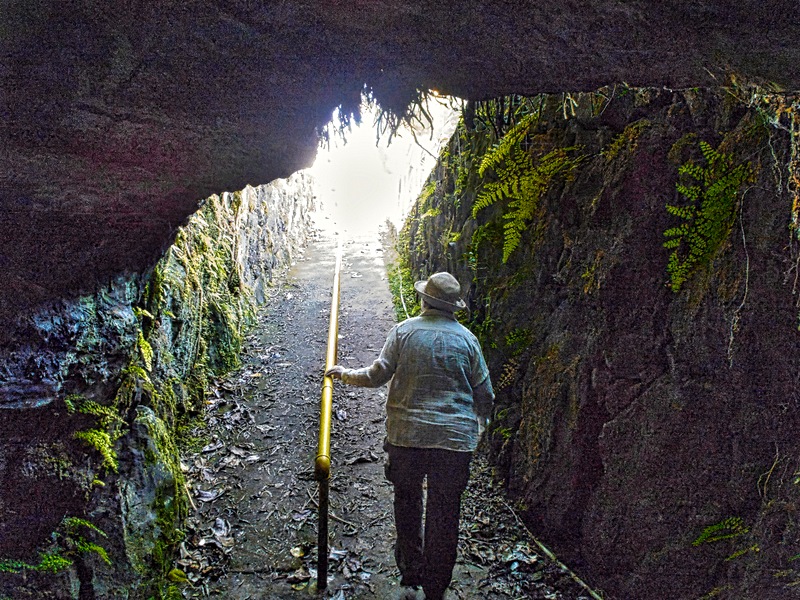
We walked down a long path on the hillside behind the Coffee Center to visit a lava tube. Lava tubes can be formed in several ways, but are basically long tunnels (one in Hawaii extends for some 40 miles) through which lava can flow for much greater distances than it can over land. The one we visited was not very long but quite interesting to walk through. It was lighted inside by electric ground lights, having a pretty dramatic effect on the lava patterns of the walls and ceiling. We had planned to visit one of these during our visit to Hilo in 2024 but it didn’t work out, so we were happy to have a second chance here.
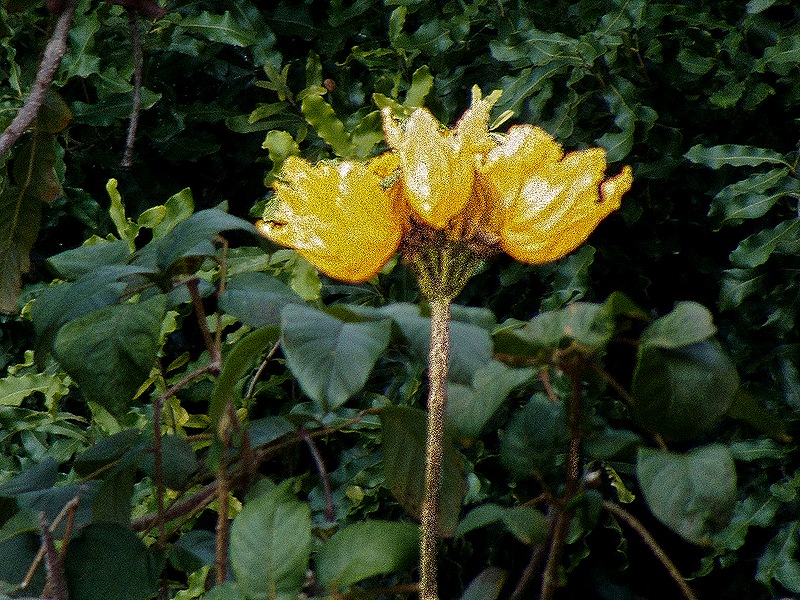
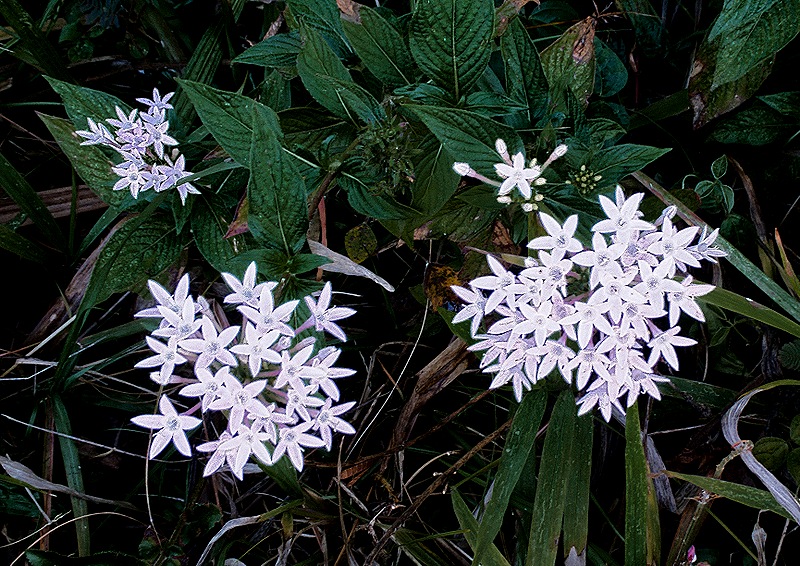
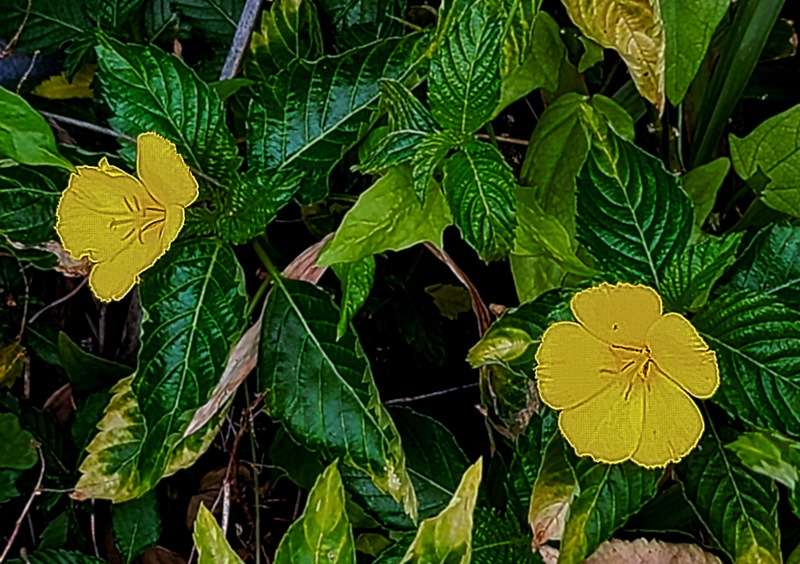
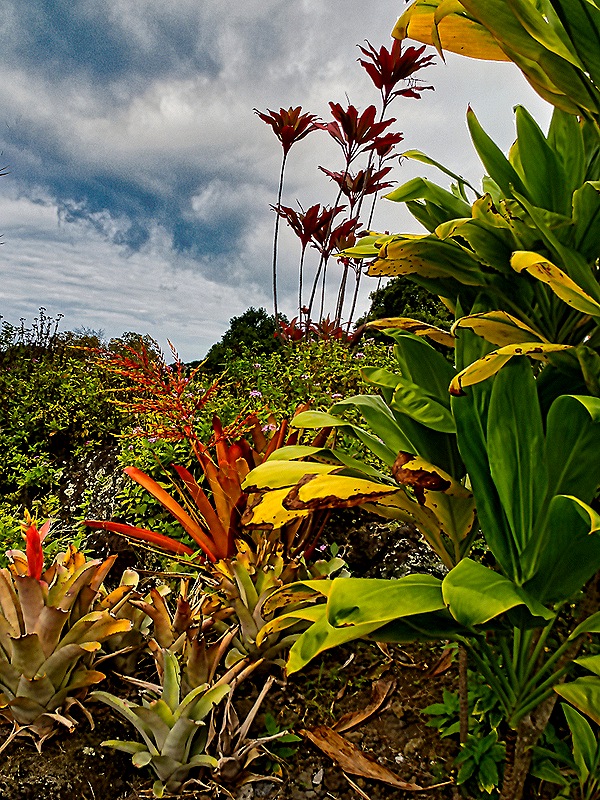
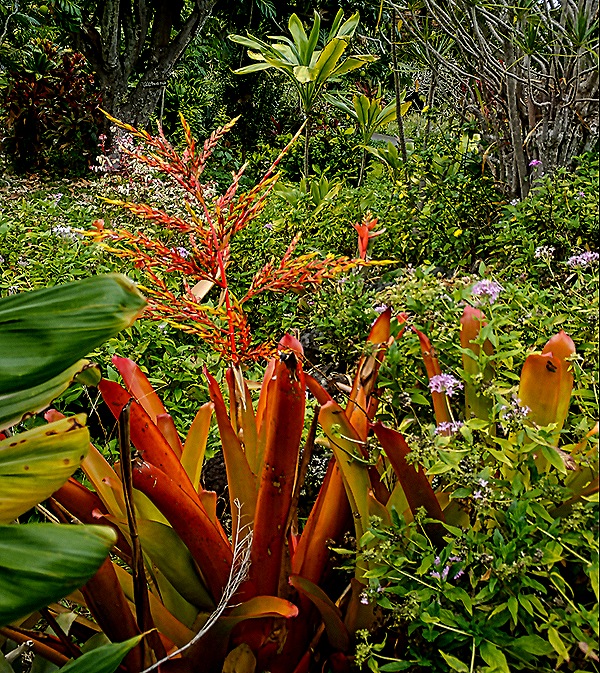
We saw many beautiful flowers in this part of Hawaii.
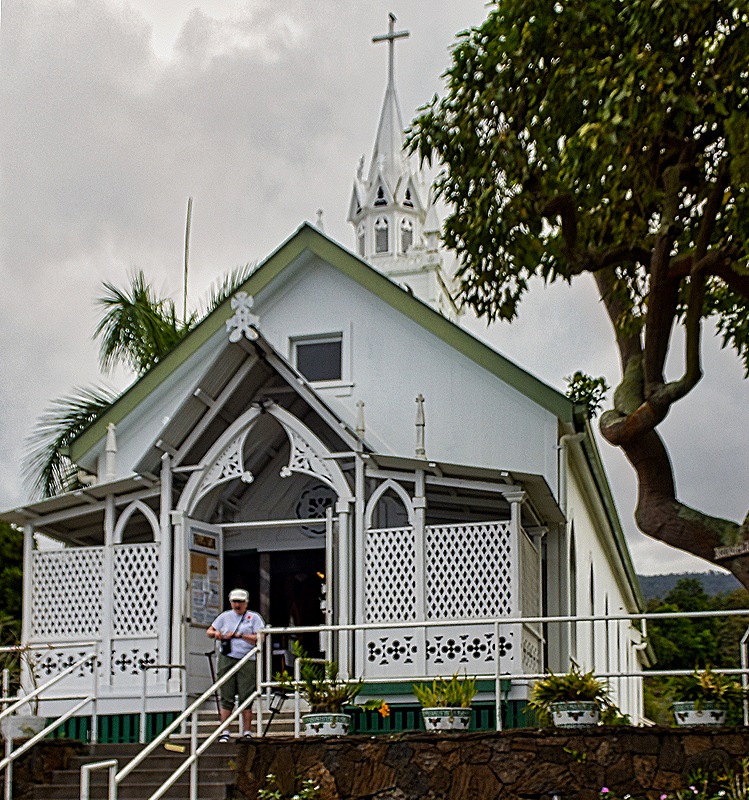
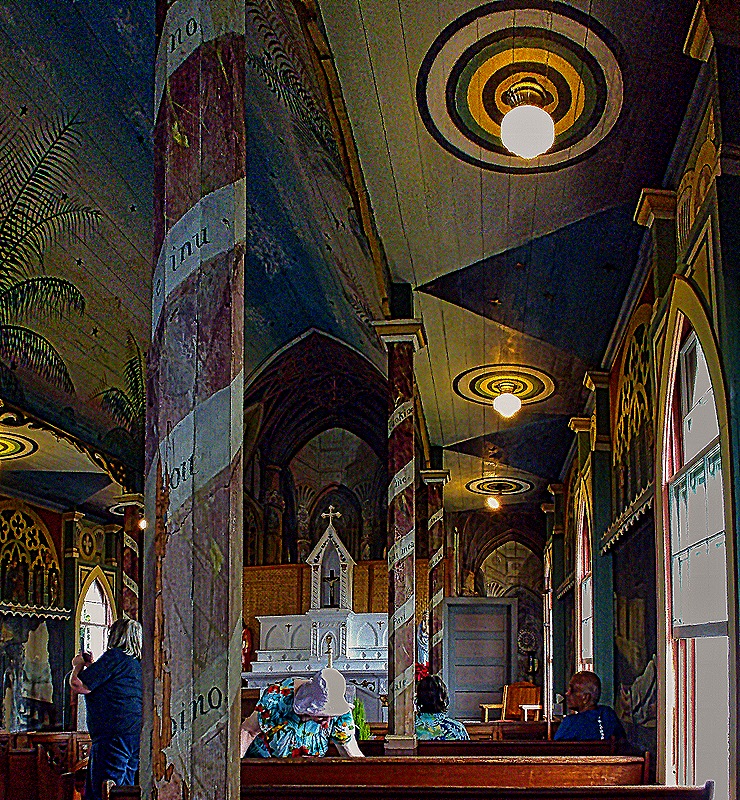
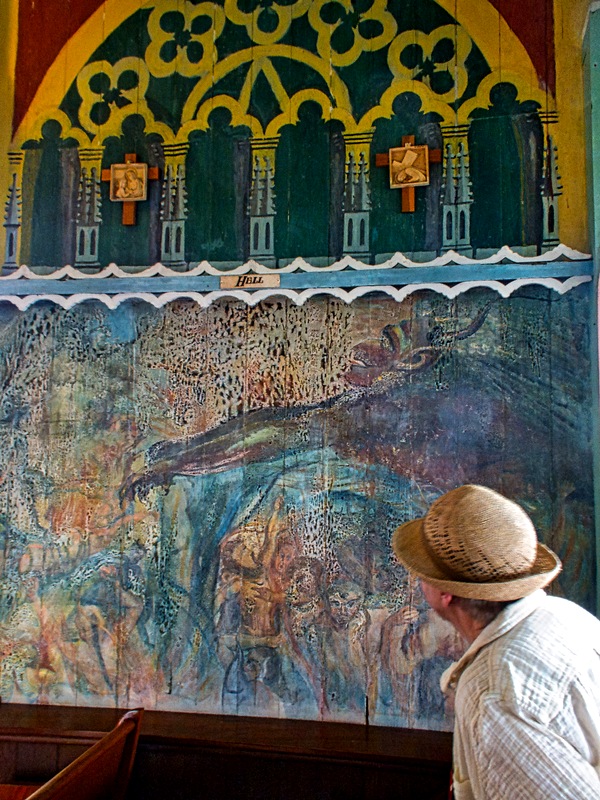
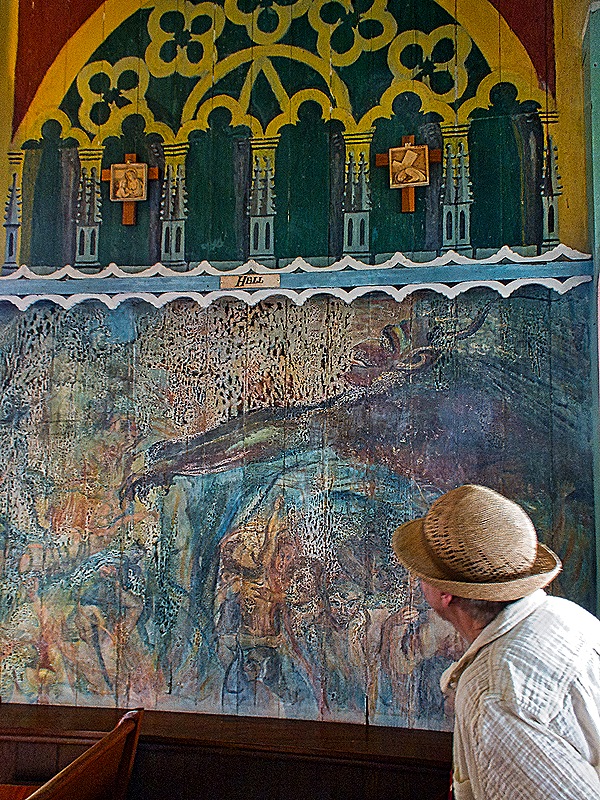
Next we visited St Benedict’s Catholic church in Honaunau. It was constructed beginning in 1899 under the direction of Father John Velghe, a Belgian missionary who led the church until he returned to Belgium in 1904. It is called “The Painted Church” because Father Velghe, with no artistic training, personally painted the entire inside of the church, using house paint on wood, between 1902 and 1904. The side walls have paintings of bible scenes, which served as teaching aids for a congregation that was largely illiterate. The wall behind the altar is painted to look like the inside of a European gothic cathedral. The support pillars are painted to resemble red marble with white paper spiraling up them containing religious sayings in the Hawaiian language, with palm fronds appearing to grow from them on the ceiling above. There are other “painted churches” in Hawaii, but this was the original. (Included below are three paintings depicting Cain & Abel studying Eve’s countenance, the temptation of Jesus (with the devil being cast out), and Mary (not the biblical one) looking at a depiction of Hell.)
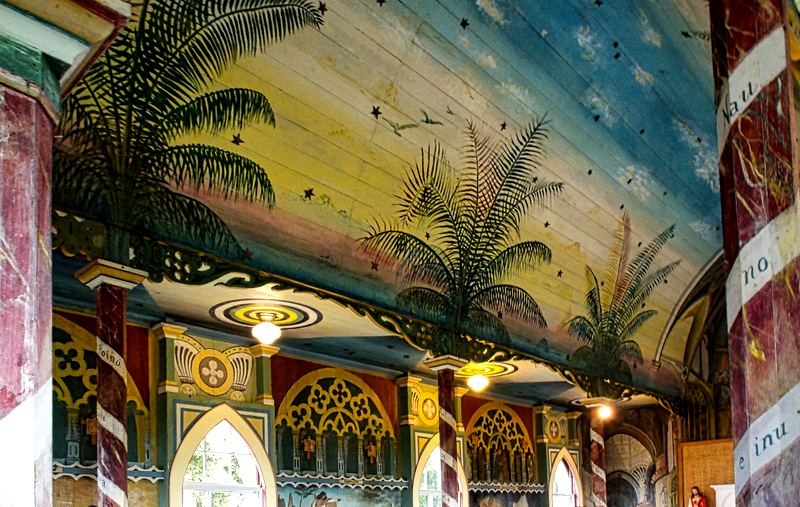
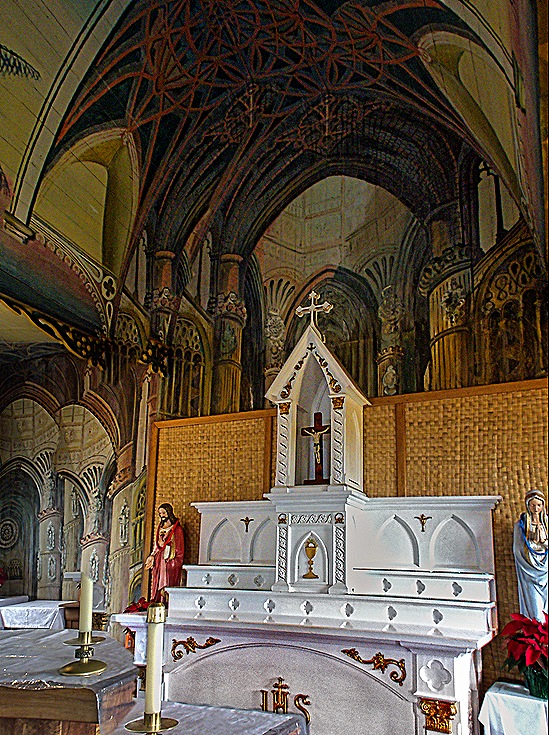
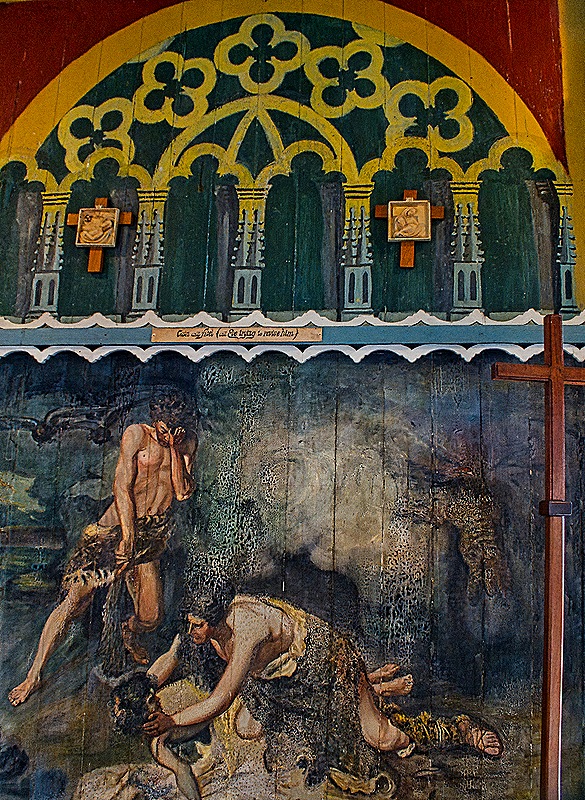
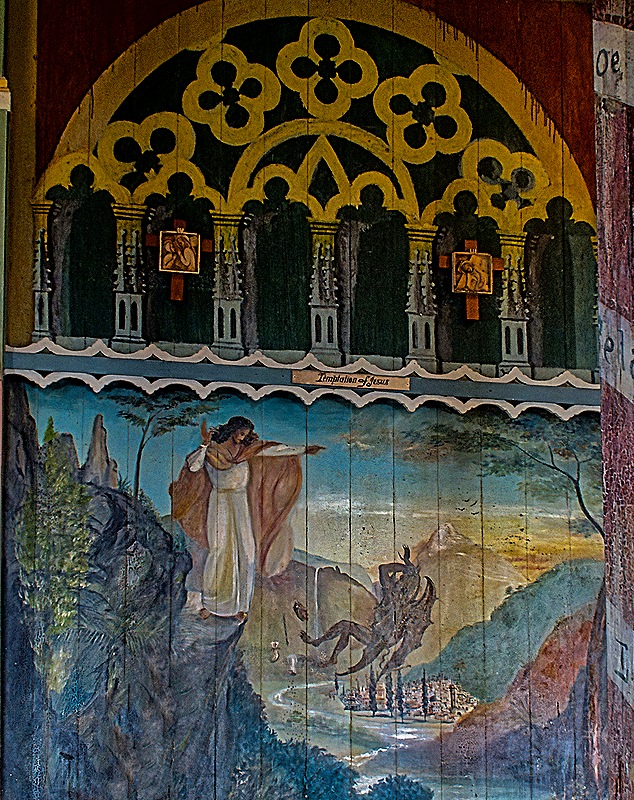
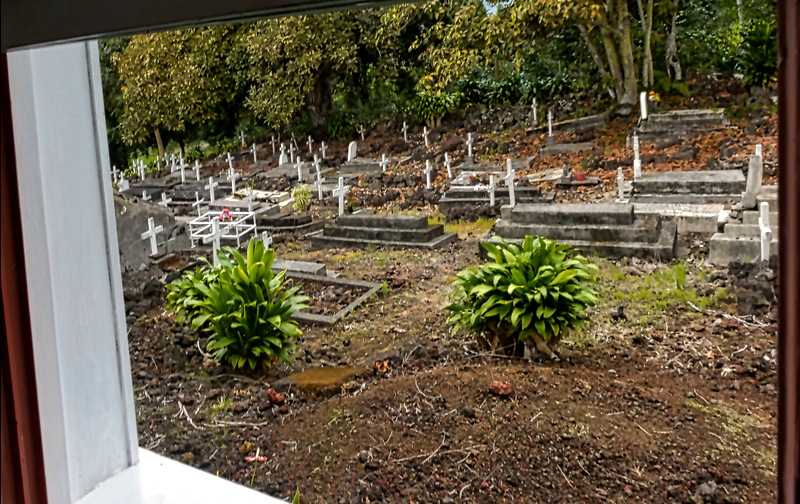
Through a window of the church we could see the cemetery; the view out the front door was of the ocean.
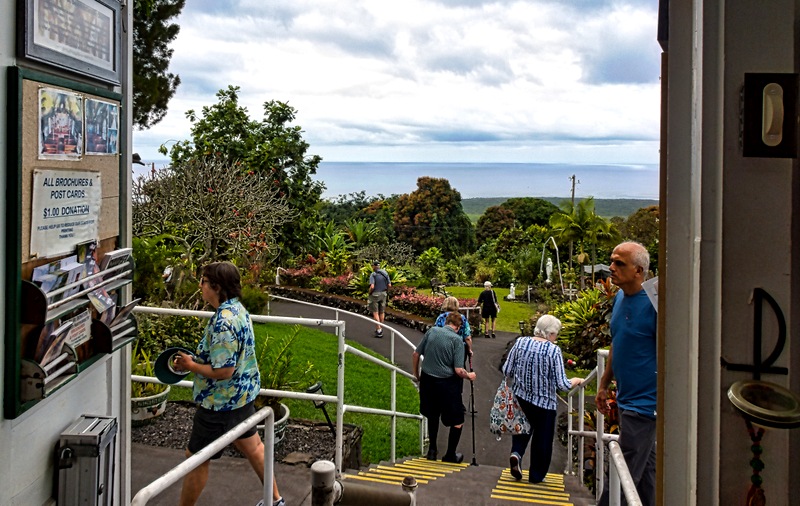
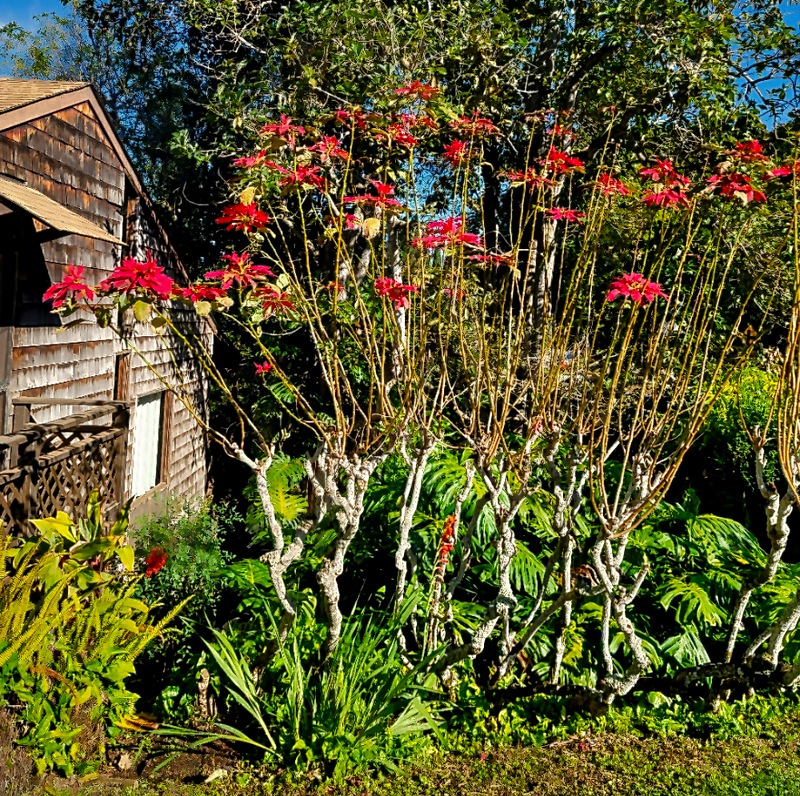
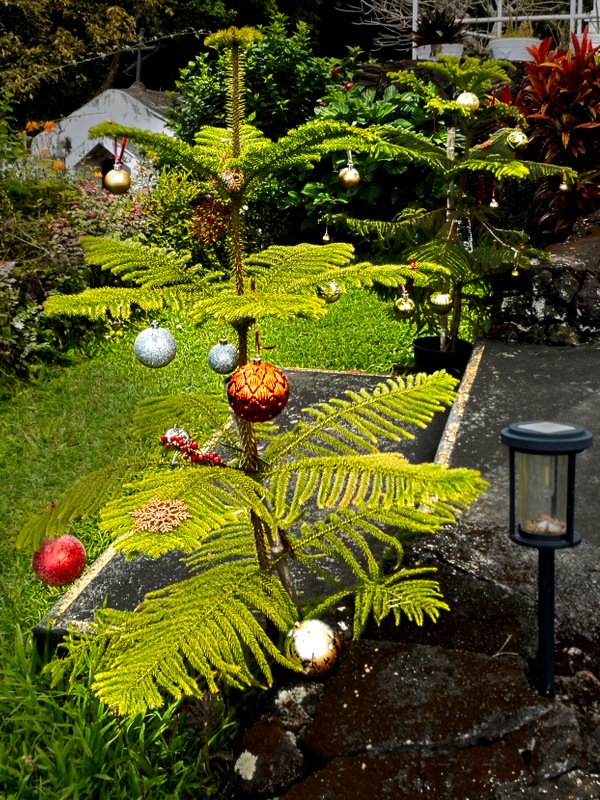
Outside were extensive and colorful gardens, highlighted by what looked like a couple of small fir trees decorated with Christmas ornaments.
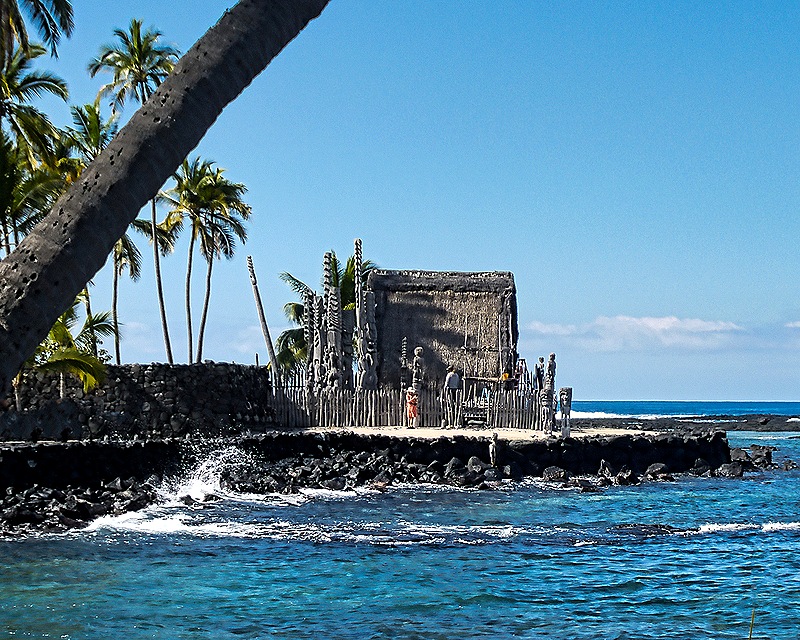
We continued on to Puʻuhonua o Hōnaunau National Historical Park. This was a “Place of Refuge” until the early 19th century, where individuals who had violated a sacred “kapu” (also known as taboo) could seek ritual cleansing and rehabilitation that would remove the applicable punishment of death. But to do so they would have to make it to the Hale o Keawe heiau (temple) here before being killed by pursuers seeking to enforce the kapu. This is a remote spot and reaching it while on the run was quite a challenge. The heiau was built in the 17th century.
But this was more than a Place of Refuge. There was a fishing village and artisan community. Kona’s last kings lived here on the other side of a wall from the heiau and their remains were buried here, as were other important nobles called ali’i. In 1829 the royal remains were moved to a hidden vault in the cliffs overlooking nearby Kealakekua Bay and the heiau was destroyed.
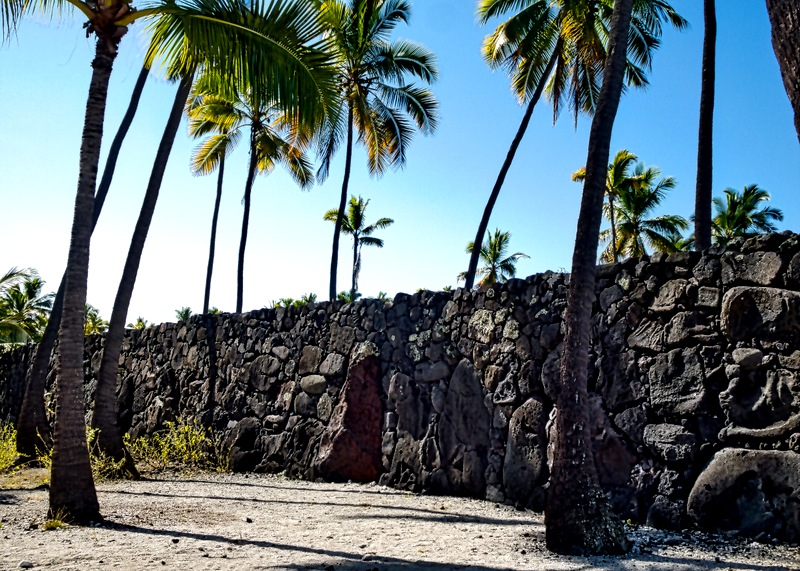
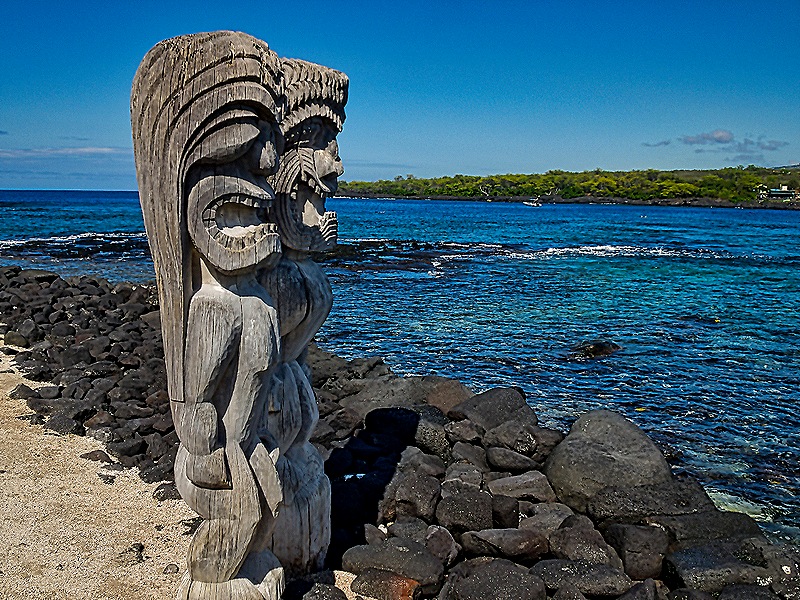
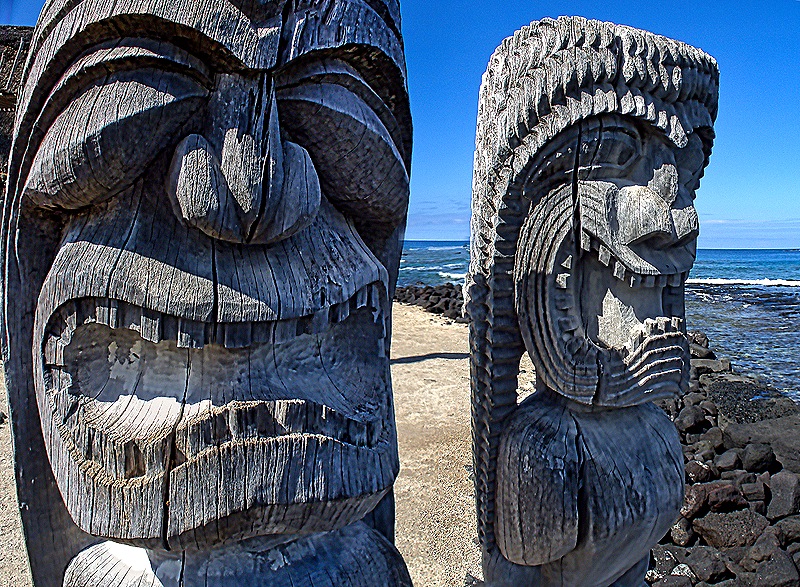
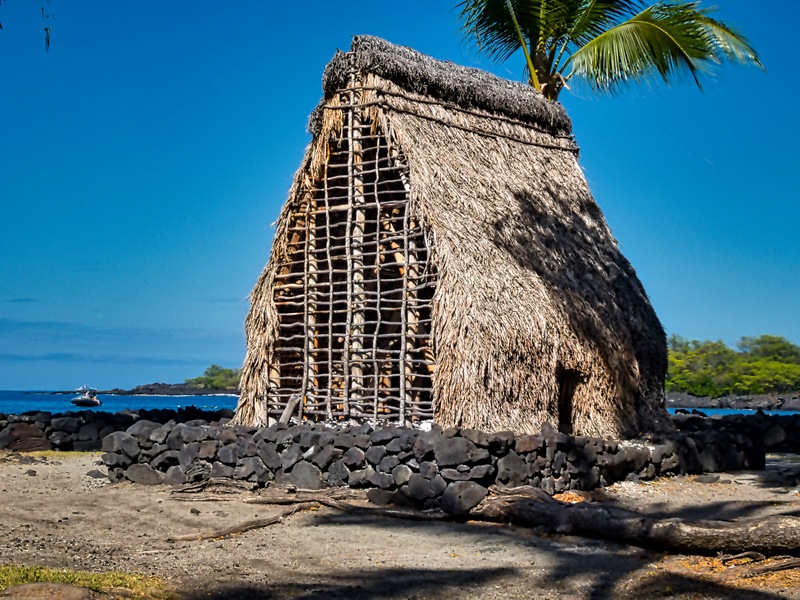
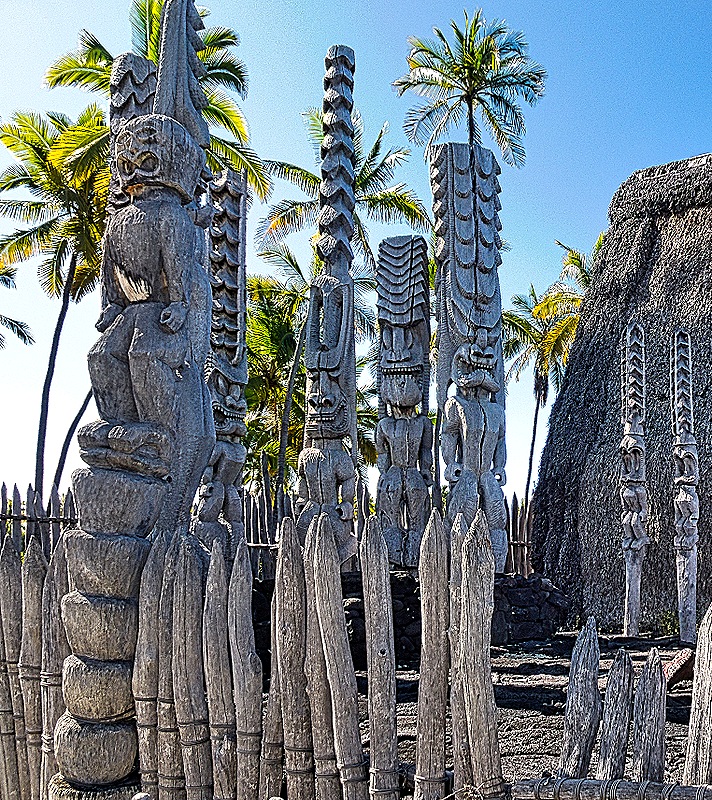
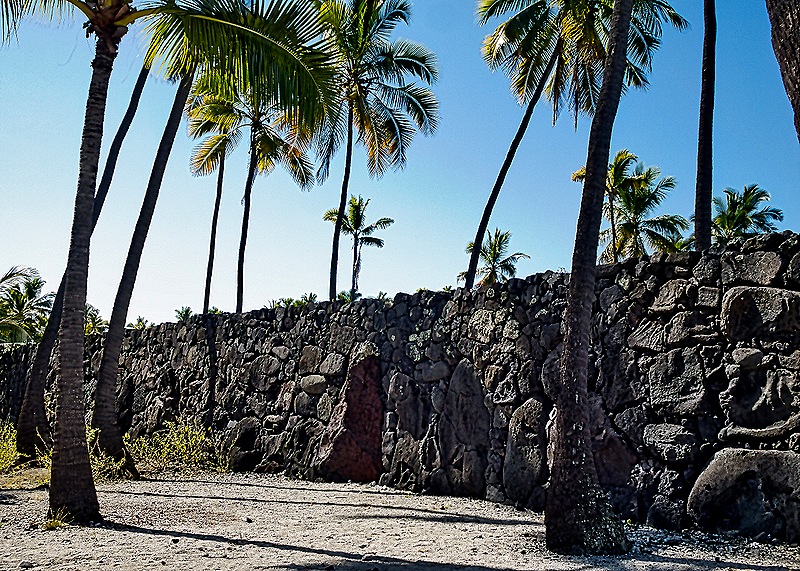
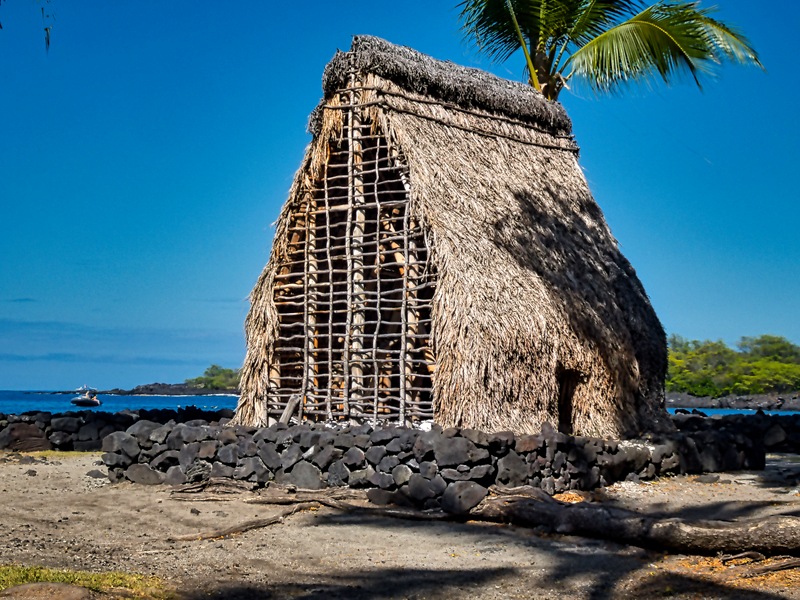
The national park was established in 1955 and in 1960 the heiau was rebuilt on its original site, based presumably upon archeological discoveries and 19th century drawings. Beside the rebuilt heiau are a number of fierce looking wooden carvings representing Hawaiian deities. The lava rock wall that separated the heiau from the royal residence is still there and still imposing (though it has probably been restored to some extent).
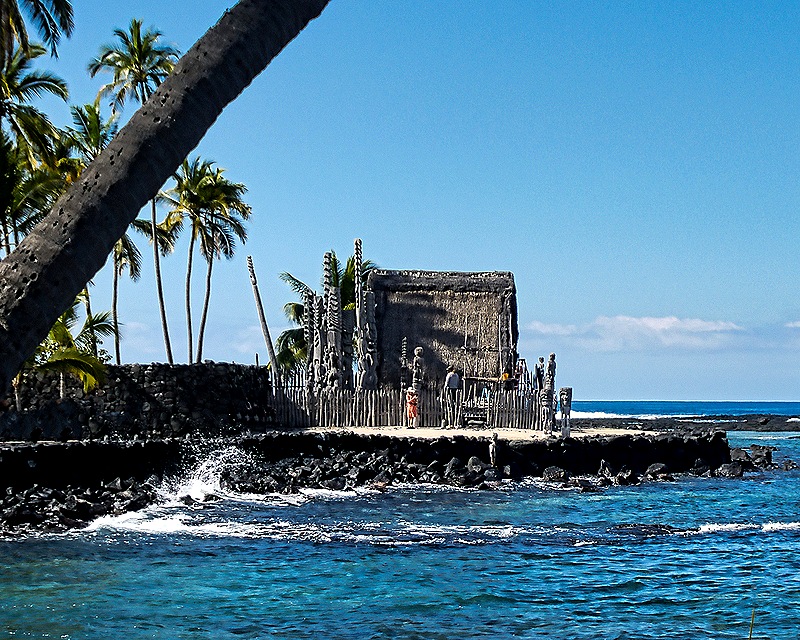
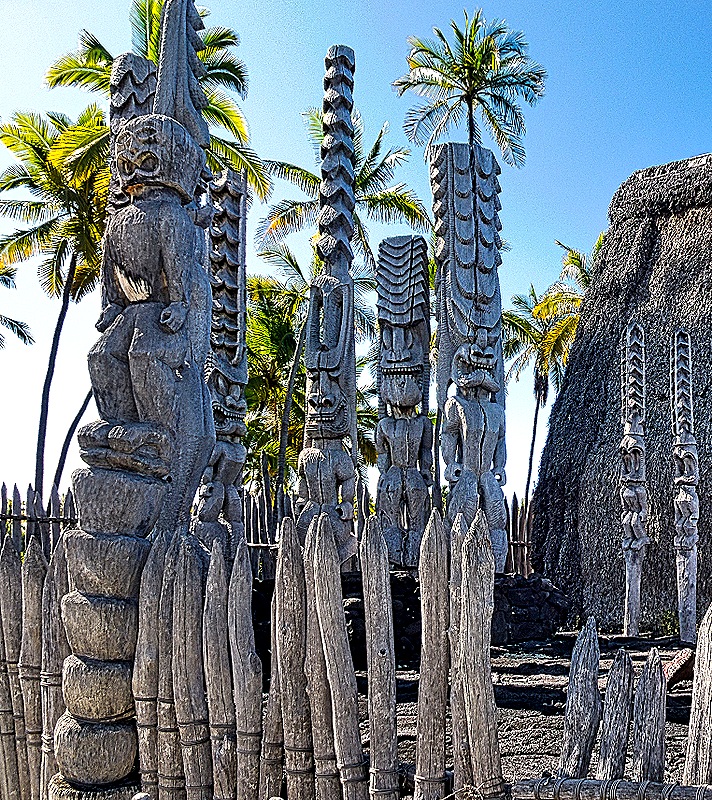
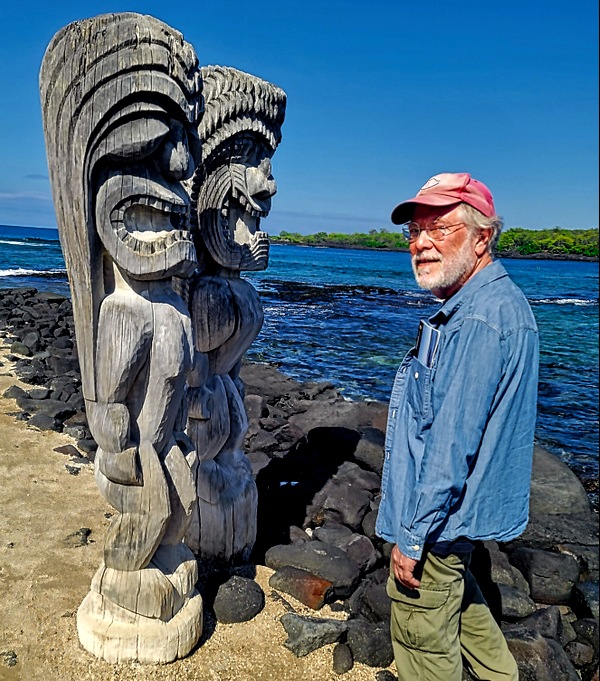
Standing on the rock sea wall in front of the heiau were a couple of carved guardians and there was another further down looking out over the water. Walking on the rocks by the water was kapu!
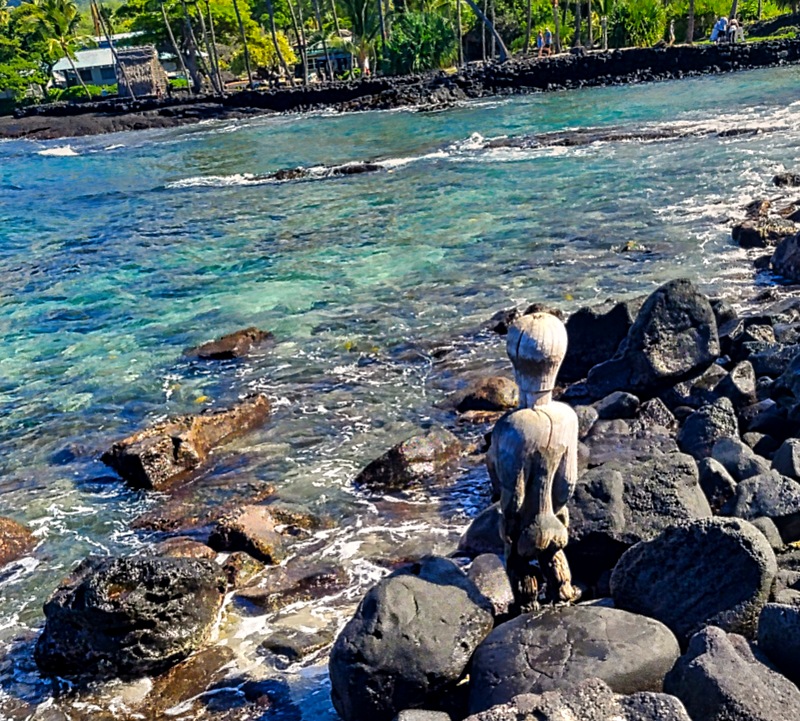
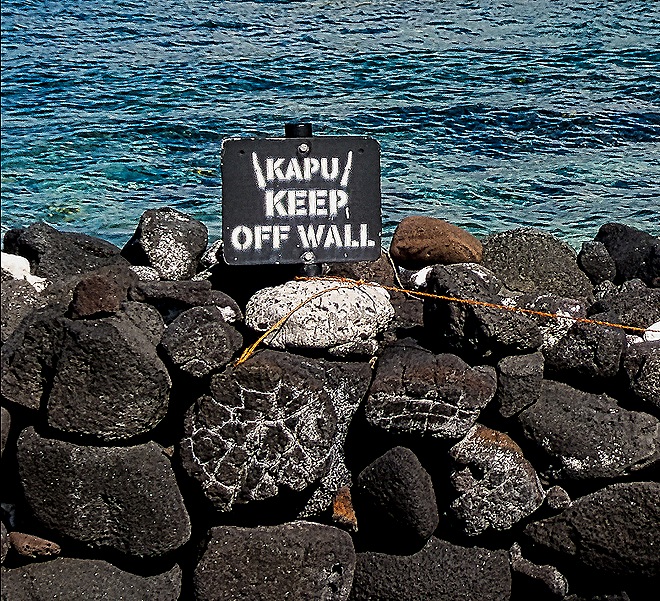
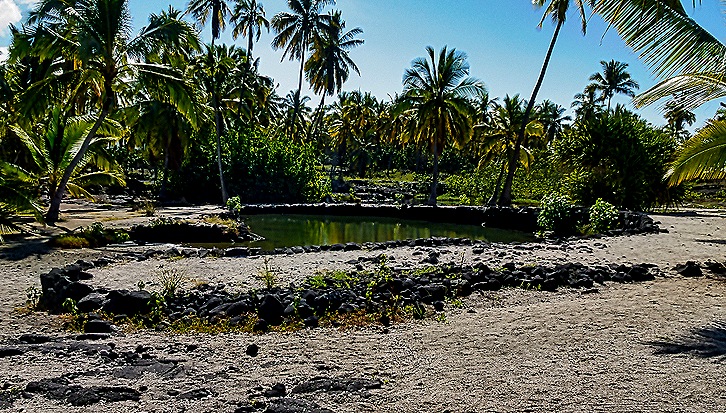
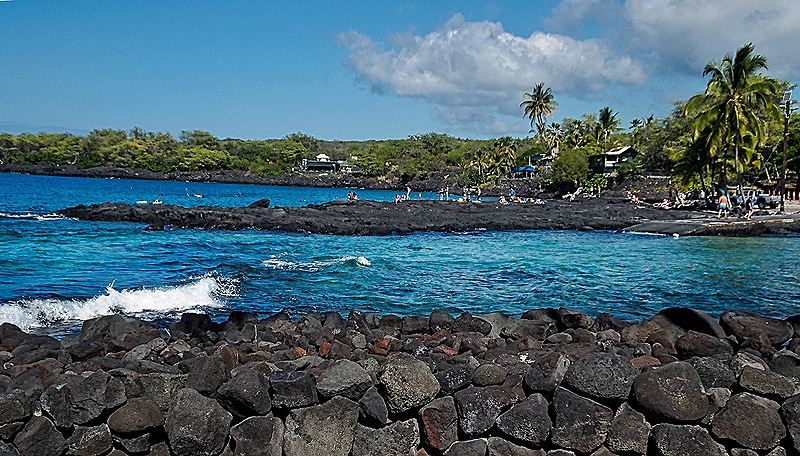
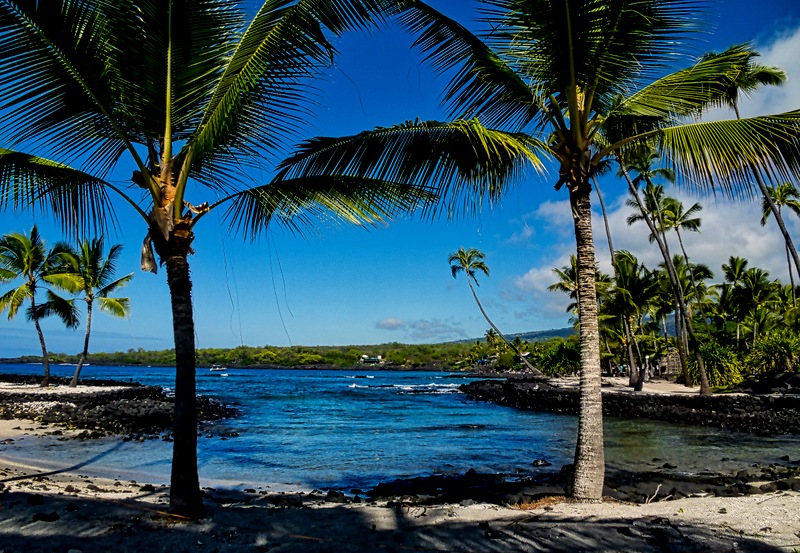
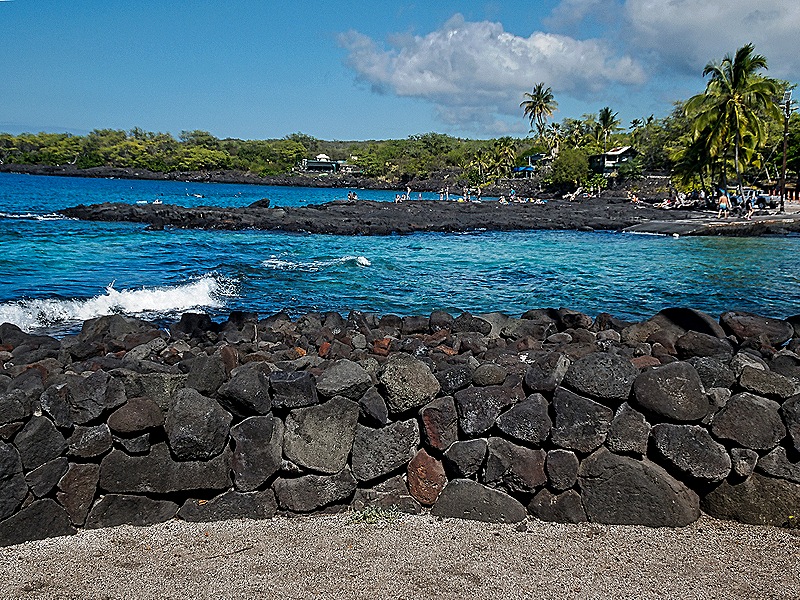
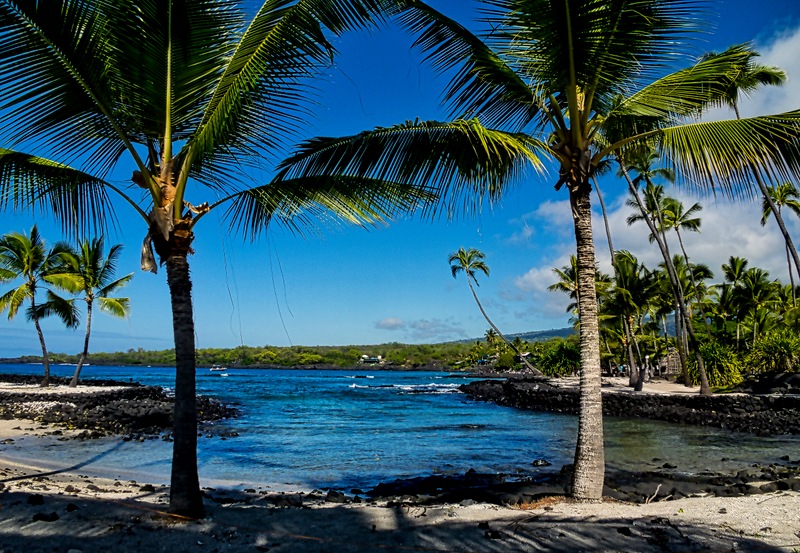
There were a few more reconstructed buildings on the site and also what once were fishing holes surrounded by sand. Across the water was a lava shelf for snorkeling (which is mostly forbidden inside the Park). As we returned to the bus we passed a very picturesque inlet, with which we will end our visit to the Park.
When we left the bus on the tender dock in Kona there was still plenty of time before all aboard. We met up with our friends Donna and Karen and went looking for the Quilt Museum that we had missed last time we were here, located by a quilt shop we had visited. When we got there the quilt shop and museum were gone. Some quick internet research enabled us to find the shop a few blocks away. They had lost their lease and had to move, but they had no space for the museum so we missed that again. It sure went fast, just two years since we were here. Maybe it will reappear before the next time we visit Kona, if that happens (you never know). The four of us had lunch at Quinn’s Almost By The Sea, where we ate last time we were here, and Karen’s brother Roger joined us for another good meal. We tendered back to the ship to rest up for a mountain trip tomorrow.


Leave a Reply