
Honolulu, Hawaii (Day 2) 2026
For January 11, our second day in Honolulu, we scheduled a private tour to Pearl Harbor. Pearl Harbor is a difficult place to visit on your own because it involves three different sites, tickets that usually must be arranged in advance, and there’s a lot to see in one day. This might be the way to go if you will be here for several days, but we had only one day so if anything didn’t work out as planned there would be no opportunity for a do-over. The tour we took was not cheap but it was really very good and enabled us to avoid all the logistical uncertainties.
We met our van in front of a park next to the cruise terminal. At the front of the park was a sculpture of a hula dancer with real flower leis hanging from her arms. At the back of the park was the Aloha Tower, 184 feet (10 stories) tall with another 40 feet of flagstaff. Built in 1926 it was the tallest building in Hawaii for 40 years. The top section has large clock faces on each side.


Our guide, Billy Crowe, was driving the van, which already had two other couples who were not from the cruise. Our first stop was the airport, where we picked up another couple who had just flown in for the day to do this tour (we dropped them back at the airport later on our way back to the pier). Billy was a retired park ranger who had spent many years at this park, so he was very knowledgeable and we learned quite a lot from him. We continued to Ford Island in the center of Pearl Harbor.
The national park includes a memorial to the victims who were killed here on the first day of the war and a few hundred yards away the ship on which the Japanese surrender documents were signed less than five years later to end the war. We visited them backwards from the war chronology, starting with the USS Missouri. As we walked to the entrance to the ship we passed a memorial to the men who died during the Japanese attack on the USS Oklahoma. The Oklahoma was a battleship commissioned in 1916 that had served during World War I. During the attack on December 7 the Oklahoma was docked along with a number of other battleships in an area called “Battleship Row.” It was hit by multiple torpedoes and capsized, trapping most of the crew inside. A few survived by jumping into oil covered water or climbing along a rope connecting it to another battleship, but 429 sailors and marines were killed. It was one of the few Pearl Harbor ships damaged so badly it couldn’t be salvaged. The memorial was erected on December 7, 2007.
 We walked on to the USS Missouri, passing on the way a statue of Admiral Chester Nimitz, who was Commander in Chief of the US Pacific Fleet. There is a large street in downtown Honolulu named for him. A whole row of American flags lined the walkway to the ship and in front of the ship were displayed the flags of all the US states in order of admission (we think).


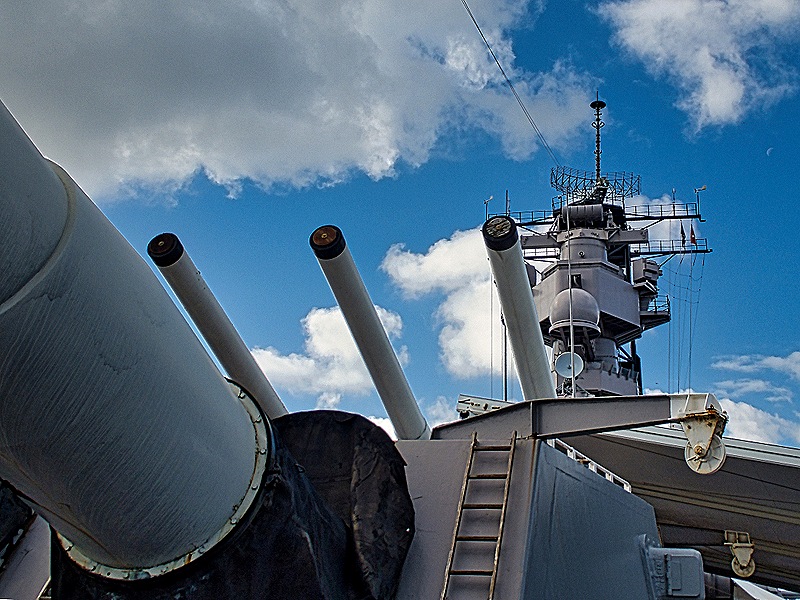
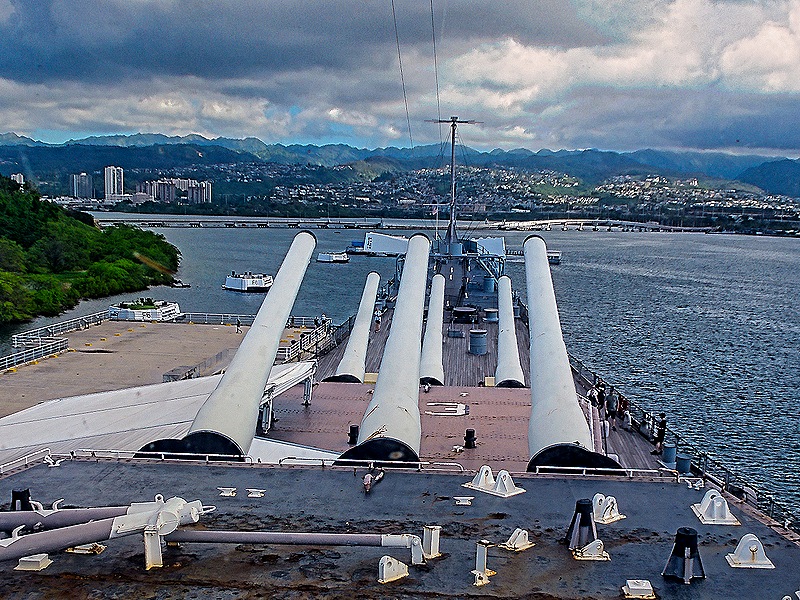
The USS Missouri is here representing the end of World War II because the Japanese documents of surrender were signed on the quarterdeck of this ship on the morning of August 31, 1945. The 23 minute signing ceremony was broadcast on radio throughout the world. The ship was anchored in Tokyo Bay near where Admiral Perry had anchored in 1853 on his mission to open Japan to international trade, and the flag flown by Admiral Perry at that time was displayed on the Missouri on the day of the signing. There is a round bronze plaque on the deck at the location where the signing desk stood.


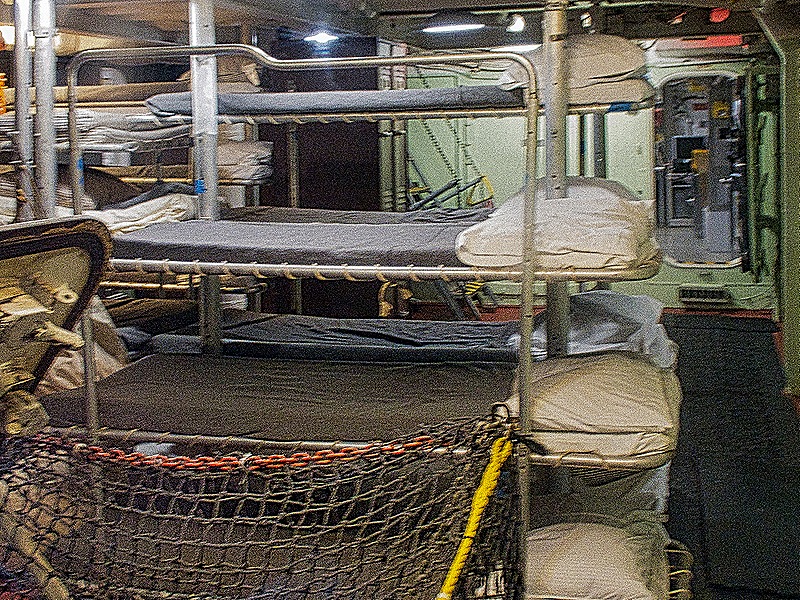
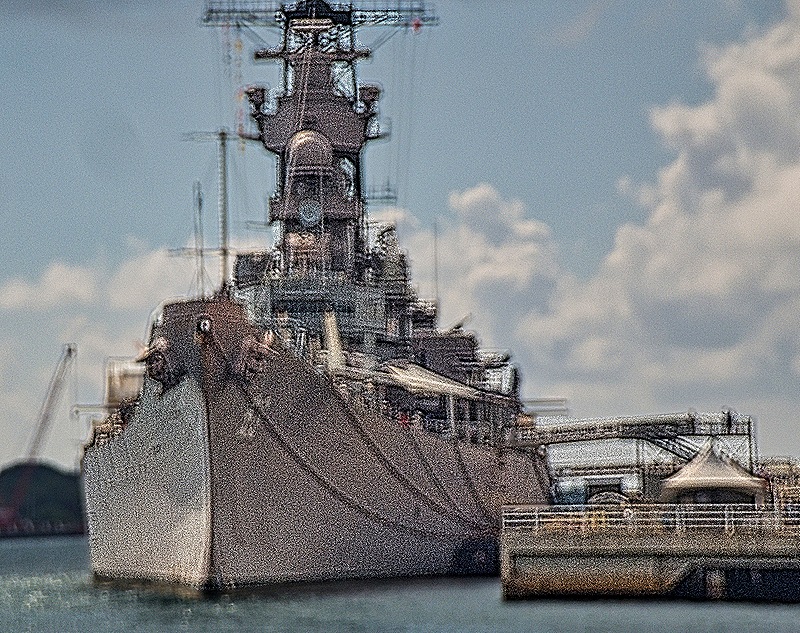
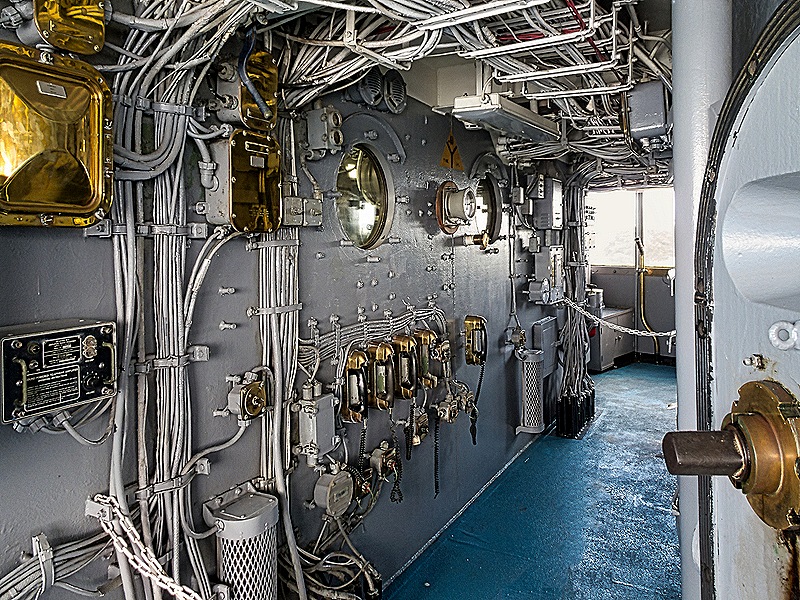
The USS Missouri was the last battleship commissioned by the United States, launched in January, 1944. Having served in World War II, Korea and the Gulf War. the ship was decommissioned and moved to Pearl Harbor in the 1990’s and was opened to the public as a museum in 1999. It was updated several times over its lifetime and had previously been decommissioned between 1955 and 1984. We had enough time there to explore the ship, but Billy was unable to guide us here (or in the other venues) because private guides are not permitted to lead tours in Pearl Harbor. There were park rangers in some places to explain the facilities, however, and they were rather good. One interesting story, for example, was about a kamikaze that crashed on the side of the ship in April of 1945, which caused little damage to the ship but destroyed the plane. The pilot’s body was recovered and the next day the ship held a formal burial at sea, with the body wrapped in a Japanese flag sewn overnight by several of the crew.




Leaving the Missouri we reboarded the van and drove to the large visitors’ center that provides access to the two other vessels we were to visit. It is operated by the National Park Service in cooperation with the Navy and more than a million people visit every year. Again Billy could not accompany us, but he gave us detailed instructions about how to negotiate the facility and make it to the boat that would take us to the USS Arizona Memorial. There was a fairly short film to watch about the December 7 attack and then we had to find the boat dock (not as easy as we had hoped). You need to have a ticket reserved in advance since only a few are held back for those in the stand by line who arrived without one. In addition to the movie theater the visitor center complex has souvenir stores and some exhibits, but we didn’t have time for that. We boarded the boat and headed for the Memorial. The Memorial is a simply designed long white building situated over the central portion of the USS Arizona sitting on the bottom under about 40 feet of water. It is very striking, particularly on a day with dark clouds as when we visited. Our boat moored at one end of the memorial where there was a metal walkway leading us to the entrance.


The USS Arizona was a battleship commissioned in 1916. It was part of the Pacific fleet before the war when President Roosevelt ordered it to relocate to Pearl Harbor as a deterrent to the Japanese. The Arizona was scheduled to leave Hawaii in November of 1941 for an overhaul, but a collision with the USS Oklahoma on October 22 damaged its bow which led to its putting in to Pearl Harbor for repairs instead. The surprise attack by Japanese planes from several aircraft carriers began at 8:00 AM on December 7 and about10 minutes later the Arizona was sinking toward the bottom. It was struck by four armor piercing bombs, the last of which penetrated the forward deck and about seven seconds later the forward munition magazines exploded, destroying much of the interior of the forward part of the ship and bringing down the conning tower and the forward turrets. The fires burned for 2 days as the ship sat on the bottom with only its top parts above the water. 1,177 of the 1,512 crew on board were killed, about half of all the American lives lost during the attack.
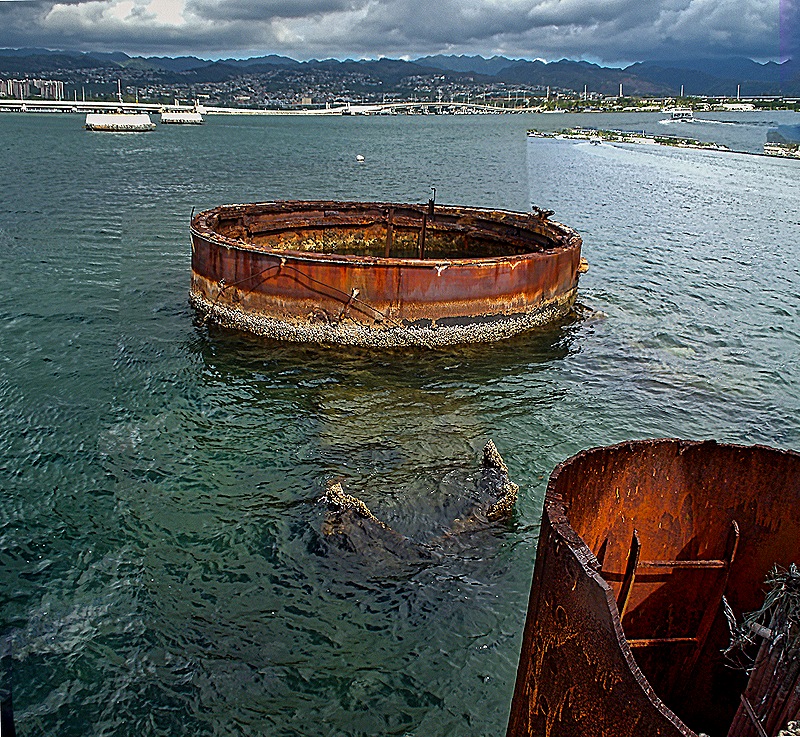
The memorial opened in May, 1962. It is 185 feet long, 36 feet wide and 21 feet tall. According to the architect Alfred Preis (who had been a detainee when the war started because of his Austrian birth), the sagging center and strong tall ends were intended to express “initial defeat and ultimate victory. . . .” The atmosphere here is very quiet as visitors contemplate what it represents, each with their own views and memories. The main room has seven windows along each wall and an opening in the floor where you can look down at the ship and, for those who want to, drop flowers in the water. From the windows on one side you can see the USS Missouri and several parts of the Arizona that remain above water, including the barbette (or base) for one of the triple gun turrets, the base of the ship’s funnel (we think), and several mooring bitts along one edge of the ship. The item we think is the base of the funnel has a metal ladder attached to the inside of its wall. The amount you can see clearly depends on the tide.



At the end farthest from the entrance to the Memorial is a smaller and darker room called the shrine. Its largest wall is covered in marble bearing the names of all the men killed on the Arizona on December 7. There is a small slab of marble on the left with the names of some 30 crew who survived the sinking. All this is behind velvet ropes and sunlight enters from the side through windows giving a restrained, almost church-like glow. The marble exhibits have been replaced twice (so far) because of deterioration of the marble. Survivors of the Arizona sinking have been entitled to have their remains deposited inside the ship by divers if they want to rejoin their long ago shipmates. Our guide Billy was one of those divers when he was working here. The last survivor, 102 year old Lou Conter, died in April, 2024, just a year and a half before our visit here.

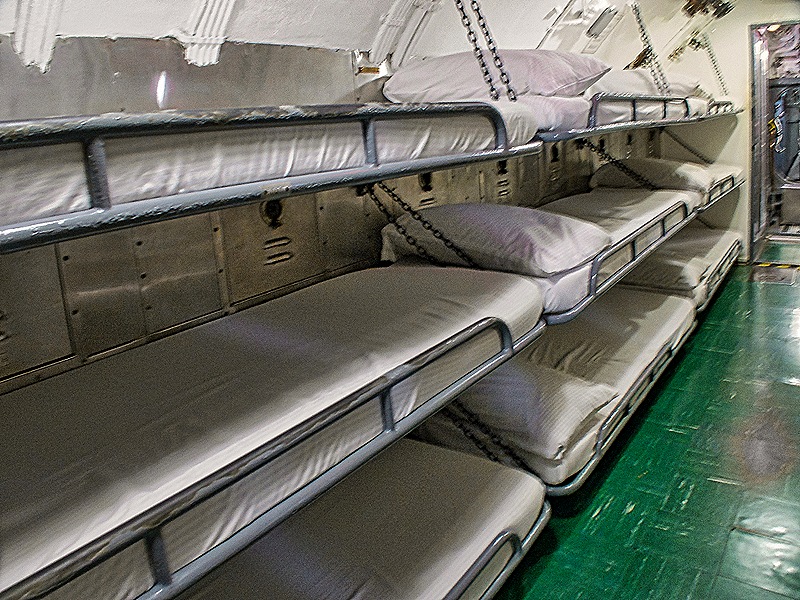
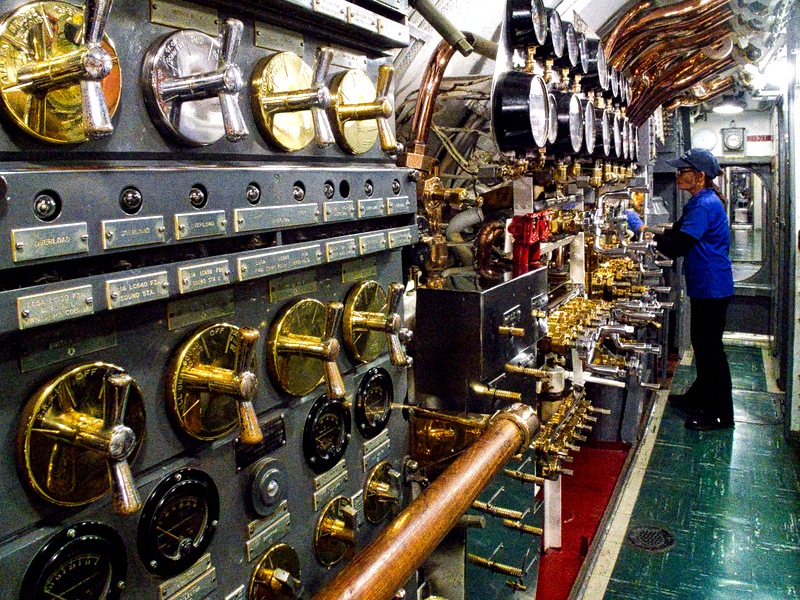
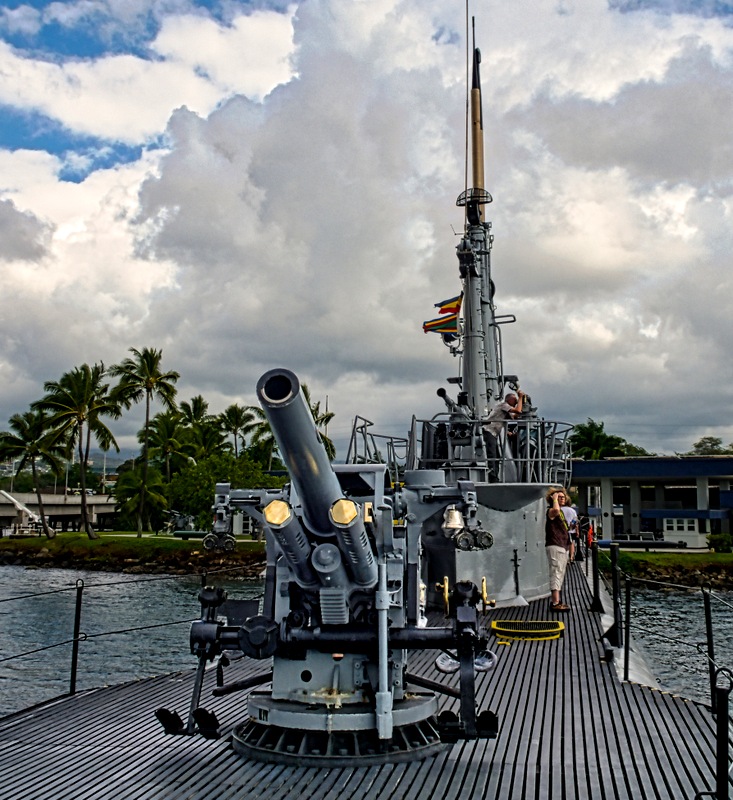
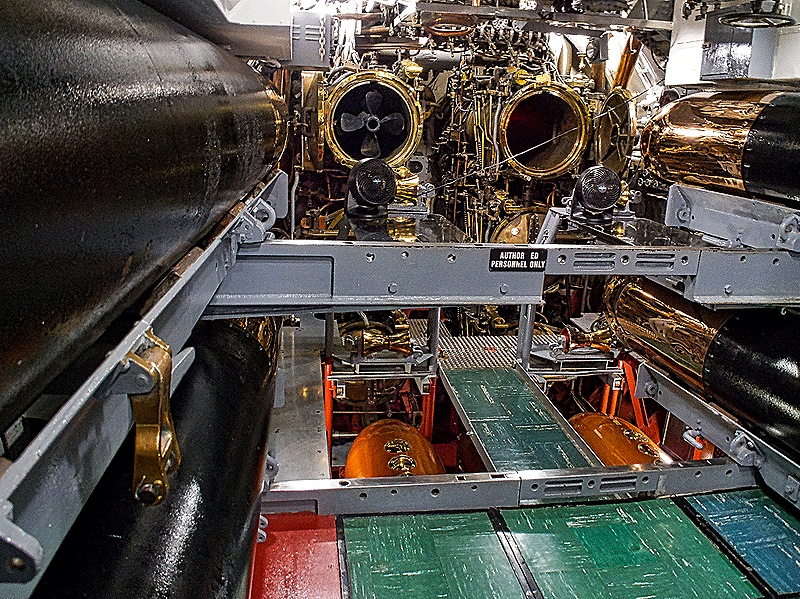
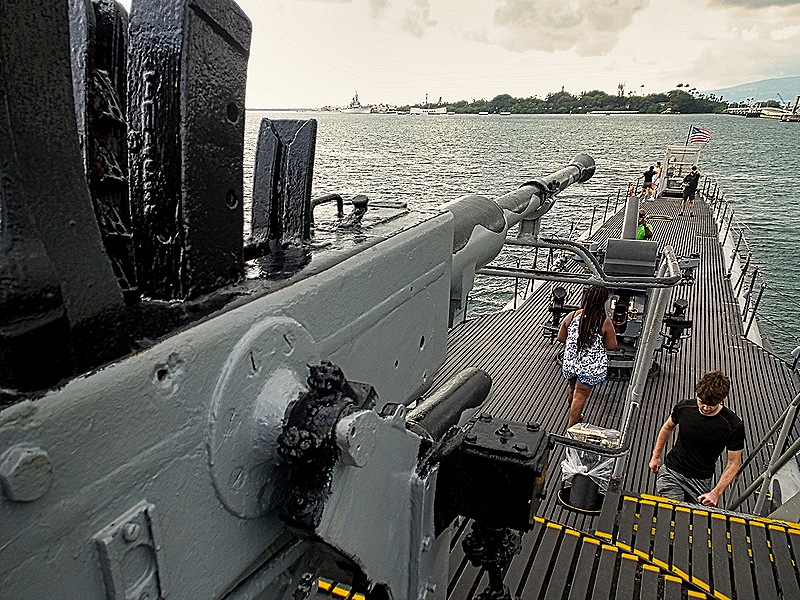
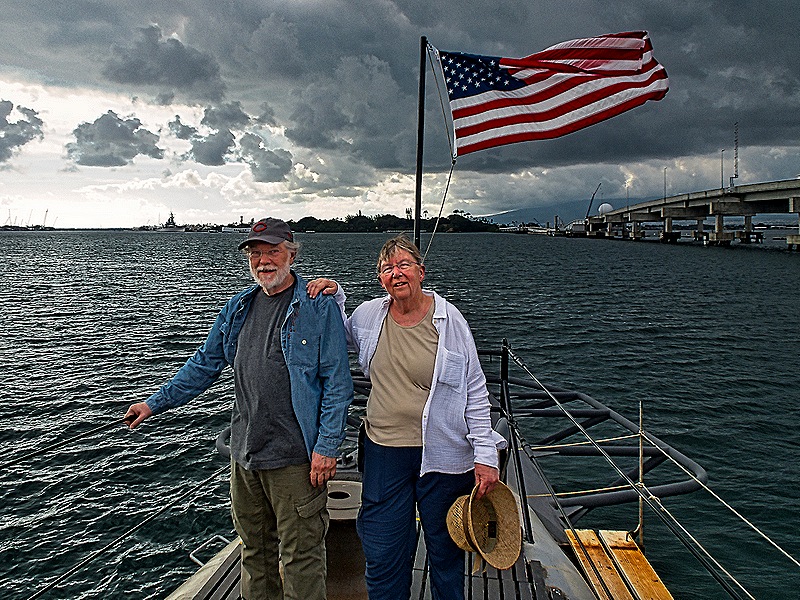
We returned to the visitor center complex and had a quick lunch at a food court near our last destination, the Bowfin submarine. The Bowfin was launched on December 7, 1942, the first anniversary of the Pearl Harbor surprise attack. It conducted nine patrols over the next two years, successfully sinking or maiming a number of Japanese ships, and also served during the Korean war. It was first opened to the public in April, 1981, and a submarine museum was opened nearby in 1988. We boarded the submarine on a ramp attached to its bow then went down and walked through its length, from the forward torpedo room through sleeping facilities (3 layers of bunks) and operations areas, all very crowded. We came up on deck at the aft near the US flag and walked forward past some sort of cannon and an anti-aircraft gun mounted in front of the tower.



We walked back to the van and left Pearl Harbor. We stopped again at the airport to drop off the couple who had flown in for the tour, then back to the cruise terminal. We had a nice dinner and then to bed, since we had another excursion the next morning on a different island.







Leave a Reply