Prelude: The First American Cruise to the Mediterranean
We usually think of cruising as a relatively recent phenomenon, but in fact the first American pleasure cruise to the Mediterranean came right after the Civil War, in 1867. Of course, ships were not as fast as they are now & the cruise lasted months longer than ours. The ship was called the Quaker City and there were 65 passengers who paid $1200 apiece to make the trip (a whole lot of money in those days). Here is the Quaker City at sea on a not very nice day:

The trip was something of a sensation in the United States. A big crowd turned out for its departure and people followed the cruisers’ exploits in the newspapers. As well they might, since the dispatches were being written by a very young Samuel Clemens writing under his byline of Mark Twain. After the trip ended Twain compiled and extended his newspaper reports into a book called “The Innocents Abroad,” which was his first best-seller. Like most of Twain’s works, it makes highly entertaining reading, both funny & enlightening. Anyone interested in Mediterranean travel, and in how much has (and hasn’t) changed in 150 years, would likely enjoy it. If you have an ereader, you can download it for free at: http://www.gutenberg.org/ebooks/3176. (A more contemporary, though in my view much less companionable, account of a trip around the Mediterranean – but mostly not by cruise ship – is “The Pillars of Hercules” by Paul Theroux, which is also available as an ebook, but not for free unless you can borrow it from your library.)
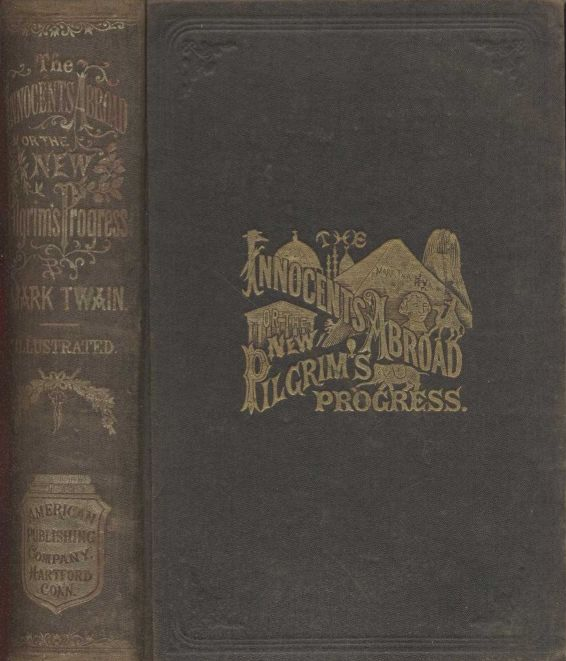
As Twain explains, this cruise was widely viewed as an exciting new kind of adventure (he makes it sound even more exciting than ours, which seems pretty exciting to us):
For months the great pleasure excursion to Europe and the Holy Land was chatted about in the newspapers everywhere in America and discussed at countless firesides. It was a novelty in the way of excursions—its like had not been thought of before, and it compelled that interest which attractive novelties always command. It was to be a picnic on a gigantic scale. The participants in it, instead of freighting an ungainly steam ferry-boat with youth and beauty and pies and doughnuts, and paddling up some obscure creek to disembark upon a grassy lawn and wear themselves out with a long summer day’s laborious frolicking under the impression that it was fun, were to sail away in a great steamship with flags flying and cannon pealing, and take a royal holiday beyond the broad ocean in many a strange clime and in many a land renowned in history! They were to sail for months over the breezy Atlantic and the sunny Mediterranean; they were to scamper about the decks by day, filling the ship with shouts and laughter—or read novels and poetry in the shade of the smokestacks, or watch for the jelly-fish and the nautilus over the side, and the shark, the whale, and other strange monsters of the deep; and at night they were to dance in the open air, on the upper deck, in the midst of a ballroom that stretched from horizon to horizon, and was domed by the bending heavens and lighted by no meaner lamps than the stars and the magnificent moon—dance, and promenade, and smoke, and sing, and make love, and search the skies for constellations that never associate with the "Big Dipper" they were so tired of; and they were to see the ships of twenty navies—the customs and costumes of twenty curious peoples—the great cities of half a world—they were to hob-nob with nobility and hold friendly converse with kings and princes, grand moguls, and the anointed lords of mighty empires! It was a brave conception; it was the offspring of a most ingenious brain. It was well advertised, but it hardly needed it: the bold originality, the extraordinary character, the seductive nature, and the vastness of the enterprise provoked comment everywhere and advertised it in every household in the land.
In the conclusion of the book, Twain looks back on the experience and eloquently expresses some of the same reasons that many people today favor this mode of travel:
And I will say, here, that I would rather travel with an excursion party of Methuselahs than have to be changing ships and comrades constantly, as people do who travel in the ordinary way. Those latter . . . have . . . that other misery of packing and unpacking trunks—of running the distressing gauntlet of custom-houses—of the anxieties attendant upon getting a mass of baggage from point to point on land in safety. I had rather sail with a whole brigade of patriarchs than suffer so. We never packed our trunks but twice—when we sailed from New York, and when we returned to it. Whenever we made a land journey, we estimated how many days we should be gone and what amount of clothing we should need, figured it down to a mathematical nicety, packed a valise or two accordingly, and left the trunks on board. We chose our comrades from among our old, tried friends, and started. We were never dependent upon strangers for companionship. We often had occasion to pity Americans whom we found traveling drearily among strangers with no friends to exchange pains and pleasures with. Whenever we were coming back from a land journey, our eyes sought one thing in the distance first—the ship—and when we saw it riding at anchor with the flag apeak, we felt as a returning wanderer feels when he sees his home. When we stepped on board, our cares vanished, our troubles were at an end—for the ship was home to us. We always had the same familiar old state-room to go to, and feel safe and at peace and comfortable again.
I have no fault to find with the manner in which our excursion was conducted. Its programme was faithfully carried out—a thing which surprised me, for great enterprises usually promise vastly more than they perform. It would be well if such an excursion could be gotten up every year and the system regularly inaugurated. Travel is fatal to prejudice, bigotry and narrow-mindedness, and many of our people need it sorely on these accounts. Broad, wholesome, charitable views of men and things can not be acquired by vegetating in one little corner of the earth all one’s lifetime.
Twain also addresses the closest 19th century equivalent to this blogging enterprise — passengers keeping journals of the trip:
Behind the long dining tables on either side of the saloon, and scattered from one end to the other of the latter, some twenty or thirty gentlemen and ladies sat them down under the swaying lamps and for two or three hours wrote diligently in their journals. Alas! that journals so voluminously begun should come to so lame and impotent a conclusion as most of them did! I doubt if there is a single pilgrim of all that host but can show a hundred fair pages of journal concerning the first twenty days’ voyaging in the Quaker City, and I am morally certain that not ten of the party can show twenty pages of journal for the succeeding twenty thousand miles of voyaging! At certain periods it becomes the dearest ambition of a man to keep a faithful record of his performances in a book; and he dashes at this work with an enthusiasm that imposes on him the notion that keeping a journal is the veriest pastime in the world, and the pleasantest. But if he only lives twenty-one days, he will find out that only those rare natures that are made up of pluck, endurance, devotion to duty for duty’s sake, and invincible determination may hope to venture upon so tremendous an enterprise as the keeping of a journal and not sustain a shameful defeat.
One of our favorite youths, Jack, a splendid young fellow with a head full of good sense, and a pair of legs that were a wonder to look upon in the way of length and straightness and slimness, used to report progress every morning in the most glowing and spirited way, and say: "Oh, I’m coming along bully!" (he was a little given to slang in his happier moods.) "I wrote ten pages in my journal last night—and you know I wrote nine the night before and twelve the night before that. Why, it’s only fun!" "What do you find to put in it, Jack?" "Oh, everything. Latitude and longitude, noon every day; and how many miles we made last twenty-four hours; and all the domino games I beat and horse billiards; and whales and sharks and porpoises; and the text of the sermon Sundays (because that’ll tell at home, you know); and the ships we saluted and what nation they were; and which way the wind was, and whether there was a heavy sea, and what sail we carried, though we don’t ever carry any, principally, going against a head wind always—wonder what is the reason of that?—and how many lies Moult has told—Oh, every thing! I’ve got everything down. My father told me to keep that journal. Father wouldn’t take a thousand dollars for it when I get it done." "No, Jack; it will be worth more than a thousand dollars—when you get it done." "Do you?—no, but do you think it will, though? "Yes, it will be worth at least as much as a thousand dollars—when you get it done. May be more." "Well, I about half think so, myself. It ain’t no slouch of a journal."
But it shortly became a most lamentable "slouch of a journal." One night in Paris, after a hard day’s toil in sightseeing, I said: "Now I’ll go and stroll around the cafes awhile, Jack, and give you a chance to write up your journal, old fellow." His countenance lost its fire. He said: "Well, no, you needn’t mind. I think I won’t run that journal anymore. It is awful tedious. Do you know—I reckon I’m as much as four thousand pages behind hand. I haven’t got any France in it at all. First I thought I’d leave France out and start fresh. But that wouldn’t do, would it? The governor would say, ‘Hello, here—didn’t see anything in France? That cat wouldn’t fight, you know. First I thought I’d copy France out of the guide-book, like old Badger in the for’rard cabin, who’s writing a book, but there’s more than three hundred pages of it. Oh, I don’t think a journal’s any use—do you? They’re only a bother, ain’t they?"
"Yes, a journal that is incomplete isn’t of much use, but a journal properly kept is worth a thousand dollars—when you’ve got it done." "A thousand!—well, I should think so. I wouldn’t finish it for a million." His experience was only the experience of the majority of that industrious night school in the cabin. If you wish to inflict a heartless and malignant punishment upon a young person, pledge him to keep a journal a year.
So Twain was apparently the only one to complete his journal of the cruise, not only because he was a professional writer but because he was financing the trip at least partly through his newspaper accounts of the journey. Unlike Twain we have no financial incentive to complete this blog, but we expect to do so anyway. Many entries will be delayed, sometimes substantially (I had hoped to post this entry earlier, but had technical difficulties), because this is a time consuming effort & our port schedule is crowded (sea days are really the only ones in which there is enough time to organize photographs & write blog posts). There is likely to be a flurry of overdue posts at the end of the trip. But stay with us; we will complete it, even if we do not finish until after we get home, and the timing really doesn’t affect how much you enjoy the blog postings, does it? Meanwhile, get a copy of The Innocents Abroad to keep you entertained and on message until our pictures of these places begin to arrive (I am pretty certain that this is the only post that will have so many words & so few pictures).
More of the Wedding of Carrie Bader & Michael Jarvis (January 19, 2013)
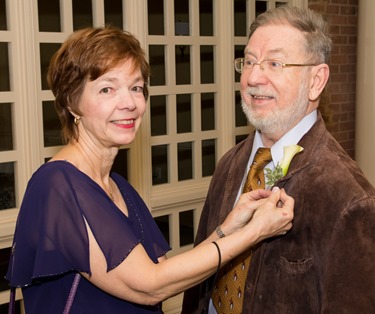
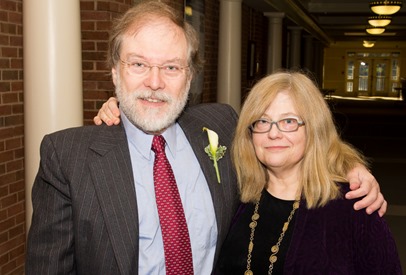
We have more pictures of the wedding now, so here are a few more (I know, it looks like a lot more, but believe me this is a small selection). They are largely chronological, and looking over these I find that the Jarvis family is unfairly underrepresented. So, my apologies to them. I will let the pictures speak for themselves rather than bore you with commentary. But if you move your mouse over a picture a somewhat informative caption will pop up.

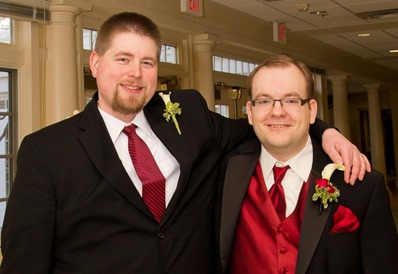


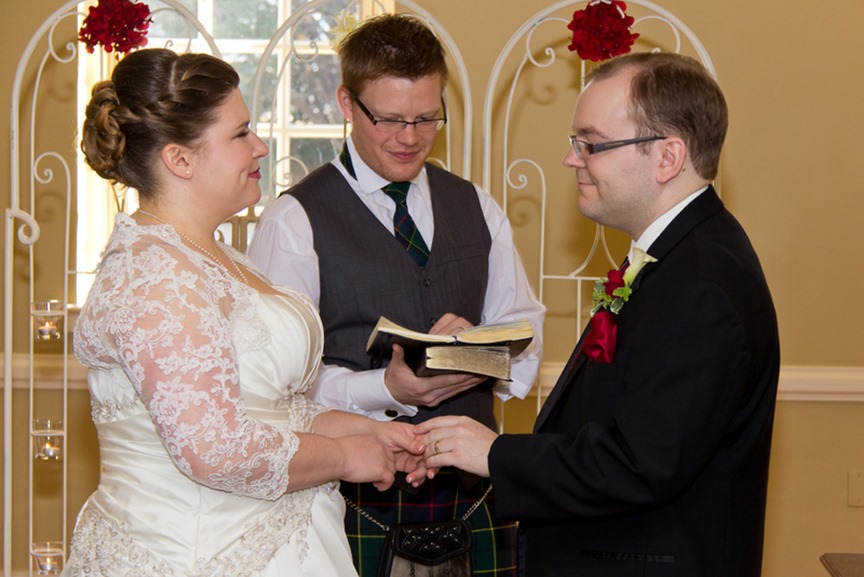


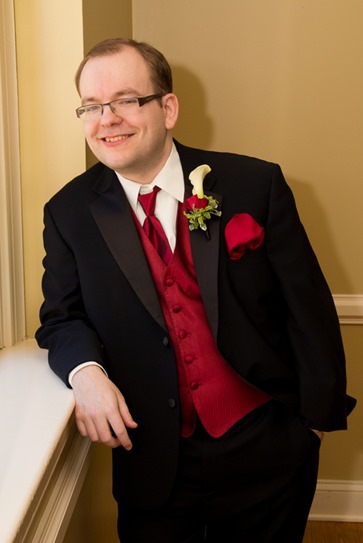

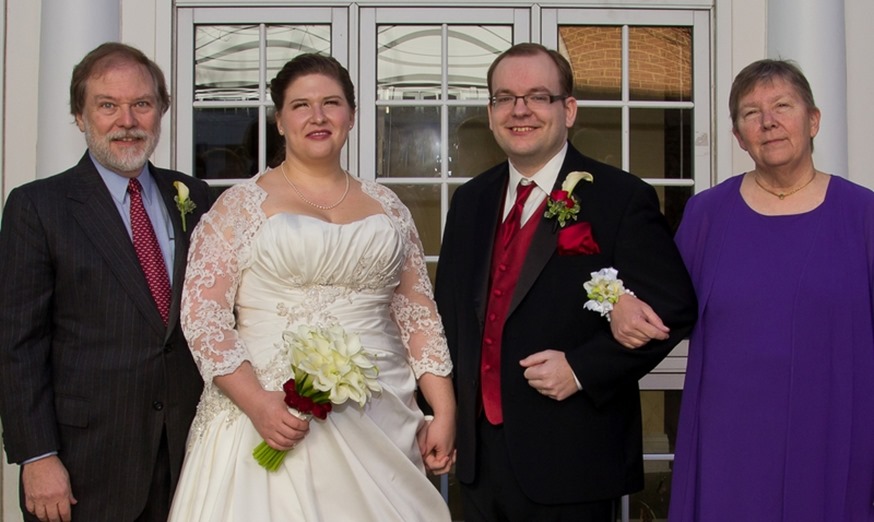

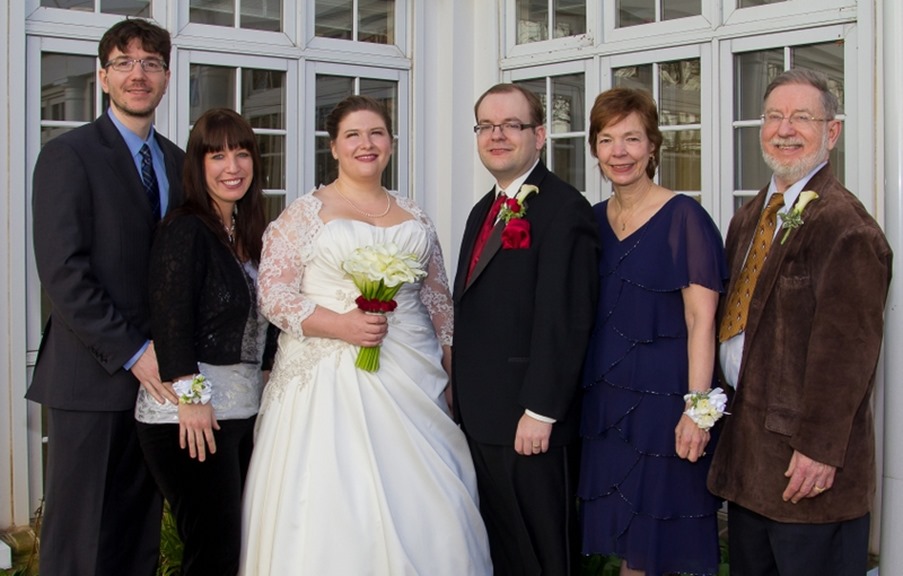



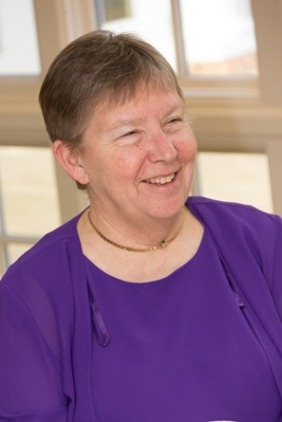

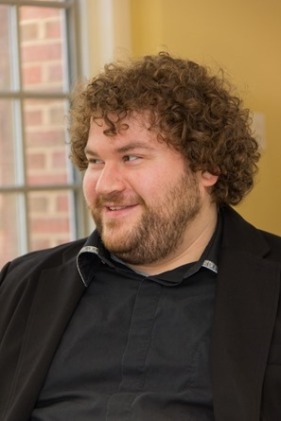

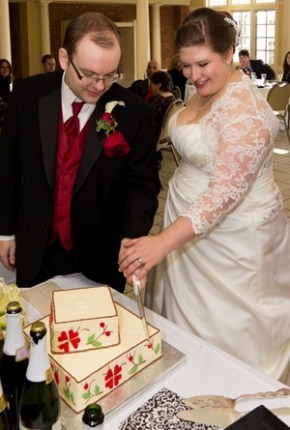


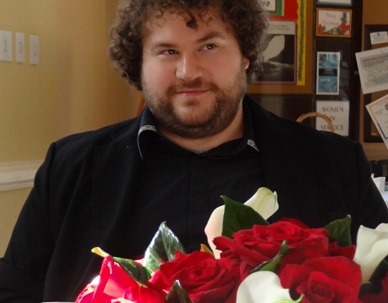
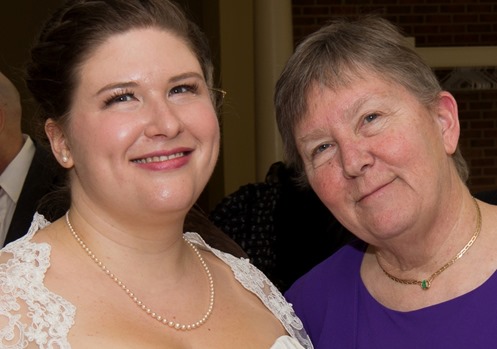
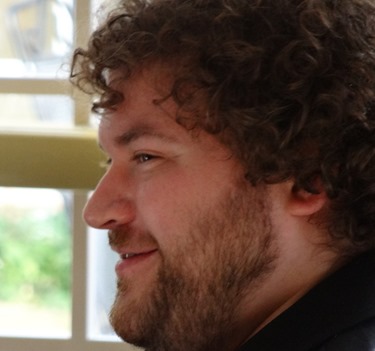
Carrie’s wedding, 1-19-2013
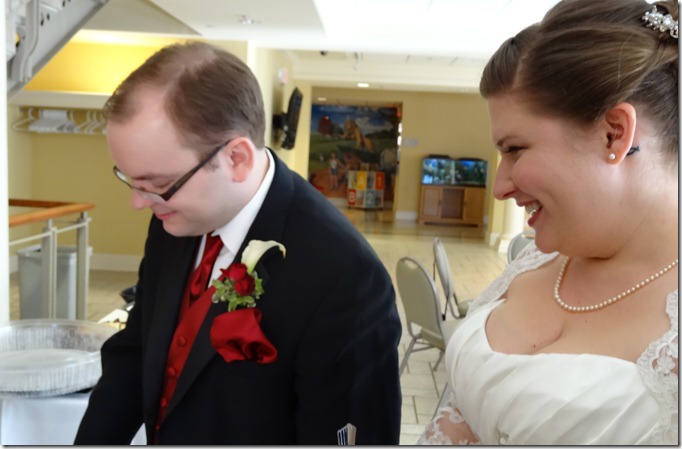
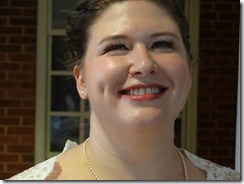
For those who don’t know yet, our daughter Carrie was married on January 19 to Michael Jarvis. Here are a few pictures.


On board Prinsendam
Tomorrow morning at 9:00 AM or thereabouts we will be leaving the Prinsendam for the last time (at least on this cruise). We haven’t seen any additional ports in the two days since leaving St. Maarten but Mary thought it would be a good idea to have one last posting about life on board Prinsendam. This isn’t everything there is to know but it is everything of which we have pictures. The idea is that this will be something for us to look back on even if there is nothing here of interest for you.
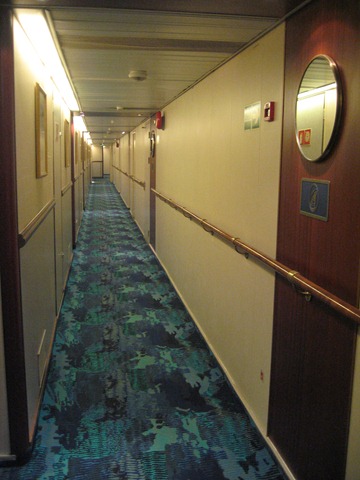
We can start with our stateroom, number 266 on the Lower Promenade Deck (deck 7). This deck is the only one that is surrounded by a full walking deck; it is a quarter of a mile all the way around & many people use it for exercise (starting very early in the morning). We liked being only a few steps from an outer deck, from which you can see everything around the ship. We have no balcony but we do have a nice large window. People walk by our window a lot (and crew often work out there) but it has a reflective coating so they can’t see in during the day. Nighttime would be a little more interesting but we generally keep our curtains closed then.
Our stateroom is not, to say the least, large, but we don’t spend a lot of time there when we are not dressing or in bed. There is a large walk-in closet so we had no trouble stowing both our winter & summer clothes for a 2 month cruise. Of course on a 68 day cruise our clothes had to be laundered, which we did in one of the ship’s two self-serve laundries. They are free except for the time spent, which sometimes was considerable because the driers often were less than adequate. There is a laundry service on the ship as well but it is expensive (unless you are a 4 star Mariner, which means you have spent at least 200 days on Holland America ships, for whom it is free).


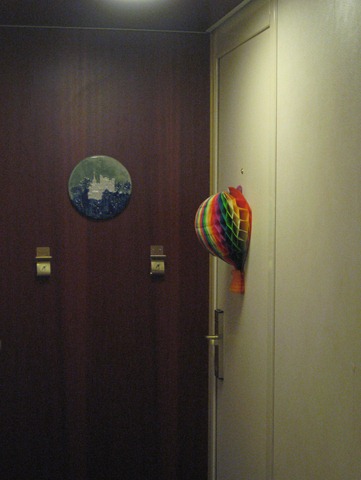
Our door is distinguished by a 3D paper balloon that our travel agent, Cruise Specialists, attached to the doors of the 85 or so passengers whose cruises they booked. Cruise Specialists also have two “hosts” on board, Henk & Lucia, to help resolve any issues we might have. They also lead shore excursions set up by Cruise Specialists & host cocktail parties & chat sessions on sea days.

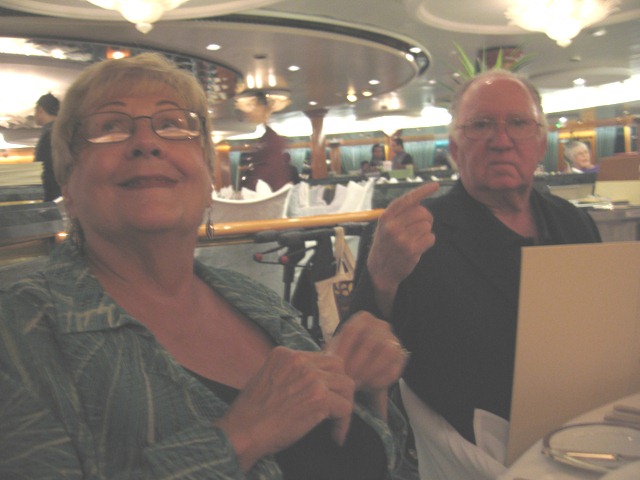
Next we can talk about food which is, of course, a central feature of life at sea on a cruise ship. Holland America does a very good job on restaurant meals, almost always quite good & a good variety as well (always about 6 entrees to choose from at dinner). Their best product on this cruise was their soups, but there are always rich entrees (rack of lamb, steaks, all kinds of fish, ethnic specialties) and desserts (ice cream & sundaes, pies & cakes, chocolate & grand marnier soufle). There are two assigned seatings on Grand Voyages like this one: 5:30 & 8:00. We are on the late shift, which gives more time in port. We sit at a table for 8 (you can choose fewer if you want), & we have sat at this table and made some good friends from our tablemates, who we see almost every night on this lengthy cruise. We feel very fortunate that our tablemates & our wait staff have been people we like; not everyone has been that lucky and two months is a long time to spend with people you don’t like very much. For the first half of the cruise there were only six of us at the table (Bing & Barb; Steve & Kathy; Rick & Mary), but halfway through another couple (Malcolm & Jean) transferred to our table. Malcolm & Jean used to live in the Panama Canal Zone where Malcolm worked as a Canal Pilot.


Our excellent wait staff included our head waiter Dewa, assistant waiter Eddy & wine steward Ben. All three were excellent at their work & fun to be around for two months. Dewa & Eddie are from Indonesia & Ben is from the Philippines.


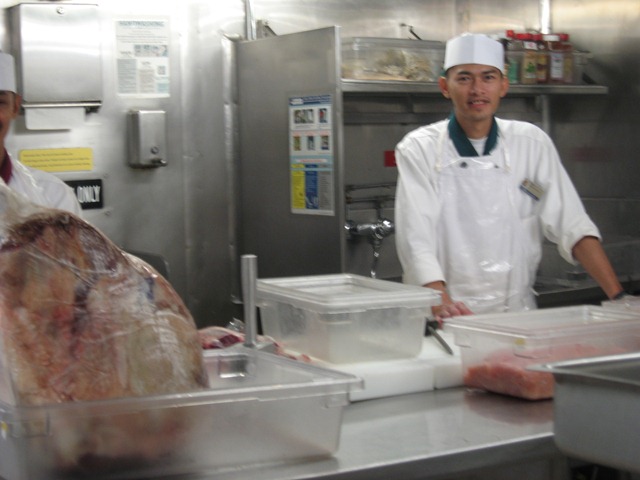
A few days ago we took a tour of the ship’s galley which appears to be an extremely efficient operation; it would have to be, since they serve about 4000 meals every day. The galley runs 24 hours a day producing bread & pastries as well as meat & vegetables. Food that is more than 4 hours old has to be discarded. Wretched excess, and I imagine quite a lot of food goes to waste.




There were nine “formal” nights at dinner throughout the cruise where suits & ties were expected, although many folks really wore formal attire such as tuxedoes & cocktail dresses (you won’t be surprised that I wore a sports jacket & tie instead). Throughout the voyage there have been special days at dinner, which usually meant that there were special decorations in the restaurant & the waiters were dressed in special costumes. I have below a picture of Dewa, our waiter, in his costume for “Escape from Devil’s Island” night. We had a number of barbecues on deck & special ethnic buffets in the dining room at lunchtime throughout the cruise, and recently there were two “extravaganzas”: a “gala” at lunch one day, with ice sculptures, and a “chocolate extravaganza” one night after dinner. While we took pictures of both to share with you we didn’t eat at them (or at least didn’t eat much). The ship was striving for decadence & achieved it. Then on the next-to-last night the dinner was followed by a waiters’ Baked Alaska Parade (a tradition on cruise ships), in which they carried Baked Alaskas with lights around a darkened dining room to great applause & waving of napkins, before serving them for dessert.


In addition to the La Fontaine restaurant where we ate dinners there is the Lido, which is a buffet style restaurant where we ate lunches & most breakfasts (breakfast & lunch could also be had in the La Fontaine, but the times were more restricted). For lunches the Lido always has several entrees plus three Asian selections. They always have something that is freshly carved as you wait (beef loin, leg of lamb, pork loin, turkey, etc.), which I usually used to make a sandwich with their fresh baked bread. There was also a sandwich bar, made to order, pizzas by the slice, a hamburger grill out on the deck, and an ice cream station, which is open all day. The Lido also had for most of this trip the slowest coffee machine in creation (making coffee that really wasn’t worth the wait, unless you were after some caffeine), but they fixed it a few days before the end so that now at least it pours its poor excuse for coffee quickly. We liked sitting in the outdoor section on the aft of the ship where you could usually overlook the city if in port or watch the birds & the waves if at sea. Unfortunately in bad weather (such as in Antarctica or when there were storms) this area was closed making the Lido very crowded, so in November Holland America plans to enclose this lovely area. It will still have sliding glass doors on the sides, so it will be semi-open, but I don’t think it will be the same.


Among the public rooms where we spent the most time were the Explorations Lounge (see the pictures in the first post about Prinsendam back in January) where we went almost every day for a pre-dinner concert by the Rosario Strings. The Rosarios are a trio consisting of violin, piano & bass, who play a wide-ranging repertoire from classical to musicals to rock to country (they do a dynamite version of Orange Blossom Special). They are quite good, particularly the eclectic pianist who seems to know all of the world’s music by heart & plays it all with superb technique & panache. We will miss the concerts before dinner when we get home.
In addition, we spent a great deal of time in the Showroom At Sea, the largest room in the ship where all the entertainment, lectures & sundry other events occurred. This is also where you often wait for your turn on the tenders into ports . . . sometimes for what seems an unreasonably long time. This room will be getting a much needed makeover when the ship is in drydock in November.
A third room where we spent some time, at cocktail parties plus a whole afternoon in the Antarctic taking pictures of animals on icebergs, is the Crow’s Nest. This is basically a large cocktail lounge and dancing venue located at the top of the ship in the front, with a panoramic view of everything in front and on the sides of the ship. It was completely redone in one day, the day we left Ft. Lauderdale.


Then a few more random things. Not very interesting, perhaps, but important to us was our assigned lifeboat (No. 4 of 8). The central atrium, while small in comparison with most more modern ships (Prinsendam, built in 1988, is one of the older cruise ships around), has a beautiful two story etched glass tube sculpture. And across from that, on the floor above ours, is the main desk, staffed by personnel who will answer any question you may have, whether they know the real answer or not. And our two lovely librarians, Jessica and . . . Jessika. Not a bad gig for a librarian!


Finally, here is a glimpse of some of the artwork that you can see all over the ship. It is quite varied & much of it is quite beautiful, often even whimsical, as well as valuable. It certainly adds a lot to the ship’s elegant ambiance.


And finally, here is a look at our Captain, Tim Roberts. He’s an Englishman who dropped out of school at age 16 to go to sea & has worked his way up to this position over the years. He has a droll sense of humor and a fascination with all things nautical, both of which he shares with us at least once a day during his ship-wide announcements (which also tell us our position & course & speed & the weather, etc.). Here is also a look at our Travel Guide, Frank Buckingham, a 77 year old Englishman (big cricket fan), whose encyclopedic knowledge of just about everything on our route & entertaining delivery of voluminous information about each port greatly enhanced the experience. He is retiring after this cruise (the scuttlebutt says it is not entirely his idea, which would be a stupid move by Holland America), so we are glad to have had him along.


So, that’s it for this cruise. We will disembark tomorrow morning & be home day after tomorrow, & hope to see many of you soon. As our Cruise Director Linda always says, “Toodle-loo for now.”
Philipsburg, Sint Maarten
This morning, Friday March 9, we docked in Philipsburg, the capital of Sint Maarten. Saint Martin is a small island that is divided into two jurisdictions. The northern part (a little over half) is French while the southern part is Dutch. Since October of 2010 Sint Maarten (the Dutch side, where we are docked) has been a “country within the Kingdom of the Netherlands,” which generally means they have control over most internal affairs while the Netherlands is responsible for defense and foreign relations. Philipsburg is a beautiful spot with great beaches, a nice harbor & lots of duty free shopping. As a result, it attracts cruise ships in great numbers: there were only two today, but there are often 5 or 6 ships each day. This is our third time in Philipsburg.

Philipsburg is crowded with stores selling everything from diamonds and watches to cheap keepsakes. Two of the more unusual stores are “The Yoda Guy,” operated by a fellow involved in the animation of Yoda in the Star Wars movies, and the Guavaberry Emporium. Guavaberry is a local product that we are led to believe grows only on this island and they make it into a liqueur. The Guavaberry Emporium was once the Philipsburg synagogue. The statue of the old man in the top hat represents their logo.


We also found the Philipsburg Jubilee Library, a nice open building full of students whose bookmobiles had a Caribbean flair.


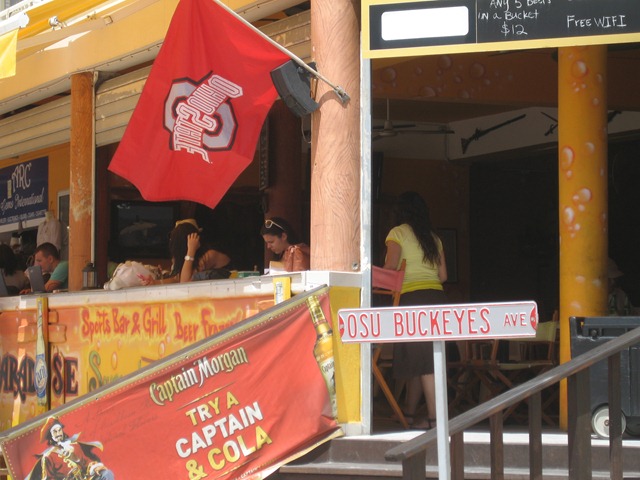
Philipsburg has a beautiful wide white sand beach along the town’s entire length, with clear blue-green water. There are restaurants all along the edge of the beach & they rent out chairs & umbrellas (sometimes with a couple of beers included in the price). There are also vendors walking along the beach, who will offer their wares (usually hats or shirts) while you sit in the outside cafe drinking your beer & eating your lunch. We even found a restaurant on the beach apparently run by Ohio State expatriates. This part of town really fulfills the stereotype of an idyllic Caribbean paradise.


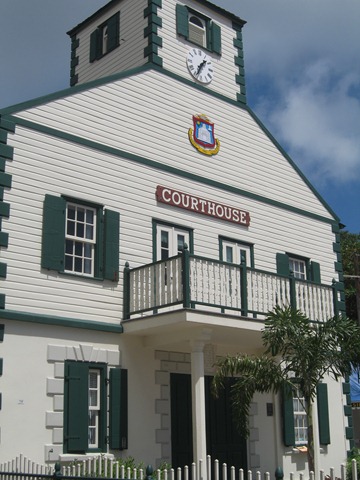
St. Martin was a pirate haven in the 16th century & there is a lot of pirate stuff around (particularly tee shirts), including the guy below who sits in front of one tourist shop. Philipsburg’s courthouse was originally built in 1793 but has been restored several times & used for other governmental units since, before being restored to courthouse status. Lucy’s guesthouse is mostly of family interest, and we were taken with the Pelican engaged in its toilette on a local boat.



In the last couple of years Philipsburg has built a very nice new dock facility (with, of course, a large shopping area). It is only about a 15 minute walk into town and there is a very nice curving stone bridge at the end of the walk where these pictures were taken.


Thus ends our final stop on this lengthy voyage and it was an enjoyable port and a beautiful day. As you can see, we have put on a little weight (it’s a cruise, after all) but we can still fit into all of our clothes. And to top it off we had a glorious sunset over the Caribbean (to me, the second one looks like a western painting, perhaps northern Arizona, but in fact its only clouds).


 BADER JOURNAL