Latest

Praia, Cabo Verde

     We spent April 14 docked at Praia on Ilha de Santiago, the capital and largest city of the Cape Verde Islands. 

2a. Praia, Cabo Verde_stitch_stitch

     The Portuguese discovered these islands in the mid-15th century and in 1462 established the settlement of Ribeira Grande, the first European colony in the tropics.  Despite their name these islands have a very dry climate and are not very green; the name was taken from the nearest point on the African continent, Cap Vert in Senegal (where Dakar is situated).  Most European colonial settlement involved suppression and/or enslavement of the indigenous population but the Cape Verde Islands were uninhabited when the Portuguese arrived.  The absence of an indigenous workforce to exploit was soon overcome by the importation of slaves from western Africa so that by 1582 there were 100 Europeans and 13,700 slaves.  Situated at the crossroads of shipping routes among Europe, Africa and America, Cape Verde became an important re-provisioning stop for slave ships and later a warehouse for slaves destined for the Americas.  Independence from Portugal was achieved in 1975.

     Our excursion took us first to the center of Praia, a fairly small city for a capital with a population of about 135,000 (about a fourth of the country’s population).  The city was founded in 1615 on a spot where an earlier settlement had been destroyed by Sir Frances Drake in 1585.  We walked down a pedestrian street called Avenida 5 De Julho (the date of independence), where they are trying to develop a canopy betweem trees on each side (not quite there yet).  It was still early morning so the streets were largely empty.

8. Praia, Cabo Verde9. Praia, Cabo Verde

7. Praia, Cabo Verde

     We visited the market, consisting of many food kiosks contained in a large building on this avenue.  Even though it was early morning this place was already bustling.  It must get quite crowded later in the day.  A plaque inside seemed to indicate that it was built in 1924.

25a. Praia, Cabo Verde_stitch11. Praia, Cabo Verde15. Praia, Cabo Verde19. Praia, Cabo Verde20. Praia, Cabo Verde16a. Praia, Cabo Verde_stitch21. Praia, Cabo Verde23. Praia, Cabo Verde

     We continued south to Alexandre Albuquerque Square, the center of downtown.  We visited the Igreja Nossa Senhora da Graca, built 115 years ago to serve a diocese several hundred years older.  At the southern border of the square is the city hall, built in the 1920’s, and beyond it the Presidential Palace, built at the end of the 19th century to house the Portuguese governor and recently renovated.

28a. Praia, Cabo Verde_stitch64. Praia, Cabo Verde30a. Praia, Cabo Verde_stitch32. Praia, Cabo Verde

     We passed a huge obelisk commemorating the discovery of Cape Verde in (it says) 1460, then came to a large statue of Diogo Gomes.  He was a Portuguese navigator who has been credited with discovering these islands, but that claim is now in considerable doubt.  But the statue is there next to a wall overlooking the expanse of Gamboa beach and its neighborhood.  A new casino built by the Chinese (or maybe someone from Singapore) is in this area.  By the statue was a black and white mosaic sidewalk of the type we have seen in many other Portuguese areas.

34. Praia, Cabo Verde35. Praia, Cabo Verde52a. Praia, Cabo Verde_stitch48. Praia, Cabo Verde54. Praia, Cabo Verde36a. Praia, Cabo Verde_stitch

     At the left in the photo above is an island about 130 yards from shore called Ilheu de Santa Maria (formerly Quail Island).  Praia was the first stop on Charles Darwin’s famous voyage on the HMS Beagle in 1832.  At that time this area was Praia’s harbor and the Beagle anchored at Santa Maria island.  Darwin made his first geological observations on Santa Maria island.  The island is uninhabited today, but on the island are the ruins of some buildings built hurriedly in the 1850’s to house the victims of a cholera epidemic on one of the other islands.

44. Praia, Cabo Verde51. Praia, Cabo Verde

     The Supreme Tribunal of Justice was built for Cabo Verde’s highest court.  This building is still in use at least for criminal matters.  Our last stop in Praia was the Quartel Jaime Mota, a military barracks built in 1826 and still in use (can’t recall whether its for police or military today).  It is one of the oldest buildings in the city.

61. Praia, Cabo Verde

55a. Praia, Cabo Verde_stitch57. Praia, Cabo Verde58. Praia, Cabo Verde59a. Praia, Cabo Verde_stitch

     We drove just a few miles to visit Cidade Velha, the “old town,” which was established as the first settlement on Cape Verde in 1462.  Its original name was Ribeira Grande.  Vasco da Gama stopped here in 1497 on his way to India, Christopher Columbus stopped here in 1498 on his 3rd voyage to America and Ferdinand Magellan stopped here in 1522 on his voyage around the world. It was sacked twice: by Sir Frances Drake in 1585 and by the French in 1712.  Then over ensuing decades much of its population moved to Praia and in 1770 the capital was officially moved there from Ribeira Grande.

    Our first stop was at the fort, Real de Sao Filipe, that overlooks the town from above a 3500 foot hill.  Built in 1590 after Drake’s sacking of the town, it was intended to prevent a recurrence, but the fort itself was sacked by the French in 1712.  Near the entrance was a group of young people intermittently singing as we walked by.

71a. Praia, Cabo Verde_stitch99. Praia, Cabo Verde88. Praia, Cabo Verde82. Praia, Cabo Verde90. Praia, Cabo Verde95. Praia, Cabo Verde101a. Praia, Cabo Verde_stitch

     From the fort were some great views, both of the town below and of the river valley to one side where there is some agriculture being done.  From the fort we could see the ruins of the old cathedral in Cidade Velha, completed in 1693 and presumably razed by the French in 1715.

75a. Praia, Cabo Verde_stitch80a. Praia, Cabo Verde_stitch93a. Praia, Cabo Verde_stitch84a. Praia, Cabo Verde_stitch96a. Praia, Cabo Verde_stitch

     We drove down (the path probably would have been more fun) to visit the town.  We walked up a street called Rua de Banana, the oldest street in the town built in the 15th century.  It is lined with restored small stone houses with thatched roofs.

111. Praia, Cabo Verde104. Praia, Cabo Verde105. Praia, Cabo Verde107. Praia, Cabo Verde108. Praia, Cabo Verde110. Praia, Cabo Verde103. Praia, Cabo Verde

     Up a hill and a block over from Rua de Banana is the Igreja de Nossa Senhora do Rosario, the first church built in the tropics in 1495.  There are 16th and 17th century tombstones in the floor and the remains of perhaps 1,000 more people are buried under the floor.  The walls have many old tiles and the step in front of the entrance appears to have been made out of an old tombstone as well.  The church has been restored and is still actively used today.

106. Praia, Cabo Verde113. Praia, Cabo Verde119. Praia, Cabo Verde114. Praia, Cabo Verde115a. Praia, Cabo Verde_stitch117. Praia, Cabo Verde118. Praia, Cabo Verde

     We walked down to the central square of the town past numerous houses with flowers and succulents outside.  A craft market had been set up in the square but the most interesting thing was the Pelourinho, a column with four metal arms extending from the top.  First built in 1520, this is a pillory where disobedient slaves were tied to the metal arms for public whipping.  It is preserved as a momento of the town’s history in the slave trade and a memorial to those who suffered here.

120. Praia, Cabo Verde121. Praia, Cabo Verde123. Praia, Cabo Verde124. Praia, Cabo Verde125. Praia, Cabo Verde

     After leaving Cidade Velha we drove through the dry and rugged interior and up into the mountains where we ate lunch at a spot with excellent views.

127a. Praia, Cabo Verde_stitch132a. Praia, Cabo Verde_stitch134a. Praia, Cabo Verde_stitch

     After lunch we drove through the island’s interior to the botanical gardens, located near a town called Sao Jorge dos Orgaos. It was not the best botanical garden we have ever seen but included some nice flowers and a lot of cactus.

148. Praia, Cabo Verde151. Praia, Cabo Verde149. Praia, Cabo Verde150. Praia, Cabo Verde152. Praia, Cabo Verde156. Praia, Cabo Verde155. Praia, Cabo Verde157. Praia, Cabo Verde159. Praia, Cabo Verde166. Praia, Cabo Verde162a. Praia, Cabo Verde_stitch165. Praia, Cabo Verde165a. Praia, Cabo Verde

      We drove back to the ship through some scenic landscape and a few towns along the east coast of the island.

167. Praia, Cabo Verde168. Praia, Cabo Verde170. Praia, Cabo Verde174. Praia, Cabo Verde171a. Praia, Cabo Verde_stitch176. Praia, Cabo Verde175. Praia, Cabo Verde

     We had a lovely sail away just as the sun was setting.  There was a party going on in the Lido (which we understand ended with passengers jumping into the pool) but watching the sail away from the aft deck was more appealing.  We spotted a nearby vessel labeled CIA, but it turns out to be just a ferry that transports people and cars among the islands.

194. Praia, Cabo Verde_stitch177. Praia, Cabo Verde180. Praia, Cabo Verde189. Praia, Cabo Verde199a. Praia, Cabo Verde_stitch178a. Praia, Cabo Verde_stitch

     As the ship sailed west we retired sometime after dinner, in the comforting knowledge that there would be five relaxing sea days before we reached our next, and last, port.

203. Praia, Cabo Verde204. Praia, Cabo Verde3. 010418Maputo, Mozambique & Kruger Nat Park, South Africa7. 010418Maputo, Mozambique & Kruger Nat Park, South Africa6. 010418Maputo, Mozambique & Kruger Nat Park, South Africa

Dakar, Senegal

      On April 17 we were docked in Dakar, the capital and largest city in Senegal. 

95a. Dakar, Senegal_stitch

     The Portuguese began shipping slaves from this area in the 15th century and in the 16th century it was an important stop for Portuguese ships headed to and from India.  The Portuguese established the first European settlement in the mid 16th century just off the coast on the Ile de Goree, which became one of the most important slave depots.  The Dutch and English occupied this area for some time as well before France finally took control in 1677.  Senegal has been independent since 1960.  Dakar is the westernmost city in the Old World.  In fact, since it sits west of the Prime Meridian, it is actually part of the Western Hemisphere.  Its urban population is almost 2.5 million.

     We spent the morning on an excursion to the Ile de Goree, an island less than 2 miles from Dakar.  We walked to the ferry for the 20 minute ride.  We exited to the island on a pier in a small harbor in the middle of the island.

1. Dakar, Senegal2. Dakar, Senegal3a. Dakar, Senegal_stitch164a. Dakar, Senegal_stitch8. Dakar, Senegal9. Dakar, Senegal

     Some 1500 people live on the island today but most of the buildings are hundreds of years old.  Many are painted in very bold hues that made striking images in their contrasting shapes and colors as we walked past them.  Colorful flowers decorated many of the streets as well.

17a. Dakar, Senegal_stitch12a. Dakar, Senegal_stitch14. Dakar, Senegal10. Dakar, Senegal48a. Dakar, Senegal_stitch

     We walked to the Maison des Esclaves (House of Slaves).  Goree Island was an important center for the slave trade for about two centuries so this was the last glimpse of Africa for many who were torn from their families and brought unwillingly to the Americas.  During its heyday there were perhaps a dozen slave detention houses on Goree that served as depots for transferring them to waiting ships.  This one, built around 1780, is the only one that has been preserved and restored as a memorial.  The museum was opened in 1962 and restored during the 1970’s.  It has since hosted many visitors, including most famously Nelson Mandela and Barak Obama.  The small building was filled with visitors when we were there and the director of the museum gave a talk in the front courtyard about the slave trade and the project to preserve and restore this building.

15a. Dakar, Senegal_stitchDSC0325227. Dakar, Senegal_ShiftNDSC0325325. Dakar, Senegal32. Dakar, Senegal

     Inside the first floor were the remnants of cells and at the very back is an open doorway called the “Door of No Return.”  Through this door slaves were taken down a ramp to boats that ferried them to anchored slave ships never to see their homeland again.  It is a matter of some dispute how many slaves left from Goree but this place is not important so much because it was one of the largest or most important slave depots but because it is the only one left that can be visited.  A visit here can be quite moving.

34. Dakar, Senegal23. Dakar, Senegal36. Dakar, SenegalDSC0325435. Dakar, Senegal29. Dakar, Senegal

     We walked to a square with a large Baobab tree and the guide explained what makes these trees unique.  Most of the several types of Baobabs grow only on Madagascar, with one or two growing in Africa and Australia.  They can grow almost 100 feet tall but are distinctive for their wide trunks, which can reach more than 35 feet in diameter.  In those trunks they store water, often tens of thousands of gallons, to sustain them through droughts.  They are extremely long-lived, with some having been determined to be more than 2,000 years old.  In the last decade or so many of the oldest Baobabs have suddenly died and, while the cause has not yet been determined definitively, climate change is the most widely suspected culprit. The fruit, sometimes called “monkey bread,” is very dry and nutritious.  It is ground into powder that is added to many types of dishes. The trees are deciduous and had no leaves while we were visiting.

43a. Dakar, Senegal_stitch40. Dakar, Senegal47. Dakar, Senegal46. Dakar, Senegal

     We walked on and up the hill (there is only one prominent hill on the island).  We saw the church and an artist’s village, then walked up a path lined with Baobabs.

52. Dakar, Senegal51. Dakar, Senegal53a. Dakar, Senegal112. Dakar, Senegal54. Dakar, Senegal55a. Dakar, Senegal_stitch57. Dakar, Senegal58. Dakar, Senegal

     Near the top we stopped into the Dougoub Galerie where an artist was making sand paintings.  Different colors of sand are imported from many places in Africa.  After spreading glue on the backing he applies each color to a part of it by sifting it out of his hand.  He then lifted it up and the excess sand dropped off, leaving a surprisingly sharp sand picture you wouldn’t have known was there during the process.

73. Dakar, Senegal61. Dakar, Senegal60. Dakar, Senegal62. Dakar, Senegal65. Dakar, Senegal66. Dakar, Senegal69. Dakar, Senegal70. Dakar, Senegal71. Dakar, Senegal

     We walked around the top of the hill, seeing what there was to see.

75. Dakar, Senegal74. Dakar, Senegal77. Dakar, Senegal76. Dakar, Senegal79. Dakar, Senegal84. Dakar, Senegal86. Dakar, Senegal105. Dakar, Senegal

     From the top were some particularly good views, both of Goree and of Dakar about a mile and a half across the water.

87a. Dakar, Senegal_stitch100. Dakar, Senegal102. Dakar, Senegal

91a. Dakar, Senegal_stitch


     We walked back down the hill by a different route then across to the fort, passing animals, flowers and more brightly colored buildings.

106. Dakar, Senegal107. Dakar, Senegal108. Dakar, Senegal109. Dakar, Senegal110. Dakar, Senegal111. Dakar, Senegal113. Dakar, Senegal114. Dakar, Senegal116. Dakar, Senegal115. Dakar, Senegal

     The interestingly round Fort d’Estrees sits at the far end of the island on the edge of the harbor.  It was built by the French in the 1850’s to protect the Dakar harbor but saw no action until 1940.  In September of 1940 the British and Free French attempted to take Dakar from the Vichy government.  A naval task force arrived but the area was not taken.  During the Battle of Dakar the Tacoma, an allied merchant ship, was sunk just off shore of Goree Island.  It is still there, marked with a buoy so the ferry can avoid it, and it is somewhat popular with divers.

148. Dakar, Senegal117a. Dakar, Senegal_stitch128a. Dakar, Senegal_stitchDSC03256131. Dakar, Senegal134a. Dakar, Senegal_stitch132a. Dakar, Senegal_stitch124b. Dakar, Senegal_stitch

     The rooms ringing the courtyard of the fort contain a museum with a wide range of subjects.  We particularly liked the Muslim mosaics in one of them.

122. Dakar, Senegal119. Dakar, Senegal121. Dakar, Senegal120. Dakar, Senegal

136a. Dakar, Senegal_stitch 

     The tour was now ended and we walked back along the waterfront to the harbor area where we would catch the ferry back to Dakar.

140. Dakar, Senegal141. Dakar, Senegal142a. Dakar, Senegal_stitch144. Dakar, Senegal145a. Dakar, Senegal_stitch147. Dakar, Senegal

     Back at the dock we stopped into a café for a beer.  Across the square was a craft stand selling the colorful baskets made in this region, which we had also seen in The Gambia, very different from what we saw in South Africa.  In the square and on the dock as we boarded the ferry were a number of local folks in striking clothing.

150. Dakar, Senegal151. Dakar, Senegal152. Dakar, Senegal156. Dakar, Senegal153. Dakar, Senegal154. Dakar, Senegal163. Dakar, Senegal155. Dakar, Senegal158. Dakar, Senegal159. Dakar, Senegal160. Dakar, Senegal157. Dakar, Senegal

     We got back to the ship early in the afternoon and decided to take the shuttle bus to Independence Square, the center of Dakar.  On grand voyages HAL often provides a free shuttle into town when the ship is docked further than walking distance.  This is often a good choice when you don’t have anything scheduled since it gives you an opportunity to explore the town in leisurely fashion for free.  But not here!  We learned later that a number of passengers had been harassed by locals in town and by vendors if they didn’t buy anything.  One crew member’s phone was actually stolen on the dock (we heard later that the other crew members had pooled their money to buy him a new one).  It seems that this stop is the one that most merited the warnings we received from Barbara and Captain Mercer.

     But we didn’t know any of this when we boarded the shuttle to Independence Square.  Then just before we left one of HAL’s security staff stepped into the bus to warn us, in no uncertain terms, not to walk back to the ship but to wait for the bus.  We had never encountered anything like that before.  As we headed downtown a Senegalese guide began narrating the trip.  When we got to Independence Square he said the folks near the bus stop looked dangerous to him and asked everybody to stay on the bus and he would take us on a drive past the highlights of town.  No one got off so off we went.  The guide was very good and we drove on past the presidential palace, the National Assembly, the IFAN Art Museum, some resort hotels popular with French vacationers (some surrounded by razor wire), then back to the port via the coastal road.  It was a bit of a whirlwind and we really can’t remember everything we saw, but here are some pictures we managed to take on the way through the bus windows.

171. Dakar, SenegalDSC03257172. Dakar, Senegal173. Dakar, Senegal174. Dakar, Senegal177. Dakar, Senegal178. Dakar, Senegal180. Dakar, Senegal181. Dakar, Senegal185. Dakar, Senegal186. Dakar, Senegal182. Dakar, SenegalDSC03259187. Dakar, Senegal188. Dakar, Senegal

     As we had seen in Banjul, there was a craft market laid out all along the dock in front of the ship.  This one was much bigger though.  We walked around and even bought something.  A lot of these things look interesting but after a while most of it fades into “more of the same” and you had to bargain just to find out how much something might cost.  Not really what we like.  From the ship you could see in the distance the silhouette of the African Renaissance Monument, the tallest sculpture in Africa, completed in 2010 to mark 50 years of Senegalese independence.  It is impressive in size but many consider it an ugly example of Stalinist art.  Not having seen it up close we have no opinion.

191a. Dakar, Senegal_stitch194a. Dakar, Senegal_stitch

     We sailed away as the sun was setting.  We passed the Ile de Goree glowing in the late afternoon light & looking back our final view of Dakar was golden, a fitting farewell to the fascinating continent of Africa.

199. Dakar, Senegal216. Dakar, Senegal208. Dakar, Senegal246a. Dakar, Senegal_stitch

Banjul, The Gambia

     April 16 found us docked at Banjul, capital of The Gambia. 

169a. Banjul, The Gambia_stitch

     But before we get to that we have to tell you about something that happened 3 days earlier when we crossed the Equator for the fourth and last time.  During his daily afternoon announcements the day before the Captain told us about a ship that was sailing in the Pacific on the eve of the first New Year of the 20th century.  It seems that it was near the international date line at the time, so its captain decided to alter course a little so that midnight would find them straddling the spot where the Equator crosses the date line.  At that moment half the ship was in Winter (above the equator) and half in Summer (below the equator).  Half the ship was in the last day of December (on one side of the date line) and half the ship was in the first of January.  But the really unique thing was that half the ship was in the 19th century and the other half in the 20th century. 

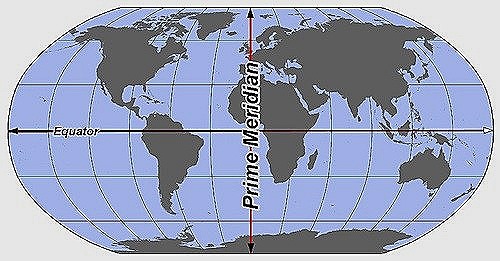
     Anyway, the Captain mentioned that we would be crossing the Prime Meridian as well as the Equator, but not at quite the same time.  So he was later presented with a petition from some passengers requesting that he alter course so we could cross the point where these two lines intersect and he agreed to do so.  It would be around 11:00 at night so the cruise director scheduled a “pajama party” in the Crow’s Nest to celebrate.  In the end many were disappointed because the ship missed the mark by about 20 feet.  But since the Amsterdam is more than 100 feet wide it seemed to us that if its GPS said it was within 20 feet then part of the ship must have passed over the spot.  We have no evidence for this, but we prefer to believe that the cabin where we were asleep at the time passed smack over the intersection of the Equator and the Prime Meridian!

60113Earthmap_Prime_Meridian1

     Of course, this intersection was nothing like that of the 19th century ship detailed above.  Amsterdam was half in Winter and half in Summer, but that is true any time you cross any part of the Equator.  The special thing about this particular intersection is that it is the only place on Earth that is zero degrees latitude and zero degrees longitude.  So, as the Captain said, navigationally speaking this spot is the center of the world!  This is pretty arbitrary, though, since the Prime Meridian is just a line on a map drawn in the late 19th century to pass through the observatory in Greenwich, England.  In any event, the only thing to see there (even when it isn’t night out) is water.  As you can imagine, then, there are no pictures.

     Getting back to The Gambia, it is a tiny country that includes only the land on both sides of the Gambia river.  Except for its seacoast Gambia is bordered entirely by Senegal, which surrounds it.  Gambia became a British possession under the Versailles Treaty of 1783 and achieved independence in 1965.  “The” was added to its name to avoid confusion with the sound-alike country of Zambia.  Gambia’s first president held office for almost 30 years, then a military coup installed Yahya Jammeh as president.  He held onto office for 22 years and was voted out in a surprise electoral upset in December, 2016 .  A few days later he rejected the electoral result and vowed to hold onto power but a military incursion by several African nations finally forced him out in late January, 2017.  So when we arrived Gambia was only 15 months into its first democratic government.

    Banjul, the capital, is on an island at the mouth of the River Gambia and has a population of only about 35,000.  Its name derives from a Mandinka word for bamboo, which grew plentifully here a few hundred years ago.  After the British abolished slavery they built a fort on this island in 1816 to stop the deportation of slaves from the area, with mixed success.  From where we were docked we had an expansive view of the port.

10a. Banjul, The Gambia_stitch

     It took longer than expected to clear the ship for disembarkation so we had some time to watch the ferry traffic in the port.  People of a certain age will remember LaVar Burton’s breakthrough role as Kunta Kinte in the 1970’s TV series Roots, based on Alex Haley’s book of the same name recounting the slave history of his family.  In the series and in real life Haley’s presumed ancestor Kunta Kinteh was captured and sold into slavery in Gambia.  Today there is a nearby island named for him and we saw a ferry named for him as well.  A lot of people disembarked from these ferries, probably commuting to work in Banjul.  An alternative way to cross the river or travel upriver is by pirogue, long thin boats we saw beyond the ferry dock to our right. At the end of the dock next to the ferry dock was a half sunken ship, which had apparently been there awhile since they had arranged floating lines around it.

13a. Banjul, The Gambia9. Banjul, The Gambia

174b. Banjul, The Gambia_stitch174a. Banjul, The Gambia178. Banjul, The Gambia

162a. Banjul, The Gambia_stitch

     We were scheduled for a bus excursion through the area in the afternoon so we caught the ship’s shuttle to the Albert Market in the center of town.  It isn’t too far to walk but we were told that the area in between might not be safe.  The Gambians have a reputation (well deserved in our small experience) for friendliness – Gambia is nicknamed the “Smiling Coast” – but we decided to play it safe in this unfamiliar territory and, in fact, some of the streets looked a little uncertain.  They dropped us off in an alley at the back entrance to the market.

149. Banjul, The Gambia146. Banjul, The Gambia147. Banjul, The Gambia23. Banjul, The Gambia

     The craft market had kiosk after kiosk of wood carvings, masks, baskets and other interesting items.  Nothing had a price on it; everything was about haggling.  Many people enjoy that but we aren’t among them.  You couldn’t just ask for a price either.  The response was always “How much would you offer?”  The vendors were aggressive in asking you to come in and look at their wares but they were always friendly and never curt or demanding.  We bought a few things and learned some lessons about shopping in this environment.

15a. Banjul, The Gambia18. Banjul, The Gambia19a. Banjul, The Gambia_ShiftN. Banjul, The Gambia_ShiftN26. Banjul, The Gambia22. Banjul, The Gambia_ShiftN21. Banjul, The Gambia24a. Banjul, The Gambia20. Banjul, The Gambia

     After lunch we boarded the bus for our excursion.  First stop was the National Museum, a small but interesting facility.  No photography was permitted inside, which housed a large collection of vintage photographs and a room full of interesting musical instruments among other things.  Outside were a number of bronze sculptures, one of which we understand is a likeness of former president Jammeh holding a baby that once stood at Arch 22, which we would see later.

39. Banjul, The Gambia40. Banjul, The Gambia41. Banjul, The Gambia

     We drove on to Bakau, crossing what we understand to be the River Gambia. On the way we passed the National Assembly building, a mosque and wetlands with mangroves and many birds.

43. Banjul, The Gambia44. Banjul, The Gambia45. Banjul, The Gambia47. Banjul, The Gambia50a. Banjul, The Gambia_stitch52. Banjul, The Gambia54. Banjul, The Gambia56. Banjul, The Gambia

     We passed what we took to be the Bakau Craft Market on the way to the nearby Kachikally Crocodile Pool.  This has been a pilgrimage site for several hundred years and women still come here to douse themselves with water from the pool as a fertility aid.  You walk through a bit of forest to reach the crocodile pool.  The most noteworthy item along this walk is a tall Beobab tree, although we also saw a crocodile that had somehow gotten himself far into a covered water trench.  Apparently the crocodiles are permitted to run free as they like & are sometimes found in neighboring yards and on porches.

58. Banjul, The Gambia59. Banjul, The Gambia81. Banjul, The Gambia80. Banjul, The Gambia79. Banjul, The Gambia60. Banjul, The Gambia62a. Banjul, The Gambia_stitch66. Banjul, The Gambia67. Banjul, The Gambia68. Banjul, The Gambia69. Banjul, The Gambia76. Banjul, The Gambia65. Banjul, The Gambia

     Kachikally is, obviously, a tourist attraction as well as a sacred site.  Many of the crocodiles are said to be quite docile and well used to humans, but we don’t think we would test that.  On the other hand, there is (or was) a well known crocodile here named Charlie, 70+ years old and 9 yards (feet?) long, who allows visitors to touch his back without a problem.  We have read, though, that a number of different crocodiles play this role and all are referred to as Charlie.  Be that as it may, there was a crocodile in a spot near the pool with a line of visitors waiting to pet him on the back.  Mary took a pass, but Rick got in line & touched the crocodile.  He was so still that we were unsure whether he was alive or dead until Mary saw him blink his eyes.  I wouldn’t try this at home (or in Australia)!

DSC03248DSC03247

     Leaving Kachikally, we drove through Bakau’s somewhat desolate back streets to visit a school, which had a small library across the road.  We also passed a vendor selling batik pictures, looking quite pretty as they blew in the wind.

82. Banjul, The Gambia84. Banjul, The Gambia90. Banjul, The Gambia93. Banjul, The Gambia94a. Banjul, The Gambia_stitch94b. Banjul, The Gambia85. Banjul, The Gambia101. Banjul, The Gambia96. Banjul, The Gambia98. Banjul, The Gambia

     We stopped for a local Julbrew beer in the courtyard of a guesthouse called “Smiling Coast.”  Musicians were setting up for their show later in the evening.  The beer was very good.

102a. Banjul, The Gambia_stitch106. Banjul, The Gambia109. Banjul, The Gambia111. Banjul, The Gambia

     We drove to Serekunda, Gambia’s largest city with a population of 350,000, where we visited a batik and tie-dying workshop.  Some workers were applying wax to a cloth in preparation for dying a batik picture.

115. Banjul, The Gambia116. Banjul, The Gambia118. Banjul, The Gambia

     We drove back to Banjul, passing a mosque and driving under Arch 22.  The arch commemorates the coup of July 22, 1994, that put former president Jammeh into power for 22 years.  Before Jammeh was ousted we couldn’t have driven under this arch because only the president himself was permitted to do that.  A monument of an “unknown soldier” (that some think resembles Jammeh) used to sit in a traffic circle in front of the arch, but we think we saw it at the National Museum earlier today (shown above).  The arch is more than 100 feet tall, one of the tallest buildings in Banjul, and is remarkably ugly, consisting of a triangular building on top of two groups of pillars.  Some folks got out of the bus to photograph it but it was so ugly and was built to celebrate oppression, so we just waited on the bus.  We did see it from the ship, however.

120. Banjul, The Gambia123. Banjul, The Gambia161. Banjul, The Gambia

     Our last stop was the Albert Market.  The bus stopped in front of the market while the guide and about half the passengers went inside for a quick walk-through.  We had been there this morning, of course, and it had been a long day so we elected to wait on the bus.  Many of the Gambian women dress in very bright, colorful clothes.  You have seen a few already, but a number walked by the bus in front of the market, some carrying items on their heads.

141. Banjul, The Gambia_ShiftN_ShiftN138. Banjul, The Gambia140. Banjul, The Gambia143. Banjul, The Gambia136. Banjul, The Gambia144. Banjul, The Gambia145. Banjul, The Gambia

     Back at the port a large impromptu market was set up along the dock in front of the ship.  A group of women there were performing some lively song and dance.

154b. Banjul, The Gambia32. Banjul, The Gambia34. Banjul, The Gambia156b. Banjul, The Gambia_stitch33a. Banjul, The Gambia160a. Banjul, The Gambia182. Banjul, The Gambia181. Banjul, The Gambia184. Banjul, The Gambia188. Banjul, The Gambia187. Banjul, The Gambia

     We sailed away from Banjul as the sun was setting, with some boats still out in the water, and headed north for the short trip to neighboring Senegal.

192a. Banjul, The Gambia_stitch189. Banjul, The Gambia196. Banjul, The Gambia200a. Banjul, The Gambia_stitch

Luanda, Angola

     On April 10 we were in Luanda, a port that is rarely visited by cruise ships (we could only find one other cruise ship scheduled to stop here this year).  Angola has a long history and it isn’t pretty.  It was a Portuguese colony for some 400 years (with a 7 year hiatus of Dutch rule) and for 250 years they used Luanda as a hub for the slave trade, especially to Brazil.  It obtained independence in 1975 and immediately fell into a civil war that lasted until 2002.  They are still recovering from that civil war.  Today Luanda is one of the most expensive cities in the world and its plentiful oil reserves have created a class of very wealthy folks, both Angolan and foreign, who can afford to live here.  But most of its 6 million residents are quite poor and have trouble making ends meet in this expensive economy.

117a. Luanda, Angola_stitch

     When reading up about Luanda before the trip the main theme of advice was that this was a dangerous place to visit.  Avoid walking the streets by yourself, and taking pictures of most places is forbidden with possible confiscation of your camera. This was reinforced by Barbara, the port guide, who presented a long list of safety admonitions, including not only avoiding drinking the local water but avoiding even touching it.  After this we received a letter from the Captain repeating many of these same admonitions, along with an additional warning to be skeptical of anyone who speaks good English!

Captain's Luanda Letter

As you can imagine, the question everyone was asking after all this was:  why are we even stopping here?

     As it turned out this port was interesting and not unpleasant at all (at least for most folks).  It seems that the Angolans would like to have more cruise business so they were very welcoming.  We heard of no one who had a problem with the police & several police were on the dock when we left enthusiastically waving goodbye.  No one tried to interfere with taking pictures; in fact we heard that on one of the tour busses the guide was taking pictures as much as the passengers.  So maybe things are slowly improving here for visitors.

     With this port’s reputation for being dangerous, it seemed before we arrived that the only safe options were to take a HAL tour (expensive & short) or stay on the ship.  We travel to see new parts of the world and sure didn’t want to just stay on the ship all day.  So we signed up for a HAL bus tour.  As it happened, we saw a number of passengers who went out on their own and walked all the way to the fort (between one and two miles) without problem.  Several small buses made up our excursion & we travelled together in a caravan with a police & ambulance(!) escort.

     Our first stop was about a third of the way along the Marginal.  This is the long expanse of waterfront between the port and the Fortaleza, a large fort on a hill across the bay.  The Angolans are in the middle of a 15 year project to upgrade this area.  The first part, completed in 2012, is a concrete path along the waterfront with its edge descending into the water, a number of small foot bridges and very colorful gardens along the way.  There was a noticeable police presence (just for cruise ship day? we don’t know) and it felt very safe.  The slanted concrete leading to the water was not safe; we heard that two people fell in (despite Barbara’s warning not to touch the water) and one had to be rescued by police.

6a. Luanda, Angola_stitch19. Luanda, Angola20. Luanda, Angola11a. Luanda, Angola_stitch14a. Luanda, Angola_stitch

     Tracking the Marginal across from the water is one of the city’s main streets.  On the other side of it were some pretty drab looking buildings.  Maybe the redevelopment plan will get to them later.  We suspect that while the Marginal park appears to be safe for visitors, walking a few blocks into the area across the street might be asking for trouble.  We heard later that one passenger was accosted in that area and was rescued by local folks.  Of course, he was carrying a lot of expensive looking camera equipment, despite the captain’s warning, so his running into trouble shouldn’t really be surprising. 

     A block or so from the Marginal, just past the blue building below, is a small 17th century Portuguese church that is often featured as one of the sights in this city.  But we didn’t see it.  Luanda lacks a professional tourist infrastructure so our tour was kind of ad hoc.  The guides were recruited from other day jobs, mostly because they could speak English.  Our guide normally worked as a translator, not a tour guide.  So they are amateurs.  She walked with a few of the passengers in our bus to see this church but because she never said a word about it to the rest of us we didn’t know it was there until we saw them crossing the street on their return.  Very frustrating, but that is pretty representative of the current state of Luanda’s facilities for travelers.

21. Luanda, Angola5. Luanda, Angola

     Boarding the buses we drove along the Marginal, past the Fortaleza and out onto the Ilha do Cabo.  We passed the pink National Bank of Angola (a local landmark), the monument to the unknown soldier, and the Largo de Baleizao, a plaza laid out in 1765 that served as a slave market.

22. Luanda, Angola17. Luanda, Angola25. Luanda, Angola26. Luanda, Angola

     No longer an island since it was connected to the mainland by a bridge, the Ilha is a 5 mile long sandy outcropping, no more than 550 yards wide at its widest point, that separates the bay from the ocean and makes it one of the largest ports in Africa.  It is a popular beach spot and houses many bars and restaurants popular with Angolans.  No one was swimming today, but we saw many people along the road. At the end of the Ilha was a candy colored lighthouse.

27. Luanda, Angola28. Luanda, Angola30. Luanda, Angola32. Luanda, Angola35. Luanda, Angola36. Luanda, Angola34. Luanda, Angola37. Luanda, Angola39. Luanda, Angola

     We drove back to the first stop across the bridge to the mainland, the Fortaleza de Sao Miguel (St Michael Fort). First erected in 1576 it was improved over the centuries through 1916.  It has served as a slave depot, a prison and a museum. During the Angolan war for independence between 1961 and 1975 the Portuguese used it as their central military command post. 

     We spent most of our visit on the ramparts looking at the panoramic views of the city and the bay.  We were told later that there are a couple of rooms with old Portuguese tile walls worth seeing but, true to form, our amateur guide didn’t tell us about them.

102a. Luanda, Angola_stitch89. Luanda, Angola53. Luanda, Angola71a. Luanda, Angola_stitch76. Luanda, Angola60. Luanda, Angola68a. Luanda, Angola_stitch72b. Luanda, Angola61. Luanda, Angola81a. Luanda, Angola_stitch

     On the ocean side of the fort was a neighborhood with a lake or inlet where fishermen were plying their trade.  Some of the houses don’t look too shabby, but we were told this is a poor neighborhood.

46a. Luanda, Angola_stitch52. Luanda, Angola56. Luanda, Angola62a. Luanda, Angola_stitch

     In the central courtyard on the first floor of the fort was a row of large statues.  From left to right the first three are Diogo Cao (the first Portuguese to step on Angolan soil), Paulo Dias de Novais (founder of Luanda), and Salvador Correia de Sa (governor of Angola).  Outside the walls was a giant statue of a 17th century African queen named Njinga, widely celebrated here and in Brazil for standing up to the Portuguese (although she also sold some 200,000 people to their slave traders).  Inside the fort is a bust of Jose Mendes de Carvalho, a celebrated fighter in the war for independence who was killed in 1968.  The front gate includes pictures of fighters from the civil war or the war of independence on the left and resisters to Portuguese slavers on the right.

Salvador Correia de Sa (gov86. Luanda, Angola84. Luanda, Angola87. Luanda, Angola

     We had one more stop after leaving the Fortaleza, the Mausoleum of Dr Antonio Agostinho Neto, Angola’s first president.  He died in Moscow in 1979 after a cancer operation and the Russians made a start on building this monument in 1981.  They soon abandoned it and it finally opened only in 2012, completed by Brazilian and then South Korean companies.  Inside is supposed to be his sarcophagus, but we were only allowed to view the outside from the gates.  This is a soaring, if somewhat ugly, metal monument shaped like a rocket, visible all over Luanda.  There was a bust of Dr Neto in the Fortaleza.  Behind the mausoleum one could see the shiny pink dome of the new National Assembly building opened at the end of 2015, looking a little like the Capitol building in Washington.

94a. Luanda, Angola_stitch43. Luanda, Angola51. Luanda, Angola101. Luanda, Angola91a. Luanda, Angola_stitch

     After our excursion bus returned to the ship we walked out to a market that had been set up in a square outside the port gates.  Locals were selling mostly clothing and paintings.  We bought a little something (remember, this is one of the world’s most expensive cities!) then walked back to the ship for the sail away. 

122. Luanda, Angola100. Luanda, Angola107. Luanda, Angola124. Luanda, Angola

     As we sailed out of the harbor the hillside on the starboard (right) side of the ship was covered with hovels, slums that are called musseques in Angola.  Luanda was a town of about 60,000 in 1940 and grew to about 475,000 by 1970.  But during the 40 years of the war for independence and the civil war tremendous numbers of refugees fled from the strife in the countryside to the relative safety of Luanda.  Today the city has some 6 million inhabitants and a very large percentage of them, mostly former refugees and their descendants, live in these musseques that surround the city.  For a country so rich in oil revenue it is quite a sight.  Maybe after they finish building the high rise office buildings in the city center for the oil companies they will do something to improve the lot of these people.  On top of the hill were many nice looking houses and modern buildings, while along the water line in front of the musseques stood long lines of huge oil tanks.

125. Luanda, Angola125a. Luanda, Angola131a. Luanda, Angola132a. Luanda, Angola132a. Luanda, Angola_stitch135a. Luanda, Angola_stitch

     As we pulled out past a long cliff extending to the sea looking very red in the late afternoon light, we saw a rainbow.  Bidding Angola farewell, we headed out for five restful sea days on our way north.

141a. Luanda, Angola_stitch142a. Luanda, Angola144. Luanda, Angola134. Luanda, Angola

Walvis Bay, Namibia

     Before sunrise on April 7 we docked in Walvis Bay, Namibia.   A colony of Germany from 1885, what is now Namibia was incorporated into the British Union of South Africa after World War I.  Namibia gained independence in 1990 but did not gain dominion over Walvis Bay until 1994.  This was because Walvis Bay is the only deep water harbor in this part of Africa; it was once a haven for the whaling industry.  Thus its name, which means Whale Bay.

     Eastern Namibia is a very dry place, home to the Namib Desert which is one of the driest in the world.  We set out today on a 4X4 expedition that would take us through some of this desert area.  We met our driver on the pier; ours was one of a number of individual cars apparently recruited from among the locals that would travel together for this expedition.  We were lucky in that our driver spoke very good English.  It was a very cloudy & gray morning, although the weather greatly improved throughout the day.

     Our first stop was at the Walvis Bay Lagoon, home to a large number of flamingos as well as other birds that migrate here on a regular basis.  Flamingos are naturally gray & get their pink color from a dye in the tiny shrimp & algae they eat.  You may notice that some of these flamingos seem to be off the standard diet.  They submerge their heads in the water to eat because their bills are built upside down: the scooping section is on the top.  They are quite something to see en masse, but you can better appreciate their graceful lines individually or in small groups.

32a. Walvis Bay, Namibia080418_stitch6. Walvis Bay, Namibia0804187. Walvis Bay, Namibia08041821a. Walvis Bay, Namibia08041810. Walvis Bay, Namibia08041812a. Walvis Bay, Namibia080418_stitch9. Walvis Bay, Namibia08041810a. Walvis Bay, Namibia08041819. Walvis Bay, Namibia08041822. Walvis Bay, Namibia08041827a. Walvis Bay, Namibia080418_stitch30. Walvis Bay, Namibia08041823. Walvis Bay, Namibia08041815a. Walvis Bay, Namibia080418_stitch

     We drove north along the coast to Swakopmund, a town founded by Germans in the 19th century.  It is supposed to be interesting but we just drove through it on our way to the desert.

35. Walvis Bay, Namibia08041837. Walvis Bay, Namibia080418

     The area we visited next is called the Valley of the Moon because of its stark and craggy landscape.  We stopped on a promontory and walked around.

74a. Walvis Bay, Namibia080418_stitch49a. Walvis Bay, Namibia08041856. Walvis Bay, Namibia08041857a. Walvis Bay, Namibia080418_stitch88a. Walvis Bay, Namibia080418_stitch

     On this hill were a large number of Singing Rocks.  They look like ordinary boulders, but if you strike some of them with a metal object they emit a musical note like a bell.  Each rock has its own tone, probably reflecting its size and the amount of iron it contains.  Some of our fellow passengers had a hard time tearing themselves away from playing the rocks to look at the rest of the area.

69a. Walvis Bay, Namibia080418_stitch73. Walvis Bay, Namibia08041881a. Walvis Bay, Namibia080418_stitch84a. Walvis Bay, Namibia080418_stitch

    We descended into the dry bed of the Swakopmund river and drove through the valley for a while.  The bumpy drive made photography pretty dicey.  There were quite a few impressive rock formations we passed on the way.  The weird looking lights in the sky are reflections on the car’s window.

98. Walvis Bay, Namibia080418100. Walvis Bay, Namibia080418102a. Walvis Bay, Namibia080418_stitch104. Walvis Bay, Namibia080418107. Walvis Bay, Namibia080418109. Walvis Bay, Namibia080418110. Walvis Bay, Namibia080418112. Walvis Bay, Namibia080418112a. Walvis Bay, Namibia112c. Walvis Bay, Namibia112d. Walvis Bay, Namibia112g. Walvis Bay, Namibia112j. Walvis Bay, Namibia112m. Walvis Bay, Namibia112p. Walvis Bay, Namibia

     We stopped at a spot known as the Lichen Koppie, a little hill with various colored lichens growing on rocks.  They were very flat and drab looking but when one of the guides poured a little water on them from a cup they suddenly unfurled into leafy plants. It was quite startling in the suddenness of the transformation.  Apparently this is their lifestyle, shrunken and dry most of the time waiting for just a little moisture to really come alive.  Below are some before and after pictures.

117. Walvis Bay, Namibia080418125. Walvis Bay, Namibia080418118. Walvis Bay, Namibia080418125b. Walvis Bay, Namibia080418114a. Walvis Bay, Namibia080418125c. Walvis Bay, Namibia080418117a. Walvis Bay, Namibia080418121. Walvis Bay, Namibia080418

     Nearby were some desert plants, one looking dead (but not we think) and one with tiny flowers on long stalks.

131. Walvis Bay, Namibia080418133. Walvis Bay, Namibia080418137. Walvis Bay, Namibia080418

     Next they took us to see a most unusual and interesting plant called Welwitschia.  It only grows in this part of West Africa and is known to live upwards of 2000 years, even though it looks like its already almost dead.  On the way we passed some more interesting rock formations.

141. Walvis Bay, Namibia080418146. Walvis Bay, Namibia080418141a. Walvis Bay, Namibia080418_stitch152. Walvis Bay, Namibia080418169. Walvis Bay, Namibia080418148. Walvis Bay, Namibia080418

       The plant is named after a guy named Welwitsch (how else would it get a name like that), its first European discoverer.  It has a deep taproot, maybe 10 – 15 feet depending on age, and only two leaves, which get divided into multiple strands by weather.  There are male and female plants, each with distinctive reproductive parts growing up from the middle.  A small bug (looks like a beetle but isn’t) called the Welwitshia Bug is often found in the plants and some think it is instrumental in fertilization.  We were told the plants we visited were more than 500 years old.

166d. Walvis Bay, Namibia159. Walvis Bay, Namibia080418157. Walvis Bay, Namibia080418162. Walvis Bay, Namibia080418166c. Walvis Bay, Namibia151. Walvis Bay, Namibia080418

    As mentioned above in one of the photo captions, many of the mountain ridges are topped by black rocks that we were told were a mineral, perhaps basalt.

166ha. Walvis Bay, Namibia_stitch167. Walvis Bay, Namibia080418168. Walvis Bay, Namibia080418

     We stopped for lunch at a place in the desert called Goanikontes Oasis.  Native people inhabited this oasis in the 18th century (Goanikontes is a Nama word meaning “the place where you can remove your fur coat,” although its hard to imagine why anyone would even have a fur coat in this hot environment).  In 1848 Europeans first established a farm here.  It is still a farm but also a restaurant and a lodging.  We ate at picnic tables under the trees, the most memorable item being Kudu lasagna.  You may recall that we ate kudu at the safari lodge, but it was better in this form because the ground kudu isn’t as tough. A peacock walked among the tables while we ate.

187. Walvis Bay, Namibia080418174. Walvis Bay, Namibia080418172. Walvis Bay, Namibia080418171. Walvis Bay, Namibia080418

     Pens of animals were near the picnic tables, notably goats and llamas, and the palm trees in the desert landscape were also interesting.

177. Walvis Bay, Namibia080418181. Walvis Bay, Namibia080418183. Walvis Bay, Namibia080418189. Walvis Bay, Namibia080418185. Walvis Bay, Namibia080418

     On the way back to town we stopped at a desert viewpoint.  Quite a vista with a mountain in the background.

209a. Walvis Bay, Namibia080418_stitch234a. Walvis Bay, Namibia199. Walvis Bay, Namibia080418_stitch

     Our last stop was at “Dune 7,” reputedly the largest sand dune in Namibia and one of the tallest in the world.  It is also a recreation area with a parking lot and people cooking on grills.  Some folks climbed up the more than 1200 feet to the top, then sat down and slid down to the bottom.

214a. Walvis Bay, Namibia080418_stitch220. Walvis Bay, Namibia080418227. Walvis Bay, Namibia080418

     You probably will not be surprised to hear that we did not climb up there.  But Rick did climb a smaller portion on the side of the dune that some folks were using as a less steep path to the top.  Although smaller it was still a challenging climb through sand.

222a. Walvis Bay, Namibia080418_stitch234e. Walvis Bay, Namibia234d. Walvis Bay, Namibia218. Walvis Bay, Namibia080418233. Walvis Bay, Namibia080418221b. Walvis Bay, Namibia080418

     On the ship that night there was a song and dance performance by a group of young Namibians.  It was interesting and the performers put a lot into it; it would probably have seemed much better if we had not just seen the South African group (at least in the opinion of Rick, who liked the South African group better than Mary did). 

238. Walvis Bay, Namibia241. Walvis Bay, Namibia240. Walvis Bay, Namibia243. Walvis Bay, Namibia245. Walvis Bay, Namibia249. Walvis Bay, Namibia250a. Walvis Bay, Namibia258. Walvis Bay, Namibia259. Walvis Bay, Namibia260. Walvis Bay, Namibia

     This was a taxing, though very interesting, day out in the heat of the desert, and as we went to bed we were grateful to have two sea days before our next West African port.

235. Walvis Bay, Namibia080418237. Walvis Bay, Namibia0804182. Walvis Bay, Namibia080418266. Walvis Bay, Namibia