Nuku Alofa, Tonga 2026
We spent March 21 in Nuku Alofa, the capital and largest city of the country of Tonga. Nuku Alofa is on the northern coast of Tongatapu, the largest of the 171 islands (45 inhabited) that make up the country, the southernmost group of islands in the western Pacific (Tonga means “southwards”). Tonga’s population is about 100,000, of which 27,000 live in Nuku Alofa proper and almost 75,000 in its metro area. Tonga is distinguished by two facts: 1) it is the only island country in the western Pacific never colonized by Europeans, and 2) it is the only independent indigenous monarchy in the Pacific.
Tonga was first settled by Lapita people, most likely from Melanesia, about three thousand years ago. This may have been one of the first stops for the Polynesian navigators who spread throughout the Pacific over time. By the period between 1200 and 1500 CE the Tongans were the dominant and most influential culture in the western Pacific. What has been called the Tongan Empire, probably more of a trading and cultural association under Tongan leadership and control, included parts of Fiji, Samoa, Niue, New Caledonia, the Solomon Islands and the Cook Islands. Tribute was paid to the Tongan royalty through a ceremony called “Inasi,” probably every year.
European ships made a few brief visits as early as the 17th century, but Captain Cook was the first to make a study of the place, visiting three times between 1773 and 1777, even attending an Inasi tribute ceremony. Cook called these the “Friendly Islands” because of the welcome he received there. Whaling vessels sometimes visited during the 19th century and some Tongans were even recruited to join whaling crews. Protestant missionaries arrived during the late 18th and early 19th centuries.
Tonga was united into a single kingdom in 1845 by a man who was crowned king under his Christian baptized name, King George Tupou I, whose family have held the throne ever since. In 1875 he declared Tonga a constitutional monarchy and instituted a number of reforms. To stave off German colonial interest, Tonga signed a treaty with Britain in 1900 making it a protected state, meaning Britain controlled its foreign policy while the Tongans retained internal sovereignty. A consul was the only British representative in Tonga and he had no role in its government. Tonga gained full independence when the treaty ended in 1970. However, the struggle for full democracy continues in Tonga.
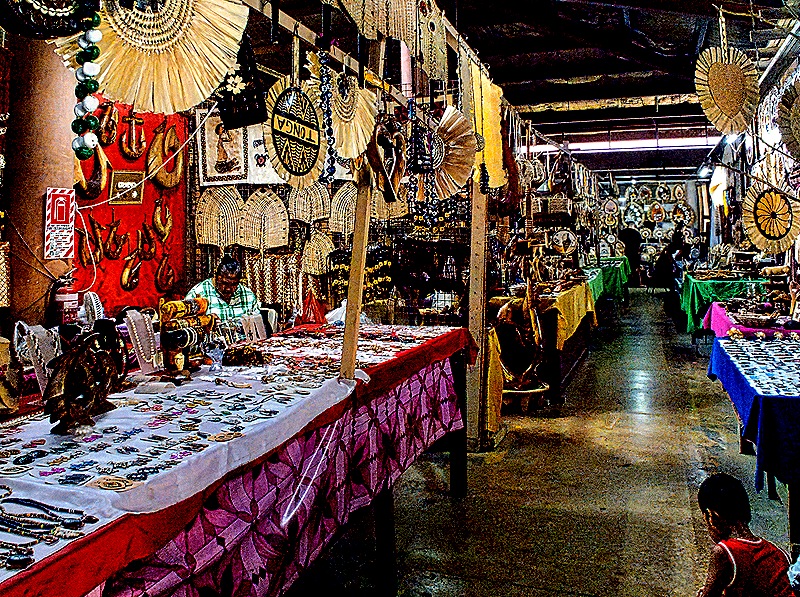
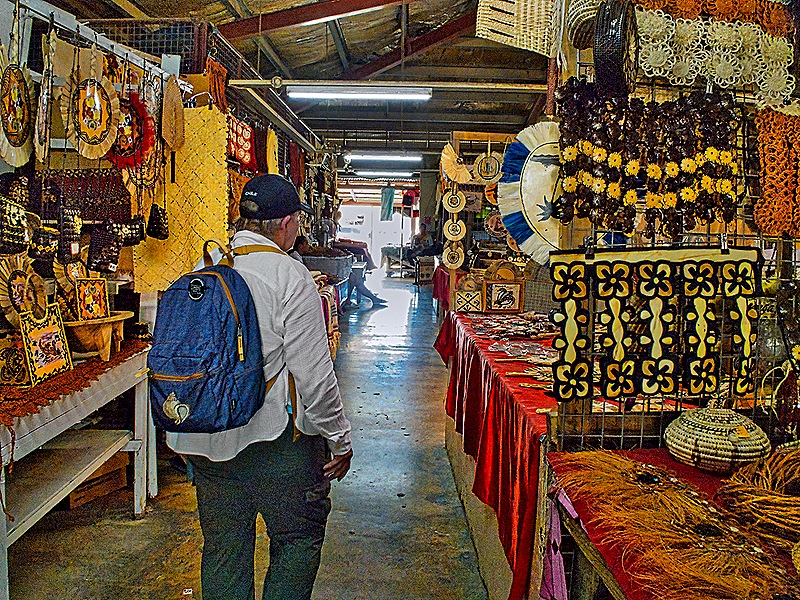
We left the ship in mid morning. There was a long walkway to the port gate leading into the city and there were several vendor tents set up along it. We agreed to meet Karen and Donna at the vendor tents. We got there first and had to wait a little while for the others. But we waited inside the tents because this was easily the most oppressively hot day we had on the entire trip. Anyone who might have been reading along will recall that we have noted a number of times how hot it was in a number of the ports, but none of them were like this. Even walking to the vendor tents was taxing. So how hot was it, you might wonder. Well if the internet knows what it is talking about, the temperature in Nuku Alofa on March 21 reached 88 to 90 degrees, but the humidity was about 82% and that combination gives a Heat Index (“feels like”) of 106 to 115 degrees, which it is pretty much what it felt like. And standing in the sun would make the heat index up to 15 degrees higher, also consistent with what it felt like to us. The National Weather Service warns that weather like this puts you in danger of heat exhaustion or heat stroke.
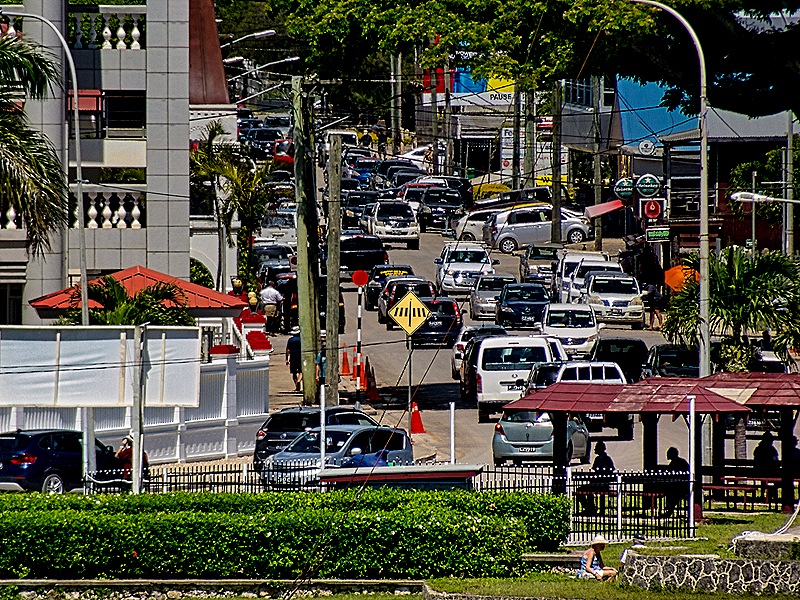
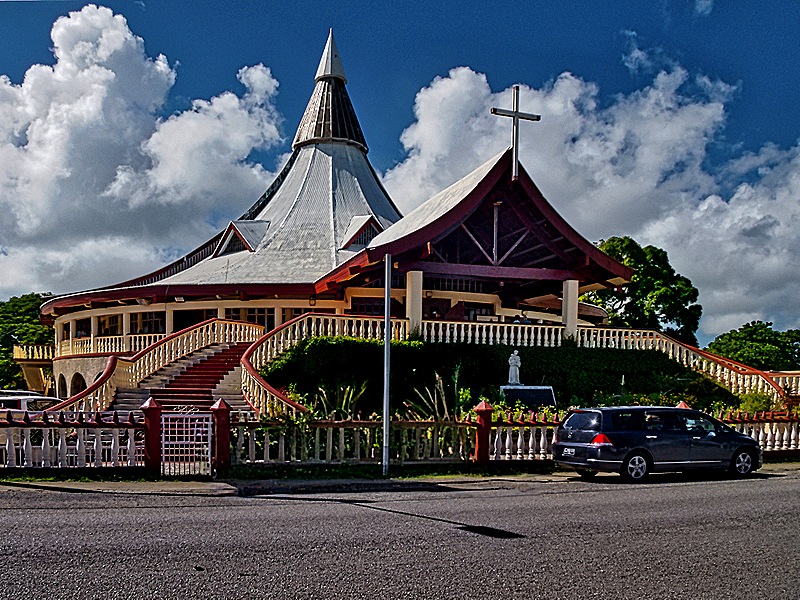
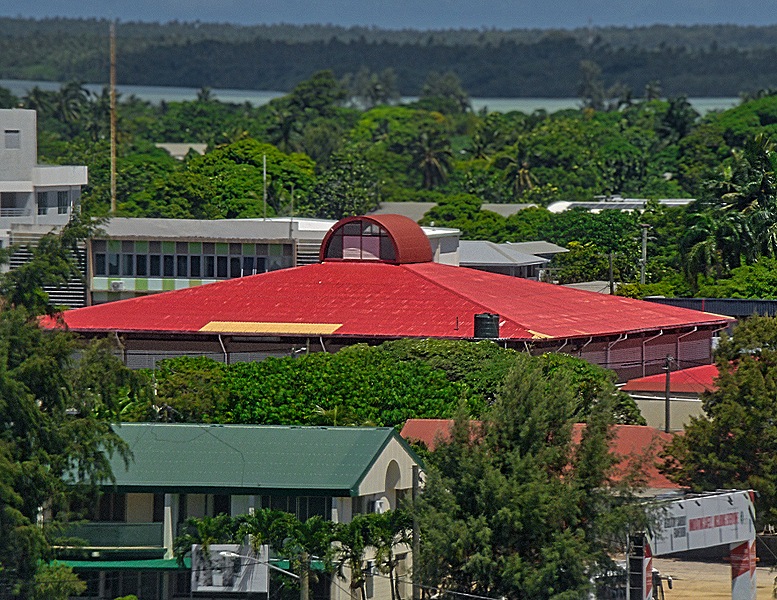
Of course, we didn’t know all this at the time, but we could feel the heat well enough to know from the beginning that this was going to be a relatively short walk. Helpfully, many of the main landmarks that first time visitors (like us) want to see are pretty close to the port (in fact most could be seen from the ship’s upper decks). Passing through the port gates we walked up the main street, stopping in several ho-hum stores because Donna and Karen had some things they needed. This street was very busy. The first place of interest we came to was the Basilica of St Anthony of Padua, a round Catholic church with a large cone shaped roof in the center that opened in 1980. Its interior is supposed to be very interesting, but we couldn’t go inside because a funeral was in progress.


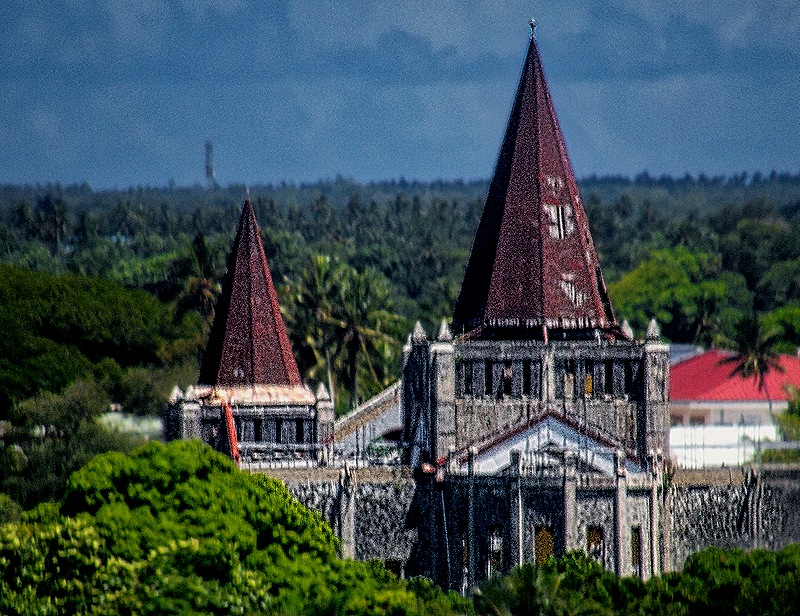
Turning right we walked down the road to the Centennial Church. The first Methodist missionaries arrived in Tonga in 1832 and Christianity spread rapidly, particularly in Nuku Alofa. The Free Church of Tonga was founded by King George Tupou I in 1885 to ensure local Tongan control of church assets and finances. The Centennial Church was originally built in the mid 1880’s and the royal family attended its services until the 1950’s. The church was substantially renovated in 1985 but in 2018 Cyclone Gita destroyed most of it, leaving only stone walls, and it has not been repaired (Gita also destroyed the Parliament building and hundreds of houses and small businesses). It must have been an impressive church in its day.


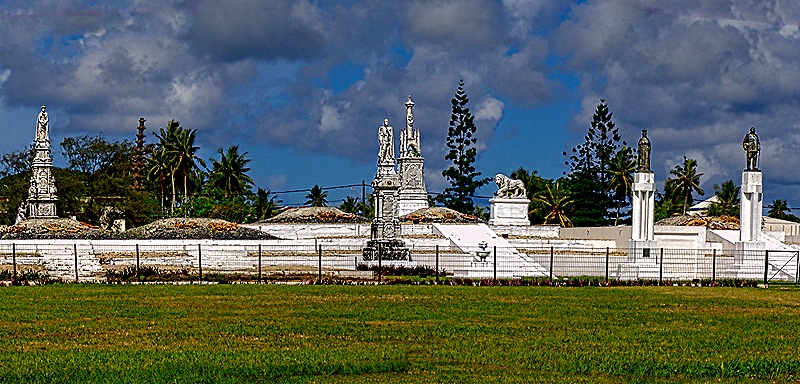
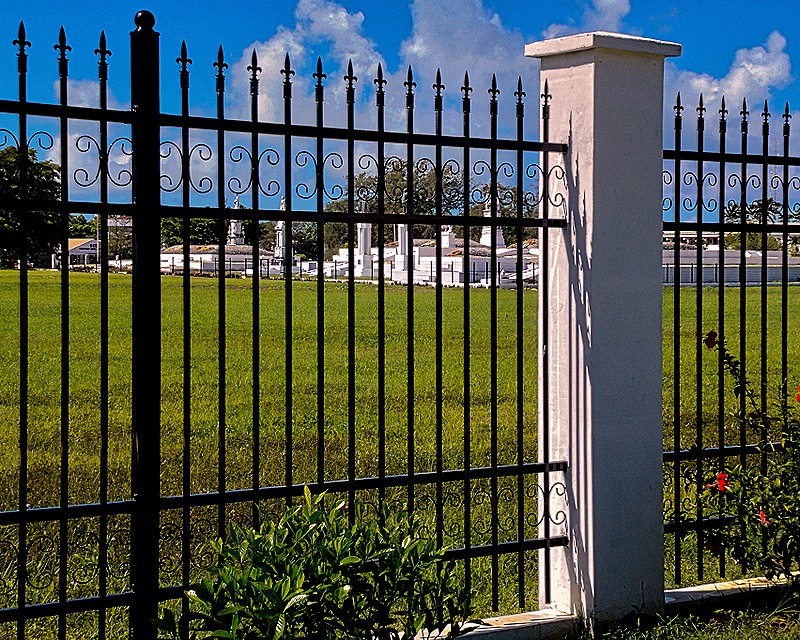
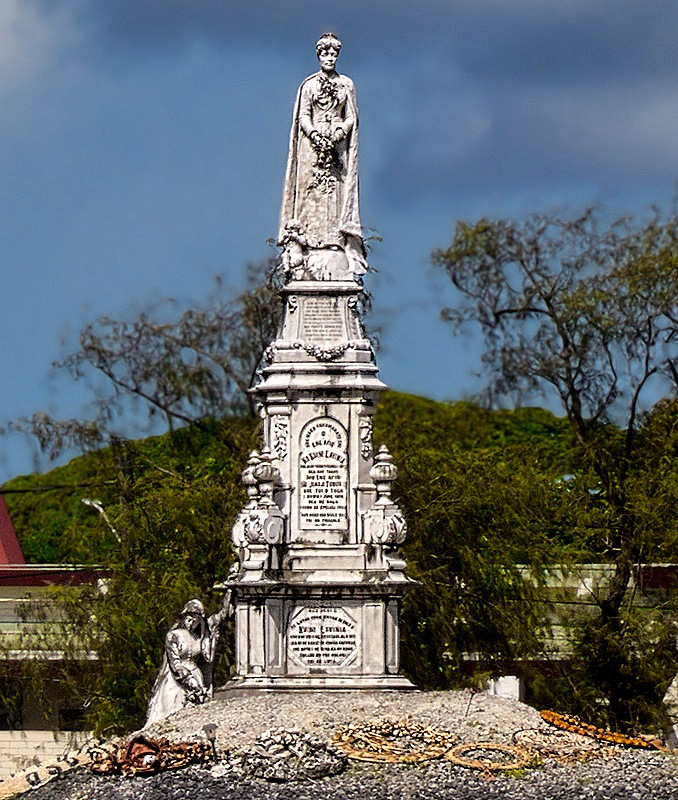
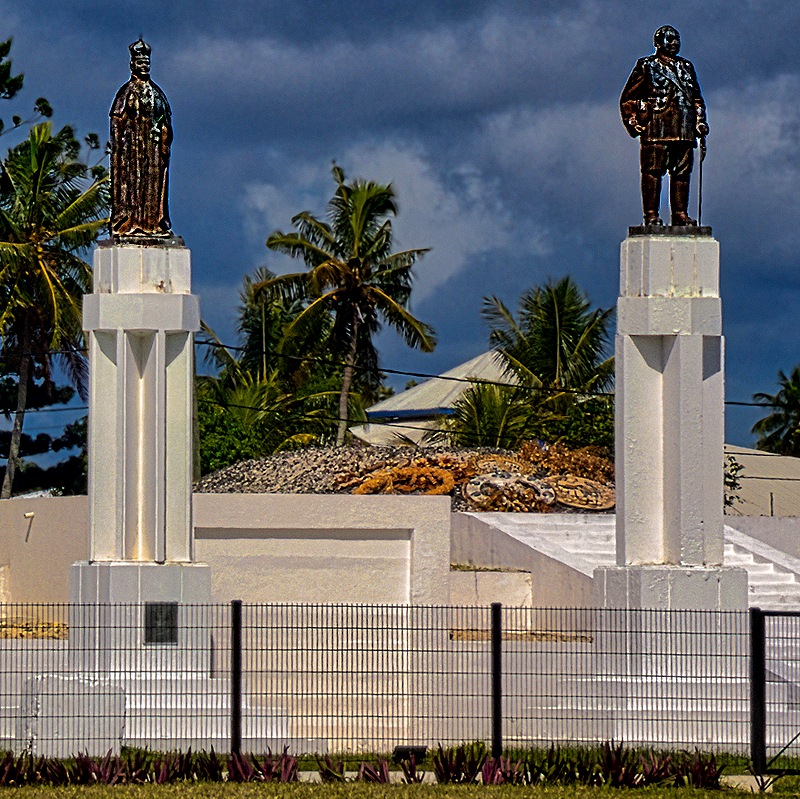
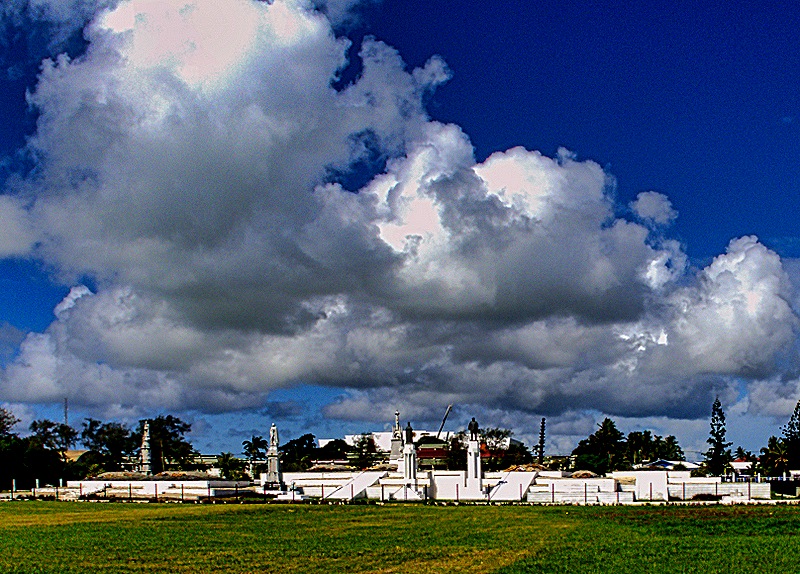
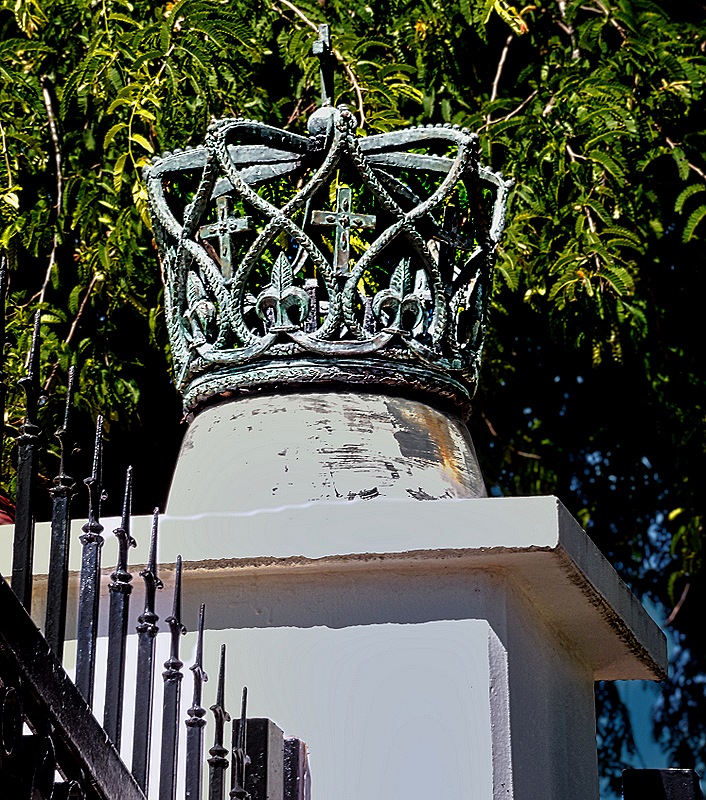
Just down and across the street was a very large fenced green area called Mala’ekula. This is the royal burial grounds exclusively for the current, Tupou line of monarchs beginning with George Tupou I, the uniter of Tonga in 1845. He was the first one buried here in 1893, and his progeny have been buried here with him, most recently King George Tupou V in 2012. There are statues above several of the tombs but we don’t know who is who. King George Tupou I is buried in the middle, without a statue on top of his tombstone but with a sculpture of a lion nearby. This entire large grounds is inaccessible to the public, who can only look at the tombs from afar behind a tall iron fence. As you can see from the last picture below, we were standing pretty far away when these pictures were taken.


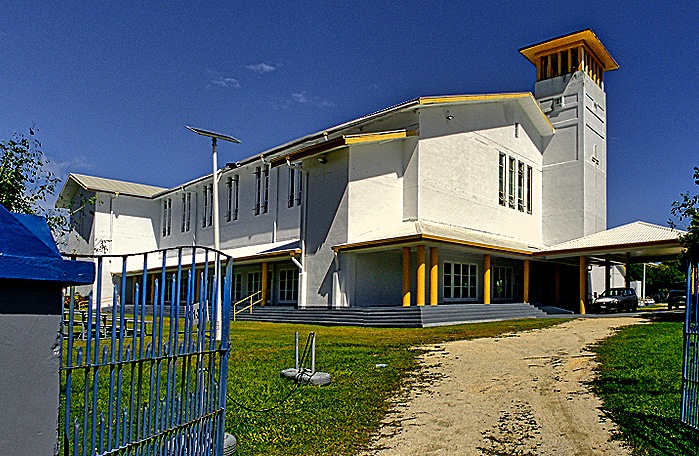
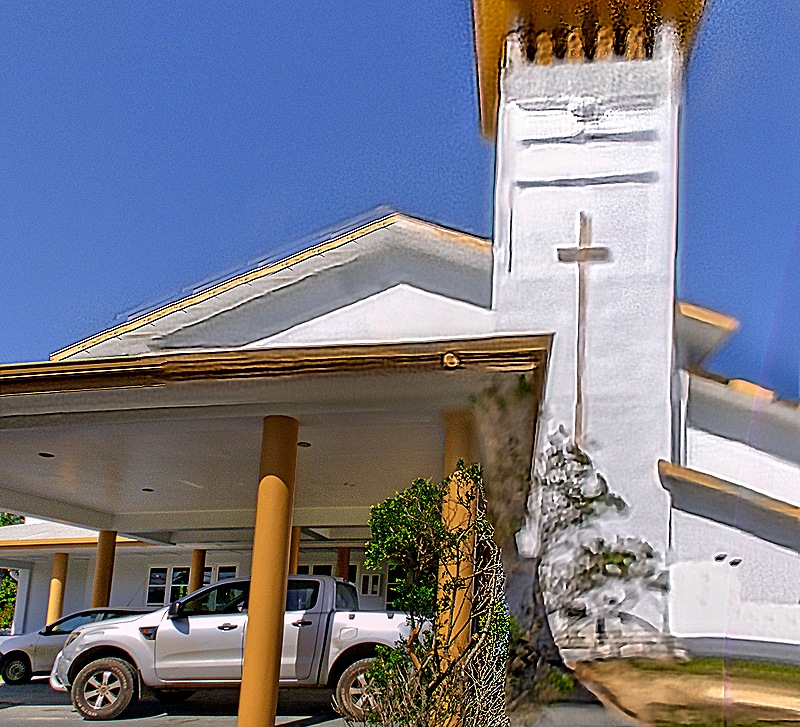
Just before we turned north toward the waterfront we came to the Centenary Chapel, built in the 1950’s. This was the result of a church schism (this stuff is too complicated to understand, much less explain) in the 1920’s when the Queen tried to reconcile warring factions in the church and rejoin the Methodists in Australia, but there were many holdouts who wanted their church to be independent. Anyway, this is the church the royal family attends today, quite convenient to the royal palace that is right down the street. We know that some HAL passengers have seen them here when their ship stops in Tonga on a Sunday. It is less distinctive, in our view, than the Centennial Church must have been before 2022. As you might imagine, if you try to research these things online you will find a great deal of confusion between these two churches with very similar names, both started (at different times) by the royal family.


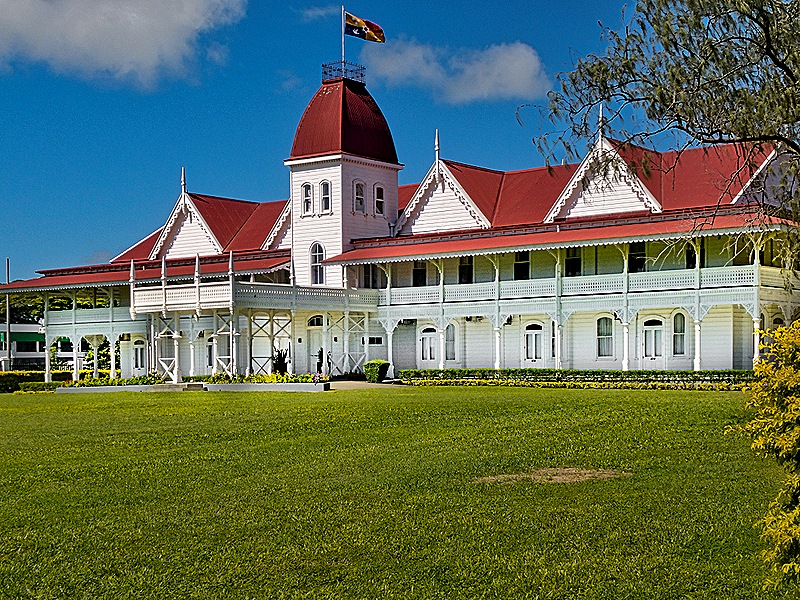
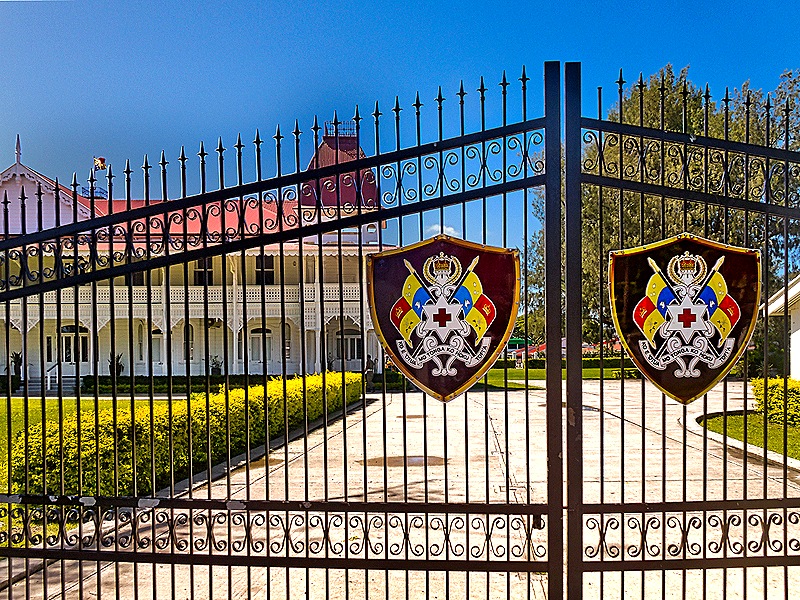
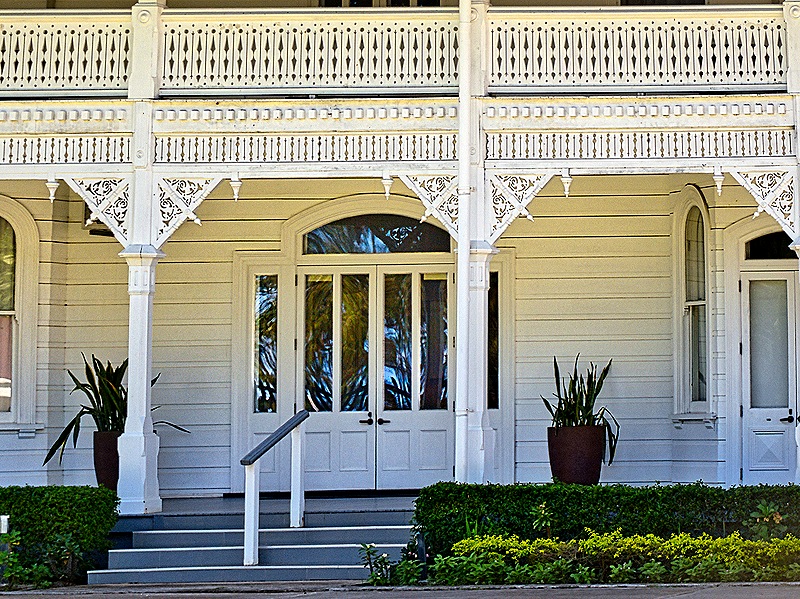
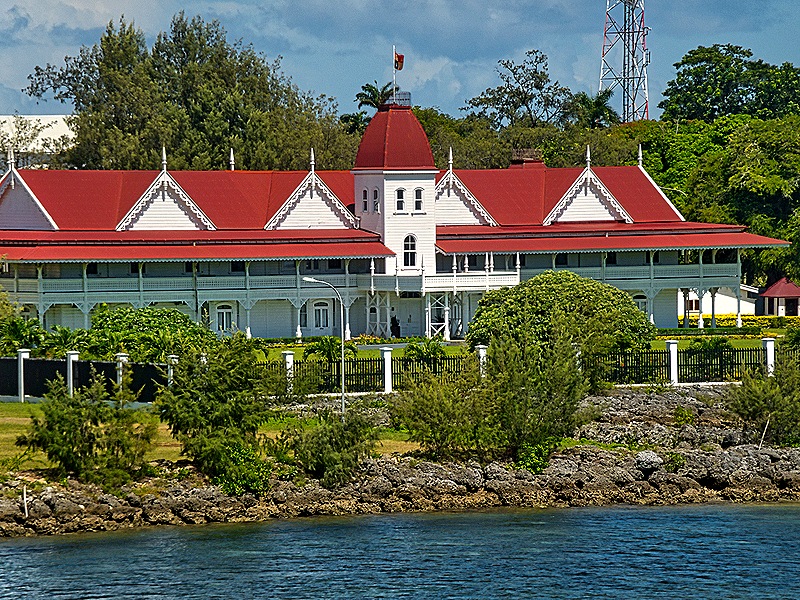
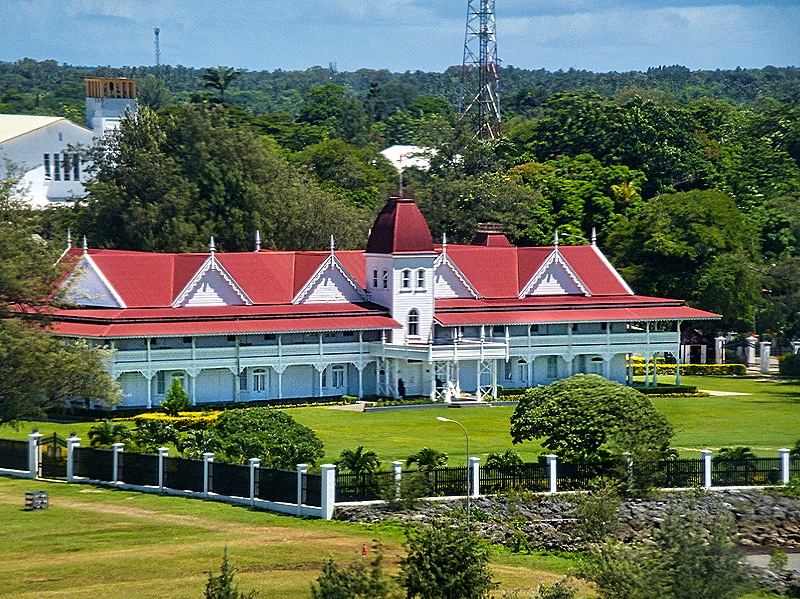
Walking what seemed a long way down toward the water we came to the Royal Palace. Built in 1867 of kauri wood, it is in Victorian colonial style with traditional Tongan touches. The palace is the monarch’s home and it is not open to the public, but it can be viewed through the almost 10 foot tall metal fence. it is perfectly seen from the ship at the dock.


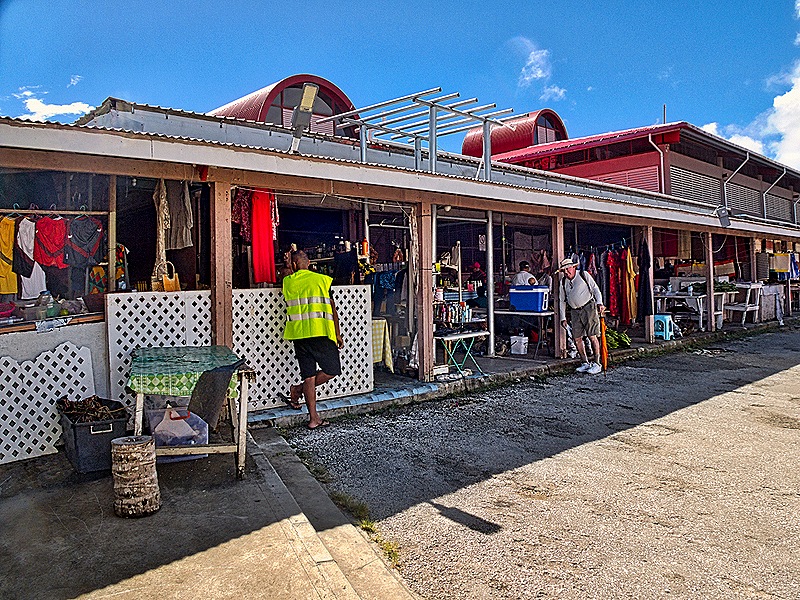
Walking down to the palace gates had taken us within eyeshot of Zaandam at the dock, but the whole area in front of the palace was fenced off. So returning to the ship required us to walk all the way around the route we had come by. On the way back we stopped in briefly at the Talamahu Market, the city’s main central market with lots of local produce and a plentiful variety of handcrafts. We didn’t stay long though, because we were tired and not really very interested in shopping.


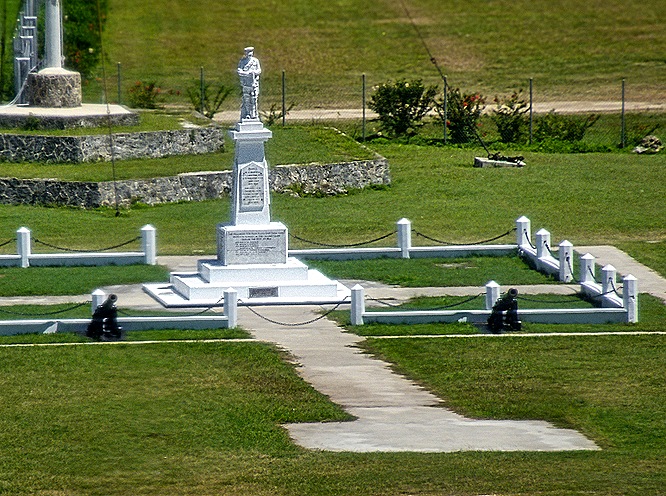
We were back onboard the ship before noon, indeed a short walk but covering quite a bit for the time spent. Before going up to the pool side grill for lunch though we each took our second, and very refreshing, shower of the day! We mentioned above that many of the places we visited could be seen from the upper decks of the Zaandam at the dock, so here are pictures of a few of them. In addition, not far to the west of the palace was the Cenotaph, a monument commemorating the Tongan soldiers who participated (and some who died) in World War I. Many of these were Europeans resident in Tonga when the war began, but there were several dozen ethnic Tongans who enlisted and fought with the Maori brigade of the New Zealand forces. The Cenotaph was commissioned in late 1923 by then ruling Queen Sālote. Interestingly, ANZAC day is celebrated here every April.


Thus ends our visit to Tonga. We sailed off for three welcome days at sea to reach the Society Islands.
 RSS - Posts