Cairns, Australia (2 days) 2026
On February 8 we arrived in Cairns, our first stop in Australia on this trip, for an overnight visit. Founded in 1876 as a port for a nearby gold field, Cairns became a town in 1903 (with a population of about 3500), was heavily involved in World War II (it is on the edge of the Coral Sea) and today has grown into a city of about 160,000 people. Cairns can be an interesting place, which we enjoyed on our first visit here in 2016: https://baderjournal.com/2016/03/06/. This stop had originally been scheduled for one day but was expanded to two when an earlier port stop was cancelled.
Day 1
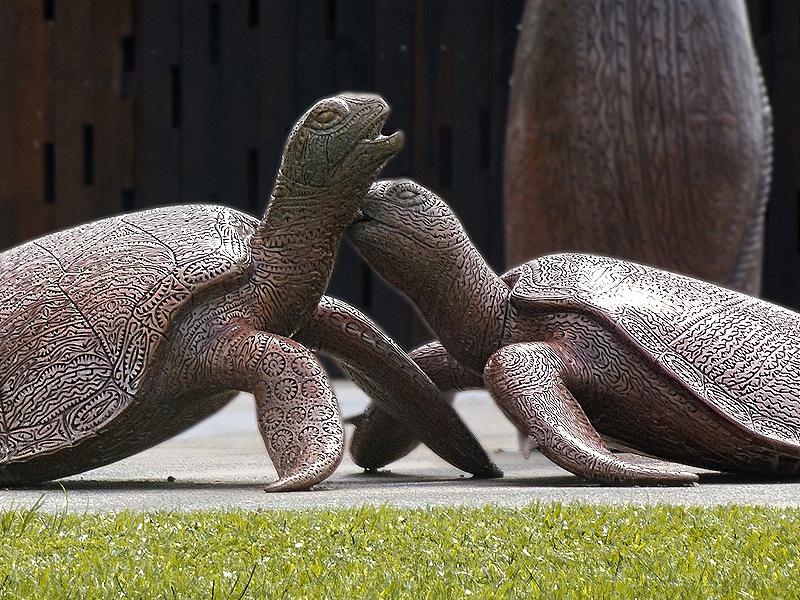
After a lot of excursions in previous ports we decided today would be a good day to spend walking around on our own. So we set out after breakfast, thinking this would be a nice walk mostly visiting places we had enjoyed in 2016. As we walked out of the port we passed some bronze wildlife that we had seen last time.
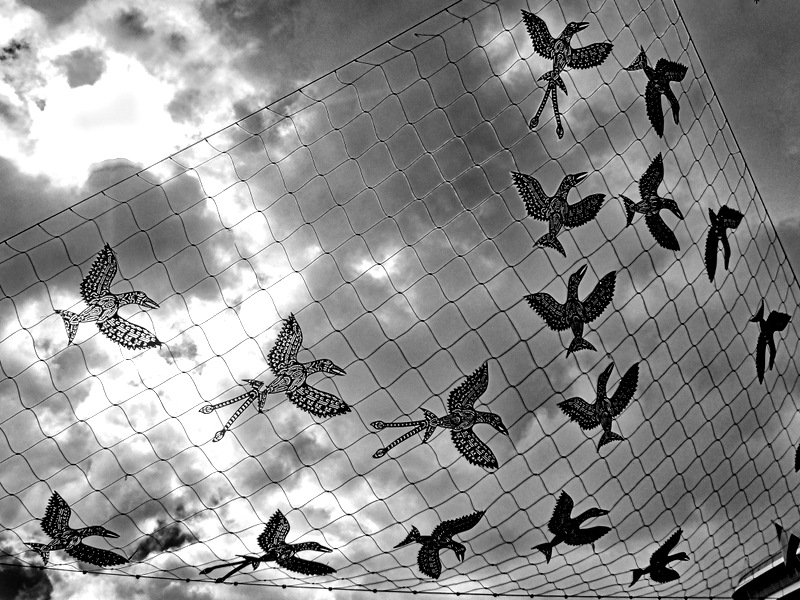
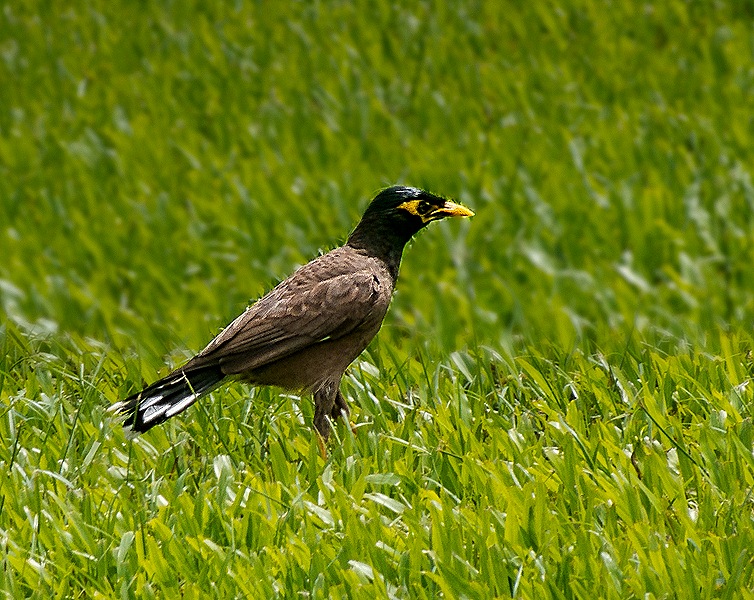
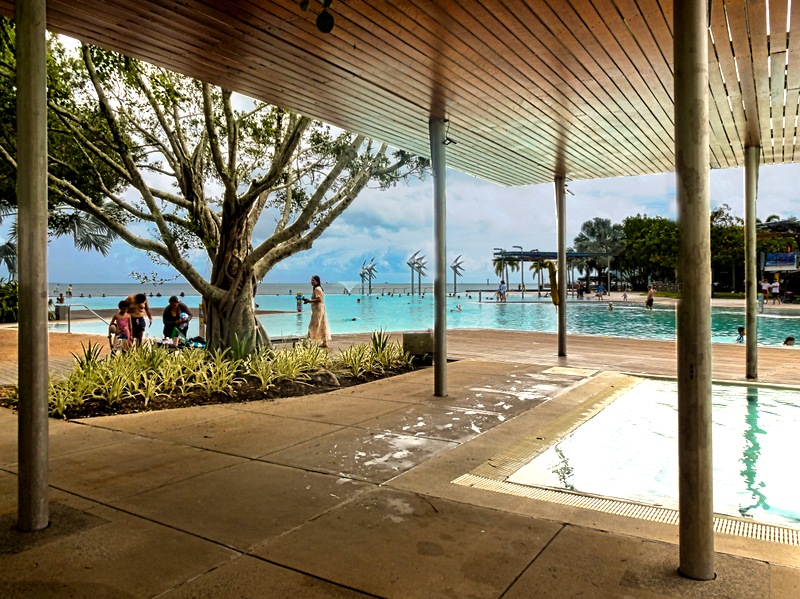
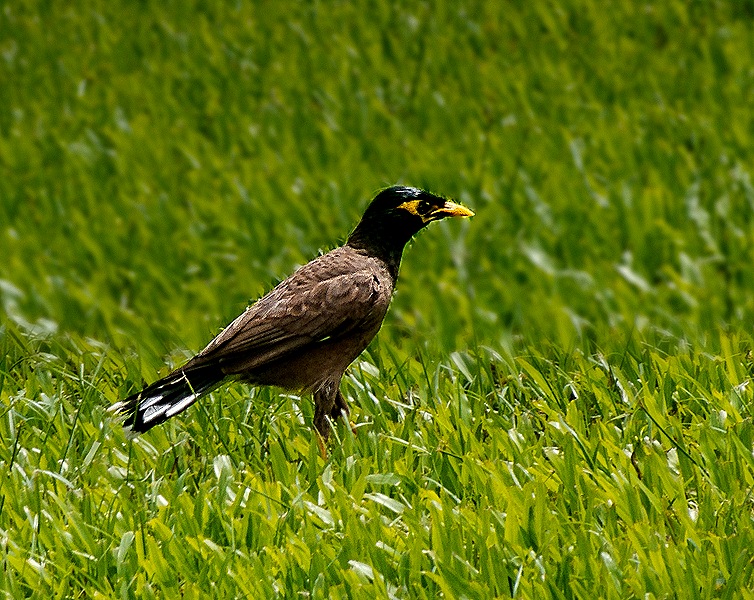
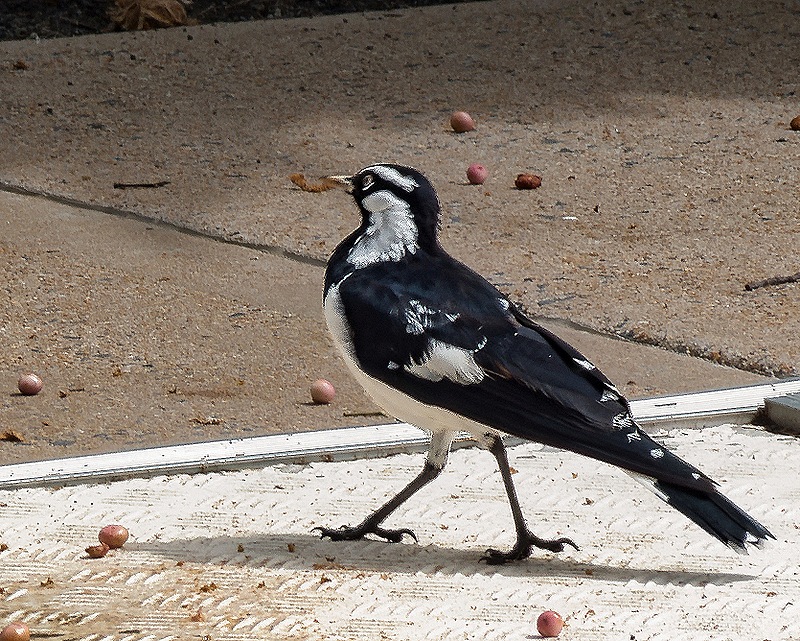
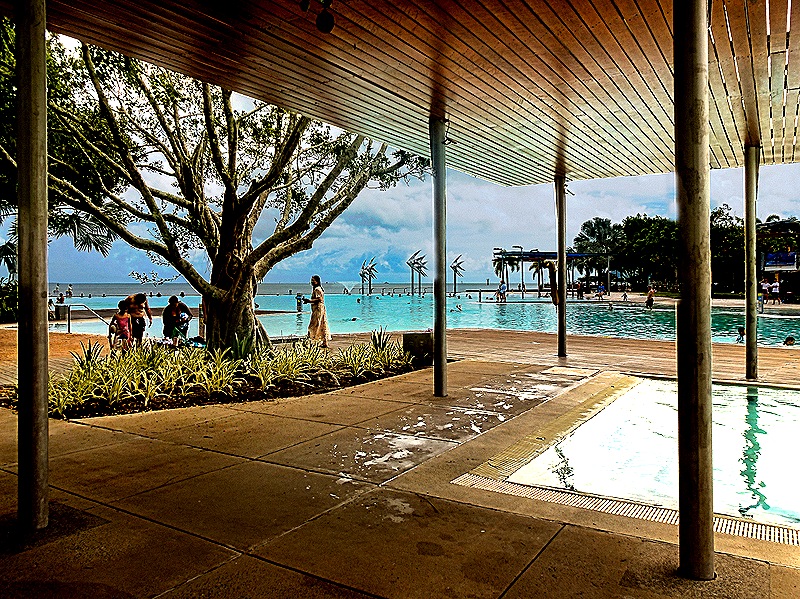
We walked into the town past our first disappointment . . . the wildlife dome above the casino we had enjoyed on our first visit was no longer there. It had a lot of fairly exotic animals, we wonder what happened to them. However we did pass some wildlife on our walk, a couple of interesting birds populating a park. And we also walked along the Esplanade, a park along the seafront, including the lagoon, a man made swimming facility built because swimming in the ocean is too dangerous with deadly box jellyfish and sometimes crocodiles. Australia can be a dangerous place; we have read that all ten of the ten deadliest creatures in the world live in Australia.
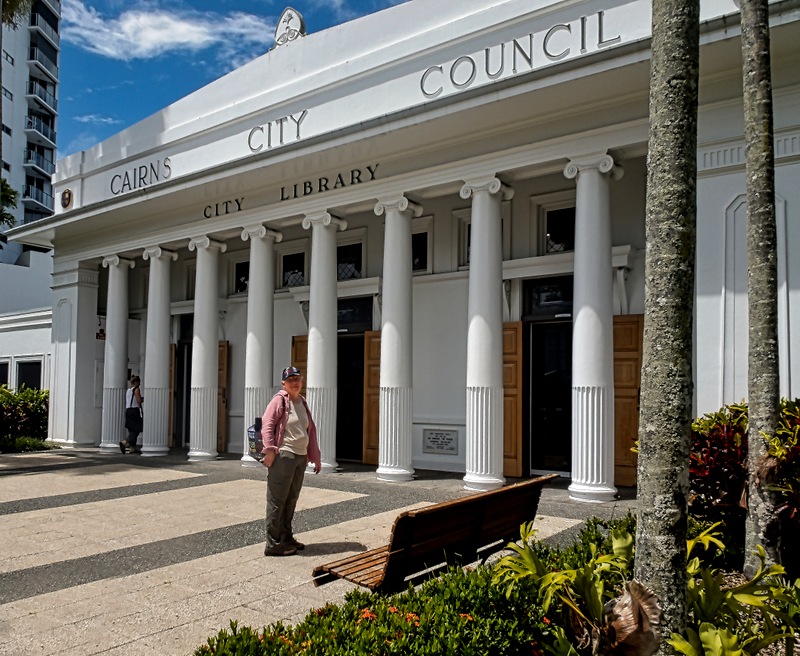
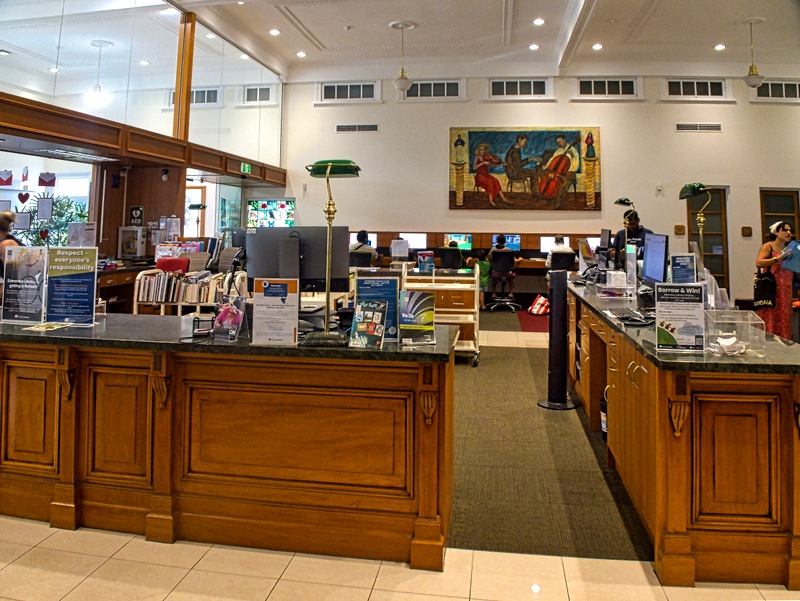
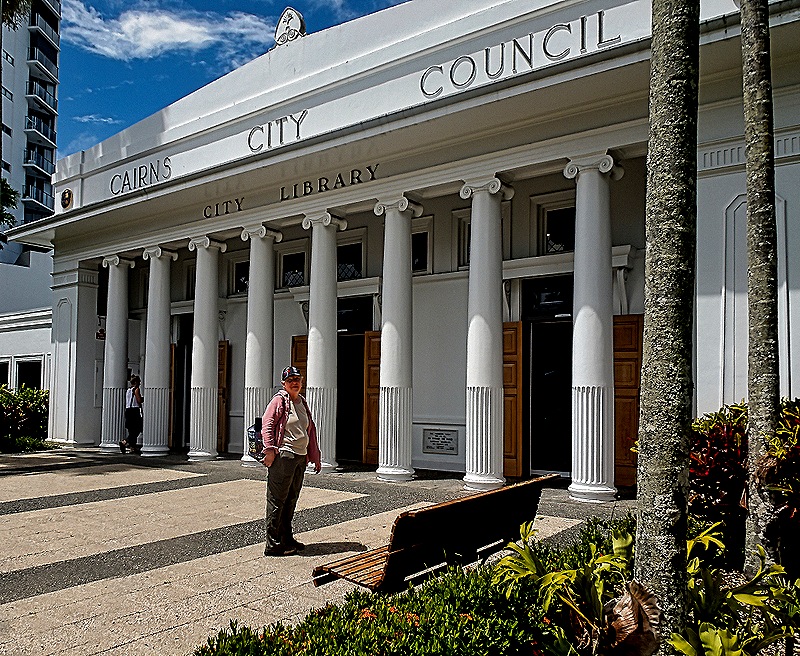
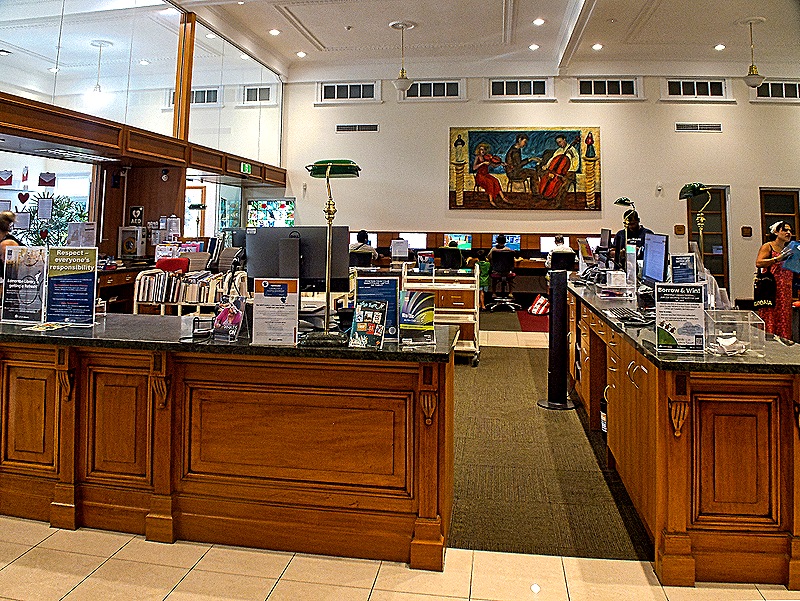
We visited the Cairns Library, where on our first visit we encountered thousands of Flying Fox fruit bats hanging from a couple of trees on the library grounds. It must have been quite a sight when they all flew away at once in search of food every evening. The library building first opened in 1930 as the home of the City Council (still etched into its facade) and reopened as a the Cairns City Library in 1999.
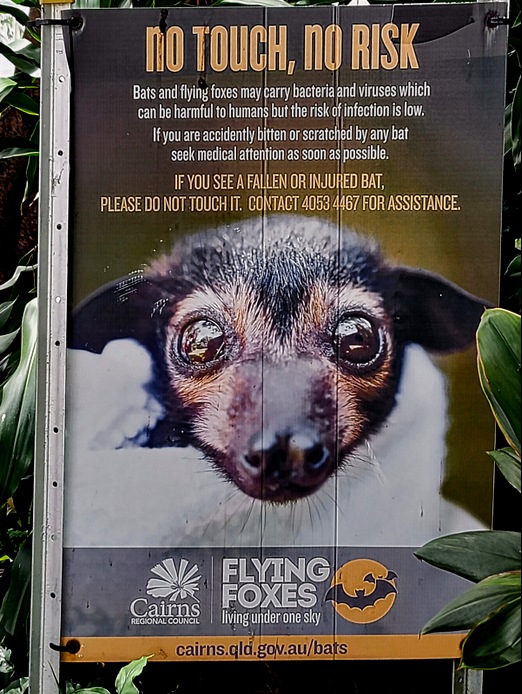
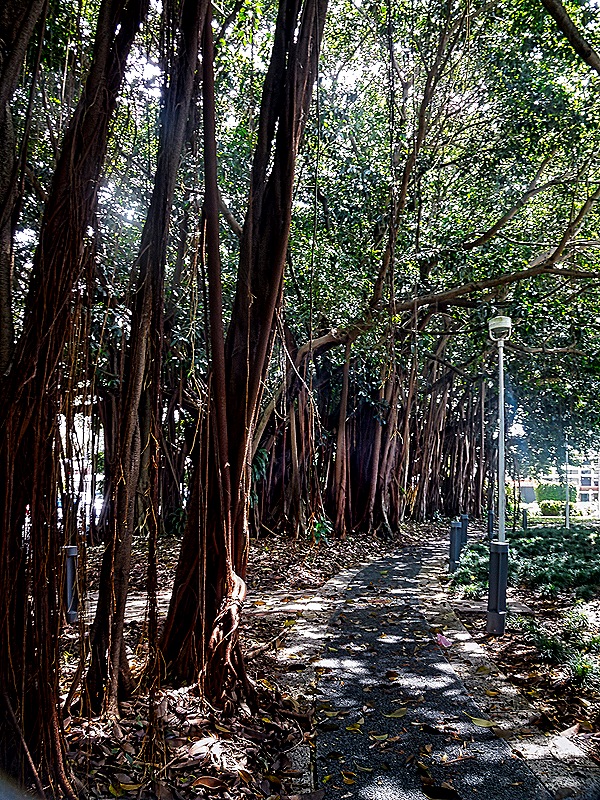
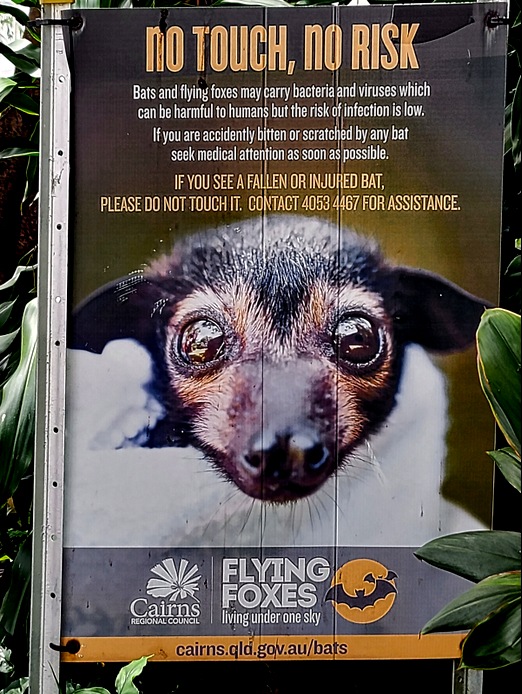
Well sadly the bats are no longer in residence at the library. We asked about it inside and a librarian told us that patrons complained about them a lot and cleaning up their droppings (as well as avoiding getting hit by them) became a burden. So the library successfully managed to convince them to go live somewhere else (not sure what that entailed). There is still a sign among the trees on the grounds warning visitors not to touch the now absent bats.
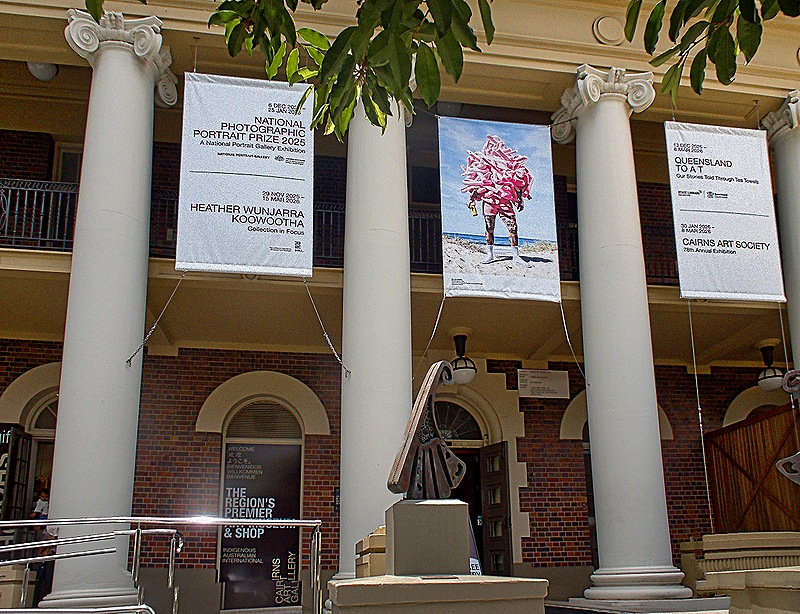
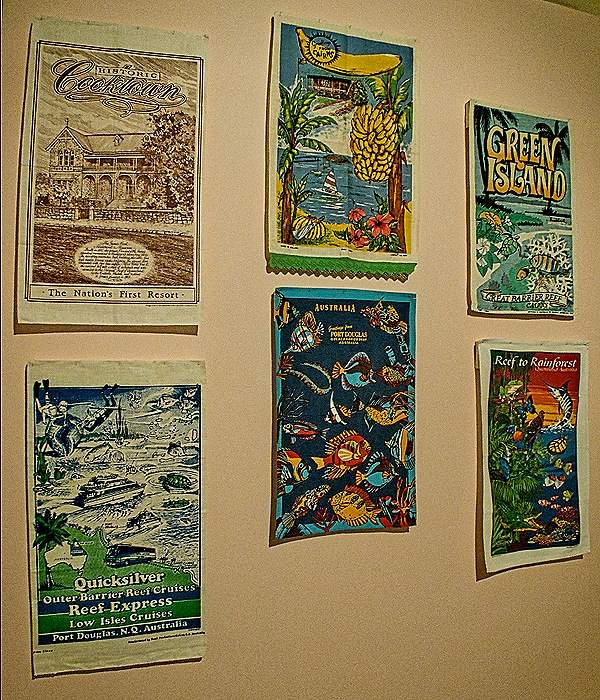
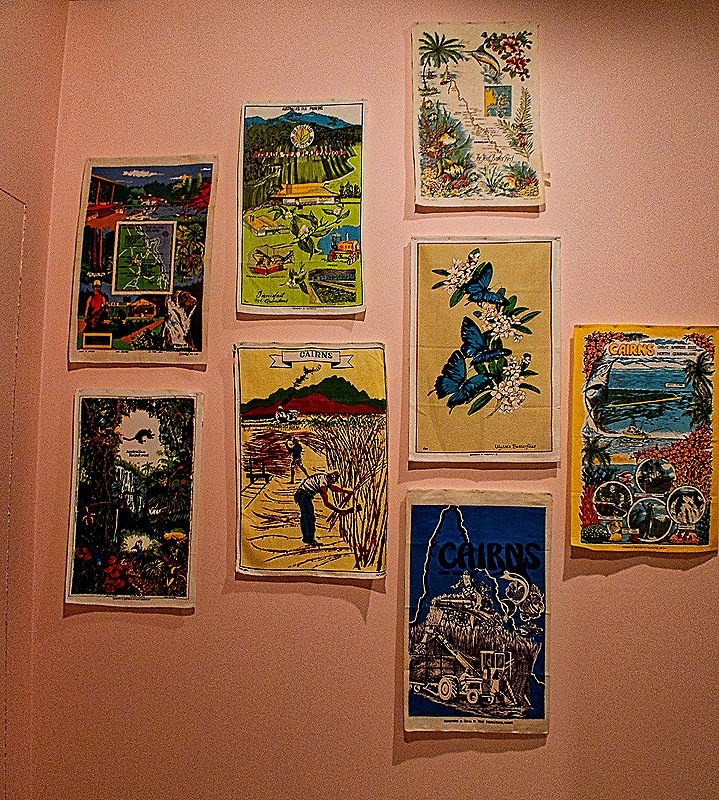
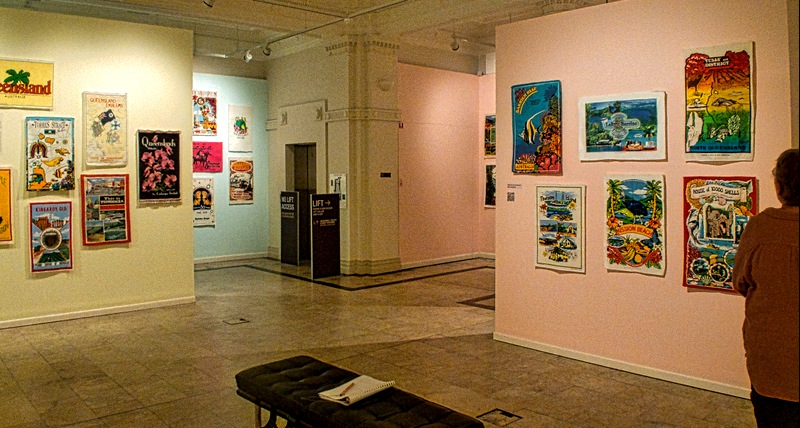
We tried to revisit St Monica’s Cathedral for another look at its unique stained glass windows, but alas it was Sunday so the cathedral was closed except for religious services. But we were able to visit the Cairns Art Gallery which we had not seen before. It is a very nice art museum with colorful displays of Australian art, an emphasis on Aboriginal art (which we really like), and rotating exhibits. The special exhibit when we visited was a collection of Australian tea towels, which was actually more interesting than it sounds. The art gallery opened in 1995 in an attractive building originally built in 1936 to house government offices.
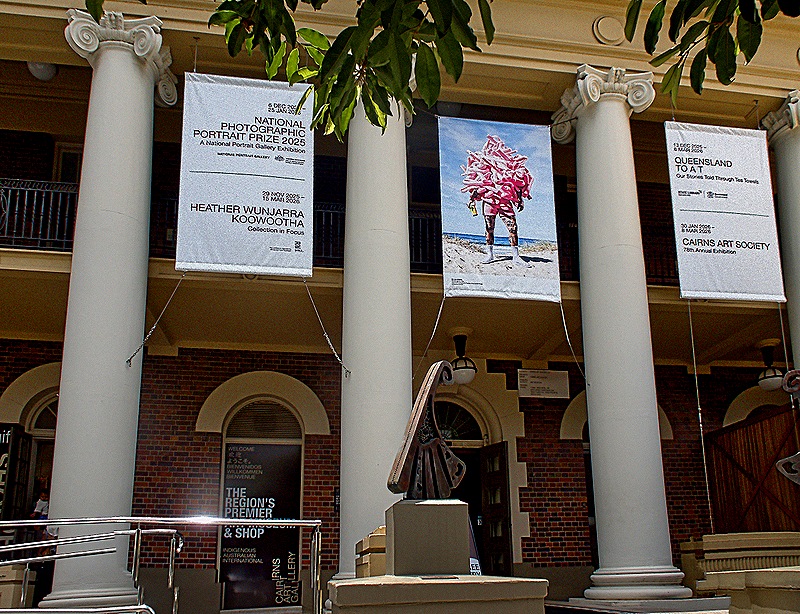
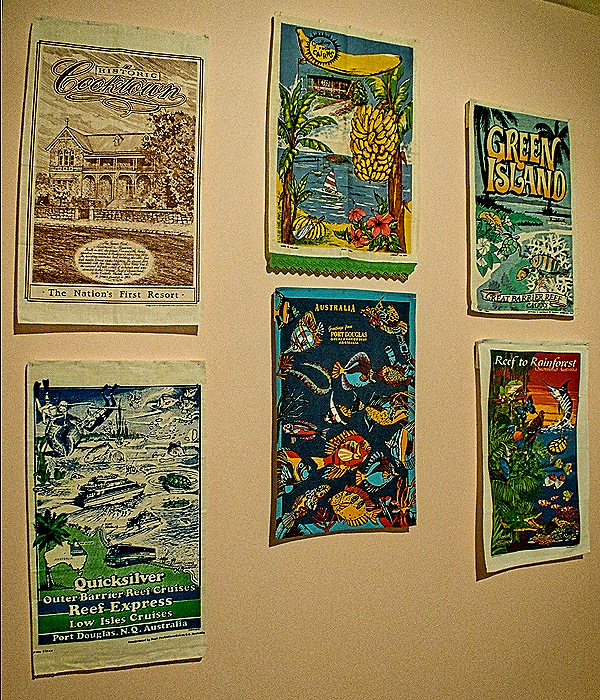
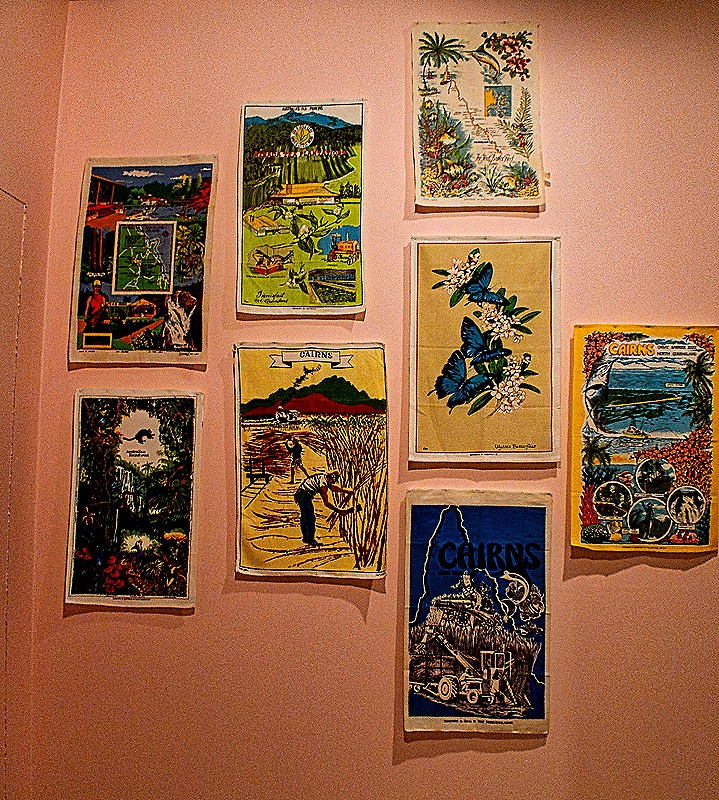
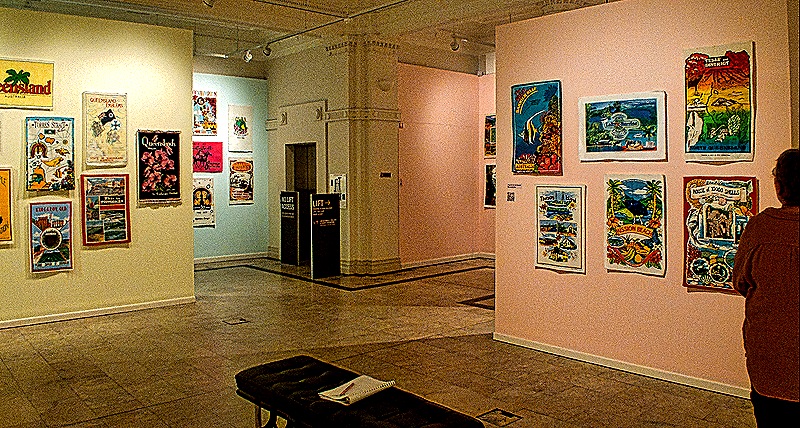
Well, it was a very hot and humid day (anyone who has been following along has read that before) and we had done quite a lot of walking because some of these buildings were harder to find than we had expected. We stopped for lunch in a nice shaded outdoor pizza place then had some very good gelato as we started the long walk back to the ship.
Day 2
We spent February 9 on an expedition to Kuranda, a small town (about 3300 people) located in the mountainous rainforest northwest of Cairns. The indigenous Djabugay people have lived in this area for more than 10,000 years and the first white settler arrived in the late 1880’s. A railway inland from Cairns reached Kuranda in 1891 and it has been known as a tourist destination since early in the 20th century, where people came to see the rainforest and the local Aboriginal culture. Since the 1970’s Kuranda has been known as an art center supporting alternative lifestyles and a tourist destination.
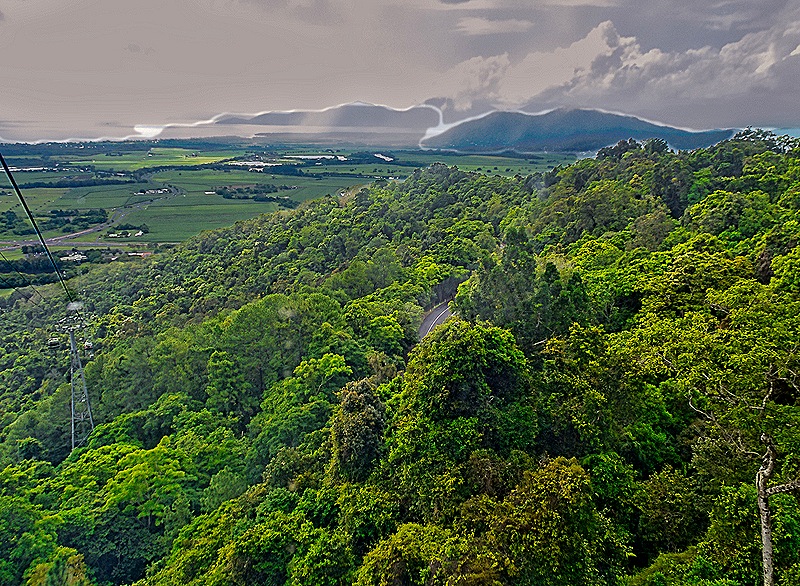
Our expedition traveled from Cairns to Kuranda on a cable car line running almost 5 miles from sea level in the northern part of Cairns into the mountains containing Kuranda. It was the world’s longest cable line in 1995 when it was completed.
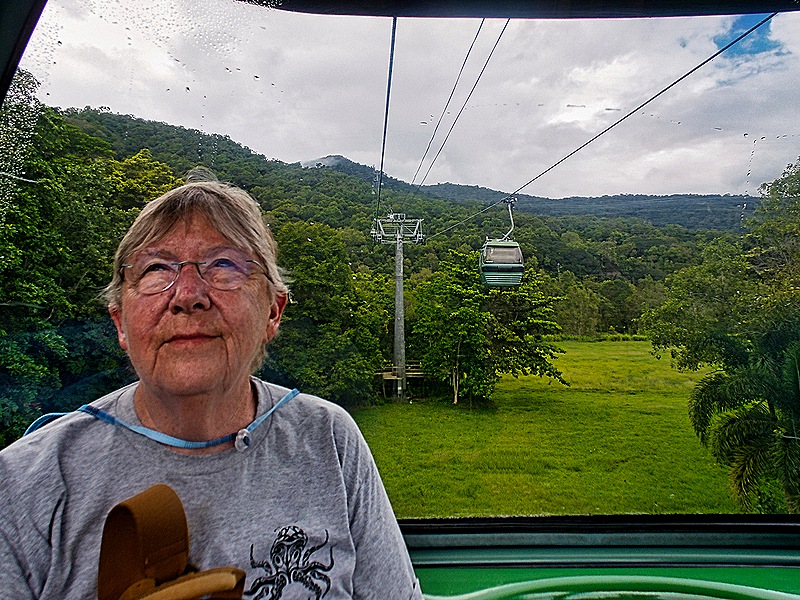
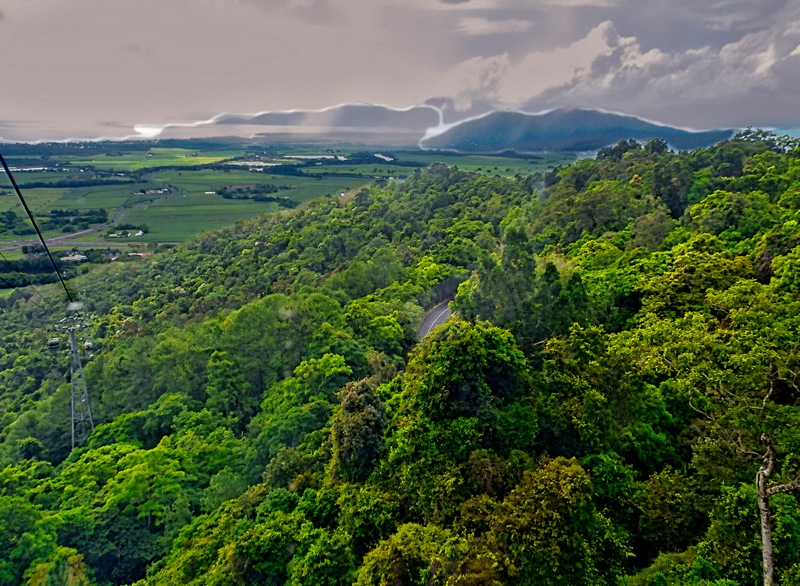
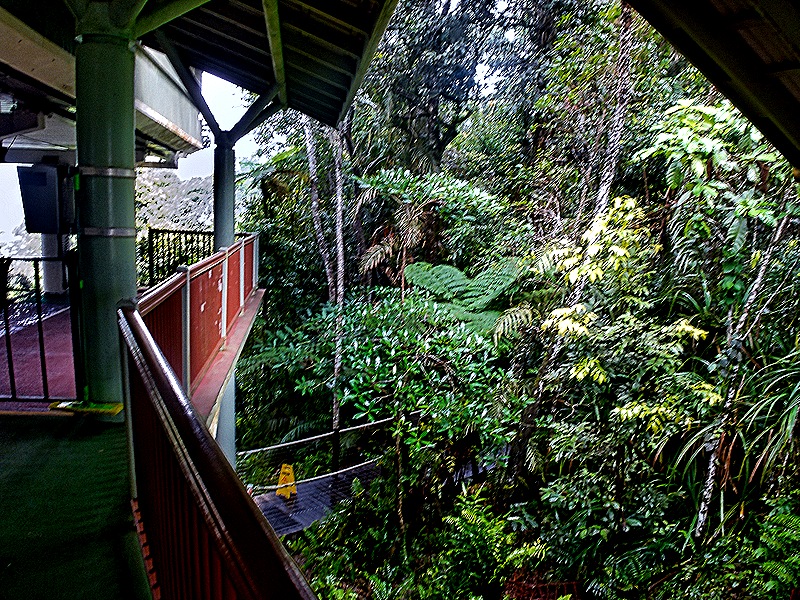
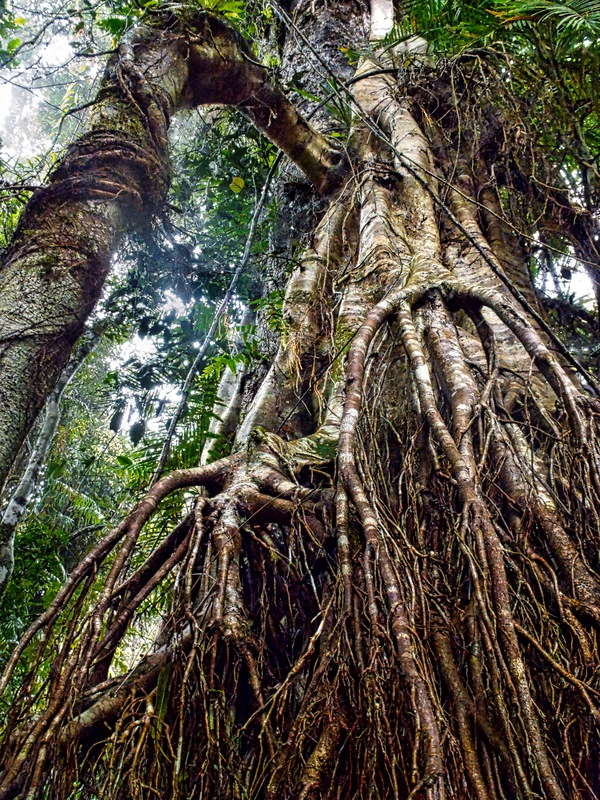
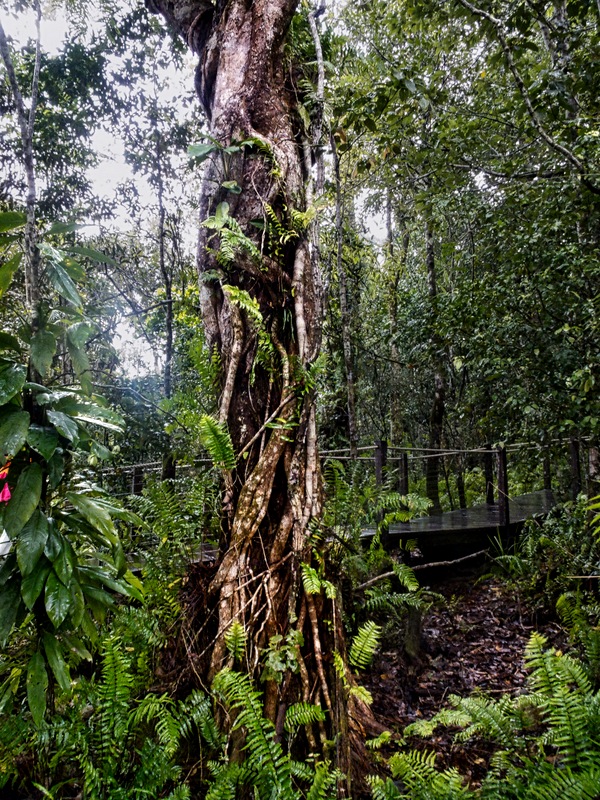
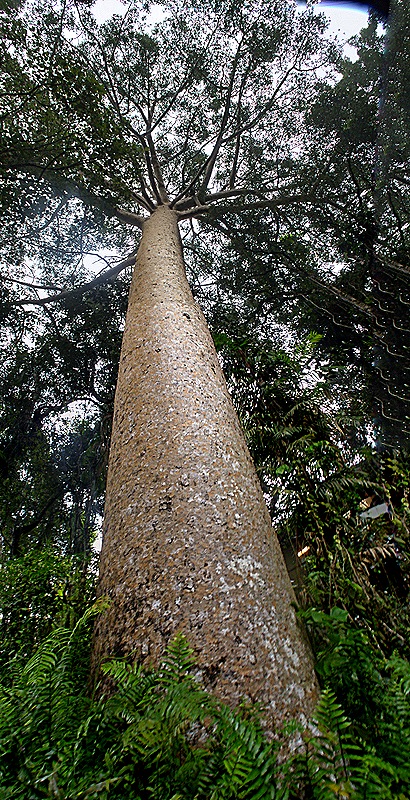
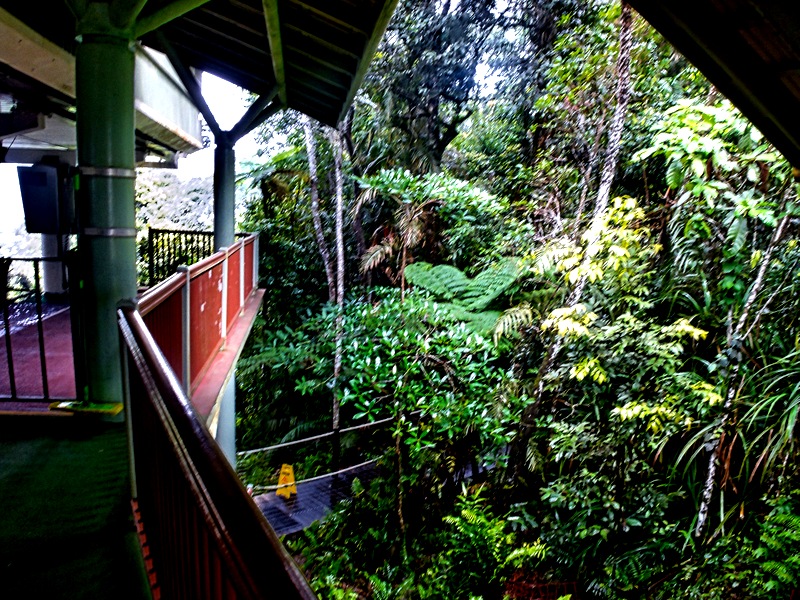
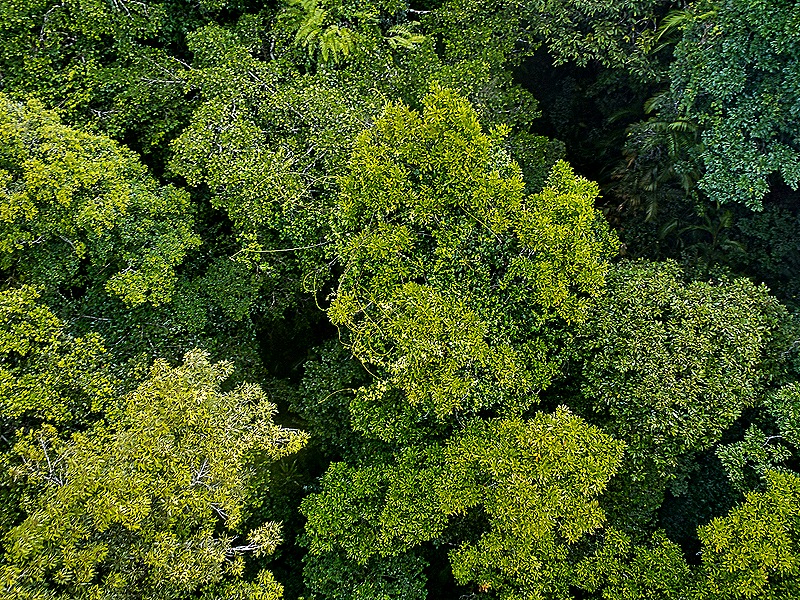
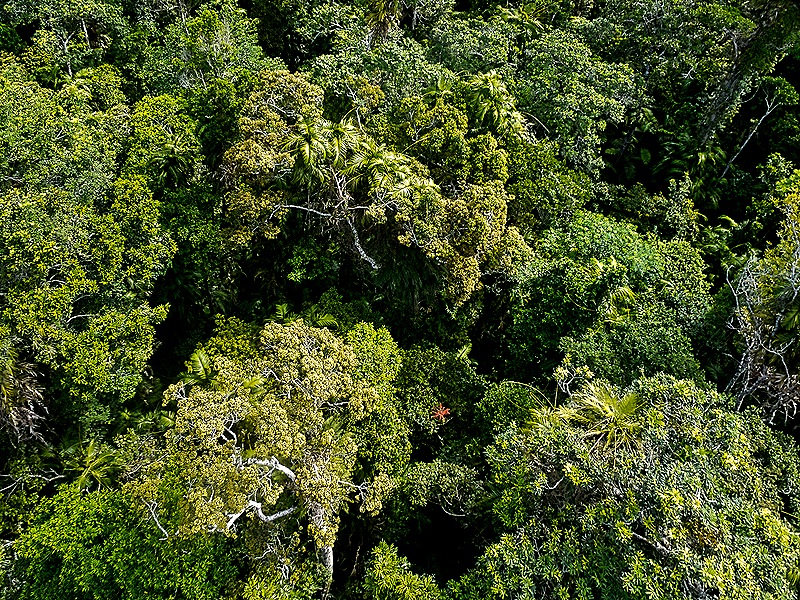
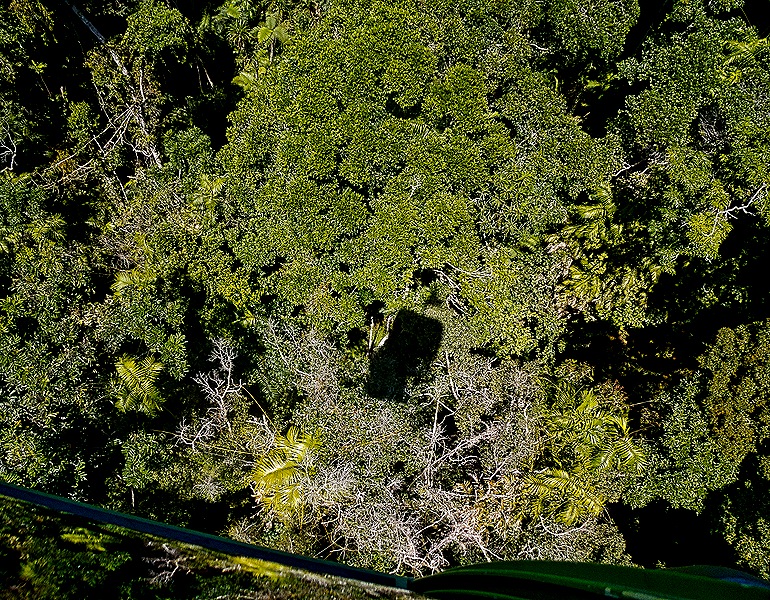
The cable cars stopped a couple of times to allow us to get out and look around. Each stop had well constructed wooden walkways with explanatory signs about the flora and other sights we were seeing. The first was called Red Peak, 1788 feet above sea level. This cable line travels through part of the Wet Tropics of Queensland, which encompasses the oldest rainforests in the world, some dating back 180 million years. The wooden visitor walkways at Red Peak are very high off the ground but under the top tree canopy. Notable among many other things we saw a Strangler Fig, whose seeds are deposited by birds and bats on high branches of a host tree. With plenty of light up there the Strangler grows down the surface of the host tree to the ground, where it fuses with other Stranglers and envelops the host tree. We also walked by a huge Queensland Kauri that is more than 400 years old. It has no low branches and its shedding bark prevents vines and other plants from growing on it and competing for light.
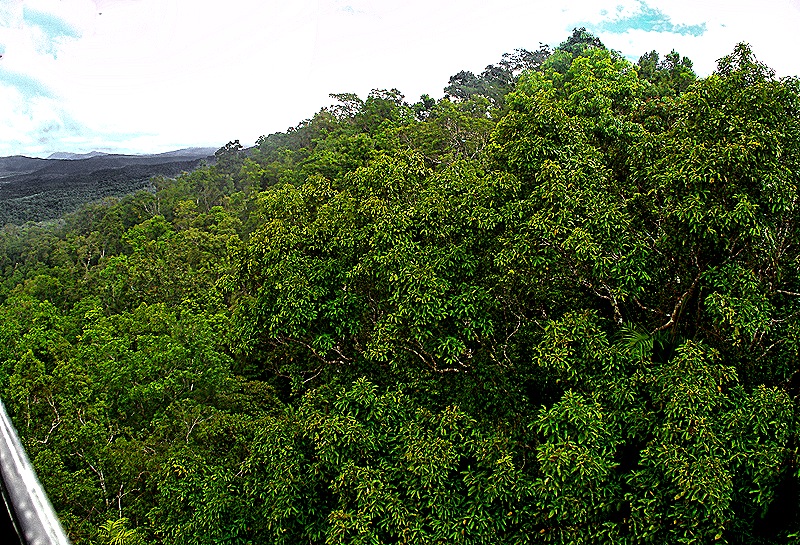
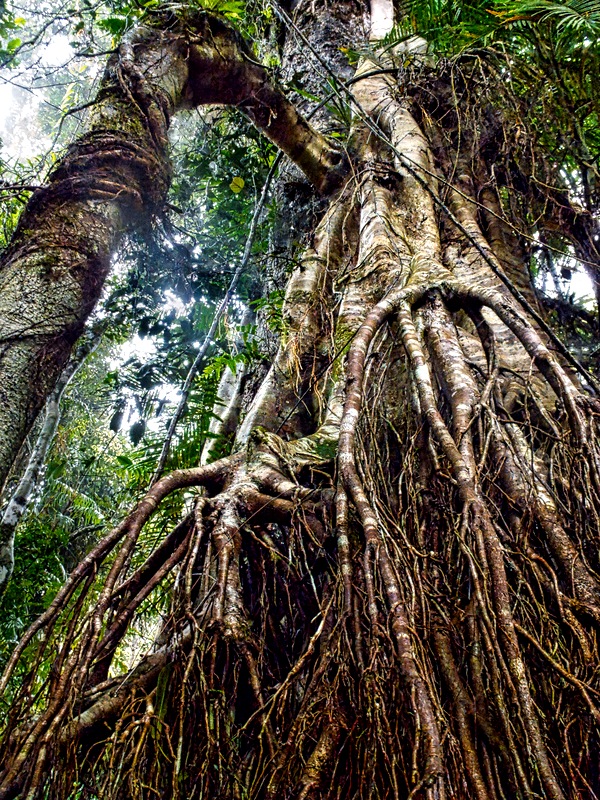
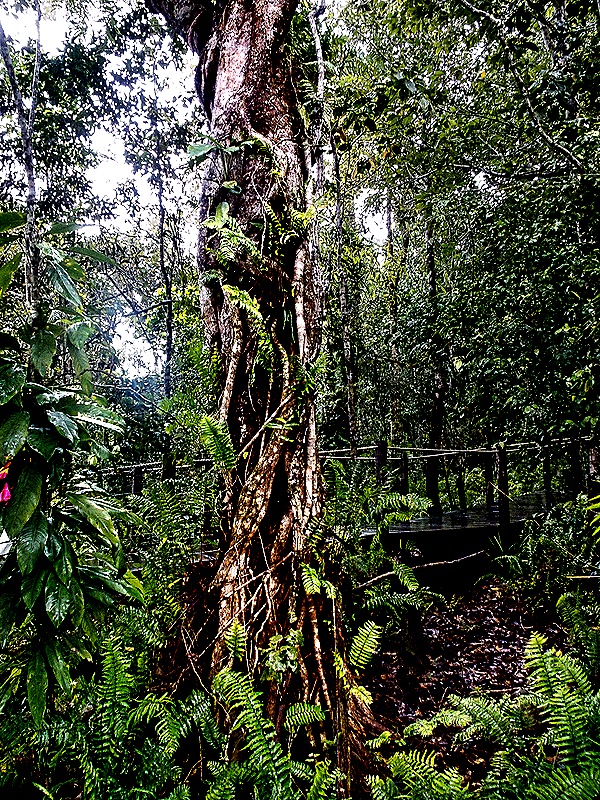
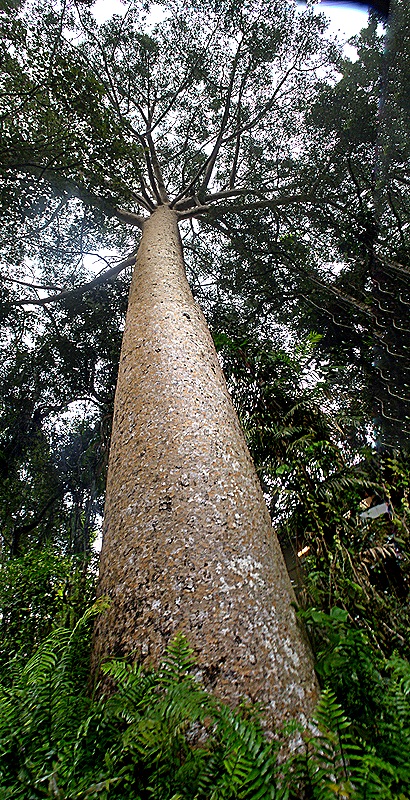
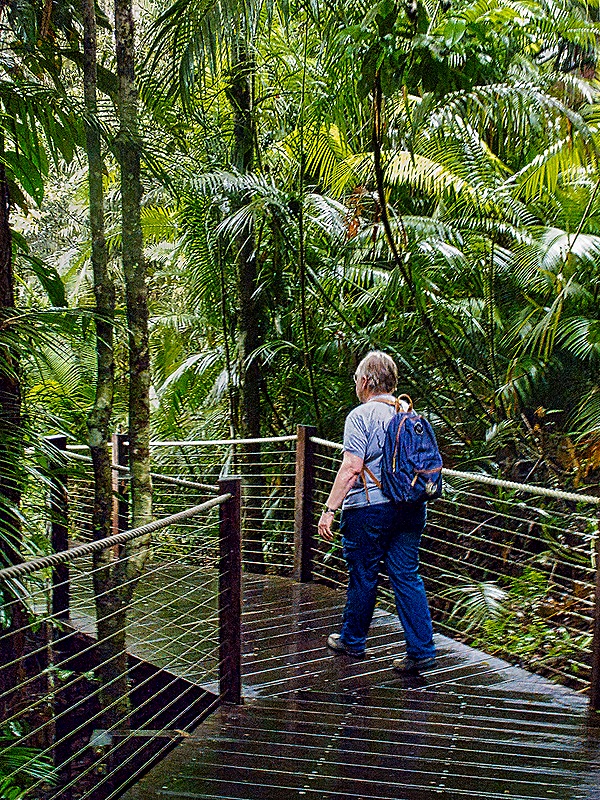
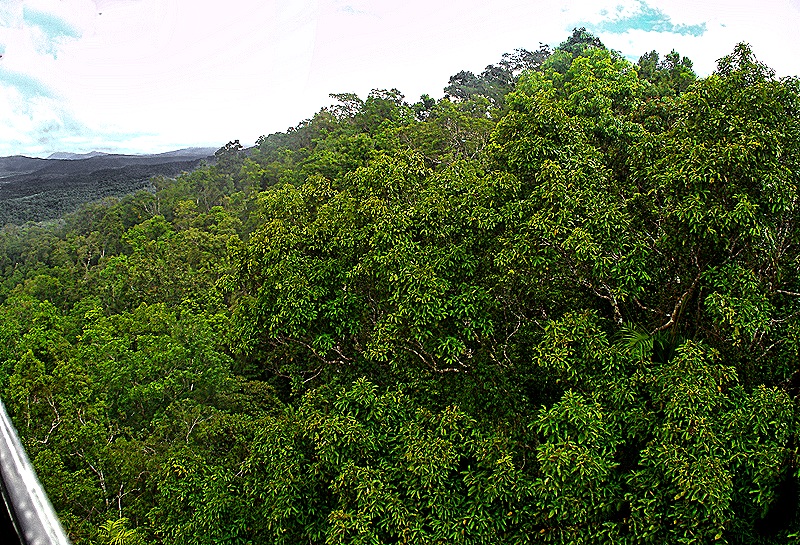
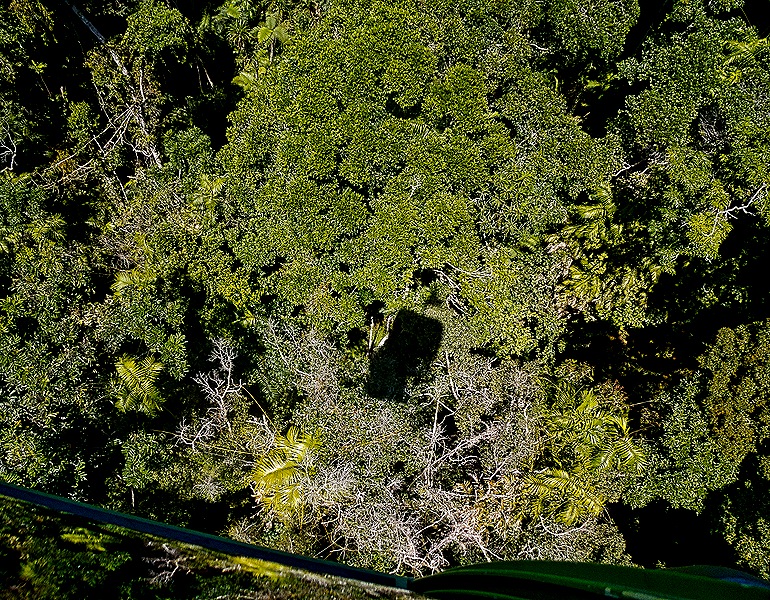
Climbing back onto the cable car we continued on, soaring over the canopy of densely packed tall trees below.
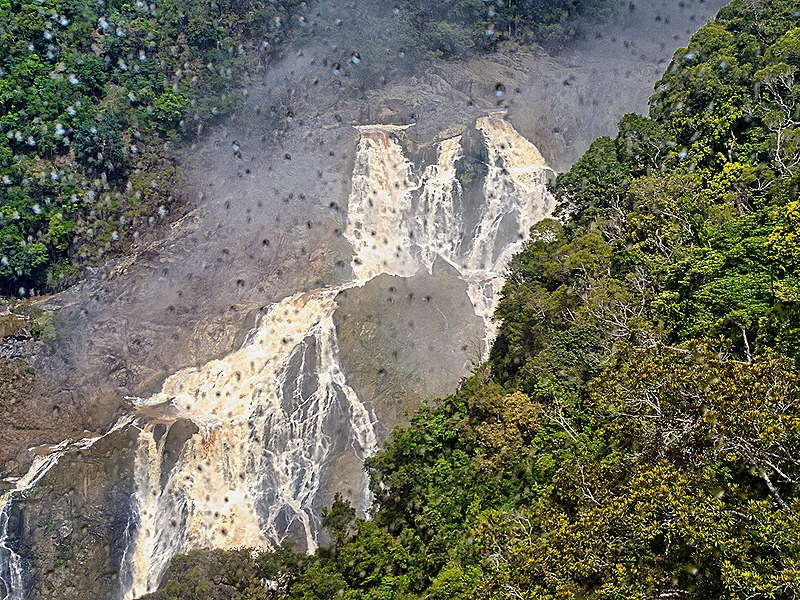
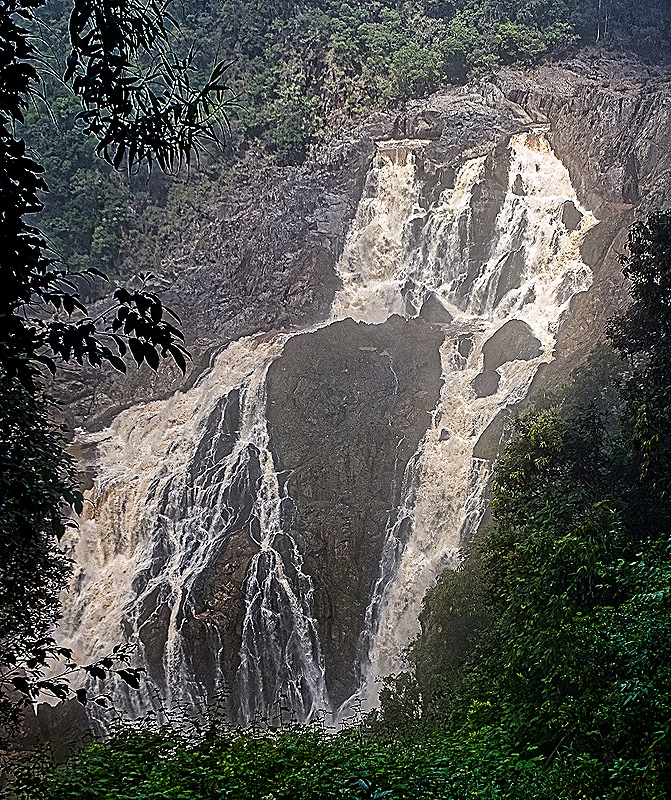
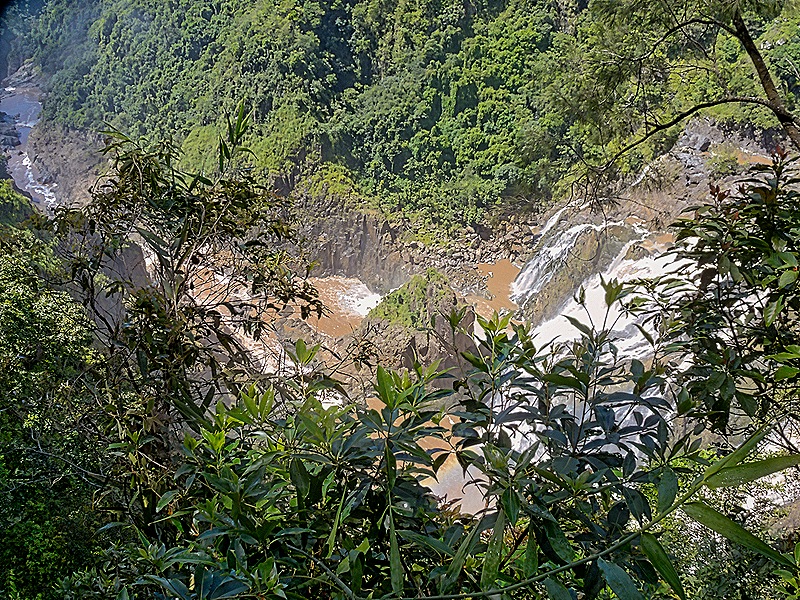
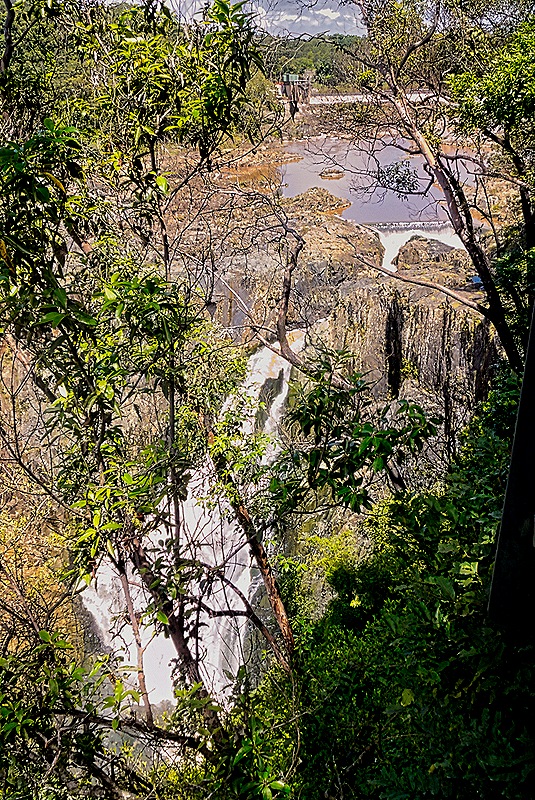
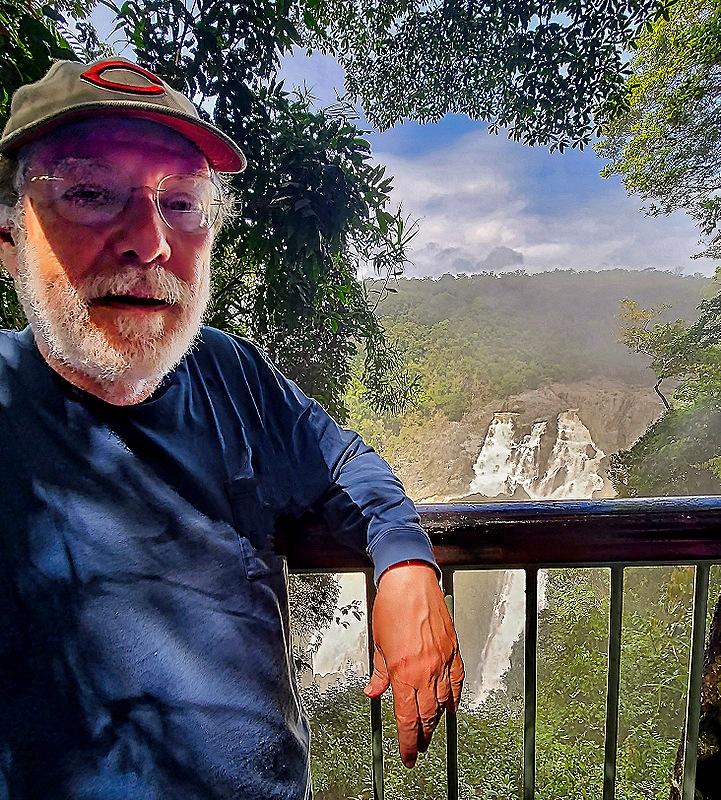
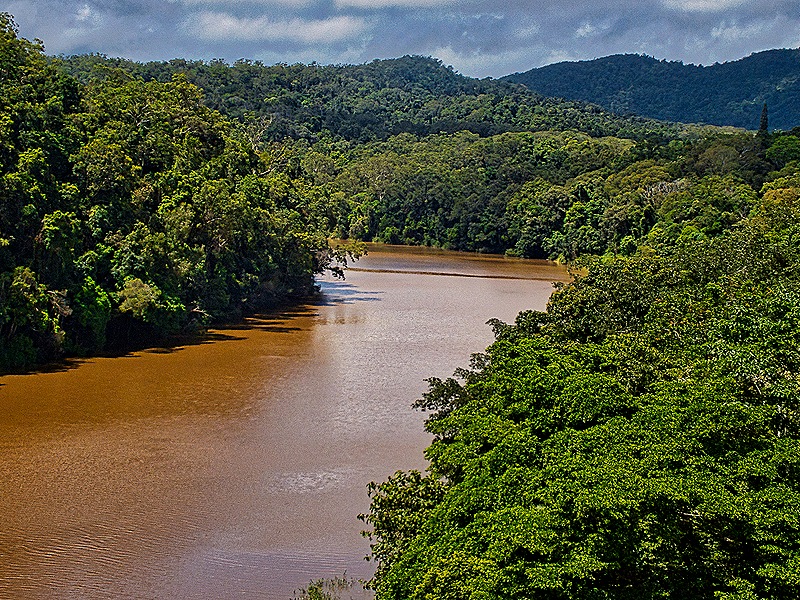
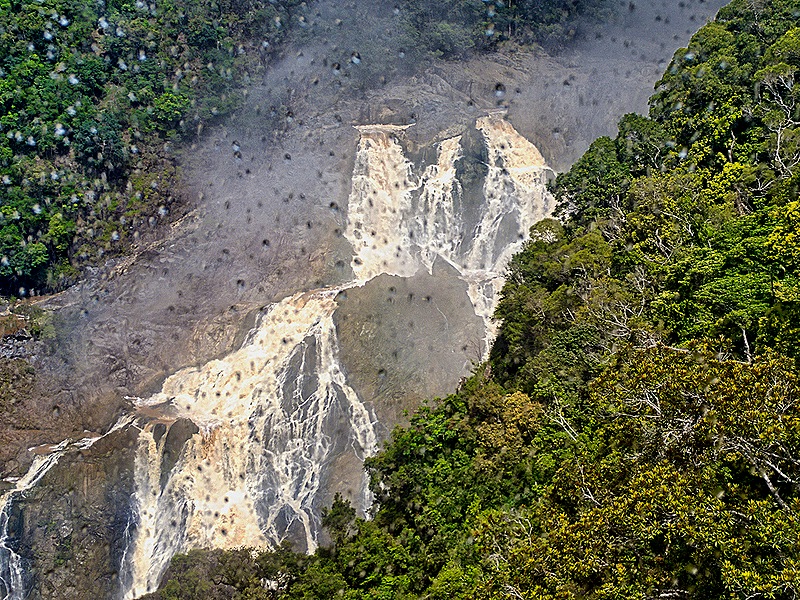
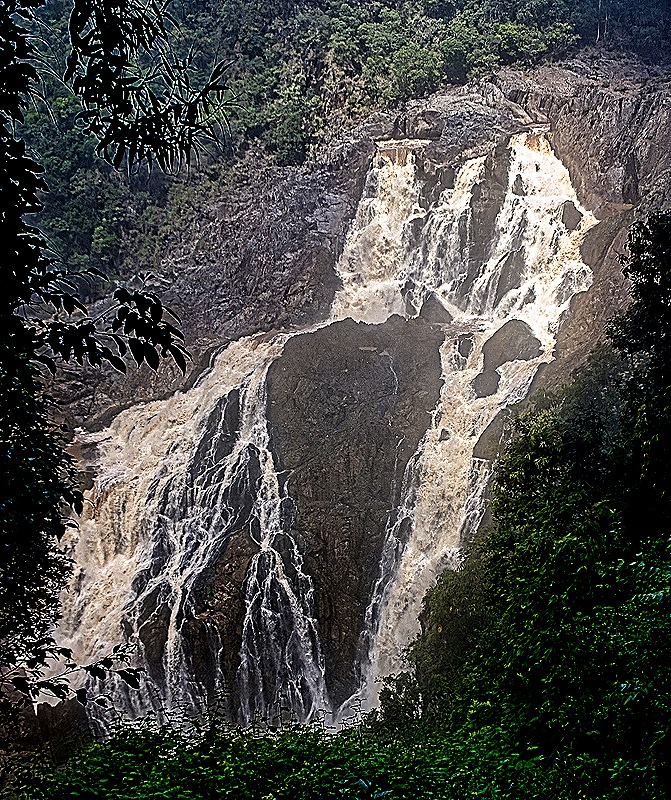
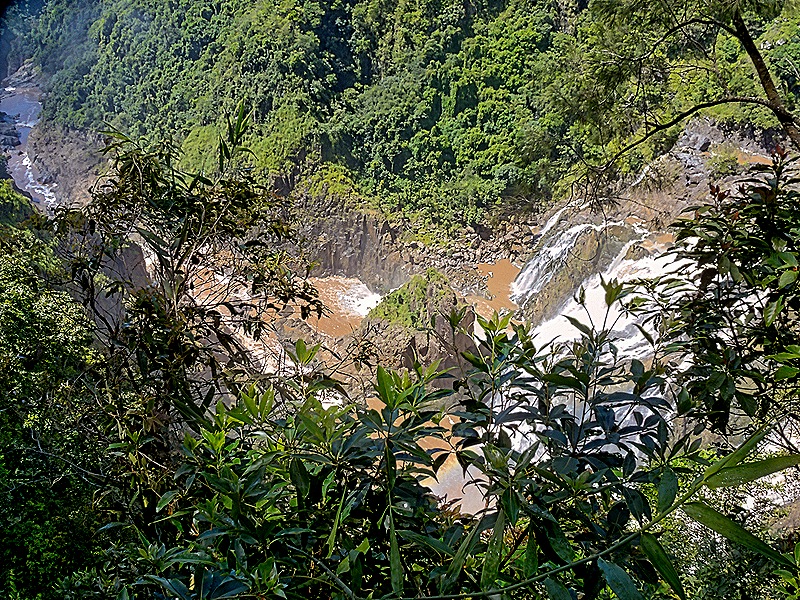
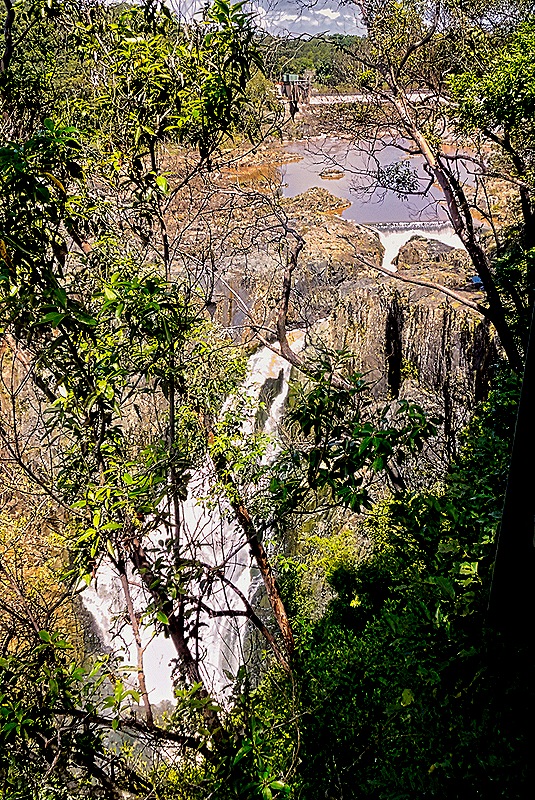
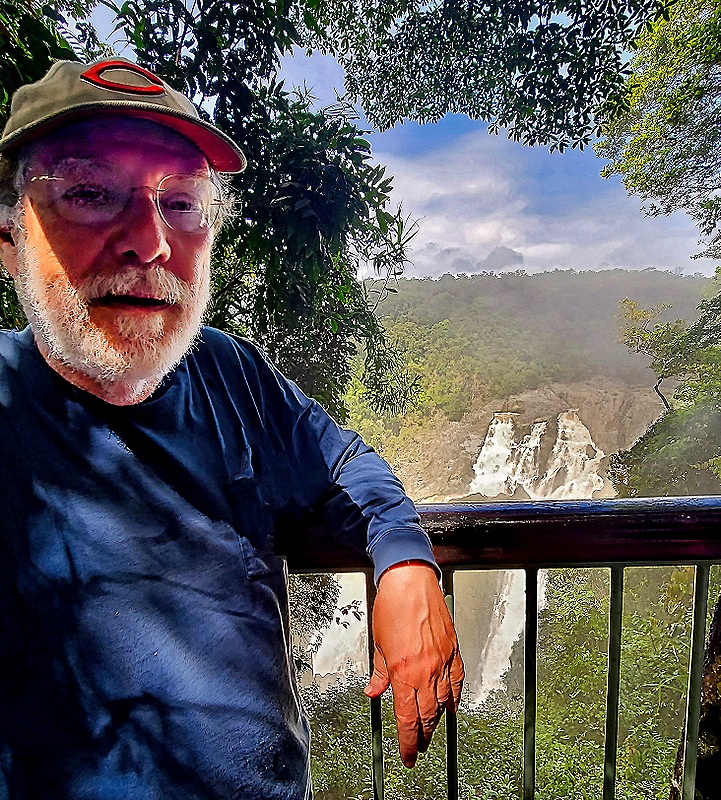
In the distance we could begin to see the 850 foot Barron Falls (called Din Din by the indigenous people) dropping water from the Barron River into the Barron Gorge below. There has been an underground hydroelectric power station above the waterfalls since the 1930’s. We were let out of the gondola again to explore another set of walkways that took us to several places with good views of the Falls. Most of the year the Falls have much less water than this but our visit was during the rainy season when the water flowing over the falls seemed plentiful. Still, we understand that following a substantial period of rain the flow can be much fuller and visitors standing where we did sometimes get a little wet. After we left the picture stop we passed over the reservoir of the Barron River upstream from the falls, created by the hydroelectric station diverting some of the water through its slower mechanism.
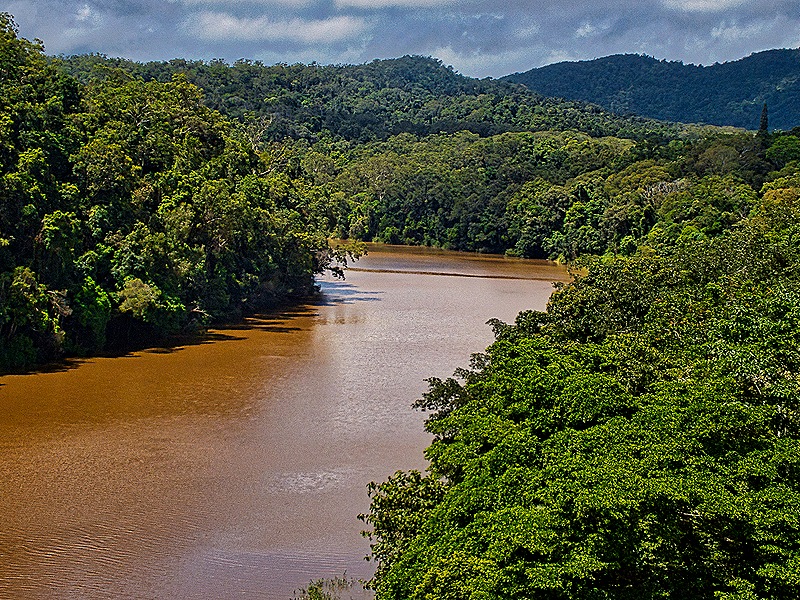
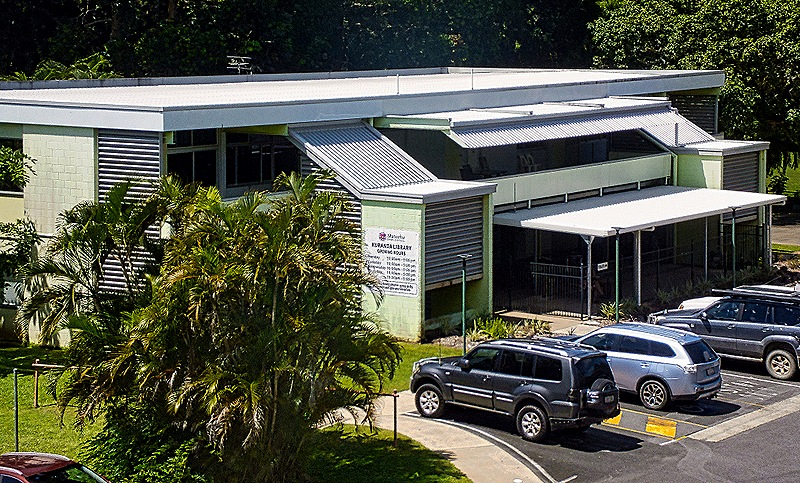
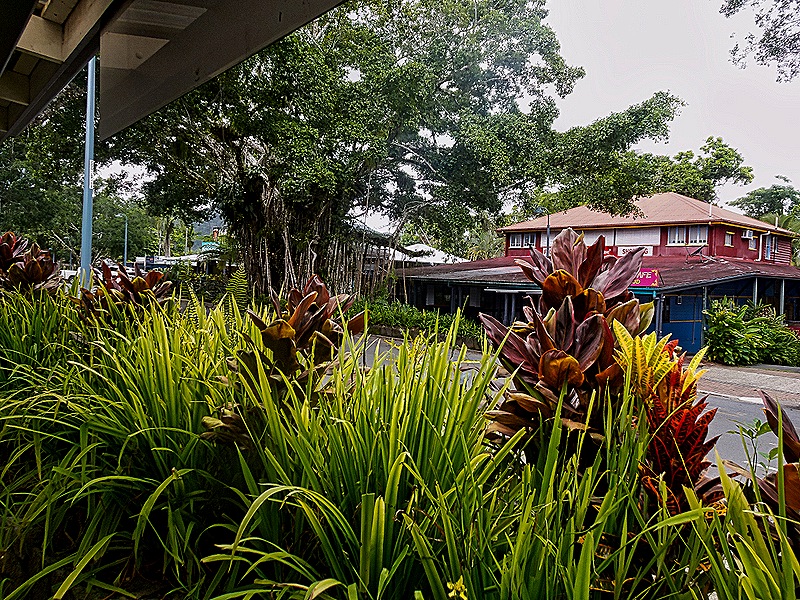
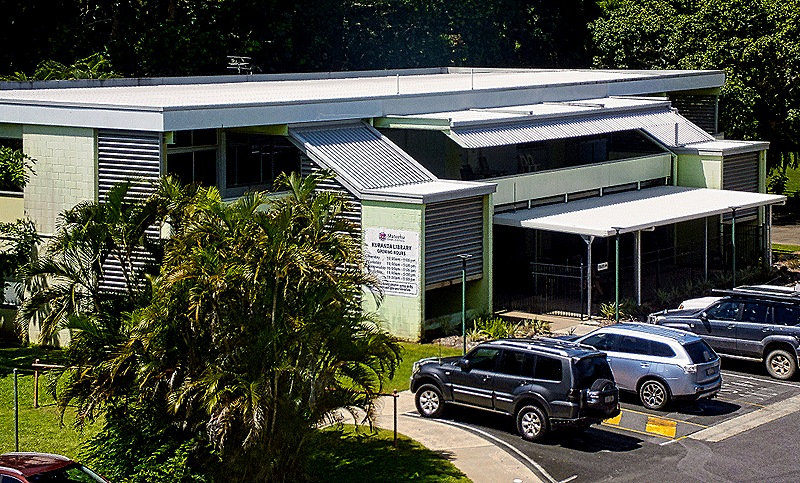
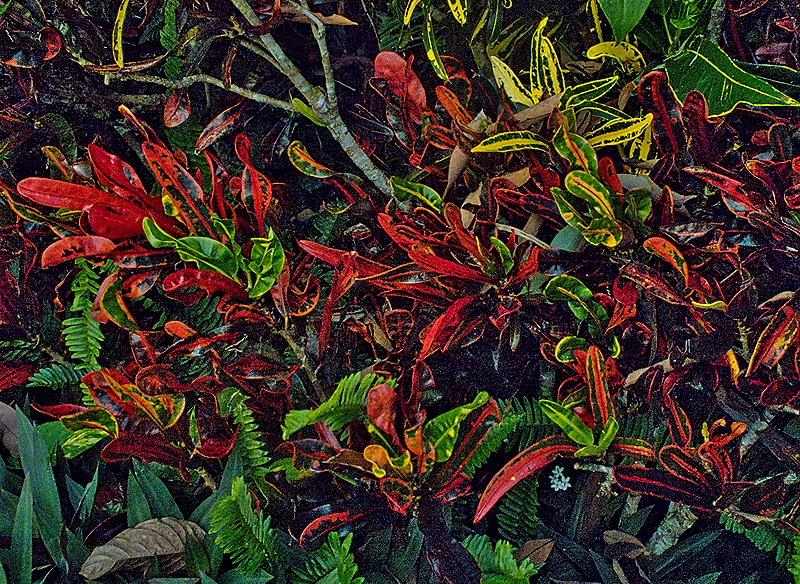
The cable car ride ended at a station just downhill of the town of Kuranda. Before we even reached the town we spotted the Kuranda library, which we passed over just before the end. The library opened in 1996, but it was too far from town to walk there during the time we had in Kuranda. The walk into town from the cable station was, of course, all uphill, but happily it was much cooler here than in Cairns yesterday, undoubtedly because of the elevation. The town is pleasant and quaint and we were glad to have some time to walk around (our friend Karen was on a different Kuranda excursion that had no time in town before having to go back because of some kind of mix up in the transportation arrangements). The town had a lot of open space and attractive flora.
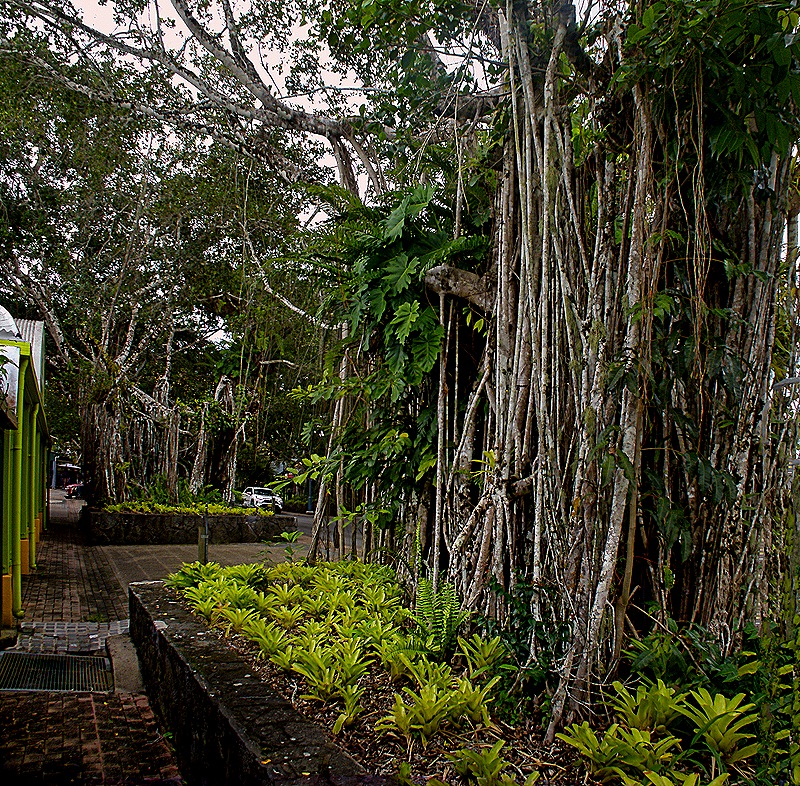
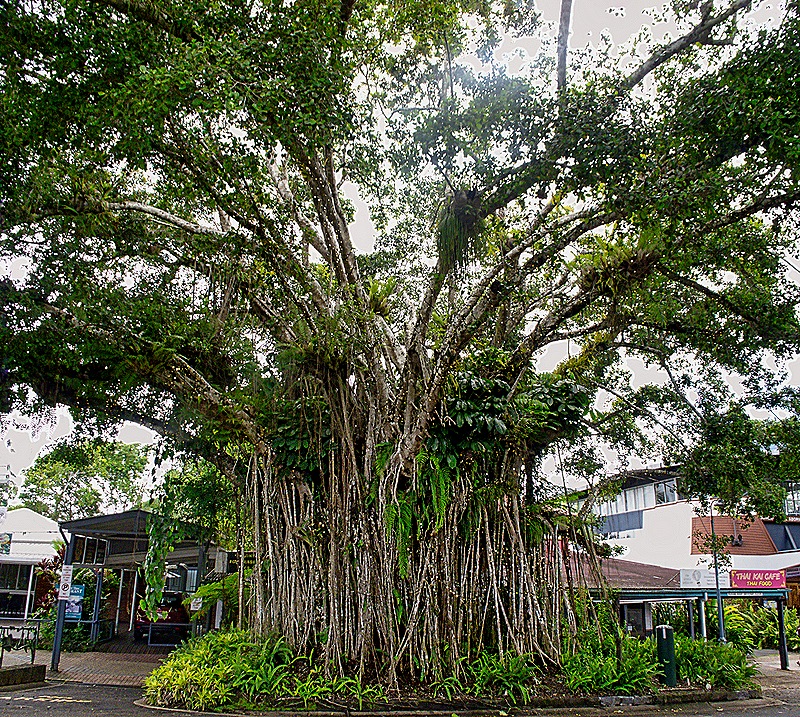
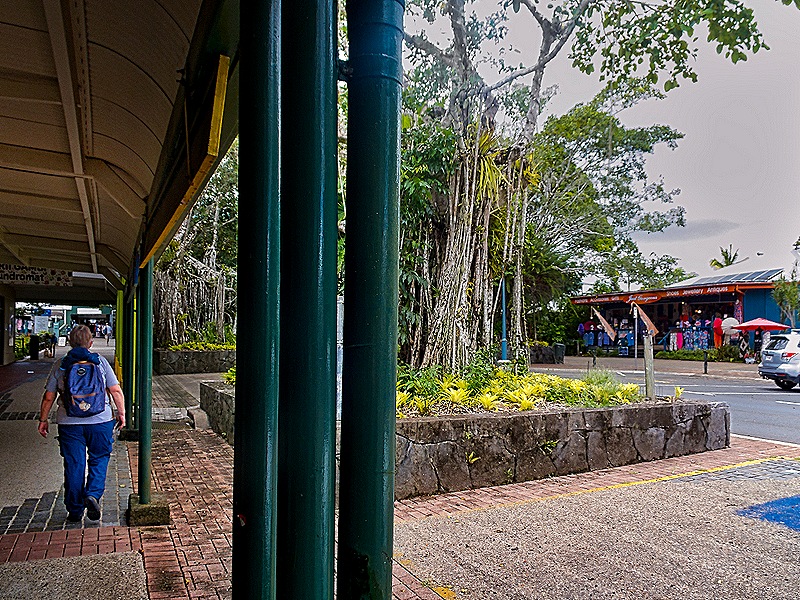
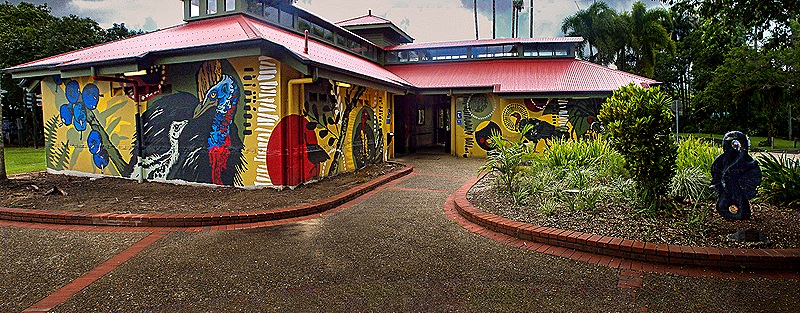
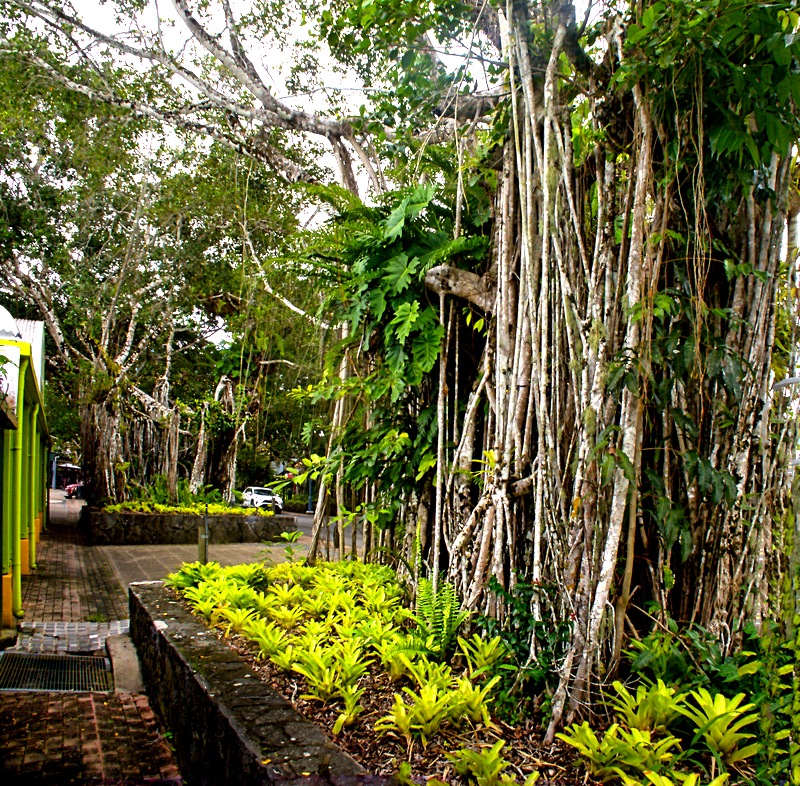
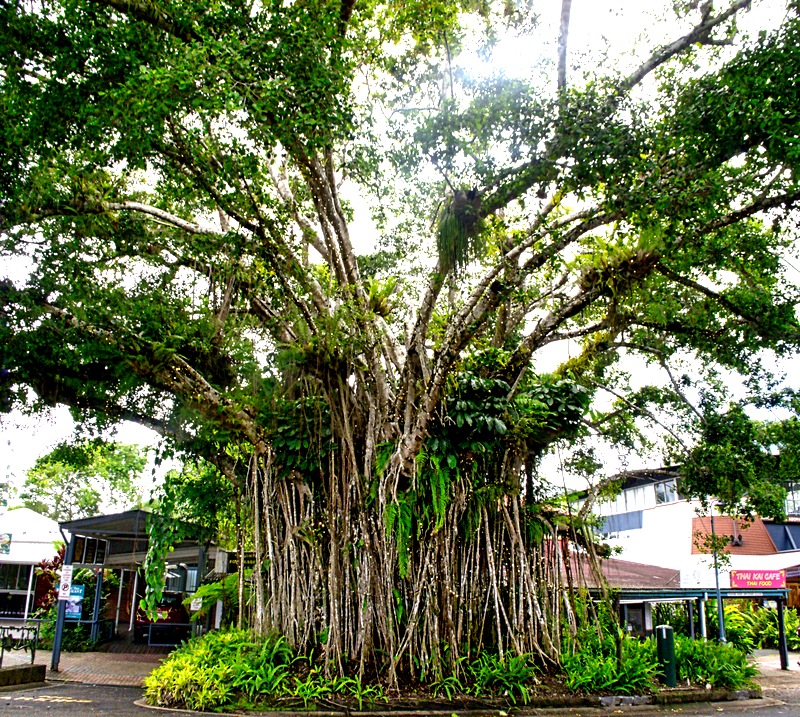
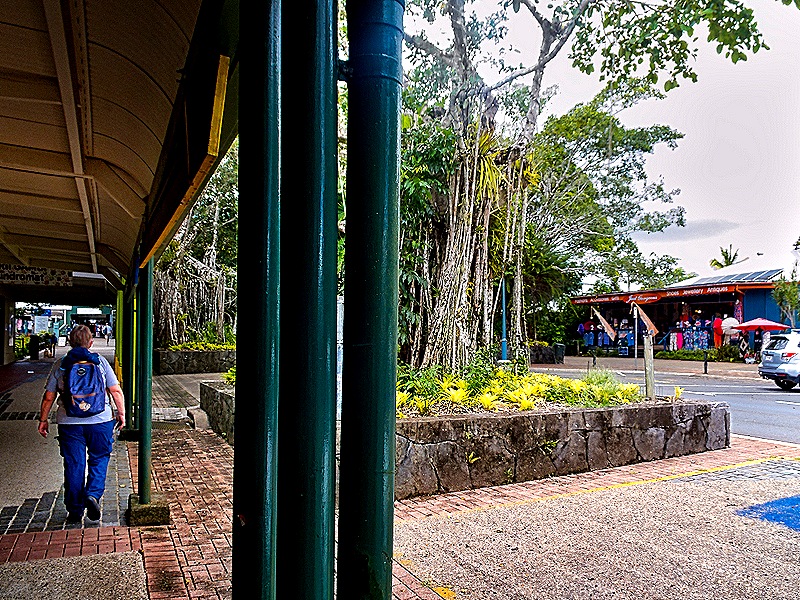
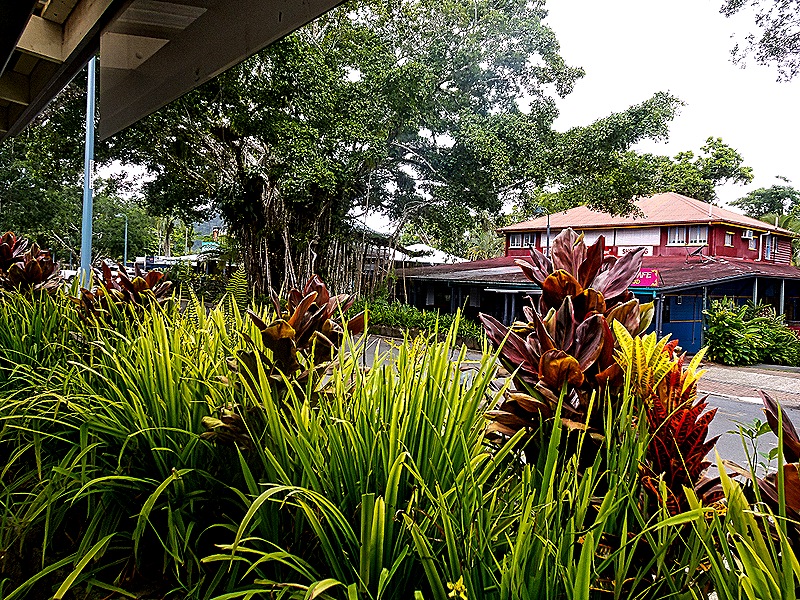
We walked around the town for awhile, visiting shops and galleries (including one selling very nice Aboriginal art, at prices far higher than the last time we were in Australia) and met the very helpful folks at the information center which had its own interesting display of regional art. One long, low building was covered in very bright paintings. We also walked down the Kuranda Fig Tree Avenue featuring 27 mature fig trees (including banyans) planted in 1931 on both sides of Coondoo street, the town’s main street. They make for a very pleasant shaded walk. There were some tourist attractions here, including a zoo, a “koala garden” and a “butterfly sanctuary,” but we didn’t see them.
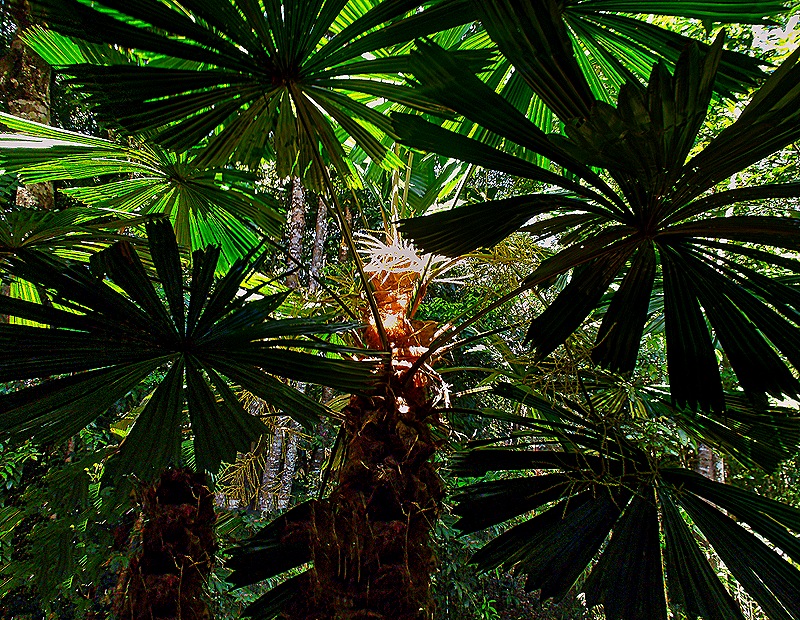
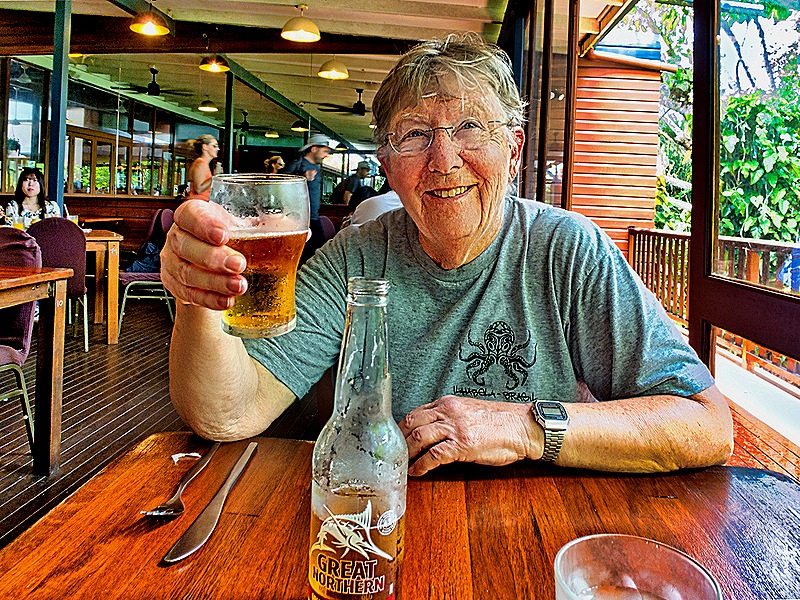
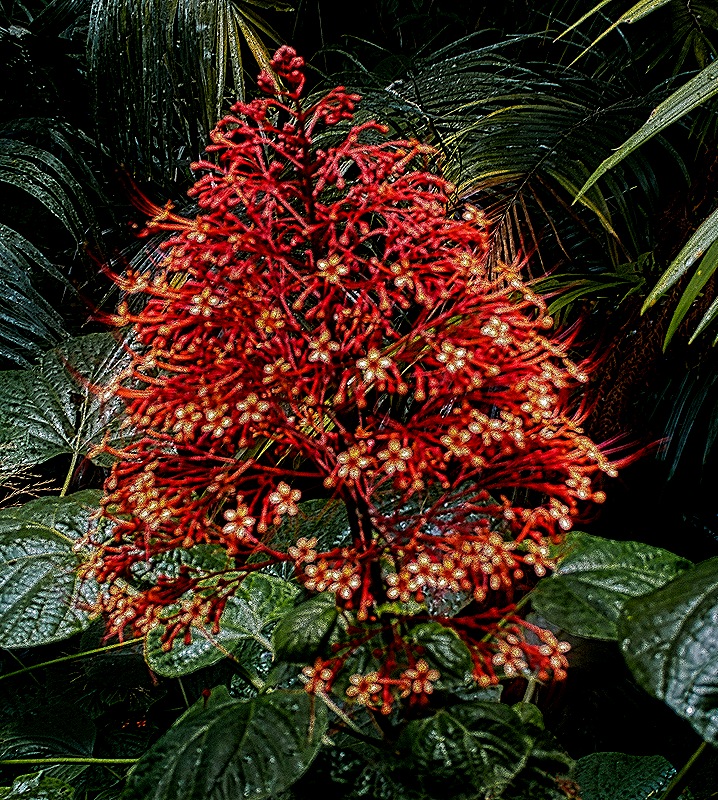
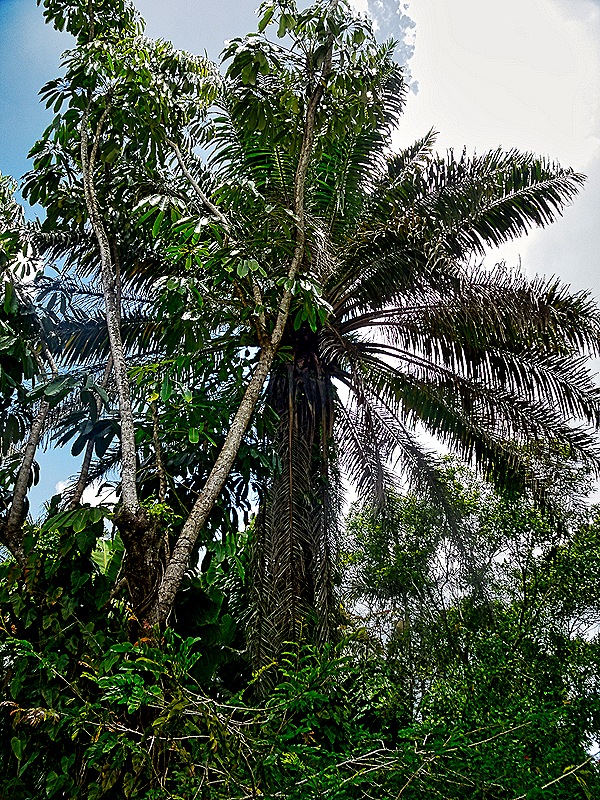
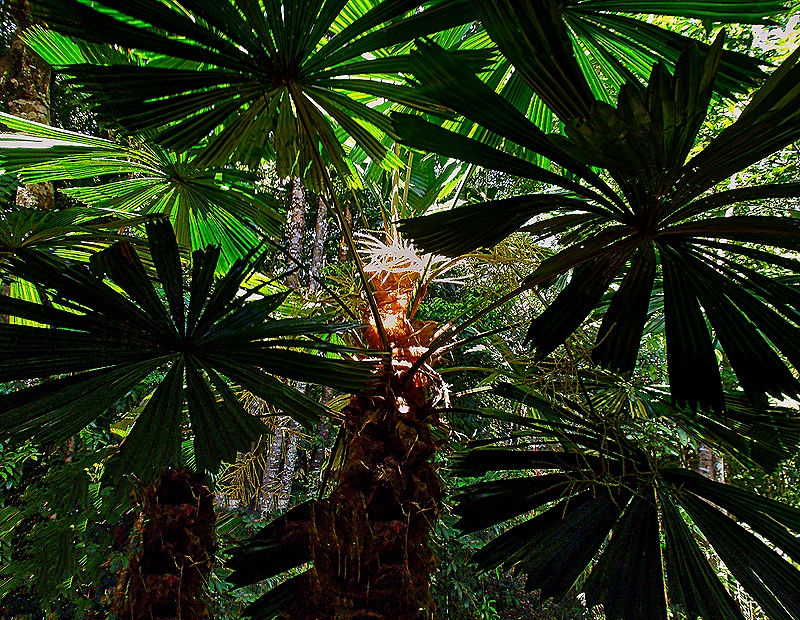
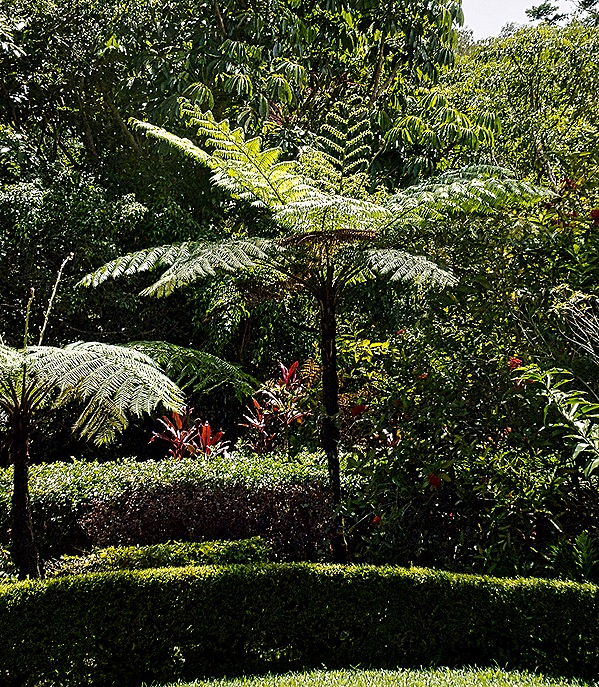
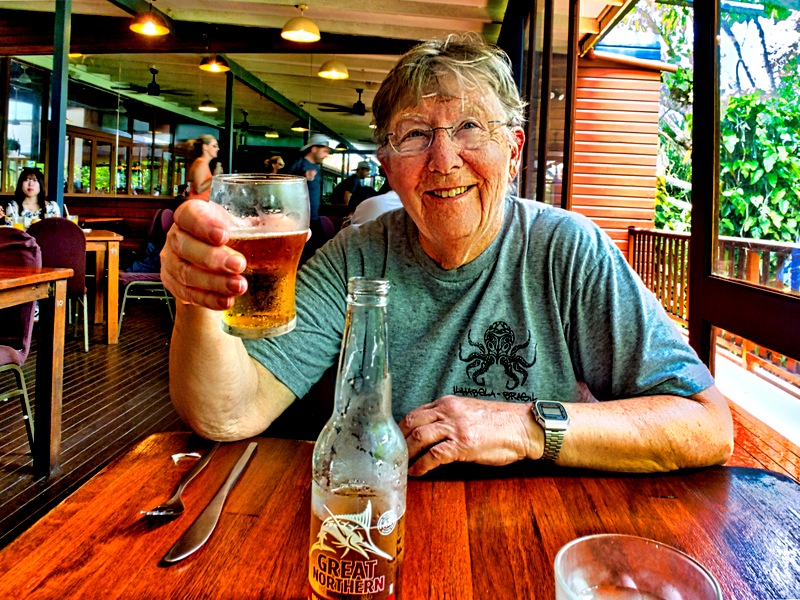
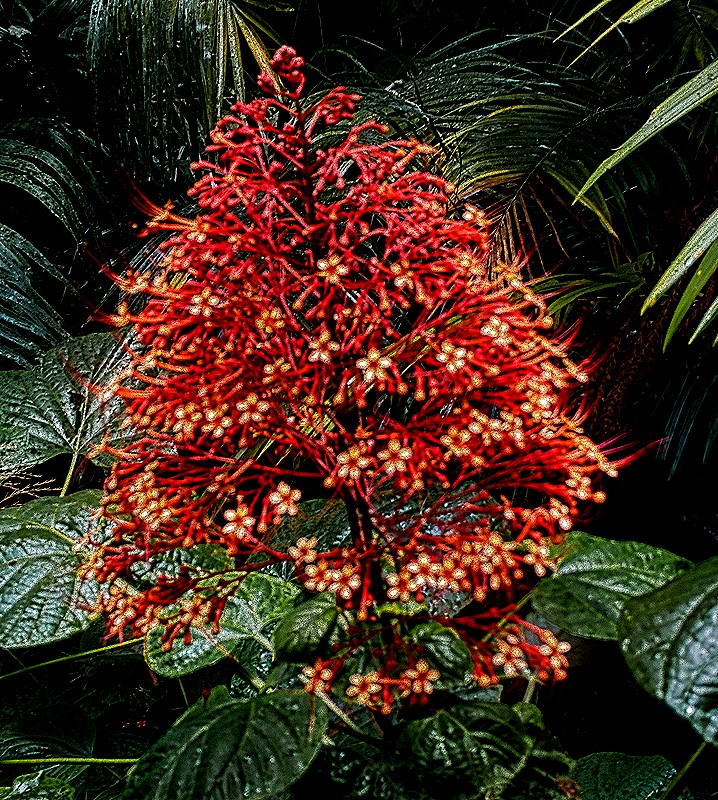
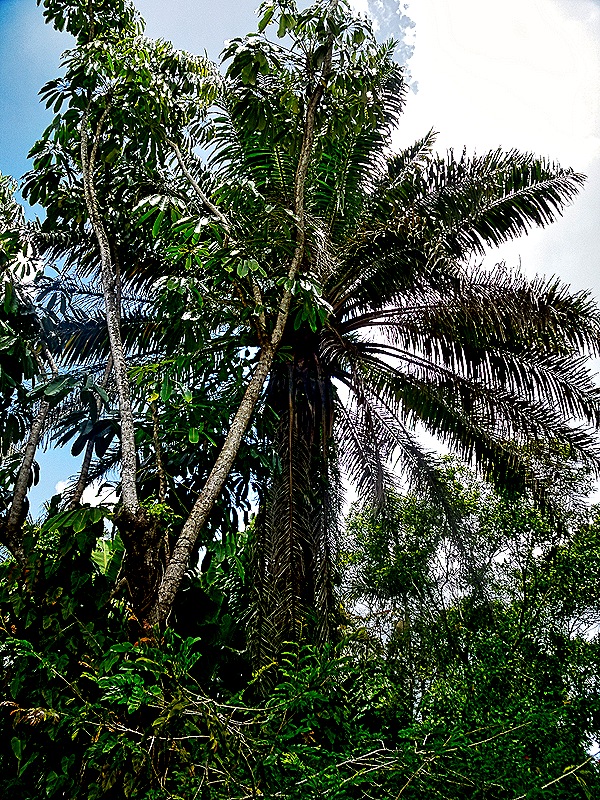
We stopped in a nice restaurant for lunch. We had a table next to a wall of glass doors in the back, which had a veranda with a nice view overlooking a hillside thick with flora. Rick stepped out and got pictures of a massive palm (or possibly fern) tree overlooking the veranda and a bush with orange flower stalks of a kind we had never seen before.
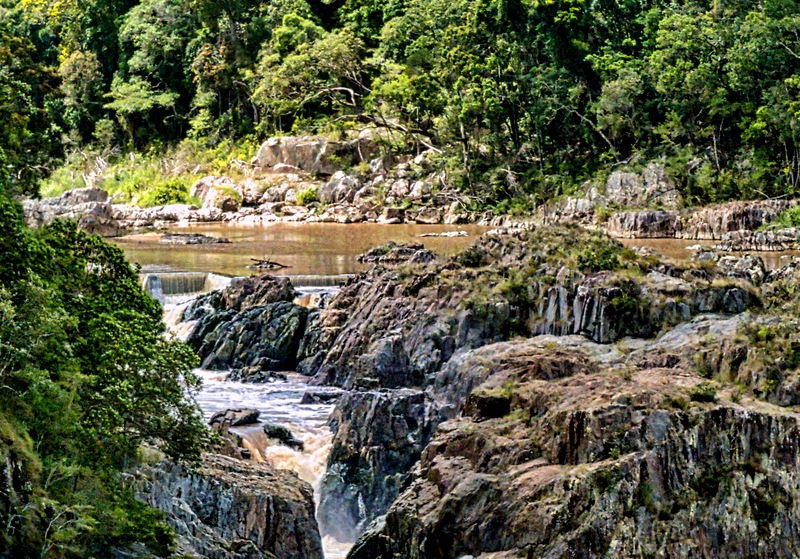
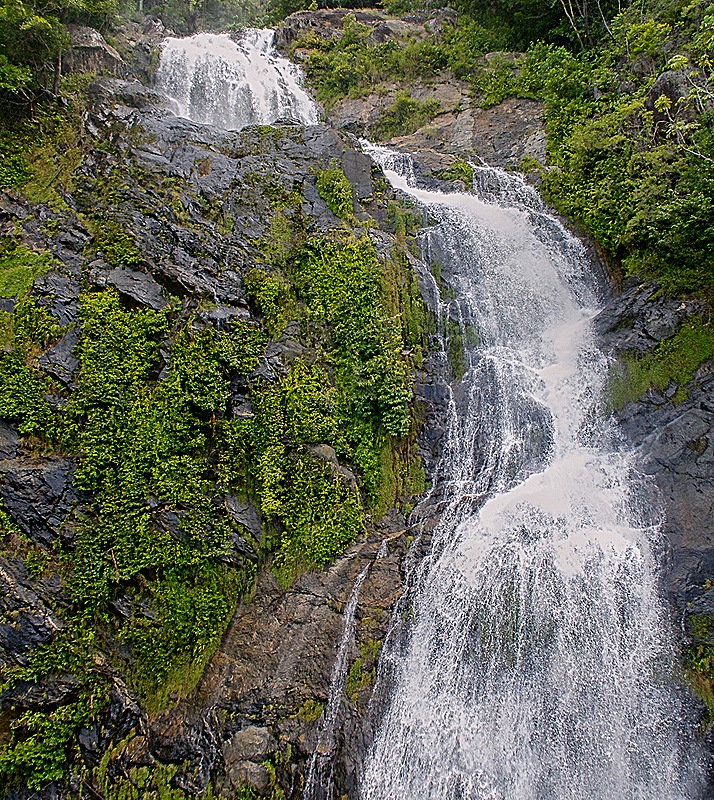
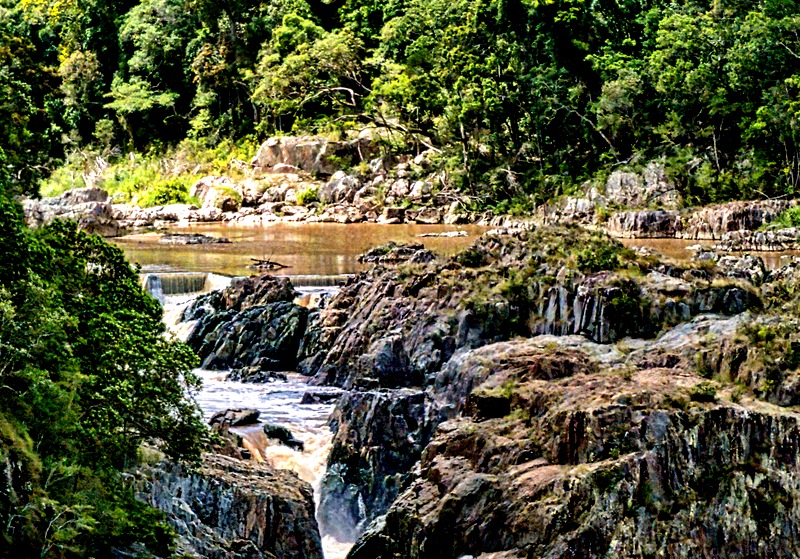
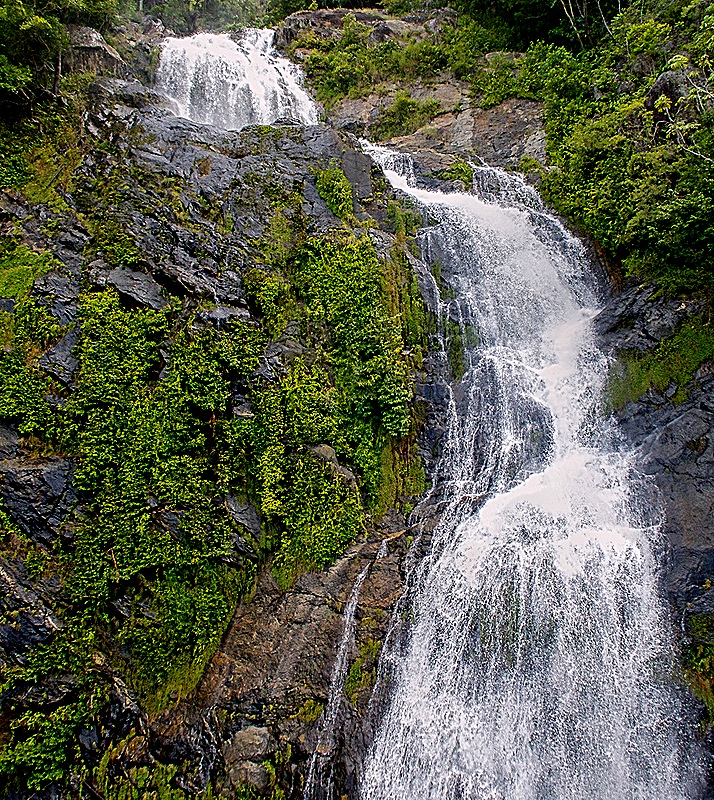
After lunch it was time to head back down to the railroad station. The station dates back to 1914 and sits in a “tropical garden” that has won a number of rain station garden competitions. The Kuranda Scenic Railway opened in 1891 and began carrying tourists in 1937. We sat near the tracks at the station until our train pulled up and we could board. It was a longer trip back on the train (about an hour and a half) than the trip up on the cable car, and it was pretty hot (no air conditioning) in the carriage (built around 1910) with only hard straight backed wooden benches to sit on. We have no pictures of the train or the station and didn’t have seats close enough to a window to take many pictures of the trip. But to prove we really did ride the train, here are two pictures taken through the window. The first is a nice view of the very top of Barron Falls, where you can see the water falling over the straight edge of what we think is the underground hydroelectric station’s apparatus just before running down into the falls. The second is of Stoney Creek Falls in the Barron Gorge, as we passed right in front of it on a trestle bridge. It was so close that the water seemed to be falling right under the train.
We sailed away that evening for five relaxing sea days before reaching our next stop.