
Milford Sound, Port Chalmers & Timaru, New Zealand 2026
We have combined here three stops (two of which are ports) in New Zealand that were shortened by illness. Added together they amount to about the length of one normal (ie. healthy) port.
Milford Sound
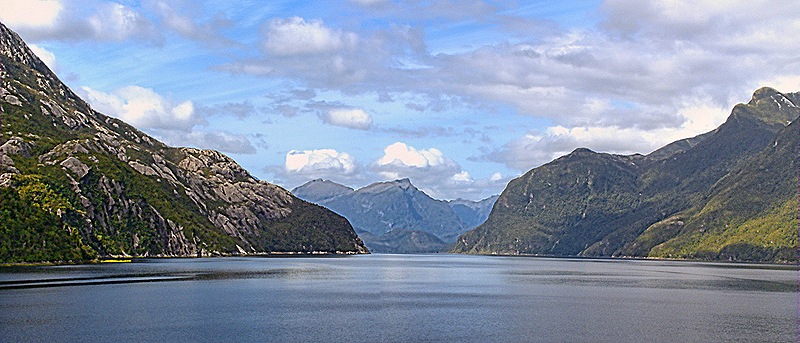
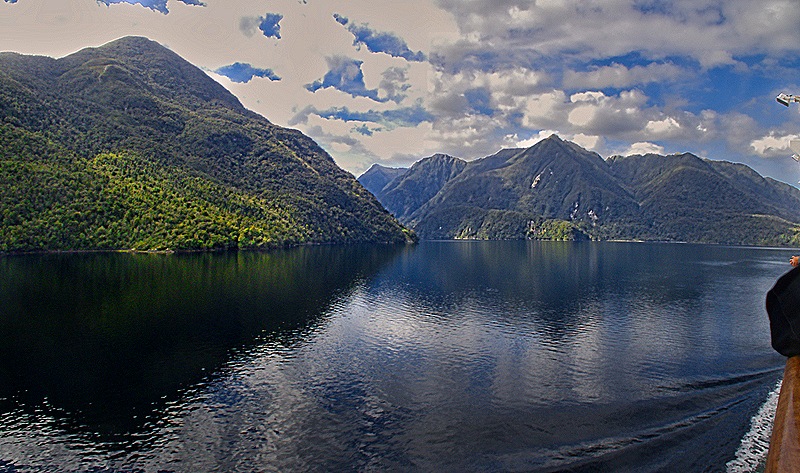
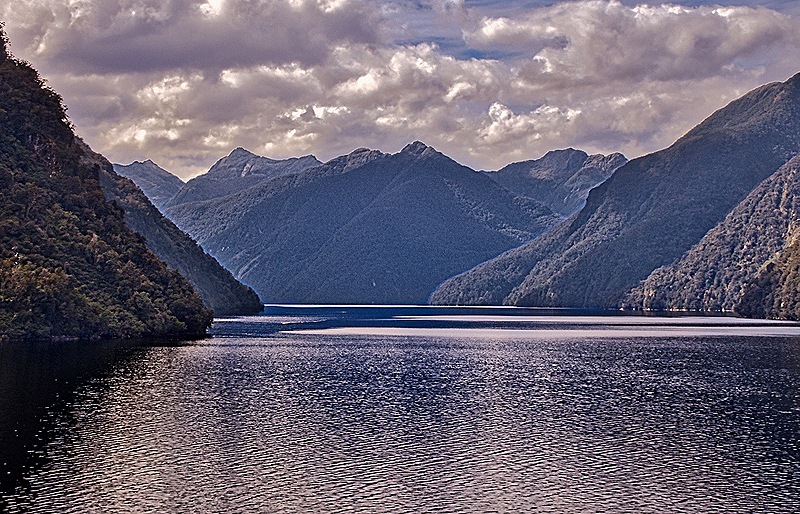
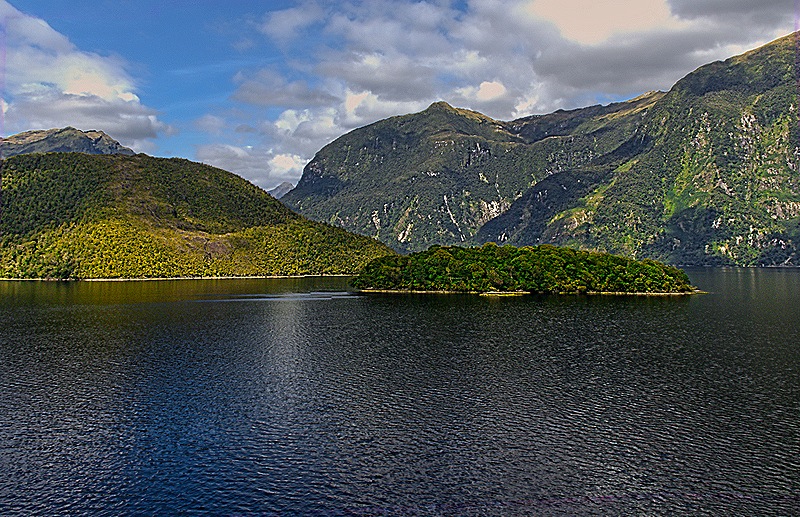
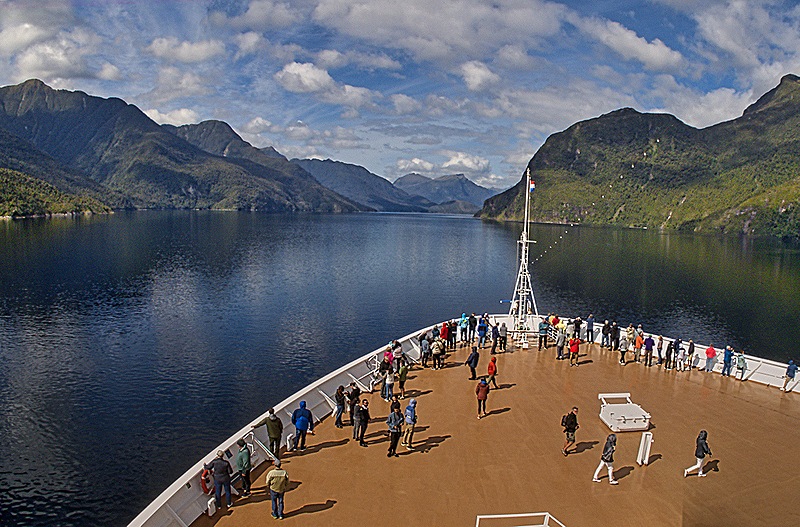
We reached New Zealand on March 10 after two days at sea. At the end of our last episode Rick was hoping that two sea days would be long enough to recover from his illness (mostly cough and sore throat), but it was not to be. As we sailed into what we think was Milford Sound in southwest New Zealand Rick was still ill. But this was cruising only, not a port, so Mary reluctantly agreed to his going on deck for a while to view the scenery.
It was a beautiful day, though a bit chilly and breezy. We had been here before, a longer visit with more commentary that you can see here:
https://baderjournal.com/2018/06/25/fiordland-national-park-new-zealand/.
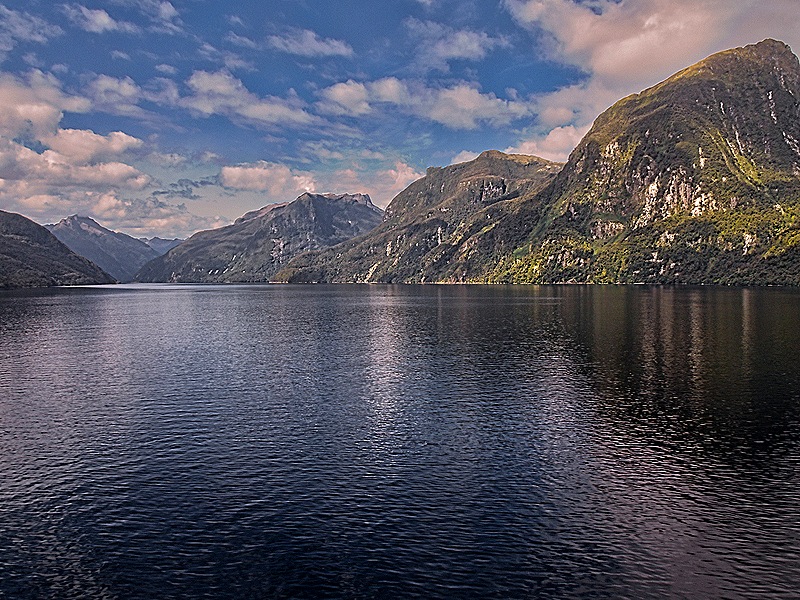
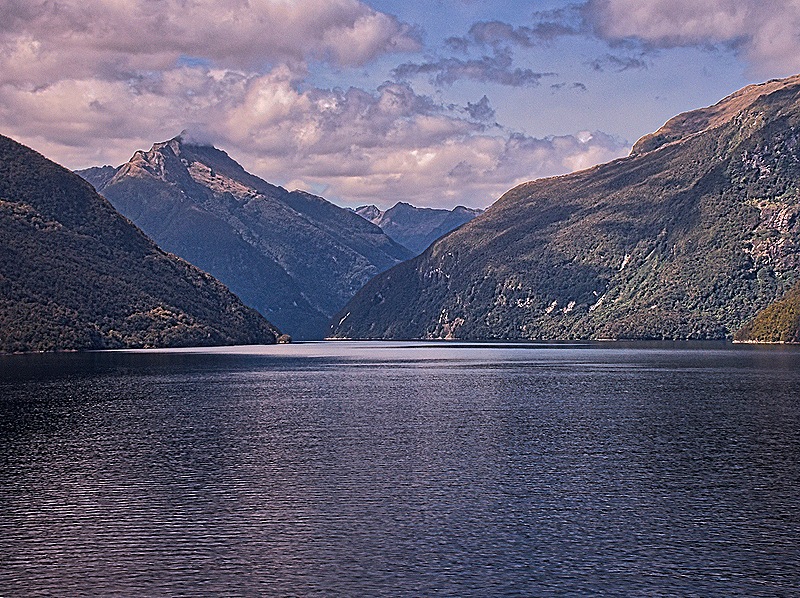
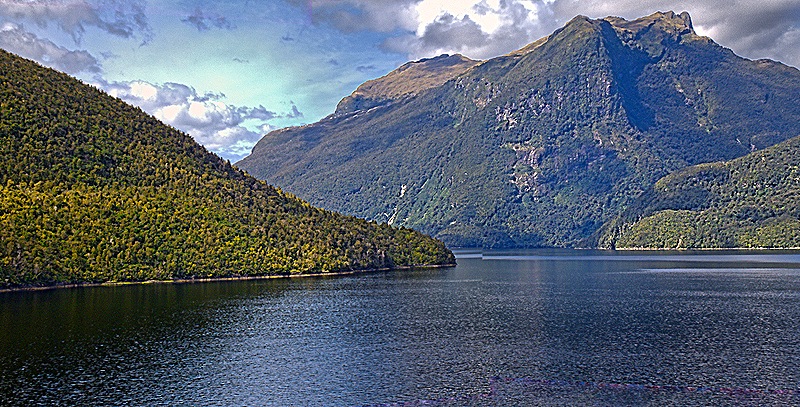
We only stayed on deck for a short while, but here are the pictures we took. The scenery here just never stops and all of it is beautiful.


Port Chalmers & Dunedin
March 11 brought us to Port Chalmers on the east coast of the south island of New Zealand. Port Chalmers is a nice small town of a couple thousand people. It serves as the ocean port for cruise ships visiting Dunedin, which at more than 130,000 is one of the largest cities in New Zealand. We saw a good bit of this area on our first visit here 8 years ago, which you can read about at this link: https://baderjournal.com/2018/06/22/dunedin-port-chalmers-new-zealand/.
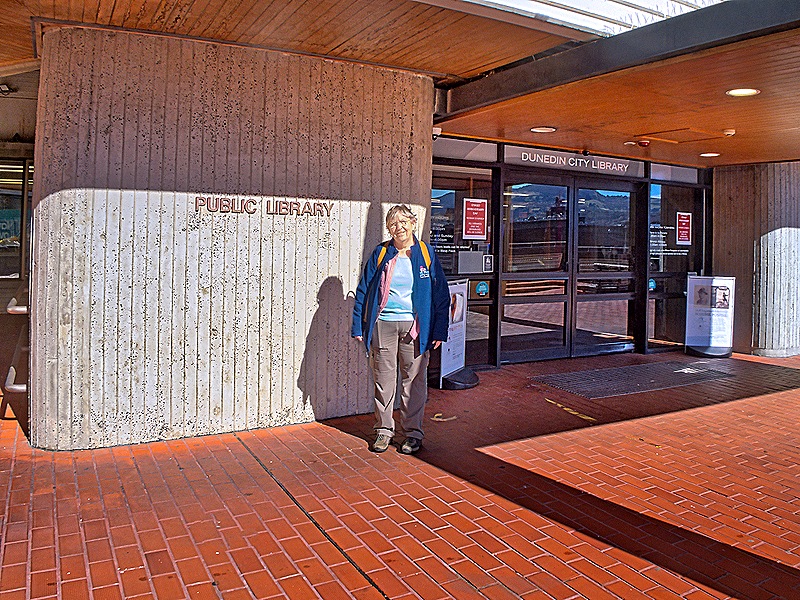
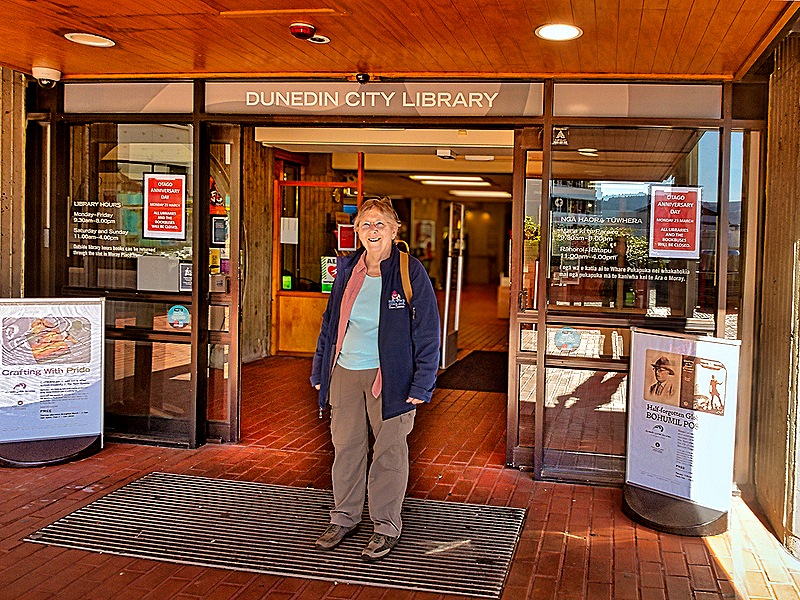
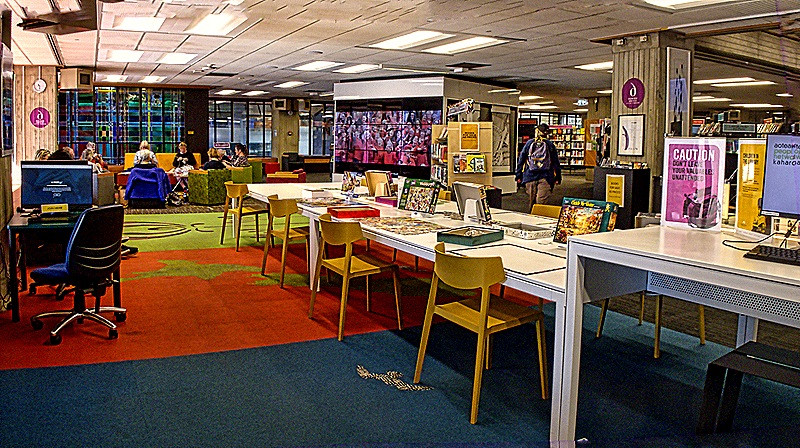
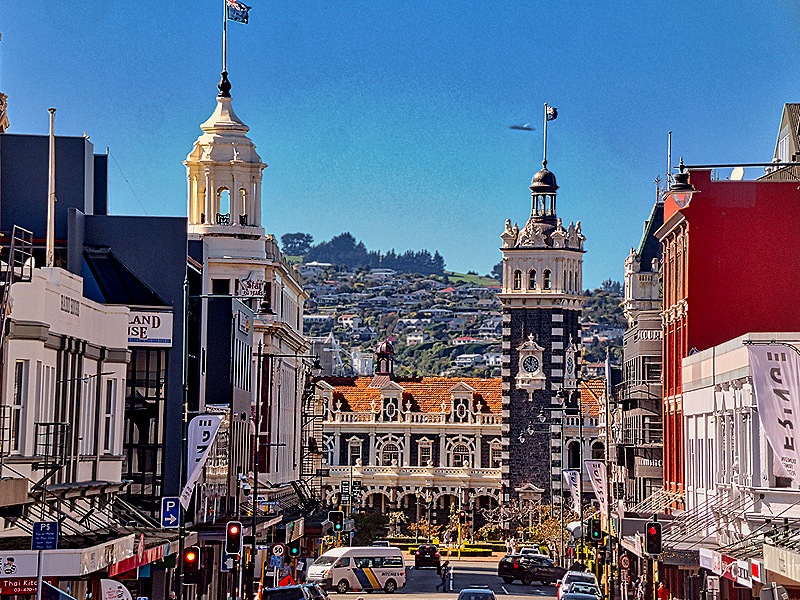
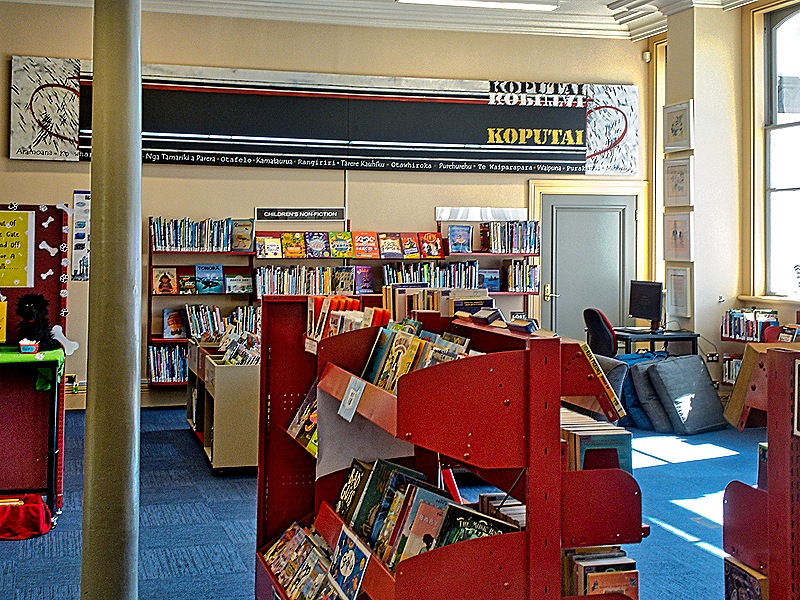
Rick was still feeling a little weak from his illness, so we decided to ride the shuttle into Dunedin and see the library (closed for Waitangi Day on our first visit) and some local art. The bus took us along the seashore and dropped us off at the Octagon, the center of town. The city’s most important buildings are arrayed around the Octagon and within a couple of blocks from it. We headed first for the library, which was nicer on the inside than one would have guessed from its rather plain exterior. There was a knitting group working in a relaxing looking area inside.


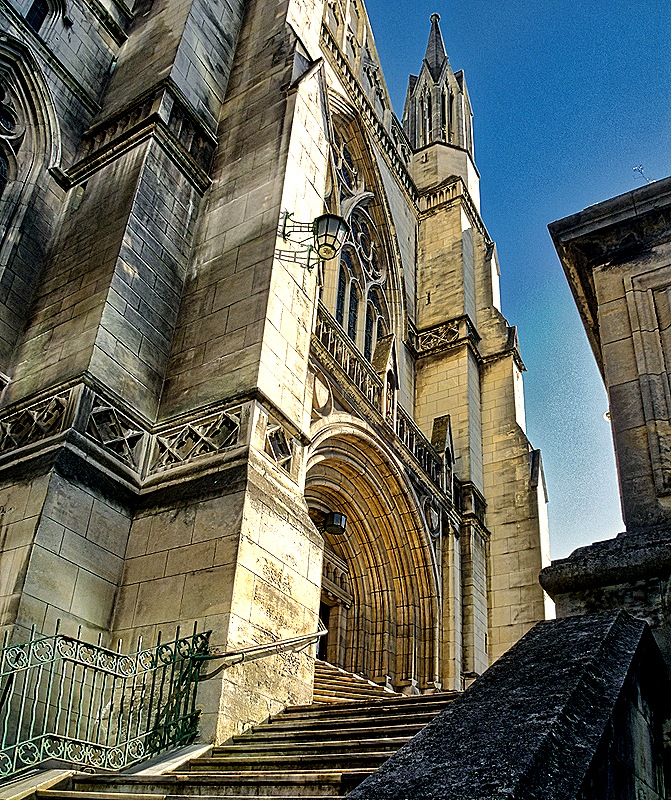
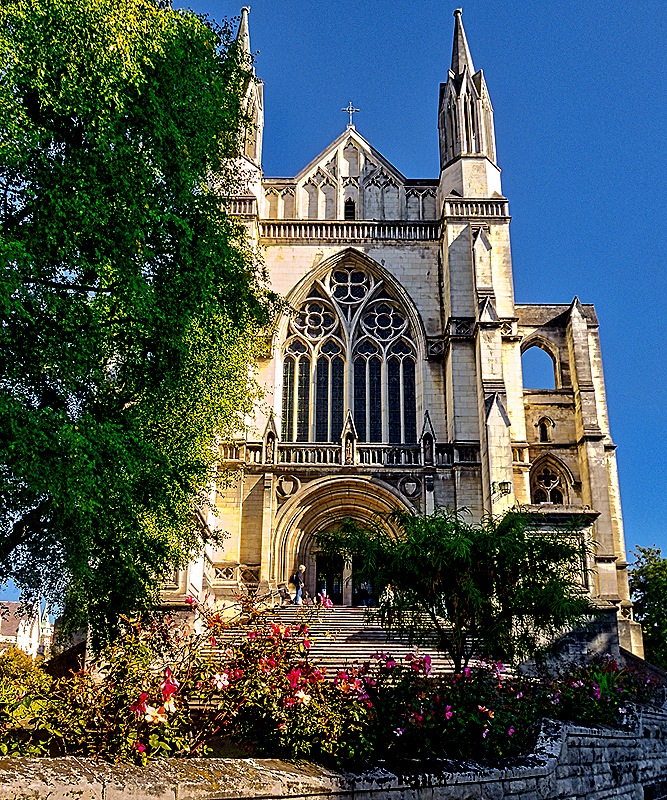
St Paul’s Cathedral, the seat of the Dunedin Anglican Diocese, sits across the street from the Octagon. The first church on this site opened in 1863 and in 1894, after years of dispute, it became a cathedral. The current building was consecrated in 1919 and the current chancel was put into use in 1971.
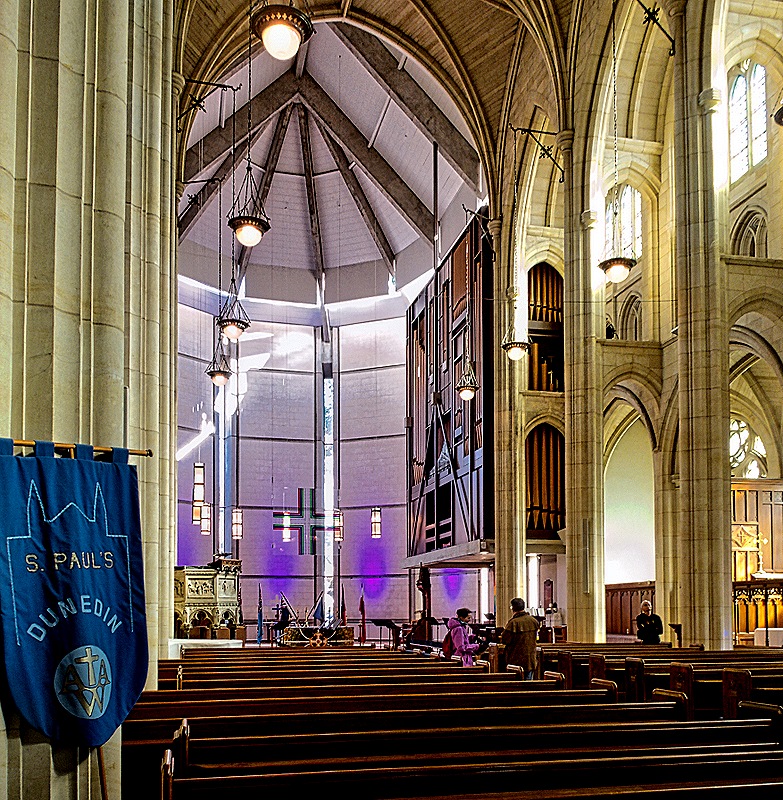
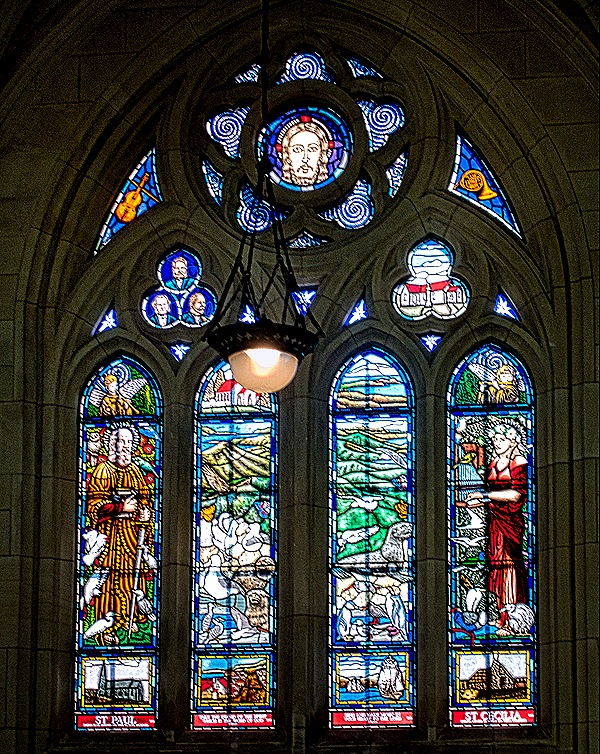
The cathedral is made of stone with towers on each side of the main entrance and flying buttresses along its sides. It sits on an incline uphill from the Octagon, so it has long and steep stairs to the front entrance but the rear entrance (where we exited) is closer to street level. The inside has a high vaulted ceiling, a large pipe organ in a wooden housing and a number of stained glass windows.


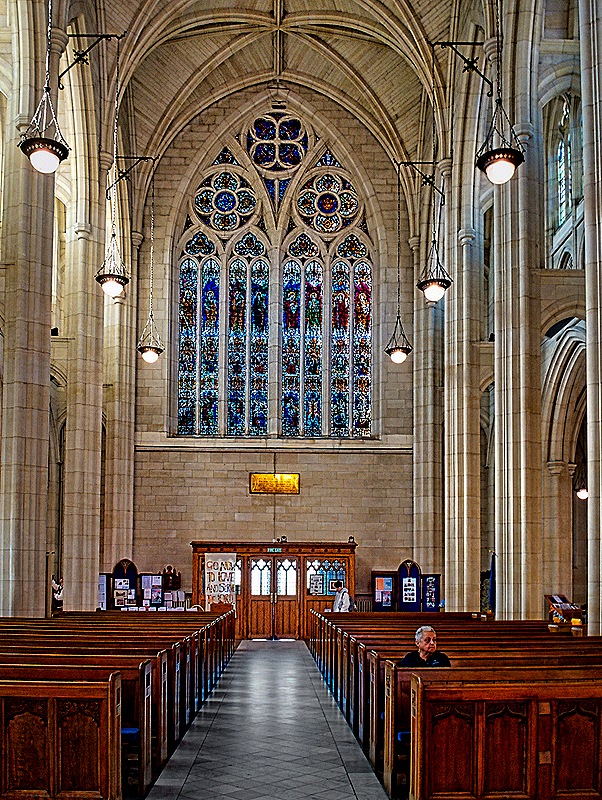
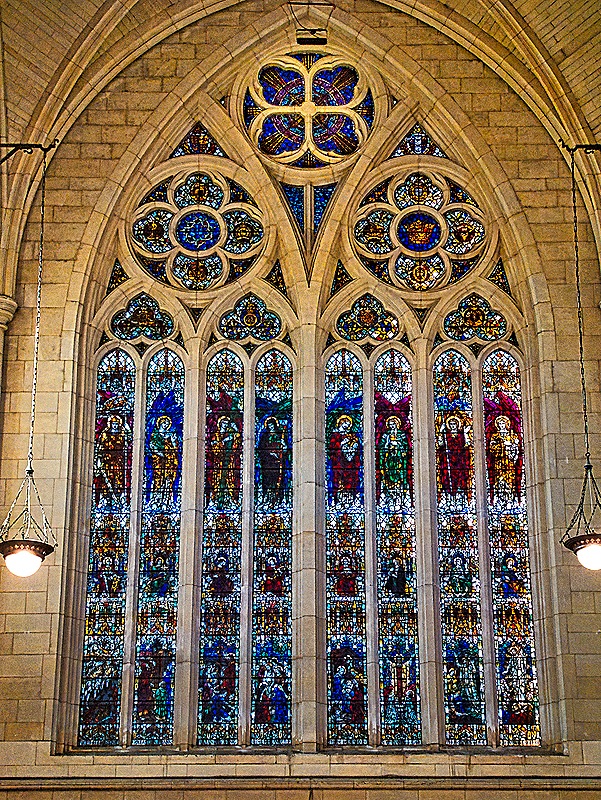
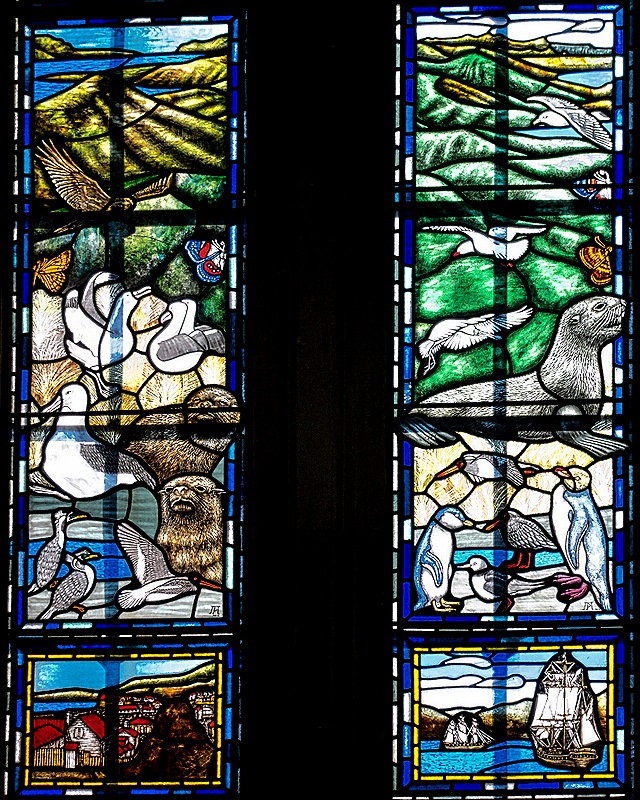
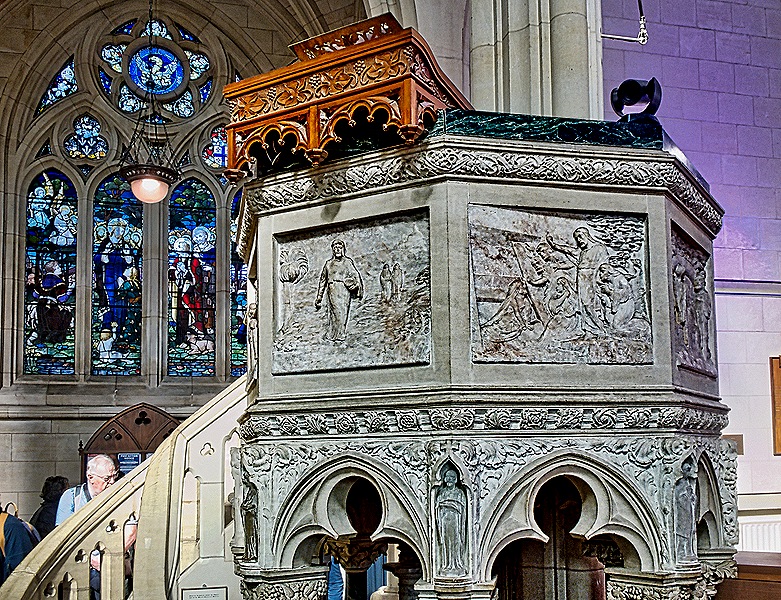
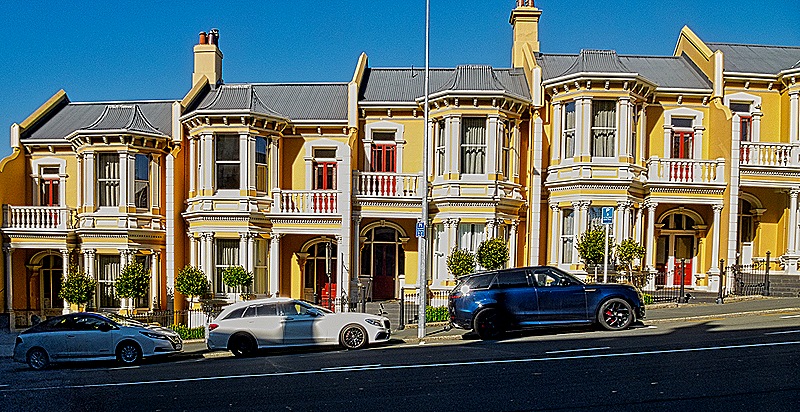
Over the front entrance facing the altar is the Memorial Window, commemorating those from the area “who gave their lives in “THE GREAT WAR 1914 –1918” according to a plaque mounted under it. We have also included here another of the stained glass windows, with a closeup showing that it includes images of local animals such as seals, sea lions, penguins and albatross. The cathedral also has a very nice carved stone pulpit (with another stained glass window behind it). While we were there we were happy to see a poster in several places for the Dunedin Pride Church Service, “A Queer-affirming celebration for everyone.” On the hill outside the church was a nice set of row houses in a rather old fashioned style that complemented the cathedral’s.


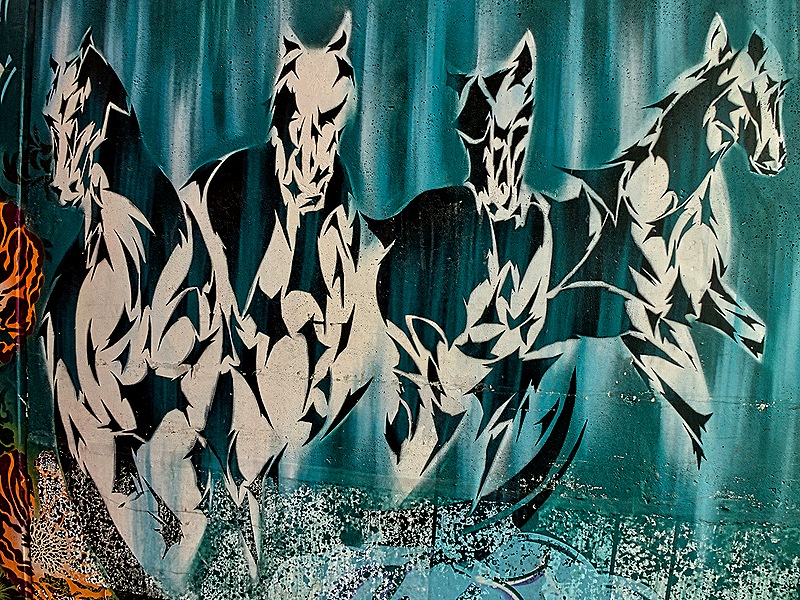
Before going to the library we stopped into a very nice information office full of brochures and displays. Mary had read that they have free art walking tour maps for visiting the city’s many outside art displays. We followed it for a while. Dunedin is a Scottish name (from the Gaelic name for Edinburgh). It was founded by Scots and the older buildings have a Scottish feel to them. So it was not surprising that there was a large sculpture of the poet Robert Burns (whose nephew was one of the founders of this city) just off the Octagon. In the brick plaza around the statue were a number of small plaques honoring writers and artists from Dunedin. We also saw several by-ways and passages with large murals painted on building walls.


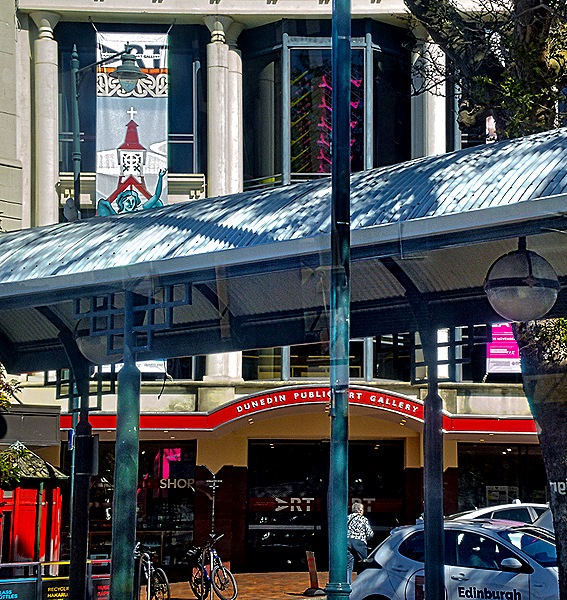
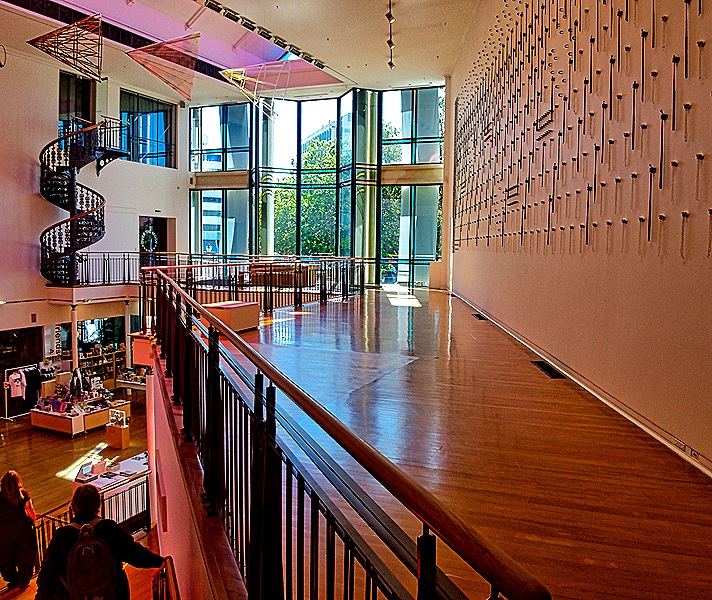
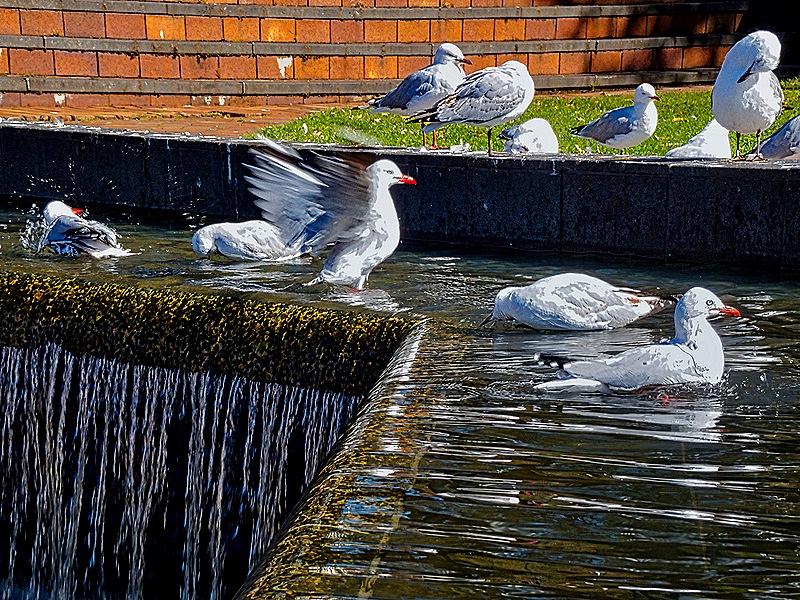
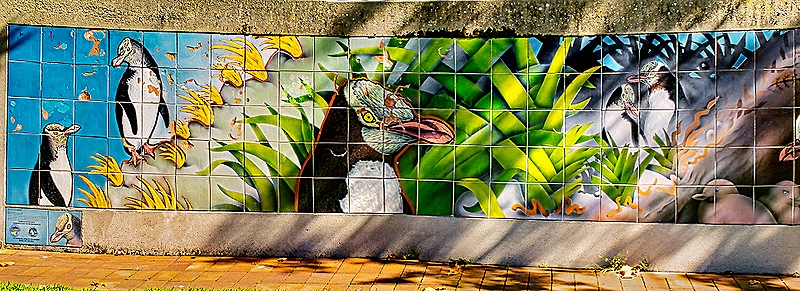
The walking tour map had more to see, but Rick was tiring since this was his first day out after several days of illness and recuperation. So we headed back to the Octagon to catch the shuttle back to the ship. On this walk we saw Dunedin’s beautiful train station, which we had explored on our last visit, about two blocks down from the Octagon. We also stopped into the Dunedin Public Art Gallery across the street from the Octagon. It was pleasant but not all that interesting to us. Walking through the small park in the Octagon we saw a red aluminum copy of a Maori doorframe, a low wall with a mural of penguins, and a group of the sea gulls who frequent the Octagon bathing in a water fountain. Sadly, the only gelato shop we found in this area was closed.


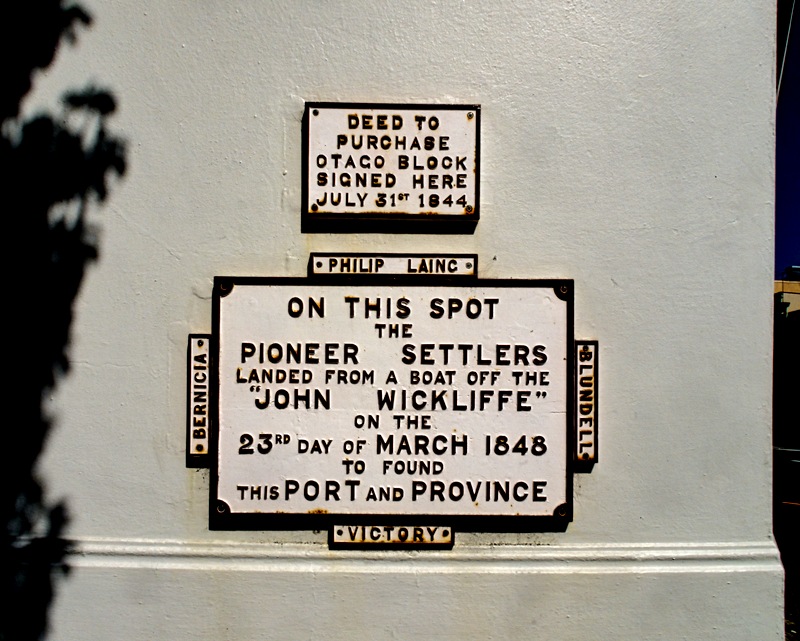
The shuttle returned us to the cruise terminal in Port Chalmers. We stopped into the nice little Port Chalmers Library across the street from the cruise terminal. On one of the library’s walls was a plaque marking the spot where the pioneer settlers disembarked from their ship in March of 1848 to found the town and the province. Before reboarding the ship we walked up the hill a couple of blocks to find a pharmacy because we were out of cough medicine, which Rick still needed.


Timaru
Zaandam was docked at Timaru, New Zealand, on March 12. Rick’s illness seemed to be pretty much over this morning apart from lingering fatigue, but now Mary woke up with a sore throat (is that fair?). She decided to stay in bed rather than go into Timaru which was, let’s face it, not an unmissable spot. There was a shuttle bus to take passengers to the center of town and Rick eventually decided to go in at least briefly, mainly because a museum with some ancient Maori rock art was right at the shuttle drop off.
There was a beach next to the ship that we were told was a habitat for New Zealand Little Penguins, but it turned out that they spend the days hunting at sea and only come ashore at night when we would be gone. Rick walked over to that side of the ship anyway to see if he could spot any stragglers but only saw a couple of sea gulls. Oh well, it was a longshot. When he got back to the room Mary announced that she had decided to go into town too. So off we went around noon.
Timaru is a small city with a population just under 30,000. The area has probably been populated by Maori since at least the 14th century and the city’s name comes from their language. Europeans first came here in 1839 when a whaling station was established but real settlement began in 1859 with the arrival of more than a hundred immigrants from England. After several shipwrecks along the coast a large breakwater and an artificial deep water port (where our ship docked) were built, mostly during the 1870’s. This construction caused sand moving down the coast to form sandbars that created Caroline Bay with its popular beach.
The shuttle dropped us off in Heritage Place, the historic center of town. An open air vendors’ market was in operation there (some of our friends had seen a number of the same vendors in Port Chalmers the previous day). Behind it in the picture you can see the Landing Services Building, the oldest building in Timaru. First opened in 1871, it is built of local bluestone. Before the port was built this landing service was needed to ferry cargo to and from ships anchored off the shore. The building’s location was at the oceanfront at that time (now some 1300 feet from the water). The visitors’ center is now located in the Landing Services Building as is the small museum with Maori rock art. We decided that the museum was overpriced so we skipped it.

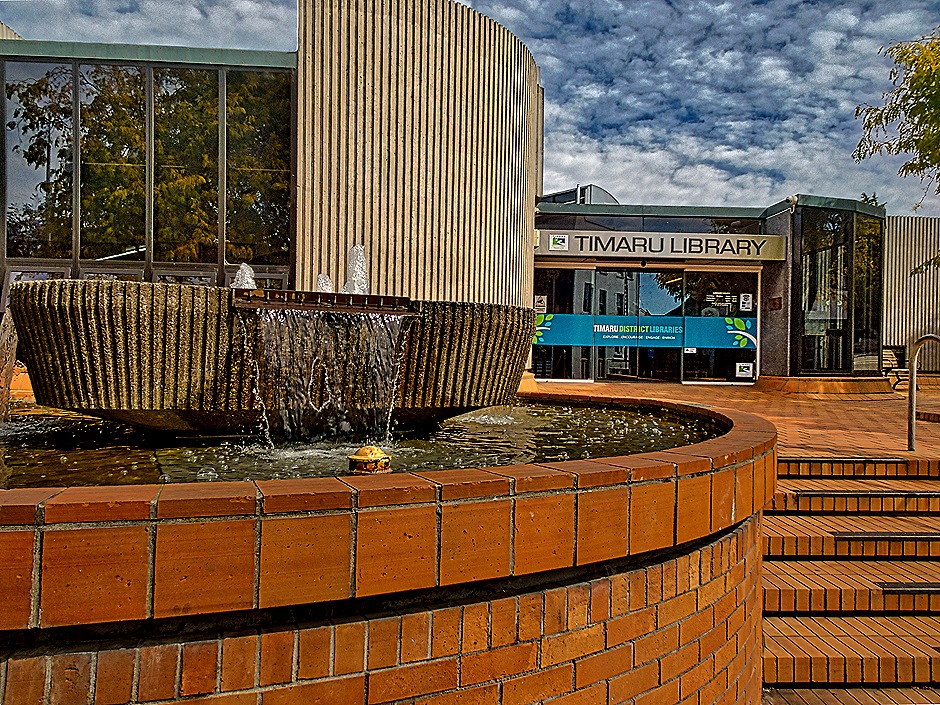
What we didn’t skip was the library, which was a few blocks’ walk away. We managed to lose our way as we walked there, but a nice local woman stopped and put us back on the right path. The library traces its history to 1862 when a public reading room opened in a school building. In 1909 a new building financed in part by Andrew Carnegie opened to house the library and, a few years later, the city council. The current library building opened in 1979 when the Timaru government took over the old building. We walked past the former library, now the Timaru Council building, on our way to the library. The attractive clock tower was added to the building in 1934.

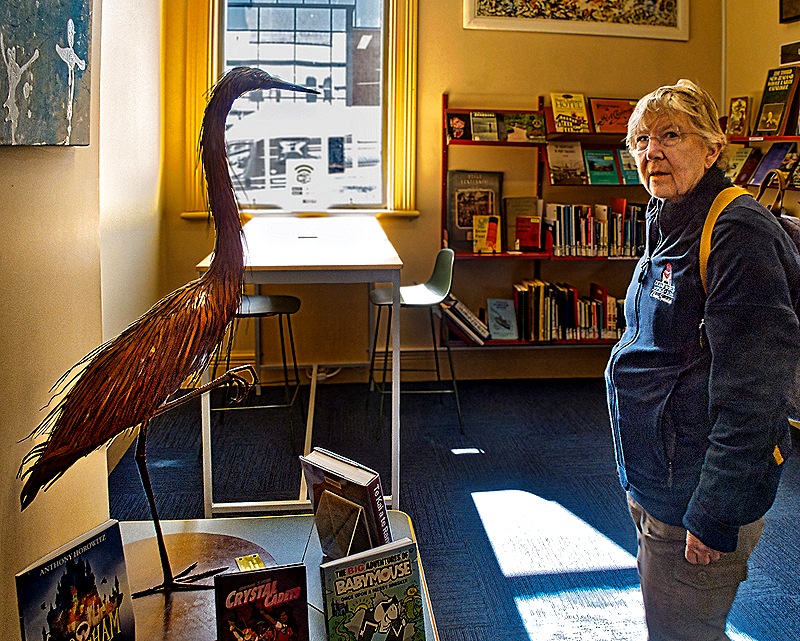
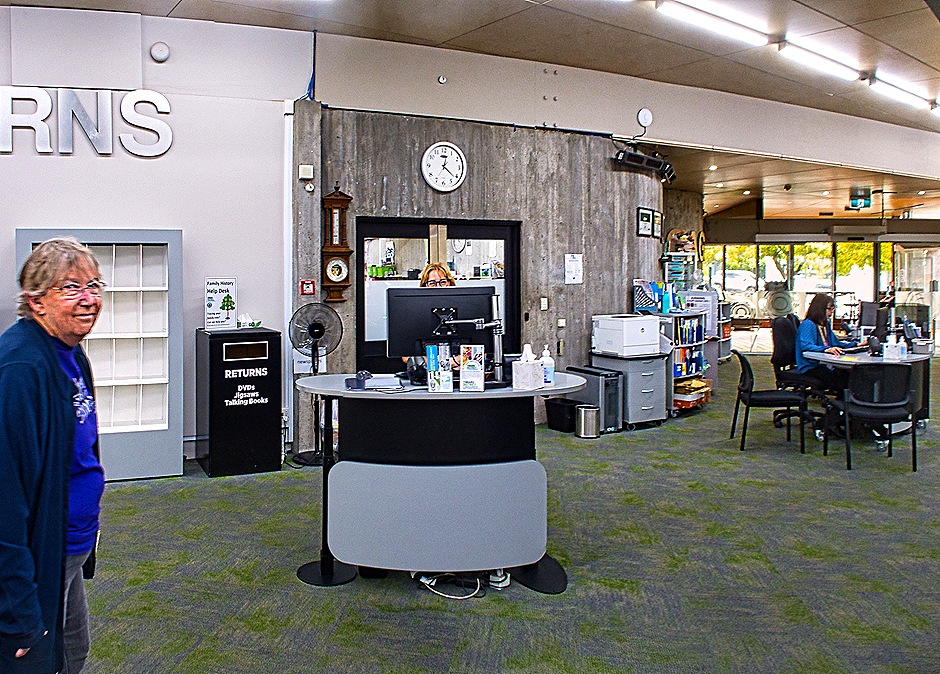
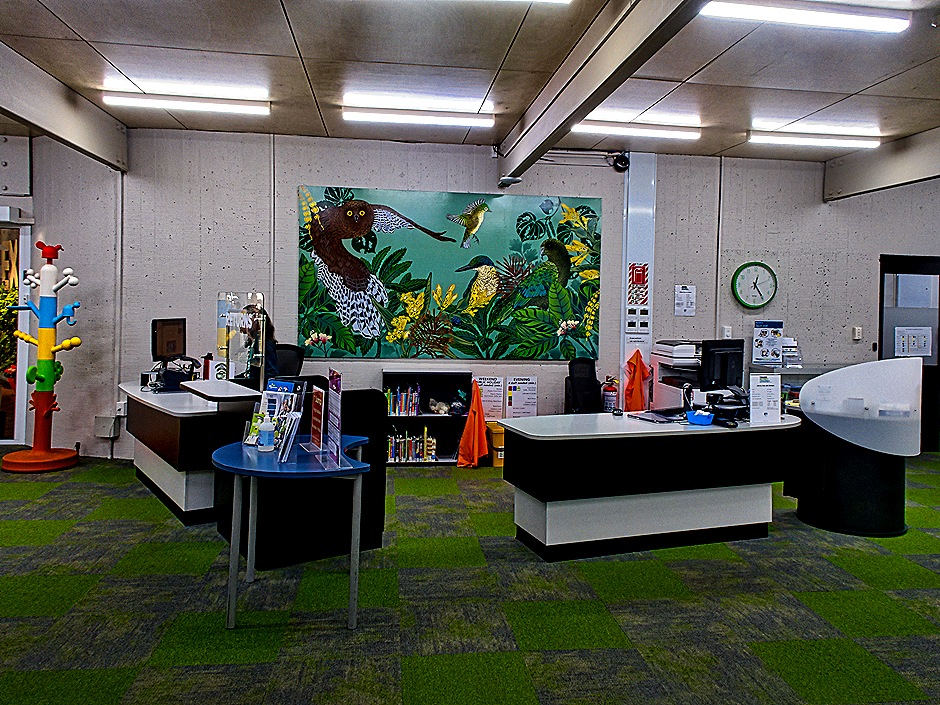
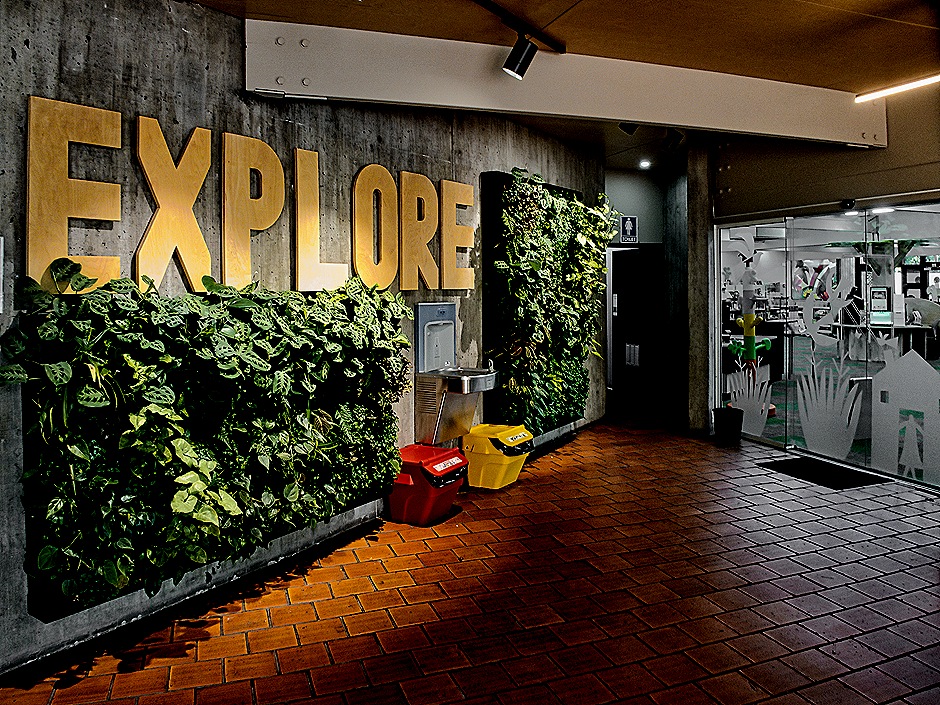
The library is a very modern and nice one. As we saw in two other New Zealand libraries, it hosted a knitting circle. There was a nice children’s room with an interesting frosted glass door. The fountain in front was contributed by the local Rotary Club.


We walked back to the shuttle stop along Stafford Street (we think), the main business street of the town.

During the relatively short shuttle ride back to the pier we had a view of what we think was Caroline Beach and also a distant glimpse of two of the venerable churches in the city, which are almost right next to each other. The blue roofed towers belong to the Sacred Heart Basilica, a Catholic church that opened in 1911 in a location where a wooden chapel was first built in 1874. The closer square tower is part of St Mary’s Anglican church, which opened in 1886 with the tower added in 1910.


We were glad we went into this nice town populated with friendly people. We didn’t see everything here but for a short walk we were pretty satisfied. This pretty much concluded our bout with illness as we sailed away for a much larger and more important New Zealand port.
 RSS - Posts





Leave a Reply