Albany, Australia 2026
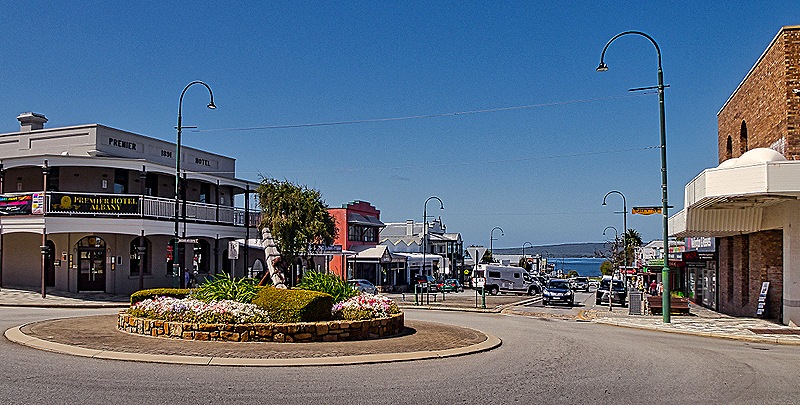
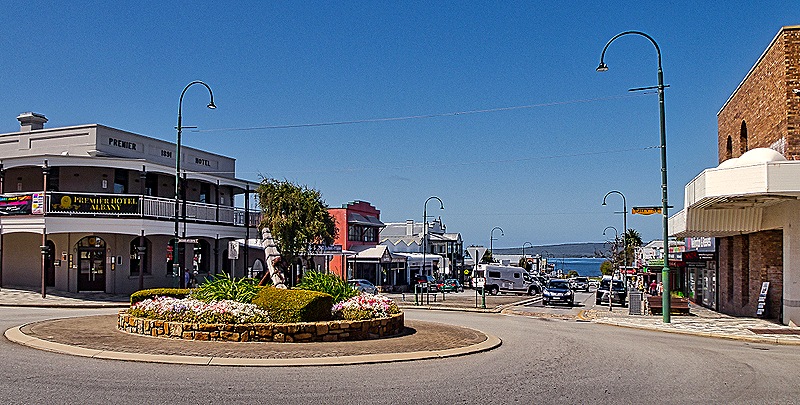
We spent February 23 in Albany, the oldest town in Western Australia. Founded in 1826, Albany now has a population around 35,000. We had an interesting visit here in 2018, https://baderjournal.com/2018/07/06/albany-australia/, most of which will not be repeated in this episode. This time we took the shuttle bus into the center of town and walked around from there.
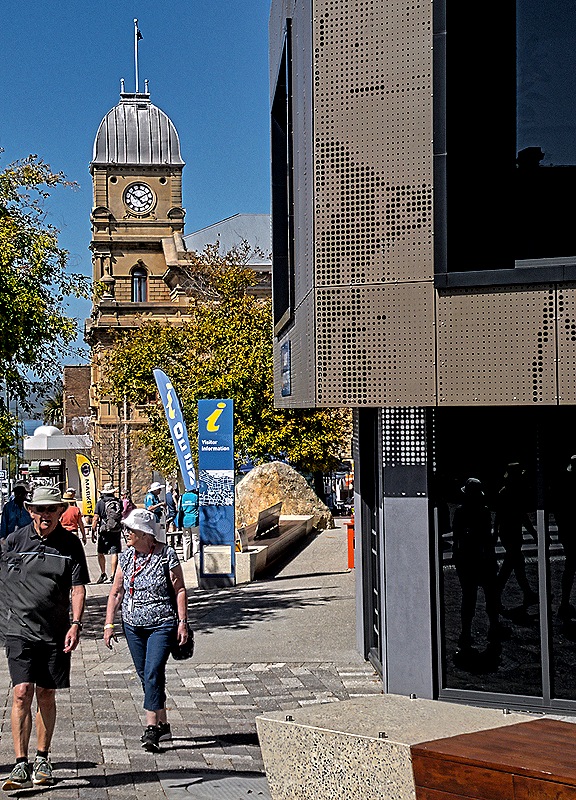
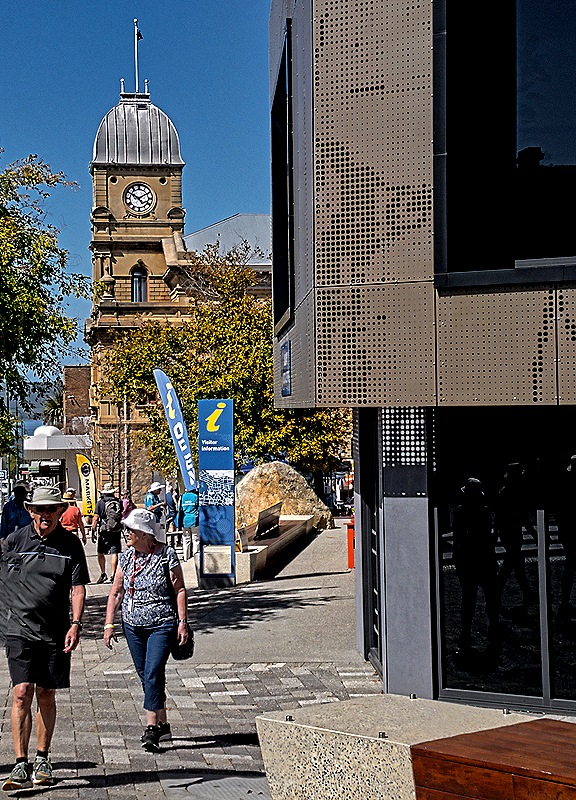
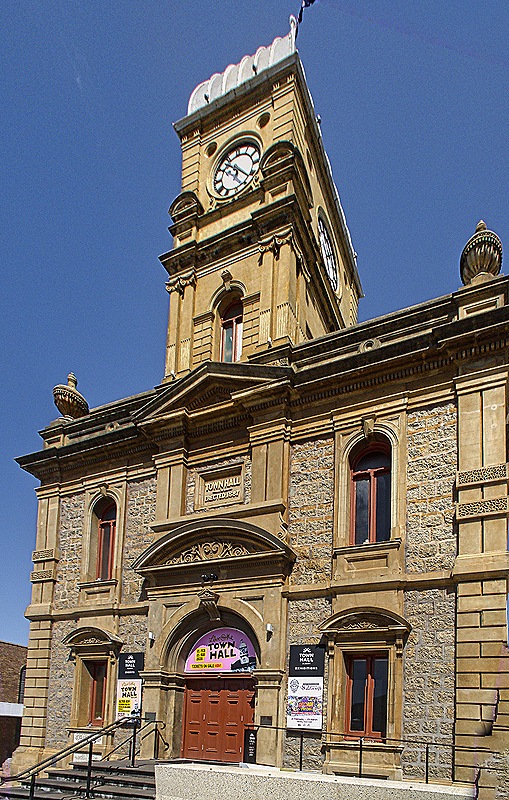
The most noticeable building as we left the bus on York Street, the town’s main street, was the old town hall with its tall clocktower. The building opened in 1888 and the clock, imported from England, was added in 1891. Today the building houses a theater and an art gallery and markets often appear in the open space next door, as one did the day we were there.
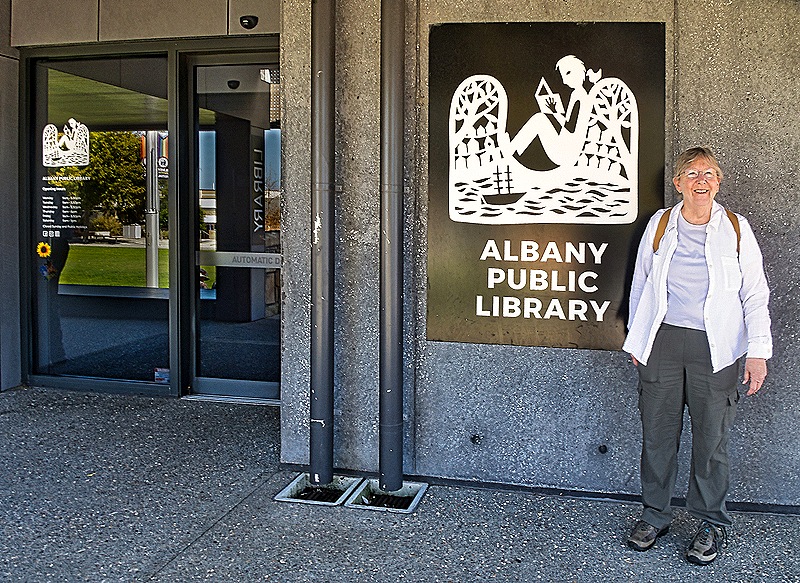
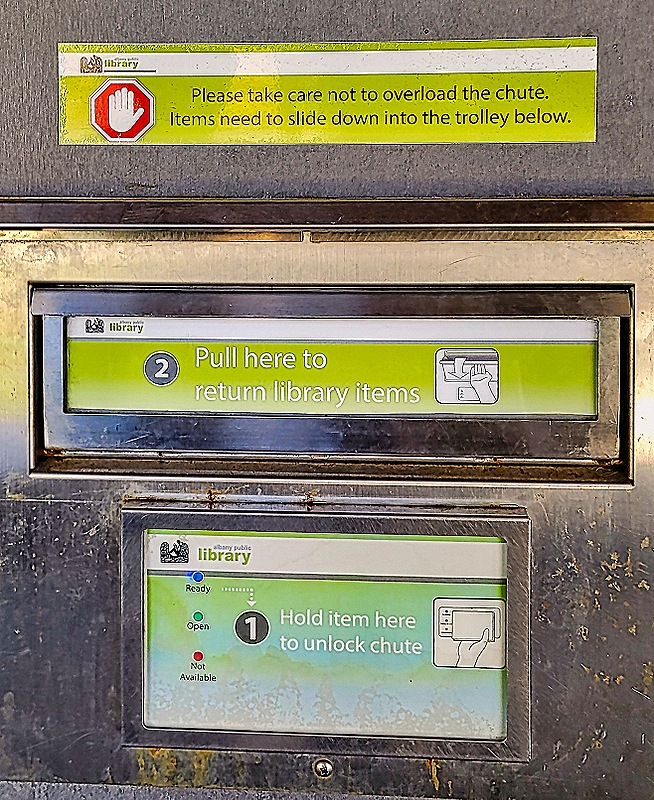
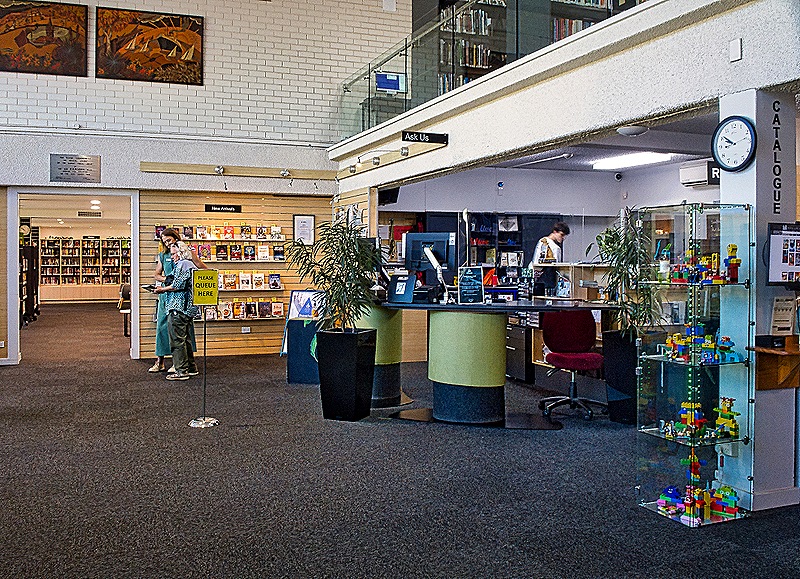
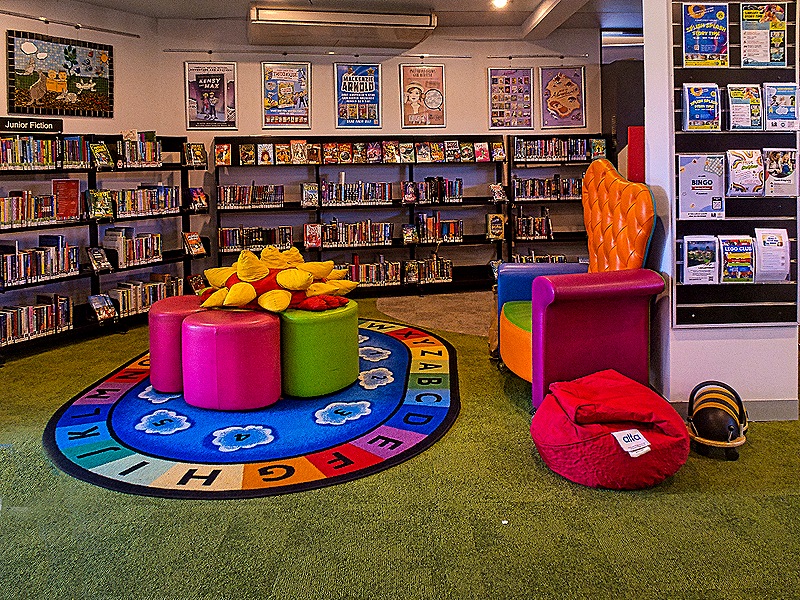
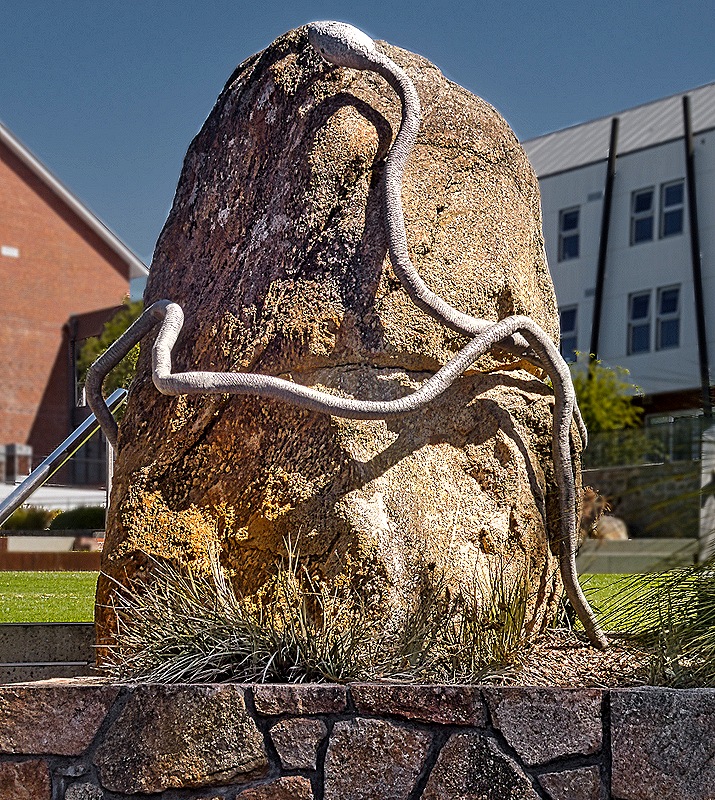
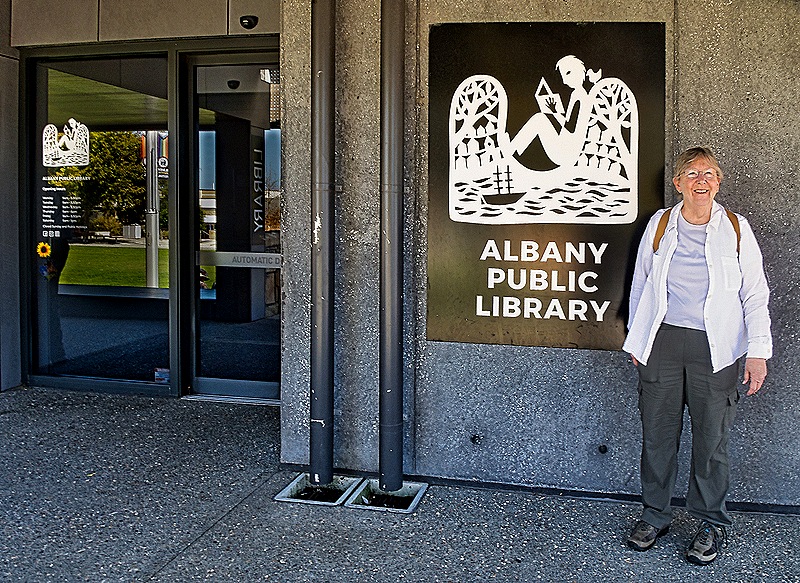
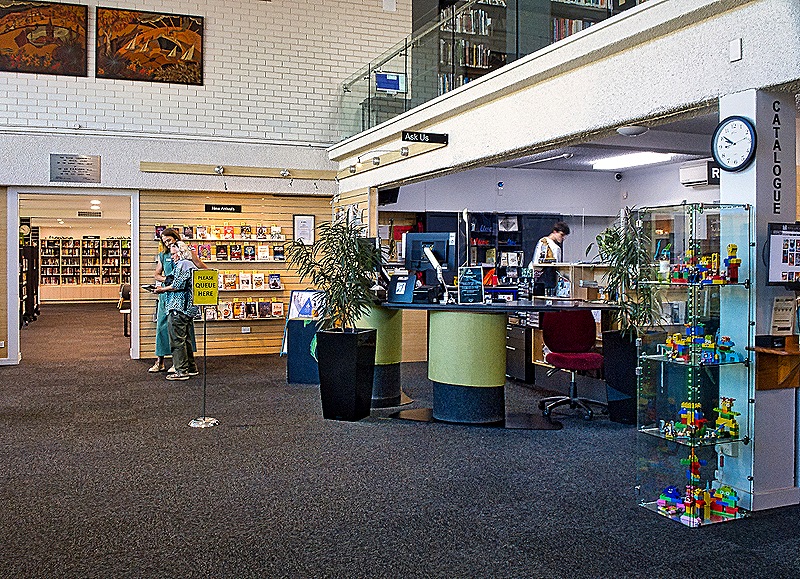
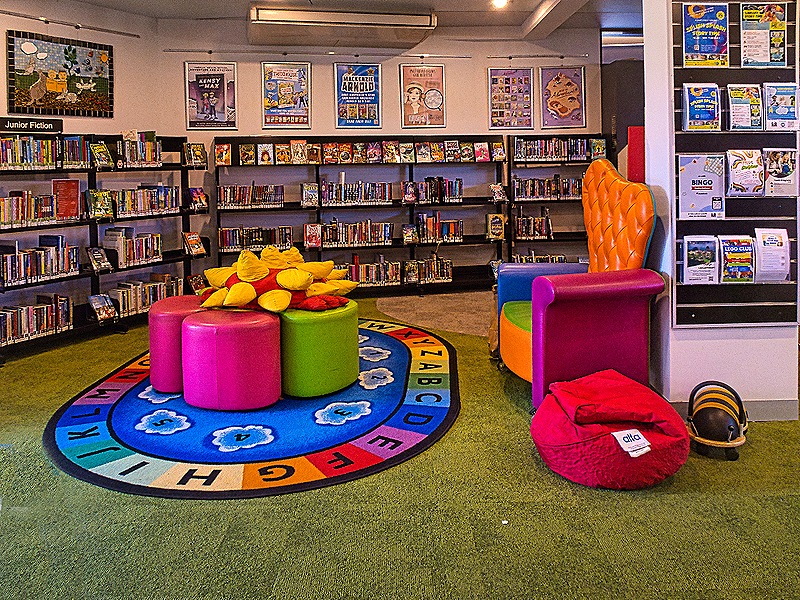
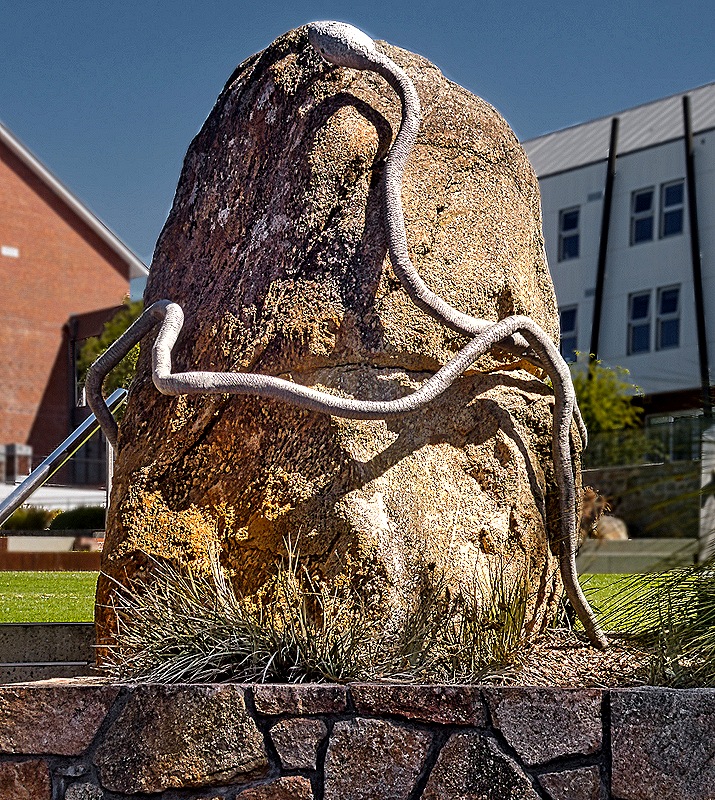
Just up the street from the town hall was the Albany Public Library. Although it traces its history to the Albany Mechanics Institute formed in 1852, today it occupies a modern building that opened in 2003 (and was being renovated when we visited in 2018). The library has a nice program lending ipads to seniors who may not otherwise be able to read ebooks. And its high tech book drop requires you to scan the book you are returning to open the slot, presumably to discourage the deposit of non-library objects. After walking through the library we left by a back door into an open field and at the top of the stairs was a large boulder with a metal snake sculpture climbing around it. This town has many sculptures decorating its open spaces.

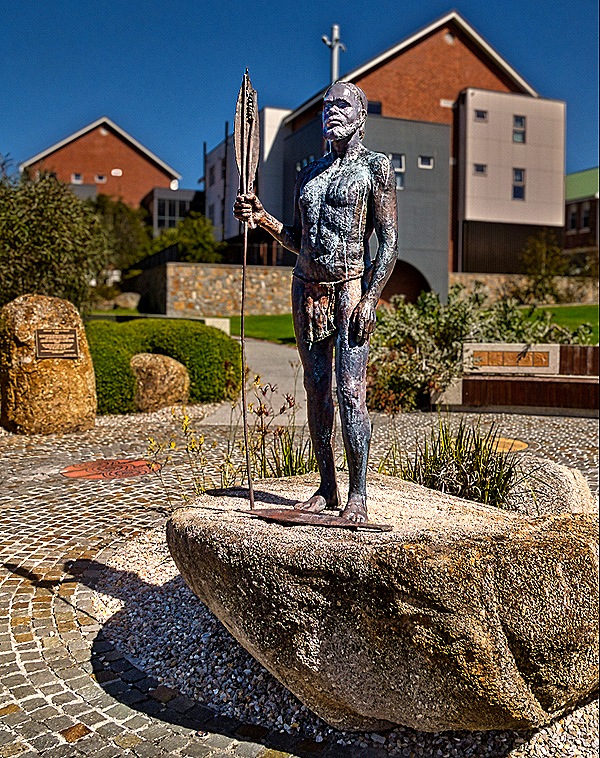
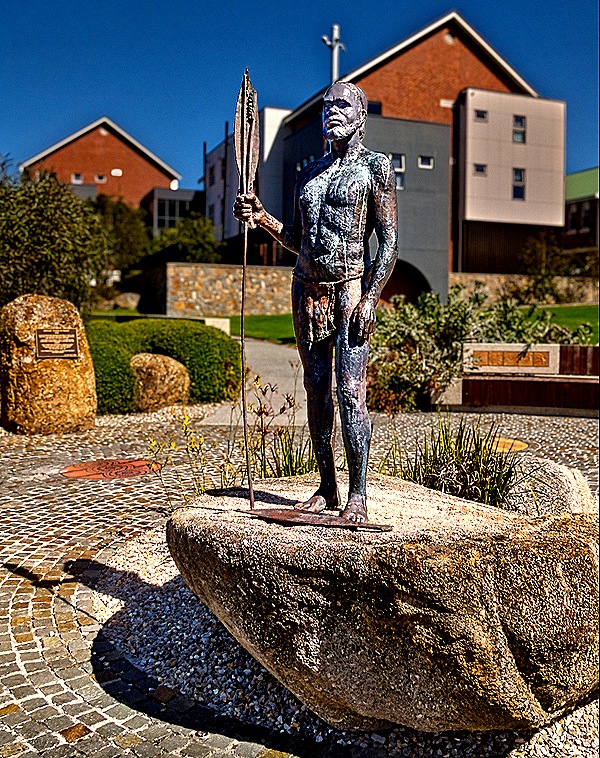
Mokare was a Noongal Aboriginal man who was instrumental in promoting peaceful coexistence between the Aboriginal and European communities during the early years of settlement (and even before then). Mokare was living with the government resident, Alexander Collie, when he died in 1831. Four years later Collie, at his request, was buried next to Mokare on a spot where the town hall now sits. The graves were exhumed and Collie was reburied in Albany’s cemetery, but there is no information about what happened to Mokare’s remains.
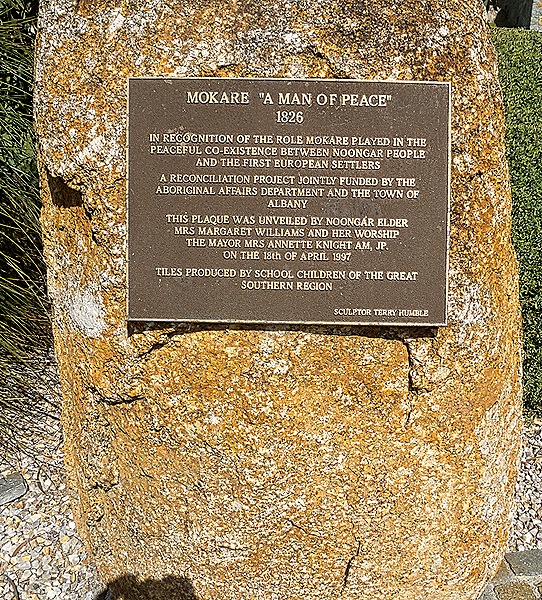
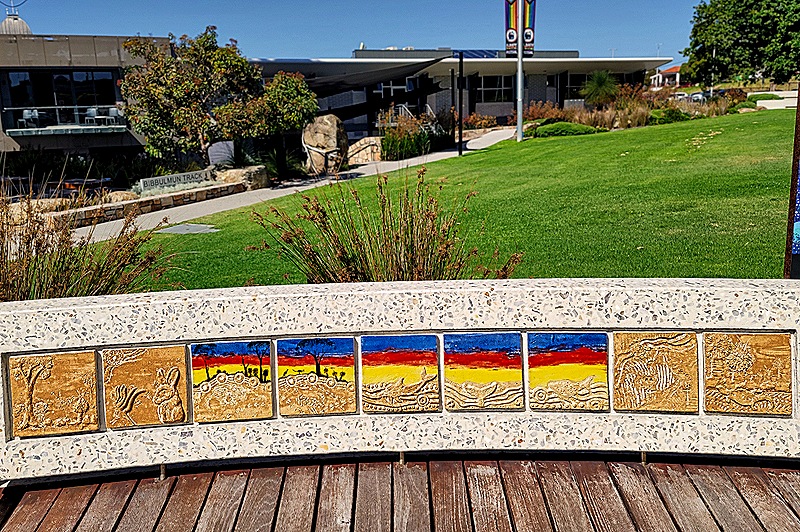
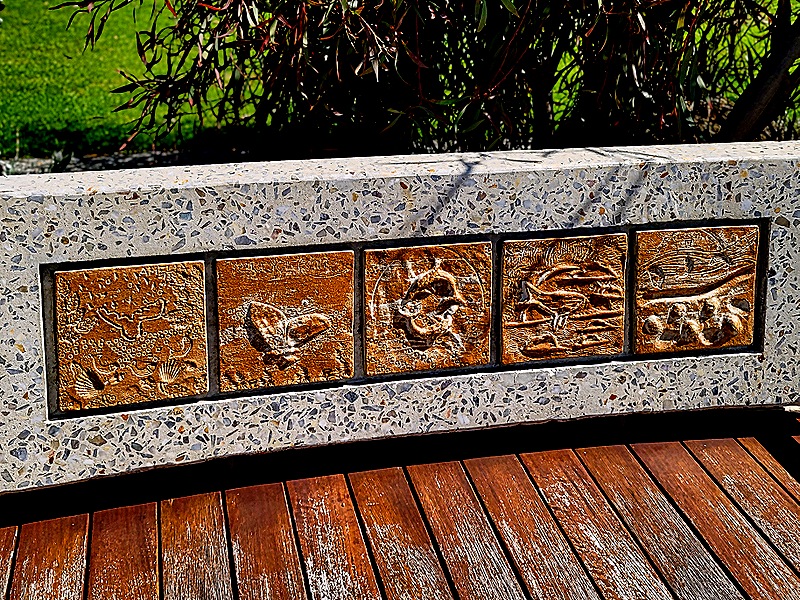
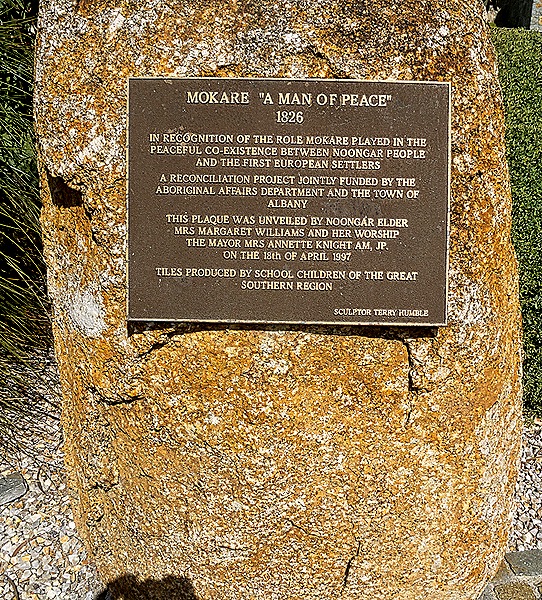
Today there is a statue of Mokare in Alison Hartman Gardens next to the library. It was first erected here in 1978. Nearby is a plaque mounted on a boulder explaining that this was a joint reconciliation project “funded by the Aboriginal Affairs Department and the Town of Albany.” The statue stands on a round brick platform with low walls embedded with tiles created by regional school children.


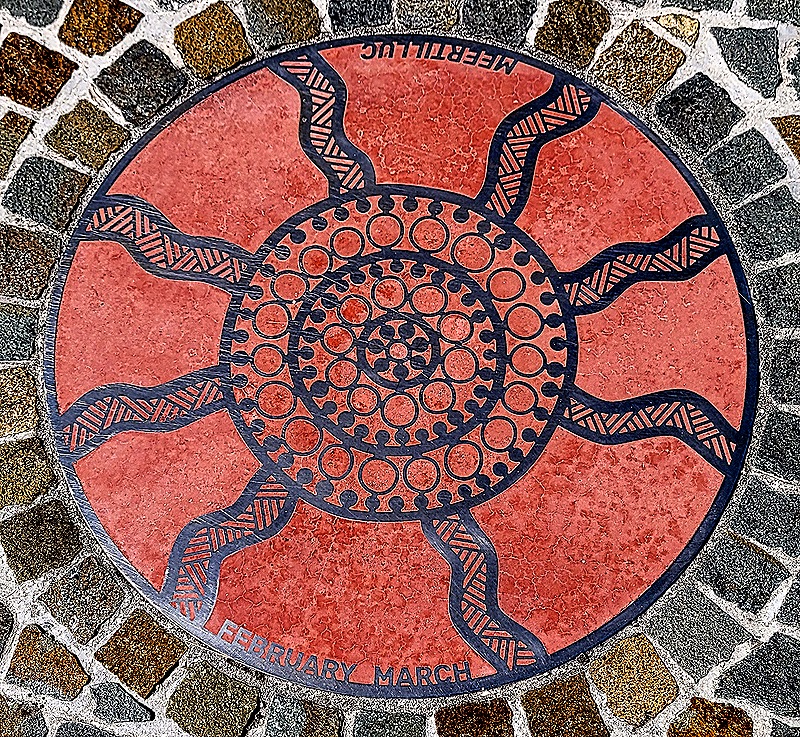
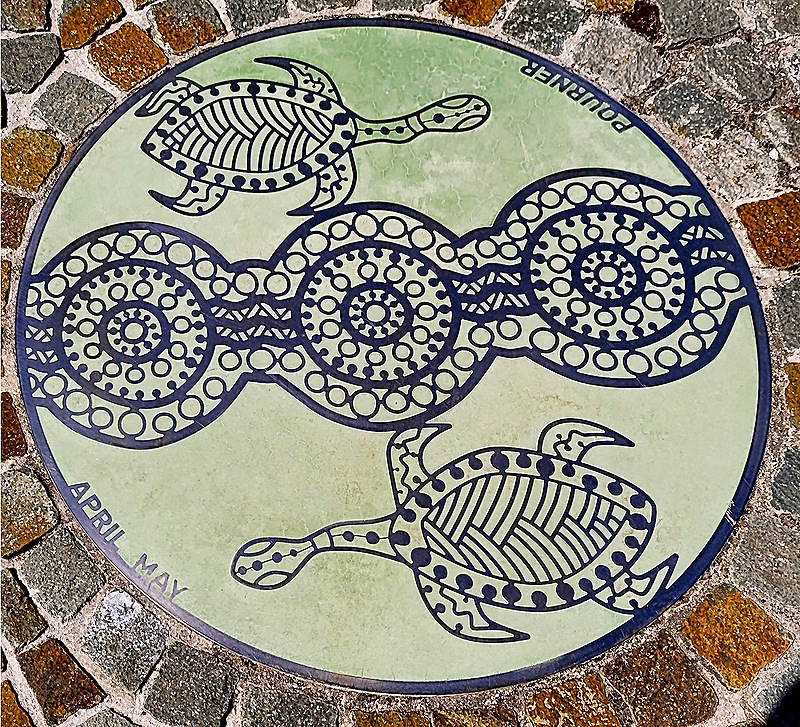
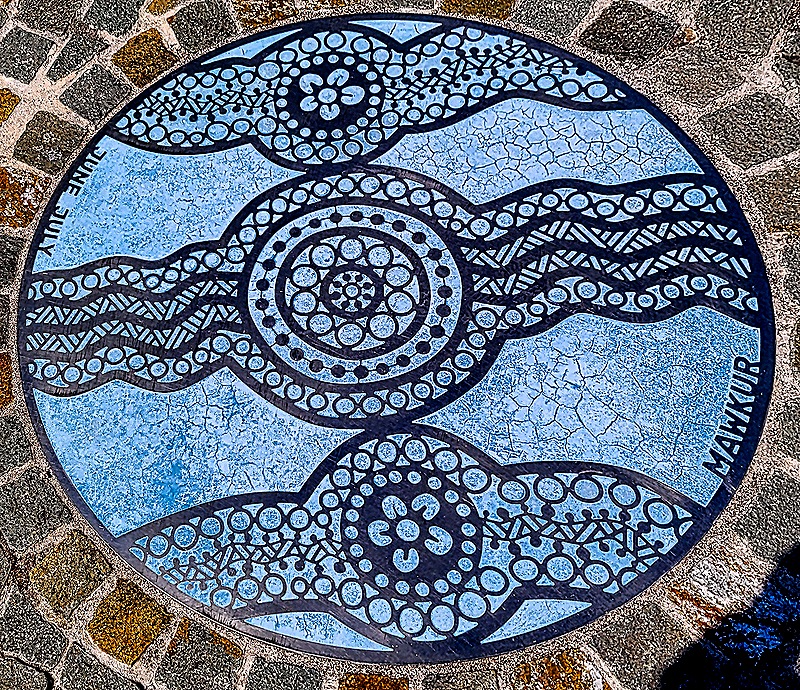
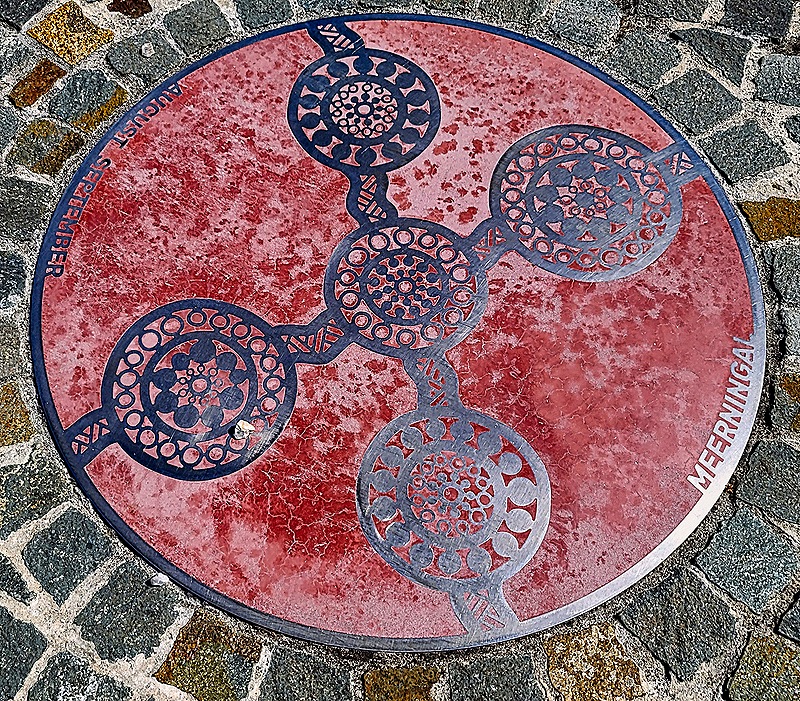
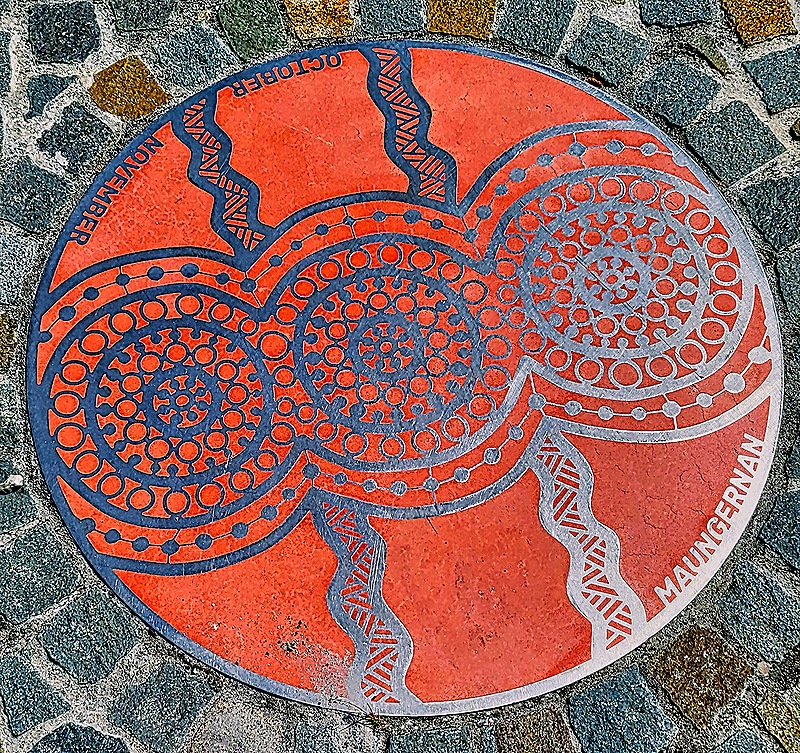
In the platform floor are several colorful round medallions representing the Aboriginal seasons created by local Aboriginal artists. Each plaque includes Aboriginal symbols representing the weather during that season, with the English months and the indigenous name for that season written along opposite edges. Below are five of them: Meertilluc (Feb – March) Reddish color represents heat and the symbols represent the sun; Pourner (Apr – May) Circular symbols represent water holes and depictions of turtles that are hunted during this season; Mawkur (June – July) Lines and blue dots represent rivers full with heavy rain and u-shaped figures represent people sitting around fires to keep warm; Meerningal (Aug –Sept) Spring in the southern hemisphere, so the circles represent blossoming flowers and berries and the connecting lines represent roots; Maungernan (Oct – Nov) Symbols depict banksia flowers that appear during this period and the orange also represents warming temperatures. Beruc (Dec – Jan) was there as well but we don’t have a picture of it.


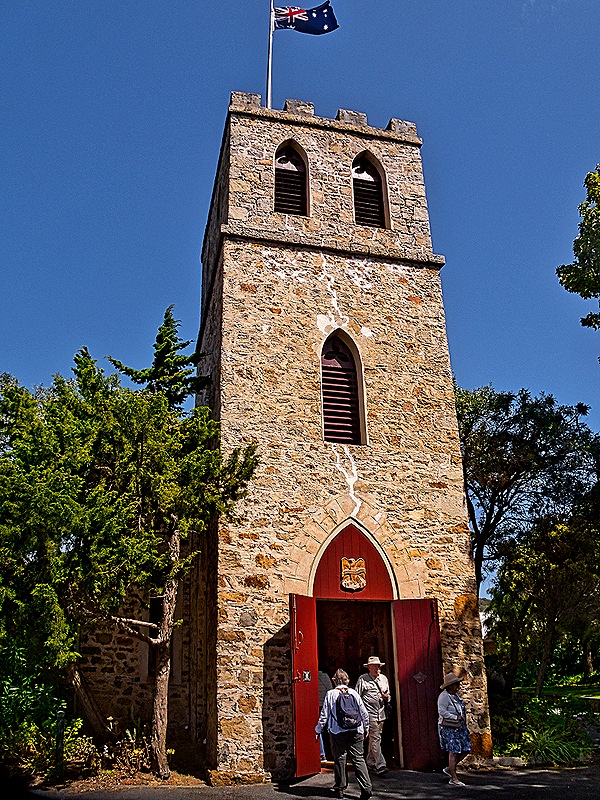
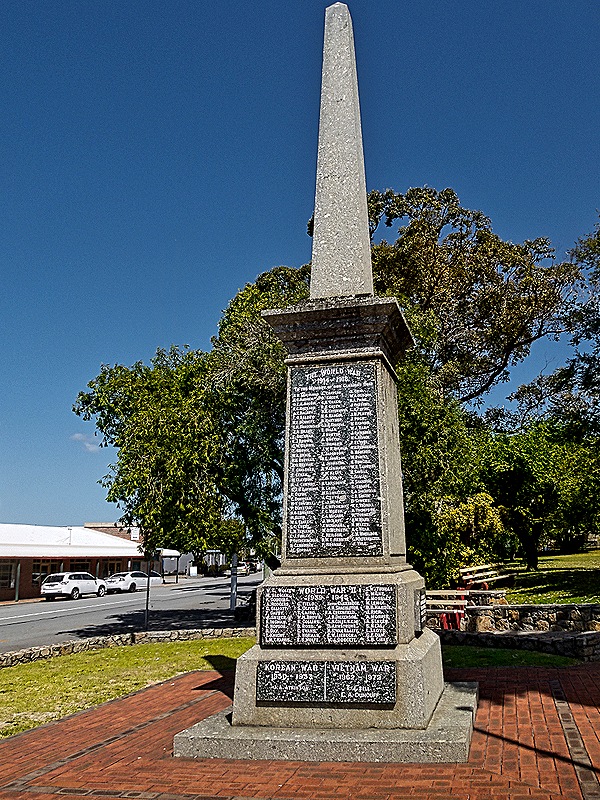
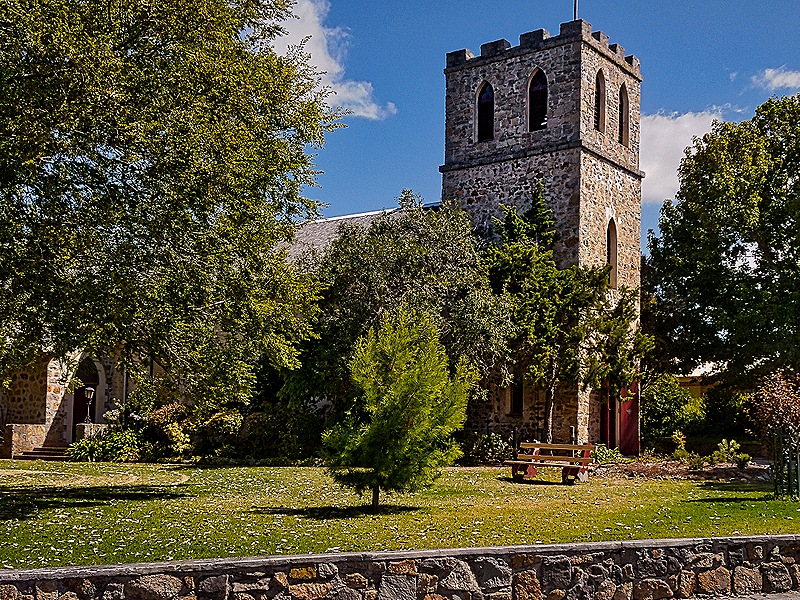
We walked down York Street, which gets steeper as it descends toward the bay. We stopped to see St John’s Anglican Church, the oldest consecrated church in Western Australia, which opened in 1848. It was built of local stone by the people of the town and could have held the entire population of 170 when it first opened. The church and rectory are in a park-like setting with nice gardens. While the outer doors were open when we visited the inner doors were locked so we could not go inside. On the grounds is the Albany War Memorial, unveiled in 1921 to honor locals who served in World War I. Plaques with the names of soldiers from World War II and Korea were added later.
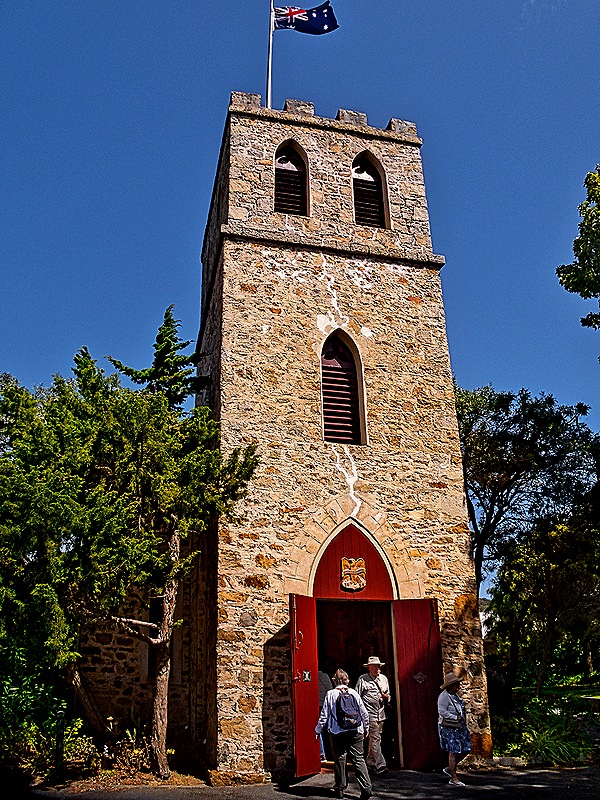
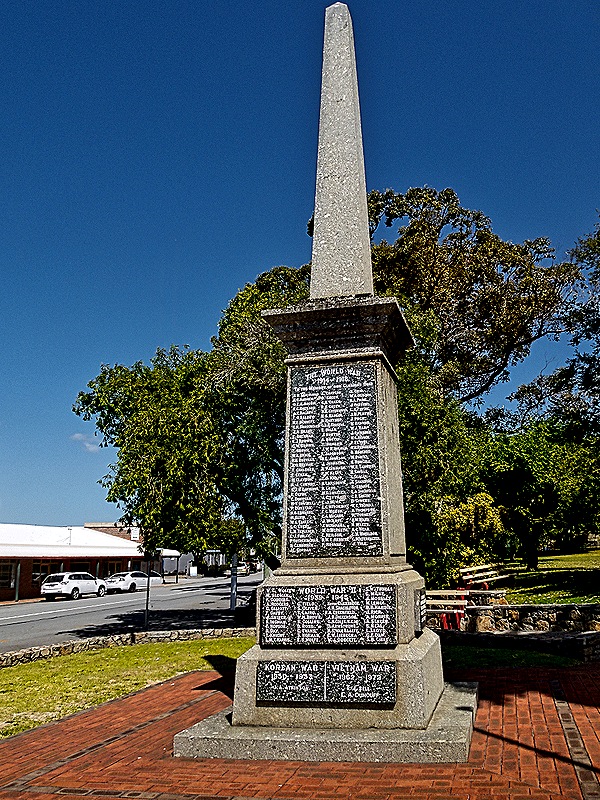

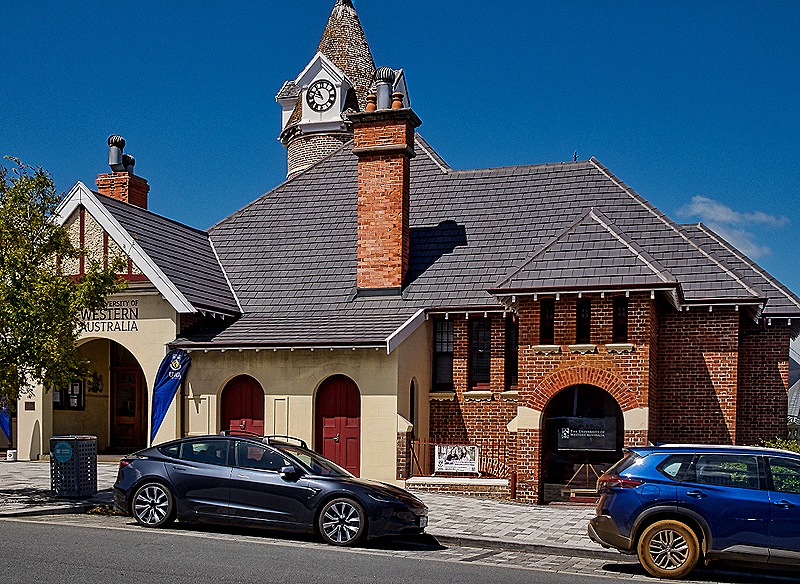
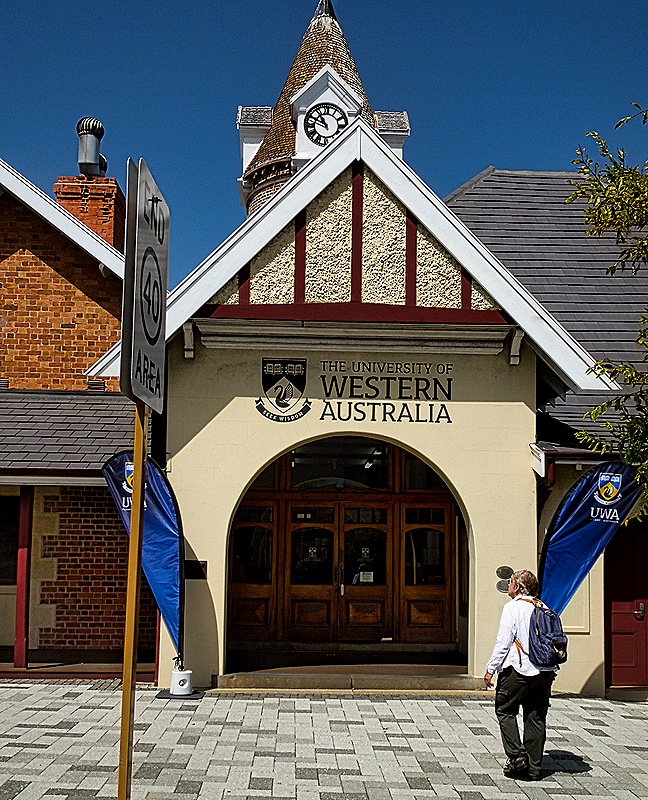
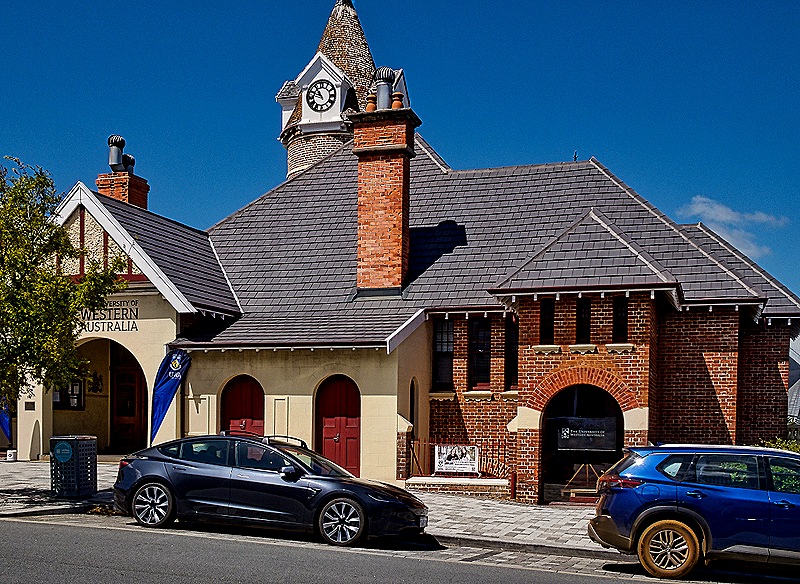
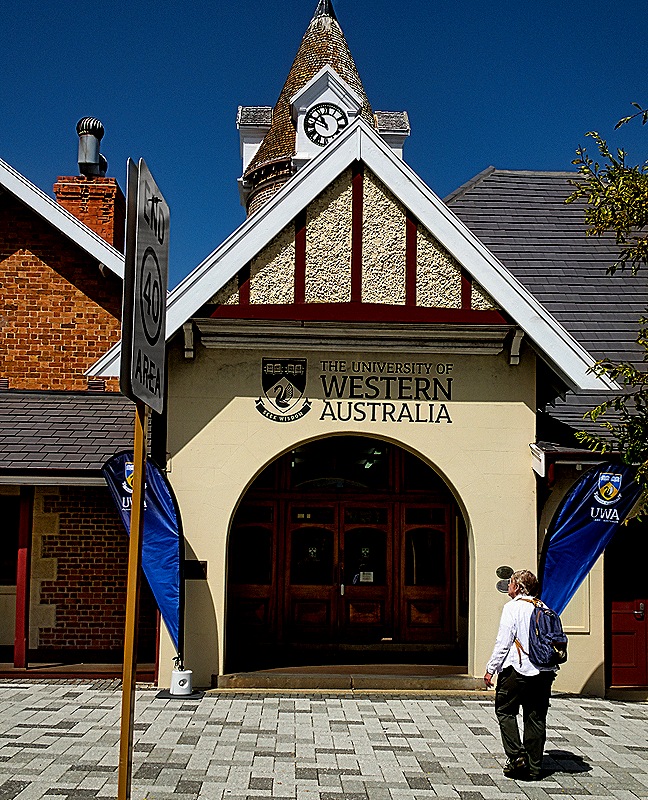
We continued down York Street and turned left on Stirling Terrace, then walked on to the old post office. Originally built in 1869, the building was expanded in 1895 when the clock tower, then about 64 feet tall, was added (it was extended another 20 feet in 1901). The clock tower contains a spiral staircase supported by the outer wall. The building also served as a courthouse in its early years and in the 1870’s was the site of the town’s first telegraph office. It served as the city’s post office until 1964 and since 2002 it has been part of the University of Western Australia. It is an attractive building.
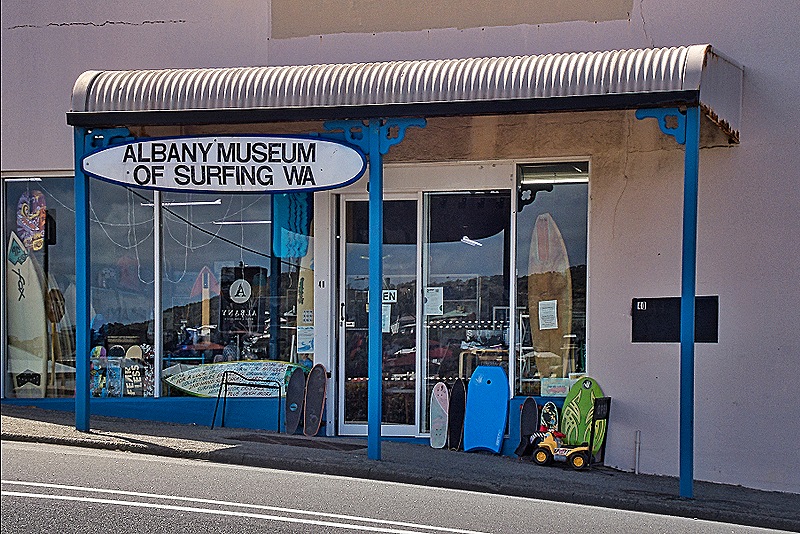
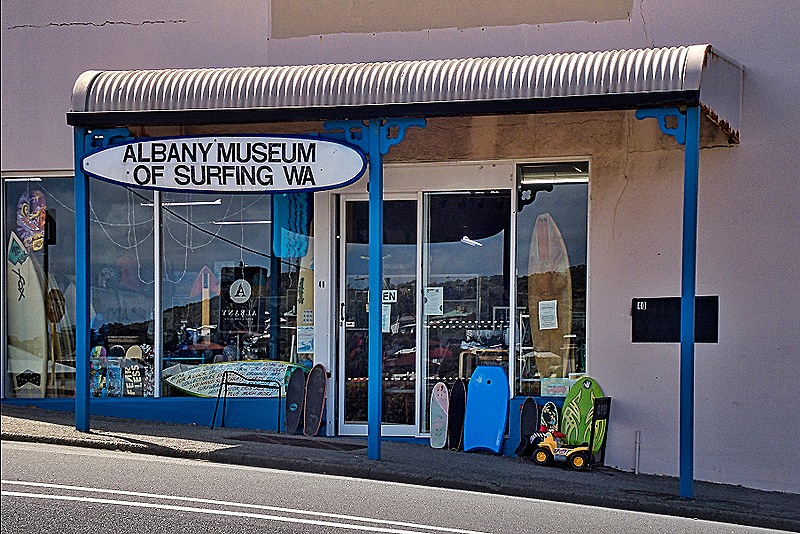
On the way back toward York Street we walked up the very steep Spencer Street to see the Albany Museum of Surfing, which sounded pretty interesting. But looking through the large window when we got there it looked like just a thrift shop with a few surfing items in the window. It may be that more surfing artifacts are on display further into the shop but we will never know because we decided not to go inside.
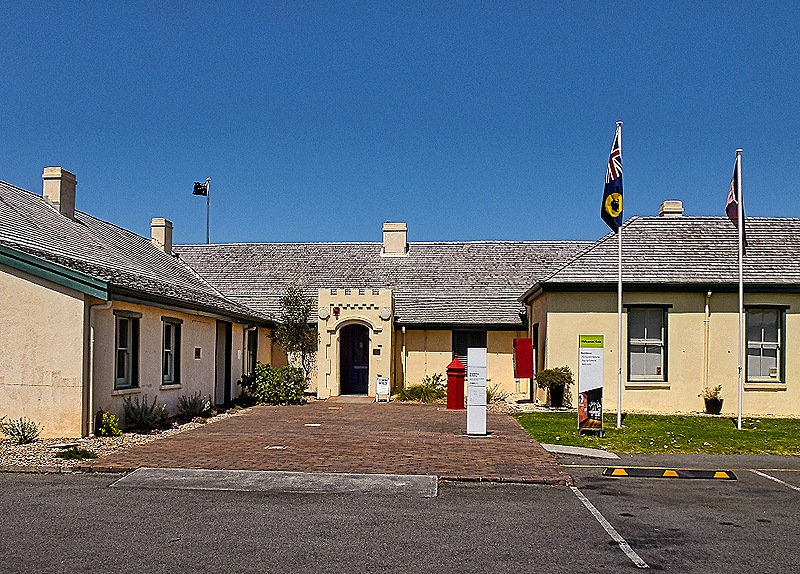
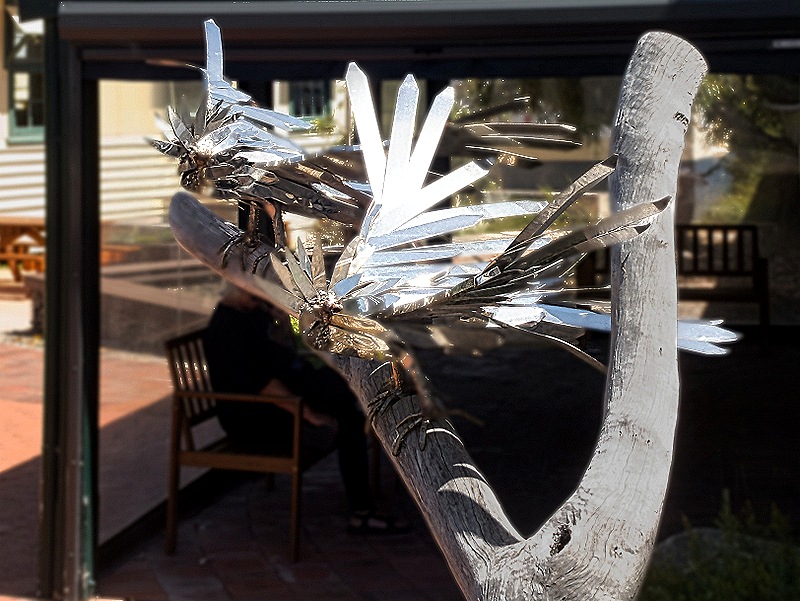
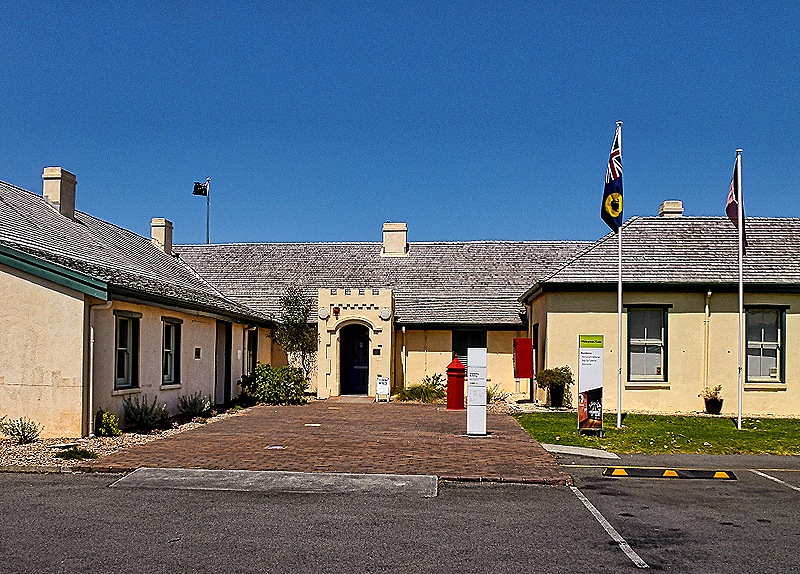
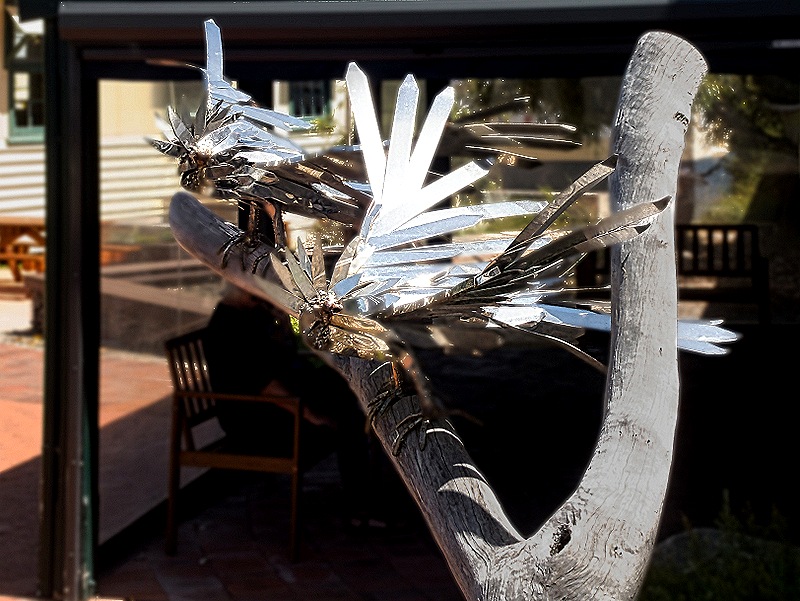
We continued our walk down Stirling Terrace past York Street and after a while came to the Museum of the Great Southern off to our left. The museum was small (and free) but pretty comprehensive. It covered Aboriginal history, western colonization, convict history, early whaling, local natural history and Albany’s experience as the departure port for the ANZAC troops in World War I. There was also a good exhibition about Chinese immigration to Australia over several decades and an informative exhibit about the effects of the White Australia Policy (under which nonwhites were barred from emigrating here). The museum was full of interesting photos and explanatory placards but seemed a little light on artifacts, which is why we took no inside pictures. The museum is on the site of the first European settlement here and part of the museum (we think the left side in the picture below) is the Residency Building constructed in 1850 to house the government representative in town. We didn’t go inside the Eclipse Building but we did walk up as far as its front porch where we saw some interesting metal bird sculptures.
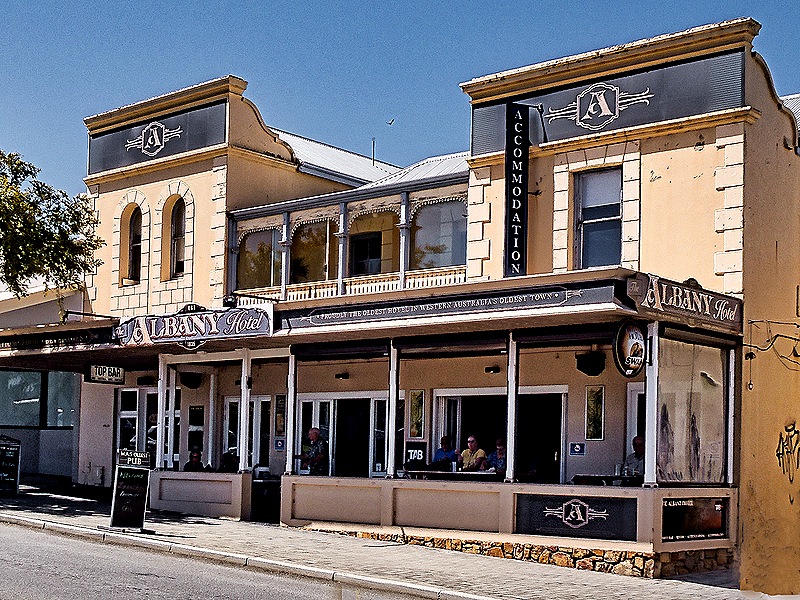
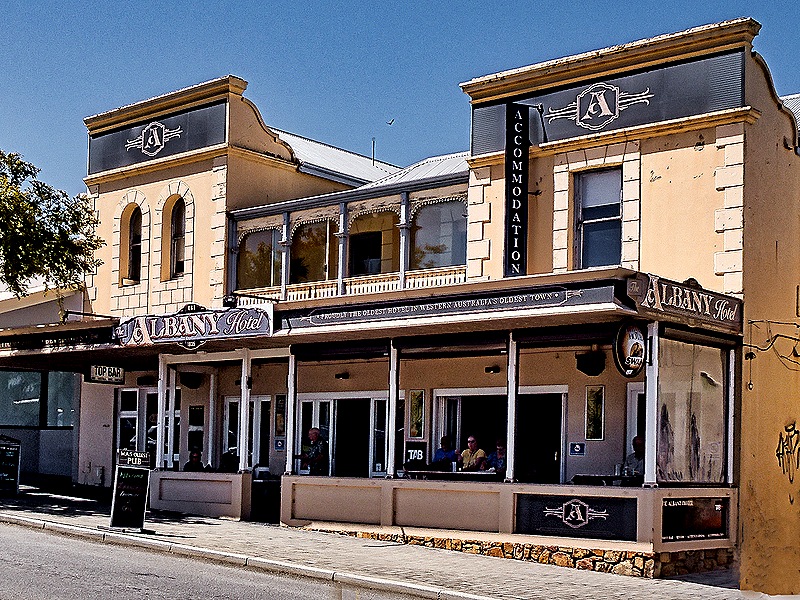
Tired and hungry we walked back up York Street to have lunch at the pub in the Albany Hotel where we ate on our first visit. Across the street from the town hall, it is billed as the oldest licensed pub in Western Australia (apparently another pub in the state is older but wasn’t licensed when it opened . . . what good is a pub without a liquor license?). The pub dates back to 1836 but the hotel wasn’t built until 1852. We had delicious fish and chips here as we did the first time, although the waiter (who must be new, we guess) didn’t know they served fish and chips. You can eat on the front porch, but that was too hot for us.
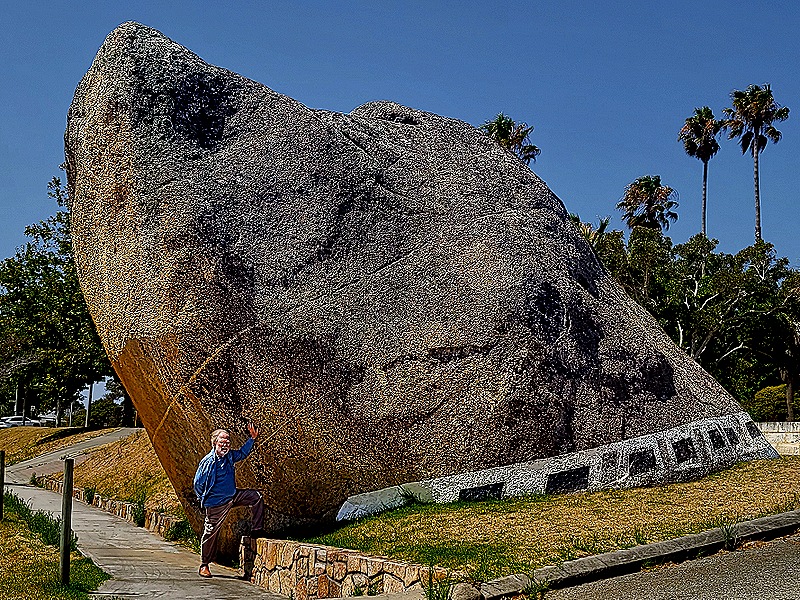
After lunch we looked for awhile for a gelato place but all in vain. So we walked a few blocks to the last thing we wanted to visit, Dog Rock. It was a longer walk than we remembered from our last visit but maybe that was just due to the hot weather. Dog Rock is a natural granite outcrop that has been known to the Noongar Aboriginal people as Yacka (“wild dog tamed”) for a long time and it is thought to have been an ancient territory marker. The black and white dog collar was first painted around the base in 1937 when the Automobile Club complained that it was a traffic danger because it extended into the road.
If you have followed our travels you may notice something missing in this picture: Rick’s hat, which he always wears ashore to avoid sun damage. Well, Rick suddenly noticed that too and realized the hat had been left in the pub! So we walked all the way back there, a little quicker than we would have otherwise for fear it might otherwise be gone. It turned out that they had found the hat after we left and another group from the Zaandam sitting at a table on the front porch recognized it and offered to take it back to the ship. They were still there when we arrived back and were happy to turn it over to us. All’s well that ends well, right? The shuttle stop was right across the street, so we boarded the bus and returned to the ship.

 RSS - Posts