Port Vila, Vanuatu 2026
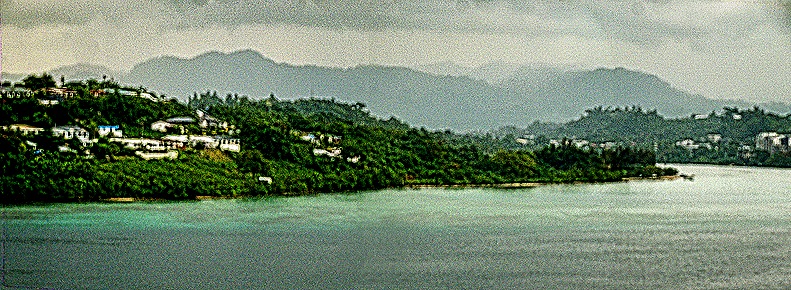
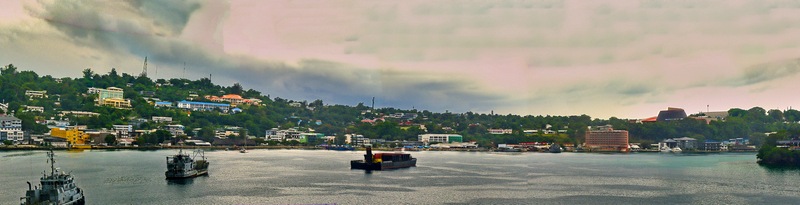
We anchored in the harbor off Port Vila on the morning of January 30. Port Vila is the capital and largest city (population almost 50,000) in the Republic of Vanuatu, an archipelago of 83 islands (two disputed with New Caledonia) with a total population around 300,000. Originally settled by Melanesians several thousand years ago Vanuatu was first visited briefly by Europeans in 1722, then later by the French explorer Bougainville and in 1774 by Captain Cook, who named the archipelago New Hebrides after the Hebrides islands of Scotland. British and French settlers arrived in small numbers during the 19th century and in 1887 those two countries set up a joint rule that lasted until independence in 1980, at first under a joint Naval administration and beginning in 1906 under a joint civil administration called a “Condominium.” After independence was achieved in 1980 the name was changed from New Hebrides to Vanuatu.
The Americans had a large military presence during World War II because, like New Caledonia, Vanuatu was strategically situated to support the effort to stop Japanese expansion in the Southwest Pacific. One of the US soldiers stationed here was James Michener, whose first novel, “Tales of the South Pacific” (which became the hit musical “South Pacific”), was based on his experiences in Vanuatu. Vanuatu was a staging and supply area for the Guadalcanal campaign and as the fighting moved further away toward Japan it continued in a supply and support role. Thousands of indigenous people joined a labor corps to support the American war effort. The Americans quickly withdrew after the war but a great deal of the infrastructure they built (roads, ports, hospitals, etc.) was left behind and some of it is still in use.
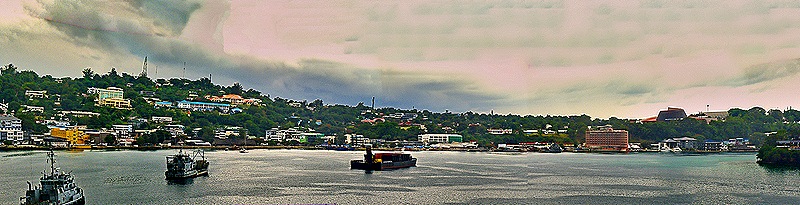
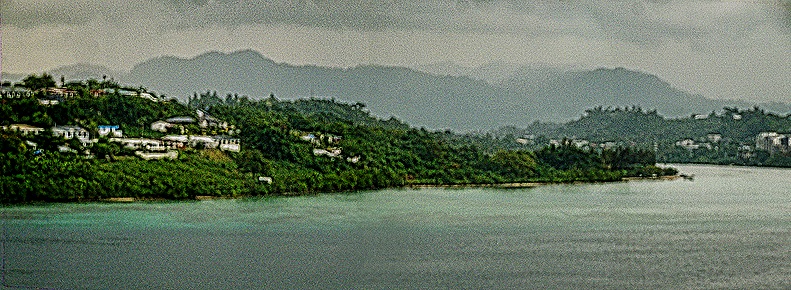
Until recently cruise ships docked in Port Vila at a wharf about a mile from the center of town. But in December of 2024, about 14 months before our visit, there was a huge earthquake about 5 miles offshore. More than a dozen people were killed and close to 300 injured. Thousands of homes were damaged, including some 245 that were at least partially destroyed. Several bridges collapsed or were damaged and there were several landslides, one of which wrecked the cruise ship wharf and damaged the road from there into town. So that’s why we were anchored off shore.
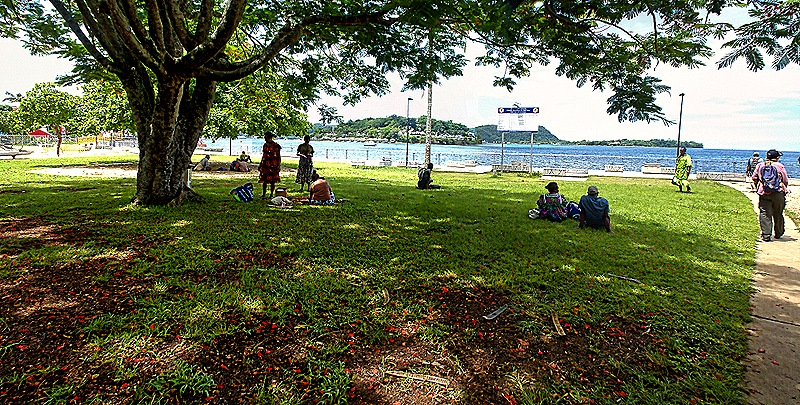
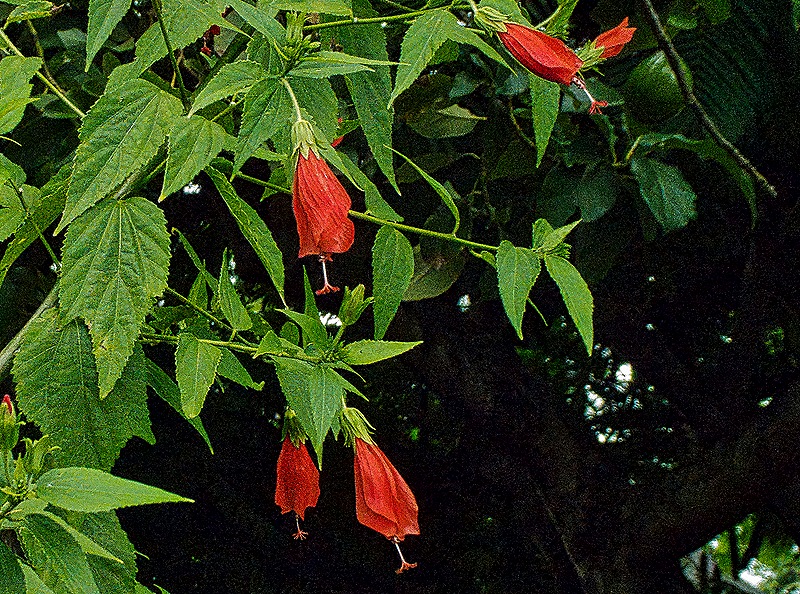
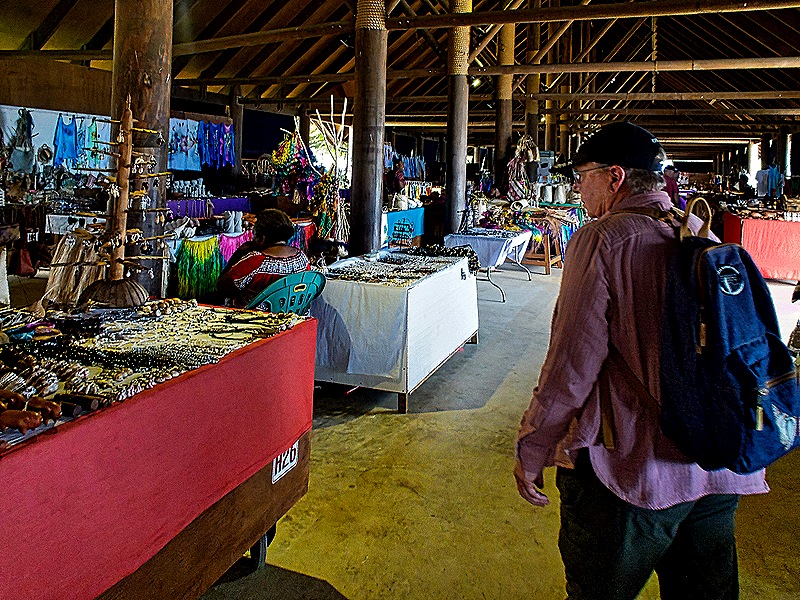
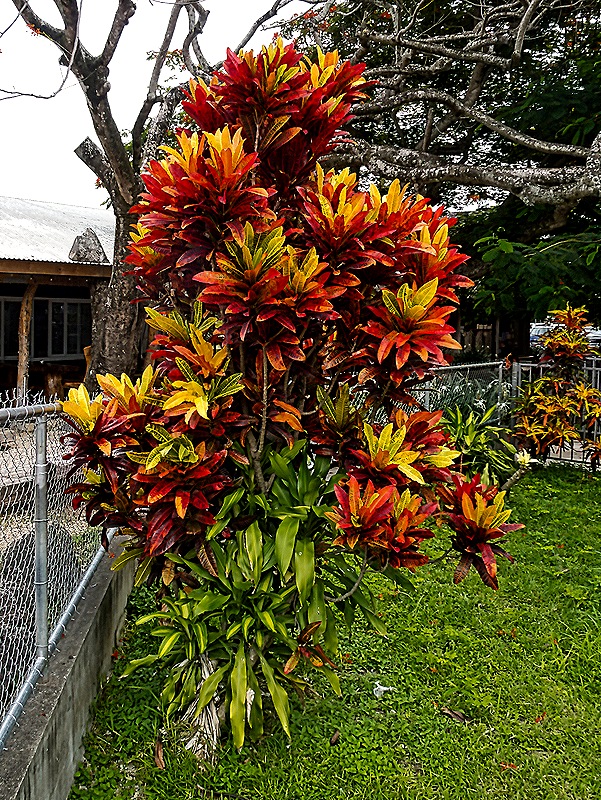
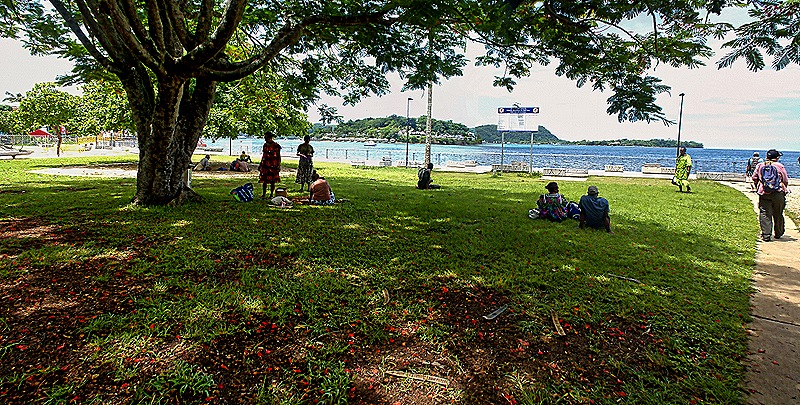
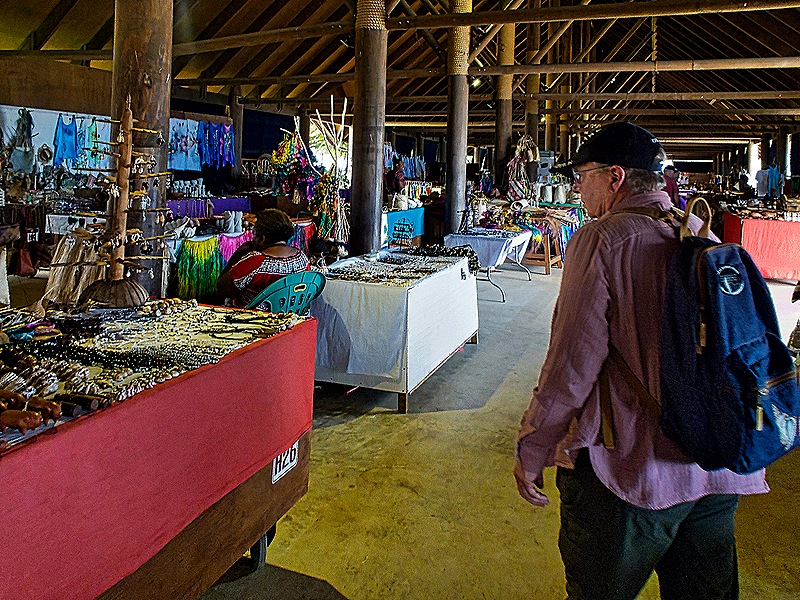
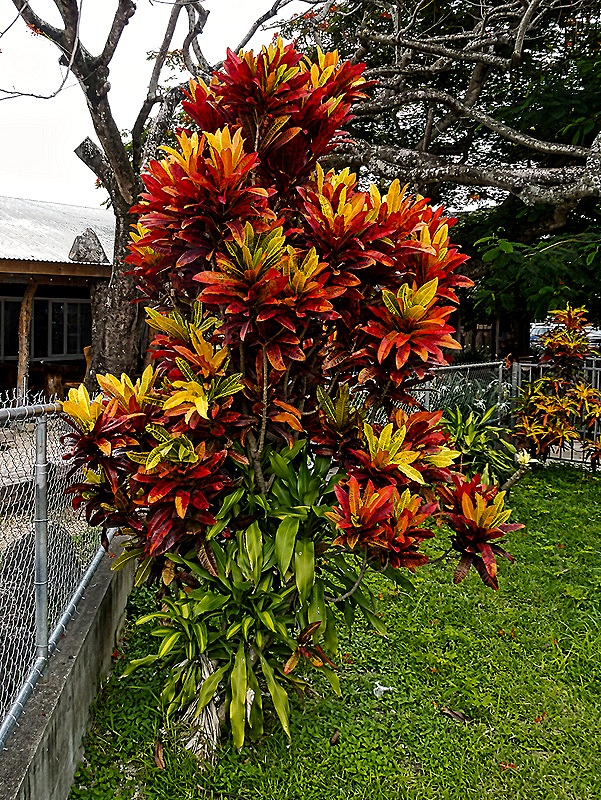
Accordingly we had to tender into Port Vila. This actually turned out to be a convenience for us because we were tendered to a small dock in a park from which we could walk to the center of town in just a block or two. The waterside park was quite nice, with colorful flowers. The handicrafts market – a large one room building with a pitched roof and ceiling and space for tables of many vendors – was at one end of the park. We spent some time in there looking at the interesting items for sale, then walked on.
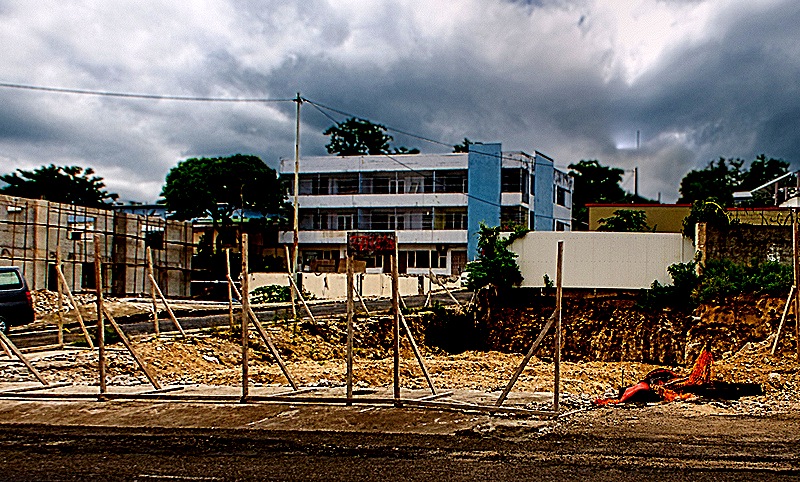
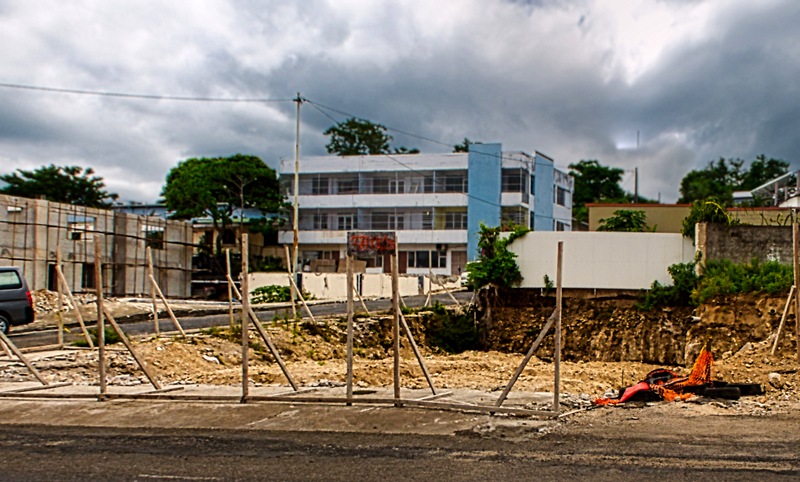
As we walked from here up to the main thoroughfare the earthquake damage was hard to miss. At least 10 buildings collapsed in Port Vila, some pancaking (levels dropping on top of lower levels). A year had been spent since then clearing the debris, but we walked over remaining rubble and some cracked and broken sidewalks and passed several spots on the main street where all or part of a building appeared to be gone.
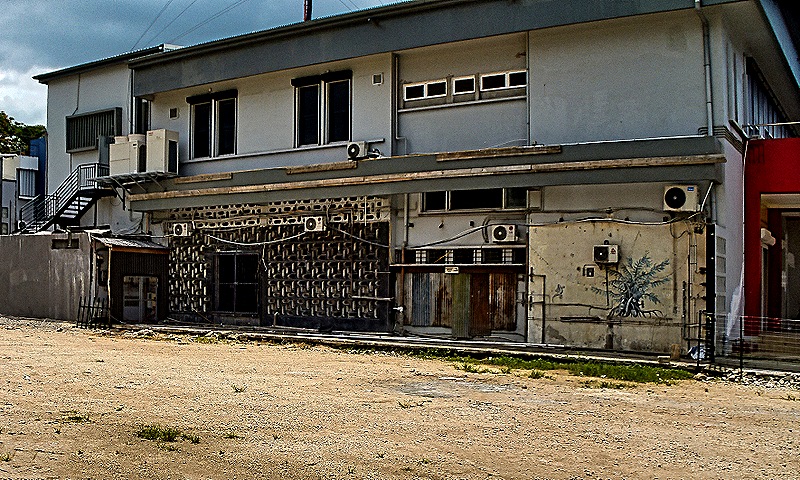
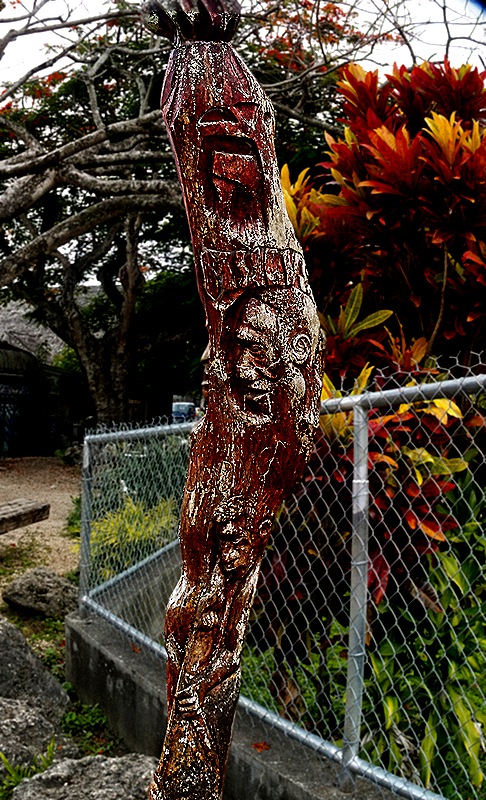
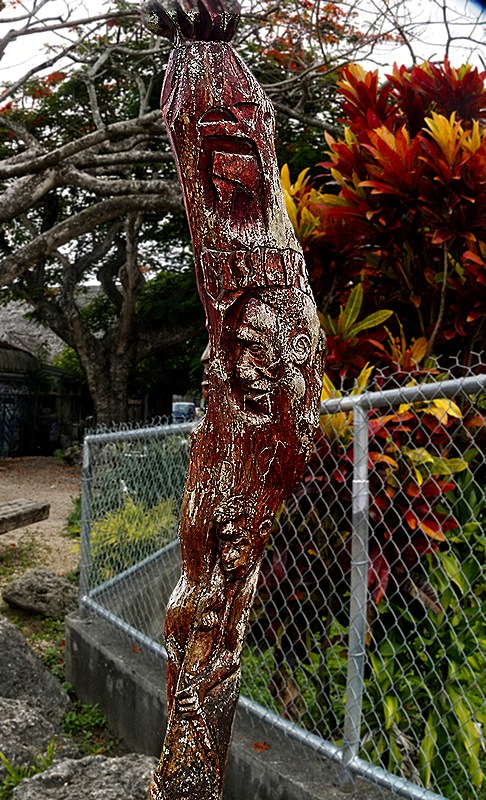
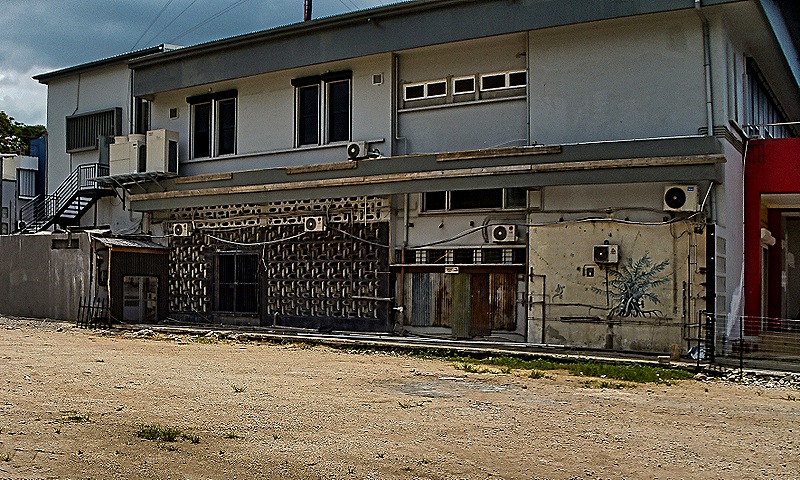
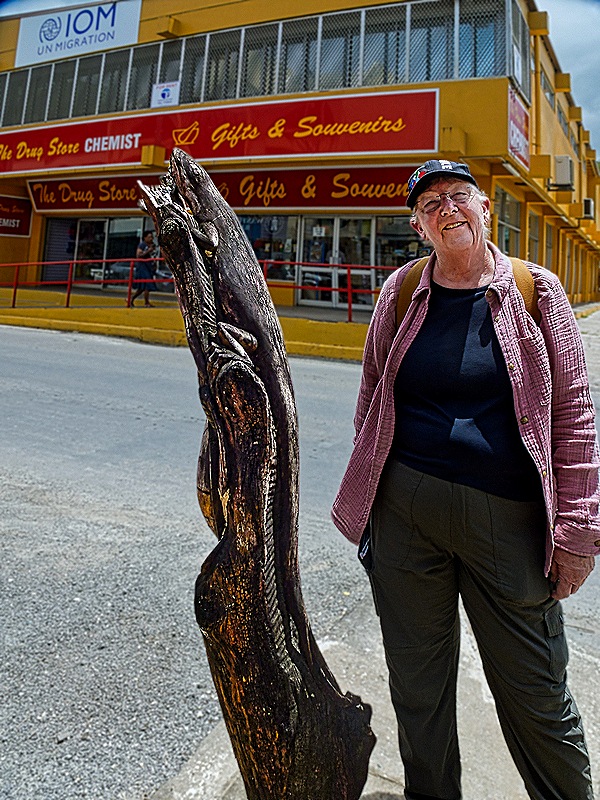
We wandered down the street through the business district filled with what seemed to us like nondescript box-like buildings. Of interest, though, were some wooden sculptures adorning the sidewalks.
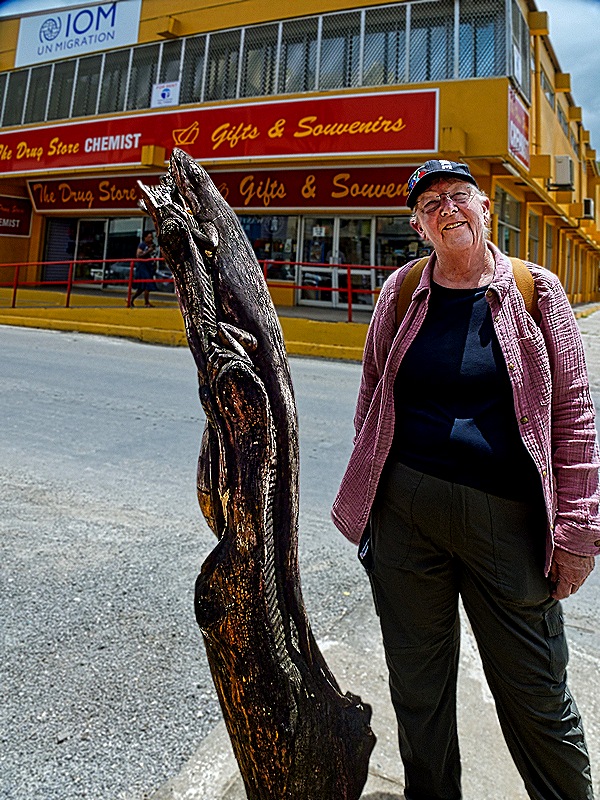
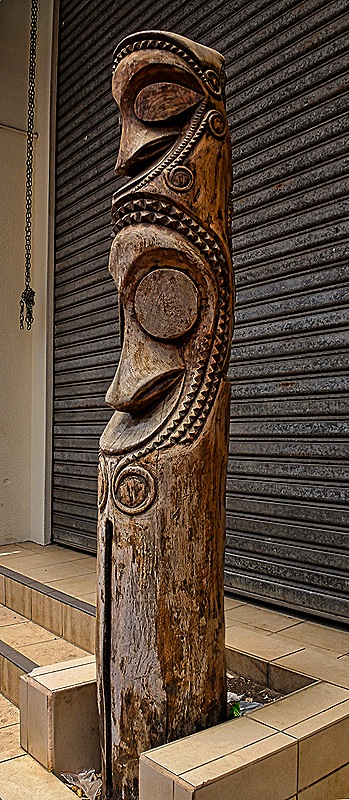
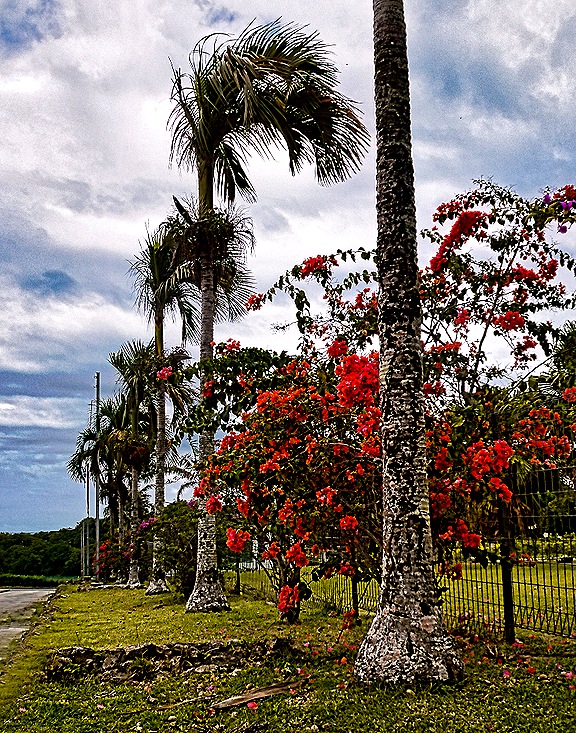
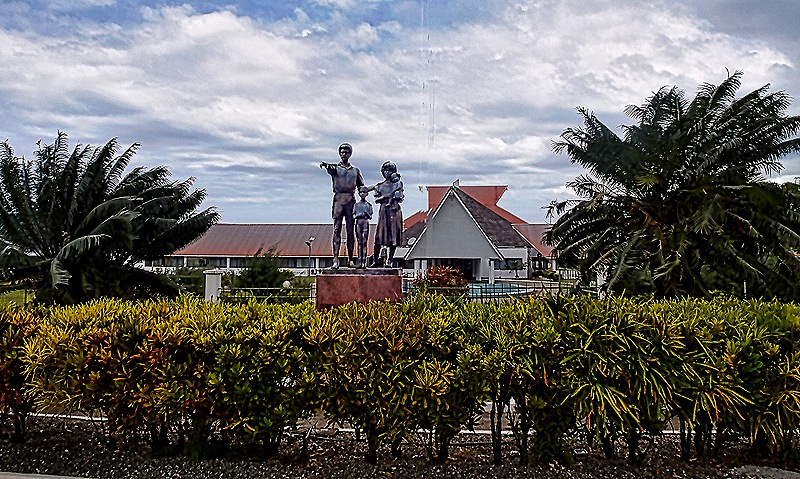
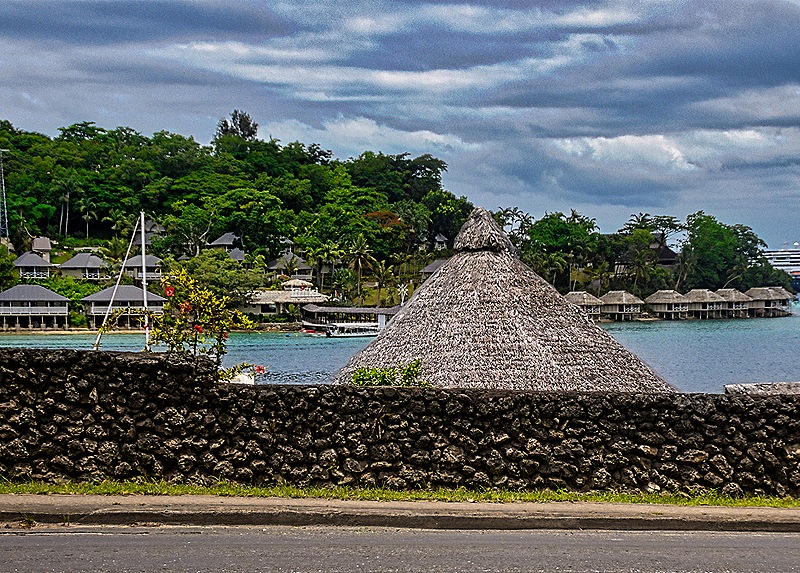
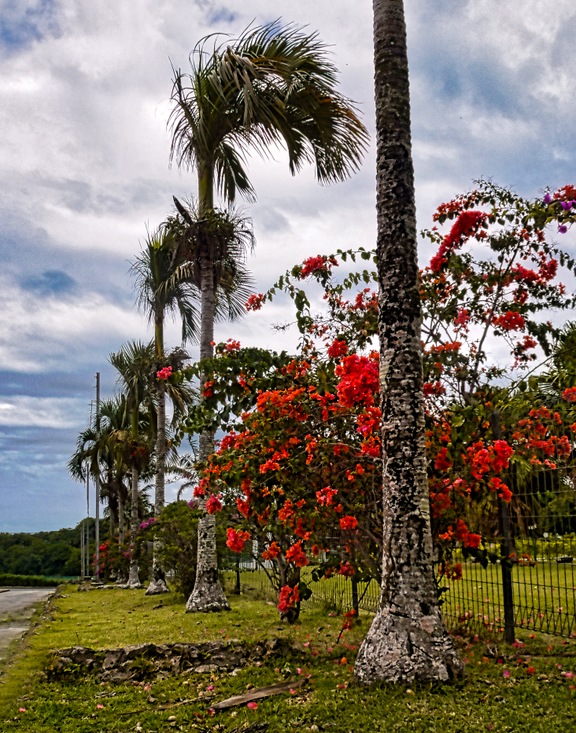
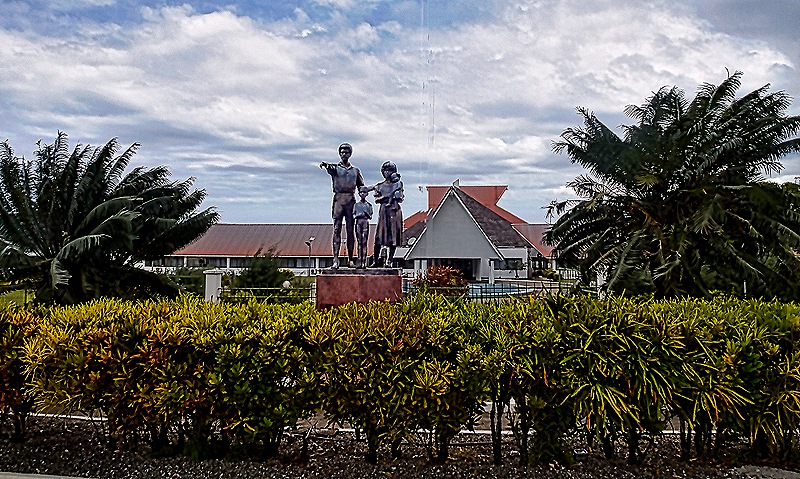
We wanted to visit the Vanuatu Museum so we began a long uphill walk to that area of town, made more challenging by the oppressive heat. Vanuatu has a lot of resorts and is a well known scuba diving area; we didn’t see anyone diving but we did walk past a place with grass huts built out over the water. We also walked past a large property lined with palm trees and bright red flowers and the Parliament House, where the Vanuatu legislature meets. In front of that building is a sculpture of a family called “United in Peace We Progress.”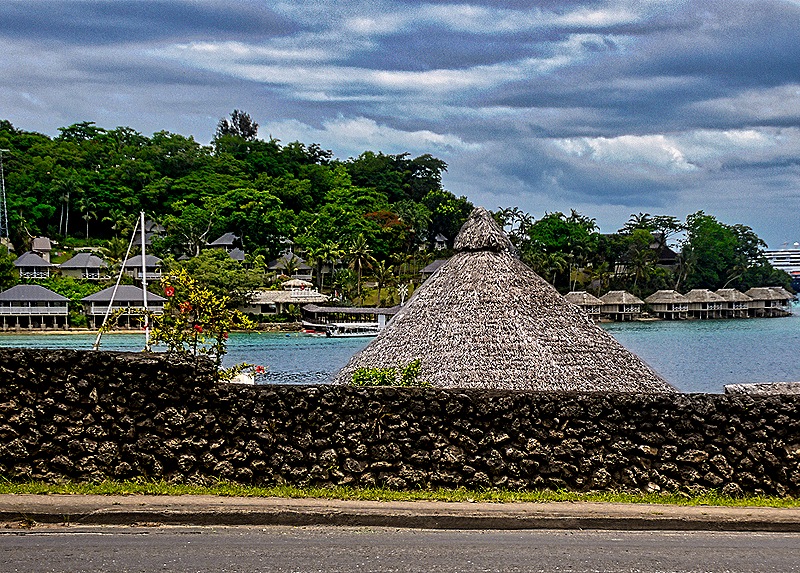
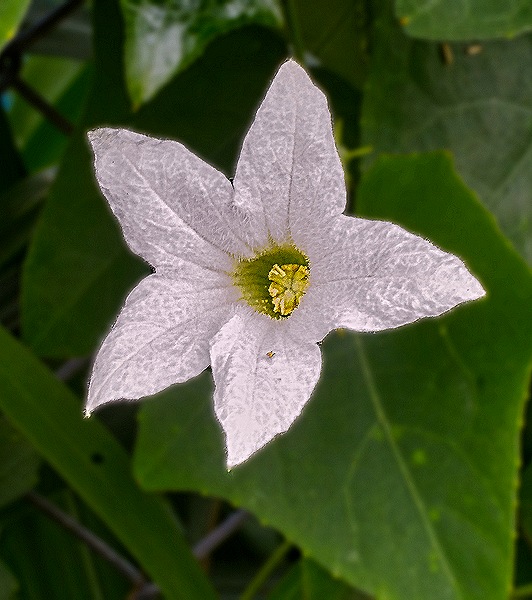
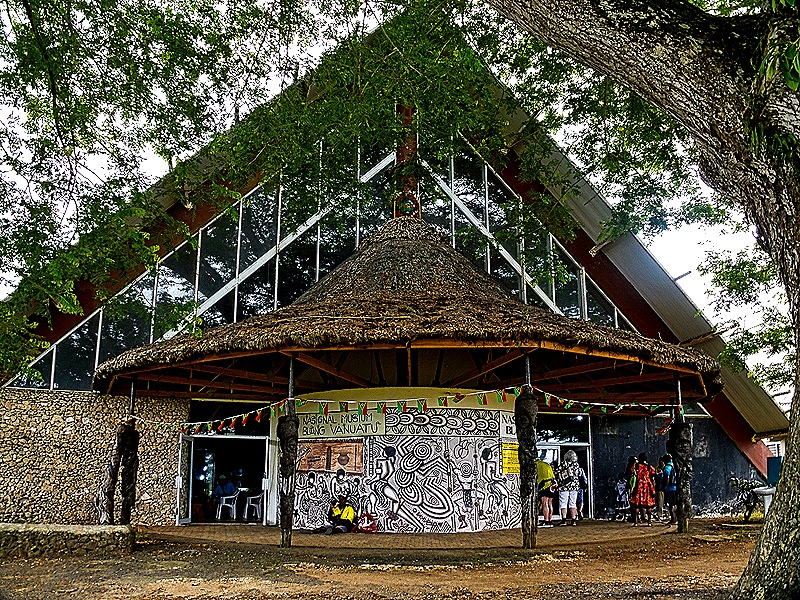
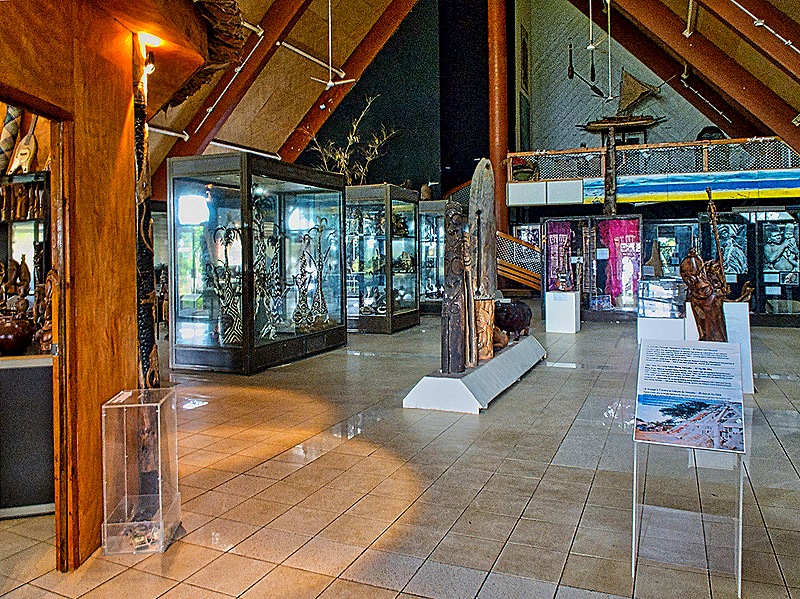
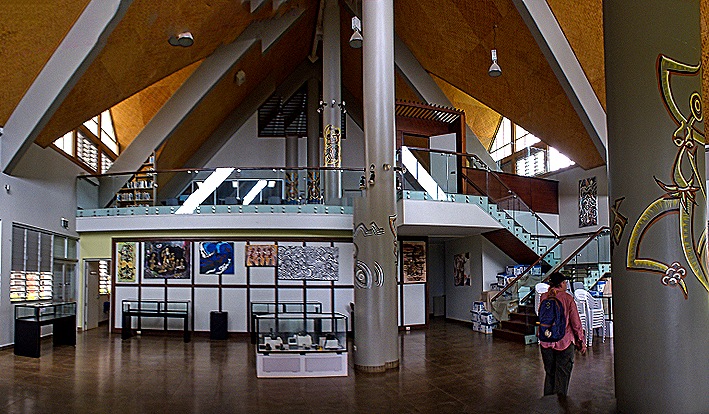
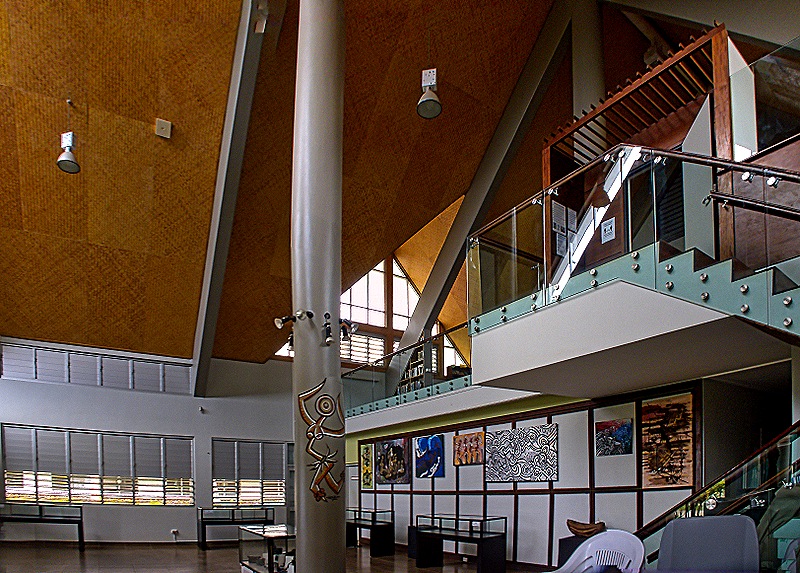
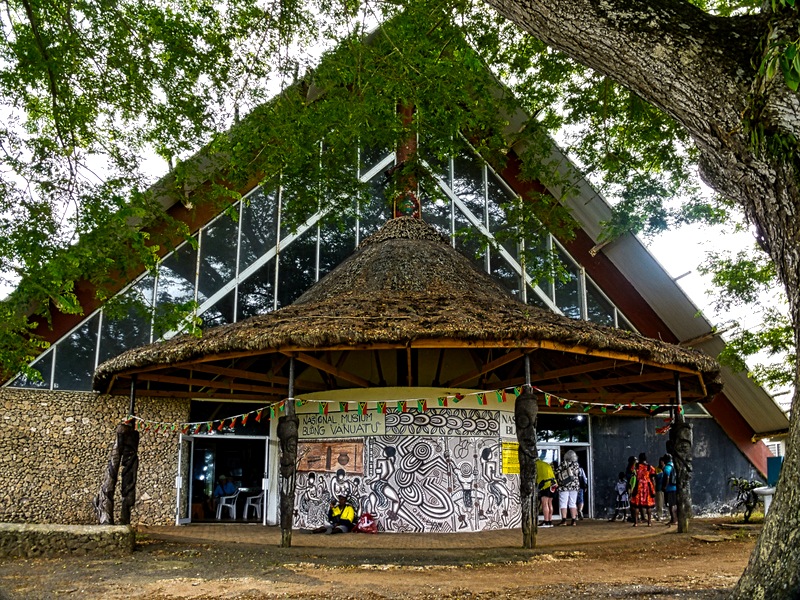
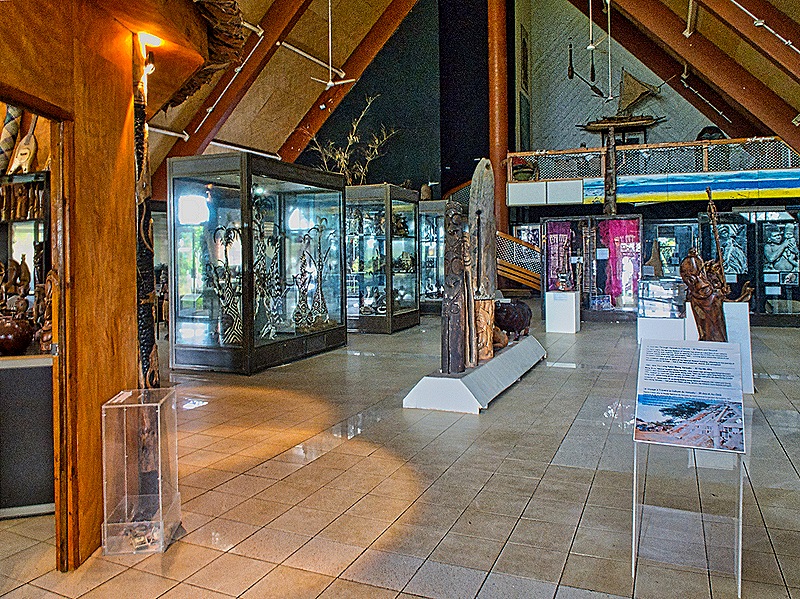
We still hadn’t found the museum, but after watching some other folks heading into a property across the street we followed and found the Cultural Center, founded in 1959 and moved to this location in 1995, which houses several institutions including the museum. As we approached our friend Roger was just leaving. He said the museum was very interesting, particularly the person inside demonstrating sand drawing, an indigenous art. But he told us they don’t take credit cards or US money to pay the admission fee, and he didn’t have enough local cash left to lend us some. We went up to the admissions window and confirmed that they would not bend this rule. We had no idea where we could get some local currency without another very long walk in the heat so we didn’t get to tour the museum, VERY disappointing after the hot uphill trek to see it! We got one picture of the front room through the glass door and walked on. Happily the National Library, which includes a public library, was in a building very close by. They were closing for the lunch hour when we arrived but they let us step inside and look around the front hall. A very impressive modern building. For some reason (senior moment?) Rick took some pictures inside the library but not of the outside. It’s front looks a lot like the front of the museum building below.
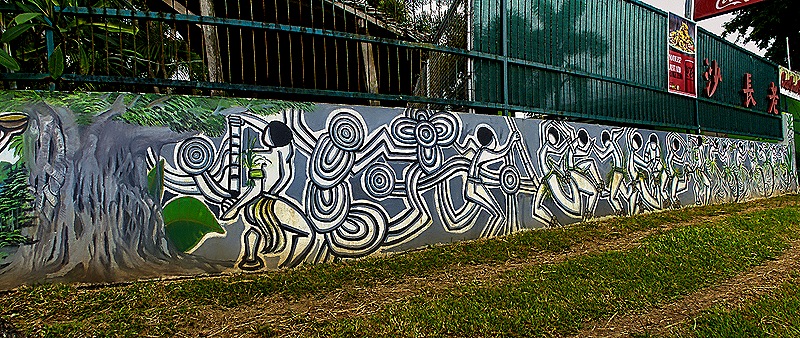
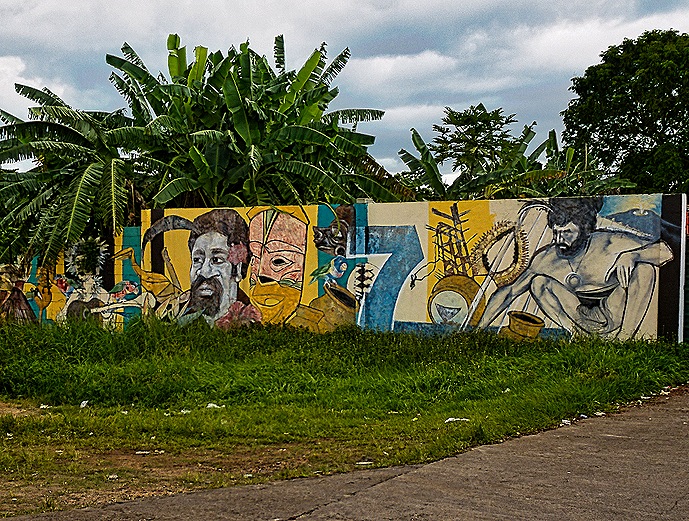
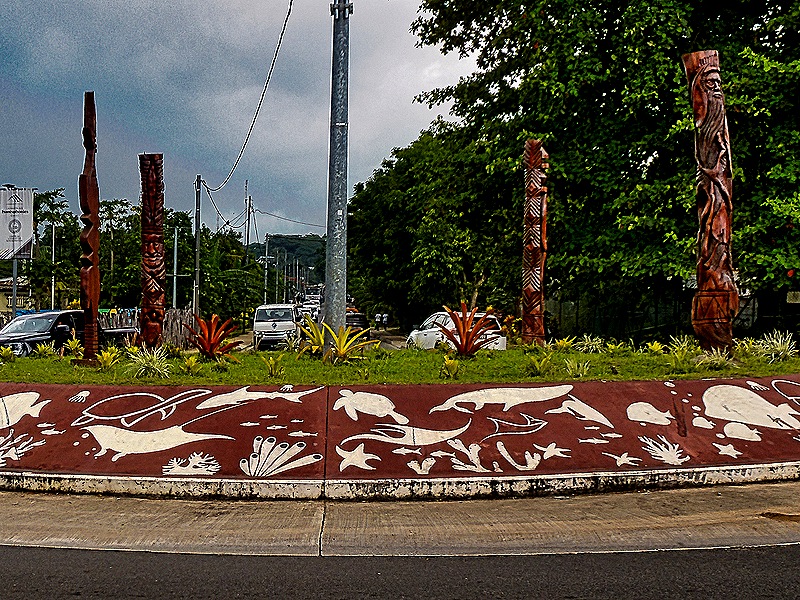
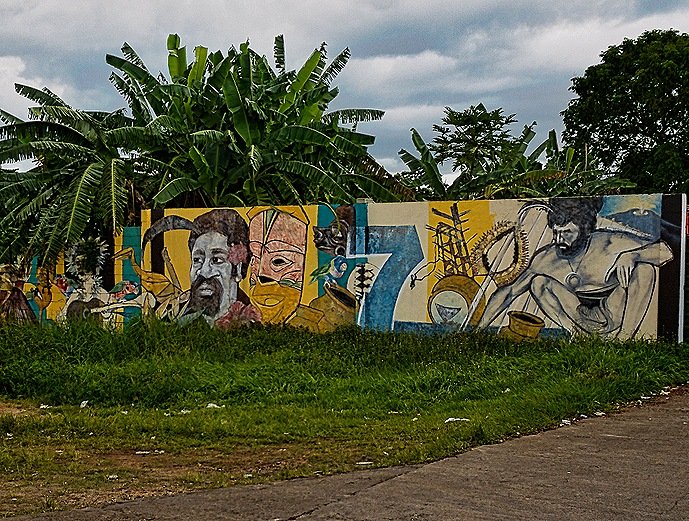
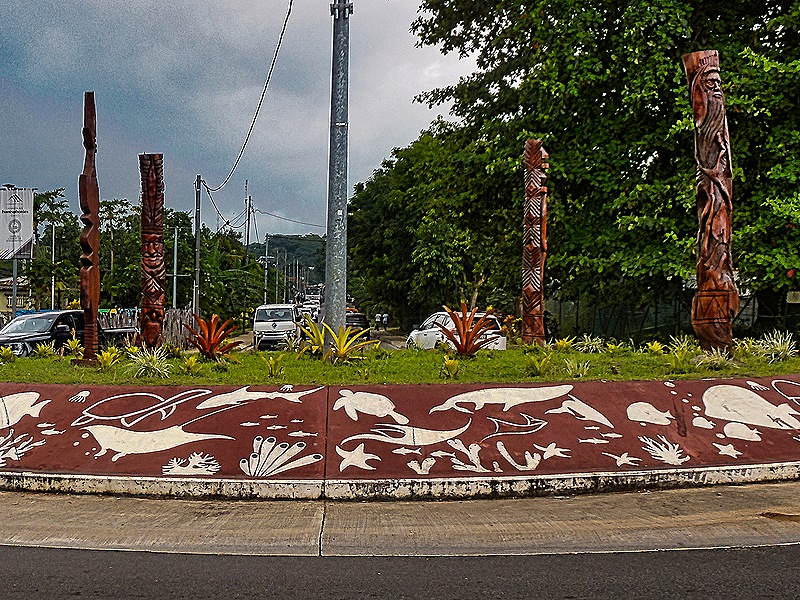
Walking back down to the main street we passed several interesting wall paintings and a traffic circle ringed with drawings and with four totem poles in the middle. The traffic had picked up and there was no light or stop sign at the intersection, but drivers politely stopped for us to cross. The people of Port Vila in general seem to be very nice and friendly, usually saying hello or waving as we passed by, in addition to stopping their cars to let us cross.
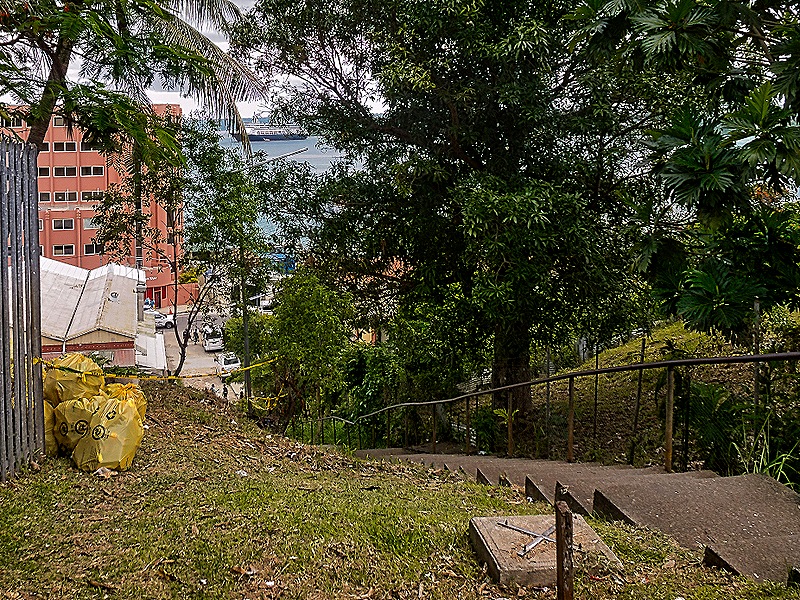
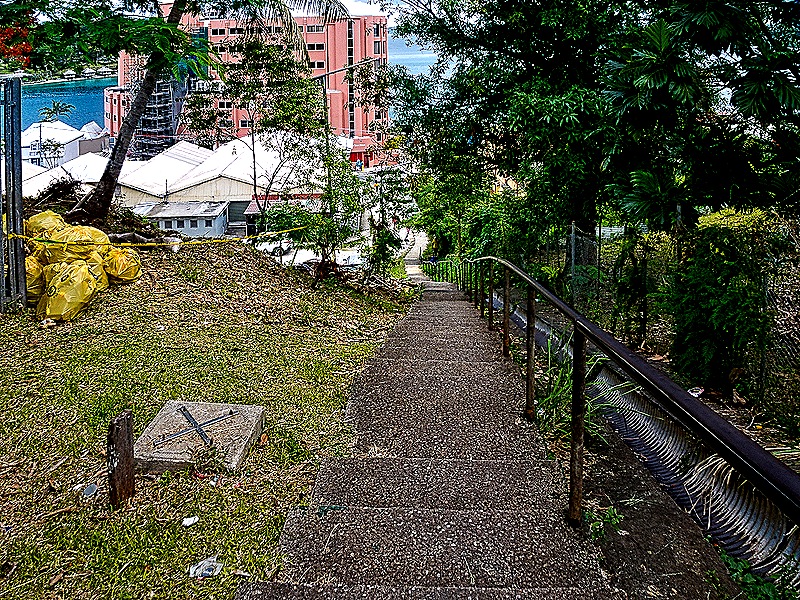
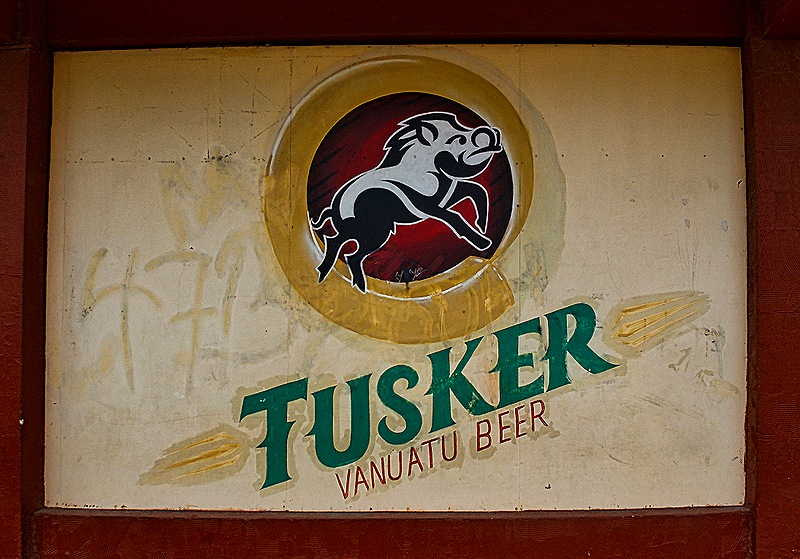
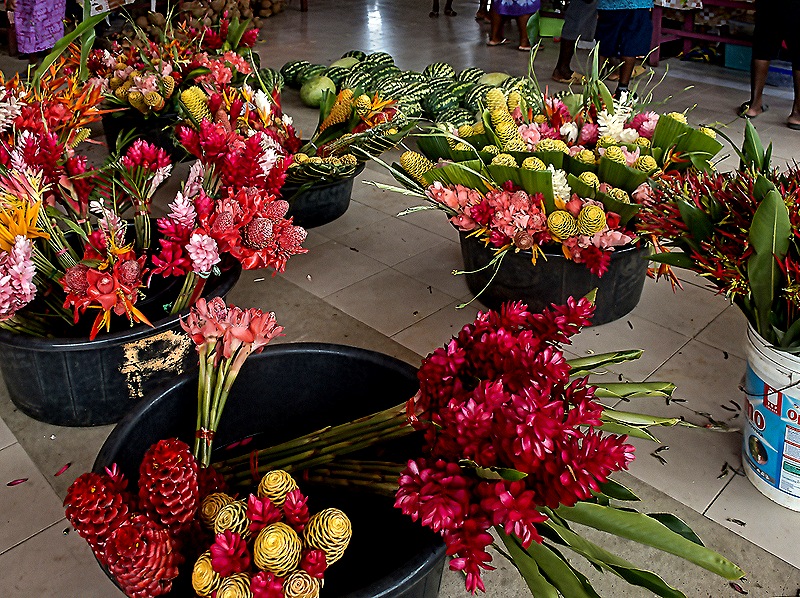
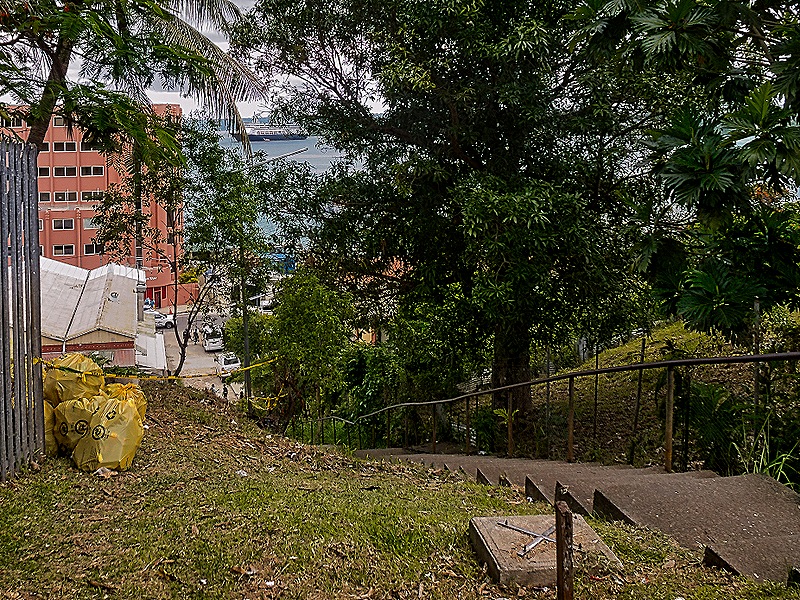
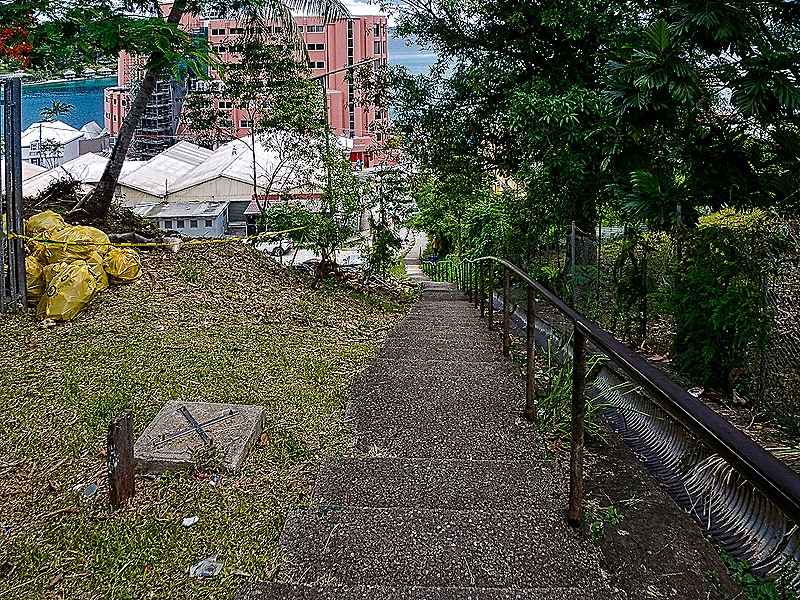
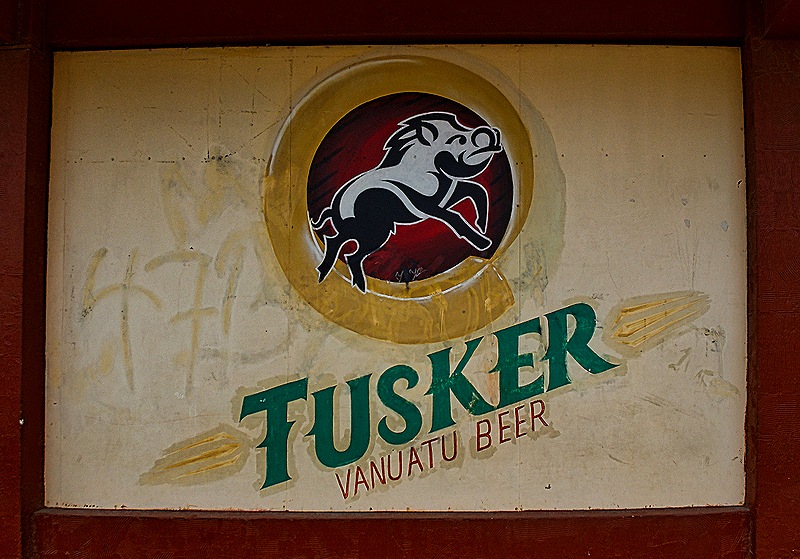
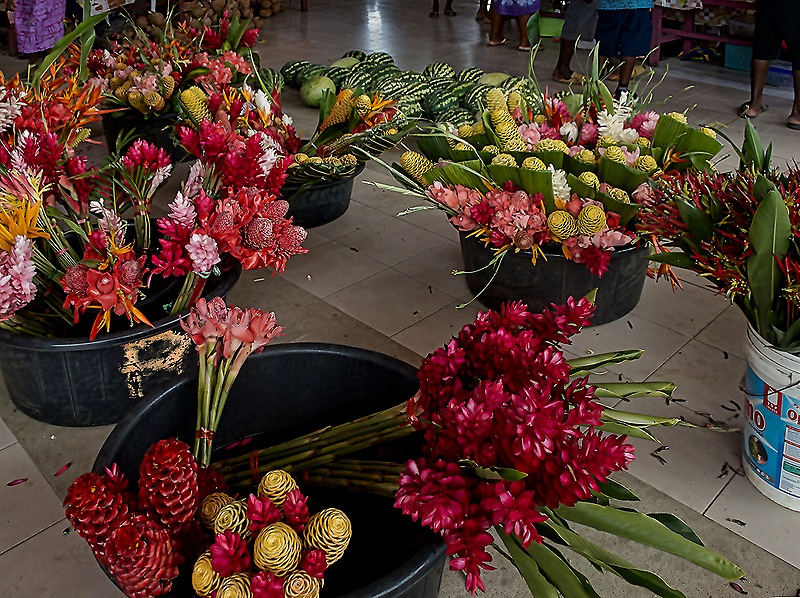
We came to a park with a very long and steep stairway leading down to the lower street level. We walked down the stairway and headed back to the tender dock. We passed a restaurant with a sign advertising the local beer, Tusker (a lot of pigs are grown in this region) and we walked through the large and mostly open Mama’s Market by the water’s edge, where food, handicrafts and even full dinners were for sale. We walked through an area in the market dedicated to very colorful flowers. Finally reaching the tender pier, we rode the next tender back to the Zaandam. Before dinner, as usual, we sailed away for the Solomon Islands.


Leave a comment