
Hobart & Port Arthur, Tasmania, Australia 2026
Hobart, Tasmania
We docked in Hobart on the morning of March 3, the first of two days in Tasmania. Once known as Van Diemen’s Land, Tasmania is a large island off the southeast coast of Australia that is also an Australian province. Hobart is its biggest city at about a quarter of a million and also its capital. The city dates back to 1804. We visited here the first time in 2018 and the blog entry for that visit includes many of the same places we visited again today (along with some we didn’t visit again) with background information we will try not to repeat too much here. You can see that Hobart visit here:
https://baderjournal.com/2018/06/29/hobart-tasmania-australia/
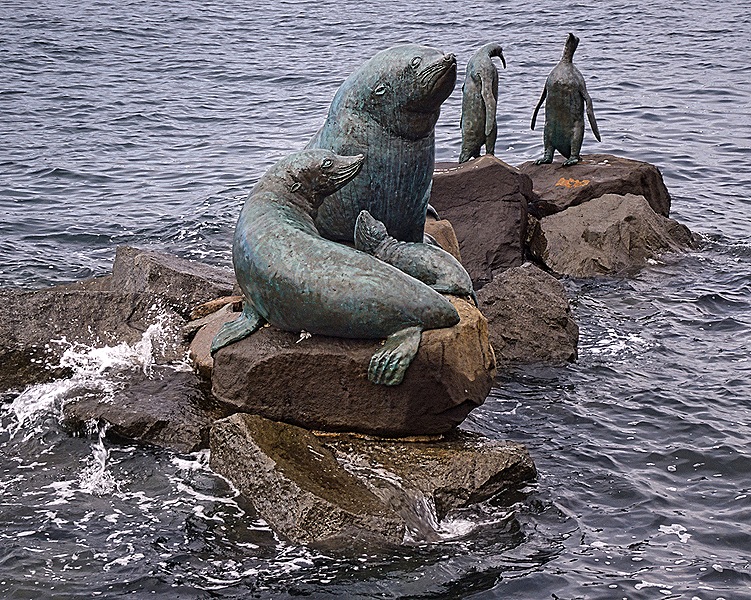
We didn’t have anything we particularly wanted to see here this time so we decided to spend our time in port walking around the city, since this is a very pleasant walking city. Accordingly, after breakfast we exited the ship and walked along the water around the edge of the port. Hobart, which is closer to Antarctica than to Perth in Western Australia, is considered a “gateway” to Antarctica. As we walked along the waterfront we encountered a set of bronze sculptures collectively called “Heading South” that commemorate Hobart’s Antarctic connection. Antarctic explorer Louis Bernacchi, the first Australian to winter in Antarctica in 1898, is shown taking a self portrait with his dog Joe. Nearby are sculptures of penguins and seals standing on rocks in the water. These were all installed here between 1998 and 2002.


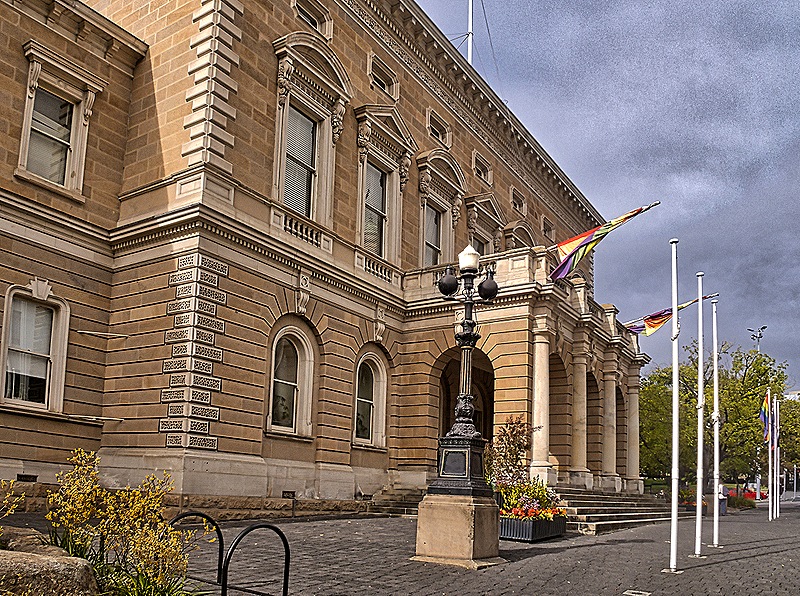
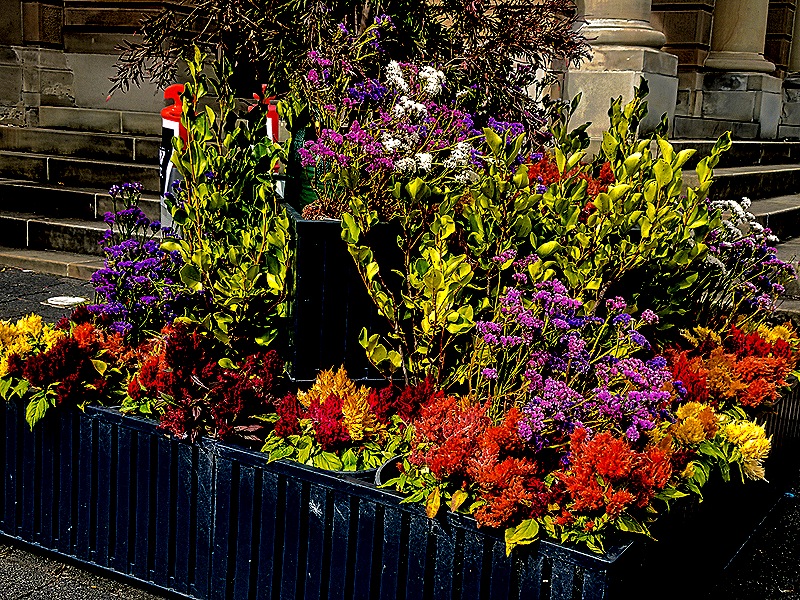
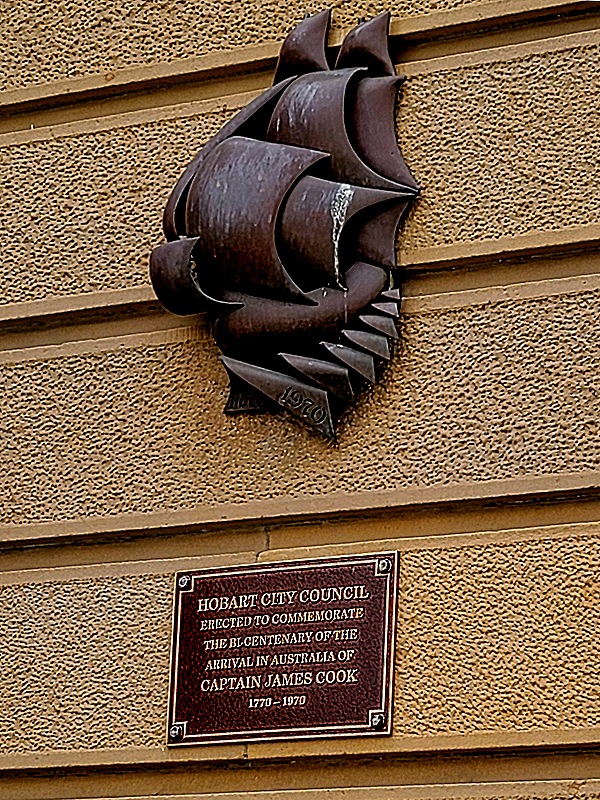
We walked on for a while, visiting a few shops and passing replicas of the wooden huts used by Sir Douglas Mawson during his 1911 expedition to Antarctica (the originals are still in Antarctica). Eventually we came to the Hobart Town Hall, the seat of the city’s government. The building has been used for this purpose since 1866. Some very bright flowers were planted in boxes in front of the building and on one wall was a modest memorial to Captain Cook that was installed in 1970 on the bicentenary of his first visit to Australia.


Not far from the town hall we came to Franklin Square. Established in the 1860’s to be a public meeting area in the center of town it has often been a venue for political demonstrations. The centerpiece of the 1.6 acre park is a fountain topped by a statue of Sir John Franklin for whom the park is named, an Arctic explorer and public official of Van Diemen’s Land during the 1830’s and 40’s. In the park was a clever sign warning about the current state of the internet.


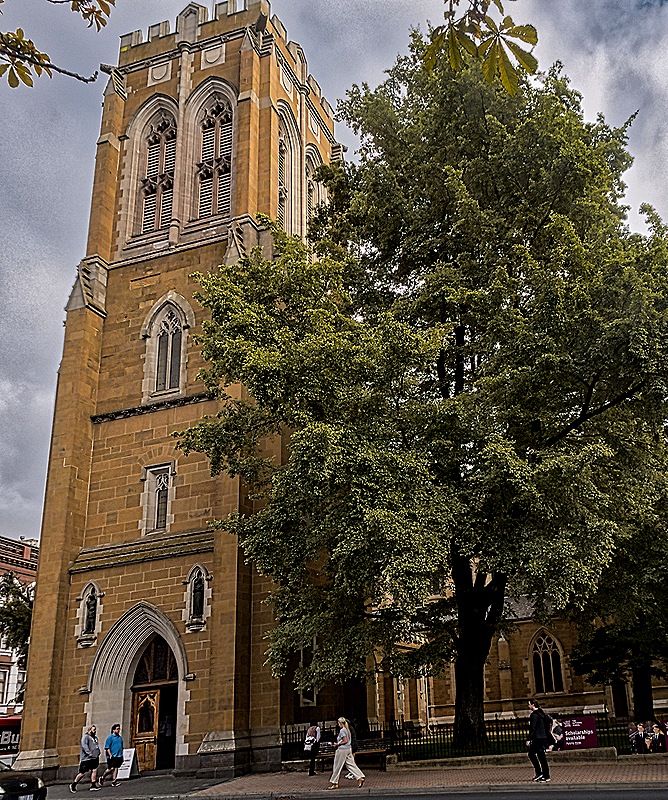
We headed toward the library but on the way we walked past St David’s Cathedral, seat of the Anglican diocese of Tasmania, and a sign indicating that Tasmania’s idea of a nutrition pyramid may be very different from ours.


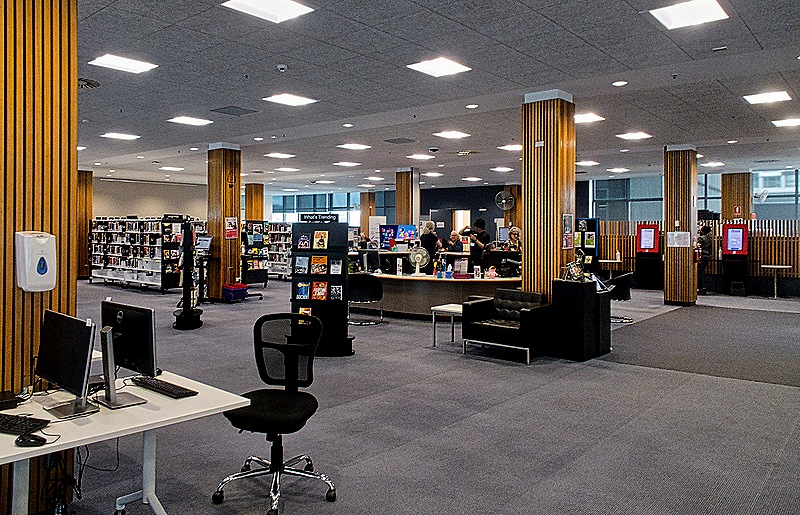
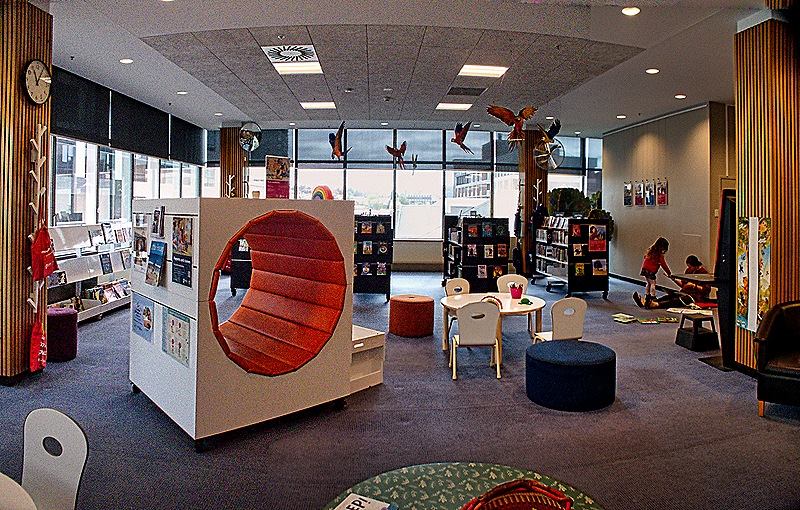
The library is in what looks pretty much like a nondescript office building. The building houses the State Library of Tasmania, a reference and research facility, and the Hobart Library, a public lending library. Hobart’s first library opened in 1849 and only served subscribers but was opened to the public in 1860. It closed in 1867 but a new public reference library opened in the town hall in 1870. Andrew Carnegie paid for the library to move to new quarters in 1907 with the requirement that a free lending service be established, and it has been in its present building since 1962. Inside the library was open and airy. On the ground floor was a museum mostly displaying furniture and other artifacts from early settlers, but it also had an interesting exhibit about how semaphores were the only means of communication with other communities in Tasmania in the early days. The librarian at the front desk was very welcoming and quite interested in the voyage that brought us here.


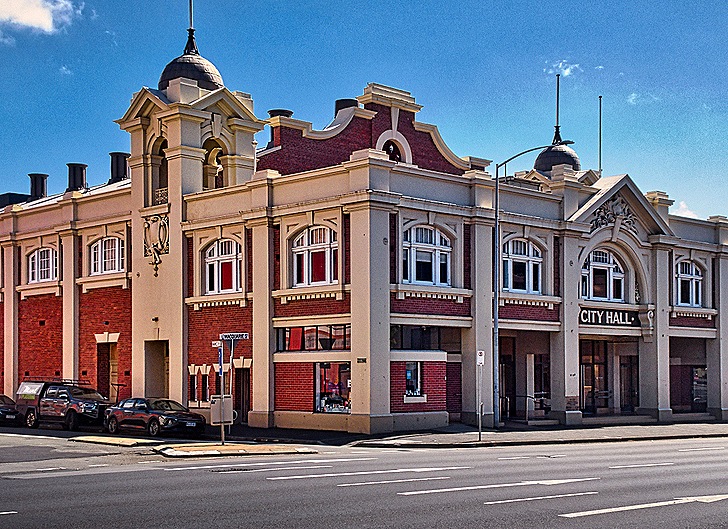
Not far away we came to the rather distinctive City Hall, Opened in 1915 in what was previously a market area, this is not a government building despite the name. It is a venue for sport and entertainment events, having hosted over the years boxing matches, basketball tournaments, silent movies, a ball for Queen Elizabeth and the Miss Australia Grand Finals. We were pretty confused when we spotted it, having already visited the town hall, which is actually the seat of Hobart’s government.


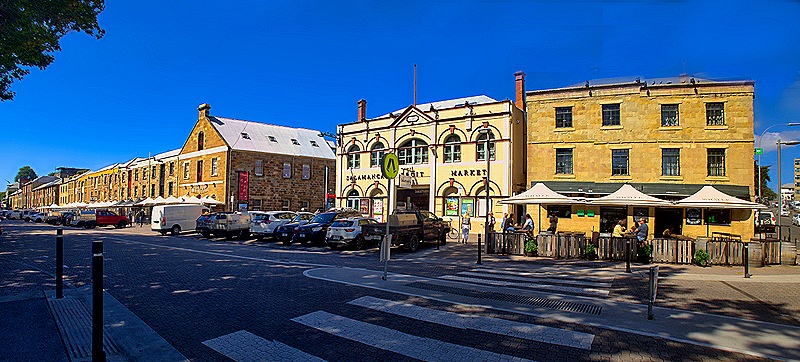
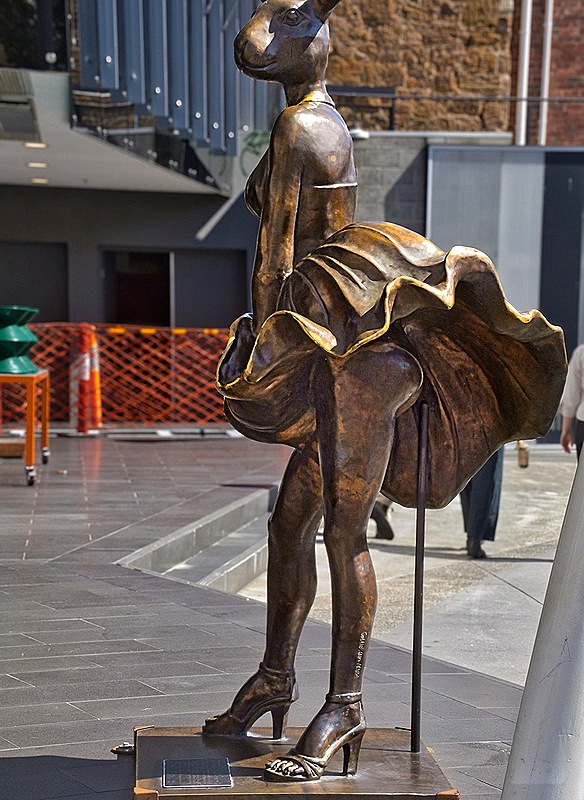
It was a fairly long walk to get to Salamanca Place. This venue consists of rows of buildings that were once warehouses for the port but have since the 1990’s been converted into shops, and restaurants. There are several narrow pedestrian lanes between sets of buildings and large open squares among the buildings with small apartment buildings and hotels as well as shopfronts, sculptures and fountains. We had been here in 2018 and actually bought something at a yarn store that we managed to find again today. One side of a square in which we sat down for a few minutes was a rock wall that we understand used to be part of a quarry. One sculpture, called “Happy Birthday Mr President” resembles a famous photo of Marilyn Monroe standing in high heels above an air exhaust with her skirts billowing around her. Our picture, unfortunately, only reaches the top of her head and not the bunny ears sprouting out of it. Several buildings on one side of the complex constitute the Salamanca Arts Centre.


We were getting tired and hungry so we headed back along the waterfront toward the ship. We had fish & chips for a late lunch at a place called Mares Seafood where we had eaten in 2018, which is in a building quite close to the dock. It was (as always in Australia) very good and afterwards we stopped for some gelato at a window on the side of the building. So ended day one in Tasmania.
Port Arthur, Tasmania
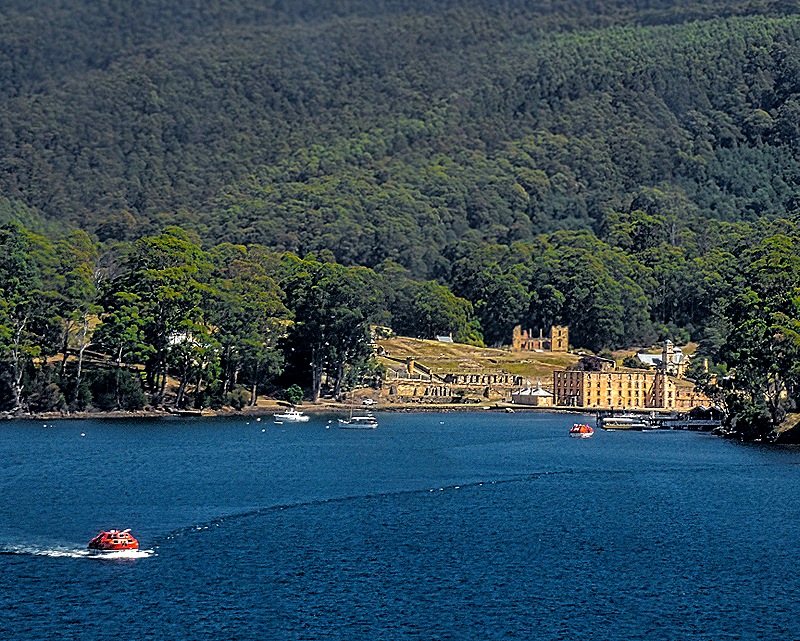
On the morning of March 4 we were anchored in Carnarvon Bay by Port Arthur, just 60 miles from Hobart. In fact they are so close that you can usually take a ship excursion here from Hobart, but since the ship was coming here the next day we didn’t. When we visited Tasmania in 2018 we were scheduled to stop at Port Arthur after Hobart but were forced to skip it because of a cyclone (which we were caught in anyway, quite an adventure in itself). The thing to see here is the old penitentiary for convicts transported from Britain.

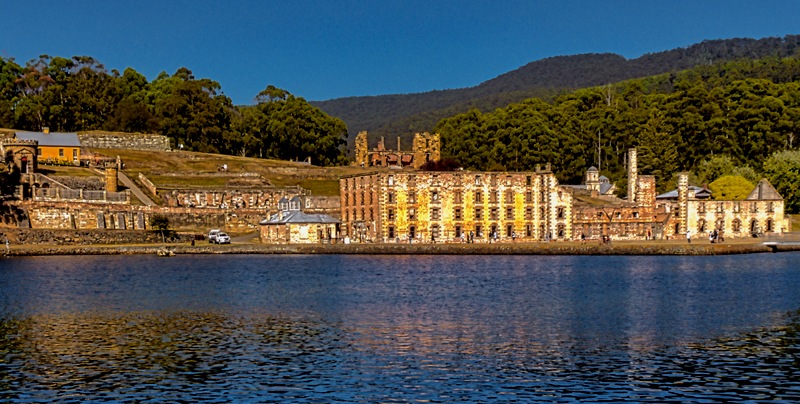
It was a beautiful day as we tendered to the dock on shore a little way up the shore from the prison. We walked up to the visitors’ center and took in the informative but disturbing displays there, some of which appeared to be of questionable accuracy, then walked down the hill to the prison area. Port Arthur began in 1830 as a timber settlement but by 1833 it had become a penal colony focused on repeat offenders among the convicts transported from Britain. While these were described as hardened criminals, it should be remembered that many offenses that would be considered minor today were treated much more harshly at that time, with relatively small thefts often being punished as capital crimes. Port Arthur involved harsh punishments but also incorporated what was considered more enlightened concern with rehabilitation, although some of the psychological techniques for that proved quite harmful to prisoners’ mental health.
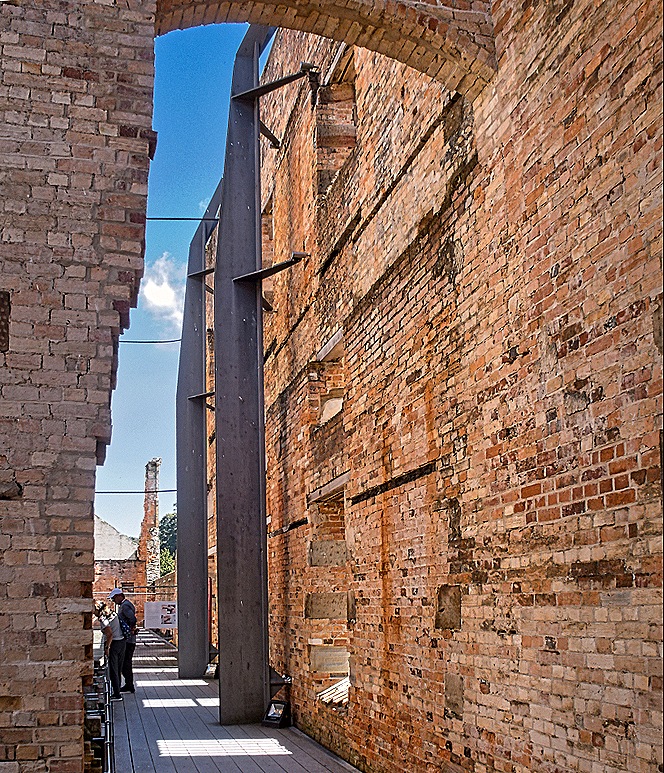
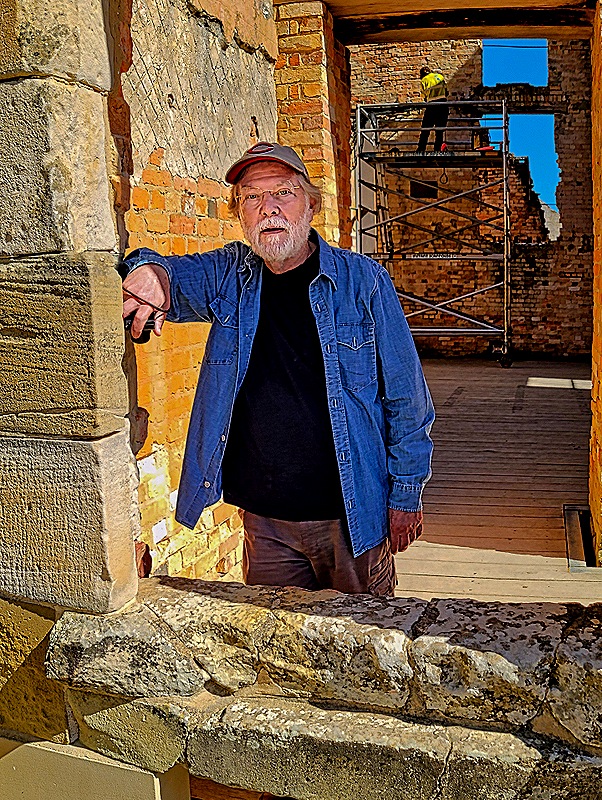
The prison was closed in 1877 and over the next few decades the buildings deteriorated, a process greatly exacerbated by two large fires during the 1890’s. While it had been something of a tourist destination for some time, in 1979 an effort to restore the site began (and seemed still to be active when we were there). In 2010 Port Arthur was one of 11 Australian prison sites designated collectively as a UNESCO World Heritage site. Today it has more than a quarter of a million visitors per year.
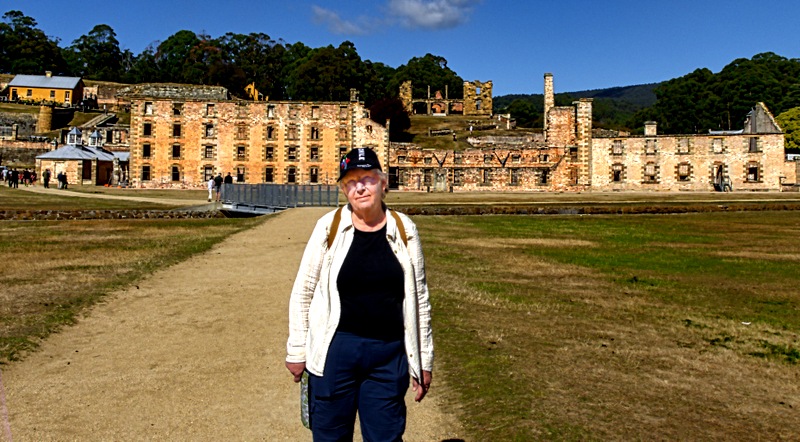
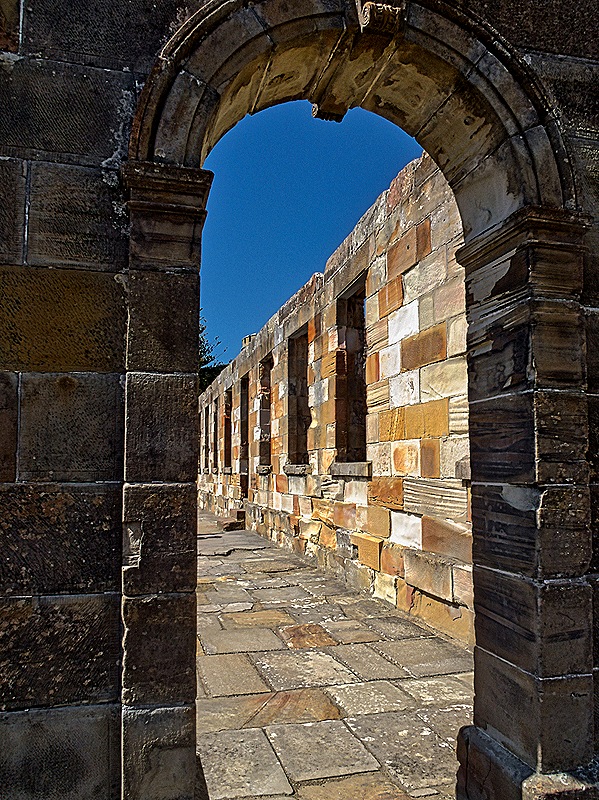
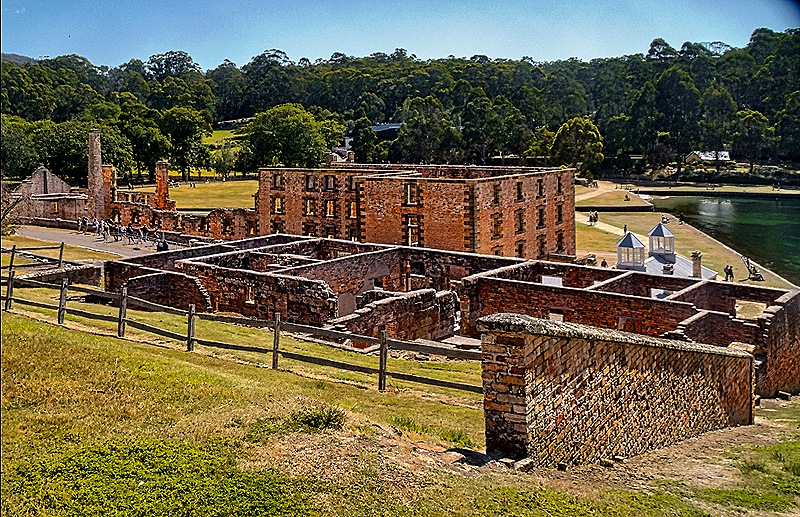
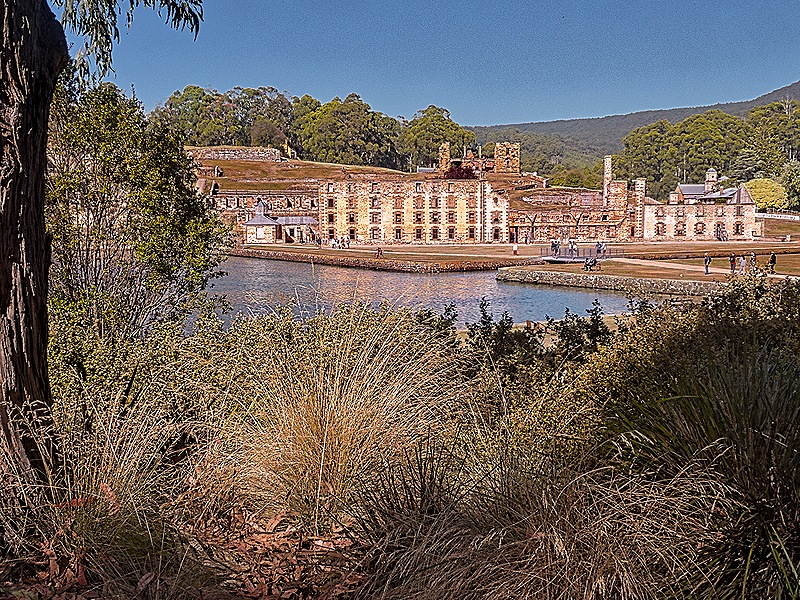
We began our visit in the main penitentiary building along the waterfront. Inside we saw the remains of some of the small cells on the first floor where difficult prisoners were kept in darkness and silence, often with hoods over their heads to eliminate all social and environmental contact. The theory apparently was that this kind of extreme isolation would encourage them to reflect on their misdeeds, but it actually caused deterioration of mental health.


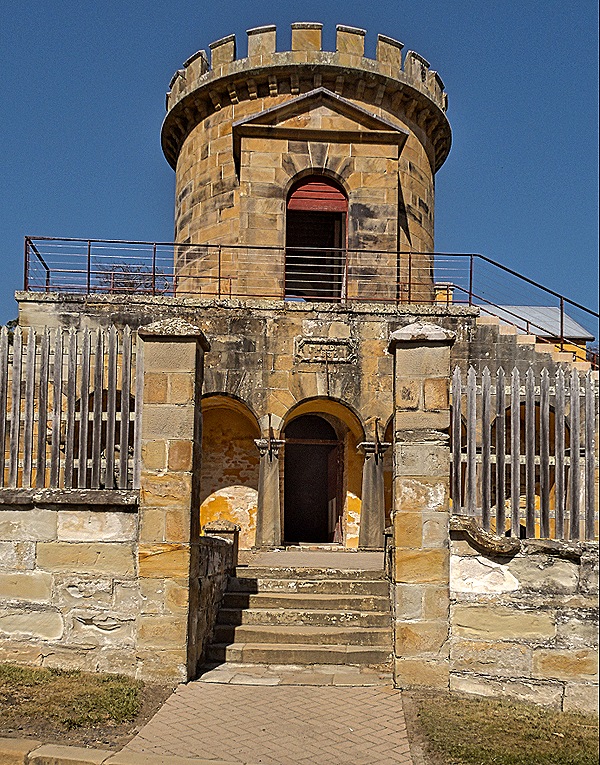
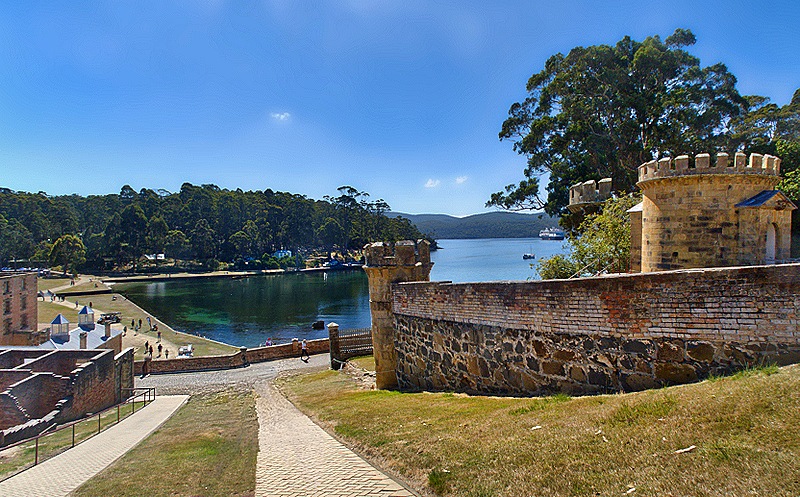
Overlooking the entire prison was the Guard Tower on top of a large retaining wall. It is round and fairly tall with a crenelated top, looking rather medieval. There are two smaller side towers in a similar style, one on each side. This was built in the mid-1830’s by inmates of an associated prison for boys not far from the penitentiary.


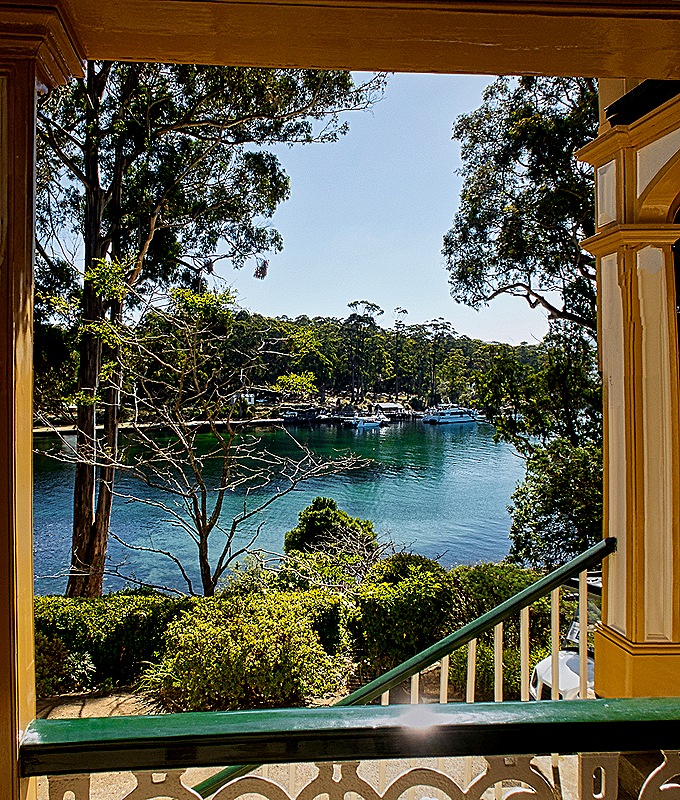
In the first picture of the guard tower above you can just see on the left part of the picture what we think is the Commandant’s House peeking over a wall. It was expanded in the 1840’s and briefly became the Carnarvon Hotel after the penitentiary closed. Rick climbed up and walked through the house, which was small but nice, its best feature being the view over the bay from the front porch. The Commandant lived well away from the convicts, strategically located with the guard tower between him and them.


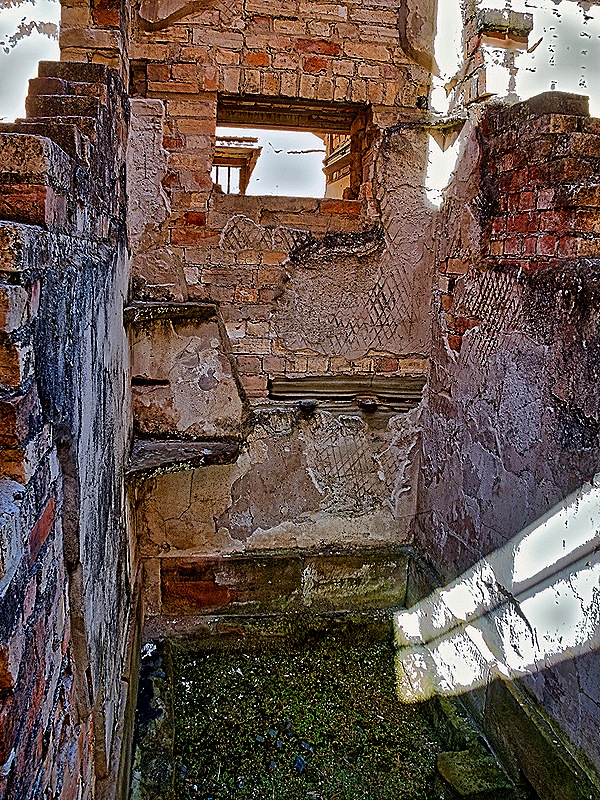
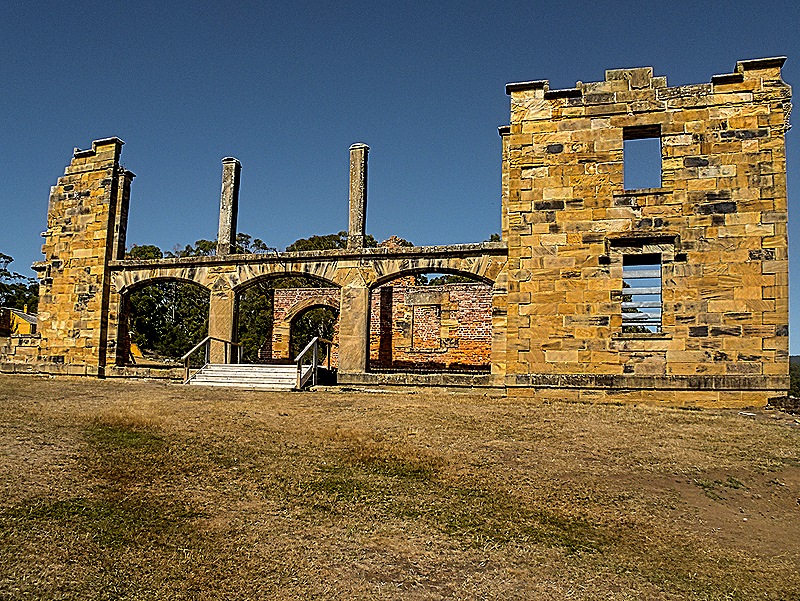
We walked further up the hill toward the hospital ruins. It was built in the early 1840’s and had a capacity of 70 patients, with soldiers and officers in a separate ward from the prisoners. The building was badly damaged in the fires of the 1890’s which left it pretty much in the condition it is seen in now. On the way back down the hill we saw the Law Courts building. New prisoners were lectured here on the prison’s rules and hearings on rule violations for all prisoners were held here as well.


Walking back down the hill gave us a different perspective on the buildings than we had on the way up. We had had enough of this rather depressing place, so we headed back to the tender dock, then to the ship. .That evening we sailed away from Tasmania.


 RSS - Posts














Leave a Reply