Taiohae, Nuku Hiva, French Polynesia 2o26
We spent the last day of March in Taiohae, the last port visited on this voyage. Nuku Hiva is the largest island in the Marquesas archipelago and Taiohae is its largest town and its administrative capital. Originally settled by Polynesians probably more than 2,000 years ago, it was first visited by Europeans in the 18th century, During the early 19th century missionaries arrived and it was visited by whaling ships. From one whaling ship in 1842 a young sailor named Herman Melville jumped ship and spent weeks living among a native tribe, turning his experiences into his first novel, called Typee, which was his most successful book during his lifetime. Like the rest of French Polynesia, the Marquesas were annexed by France in 1842. Missionaries and French authorities suppressed such longstanding traditions as tattooing, local languages and dancing. European diseases brought by visitors and settlers, particularly smallpox, killed some 90% of the native population by the end of the 19th century. The traditional culture did not begin to revive until late in the 20th century, although Christianity still retains its hold on the population which today numbers around 3,000, about two thirds of whom live in Taiohae. This was our third visit to Nuku Hiva. On our first visit we took a private tour around the island that was very interesting and quite beautiful. On our second visit we stayed in Taiohae, walking around the horseshoe shore of the bay to see the sights. You can see those days’ activities here:
https://baderjournal.com/2016/02/08/taiohae-nuku-hiva/
https://baderjournal.com/2018/05/14/taiohae-nuku-hiva-3/
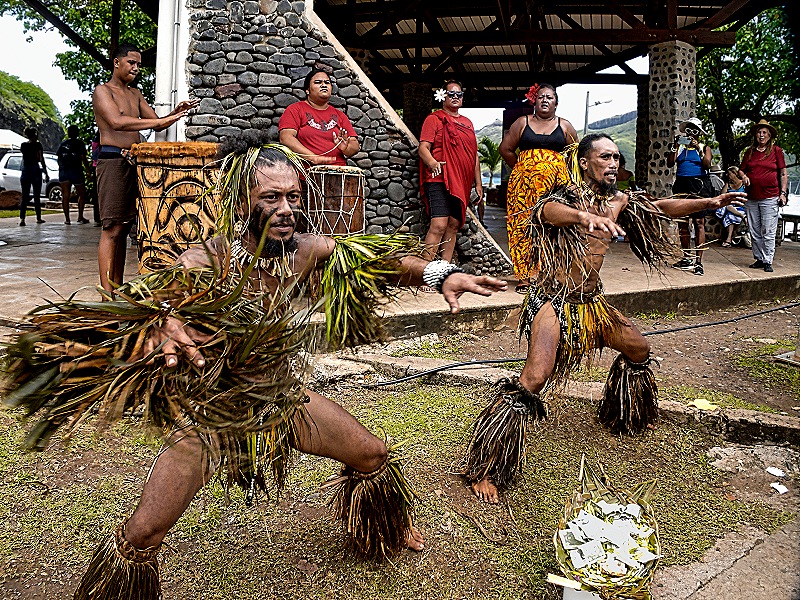
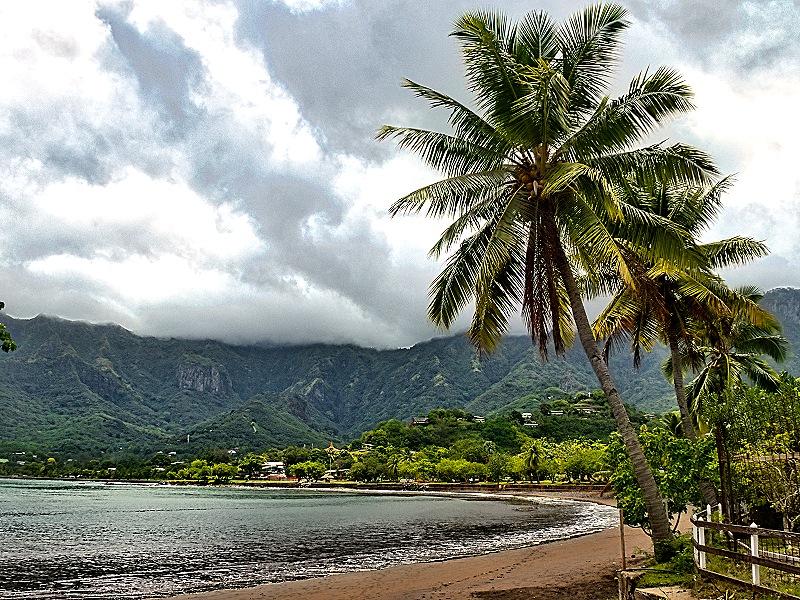
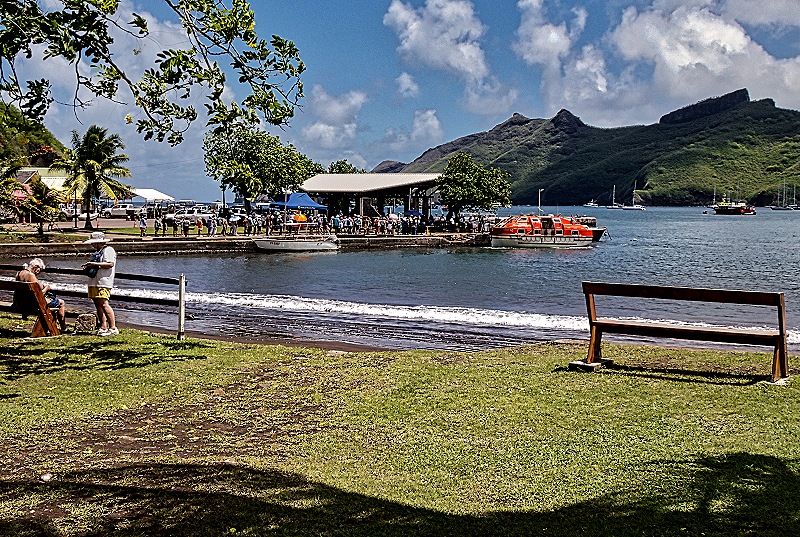
Public transport on Nuku Hiva is sparse, a handful of taxis and buses, and there were no tours on offer that were different from the one we took on our first visit. So we decided just to take the very short tender ride into the village and spend the day on our feet. When open tendering was announced we boarded the boat and headed into the small dock. On the dock we were greeted by musicians and dancers in traditional dress and there was also a nice view from there of the curved shore of the inside of the bay.


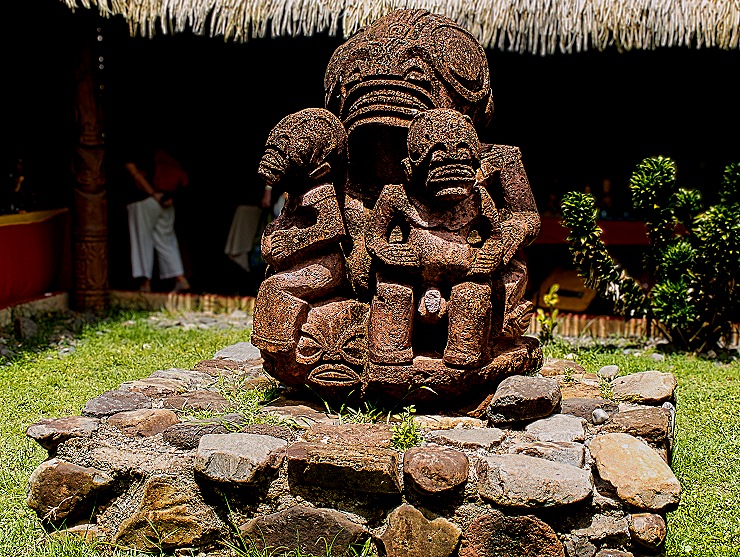
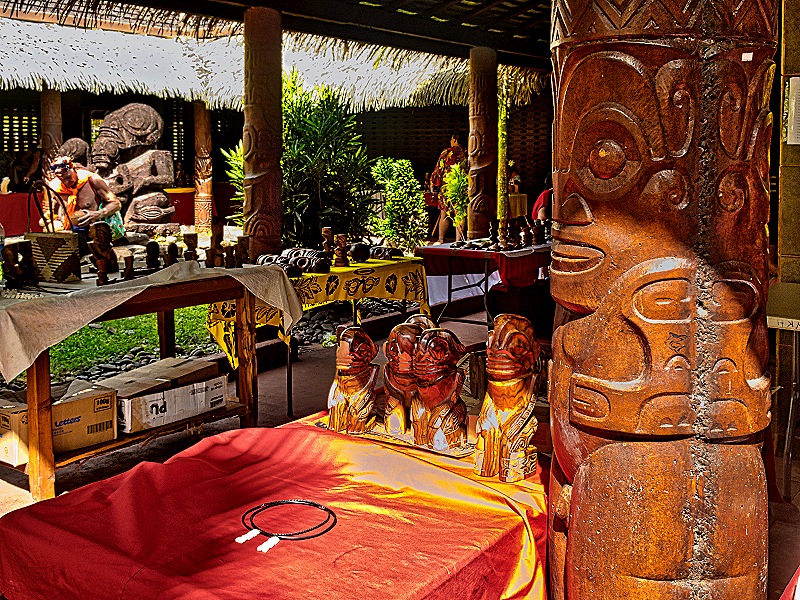
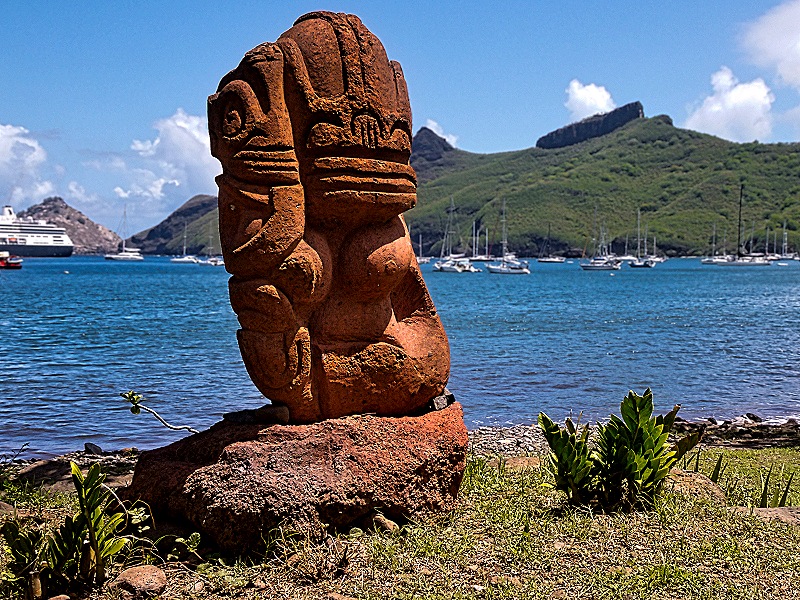
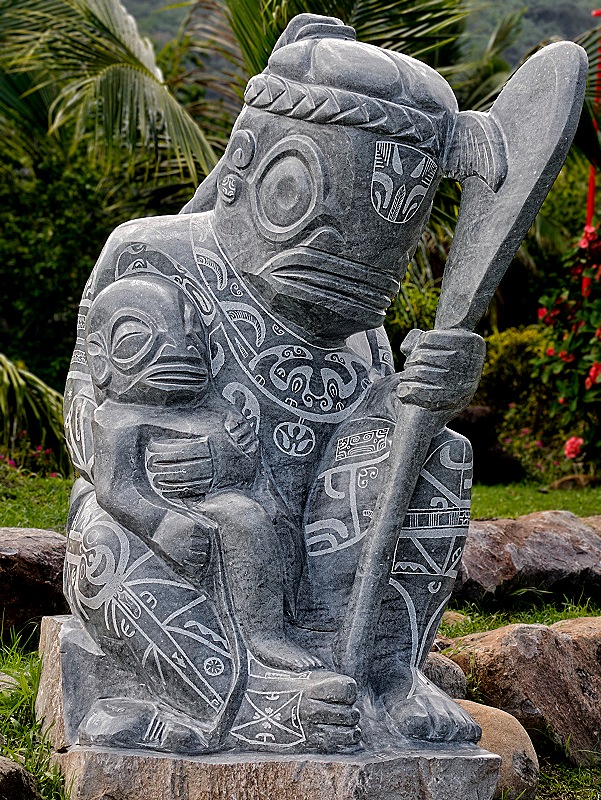
Nuku Hivans are known for their wood carving. In fact much of the carved wood you see for sale on other French Polynesian islands is reputedly produced here. Before leaving the dock we spent some time perusing the local wares in a couple of open sided buildings set aside for vendors. In the central courtyard of the vendors’ building was a large stone sculpture in a style characteristic of ancient Nuku Hiva, depicting what looks like a mother with two children. We don’t know whether this one is old or more recent in origin but we suspect the former.


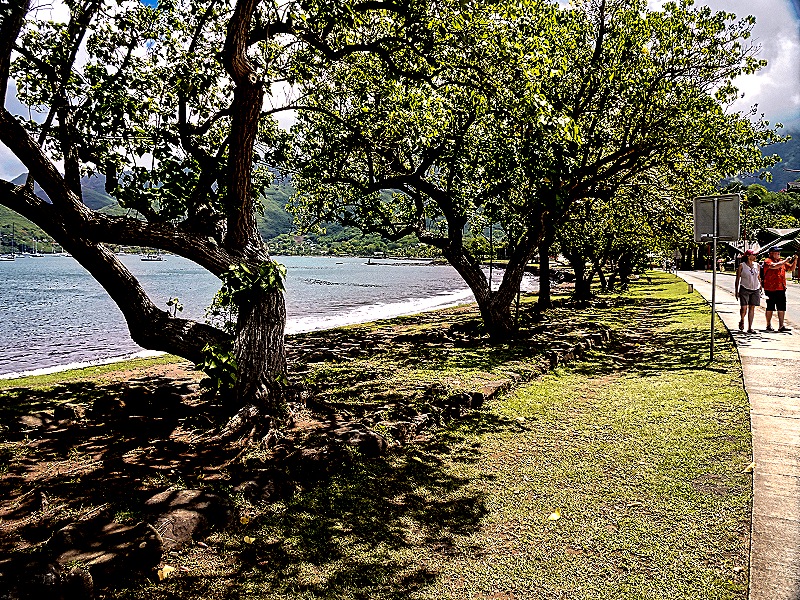
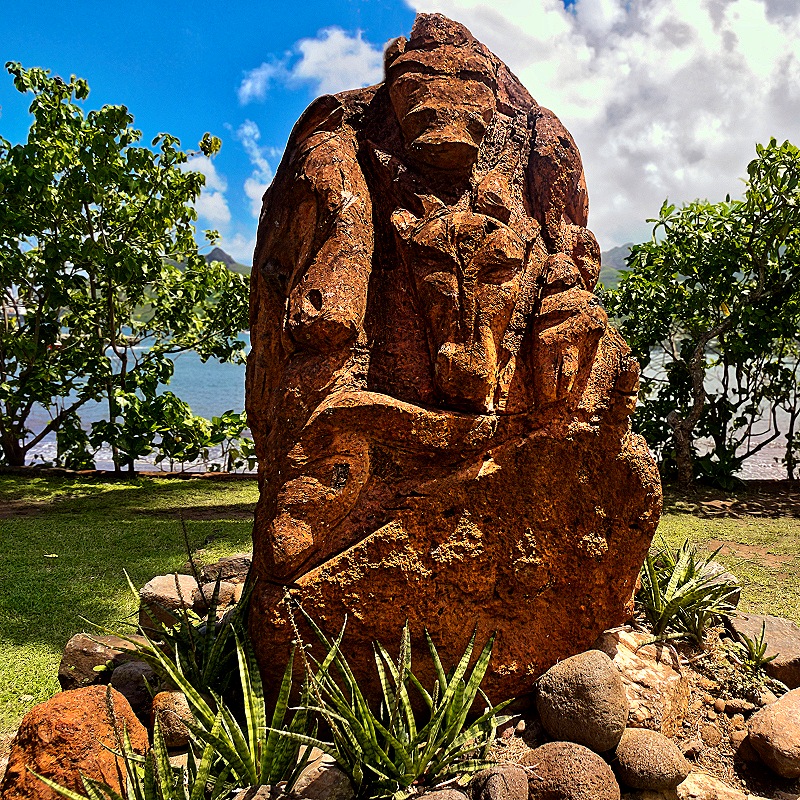
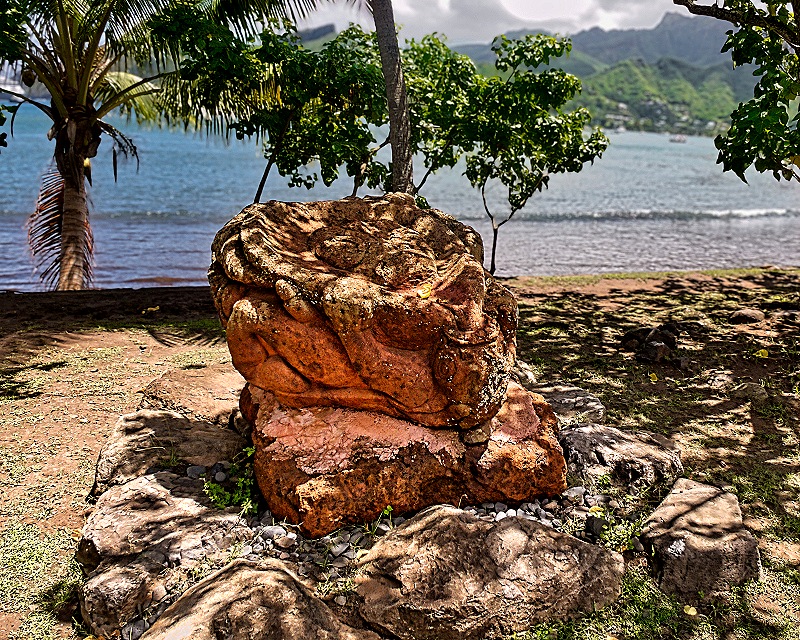
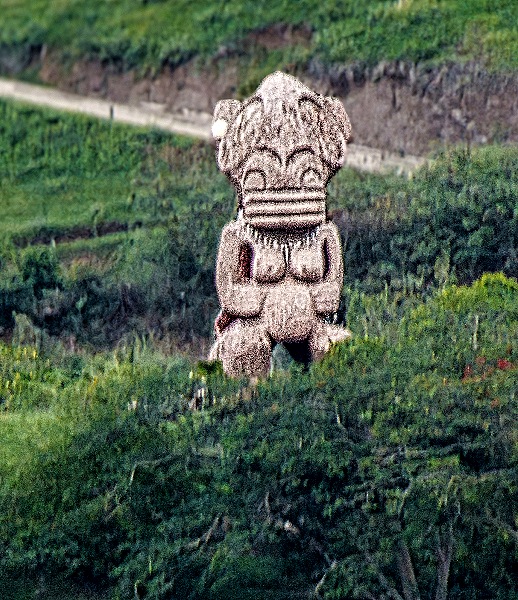
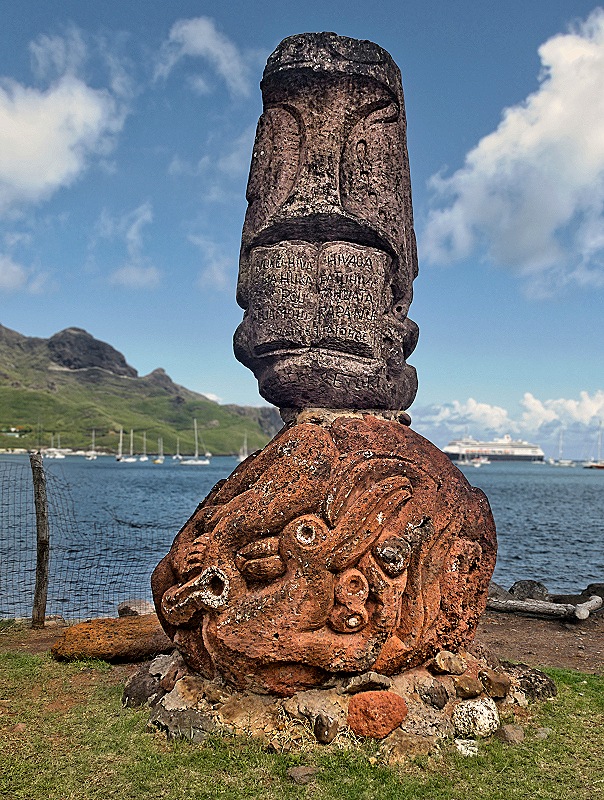
We wandered down the sidewalk that parallels the beach, with trees, bushes and flowers between them. On our first two visits there was an abundance of flowers but this time not so many, maybe because it was later in the year. The area behind the beach also hosts a number of large stone sculptures, in the same style as the one we saw at the handicrafts building. We have read that these sculptures were mostly carved in the 11th to the 14th centuries. While there are predictably some who think they depict ancient aliens, it appears more likely that they are deceased ancestors, chiefs or deities worshipped here at the time. The style is unusual, with large heads and eyes, wide mouths and other stylized touches. Quite interesting, particularly in their isolated locations along the shore area. While we assume that most of the sculptures we saw are of ancient origin, we aren’t sure because sculptures in the same style can still be made today. The last picture in this group is a view from the ship of a tall sculpture in the ancient style on a hill overlooking the bay that looks like it could be of more recent vintage.


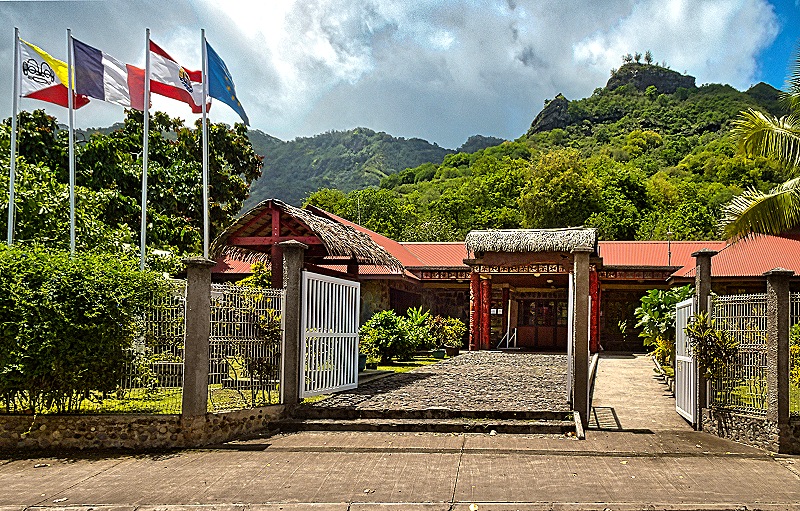
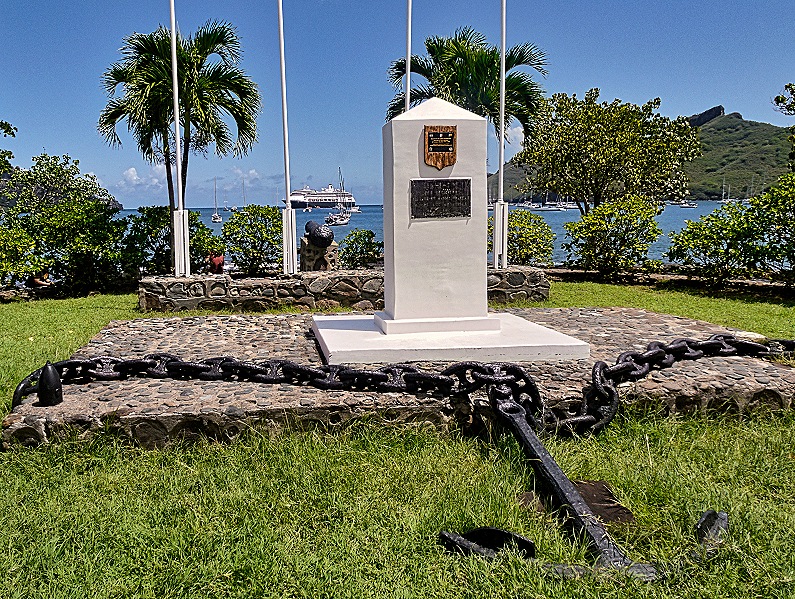
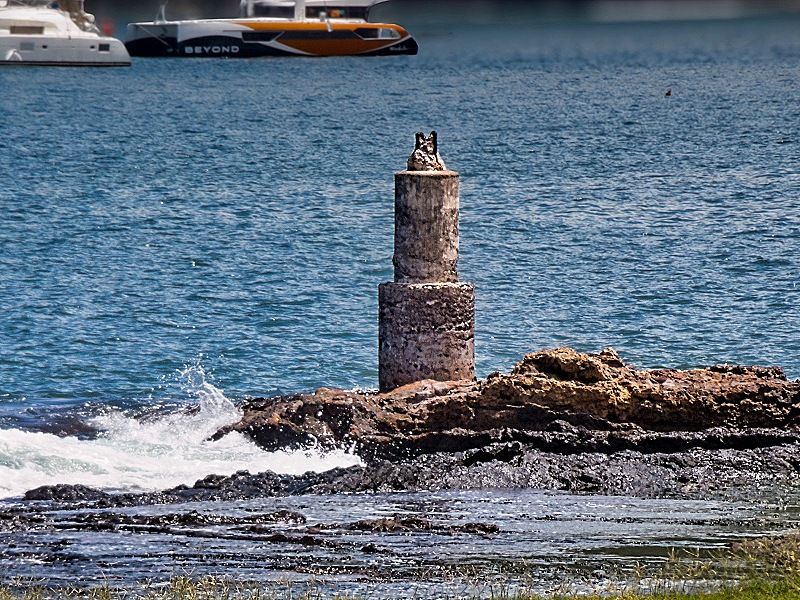
As we walked along we saw an interesting building on our right, which we thought was the town hall because a carved wood sign over the entrance says “Mairie,” which is French for town hall. However we did not go inside and we have read that others who did have identified it as a small jail (holding a maximum of four prisoners). It appears that a metal fence has been built around the building since our last visit, so perhaps it was originally the town hall and has been converted to a jail since? We don’t know. On the water side of the road near a cemetery was a small monument in the shape of a white obelisk. The original plaque says it commemorates “The French officers, soldiers and marines who lost their lives in the Marquesas from 1842 to 1925.” In 2025 an additional plaque was added to the monument commemorating the two Nuku Hiva soldiers who died during World War I fighting for France. In the water just behind the memorial sits the remains of an old French pier that was superseded by the dock we tendered to.


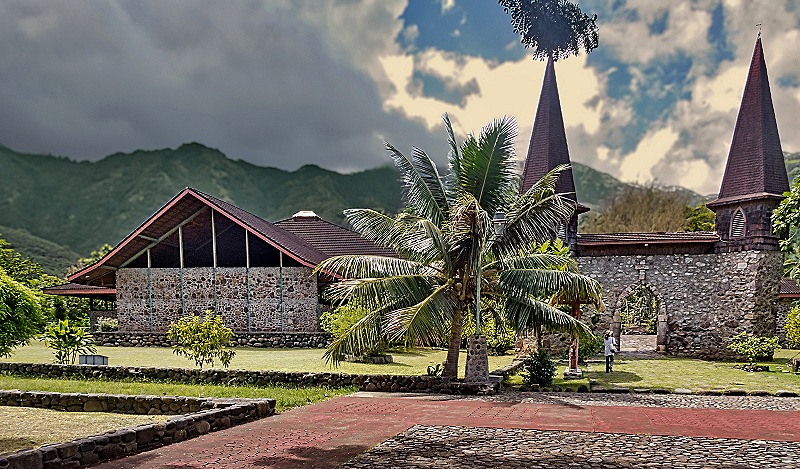
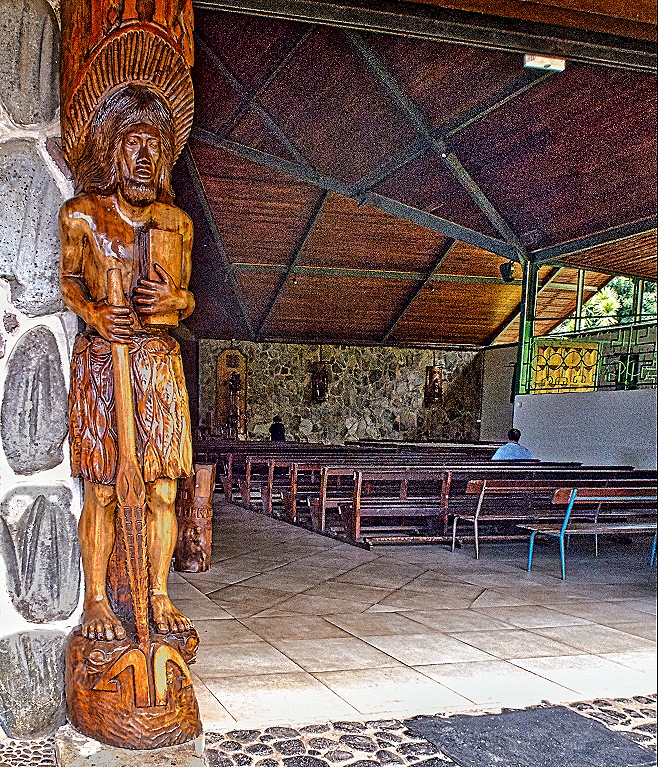
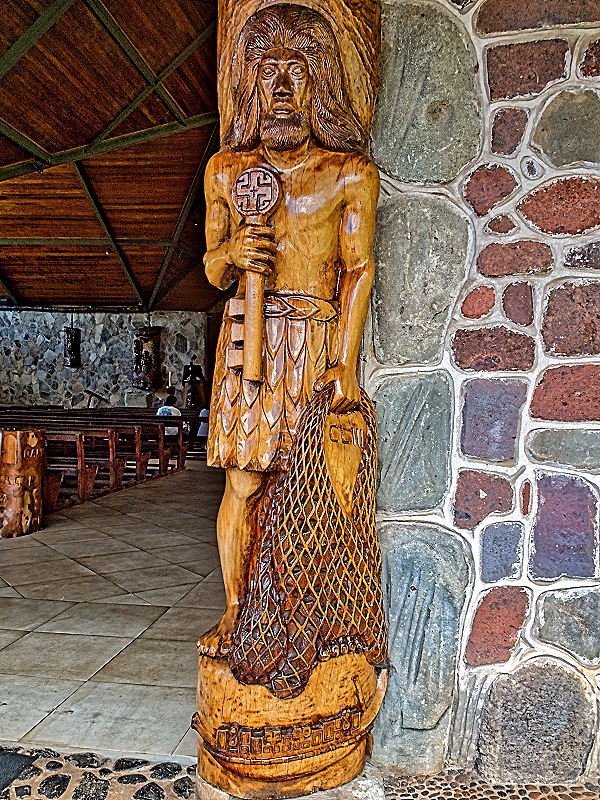
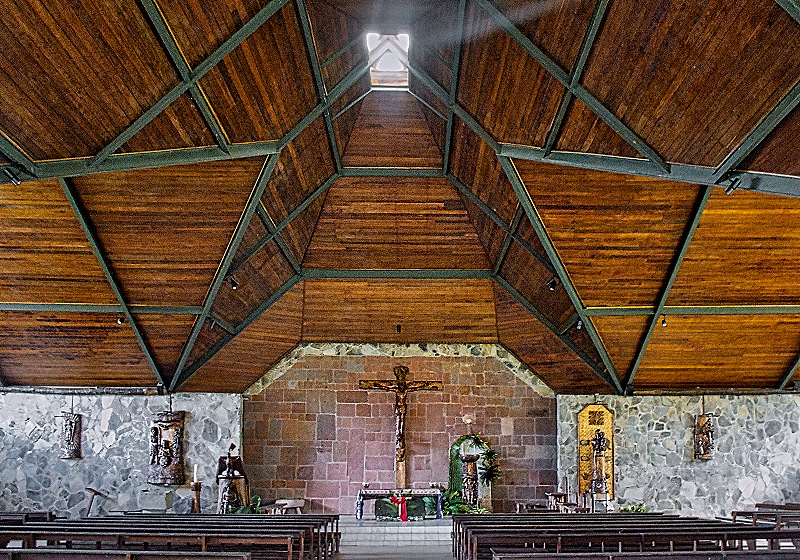
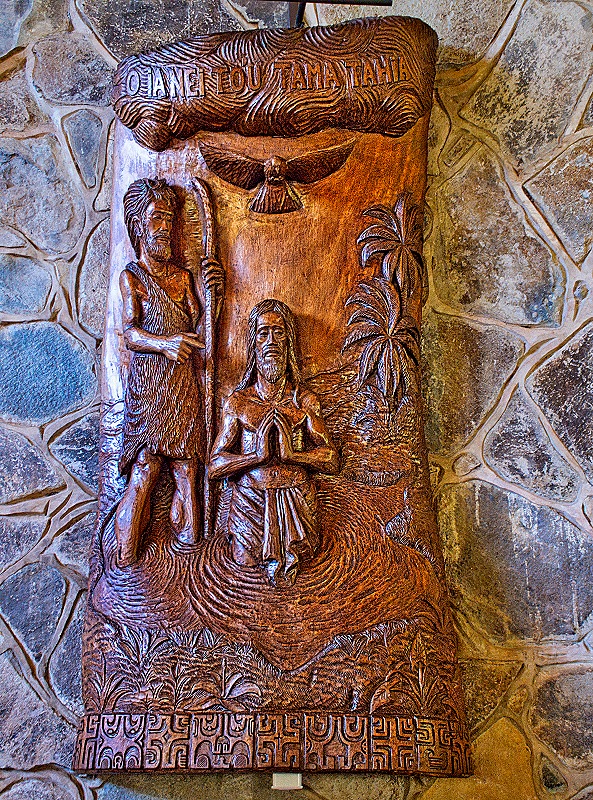
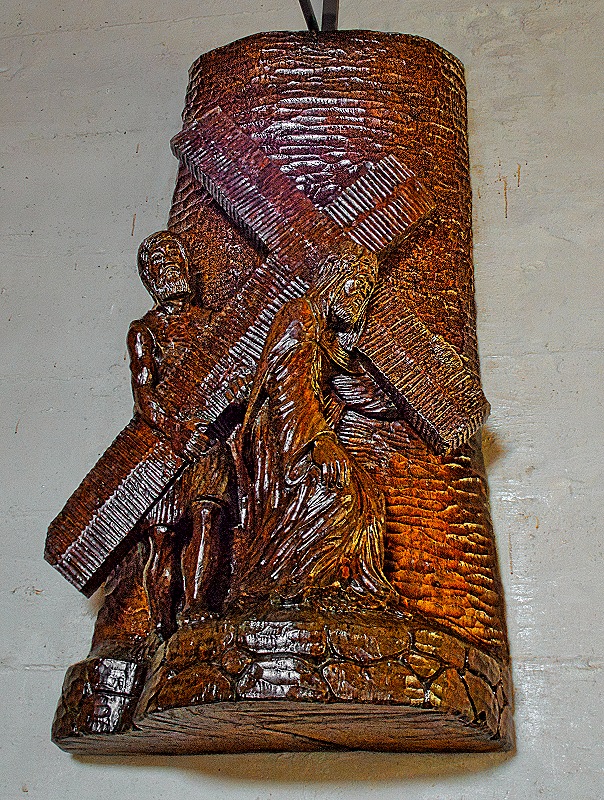
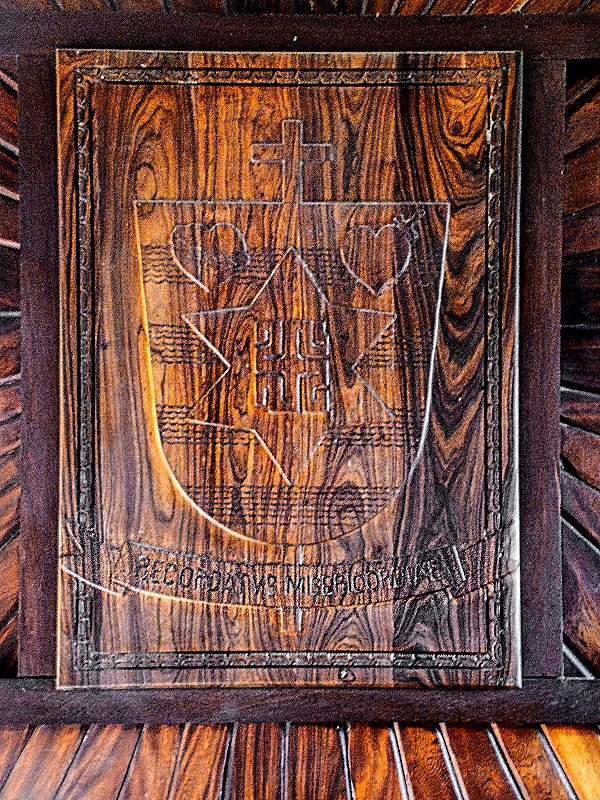
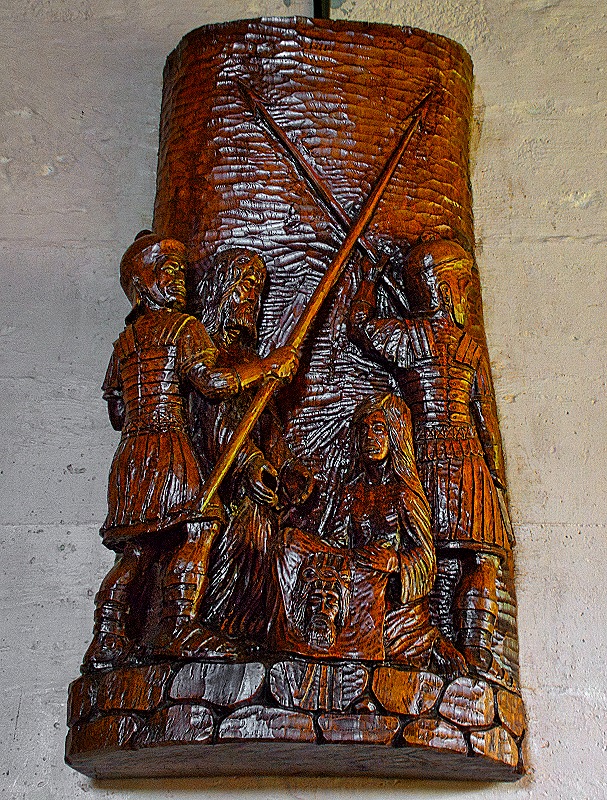
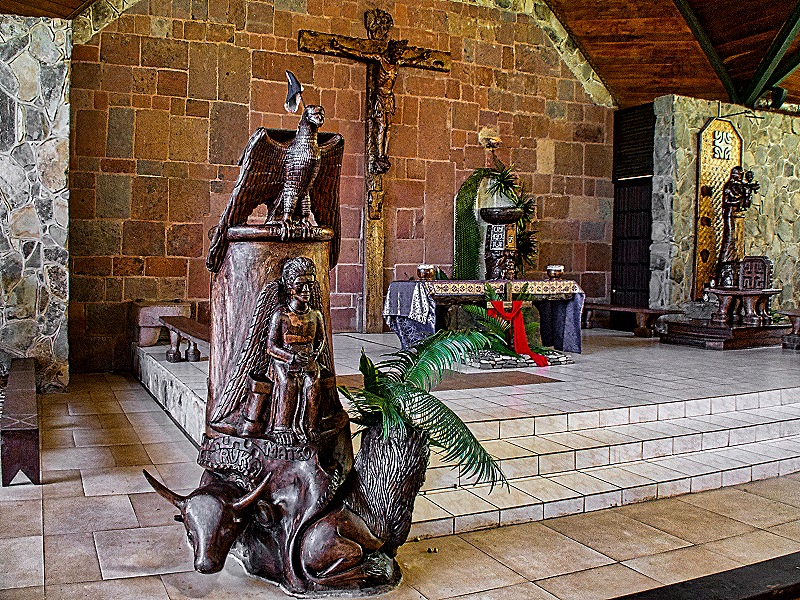
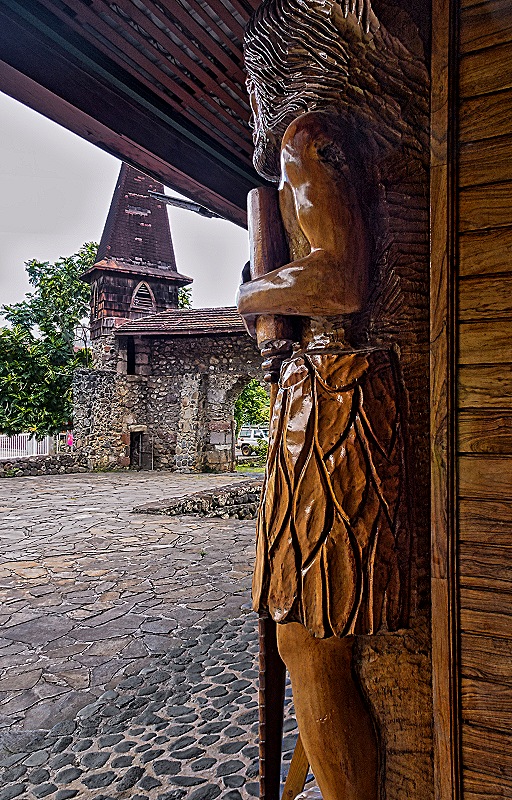
We spent some time looking for the library, but even though we had a map purporting to show its location we couldn’t find it. So we walked over to the Cathédrale Notre-Dame de Taiohae. The current cathedral opened in 1977 on the site of an earlier one that was begun in the 1840’s and completed before the end of the 19th century. The stones used in the church’s walls were brought from all of the islands in the Marquesas archipelago. The path to the cathedral passes through an arch in a freestanding stone wall with belltowers on each side, which was part of the original cathedral. The cathedral is particularly notable for its extensive displays of Catholic imagery with a South Pacific twist, carved into rosewood and tamanu. These include statues of St Paul and St Peter flanking the door, a pulpit carved from a tamanu trunk and stations of the cross also in tamanu. This was our third visit to the cathedral and it never disappoints. Behind the cathedral is a well kept garden.


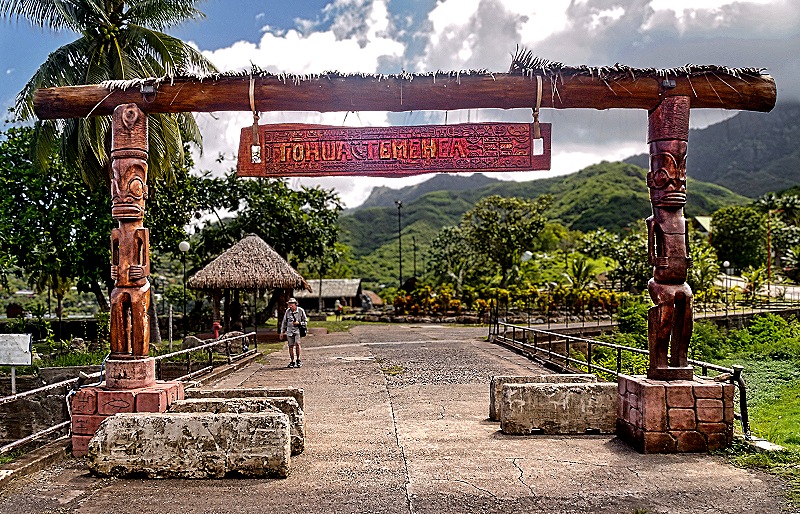
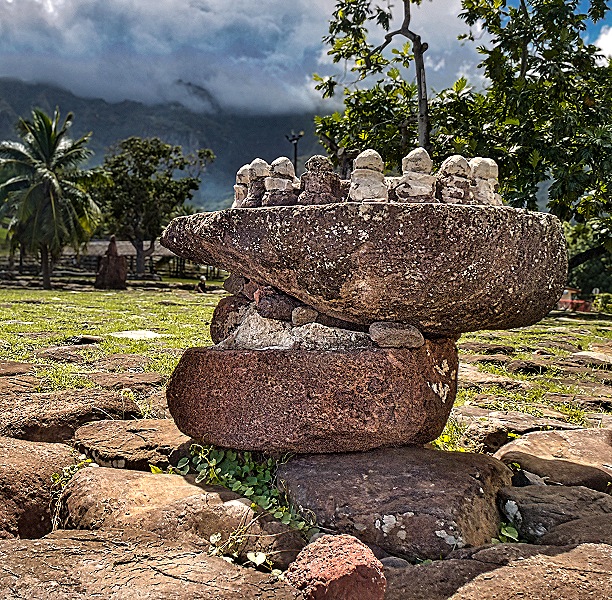
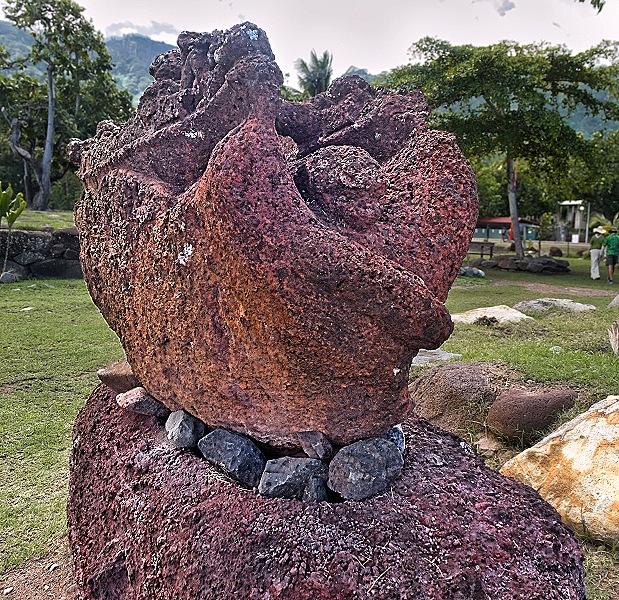
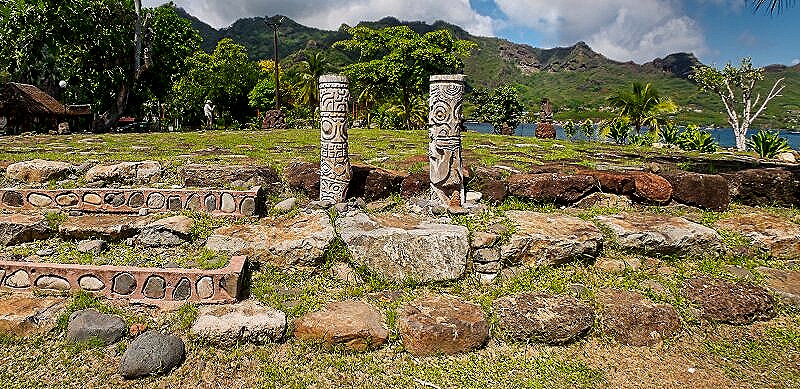
We continued along the bay shore after leaving the cathedral and came to something we didn’t remember seeing before. Tohua Temehea has been a community gathering place for hundreds of years and also was the residence of Queen Vaekehu, the last queen of Nuku Hiva. If we did see it last time (entirely possible) it is now much changed by extensive renovations preparatory to hosting the 14th Marquesas Arts & Culture Festival in 2023, including new roads, repair of ancient stone platforms and extensive landscaping. This area today contains a number of the ancient (and/or ancient looking) stone sculptures like we saw elsewhere. It was quite worth the visit.


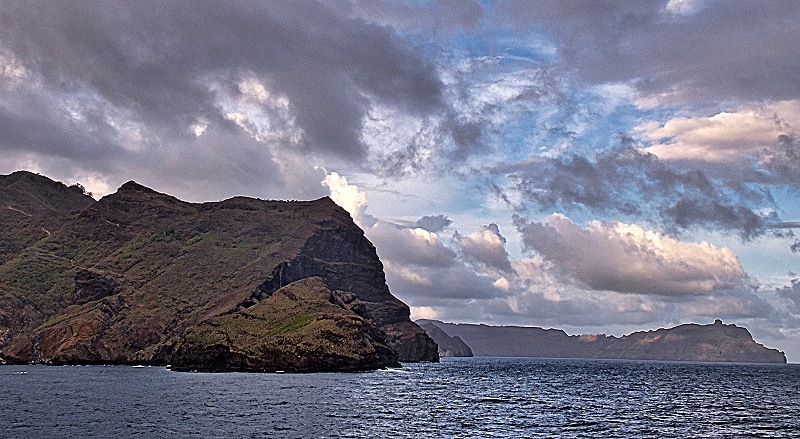
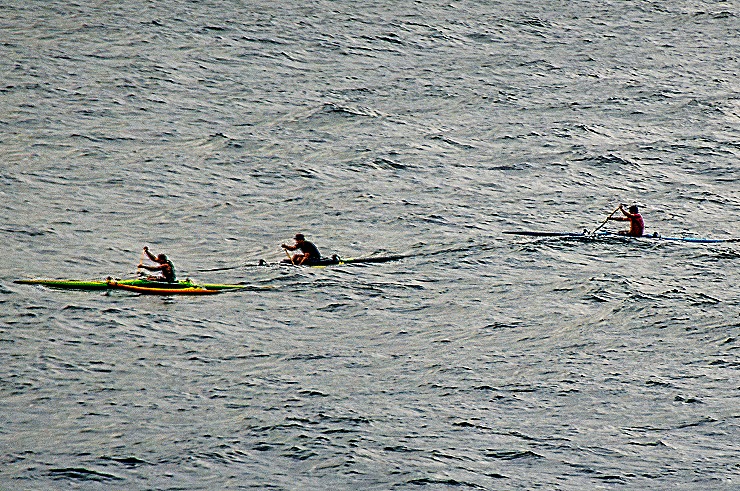
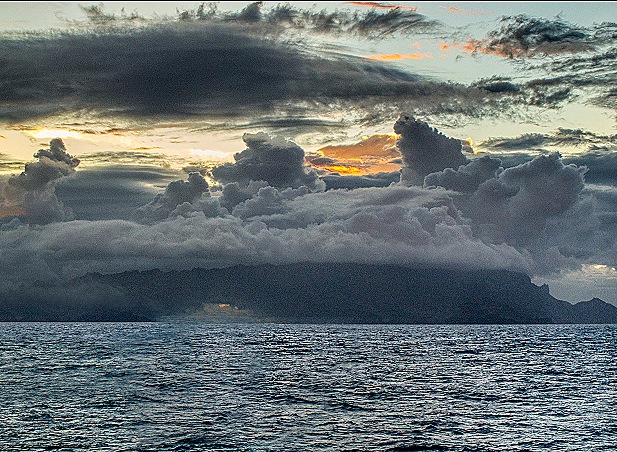
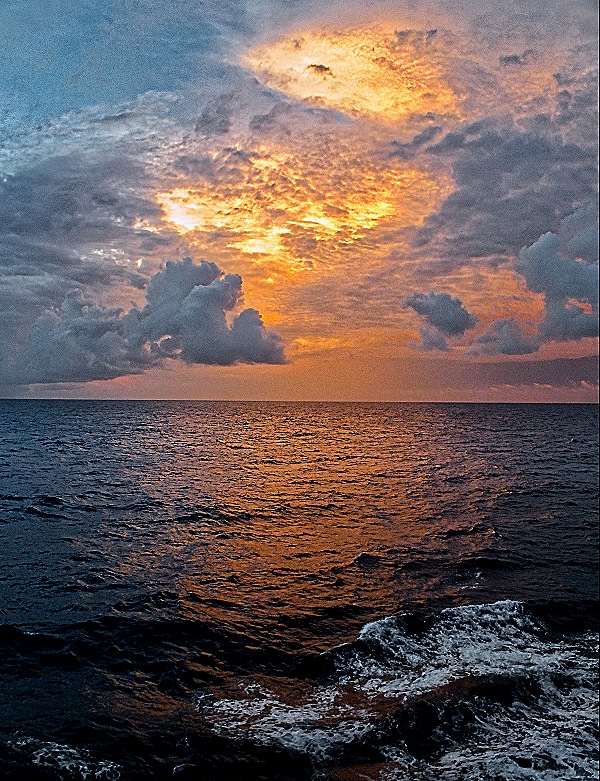
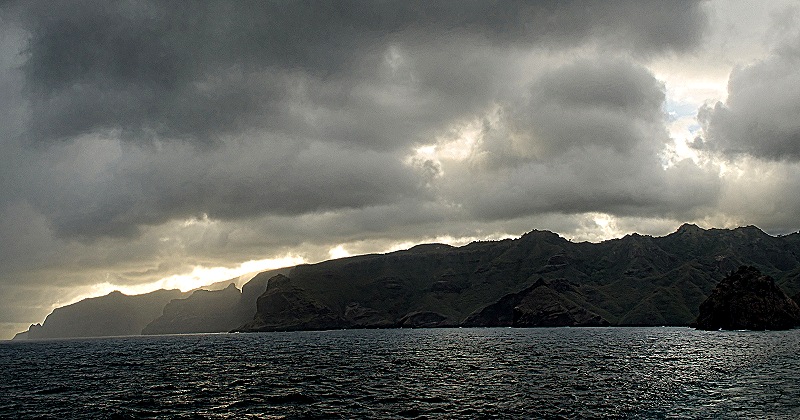
We walked all the way back around the bay to the tender dock, then tendered back to the ship. We noticed some locals kayaking in the water near the ship. This was the last port of call on this voyage and we had six semi-relaxing (we had to pack) sea days before disembarking in San Diego. We sailed away around dinner time and, as usual in Nuku Hiva (at least in our limited experience), the sunset was quite worth watching, a nice final touch to this journey.


 RSS - Posts

Leave a Reply