Latest

Durban, South Africa — 2024

     We reached Durban, the third largest city in South Africa, on April 15.  It is situated on the coast of the Indian Ocean in the province of KwaZulu-Natal.  Founded by traders from South Africa in 1824 on land granted by Shaka, the Zulu king, Durban’s population consists not only of Zulu and White residents but also a very large Indian community, one of the largest outside India, which grew from the import of indentured servants and immigrants in the late 19th and early 20th century.  Mohandas Gandhi lived here for most of the period 1893 to 1914, and gained experience as a civil rights leader.  We had been here once before just a year and a half ago, but because of Covid we stayed on the ship.  https://baderjournal.com/2023/03/27/.  So this was our first opportunity to see something of this city.

     We had been cautioned that exploring Durban on your own could be dangerous because of high crime rates, so we decided to take an excursion to see the high points of the city.  Our first stop was the Victoria Market, a two story indoor market with more than 150 vendors.  This mostly pink market building was built in the 1980’s, but there was an Indian Market here as far back as 1910 that burned down in 1973.  This early in the morning the market was not as busy as we understand it gets later in the day.  In addition to the produce and meat areas, there is a great variety of interesting regional clothing, spices, jewelry and crafts, including Indian style items. 

     On the way to the market we passed the Juma Mosque (also called the Grey Street Mosque), founded in 1884 but greatly expanded over the years since then.  Its two golden domed minarets were built in 1904 and 1905, when they were the tallest buildings in town.  We also drove past an open air market lined with cloth covered stalls which was very quiet in the early morning.

DSC08855DSC08860DSC08856DSC08857DSC08858

     The Durban Botanic Gardens is the oldest botanical garden in Africa, founded in 1849.  It covers 37 acres of land and includes many plant species from elsewhere in addition to native plants and trees.  There are more than 1300 trees in the gardens, 90 of which are documented to be more than a century old.  It is very nice to walk around here (though less so in the oppressive heat we had during our visit).  Just inside the entrance is a whimsical display of four people made mostly of flower pots.  Also on display near there is the original front gate to the gardens, painted white with double doors for vehicles and a single door for pedestrians.

DSC08894DSC08865DSC08891

     There were many colorful flowers in the gardens, including a pond with blooming water lillies.  We also saw a more formal garden design, but too early in the year for flowers I guess.

DSC08867DSC08866DSC08877DSC08879_stitchDSC08895DSC08896DSC08881DSC08882DSC08884a_stitch

     The only animals we saw were birds, although there are probably others too.  We are told there is a family of Egyptian geese living here, but we only saw one.  There was another bird that looks like some kind of Ibis and a third we can’t identify.

DSC08868DSC08872DSC08870

     We mentioned above that there are many different species of trees in these gardens.  One that we liked was a Eucalyptus from New Guinea, looking stately from a distance, with sort of peeling bark in multiple colors when inspected up close.

DSC08884_stitchDSC08889

     Leaving the gardens, after sitting on the bus for a while waiting for someone who apparently thought the meeting time wasn’t really for her, we drove up into the hills to a small park with a panoramic overlook of the city.  The edge of the park was lined with barbed wire, apparently to ensure the folks living in the apartment buildings below couldn’t use it as an entry to the well off neighborhood behind the park (remember that this city has a crime problem).

DSC08909a_stitchDSC08906_stitch

     Our last visit was to the Moses Mabhida Stadium, built to host the 2010 World Cup.  The locals are very proud of this state of the art sports venue, which seats 56,000 people.  We got a picture of it from the overlook, but we didn’t see much when we reached the stadium because we weren’t allowed to exit the bus.  We were told that someone on an earlier excursion bus had been mugged here while the passengers were milling around looking at it.  So we guess the warnings we received about crime and violence here were not entirely unwarranted.  From here we drove back to the port, driving through some parking lots with views of the beach on what is called the Golden Mile, a long stretch of golden sand beaches along the Indian Ocean that is popular for swimming and surfing.

DSC08897DSC08914DSC08912_stitch

     So that’s it for this stop.  It was not too exciting overall but, as we have seen often, there were still some interesting places to visit (most notably here the botanical gardens).  We sailed off in late afternoon, looking forward to a sea day before our next stop.

Maputo, Mozambique — 2024

     We reached Maputo on the morning of April 13.  Maputo is a city of more than a million people and is the capital and largest city of Mozambique, a former Portuguese colony that achieved independence, through much warfare, in 1975.  There was a nasty civil war after that and, even today, there is a good bit of unrest.  We had been to Maputo twice but never had a chance to explore the city.  In 2018 we drove through the city in a cramped bus on the way to Kruger National Park in South Africa for a wonderful four day safari.  https://baderjournal.com/2018/08/13/maputo-mozambique-kruger-national-park-south-africa-day-1/  In 2022 we were unable to leave our ship here because of Covid, although we were able to photograph a surprising number of the city landmarks from the top deck of the ship.   https://baderjournal.com/2023/03/27/    There is a good bit of historical background in this last episode much of which we won’t reproduce here, so if you want to read that, this post is where you will find it.

DSC09312_stitch

     On this visit we wanted to see the city, finally, so we booked an excursion that would take us to most of the high points.  Our first visit was to the Central Railway Station, quite close to the entrance to the port.  Completed in 1916 it is built in Beaux-Arts style (but not designed by Gustave Eiffel as often claimed) with a distinctive green and white color scheme.  We left the bus and had an opportunity to walk around inside the station and along its train platforms, where a couple of locomotives from the early period were on display.

DSC08744DSC08737_stitchDSC08736DSC08732_stitch20240413_10591520240413_110820DSC08727_stitch

     Across Workers Square (Praca dos Trabalhadores) from the train station is the Portuguese Monument to the Great War, memorializing those who lost their lives defending Mozambique from the Germans.  Built of steel reinforced concrete, it was dedicated in 1935.  Since Mozambique was a Portuguese colony it was not surprising to see mosaic sidewalks in front of the railway station.

DSC08741DSC08730_stitchDSC08743

     The Fortaleza Nossa Senhora da Conceicao de Lourenco Marques was built by the Portuguese in the late 18th century on a spot where small forts built by the Dutch and Austrians had previously been located.  (Lorenzo Marques was the name of Maputo until 1976.)  It was restored about 1946 on the foundations of the original fort.  It is square in design with a single entrance to the interior courtyard from which doors lead to the rooms built into the fort.  Old cannon are arrayed in the courtyard and on the ramparts at the top of the walls, which can be reached by dirt hills built into the corners of the courtyard.

DSC08745_stitchDSC0877120240413_112943DSC08750DSC08748DSC08762DSC08760_stitch

     In the courtyard were sculptures of some Portuguese who figured in Maputo’s colonial history.  There is an equestrian statue of Joaquim Mouzinho de Albuquerque, Commissioner of Mozambique from 1896 to 1898 and known for leading the occupation of Mozambique in 1895.  It was unveiled in 1940 in the center of what is now Independence Square and moved here later.  A statue of Antonio Jose Enes, another Portuguese Commissioner of Mozambique active in the 1895 occupation campaigns, was dedicated in 1910.  The sculpture we liked best was a bronze group of Portuguese soldiers on horseback, looking a little like something that could have been made by Frederick Remington.  It was brought here from elsewhere in 1975 or so.  Finally, two large relief panels were on one of the walls of the courtyard.  On the left was a panel representing one of Mouzinho de Albuquerque’s successful battles in 1897, and on the right was one depicting the 1895 imprisonment of the emperor of Gaza in Chaimite in 1895.  There was also an interesting bird in the courtyard (alive, not a sculpture).

DSC08758_stitchDSC08751DSC08749DSC08753 (1)DSC08763DSC08764DSC08767_stitch

     The Mercado Central de Maputo is a an enclosed market building that opened in 1903 with 18 vendors’ stalls.  At that time it was named after Vasco da Gama.  It was restored in 2001 and space for more than 150 additional vendors was added by 2013.  The front facade somewhat recalls the railway station but with a much less grand scale and design.  Inside it is a huge open warehouse-like space with countless individual vendors, mostly food but also some arts & crafts and souvenirs.  An election campaign was in progress during our visit and several large political signs were on the walls.

DSC08783_stitchDSC08772DSC08773DSC08778DSC08782DSC08781DSC08780DSC08774_stitch

     Praca da Independencia (Independence Square) is considered the focal point of the city.  Around this square are the Maputo City Hall, the Catholic cathedral, the Iron House and Tunduru Gardens.  As we approached in the bus it looked (at least to us) like a political demonstration was in progress in front of the City Hall, but we were told later it was a rally, religious in nature (if we remember correctly).  In front of the City Hall in the middle of a traffic circle planted with colorful flowers was a 30 foot tall statue of Samora Machel, the first president of Mozambique who was still in office when he died in a plane crash in 1986.  It was designed and built in North Korea before being erected here in 2011.  Previously the equestrian statue of Mozinho de Albuquerque that we saw in the fort had stood here since 1940.

DSC08786DSC08796DSC08797DSC08799a_stitchDSC08798

     To the right of the City Hall is the towering white Roman Catholic Catedral de Nossa Senhora da Imaculada Conceicao, known locally as the Maputo Cathedral.  Built of concrete and cement, its construction was completed in 1944.  Another Portuguese style mosaic sidewalk was nearby.

DSC08789DSC08791DSC08790DSC08793

     The Casa de Ferro (Iron House) was fabricated of iron (of course) in Belgium.  It was purchased by the Portuguese and reassembled here in 1892 to be the residence of the governor.  But it was never occupied by the governor and instead has housed several groups and institutions over the years.  There are two popular myths about this house.  First, like the railway station, it was not designed by Gustave Eiffel.  Second, the popular story that it was uninhabitably hot in the tropical climate is also false.  The governor apparently rejected it initially mainly because he preferred a more traditional house.  After all, it has been used more or less continuously over the years by others without apparent difficulty, although not to live in.  And it was designed to provide particularly good air circulation both inside the walls and through holes in the walls.  Similar buildings by the same firm have been used successfully in other tropical climates, in South America and elsewhere in Africa.  The building was moved to this spot in 1966 from its original location and was restored in 2014.  But for its iron construction, and the geometric patterns impressed in blocks on its walls, this looks like a rather ordinary gray building, three stories tall.  Today it houses the Ministry of Culture and there is a souvenir shop on the patio of the ground floor.

DSC08837DSC08802b_stitchDSC08806

     The Tunduru Botanical Gardens is a fairly small park quite close to the iron house.  It dates back to 1885 and houses many very tall old trees and a large colony of fruit bats.  On the day we visited the bats were very high in the trees and difficult to see, but we took some pictures in the general direction people were indicating and a few of them showed up.  To enter the park you walk under an elaborately sculpted white arch.  The highlight for us was seeing wedding parties walking through the park.  It seems there is a tradition here that weddings take place on Saturday near a hotel not far from the park and before the ceremonies the wedding parties come to these gardens to take wedding pictures.  Luckily it was Saturday when we visited so we got to see several wedding parties walking along the paths and gathering under the arch.  Very nice place to visit.

DSC08838_stitchDSC08822DSC08831_stitchDSC08835DSC08834DSC08836DSC08814DSC08809_stitch

     After leaving the gardens we boarded the bus to drive to Feira de Artesanato, Flores e Gastronomia (called FEIMA), a very large and bustling market for arts & crafts, flowers, jewelry, clothing and more, with several restaurants.  It is located in a park surrounded by iron fencing.  The vendors are friendly but anxious to make a sale, particularly when you show interest in a particular item.  The wares are very colorful and it is fun just to walk around and enjoy the ambience.  On the way to FEIMA we passed the Museum of Natural History, which had an arresting sculpture of an eagle in flight in front of the entrance.

DSC08843DSC08846DSC08847_stitchDSC08853_stitchDSC08852DSC08850_stitch

     We sailed away in late afternoon.  From our veranda we had a nice view of the nearby port facilities and the gates to the town.  This is a very busy port, which has been in operation since 1544.  The sun was setting as we left the dock and we watched it drop behind the Maputo-Katembe Bridge, the longest suspension bridge in Africa,  which was built by the Chinese and opened in 2018.  There has been some controversy over the years about the cost and construction of this bridge, but there is no doubt that the sun setting behind it makes for a lovely sight.

DSC09311DSC09323DSC09320_stitch

Zanzibar, Tanzania (Day 2) — 2024

     April 9 was our second day in Zanzibar.  The weather was still mostly cloudy but mostly dry at least, so we decided to tender into town again and walk around on our own with Bill & Robert.  There were a couple of places we wanted to visit that we had missed on our previous visit, but really walking around this city is a treat in itself.  So after breakfast, off we went.

     The first place we wanted to visit was easy to find because it is right across the street from the tender dock.  The Old Dispensary was begun in 1887 and completed (by a different owner) in 1894.  It was originally to be a charity hospital but in the end became a medical dispensary with apartments on the upper floors.  It fell into disuse after the Zanzibar Revolution in 1964 but was renovated in the 1990’s.  We had seen the building on our previous visit of course; it is a very distinctive green and white building that is the first thing you see when exiting the dock.  But we couldn’t enter it before because it was undergoing restoration.  Not only is the building now beautifully restored, but it is a working medical facility again.

DSC08535

     Inside the first floor is a covered atrium reaching all the way to the top floor, with balcony openings on the upper floors.  A glass enclosed elevator reaches from the first to the top floor.  There are historical photos on display on the walls and in display cases along with plants and seating.  Very nice.

DSC08648_stitchDSC08651

     We walked up to the second and third floors.  Looking across the atrium on the upper floors the opposite wall looked like the outside of another building.

DSC08653DSC08656

     We stepped out onto the roof.  In one direction were views of the harbor and in the other were panoramic views of neighboring housetops.

DSC08660_stitchDSC08654_stitchDSC08664DSC08668_stitchDSC08666_stitchDSC08657_stitch

     We left through the green pillared front entrance and walked past some colorful flowers.  Up the street we passed one of the iconic carved doors for which Zanzibar is famous and came to the old Sultan’s Palace, a museum since the revolution.  An interesting looking floating restaurant was under construction not far from the sea wall; maybe next time we will be able to eat there.

DSC08676DSC08677DSC08672DSC08678DSC08683DSC08679DSC08680DSC09296

     We walked through a tunnel under a building that seems to be a museum (the same one we walked through yesterday) and came to the Old Fort.  It is the oldest building in town, built by the Omanis in 1699 after expelling the Portuguese.  We had been there before but since we were there we decided to walk inside.  The fort has a large open field inside the crenelated walls with guard towers on each corner.  And in another section is a stone amphitheater used for performances.  A group of young men was on stage practicing (we think) while we were there.

DSC08687DSC08690DSC08528_stitchDSC08688_stitchDSC08684DSC08599DSC08597_stitchDSC08600_stitch

    At last we walked to our second objective for the day, the Persian (or Turkish) Baths, which date back to the second half of the 19th century.  We had been unable to find them on our previous visit but armed with better directions (and better luck) we did find it this time.  On the way we saw a minaret extending above the rooftops and a construction project propped up by what looked like rather uncertain wood posts.  We hooked up with a guide outside who helped us find the baths and showed us through them.  Inside was an octagonal fountain (not operating) for foot washing and several cubicles arranged around it that appear to be bathing facilities.  It was spacious with a muted and relaxing atmosphere.

Blue and white minaretDSC08709DSC08699_stitchDSC08704_stitchDSC08702_stitchDSC08708DSC08706_stitch

     There is a very steep stairway, behind a door that had to be unlocked, to climb to the roof of the baths.  Mary took a pass because of her still recent knee replacement, but Rick, Robert and Bill followed the guide up to the roof, which had another fine view of neighboring rooftops.  We walked along by the tops of the domed ceilings in the rooms below.

DSC08710_stitchDSC08712_stitchIMG_2451DSC08712DSC08715

     By now we were getting hungry so we looked for a likely restaurant.  Not finding one, we headed back to the dock where we had been told there was a nice restaurant usually open for lunch.  But it was still Ramadan and the restaurant was closed.  On the way there we passed a cat on its throne, a facade on a side street apparently being propped up by large wooden poles and other street scenes.

DSC08716DSC08721a_stitchDSC08723

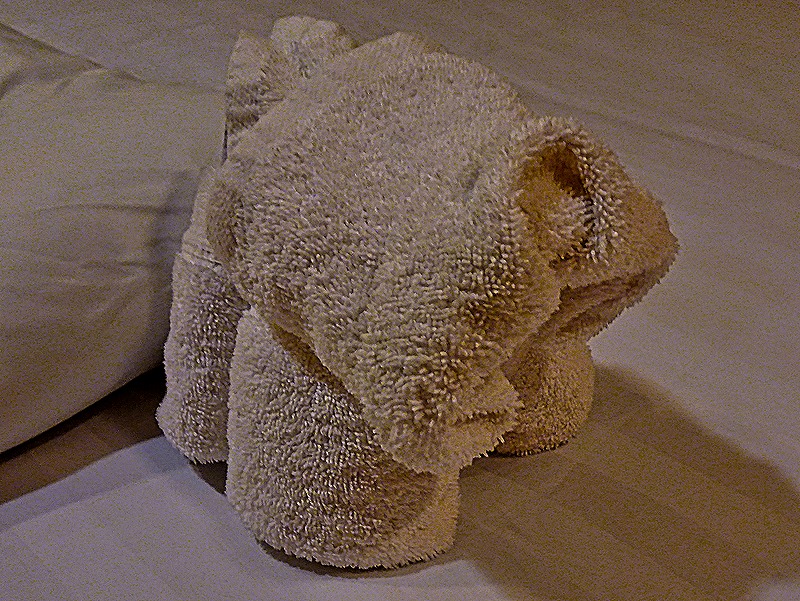
     From the ship was quite a panoramic view of the Zanzibar waterfront and we also saw some of the dhows, traditional sailboats long used for commerce in this area of the world.  In our room we had a towel piggy at night.

DSC09289b_stitchDSC09304DSC08725

     Finally, if you have been following along we think you would agree that the Indian Ocean has been particularly generous during this trip with beautiful sunsets, something we always enjoy.  So as we leave the Indian Ocean and head for the shores of Africa we will end this episode with one last fiery Indian Ocean sunset.

DSC09282_stitch

Zanzibar, Tanzania (Day 1) — 2024

     We anchored off shore in Zanzibar early in the morning of April 8.  Zanzibar is a fascinating place to visit, but today was gray and rainy or drizzly.  That wasn’t so when we visited here for two days in 2022.  Then we took a tour to see the Red Colobus Monkeys in Jozani National Forest on the first day and explored Stone Town on the second day:

https://baderjournal.com/2023/03/08/zanzibar-tanzania-day-1-2022/

https://baderjournal.com/2023/03/13/zanzibar-tanzania-day-2-2022/

But before we begin today’s visit, we had another great sunset the night before our arrival.

DSC09284_stitch

     Hoping for the rain to stop we waited until after breakfast to tender ashore.  The rain diminished some but didn’t stop so we went ahead to the tender.  The tender was almost empty, thanks to other passengers sensibly avoiding the rain.  We came ashore at the tender dock, not far from a beach with boats pulled up from the water.

DSC08517a_stitchDSC09300DSC08521_stitch

     On a rainy day like this we didn’t want to spend too much time wandering around town; after all we could still hope for better conditions tomorrow.  One place we did want to visit, though, was Memories Of Zanzibar, a large store across the street from the Freddy Mercury museum where we had good luck on our previous visit finding some gifts and mementoes.  It wasn’t too long a walk and the streets were not at all crowded.  We passed some people offering private tours, but we weren’t interested in that today.  We sympathized though, because on a day like this they probably don’t get much, if any business.  Among other things, we walked by the Shangani Post Office.  Built in 1906 it served as Zanzibar’s main post office until 1964; not sure what it houses today, perhaps still a neighborhood post office.  A HAL tour group was gathered outside.

DSC08523DSC08527DSC08524b_stitch

     Memories Of Zanzibar is packed with jewelry, clothing, books, and African arts and crafts, in all price ranges.  We picked up a few things that didn’t break the budget (and were small enough to take home in our ship cabin).  Even if you don’t buy anything, this is a fun place to visit.

DSC08694_stitchDSC08693DSC08692

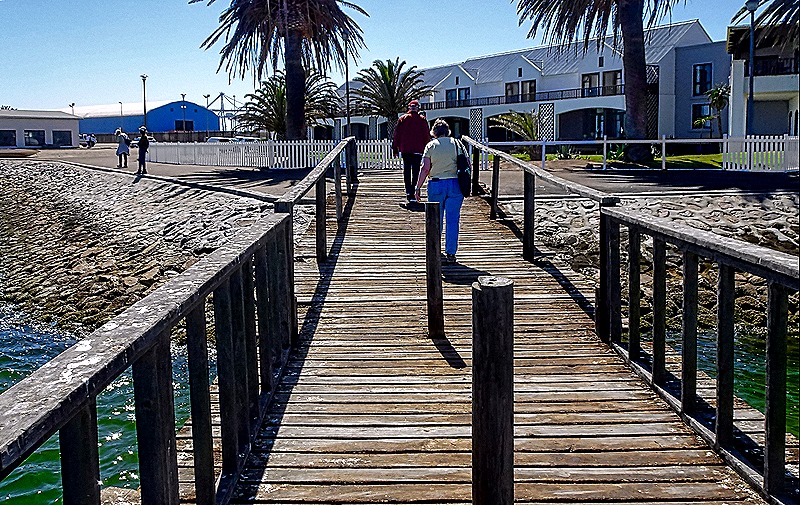
     We headed back to the tender dock, passing the lovely Forodhani Gardens along the water front, with a row of old cannon facing any threat that might come by sea.  At night this park is often occupied by food vendors.  Walking up the boardwalk to the tender dock we boarded a tender and returned to the ship.

DSC08533_stitchDSC08530DSC08537

     But wait, that’s not all!  We had booked a HAL excursion for some sightseeing and dinner near the water.  This was very expensive for a four hour excursion; you may recall in a previous episode I mentioned that most of the excursions were about twice what they cost on the 2022 Grand Africa and this one was no exception at a cost of more than $400.  We never would have done it except we had a free excursion coming because we were in a veranda stateroom.  We had chosen one in the Mediterranean, but when that part of the trip was cancelled they posted a new list of excursions for the free tour amenity and we picked this one.  So along with Bill & Robert we tendered ashore again around 4:00 and boarded the inevitable bus at the port.  Our first stop was the ruins of the Mtoni Palace, built in 1828.  It was the residence of the Sultan’s wives and many children and was quite elaborate and beautiful, according to contemporary accounts.  Today it is roofless, but still has rooms, staircases and arches, to explore.  We didn’t get to see any of this, however.  For some reason those leading the tour decided it was unsafe and wouldn’t allow anyone to leave the bus.  So we just pulled up near one wall, looked at it for a few minutes, then turned around and drove off.  Quite disappointing, especially after a substantial bus ride out of town to get here.

DSC08538DSC08546DSC08541_stitch

    We returned to town, driving past a large apartment building with laundry drying on the balconies, then stopped for a visit at the Darjani Market, the city’s central market.  Built in 1904, this is mainly a food market but also includes vendors of cloth, clothing, souvenirs and even electronics.  We walked through the market, seeing many varieties of fresh seafood and colorful produce.

DSC08560_stitchDSC08564DSC08575_stitchDSC08573DSC08574DSC08565_stitchDSC08567DSC08568DSC08572DSC08570DSC08571DSC08579IMG_2331 DSC08577_stitch

     We drove next to the Peace Museum, which opened on Armistice Day in 1925 as a memorial to those who lost their lives in the war.  It was closed when we were there, so we were only able to view it from the outside.  We have mentioned that it was a drizzly day and a number of the many motorcycles on the street with us were outfitted with improvised cloth roofs.

DSC08582DSC08584DSC08590DSC08596

     We were originally supposed to have dinner under the stars at the Serena hotel, but for reasons that were not disclosed to us this was moved to an inside room at the Park Hyatt (perhaps because of the possibility of more rain).  It was a nice upscale hotel with African decor where we had a good buffet dinner.

IMG_6006IMG_5999DSC08606a_stitchDSC08632_stitchDSC08634

     A local band played African music during part of the meal.  There was a singer for a few songs, but we didn’t get a usable picture of her.

DSC08639DSC08644DSC08636_stitch

     But the best thing here was the view from the hotel’s waterfront veranda.  We saw a working beach nearby and the Zuiderdam out in the blue water.  And at its height the sunset looked like something from a science fiction movie.

DSC08628_stitchDSC08626DSC08611_stitchDSC08609_stitchDSC08620DSC08622_stitch

Victoria, Mahe, Seychelles (overnight) — 2024

     On the morning of April 4 we docked in Victoria, the capital of the Seychelles, which is located on the island of Mahe.  With a population in excess of 25,000 it is not, as sometimes claimed, the smallest national capital in the world (that would be in Palau).  We had two sea days on the way to the Seychelles, though, and on both evenings we had sunsets worth looking at.

DSC09236_stitchDSC09243_stitch

     We have visited the Seychelles once before, in 2018, and at that time participated in a private excursion throughout this beautiful island:  https://baderjournal.com/2018/08/08/victoria-mahe-seychelles-islands/.  So this time we decided to just walk into town, only about an hour’s walk but rather taxing in the high heat and humidity.DSC09255_stitch

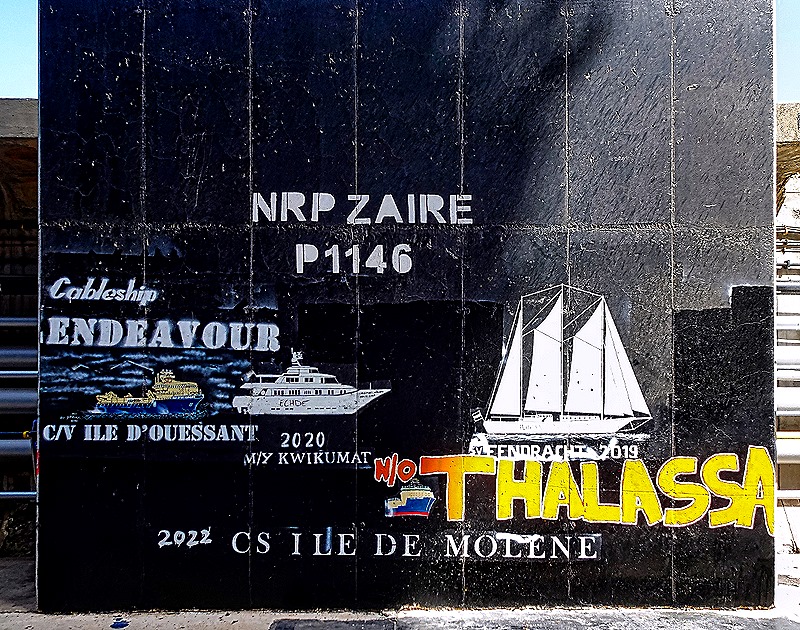
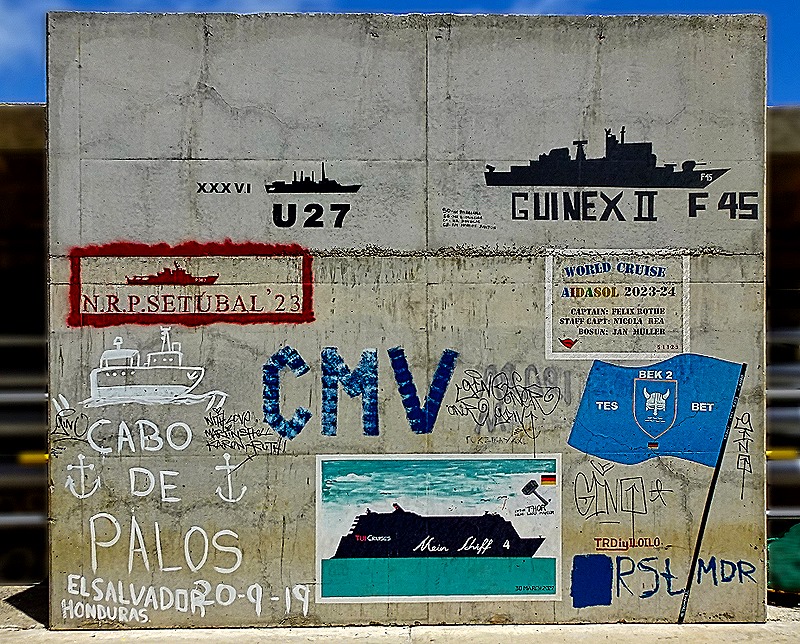
     We set out after breakfast, walking down the dock toward the bay, then through the covered walk that we think has been built since our last visit.  The covered walk not only provides welcome protection from the sun but is lined with engaging wall paintings.

DSC09255DSC08506DSC08503DSC08504_stitchDSC08508DSC08507

     Victoria has a number of prominent wind turbines that can be seen from the port, although not all of them seemed to be working.  Near the walkway were some colorful flowers as well, something that can be seen all over town.

DSC09264_stitchDSC08512DSC08414DSC08410DSC08411

   At the end of the walkway was an information table where we were given a nice map of the city, and some people with a metal detector checking ID’s (and ship cards, we think, on the way back to the port).  We emerged from the walkway into a large parking lot where several taxi drivers were offering tours but we wanted to walk through the city on our own.  They accepted our “No thank you” politely and didn’t pursue us further (this is not always the case elsewhere).

     We walked on toward town, seeing the Liberation Monument, erected in 1978 and moved in 2014 to the front of the ruling party’s headquarters.  Known as “Zonm Lib” (Free Man), it does not commemorate the demise of slavery, as we thought looking at it, but a coup in 1977 that removed the Seychelles’ first president, causing three deaths.  Apparently it is still pretty controversial.  We also visited the National Library nearby.  Its roots date back to a grant from the Carnegie foundation in 1910 and it became the National Library in 1978.  It moved into this new building in 1979.  The building was closed for several years because of a fungus infestation and apparently reopened less than 6 months before our visit.  The library is large and spacious with a nice children’s room and a lot of room for its collection to grow, judging from the many empty shelves we saw.

DSC08416DSC08420_stitchDSC08417_stitchDSC08423_stitchDSC08425_stitchDSC08427_stitchDSC08430DSC08431DSC08432a_stitchDSC08440DSC08432_stitch

     Just beyond the library in an area away from the street and bordered by a rock walled canal we came upon the Carrefour des Arts, a gallery for Seychellois artists opened in 2005.  This complex also included some art and craft stores.  But the best thing was a walk outside the building displaying sculptures reflecting local traditions made of found materials (such as wire, wood, metal, plastic bags, etc).  It was small but quite interesting and the canal was lined with nice flora.

DSC08446DSC08442DSC08443DSC08441DSC08444DSC08449DSC08447DSC08454DSC08448

     As we continued toward the center of town we spotted down an alley the golden dome of the Sheikh Mohamed bin Khalifa Mosque.  It was built in 1982 by the family of the head of the United Arab Emirates, who also owns a mansion on the side of a mountain overlooking Victoria.  We encountered the Jubilee Drinking Fountain sitting in front of the National History Museum.  Created of porcelain by the Royal Daulton company of London, it was unveiled in 1900, three years after Queen Victoria’s actual Diamond Jubilee.  It features a foot tall sculpture of Queen Victoria, which was moved for preservation purposes inside the museum in 1977.  The fountain was restored and the statuette replaced with a replica donated by the British government in 1993.  On the museum grounds we also came across sculptures of a crocodile and what looks like a manatee

DSC08450DSC08461DSC08462DSC08463

     In the middle of one of the central intersections in town sits the 25 foot tall Victoria Clock Tower.  It was erected in 1903 in memory of Queen Victoria, after whom the city was named, who had died in 1901.  Made of cast iron, the clock tower was painted silver in 1935.  It is a model of Big Ben in London (actually it is a model of a model of Big Ben that sits near Victoria Station in London) and was originally supposed to chime.  But the chime never worked until in 1999 its mechanism was replaced with a modern electronic one . . . by the same company that had manufactured the clock tower itself almost a century before.

DSC08459_stitchDSC08455DSC08498

     We walked on to the Sir Selwyn Selwyn-Clarke Market, a large covered produce market housing many individual vendors.  This is the central market of the city where you can buy not only produce, but also colorful spices, freshly caught fish, clothing, crafts and souvenirs. The market dates back to 1840 but it is named after the English governor of the Seychelles who served for 4 years after World War II.  It has two stories with a roof covering many of the vendors and others in a courtyard with individual umbrellas to protect from the sun.  The sides are open and this is a regular hangout for white egrets (on both of our visits an egret was sitting on top of a pillar by the entrance reviewing the visitors as they arrived).  When we visited here in 2018 we had a very nice view from the market of the Hindu temple a few blocks away, but since then a blocky gray building has gone up right next to the market that entirely eliminates the view in that direction.

DSC08476_stitchDSC08470DSC08471DSC08475DSC08473DSC08474

     It was only a few blocks further to reach the Hindu temple, called Arul Mihu Mavasakthi Vinayagar.  Constructed in 1992, it is the only HIndu temple in the Seychelles.  It is dedicated to the Hindu deity Ganesh, who is also sometimes called Lord Vinayagar.  Hindus account for about 2% of the population of the Seychelles.  You have to remove your shoes to enter the temple; Mary did but Rick waited outside and took some pictures through the door.  The temple looked similar to other Hindu temples we have visited (most recently in Colombo, Sri Lanka, less than a week earlier), but rather smaller.  Still, with its multi-colored tower full of sculptures it made for a nice view with the green mountains behind it.

DSC08478DSC08479DSC08494DSC08493DSC08490DSC08482_stitchDSC08487DSC08492DSC08489

     The walk back to the port seemed longer in the hot sun, but there were many nice flowers to enjoy on the way.
DSC08496DSC08499DSC08500DSC08502DSC08501DSC08510DSC08495DSC08465

     On April 9 we were still docked in Victoria.  But it had been so hot the day before and we had seen and done what we most wanted to here.  So we decided to spend the day on the ship.  We did see what looked like a big fire not too far from the port, but perhaps it was something purposeful because we never saw any fire trucks.  On the way out of the port we also saw the pilot boat. If you have never seen one, this boat pulls up alongside the ship, both moving at speed, after it leaves the harbor and the pilot jumps(!) from a doorway in the ship’s hull to the boat, which is outfitted with bars for him to grab so he won’t fall off the boat.  Quite a show, but brief and not always visible from the deck.  The seascapes were beautiful as the sun dropped lower while we put out to sea.
DSC09261_stitchDSC08511DSC09270DSC09272_stitch