
Alotau, Papua New Guinea 2026
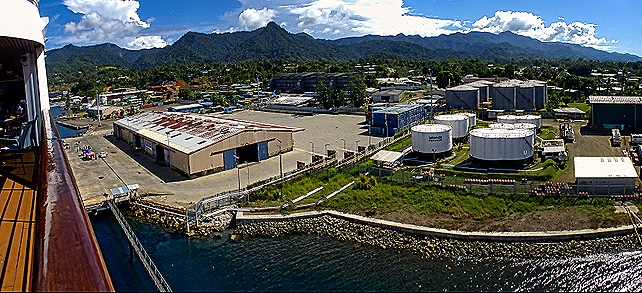
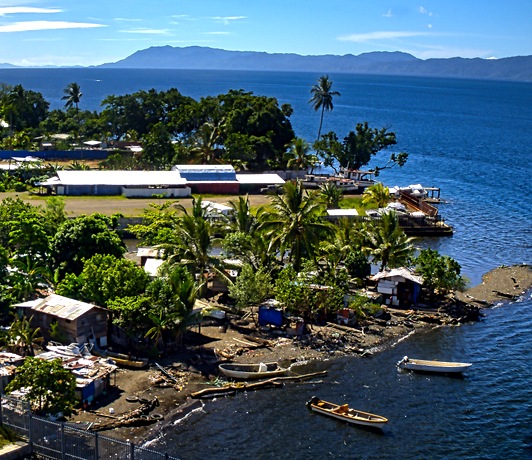
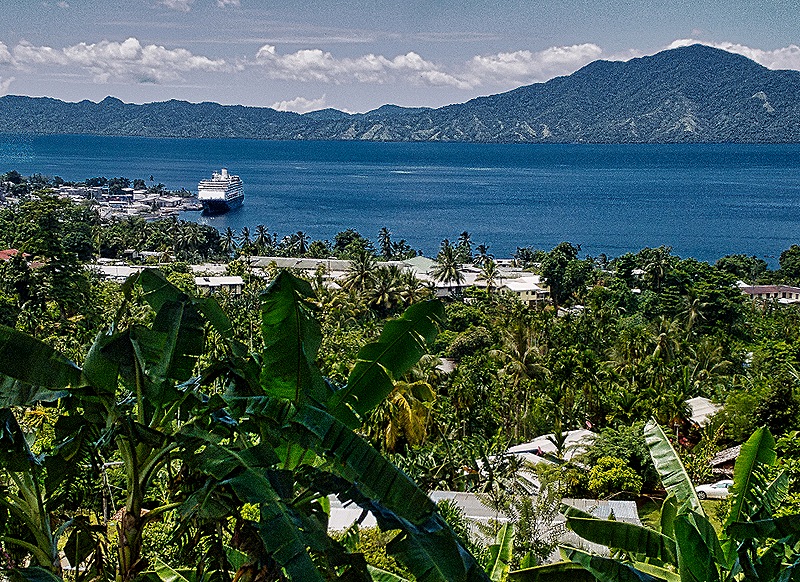
On February 5 we were in Alotau on the point of the New Guinea Peninsula, the easternmost spot on the island of New Guinea. The town was established in 1968 to serve as the administrative capital of Milne Bay Province. Today its population is around 15,000. Our excursion left later in the morning so we went up to the top deck to see what the area looked like. It was mountainous with a green tropical ambiance.
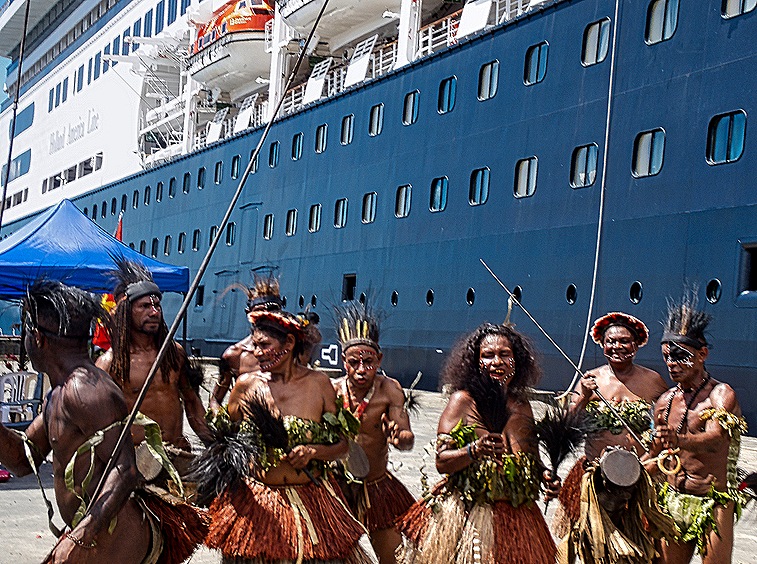
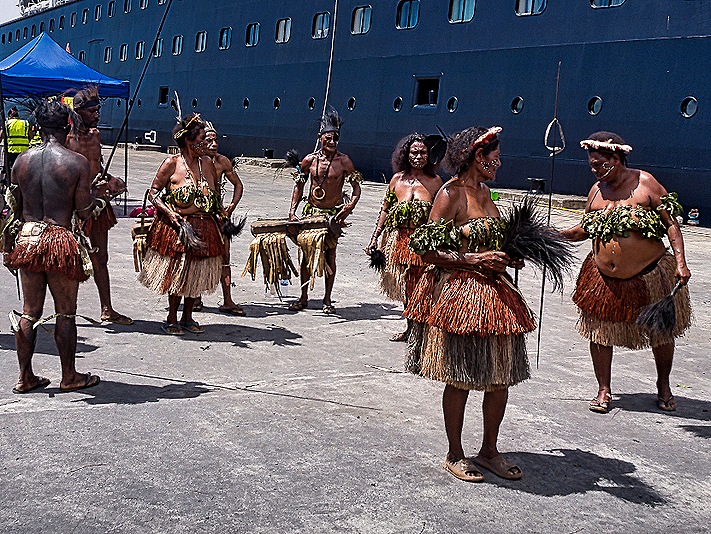
AS we left the ship for the excursion a dance group was performing on the dock. It is always fun & interesting when this happens.
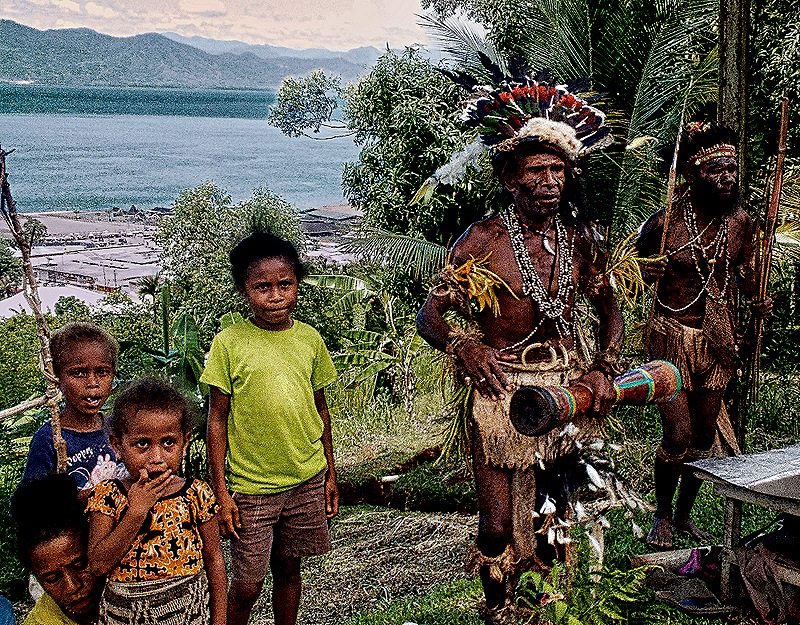
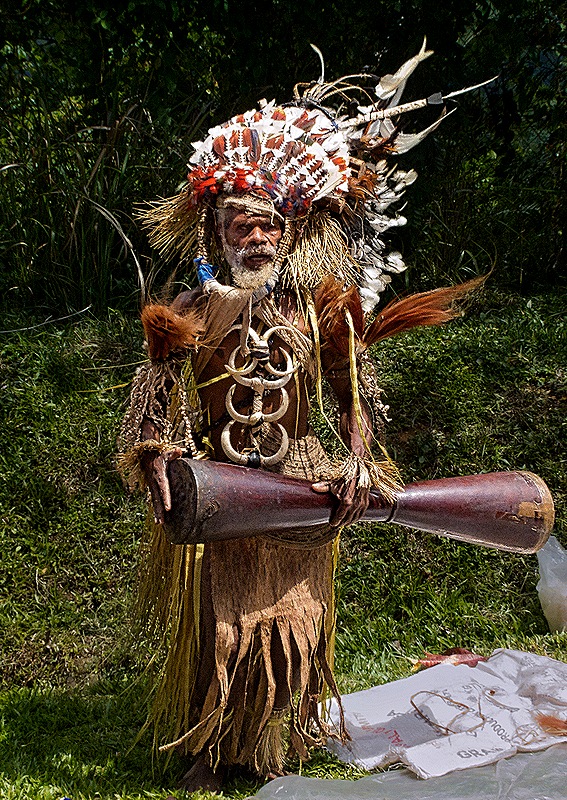
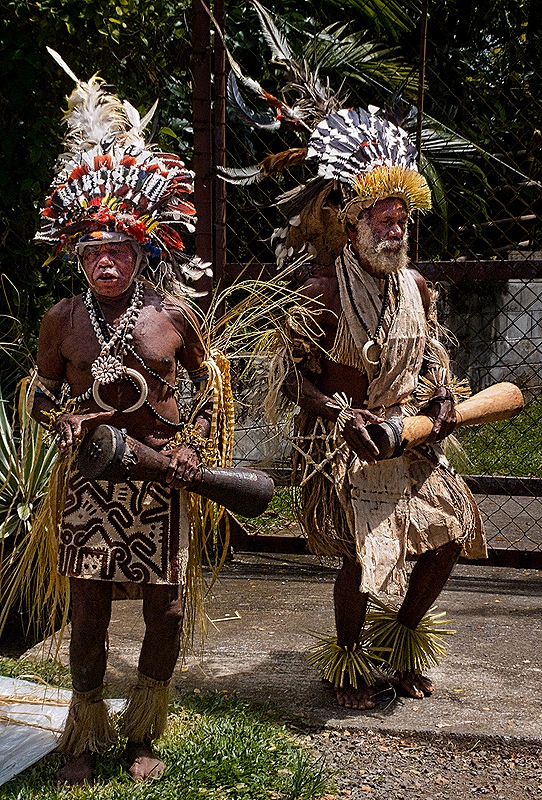
Our first stop was on a hill at a spot where a number of vendors were gathered, along with some folks dressed in traditional indigenous attire. This might have been a place called the Top Town Lookout, which certainly offers a great view of the town, Milne Bay and the mountains beyond (and on this day the Zaandam). People were friendly and the traditional clothing was very striking. Our guide, Rhoda, explained to us that under the matrilineal societal structure here men must have permission from the female head of the family for any financial or land transactions.

Back in the town we visited the main market, a large covered but open-air space full of small scale vendors selling fish, produce and handicrafts. Many local people were shopping here and we understand it is a place for community interaction as well as commerce. We were told that most people in this area shop daily for fresh produce.
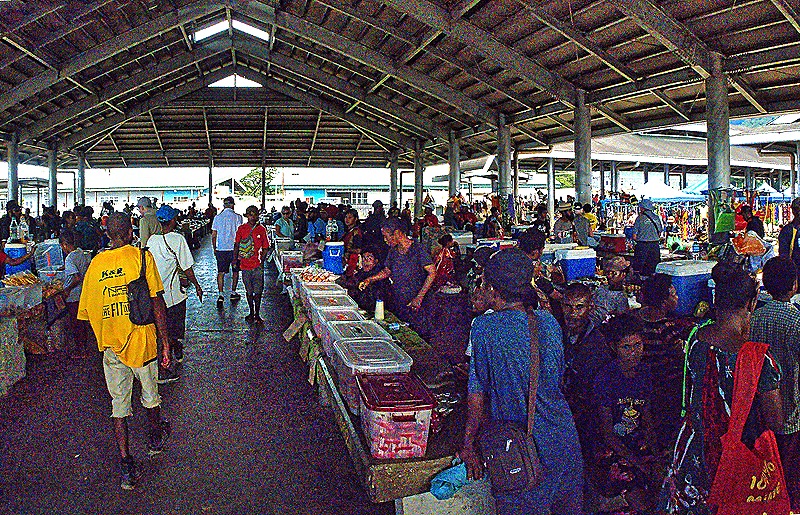
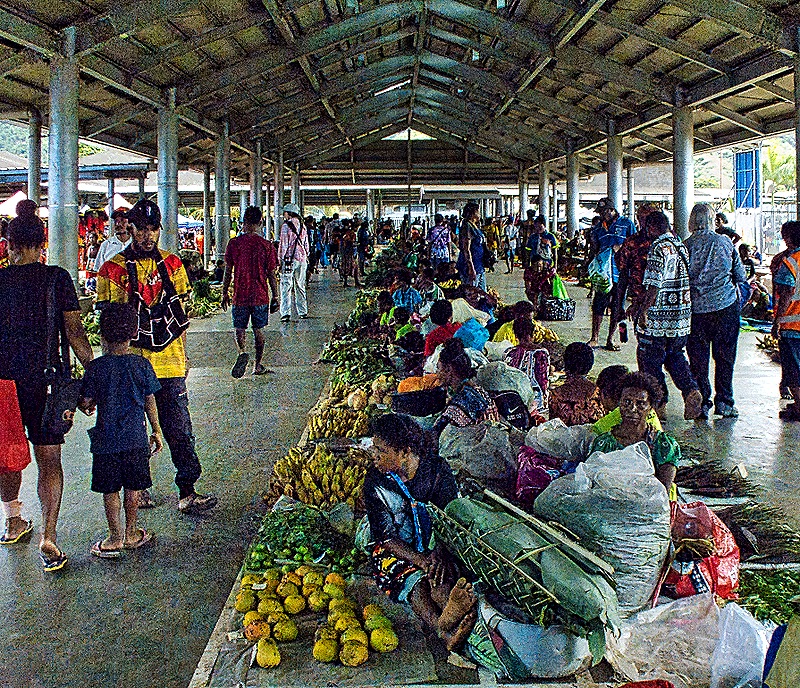
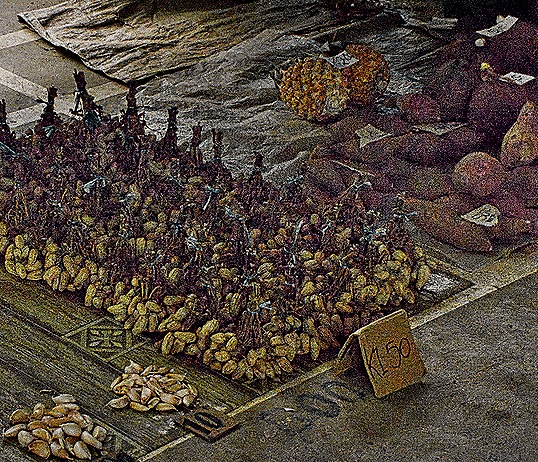
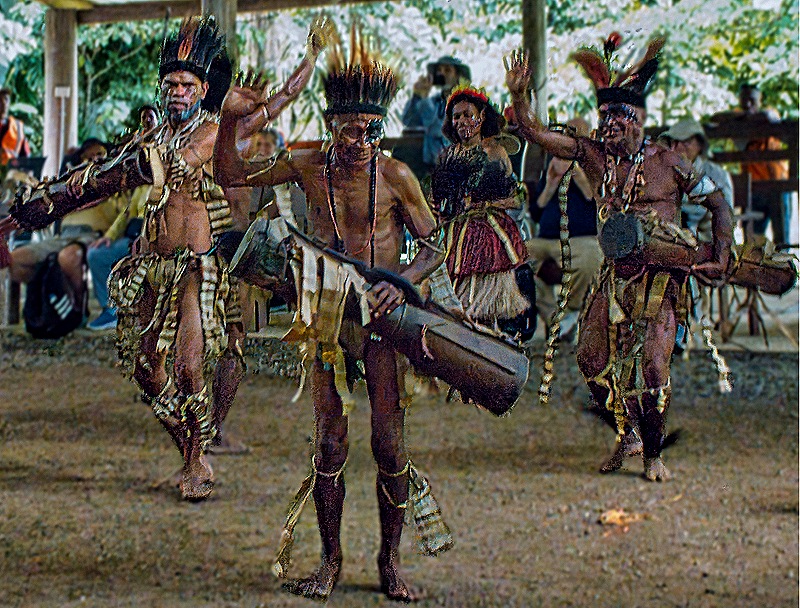
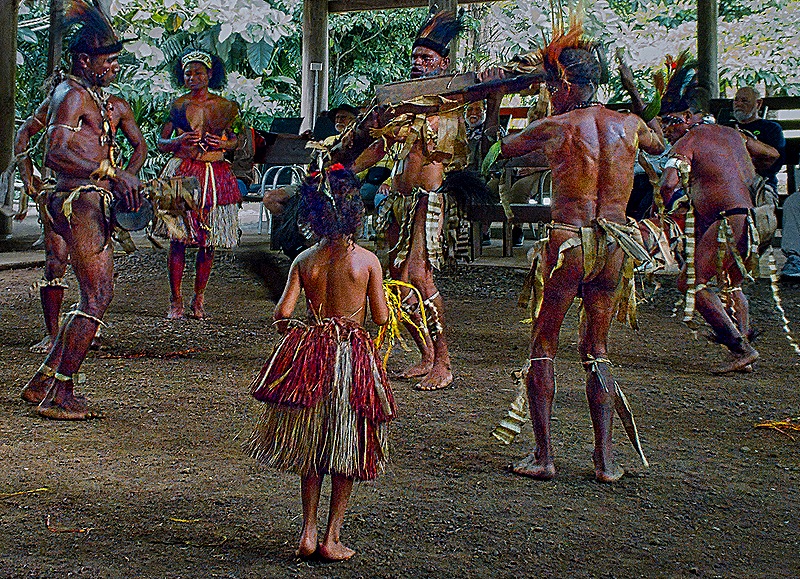
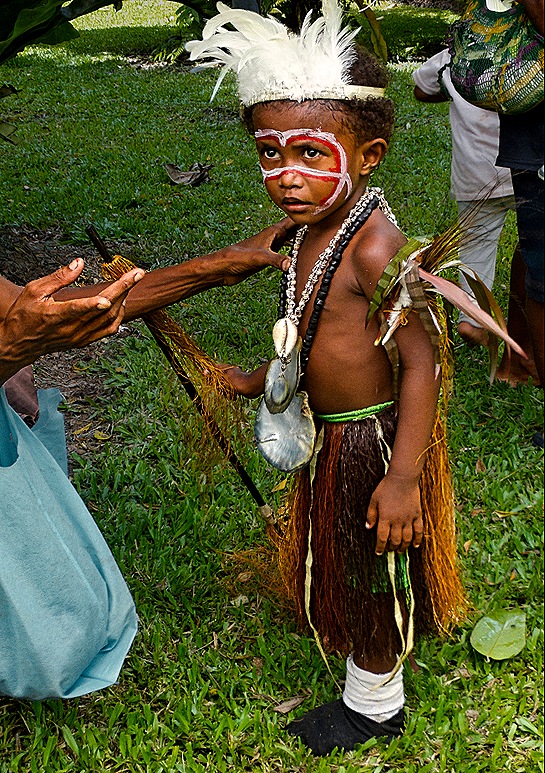
After this we were taken to a an open air performance facility that appeared to be part of a village in the woods. As we understood it, this place is owned by the man who introduced the dancers, explained the demonstrations of village life and generally acted as master of ceremonies. He spoke very good English and clearly was experienced at doing this sort of thing. We were greeted on the path from the bus drop off to the performance building by local people in indigenous dress (probably most were dancers). They lined the path on both sides and were very welcoming.
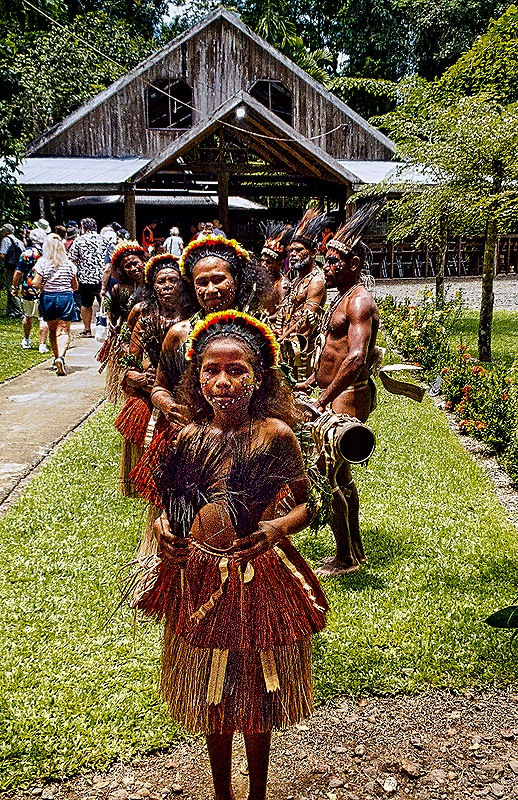
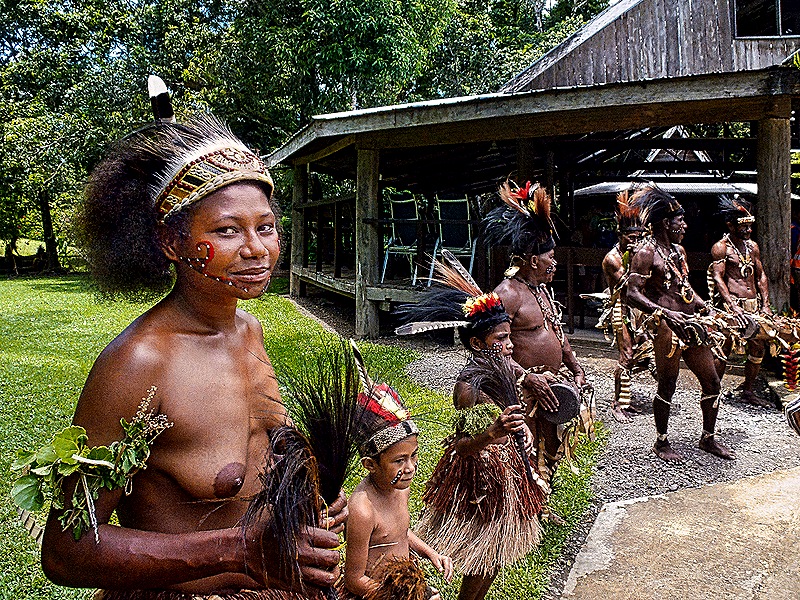
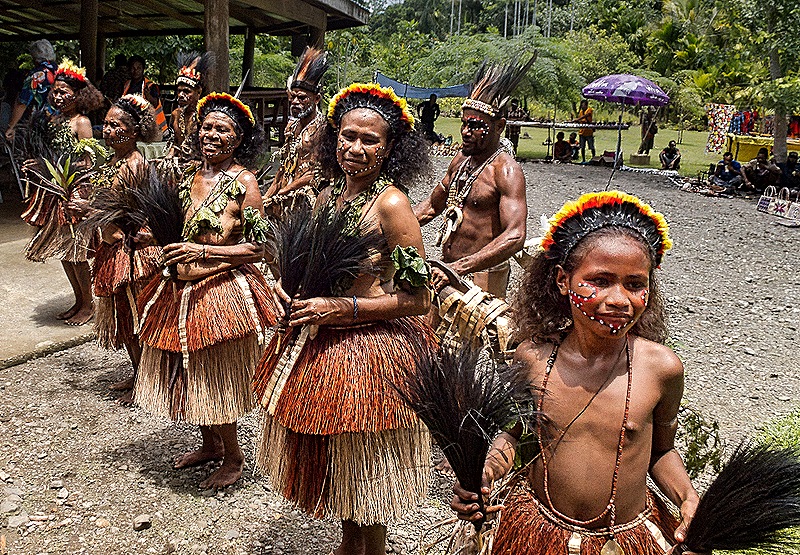
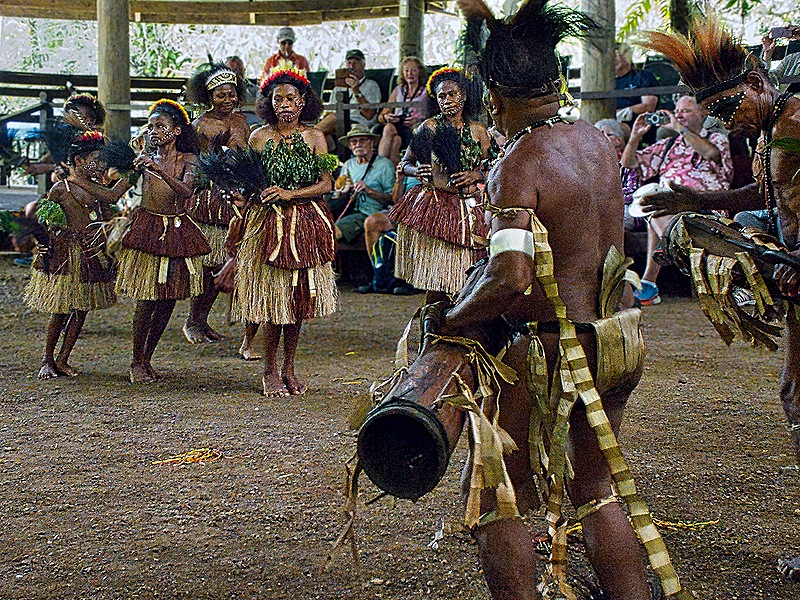
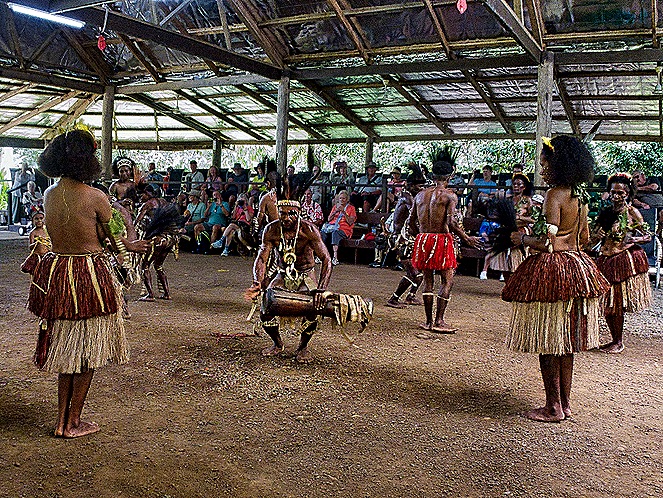
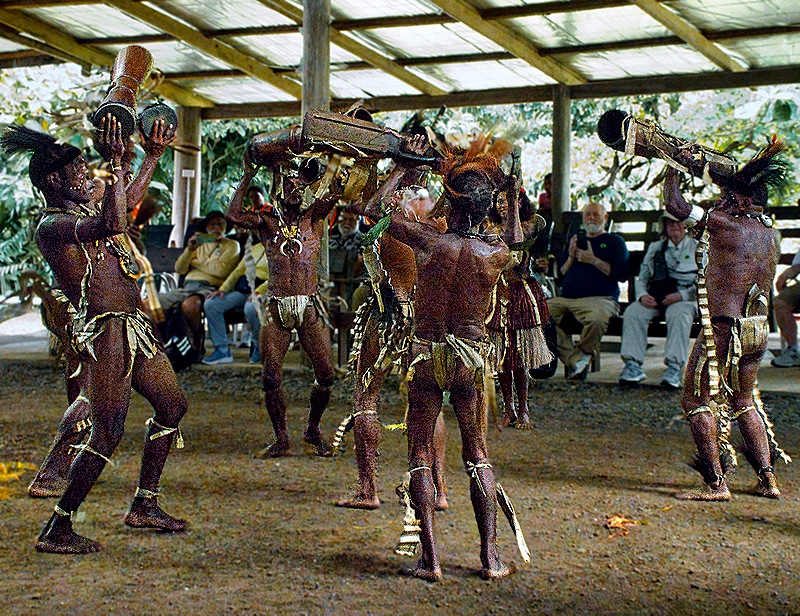
We all sat on two rows of benches around a large dirt dance floor. It was a very hot day so we were glad that this building had a roof for shade and open sides to permit air movement. There were several dances that went on for awhile. We understand that many, if not all, of the dancers had come from other villages and perhaps islands. The dancing was quite interesting and the dancers were very good. Men and women participated in the dancing, including some that looked quite young, and the men played drums that appeared to be hand made.
After the dancing there was a lecture and discussion about the main vegetables in their diet, including taro, tapioca, pumpkin, banana, papaya, watermelon, sago and cassava. There was a demonstration of how they open coconuts to get pulp and water and we were shown how they use the outside husk to start fires with friction. After that we were all invited onto a stage that was built on one side of the dance arena where a variety of local foods was arrayed on several tables for us to sample, buffet style. The food (especially the fresh fruit) was really tasty.
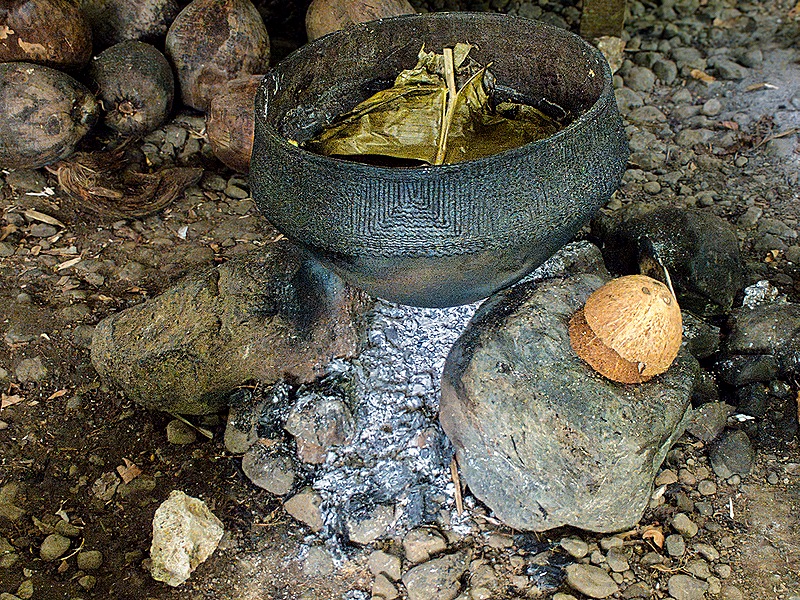
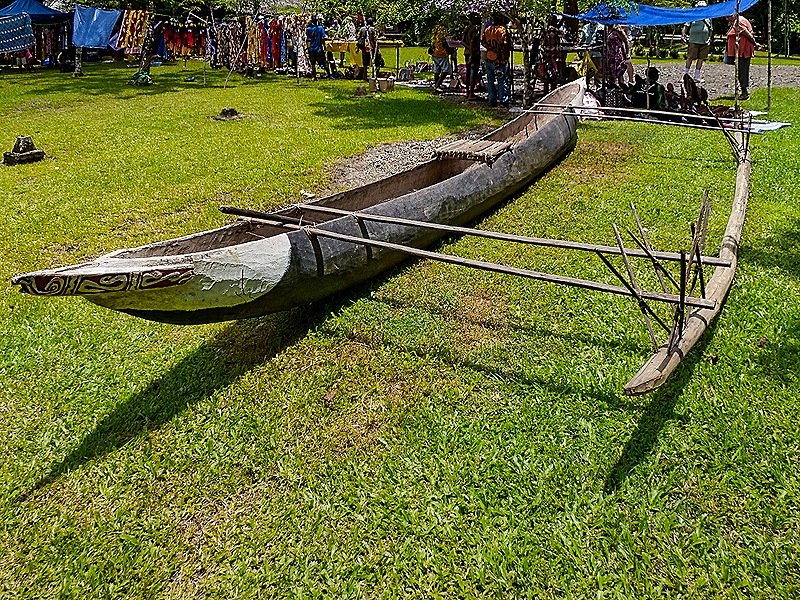
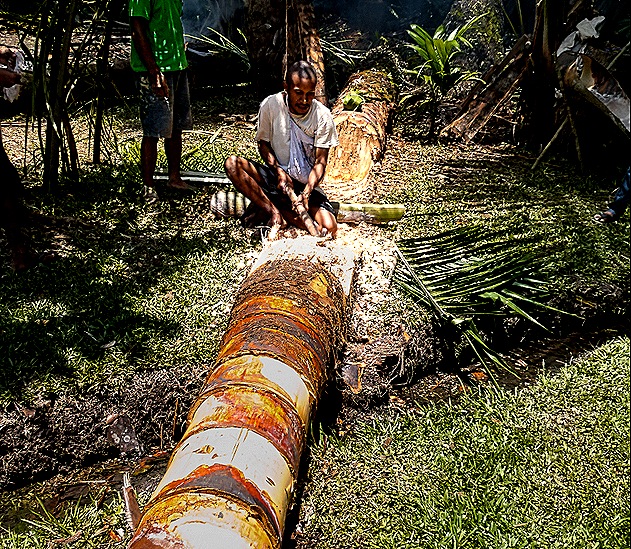
After the food demonstration we had time to walk around outside where there was a large display of interesting crafts with the craftspeople there to explain how they were made and to answer questions. We talked to the man who made an outrigger canoe on display and to a woman who told us about the large war canoe. We also saw a demonstration about creating sago, a starchy substance extracted from the center of a particular palm tree and used in a variety of dishes in this part of New Guinea.
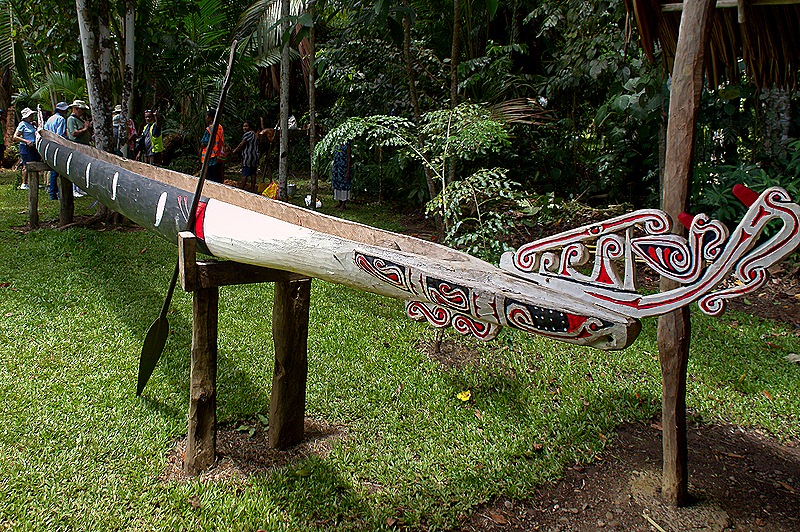
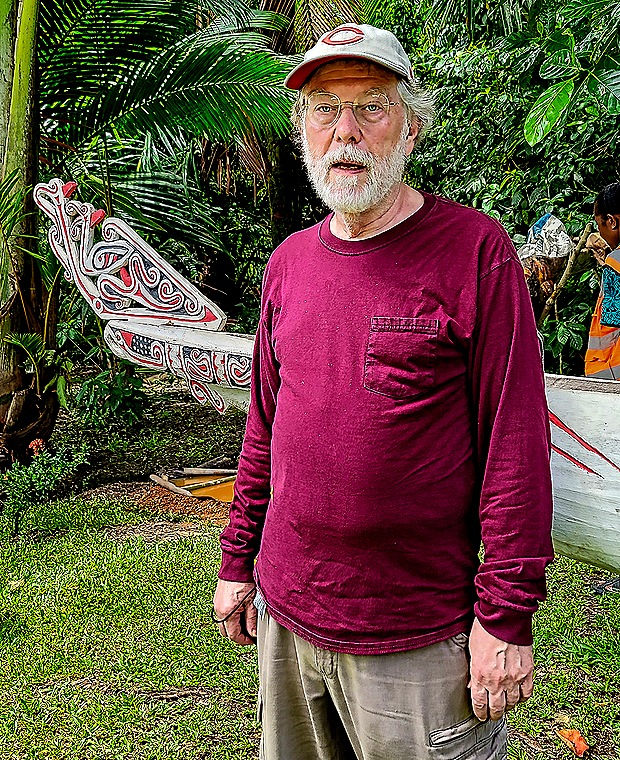
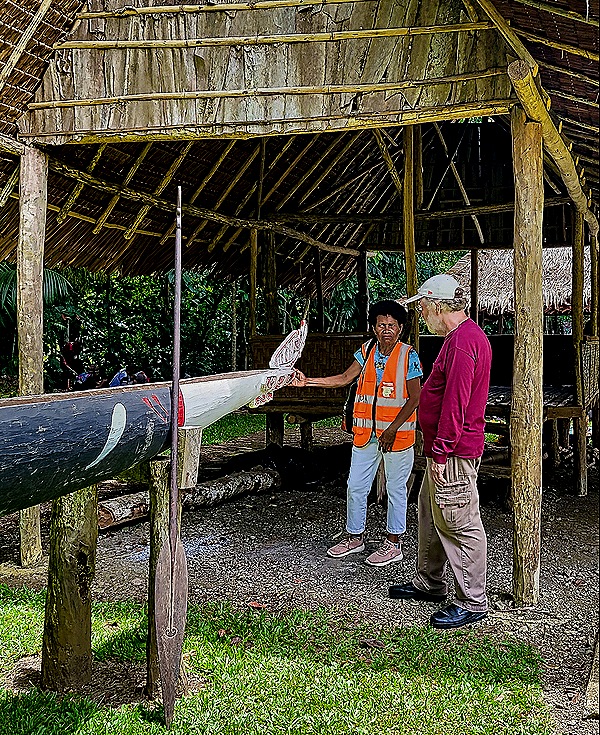
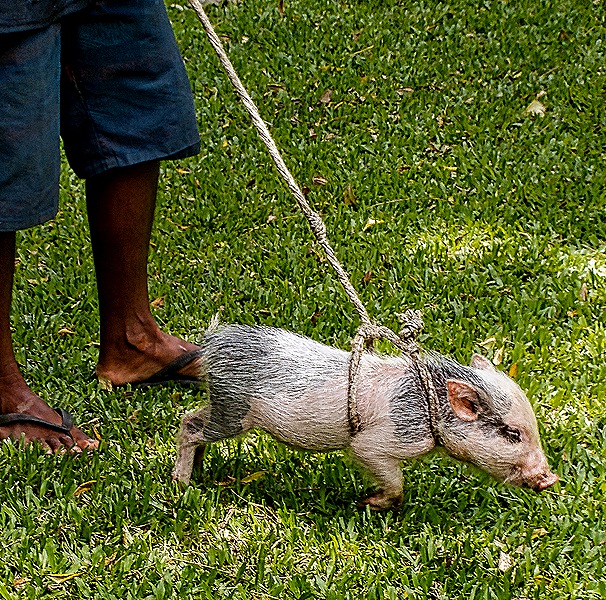
We returned to the performance building for another set of dances, then returned to the bus to head back toward the dock. Many of the local folks were around as we walked back, some still dressed in traditional attire. One was walking a pig in a rope harness.
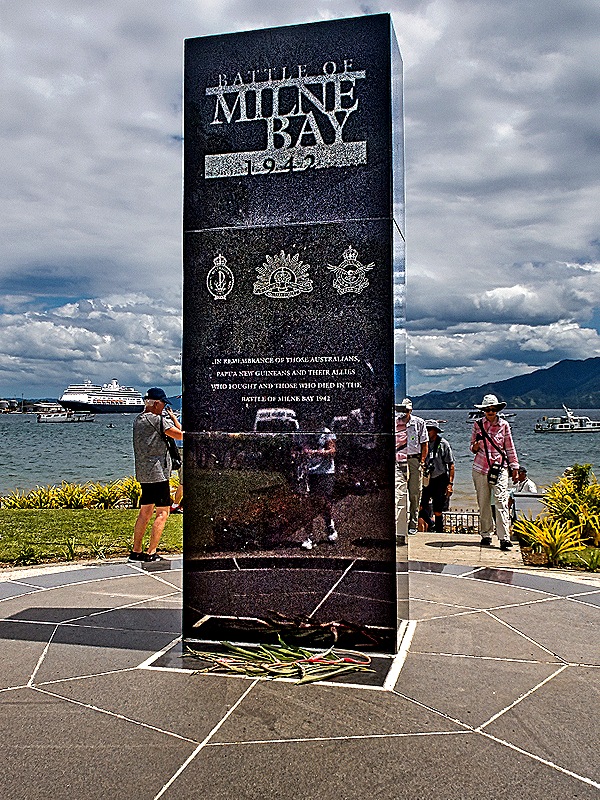
In 1942, about 25 years before Alotau was founded, this was an area of plantations and small villages. The Japanese were sweeping into the area in this early part of World War II. In New Guinea they had captured Rabaul and were targeting Port Moseby. In May and June the Allies built two air strips here at Milne Bay near where Alotau now stands. The Japanese discovered this in early August and decided to attack. After a delay to respond to the US invasion of Guadalcanal on August 7, they sent in a small force of less than 1,000 (later reinforced by more than 900) to take the airfield under the mistaken impression that few Allied troops were here to defend. The Allies, in contrast, were well aware of Japanese plans because they had broken the Japanese military code. The fighting here lasted almost two weeks from the Japanese landing beginning August 25 to their withdrawal September 7. About a third of the Japanese invasion force and about half as many Australians were killed.
This was the first time the Japanese army had been defeated in battle on land and forced to withdraw. It stopped the Japanese from expanding their perimeter further toward Australia, but perhaps its most important result was a big lift for Allied morale by demonstrating that the Japanese could be stopped and defeated. Along with the American victory a few months later forcing the Japanese to withdraw from Guadalcanal this gave the Allies new confidence that momentum in the Pacific was turning their way.
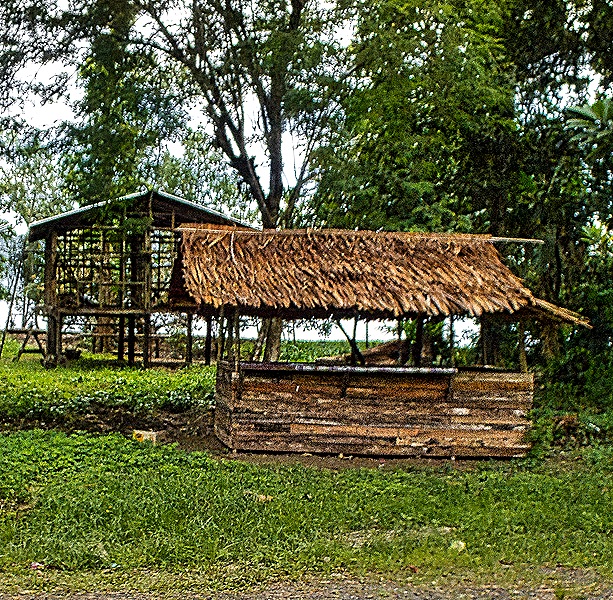
On our way back to the ship we passed several thatched roof structures in the woods between the road and the bay, but we don’t know their purpose. We stopped once, to visit a memorial to the battle of Milne Bay built on the waterfront in 2002 by the Australians. Several other war memorials can be seen in this area but this is the only one we visited. It says “In remembrance of those Australians, Papua New Guineans and their Allies who fought and died in the battle of Milne Bay 1942.” The locals have a term for white people, especially visitors: Dim-dim. We had previously read that this is considered descriptive and not derogatory. While we were visiting the memorial a boy tapped Mary on the shoulder and said “dim-dim." He may have expected that to stump her,and was probably disappointed by her lack of reaction.
That was the extent of our day in Alotau. We would have one more stop in New Guinea the next day.


Leave a comment